
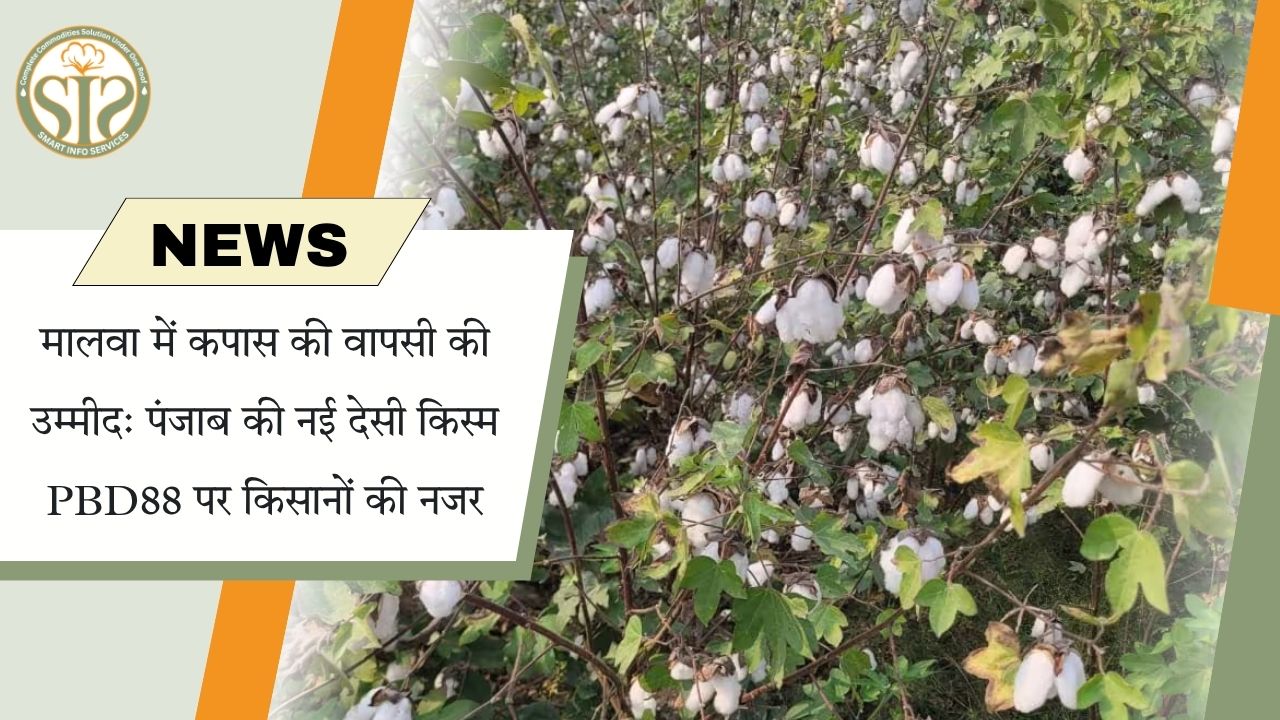
मालवा में कपास की वापसी की उम्मीद: पंजाब की नई देसी किस्म PBD88 पर किसानों की नजरपंजाब कृषि विश्वविद्यालय द्वारा विकसित नई नॉन-Bt देसी कपास किस्म PBD88 इस खरीफ सीज़न में पंजाब के मालवा क्षेत्र में कपास खेती को नई दिशा दे सकती है। ऐसे समय में जब राज्य लगातार घटते कपास रकबे और बढ़ती खेती लागत की चुनौती से जूझ रहा है, यह किस्म किसानों के लिए उम्मीद बनकर उभरी है।चार वर्षों तक किए गए परीक्षणों और फील्ड ट्रायल्स में PBD88 ने बेहतर पैदावार, कम लागत और कीट प्रतिरोध जैसी खूबियों के कारण वैज्ञानिकों का ध्यान खींचा है। विशेषज्ञों के अनुसार, देसी कपास से मिलने वाला रेशा दवा उद्योग में भी व्यावसायिक महत्व रखता है।बठिंडा स्थित क्षेत्रीय अनुसंधान केंद्र के फसल प्रजनक और इस किस्म के प्रमुख वैज्ञानिक Paramjit Singh ने बताया कि PBD88 प्रति एकड़ लगभग 11 क्विंटल उत्पादन देती है। यह पारंपरिक देसी किस्मों से 1–2 क्विंटल अधिक है और हाइब्रिड कपास की औसत पैदावार के बराबर मानी जा रही है।उन्होंने कहा कि पिछले कुछ वर्षों में गुलाबी सुंडी, सफेद मक्खी और प्रतिकूल मौसम के कारण पंजाब में कपास का रकबा तेजी से घटा है। लेकिन परीक्षणों में पाया गया कि PBD88 पर गुलाबी सुंडी का असर अपेक्षाकृत कम होता है। यही वजह है कि अर्ध-शुष्क क्षेत्रों के किसानों को इस नई देसी किस्म को अपनाने के लिए प्रोत्साहित किया जा रहा है।राज्य में कपास का रकबा 2021 के 2.52 लाख हेक्टेयर से घटकर 2024 में केवल 95,000 हेक्टेयर रह गया था। हालांकि 2025 में यह बढ़कर 1.2 लाख हेक्टेयर तक पहुंचा और अब कृषि विभाग ने 2026 के लिए 1.5 लाख हेक्टेयर का लक्ष्य तय किया है।विशेषज्ञों का कहना है कि PBD88 की सबसे बड़ी खासियत इसकी कम लागत वाली खेती है। जहां पारंपरिक किस्मों में लगभग छह बार चुनाई करनी पड़ती है, वहीं इस किस्म में केवल तीन बार चुनाई से ही फसल की कटाई पूरी हो जाती है। इसके अलावा, कई प्रमुख कीटों के प्रति प्रतिरोध होने के कारण किसानों का कीटनाशकों पर होने वाला खर्च भी कम हो सकता है।राज्य कृषि विभाग के अनुसार, पहले सीज़न में किसानों के लिए PBD88 के 100 क्विंटल से अधिक बीज उपलब्ध कराए गए हैं। प्रति एकड़ इसकी बुवाई के लिए लगभग 3 किलो बीज पर्याप्त है। यह उन चुनिंदा कपास किस्मों में शामिल है जिन पर पंजाब सरकार ने 33 प्रतिशत सब्सिडी देने की घोषणा की है।विजय कुमार ने कहा कि देसी कपास किस्मों को बढ़ावा देने का उद्देश्य Bt कपास को पूरी तरह बदलना नहीं, बल्कि खेती में विविधता लाना है। उनके अनुसार, देसी कपास में सफेद मक्खी और पत्ती मुड़ने जैसी बीमारियों के प्रति प्राकृतिक प्रतिरोधक क्षमता होती है।उन्होंने यह भी बताया कि कई गैर-हाइब्रिड किस्मों में चुनाई में देरी होने पर कपास के गोले टूटकर गिर जाते हैं, जिससे किसानों को नुकसान होता है। लेकिन PBD88 में यह समस्या कम देखी गई है, जिससे किसानों की उपज अधिक सुरक्षित रहती है। और पढ़ें :- कृषि प्रौद्योगिकी: कपास में अशुद्धियों को रोकने के लिए कच्चे कपास की गांठ (बेल) बनाने की तकनीक
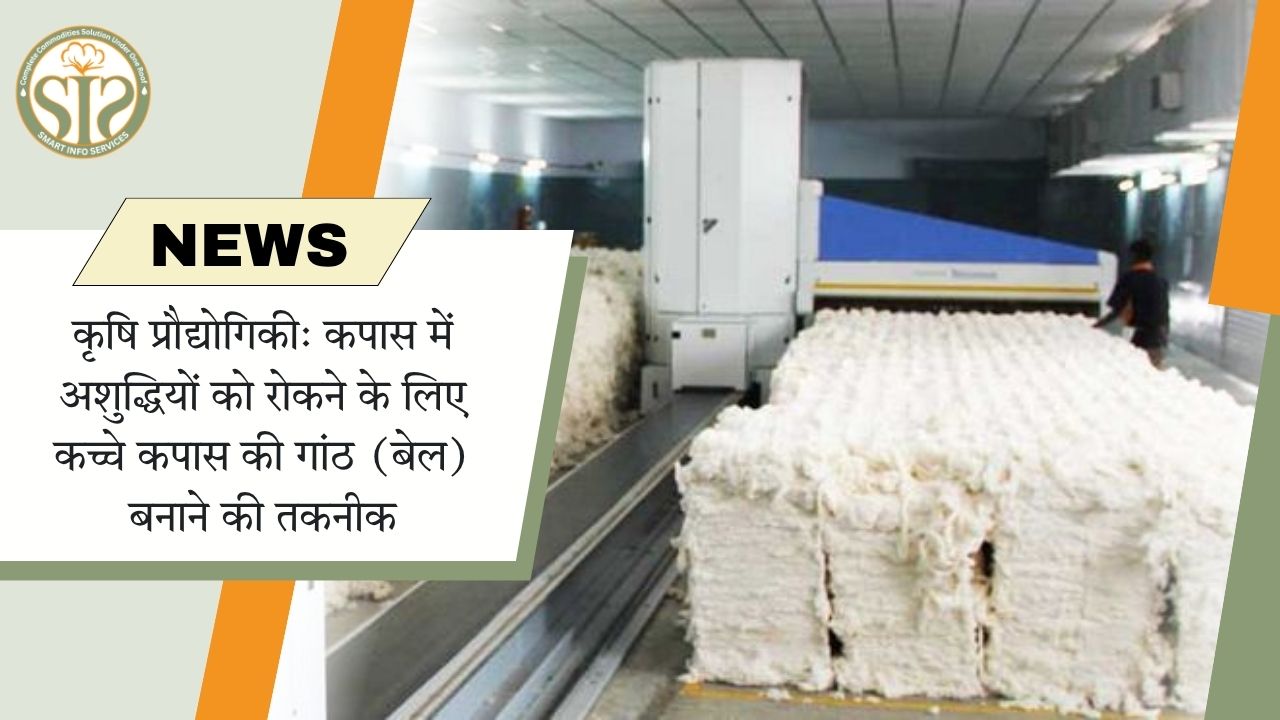
कच्ची कपास में संदूषण कम करने के लिए अभिनव कपास बेलिंग तकनीककपास प्रसंस्करण उद्योग में बढ़ती अशुद्धियाँ एक गंभीर चुनौती बन चुकी हैं। इन संदूषकों को हटाने के लिए महंगी मशीनरी की आवश्यकता होती है, जिससे उत्पादन लागत बढ़ जाती है और किसानों की आय प्रभावित होती है। इस समस्या के समाधान के रूप में परभणी (महाराष्ट्र) के युवा नवोन्मेषक कृष्ण सोमानी ने एक अभिनव मशीन विकसित की है, जो सीधे खेत में ही कच्चे कपास की गांठें (बेल्स) बनाने में सक्षम है।इस प्रोटोटाइप मशीन के उन्नयन और परीक्षण के लिए Central Institute for Research on Cotton Technology (नागपुर) के साथ समझौता ज्ञापन (MoU) किया गया है। यह संस्थान कपास प्रौद्योगिकी के क्षेत्र में अग्रणी अनुसंधान केंद्र है। समस्या की पृष्ठभूमिभारत में कपास की खेती लगभग 13 मिलियन हेक्टेयर क्षेत्र में फैली हुई है, जिसमें महाराष्ट्र का बड़ा योगदान है। देश में कपास की कटाई प्रायः चरणबद्ध तरीके से (3–4 बार) की जाती है। किसान अपनी पूरी उपज को एक साथ बेचने के लिए इसे महीनों तक घरों में संग्रहित रखते हैं। इस दौरान:*कपास में धूल, कचरा और अन्य अशुद्धियाँ मिल जाती हैं*चूहों और कीटों का प्रकोप बढ़ता है*गुणवत्ता और वजन में कमी आती है (प्रति क्विंटल 5–6 किग्रा तक नुकसान)*आग और स्वास्थ्य संबंधी जोखिम भी बढ़ जाते हैंसमाधान: खेत पर ही बेलिंग तकनीकइन समस्याओं से निपटने के लिए विकसित यह मशीन कटाई के बाद तुरंत कपास की बेलिंग कर देती है। इससे:*कपास खुला नहीं रहता, इसलिए अशुद्धियाँ कम होती हैं*भंडारण आसान और सुरक्षित होता है*परिवहन लागत और श्रम घटता हैविदेशों में जहां 2.5 टन की बड़ी गांठें बनाई जाती हैं, वहीं इस भारतीय तकनीक में लगभग 35 किलोग्राम की छोटी और हल्की बेल्स बनाई जाती हैं, जिन्हें हाथ से आसानी से उठाया जा सकता है।तकनीकी विशेषताएँ*प्रारंभ में बिजली से संचालित, अब ट्रैक्टर (PTO) आधारित यूनिट उपलब्ध*उत्पादन क्षमता: लगभग 40 बेल प्रति घंटा*साइलेज मशीन को संशोधित कर विकसित (कुल लागत ~₹9–10 लाख)*वर्तमान मशीन कीमत: ₹7–7.5 लाख*प्रति क्विंटल बेलिंग लागत: ₹100–₹150भंडारण और आर्थिक लाभबेल्स के समान आकार के कारण भंडारण अधिक व्यवस्थित हो जाता है—10×10 फुट के कमरे में 35–40 क्विंटल कपास रखा जा सकता है।एक किसान के उदाहरण में, बेलिंग और गोदाम भंडारण के माध्यम से बेहतर कीमत मिलने पर 110 क्विंटल उत्पादन पर ₹1.1 लाख अतिरिक्त लाभ हुआ।संस्थागत सहयोग और भविष्यइस तकनीक के विकास और प्रसार के लिए Central Institute for Research on Cotton Technology तथा Bajaj Industries के साथ साझेदारी की गई है। साथ ही, ‘RAFTAAR’ योजना के तहत ₹20 लाख की वित्तीय सहायता भी प्रदान की गई है।संस्थान के निदेशक Dr. S. K. Shukla के अनुसार, इस मशीन को सरकारी सब्सिडी योजनाओं में शामिल करने के प्रयास जारी हैं, जिससे यह तकनीक अधिक किसानों तक पहुँच सके। निष्कर्षकच्चे कपास की खेत-स्तरीय बेलिंग तकनीक न केवल अशुद्धियों को कम करती है, बल्कि भंडारण, परिवहन और विपणन को भी अधिक कुशल बनाती है। हालांकि अभी इसकी जागरूकता सीमित है, लेकिन भविष्य में यह तकनीक कपास उद्योग में एक महत्वपूर्ण बदलाव ला सकती है।और पढ़ें :- रुपया 14 पैसे की गिरावट के साथ 94.75 पर खुला.

रुपया 14 पैसे गिरावट 94.75 USD पर खुला. गुरुवार को भारतीय रुपया डॉलर के मुकाबले 14 पैसे गिरावट 94.75 पर खुला जबकि बुधवार को यह 94.61 पर बंद हुआ था।और पढ़ें :- रुपया डॉलर के मुकाबले 43 पैसे की बढ़त के साथ 94.61 पर बंद हुआ।

भारतीय रुपया बुधवार को अमेरिकी डॉलर के मुकाबले 95.04 पर खुला और 43 पैसे मज़बूत होकर बाज़ार बंद होने तक 94.61 पर पहुँच गया।बाज़ार बंद होने पर, सेंसेक्स 940.73 अंक या 1.22 प्रतिशत बढ़कर 77,958.52 पर और निफ्टी 298.15 अंक या 1.24 प्रतिशत बढ़कर 24,330.95 पर पहुँच गया। लगभग 2755 शेयरों में तेज़ी आई, 1287 शेयरों में गिरावट आई और 161 शेयरों में कोई बदलाव नहीं हुआ।और पढ़ें:- बीटी कपास बीज की किस्म ‘नांदेड़-44’ के प्रदर्शन आयोजित करने की मांग
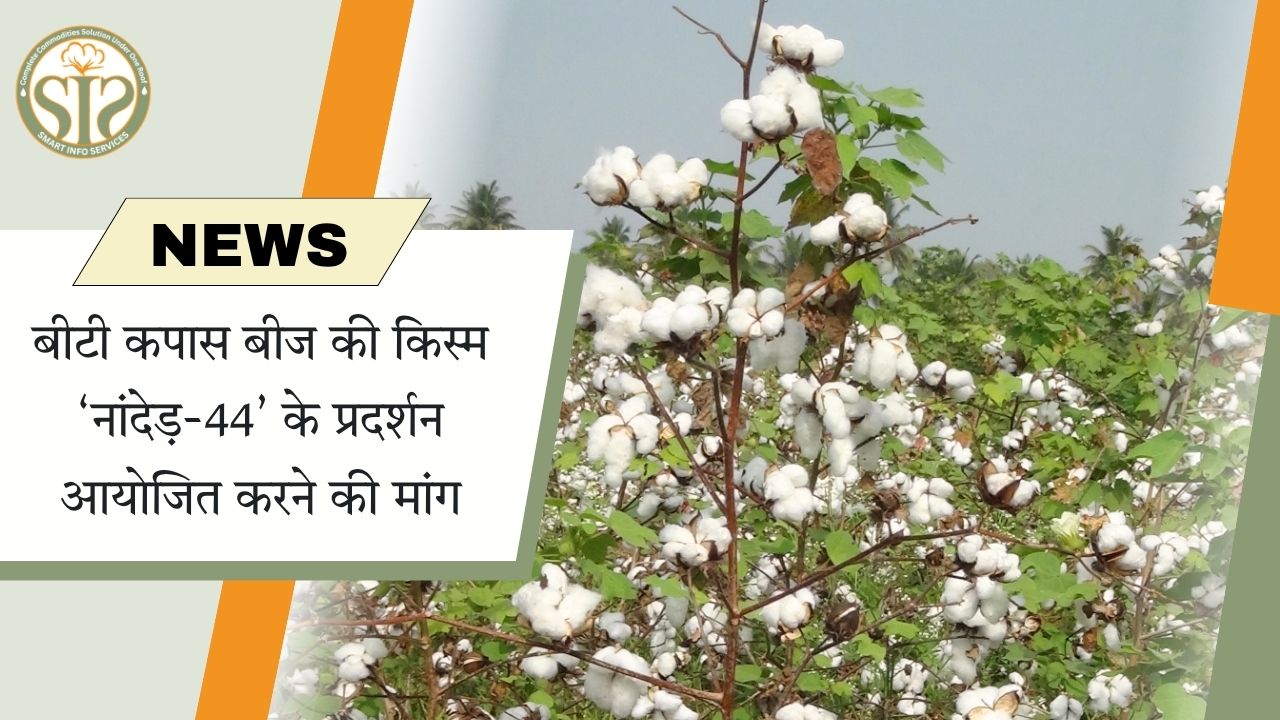
बीटी कपास बीज की किस्म ‘नांदेड़-44’ के प्रदर्शन आयोजित करने की मांगजलगाँव ज़िले में बेहतर कपास उत्पादन के लिए उन्नत किस्मों के प्रदर्शन की तत्काल आवश्यकता महसूस की जा रही है। किसानों ने मांग की है कि परभणी कृषि विश्वविद्यालय द्वारा विकसित ‘नांदेड़-44’ बीटी कपास किस्म के प्रदर्शन इस वर्ष भी पुनः आयोजित किए जाएं, ताकि अधिक से अधिक किसानों को इसका लाभ मिल सके।वर्ष 2022–23 के दौरान, ज़िले में लगभग 200 एकड़ क्षेत्र में इस किस्म के सफल प्रदर्शन आयोजित किए गए थे। इस पहल के अंतर्गत विभिन्न किसान समूहों को बीज वितरित किए गए और खेती शुष्क भूमि तकनीकों तथा कृत्रिम सिंचाई, दोनों माध्यमों से की गई थी।क‘नांदेड़-44’ मूल रूप से एक गैर-बीटी कपास किस्म थी, जो वर्ष 2001 से पहले राज्य में अत्यंत लोकप्रिय रही। इसकी उच्च उत्पादकता और विश्वसनीयता के कारण इसने निजी कंपनियों की कई किस्मों को बाज़ार में स्थापित होने से रोका था। हालांकि, 2001 के बाद बीटी कपास के प्रसार और निजी कंपनियों की नई किस्मों के आने से इसका प्रभाव कम हो गया। बाद में, इसी किस्म का बीटी संस्करण विकसित किया गया, जिससे यह पुनः किसानों के बीच प्रासंगि बनी।पिछले तीन वर्षों से महाबीज और परभणी कृषि विश्वविद्यालय द्वारा इस किस्म के प्रचार-प्रसार के लिए ठोस प्रयास किए जा रहे हैं। इसके तहत चयनित किसान समूहों को निःशुल्क बीज वितरित कर खेती को बढ़ावा दिया गया। केवल जलगाँव ज़िले में ही लगभग 200 एकड़ क्षेत्र में इसकी खेती की गई।किसानों ने अब मांग की है कि इस वर्ष भी चालीसगाँव, जामनेर, पारोला, अमलनेर और चोपड़ा जैसे क्षेत्रों में किसान समूहों और व्यक्तिगत किसानों को बीज उपलब्ध कराए जाएं, ताकि इस किस्म का विस्तार किया जा सके।साथ ही यह भी आवश्यक है कि कृषि सहायकों और स्थानीय कृषि अधिकारियों की सक्रिय भागीदारी सुनिश्चित की जाए, ताकि प्रदर्शन कार्यक्रमों के माध्यम से किसानों को तकनीकी मार्गदर्शन मिल सके और उत्पादन व उत्पादकता दोनों में वृद्धि हो।और पढ़ें :- कपास मिशन 2031: आत्मनिर्भर भारत की दिशा में पहल
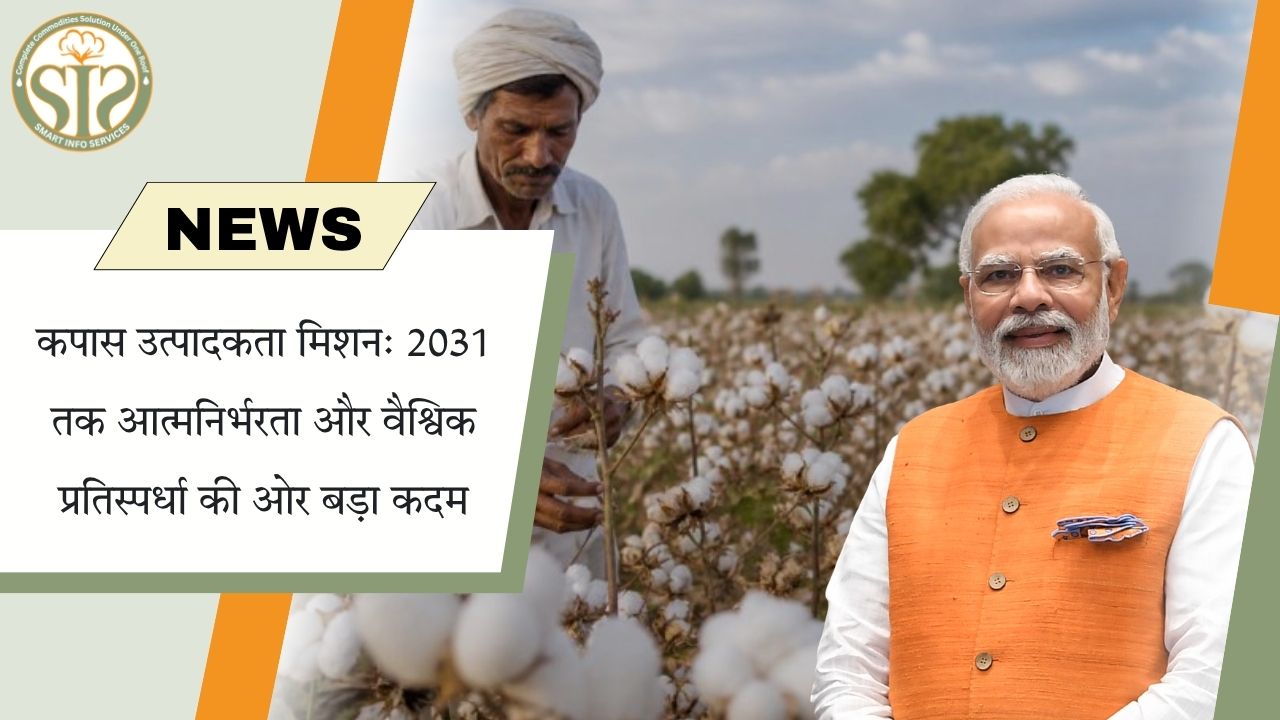
कपास उत्पादकता मिशन: 2031 तक आत्मनिर्भरता और वैश्विक प्रतिस्पर्धा की ओर बड़ा कदमप्रधानमंत्री नरेंद्र मोदी की अध्यक्षता में केंद्रीय मंत्रिमंडल ने “कपास उत्पादकता मिशन” (2026–27 से 2030–31) को मंजूरी दी है, जिसके लिए 5659.22 करोड़ रुपये का प्रावधान किया गया है। इस मिशन का उद्देश्य कपास क्षेत्र में उत्पादकता बढ़ाना, गुणवत्ता सुधारना और भारत को वैश्विक कपड़ा बाजार में अधिक प्रतिस्पर्धी बनाना है।यह पहल सरकार के ‘5F’ विजन—खेत से फाइबर, फाइबर से फैक्ट्री, फैक्ट्री से फैशन और फैशन से विदेश—के अनुरूप है। मिशन के तहत उच्च उत्पादकता वाले, जलवायु-अनुकूल और कीट-प्रतिरोधी बीज विकसित किए जाएंगे। साथ ही, हाई डेंसिटी प्लांटिंग सिस्टम (HDPS), क्लोज स्पेसिंग और एकीकृत कपास प्रबंधन जैसी आधुनिक तकनीकों को बढ़ावा दिया जाएगा, तथा एक्स्ट्रा लॉन्ग स्टेपल (ELS) कपास के उत्पादन को प्रोत्साहित किया जाएगा।कपास की गुणवत्ता सुधारने के लिए किसानों का प्रशिक्षण, जिनिंग और प्रोसेसिंग इकाइयों का आधुनिकीकरण, तथा अंतरराष्ट्रीय मानकों के अनुरूप परीक्षण अवसंरचना को मजबूत किया जाएगा। “कस्तूरी कॉटन भारत” ब्रांड के माध्यम से भारतीय कपास की वैश्विक पहचान, ट्रेसबिलिटी और विश्वसनीयता को बढ़ाया जाएगा।इसके अलावा, डिजिटल मंडियों के माध्यम से किसानों को पारदर्शी मूल्य निर्धारण और बेहतर बाजार पहुंच सुनिश्चित की जाएगी। कपास अपशिष्ट के पुनर्चक्रण और सर्कुलर इकॉनमी को भी बढ़ावा दिया जाएगा। साथ ही, सन (flax), रेमी, सिसल, मिल्कवीड, बांस और केले जैसे वैकल्पिक प्राकृतिक रेशों को शामिल कर फाइबर आधार का विस्तार किया जाएगा।यह मिशन कृषि एवं किसान कल्याण मंत्रालय और वस्त्र मंत्रालय द्वारा लागू किया जाएगा। इसमें ICAR, CSIR और विभिन्न राज्य कृषि विश्वविद्यालयों की भागीदारी होगी। शुरुआत में 14 राज्यों के 140 जिलों पर ध्यान केंद्रित किया जाएगा और लगभग 2000 जिनिंग इकाइयों को सशक्त किया जाएगा।मिशन का लक्ष्य 2031 तक कपास की उत्पादकता को 440 किलोग्राम प्रति हेक्टेयर से बढ़ाकर 755 किलोग्राम प्रति हेक्टेयर करना और कुल उत्पादन को 498 लाख गांठों तक पहुंचाना है। इससे लगभग 32 लाख किसानों को लाभ मिलने की उम्मीद है। यह पहल भारत को कपास क्षेत्र में आत्मनिर्भर बनाने की दिशा में एक महत्वपूर्ण कदम मानी जा रही है।और पढ़ें:- रुपया 25 पैसे की बढ़त के साथ 95.04 पर खुला.

रुपया 25 पैसे बढ़त 95.04 USD पर खुला. बुधवार को भारतीय रुपया डॉलर के मुकाबले 25 पैसे मज़बूत होकर 95.04 पर खुला जबकि मंगलवार को यह 95.29 पर बंद हुआ था।और पढ़ें :- परभणी (महाराष्ट्र) समाचार: मानवत में 15 मई से कपास नीलामी बंद, किसानों से जल्द बिक्री की अपील
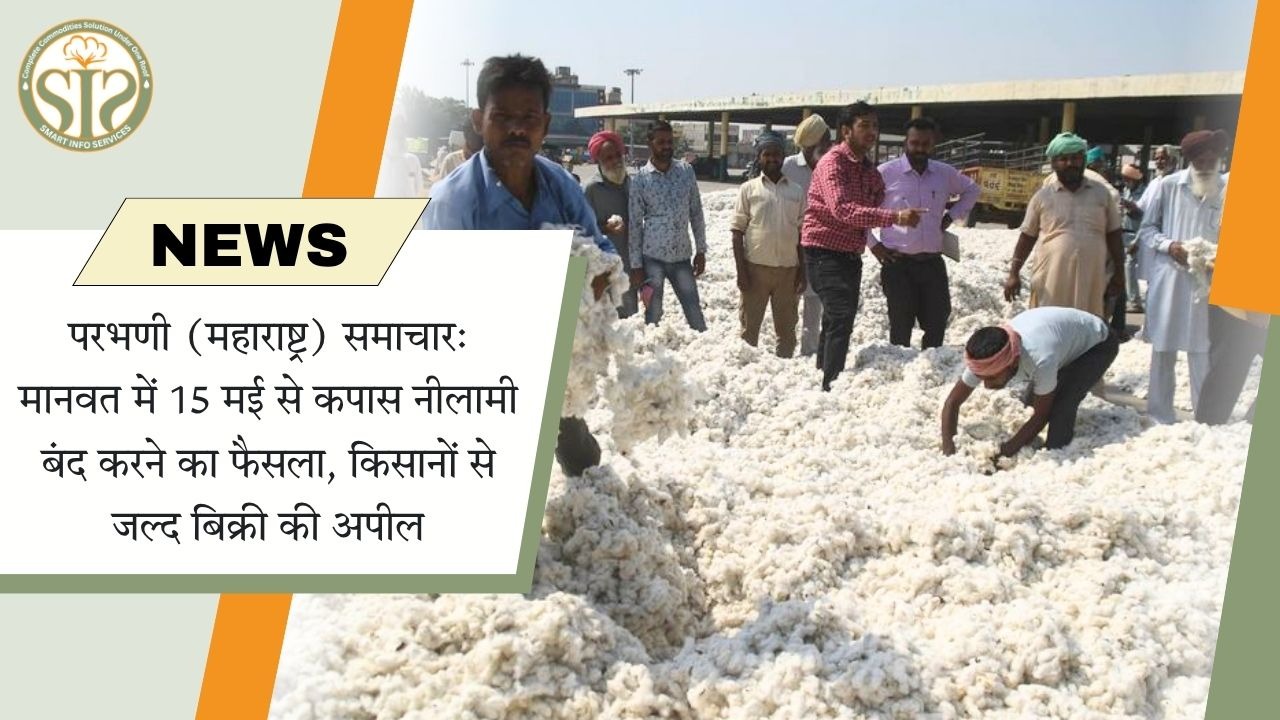
परभणी (महाराष्ट्र) समाचार: मानवत में 15 मई से कपास नीलामी बंद करने का फैसला, किसानों से जल्द बिक्री की अपीलमानवत कृषि उपज मंडी समिति (APMC), जिला परभणी (महाराष्ट्र) ने घोषणा की है कि छत्रपति शिवाजी यार्ड में चल रही कपास की नीलामी प्रक्रिया 15 मई से स्थगित कर दी जाएगी। यह निर्णय बढ़ती गर्मी और सीजन के लगभग समाप्त होने को देखते हुए लिया गया है। प्रशासन ने किसानों से अपील की है कि वे 15 मई से पहले अपनी कपास नीलामी के माध्यम से बेच दें।कपास की नीलामी नवंबर के दूसरे सप्ताह में शुरू हुई थी। शुरुआत में कपास के दाम न्यूनतम समर्थन मूल्य (MSP) से नीचे थे, जिसके चलते भारतीय कपास निगम (CCI) ने फरवरी के पहले सप्ताह तक 1,63,000 क्विंटल कपास की गारंटीशुदा दर पर खरीद की।इसके बाद बाजार में कीमतों में लगातार बढ़ोतरी देखी गई—5 फरवरी को भाव ₹7,190 प्रति क्विंटल रहा, जो फरवरी के अंत तक बढ़कर ₹7,325 तक पहुंच गया। मार्च में यह दर और ऊपर गई; 8 मार्च को कपास ₹7,430 और 13 मार्च को ₹7,525 प्रति क्विंटल पर बिका। मार्च के अंतिम सप्ताह और अप्रैल में भी तेजी जारी रही, और कीमतें ₹8,000 के स्तर को पार कर गईं।20 अप्रैल को कपास ₹8,800 तक पहुंच गया, जबकि 22 अप्रैल के बाद यह ₹9,000 के ऊपर चला गया। 2 मई को औसत भाव ₹9,330 और 4 मई को ₹9,400 प्रति क्विंटल दर्ज किया गया।मंडी प्रशासन के अनुसार, सीजन के शुरुआती दौर में कीमतें कम रहने के कारण लगभग 80 प्रतिशत किसानों ने अपनी उपज पहले ही बेच दी थी। बाद में बाजार में तेजी आई, जिससे अंतिम चरण में कीमतें काफी बढ़ गईं। इससे उन किसानों को नुकसान महसूस हुआ जिन्होंने पहले ही बिक्री कर दी थी।APMC चेयरमैन पंकज अम्बेगाँवकर ने कहा कि 15 मई के बाद स्थिति की समीक्षा की जाएगी और परिस्थितियों के आधार पर आगे नीलामी शुरू करने पर निर्णय लिया जाएगा।और पढ़ें:- रुपया डॉलर के मुकाबले 04 पैसे की बढ़त के साथ 95.29 पर बंद हुआ।

भारतीय रुपया मंगलवार को US डॉलर के मुकाबले 95.33 पर खुला और 04 पैसे मज़बूत होकर बाज़ार बंद होने तक 95.29 पर पहुँच गया।बाज़ार बंद होने पर, Sensex 251.61 अंक या 0.33 प्रतिशत गिरकर 77,017.79 पर रहा, और Nifty 86.50 अंक या 0.36 प्रतिशत गिरकर 24,032.80 पर रहा। लगभग 1890 शेयरों में तेज़ी आई, 2110 शेयरों में गिरावट आई, और 169 शेयरों में कोई बदलाव नहीं हुआ।और पढ़ें:- राजस्थान: खुईयां सहित कई गांवों में फसलें तबाह
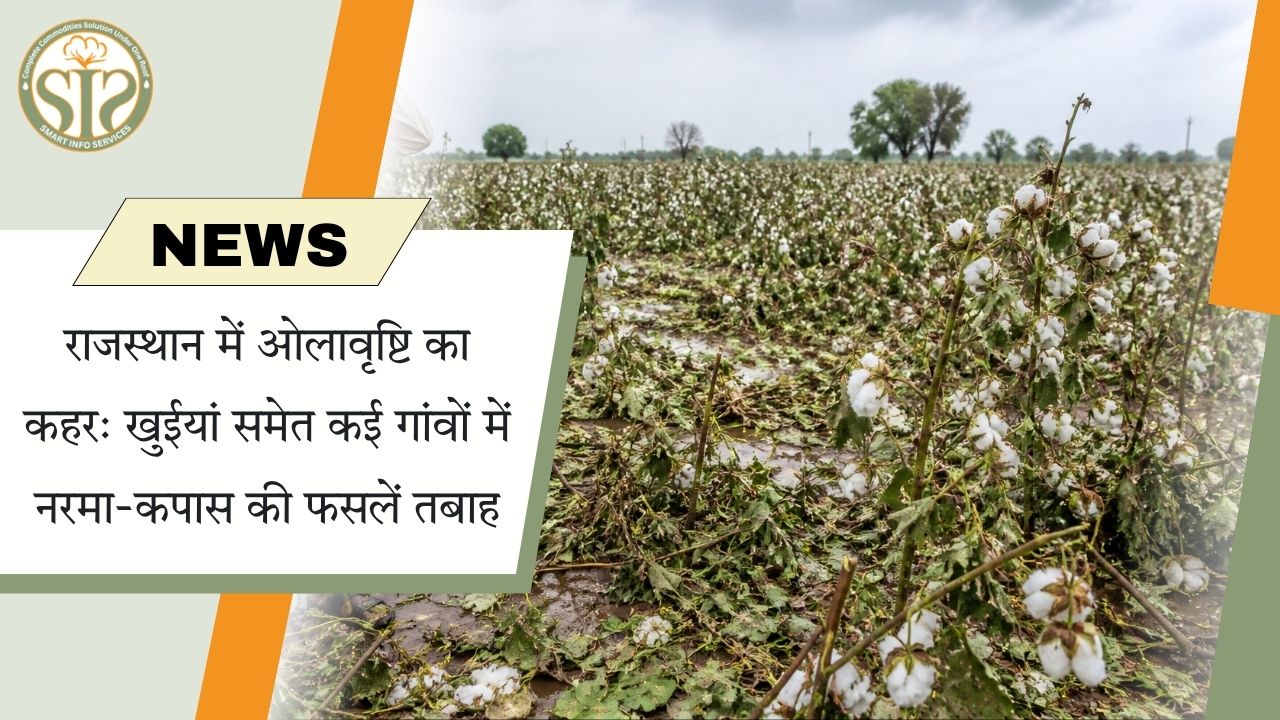
राजस्थान में ओलावृष्टि का कहर: खुईयां समेत कई गांवों में नरमा-कपास की फसलें तबाहराजस्थान के नोहर क्षेत्र में रविवार शाम मौसम ने अचानक करवट ली, जिससे खुईयां सहित आसपास के कई गांवों में तेज आंधी, बारिश और ओलावृष्टि हुई। इस बदलाव ने किसानों की नरमा-कपास की फसलों को भारी नुकसान पहुंचाया है।निमला, खुईयां और बिरकाळी जैसे गांवों में काले बादलों के बीच तेज हवाओं के साथ जोरदार बारिश हुई। इस दौरान चने के आकार के ओले करीब 5 से 8 मिनट तक गिरते रहे, जिससे खेतों में खड़ी फसलें बिछ गईं।खुईयां और मंदरपुरा में ओलावृष्टि का सबसे अधिक असर देखा गया, जहां नरमा-कपास की फसलें पूरी तरह से प्रभावित हुईं। स्थानीय किसान गोरीशंकर के अनुसार, तेज बारिश के बाद हुई ओलावृष्टि ने फसल को बुरी तरह नुकसान पहुंचाया है।किसान मनजीत गोदारा ने बताया कि विशेष रूप से नरमा-कपास की छोटी फसलें इस प्राकृतिक आपदा से ज्यादा प्रभावित हुई हैं।हालांकि, बदले मौसम से लोगों को गर्मी से कुछ राहत जरूर मिली, लेकिन तेज आंधी के कारण कई जगह पेड़ों की टहनियां टूटकर सड़कों पर गिर गईं, जिससे आवागमन भी प्रभावित हुआ।और पढ़ें:- कपास की कीमतों में 4% उछाल, दो साल के उच्चतम स्तर के करीब
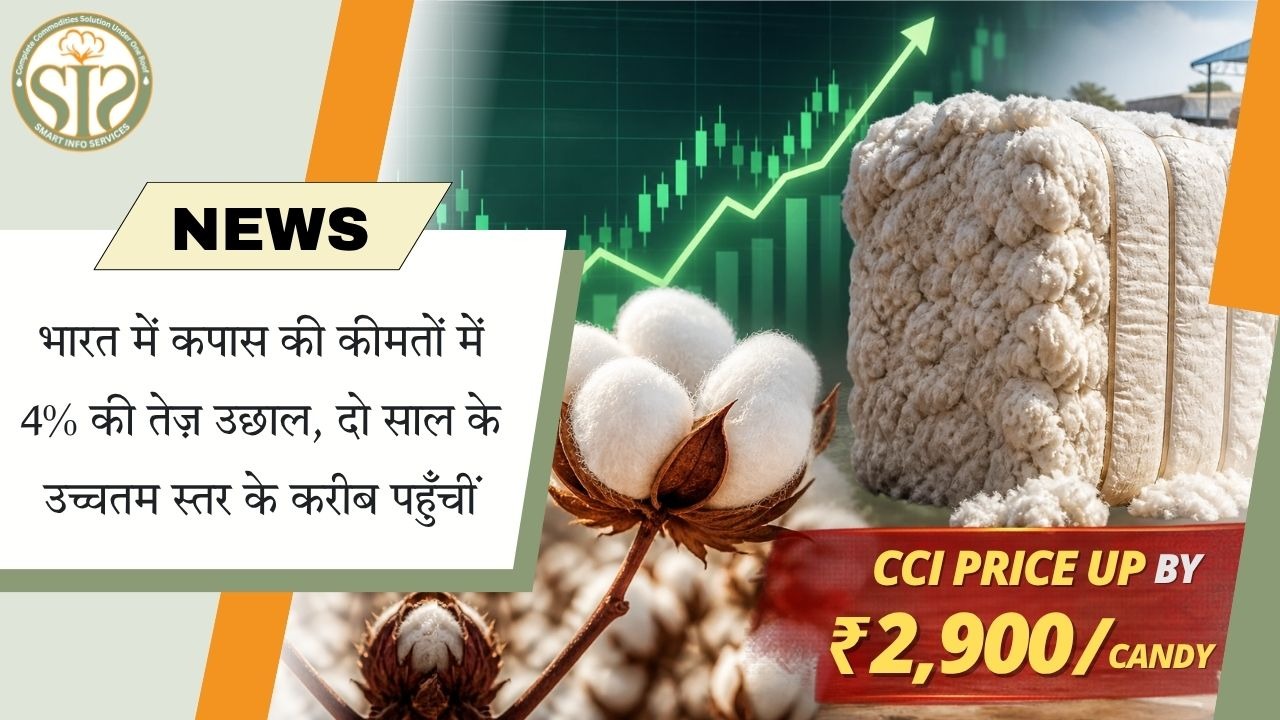
भारत में कपास की कीमतों में 4% की तेज़ उछाल, दो साल के उच्चतम स्तर के करीब पहुँचींभारत में कपास की कीमतों में एक ही दिन में 4% से अधिक की तेज़ बढ़ोतरी दर्ज की गई है, जो इस सीज़न की सबसे बड़ी दैनिक उछाल मानी जा रही है। वैश्विक बाज़ार में मजबूती और सप्लाई चेन में व्यवधान इसके प्रमुख कारण हैं।सोमवार को कॉटन कॉर्पोरेशन ऑफ इंडिया (CCI) ने कपास के दाम में ₹2,900 प्रति कैंडी (356 किलोग्राम) की वृद्धि की। इसके साथ ही कीमतें दो साल के उच्चतम स्तर के करीब पहुँच गई हैं। अंतरराष्ट्रीय बाज़ार में ICE Futures U.S. पर जुलाई डिलीवरी के लिए कपास की कीमत 84.5 सेंट प्रति पाउंड से ऊपर चली गई।मार्च की शुरुआत से अब तक अंतरराष्ट्रीय कपास वायदा में 28% से अधिक की बढ़ोतरी हो चुकी है। घरेलू स्तर पर भी कीमतें ₹54,600 प्रति कैंडी के न्यूनतम स्तर से बढ़कर लगभग ₹65,600 तक पहुँच गई हैं।व्यापारिक सूत्रों के अनुसार, CCI द्वारा की गई यह बढ़ोतरी अप्रत्याशित थी, लेकिन इसके बावजूद कंपनी ने 2 लाख से अधिक गांठों की बिक्री की है। उद्योग से जुड़े लोगों का कहना है कि बढ़ती कीमतों ने कपड़ा निर्माताओं की चिंता बढ़ा दी है। धागे की महंगाई और श्रमिकों की कमी के कारण उत्पादन और डिलीवरी दोनों प्रभावित हो रहे हैं।अंतरराष्ट्रीय मांग भी कीमतों को सहारा दे रही है। चीन, बांग्लादेश और वियतनाम जैसे देशों से भारतीय कपास धागे की मांग में हाल के हफ्तों में तेज़ी आई है, जिसका कारण वैश्विक सप्लाई चेन में जारी बाधाएं हैं।विशेषज्ञों के मुताबिक, CCI के पास अभी भी करीब 40 लाख गांठों का स्टॉक बचा हुआ है और अंतरराष्ट्रीय कीमतों के मजबूत रहने से इसकी बिक्री जारी रहने की संभावना है। वर्तमान में CCI की कीमतें वैश्विक स्तर पर प्रतिस्पर्धी बनी हुई हैं, जिससे बहुराष्ट्रीय कंपनियों की रुचि बढ़ सकती है।इस बीच, देश में कच्ची कपास की आवक प्रतिदिन 35,000 से 45,000 गांठों के बीच बनी हुई है और कुल आवक लगभग 305 लाख गांठों तक पहुँच चुकी है। अनुमान है कि आने वाले महीनों में आपूर्ति स्थिर बनी रह सकती है, जिससे बाज़ार की दिशा पर असर पड़ेगा।और पढ़ें:- रुपया 25 पैसे की गिरावट के साथ 95.33 पर खुला.

रुपया 25 पैसे गिरावट 95.33 USD पर खुला. मंगलवार को भारतीय रुपया डॉलर के मुकाबले 25 पैसे गिरावट 95.33 पर खुला जबकि सोमवार को यह 95.08 पर बंद हुआ था।और पढ़ें :- रुपया 13 पैसे गिरकर 95.08 प्रति डॉलर पर बंद हुआ।

सोमवार को भारतीय रुपया 13 पैसे गिरकर 95.08 प्रति डॉलर पर बंद हुआ, जबकि सुबह यह 94.95 पर खुला था।बाजार बंद होने पर, सेंसेक्स 355.90 अंक या 0.46 प्रतिशत बढ़कर 77,269.40 पर रहा, और निफ्टी 121.75 अंक या 0.51 प्रतिशत बढ़कर 24,119.30 पर रहा।और पढ़ें:- कपास आयात शुल्क में सीमित छूट पर विचार
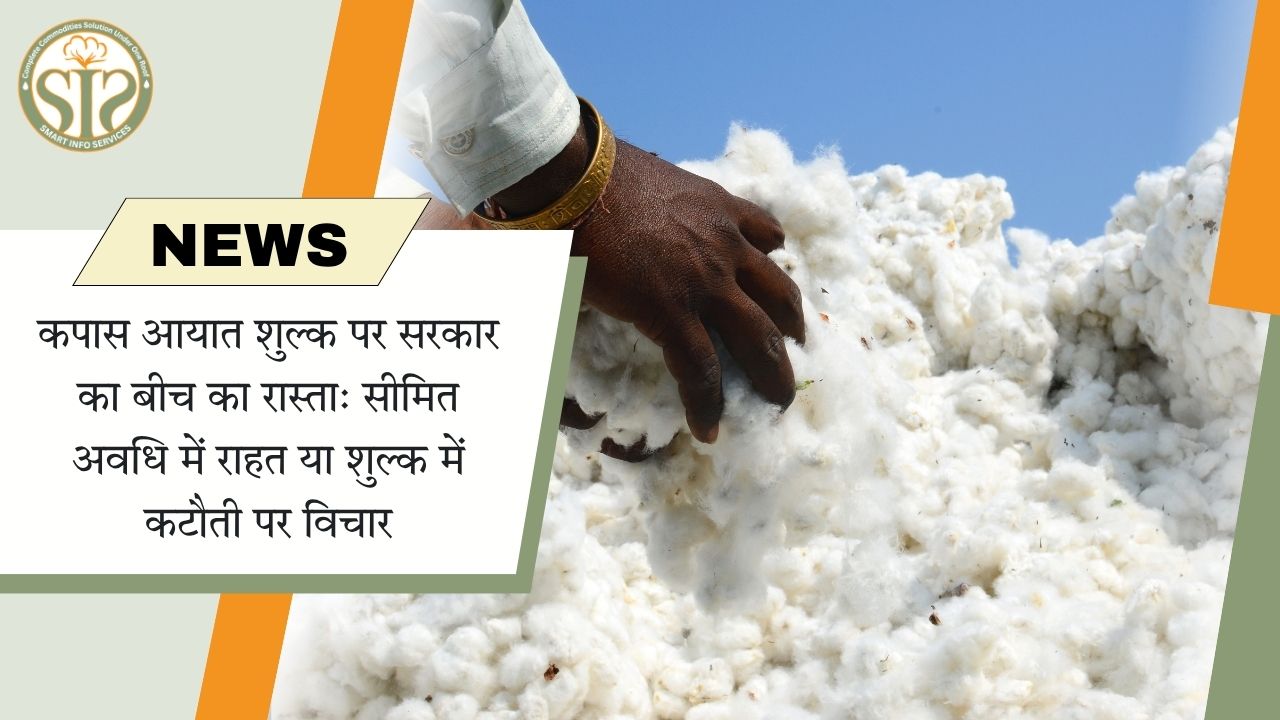
कपास आयात शुल्क पर सरकार का बीच का रास्ता: सीमित अवधि में राहत या शुल्क में कटौती पर विचारकेंद्रीय कृषि मंत्री शिवराज सिंह चौहान ने कपास के आयात शुल्क को लेकर उद्योग और कृषि मंत्रालय के बीच चल रहे मतभेदों के बीच एक “बीच का रास्ता” निकालने का संकेत दिया है। कपड़ा उद्योग ने दिसंबर 2026 तक कपास पर शून्य आयात शुल्क (zero duty) की मांग की थी, जबकि कृषि मंत्रालय इसका विरोध कर रहा है। मंत्रालय का कहना है कि इससे किसानों को गलत संदेश जाएगा, खासकर ऐसे समय में जब कपास की बुवाई शुरू हो चुकी है।सूत्रों के अनुसार, संभावित विकल्पों में एक यह है कि सितंबर-अक्टूबर की अवधि में सीमित समय के लिए शून्य शुल्क आयात की अनुमति दी जाए, क्योंकि अगस्त तक घरेलू स्टॉक मांग को पूरा करने के लिए पर्याप्त माना जा रहा है। दूसरा विकल्प मौजूदा 11% आयात शुल्क को घटाकर लगभग 6–7% करना है।एक उच्चस्तरीय बैठक में, जिसमें FIEO और विभिन्न मंत्रालयों के अधिकारी शामिल थे, यह बताया गया कि इस समय Cotton Corporation of India के पास लगभग 47 लाख गांठ कपास उपलब्ध है। निजी क्षेत्र के स्टॉक को मिलाकर देश में अगस्त तक घरेलू मांग पूरी होने की स्थिति है।हालांकि उद्योग का तर्क है कि घरेलू कीमतें ऊंची हैं, जिससे उत्पादन लागत बढ़ रही है और निर्यात प्रतिस्पर्धा प्रभावित हो रही है। दूसरी ओर, नई फसल अक्टूबर से आने की उम्मीद है, इसलिए सरकार को अल्पकालिक और दीर्घकालिक दोनों पहलुओं को ध्यान में रखते हुए निर्णय लेना होगा।कपास उत्पादन 2025-26 में घटकर लगभग 290.91 लाख गांठ रहने का अनुमान है, जबकि पिछले वर्ष यह 297.24 लाख गांठ था। खेती का रकबा भी घट रहा है, जिसका कारण कीट संक्रमण, वैकल्पिक फसलों की ओर रुझान और बेहतर रिटर्न की उम्मीद है।कॉटन एसोसिएशन ऑफ इंडिया के अनुसार, आने वाले सीजन में उत्पादन 324 लाख गांठ, खपत 315 लाख गांठ और आयात 47 लाख गांठ तक पहुंच सकता है। इसी बीच, सरकार का उद्देश्य उद्योग की जरूरतें और किसानों के हित—दोनों के बीच संतुलन बनाना है।और पढ़ें:- गुजरात के टेक्सटाइल उद्योग में लागत बढ़ने से कपड़ों के दाम बढ़े
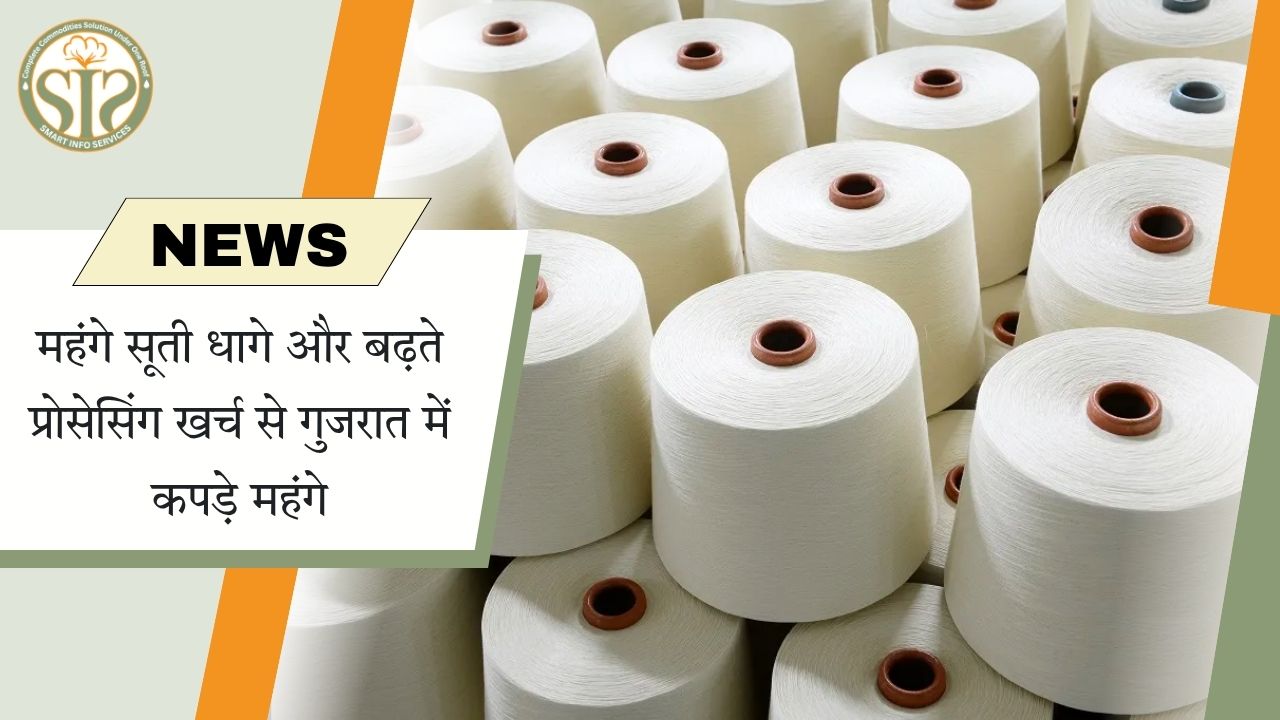
महंगे सूती धागे और बढ़ते प्रोसेसिंग खर्च से गुजरात में कपड़े महंगेगुजरात के टेक्सटाइल उद्योग पर बढ़ती लागत का दबाव साफ दिखाई देने लगा है। चीन और बांग्लादेश से सूती धागे की तेज मांग के चलते इसकी कीमतें लगभग चार साल बाद बढ़कर रिकॉर्ड 300 रुपये प्रति किलोग्राम तक पहुंच गई हैं। इसका असर पूरी टेक्सटाइल वैल्यू चेन पर पड़ा है, जिससे कपड़ों की कीमतों में वृद्धि और बाज़ार में सप्लाई की कमी देखने को मिल रही है।उद्योग से जुड़े विशेषज्ञों के अनुसार, पिछले डेढ़ महीने में कपड़ों की कीमतें 10 से 25 रुपये प्रति मीटर तक बढ़ चुकी हैं। इसके पीछे सिर्फ धागे की महंगाई ही नहीं, बल्कि प्रोसेसिंग चार्ज में बढ़ोतरी भी बड़ी वजह है। ईंधन और केमिकल्स की कीमतों में उछाल ने टेक्सटाइल प्रोसेसिंग को महंगा बना दिया है, जबकि कई पावरलूम यूनिट्स के बंद होने से उत्पादन पर भी असर पड़ा है।व्यापारियों का कहना है कि अब यह लागत वृद्धि रिटेल स्तर तक पहुंच चुकी है और ग्राहकों को भी महंगे कपड़ों का सामना करना पड़ रहा है। हालांकि, मैन्युफैक्चरर्स का मानना है कि घरेलू बाज़ार पर इसका असर सीमित रह सकता है, क्योंकि मौजूदा सीज़न का अधिकांश स्टॉक पहले ही बाजार में पहुंच चुका है। साथ ही, नए सीज़न के लिए कीमतों को पुनः तय करने की गुंजाइश बनी हुई है। अनुमान है कि खुदरा कीमतों में 5% से 8% तक की बढ़ोतरी हो सकती है।दूसरी ओर, एक्सपोर्ट सेक्टर पर इसका नकारात्मक असर पड़ने की आशंका है, क्योंकि पहले से तय कॉन्ट्रैक्ट्स के चलते बढ़ी हुई लागत को ग्राहकों पर डालना मुश्किल है। उद्योग ने कपास की ऊंची कीमतों और सीमित उपलब्धता पर भी चिंता जताई है और केंद्र सरकार से 11% इंपोर्ट ड्यूटी हटाने की मांग की है।लॉजिस्टिक्स लागत में वृद्धि, शिपिंग में देरी और वैश्विक प्रतिस्पर्धा के दबाव ने स्थिति को और गंभीर बना दिया है। यदि हालात नहीं सुधरे, तो उत्पादन, निर्यात और रोजगार पर व्यापक असर पड़ सकता है।और पढ़ें:- अत्यधिक गर्मी के कारण कपास की खेती संकट में; मॉनसून-पूर्व बुवाई में वृद्धि
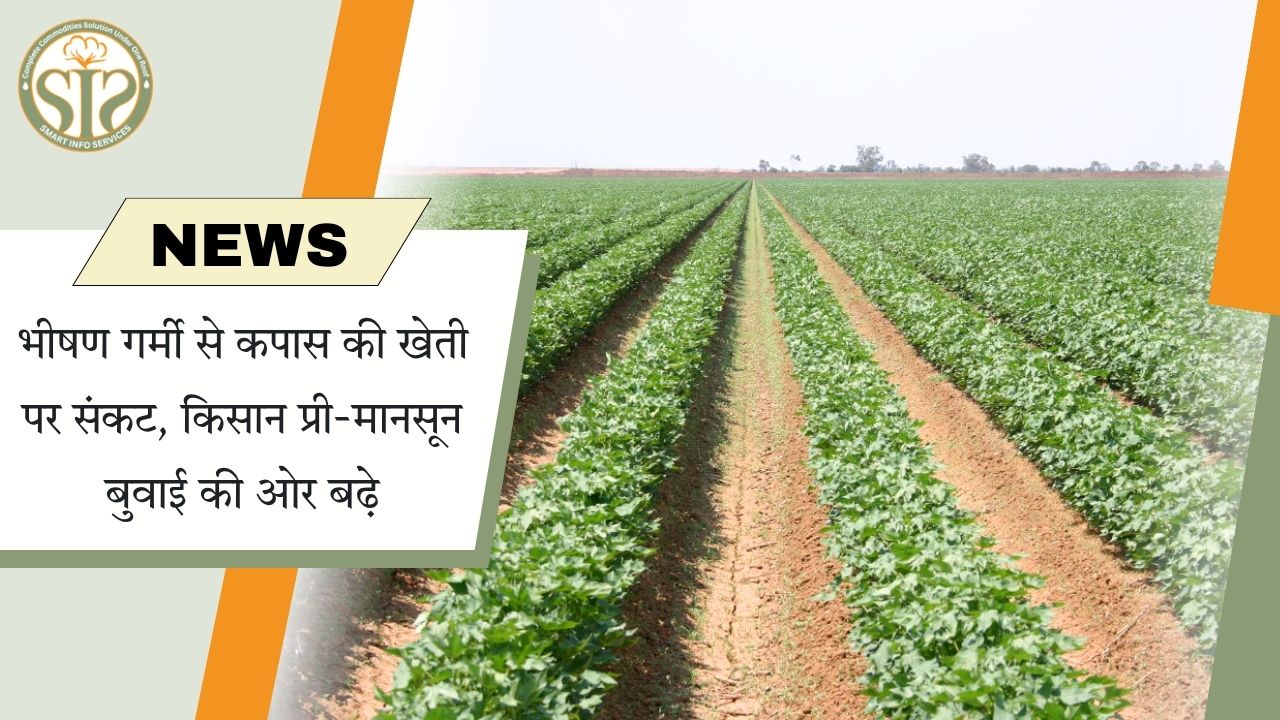
भीषण गर्मी से कपास की खेती पर संकट, किसान प्री-मानसून बुवाई की ओर बढ़ेअकोला जिले में इस साल पड़ रही भीषण गर्मी ने कपास की खेती पर गंभीर संकट खड़ा कर दिया है। अप्रैल महीने से ही तापमान 44 डिग्री सेल्सियस के आसपास बना हुआ है, जबकि कई क्षेत्रों में यह 47 डिग्री तक पहुंच गया है। ऐसे हालातों में किसानों के लिए गर्मियों में कपास की बुवाई करना बेहद जोखिम भरा हो गया है।तेज धूप और बढ़ते तापमान के कारण मिट्टी की सतह अत्यधिक गर्म हो रही है, जिससे बोए गए बीजों के जलने या अंकुरित होने से पहले ही खराब होने का खतरा बढ़ गया है। इस स्थिति ने किसानों की चिंता को और गहरा कर दिया है, जिसके चलते कई किसान अब गर्मी के मौसम में कपास की खेती से दूरी बना रहे हैं।इसके साथ ही पानी की समस्या भी विकराल होती जा रही है। कुओं, तालाबों और बोरवेल का जलस्तर तेजी से गिर रहा है, जिससे सिंचाई के लिए पर्याप्त पानी उपलब्ध नहीं हो पा रहा है। इस वजह से बागवानी करने वाले किसान भी कपास की खेती से पीछे हटने लगे हैं।इन चुनौतियों को देखते हुए अब किसानों का रुझान प्री-मानसून बुवाई की ओर बढ़ रहा है। उनका मानना है कि यदि खेती सही समय पर और अनुकूल मौसम में की जाए, तो उत्पादन बेहतर हो सकता है।कृषि विभाग ने भी किसानों को सलाह दी है कि वे तापमान कम होने तक कपास की बुवाई न करें। जल्दबाजी में लिया गया फैसला आर्थिक नुकसान का कारण बन सकता है। साथ ही, अधिक गर्मी में कीटों का प्रकोप बढ़ने की संभावना भी जताई गई है।यदि आने वाले हफ्तों में गर्मी का प्रकोप जारी रहता है, तो कपास उत्पादन पर इसका सीधा असर पड़ सकता है। इसलिए किसानों को मौसम के पूर्वानुमान और विशेषज्ञों की सलाह के आधार पर ही खेती की योजना बनानी चाहिए।और पढ़ें:- रुपया 03 पैसे की गिरावट के साथ 94.95 पर खुला.

रुपया 03 पैसे गिरावट 94.95/USD पर खुला. सोमवार को भारतीय रुपया डॉलर के मुकाबले 03 पैसे गिरावट 94.95 पर खुला जबकि गुरुवार को यह 94.92 पर बंद हुआ था।और पढ़ें :- CCI ने कपास कीमत ₹300 बढ़ाई, साप्ताहिक बिक्री 2.53 लाख गांठ पार
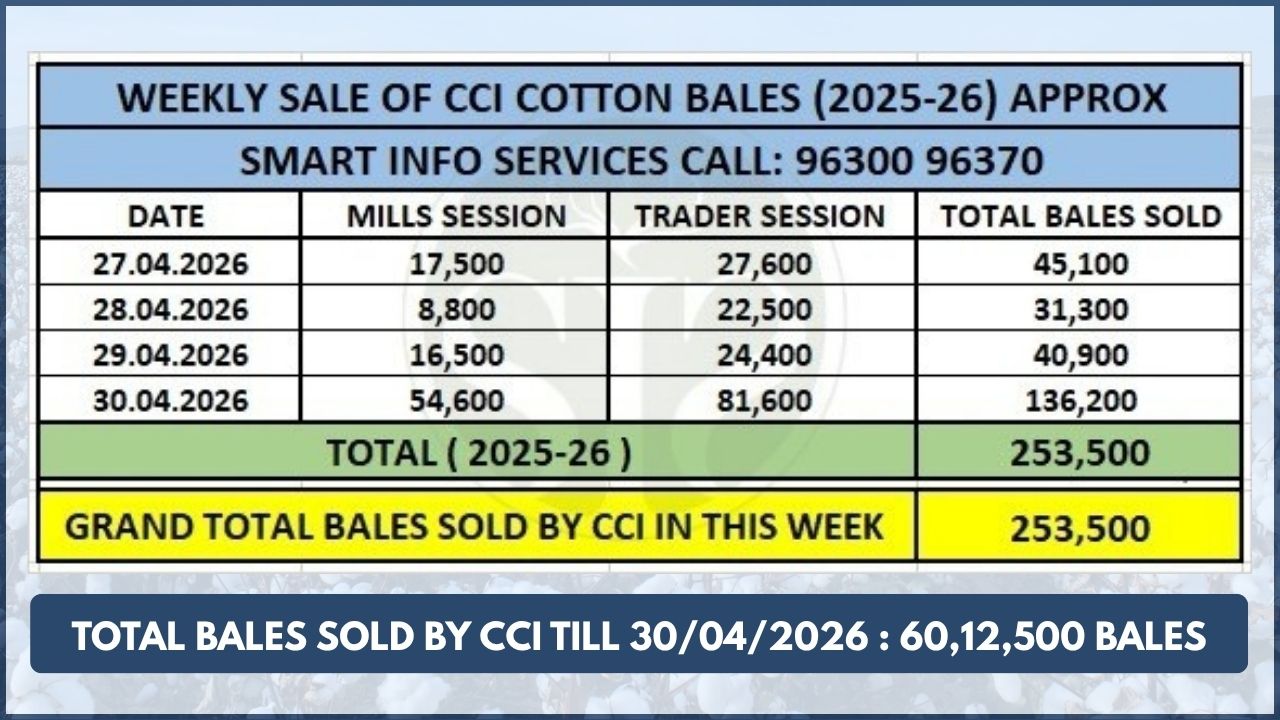
CCI ने कपास के दाम में ₹300 प्रति कैंडी की बढ़ोतरी की; साप्ताहिक नीलामी बिक्री 2.53 लाख गांठों के पारकॉटन कॉरपोरेशन ऑफ इंडिया (CCI) ने 27 से 30 अप्रैल 2026 के दौरान कपास के दाम में ₹300 प्रति कैंडी की वृद्धि की। नीलामी में मिलों और व्यापारियों की मजबूत भागीदारी देखने को मिली, जिसके परिणामस्वरूप 2025–26 सीजन के लिए कुल साप्ताहिक बिक्री लगभग 2,53,500 गांठों तक पहुंच गई।साप्ताहिक बिक्री रिपोर्ट 27 अप्रैल (सोमवार):सप्ताह की शुरुआत मजबूत रही, जिसमें 45,100 गांठों की बिक्री हुई। खरीद में व्यापारियों का दबदबा रहा, जिन्होंने 27,600 गांठें खरीदीं, जबकि मिलों ने 17,500 गांठें खरीदीं।28 अप्रैल (मंगलवार):नीलामी की मात्रा घटकर 31,300 गांठों पर आ गई। व्यापारियों ने 22,500 गांठें खरीदीं, जबकि मिलों ने 8,800 गांठों की खरीद की।29 अप्रैल (बुधवार):बिक्री बढ़कर 40,900 गांठों तक पहुंच गई। मिलों ने 16,500 गांठें खरीदीं, जबकि व्यापारियों ने 24,400 गांठों की खरीद की।30 अप्रैल (गुरुवार):सप्ताह का समापन मजबूती के साथ हुआ, जिसमें एक दिन में सबसे अधिक 1,36,200 गांठों की बिक्री दर्ज की गई। व्यापारियों ने 81,600 गांठों के साथ बढ़त बनाई, जबकि मिलों ने 54,600 गांठें खरीदीं।कुल बिक्री अपडेट:2025–26 सीजन में कुल बिक्री 60,12,500 गांठों तक पहुंच गई है।

ईरान संघर्ष और बढ़ती लागत के बीच मार्च में भारत के कपड़ा उत्पादन में गिरावटमार्च में भारत के कपड़ा उद्योग पर कई मोर्चों से दबाव पड़ा, जिसके चलते उत्पादन में गिरावट दर्ज की गई। रेडीमेड परिधान, सूती वस्त्र और मिश्रित कपड़े जैसे प्रमुख सेगमेंट सबसे अधिक प्रभावित रहे। बढ़ती इनपुट लागत, वैश्विक भू-राजनीतिक तनाव और कमजोर मांग ने इस गिरावट को और तेज कर दिया।आंकड़ों के अनुसार, मार्च में कपड़ा विनिर्माण में साल-दर-साल 3.6% की कमी आई, जबकि परिधान उत्पादन में 14.6% की तेज गिरावट दर्ज की गई। लागत के मोर्चे पर स्थिति काफी चुनौतीपूर्ण रही। सूती धागे की कीमतों में लगभग 20% की वृद्धि हुई, जबकि पैकेजिंग में उपयोग होने वाले पॉलिमर 50% तक महंगे हो गए। इसके अलावा, कागज की कीमतों में 10% और रंग-रसायनों में करीब 40% की बढ़ोतरी ने उत्पादन लागत को और बढ़ा दिया।पश्चिम एशिया में जारी संघर्ष, विशेषकर ईरान से जुड़े घटनाक्रमों ने शिपमेंट और लॉजिस्टिक्स को गंभीर रूप से प्रभावित किया। कई निर्यात ऑर्डर अटक गए, माल ढुलाई की लागत बढ़ गई और युद्ध-जोखिम बीमा भी महंगा हो गया। कच्चे तेल की कीमतों में उतार-चढ़ाव ने इनपुट लागत को और बढ़ाया, जिससे कंपनियों के मार्जिन पर दबाव पड़ा और कार्यशील पूंजी की स्थिति कड़ी हो गई।उत्पादन के विभिन्न खंडों में गिरावट व्यापक रही। पॉलिएस्टर/विस्कोस मिश्रित कपड़े का उत्पादन 13.1% घटा, जबकि सूती कपड़ों में भी लगभग 4% की गिरावट देखी गई। होम टेक्सटाइल सेगमेंट, विशेषकर टेरी टॉवल, में 6.1% की कमी आई। वहीं, रेडीमेड गारमेंट्स में गिरावट अधिक रही—नॉन-निटेड कपड़ों का उत्पादन 14.9% और निटेड परिधानों का उत्पादन 11% कम हुआ।वैश्विक स्तर पर भी चुनौतियां बनी हुई हैं। अमेरिका के टैरिफ, व्यापार मार्गों में व्यवधान और वियतनाम व बांग्लादेश से बढ़ती प्रतिस्पर्धा ने निर्यात पर असर डाला है। साथ ही, घरेलू मांग में कमजोरी भी उद्योग के लिए चिंता का विषय बनी हुई है।कुल मिलाकर, कपड़ा और परिधान क्षेत्र—जो भारत के जीडीपी में 2.3% और औद्योगिक उत्पादन में लगभग 13% योगदान देता है—निकट अवधि में अनिश्चितता का सामना कर रहा है। यदि भू-राजनीतिक तनाव और लागत दबाव जारी रहते हैं, तो उत्पादन और मुनाफे पर असर आगे भी बना रह सकता है।और पढ़ें :- कपास की खेती से बेहतर आय के लिए सुझाव
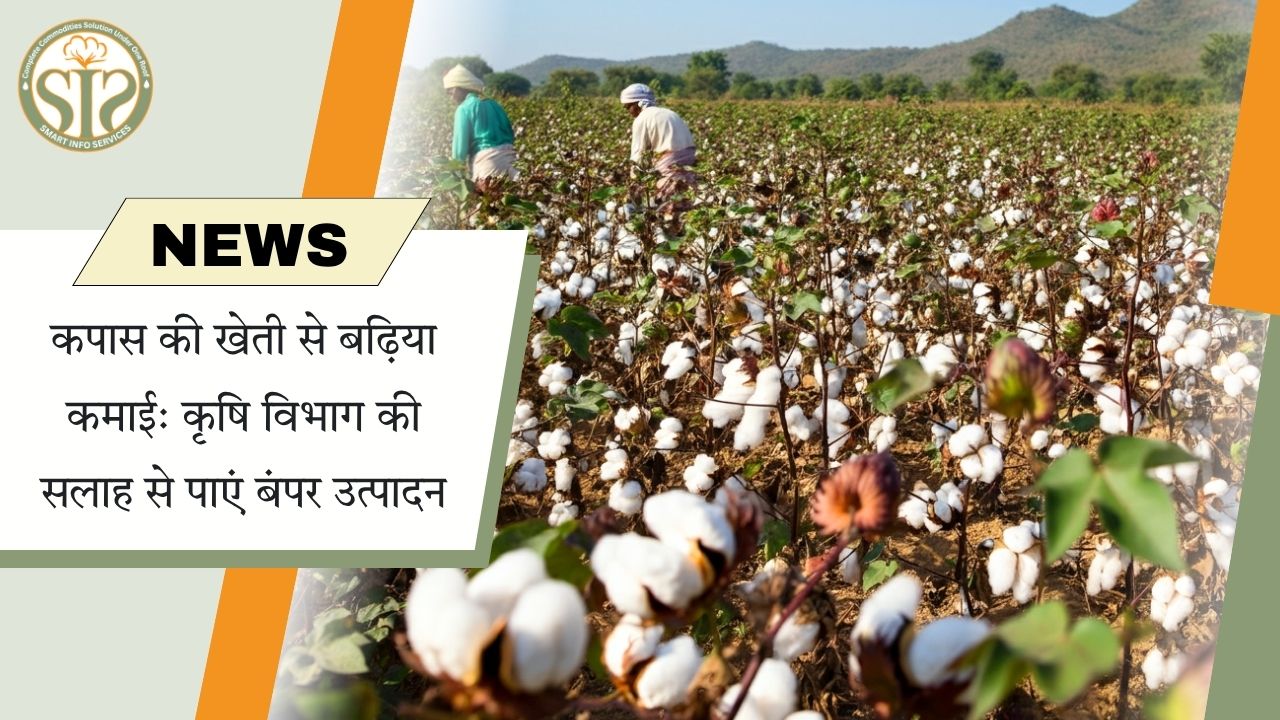
कपास की खेती से बढ़िया कमाई: कृषि विभाग की सलाह से पाएं बंपर उत्पादनखैरथल-तिजारा जिले में कपास की बुवाई 15 अप्रैल से शुरू हो चुकी है और मई के अंतिम सप्ताह तक जारी रहने की संभावना है। इस वर्ष कृषि विभाग ने 6000 हेक्टेयर में कपास की खेती का लक्ष्य रखा है, जो पिछले साल के 10,000 हेक्टेयर लक्ष्य से कम है। पिछले सीजन में केवल 8594 हेक्टेयर में ही बुवाई हो पाई थी। क्षेत्र में कपास का रकबा घटने के पीछे मुख्य कारण हैं—बाजरा और प्याज के बेहतर दाम, पानी की कमी और फसलों में बढ़ते रोग।अच्छी पैदावार के लिए जरूरी तैयारीबेहतर उत्पादन के लिए किसानों को उन्नत किस्म के बीज चुनने और बुवाई से पहले उनका उपचार करने की सलाह दी गई है। खेत की गहरी जुताई करना जरूरी है ताकि मिट्टी की उर्वरता बढ़े। साथ ही, देशी गोबर की खाद का उपयोग फसल के लिए लाभकारी रहता है।यदि खेत में दीमक की समस्या हो, तो प्रति किलो बीज को 10 मि.ली. क्लोरोपाइरीफॉस 20 ईसी और 10 मि.ली. पानी के मिश्रण से उपचारित करें। उपचार के बाद बीज को 30–40 मिनट छाया में सुखाकर ही बुवाई करें।उन्नत बुवाई तकनीक और सिंचाईकृषि विभाग ने डिबलिंग विधि से बुवाई करने की सलाह दी है:कतार से कतार दूरी: 108 सेमीपौधे से पौधे की दूरी: 60 सेमीपूर्व से पश्चिम दिशा में कतारें लगाने से उत्तर-दक्षिण की तुलना में अधिक उत्पादन मिलने की संभावना बताई गई है। पहली सिंचाई बुवाई के लगभग 15 दिन बाद करनी चाहिए।उर्वरक और कीट प्रबंधनउर्वरक: प्रति बीघा 37.5 किग्रा नत्रजन, साथ में 10 किग्रा पोटाश और फॉस्फोरस बुवाई के समय दें।दीमक नियंत्रण: 4–5 मि.ली. क्लोरोपाइरीफॉस 20 ईसी प्रति लीटर पानी में घोलकर जड़ों के पास डालें।रोग नियंत्रण: ब्लाइट रोग के लिए 30–32 ग्राम मैंकोजेब को 15 लीटर पानी में मिलाकर छिड़काव करें।रस चूसक कीट: जेसिड और एफिड नियंत्रण के लिए कुनाल फोर्स 25 ईसी 2 मि.ली. प्रति लीटर पानी में मिलाकर प्रयोग करें।इन वैज्ञानिक तरीकों को अपनाकर किसान कपास की फसल में बेहतर उत्पादन और अधिक मुनाफा हासिल कर सकते हैं।और पढ़ें :- निर्यातकों को राहत, पर कपास आयात शुल्क पर विवाद
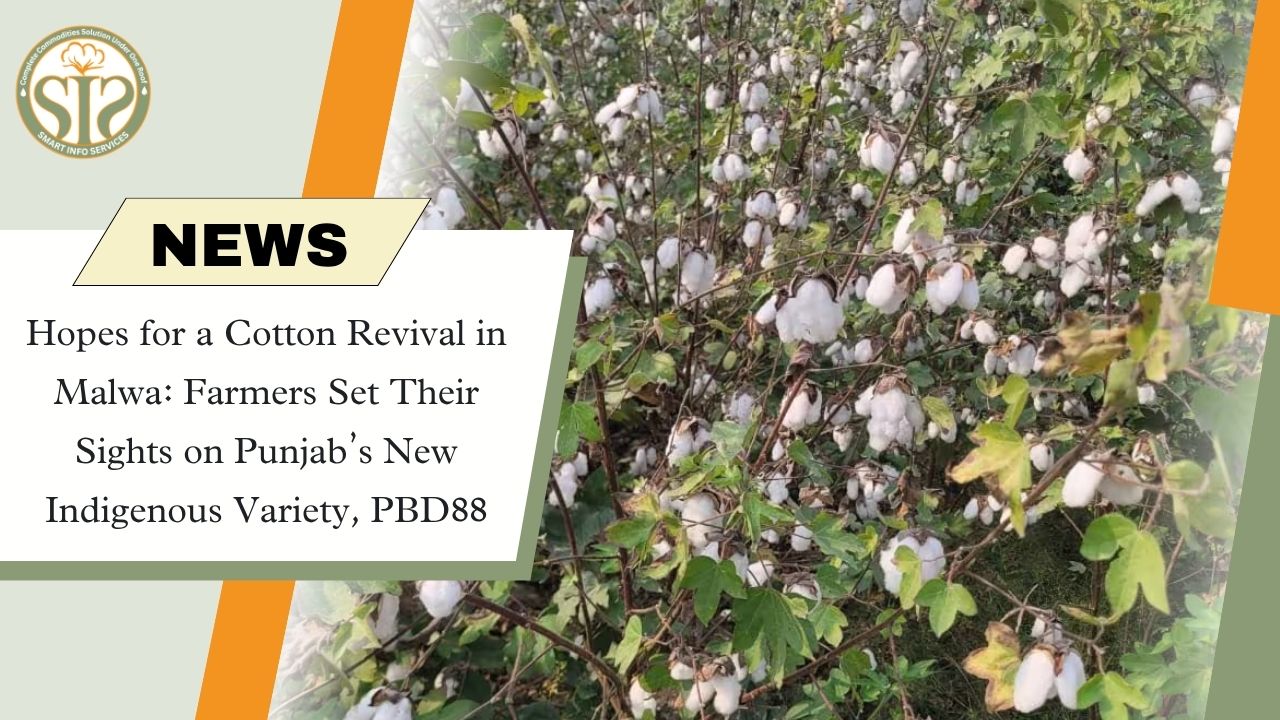
Hopes for a Cotton Revival in Malwa: Farmers Set Their Sights on Punjab’s New Indigenous Variety, PBD88Developed by the Punjab Agricultural University, the new non-Bt indigenous cotton variety, PBD88, holds the potential to give a new direction to cotton cultivation in Punjab's Malwa region this Kharif season. At a time when the state is grappling with the twin challenges of continuously shrinking cotton acreage and rising cultivation costs, this variety has emerged as a beacon of hope for farmers.Over four years of rigorous testing and field trials, PBD88 has captured the attention of scientists due to its superior attributes, such as higher yields, lower cultivation costs, and pest resistance. According to experts, the fiber derived from indigenous cotton varieties also holds significant commercial value within the pharmaceutical industry.Paramjit Singh—a crop breeder at the Bathinda-based Regional Research Centre and the lead scientist behind this variety—stated that PBD88 yields approximately 11 quintals per acre. This output is 1–2 quintals higher than that of traditional indigenous varieties and is considered comparable to the average yield of hybrid cotton varieties.He noted that over the past few years, cotton acreage in Punjab has declined sharply due to infestations of the pink bollworm and whitefly, as well as adverse weather conditions. However, trials have demonstrated that PBD88 is relatively less susceptible to the pink bollworm. Consequently, farmers in the semi-arid regions are being encouraged to adopt this new indigenous variety.The state's cotton acreage plummeted from 2.52 lakh hectares in 2021 to a mere 95,000 hectares in 2024. However, the area expanded to 1.2 lakh hectares in 2025, and the Department of Agriculture has now set a target of 1.5 lakh hectares for 2026.Experts emphasize that the most significant advantage of PBD88 is its cost-effective cultivation. While traditional varieties typically require approximately six rounds of manual picking, the harvest of this variety can be completed with just three rounds of picking. Furthermore, due to its resistance to several major pests, farmers' expenditure on pesticides may also decrease.According to the State Agriculture Department, more than 100 quintals of PBD88 seeds have been made available to farmers for the first season. Approximately 3 kilograms of seeds per acre is sufficient for sowing this variety. It is among the select cotton varieties for which the Punjab government has announced a 33 percent subsidy.Vijay Kumar stated that the objective behind promoting indigenous cotton varieties is not to completely replace Bt cotton, but rather to introduce diversity into farming practices. According to him, indigenous cotton possesses natural resistance against pests such as the whitefly and diseases like leaf curl.He also pointed out that in many non-hybrid varieties, cotton bolls tend to break off and fall if harvesting is delayed, resulting in losses for farmers. However, this issue has been observed to a lesser extent in PBD88, thereby ensuring greater security for the farmers' yield.Read More :- Agricultural Technology: A Technique for Baling Raw Cotton to Prevent Impurities

Innovative Cotton Baling Technology for Reducing Contamination in Raw CottonRising levels of impurities have become a serious challenge within the cotton processing industry. Removing these contaminants requires expensive machinery, which drives up production costs and negatively impacts farmers' incomes. To address this issue, Krishna Somani—a young innovator from Parbhani (Maharashtra)—has developed an innovative machine capable of baling raw cotton directly in the field itself.A Memorandum of Understanding (MoU) has been signed with the Central Institute for Research on Cotton Technology (Nagpur) for the further upgradation and testing of this prototype machine. This institute stands as a leading research center in the field of cotton technology.Background of the ProblemCotton cultivation in India spans an area of approximately 13 million hectares, with Maharashtra making a significant contribution to this total. In India, cotton harvesting is typically carried out in a phased manner (usually 3 to 4 times). Farmers often store their entire harvest at home for months on end so they can sell their entire yield at once. During this storage period: Dust, debris, and other impurities get mixed into the cotton. The risk of infestation by rats and pests increases.There is a decline in both quality and weight (resulting in a loss of up to 5–6 kg per quintal).Fire hazards and health-related risks also escalate.The Solution: On-Farm Baling TechnologyDesigned to tackle these challenges, this machine bales the cotton immediately after it has been harvested. This process offers the following benefits:The cotton is not left exposed, thereby minimizing the accumulation of impurities.Storage becomes both easier and safer.Transportation costs and labor requirements are reduced.While large bales weighing 2.5 tons are typically produced in other countries, this Indian technology produces smaller, lighter bales weighing approximately 35 kilograms—making them easy to lift and handle manually. Technical SpecificationsInitially electrically powered; now, tractor (PTO)-driven units are available.Production Capacity: Approximately 40 bales per hour.Developed through the modification of a silage machine (Total development cost: ~₹9–10 lakhs). Current Machine Price: ₹7–7.5 lakhs. Baling Cost per Quintal: ₹100–₹150.Storage and Economic BenefitsDue to the uniform size of the bales, storage becomes significantly more organized—a 10×10-foot room can accommodate 35–40 quintals of cotton.In one instance involving a farmer, the use of baling and warehouse storage—which facilitated securing a better market price—resulted in an additional profit of ₹1.1 lakhs on a total yield of 110 quintals.Institutional Collaboration and Future ProspectsPartnerships have been established with the Central Institute for Research on Cotton Technology and Bajaj Industries for the development and dissemination of this technology. Additionally, financial assistance amounting to ₹20 lakhs has been provided under the ‘RAFTAAR’ scheme.According to the Institute's Director, Dr. S. K. Shukla, efforts are currently underway to incorporate this machine into government subsidy schemes, thereby ensuring that this technology reaches a wider base of farmers.ConclusionThe technology for field-level baling of raw cotton not only minimizes impurities but also enhances the efficiency of storage, transportation, and marketing. Although awareness regarding this technology remains limited at present, it holds the potential to bring about a transformative change within the cotton industry in the future.Read More :- The rupee opened at 94.75 down 14 paise.

The rupee opened at 94.75 against the USD, a decline of 14 paise.On Thursday, the Indian rupee opened at 94.75 against the dollar a decline of 14 paise whereas it had closed at 94.61 on Wednesday.Read more:- The rupee closed 43 paisa higher against the dollar at 94.61

The Indian rupee opened at 95.04 per US dollar on Wednesday and appreciated by 43 paise to settle at 94.61 by the close.At close, the Sensex was up 940.73 points or 1.22 percent at 77,958.52, and the Nifty was up 298.15 points or 1.24 percent at 24,330.95. About 2755 shares advanced, 1287 shares declined, and 161 shares unchanged.read more :- Demand for Testing of Nanded-44 Bt Cotton

Demand for Organizing Demonstrations of the ‘Nanded-44’ BT Cotton Seed VarietyIn Jalgaon district, an urgent need is being felt for demonstrations of advanced cotton varieties to ensure better cotton production. Farmers have demanded that demonstrations of the ‘Nanded-44’ BT cotton variety—developed by the Parbhani Agricultural University—be organized once again this year, so that the maximum number of farmers can benefit from it.During the 2022–23 season, successful demonstrations of this variety were conducted across an area of approximately 200 acres within the district. Under this initiative, seeds were distributed to various farmer groups, and cultivation was carried out using both dryland farming techniques and artificial irrigation methods.‘Nanded-44’ was originally a non-BT cotton variety that remained extremely popular in the state prior to 2001. Due to its high productivity and reliability, it effectively prevented numerous varieties introduced by private companies from establishing a foothold in the market. However, following 2001, its influence waned due to the widespread adoption of BT cotton and the influx of new varieties introduced by private firms. Subsequently, a BT version of this very variety was developed, thereby restoring its relevance among farmers.Over the past three years, concerted efforts have been undertaken by Mahabeej and the Parbhani Agricultural University to promote and disseminate this variety. As part of these efforts, cultivation was encouraged by distributing free seeds to selected farmer groups. In Jalgaon district alone, this variety was cultivated across an area of approximately 200 acres.Farmers have now demanded that, this year as well, seeds be made available to farmer groups and individual farmers in regions such as Chalisgaon, Jamner, Parola, Amalner, and Chopda, in order to facilitate the further expansion of this variety.Furthermore, it is essential to ensure the active participation of agricultural assistants and local agricultural officials, so that farmers can receive technical guidance through these demonstration programs, leading to an increase in both overall production and productivity.read more :- Cotton Mission 2031: An Initiative Towards a Self-Reliant India

Cotton Productivity Mission: A Major Step Towards Self-Reliance and Global Competitiveness by 2031Under the chairmanship of Prime Minister Narendra Modi, the Union Cabinet has approved the "Cotton Productivity Mission" (2026–27 to 2030–31), for which a provision of ₹5,659.22 crore has been made. The objective of this mission is to enhance productivity and improve quality within the cotton sector, thereby making India more competitive in the global textile market.This initiative aligns with the government's '5F' vision—Farm to Fibre, Fibre to Factory, Factory to Fashion, and Fashion to Foreign. Under the mission, high-yielding, climate-resilient, and pest-resistant seeds will be developed. Additionally, modern techniques such as the High-Density Planting System (HDPS), close spacing, and Integrated Cotton Management will be promoted, and the production of Extra Long Staple (ELS) cotton will be encouraged.To improve cotton quality, efforts will focus on farmer training, the modernization of ginning and processing units, and the strengthening of testing infrastructure in accordance with international standards. Through the "Kasturi Cotton Bharat" brand, the global identity, traceability, and credibility of Indian cotton will be enhanced.Furthermore, transparent pricing and improved market access for farmers will be ensured through digital mandis (markets). The recycling of cotton waste and the principles of a circular economy will also be promoted. Concurrently, the fiber base will be expanded by incorporating alternative natural fibers such as flax, ramie, sisal, milkweed, bamboo, and banana.This mission will be implemented jointly by the Ministry of Agriculture and Farmers Welfare and the Ministry of Textiles. It will involve the participation of the ICAR, CSIR, and various State Agricultural Universities. Initially, the focus will be on 140 districts across 14 states, and approximately 2,000 ginning units will be empowered. The mission aims to increase cotton productivity from 440 kilograms per hectare to 755 kilograms per hectare by 2031, and to raise total production to 498 lakh bales. This initiative is expected to benefit approximately 32 lakh farmers. It is regarded as a significant step towards making India self-reliant in the cotton sector.read more :- The rupee opened at 95.04 gaining 25 paise.

The rupee opened at 95.04 against the USD, gaining 25 paise.On Wednesday, the Indian rupee strengthened by 25 paise against the dollar to open at 95.04, whereas it had closed at 95.29 on Tuesday.Read more:- Parbhani (Maharashtra) News: Cotton Auctions in Manvat Suspended from May 15; Farmers Urged to Sell Promptly.
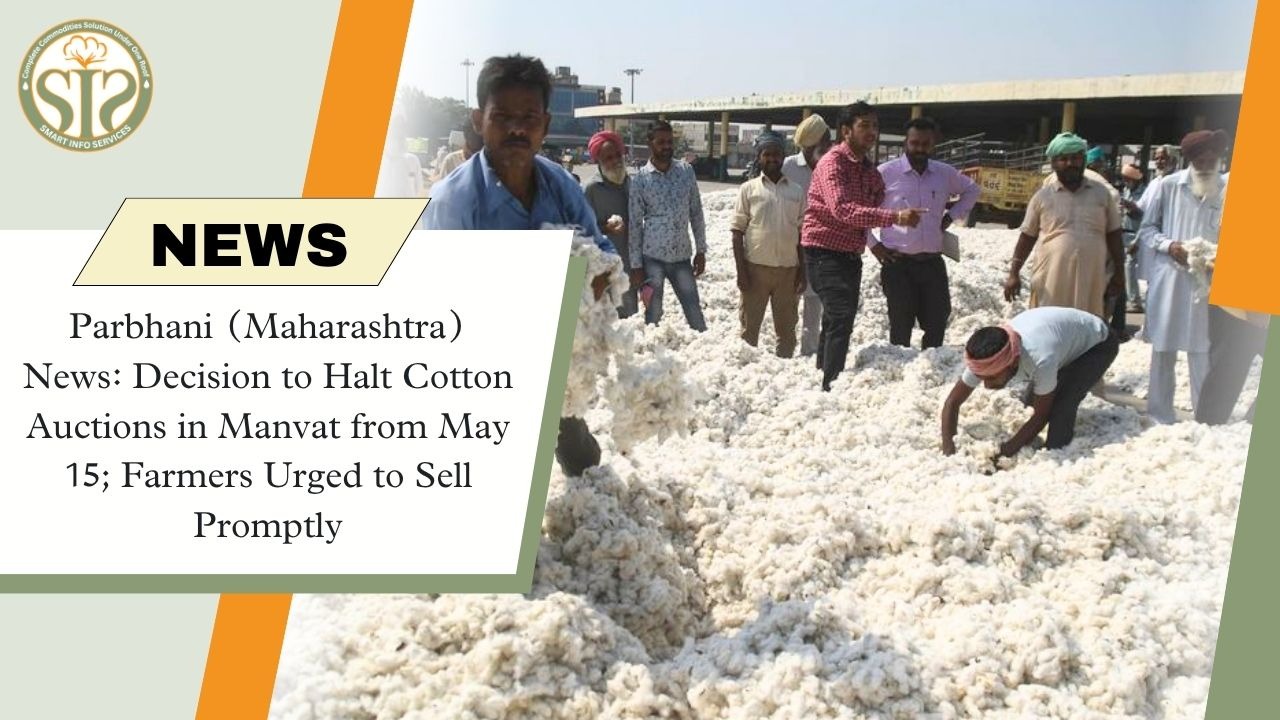
Parbhani (Maharashtra) News: Decision to Halt Cotton Auctions in Manvat from May 15; Farmers Urged to Sell PromptlyThe Manvat Agricultural Produce Market Committee (APMC) in the Parbhani district of Maharashtra has announced that the ongoing cotton auction process at the Chhatrapati Shivaji Yard will be suspended starting May 15. This decision has been taken in view of the escalating heat and the fact that the season is drawing to a close. The administration has appealed to farmers to sell their cotton through the auction process before May 15.The cotton auctions commenced during the second week of November. Initially, cotton prices hovered below the Minimum Support Price (MSP); consequently, the Cotton Corporation of India (CCI) procured 163,000 quintals of cotton at the guaranteed rate by the first week of February.Subsequently, the market witnessed a steady upward trend in prices—on February 5, the rate stood at ₹7,190 per quintal, rising to ₹7,325 by the end of February. The rate climbed further in March; cotton was sold at ₹7,430 per quintal on March 8 and at ₹7,525 on March 13. The bullish trend persisted through the final week of March and into April, with prices breaching the ₹8,000 mark.On April 20, cotton prices touched ₹8,800, and after April 22, they surged past the ₹9,000 threshold. On May 2, the average price was recorded at ₹9,330 per quintal, rising to ₹9,400 on May 4.According to the APMC administration, since prices remained low during the initial phase of the season, approximately 80 percent of farmers had already sold their produce. The market subsequently rallied, leading to a significant surge in prices during the final phase. This turn of events left those farmers who had sold their produce earlier feeling a sense of loss.APMC Chairman Pankaj Ambegaonkar stated that the situation would be reviewed after May 15, and a decision regarding the resumption of auctions would be taken based on the prevailing circumstances.read more :- The rupee closed 04 paisa higher against the dollar at 95.29

The Indian rupee opened at 95.33 per US dollar on Tuesday and appreciated by 04 paise to settle at 95.29 by the close.At close, the Sensex was down 251.61 points or 0.33 percent at 77,017.79, and the Nifty was down 86.50 points or 0.36 percent at 24,032.80. About 1890 shares advanced, 2110 shares declined, and 169 shares unchanged.read more :- Rajasthan: Crops Devastated in Several Villages, Including Khuiyan
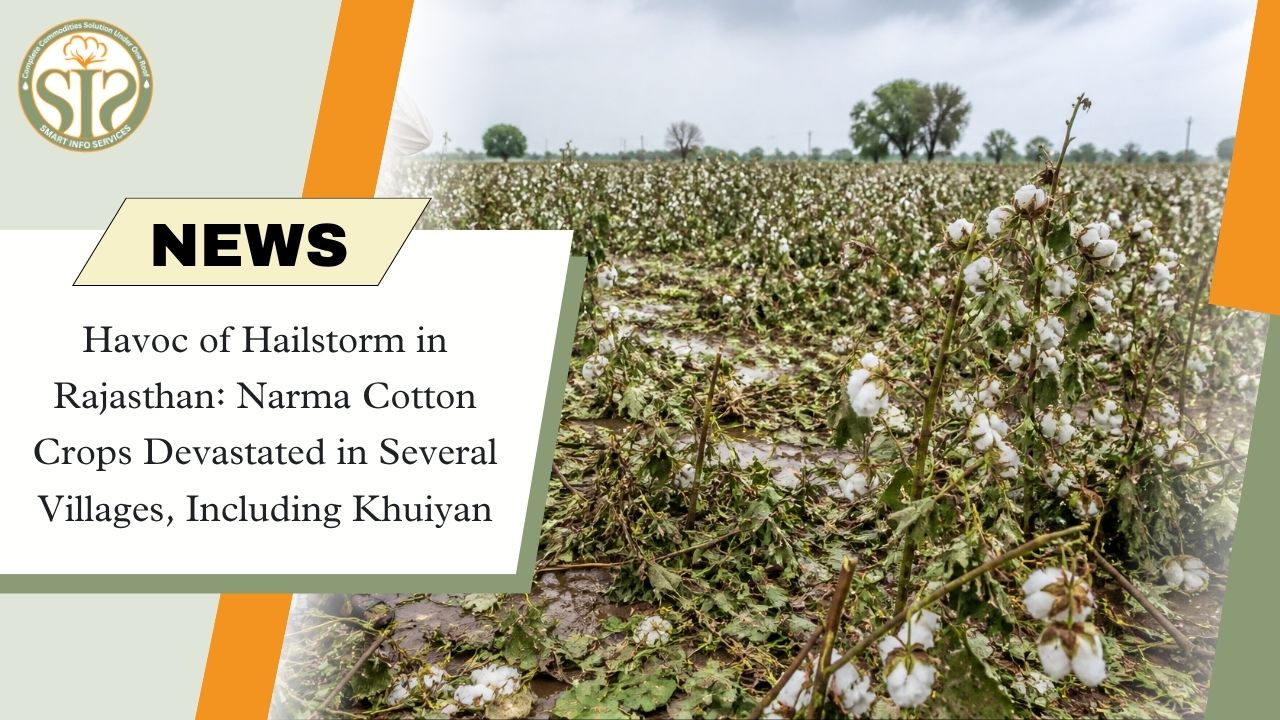
Havoc of Hailstorm in Rajasthan: Narma Cotton Crops Devastated in Several Villages, Including KhuiyanOn Sunday evening, the weather in Rajasthan's Nohar region took a sudden turn, resulting in strong winds, rain, and hailstorms across several surrounding villages, including Khuiyan. This sudden shift has inflicted severe damage upon the farmers' Narma cotton crops.In villages such as Nimla, Khuiyan, and Birkali, heavy rainfall accompanied by strong winds lashed down amidst dark, ominous clouds. During this episode, pea-sized hailstones continued to fall for approximately 5 to 8 minutes, causing the standing crops in the fields to be flattened.The impact of the hailstorm was most acutely felt in Khuiyan and Mandarpura, where the Narma cotton crops were completely devastated. According to local farmer Gorishankar, the hailstorm that followed the heavy rain has severely damaged the crops.Farmer Manjit Godara noted that the younger Narma cotton crops, in particular, have borne the brunt of this natural calamity.While the change in weather did provide some relief from the heat, the strong winds caused tree branches to snap and fall onto the roads in several locations, subsequently disrupting traffic and commuting.read more :- Cotton Prices Surge 4%, Nearing Two-Year High
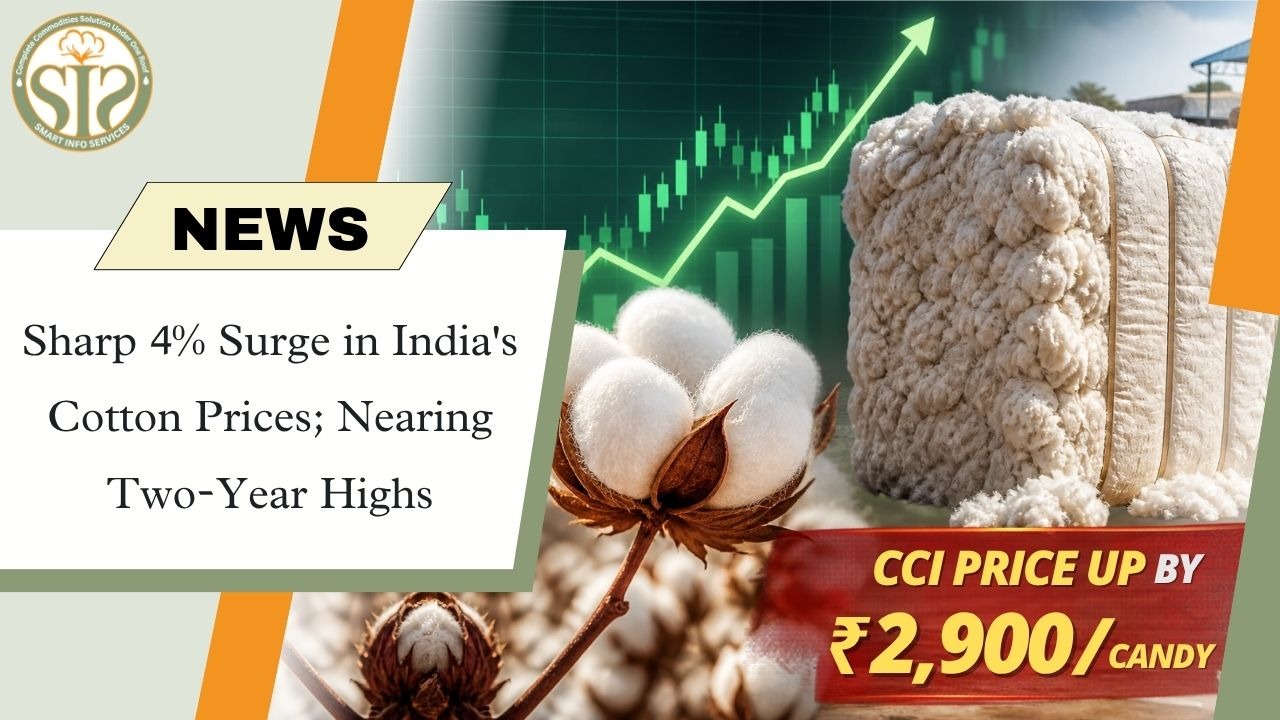
Sharp 4% Surge in India's Cotton Prices; Nearing Two-Year HighsCotton prices in India have recorded a sharp increase of over 4% in a single day—marking what is considered the largest daily surge of the current season. Strength in the global market and disruptions in supply chains are cited as the primary reasons for this rise.On Monday, the Cotton Corporation of India (CCI) hiked cotton prices by ₹2,900 per candy (356 kilograms). With this adjustment, prices have edged closer to a two-year high. In the international market, cotton futures for July delivery on ICE Futures U.S. rose above 84.5 cents per pound.Since the beginning of March, international cotton futures have witnessed a surge of over 28%. Domestically, too, prices have risen from a low of ₹54,600 per candy to reach approximately ₹65,600.According to trade sources, the price hike implemented by the CCI was unexpected; nevertheless, the corporation has successfully sold over 200,000 bales. Industry insiders note that the escalating prices have heightened concerns among textile manufacturers. Both production and delivery schedules are being adversely affected by rising yarn costs and a shortage of labor.International demand is also providing support to prices. In recent weeks, demand for Indian cotton yarn has surged in countries such as China, Bangladesh, and Vietnam—a trend attributed to ongoing disruptions within global supply chains.According to experts, the CCI currently holds a residual stock of approximately 4 million bales, and given the continued strength of international prices, sales are expected to persist. At present, the CCI's pricing remains globally competitive, a factor that could potentially boost interest among multinational corporations.Meanwhile, daily arrivals of raw cotton across the country remain steady at between 35,000 and 45,000 bales, bringing the total cumulative arrivals to approximately 30.5 million bales. It is estimated that supply may remain stable in the coming months, which will impact the direction of the market.read more :- The Rupee opened at 95.33 registering a decline of 25 paise.

The Rupee opened at 95.33 against the USD, down 25 paise.On Tuesday, the Indian Rupee opened at 95.33 against the Dollar a decline of 25 paise whereas it had closed at 95.08 on Monday.Read more:- The Rupee fell by 13 paise to close at 95.08 per dollar.

On Monday, the Indian Rupee fell by 13 paise to close at 95.08 per dollar, while it had opened at 94.95 in the morning.At close, the Sensex was up 355.90 points or 0.46 percent at 77,269.40, and the Nifty was up 121.75 points or 0.51 percent at 24,119.30.read more :- Consideration of Limited Exemption on Cotton Import Duty
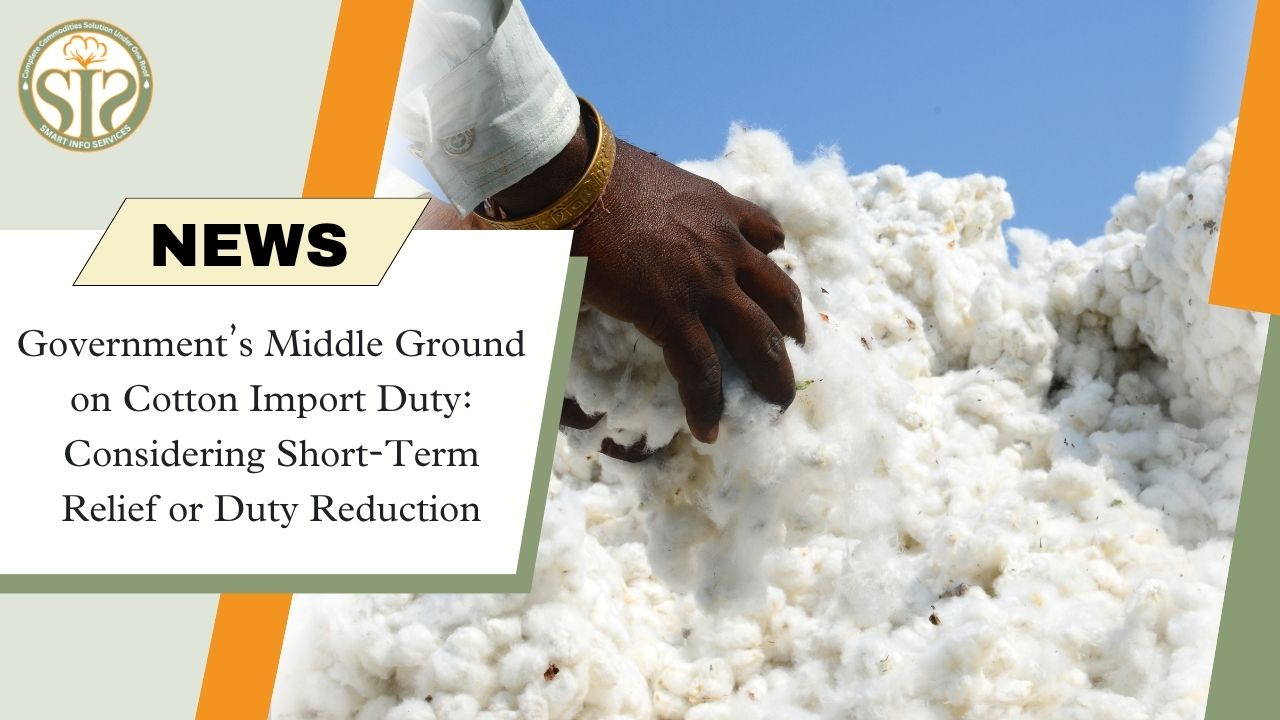
Government’s Middle Ground on Cotton Import Duty: Considering Short-Term Relief or Duty ReductionUnion Agriculture Minister Shivraj Singh Chouhan has signaled a move toward finding a "middle ground" amidst the ongoing differences between the industry and the Ministry of Agriculture regarding cotton import duties. The textile industry had demanded zero import duty on cotton until December 2026, a proposal that the Ministry of Agriculture has been opposing. The Ministry argues that such a move would send a negative signal to farmers, particularly at a time when cotton sowing has already commenced.According to sources, one potential option under consideration is to permit zero-duty imports for a limited duration during the September-October period, as domestic stocks are deemed sufficient to meet demand until August. A second option involves reducing the existing 11% import duty to approximately 6–7%.During a high-level meeting attended by officials from the FIEO and various government ministries, it was noted that the Cotton Corporation of India currently holds a stock of approximately 47 lakh bales of cotton. When combined with private sector stocks, the country is well-positioned to meet domestic demand until August.However, the industry argues that domestic prices remain high, thereby driving up production costs and undermining export competitiveness. Conversely, with the new harvest expected to arrive starting in October, the government must make a decision that carefully balances both short-term and long-term considerations.Cotton production for the 2025–26 season is projected to decline to approximately 290.91 lakh bales, down from 297.24 lakh bales in the previous year. The acreage under cultivation is also shrinking—a trend attributed to pest infestations, a shift toward alternative crops, and the expectation of better financial returns elsewhere.According to the Cotton Association of India, for the upcoming season, production is projected to reach 324 lakh bales, consumption is estimated at 315 lakh bales, and imports could rise to 47 lakh bales. Against this backdrop, the government aims to strike a delicate balance between the needs of the industry and the interests of the farmers.read more :- Clothing prices have risen in Gujarat's textile industry due to increased costs.

Rising Cotton Yarn Prices and Processing Costs Drive Up Clothing Prices in GujaratThe pressure of rising costs on Gujarat's textile industry has become clearly evident. Driven by strong demand for cotton yarn from China and Bangladesh, prices have surged to a record high of ₹300 per kilogram—a level not seen in nearly four years. This impact has reverberated across the entire textile value chain, leading to an increase in clothing prices and a shortage of supply in the market.According to industry experts, clothing prices have risen by ₹10 to ₹25 per meter over the past month and a half. The primary reasons behind this are not limited to the rising cost of yarn alone; an increase in processing charges has also played a significant role. A surge in fuel and chemical prices has made textile processing more expensive, while the closure of several powerloom units has adversely affected production output.Traders report that this cost escalation has now reached the retail level, and consumers are consequently facing higher prices for clothing. However, manufacturers believe that the impact on the domestic market may remain limited, as the majority of the stock for the current season has already reached the market. Furthermore, there remains scope to renegotiate prices for the upcoming season. It is estimated that retail prices could witness an increase of 5% to 8%.Conversely, the export sector is feared to face a negative impact, as it is difficult to pass on these increased costs to clients due to pre-existing contracts. The industry has also expressed concern regarding the high prices and limited availability of raw cotton, urging the Central Government to waive the 11% import duty currently in place.Rising logistics costs, shipping delays, and the pressure of global competition have further exacerbated the situation. If conditions do not improve, the repercussions on production, exports, and employment could be widespread.read more :- Cotton Cultivation in Crisis Due to Extreme Heat; Pre-Monsoon Sowing Increases
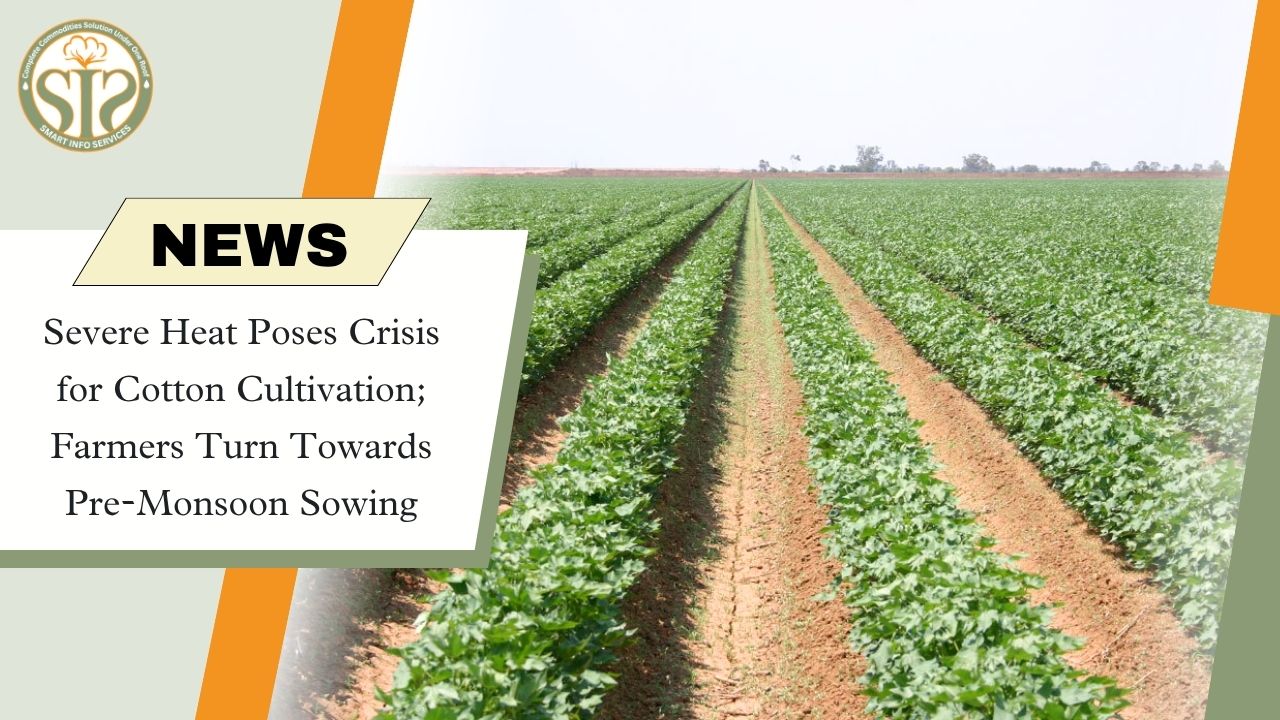
Severe Heat Poses Crisis for Cotton Cultivation; Farmers Turn Towards Pre-Monsoon SowingThe severe heat gripping Akola district this year has created a grave crisis for cotton cultivation. Since the month of April, temperatures have hovered around 44 degrees Celsius, while in several regions, they have even soared to 47 degrees. Under these circumstances, sowing cotton during the summer season has become an extremely risky endeavor for farmers.Due to the scorching sun and rising temperatures, the soil surface is becoming excessively hot, thereby increasing the risk of sown seeds burning up or perishing before they even get a chance to germinate. This situation has deepened the anxieties of farmers, prompting many to steer clear of cotton cultivation during the current summer season.Furthermore, the water crisis is also intensifying rapidly. Water levels in wells, ponds, and borewells are plummeting fast, resulting in an acute shortage of water available for irrigation. Consequently, even farmers engaged in horticulture are beginning to withdraw from cotton cultivation.In light of these challenges, farmers are now increasingly gravitating towards pre-monsoon sowing. They believe that if cultivation is undertaken at the right time and under favorable weather conditions, the yield could be significantly better.The Agriculture Department has also advised farmers to refrain from sowing cotton until temperatures subside. Hasty decisions could lead to financial losses. Additionally, concerns have been raised regarding the potential for an increased infestation of pests amidst the extreme heat.If the intense heat persists over the coming weeks, it could have a direct impact on cotton production. Therefore, farmers should formulate their cultivation plans strictly based on weather forecasts and expert advice.read more :- The Rupee opened at 94.95 down 3 paise.

The Rupee opened at 94.95/USD down 3 paise.On Monday, the Indian Rupee opened at 94.95 against the Dollar a decline of 3 paise whereas it had closed at 94.92 on Thursday.Read more:- CCI Hikes Cotton Prices by ₹300; Weekly Sales Cross 2.53 Lakh Bales
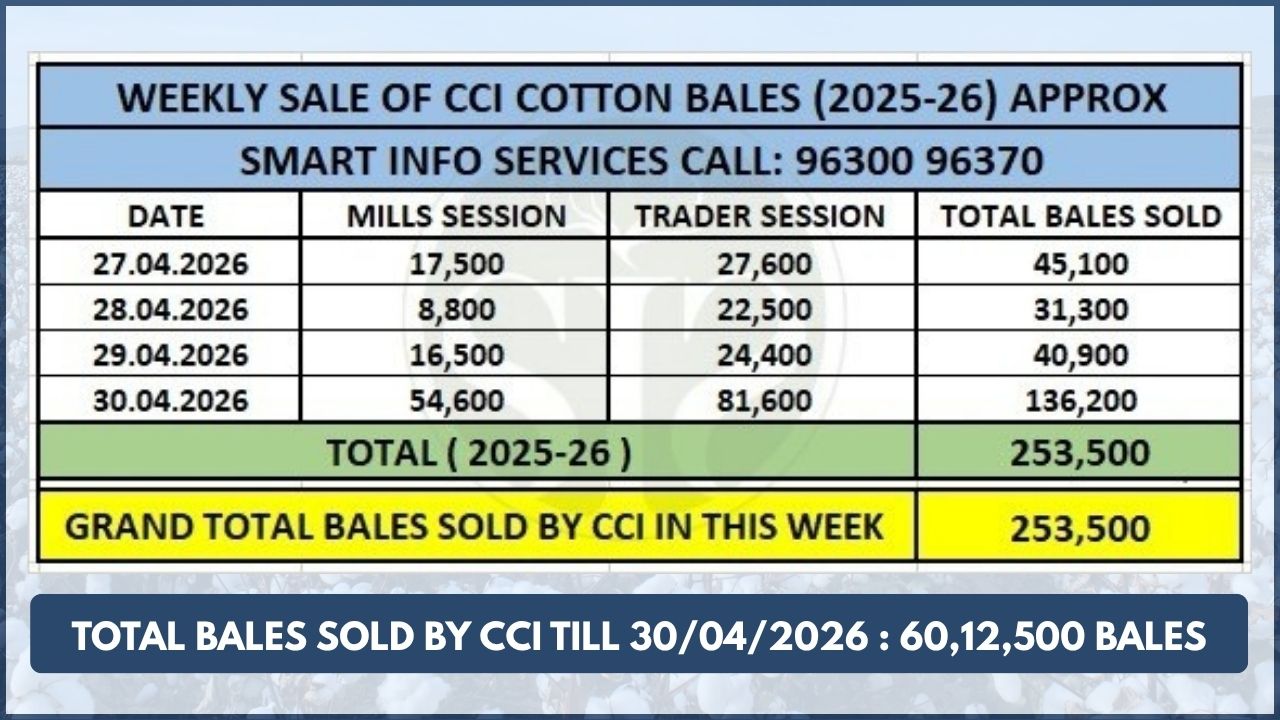
CCI Hikes Cotton Prices by ₹300 per Candy; Weekly Auction Sales Cross 2.53 Lakh BalesThe Cotton Corporation of India (CCI) increased cotton prices by ₹300 per candy during the week of April 27–30, 2026. Strong participation from mills and traders was observed in the auctions, resulting in total weekly sales of approximately 2,53,500 bales for the 2025–26 season.Day-wise Auction HighlightsApril 27 (Monday):The week opened on a firm note with sales of 45,100 bales. Traders led the buying activity with 27,600 bales, while mills procured 17,500 bales.April 28 (Tuesday):Auction volumes eased to 31,300 bales. Traders remained active, purchasing 22,500 bales, while mills bought 8,800 bales.April 29 (Wednesday):Sales picked up to 40,900 bales. Mills purchased 16,500 bales, whereas traders accounted for 24,400 bales.April 30 (Thursday):The week concluded on a strong note, registering the highest single-day sales of 1,36,200 bales. Traders dominated with 81,600 bales, while mills purchased 54,600 bales.Cumulative Sales Update:Total sales for the 2025–26 season have reached 60,12,500 bales.

India's textile output declines in March amid Iran conflict and rising costsIn March, India's textile industry came under pressure from many fronts, due to which a decline in production was recorded. Key segments like readymade garments, cotton textiles and blended fabrics were the most affected. Rising input costs, global geopolitical tensions and weak demand further accelerated this decline.According to the data, textile manufacturing declined by 3.6% year-on-year in March, while apparel production recorded a sharp decline of 14.6%. The situation remained quite challenging on the cost front. Cotton yarn prices rose by nearly 20%, while polymers used in packaging became costlier by 50%. Additionally, an increase in the prices of paper by 10% and that of dyes and chemicals by nearly 40% further increased the cost of production.The ongoing conflict in West Asia, particularly developments involving Iran, severely impacted shipments and logistics. Many export orders were stuck, freight costs increased, and war-risk insurance also became expensive. Fluctuations in crude oil prices further increased input costs, putting pressure on companies' margins and tightening working capital conditions.The decline was widespread across various segments of production. Production of polyester/viscose blended fabrics declined by 13.1%, while cotton fabrics also saw a decline of about 4%. The home textile segment, particularly terry towels, declined 6.1%. At the same time, the decline in readymade garments was greater—non-knitted garments production fell by 14.9% and knitted garments production fell by 11%.Challenges remain at the global level also. US tariffs, disruption in trade routes and increasing competition from Vietnam and Bangladesh have impacted exports. Also, weakness in domestic demand also remains a matter of concern for the industry.Overall, the textile and apparel sector—which contributes 2.3% to India's GDP and about 13% to industrial output—faces uncertainty in the near term. If geopolitical tensions and cost pressures continue, the impact on production and profits could persist further.read more :- Suggestions for Better Income from Cotton Cultivation

Good earning from cotton cultivation: Get bumper production with the advice of Agriculture DepartmentSowing of cotton has started in Khairthal-Tijara district from April 15 and is likely to continue till the last week of May. This year, the Agriculture Department has set a target of cotton cultivation in 6000 hectares, which is less than last year's target of 10,000 hectares. Last season, sowing could be done only in 8594 hectares. The main reasons behind the decline in cotton area in the region are better prices of millet and onion, lack of water and increasing diseases in the crops.Necessary preparation for good yieldFor better production, farmers have been advised to choose improved varieties of seeds and treat them before sowing. It is necessary to do deep plowing of the field so that the fertility of the soil increases. Also, use of local cow dung manure is beneficial for the crop.If there is a problem of termites in the field, then apply 10 ml per kg seed. Chlorpyrifos 20 EC and 10 ml. Treat with water mixture. After treatment, dry the seeds in shade for 30–40 minutes and sow them.Advanced sowing techniques and irrigationThe Agriculture Department has advised sowing by dibbling method:Row to row distance: 108 cmPlant to Plant Distance: 60 cmBy arranging rows from east to west, it is said that there is a possibility of getting more production as compared to north-south. The first irrigation should be done about 15 days after sowing.Fertilizer and Pest ManagementFertilizer: Apply 37.5 kg nitrogen per bigha along with 10 kg potash and phosphorus at the time of sowing.Termite Control: 4–5 ml. Dissolve Chlorpyrifos 20 EC per liter of water and apply it near the roots.Disease control: For blight disease, spray 30–32 grams of Mancozeb mixed in 15 liters of water.Sucking Pests: Kunal Force 25 EC 2ml for jassid and aphid control. Use by mixing it in every liter of water.By adopting these scientific methods, farmers can achieve better production and more profits in the cotton crop.read more :- Relief for Exporters, but Dispute Over Cotton Import Duty
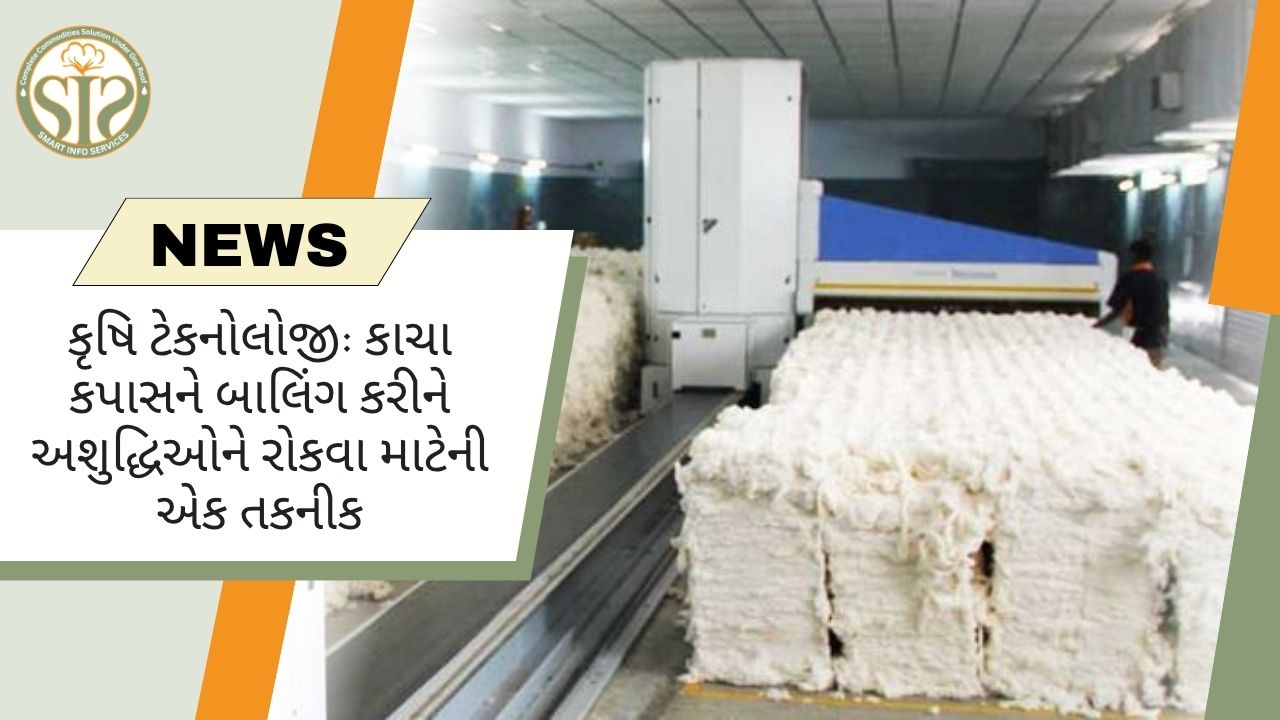
કાચા કપાસમાં દૂષણ ઘટાડવા માટે નવીન કોટન બેલિંગ ટેકનોલોજીકપાસ પ્રક્રિયા ઉદ્યોગમાં અશુદ્ધિઓનું વધતું સ્તર એક ગંભીર પડકાર બની ગયું છે. આ દૂષકોને દૂર કરવા માટે મોંઘા મશીનરીની જરૂર પડે છે, જે ઉત્પાદન ખર્ચમાં વધારો કરે છે અને ખેડૂતોની આવક પર નકારાત્મક અસર કરે છે. આ મુદ્દાને ઉકેલવા માટે, પરભણી (મહારાષ્ટ્ર) ના યુવાન સંશોધક કૃષ્ણ સોમાણીએ એક નવીન મશીન વિકસાવ્યું છે જે ખેતરમાં જ કાચા કપાસને બાલિંગ કરી શકે છે.આ પ્રોટોટાઇપ મશીનના વધુ અપગ્રેડેશન અને પરીક્ષણ માટે સેન્ટ્રલ ઇન્સ્ટિટ્યૂટ ફોર રિસર્ચ ઓન કોટન ટેકનોલોજી (નાગપુર) સાથે એક સમજૂતી કરાર (MoU) પર હસ્તાક્ષર કરવામાં આવ્યા છે. આ સંસ્થા કપાસ ટેકનોલોજીના ક્ષેત્રમાં એક અગ્રણી સંશોધન કેન્દ્ર તરીકે ઉભી છે.સમસ્યાની પૃષ્ઠભૂમિભારતમાં કપાસની ખેતી આશરે 13 મિલિયન હેક્ટર વિસ્તારમાં ફેલાયેલી છે, જેમાં મહારાષ્ટ્ર આ કુલમાં નોંધપાત્ર યોગદાન આપે છે. ભારતમાં, કપાસની લણણી સામાન્ય રીતે તબક્કાવાર રીતે (સામાન્ય રીતે 3 થી 4 વખત) કરવામાં આવે છે. ખેડૂતો ઘણીવાર મહિનાઓ સુધી તેમનો આખો પાક ઘરે સંગ્રહ કરે છે જેથી તેઓ તેમનો આખો પાક એક જ સમયે વેચી શકે. આ સંગ્રહ સમયગાળા દરમિયાન:* ધૂળ, કાટમાળ અને અન્ય અશુદ્ધિઓ કપાસમાં ભળી જાય છે.* ઉંદરો અને જીવાતોના ઉપદ્રવનું જોખમ વધે છે.* ગુણવત્તા અને વજન બંનેમાં ઘટાડો થાય છે (પરિણામે પ્રતિ ક્વિન્ટલ 5-6 કિલો સુધીનું નુકસાન થાય છે).* આગના જોખમો અને આરોગ્ય સંબંધિત જોખમો પણ વધે છે.ઉકેલ: ખેતરમાં બેલિંગ ટેકનોલોજીઆ પડકારોનો સામનો કરવા માટે રચાયેલ, આ મશીન કપાસની કાપણી પછી તરત જ ગાંસડી બનાવે છે. આ પ્રક્રિયા નીચેના ફાયદાઓ પ્રદાન કરે છે:* કપાસને ખુલ્લો રાખવામાં આવતો નથી, જેનાથી અશુદ્ધિઓનો સંચય ઓછો થાય છે.* સંગ્રહ સરળ અને સલામત બંને બને છે.* પરિવહન ખર્ચ અને મજૂરી જરૂરિયાતો ઓછી થાય છે.જ્યારે 2.5 ટન વજનની મોટી ગાંસડી સામાન્ય રીતે અન્ય દેશોમાં ઉત્પન્ન થાય છે, ત્યારે આ ભારતીય ટેકનોલોજી લગભગ 35 કિલોગ્રામ વજનની નાની, હળવી ગાંસડી ઉત્પન્ન કરે છે - જે તેમને ઉપાડવા અને હાથથી સંભાળવા માટે સરળ બનાવે છે. **ટેકનિકલ સ્પષ્ટીકરણો*** શરૂઆતમાં ઇલેક્ટ્રિકલી સંચાલિત; હવે, ટ્રેક્ટર (PTO) સંચાલિત એકમો ઉપલબ્ધ છે.* ઉત્પાદન ક્ષમતા: આશરે 40 ગાંસડી પ્રતિ કલાક.* સાઇલેજ મશીનમાં ફેરફાર દ્વારા વિકસાવવામાં આવ્યું (કુલ વિકાસ ખર્ચ: ~₹9–10 લાખ).* વર્તમાન મશીન કિંમત: ₹7–7.5 લાખ.* પ્રતિ ક્વિન્ટલ બેલિંગ ખર્ચ: ₹100–₹150.સંગ્રહ અને આર્થિક લાભોગાંસડીના સમાન કદને કારણે, સંગ્રહ નોંધપાત્ર રીતે વધુ વ્યવસ્થિત બને છે - 10×10-ફૂટ રૂમ 35-40 ક્વિન્ટલ કપાસને સમાવી શકે છે.ખેડૂતને લગતા એક કિસ્સામાં, બેલિંગ અને વેરહાઉસ સ્ટોરેજનો ઉપયોગ - જેણે વધુ સારા બજાર ભાવ મેળવવામાં મદદ કરી - કુલ 110 ક્વિન્ટલ ઉપજ પર ₹1.1 લાખનો વધારાનો નફો મેળવ્યો.સંસ્થાકીય સહયોગ અને ભવિષ્યની સંભાવનાઓઆ ટેકનોલોજીના વિકાસ અને પ્રસાર માટે સેન્ટ્રલ ઇન્સ્ટિટ્યૂટ ફોર રિસર્ચ ઓન કોટન ટેકનોલોજી અને બજાજ ઇન્ડસ્ટ્રીઝ સાથે ભાગીદારી સ્થાપિત કરવામાં આવી છે. વધુમાં, 'RAFTAAR' યોજના હેઠળ ₹20 લાખની નાણાકીય સહાય પૂરી પાડવામાં આવી છે.સંસ્થાના ડિરેક્ટર ડૉ. એસ. કે. શુક્લાના જણાવ્યા અનુસાર, હાલમાં આ મશીનને સરકારી સબસિડી યોજનાઓમાં સામેલ કરવાના પ્રયાસો ચાલી રહ્યા છે, જેનાથી ખાતરી થાય કે આ ટેકનોલોજી ખેડૂતોના વ્યાપક આધાર સુધી પહોંચે છે.નિષ્કર્ષકાચા કપાસના ક્ષેત્ર-સ્તરીય બેલિંગ માટેની ટેકનોલોજી માત્ર અશુદ્ધિઓને ઓછી કરતી નથી પરંતુ સંગ્રહ, પરિવહન અને માર્કેટિંગની કાર્યક્ષમતામાં પણ વધારો કરે છે. જોકે હાલમાં આ ટેકનોલોજી અંગે જાગૃતિ મર્યાદિત છે, તે ભવિષ્યમાં કપાસ ઉદ્યોગમાં પરિવર્તનશીલ પરિવર્તન લાવવાની ક્ષમતા ધરાવે છે.વધુ વાંચો :- રૂપિયો ૧૪ પૈસા ઘટીને ૯૪.૭૫ પર ખુલ્યો.

ડોલર સામે રૂપિયો ૧૪ પૈસા ઘટીને ૯૪.૭૫ પર ખુલ્યો.ગુરુવારે, ડોલર સામે ભારતીય રૂપિયો ૧૪ પૈસા ઘટીને ૯૪.૭૫ પર ખુલ્યો - જ્યારે બુધવારે તે ૯૪.૬૧ પર બંધ થયો હતો.વધુ વાંચો:- ડોલર સામે રૂપિયો 43 પૈસા વધીને 94.61 પર બંધ થયો.

બુધવારે ભારતીય રૂપિયો યુએસ ડોલર સામે ૯૫.૦૪ પર ખુલ્યો અને બંધ થતાં સુધીમાં ૪૩ પૈસા વધીને ૯૪.૬૧ પર બંધ થયો.બંધ સમયે, સેન્સેક્સ ૯૪૦.૭૩ પોઈન્ટ અથવા ૧.૨૨ ટકા વધીને ૭૭,૯૫૮.૫૨ પર અને નિફ્ટી ૨૯૮.૧૫ પોઈન્ટ અથવા ૧.૨૪ ટકા વધીને ૨૪,૩૩૦.૯૫ પર બંધ થયો. લગભગ ૨૭૫૫ શેર વધ્યા, ૧૨૮૭ શેર ઘટ્યા અને ૧૬૧ શેર યથાવત રહ્યા.વધુ વાંચો:- ‘નાંદેડ-૪૪’ બીટી કપાસ બીજ જાતના પ્રદર્શનોનું આયોજન કરવાની માંગ
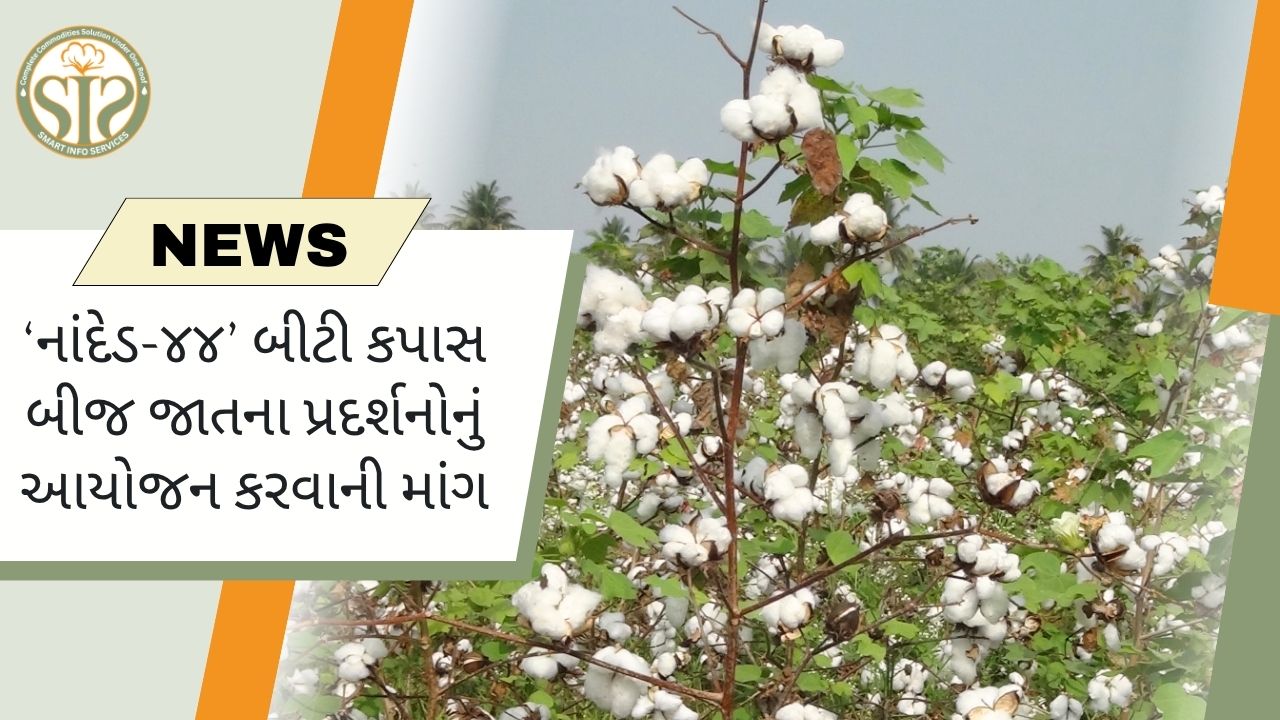
‘નાંદેડ-૪૪’ બીટી કપાસ બીજ જાતના પ્રદર્શનોનું આયોજન કરવાની માંગજલગાંવ જિલ્લામાં, કપાસનું વધુ સારું ઉત્પાદન સુનિશ્ચિત કરવા માટે અદ્યતન કપાસની જાતોના પ્રદર્શનની તાત્કાલિક જરૂરિયાત અનુભવાઈ રહી છે. ખેડૂતોએ માંગ કરી છે કે પરભણી કૃષિ યુનિવર્સિટી દ્વારા વિકસિત ‘નાંદેડ-૪૪’ બીટી કપાસ જાતના પ્રદર્શન આ વર્ષે ફરી એકવાર યોજવામાં આવે, જેથી મહત્તમ ખેડૂતો તેનો લાભ મેળવી શકે.૨૦૨૨-૨૩ સીઝન દરમિયાન, જિલ્લાની અંદર આશરે ૨૦૦ એકર વિસ્તારમાં આ જાતના સફળ પ્રદર્શનો હાથ ધરવામાં આવ્યા હતા. આ પહેલ હેઠળ, વિવિધ ખેડૂત જૂથોને બીજનું વિતરણ કરવામાં આવ્યું હતું, અને સૂકી જમીન ખેતી તકનીકો અને કૃત્રિમ સિંચાઈ પદ્ધતિઓનો ઉપયોગ કરીને ખેતી કરવામાં આવી હતી.‘નાંદેડ-૪૪’ મૂળ રૂપે એક બિન-બીટી કપાસની જાત હતી જે ૨૦૦૧ પહેલા રાજ્યમાં અત્યંત લોકપ્રિય રહી હતી. તેની ઉચ્ચ ઉત્પાદકતા અને વિશ્વસનીયતાને કારણે, તેણે ખાનગી કંપનીઓ દ્વારા રજૂ કરાયેલી અસંખ્ય જાતોને બજારમાં પગપેસારો કરતા અસરકારક રીતે અટકાવી હતી. જોકે, 2001 પછી, BT કપાસના વ્યાપક સ્વીકાર અને ખાનગી કંપનીઓ દ્વારા રજૂ કરાયેલી નવી જાતોના આગમનને કારણે તેનો પ્રભાવ ઓછો થયો. ત્યારબાદ, આ જ જાતનું BT સંસ્કરણ વિકસાવવામાં આવ્યું, જેનાથી ખેડૂતોમાં તેની સુસંગતતા પુનઃસ્થાપિત થઈ.છેલ્લા ત્રણ વર્ષોમાં, મહાબીજ અને પરભણી કૃષિ યુનિવર્સિટી દ્વારા આ જાતને પ્રોત્સાહન અને પ્રસારિત કરવા માટે સંકલિત પ્રયાસો હાથ ધરવામાં આવ્યા છે. આ પ્રયાસોના ભાગ રૂપે, પસંદગીના ખેડૂત જૂથોને મફત બીજનું વિતરણ કરીને ખેતીને પ્રોત્સાહન આપવામાં આવ્યું. એકલા જલગાંવ જિલ્લામાં, આ જાતની ખેતી લગભગ 200 એકર વિસ્તારમાં કરવામાં આવી હતી.ખેડૂતોએ હવે માંગ કરી છે કે, આ વર્ષે પણ, ચાલીસગાંવ, જામનેર, પરોળા, અમલનેર અને ચોપડા જેવા પ્રદેશોમાં ખેડૂત જૂથો અને વ્યક્તિગત ખેડૂતોને બીજ ઉપલબ્ધ કરાવવામાં આવે, જેથી આ જાતના વધુ વિસ્તરણને સરળ બનાવી શકાય.વધુમાં, કૃષિ સહાયકો અને સ્થાનિક કૃષિ અધિકારીઓની સક્રિય ભાગીદારી સુનિશ્ચિત કરવી જરૂરી છે, જેથી ખેડૂતો આ પ્રદર્શન કાર્યક્રમો દ્વારા તકનીકી માર્ગદર્શન મેળવી શકે, જેનાથી એકંદર ઉત્પાદન અને ઉત્પાદકતા બંનેમાં વધારો થાય.વધુ વાંચો :-કપાસ મિશન 2031: આત્મનિર્ભર ભારત તરફ એક પહેલ

કપાસ ઉત્પાદકતા મિશન: 2031 સુધીમાં આત્મનિર્ભરતા અને વૈશ્વિક સ્પર્ધાત્મકતા તરફ એક મોટું પગલુંવડાપ્રધાન નરેન્દ્ર મોદીની અધ્યક્ષતામાં, કેન્દ્રીય મંત્રીમંડળે "કપાસ ઉત્પાદકતા મિશન" (2026-27 થી 2030-31) ને મંજૂરી આપી છે, જેના માટે ₹5,659.22 કરોડની જોગવાઈ કરવામાં આવી છે. આ મિશનનો ઉદ્દેશ કપાસ ક્ષેત્રમાં ઉત્પાદકતા વધારવાનો અને ગુણવત્તા સુધારવાનો છે, જેનાથી ભારત વૈશ્વિક કાપડ બજારમાં વધુ સ્પર્ધાત્મક બને છે.આ પહેલ સરકારના '5F' વિઝન - ફાર્મ ટુ ફાઇબર, ફાઇબર ટુ ફેક્ટરી, ફેક્ટરી ટુ ફેશન અને ફેશન ટુ ફોરેન - સાથે સુસંગત છે. મિશન હેઠળ, ઉચ્ચ ઉપજ આપનારા, આબોહવા-સ્થિતિસ્થાપક અને જીવાત-પ્રતિરોધક બીજ વિકસાવવામાં આવશે. વધુમાં, ઉચ્ચ-ઘનતા વાવેતર પ્રણાલી (HDPS), નજીકનું અંતર અને સંકલિત કપાસ વ્યવસ્થાપન જેવી આધુનિક તકનીકોને પ્રોત્સાહન આપવામાં આવશે, અને એક્સ્ટ્રા લોંગ સ્ટેપલ (ELS) કપાસના ઉત્પાદનને પ્રોત્સાહન આપવામાં આવશે.કપાસની ગુણવત્તા સુધારવા માટે, ખેડૂતોને તાલીમ આપવા, જિનિંગ અને પ્રોસેસિંગ યુનિટ્સના આધુનિકીકરણ અને આંતરરાષ્ટ્રીય ધોરણો અનુસાર પરીક્ષણ માળખાને મજબૂત બનાવવા પર ધ્યાન કેન્દ્રિત કરવામાં આવશે. "કસ્તુરી કોટન ભારત" બ્રાન્ડ દ્વારા, ભારતીય કપાસની વૈશ્વિક ઓળખ, ટ્રેસેબિલિટી અને વિશ્વસનીયતા વધારવામાં આવશે.વધુમાં, ડિજિટલ મંડીઓ (બજારો) દ્વારા ખેડૂતો માટે પારદર્શક ભાવ નિર્ધારણ અને સુધારેલ બજાર ઍક્સેસ સુનિશ્ચિત કરવામાં આવશે. કપાસના કચરાનું રિસાયક્લિંગ અને ગોળાકાર અર્થતંત્રના સિદ્ધાંતોને પણ પ્રોત્સાહન આપવામાં આવશે. સાથે સાથે, શણ, રેમી, સિસલ, મિલ્કવીડ, વાંસ અને કેળા જેવા વૈકલ્પિક કુદરતી તંતુઓનો સમાવેશ કરીને ફાઇબર બેઝનો વિસ્તાર કરવામાં આવશે.આ મિશન કૃષિ અને ખેડૂત કલ્યાણ મંત્રાલય અને કાપડ મંત્રાલય દ્વારા સંયુક્ત રીતે અમલમાં મૂકવામાં આવશે. તેમાં ICAR, CSIR અને વિવિધ રાજ્ય કૃષિ યુનિવર્સિટીઓની ભાગીદારી સામેલ હશે. શરૂઆતમાં, 14 રાજ્યોના 140 જિલ્લાઓ પર ધ્યાન કેન્દ્રિત કરવામાં આવશે, અને આશરે 2,000 જિનિંગ યુનિટ્સને સશક્ત બનાવવામાં આવશે. આ મિશનનો ઉદ્દેશ્ય 2031 સુધીમાં કપાસની ઉત્પાદકતા 440 કિલોગ્રામ પ્રતિ હેક્ટરથી વધારીને 755 કિલોગ્રામ પ્રતિ હેક્ટર કરવાનો છે, અને કુલ ઉત્પાદન 498 લાખ ગાંસડી સુધી વધારવાનો છે. આ પહેલથી આશરે 32 લાખ ખેડૂતોને લાભ થવાની અપેક્ષા છે. ભારતને કપાસ ક્ષેત્રમાં આત્મનિર્ભર બનાવવા તરફ આ એક મહત્વપૂર્ણ પગલું માનવામાં આવે છે.વધુ વાંચો:- રૂપિયો ૨૫ પૈસા વધીને ૯૫.૦૪ પર ખુલ્યો.

રૂપિયો ૨૫ પૈસા વધીને ૯૫.૦૪ USD પર ખુલ્યો.બુધવારે, ભારતીય રૂપિયો ડોલર સામે ૨૫ પૈસા મજબૂત થઈને ૯૫.૦૪ પર ખુલ્યો, જે મંગળવારે ૯૫.૨૯ ના ઉચ્ચતમ સ્તર પર બંધ થયો હતો.વધુ વાંચો:- પરભણી (મહારાષ્ટ્ર) સમાચાર: માનવતમાં કપાસની હરાજી 15 મેથી સ્થગિત; ખેડૂતોને ઝડપથી વેચવા વિનંતી.
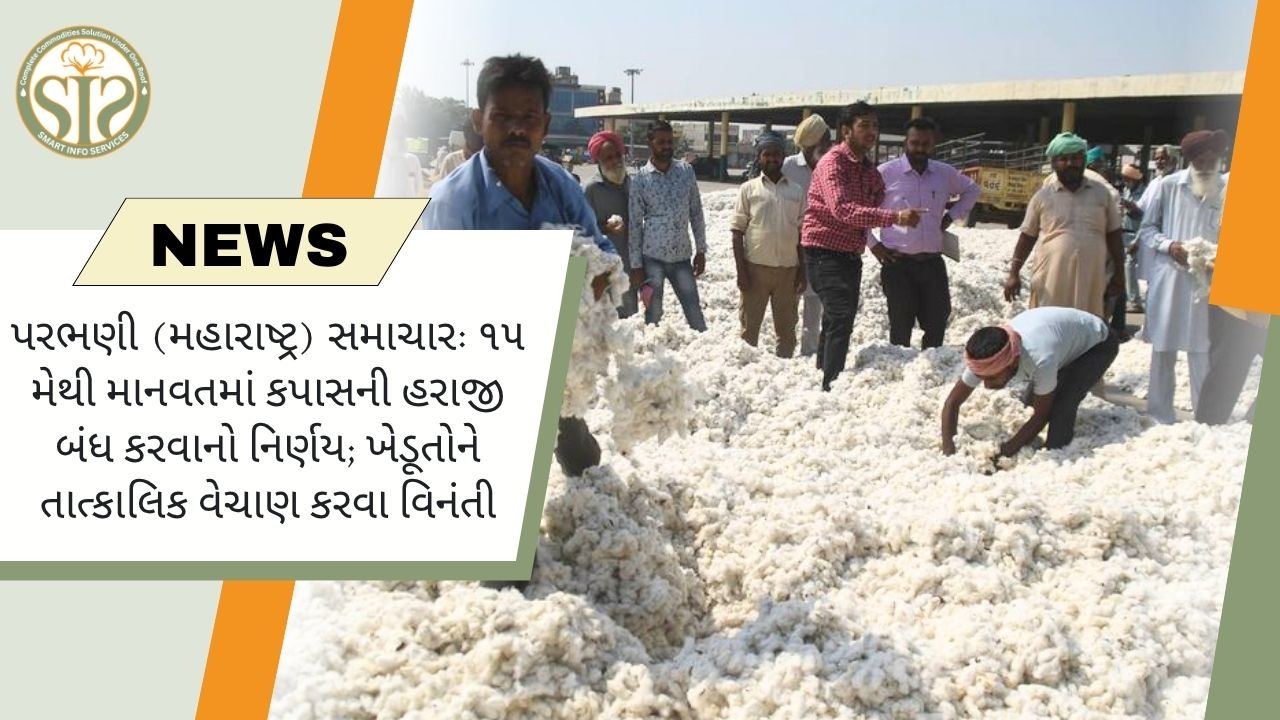
પરભણી (મહારાષ્ટ્ર) સમાચાર: ૧૫ મેથી માનવતમાં કપાસની હરાજી બંધ કરવાનો નિર્ણય; ખેડૂતોને તાત્કાલિક વેચાણ કરવા વિનંતીમહારાષ્ટ્રના પરભણી જિલ્લામાં માનવત કૃષિ ઉત્પાદન બજાર સમિતિ (APMC) એ જાહેરાત કરી છે કે છત્રપતિ શિવાજી યાર્ડમાં ચાલી રહેલી કપાસની હરાજી પ્રક્રિયા ૧૫ મેથી સ્થગિત કરવામાં આવશે. વધતી ગરમી અને સિઝન પૂર્ણ થવાના કારણે આ નિર્ણય લેવામાં આવ્યો છે. વહીવટીતંત્રે ખેડૂતોને ૧૫ મે પહેલા હરાજી પ્રક્રિયા દ્વારા તેમનો કપાસ વેચવાની અપીલ કરી છે.કપાસની હરાજી નવેમ્બરના બીજા અઠવાડિયા દરમિયાન શરૂ થઈ હતી. શરૂઆતમાં, કપાસના ભાવ લઘુત્તમ ટેકાના ભાવ (MSP) થી નીચે હતા; પરિણામે, કોટન કોર્પોરેશન ઓફ ઈન્ડિયા (CCI) એ ફેબ્રુઆરીના પહેલા અઠવાડિયા સુધીમાં ગેરંટીકૃત દરે ૧૬૩,૦૦૦ ક્વિન્ટલ કપાસ ખરીદ્યો હતો.ત્યારબાદ, બજારમાં ભાવમાં સતત વધારો જોવા મળ્યો - ૫ ફેબ્રુઆરીના રોજ, ભાવ પ્રતિ ક્વિન્ટલ ₹૭,૧૯૦ રહ્યો, જે ફેબ્રુઆરીના અંત સુધીમાં વધીને ₹૭,૩૨૫ થયો. માર્ચમાં ભાવ વધુ વધ્યા; ૮ માર્ચે કપાસ પ્રતિ ક્વિન્ટલ ૭,૪૩૦ અને ૧૩ માર્ચે ૭,૫૨૫ રૂપિયાના ભાવે વેચાયો. માર્ચના છેલ્લા અઠવાડિયા સુધી અને એપ્રિલ સુધી તેજીનો ટ્રેન્ડ ચાલુ રહ્યો, ભાવ ૮,૦૦૦ રૂપિયાને પાર કરી ગયા.૨૦ એપ્રિલે કપાસના ભાવ ૮,૮૦૦ રૂપિયાને સ્પર્શી ગયા, અને ૨૨ એપ્રિલ પછી, તેઓ ૯,૦૦૦ રૂપિયાની સીમા પાર કરી ગયા. ૨ મેના રોજ, સરેરાશ ભાવ ૯,૩૩૦ રૂપિયા પ્રતિ ક્વિન્ટલ નોંધાયો, જે ૪ મેના રોજ વધીને ૯,૪૦૦ રૂપિયા થયો.એપીએમસી વહીવટીતંત્રના જણાવ્યા મુજબ, સિઝનના શરૂઆતના તબક્કા દરમિયાન ભાવ નીચા રહ્યા હોવાથી, લગભગ ૮૦ ટકા ખેડૂતોએ પોતાનો પાક વેચી દીધો હતો. ત્યારબાદ બજારમાં તેજી આવી, જેના કારણે અંતિમ તબક્કા દરમિયાન ભાવમાં નોંધપાત્ર ઉછાળો આવ્યો. આ ઘટનાક્રમને કારણે જે ખેડૂતોએ પોતાનો પાક અગાઉ વેચી દીધો હતો તેઓ નુકસાનનો અનુભવ કરી રહ્યા હતા.APMCના ચેરમેન પંકજ આંબેગાંવકરે જણાવ્યું હતું કે 15 મે પછી પરિસ્થિતિની સમીક્ષા કરવામાં આવશે અને પ્રવર્તમાન પરિસ્થિતિઓના આધારે હરાજી ફરી શરૂ કરવા અંગે નિર્ણય લેવામાં આવશે.વધુ વાંચો:- ડોલર સામે રૂપિયો 04 પૈસા વધીને 95.29 પર બંધ થયો.

મંગળવારે ભારતીય રૂપિયો યુએસ ડોલર સામે 95.33 પર ખુલ્યો અને બંધ થતાં સુધીમાં 04 પૈસા વધીને 95.29 પર સ્થિર થયો.બંધ સમયે, સેન્સેક્સ 251.61 પોઈન્ટ અથવા 0.33 ટકા ઘટીને 77,017.79 પર અને નિફ્ટી 86.50 પોઈન્ટ અથવા 0.36 ટકા ઘટીને 24,032.80 પર બંધ થયો. લગભગ 1890 શેર વધ્યા, 2110 શેર ઘટ્યા અને 169 શેર યથાવત રહ્યા.વધુ વાંચો:- રાજસ્થાન: ખુઇયાન સહિત અનેક ગામોમાં પાકનો નાશ થયો
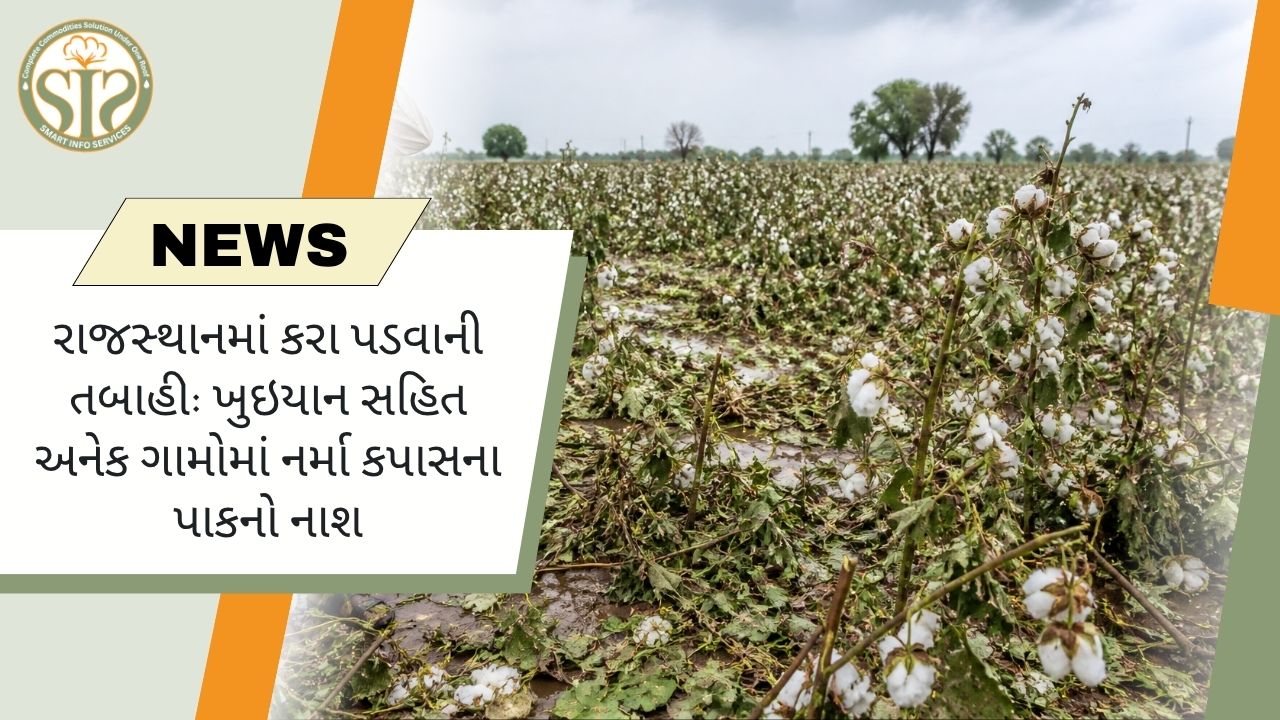
રાજસ્થાનમાં કરા પડવાની તબાહી: ખુઇયાન સહિત અનેક ગામોમાં નર્મા કપાસના પાકનો નાશરવિવારે સાંજે, રાજસ્થાનના નોહર પ્રદેશમાં હવામાનમાં અચાનક પલટો આવ્યો, જેના કારણે ખુઇયાન સહિત આસપાસના અનેક ગામોમાં ભારે પવન, વરસાદ અને કરા પડ્યા. હવામાનમાં આ પરિવર્તનથી ખેડૂતોના નર્મા કપાસના પાકને ભારે નુકસાન થયું છે.નિમલા, ખુઇયાન અને બિરકાલી જેવા ગામોમાં કાળા વાદળો વચ્ચે ભારે પવન સાથે ભારે વરસાદ પડ્યો. આ એપિસોડ દરમિયાન, વટાણાના કદના કરા લગભગ 5 થી 8 મિનિટ સુધી પડતા રહ્યા, જેના કારણે ખેતરોમાં ઉભા પાક જમીનદોસ્ત થઈ ગયા.કરા પડવાની સૌથી વધુ અસર ખુઇયાન અને મંદારપુરામાં થઈ, જ્યાં નર્મા કપાસના પાક સંપૂર્ણપણે નાશ પામ્યા હતા. સ્થાનિક ખેડૂત ગોરીશંકરના જણાવ્યા મુજબ, ભારે વરસાદ પછી આવેલા કરા પડવાથી પાકને ભારે નુકસાન થયું છે.ખેડૂત મનજીત ગોદારાએ નોંધ્યું હતું કે ખાસ કરીને યુવાન નર્મા કપાસના પાકને આ કુદરતી આફતથી સૌથી વધુ પ્રતિકૂળ અસર થઈ છે.હવામાનમાં પરિવર્તનથી લોકોને ગરમીથી થોડી રાહત મળી હતી, પરંતુ ભારે પવનને કારણે ઘણી જગ્યાએ ઝાડની ડાળીઓ તૂટીને રસ્તાઓ પર પડી ગઈ હતી, જેના કારણે ટ્રાફિક અને અવરજવરમાં અવરોધ ઉભો થયો હતો.વધુ વાંચો:- કપાસના ભાવમાં 4%નો વધારો, બે વર્ષની ટોચની નજીક
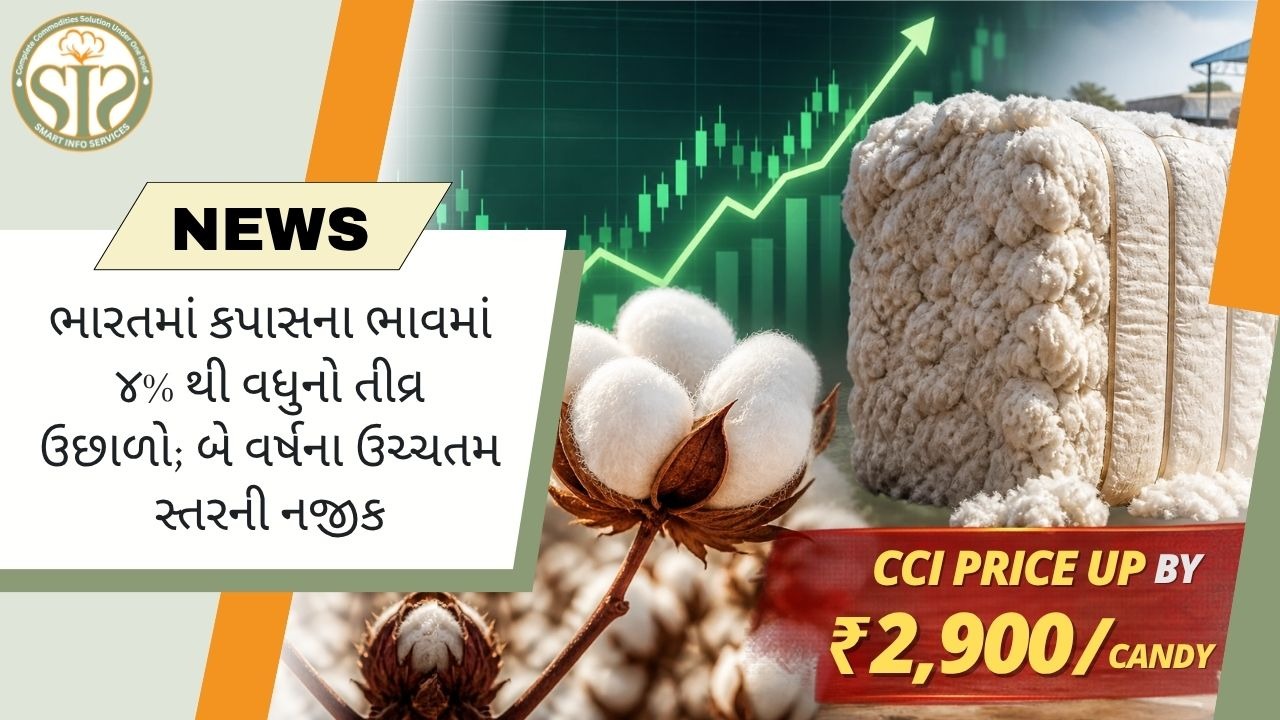
ભારતમાં કપાસના ભાવમાં ૪% થી વધુનો તીવ્ર ઉછાળો; બે વર્ષના ઉચ્ચતમ સ્તરની નજીકભારતમાં કપાસના ભાવમાં એક જ દિવસમાં ૪% થી વધુનો તીવ્ર વધારો નોંધાયો છે - જે વર્તમાન સિઝનનો સૌથી મોટો દૈનિક ઉછાળો માનવામાં આવે છે. વૈશ્વિક બજારમાં મજબૂતાઈ અને પુરવઠા શૃંખલામાં વિક્ષેપોને આ વધારા માટે પ્રાથમિક કારણો તરીકે દર્શાવવામાં આવ્યા છે.સોમવારે, કોટન કોર્પોરેશન ઓફ ઈન્ડિયા (CCI) એ કપાસના ભાવમાં પ્રતિ કેન્ડી (૩૫૬ કિલોગ્રામ) ₹૨,૯૦૦ નો વધારો કર્યો હતો. આ ગોઠવણ સાથે, ભાવ બે વર્ષના ઉચ્ચતમ સ્તરની નજીક પહોંચી ગયા છે. આંતરરાષ્ટ્રીય બજારમાં, ICE ફ્યુચર્સ યુ.એસ. પર જુલાઈ ડિલિવરી માટે કપાસના વાયદા ૮૪.૫ સેન્ટ પ્રતિ પાઉન્ડથી ઉપર વધ્યા હતા.માર્ચની શરૂઆતથી, આંતરરાષ્ટ્રીય કપાસના વાયદામાં ૨૮% થી વધુનો ઉછાળો જોવા મળ્યો છે. સ્થાનિક સ્તરે પણ, ભાવ પ્રતિ કેન્ડી ₹૫૪,૬૦૦ ના નીચા સ્તરથી વધીને લગભગ ₹૬૫,૬૦૦ સુધી પહોંચ્યા છે.વેપાર સૂત્રોના જણાવ્યા અનુસાર, CCI દ્વારા લાગુ કરાયેલ ભાવ વધારો અણધાર્યો હતો; તેમ છતાં, કોર્પોરેશને 200,000 થી વધુ ગાંસડીનું સફળતાપૂર્વક વેચાણ કર્યું છે. ઉદ્યોગના આંતરિક સૂત્રોએ નોંધ્યું છે કે વધતા ભાવે કાપડ ઉત્પાદકોમાં ચિંતા વધારી છે. યાર્નના વધતા ખર્ચ અને મજૂરોની અછતને કારણે ઉત્પાદન અને ડિલિવરી સમયપત્રક બંને પર પ્રતિકૂળ અસર પડી રહી છે.આંતરરાષ્ટ્રીય માંગ પણ ભાવોને ટેકો આપી રહી છે. તાજેતરના અઠવાડિયામાં, ચીન, બાંગ્લાદેશ અને વિયેતનામ જેવા દેશોમાં ભારતીય કપાસના યાર્નની માંગમાં વધારો થયો છે - આ વલણ વૈશ્વિક પુરવઠા શૃંખલાઓમાં ચાલી રહેલા વિક્ષેપોને આભારી છે.નિષ્ણાતોના મતે, CCI પાસે હાલમાં આશરે 4 મિલિયન ગાંસડીનો શેષ સ્ટોક છે, અને આંતરરાષ્ટ્રીય ભાવોની સતત મજબૂતાઈને જોતાં, વેચાણ ચાલુ રહેવાની અપેક્ષા છે. હાલમાં, CCI ની કિંમત વૈશ્વિક સ્તરે સ્પર્ધાત્મક રહે છે, જે એક પરિબળ છે જે બહુરાષ્ટ્રીય કંપનીઓમાં રસ વધારી શકે છે.દરમિયાન, દેશભરમાં કાચા કપાસનું દૈનિક આગમન 35,000 થી 45,000 ગાંસડીની વચ્ચે સ્થિર રહે છે, જેના કારણે કુલ સંચિત આગમન આશરે 30.5 મિલિયન ગાંસડી થઈ જશે. એવો અંદાજ છે કે આગામી મહિનાઓમાં પુરવઠો સ્થિર રહી શકે છે, જે બજારની દિશાને અસર કરશે.વધુ વાંચો:- રૂપિયો ૯૫.૩૩ પર ખુલ્યો જેમાં ૨૫ પૈસાનો ઘટાડો થયો.

ડોલર સામે રૂપિયો ૨૫ પૈસા ઘટીને ૯૫.૩૩ પર ખુલ્યો.મંગળવારે, ડોલર સામે ભારતીય રૂપિયો ૯૫.૩૩ પર ખુલ્યો ૨૫ પૈસાનો ઘટાડો જ્યારે સોમવારે તે ૯૫.૦૮ પર બંધ થયો હતો.વધુ વાંચો:- રૂપિયો ૧૩ પૈસા ઘટીને ૯૫.૦૮ પ્રતિ ડોલર પર બંધ થયો.

સોમવારે, ભારતીય રૂપિયો ૧૩ પૈસા ઘટીને ૯૫.૦૮ પ્રતિ ડોલર પર બંધ થયો હતો, જ્યારે સવારે તે ૯૪.૯૫ પર ખુલ્યો હતો.બંધ સમયે, સેન્સેક્સ ૩૫૫.૯૦ પોઈન્ટ અથવા ૦.૪૬ ટકા વધીને ૭૭,૨૬૯.૪૦ પર અને નિફ્ટી ૧૨૧.૭૫ પોઈન્ટ અથવા ૦.૫૧ ટકા વધીને ૨૪,૧૧૯.૩૦ પર બંધ થયો હતો.વધુ વાંચો:- કપાસ આયાત ડ્યુટી પર મર્યાદિત મુક્તિનો વિચાર
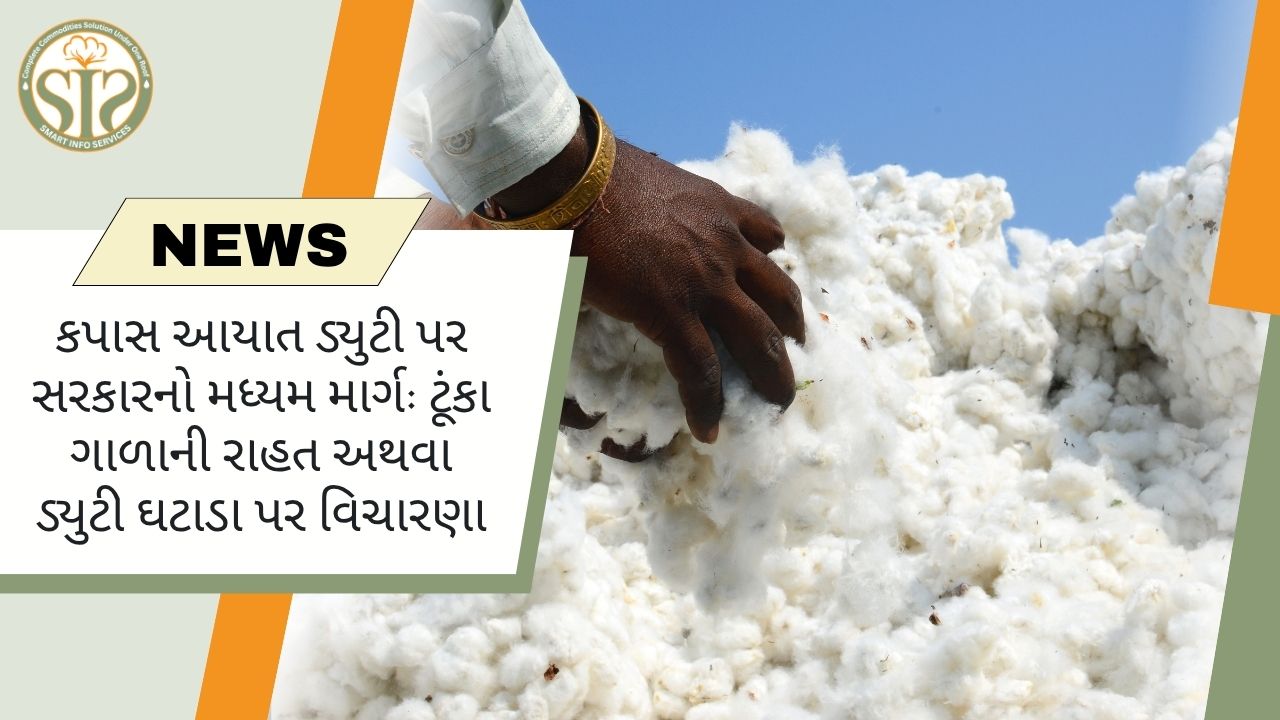
કપાસ આયાત ડ્યુટી પર સરકારનો મધ્યમ માર્ગ: ટૂંકા ગાળાની રાહત અથવા ડ્યુટી ઘટાડા પર વિચારણાકેન્દ્રીય કૃષિ મંત્રી શિવરાજ સિંહ ચૌહાણે કપાસ આયાત ડ્યુટી અંગે ઉદ્યોગ અને કૃષિ મંત્રાલય વચ્ચે ચાલી રહેલા મતભેદો વચ્ચે "મધ્યમ માર્ગ" શોધવા તરફ આગળ વધવાના સંકેત આપ્યા છે. કાપડ ઉદ્યોગે ડિસેમ્બર 2026 સુધી કપાસ પર શૂન્ય આયાત ડ્યુટીની માંગ કરી હતી, આ પ્રસ્તાવનો કૃષિ મંત્રાલય વિરોધ કરી રહ્યું છે. મંત્રાલયનો દલીલ છે કે આવા પગલાથી ખેડૂતોને નકારાત્મક સંકેત મળશે, ખાસ કરીને એવા સમયે જ્યારે કપાસની વાવણી શરૂ થઈ ગઈ છે.સૂત્રોના જણાવ્યા અનુસાર, વિચારણા હેઠળનો એક સંભવિત વિકલ્પ સપ્ટેમ્બર-ઓક્ટોબર સમયગાળા દરમિયાન મર્યાદિત સમયગાળા માટે શૂન્ય-ડ્યુટી આયાતને મંજૂરી આપવાનો છે, કારણ કે ઓગસ્ટ સુધી માંગને પહોંચી વળવા માટે સ્થાનિક સ્ટોક પૂરતો માનવામાં આવે છે. બીજા વિકલ્પમાં હાલની 11% આયાત ડ્યુટી ઘટાડીને આશરે 6-7% કરવાનો સમાવેશ થાય છે.FIEO અને વિવિધ સરકારી મંત્રાલયોના અધિકારીઓ દ્વારા હાજરી આપેલી ઉચ્ચ સ્તરીય બેઠક દરમિયાન, એ નોંધવામાં આવ્યું હતું કે કોટન કોર્પોરેશન ઓફ ઇન્ડિયા પાસે હાલમાં લગભગ 47 લાખ ગાંસડી કપાસનો સ્ટોક છે. ખાનગી ક્ષેત્રના સ્ટોક સાથે જોડવામાં આવે તો, દેશ ઓગસ્ટ સુધી સ્થાનિક માંગને પહોંચી વળવા માટે સારી સ્થિતિમાં છે.જોકે, ઉદ્યોગનો દલીલ છે કે સ્થાનિક ભાવ ઊંચા રહે છે, જેના કારણે ઉત્પાદન ખર્ચ વધે છે અને નિકાસ સ્પર્ધાત્મકતા નબળી પડે છે. તેનાથી વિપરીત, ઓક્ટોબરમાં નવી લણણી શરૂ થવાની ધારણા હોવાથી, સરકારે ટૂંકા ગાળાના અને લાંબા ગાળાના બંને વિચારણાઓને કાળજીપૂર્વક સંતુલિત કરતો નિર્ણય લેવો જોઈએ.2025-26 સીઝન માટે કપાસનું ઉત્પાદન ઘટીને આશરે 290.91 લાખ ગાંસડી થવાનો અંદાજ છે, જે પાછલા વર્ષના 297.24 લાખ ગાંસડીથી ઓછો છે. વાવેતર હેઠળનો વાવેતર વિસ્તાર પણ ઘટી રહ્યો છે - આ વલણ જીવાતોના ઉપદ્રવ, વૈકલ્પિક પાક તરફ વળવું અને અન્યત્ર સારા નાણાકીય વળતરની અપેક્ષાને આભારી છે.કોટન એસોસિએશન ઓફ ઇન્ડિયા અનુસાર, આગામી સીઝન માટે ઉત્પાદન 324 લાખ ગાંસડી સુધી પહોંચવાનો અંદાજ છે, વપરાશ 315 લાખ ગાંસડી અને આયાત 47 લાખ ગાંસડી સુધી વધી શકે છે. આ પૃષ્ઠભૂમિ સામે, સરકાર ઉદ્યોગની જરૂરિયાતો અને ખેડૂતોના હિત વચ્ચે એક નાજુક સંતુલન જાળવવાનો ઉદ્દેશ્ય ધરાવે છે.વધુ વાંચો:- ગુજરાતના કાપડ ઉદ્યોગમાં ખર્ચ વધવાને કારણે કપડાંના ભાવમાં વધારો થયો છે.

ગુજરાતમાં મોંઘા કપાસના યાર્ન અને પ્રોસેસિંગ ચાર્જમાં વધારાને કારણે કપડાં મોંઘા બન્યાગુજરાતના કાપડ ઉદ્યોગ પર વધતા ખર્ચનું દબાણ સ્પષ્ટપણે દેખાઈ રહ્યું છે. ચીન અને બાંગ્લાદેશમાંથી કપાસના યાર્નની માંગને કારણે, ભાવ પ્રતિ કિલોગ્રામ ₹300 ના રેકોર્ડ ઉચ્ચ સ્તરે પહોંચી ગયા છે - જે લગભગ ચાર વર્ષમાં જોવા મળ્યું નથી. આ અસર સમગ્ર કાપડ મૂલ્ય શૃંખલા પર પડી છે, જેના કારણે કપડાંના ભાવમાં વધારો થયો છે અને બજારમાં પુરવઠાની અછત છે.ઉદ્યોગ નિષ્ણાતોના મતે, છેલ્લા દોઢ મહિનામાં કપડાંના ભાવ પ્રતિ મીટર ₹10 થી ₹25 સુધી વધ્યા છે. આ પાછળના મુખ્ય કારણો ફક્ત યાર્નની વધતી કિંમત સુધી મર્યાદિત નથી; પ્રોસેસિંગ ચાર્જમાં વધારો પણ મહત્વપૂર્ણ ભૂમિકા ભજવી છે. ઇંધણ અને રસાયણોના ભાવમાં વધારાને કારણે કાપડ પ્રક્રિયા વધુ મોંઘી થઈ છે, જ્યારે ઘણા પાવરલૂમ યુનિટ બંધ થવાથી ઉત્પાદન ઉત્પાદન પર પ્રતિકૂળ અસર પડી છે.વેપારીઓ જણાવે છે કે આ ખર્ચમાં વધારો હવે છૂટક સ્તરે પહોંચી ગયો છે, અને પરિણામે ગ્રાહકો કપડાંના ઊંચા ભાવનો સામનો કરી રહ્યા છે. જોકે, ઉત્પાદકો માને છે કે સ્થાનિક બજાર પર અસર મર્યાદિત રહી શકે છે, કારણ કે ચાલુ સિઝન માટે મોટાભાગનો સ્ટોક બજારમાં પહોંચી ગયો છે. વધુમાં, આગામી સિઝન માટે ભાવો પર ફરીથી વાટાઘાટો કરવાનો અવકાશ રહે છે. એવો અંદાજ છે કે છૂટક ભાવોમાં 5% થી 8% નો વધારો જોવા મળી શકે છે.બીજી બાજુ, નિકાસ ક્ષેત્રને નકારાત્મક અસરનો સામનો કરવો પડવાની આશંકા છે, કારણ કે પહેલાથી અસ્તિત્વમાં રહેલા કરારોને કારણે આ વધેલા ખર્ચને ગ્રાહકો પર પસાર કરવો મુશ્કેલ છે. ઉદ્યોગે કાચા કપાસના ઊંચા ભાવ અને મર્યાદિત ઉપલબ્ધતા અંગે પણ ચિંતા વ્યક્ત કરી છે, અને કેન્દ્ર સરકારને હાલમાં લાગુ 11% આયાત ડ્યુટી માફ કરવા વિનંતી કરી છે.વધતા લોજિસ્ટિક્સ ખર્ચ, શિપિંગમાં વિલંબ અને વૈશ્વિક સ્પર્ધાના દબાણે પરિસ્થિતિને વધુ વણસી છે. જો પરિસ્થિતિઓમાં સુધારો નહીં થાય, તો ઉત્પાદન, નિકાસ અને રોજગાર પર વ્યાપક પ્રતિકૂળ અસર થઈ શકે છે.વધુ વાંચો:- ભારે ગરમીને કારણે કપાસનું વાવેતર સંકટમાં; ચોમાસા પહેલાનું વાવેતર વધ્યું
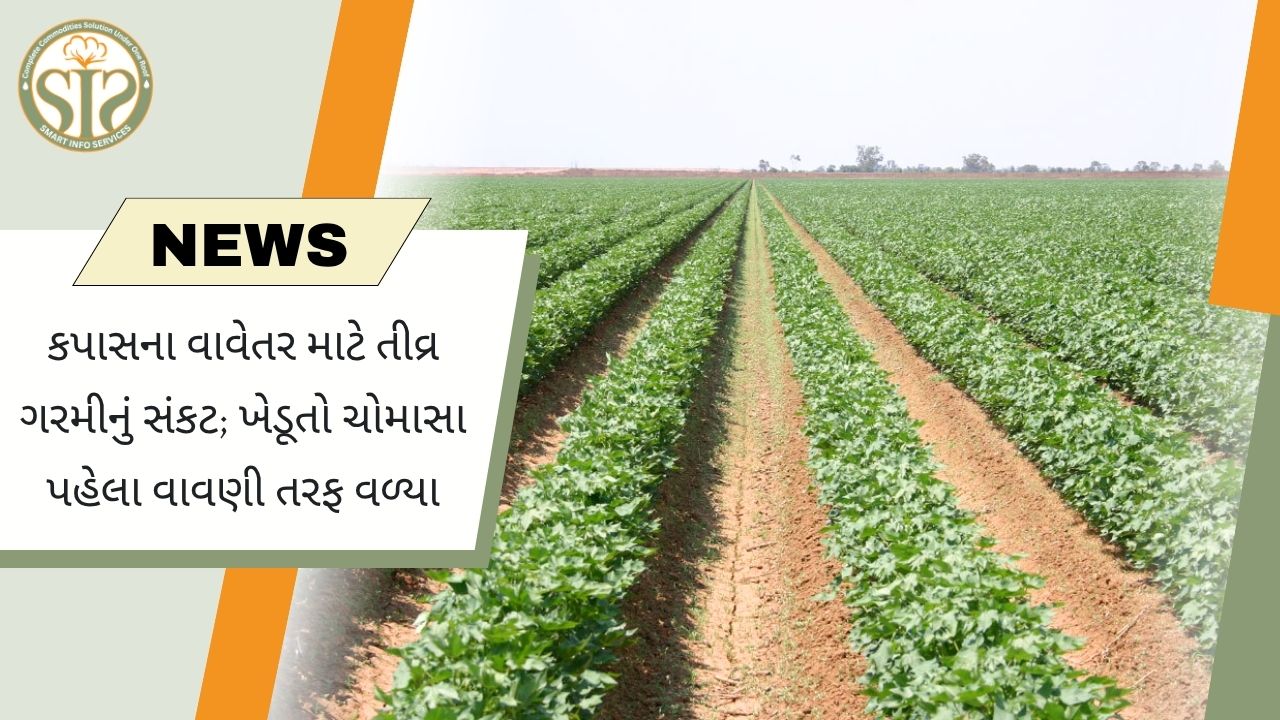
કપાસના વાવેતર માટે તીવ્ર ગરમીનું સંકટ; ખેડૂતો ચોમાસા પહેલા વાવણી તરફ વળ્યાઆ વર્ષે અકોલા જિલ્લામાં ભારે ગરમીએ કપાસના વાવેતર માટે ગંભીર સંકટ ઉભું કર્યું છે. એપ્રિલ મહિનાથી, તાપમાન 44 ડિગ્રી સેલ્સિયસની આસપાસ રહ્યું છે, જ્યારે ઘણા પ્રદેશોમાં, તાપમાન 47 ડિગ્રી સુધી પણ પહોંચી ગયું છે. આ પરિસ્થિતિઓમાં, ઉનાળાની ઋતુમાં કપાસનું વાવેતર ખેડૂતો માટે અત્યંત જોખમી પ્રયાસ બની ગયો છે.તીવ્ર સૂર્યપ્રકાશ અને વધતા તાપમાનને કારણે, જમીનની સપાટી અતિશય ગરમ થઈ રહી છે, જેના કારણે વાવેલા બીજ બળી જવાનો અથવા અંકુર ફૂટતા પહેલા જ નાશ પામવાનો ભય વધી રહ્યો છે. આ પરિસ્થિતિએ ખેડૂતોની ચિંતા વધારી દીધી છે, જેના કારણે ઘણા લોકો ઉનાળાની ઋતુ દરમિયાન કપાસની ખેતી કરવાનું ટાળી રહ્યા છે.વધુમાં, પાણીની કટોકટી પણ વધુને વધુ તીવ્ર બની રહી છે. કુવાઓ, તળાવો અને બોરવેલમાં પાણીનું સ્તર ઝડપથી ઘટી રહ્યું છે, જેના પરિણામે સિંચાઈ માટે પાણીનો પુરવઠો પૂરતો નથી. પરિણામે, બાગાયતી ખેતી કરતા ખેડૂતો પણ કપાસની ખેતીથી દૂર રહેવા લાગ્યા છે.આ પડકારોને ધ્યાનમાં રાખીને, ખેડૂતો હવે ચોમાસા પહેલાની વાવણી તરફ વધુને વધુ આકર્ષાઈ રહ્યા છે. તેઓ માને છે કે જો યોગ્ય સમયે અને અનુકૂળ હવામાન પરિસ્થિતિઓમાં ખેતી કરવામાં આવે તો ઉપજ નોંધપાત્ર રીતે સારી થઈ શકે છે.કૃષિ વિભાગે ખેડૂતોને તાપમાન ઘટે ત્યાં સુધી કપાસની વાવણી કરવાનું ટાળવાની પણ સલાહ આપી છે. ઉતાવળા નિર્ણયોથી નાણાકીય નુકસાન થઈ શકે છે. વધુમાં, ભારે ગરમી વચ્ચે જીવાતોના ઉપદ્રવમાં વધારો થવાની સંભાવના અંગે ચિંતા વ્યક્ત કરવામાં આવી છે.જો આગામી અઠવાડિયામાં ગરમીનું મોજું ચાલુ રહેશે, તો તેની સીધી અસર કપાસના ઉત્પાદન પર પડી શકે છે. તેથી, ખેડૂતોએ હવામાનની આગાહી અને નિષ્ણાતોની સલાહના આધારે તેમની ખેતી યોજનાઓ કડક રીતે બનાવવી જોઈએ.વધુ વાંચો:- રૂપિયો ૩ પૈસા ઘટીને ૯૪.૯૫ પર ખુલ્યો.

રૂપિયો ૩ પૈસા ઘટીને ૯૪.૯૫/USD પર ખુલ્યો.સોમવારે, ભારતીય રૂપિયો ડોલર સામે ૯૪.૯૫ પર ખુલ્યો - ૩ પૈસાનો ઘટાડો - જ્યારે ગુરુવારે તે ૯૪.૯૨ પર બંધ થયો હતો.વધુ વાંચો:- CCI એ કપાસના ભાવમાં ₹300નો વધારો કર્યો; સાપ્તાહિક વેચાણ 2.53 લાખ ગાંસડીને પાર થયું
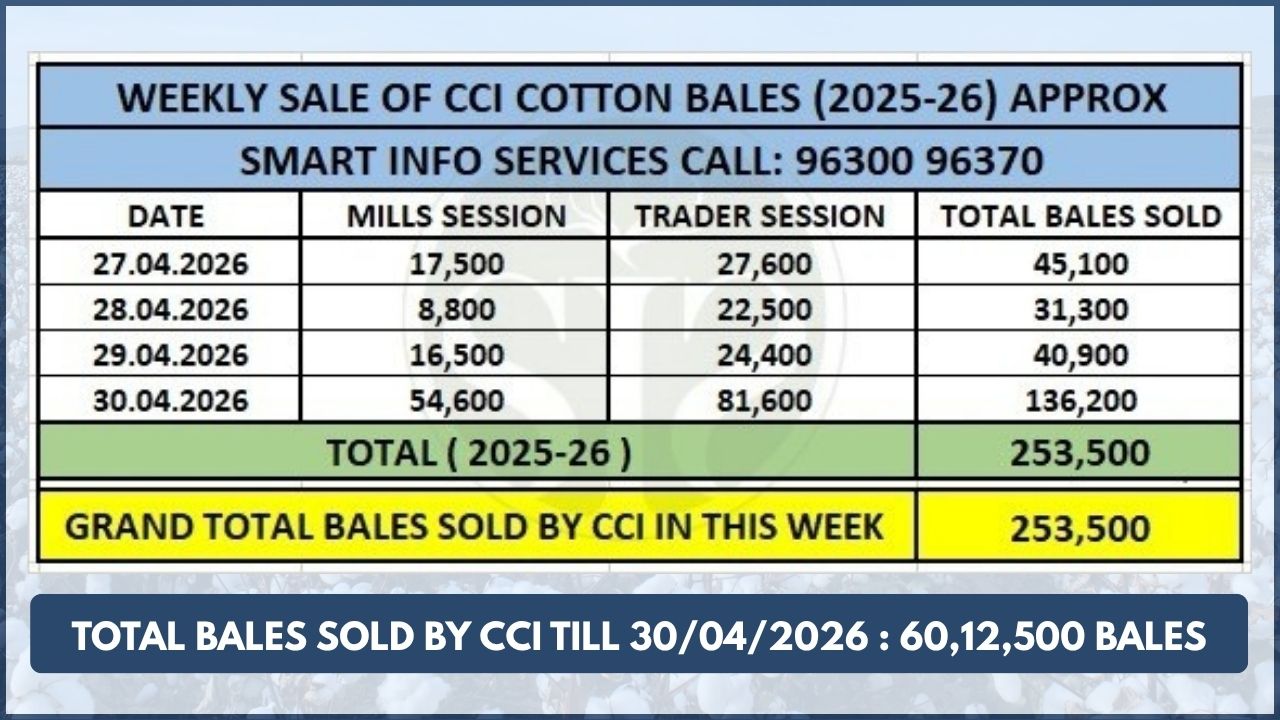
CCI એ કપાસના ભાવમાં પ્રતિ કેન્ડી ₹300 નો વધારો કર્યો; સાપ્તાહિક હરાજી વેચાણ 2.53 લાખ ગાંસડીને પાર કર્યુંકોટન કોર્પોરેશન ઓફ ઇન્ડિયા (CCI) એ 27 એપ્રિલથી 30 એપ્રિલ, 2026 ના સમયગાળા દરમિયાન કપાસના ભાવમાં પ્રતિ કેન્ડી ₹300 નો વધારો કર્યો. હરાજીમાં મિલો અને વેપારીઓની મજબૂત ભાગીદારી જોવા મળી, જેના પરિણામે 2025-26 સીઝન માટે કુલ સાપ્તાહિક વેચાણ આશરે 253,500 ગાંસડી સુધી પહોંચ્યું.સાપ્તાહિક વેચાણ અહેવાલ27 એપ્રિલ (સોમવાર):સપ્તાહની શરૂઆત મજબૂત નોંધ સાથે થઈ, કુલ વેચાણ 45,100 ગાંસડી હતું. વેપારીઓએ ખરીદીમાં પ્રભુત્વ મેળવ્યું, 27,600 ગાંસડી ખરીદી, જ્યારે મિલોએ 17,500 ગાંસડી ખરીદી.28 એપ્રિલ (મંગળવાર):હરાજીનું પ્રમાણ ઘટીને 31,300 ગાંસડી થયું. વેપારીઓએ 22,500 ગાંસડી ખરીદી, જ્યારે મિલોએ 8,800 ગાંસડી ખરીદી.૨૯ એપ્રિલ (બુધવાર):વેચાણ વધીને ૪૦,૯૦૦ ગાંસડીએ પહોંચ્યું. મિલોએ ૧૬,૫૦૦ ગાંસડી ખરીદી, જ્યારે વેપારીઓએ ૨૪,૪૦૦ ગાંસડી ખરીદી.૩૦ એપ્રિલ (ગુરુવાર):સપ્તાહનો અંત મજબૂત રહ્યો, જેમાં એક દિવસનો સૌથી વધુ વેચાણનો આંકડો ૧,૩૬,૨૦૦ ગાંસડીનો રેકોર્ડ નોંધાયો. વેપારીઓએ ૮૧,૬૦૦ ગાંસડી ખરીદી કરીને આગેવાની લીધી, જ્યારે મિલોએ ૫૪,૬૦૦ ગાંસડી ખરીદી.કુલ વેચાણ અપડેટ:૨૦૨૫-૨૬ સીઝન માટે કુલ વેચાણ ૬,૦૧૨,૫૦૦ ગાંસડી પર પહોંચી ગયું છે.

ઈરાન સંઘર્ષ અને વધતી કિંમતો વચ્ચે માર્ચમાં ભારતના કાપડ ઉત્પાદનમાં ઘટાડો થયો છેમાર્ચમાં, ભારતનો કાપડ ઉદ્યોગ ઘણા મોરચે દબાણ હેઠળ આવ્યો હતો, જેના કારણે ઉત્પાદનમાં ઘટાડો નોંધાયો હતો. મુખ્ય સેગમેન્ટ જેમ કે તૈયાર વસ્ત્રો, સુતરાઉ કાપડ અને મિશ્રિત કાપડને સૌથી વધુ અસર થઈ હતી. ઇનપુટ ખર્ચમાં વધારો, વૈશ્વિક ભૌગોલિક રાજકીય તણાવ અને નબળી માંગએ આ ઘટાડાને વધુ વેગ આપ્યો.ડેટા અનુસાર, કાપડ ઉત્પાદનમાં માર્ચમાં વાર્ષિક ધોરણે 3.6%નો ઘટાડો થયો હતો, જ્યારે વસ્ત્રોના ઉત્પાદનમાં 14.6% નો તીવ્ર ઘટાડો નોંધાયો હતો. ખર્ચના મોરચે પરિસ્થિતિ તદ્દન પડકારજનક રહી. કોટન યાર્નના ભાવ લગભગ 20% વધ્યા હતા, જ્યારે પેકેજિંગમાં વપરાતા પોલિમર 50% મોંઘા થયા હતા. વધુમાં, કાગળના ભાવમાં 10% અને રંગો અને રસાયણોના ભાવમાં લગભગ 40% જેટલો વધારો થવાથી ઉત્પાદન ખર્ચમાં વધારો થયો છે.પશ્ચિમ એશિયામાં ચાલી રહેલા સંઘર્ષ, ખાસ કરીને ઈરાન સાથે સંકળાયેલા વિકાસ, શિપમેન્ટ અને લોજિસ્ટિક્સ પર ગંભીર અસર કરી. ઘણા નિકાસ ઓર્ડર અટકી ગયા, નૂર ખર્ચમાં વધારો થયો અને યુદ્ધ-જોખમ વીમો પણ મોંઘો બન્યો. ક્રૂડ ઓઈલના ભાવમાં વધઘટને કારણે ઈનપુટ ખર્ચમાં વધારો થયો, કંપનીઓના માર્જિન પર દબાણ આવ્યું અને કાર્યકારી મૂડીની સ્થિતિ કડક થઈ.ઉત્પાદનના વિવિધ વિભાગોમાં ઘટાડો વ્યાપક હતો. પોલિએસ્ટર/વિસ્કોસ બ્લેન્ડેડ કાપડના ઉત્પાદનમાં 13.1%નો ઘટાડો થયો છે, જ્યારે સુતરાઉ કાપડમાં પણ લગભગ 4%નો ઘટાડો જોવા મળ્યો છે. હોમ ટેક્સટાઇલ સેગમેન્ટ, ખાસ કરીને ટેરી ટુવાલ, 6.1% ઘટ્યો. તે જ સમયે, તૈયાર વસ્ત્રોમાં ઘટાડો વધુ હતો - નોન-નિટેડ ગાર્મેન્ટ્સનું ઉત્પાદન 14.9% અને ગૂંથેલા કપડાનું ઉત્પાદન 11% ઘટ્યું.વૈશ્વિક સ્તરે પણ પડકારો યથાવત છે. યુએસ ટેરિફ, વેપાર માર્ગોમાં વિક્ષેપ અને વિયેતનામ અને બાંગ્લાદેશથી વધતી સ્પર્ધાએ નિકાસને અસર કરી છે. ઉપરાંત, સ્થાનિક માંગમાં નબળાઈ પણ ઉદ્યોગ માટે ચિંતાનો વિષય છે.એકંદરે, ટેક્સટાઇલ અને એપેરલ સેક્ટર - જે ભારતના જીડીપીમાં 2.3% અને ઔદ્યોગિક ઉત્પાદનમાં લગભગ 13% ફાળો આપે છે - નજીકના ગાળામાં અનિશ્ચિતતાનો સામનો કરે છે. જો ભૌગોલિક રાજકીય તણાવ અને ખર્ચ દબાણ ચાલુ રહેશે, તો ઉત્પાદન અને નફા પર અસર વધુ ચાલુ રહી શકે છે.વધુ વાંચો :- કપાસની ખેતીમાંથી સારી આવક માટે સૂચનો

કપાસની ખેતીથી સારી કમાણી: કૃષિ વિભાગની સલાહથી બમ્પર ઉત્પાદન મેળવોખેરથલ-તિજારા જિલ્લામાં 15 એપ્રિલથી કપાસની વાવણી શરૂ થઈ છે અને મેના છેલ્લા સપ્તાહ સુધી ચાલુ રહેવાની શક્યતા છે. આ વર્ષે કૃષિ વિભાગે 6000 હેક્ટરમાં કપાસના વાવેતરનો લક્ષ્યાંક રાખ્યો છે જે ગયા વર્ષના 10,000 હેક્ટરના લક્ષ્યાંક કરતાં ઓછો છે. ગત સિઝનમાં માત્ર 8594 હેક્ટરમાં જ વાવણી થઈ શકી હતી. આ પ્રદેશમાં કપાસના વિસ્તારમાં ઘટાડો થવા પાછળના મુખ્ય કારણોમાં બાજરી અને ડુંગળીના સારા ભાવ, પાણીનો અભાવ અને પાકમાં વધતા રોગો છે.સારી ઉપજ માટે જરૂરી તૈયારીબહેતર ઉત્પાદન માટે, ખેડૂતોને બિયારણની સુધારેલી જાતો પસંદ કરવા અને વાવણી પહેલાં તેની સારવાર કરવાની સલાહ આપવામાં આવી છે. જમીનની ફળદ્રુપતા વધે તે માટે ખેતરમાં ઊંડી ખેડાણ કરવી જરૂરી છે. ઉપરાંત, સ્થાનિક ગાયના છાણના ખાતરનો ઉપયોગ પાક માટે ફાયદાકારક છે.જો ખેતરમાં ઉધઈની સમસ્યા હોય તો 10 મિલી પ્રતિ કિલો બીજ નાખો. ક્લોરપાયરીફોસ 20 ઇસી અને 10 મિ.લિ. પાણીના મિશ્રણથી સારવાર કરો. સારવાર કર્યા પછી, બીજને 30-40 મિનિટ માટે છાંયડામાં સૂકવી અને તેને વાવો.અદ્યતન વાવણી તકનીકો અને સિંચાઈકૃષિ વિભાગે ડિબલિંગ પદ્ધતિથી વાવણી કરવાની સલાહ આપી છે:પંક્તિથી પંક્તિ અંતર: 108 સે.મીછોડથી છોડનું અંતર: 60 સે.મીપૂર્વથી પશ્ચિમમાં પંક્તિઓ ગોઠવીને ઉત્તર-દક્ષિણની સરખામણીમાં વધુ ઉત્પાદન મળવાની શક્યતા હોવાનું કહેવાય છે. પ્રથમ પિયત વાવણી પછી લગભગ 15 દિવસે કરવું જોઈએ.ખાતર અને જંતુ વ્યવસ્થાપનખાતર: 37.5 કિગ્રા નાઈટ્રોજન પ્રતિ બીઘા સાથે 10 કિલો પોટાશ અને ફોસ્ફરસ વાવણી સમયે નાખો.ટર્માઇટ કંટ્રોલ: 4-5 મિલી. ક્લોરપાયરીફોસ 20 EC પ્રતિ લીટર પાણીમાં ઓગાળીને મૂળ પાસે લગાવો.રોગ નિયંત્રણ: બ્લાઈટ રોગ માટે 30-32 ગ્રામ મેન્કોઝેબ 15 લિટર પાણીમાં ભેળવી છંટકાવ કરવો.શોષક જીવાતો: કુણાલ ફોર્સ 25 EC 2ml જસીડ અને એફિડ નિયંત્રણ માટે. તેને દરેક લિટર પાણીમાં ભેળવીને ઉપયોગ કરો.આ વૈજ્ઞાનિક પદ્ધતિઓ અપનાવીને ખેડૂતો કપાસના પાકમાં વધુ સારું ઉત્પાદન અને વધુ નફો મેળવી શકે છે.વધુ વાંચો :- નિકાસકારો માટે રાહત, પરંતુ કપાસની આયાત ડ્યુટી પર વિવાદ
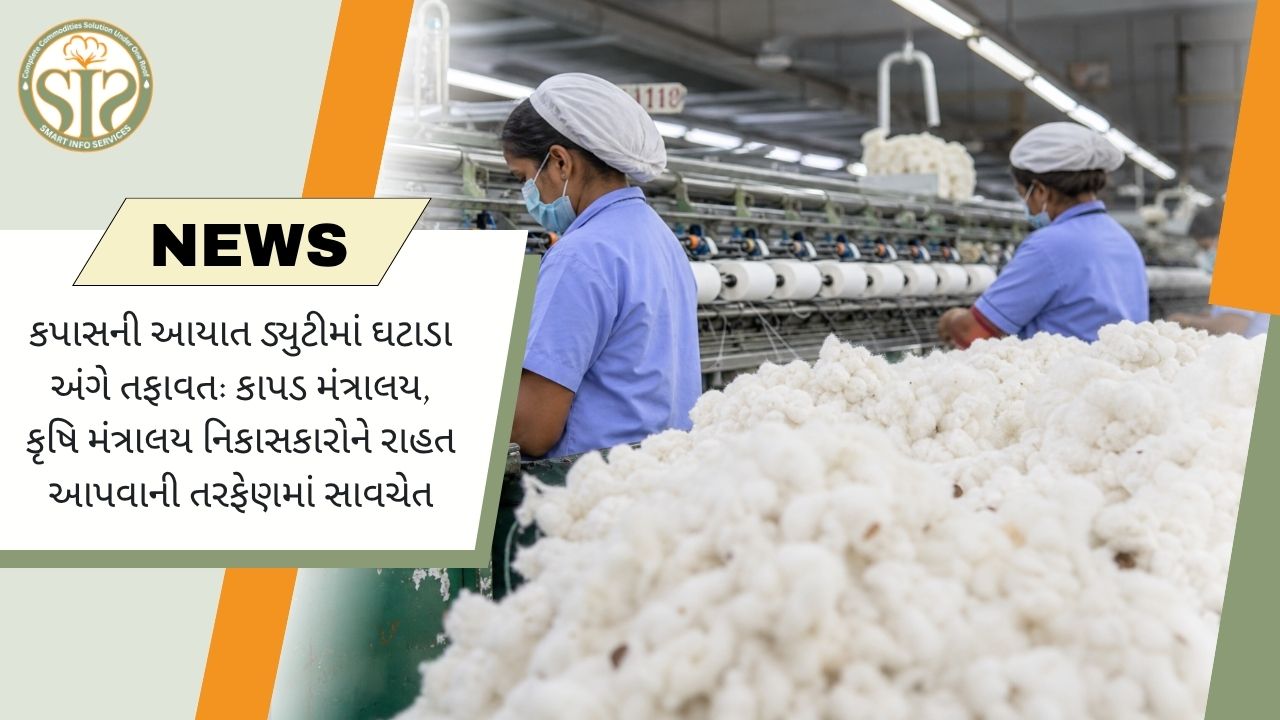
કપાસની આયાત ડ્યુટીમાં ઘટાડા અંગે તફાવત: કાપડ મંત્રાલય, કૃષિ મંત્રાલય નિકાસકારોને રાહત આપવાની તરફેણમાં સાવચેતકાચા કપાસ પરની આયાત જકાત ઘટાડવાને લઈને કેન્દ્ર સરકારમાં મતભેદો ઉભા થયા છે. જ્યારે કાપડ મંત્રાલય વસ્ત્રોના નિકાસકારોને રાહત આપવા માટે ડ્યુટી ઘટાડવા અથવા દૂર કરવાનું સમર્થન કરી રહ્યું છે, ત્યારે કૃષિ મંત્રાલય હાલમાં ખેડૂતોના હિતોને ધ્યાનમાં રાખીને આ દરખાસ્ત સાથે સંમત નથી. પશ્ચિમ એશિયામાં ચાલી રહેલી ભૌગોલિક રાજકીય કટોકટીએ નિકાસકારો માટે ખર્ચમાં વધારો કર્યો છે, જે તેમની સ્પર્ધાત્મકતાને અસર કરે છે.કાપડ મંત્રાલયની દલીલ છે કે આયાત ડ્યૂટીમાં કામચલાઉ કાપથી કાચા માલની કિંમતમાં ઘટાડો થશે અને નિકાસને વેગ મળશે. મંત્રાલયે એ પણ ખાતરી આપી છે કે આ પગલું ફક્ત ઑફ-સિઝનમાં જ લેવામાં આવશે, જેથી સ્થાનિક ખેડૂતોને નકારાત્મક અસર ન થાય. આ હોવા છતાં, કૃષિ મંત્રાલય આ મુદ્દાને આર્થિક અને રાજકીય રીતે સંવેદનશીલ ગણીને સાવચેતીભર્યું વલણ અપનાવી રહ્યું છે અને વ્યાપક પરામર્શ પછી જ નિર્ણય લેવા માંગે છે.મહેસૂલ વિભાગે એ પણ સ્પષ્ટ કર્યું છે કે આયાત ડ્યૂટીમાં કોઈપણ ફેરફાર માટે કૃષિ મંત્રાલયની સંમતિ ફરજિયાત રહેશે, જે નિર્ણય પ્રક્રિયાને ધીમી કરી શકે છે. દરમિયાન, એપેરલ એક્સપોર્ટ પ્રમોશન કાઉન્સિલે નાણા મંત્રાલય પાસેથી હસ્તક્ષેપની માંગ કરી છે, એમ કહીને કે, ખાસ કરીને ઉત્તર ભારતમાં પુરવઠાની અછતને કારણે કપાસના ભાવ સતત વધી રહ્યા છે. મિલોએ હવે કોટન કોર્પોરેશન ઓફ ઈન્ડિયાની હરાજી પર વધુ આધાર રાખવો પડશે.નિકાસકારોનું કહેવું છે કે બજારમાં સટ્ટાખોરી અને યાર્ન અને ફેબ્રિકના ભાવમાં વધારાને કારણે ઉત્પાદન ખર્ચ વધી રહ્યો છે. આ કારણે વૈશ્વિક માંગ મજબૂત હોવા છતાં ભારતીય નિકાસકારોની સ્પર્ધાત્મકતા નબળી પડી રહી છે. તેમણે સરકારને તાત્કાલિક આયાત ડ્યૂટી દૂર કરવા અપીલ કરી છે.ભારત કપાસના મુખ્ય ઉત્પાદકોમાંનો એક હોવા છતાં, ઑફ-સિઝનમાં હજુ પણ આયાતની જરૂર છે. 2025-26 માટે ઉત્પાદનનો અંદાજ 320.50 લાખ ગાંસડી છે, પરંતુ નીતિ નિર્ણયોમાં ખેડૂતો અને ઉદ્યોગ બંનેના હિતોને સંતુલિત કરવું એ એક મોટો પડકાર છે.વધુ વાંચો :- હરિયાણામાં કપાસની કટોકટી: ગુલાબી બોલવોર્મનો ઉપદ્રવ