
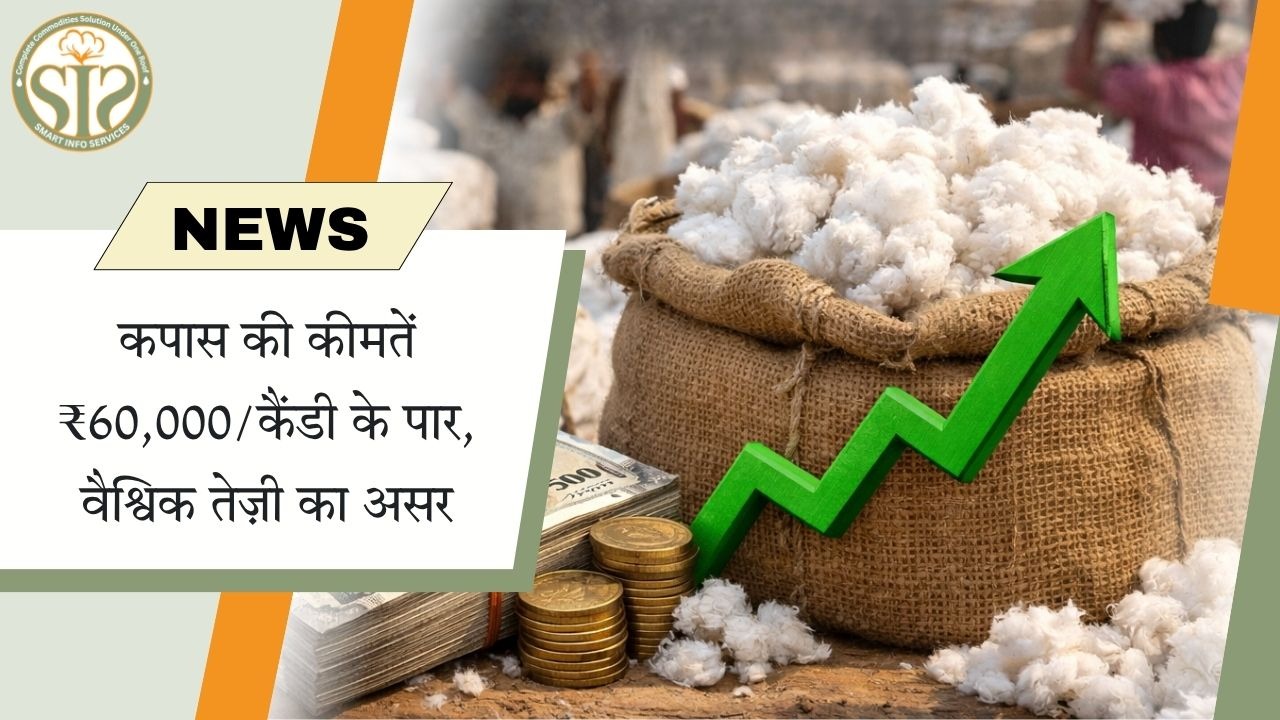
कपास की कीमतें ₹60,000/कैंडी के पार, वैश्विक तेज़ी का असरघरेलू बाज़ार में कपास की कीमतें और मज़बूत हुई हैं; इस सीज़न में पहली बार कीमतें ₹60,000 प्रति कैंडी (356 किलोग्राम) के निशान को पार कर गई हैं। इसकी मुख्य वजह वैश्विक बाज़ार से मिले मज़बूत संकेत और लगातार बनी मांग है।घरेलू कीमतें इंटरकॉन्टिनेंटल एक्सचेंज (ICE) पर वैश्विक वायदा कीमतों (futures) पर बारीकी से नज़र रख रही हैं। शुक्रवार को ICE पर जुलाई के सौदे 73 सेंट प्रति पाउंड से ऊपर पहुंच गए — जो जून 2024 के बाद का सबसे ऊंचा स्तर है।घरेलू मोर्चे पर, कॉटन कॉर्पोरेशन ऑफ़ इंडिया (CCI) ने शुक्रवार को अपनी बेंचमार्क कीमतों में ₹300 प्रति कैंडी की बढ़ोतरी की। पिछले दो हफ़्तों में कीमतों में लगभग ₹1,400 प्रति कैंडी की बढ़ोतरी हुई है, और पिछले कुछ महीनों में यह बढ़ोतरी लगभग ₹4,500 तक पहुंच गई है।वैश्विक आपूर्ति-मांग का परिदृश्यसंयुक्त राज्य अमेरिका के कृषि विभाग (USDA) के अनुसार, वैश्विक कपास उत्पादन में लगभग 900,000 गांठों (bales) की बढ़ोतरी का अनुमान है, जिससे कुल उत्पादन 121.9 मिलियन गांठों तक पहुंच जाएगा। इस बढ़ोतरी में चीन, भारत और पाकिस्तान में बढ़े हुए उत्पादन का योगदान है, जो अर्जेंटीना में आई गिरावट की भरपाई कर रहा है।वैश्विक खपत में भी लगभग 600,000 गांठों की बढ़ोतरी की उम्मीद है, जिससे कुल खपत 119.1 मिलियन गांठों तक पहुंच जाएगी। इसमें चीन और भारत से मिली मज़बूत मांग की भूमिका अहम है, जो बांग्लादेश और वियतनाम में कमज़ोर मांग की भरपाई कर रही है। कीमतें MSP से ऊपर, लेकिन मांग मिली-जुलीकई घरेलू बाज़ारों में कपास की कीमतें न्यूनतम समर्थन मूल्य (MSP) से ऊपर चल रही हैं। रायचूर में शुक्रवार को कच्ची कपास (कपास) की कीमतें ₹9,000 प्रति क्विंटल तक पहुंच गईं।हालांकि, उद्योग से जुड़े लोगों का कहना है कि जहां एक ओर कपास की कीमतें मज़बूत बनी हुई हैं, वहीं दूसरी ओर सूत (yarn) की मांग को ऊंचे स्तरों पर कुछ रुकावटों का सामना करना पड़ रहा है।बाज़ार के सूत्रों के अनुसार, मिलें नकद बाज़ार (cash market) में नई खरीदारी करने को लेकर सतर्कता बरत रही हैं। उनकी खरीदारी मुख्य रूप से उन व्यापारियों तक ही सीमित है, जो भुगतान के लिए लंबी अवधि (extended payment terms) की सुविधा दे रहे हैं। बेहतर फ़सल की उम्मीदें भी मिलों को आक्रामक खरीदारी करने से रोक रही हैं।निर्यात की मांग से सूत की कीमतों में तेज़ीकपास की कीमतों में आई तेज़ी का असर सूत के बाज़ारों में भी देखने को मिल रहा है। हाल के हफ़्तों में 30 CCH (कॉम्ब्ड होज़री) सूत की कीमतों में ₹55–60 प्रति किलोग्राम की बढ़ोतरी हुई है। इसकी कीमतें लगभग ₹235 प्रति किलोग्राम से बढ़कर लगभग ₹295 प्रति किलोग्राम तक पहुंच गई हैं। इस बढ़ोतरी में चीनी खरीदारों और बहुराष्ट्रीय कंपनियों से मिली मांग का अहम योगदान है। आवक अपडेटव्यापार के अनुमानों के अनुसार, मार्च के अंत तक कपास की कुल आवक लगभग 294 लाख गांठें (प्रत्येक 170 किलोग्राम) रही है। इसमें महाराष्ट्र 95.25 लाख गांठों के साथ सबसे आगे है, जिसके बाद गुजरात 59 लाख गांठों के साथ दूसरे स्थान पर है। तेलंगाना में 46.80 लाख गांठों की आवक दर्ज की गई है, जबकि कर्नाटक में यह आंकड़ा लगभग 25 लाख गांठों का है।कुल मिलाकर, जहाँ एक ओर वैश्विक संकेतों के कारण कीमतें स्थिर बनी हुई हैं, वहीं दूसरी ओर मिलों की सतर्क मांग और बेहतर फसल उत्पादन की उम्मीदों के चलते घरेलू बाज़ार में आगे कुछ स्थिरता देखने को मिल सकती है।और पढ़ें:- अमेरिका में टेक्सटाइल की मांग में गिरावट: भारत का निर्यात 29% घटा, वियतनाम को फायदा

US में टेक्सटाइल की मांग में गिरावट: भारत का एक्सपोर्ट 29% गिरा, वियतनाम को फ़ायदापुणे: फ़रवरी में US को भारत के टेक्सटाइल और कपड़ों के एक्सपोर्ट में भारी गिरावट आई, जिससे कमज़ोर मांग और एशियाई प्रतिस्पर्धियों से बढ़ते मुकाबले का दबाव साफ़ दिखता है।Office of Textiles and Apparel के डेटा के मुताबिक, US में भारत से होने वाला इंपोर्ट साल-दर-साल 28.7% कम हो गया। इसकी तुलना में, बांग्लादेश से होने वाला इंपोर्ट 16.4% गिरा, जबकि वियतनाम में 5% की बढ़ोतरी दर्ज की गई। Confederation of Indian Textile Industries (CITI) के विश्लेषण के अनुसार, चीन में सबसे ज़्यादा गिरावट देखी गई, जहाँ इंपोर्ट 45.2% तक गिर गया।इस तेज़ गिरावट ने US बाज़ार में भारत की हिस्सेदारी कम होने की चिंताएँ बढ़ा दी हैं, खासकर बांग्लादेश और वियतनाम के मुकाबले।CITI की सेक्रेटरी जनरल, चंद्रिमा चटर्जी ने कहा, "फ़रवरी 2026 तक के US व्यापार डेटा से पता चलता है कि भारत, बांग्लादेश की तुलना में तेज़ी से अपनी हिस्सेदारी खो रहा है, जबकि वियतनाम अपने फ़ायदे को मज़बूत कर रहा है।"यह गिरावट फ़रवरी 2026 में US के अतिरिक्त टैरिफ़ हटाए जाने के बावजूद आई है, जिससे पता चलता है कि इसका फ़ायदा अभी तक एक्सपोर्ट ऑर्डर में नहीं दिखा है। एक्सपोर्ट करने वालों का कहना है कि US के कई खरीदारों ने टैरिफ़ के समय ही दूसरे देशों से सामान खरीदना शुरू कर दिया था और वे अब धीरे-धीरे वापस आ रहे हैं।Rajalaxmi Cotton Mills के मैनेजिंग डायरेक्टर, रजत जयपुरिया ने कहा, "US के कई खरीदार ऊँचे टैरिफ़ की वजह से जोखिम कम करने के लिए भारत से दूर चले गए थे। हम उनमें से सिर्फ़ 40% को ही वापस ला पाए हैं।" उन्होंने आगे कहा कि मई-जून से शिपमेंट में तेज़ी दिख सकती है, क्योंकि आम तौर पर ऑर्डर से शिपमेंट तक का चक्र 90-120 दिनों का होता है।इंडस्ट्री के जानकारों का मानना है कि इस गिरावट की वजह US में टैरिफ़ की वजह से बढ़ी महँगाई है, जिसने 2025 में ग्राहकों की मांग को कम कर दिया, जिससे 2024 की तुलना में इंपोर्ट की मात्रा कम हो गई।Indian Chamber of Commerce की National Textile Committee के चेयरमैन, संजय जैन ने कहा, "यह ज़्यादातर US टैरिफ़ का नतीजा है जो अगस्त से लागू हुए थे। खरीदारों ने स्थिति साफ़ होने का इंतज़ार करते हुए अपने ऑर्डर रोक लिए थे। चूँकि फ़रवरी का डेटा पहले किए गए शिपमेंट को दिखाता है, इसलिए यह तेज़ गिरावट हैरानी की बात नहीं है और आगे चलकर इसमें कमी आनी चाहिए।"CITI ने बताया कि मौजूदा रुझान कुछ ढाँचागत चुनौतियों को भी दिखाता है, जिसमें दुनिया भर के खरीदार अपने सामान खरीदने के ठिकाने बदल रहे हैं, खासकर वियतनाम की ओर।इस सुस्ती का असर कंपनियों के प्रदर्शन पर पहले से ही पड़ रहा है। जिन कंपनियों की अमेरिकी बाज़ार में अच्छी-खासी मौजूदगी है, उन्होंने तीसरी तिमाही में मुनाफ़े में 50% से ज़्यादा की गिरावट दर्ज की। इसकी वजह कम मांग, क्षमता का पूरा इस्तेमाल न होना और ज़्यादा तय लागतों के कारण मार्जिन पर पड़ने वाला दबाव था। और पढ़ें:- रुपया 14 पैसे गिरकर 92.72 प्रति डॉलर पर बंद हुआ

शुक्रवार को भारतीय रुपया 14 पैसे गिरकर 92.72 प्रति डॉलर पर बंद हुआ, जबकि सुबह इसकी ओपनिंग प्राइस 92.58 थी।बंद होने पर, सेंसेक्स 918.60 पॉइंट्स या 1.20 परसेंट बढ़कर 77,550.25 पर और निफ्टी 275.50 पॉइंट्स या 1.16 परसेंट बढ़कर 24,050.60 पर था। लगभग 3245 शेयर बढ़े, 889 शेयर गिरे, और 126 शेयर बिना किसी बदलाव के बंद हुए।और पढ़ें :- प्रोत्साहन संशोधन नोटिफिकेशन लंबित, किसानों में असमंजस

देसी कपास प्रोत्साहन राशि पर संशोधन का नोटिफिकेशन लंबित, किसानों में असमंजसहरियाणा में देसी कपास की बुवाई पर प्रोत्साहन राशि बढ़ोतरी को लेकर अभी तक सरकार की ओर से आधिकारिक नोटिफिकेशन जारी नहीं किया गया है। इससे किसानों में असमंजस की स्थिति बनी हुई है। मौजूदा स्थिति में देसी कपास पर 3,000 रुपये प्रति एकड़ की प्रोत्साहन राशि लागू है, जबकि बजट सत्र में इसे बढ़ाकर 4,000 रुपये प्रति एकड़ करने की घोषणा की गई थी।किसानों का कहना है कि बुवाई का समय नजदीक होने के बावजूद नोटिफिकेशन न आने से योजना का लाभ इस खरीफ सीजन में मिल पाएगा या नहीं, यह स्पष्ट नहीं है। यदि प्रोत्साहन राशि में बढ़ोतरी लागू नहीं होती, तो देसी कपास का रकबा बढ़ने की संभावना कमजोर हो सकती है और किसान धान जैसी वैकल्पिक फसलों की ओर रुख कर सकते हैं।यह मुद्दा सिरसा, हिसार, फतेहाबाद, जींद और भिवानी जैसे कपास उत्पादक जिलों में अधिक प्रभाव डाल सकता है। सिरसा क्षेत्र राज्य में कपास उत्पादन का प्रमुख केंद्र माना जाता है, जहां केंद्रीय कपास अनुसंधान केंद्र भी स्थित है।कृषि विभाग के अनुसार, फिलहाल सरकार की ओर से न तो प्रोत्साहन राशि बढ़ोतरी का नोटिफिकेशन जारी हुआ है और न ही देसी कपास के बुवाई रकबे की विस्तृत रिपोर्ट मांगी गई है, जो योजना लागू करने की एक आवश्यक प्रक्रिया है।उप निदेशक कृषि विभाग, सुखबीर सिंह के अनुसार, नोटिफिकेशन जारी होने के बाद ही बढ़ी हुई राशि का लाभ किसानों को मिल पाएगा।वर्तमान में लगभग 7,000 किसान करीब 17,000 एकड़ क्षेत्र में देसी कपास की खेती करते हैं और उन्हें योजना के तहत सहायता मिलती है। किसान लंबे समय से उत्पादन लागत, गुलाबी सुंडी और रोगों की समस्या के चलते कपास से दूरी बना रहे हैं, जिससे इसका रकबा लगातार घट रहा है।इस बीच, विधानसभा सत्र में भी यह मुद्दा उठाया गया था। सिरसा से कांग्रेस विधायक गोकुल सेतिया ने देसी कपास के घटते रकबे और प्रोत्साहन योजना के विस्तार की मांग की थी।सरकार की ओर से बजट सत्र में जिन कृषि प्रोत्साहन योजनाओं की घोषणा की गई थी, उनमें शामिल हैं— देसी कपास पर 4,000 रुपये प्रति एकड़ प्रोत्साहन, धान छोड़कर वैकल्पिक फसलों पर 2,000 रुपये अतिरिक्त बोनस, बागवानी बीमा योजना का विस्तार, गन्ना और मधुमक्खी पालन को बढ़ावा तथा नए पशु चिकित्सा ढांचे का विस्तार।और पढ़ें :- खरीफ प्लान: कपास में गिरावट, मक्का में तेजी

जलगांव में खरीफ प्लानिंग: कपास का रकबा घटने के संकेत, मक्का में बढ़ोतरी की संभावनाजलगांव (महाराष्ट्र) में खरीफ सीजन को लेकर कृषि विभाग ने प्रारंभिक तैयारियां शुरू कर दी हैं। आगामी सीजन के लिए जिले में कुल 7 लाख 39 हजार 736 हेक्टेयर क्षेत्र में बुवाई की योजना बनाई गई है, जिसके आधार पर बीजों की मांग का अनुमान तैयार किया गया है।कृषि विभाग के अनुसार, इस वर्ष कपास के रकबे में कमी की संभावना है। पिछले तीन वर्षों में जहां कपास की बुवाई लगभग 4.42 लाख हेक्टेयर में होती रही है, वहीं इस साल भी लगभग इसी स्तर पर सीमित रहने का अनुमान है। इसके लिए करीब 22.10 लाख बीटी कपास बीज पैकेट की मांग प्रस्तावित की गई है, जिसमें 21.85 लाख बीटी और 24 हजार नॉन-बीटी पैकेट शामिल हैं।दूसरी ओर, सोयाबीन और मक्का के क्षेत्रफल में बढ़ोतरी की उम्मीद है। मौसम विभाग द्वारा कम बारिश के अनुमान और कपास के अपेक्षाकृत कमजोर दामों के कारण किसान वैकल्पिक फसलों की ओर रुख कर रहे हैं।सोयाबीन का प्रस्तावित क्षेत्र 47,000 हेक्टेयर रखा गया है, जिसके लिए लगभग 24,675 क्विंटल बीज की मांग है। वहीं मक्का की खेती में लगातार वृद्धि देखी जा रही है। इस साल मक्का का प्रस्तावित क्षेत्र 1,75,036 हेक्टेयर है और इसके लिए 26,255 क्विंटल बीज की मांग की गई है।इसके अलावा, अन्य फसलों के प्रस्तावित क्षेत्र और बीज मांग इस प्रकार हैं—कपास: 4,42,000 हेक्टेयर – 9,950 क्विंटलमक्का: 1,75,036 हेक्टेयर – 26,255 क्विंटलसोयाबीन: 47,000 हेक्टेयर – 24,675 क्विंटलज्वारी: 15,500 हेक्टेयर – 1,550 क्विंटलतुअर: 18,000 हेक्टेयर – 945 क्विंटलमूंग: 17,500 हेक्टेयर – 578 क्विंटलउड़द: 16,500 हेक्टेयर – 866 क्विंटलबाजरा: 5,500 हेक्टेयर – 220 क्विंटलकृषि विभाग के अनुसार, आगामी दिनों में इस प्लान को अंतिम रूप देने के लिए एक बैठक भी आयोजित की जाएगी।और पढ़ें :- रुपया 08 पैसे की बढ़कर के साथ 92.58 पर खुला।

रुपया 08 पैसे बढ़कर 92.58/USD पर खुलाशुक्रवार को भारतीय रुपया डॉलर के मुकाबले 08 पैसे बढ़कर 92.58 पर खुला, जबकि गुरुवार को यह 92.66 पर बंद हुआ था।और पढ़ें :- भारत-अमेरिका व्यापार पोर्टल लॉन्च, नए अवसर

भारत-अमेरिका व्यापार सुविधा पोर्टल लॉन्च, नए अवसरों की उम्मीदनई दिल्ली: भारत और अमेरिका के बीच व्यापारिक संबंधों को मजबूत करने की दिशा में एक महत्वपूर्ण कदम उठाते हुए, भारतीय विदेश सचिव विक्रम मिस्री ने वर्चुअल माध्यम से भारत-अमेरिका व्यापार सुविधा पोर्टल का शुभारंभ किया। इस पोर्टल का उद्देश्य व्यापार के नए अवसरों को बढ़ावा देना, ईज़ ऑफ डूइंग बिजनेस को बेहतर बनाना और MSMEs व स्टार्ट-अप्स को सहायता प्रदान करना है। साथ ही, यह पहल 2030 तक 500 अरब डॉलर के द्विपक्षीय व्यापार लक्ष्य को हासिल करने में मदद करेगी।लॉन्च के अवसर पर केंद्रीय वाणिज्य एवं उद्योग मंत्री पीयूष गोयल ने वीडियो संदेश के माध्यम से उद्योग जगत से इस पहल का अधिकतम लाभ उठाने की अपील की। उन्होंने कहा कि भारत और अमेरिका के उद्योग संगठनों, निर्यात संवर्धन परिषदों (EPCs) और चैंबर्स को आपसी सहयोग बढ़ाकर इस पोर्टल को व्यापार विस्तार का प्रभावी माध्यम बनाना चाहिए।गोयल ने इसे समयानुकूल और दूरदर्शी पहल बताते हुए कहा कि यह डिजिटल प्लेटफॉर्म DGFT के ‘ट्रेड कनेक्ट’ पोर्टल जैसी पहलों को और मजबूती देगा। उन्होंने कहा कि यह कदम भारत-अमेरिका साझेदारी की गहराई और उसके बढ़ते गतिशील स्वरूप को दर्शाता है।और पढ़ें :- रुपया 92.66 पर स्थिर बंद हुआ।

गुरुवार को, भारतीय रुपया डॉलर के मुकाबले 92.66 पर बंद हुआ, जो सुबह खुलने के समय के स्तर के बराबर ही था।बाजार बंद होने पर, सेंसेक्स 931.25 अंक या 1.20 प्रतिशत गिरकर 76,631.65 पर आ गया, और निफ्टी 222.25 अंक या 0.93 प्रतिशत गिरकर 23,775.10 पर बंद हुआ। लगभग 2054 शेयरों में बढ़त दर्ज की गई, 2046 शेयरों में गिरावट आई, और 126 शेयरों में कोई बदलाव नहीं हुआ।और पढ़ें :- युद्ध के कारण कपड़ा उद्योग को ₹3,000 करोड़ का नुकसान

कपड़ा उद्योग को ₹3,000 करोड़ से अधिक का झटका, युद्ध से कारोबार प्रभावितकोल्हापुर: पश्चिम एशिया में एक महीने से अधिक समय तक चले संघर्ष का असर अब राज्य के कपड़ा उद्योग पर साफ दिखाई दे रहा है। भले ही युद्ध फिलहाल थमा हो, लेकिन इससे उद्योग की आर्थिक स्थिति बुरी तरह प्रभावित हुई है। .SIS.कच्चे माल—खासकर कपास और सूत—की कीमतों में लगभग 15 प्रतिशत तक की तेज बढ़ोतरी दर्ज की गई है।बढ़ती लागत, घटती मांग और निर्यात में सुस्ती ने उद्योग को गंभीर संकट में डाल दिया है। टेक्सटाइल फेडरेशन के अनुमान के मुताबिक, बीते एक महीने में राज्य के कपड़ा उद्योग को ₹3,000 करोड़ से अधिक का नुकसान हुआ है। हालात संभालने के लिए कई इकाइयों ने उत्पादन घटाया है—कुछ ने एक शिफ्ट बंद कर दी है तो कुछ दो दिन का कार्य सप्ताह अपना रही हैं।मानव-निर्मित रेशों, जो कच्चे तेल से बनते हैं, उनकी कीमतों में भी लगभग 15 प्रतिशत की बढ़ोतरी हुई है। युद्ध से पहले कपास और सूत की कीमतें लंबे समय तक स्थिर थीं, जिससे उत्पादन लागत भी नियंत्रित थी। लेकिन अब स्थिति तेजी से बदल गई है।सिर्फ एक महीने में 29 मिमी ग्रेड कपास की कीमत ₹54,000 प्रति खांडी से बढ़कर ₹61,000 प्रति खांडी हो गई है। वहीं 5 किलो सूत के बंडल की कीमत ₹1,260 से बढ़कर ₹1,415 तक पहुंच गई है।.SIS.दूसरी ओर, तैयार कपड़ों की कीमतों में मामूली बढ़ोतरी हुई है। उदाहरण के तौर पर, पॉपलिन जैसे कपड़ों के दाम में केवल ₹1 प्रति मीटर की बढ़त हुई है। मांग में कमी के कारण उद्योग में चिंता का माहौल है।क्षेत्रवार नुकसान:* बुनाई: ₹1,000 करोड़* कताई मिलें: ₹800 करोड़* प्रोसेसिंग: ₹400 करोड़* गारमेंट्स: ₹1,100 करोड़इस संकट के चलते कताई मिलों को औसतन 2–3 दिन उत्पादन रोकना पड़ रहा है। नए ऑर्डर लगभग ठप हैं और निर्यात भी धीमा हो गया है। .SIS.उद्योग संगठनों की समीक्षा के बाद, कपड़ा उद्यमी किरण तरलेकर ने आशंका जताई है कि कुल नुकसान ₹4,000 करोड़ तक पहुंच सकता है।और पढ़ें :- रुपया 8 पैसे की गिरावट के साथ 92.66 पर खुला।

रुपया 08 पैसे गिरकर 92.66/USD पर खुलागुरुवार को भारतीय रुपया डॉलर के मुकाबले 08 पैसे गिरकर 92.66 पर खुला, जबकि बुधवार को यह 92.58 पर बंद हुआ था।

भारतीय रुपया बुधवार को अमेरिकी डॉलर के मुकाबले 92.64 पर खुला और 6 पैसे की बढ़त के साथ 92.58 पर बंद हुआ।बाजार बंद होने पर, सेंसेक्स 2,946.32 अंक या 3.95 प्रतिशत की बढ़त के साथ 77,562.90 पर रहा, और निफ्टी 873.70 अंक या 3.78 प्रतिशत की बढ़त के साथ 23,997.35 पर रहा। लगभग 3698 शेयरों में बढ़त दर्ज की गई, 505 शेयरों में गिरावट आई और 90 शेयरों में कोई बदलाव नहीं हुआ।और पढ़ें:- गिरिराज सिंह: केंद्र कपड़ा पीएलआई में 10,683 करोड़ रुपये का विस्तार करेगा

गिरिराज सिंह का कहना है कि केंद्र 10,683 करोड़ रुपये के कपड़ा पीएलआई के तहत उत्पाद कवरेज का विस्तार करेगाकेंद्रीय मंत्री गिरिराज सिंह ने मंगलवार को कहा कि केंद्र कपड़ा क्षेत्र के लिए अपनी ₹10,683 करोड़ की उत्पादन-लिंक्ड प्रोत्साहन (पीएलआई) योजना का दायरा बढ़ाने के लिए तैयार है।पीटीआई से बात करते हुए, सिंह ने पुष्टि की कि सरकार योजना के तहत पात्र उत्पाद श्रेणियों की सूची का “निश्चित रूप से विस्तार” करेगी। वर्तमान में, पीएलआई मानव निर्मित फाइबर (एमएमएफ) परिधान, कपड़े और तकनीकी वस्त्र जैसे क्षेत्रों को कवर करता है।प्रस्तावित विस्तार से व्यापार करने में आसानी में सुधार, नए निवेश आकर्षित करने और समग्र क्षेत्रीय विकास में तेजी लाकर उद्योग को बढ़ावा मिलने की उम्मीद है। यह रोजगार पैदा करने और वैश्विक कपड़ा बाजार में भारत की स्थिति को मजबूत करने के सरकार के व्यापक प्रयास के साथ भी संरेखित है।सिंह ने कहा कि हाल के वर्षों में इस क्षेत्र में महत्वपूर्ण बदलाव आया है। जबकि तकनीकी वस्त्रों पर पहले सीमित ध्यान दिया जाता था, वर्तमान नीति ढांचा उनके विकास पर मजबूत जोर देता है, जो उद्योग की बदलती गतिशीलता और बढ़ती वैश्विक मांग को दर्शाता है।और पढ़ें:- अगले सीजन में भारत में कपास रकबा व उत्पादन बढ़ने की संभावना: यूएसडीए
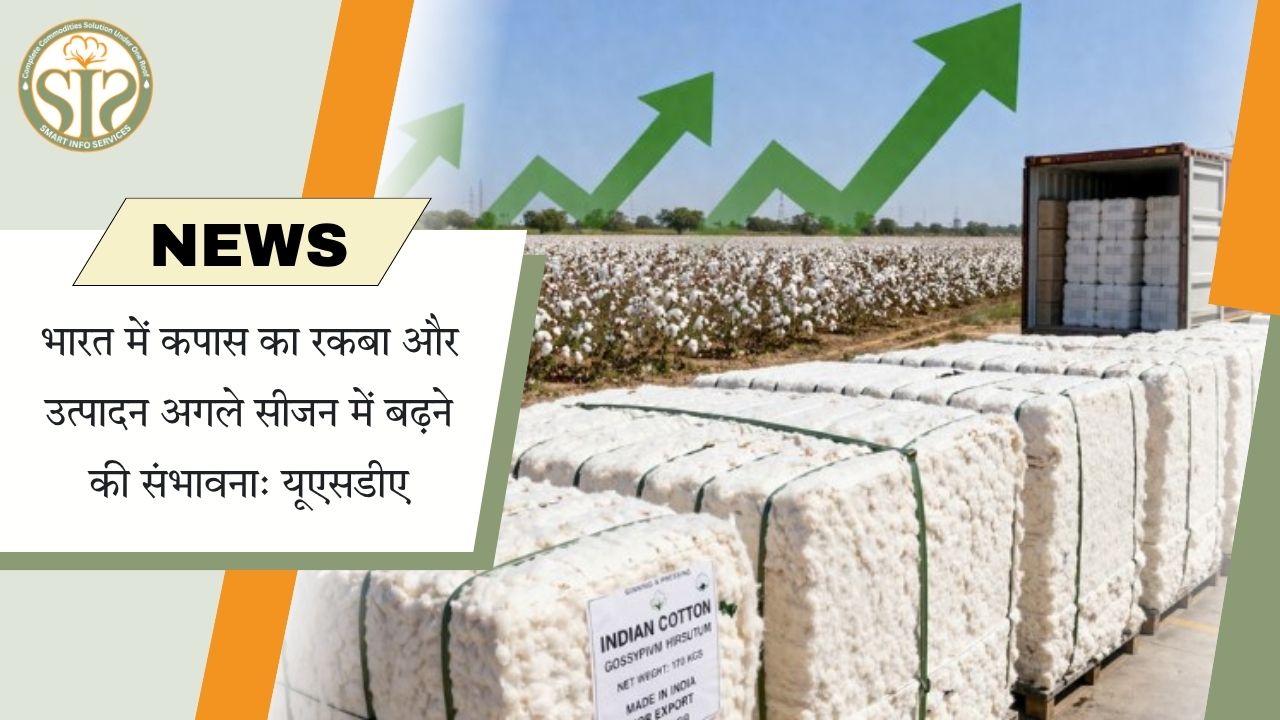
भारत में कपास का रकबा और उत्पादन अगले सीजन में बढ़ने की संभावना: यूएसडीएयूएसडीए के अनुसार, भारत का कपास क्षेत्र 2026-27 विपणन वर्ष में वापसी के लिए तैयार है, जिसमें रकबा और उत्पादन दोनों में वृद्धि होने की उम्मीद है।एजेंसी का अनुमान है कि किसानों की भावनाओं में सुधार और बेहतर रिटर्न की उम्मीद से कपास का रकबा 3% बढ़कर लगभग 11.5 मिलियन हेक्टेयर हो जाएगा। उच्च पैदावार और संभावित सामान्य मानसून सीजन के कारण उत्पादन 7% बढ़कर 25.2 मिलियन गांठ (प्रत्येक 480 पाउंड) होने का अनुमान है।यह सुधार पिछले वर्ष असामयिक बारिश के कारण कठिन दौर के बाद आया है। बेहतर फसल स्थितियों और अधिक अनुकूल मौसम के कारण अब पैदावार में सुधार होने की उम्मीद है, औसत उत्पादकता लगभग 477 किलोग्राम प्रति हेक्टेयर होने का अनुमान है।घरेलू मांग भी मजबूत होने की उम्मीद है, खपत 25.8 मिलियन गांठ तक पहुंचने का अनुमान है। इस वृद्धि को कपड़ा और परिधान निर्यात की बेहतर संभावनाओं के साथ-साथ यूरोपीय संघ और यूनाइटेड किंगडम जैसे प्रमुख बाजारों के साथ प्रत्याशित व्यापार समझौतों से बढ़ावा मिलने की संभावना है।व्यापार पक्ष पर, कपास का आयात घटकर लगभग 3 मिलियन गांठ होने का अनुमान है क्योंकि उच्च घरेलू उत्पादन से विदेशी आपूर्ति पर निर्भरता कम हो जाती है। हालाँकि, निर्यात लगभग 1.2 मिलियन गांठ तक गिरने की उम्मीद है, जो एक छोटे निर्यात योग्य अधिशेष और कच्चे कपास के बजाय मूल्य वर्धित कपड़ा उत्पादों के निर्यात की ओर एक रणनीतिक बदलाव को दर्शाता है।अधिक उत्पादन और मजबूत शुरुआती स्टॉक के कारण कुल मिलाकर कपास की आपूर्ति लगभग 39.3 मिलियन गांठ तक बढ़ने का अनुमान है। अंतिम स्टॉक बढ़कर 12.3 मिलियन गांठ होने की उम्मीद है, जिसके परिणामस्वरूप स्टॉक-टू-यूज़ अनुपात लगभग 46% होगा, जो घरेलू बाजार में आरामदायक उपलब्धता का संकेत देता है।इस सकारात्मक दृष्टिकोण के बावजूद, इस क्षेत्र को बढ़ती इनपुट लागत और सिंथेटिक फाइबर से बढ़ती प्रतिस्पर्धा जैसी चुनौतियों का सामना करना पड़ रहा है। फिर भी, बेहतर पैदावार और स्थिर मौसम की स्थिति से आने वाले सीज़न में भारत की कपास अर्थव्यवस्था के मजबूत प्रदर्शन का समर्थन मिलने की उम्मीद है।और पढ़ें:- छूट के बाद भी महंगा यार्न, बुनकर परेशान

छूट के बावजूद यार्न की कीमतें ऊंची बनी हुई हैं: बुनकरसूरत में कपड़ा बुनकरों ने यार्न की लगातार ऊंची कीमतों पर चिंता व्यक्त की है, यह देखते हुए कि 40 पेट्रोकेमिकल उत्पादों को सीमा शुल्क से छूट देने के केंद्र के फैसले के बावजूद दरें कम नहीं हुई हैं।बुनकरों का तर्क है कि जब इनपुट लागत बढ़ती है तो यार्न निर्माता कीमतें तेजी से बढ़ा देते हैं, लेकिन कच्चे माल की कीमतें गिरने पर कीमतें कम करने में धीमे होते हैं। उनके अनुसार, यार्न की लागत में निरंतर वृद्धि ने पूरे बुनाई क्षेत्र में उत्पादन स्तर और लाभ मार्जिन पर काफी प्रभाव डाला है।हालाँकि, यार्न विनिर्माताओं का कहना है कि शुल्क छूट अकेले मूल्य निर्धारित नहीं करती है। वे मौजूदा मूल्य स्तरों का श्रेय कई कारकों को देते हैं, जिनमें अमेरिकी डॉलर में उतार-चढ़ाव और वैश्विक भू-राजनीतिक विकास शामिल हैं। निर्माताओं का यह भी तर्क है कि मौजूदा बाजार दरों पर यार्न का कारोबार जारी है और खरीदारों की ओर से कोई व्यापक प्रतिरोध नहीं हुआ है।इस स्थिति ने ज़मीनी स्तर पर परिचालन को प्रभावित करना शुरू कर दिया है। बढ़ती इनपुट लागत और श्रमिकों के लिए रसोई गैस की कमी का सामना करते हुए, कई बुनाई इकाइयों ने एकल-शिफ्ट संचालन में कटौती कर दी है या प्रत्येक सप्ताह कुछ दिनों के लिए बंद कर दिया है। उद्योग प्रतिनिधियों का कहना है कि गंभीर वित्तीय तनाव के तहत कुछ इकाइयों ने पहले ही उत्पादन कम कर दिया है।कपड़ा उत्पादों की कमजोर मांग ने परिदृश्य को और खराब कर दिया है। उद्योग जगत के नेताओं का कहना है कि उच्च इनपुट लागत और सुस्त मांग के संयोजन ने कई बुनकरों को उत्पादन कम करने के लिए मजबूर किया है।बुनकरों ने चेतावनी दी है कि यदि लागत और श्रम स्थितियों पर मौजूदा दबाव जारी रहता है, तो आने वाले हफ्तों में कुल उत्पादन में और गिरावट आ सकती है। एक बुनाई इकाई के मालिक ने कहा कि मंदी के दौरान यार्न की कीमतों में और अधिक तेज़ी से सुधार किया जाना चाहिए, यह कहते हुए कि कटौती कच्चे माल की लागत में गिरावट से पीछे रह जाती है।जवाब में, एक यार्न निर्माता ने कहा कि मूल्य निर्धारण समायोजन तेजी से बदलते बाजार की गतिशीलता के अनुरूप किया जाता है। उन्होंने कहा कि कच्चे माल की कीमतों और मुद्रा की चाल में अब पहले की तुलना में अधिक उतार-चढ़ाव होता है, जिससे निर्माता भी कम मार्जिन पर काम कर रहे हैं।और पढ़ें:- रुपया 36 पैसे बढ़त 92.64 पर खुला.

रुपया 36 पैसे बढ़त 92.64/USD पर खुला.भारतीय रुपया बुधवार को 36 पैसे बढ़त 92.64 प्रति डॉलर पर खुला, जबकि मंगलवार को यह 93.00 पर बंद हुआ था।और पढ़ें :- रुपया डॉलर के मुकाबले 2 पैसे की बढ़त के साथ 93.00 पर बंद हुआ।

मंगलवार को भारतीय रुपया डॉलर के मुकाबले 93.02 पर खुला और 02 पैसे की बढ़त के साथ 93.00 पर बंद हुआ।बाजार बंद होने पर, सेंसेक्स 509.73 अंक या 0.69 प्रतिशत की बढ़त के साथ 74,616.58 पर रहा, और निफ्टी 155.40 अंक या 0.68 प्रतिशत की बढ़त के साथ 23,123.65 पर रहा। लगभग 2539 शेयरों में बढ़त दर्ज की गई, 1514 शेयरों में गिरावट आई, और 144 शेयरों में कोई बदलाव नहीं हुआ।और पढ़ें:- अकोट APMC में कपास कीमतों में जबरदस्त उछाल

अकोट APMC में कॉटन ने लगाई बड़ी छलांगअकोट की एग्रीकल्चरल प्रोड्यूस मार्केट कमेटी (APMC) में इस सीज़न के आखिरी चरण में कॉटन के दामों में तेज़ उछाल देखने को मिला है। विदर्भ की प्रमुख कॉटन मंडियों में से एक मानी जाने वाली इस मंडी में कॉटन की कीमतें बढ़कर 8,995 रुपये प्रति क्विंटल तक पहुंच गई हैं, जो हाल के दिनों में सबसे ऊंचा स्तर है।लगातार बढ़ती कीमतों को देखते हुए अब यह अनुमान लगाया जा रहा है कि कॉटन जल्द ही 9,000 रुपये के आंकड़े को पार कर सकता है। सीज़न की शुरुआत में कीमतों को लेकर अनिश्चितता बनी हुई थी, लेकिन कॉटन कॉर्पोरेशन ऑफ़ इंडिया (CCI) द्वारा न्यूनतम समर्थन मूल्य पर खरीद शुरू करने से बाज़ार को स्थिरता मिली।पिछले महीने CCI द्वारा खरीद बंद किए जाने के बाद यह आशंका जताई जा रही थी कि निजी बाज़ार में गिरावट आ सकती है, लेकिन इसके उलट कॉटन को अच्छे दाम मिल रहे हैं। वैश्विक और घरेलू स्तर पर बढ़ती मांग को इस तेजी का मुख्य कारण माना जा रहा है।शनिवार को अकोट मंडी में कॉटन की आवक संतोषजनक रही। नीलामी के दौरान व्यापारियों के बीच प्रतिस्पर्धा बढ़ने से कीमतें रिकॉर्ड स्तर तक पहुंच गईं।विशेषज्ञों के अनुसार, बाज़ार में अब कॉटन की तेज़ी का दौर शुरू हो चुका है। कई किसानों ने बेहतर दाम की उम्मीद में अपना स्टॉक रोक रखा था, जो अब धीरे-धीरे बाज़ार में आ रहा है। अच्छी गुणवत्ता वाले कॉटन की मांग अधिक होने के कारण खरीदार सक्रिय हैं।मौजूदा परिस्थितियों को देखते हुए अनुमान है कि आने वाले दिनों में कॉटन के दाम 9,500 रुपये प्रति क्विंटल तक पहुंच सकते हैं, जिससे किसानों को अच्छा लाभ मिलने की उम्मीद है।और पढ़ें:- परभणी जिले में कपास की खरीद कीमतों में सुधार से किसानों को राहत।

परभणी जिले में कॉटन खरीद कीमत में सुधारपरभणी जिले में कपास के दामों में हाल के दिनों में सुधार देखा गया है। परभणी, मनावत और सेलू के प्रमुख बाजारों में निजी खरीदी दरें बढ़कर औसतन करीब 8,500 रुपये प्रति क्विंटल तक पहुंच गई हैं और कीमतें अब 9,000 रुपये प्रति क्विंटल की ओर बढ़ती दिखाई दे रही हैं। इससे उन किसानों को राहत मिली है, जिन्होंने बेहतर भाव की उम्मीद में अब तक अपनी उपज नहीं बेची थी।4 अप्रैल को परभणी कृषि उपज मंडी समिति में कपास का भाव 8,300 से 8,660 रुपये प्रति क्विंटल के बीच रहा। मनावत मंडी में यह 8,440 से 8,611 रुपये प्रति क्विंटल और सेलू मंडी में 8,480 से 8,740 रुपये प्रति क्विंटल के बीच दर्ज किया गया। अनुमान है कि जिले के लगभग 20 प्रतिशत किसानों के पास अभी भी कपास का स्टॉक बचा हुआ है।सीजन की शुरुआत (अक्टूबर-नवंबर 2025) में निजी खरीदी दरें 7,000 से 7,200 रुपये प्रति क्विंटल के बीच थीं, जबकि CCI ने 7,767 से 8,060 रुपये प्रति क्विंटल पर खरीदी की। जनवरी में निजी दरें बढ़कर 8,400 रुपये तक पहुंचीं, जिससे CCI की खरीदी धीमी पड़ गई। बाद में कीमतें गिरकर फिर 7,000 रुपये तक आईं, तो किसानों ने दोबारा CCI का रुख किया।अब पिछले एक सप्ताह से कीमतों में फिर से तेजी देखी जा रही है, जिससे किसानों में संतोष का माहौल है। FAQ ग्रेड कपास को 8,300 से 8,660 रुपये प्रति क्विंटल (औसत 8,545 रुपये) का भाव मिला, जबकि फरदाद कपास 7,200 से 7,905 रुपये प्रति क्विंटल बिका।मांडाखली गांव के किसान रमेश राउत के अनुसार, गांव के 20–25 प्रतिशत किसानों के पास अभी भी कपास बचा हुआ है। उन्होंने बताया कि शुरुआती जरूरतों के लिए उन्होंने 25 क्विंटल कपास 7,850 रुपये प्रति क्विंटल पर बेचा था, जबकि अभी भी उनके पास 50 क्विंटल स्टॉक मौजूद है, जिसे वे 9,000 रुपये के आसपास भाव मिलने पर बेचने की योजना बना रहे हैं।और पढ़ें:- रुपया 04 पैसे बढ़त 93.02 पर खुला.

रुपया 04 पैसे बढ़त 93.02/USD पर खुला.भारतीय रुपया मंगलवार को 04 पैसे बढ़त 93.02 प्रति डॉलर पर खुला, जबकि सोमवार को यह 93.06 पर बंद हुआ था।और पढ़ें :-रुपया 93.06 पर स्थिर बंद हुआ।

सोमवार को, भारतीय रुपया डॉलर के मुकाबले 93.06 पर बंद हुआ, यह वही स्तर था जिस पर यह सुबह खुला था।शेयर बाज़ार LIVE अपडेट्स: सेंसेक्स दिन के निचले स्तर से ज़ोरदार वापसी करते हुए 787.30 अंक या 1.07 प्रतिशत की बढ़त के साथ 74,106.85 पर बंद हुआ। यह अचानक आई तेज़ी मीडिया की उन रिपोर्टों के बाद देखने को मिली, जिनमें दावा किया गया था कि अमेरिका और ईरान के बीच पाकिस्तान की मध्यस्थता से एक संघर्ष-विराम का ढाँचा तैयार हुआ है।और पढ़ें:- धागे के दाम बढ़े, बुनकरों पर बढ़ा आर्थिक दबाव
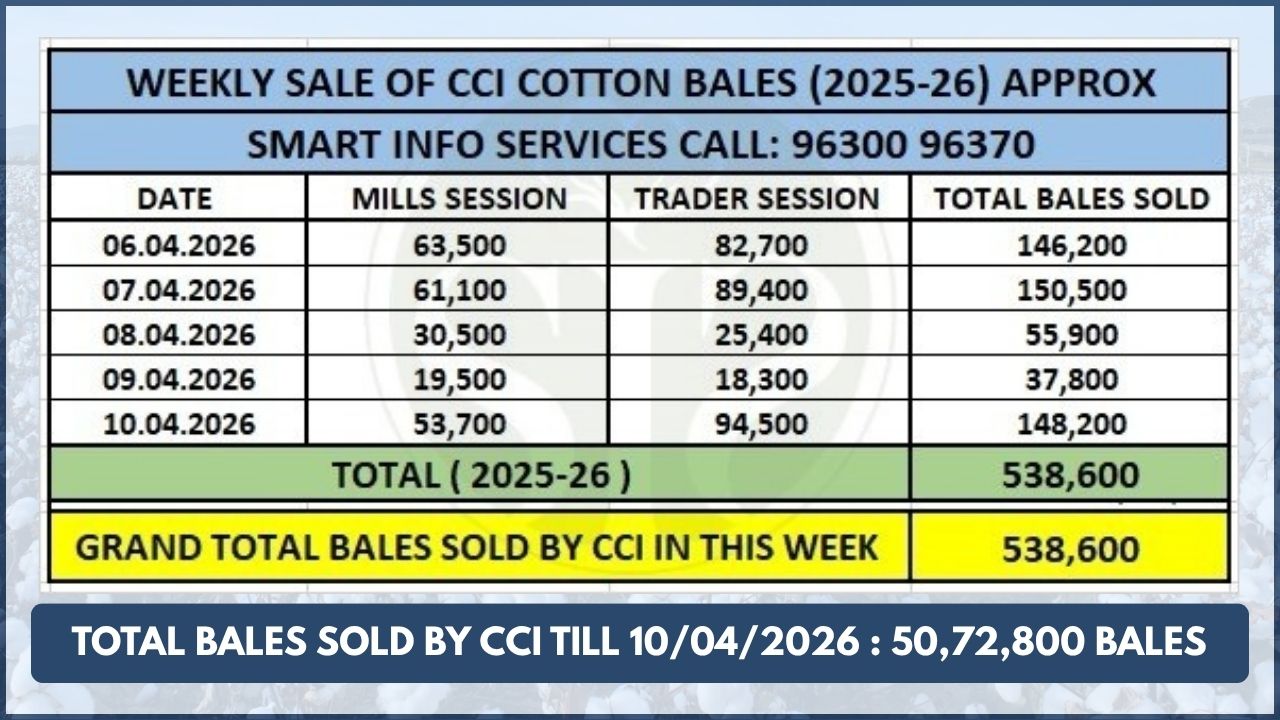
CCI Hikes Cotton Prices by ₹300- ₹700 per Candy; Weekly Auction Sales Cross 5.38 Lakh BalesThe Cotton Corporation of India (CCI) raised its cotton prices by ₹300- ₹700 per candy during the week from April 06 to April 10, 2026, the auctions witnessed strong participation from mills and cotton traders, resulting in robust weekly sales of about 5,38,600 bales from the 2025–26 season.Day-wise Auction HighlightsApril 06, 2026 (Monday):The week opened on a strong note with total sales of 1,46,200 bales. Mills purchased 63,500 bales, while traders led with 82,700 bales.April 07, 2026 (Tuesday):The highest single-day sale of the week was recorded at 1,50,500 bales. Mills bought 61,100 bales, whereas traders accounted for 89,400 bales.April 08, 2026 (Wednesday):Sales moderated slightly to 55,900 bales. Mills purchased 30,500 bales, and traders bought 25,400 bales.April 09, 2026 (Thursday):A total of 37,800 bales were reported sold during the day. Mills purchased 19,500 bales while traders bought 18,300 balesApril 10, 2026 (Friday):The week closed on a strong note with sales of 1,48,200 bales. Mills purchased 53,700 bales, while traders dominated with 94,500 bales.Cumulative Sales Update2025–26 Season: 50,72,800 bales2024–25 Season: 98,85,100 bales

Cotton Prices Cross ₹60,000/Candy, Track Global RallyCotton prices in the domestic market have strengthened further, crossing the ₹60,000 per candy (356 kg) mark for the first time this season, driven by firm global cues and steady demand.Domestic prices are closely tracking global futures on the Intercontinental Exchange (ICE), where July contracts rose above 73 cents per pound on Friday — the highest level since June 2024.On the domestic front, the Cotton Corporation of India (CCI) raised its benchmark prices by ₹300 per candy on Friday. Over the past two weeks, prices have increased by around ₹1,400 per candy, and by nearly ₹4,500 over the past few months.Global Supply-Demand OutlookAccording to the United States Department of Agriculture (USDA), global cotton production is projected to rise by nearly 900,000 bales to 121.9 million bales, supported by higher output in China, India, and Pakistan, offsetting a decline in Argentina.Global consumption is also expected to grow by about 600,000 bales to 119.1 million bales, with stronger demand from China and India compensating for weaker demand in Bangladesh and Vietnam. Prices Above MSP, But Demand MixedCotton prices in several domestic markets are trading above the Minimum Support Price (MSP). In Raichur, raw cotton (kapas) prices touched ₹9,000 per quintal on Friday.However, industry participants indicate that while cotton prices are firm, yarn demand is facing resistance at higher levels.Market sources note that mills are cautious in making fresh purchases in the cash market, with buying largely limited to traders offering extended payment terms. Expectations of a better crop outlook are also capping aggressive buying.Yarn Prices Rise on Export DemandThe uptrend in cotton prices is also reflecting in yarn markets. Prices of 30 CCH (combed hosiery) yarn have increased by ₹55–60 per kg in recent weeks, rising from around ₹235 per kg to nearly ₹295 per kg, supported by demand from Chinese buyers and multinational companies.Arrivals UpdateAs per trade estimates, total cotton arrivals up to March-end are around 294 lakh bales (170 kg each). Maharashtra leads with 95.25 lakh bales, followed by Gujarat at 59 lakh bales. Telangana has recorded arrivals of 46.80 lakh bales, while Karnataka stands at around 25 lakh bales.Overall, while global cues are keeping prices firm, the domestic market may see some stability ahead amid cautious mill demand and expectations of improved crop output.read more :- US Textile Demand Slump: India Exports Drop 29%, Vietnam Gains

US Textile Demand Slump: India Exports Fall 29%, Vietnam Gains GroundPUNE: India’s textile and apparel exports to the US dropped sharply in February, highlighting weak demand and growing competitive pressure from Asian peers.According to data from the Office of Textiles and Apparel, US imports from India declined 28.7% year-on-year. In comparison, imports from Bangladesh fell 16.4%, while Vietnam recorded a 5% increase. China saw the steepest drop, with imports plunging 45.2%, as per analysis by the Confederation of Indian Textile Industries (CITI).The sharper decline has raised concerns about India losing market share in the US, particularly to Bangladesh and Vietnam.“The US trade data till February 2026 shows India is losing share faster than Bangladesh, while Vietnam is consolidating gains,” said Chandrima Chatterjee, Secretary General of CITI.The fall comes despite the rollback of additional US tariffs in February 2026, suggesting that the benefits are yet to reflect in export orders. Exporters say many US buyers had already shifted sourcing to other countries during the tariff period and are slow to return.“A lot of US buyers moved away from India to hedge risks due to high tariffs. We have managed to regain only about 40% of them,” said Rajat Jaipuria, Managing Director of Rajalaxmi Cotton Mills. He added that a pickup in shipments may be visible from May–June, given the typical 90–120 day order-to-shipment cycle.Industry experts attribute the decline to tariff-driven inflation in the US, which dampened consumer demand in 2025, leading to lower import volumes compared to 2024.“This is largely the fallout of US tariffs that became effective from August. Buyers held back orders while waiting for clarity. Since February data reflects shipments made earlier, the sharp fall is not surprising and should ease going forward,” said Sanjay Jain, Chairman of the National Textile Committee at the Indian Chamber of Commerce.CITI noted that the current trend also reflects structural challenges, with global buyers diversifying sourcing bases, especially toward Vietnam.The slowdown is already impacting company performance. Firms with high exposure to the US market reported over 50% decline in profit growth in Q3, due to weak demand, underutilised capacities, and margin pressure from high fixed costs.read more :- Rupee fell 14 paise to close at 92.72 per dollar

The Indian rupee lower 14 paise to close at 92.72 per dollar on Friday, compared to its opening price of 92.58 in the morning.At close, the Sensex was up 918.60 points or 1.20 percent at 77,550.25, and the Nifty was up 275.50 points or 1.16 percent at 24,050.60. About 3245 shares advanced, 889 shares declined, and 126 shares unchanged.read more :- Incentive amendment notification pending, confusion among farmers

Notification Regarding Revision of Incentive for Indigenous Cotton Pending; Farmers in LimboIn Haryana, the government has not yet issued an official notification regarding the proposed increase in the incentive amount for the cultivation of indigenous cotton. This has left farmers in a state of confusion. Under the current regulations, an incentive of ₹3,000 per acre is applicable for indigenous cotton; however, during the budget session, an announcement was made to raise this amount to ₹4,000 per acre.Farmers express concern that, despite the sowing season drawing near, the absence of a notification makes it unclear whether they will be able to avail the benefits of the scheme during this Kharif season. If the proposed increase in the incentive amount is not implemented, the likelihood of an expansion in the area under indigenous cotton cultivation could diminish, potentially prompting farmers to shift toward alternative crops such as paddy.This issue is likely to have a significant impact on major cotton-producing districts such as Sirsa, Hisar, Fatehabad, Jind, and Bhiwani. The Sirsa region is considered a pivotal hub for cotton production within the state and is also home to the Central Institute for Cotton Research.According to the Department of Agriculture, the government has currently neither issued the notification regarding the incentive hike nor requested a detailed report on the acreage under indigenous cotton cultivation—a procedural prerequisite for the implementation of the scheme.According to Sukhbir Singh, Deputy Director of the Department of Agriculture, farmers will be able to access the benefits of the enhanced incentive amount only after the official notification has been issued.Currently, approximately 7,000 farmers cultivate indigenous cotton across an area of about 17,000 acres, receiving assistance under this scheme. For some time now, farmers have been distancing themselves from cotton cultivation—primarily due to concerns regarding production costs, pink bollworm infestations, and crop diseases—resulting in a continuous decline in the total area under cotton cultivation.Meanwhile, this issue was also raised during the Legislative Assembly session. Gokul Setia, the Congress MLA from Sirsa, had called for the expansion of the incentive scheme and highlighted the shrinking acreage dedicated to indigenous cotton cultivation. The agricultural incentive schemes announced by the government during the Budget Session include: an incentive of ₹4,000 per acre for indigenous cotton; an additional bonus of ₹2,000 for alternative crops (excluding paddy); the expansion of the horticulture insurance scheme; the promotion of sugarcane cultivation and beekeeping; and the expansion of veterinary infrastructure.read more :- Kharif Plan: Decline in Cotton, Rise in Maize

Kharif Planning in Jalgaon: Indications of Declining Cotton Acreage; Potential Rise in Maize CultivationThe Agriculture Department in Jalgaon (Maharashtra) has commenced preliminary preparations for the upcoming Kharif season. For the approaching season, sowing has been planned across a total area of 739,736 hectares within the district, based on which an estimate of seed requirements has been formulated.According to the Agriculture Department, a decline in the acreage dedicated to cotton cultivation is anticipated this year. While cotton sowing has consistently covered approximately 442,000 hectares over the past three years, it is projected to remain limited to roughly the same level this year as well. Consequently, a demand for approximately 2.21 million packets of cotton seeds has been proposed, comprising 2.185 million packets of BT cotton seeds and 24,000 packets of non-BT seeds.Conversely, an increase in the area under soybean and maize cultivation is expected. Driven by the Meteorological Department's forecast of lower rainfall and relatively weaker market prices for cotton, farmers are increasingly shifting their focus toward alternative crops.The proposed area for soybean cultivation has been set at 47,000 hectares, necessitating a seed requirement of approximately 24,675 quintals. Meanwhile, a consistent upward trend is being observed in maize cultivation. For the current year, the proposed area for maize stands at 175,036 hectares, with a corresponding seed requirement of 26,255 quintals. Furthermore, the proposed area and seed requirements for other crops are as follows: Cotton: 442,000 hectares – 9,950 quintals Maize: 175,036 hectares – 26,255 quintals Soybean: 47,000 hectares – 24,675 quintals Sorghum (Jowar): 15,500 hectares – 1,550 quintals Pigeon Pea (Tur): 18,000 hectares – 945 quintals Green Gram (Moong): 17,500 hectares – 578 quintals Black Gram (Urad): 16,500 hectares – 866 quintals Pearl Millet (Bajra): 5,500 hectares – 220 quintalsAccording to the Agriculture Department, a meeting will also be organized in the coming days to finalize this plan.read more :- The Rupee opened 8 paise higher at 92.58.

The Rupee opened 8 paise higher at 92.58/USD.On Friday, the Indian Rupee opened 8 paise higher against the dollar at 92.58, whereas it had closed at 92.66 on Thursday.READ MORE :- India-US Trade Portal Launched: New Opportunities

India-US Trade Facilitation Portal Launched; New Opportunities AnticipatedNew Delhi: Taking a significant step toward strengthening trade relations between India and the United States, India's Foreign Secretary, Vikram Misri, virtually launched the India-US Trade Facilitation Portal. The portal aims to foster new trade opportunities, enhance the 'Ease of Doing Business,' and provide support to MSMEs and start-ups. Furthermore, this initiative is expected to contribute to achieving the bilateral trade target of $500 billion by 2030.Speaking on the occasion of the launch, Union Minister of Commerce and Industry Piyush Goyal, in a video message, urged the industry sector to make the most of this initiative. He stated that industry associations, Export Promotion Councils (EPCs), and Chambers of Commerce in both India and the US should enhance mutual cooperation to transform this portal into an effective vehicle for trade expansion.Describing it as a timely and forward-looking initiative, Goyal noted that this digital platform would further bolster initiatives such as the DGFT's 'Trade Connect' portal. He added that this step underscores the depth of the India-US partnership and its increasingly dynamic nature.read more :- The rupee closed stable at 92.66.

On Thursday, the Indian rupee closed at 92.66 against the dollar, the same level at which it had opened in the morning.At close, the Sensex was down 931.25 points or 1.20 percent at 76,631.65, and the Nifty was down 222.25 points or 0.93 percent at 23,775.10. About 2054 shares advanced, 2046 shares declined, and 126 shares unchanged.read more :- Textile Industry Suffers ₹3,000 Crore Loss Due to War

Textile Industry Hit by Losses Exceeding ₹3,000 Crore; Business Disrupted by WarKolhapur: The impact of the conflict in West Asia—which has persisted for over a month—is now clearly visible on the state's textile industry. Although the fighting has currently subsided, the industry's financial health has been severely compromised. A sharp increase of approximately 15 percent has been recorded in the prices of raw materials—particularly cotton and yarn. .SIS.Rising costs, dwindling demand, and sluggish exports have plunged the industry into a grave crisis. According to estimates by the Textile Federation, the state's textile industry has incurred losses exceeding ₹3,000 crore over the past month. To cope with the situation, several manufacturing units have scaled back production; some have shut down a shift, while others are adopting a two-day workweek..SIS.The prices of man-made fibers—which are derived from crude oil—have also witnessed an increase of approximately 15 percent. Prior to the conflict, the prices of cotton and yarn had remained stable for an extended period, thereby keeping production costs under control. However, the situation has now shifted rapidly.In the span of just one month, the price of 29mm grade cotton has surged from ₹54,000 per khandi to ₹61,000 per khandi. Concurrently, the price of a 5-kilogram bundle of yarn has risen from ₹1,260 to ₹1,415.Conversely, the prices of finished garments have seen only a marginal increase. For instance, the price of fabrics such as Poplin has gone up by a mere ₹1 per meter. The decline in demand has created an atmosphere of deep concern within the industry.Sector-wise Losses:* Weaving: ₹1,000 crore* Spinning Mills: ₹800 crore* Processing: ₹400 crore* Garments: ₹1,100 croreDue to this crisis, spinning mills are being forced to halt production for an average of 2 to 3 days. New orders have come to a near standstill, and export activity has also slowed down significantly. .SIS. Following a review by industry associations, textile entrepreneur Kiran Tarlekar has expressed apprehension that the total losses could reach ₹4,000 crore.read more :- Rupee Opens 08 Paise Lower at 92.66

Rupee Opens 08 Paise Lower at 92.66/USDThe Indian Rupee opened 08 paise lower at 92.66 against the dollar on Thursday, compared to its closing level of 92.58 on Wednesday.

The Indian rupee opened at 92.64 per US dollar on Wednesday and appreciated by 6 paise to settle at 92.58 by the close.At close, the Sensex was up 2,946.32 points or 3.95 percent at 77,562.90, and the Nifty was up 873.70 points or 3.78 percent at 23,997.35. About 3698 shares advanced, 505 shares declined, and 90 shares unchanged.read more :- Giriraj Singh: Centre to Expand Textiles PLI by ₹10,683 Crore

Centre to expand product coverage under Rs 10,683 crore textile PLI, says Giriraj SinghThe Centre is set to broaden the scope of its ₹10,683-crore Production-Linked Incentive (PLI) scheme for the textile sector, Union Minister Giriraj Singh said on Tuesday.Speaking to PTI, Singh confirmed that the government will “certainly expand” the list of eligible product categories under the scheme. Currently, the PLI covers segments such as man-made fibre (MMF) apparel, fabrics, and technical textiles.The proposed expansion is expected to provide a boost to the industry by improving ease of doing business, attracting fresh investments, and accelerating overall sectoral growth. It also aligns with the government’s broader push to generate employment and strengthen India’s position in the global textile market.Singh noted that the sector has undergone a significant shift in recent years. While technical textiles previously received limited attention, the current policy framework places strong emphasis on their development, reflecting changing industry dynamics and growing global demand.read more :- Cotton Acreage and Production in India Likely to Rise Next Season: USDA
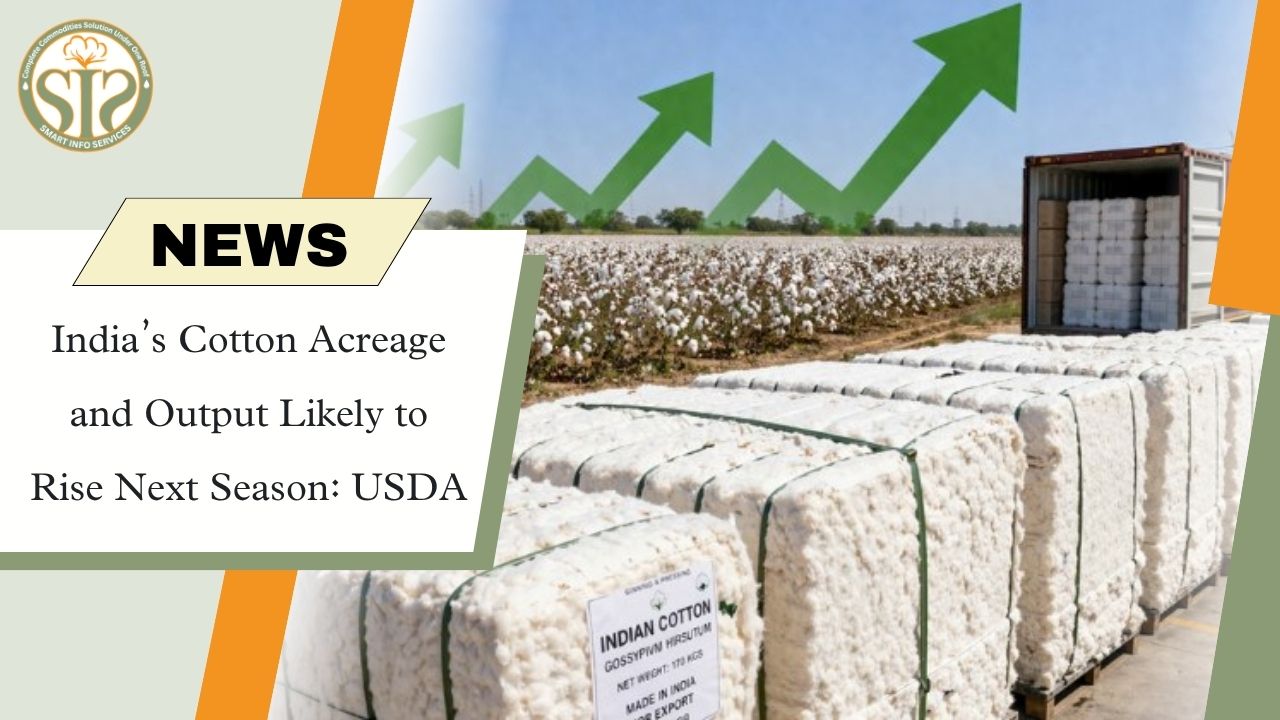
India’s Cotton Acreage and Output Likely to Rise Next Season: USDAIndia’s cotton sector is set for a rebound in the 2026–27 marketing year, with both acreage and production expected to increase, according to the USDA.The agency projects cotton acreage to rise by 3% to about 11.5 million hectares, driven by improved farmer sentiment and expectations of better returns. Production is forecast to grow by 7% to 25.2 million bales (480 lb each), supported by higher yields and a likely normal monsoon season.This recovery follows a difficult previous year marked by untimely rains. Yields are now anticipated to improve, with average productivity estimated at around 477 kg per hectare due to better crop conditions and more favourable weather.Domestic demand is also expected to strengthen, with consumption projected to reach 25.8 million bales. This growth is likely to be fueled by improved prospects for textile and apparel exports, along with anticipated trade agreements with key markets such as the European Union and the United Kingdom.On the trade side, cotton imports are forecast to decline to about 3 million bales as higher domestic production reduces reliance on overseas supply. Exports, however, are expected to fall to around 1.2 million bales, reflecting a smaller exportable surplus and a strategic shift toward exporting value-added textile products rather than raw cotton.Overall cotton supply is projected to increase to nearly 39.3 million bales, aided by higher production and strong opening stocks. Ending stocks are expected to rise to 12.3 million bales, resulting in a stock-to-use ratio of roughly 46%, indicating comfortable availability in the domestic market.Despite this positive outlook, the sector continues to face challenges such as rising input costs and increasing competition from synthetic fibres. Nevertheless, improved yields and stable weather conditions are expected to support a stronger performance for India’s cotton economy in the coming season.read more :- Yarn Remains Expensive Even After Discounts; Weavers Distressed

Despite exemptions, yarn prices remain high: WeaversTextile weavers in Surat have voiced concern over persistently high yarn prices, noting that rates have not eased despite the Centre’s decision to exempt 40 petrochemical products from customs duty.Weavers argue that yarn manufacturers quickly hike prices when input costs rise but are slow to reduce them when raw material prices fall. According to them, the sustained increase in yarn costs has significantly impacted production levels and profit margins across the weaving sector.Yarn manufacturers, however, maintain that the duty exemption alone does not dictate pricing. They attribute current price levels to multiple factors, including fluctuations in the US dollar and global geopolitical developments. Manufacturers also contend that yarn continues to be traded at prevailing market rates and that there has been no widespread resistance from buyers.The situation has begun to affect operations on the ground. Faced with rising input costs and a shortage of cooking gas for workers, several weaving units have cut back to single-shift operations or shut down for a couple of days each week. Industry representatives say some units under severe financial strain have already reduced output.Weak demand for textile products has further worsened the outlook. Industry leaders note that the combination of high input costs and sluggish demand has forced many weavers to scale back production.Weavers warn that if the current pressures on costs and labour conditions persist, overall output could decline further in the coming weeks. One weaving unit owner said yarn prices should be corrected more quickly during downturns, adding that reductions tend to lag behind falling raw material costs.In response, a yarn manufacturer said pricing adjustments are made in line with rapidly changing market dynamics. He noted that raw material prices and currency movements now fluctuate more frequently than before, leaving manufacturers operating on tighter margins as well.read more :- The rupee opened 36 paise higher at 92.64.

The rupee opened 36 paise higher at 92.64 per USD.The Indian rupee opened 36 paise higher at 92.64 per dollar on Wednesday, whereas it had closed at 93.00 on Tuesday.READ MORE :- The rupee closed 02 paisa higher against the dollar at 93.00

On Tuesday the Indian rupee opened at 93.02 against the dollar and closed 02 paisa higher at 93.00At close, the Sensex was up 509.73 points or 0.69 percent at 74,616.58, and the Nifty was up 155.40 points or 0.68 percent at 23,123.65. About 2539 shares advanced, 1514 shares declined, and 144 shares unchanged.read more :- Massive Surge in Cotton Prices at Akot APMC
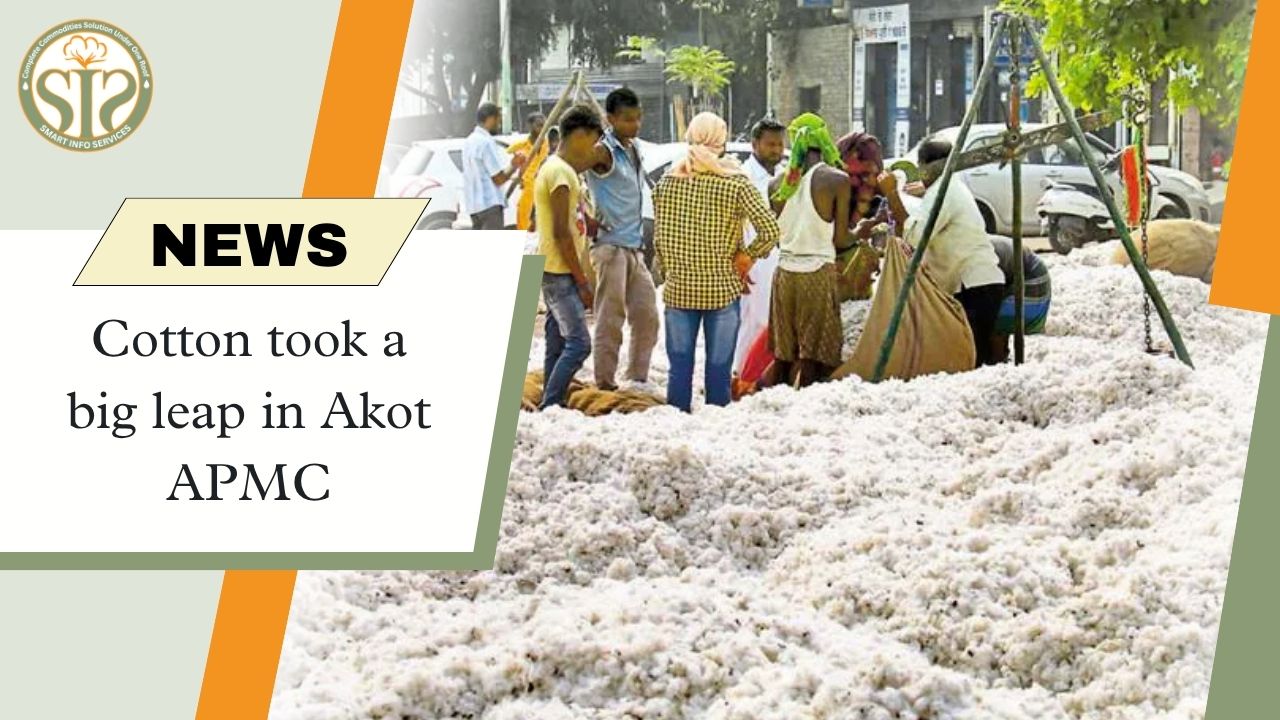
Cotton took a big leap in Akot APMCAkot's Agricultural Produce Market Committee (APMC) has seen a sharp rise in cotton prices in the last phase of this season. Cotton prices in this mandi, considered one of the major cotton markets of Vidarbha, have increased to Rs 8,995 per quintal, which is the highest level in recent times.In view of the continuously rising prices, it is now being estimated that cotton may soon cross the Rs 9,000 mark. There was uncertainty over prices at the beginning of the season, but the Cotton Corporation of India (CCI) started purchasing at Minimum Support Price (MSP) which stabilized the market.After CCI stopped purchasing last month, it was feared that there could be a decline in the private market, but on the contrary, cotton is getting good prices. Increasing demand at global and domestic level is being considered as the main reason for this rise.The arrival of cotton in Akot Mandi on Saturday was satisfactory. Increased competition among traders during the auction pushed prices to record highs.According to experts, the boom phase of cotton has now started in the market. Many farmers had kept their stock in the hope of better prices, which is now slowly coming into the market. Buyers are active due to high demand for good quality cotton.Looking at the current circumstances, it is estimated that the price of cotton may reach Rs 9,500 per quintal in the coming days, due to which farmers are expected to get good profits.read more :- Relief to farmers due to improvement in cotton purchase prices in Parbhani district

Improvement in cotton purchase price in Parbhani districtCotton prices in Parbhani district have seen an improvement in recent times. Private procurement rates in the major markets of Parbhani, Manawat and Selu have increased to an average of around Rs 8,500 per quintal and prices are now seen moving towards Rs 9,000 per quintal. This has provided relief to those farmers who had not sold their produce till now in the hope of better prices.On April 4, the price of cotton in Parbhani Agricultural Produce Market Committee ranged between Rs 8,300 to Rs 8,660 per quintal. In Manawat mandi it was recorded between Rs 8,440 to 8,611 per quintal and in Selu mandi it was recorded between Rs 8,480 to 8,740 per quintal. It is estimated that about 20 percent of the farmers in the district still have cotton stock left.At the beginning of the season (October-November 2025), private procurement rates were between Rs 7,000 to Rs 7,200 per quintal, while CCI procured at Rs 7,767 to Rs 8,060 per quintal. Private rates rose to Rs 8,400 in January, slowing CCI buying. Later, when the prices fell again to Rs 7,000, the farmers again turned to CCI.Now for the last one week, prices are rising again, due to which there is an atmosphere of satisfaction among the farmers. FAQ grade cotton fetched prices of Rs 8,300 to Rs 8,660 per quintal (average Rs 8,545), while Fardad cotton was sold at Rs 7,200 to Rs 7,905 per quintal.According to Ramesh Raut, a farmer of Mandakhali village, 20–25 percent of the farmers of the village still have cotton left. He told that for initial needs he had sold 25 quintals of cotton at Rs 7,850 per quintal, while he still has 50 quintals of stock, which he plans to sell when the price gets around Rs 9,000.read more :- The rupee opened 4 paise higher at 93.02.

The rupee opened 4 paise higher at 93.02 per USD.The Indian rupee opened 4 paise higher at 93.02 per dollar on Tuesday, whereas it had closed at 93.06 on Monday.READ MORE :-The rupee closed stable at 93.06.
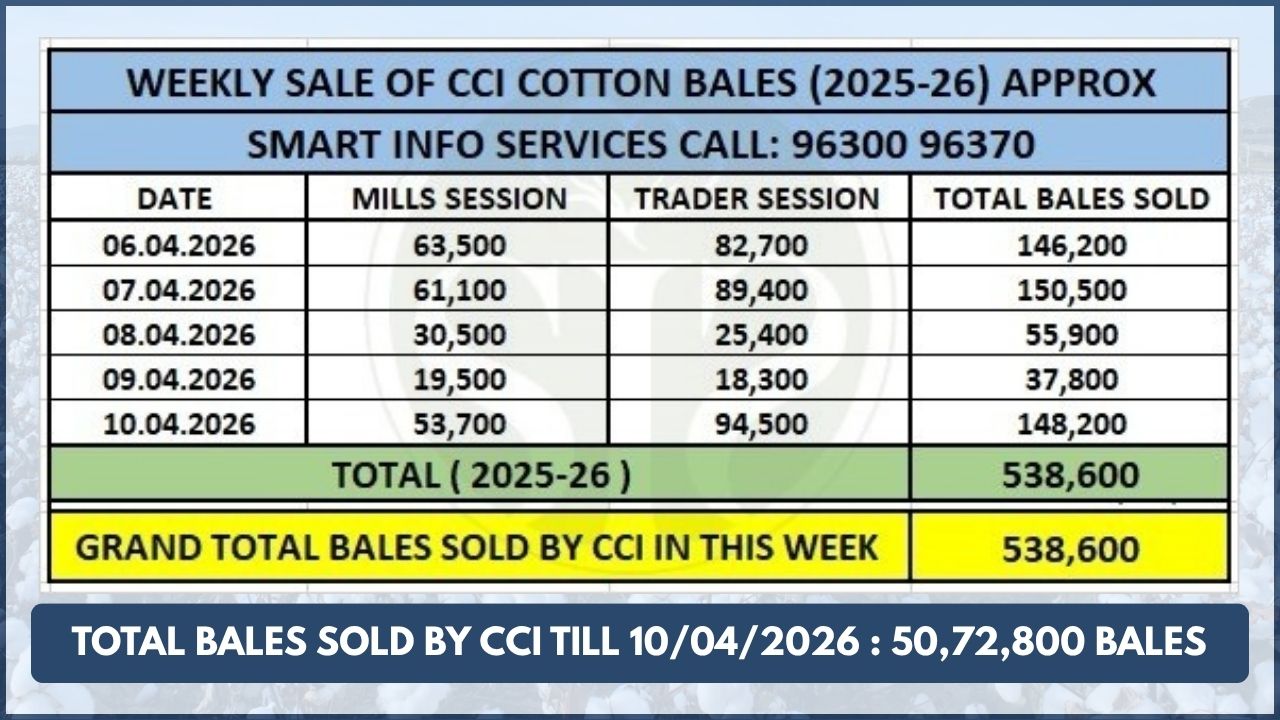
CCI એ કપાસના ભાવમાં પ્રતિ કેન્ડી ₹300–₹700 નો વધારો કર્યો; સાપ્તાહિક હરાજી વેચાણ 5.38 લાખ ગાંસડીને પાર કર્યુંકોટન કોર્પોરેશન ઓફ ઇન્ડિયા (CCI) એ 6 એપ્રિલથી 10 એપ્રિલ, 2026 ના અઠવાડિયા દરમિયાન કપાસના ભાવમાં પ્રતિ કેન્ડી ₹300–₹700 નો વધારો કર્યો. આ હરાજીમાં મિલો અને કપાસના વેપારીઓની મોટી ભાગીદારી જોવા મળી, જેના પરિણામે 2025-26 સીઝન દરમિયાન આશરે 538,600 ગાંસડીનું સાપ્તાહિક વેચાણ થયું.સાપ્તાહિક વેચાણ અહેવાલ6 એપ્રિલ, 2026 (સોમવાર):સપ્તાહની શરૂઆત મજબૂત નોંધ સાથે થઈ, કુલ વેચાણ 146,200 ગાંસડી સુધી પહોંચ્યું. મિલોએ 63,500 ગાંસડી ખરીદી, જ્યારે વેપારીઓએ 82,700 ગાંસડી ખરીદી.7 એપ્રિલ, 2026 (મંગળવાર):સપ્તાહનું સૌથી વધુ એક દિવસનું વેચાણ 150,500 ગાંસડી નોંધાયું. મિલોએ 61,100 ગાંસડી ખરીદી હતી, જ્યારે વેપારીઓએ 89,400 ગાંસડી ખરીદી હતી.8 એપ્રિલ, 2026 (બુધવાર):વેચાણમાં થોડો ઘટાડો જોવા મળ્યો, જે 55,900 ગાંસડી પર સ્થિર થયો. મિલોએ 30,500 ગાંસડી ખરીદી હતી, અને વેપારીઓએ 25,400 ગાંસડી ખરીદી હતી.9 એપ્રિલ, 2026 (ગુરુવાર):આ દિવસે કુલ 37,800 ગાંસડી વેચાઈ હતી. મિલોએ 19,500 ગાંસડી ખરીદી હતી, જ્યારે વેપારીઓએ 18,300 ગાંસડી ખરીદી હતી.10 એપ્રિલ, 2026 (શુક્રવાર):સપ્તાહનું વેચાણ મજબૂત નોંધ પર પૂર્ણ થયું, વેચાણ 148,200 ગાંસડી સુધી પહોંચ્યું. મિલોએ 53,700 ગાંસડી ખરીદી હતી, જ્યારે વેપારીઓએ 94,500 ગાંસડી સાથે લીડ જાળવી રાખી હતી.કુલ વેચાણ અપડેટ૨૦૨૫–૨૬ સીઝન: ૫૦,૭૨,૮૦૦ ગાંસડી૨૦૨૪–૨૫ સીઝન: ૯,૮૮૫,૧૦૦ ગાંસડી
કપાસના ભાવ ₹60,000/કેન્ડીને પાર, વૈશ્વિક સ્તરે તેજીનો અનુભવસ્થાનિક બજારમાં કપાસના ભાવ વધુ મજબૂત થયા છે, આ સિઝનમાં પહેલી વાર ₹60,000 પ્રતિ કેન્ડી (356 કિલો)નો આંકડો પાર કર્યો છે, જેનું મુખ્ય કારણ મજબૂત વૈશ્વિક સંકેતો અને સ્થિર માંગ છે.સ્થાનિક ભાવ ઇન્ટરકોન્ટિનેન્ટલ એક્સચેન્જ (ICE) પર વૈશ્વિક વાયદાને નજીકથી અનુસરી રહ્યા છે, જ્યાં શુક્રવારે જુલાઈના કરાર 73 સેન્ટ પ્રતિ પાઉન્ડથી ઉપર વધ્યા હતા - જે જૂન 2024 પછીનું ઉચ્ચતમ સ્તર છે.સ્થાનિક મોરચે, કોટન કોર્પોરેશન ઓફ ઇન્ડિયા (CCI) એ શુક્રવારે તેના બેન્ચમાર્ક ભાવ પ્રતિ કેન્ડી ₹300 વધાર્યા છે. છેલ્લા બે અઠવાડિયામાં, ભાવ પ્રતિ કેન્ડી લગભગ ₹1,400 અને છેલ્લા કેટલાક મહિનામાં લગભગ ₹4,500 વધ્યા છે.વૈશ્વિક પુરવઠા-માંગનું આઉટલુકયુનાઇટેડ સ્ટેટ્સ ડિપાર્ટમેન્ટ ઓફ એગ્રીકલ્ચર (USDA) મુજબ, ચીન, ભારત અને પાકિસ્તાનમાં વધુ ઉત્પાદનને કારણે વૈશ્વિક કપાસનું ઉત્પાદન લગભગ 900,000 ગાંસડી વધીને 121.9 મિલિયન ગાંસડી થવાનો અંદાજ છે, જે આર્જેન્ટિનામાં ઘટાડાને સરભર કરશે.ચીન અને ભારત તરફથી મજબૂત માંગ બાંગ્લાદેશ અને વિયેતનામમાં નબળી માંગને સરભર કરશે, જેના કારણે વૈશ્વિક વપરાશ પણ લગભગ 600,000 ગાંસડી વધીને 119.1 મિલિયન ગાંસડી થવાની ધારણા છે.MSP ઉપર ભાવ, પરંતુ માંગ મિશ્રઘણા સ્થાનિક બજારોમાં કપાસના ભાવ લઘુત્તમ ટેકાના ભાવ (MSP) થી ઉપર ટ્રેડ થઈ રહ્યા છે. રાયચુરમાં, શુક્રવારે કાચા કપાસ (કપાસ) ના ભાવ પ્રતિ ક્વિન્ટલ ₹9,000 ને સ્પર્શી ગયા.જોકે, ઉદ્યોગના સહભાગીઓ સૂચવે છે કે કપાસના ભાવ મજબૂત હોવા છતાં, યાર્નની માંગ ઊંચા સ્તરે પ્રતિકારનો સામનો કરી રહી છે.બજાર સૂત્રો નોંધે છે કે મિલો રોકડ બજારમાં નવી ખરીદી કરવામાં સાવચેત છે, ખરીદી મોટાભાગે વેપારીઓ સુધી મર્યાદિત છે જે વિસ્તૃત ચુકવણી શરતો ઓફર કરે છે. સારા પાકની અપેક્ષાઓ પણ આક્રમક ખરીદીને મર્યાદિત કરી રહી છે.નિકાસ માંગ પર યાર્નના ભાવમાં વધારોકપાસના ભાવમાં વધારો યાર્ન બજારોમાં પણ પ્રતિબિંબિત થઈ રહ્યો છે. તાજેતરના અઠવાડિયામાં 30 CCH (કોમ્બેડ હોઝિયરી) યાર્નના ભાવ પ્રતિ કિલો ₹55-60 નો વધારો થયો છે, જે ચીનના ખરીદદારો અને બહુરાષ્ટ્રીય કંપનીઓની માંગને કારણે લગભગ ₹235 પ્રતિ કિલોથી વધીને લગભગ ₹295 પ્રતિ કિલો થયા છે.આગમન અપડેટવેપાર અંદાજ મુજબ, માર્ચના અંત સુધીમાં કપાસની કુલ આવક લગભગ 294 લાખ ગાંસડી (170 કિલો પ્રતિ કિલો) છે. મહારાષ્ટ્ર 95.25 લાખ ગાંસડી સાથે આગળ છે, ત્યારબાદ ગુજરાત 59 લાખ ગાંસડી સાથે આવે છે. તેલંગાણામાં 46.80 લાખ ગાંસડીની આવક નોંધાઈ છે, જ્યારે કરગુજનટકમાં 25 લાખ ગાંસડીની આવક થઈ છે.એકંદરે, જ્યારે વૈશ્વિક સંકેતો ભાવને મજબૂત રાખી રહ્યા છે, ત્યારે સ્થાનિક બજારમાં સાવચેતીભરી મિલ માંગ અને સુધારેલા પાક ઉત્પાદનની અપેક્ષાઓ વચ્ચે થોડી સ્થિરતા જોવા મળી શકે છે.વધુ વાંચો:- યુએસ ટેક્સટાઇલ માંગમાં ઘટાડો: ભારતની નિકાસમાં 29% ઘટાડો, વિયેતનામમાં વધારો

યુએસ ટેક્સટાઇલ માંગમાં ઘટાડો: ભારતની નિકાસમાં 29% ઘટાડો, વિયેતનામમાં વધારોપુણે: ફેબ્રુઆરીમાં ભારતની યુએસમાં કાપડ અને વસ્ત્રોની નિકાસમાં તીવ્ર ઘટાડો થયો, જે એશિયન સાથી દેશો તરફથી નબળી માંગ અને વધતા સ્પર્ધાત્મક દબાણને દર્શાવે છે.ટેક્સટાઇલ અને વસ્ત્રોના કાર્યાલયના ડેટા અનુસાર, ભારતમાંથી યુએસ આયાતમાં વાર્ષિક ધોરણે 28.7% ઘટાડો થયો. તેની તુલનામાં, બાંગ્લાદેશથી થતી આયાતમાં 16.4% ઘટાડો થયો, જ્યારે વિયેતનામમાં 5% વધારો નોંધાયો. કોન્ફેડરેશન ઓફ ઇન્ડિયન ટેક્સટાઇલ ઇન્ડસ્ટ્રીઝ (CITI) ના વિશ્લેષણ મુજબ, ચીનમાં સૌથી વધુ ઘટાડો જોવા મળ્યો, જેમાં આયાતમાં 45.2%નો ઘટાડો થયો.આ તીવ્ર ઘટાડાએ ભારતનો યુએસમાં બજાર હિસ્સો ગુમાવવાની ચિંતા વધારી છે, ખાસ કરીને બાંગ્લાદેશ અને વિયેતનામમાં.“ફેબ્રુઆરી 2026 સુધીના યુએસ વેપાર ડેટા દર્શાવે છે કે ભારત બાંગ્લાદેશ કરતાં વધુ ઝડપથી હિસ્સો ગુમાવી રહ્યું છે, જ્યારે વિયેતનામ લાભોને મજબૂત કરી રહ્યું છે,” CITI ના સેક્રેટરી જનરલ ચંદ્રિમા ચેટર્જીએ જણાવ્યું હતું.ફેબ્રુઆરી 2026 માં વધારાના યુએસ ટેરિફ પાછા ખેંચાયા હોવા છતાં આ ઘટાડો આવ્યો છે, જે સૂચવે છે કે નિકાસ ઓર્ડરમાં લાભો હજુ સુધી પ્રતિબિંબિત થયા નથી. નિકાસકારો કહે છે કે ઘણા યુએસ ખરીદદારો ટેરિફ સમયગાળા દરમિયાન પહેલાથી જ અન્ય દેશોમાં સોર્સિંગ ખસેડી ચૂક્યા છે અને પાછા ફરવામાં ધીમા છે."ઊંચા ટેરિફને કારણે જોખમોને હેજ કરવા માટે ઘણા યુએસ ખરીદદારો ભારતથી દૂર ગયા. અમે તેમાંથી માત્ર 40% જ પાછા મેળવી શક્યા છીએ," રાજલક્ષ્મી કોટન મિલ્સના મેનેજિંગ ડિરેક્ટર રજત જયપુરિયાએ જણાવ્યું હતું. તેમણે ઉમેર્યું હતું કે સામાન્ય 90-120 દિવસના ઓર્ડર-ટુ-શિપમેન્ટ ચક્રને ધ્યાનમાં રાખીને, મે-જૂનથી શિપમેન્ટમાં વધારો દેખાઈ શકે છે.ઉદ્યોગ નિષ્ણાતો આ ઘટાડા માટે યુએસમાં ટેરિફ-આધારિત ફુગાવાને જવાબદાર ગણાવે છે, જેના કારણે 2025માં ગ્રાહક માંગમાં ઘટાડો થયો હતો, જેના કારણે 2024ની સરખામણીમાં આયાત વોલ્યુમમાં ઘટાડો થયો હતો."આ મોટે ભાગે ઓગસ્ટથી અમલમાં આવેલા યુએસ ટેરિફનું પરિણામ છે. ખરીદદારોએ સ્પષ્ટતાની રાહ જોતા ઓર્ડર પાછા રાખ્યા હતા. ફેબ્રુઆરીના ડેટા અગાઉ કરવામાં આવેલા શિપમેન્ટને પ્રતિબિંબિત કરે છે, તેથી તીવ્ર ઘટાડો આશ્ચર્યજનક નથી અને આગળ જતાં ઓછો થવો જોઈએ," ઇન્ડિયન ચેમ્બર ઓફ કોમર્સ ખાતે નેશનલ ટેક્સટાઇલ કમિટીના ચેરમેન સંજય જૈને જણાવ્યું હતું.CITI એ નોંધ્યું હતું કે વર્તમાન વલણ માળખાકીય પડકારોને પણ પ્રતિબિંબિત કરે છે, જેમાં વૈશ્વિક ખરીદદારો ખાસ કરીને વિયેતનામ તરફ સોર્સિંગ બેઝને વૈવિધ્યીકરણ કરી રહ્યા છે.મંદી પહેલાથી જ કંપનીના પ્રદર્શનને અસર કરી રહી છે. યુએસ બજારમાં ઉચ્ચ એક્સપોઝર ધરાવતી કંપનીઓએ નબળી માંગ, ઓછો ઉપયોગ ક્ષમતાઓ અને ઉચ્ચ નિશ્ચિત ખર્ચના માર્જિન દબાણને કારણે Q3 માં નફા વૃદ્ધિમાં 50% થી વધુ ઘટાડો નોંધાવ્યો હતો.વધુ વાંચો:- ડોલર દીઠ રૂપિયો ૧૪ પૈસા ઘટીને ૯૨.૭૨ પર બંધ થયો.

શુક્રવારે ભારતીય રૂપિયો ૧૪ પૈસા ઘટીને ૯૨.૭૨ પર બંધ થયો, જે સવારે તેનો શરૂઆતનો ભાવ ૯૨.૫૮ હતો.બંધ સમયે, સેન્સેક્સ ૯૧૮.૬૦ પોઈન્ટ અથવા ૧.૨૦ ટકા વધીને ૭૭,૫૫૦.૨૫ પર અને નિફ્ટી ૨૭૫.૫૦ પોઈન્ટ અથવા ૧.૧૬ ટકા વધીને ૨૪,૦૫૦.૬૦ પર બંધ થયો હતો. લગભગ ૩૨૪૫ શેર વધ્યા, ૮૮૯ શેર ઘટ્યા અને ૧૨૬ શેર યથાવત રહ્યા.વધુ વાંચો :- પ્રોત્સાહન સુધારા સૂચના બાકી, ખેડૂતોમાં મૂંઝવણ

દેશી કપાસ માટે પ્રોત્સાહનમાં સુધારા અંગેની સૂચના બાકી; ખેડૂતો મુશ્કેલીમાંહરિયાણામાં, સરકારે હજુ સુધી દેશી કપાસની ખેતી માટે પ્રોત્સાહન રકમમાં પ્રસ્તાવિત વધારા અંગે સત્તાવાર સૂચના જારી કરી નથી. આનાથી ખેડૂતો મૂંઝવણમાં મુકાયા છે. વર્તમાન નિયમો હેઠળ, દેશી કપાસ માટે પ્રતિ એકર ₹3,000 નું પ્રોત્સાહન લાગુ પડે છે; જોકે, બજેટ સત્ર દરમિયાન, આ રકમ વધારીને પ્રતિ એકર ₹4,000 કરવાની જાહેરાત કરવામાં આવી હતી.ખેડૂતો ચિંતા વ્યક્ત કરે છે કે, વાવણીની મોસમ નજીક આવી રહી હોવા છતાં, સૂચનાના અભાવે તે સ્પષ્ટ થતું નથી કે તેઓ આ ખરીફ મોસમ દરમિયાન યોજનાનો લાભ મેળવી શકશે કે નહીં. જો પ્રોત્સાહન રકમમાં પ્રસ્તાવિત વધારો લાગુ કરવામાં નહીં આવે, તો દેશી કપાસની ખેતી હેઠળના વિસ્તારમાં વિસ્તરણની શક્યતા ઘટી શકે છે, જેના કારણે ખેડૂતો ડાંગર જેવા વૈકલ્પિક પાક તરફ વળશે.આ મુદ્દાની સિરસા, હિસાર, ફતેહાબાદ, જિંદ અને ભિવાની જેવા મુખ્ય કપાસ ઉત્પાદક જિલ્લાઓ પર નોંધપાત્ર અસર થવાની શક્યતા છે. રાજ્યમાં કપાસના ઉત્પાદન માટે સિરસા પ્રદેશ એક મુખ્ય કેન્દ્ર માનવામાં આવે છે અને તે સેન્ટ્રલ ઇન્સ્ટિટ્યૂટ ફોર કોટન રિસર્ચનું ઘર પણ છે.કૃષિ વિભાગના જણાવ્યા અનુસાર, સરકારે હાલમાં પ્રોત્સાહન વધારા અંગે કોઈ સૂચના જારી કરી નથી કે સ્વદેશી કપાસની ખેતી હેઠળના વાવેતર વિસ્તાર અંગે વિગતવાર અહેવાલની વિનંતી કરી નથી - જે યોજનાના અમલીકરણ માટે એક પ્રક્રિયાગત પૂર્વશરત છે.કૃષિ વિભાગના નાયબ નિયામક સુખબીર સિંહના જણાવ્યા અનુસાર, ખેડૂતો સત્તાવાર સૂચના જારી થયા પછી જ વધેલી પ્રોત્સાહન રકમનો લાભ મેળવી શકશે.હાલમાં, લગભગ 17,000 એકર વિસ્તારમાં આશરે 7,000 ખેડૂતો સ્વદેશી કપાસની ખેતી કરે છે, જેમને આ યોજના હેઠળ સહાય મળે છે. છેલ્લા કેટલાક સમયથી, ખેડૂતો કપાસની ખેતીથી દૂર રહી રહ્યા છે - મુખ્યત્વે ઉત્પાદન ખર્ચ, ગુલાબી ઈયળના ઉપદ્રવ અને પાકના રોગોની ચિંતાને કારણે - જેના પરિણામે કપાસના વાવેતર હેઠળના કુલ વિસ્તારમાં સતત ઘટાડો થઈ રહ્યો છે.દરમિયાન, વિધાનસભા સત્ર દરમિયાન પણ આ મુદ્દો ઉઠાવવામાં આવ્યો હતો. સિરસાના કોંગ્રેસના ધારાસભ્ય ગોકુલ સેતિયાએ પ્રોત્સાહન યોજનાના વિસ્તરણની હાકલ કરી હતી અને સ્વદેશી કપાસની ખેતી માટે સમર્પિત ઘટતા વાવેતર વિસ્તાર પર પ્રકાશ પાડ્યો હતો. બજેટ સત્ર દરમિયાન સરકારે જાહેર કરેલી કૃષિ પ્રોત્સાહન યોજનાઓમાં શામેલ છે: સ્વદેશી કપાસ માટે પ્રતિ એકર ₹4,000 નું પ્રોત્સાહન; વૈકલ્પિક પાકો (ડાંગર સિવાય) માટે ₹2,000 નું વધારાનું બોનસ; બાગાયતી વીમા યોજનાનો વિસ્તરણ; શેરડીની ખેતી અને મધમાખી ઉછેરને પ્રોત્સાહન; અને પશુચિકિત્સા માળખાનો વિસ્તરણ.વધુ વાંચો :- ખરીફ યોજના: કપાસમાં ઘટાડો, મકાઈમાં વધારો

જલગાંવમાં ખરીફ આયોજન: કપાસના વાવેતરમાં ઘટાડો થવાના સંકેતો; મકાઈના વાવેતરમાં સંભવિત વધારોજલગાંવ (મહારાષ્ટ્ર) માં કૃષિ વિભાગે આગામી ખરીફ સિઝન માટે પ્રારંભિક તૈયારીઓ શરૂ કરી દીધી છે. નજીક આવતી સિઝન માટે, જિલ્લામાં કુલ 739,736 હેક્ટર વિસ્તારમાં વાવણીનું આયોજન કરવામાં આવ્યું છે, જેના આધારે બીજની જરૂરિયાતનો અંદાજ ઘડવામાં આવ્યો છે.કૃષિ વિભાગ અનુસાર, આ વર્ષે કપાસના વાવેતર માટે સમર્પિત વાવેતર વિસ્તારમાં ઘટાડો થવાની ધારણા છે. છેલ્લા ત્રણ વર્ષમાં કપાસનું વાવેતર સતત આશરે 442,000 હેક્ટરમાં થયું છે, પરંતુ આ વર્ષે પણ તે લગભગ સમાન સ્તર સુધી મર્યાદિત રહેવાનો અંદાજ છે. પરિણામે, આશરે 2.21 મિલિયન પેકેટ કપાસના બીજની માંગ પ્રસ્તાવિત કરવામાં આવી છે, જેમાં 2.185 મિલિયન પેકેટ બીટી કપાસ બીજ અને 24,000 પેકેટ નોન-બીટી બીજનો સમાવેશ થાય છે.તેનાથી વિપરીત, સોયાબીન અને મકાઈના વાવેતર હેઠળના વિસ્તારમાં વધારો થવાની ધારણા છે. હવામાન વિભાગ દ્વારા ઓછા વરસાદ અને કપાસના બજાર ભાવમાં નબળા રહેવાની આગાહીને કારણે, ખેડૂતો વૈકલ્પિક પાક તરફ વધુને વધુ ધ્યાન કેન્દ્રિત કરી રહ્યા છે.સોયાબીનના વાવેતર માટે પ્રસ્તાવિત વિસ્તાર 47,000 હેક્ટર નક્કી કરવામાં આવ્યો છે, જેના માટે આશરે 24,675 ક્વિન્ટલ બીજની જરૂરિયાત છે. દરમિયાન, મકાઈના વાવેતરમાં સતત વધારો જોવા મળી રહ્યો છે. ચાલુ વર્ષ માટે, મકાઈ માટે પ્રસ્તાવિત વિસ્તાર 175,036 હેક્ટર છે, જેમાં 26,255 ક્વિન્ટલ બીજની જરૂરિયાત છે. વધુમાં, અન્ય પાકો માટે સૂચિત વિસ્તાર અને બીજની જરૂરિયાતો નીચે મુજબ છે:કપાસ: 442,000 હેક્ટર - 9,950 ક્વિન્ટલમકાઈ: 175,036 હેક્ટર - 26,255 ક્વિન્ટલસોયાબીન: 47,000 હેક્ટર - 24,675 ક્વિન્ટલજુવાર (જુવાર): 15,500 હેક્ટર - 1,550 ક્વિન્ટલતુવેર (તુર): 18,000 હેક્ટર - 945 ક્વિન્ટલલીલા ચણા (મૂંગ): 17,500 હેક્ટર - 578 ક્વિન્ટલકાળા ચણા (ઉરદ): 16,500 હેક્ટર - 866 ક્વિન્ટલબાજરી (બાજરી): 5,500 હેક્ટર - 220 ક્વિન્ટલકૃષિ વિભાગના જણાવ્યા અનુસાર, એક બેઠક પણ યોજવામાં આવશે. આગામી દિવસોમાં આ યોજનાને અંતિમ સ્વરૂપ આપવા માટે.વધુ વાંચો :- રૂપિયો 08 પૈસા વધીને 92.58 પર ખુલ્યો.

રૂપિયો 08 પૈસા વધીને 92.58/USD પર ખુલ્યો.ગુરુવારના બંધ 92.66 ની સરખામણીમાં શુક્રવારે ડોલર સામે ભારતીય રૂપિયો 08 પૈસા વધીને 92.58 પર ખુલ્યો.વધુ વાંચો :- ભારત-અમેરિકા વેપાર પોર્ટલ શરૂ: નવી તકો

ભારત-અમેરિકા વેપાર સુવિધા પોર્ટલ શરૂ; નવી તકોની અપેક્ષાનવી દિલ્હી: ભારત અને યુનાઇટેડ સ્ટેટ્સ વચ્ચે વેપાર સંબંધોને મજબૂત બનાવવા તરફ એક મહત્વપૂર્ણ પગલું ભરતા, ભારતના વિદેશ સચિવ, વિક્રમ મિશ્રીએ વર્ચ્યુઅલી ભારત-અમેરિકા વેપાર સુવિધા પોર્ટલ શરૂ કર્યું. આ પોર્ટલનો હેતુ નવી વેપાર તકોને પ્રોત્સાહન આપવા, 'વ્યવસાય કરવાની સરળતા' વધારવા અને MSME અને સ્ટાર્ટ-અપ્સને ટેકો પૂરો પાડવાનો છે. વધુમાં, આ પહેલ 2030 સુધીમાં $500 બિલિયનના દ્વિપક્ષીય વેપાર લક્ષ્યને પ્રાપ્ત કરવામાં ફાળો આપે તેવી અપેક્ષા છે.લોન્ચ પ્રસંગે બોલતા, કેન્દ્રીય વાણિજ્ય અને ઉદ્યોગ મંત્રી પીયૂષ ગોયલે એક વિડિઓ સંદેશમાં ઉદ્યોગ ક્ષેત્રને આ પહેલનો મહત્તમ ઉપયોગ કરવા વિનંતી કરી. તેમણે જણાવ્યું હતું કે ભારત અને યુએસ બંનેમાં ઉદ્યોગ સંગઠનો, નિકાસ પ્રમોશન કાઉન્સિલ (EPCs) અને ચેમ્બર્સ ઓફ કોમર્સે આ પોર્ટલને વેપાર વિસ્તરણ માટે અસરકારક વાહનમાં રૂપાંતરિત કરવા માટે પરસ્પર સહયોગ વધારવો જોઈએ.તેને સમયસર અને ભવિષ્યલક્ષી પહેલ તરીકે વર્ણવતા, ગોયલે નોંધ્યું કે આ ડિજિટલ પ્લેટફોર્મ DGFTના 'ટ્રેડ કનેક્ટ' પોર્ટલ જેવી પહેલોને વધુ મજબૂત બનાવશે. તેમણે ઉમેર્યું કે આ પગલું ભારત-અમેરિકા ભાગીદારીની ઊંડાઈ અને તેના વધુને વધુ ગતિશીલ સ્વભાવને રેખાંકિત કરે છે.વધુ વાંચો :- રૂપિયો ૯૨.૬૬ પર સ્થિર બંધ થયો.

ગુરુવારે, ભારતીય રૂપિયો ડોલર સામે ૯૨.૬૬ પર બંધ થયો, જે તે સવારે ખુલ્યો હતો તે જ સ્તરે.બંધ સમયે, સેન્સેક્સ 931.25 પોઈન્ટ અથવા 1.20 ટકા ઘટીને 76,631.65 પર બંધ થયો હતો, અને નિફ્ટી 222.25 પોઈન્ટ અથવા 0.93 ટકા ઘટીને 23,775.10 પર બંધ થયો હતો. લગભગ 2054 શેર વધ્યા, 2046 શેર ઘટ્યા અને 126 શેર યથાવત રહ્યા.વધુ વાંચો :- યુદ્ધને કારણે કાપડ ઉદ્યોગને ₹3,000 કરોડનું નુકસાન થયું છે.

કાપડ ઉદ્યોગને ₹3,000 કરોડથી વધુનો ફટકો પડ્યો, યુદ્ધથી વ્યવસાય પર અસર પડીકોલ્હાપુર: પશ્ચિમ એશિયામાં એક મહિનાથી વધુ સમયથી ચાલી રહેલા સંઘર્ષની અસર હવે રાજ્યના કાપડ ઉદ્યોગ પર સ્પષ્ટપણે દેખાઈ રહી છે. યુદ્ધ હાલ પૂરતું બંધ થઈ ગયું હોવા છતાં, તેની ઉદ્યોગની આર્થિક સ્થિતિ પર ગંભીર અસર પડી છે. કાચા માલના ભાવમાં - ખાસ કરીને કપાસ અને યાર્ન - આશરે ૧૫ ટકા ટકાનો તીવ્ર વધારો જોવા મળ્યો છે.વધતા ખર્ચ, ઘટતી માંગ અને નિકાસમાં મંદીના કારણે ઉદ્યોગ ગંભીર સંકટમાં ધકેલાઈ ગયો છે. ટેક્સટાઇલ ફેડરેશનના જણાવ્યા અનુસાર, રાજ્યના કાપડ ઉદ્યોગને ગયા મહિનામાં ₹3,000 કરોડથી વધુનું નુકસાન થયું છે. તેનો સામનો કરવા માટે, ઘણા એકમોએ ઉત્પાદન ઘટાડ્યું છે - કેટલાકે એક શિફ્ટ બંધ કરી દીધી છે, જ્યારે અન્ય બે દિવસનું કાર્ય સપ્તાહ અપનાવી રહ્યા છે.કાચા તેલમાંથી બનેલા માનવસર્જિત રેસાના ભાવમાં પણ લગભગ 15 ટકાનો વધારો થયો છે. યુદ્ધ પહેલાં, કપાસ અને યાર્નના ભાવ લાંબા સમય સુધી સ્થિર રહ્યા હતા, જેના કારણે ઉત્પાદન ખર્ચ નિયંત્રણમાં રહ્યો હતો. પરંતુ હવે પરિસ્થિતિ ઝડપથી બદલાઈ ગઈ છે.માત્ર એક મહિનામાં, 29 મીમી ગ્રેડ કપાસનો ભાવ પ્રતિ બેલિંગ ₹54,000 થી વધીને ₹61,000 પ્રતિ બેલિંગ થયો છે. 5 કિલોના યાર્નના બંડલનો ભાવ ₹1,260 થી વધીને ₹1,415 થયો છે.બીજી બાજુ, ફિનિશ્ડ ગાર્મેન્ટના ભાવમાં માત્ર નજીવો વધારો થયો છે. ઉદાહરણ તરીકે, પોપલિન જેવા કાપડમાં પ્રતિ મીટર માત્ર ₹1 નો વધારો થયો છે. માંગમાં ઘટાડાને કારણે ઉદ્યોગ ચિંતિત છે.ક્ષેત્રવાર નુકસાન:* વણાટ: ₹1,000 કરોડ* સ્પિનિંગ મિલો: ₹800 કરોડ* પ્રોસેસિંગ: ₹400 કરોડ* ગાર્મેન્ટ્સ: ₹1,100 કરોડઆ કટોકટીને કારણે, સ્પિનિંગ મિલોએ સરેરાશ 2-3 દિવસ માટે ઉત્પાદન બંધ કરવું પડી રહ્યું છે. નવા ઓર્ડર લગભગ બંધ થઈ ગયા છે, અને નિકાસ પણ ધીમી પડી ગઈ છે. ઉદ્યોગ સંગઠનોની સમીક્ષા બાદ, કાપડ ઉદ્યોગસાહસિક કિરણ તારલેકરને ડર છે કે કુલ નુકસાન ₹4,000 કરોડ સુધી પહોંચી શકે છે.વધુ વાંચો :- રૂપિયો 08 પૈસા ઘટીને 92.66 પર ખુલ્યો

રૂપિયો 08 પૈસા ઘટીને 92.66/USD પર ખુલ્યો.ગુરુવારે ડોલર સામે ભારતીય રૂપિયો 08 પૈસા ઘટીને 92.66 પર ખુલ્યો, જે બુધવારે 92.58 ના બંધ સ્તરથી શરૂ થયો હતો.

બુધવારે ભારતીય રૂપિયો યુએસ ડોલર સામે ૯૨.૬૪ પર ખુલ્યો અને બંધ થતાં ૬ પૈસા વધીને ૯૨.૫૮ પર બંધ થયો.બંધ સમયે, સેન્સેક્સ ૨,૯૪૬.૩૨ પોઈન્ટ અથવા ૩.૯૫ ટકા વધીને ૭૭,૫૬૨.૯૦ પર અને નિફ્ટી ૮૭૩.૭૦ પોઈન્ટ અથવા ૩.૭૮ ટકા વધીને ૨૩,૯૯૭.૩૫ પર બંધ થયો. લગભગ ૩૬૯૮ શેર વધ્યા, ૫૦૫ શેર ઘટ્યા અને ૯૦ શેર યથાવત રહ્યા.વધુ વાંચો:- ગિરિરાજ સિંહ: કેન્દ્ર ટેક્સટાઇલ પીએલઆઈનો ₹૧૦,૬૮૩ કરોડનો વિસ્તાર કરશે

કેન્દ્ર રૂ. 10,683 કરોડ ટેક્સટાઈલ પીએલઆઈ હેઠળ ઉત્પાદન કવરેજનું વિસ્તરણ કરશે, ગિરિરાજ સિંહ કહે છેકેન્દ્રીય મંત્રી ગિરિરાજ સિંહે મંગળવારે જણાવ્યું હતું કે, ટેક્સટાઇલ સેક્ટર માટે કેન્દ્ર તેની ₹10,683-કરોડની પ્રોડક્શન-લિંક્ડ ઇન્સેન્ટિવ (PLI) યોજનાનો વ્યાપ વધારવા માટે તૈયાર છે.પીટીઆઈ સાથે વાત કરતા, સિંહે પુષ્ટિ કરી કે સરકાર યોજના હેઠળ યોગ્ય ઉત્પાદન શ્રેણીઓની સૂચિ "ચોક્કસપણે વિસ્તૃત" કરશે. હાલમાં, PLI માનવસર્જિત ફાઇબર (MMF) એપેરલ, ફેબ્રિક્સ અને ટેકનિકલ ટેક્સટાઇલ જેવા સેગમેન્ટને આવરી લે છે.સૂચિત વિસ્તરણથી વ્યવસાય કરવાની સરળતામાં સુધારો કરીને, નવા રોકાણોને આકર્ષિત કરીને અને એકંદર ક્ષેત્રીય વૃદ્ધિને વેગ આપીને ઉદ્યોગને પ્રોત્સાહન મળવાની અપેક્ષા છે. તે રોજગારી પેદા કરવા અને વૈશ્વિક કાપડ બજારમાં ભારતની સ્થિતિને મજબૂત કરવા સરકારના વ્યાપક દબાણ સાથે પણ સંરેખિત છે.સિંઘે નોંધ્યું હતું કે તાજેતરના વર્ષોમાં આ ક્ષેત્રમાં નોંધપાત્ર પરિવર્તન આવ્યું છે. જ્યારે ટેકનિકલ કાપડ પર અગાઉ મર્યાદિત ધ્યાન આપવામાં આવ્યું હતું, ત્યારે વર્તમાન નીતિ માળખું તેમના વિકાસ પર મજબૂત ભાર મૂકે છે, જે બદલાતી ઉદ્યોગ ગતિશીલતા અને વધતી વૈશ્વિક માંગને પ્રતિબિંબિત કરે છે.વધુ વાંચો:- ભારતમાં કપાસનો વાવેતર વિસ્તાર અને ઉત્પાદન આગામી સિઝનમાં વધવાની શક્યતા: USDA
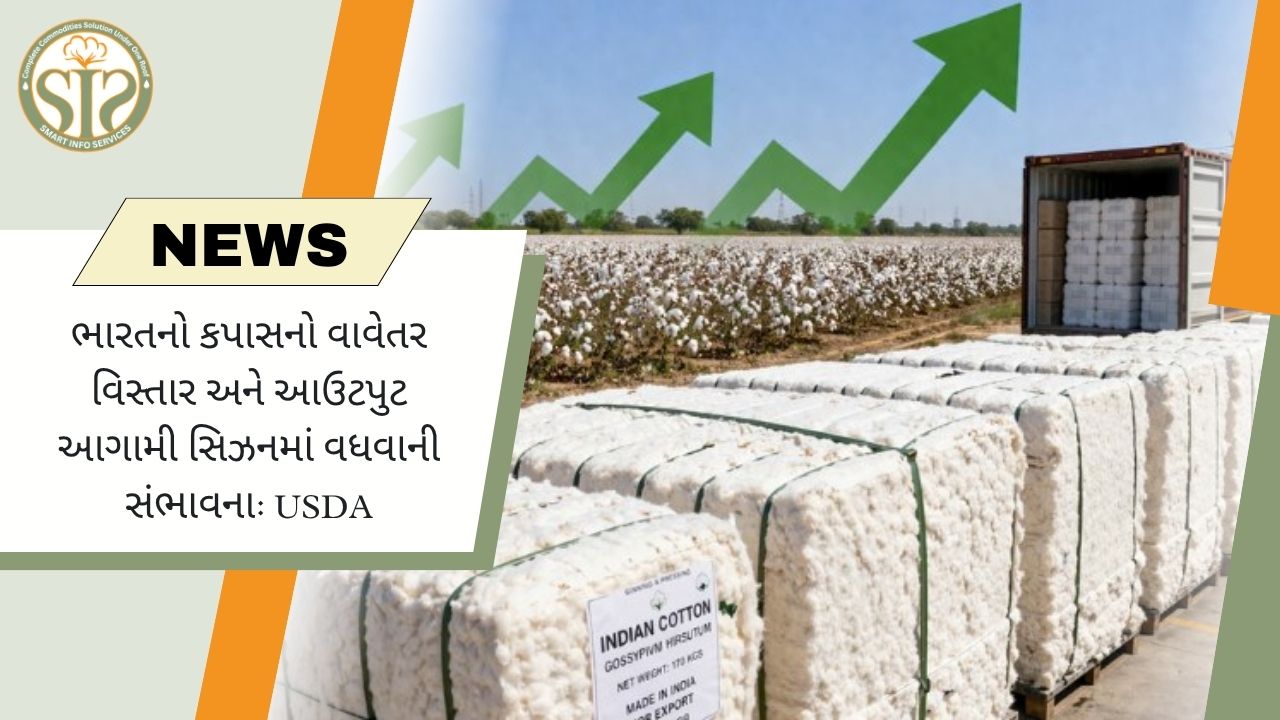
ભારતનો કપાસનો વાવેતર વિસ્તાર અને આઉટપુટ આગામી સિઝનમાં વધવાની સંભાવના: USDAયુએસડીએના જણાવ્યા મુજબ, ભારતનું કપાસ ક્ષેત્ર 2026-27 માર્કેટિંગ વર્ષમાં પુનઃપ્રાપ્તિ માટે તૈયાર છે, જેમાં વાવેતર વિસ્તાર અને ઉત્પાદન બંનેમાં વધારો થવાની ધારણા છે.એજન્સી કપાસનો વાવેતર વિસ્તાર 3% વધીને આશરે 11.5 મિલિયન હેક્ટર થવાનો અંદાજ મૂકે છે, જે ખેડૂતોના સુધરેલા સેન્ટિમેન્ટ અને વધુ સારા વળતરની અપેક્ષાઓને કારણે છે. ઉત્પાદન 7% થી 25.2 મિલિયન ગાંસડી (દરેક 480 lb) વધવાની આગાહી છે, જે ઉચ્ચ ઉપજ અને સંભવિત સામાન્ય ચોમાસાની મોસમ દ્વારા સમર્થિત છે.આ પુનઃપ્રાપ્તિ અકાળ વરસાદ દ્વારા ચિહ્નિત થયેલ એક મુશ્કેલ પાછલા વર્ષને અનુસરે છે. પાકની સારી સ્થિતિ અને વધુ સાનુકૂળ હવામાનને કારણે ઉપજમાં હવે સુધારો થવાની ધારણા છે, જેમાં સરેરાશ ઉત્પાદકતા 477 કિગ્રા પ્રતિ હેક્ટર હોવાનો અંદાજ છે.વપરાશ 25.8 મિલિયન ગાંસડી સુધી પહોંચવાનો અંદાજ સાથે સ્થાનિક માંગ પણ મજબૂત થવાની ધારણા છે. યુરોપિયન યુનિયન અને યુનાઇટેડ કિંગડમ જેવા ચાવીરૂપ બજારો સાથે અપેક્ષિત વેપાર કરારો સાથે ટેક્સટાઇલ અને એપરલ નિકાસ માટેની સુધારેલી સંભાવનાઓ દ્વારા આ વૃદ્ધિને વેગ મળવાની શક્યતા છે.વેપારની બાજુએ, કપાસની આયાત ઘટીને આશરે 3 મિલિયન ગાંસડી થવાની આગાહી છે કારણ કે ઊંચા સ્થાનિક ઉત્પાદનને કારણે વિદેશી પુરવઠા પર નિર્ભરતા ઘટી જાય છે. જોકે, નિકાસ ઘટીને આશરે 1.2 મિલિયન ગાંસડી થવાની ધારણા છે, જે ઓછી નિકાસ કરી શકાય તેવી સરપ્લસ અને કાચા કપાસને બદલે મૂલ્યવર્ધિત ટેક્સટાઇલ ઉત્પાદનોની નિકાસ તરફ વ્યૂહાત્મક પરિવર્તન દર્શાવે છે.એકંદરે કપાસનો પુરવઠો વધીને લગભગ 39.3 મિલિયન ગાંસડી થવાનો અંદાજ છે, જે ઊંચા ઉત્પાદન અને મજબૂત શરૂઆતી સ્ટોકને કારણે મદદ કરે છે. અંતિમ સ્ટોક્સ વધીને 12.3 મિલિયન ગાંસડી થવાની ધારણા છે, પરિણામે સ્ટોક-ટુ-યુઝ રેશિયો આશરે 46% છે, જે સ્થાનિક બજારમાં આરામદાયક ઉપલબ્ધતા દર્શાવે છે.આ સકારાત્મક દૃષ્ટિકોણ હોવા છતાં, સેક્ટર સતત ઇનપુટ ખર્ચમાં વધારો અને સિન્થેટિક ફાઇબરથી વધતી સ્પર્ધા જેવા પડકારોનો સામનો કરી રહ્યું છે. તેમ છતાં, સુધરેલી ઉપજ અને સ્થિર હવામાન પરિસ્થિતિઓ આગામી સિઝનમાં ભારતના કપાસ અર્થતંત્ર માટે વધુ મજબૂત પ્રદર્શનને સમર્થન આપે તેવી અપેક્ષા છે.વધુ વાંચો:- ડિસ્કાઉન્ટ પછી પણ યાર્ન મોંઘા રહે છે; વણકરો પરેશાન

મુક્તિ હોવા છતાં, યાર્નના ભાવ ઊંચા રહે છે: વણકરસુરતમાં કાપડના વિવર્સે યાર્નના સતત ઊંચા ભાવ અંગે ચિંતા વ્યક્ત કરી છે, નોંધ્યું છે કે કેન્દ્રના 40 પેટ્રોકેમિકલ ઉત્પાદનોને કસ્ટમ ડ્યુટીમાંથી મુક્તિ આપવાના નિર્ણય છતાં દરો હળવા થયા નથી.વીવર્સ દલીલ કરે છે કે યાર્ન ઉત્પાદકો જ્યારે ઇનપુટ ખર્ચ વધે છે ત્યારે ઝડપથી ભાવમાં વધારો કરે છે પરંતુ જ્યારે કાચા માલના ભાવમાં ઘટાડો થાય છે ત્યારે તેઓ તેને ઘટાડવામાં ધીમા હોય છે. તેમના મતે, યાર્નના ખર્ચમાં સતત વધારો થવાથી સમગ્ર વણાટ ક્ષેત્રમાં ઉત્પાદન સ્તર અને નફાના માર્જિન પર નોંધપાત્ર અસર પડી છે.યાર્ન ઉત્પાદકો, તેમ છતાં, જાળવી રાખે છે કે માત્ર ડ્યુટી મુક્તિ ભાવ નિર્ધારિત કરતી નથી. તેઓ યુએસ ડૉલરમાં વધઘટ અને વૈશ્વિક ભૌગોલિક રાજકીય વિકાસ સહિત બહુવિધ પરિબળોને વર્તમાન ભાવ સ્તરને આભારી છે. ઉત્પાદકો એવી પણ દલીલ કરે છે કે યાર્નનો વેપાર પ્રવર્તમાન બજાર દરો પર થતો રહે છે અને ખરીદદારો તરફથી કોઈ વ્યાપક પ્રતિકાર થયો નથી.પરિસ્થિતિને કારણે જમીન પરની કામગીરી પર અસર થવા લાગી છે. વધતા ઈનપુટ ખર્ચ અને કામદારો માટે રાંધણ ગેસની અછતનો સામનો કરીને, ઘણા વણાટ એકમોએ સિંગલ-શિફ્ટ કામગીરીમાં ઘટાડો કર્યો છે અથવા દર અઠવાડિયે બે દિવસ માટે બંધ કરી દીધા છે. ઉદ્યોગના પ્રતિનિધિઓ કહે છે કે ગંભીર નાણાકીય તાણ હેઠળના કેટલાક એકમોએ પહેલેથી જ ઉત્પાદનમાં ઘટાડો કર્યો છે.ટેક્સટાઇલ પ્રોડક્ટ્સની નબળી માંગને કારણે આઉટલૂક વધુ ખરાબ થયો છે. ઉદ્યોગના નેતાઓ નોંધે છે કે ઊંચા ઇનપુટ ખર્ચ અને ધીમી માંગના સંયોજને ઘણા વણકરોને ઉત્પાદન પાછું માપવાની ફરજ પાડી છે.વીવર્સ ચેતવણી આપે છે કે જો ખર્ચ અને મજૂરીની સ્થિતિ પરનું વર્તમાન દબાણ ચાલુ રહેશે, તો આગામી સપ્તાહોમાં એકંદર ઉત્પાદનમાં વધુ ઘટાડો થઈ શકે છે. એક વણાટ એકમના માલિકે જણાવ્યું હતું કે મંદી દરમિયાન યાર્નના ભાવમાં વધુ ઝડપથી સુધારો થવો જોઈએ, અને ઉમેર્યું કે ઘટાડો કાચા માલના ઘટતા ખર્ચમાં પાછળ રહે છે.જવાબમાં, એક યાર્ન ઉત્પાદકે જણાવ્યું હતું કે ઝડપથી બદલાતી બજારની ગતિશીલતાને અનુરૂપ ભાવ ગોઠવણો કરવામાં આવે છે. તેમણે નોંધ્યું હતું કે કાચા માલના ભાવ અને ચલણની હિલચાલ હવે પહેલા કરતાં વધુ વખત વધઘટ થાય છે, જેના કારણે ઉત્પાદકો પણ કડક માર્જિન પર કામ કરે છે.વધુ વાંચો:- રૂપિયો ૩૬ પૈસા વધીને ૯૨.૬૪ પર ખુલ્યો.

રૂપિયો ૩૬ પૈસા વધીને ૯૨.૬૪ પ્રતિ ડોલર પર ખુલ્યો.બુધવારે ભારતીય રૂપિયો ૩૬ પૈસા વધીને ૯૨.૬૪ પ્રતિ ડોલર પર ખુલ્યો, જ્યારે મંગળવારે તે ૯૩.૦૦ પર બંધ થયો હતો.વધુ વાંચો :- ડોલર સામે રૂપિયો ૦૨ પૈસા વધીને ૯૩.૦૦ પર બંધ થયો.

મંગળવારે ભારતીય રૂપિયો ડોલર સામે ૯૩.૦૨ પર ખુલ્યો અને ૦૨ પૈસા વધીને ૯૩.૦૦ પર બંધ થયો.બંધ સમયે, સેન્સેક્સ ૫૦૯.૭૩ પોઈન્ટ અથવા ૦.૬૯ ટકા વધીને ૭૪,૬૧૬.૫૮ પર અને નિફ્ટી ૧૫૫.૪૦ પોઈન્ટ અથવા ૦.૬૮ ટકા વધીને ૨૩,૧૨૩.૬૫ પર બંધ થયો. લગભગ ૨૫૩૯ શેર વધ્યા, ૧૫૧૪ શેર ઘટ્યા અને ૧૪૪ શેર યથાવત રહ્યા.વધુ વાંચો:- આકોટ એપીએમસીમાં કપાસના ભાવમાં ભારે ઉછાળો

આકોટ APMCમાં કપાસે મોટી છલાંગ લગાવીઆકોટની એગ્રીકલ્ચર પ્રોડ્યુસ માર્કેટ કમિટી (APMC)માં આ સિઝનના છેલ્લા તબક્કામાં કપાસના ભાવમાં તીવ્ર વધારો જોવા મળ્યો છે. વિદર્ભના કપાસના મુખ્ય બજારોમાંની એક ગણાતી આ મંડીમાં કપાસના ભાવ વધીને રૂ. 8,995 પ્રતિ ક્વિન્ટલ થઈ ગયા છે, જે તાજેતરના સમયમાં સર્વોચ્ચ સ્તર છે.સતત વધી રહેલા ભાવને જોતા હવે અનુમાન લગાવવામાં આવી રહ્યું છે કે કપાસ ટૂંક સમયમાં રૂ. 9,000ને પાર કરી શકે છે. સિઝનની શરૂઆતમાં કિંમતો અંગે અનિશ્ચિતતા હતી, પરંતુ કોટન કોર્પોરેશન ઓફ ઈન્ડિયા (CCI) એ ન્યૂનતમ ટેકાના ભાવ (MSP) પર ખરીદી શરૂ કરી હતી જેણે બજારને સ્થિર કર્યું હતું.CCIએ ગયા મહિને ખરીદી બંધ કરી દીધા બાદ એવી આશંકા વ્યક્ત કરવામાં આવી રહી હતી કે પ્રાઈવેટ માર્કેટમાં ઘટાડો થઈ શકે છે, પરંતુ તેનાથી વિપરીત કપાસના સારા ભાવ મળી રહ્યા છે. વૈશ્વિક અને સ્થાનિક સ્તરે વધતી માંગને આ વધારાનું મુખ્ય કારણ માનવામાં આવી રહ્યું છે.શનિવારે અકોટ મંડીમાં કપાસની આવક સંતોષજનક રહી હતી. હરાજી દરમિયાન વેપારીઓમાં વધેલી સ્પર્ધાએ ભાવને રેકોર્ડ ઉંચી સપાટી પર પહોંચાડ્યા હતા.જાણકારોના મતે બજારમાં હવે કપાસમાં તેજીનો તબક્કો શરૂ થયો છે. ઘણા ખેડૂતોએ સારા ભાવની આશાએ પોતાનો સ્ટોક રાખ્યો હતો, જે હવે ધીમે ધીમે બજારમાં આવી રહ્યો છે. સારી ગુણવત્તાવાળા કપાસની વધુ માંગને કારણે ખરીદદારો સક્રિય છે.હાલના સંજોગો જોતા આગામી દિવસોમાં કપાસના ભાવ રૂ.9,500 પ્રતિ ક્વિન્ટલ સુધી પહોંચી શકે તેવો અંદાજ છે, જેના કારણે ખેડૂતોને સારો નફો મળવાની આશા છે.વધુ વાંચો:- પરભણી જિલ્લામાં કપાસના ખરીદ ભાવમાં સુધારો થતાં ખેડૂતોને રાહત

પરભણી જિલ્લામાં કપાસના ખરીદ ભાવમાં સુધારોતાજેતરના સમયમાં પરભણી જિલ્લામાં કપાસના ભાવમાં સુધારો જોવા મળ્યો છે. પરભણી, માનવત અને સેલુના મુખ્ય બજારોમાં ખાનગી ખરીદીના દરો વધીને સરેરાશ રૂ. 8,500 પ્રતિ ક્વિન્ટલ થઈ ગયા છે અને ભાવ હવે રૂ. 9,000 પ્રતિ ક્વિન્ટલ તરફ જતો જોવા મળી રહ્યો છે. આનાથી એવા ખેડૂતોને રાહત મળી છે કે જેમણે અત્યાર સુધી સારા ભાવની આશામાં તેમની ઉપજ વેચી ન હતી.4 એપ્રિલે, પરભણી એગ્રીકલ્ચર પ્રોડ્યુસ માર્કેટ કમિટીમાં કપાસનો ભાવ પ્રતિ ક્વિન્ટલ રૂ. 8,300 થી રૂ. 8,660 વચ્ચે હતો. માનવત મંડીમાં તે પ્રતિ ક્વિન્ટલ રૂ. 8,440 થી 8,611 અને સેલુ મંડીમાં રૂ. 8,480 થી 8,740 પ્રતિ ક્વિન્ટલની વચ્ચે નોંધાયું હતું. એક અંદાજ મુજબ જિલ્લાના લગભગ 20 ટકા ખેડૂતો પાસે હજુ પણ કપાસનો સ્ટોક બાકી છે.સીઝનની શરૂઆતમાં (ઓક્ટોબર-નવેમ્બર 2025), ખાનગી ખરીદીના દરો પ્રતિ ક્વિન્ટલ રૂ. 7,000 થી રૂ. 7,200 વચ્ચે હતા, જ્યારે CCIએ રૂ. 7,767 થી રૂ. 8,060 પ્રતિ ક્વિન્ટલના ભાવે ખરીદી કરી હતી. જાન્યુઆરીમાં ખાનગી દરો વધીને રૂ. 8,400 થયા હતા, જેના કારણે CCIની ખરીદી ધીમી પડી હતી. પાછળથી, જ્યારે ભાવ ફરી ઘટીને રૂ. 7,000 થઈ ગયા, ત્યારે ખેડૂતો ફરીથી CCI તરફ વળ્યા.હવે છેલ્લા એક સપ્તાહથી ભાવ ફરી વધી રહ્યા છે જેના કારણે ખેડૂતોમાં સંતોષનો માહોલ જોવા મળી રહ્યો છે. FAQ ગ્રેડના કપાસના ભાવ રૂ. 8,300 થી રૂ. 8,660 પ્રતિ ક્વિન્ટલ (સરેરાશ રૂ. 8,545), જ્યારે ફરદાદ કપાસ રૂ. 7,200 થી રૂ. 7,905 પ્રતિ ક્વિન્ટલના ભાવે વેચાયા હતા.મંડાખલી ગામના ખેડૂત રમેશ રાઉતના જણાવ્યા અનુસાર, ગામના 20-25 ટકા ખેડૂતો પાસે હજુ પણ કપાસ બાકી છે. તેણે જણાવ્યું કે પ્રારંભિક જરૂરિયાતો માટે તેણે રૂ. 7,850 પ્રતિ ક્વિન્ટલના ભાવે 25 ક્વિન્ટલ કપાસ વેચ્યો હતો, જ્યારે તેમની પાસે હજુ પણ 50 ક્વિન્ટલનો સ્ટોક છે, જેની કિંમત રૂ. 9,000 આસપાસ થાય ત્યારે તે વેચવાની યોજના ધરાવે છે.વધુ વાંચો:- રૂપિયો 4 પૈસા વધીને 93.02 પર ખુલ્યો.

રૂપિયો 4 પૈસા વધીને 93.02 પ્રતિ ડોલર પર ખુલ્યો.મંગળવારે ભારતીય રૂપિયો 4 પૈસા વધીને 93.02 પ્રતિ ડોલર પર ખુલ્યો, જ્યારે સોમવારે તે 93.06 પર બંધ થયો હતો.વધુ વાંચો :-રૂપિયો 93.06 પર સ્થિર બંધ થયો.