

बढ़ती लागत और वैश्विक चुनौतियों से गुजरात के कपड़ा उद्योग पर दबाव बढ़ रहा है।गुजरात का कपड़ा उद्योग - जिसे व्यापक रूप से भारत के मानव निर्मित फाइबर (एमएमएफ) क्षेत्र की रीढ़ माना जाता है - अपने हाल के इतिहास में सबसे गंभीर वित्तीय मंदी में से एक का सामना कर रहा है, जिसमें दक्षिण गुजरात का कपड़ा केंद्र सूरत संकट के केंद्र में है।पश्चिम एशिया में भू-राजनीतिक तनाव, कच्चे तेल की बढ़ती कीमतें, धागे की बढ़ती लागत, वैश्विक मांग में कमी और बढ़ते व्यापारिक दबावों के संयोजन ने इस क्षेत्र को गहरे संकट में धकेल दिया है। उद्योग के अनुमानों के अनुसार, पिछले 60 दिनों में लगभग ₹2,500-₹3,000 करोड़ का नुकसान हुआ है, और कई बुनाई इकाइयां अब अपनी स्थापित क्षमता के लगभग आधे पर ही काम कर रही हैं।भारत के सबसे बड़े कपड़ा उत्पादन केंद्रों में से एक सूरत, वर्तमान में उद्योग जगत के हितधारकों द्वारा वर्णित "लागत वृद्धि और कमजोर बाजार मांग" के "भयंकर संकट" का सामना कर रहा है। भू-राजनीतिक अस्थिरता से जुड़े एक बाहरी झटके के रूप में शुरू हुआ यह संकट तेजी से क्षेत्र की कपड़ा अर्थव्यवस्था पर संरचनात्मक दबाव में तब्दील हो गया है, जिससे निर्माताओं, व्यापारियों और संबंधित श्रमिकों के मुनाफे पर भारी दबाव पड़ रहा है।इस संकट की जड़ में कच्चे तेल की कीमतों में आई तीव्र वृद्धि है, जिसने एमएमएफ मूल्य श्रृंखला को सीधे तौर पर प्रभावित किया है। चूंकि अधिकांश सिंथेटिक वस्त्र उत्पादन पेट्रोलियम से प्राप्त कच्चे माल पर बहुत अधिक निर्भर करता है, इसलिए कच्चे तेल की ऊंची दरों ने धागे की कीमतों को काफी बढ़ा दिया है। इनपुट लागत में भारी वृद्धि के बावजूद, बाजार में कपड़े की कीमतों में उस अनुपात में समायोजन नहीं हुआ है, जिससे उत्पादन लागत और प्राप्ति के बीच का अंतर बढ़ता जा रहा है।गुजरात बुनकर संघ (FOGWA) के अध्यक्ष अशोक जिरावाला के अनुसार, कई निर्माताओं को अपना परिचालन जारी रखने के लिए उत्पादन लागत से कम कीमत पर सामान बेचने के लिए मजबूर होना पड़ रहा है। उन्होंने बताया कि बढ़ती इनपुट लागत और स्थिर बाजार कीमतों के बीच असंतुलन के कारण पूरे क्षेत्र में दैनिक नुकसान एक लगातार बोझ बन गया है।और पढ़ें :-तिरुपूर गारमेंट इंडस्ट्री ने केंद्र से कपास पर आयात शुल्क हटाने की अपील की।
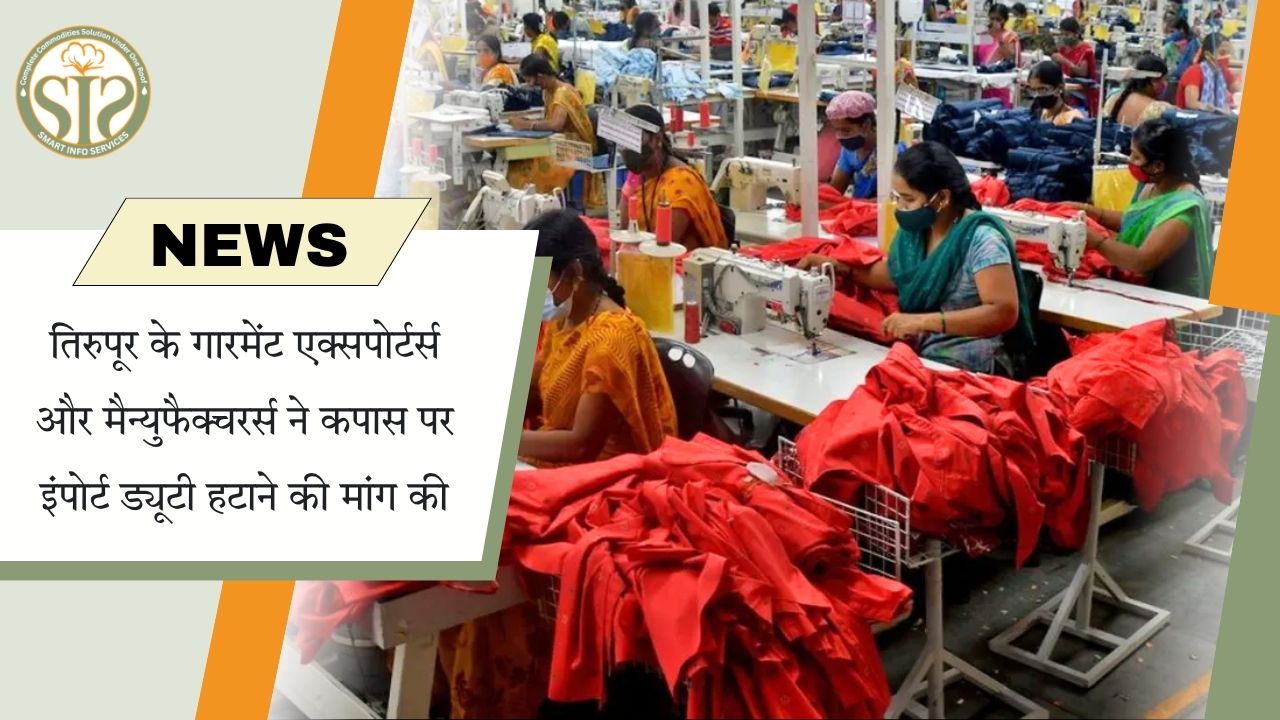
तिरुपूर के गारमेंट एक्सपोर्टर्स और मैन्युफैक्चरर्स ने कपास पर इंपोर्ट ड्यूटी हटाने की मांग कीतिरुपूर के गारमेंट मैन्युफैक्चरर्स और एक्सपोर्टर्स के एक डेलिगेशन ने बुधवार को नई दिल्ली में केंद्रीय कपड़ा, कृषि और वाणिज्य मंत्रियों से मुलाकात की और कपास पर इंपोर्ट ड्यूटी हटाने की मांग की, जो अभी 11% है।अपैरल एक्सपोर्ट प्रमोशन काउंसिल के चेयरमैन ए. शक्तिवेल ने इस डेलिगेशन का नेतृत्व किया। इस डेलिगेशन ने केंद्रीय वाणिज्य और उद्योग मंत्री पीयूष गोयल, केंद्रीय कृषि और किसान कल्याण मंत्री शिवराज सिंह चौहान, और केंद्रीय कपड़ा मंत्री गिरिराज सिंह, के साथ-साथ केंद्रीय सूचना और प्रसारण राज्य मंत्री एल. मुरुगन से मुलाकात की।डेलिगेशन ने कपास की ऊंची कीमतों और बढ़ती इनपुट लागतों के कारण अपैरल और टेक्सटाइल इंडस्ट्री को हो रही चुनौतियों पर प्रकाश डाला। भारत ने हाल ही में कई मुक्त व्यापार समझौते (FTA) किए हैं, जिससे टेक्सटाइल और अपैरल एक्सपोर्ट में बढ़ोतरी के लिए महत्वपूर्ण अवसर पैदा हुए हैं। हालांकि, अपैरल एक्सपोर्ट करने वाले दूसरे देश अंतरराष्ट्रीय स्तर पर प्रतिस्पर्धी कीमतों पर कपास हासिल कर पा रहे हैं, जबकि भारतीय मैन्युफैक्चरर्स को मौजूदा इंपोर्ट ड्यूटी ढांचे के कारण कच्चे माल की ऊंची कीमतों का सामना करना पड़ रहा है।भारतीय अपैरल इंडस्ट्री को FTA साझेदार देशों से व्यापार के अधिक अवसर हासिल करने और वैश्विक बाजार में भारत की प्रतिस्पर्धात्मकता को बढ़ाने में मदद करने के लिए कपास पर इंपोर्ट ड्यूटी में कमी करना जरूरी है।चालू वर्ष के लिए टेक्सटाइल इंडस्ट्री की कपास की जरूरत लगभग 337 लाख गांठ होने का अनुमान है, जबकि 2025-2026 सीजन के लिए कपास की आवक केवल 292.15 लाख गांठ होने का अनुमान है, जिसके परिणामस्वरूप मांग और आपूर्ति में लगभग 45 लाख गांठ का अंतर आ रहा है। डेलिगेशन ने मंत्रियों को बताया कि इस कमी से बढ़ती इनपुट लागतों और गुणवत्ता वाले कच्चे माल की सीमित उपलब्धता के कारण स्पिनिंग मिलों और डाउनस्ट्रीम टेक्सटाइल इंडस्ट्री पर दबाव बढ़ने की उम्मीद है।और पढ़ें :- रुपया 02 पैसे की गिरकर के साथ 95.73 पर खुला

रुपया 02 पैसे गिरकर 95.73 USD पर खुलागुरुवार को भारतीय रुपया डॉलर के मुकाबले 02 पैसे गिरकर 95.73 पर खुला जबकि बुधवार को यह 95.71 पर बंद हुआ था।और पढ़ें :- डॉलर के मुकाबले रुपया 10 पैसे गिरकर 95.71 पर बंद हुआ।

बुधवार को सुबह के कारोबार में 95.61 पर खुलने के बाद, भारतीय रुपया 10 पैसे गिरकर 95.71 पर बंद हुआ।बाजार बंद होने पर, सेंसेक्स 49.74 अंक या 0.07 प्रतिशत की बढ़त के साथ 74,608.98 पर बंद हुआ, जबकि निफ्टी 33.05 अंक या 0.14 प्रतिशत चढ़कर 23,412.60 पर बंद हुआ।और पढ़ें :- रुपया 02 पैसे की बढ़त के साथ 95.61 पर खुला

रुपया 02 पैसे बढ़त 95.61 USD पर खुलाबुधवार को भारतीय रुपया डॉलर के मुकाबले 02 पैसे बदत 95.61 पर खुला जबकि मंगलवार को यह 95.63 पर बंद हुआ था।और पढ़ें :- रुपया डॉलर के मुकाबले 13 पैसे गिरकर 95.63 पर बंद हुआ।

मंगलवार को, सुबह के कारोबार में 95.50 पर खुलने के बाद, भारतीय रुपया 13 पैसे गिरकर अमेरिकी डॉलर के मुकाबले 95.63 पर बंद हुआ।बंद होने पर, सेंसेक्स 1,456.04 पॉइंट या 1.92 प्रतिशत गिरकर 74,559.24 पर था, जबकि निफ्टी 436.30 पॉइंट या 1.83 प्रतिशत गिरकर 23,379.55 पर था। मार्केट का रुख तेज़ी से नेगेटिव रहा, जिसमें 875 बढ़त के मुकाबले 3,219 शेयर गिरे।और पढ़ें :- रुपया 19 पैसे की गिरावट के साथ 95.50 पर खुला

रुपया 19 पैसे गिरावट 95.50 USD पर खुलामंगलवार को भारतीय रुपया डॉलर के मुकाबले 19 पैसे गिरावट 95.50 पर खुला जबकि सोमवार को यह 95.31 पर बंद हुआ था।और पढ़ें :- रुपया डॉलर के मुकाबले 43 पैसे गिरकर 95.31 पर बंद हुआ।

सोमवार को, सुबह के कारोबार में 94.88 पर खुलने के बाद, भारतीय रुपया 43 पैसे गिरकर अमेरिकी डॉलर के मुकाबले 95.31 पर बंद हुआ।आज शेयर बाज़ार में भारी गिरावट: रियल्टी और कंज्यूमर शेयरों में भारी बिकवाली के बीच सेंसेक्स 1,312 से ज़्यादा अंक टूटा, वहीं निफ्टी 360.30 अंक गिरकर 23,815.85 पर आ गया।और पढ़ें:- कपास उत्पादकता मिशन: सही क्रियान्वयन, बेहतर परिणाम

कपास उत्पादकता मिशन: सफलता की कुंजी प्रभावी क्रियान्वयन मेंभारत का 5,659 करोड़ रुपये का कपास उत्पादकता मिशन ऐसे समय में शुरू किया गया है जब देश की कपास अर्थव्यवस्था गंभीर कृषि और औद्योगिक चुनौतियों से जूझ रही है। लगातार घटती पैदावार, बढ़ते कीट प्रकोप और सिकुड़ते रकबे ने उस फसल को कमजोर कर दिया है जो कभी ग्रामीण आय और भारत के वस्त्र उद्योग की रीढ़ मानी जाती थी। ऐसे में केंद्र की यह पहल केवल उत्पादन बढ़ाने की योजना नहीं, बल्कि उन किसानों का भरोसा लौटाने का प्रयास भी है जिन्होंने धीरे-धीरे कपास की खेती से दूरी बना ली है। पंजाब, हरियाणा और राजस्थान जैसे राज्यों के लिए यह मिशन विशेष महत्व रखता है।पंजाब के मालवा क्षेत्र में कपास कभी एक विश्वसनीय नकदी फसल हुआ करती थी। लेकिन सफेद मक्खी और गुलाबी बॉलवर्म के बार-बार हमले, मौसम की अनिश्चितता और खेती की बढ़ती लागत ने किसानों को फिर से धान की ओर मोड़ दिया, जबकि धान की खेती पहले से ही भूजल संकट को और गहरा कर रही है। उत्तर भारत में कपास के घटते रकबे से यह साफ झलकता है कि किसान आज पर्यावरणीय अस्थिरता और आर्थिक असुरक्षा के बीच संघर्ष कर रहे हैं।मिशन में जलवायु-अनुकूल बीज किस्मों, उच्च घनत्व रोपण तकनीकों, आधुनिक जिनिंग ढांचे और अतिरिक्त लंबे रेशे वाले कपास पर दिया गया जोर निश्चित रूप से सकारात्मक कदम है। भारत यदि वैश्विक कपड़ा उद्योग में अग्रणी बनना चाहता है, तो उसे प्रीमियम गुणवत्ता वाले आयातित कपास पर निर्भरता कम करनी होगी। ‘खेत से फाइबर, फैशन और विदेशी बाजार तक’ की व्यापक रणनीति इस तथ्य को स्वीकार करती है कि कृषि और विनिर्माण एक-दूसरे से गहराई से जुड़े हुए हैं।हालांकि, इस मिशन की वास्तविक सफलता इसकी जमीनी स्तर पर प्रभावी क्रियान्वयन क्षमता पर निर्भर करेगी। किसानों को समय पर गुणवत्तापूर्ण बीज, सस्ता ऋण, वैज्ञानिक कीट प्रबंधन और ऐसी फसल बीमा व्यवस्था चाहिए जो कागजी औपचारिकताओं में उलझने के बजाय वास्तविक सुरक्षा दे सके। यदि किसानों को फिर से कपास की खेती की ओर आकर्षित करना है, तो खरीद व्यवस्था में भरोसा बहाल करना भी उतना ही जरूरी होगा।पंजाब और हरियाणा जैसे जल संकट से जूझ रहे राज्यों में कपास की वापसी धान पर निर्भरता कम करने और भूजल संरक्षण में मददगार साबित हो सकती है। लेकिन यदि यह मिशन भी कागजी योजनाओं और धीमे समन्वय तक सीमित रह गया, तो देश एक बार फिर उसी निराशा के चक्र में फंस जाएगा जिसने किसानों को कपास की खेती छोड़ने पर मजबूर किया था।और पढ़ें :- तमिलनाडु: नागपट्टिनम ज़िले में लगातार बारिश से किसान चिंतित
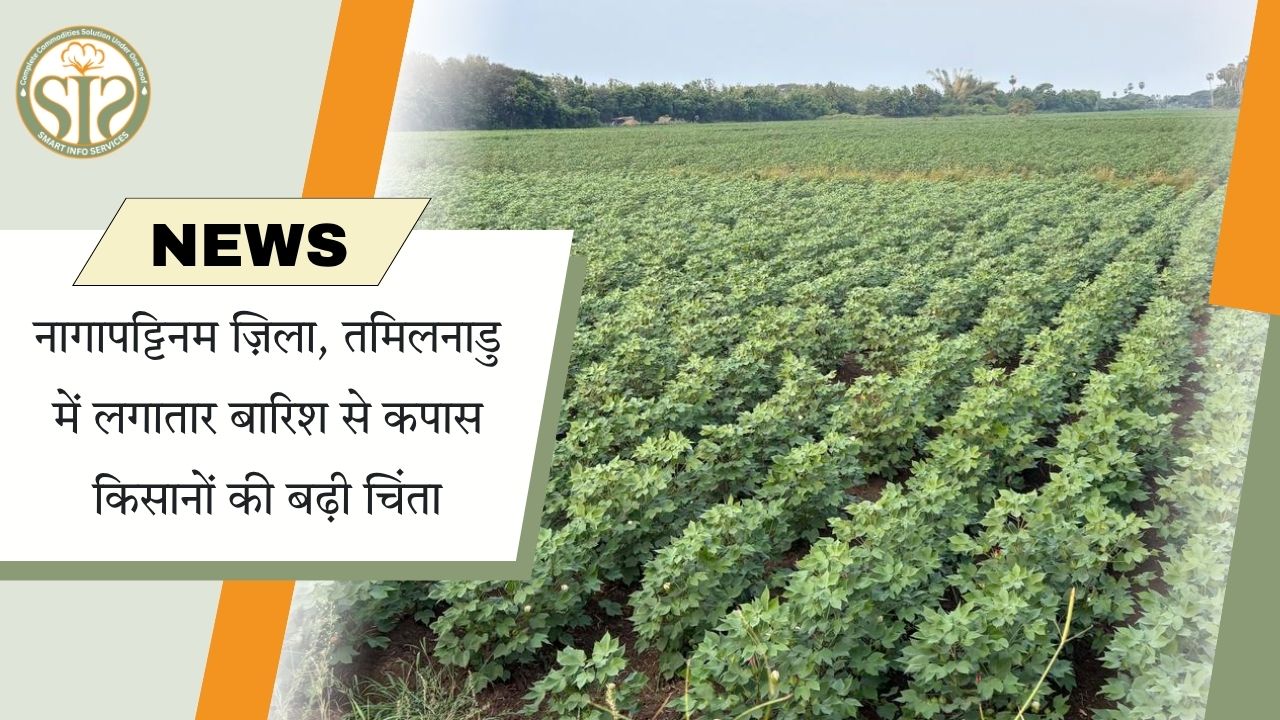
नागापट्टिनम ज़िला, तमिलनाडु में लगातार बारिश से कपास किसानों की बढ़ी चिंतानागापट्टिनम ज़िला, तमिलनाडु में पिछले तीन दिनों से लगातार हो रही गर्मियों की बारिश ने थिरुमारुगल ब्लॉक के कई इलाकों में कपास की खेती को प्रभावित किया है। खेतों में बारिश का पानी भर जाने से किसानों को फ़सल खराब होने की आशंका सताने लगी है।रिपोर्ट के मुताबिक, आधी रात से थिरुमारुगल, अलाथुर, एरावंचेरी, मरुंगुर, नेइकुप्पई, थिरुकन्नपुरम, अंबल, पोलगम और आसपास के क्षेत्रों में लगातार बारिश हो रही है। ज़िले के कई हिस्सों में पिछले तीन दिनों से तेज़ गर्मियों की बारिश दर्ज की गई है।थिरुमारुगल ब्लॉक में किसानों ने बड़े पैमाने पर गर्मियों की फ़सल के रूप में कपास की बुवाई की थी। इस समय फसल में फूल आने और डोडे बनने का चरण चल रहा है। हालांकि, कई किसान अभी तक खेतों में मिट्टी चढ़ाने का काम पूरा नहीं कर पाए हैं। लगातार बारिश के चलते कई खेतों में पानी जमा हो गया है, जिससे कपास के पौधों की बढ़वार प्रभावित हो रही है।कपास किसान आर. शिवा ने बताया, “बारिश के कारण कपास के पौधों पर लगे फूल झड़ रहे हैं, जिससे उत्पादन में भारी गिरावट आ सकती है।”एक अन्य किसान पी. कथिर ने कहा कि यदि खेतों में लंबे समय तक पानी भरा रहा तो पौधों की जड़ें सड़ सकती हैं, जिससे किसानों को गंभीर आर्थिक नुकसान उठाना पड़ सकता है। उन्होंने चेतावनी दी कि यदि बारिश इसी तरह जारी रही तो नुकसान और बढ़ सकता है।और पढ़ें :- CCI ने कॉटन कैंडी कीमत ₹4,100 बढ़ाई, नीलामी 5.85 लाख गांठ पार
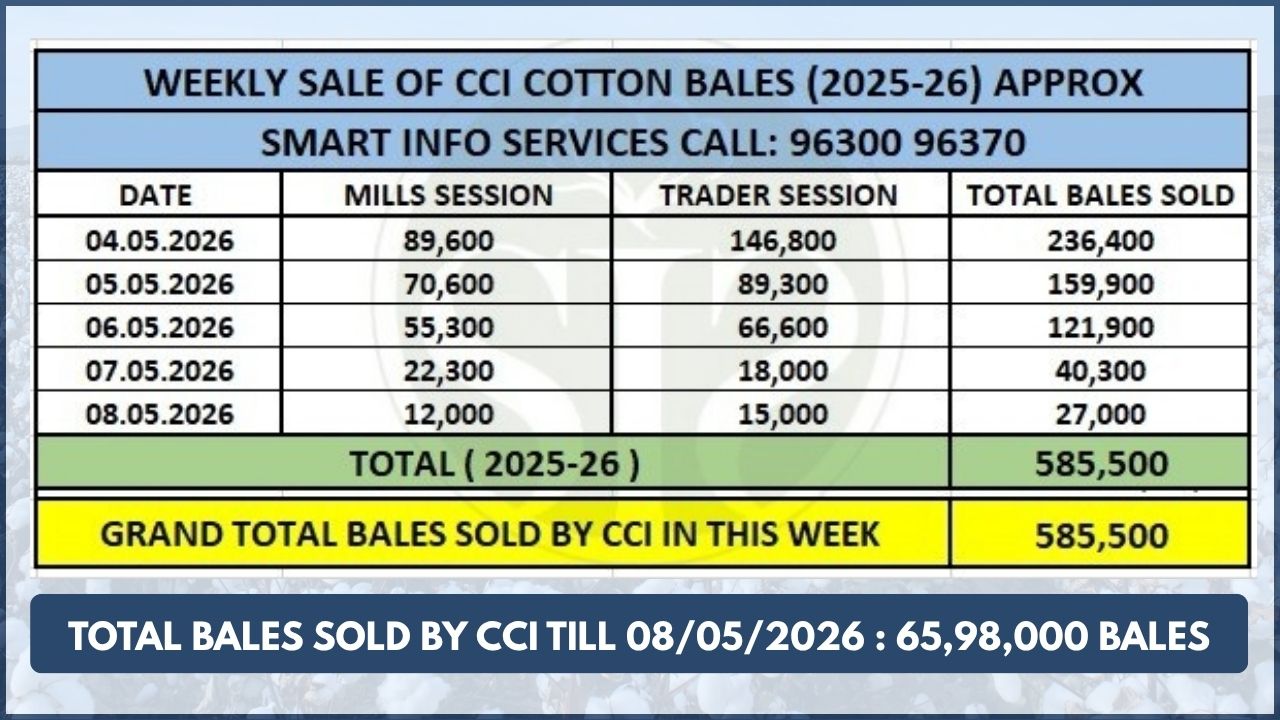
CCI ने कॉटन कैंडी की कीमतें ₹4,100 प्रति कैंडी बढ़ाईं; साप्ताहिक नीलामी बिक्री 5.85 लाख गांठों के पारकॉटन कॉर्पोरेशन ऑफ़ इंडिया (CCI) ने 4 मई से 8 मई, 2026 के सप्ताह के दौरान कॉटन की कीमतों में ₹4,100 प्रति कैंडी की बढ़ोतरी की। इन नीलामियों में मिलों और कॉटन व्यापारियों की ज़ोरदार भागीदारी देखने को मिली, जिसके परिणामस्वरूप 2025–26 सीज़न के स्टॉक से लगभग 5,85,500 गांठों की साप्ताहिक बिक्री हुई।साप्ताहिक बिक्री रिपोर्ट 4 मई, 2026 (सोमवार):सप्ताह की शुरुआत मज़बूत रही, जिसमें एक ही दिन में सबसे ज़्यादा 2,36,400 गांठों की बिक्री दर्ज की गई। मिलों ने 89,600 गांठें खरीदीं, जबकि व्यापारियों ने 1,46,800 गांठें खरीदकर खरीदारी में बढ़त बनाई।5 मई, 2026 (मंगलवार):नीलामी की गतिविधियाँ थोड़ी धीमी पड़ गईं, और कुल बिक्री 159,900 गांठों तक पहुँची। मिलों ने 70,600 गांठें खरीदीं, जबकि व्यापारियों ने 89,300 गांठें खरीदीं।6 मई, 2026 (बुधवार):CCI ने इस दिन कुल 121,900 गांठों की बिक्री की जानकारी दी। मिलों ने 55,300 गांठें खरीदीं, जबकि व्यापारियों ने 66,600 गांठें खरीदीं।7 मई, 2026 (गुरुवार):बिक्री की मात्रा में और गिरावट आई, और इस सत्र के दौरान 40,300 गांठें बिकीं। मिलों ने 22,300 गांठें खरीदीं, जबकि व्यापारियों ने 18,000 गांठें खरीदीं। 8 मई, 2026 (शुक्रवार):सप्ताह का समापन कुल 27,000 गांठों की बिक्री के साथ हुआ। मिलों ने 12,000 गांठें खरीदीं, जबकि व्यापारी सक्रिय रहे और उन्होंने कुल 15,000 गांठें खरीदीं।कुल बिक्री की जानकारीCCI की कुल बिक्री अब यहाँ तक पहुँच गई है:2025–26 सीज़न: 65,98,000 गांठें

कपास किसानों के लिए अहम अपडेट: Bt बीजों की बिक्री और बुवाई पर सरकार सख्त, अभी करना होगा इंतज़ार..!जलगांव: आगामी खरीफ सीजन 2026 को देखते हुए महाराष्ट्र सरकार ने कपास फसल में गुलाबी इल्ली (Pink Bollworm) के बढ़ते खतरे को रोकने के लिए सख्त कदम उठाए हैं। राज्य के कृषि, पशुपालन, डेयरी विकास एवं मत्स्य पालन विभाग ने Bt कपास बीजों की बिक्री, आपूर्ति और बुवाई को लेकर नई समय-सारिणी लागू करने के निर्देश जारी किए हैं।8 मई 2026 को जारी सरकारी परिपत्र के अनुसार, राज्य की सभी कृषि एजेंसियों और अधिकारियों को इन नियमों का कड़ाई से पालन सुनिश्चित करने को कहा गया है। मंत्रालय द्वारा पुणे स्थित कृषि आयुक्त कार्यालय को भेजे गए निर्देशों में साफ कहा गया है कि समय से पहले कपास की बुवाई गुलाबी इल्ली के प्रकोप को बढ़ावा देती है, जिससे उत्पादन पर गंभीर असर पड़ता है।सरकार का मानना है कि जल्द बुवाई से कीटों के जीवन चक्र को अनुकूल वातावरण मिलता है, जिसके कारण फसल को भारी नुकसान उठाना पड़ सकता है। पिछले कुछ वर्षों में जलगांव समेत राज्य के कई प्रमुख कपास उत्पादक जिलों में गुलाबी इल्ली से किसानों को बड़े पैमाने पर नुकसान हुआ था। इसी अनुभव को देखते हुए इस बार सरकार ने पहले से ही सतर्कता बढ़ा दी है।सरकारी आदेश में किसानों से अपील की गई है कि वे केवल कृषि विभाग की अनुशंसित अवधि में ही कपास की बुवाई करें। साथ ही जिला और तालुका स्तर के कृषि अधिकारियों को जागरूकता अभियान चलाने के निर्देश दिए गए हैं, ताकि किसानों को प्रमाणित और अधिकृत Bt बीजों के उपयोग की जानकारी दी जा सके।इसके अलावा प्रशासन को अवैध और अनधिकृत बीजों की बिक्री पर नजर रखने तथा नियमों का उल्लंघन करने वालों के खिलाफ कार्रवाई करने के निर्देश भी दिए गए हैं।और पढ़ें :- रुपया 40 पैसे की गिरावट के साथ 94.88 पर खुला

रुपया 40 पैसे गिरावट 94.88 USD पर खुलासोमवार को भारतीय रुपया डॉलर के मुकाबले 40 पैसे गिरावट 94.88 पर खुला जबकि शुक्रवार को यह 94.48 पर बंद हुआ था।और पढ़ें :- कपास पर आयात शुल्क पूरी तरह समाप्त करने की मांग तेज
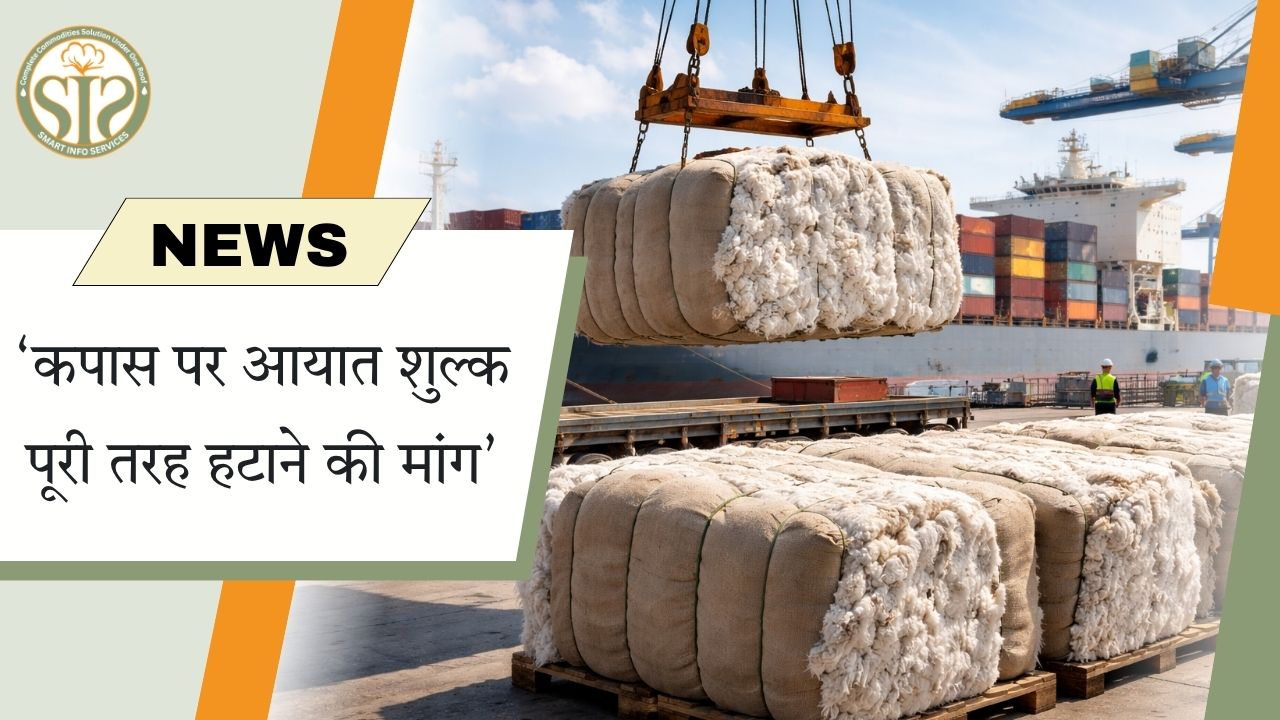
‘कपास पर आयात शुल्क पूरी तरह हटाने की मांग’कॉन्फेडरेशन ऑफ इंडियन टेक्सटाइल इंडस्ट्री (CITI) द्वारा जारी एक नए अध्ययन में कपास पर वर्तमान में लगने वाले 11% आयात शुल्क को पूरी तरह से खत्म करने की मांग की गई है।"भारत में कपास की आपूर्ति, मूल्य निर्धारण और व्यापार नीति का आर्थिक विश्लेषण" शीर्षक वाली यह रिपोर्ट बताती है कि यह आयात शुल्क देश के कपड़ा और परिधान क्षेत्रों की प्रतिस्पर्धात्मकता पर बुरा असर डाल रहा है। रिपोर्ट के अनुसार, उद्योग के लिए यह बहुत ज़रूरी है कि जब घरेलू उत्पादन कम हो, तो उसे आयातित कपास तक आसान और भरोसेमंद पहुंच मिले।इंटरनेशनल कॉटन एडवाइजरी कमेटी (ICAC) और Gherzi द्वारा संयुक्त रूप से तैयार किए गए इस अध्ययन में बताया गया है कि कपास पर आयात शुल्क अगस्त से दिसंबर 2025 तक अस्थायी रूप से निलंबित कर दिया गया था, लेकिन बाद में 1 जनवरी 2026 से इसे फिर से लागू कर दिया गया।रिपोर्ट में बताया गया है कि जब से 2021 में यह शुल्क पहली बार लागू किया गया था, तब से दो बार अस्थायी राहत दी गई है; हालांकि, अब उद्योग इसे स्थायी रूप से हटाने की मांग कर रहा है। उद्योग का तर्क है कि भारत के मुख्य प्रतिस्पर्धी देश—श्रीलंका, बांग्लादेश, वियतनाम और पाकिस्तान—कपास के आयात पर इस तरह के प्रतिबंध नहीं लगाते हैं।यह अध्ययन कपास के लिए एक 'रणनीतिक भंडार' (Strategic Reserve) स्थापित करने का भी सुझाव देता है, जो चीन के मॉडल पर आधारित हो। रिपोर्ट के अनुसार, वित्त वर्ष 2025-26 में कपड़ा और परिधान का निर्यात 2.2% घटकर 35.79 अरब डॉलर रह गया।गुरुवार को कोयंबटूर में आयोजित एक मीडिया ब्रीफिंग में बोलते हुए, CITI के अध्यक्ष अश्विन चंद्रन ने कहा कि Gherzi-ICAC की रिपोर्ट कपड़ा और परिधान उद्योग के लिए 2030 तक 350 अरब डॉलर का लक्ष्य हासिल करने के लिए एक व्यावहारिक और विस्तृत रूपरेखा प्रस्तुत करती है।इस बीच, सदर्न इंडिया मिल्स एसोसिएशन (SIMA) के महासचिव के. सेल्वाराजू ने बताया कि पिछले तीन वर्षों में कपास की खेती के तहत आने वाला क्षेत्र लगभग 20% कम हो गया है, और भारत में उत्पादकता का स्तर काफी कम बना हुआ है। उन्होंने कहा कि 2030 का लक्ष्य हासिल करने के लिए, उद्योग को लगभग 15% की वार्षिक दर से बढ़ने की आवश्यकता होगी। हालांकि, मौजूदा परिस्थितियों में, यह एक चुनौतीपूर्ण कार्य प्रतीत होता है।उन्होंने यह भी बताया कि पश्चिम एशिया में चल रहे संघर्ष के कारण माल ढुलाई और लॉजिस्टिक्स की लागत बढ़ गई है। इसके अलावा, गैस की कमी के साथ-साथ तेल-आधारित कच्चे माल, रंगों और रसायनों की बढ़ती कीमतों ने कपड़ा और परिधान उद्योग पर अतिरिक्त दबाव डाल दिया है।और पढ़ें:- खानदेश में कपास का रकबा 8 लाख हेक्टेयर से नीचे जाने की आशंका

खानदेश में घटेगी कपास की बुवाई, रकबा 8 लाख हेक्टेयर से नीचे जाने की आशंकाखानदेश क्षेत्र में लगातार दूसरे वर्ष कपास की खेती के रकबे में गिरावट आने की संभावना है। अनुमान है कि इस साल क्षेत्र में कुल कपास बुवाई 8 लाख हेक्टेयर से कम रह सकती है। इनमें सबसे बड़ा हिस्सा जलगांव जिले का होगा, जहाँ लगभग 4.75 लाख हेक्टेयर में कपास की खेती होने का अनुमान है। राज्य में सर्वाधिक कपास क्षेत्र वाला जिला होने के कारण जलगांव इस वर्ष भी अपनी अग्रणी स्थिति बनाए रखेगा।हालांकि, जलगांव के साथ-साथ धुले और नंदुरबार जिलों में भी कपास के रकबे में लगातार गिरावट देखी जा रही है।जलगांव जिले में कपास का क्षेत्रफल वर्ष 2022 में 5.67 लाख हेक्टेयर था, जो 2023 में घटकर 5.54 लाख हेक्टेयर और 2024 में 5.11 लाख हेक्टेयर रह गया। पिछले सीजन (2023-24) में यह आंकड़ा लगभग 4.80 लाख हेक्टेयर तक सीमित रहा।पूरे खानदेश क्षेत्र में कपास की खेती 2022 में 8.70 लाख हेक्टेयर थी। यह 2023 में घटकर 8.50 लाख हेक्टेयर और 2024 में 8.30 लाख हेक्टेयर रह गई। इस वर्ष धुले जिले में लगभग 1.60 लाख हेक्टेयर तथा नंदुरबार में करीब 80 हजार हेक्टेयर क्षेत्र में कपास बुवाई होने का अनुमान है। सबसे अधिक गिरावट धुले जिले में दर्ज की जा रही है। घाटे का सौदा बनती कपास खेतीकपास की खेती किसानों के लिए लगातार अलाभकारी साबित हो रही है। गुलाबी इल्ली (पिंक बॉलवर्म) का बढ़ता प्रकोप, मजदूरों की कमी और बाजार में कपास को कम दाम मिलने जैसी समस्याओं ने किसानों की चिंता बढ़ा दी है। यही वजह है कि सूखा प्रभावित इलाकों के कई किसान अब कपास छोड़कर सोयाबीन की ओर रुख कर रहे हैं।वहीं, जिन किसानों के पास सिंचाई की पर्याप्त सुविधा उपलब्ध है, वे पपीता और केला जैसी नकदी फसलों को प्राथमिकता दे रहे हैं। कुछ किसानों ने इस वर्ष कपास के लिए निर्धारित रकबा भी कम करने का निर्णय लिया है।जलगांव अब भी राज्य में नंबर वनपिछले कई वर्षों से जलगांव जिला महाराष्ट्र में कपास की खेती के मामले में शीर्ष स्थान पर बना हुआ है। इस वर्ष भले ही जिले में कपास का क्षेत्रफल घटने की संभावना हो, लेकिन राज्य में सर्वाधिक कपास बुवाई वाला जिला जलगांव ही रहेगा।जलगांव के बाद यवतमाल जिले का स्थान आता है, जहाँ हर वर्ष लगभग 4.5 लाख हेक्टेयर या उससे कुछ कम क्षेत्र में कपास की बुवाई की जाती है।और पढ़ें :-रुपया 33 पैसे की गिरावट के साथ 94.58 पर खुला.

शुक्रवार को भारतीय रुपया 10 पैसे बढ़कर 94.48 प्रति डॉलर पर बंद हुआ, जबकि सुबह यह 94.58 पर खुला था।बाजार बंद होने पर, सेंसेक्स 516.33 अंक या 0.66 प्रतिशत गिरकर 77,328.19 पर रहा, और निफ्टी 150.50 अंक या 0.62 प्रतिशत गिरकर 24,176.15 पर रहा। लगभग 1988 शेयरों में बढ़त दर्ज की गई, 2048 शेयरों में गिरावट आई और 170 शेयरों में कोई बदलाव नहीं हुआ।

रुपया 33 पैसे गिरावट 94.58 USD पर खुला. शुक्रवार को भारतीय रुपया डॉलर के मुकाबले 33 पैसे गिरावट 94.58 पर खुला जबकि गुरुवार को यह 94.25 पर बंद हुआ था।और पढ़ें :- अकोट कॉटन मार्केट में बढ़ी तेजी, कपास के दाम ₹10 हजार के पार
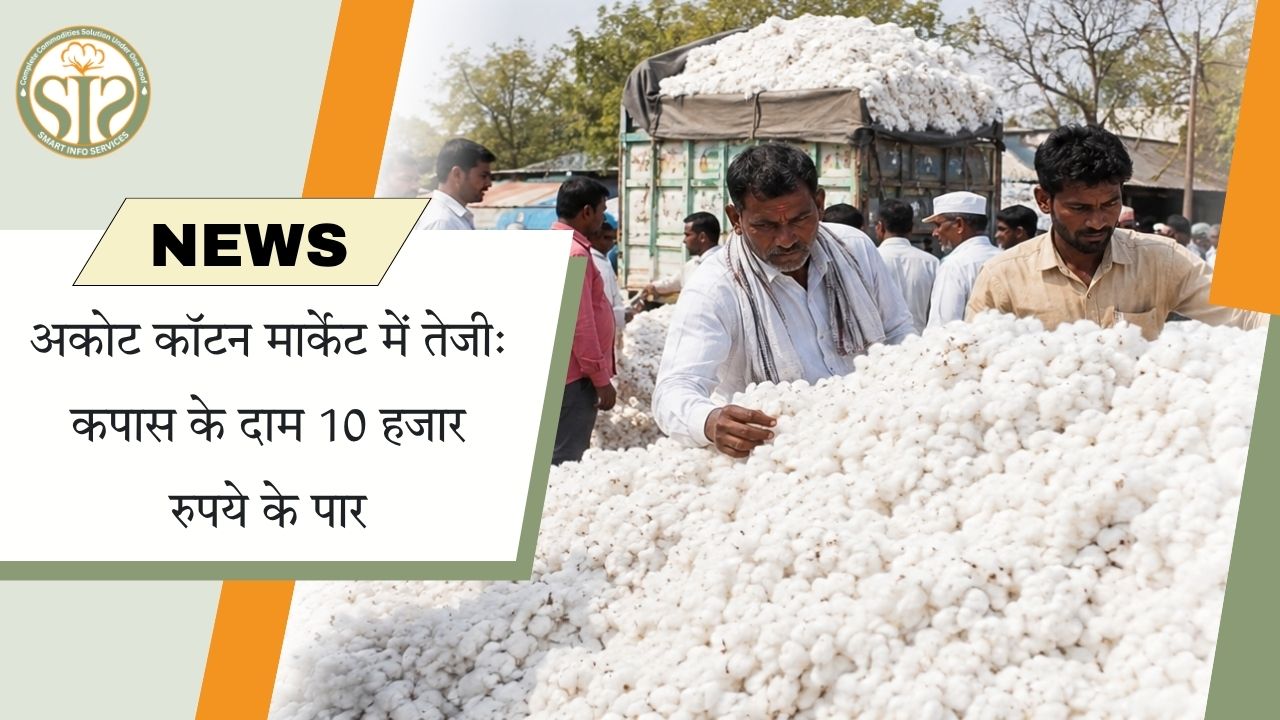
अकोट कॉटन मार्केट में तेजी: कपास के दाम 10 हजार रुपये के पारअकोट की कृषि उपज मंडी समिति (APMC) में कपास के दामों में लगातार तेजी देखने को मिल रही है। बुधवार (6 मई) को कपास का अधिकतम भाव 10,005 रुपये प्रति क्विंटल तक पहुंच गया, जिससे किसानों में उत्साह का माहौल है। मंडी में न्यूनतम भाव 8,550 रुपये प्रति क्विंटल दर्ज किया गया, जबकि प्रतिदिन एक हजार क्विंटल से अधिक कपास की आवक हो रही है।पश्चिमी विदर्भ में उभरती प्रमुख कपास मंडी के रूप में पहचान बना चुके अकोट में इस सीजन की शुरुआत में कॉटन कॉर्पोरेशन ऑफ इंडिया (CCI) ने तीन खरीद केंद्रों के माध्यम से 7.39 लाख क्विंटल से अधिक कपास की खरीद की थी। इसके बाद अप्रैल महीने से निजी व्यापारियों ने भी खरीद शुरू कर दी। अप्रैल से अब तक अकोट मंडी में लगभग 33 हजार क्विंटल कपास की खरीदी-बिक्री हो चुकी है।पिछले कुछ दिनों से कपास के दामों में लगातार बढ़ोतरी हो रही है। सोमवार को जहां अधिकतम भाव 9,500 रुपये प्रति क्विंटल था, वहीं मंगलवार को यह बढ़कर 9,740 रुपये तक पहुंच गया। बुधवार को कपास ने 10 हजार रुपये का आंकड़ा पार कर लिया। बाजार में जारी इस तेजी ने किसानों की उस उम्मीद को मजबूत किया है कि आने वाले दिनों में कपास के दाम और बढ़ सकते हैं।भावों में आई तेजी के चलते किसान अब अपने गोदामों में रखा कपास बाजार में ला रहे हैं। नए सीजन की तैयारियों और नकदी जरूरतों को ध्यान में रखते हुए भी किसान बिक्री कर रहे हैं। विशेष रूप से अच्छी गुणवत्ता वाले कपास की व्यापारियों के बीच अधिक मांग बनी हुई है, जिसके कारण किसानों को बेहतर दाम मिल रहे हैं।अकोट क्षेत्र में बड़ी संख्या में कपास प्रसंस्करण इकाइयां संचालित हैं। इन उद्योगों को लगातार कच्चे माल की आवश्यकता रहती है, जिससे बाजार में कपास की मांग बनी हुई है। इसी वजह से कपास के दामों में सकारात्मक रुख देखने को मिल रहा है। बाजार विशेषज्ञों का मानना है कि यदि मांग इसी तरह बनी रही, तो आने वाले दिनों में कपास के भाव में और तेजी देखने को मिल सकती है।

कपास बाज़ार में जबरदस्त उछाल: सिर्फ़ 8 दिनों में ₹1,000 प्रति क्विंटल की बढ़ोतरीराज्य के कपास बाज़ारों में इन दिनों जबरदस्त तेजी देखने को मिल रही है। पिछले आठ दिनों के भीतर कपास के दामों में लगभग ₹1,000 प्रति क्विंटल की बढ़ोतरी दर्ज की गई है। कई प्रमुख बाज़ार समितियों में कपास को ₹9,950 प्रति क्विंटल तक का उच्चतम भाव मिला, जिसे इस सीज़न का अब तक का रिकॉर्ड स्तर माना जा रहा है। बढ़ती कीमतों ने किसानों के चेहरे पर राहत और उम्मीद की नई चमक ला दी है।कुछ ही दिनों पहले तक कपास औसतन ₹8,000 प्रति क्विंटल बिक रहा था, लेकिन अब अधिकांश मंडियों में इसका भाव ₹9,000 के पार पहुँच चुका है। यवतमाल, रालेगांव और हिंगनघाट जैसे प्रमुख बाज़ारों में व्यापारियों और किसानों के बीच खरीद-बिक्री को लेकर उत्साह का माहौल है। बुधवार को यवतमाल मंडी में कपास का भाव करीब ₹9,100 प्रति क्विंटल रहा, जबकि रालेगांव और हिंगनघाट बाज़ार समितियों में ₹9,950 प्रति क्विंटल तक का सर्वोच्च भाव दर्ज किया गया।विशेषज्ञों के अनुसार, अंतरराष्ट्रीय बाज़ार में आए बदलावों का सीधा असर घरेलू कपास व्यापार पर दिखाई दे रहा है। पॉलिएस्टर फ़ाइबर की बढ़ती कीमतों के कारण सूती धागे और कपास की मांग में तेजी आई है। इसके अलावा कच्चे तेल की ऊँची कीमतें और वैश्विक भू-राजनीतिक तनाव भी कपास बाज़ार को मजबूती प्रदान कर रहे हैं। वैश्विक स्तर पर कपास की कीमत, जो पहले 72 से 74 सेंट प्रति पाउंड थी, अब बढ़कर 90 से 92 सेंट प्रति पाउंड तक पहुँच गई है। इसी कारण कपास की एक खांडी की कीमत लगभग ₹45,000 से बढ़कर ₹62,000 तक जा पहुँची है।हालाँकि बाजार में तेजी बनी हुई है, लेकिन कपास की आवक अभी भी सीमित है। अधिकांश किसान पहले ही अपना स्टॉक बेच चुके हैं। उदाहरण के तौर पर, बुधवार को रालेगांव मंडी में केवल 250 क्विंटल कपास की आवक दर्ज की गई। जानकारों का मानना है कि यदि आने वाले दिनों में बाजार में आवक बढ़ती है, तो कपास की कीमतों में और मजबूती देखने को मिल सकती है।और पढ़ें:-

गुरुवार को भारतीय रुपया 50 पैसे की बढ़त के साथ 94.25 प्रति डॉलर पर बंद हुआ, जबकि सुबह यह 94.75 पर था।बाजार बंद होने पर, सेंसेक्स 114 अंक या 0.15 प्रतिशत की गिरावट के साथ 77,844.52 पर रहा, और निफ्टी 4.30 अंक या 0.02 प्रतिशत की गिरावट के साथ 24,326.65 पर रहा।और पढ़ें:-

Rising costs and global challenges are putting pressure on Gujarat's textile industry.Gujarat's textile industry—widely considered the backbone of India's man-made fiber (MMF) sector—is facing one of the most severe financial downturns in its recent history, with Surat, the textile hub of South Gujarat, at the epicenter of the crisis.A combination of geopolitical tensions in West Asia, rising crude oil prices, increasing yarn costs, declining global demand, and increasing trade pressures have pushed the sector into a deep crisis. According to industry estimates, losses of approximately ₹2,500-₹3,000 crore have been incurred in the last 60 days, and many weaving units are now operating at only about half their installed capacity.Surat, one of India's largest textile production centers, is currently facing a "severe crisis" of "increased costs and weak market demand," as described by industry stakeholders. What began as an external shock linked to geopolitical instability has rapidly transformed into a structural strain on the region's textile economy, severely impacting the profits of manufacturers, traders, and related workers.At the root of this crisis is the sharp rise in crude oil prices, which has directly impacted the MMF value chain. Since most synthetic textile production relies heavily on petroleum-derived raw materials, high crude oil rates have significantly increased yarn prices. Despite the significant increase in input costs, market fabric prices have not adjusted proportionately, leading to a widening gap between production costs and realization.According to Ashok Jirawala, President of the Gujarat Weavers Association (FOGWA), many manufacturers are being forced to sell below production costs to continue operations. He explained that the imbalance between rising input costs and stable market prices has become a persistent burden incurring daily losses across the region.READ MORE :- Tirupur Garment Industry Urges Centre to Scrap Cotton Import Duty

Garment Exporters and Manufacturers from Tirupur Demand Removal of Import Duty on CottonA delegation of garment manufacturers and exporters from Tirupur met with the Union Textiles, Agriculture, and Commerce Ministers in New Delhi on Wednesday to demand the removal of the current 11% import duty on cotton.A. Sakthivel, Chairman of the Apparel Export Promotion Council, led the delegation. The delegation met with Union Commerce and Industry Minister Piyush Goyal, Union Agriculture and Farmers Welfare Minister Shivraj Singh Chouhan, and Union Textiles Minister Giriraj Singh, as well as Union Minister of State for Information and Broadcasting L. Murugan.The delegation highlighted the challenges faced by the apparel and textile industry due to high cotton prices and rising input costs. India has recently signed several free trade agreements (FTAs), creating significant opportunities for increased textile and apparel exports. However, while other apparel exporting countries are able to obtain cotton at internationally competitive prices, Indian manufacturers face high raw material prices due to the current import duty structure.Reduction in import duty on cotton is essential to help the Indian apparel industry gain more trade opportunities from FTA partner countries and enhance India's competitiveness in the global market.The textile industry's cotton requirement for the current year is estimated to be approximately 337 lakh bales, while cotton arrivals for the 2025-2026 season are projected to be only 292.15 lakh bales, resulting in a demand-supply gap of approximately 45 lakh bales. The delegation informed the ministers that this shortage is expected to increase pressure on spinning mills and the downstream textile industry due to rising input costs and limited availability of quality raw materials.READ MORE :-The rupee opened at 95.73 with a fall of 02 paise

The rupee fell by 02 paise to open at 95.73 USDOn Thursday, the Indian rupee opened 02 paise lower at 95.73 against the dollar, while it had closed at 95.71 on Wednesday.Read more :- The rupee closed at 95.71 against the dollar, down 10 paise.

On Wednesday, after opening at 95.61 in morning trade, the Indian rupee fell by 10 paise to close at 95.71 against the US dollar.At the close, the Sensex ended 49.74 points, or 0.07 percent, higher at 74,608.98, while the Nifty rose 33.05 points, or 0.14 percent, to close at 23,412.60.Read More :- The rupee opened 02 paise higher at 95.61

The Rupee opened 2 paise higher at 95.61 against the USD.On Wednesday, the Indian Rupee opened at 95.61 against the US Dollar, gaining 2 paise, whereas it had closed at 95.63 on Tuesday.Read More:- The Rupee closed 13 paise lower against the Dollar at 95.63

On Tuesday, after opening at 95.50 in morning trade, the Indian Rupee fell by 13 paise to close at 95.63 against the US Dollar.At the close, the Sensex stood at 74,559.24, down 1,456.04 points or 1.92 percent, while the Nifty was at 23,379.55, down 436.30 points or 1.83 percent. Market breadth remained sharply negative, with 3,219 shares declining against 875 advances.READ MORE :- Rupee Opens at 95.50 Down 19 Paise

Rupee Opens at 95.50 Against the Dollar, Down 19 PaiseOn Tuesday, the Indian Rupee opened at 95.50 against the US Dollar a decline of 19 paise whereas it had closed at 95.31 on Monday.READ MORE :- The rupee ended 43 paise lower at 95.31 against the dollar.

On Monday, the Indian Rupee declined by 43 paise to close at 95.31 against the US dollar, after opening at 94.88 in morning trade.Stock market crashes today: Sensex tumbles over 1,312 points, Nifty dips 360.30 points to 23,815.85 amid heavy selling in realty and consumer stocksread more :- Cotton Productivity Mission: Proper Implementation, Better Results

Cotton Productivity Mission: The Key to Success Lies in Effective ImplementationIndia’s ₹5,659 crore Cotton Productivity Mission has been launched at a time when the country’s cotton economy is grappling with severe agricultural and industrial challenges. Steadily declining yields, rising pest infestations, and shrinking acreage have weakened a crop that was once considered the backbone of rural income and India’s textile industry. In this context, this initiative by the Centre is not merely a plan to boost production, but also an endeavor to restore the confidence of farmers who have gradually drifted away from cotton cultivation. For states like Punjab, Haryana, and Rajasthan, this mission holds particular significance.In the Malwa region of Punjab, cotton was once a reliable cash crop. However, recurrent attacks by whiteflies and pink bollworms, weather uncertainties, and rising cultivation costs have driven farmers back toward paddy cultivation—a practice that is already exacerbating the groundwater crisis. The shrinking acreage under cotton in North India clearly reflects the fact that farmers today are struggling amidst environmental instability and economic insecurity.The mission’s emphasis on climate-resilient seed varieties, high-density planting techniques, modern ginning infrastructure, and extra-long staple cotton is undoubtedly a positive step. If India aspires to become a leader in the global textile industry, it must reduce its dependence on premium-quality imported cotton. The comprehensive strategy—spanning "Farm to Fibre, Fashion, and Foreign Markets"—acknowledges the fact that agriculture and manufacturing are deeply intertwined.However, the true success of this mission will hinge upon its effective implementation at the grassroots level. Farmers require timely access to quality seeds, affordable credit, scientific pest management, and a crop insurance mechanism that offers genuine protection rather than getting bogged down in bureaucratic formalities. If farmers are to be drawn back to cotton cultivation, restoring trust in the procurement mechanism will be equally essential. In states grappling with water crises—such as Punjab and Haryana—the resurgence of cotton cultivation could prove instrumental in reducing dependence on paddy and conserving groundwater. However, if this mission, too, remains confined to mere paper plans and sluggish coordination, the country will once again find itself trapped in the very cycle of despair that previously compelled farmers to abandon cotton farming.read more :- Tamil Nadu: Farmers Concerned Over Continuous Rain in Nagapattinam District
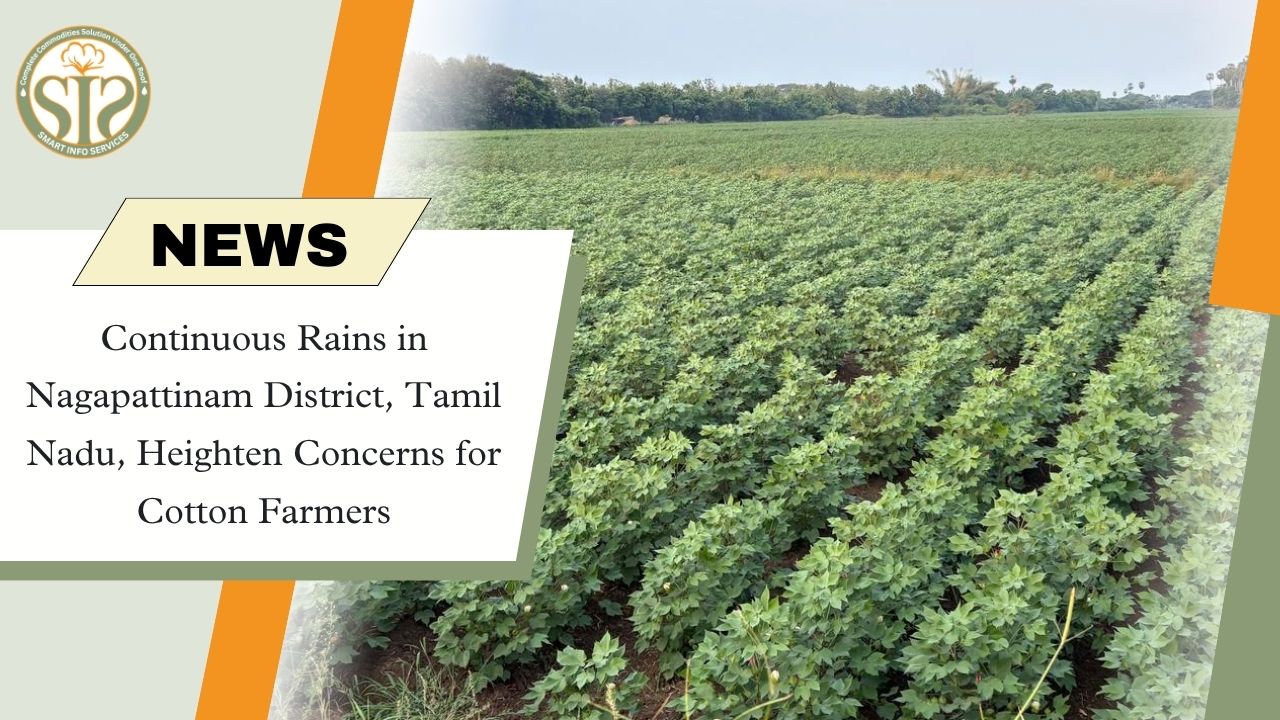
Continuous Rains in Nagapattinam District, Tamil Nadu, Heighten Concerns for Cotton FarmersContinuous summer rains over the past three days in Nagapattinam district, Tamil Nadu, have adversely affected cotton cultivation in several areas of the Thirumarugal block. With rainwater inundating their fields, farmers are increasingly apprehensive about potential crop damage.According to reports, incessant rain has been falling since midnight in Thirumarugal, Alathur, Eravancheri, Marungur, Neikuppai, Thirukannapuram, Ambal, Polagam, and surrounding regions. Heavy summer showers have been recorded across various parts of the district over the last three days.Farmers in the Thirumarugal block had undertaken extensive cotton sowing as a summer crop. The crop is currently in the crucial flowering and boll formation stage. However, many farmers have not yet been able to complete the task of earthing up (mounding soil around the plants) in their fields. Due to the continuous rainfall, water has accumulated in numerous fields, thereby hindering the growth of the cotton plants.Cotton farmer R. Shiva stated, "Due to the rains, the flowers on the cotton plants are shedding, which could lead to a drastic decline in yield."Another farmer, P. Kathir, warned that if water remains stagnant in the fields for an extended period, the plant roots could rot, potentially causing severe financial losses for the farmers. He further cautioned that the extent of the damage could escalate if the rains persist in this manner.read more :- CCI Hikes Cotton Candy Price by ₹4,100; Auction Crosses 5.85 Lakh Bales
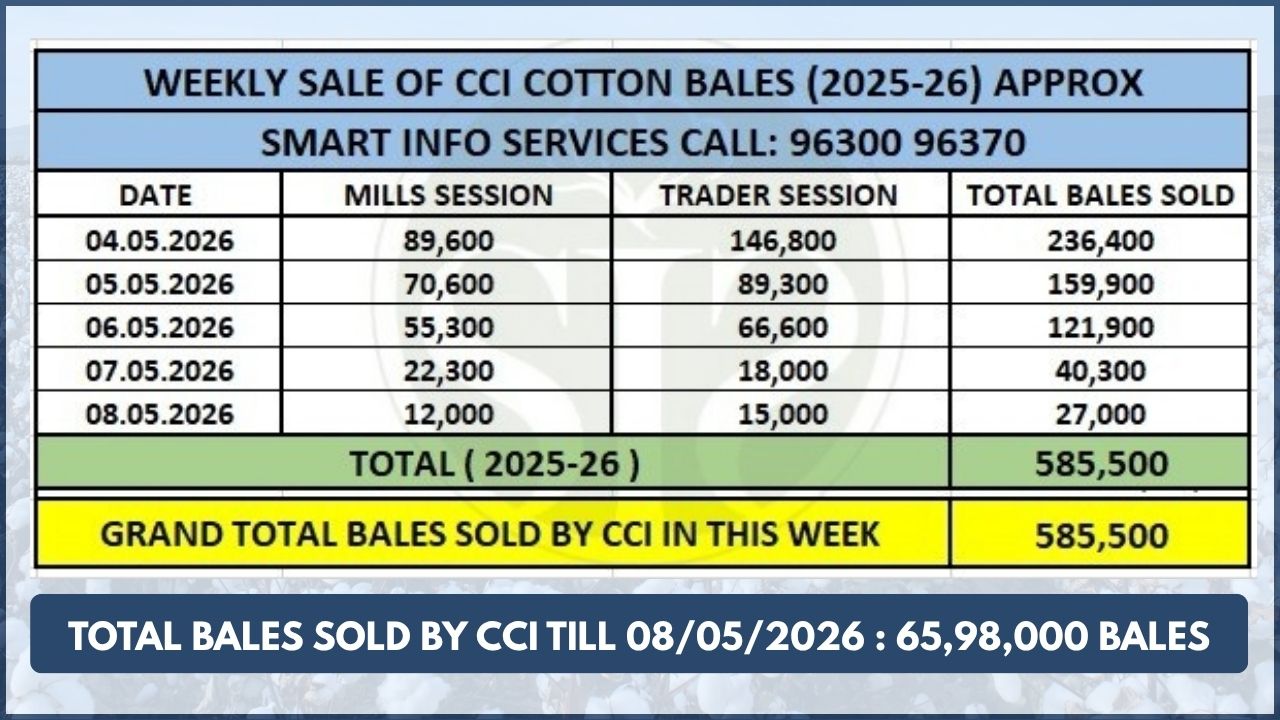
CCI Raises Cotton Candy Prices by ₹4,100 per Candy; Weekly Auction Sales Cross 5.85 Lakh BalesThe Cotton Corporation of India (CCI) raised its cotton prices by ₹4,100 per candy during the week from May 04 to May 08 2026, the auctions witnessed strong participation from mills and cotton traders, resulting weekly sales of about 5,85,500 bales from the 2025–26 season.Day-wise Auction PerformanceMay 04, 2026 (Monday):The week started on a strong note, recording the highest single-day sales of 2,36,400 bales. Mills purchased 89,600 bales, while traders led the buying activity with 1,46,800 bales.May 05, 2026 (Tuesday):Auction activity moderated slightly, with total sales reaching 1,59,900 bales. Mills bought 70,600 bales, whereas traders purchased 89,300 bales.May 06, 2026 (Wednesday):CCI reported total sales of 1,21,900 bales during the day. Mills accounted for 55,300 bales, while traders purchased 66,600 bales.May 07, 2026 (Thursday):Sales volume declined further, with 40,300 bales sold during the session. Mills purchased 22,300 bales, while traders bought 18,000 bales.May 08, 2026 (Friday):The week ended with total sales of 27,000 bales. Mills purchased 12,000 bales, while traders remained active with purchases of 15,000 bales.Cumulative Sales UpdateCCI’s total sales have reached:2025–26 season: 65,98,000 bales

Important Update for Cotton Farmers: Government Tightens Grip on Sale and Sowing of Bt Seeds—Wait Required for Now!Jalgaon: In view of the upcoming 2026 Kharif season, the Maharashtra government has taken stringent measures to curb the growing threat of the Pink Bollworm in cotton crops. The State Department of Agriculture, Animal Husbandry, Dairy Development, and Fisheries has issued directives implementing a new schedule regarding the sale, supply, and sowing of Bt cotton seeds.According to a government circular issued on May 8, 2026, all agricultural agencies and officials across the state have been instructed to ensure strict compliance with these regulations. The directives, sent by the Ministry to the office of the Agriculture Commissioner (Pune), clearly state that premature sowing of cotton fosters Pink Bollworm outbreaks, thereby having a severe adverse impact on crop production.The government maintains that early sowing creates an environment conducive to the pest's life cycle, potentially leading to massive crop damage. Over the past few years, farmers in several major cotton-producing districts of the state—including Jalgaon—have suffered extensive losses due to the Pink Bollworm infestation. Drawing upon this experience, the government has significantly heightened its vigilance this time around.The government order appeals to farmers to undertake cotton sowing only during the specific period recommended by the Department of Agriculture. Furthermore, district and taluka-level agricultural officials have been directed to conduct awareness campaigns to educate farmers on the importance of using certified and authorized Bt seeds.Additionally, the administration has been instructed to monitor the sale of illegal and unauthorized seeds and to take punitive action against those found violating the regulations.read more :- Rupee Opens at 94.88 Down 40 Paise

Rupee Opens at 94.88 Against the USD Down 40 PaiseOn Monday the Indian Rupee opened at 94.88 against the US Dollar a decline of 40 paise compared to its closing level of 94.48 on Friday.Read More:- Demand to completely eliminate import duty on cotton intensifies.

‘Demand to Completely Remove Import Duty on Cotton’A new study released by the Confederation of Indian Textile Industry (CITI) calls for the complete elimination of the 11% import duty currently levied on cotton.Titled "Economic Analysis of Cotton Supply, Pricing, and Trade Policy in India," the report states that the import duty is adversely affecting the competitiveness of the country's textile and garment sectors. According to the report, it is crucial for the industry to have easy and reliable access to imported cotton during periods when domestic production is low.The study, jointly prepared by the International Cotton Advisory Committee (ICAC) and Gherzi, notes that the import duty on cotton was temporarily suspended from August to December 2025 but was subsequently reimposed effective January 1, 2026.The report points out that since the duty was first implemented in 2021, temporary relief has been granted twice; however, the industry is now demanding its permanent removal. The industry argues that India's key competitor nations—Sri Lanka, Bangladesh, Vietnam, and Pakistan—do not impose such restrictions on cotton imports.The study also suggests establishing a Strategic Reserve for cotton, modeled after China's approach. According to the report, textile and apparel exports declined by 2.2% in the fiscal year 2025-26, falling to $35.79 billion.Speaking at a media briefing held in Coimbatore on Thursday, CITI Chairman Ashwin Chandran stated that the Gherzi-ICAC report presents a practical and detailed roadmap for the textile and apparel industry to achieve its target of $350 billion by 2030.Meanwhile, K. Selvaraju, Secretary General of the Southern India Mills Association (SIMA), noted that the area under cotton cultivation has shrunk by approximately 20% over the past three years, and productivity levels in India remain significantly low. He stated that to achieve the 2030 target, the industry would need to grow at an annual rate of approximately 15%. However, under current circumstances, this appears to be a challenging task.He also noted that freight and logistics costs have risen due to the ongoing conflict in West Asia. Furthermore, shortages of gas, along with rising prices of oil-based raw materials, dyes, and chemicals, have placed additional pressure on the textile and garment industry.read more :- The Rupee higher by 10 paise to close at 94.48 per dollar.

On Friday, the Indian Rupee higher by 10 paise to close at 94.48 per dollar, while it had opened at 94.58 in the morning.At close, the Sensex was down 516.33 points or 0.66 percent at 77,328.19, and the Nifty was down 150.50 points or 0.62 percent at 24,176.15. About 1988 shares advanced, 2048 shares declined, and 170 shares unchanged.
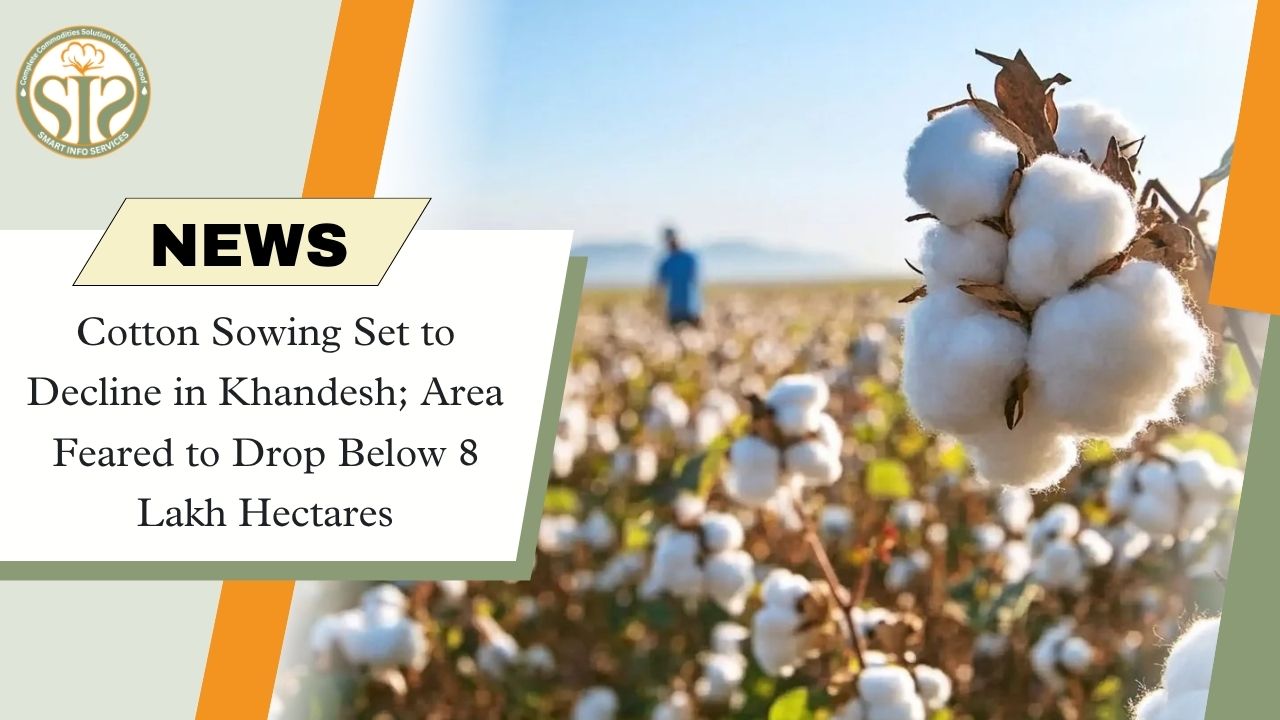
Cotton Sowing Set to Decline in Khandesh; Area Feared to Drop Below 8 Lakh HectaresFor the second consecutive year, the area under cotton cultivation in the Khandesh region is expected to witness a decline. Estimates suggest that the total cotton sowing area in the region this year could remain below 8 lakh hectares. Jalgaon district is projected to account for the largest share of this total, with cotton cultivation estimated to cover approximately 4.75 lakh hectares. As the district with the largest cotton-growing area in the state, Jalgaon is expected to retain its leading position this year as well.However, alongside Jalgaon, the districts of Dhule and Nandurbar are also observing a continuous decline in the area dedicated to cotton cultivation. In Jalgaon district, the cotton cultivation area stood at 5.67 lakh hectares in 2022; this figure dropped to 5.54 lakh hectares in 2023 and further to 5.11 lakh hectares in 2024. During the previous season (2023-24), this figure remained limited to approximately 4.80 lakh hectares.Across the entire Khandesh region, the area under cotton cultivation was 8.70 lakh hectares in 2022. This figure declined to 8.50 lakh hectares in 2023 and 8.30 lakh hectares in 2024. This year, cotton sowing is estimated to cover approximately 1.60 lakh hectares in Dhule district and around 80,000 hectares in Nandurbar district. The most significant decline is being recorded in Dhule district.Cotton Cultivation Becomes a Loss-Making VentureCotton cultivation is proving to be increasingly unprofitable for farmers. Issues such as the growing infestation of the Pink Bollworm, a shortage of agricultural labor, and low market prices for cotton have heightened farmers' concerns. Consequently, many farmers in drought-prone areas are now shifting away from cotton and turning towards soybean cultivation instead.Meanwhile, farmers who possess adequate irrigation facilities are prioritizing cash crops such as papaya and banana. Some farmers have also decided to reduce the area they had previously allocated for cotton cultivation this year. Jalgaon Still Ranks Number One in the StateFor several years now, the Jalgaon district has maintained the top position in Maharashtra in terms of cotton cultivation. Even though the area under cotton cultivation in the district is likely to decrease this year, Jalgaon is expected to remain the district with the highest cotton sowing area in the state.Jalgaon is followed by the Yavatmal district, where cotton is sown annually across an area of approximately 4.5 lakh hectares—or slightly less.Read More :- The Rupee opened at 94.58 recording a decline of 33 paise.

The Rupee opened at 94.58 against the USD, down by 33 paise.On Friday, the Indian Rupee opened at 94.58 against the Dollar a decline of 33 paise whereas it had closed at 94.25 on Thursday.Read more:- Surge in Akot Cotton Market: Cotton Prices Cross ₹10,000 Mark
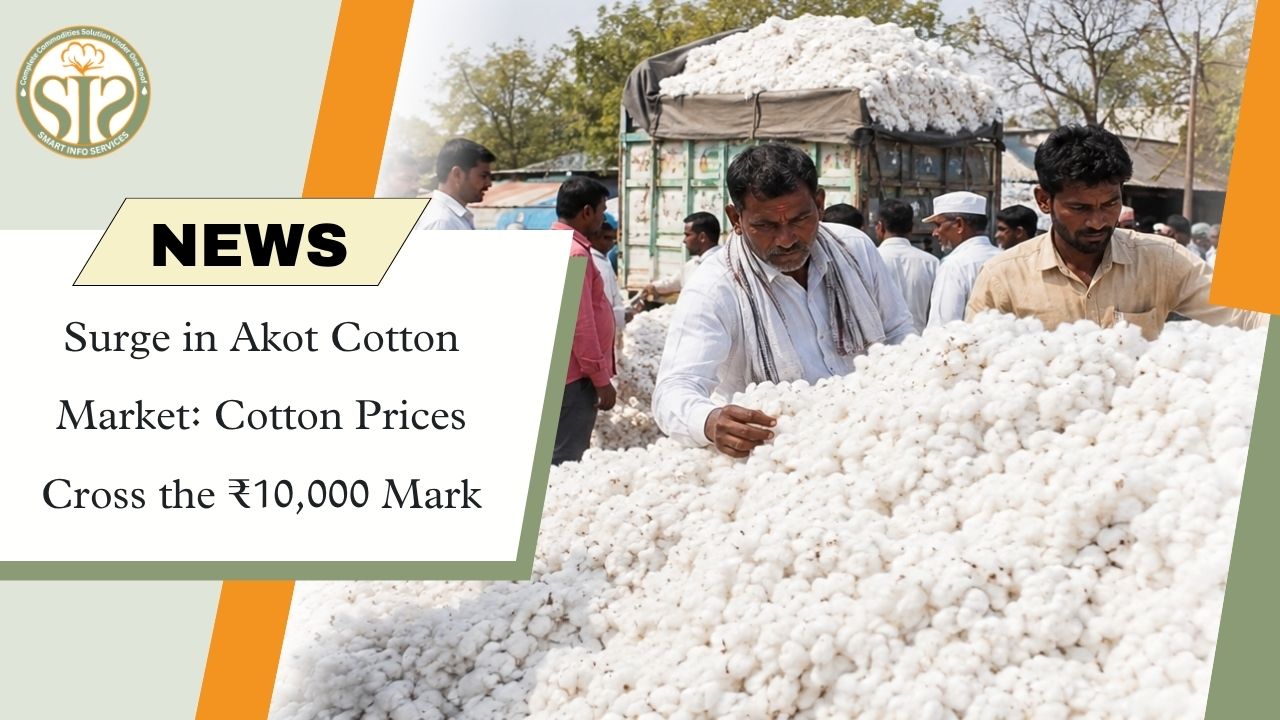
Surge in Akot Cotton Market: Cotton Prices Cross the ₹10,000 MarkCotton prices at the Akot Agricultural Produce Market Committee (APMC) have been witnessing a continuous upward trend. On Wednesday (May 6), the maximum price for cotton reached ₹10,005 per quintal, creating an atmosphere of excitement among farmers. The minimum price recorded at the market stood at ₹8,550 per quintal, while daily arrivals of cotton have exceeded 1,000 quintals.Akot, which has established itself as a prominent emerging cotton market in Western Vidarbha, saw the Cotton Corporation of India (CCI) procure over 7.39 lakh quintals of cotton through three procurement centers at the beginning of this season. Subsequently, starting in April, private traders also commenced their procurement operations. Since April, approximately 33,000 quintals of cotton have been traded at the Akot market.Cotton prices have been rising steadily over the past few days. While the maximum price stood at ₹9,500 per quintal on Monday, it rose to ₹9,740 on Tuesday. On Wednesday, cotton prices crossed the ₹10,000 mark. This sustained upward momentum in the market has bolstered farmers' hopes that cotton prices may rise even further in the coming days.Driven by this surge in prices, farmers are now bringing the cotton stored in their warehouses to the market. Farmers are also selling their produce with an eye on preparations for the new season and their immediate cash requirements. In particular, high-quality cotton remains in strong demand among traders, enabling farmers to secure better prices.A significant number of cotton processing units operate within the Akot region. These industries require a continuous supply of raw material, thereby sustaining the demand for cotton in the market. It is for this reason that a positive trend is being observed in cotton prices. Market experts believe that if this level of demand persists, cotton prices could witness further appreciation in the days ahead.

The Indian rupee higher 50 paise to close at 94.25 per dollar on Thursday, compared to 94.75 in the morning.At close, the Sensex was down 114 points or 0.15 percent at 77,844.52, and the Nifty was down 4.30 points or 0.02 percent at 24,326.65.read more :- Sharp Surge in Cotton Prices: A Jump of ₹1,000 Per Quintal in 8 Days

Massive Surge in the Cotton Market: A ₹1,000 Per Quintal Increase in Just 8 DaysThe state's cotton markets are currently witnessing a tremendous surge. Within the last eight days, cotton prices have recorded an increase of approximately ₹1,000 per quintal. In several major market committees, cotton fetched a peak price of up to ₹9,950 per quintal—a figure being hailed as the highest level recorded so far this season. These rising prices have brought a renewed sense of relief and hope to the faces of farmers.Until just a few days ago, cotton was trading at an average of ₹8,000 per quintal; however, prices in most mandis (markets) have now crossed the ₹9,000 mark. In key markets such as Yavatmal, Ralegaon, and Hinganghat, an atmosphere of enthusiasm prevails among traders and farmers regarding buying and selling activities. On Wednesday, the price of cotton in the Yavatmal mandi hovered around ₹9,100 per quintal, while the Ralegaon and Hinganghat market committees recorded a peak price of up to ₹9,950 per quintal.According to experts, changes in the international market are having a direct impact on the domestic cotton trade. Rising prices of polyester fiber have fueled a surge in the demand for cotton yarn and raw cotton. Furthermore, high crude oil prices and global geopolitical tensions are also contributing to the strengthening of the cotton market. Globally, cotton prices—which previously ranged between 72 and 74 cents per pound—have now climbed to between 90 and 92 cents per pound. Consequently, the price of one khandi (a traditional unit of weight) of cotton has risen from approximately ₹45,000 to reach ₹62,000.Although the bullish trend persists in the market, the arrival of cotton stock remains limited. Most farmers have already sold off their stocks. For instance, on Wednesday, the Ralegaon mandi recorded an inflow of only 250 quintals of cotton. Experts believe that if market arrivals increase in the coming days, cotton prices could witness further strengthening.read more :- Agricultural Technology: A Technique for Baling Raw Cotton to Prevent Impurities

વધતા ખર્ચ અને વૈશ્વિક પડકારો ગુજરાતના કાપડ ઉદ્યોગ પર દબાણ લાવી રહ્યા છે.ગુજરાતનો કાપડ ઉદ્યોગ - જેને ભારતના માનવસર્જિત ફાઇબર (MMF) ક્ષેત્રની કરોડરજ્જુ માનવામાં આવે છે - તેના તાજેતરના ઇતિહાસમાં સૌથી ગંભીર નાણાકીય મંદીનો સામનો કરી રહ્યો છે, જેમાં દક્ષિણ ગુજરાતનું કાપડ કેન્દ્ર સુરત, આ કટોકટીનું કેન્દ્ર છે.પશ્ચિમ એશિયામાં ભૂ-રાજકીય તણાવ, ક્રૂડ ઓઇલના વધતા ભાવ, યાર્નના ખર્ચમાં વધારો, વૈશ્વિક માંગમાં ઘટાડો અને વધતા વેપાર દબાણના સંયોજને આ ક્ષેત્રને ઊંડા સંકટમાં ધકેલી દીધું છે. ઉદ્યોગના અંદાજ મુજબ, છેલ્લા 60 દિવસમાં આશરે ₹2,500-₹3,000 કરોડનું નુકસાન થયું છે, અને ઘણા વણાટ એકમો હવે તેમની સ્થાપિત ક્ષમતાના લગભગ અડધા ભાગ પર કાર્યરત છે.ભારતના સૌથી મોટા કાપડ ઉત્પાદન કેન્દ્રોમાંનું એક, સુરત હાલમાં ઉદ્યોગ હિસ્સેદારો દ્વારા વર્ણવ્યા મુજબ "વધેલા ખર્ચ અને નબળી બજાર માંગ" ના "ગંભીર સંકટ"નો સામનો કરી રહ્યું છે. ભૂરાજકીય અસ્થિરતા સાથે જોડાયેલા બાહ્ય આંચકા તરીકે જે શરૂ થયું તે ઝડપથી પ્રદેશના કાપડ અર્થતંત્ર પર માળખાકીય તાણમાં પરિવર્તિત થયું છે, જેનાથી ઉત્પાદકો, વેપારીઓ અને સંબંધિત કામદારોના નફા પર ગંભીર અસર પડી છે.આ કટોકટીના મૂળમાં ક્રૂડ ઓઇલના ભાવમાં તીવ્ર વધારો છે, જેની સીધી અસર MMF મૂલ્ય શૃંખલા પર પડી છે. મોટાભાગના કૃત્રિમ કાપડનું ઉત્પાદન પેટ્રોલિયમમાંથી મેળવેલા કાચા માલ પર ભારે આધાર રાખે છે, તેથી ક્રૂડ ઓઇલના ઊંચા દરોએ યાર્નના ભાવમાં નોંધપાત્ર વધારો કર્યો છે. ઇનપુટ ખર્ચમાં નોંધપાત્ર વધારો થયો હોવા છતાં, બજારના કાપડના ભાવ પ્રમાણસર ગોઠવાયા નથી, જેના કારણે ઉત્પાદન ખર્ચ અને પ્રાપ્તિ વચ્ચેનો તફાવત વધ્યો છે.ગુજરાત વીવર્સ એસોસિએશન (FOGWA) ના પ્રમુખ અશોક જીરાવાલાના મતે, ઘણા ઉત્પાદકોને કામગીરી ચાલુ રાખવા માટે ઉત્પાદન ખર્ચથી ઓછા ભાવે વેચાણ કરવાની ફરજ પડી રહી છે. તેમણે સમજાવ્યું કે વધતા ઇનપુટ ખર્ચ અને સ્થિર બજાર ભાવ વચ્ચેનું અસંતુલન સમગ્ર પ્રદેશમાં દૈનિક નુકસાનનો સતત બોજ બની ગયું છે.વધુ વાંચો :-તિરુપુર ગાર્મેન્ટ ઉદ્યોગે કેન્દ્રને કપાસની આયાત ડ્યુટી રદ કરવા વિનંતી કરી
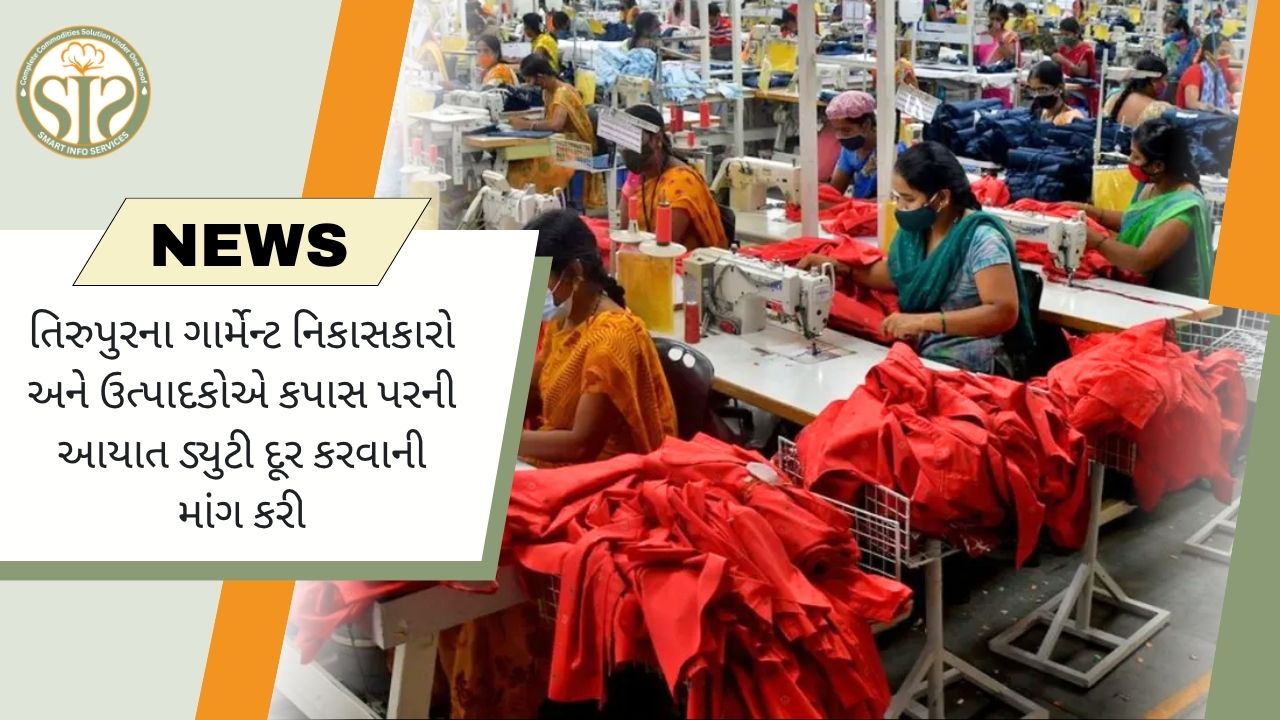
તિરુપુરના ગાર્મેન્ટ નિકાસકારો અને ઉત્પાદકોએ કપાસ પરની આયાત ડ્યુટી દૂર કરવાની માંગ કરીતિરુપુરના ગાર્મેન્ટ ઉત્પાદકો અને નિકાસકારોના એક પ્રતિનિધિમંડળે બુધવારે નવી દિલ્હીમાં કેન્દ્રીય કાપડ, કૃષિ અને વાણિજ્ય મંત્રીઓને મળ્યા અને કપાસ પરની વર્તમાન 11% આયાત ડ્યુટી દૂર કરવાની માંગ કરી.એપેરલ એક્સપોર્ટ પ્રમોશન કાઉન્સિલના અધ્યક્ષ એ. શક્તિવેલે પ્રતિનિધિમંડળનું નેતૃત્વ કર્યું. પ્રતિનિધિમંડળે કેન્દ્રીય વાણિજ્ય અને ઉદ્યોગ મંત્રી પિયુષ ગોયલ, કેન્દ્રીય કૃષિ અને ખેડૂત કલ્યાણ મંત્રી શિવરાજ સિંહ ચૌહાણ, અને કેન્દ્રીય કાપડ મંત્રી ગિરિરાજ સિંહ, તેમજ કેન્દ્રીય માહિતી અને પ્રસારણ રાજ્ય મંત્રી એલ. મુરુગનને મળ્યા.પ્રતિનિધિમંડળે કપાસના ઊંચા ભાવ અને વધતા ઇનપુટ ખર્ચને કારણે વસ્ત્ર અને કાપડ ઉદ્યોગ સામેના પડકારો પર પ્રકાશ પાડ્યો. ભારતે તાજેતરમાં અનેક મુક્ત વેપાર કરારો (FTA) પર હસ્તાક્ષર કર્યા છે, જેનાથી કાપડ અને વસ્ત્રોની નિકાસમાં વધારો થવા માટે નોંધપાત્ર તકો ઉભી થઈ છે. જો કે, જ્યારે અન્ય વસ્ત્ર નિકાસ કરનારા દેશો આંતરરાષ્ટ્રીય સ્તરે સ્પર્ધાત્મક ભાવે કપાસ મેળવી શકે છે, ત્યારે ભારતીય ઉત્પાદકોને વર્તમાન આયાત ડ્યુટી માળખાને કારણે કાચા માલના ઊંચા ભાવનો સામનો કરવો પડે છે.ભારતીય વસ્ત્ર ઉદ્યોગને FTA ભાગીદાર દેશો પાસેથી વધુ વેપાર તકો મેળવવા અને વૈશ્વિક બજારમાં ભારતની સ્પર્ધાત્મકતા વધારવા માટે કપાસ પરની આયાત ડ્યુટીમાં ઘટાડો કરવો જરૂરી છે.ચાલુ વર્ષ માટે કાપડ ઉદ્યોગની કપાસની જરૂરિયાત આશરે 337 લાખ ગાંસડી હોવાનો અંદાજ છે, જ્યારે 2025-2026 સીઝન માટે કપાસની આવક માત્ર 292.15 લાખ ગાંસડી રહેવાનો અંદાજ છે, જેના પરિણામે માંગ-પુરવઠામાં આશરે 45 લાખ ગાંસડીનો તફાવત છે. પ્રતિનિધિમંડળે મંત્રીઓને માહિતી આપી હતી કે આ અછતથી સ્પિનિંગ મિલો અને ડાઉનસ્ટ્રીમ ટેક્સટાઇલ ઉદ્યોગ પર દબાણ વધવાની ધારણા છે કારણ કે ઇનપુટ ખર્ચમાં વધારો અને ગુણવત્તાયુક્ત કાચા માલની મર્યાદિત ઉપલબ્ધતા છે.વધુ વાંચો :- રૂપિયો 02 પૈસાની ગિકર સાથે 95.73 ખુલ્લું કરો

રૂપિયો 02 પૈસા गिरकर 95.73 USD પર ખુલ્લું કરોगुरुवार को भारतीय रुपया डॉलर के मुकाबले 02 पैसे गिरकर 95.73 પર ખુલ્લેઆમ बुधवार को 95.71 પર બંધ થયું હતું.વધુ વાંચો :- ડોલર સામે રૂપિયો 10 પૈસા ઘટીને 95.71 પર બંધ થયો.

બુધવારે, ભારતીય રૂપિયો સવારે 95.61 પર ખુલ્યા પછી, અમેરિકન ડોલર સામે 10 પૈસા ઘટીને 95.71 પર બંધ થયો.બજાર બંધ થતાં, સેન્સેક્સ ૪૯.૭૪ પોઈન્ટ અથવા ૦.૦૭ ટકા વધીને ૭૪,૬૦૮.૯૮ પર બંધ થયો, જ્યારે નિફ્ટી ૩૩.૦૫ પોઈન્ટ અથવા ૦.૧૪ ટકા વધીને ૨૩,૪૧૨.૬૦ પર બંધ થયો.વધુ વાંચો :- રૂપિયો ૦૨ પૈસા વધીને ૯૫.૬૧ યુએસડી પર ખુલ્યો.

રૂપિયો 0.2 પૈસા વધીને 95.61 USD પર ખુલ્યો.બુધવારે, ભારતીય રૂપિયો ડોલર સામે 0.2 પૈસા વધીને 95.61 પર ખુલ્યો, જે મંગળવારે 95.63 ના ઉચ્ચતમ સ્તર પર બંધ થયો હતો.વધુ વાંચો:- ડોલર સામે રૂપિયો ૧૩ પૈસા ઘટીને ૯૫.૬૩ પર બંધ થયો.

મંગળવારે, સવારના કારોબારમાં ૯૫.૫૦ પર ખુલ્યા બાદ, ભારતીય રૂપિયો અમેરિકન ડોલર સામે ૧૩ પૈસા ઘટીને ૯૫.૬૩ પર બંધ થયો.બંધ સમયે, સેન્સેક્સ ૧,૪૫૬.૦૪ પોઈન્ટ અથવા ૧.૯૨ ટકા ઘટીને ૭૪,૫૫૯.૨૪ પર બંધ થયો હતો, જ્યારે નિફ્ટી ૪૩૬.૩૦ પોઈન્ટ અથવા ૧.૮૩ ટકા ઘટીને ૨૩,૩૭૯.૫૫ પર બંધ થયો હતો. બજારનો માહોલ તીવ્ર નકારાત્મક બન્યો હતો, જેમાં ૩,૨૧૯ શેર ઘટીને ૮૭૫ શેર વધ્યા હતા.વધુ વાંચો :- રૂપિયો ૯૫.૫૦ પર ખુલ્યો, ૧૯ પૈસા ઘટ્યો

ડોલર સામે રૂપિયો ૯૫.૫૦ પર ખુલ્યો, ૧૯ પૈસા ઘટ્યોમંગળવારે, ભારતીય રૂપિયો યુએસ ડોલર સામે ૯૫.૫૦ પર ખુલ્યો ૧૯ પૈસા ઘટ્યો જ્યારે સોમવારે તે ૯૫.૩૧ પર બંધ થયો હતો.વધુ વાંચો :- તમારા સામે રૂપિયો 43 તમને 95.3 પર બંધ થયો.

સોમવારે, ભારતીય રૂપિયો 43 પૈસા ઘટીને યુએસ ડોલર સામે 95.31 પર બંધ થયો, જે સવારના કારોબારમાં 94.88 પર ખુલ્યો હતો.આજે શેરબજારમાં કડાકો: રિયલ્ટી અને ગ્રાહક શેરોમાં ભારે વેચવાલી વચ્ચે સેન્સેક્સ 1,312 પોઈન્ટથી વધુ ગગડ્યો, નિફ્ટી 360.30 પોઈન્ટ ઘટીને 23,815.85 પર બંધ થયો.વધુ વાંચો:- કપાસ ઉત્પાદકતા મિશન: યોગ્ય અમલીકરણ, વધુ સારા પરિણામો

કપાસ ઉત્પાદકતા મિશન: સફળતાની ચાવી અસરકારક અમલીકરણમાં રહેલી છેભારતનું ₹5,659 કરોડનું કપાસ ઉત્પાદકતા મિશન એવા સમયે શરૂ કરવામાં આવ્યું છે જ્યારે દેશનું કપાસ અર્થતંત્ર ગંભીર કૃષિ અને ઔદ્યોગિક પડકારોનો સામનો કરી રહ્યું છે. સતત ઘટતી ઉપજ, જીવાતોના ઉપદ્રવમાં વધારો અને ઘટતા વાવેતર વિસ્તારને કારણે એક પાક નબળો પડ્યો છે જેને એક સમયે ગ્રામીણ આવક અને ભારતના કાપડ ઉદ્યોગનો કરોડરજ્જુ માનવામાં આવતો હતો. આ સંદર્ભમાં, કેન્દ્ર દ્વારા આ પહેલ ફક્ત ઉત્પાદન વધારવાની યોજના નથી, પરંતુ ધીમે ધીમે કપાસની ખેતીથી દૂર થઈ ગયેલા ખેડૂતોનો વિશ્વાસ પુનઃસ્થાપિત કરવાનો પ્રયાસ પણ છે. પંજાબ, હરિયાણા અને રાજસ્થાન જેવા રાજ્યો માટે, આ મિશન ખાસ મહત્વ ધરાવે છે.પંજાબના માલવા ક્ષેત્રમાં, કપાસ એક સમયે વિશ્વસનીય રોકડિયો પાક હતો. જો કે, સફેદ માખી અને ગુલાબી બોલવોર્મના વારંવારના હુમલા, હવામાનની અનિશ્ચિતતા અને વધતા વાવેતર ખર્ચને કારણે ખેડૂતો ડાંગરની ખેતી તરફ પાછા ફર્યા છે - એક એવી પ્રથા જે પહેલાથી જ ભૂગર્ભજળના સંકટને વધારી રહી છે. ઉત્તર ભારતમાં કપાસ હેઠળ ઘટતો વાવેતર વિસ્તાર સ્પષ્ટપણે દર્શાવે છે કે આજે ખેડૂતો પર્યાવરણીય અસ્થિરતા અને આર્થિક અસુરક્ષા વચ્ચે સંઘર્ષ કરી રહ્યા છે.આ મિશન દ્વારા આબોહવા-સ્થિતિસ્થાપક બીજની જાતો, ઉચ્ચ-ઘનતા વાવેતર તકનીકો, આધુનિક જીનિંગ માળખાગત સુવિધાઓ અને વધારાના લાંબા મુખ્ય કપાસ પર ભાર મૂકવામાં આવ્યો છે તે નિઃશંકપણે એક સકારાત્મક પગલું છે. જો ભારત વૈશ્વિક કાપડ ઉદ્યોગમાં અગ્રણી બનવા માંગે છે, તો તેણે પ્રીમિયમ-ગુણવત્તાવાળા આયાતી કપાસ પરની તેની નિર્ભરતા ઘટાડવી જોઈએ. "ફાર્મ ટુ ફાઇબર, ફેશન અને વિદેશી બજારો" સુધી ફેલાયેલી વ્યાપક વ્યૂહરચના - એ હકીકતને સ્વીકારે છે કે કૃષિ અને ઉત્પાદન એકબીજા સાથે ઊંડાણપૂર્વક જોડાયેલા છે.જોકે, આ મિશનની સાચી સફળતા પાયાના સ્તરે તેના અસરકારક અમલીકરણ પર નિર્ભર રહેશે. ખેડૂતોને ગુણવત્તાયુક્ત બીજ, સસ્તું ધિરાણ, વૈજ્ઞાનિક જીવાત વ્યવસ્થાપન અને અમલદારશાહી ઔપચારિકતાઓમાં ફસાયેલા રહેવાને બદલે વાસ્તવિક રક્ષણ પૂરું પાડતી પાક વીમા પદ્ધતિની સમયસર પહોંચની જરૂર છે. જો ખેડૂતોને કપાસની ખેતી તરફ પાછા ખેંચવા હોય, તો ખરીદી પદ્ધતિમાં વિશ્વાસ પુનઃસ્થાપિત કરવો પણ એટલો જ જરૂરી રહેશે. પાણીના સંકટનો સામનો કરી રહેલા રાજ્યો - જેમ કે પંજાબ અને હરિયાણા - માં કપાસની ખેતીનું પુનરુત્થાન ડાંગર પરની નિર્ભરતા ઘટાડવા અને ભૂગર્ભજળના સંરક્ષણમાં મહત્વપૂર્ણ ભૂમિકા ભજવી શકે છે. જોકે, જો આ મિશન પણ ફક્ત કાગળની યોજનાઓ અને સુસ્ત સંકલન સુધી સીમિત રહેશે, તો દેશ ફરી એકવાર નિરાશાના ચક્રમાં ફસાઈ જશે જેણે અગાઉ ખેડૂતોને કપાસની ખેતી છોડી દેવાની ફરજ પાડી હતી.વધુ વાંચો :- તમિલનાડુ: નાગપટ્ટિનમ જિલ્લામાં સતત વરસાદથી ખેડૂતો ચિંતિત
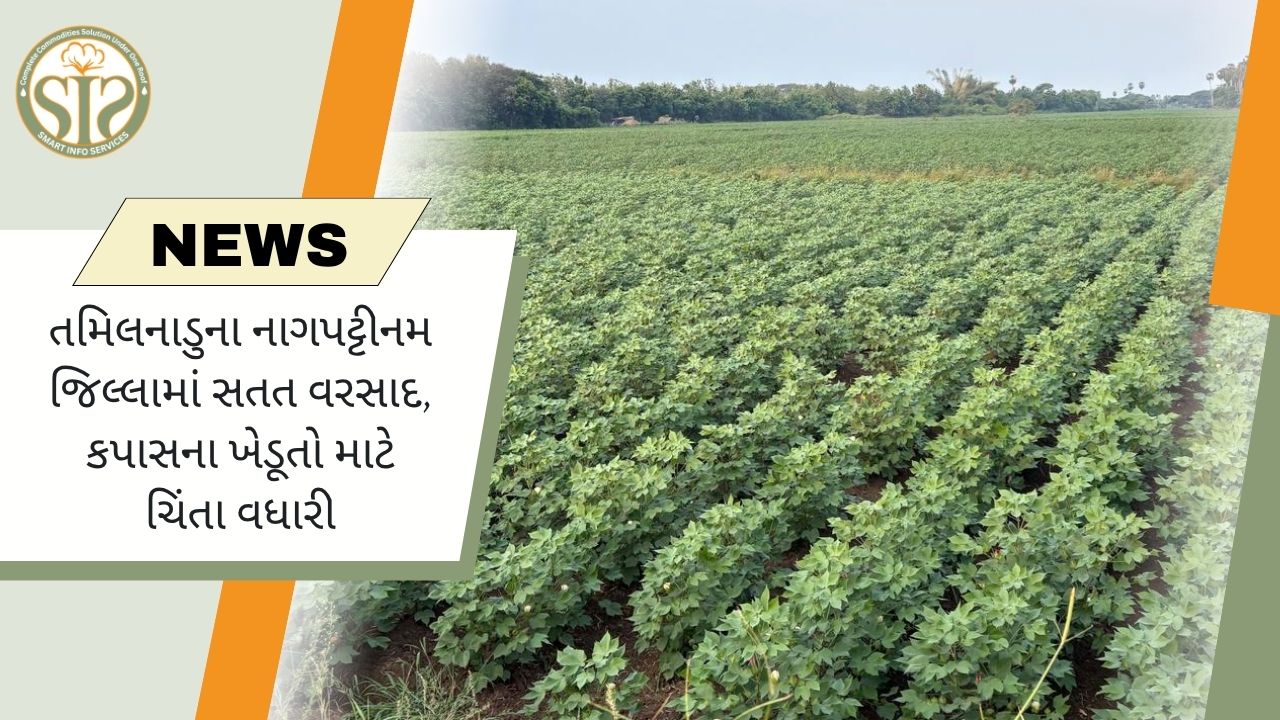
તમિલનાડુના નાગપટ્ટીનમ જિલ્લામાં સતત વરસાદ, કપાસના ખેડૂતો માટે ચિંતા વધારીતમિલનાડુના નાગપટ્ટીનમ જિલ્લામાં છેલ્લા ત્રણ દિવસથી સતત ઉનાળાના વરસાદને કારણે તિરુમારુગલ બ્લોકના અનેક વિસ્તારોમાં કપાસના વાવેતર પર પ્રતિકૂળ અસર પડી છે. વરસાદી પાણી તેમના ખેતરોમાં ભરાઈ જવાથી, ખેડૂતો પાકને નુકસાન થવાની શક્યતા વધી રહી છે.અહેવાલો અનુસાર, તિરુમારુગલ, અલાથુર, એરાવનચેરી, મારુનગુર, નેઇકુપ્પાઈ, તિરુકન્નપુરમ, અંબાલ, પોલાગામ અને આસપાસના વિસ્તારોમાં મધ્યરાત્રિથી અવિરત વરસાદ પડી રહ્યો છે. છેલ્લા ત્રણ દિવસમાં જિલ્લાના વિવિધ ભાગોમાં ભારે ઉનાળાના વરસાદ નોંધાયા છે.તિરુમારુગલ બ્લોકના ખેડૂતોએ ઉનાળાના પાક તરીકે વ્યાપક કપાસની વાવણી કરી હતી. પાક હાલમાં ફૂલો અને બોલ બનવાના મહત્વપૂર્ણ તબક્કામાં છે. જો કે, ઘણા ખેડૂતો હજુ સુધી તેમના ખેતરોમાં માટી ભરવા (છોડની આસપાસ માટી ઢોળવાનું) કાર્ય પૂર્ણ કરી શક્યા નથી. સતત વરસાદને કારણે, અસંખ્ય ખેતરોમાં પાણી ભરાઈ ગયું છે, જેના કારણે કપાસના છોડનો વિકાસ અવરોધાય છે.કપાસના ખેડૂત આર. શિવાએ જણાવ્યું હતું કે, "વરસાદને કારણે, કપાસના છોડ પરના ફૂલો ખરી રહ્યા છે, જેના કારણે ઉપજમાં ભારે ઘટાડો થઈ શકે છે."અન્ય એક ખેડૂત, પી. કથીરે ચેતવણી આપી હતી કે જો ખેતરોમાં લાંબા સમય સુધી પાણી સ્થિર રહે તો, છોડના મૂળ સડી શકે છે, જેનાથી ખેડૂતોને ગંભીર નાણાકીય નુકસાન થઈ શકે છે. તેમણે વધુમાં ચેતવણી આપી હતી કે જો આ રીતે વરસાદ ચાલુ રહેશે તો નુકસાનનું પ્રમાણ વધી શકે છે.વધુ વાંચો :- CCI એ કોટન કેન્ડીના ભાવમાં ₹4,100નો વધારો કર્યો; હરાજી 5.85 લાખ ગાંસડીઓને પાર કરી
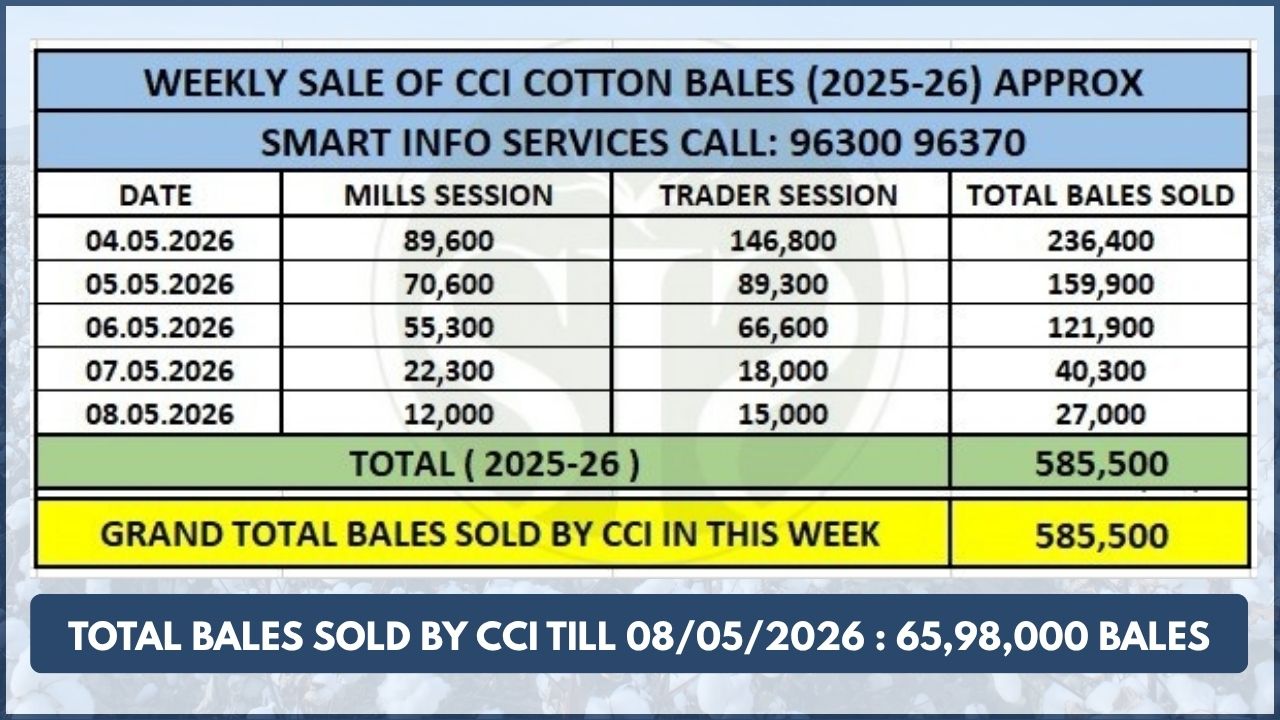
CCI એ કપાસના ભાવમાં પ્રતિ કેન્ડી ₹4,100 નો વધારો કર્યો; સાપ્તાહિક હરાજી વેચાણ 5.85 લાખ ગાંસડીથી વધુ થયુંકોટન કોર્પોરેશન ઓફ ઇન્ડિયા (CCI) એ 4 મે થી 8 મે, 2026 ના સપ્તાહ દરમિયાન કપાસના ભાવમાં પ્રતિ કેન્ડી ₹4,100 નો વધારો કર્યો. આ હરાજીમાં મિલો અને કપાસના વેપારીઓની મજબૂત ભાગીદારી જોવા મળી, જેના પરિણામે 2025-26 સીઝનના સ્ટોકમાંથી આશરે 585,500 ગાંસડીનું સાપ્તાહિક વેચાણ થયું.સાપ્તાહિક વેચાણ અહેવાલ4 મે, 2026 (સોમવાર):સપ્તાહની શરૂઆત મજબૂત નોંધ પર થઈ, જેમાં 236,400 ગાંસડીનો સૌથી વધુ એક દિવસીય વેચાણનો આંકડો રેકોર્ડ કરવામાં આવ્યો. મિલોએ 89,600 ગાંસડી ખરીદી, જ્યારે વેપારીઓએ 146,800 ગાંસડી ખરીદીને ખરીદીમાં આગેવાની લીધી.5 મે, 2026 (મંગળવાર):હરાજીની પ્રવૃત્તિ થોડી ધીમી પડી, કુલ વેચાણ 159,900 ગાંસડી સુધી પહોંચ્યું. મિલોએ ૭૦,૬૦૦ ગાંસડી ખરીદી હતી, જ્યારે વેપારીઓએ ૮૯,૩૦૦ ગાંસડી ખરીદી હતી.૬ મે, ૨૦૨૬ (બુધવાર):સીસીઆઈએ આ દિવસે કુલ ૧,૨૧,૯૦૦ ગાંસડી વેચાણ નોંધાવ્યું હતું. મિલોએ ૫૫,૩૦૦ ગાંસડી ખરીદી હતી, જ્યારે વેપારીઓએ ૬૬,૬૦૦ ગાંસડી ખરીદી હતી.૭ મે, ૨૦૨૬ (ગુરુવાર):વેચાણમાં વધુ ઘટાડો થયો હતો, આ સત્ર દરમિયાન ૪૦,૩૦૦ ગાંસડી વેચાઈ હતી. મિલોએ ૨૨,૩૦૦ ગાંસડી ખરીદી હતી, જ્યારે વેપારીઓએ ૧૮,૦૦૦ ગાંસડી ખરીદી હતી. ૮ મે, ૨૦૨૬ (શુક્રવાર):સપ્તાહનું કુલ ૨૭,૦૦૦ ગાંસડી વેચાણ સાથે સમાપન થયું. મિલોએ ૧૨,૦૦૦ ગાંસડી ખરીદી હતી, જ્યારે વેપારીઓ સક્રિય રહ્યા હતા, કુલ ૧૫,૦૦૦ ગાંસડી ખરીદી હતી.કુલ વેચાણ અપડેટCCI નું કુલ વેચાણ હવે આટલું પહોંચી ગયું છે:૨૦૨૫–૨૬ સીઝન: ૬,૫૯૮,૦૦૦ ગાંસડી

કપાસના ખેડૂતો માટે મહત્વપૂર્ણ અપડેટ: સરકારે બીટી બિયારણના વેચાણ અને વાવણી પર પકડ કડક બનાવી છે—હમણાં રાહ જુઓ!જલગાંવ: આગામી 2026 ખરીફ સિઝનને ધ્યાનમાં રાખીને, મહારાષ્ટ્ર સરકારે કપાસના પાકમાં ગુલાબી ઈયળના વધતા જોખમને રોકવા માટે કડક પગલાં લીધાં છે. રાજ્યના કૃષિ, પશુપાલન, ડેરી વિકાસ અને મત્સ્યઉદ્યોગ વિભાગે બીટી કપાસના બીજના વેચાણ, પુરવઠા અને વાવણી અંગે એક નવું સમયપત્રક લાગુ કરતા નિર્દેશો જારી કર્યા છે.8 મે, 2026 ના રોજ જારી કરાયેલા સરકારી પરિપત્ર અનુસાર, રાજ્યભરની તમામ કૃષિ એજન્સીઓ અને અધિકારીઓને આ નિયમોનું કડક પાલન સુનિશ્ચિત કરવા સૂચના આપવામાં આવી છે. મંત્રાલય દ્વારા કૃષિ કમિશનર (પુણે) ની કચેરીને મોકલવામાં આવેલા નિર્દેશોમાં સ્પષ્ટપણે જણાવાયું છે કે કપાસનું અકાળ વાવેતર ગુલાબી ઈયળના પ્રકોપને પ્રોત્સાહન આપે છે, જેનાથી પાક ઉત્પાદન પર ગંભીર પ્રતિકૂળ અસર પડે છે.સરકારનો દાવો છે કે વહેલું વાવણી જંતુના જીવન ચક્ર માટે અનુકૂળ વાતાવરણ બનાવે છે, જે મોટા પાયે પાકને નુકસાન પહોંચાડી શકે છે. છેલ્લા કેટલાક વર્ષોમાં, રાજ્યના ઘણા મુખ્ય કપાસ ઉત્પાદક જિલ્લાઓ - જેમાં જલગાંવનો પણ સમાવેશ થાય છે - ના ખેડૂતોને ગુલાબી ઈયળના ઉપદ્રવને કારણે ભારે નુકસાન થયું છે. આ અનુભવના આધારે, સરકારે આ વખતે તેની તકેદારી નોંધપાત્ર રીતે વધારી દીધી છે.સરકારી આદેશમાં ખેડૂતોને કૃષિ વિભાગ દ્વારા ભલામણ કરાયેલ ચોક્કસ સમયગાળા દરમિયાન જ કપાસની વાવણી કરવાની અપીલ કરવામાં આવી છે. વધુમાં, જિલ્લા અને તાલુકા કક્ષાના કૃષિ અધિકારીઓને ખેડૂતોને પ્રમાણિત અને અધિકૃત બીટી બીજનો ઉપયોગ કરવાના મહત્વ વિશે શિક્ષિત કરવા માટે જાગૃતિ અભિયાન ચલાવવાનો નિર્દેશ આપવામાં આવ્યો છે.વધુમાં, વહીવટીતંત્રને ગેરકાયદેસર અને અનધિકૃત બીજના વેચાણ પર દેખરેખ રાખવા અને નિયમોનું ઉલ્લંઘન કરનારાઓ સામે દંડાત્મક પગલાં લેવાનો નિર્દેશ આપવામાં આવ્યો છે.વધુ વાંચો:- રૂપિયો ૪૦ પૈસા ઘટીને ૯૪.૮૮ પર ખુલ્યો.

રૂપિયો ૪૦ પૈસા ઘટીને ૯૪.૮૮ USD પર ખુલ્યો.સોમવારે, ભારતીય રૂપિયો ડોલર સામે ૪૦ પૈસા ઘટીને ૯૪.૮૮ પર ખુલ્યો, જે શુક્રવારે ૯૪.૪૮ ના બંધ ભાવથી શરૂ થયો હતો.વધુ વાંચો:- ખાનદેશમાં કપાસનો વાવેતર વિસ્તાર 8 લાખ હેક્ટરથી નીચે જવાની ધારણા છે.

ખાનદેશમાં કપાસનું વાવેતર ઘટવાની ધારણા છે, જેમાં 8 લાખ હેક્ટરથી નીચે જવાની ધારણા છે.ખાનદેશ ક્ષેત્રમાં કપાસના વાવેતર હેઠળનો વિસ્તાર સતત બીજા વર્ષે ઘટવાની ધારણા છે. એવો અંદાજ છે કે આ વર્ષે આ પ્રદેશમાં કુલ કપાસનું વાવેતર 8 લાખ હેક્ટરથી નીચે જશે. આમાં જલગાંવ જિલ્લો સૌથી મોટો હિસ્સો ધરાવશે, જેમાં આશરે 4.75 લાખ હેક્ટરમાં વાવેતર થવાની ધારણા છે. રાજ્યમાં સૌથી વધુ કપાસનું વાવેતર ધરાવતો જિલ્લો હોવાથી, જલગાંવ આ વર્ષે પણ તેનું અગ્રણી સ્થાન જાળવી રાખશે.જોકે, જલગાંવ, તેમજ ધુળે અને નંદુરબાર જિલ્લામાં કપાસનું વાવેતર સતત ઘટી રહ્યું છે.જલગાંવ જિલ્લામાં કપાસનું વાવેતર 2022માં 5.67 લાખ હેક્ટર હતું, જે 2023માં ઘટીને 5.54 લાખ હેક્ટર અને 2024માં 5.11 લાખ હેક્ટર થયું. પાછલી સિઝન (2023-24)માં, આ આંકડો આશરે 4.80 લાખ હેક્ટર સુધી મર્યાદિત રહ્યો.૨૦૨૨માં સમગ્ર ખાનદેશ ક્ષેત્રમાં કપાસનું વાવેતર ૮.૭૦ લાખ હેક્ટર હતું. ૨૦૨૩માં આ ઘટાડો ૮.૫૦ લાખ હેક્ટર અને ૨૦૨૪માં ૮.૩૦ લાખ હેક્ટર થયો હતો. આ વર્ષે ધુળે જિલ્લામાં અંદાજે ૧.૬૦ લાખ હેક્ટર અને નંદુરબારમાં અંદાજે ૮૦ હજાર હેક્ટરમાં કપાસનું વાવેતર થવાનો અંદાજ છે. સૌથી મોટો ઘટાડો ધુળે જિલ્લામાં નોંધાઈ રહ્યો છે. કપાસની ખેતી ખોટ કરતો વ્યવસાય બની રહ્યો છેકપાસની ખેતી ખેડૂતો માટે વધુને વધુ નફાકારક સાબિત થઈ રહી છે. ગુલાબી ઈયળનો ઉપદ્રવ વધતો જાય છે, મજૂરોની અછત અને કપાસના નીચા બજાર ભાવ જેવી સમસ્યાઓએ ખેડૂતોની ચિંતા વધારી છે. આ જ કારણ છે કે દુષ્કાળગ્રસ્ત વિસ્તારોમાં ઘણા ખેડૂતો હવે કપાસ છોડીને સોયાબીન તરફ વળી રહ્યા છે.તે જ સમયે, પૂરતી સિંચાઈ સુવિધાઓ ધરાવતા ખેડૂતો પપૈયા અને કેળા જેવા રોકડિયા પાકોને પ્રાથમિકતા આપી રહ્યા છે. કેટલાક ખેડૂતોએ આ વર્ષે કપાસ માટે ફાળવેલ વિસ્તાર ઘટાડવાનો પણ નિર્ણય લીધો છે.રાજ્યમાં જલગાંવ હજુ પણ નંબર વનછેલ્લા ઘણા વર્ષોથી, જલગાંવ જિલ્લો મહારાષ્ટ્રમાં કપાસના વાવેતરમાં ટોચનું સ્થાન ધરાવે છે. આ વર્ષે કપાસના વાવેતર હેઠળના વિસ્તારમાં ઘટાડો થવાની ધારણા છે, પરંતુ જલગાંવ રાજ્યમાં સૌથી વધુ કપાસનું વાવેતર ધરાવતો જિલ્લો રહ્યો છે.જલગાંવ પછી યવતમાળ જિલ્લો આવે છે, જ્યાં દર વર્ષે આશરે 4.5 લાખ હેક્ટર કે તેથી ઓછા વિસ્તારમાં કપાસનું વાવેતર થાય છે.વધારે વાચો :-રૂપિયો 10 પૈસા વધીને 94.48 પ્રતિ ડોલર પર બંધ થયો.

શુક્રવારે, ભારતીય રૂપિયો ૧૦ પૈસા વધીને ૯૪.૪૮ પ્રતિ ડોલર પર બંધ થયો, જ્યારે સવારે તે ૯૪.૫૮ પર ખુલ્યો હતો.બંધ સમયે, સેન્સેક્સ ૫૧૬.૩૩ પોઈન્ટ અથવા ૦.૬૬ ટકા ઘટીને ૭૭,૩૨૮.૧૯ પર અને નિફ્ટી ૧૫૦.૫૦ પોઈન્ટ અથવા ૦.૬૨ ટકા ઘટીને ૨૪,૧૭૬.૧૫ પર બંધ થયો હતો. લગભગ ૧૯૮૮ શેર વધ્યા, ૨૦૪૮ શેર ઘટ્યા અને ૧૭૦ શેર યથાવત રહ્યા.

રૂપિયો ૩૩ પૈસા ઘટીને ૯૪.૫૮ USD પર ખુલ્યો.શુક્રવારે, ભારતીય રૂપિયો ડોલર સામે ૩૩ પૈસા ઘટીને ૯૪.૫૮ પર ખુલ્યો, જ્યારે ગુરુવારે તે ૯૪.૨૫ પર બંધ થયો.વધુ વાંચો:- આકોટ કપાસ બજારમાં ઉછાળો: કપાસના ભાવ ₹10,000 ને પાર
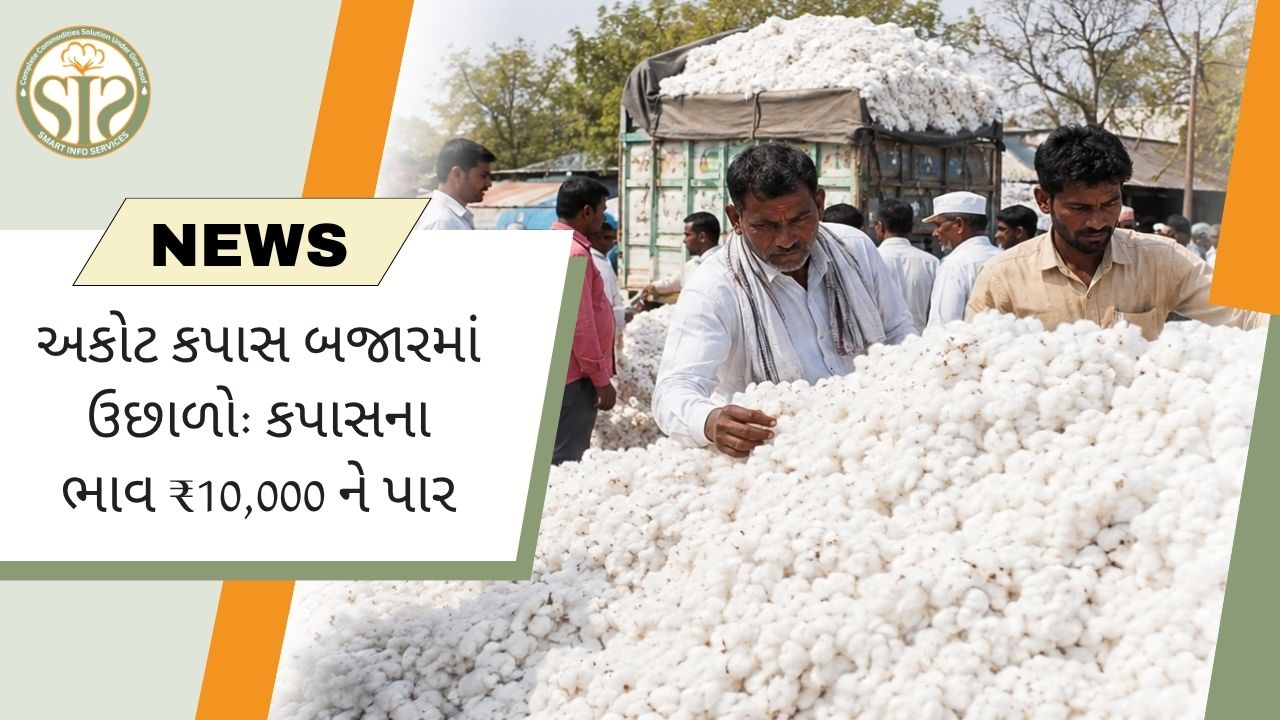
અકોટ કપાસ બજારમાં ઉછાળો: કપાસના ભાવ ₹10,000 ને પારઆકોટ કૃષિ ઉત્પાદન બજાર સમિતિ (APMC) ખાતે કપાસના ભાવમાં સતત વધારો જોવા મળી રહ્યો છે. બુધવારે (6 મે) કપાસનો મહત્તમ ભાવ ₹10,005 પ્રતિ ક્વિન્ટલ પર પહોંચી ગયો હતો, જેના કારણે ખેડૂતોમાં ઉત્સાહનું વાતાવરણ સર્જાયું હતું. બજારમાં લઘુત્તમ ભાવ ₹8,550 પ્રતિ ક્વિન્ટલ રહ્યો હતો, જ્યારે કપાસની દૈનિક આવક 1,000 ક્વિન્ટલને વટાવી ગઈ છે.પશ્ચિમ વિદર્ભમાં એક અગ્રણી ઉભરતા કપાસ બજાર તરીકે સ્થાપિત થયેલા અકોટમાં આ સિઝનની શરૂઆતમાં ત્રણ ખરીદી કેન્દ્રો દ્વારા 7.39 લાખ ક્વિન્ટલથી વધુ કપાસની ખરીદી કરવામાં આવી હતી. ત્યારબાદ, એપ્રિલથી, ખાનગી વેપારીઓએ પણ તેમની ખરીદી કામગીરી શરૂ કરી હતી. એપ્રિલથી, અકોટ બજારમાં આશરે 33,000 ક્વિન્ટલ કપાસનો વેપાર થયો છે.છેલ્લા કેટલાક દિવસોમાં કપાસના ભાવમાં સતત વધારો થઈ રહ્યો છે. સોમવારે મહત્તમ ભાવ ₹9,500 પ્રતિ ક્વિન્ટલ હતો, જે મંગળવારે વધીને ₹9,740 થયો. બુધવારે કપાસના ભાવ ₹10,000 ને વટાવી ગયા. બજારમાં આ સતત વધારાથી ખેડૂતોને આશા છે કે આગામી દિવસોમાં કપાસના ભાવમાં વધુ વધારો થઈ શકે છે.ભાવમાં આ વધારાને કારણે, ખેડૂતો હવે તેમના ગોદામોમાં સંગ્રહિત કપાસ બજારમાં લાવી રહ્યા છે. ખેડૂતો નવી સિઝનની તૈયારીઓ અને તેમની તાત્કાલિક રોકડ જરૂરિયાતો પર નજર રાખીને પણ તેમનો પાક વેચી રહ્યા છે. ખાસ કરીને, વેપારીઓમાં ઉચ્ચ ગુણવત્તાવાળા કપાસની માંગ મજબૂત રહે છે, જેના કારણે ખેડૂતો સારા ભાવ મેળવી શકે છે.આકોટ પ્રદેશમાં નોંધપાત્ર સંખ્યામાં કપાસ પ્રોસેસિંગ યુનિટ કાર્યરત છે. આ ઉદ્યોગોને કાચા માલનો સતત પુરવઠો જરૂરી છે, જેના કારણે બજારમાં કપાસની માંગ જળવાઈ રહે છે. આ કારણોસર કપાસના ભાવમાં સકારાત્મક વલણ જોવા મળી રહ્યું છે. બજાર નિષ્ણાતો માને છે કે જો માંગનું આ સ્તર જળવાઈ રહે, તો આગામી દિવસોમાં કપાસના ભાવમાં વધુ વધારો જોવા મળી શકે છે.

કપાસ બજારમાં ભારે ઉછાળો: માત્ર 8 દિવસમાં પ્રતિ ક્વિન્ટલ ₹1,000 નો વધારોરાજ્યના કપાસ બજારોમાં હાલમાં જબરદસ્ત તેજી જોવા મળી રહી છે. છેલ્લા આઠ દિવસમાં, કપાસના ભાવમાં પ્રતિ ક્વિન્ટલ આશરે ₹1,000 નો વધારો નોંધાયો છે. ઘણી મુખ્ય બજાર સમિતિઓમાં, કપાસના ભાવ પ્રતિ ક્વિન્ટલ ₹9,950 સુધી પહોંચ્યા હતા - જે અત્યાર સુધીની સિઝનનો રેકોર્ડ ઉચ્ચતમ આંકડો માનવામાં આવે છે. આ વધતા ભાવોથી ખેડૂતોના ચહેરા પર રાહત અને આશાની નવી લાગણી આવી છે.થોડા દિવસ પહેલા સુધી, કપાસ સરેરાશ ₹8,000 પ્રતિ ક્વિન્ટલના ભાવે ટ્રેડ થઈ રહ્યો હતો; જોકે, મોટાભાગની મંડીઓ (બજારો) માં ભાવ હવે ₹9,000 ના આંકને પાર કરી ગયા છે. યવતમાલ, રાલેગાંવ અને હિંગણઘાટ જેવા મુખ્ય બજારોમાં, ખરીદી અને વેચાણ પ્રવૃત્તિઓ અંગે વેપારીઓ અને ખેડૂતોમાં ઉત્સાહનું વાતાવરણ પ્રવર્તે છે. બુધવારે, યવતમાળ બજારમાં કપાસનો ભાવ પ્રતિ ક્વિન્ટલ ₹9,100 ની આસપાસ રહ્યો હતો, જ્યારે રાલેગાંવ અને હિંગણઘાટ બજાર સમિતિઓએ પ્રતિ ક્વિન્ટલ ₹9,950 સુધીનો ટોચનો ભાવ નોંધાવ્યો હતો.નિષ્ણાતોના મતે, આંતરરાષ્ટ્રીય બજારમાં ફેરફારની સીધી અસર સ્થાનિક કપાસના વેપાર પર પડી રહી છે. પોલિએસ્ટર ફાઇબરના વધતા ભાવે કોટન યાર્ન અને કાચા કપાસની માંગમાં વધારો કર્યો છે. વધુમાં, ક્રૂડ ઓઇલના ઊંચા ભાવ અને વૈશ્વિક ભૂ-રાજકીય તણાવ પણ કપાસ બજારને મજબૂત બનાવવામાં ફાળો આપી રહ્યા છે. વૈશ્વિક સ્તરે, કપાસના ભાવ - જે અગાઉ 72 થી 74 સેન્ટ પ્રતિ પાઉન્ડની વચ્ચે હતા - હવે 90 થી 92 સેન્ટ પ્રતિ પાઉન્ડની વચ્ચે પહોંચી ગયા છે. પરિણામે, કપાસના એક ખાંડી (વજનનો પરંપરાગત એકમ) નો ભાવ આશરે ₹45,000 થી વધીને ₹62,000 સુધી પહોંચી ગયો છે.બજારમાં તેજી ચાલુ હોવા છતાં, કપાસનો પ્રવાહ મર્યાદિત રહે છે. મોટાભાગના ખેડૂતોએ તેમનો સ્ટોક પહેલેથી જ વેચી દીધો છે. દાખલા તરીકે, બુધવારે રાલેગાંવ બજારમાં ફક્ત 250 ક્વિન્ટલ કપાસનો પ્રવાહ નોંધાયો હતો. નિષ્ણાતો માને છે કે જો આગામી દિવસોમાં બજારમાં આવક વધે તો કપાસના ભાવમાં વધુ મજબૂતી જોવા મળી શકે છે.

ગુરુવારે ભારતીય રૂપિયો ૫૦ પૈસા વધીને ૯૪.૨૫ પર બંધ થયો, જે સવારે ૯૪.૭૫ હતો.બંધ સમયે, સેન્સેક્સ ૧૧૪ પોઈન્ટ અથવા ૦.૧૫ ટકા ઘટીને ૭૭,૮૪૪.૫૨ પર અને નિફ્ટી ૪.૩૦ પોઈન્ટ અથવા ૦.૦૨ ટકા ઘટીને ૨૪,૩૨૬.૬૫ પર બંધ થયો.વધુ વાંચો:-
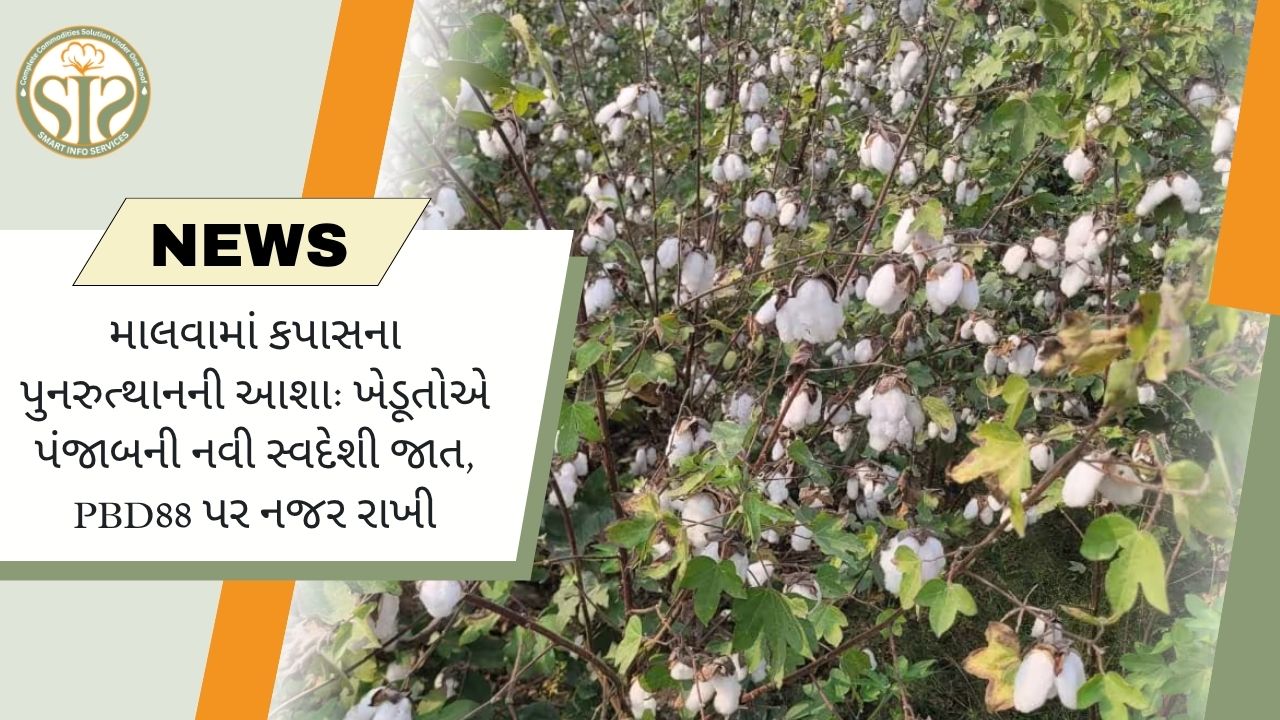
માલવામાં કપાસના પુનરુત્થાનની આશા: ખેડૂતોએ પંજાબની નવી સ્વદેશી જાત, PBD88 પર નજર રાખીપંજાબ કૃષિ યુનિવર્સિટી દ્વારા વિકસાવવામાં આવેલી, નવી નોન-બીટી સ્વદેશી કપાસની જાત, PBD88, આ ખરીફ સિઝનમાં પંજાબના માલવા પ્રદેશમાં કપાસના વાવેતરને નવી દિશા આપવાની ક્ષમતા ધરાવે છે. જ્યારે રાજ્ય સતત ઘટતા કપાસના વાવેતર વિસ્તાર અને વધતા ખેતી ખર્ચના બે પડકારોનો સામનો કરી રહ્યું છે, ત્યારે આ જાત ખેડૂતો માટે આશાના કિરણ તરીકે ઉભરી આવી છે.ચાર વર્ષથી વધુ સમય સુધી સખત પરીક્ષણ અને ક્ષેત્રીય પરીક્ષણો દરમિયાન, PBD88 એ તેના ઉચ્ચતમ ગુણો, જેમ કે ઉચ્ચ ઉપજ, ઓછો વાવેતર ખર્ચ અને જીવાત પ્રતિકારને કારણે વૈજ્ઞાનિકોનું ધ્યાન ખેંચ્યું છે. નિષ્ણાતોના મતે, સ્વદેશી કપાસની જાતોમાંથી મેળવેલા ફાઇબર ફાર્માસ્યુટિકલ ઉદ્યોગમાં પણ નોંધપાત્ર વ્યાપારી મૂલ્ય ધરાવે છે.ભટિંડા સ્થિત પ્રાદેશિક સંશોધન કેન્દ્રના પાક સંવર્ધક અને આ જાત પાછળના મુખ્ય વૈજ્ઞાનિક - પરમજીત સિંહે જણાવ્યું કે PBD88 પ્રતિ એકર આશરે 11 ક્વિન્ટલ ઉપજ આપે છે. આ ઉત્પાદન પરંપરાગત સ્વદેશી જાતો કરતાં ૧-૨ ક્વિન્ટલ વધારે છે અને તેને હાઇબ્રિડ કપાસની જાતોના સરેરાશ ઉપજ સાથે સરખાવી શકાય તેવું માનવામાં આવે છે.તેમણે નોંધ્યું કે છેલ્લા કેટલાક વર્ષોમાં, ગુલાબી ઈયળ અને સફેદ માખીના ઉપદ્રવ તેમજ પ્રતિકૂળ હવામાન પરિસ્થિતિઓને કારણે પંજાબમાં કપાસના વાવેતરમાં તીવ્ર ઘટાડો થયો છે. જો કે, પરીક્ષણો દર્શાવે છે કે PBD88 ગુલાબી ઈયળ માટે પ્રમાણમાં ઓછું સંવેદનશીલ છે. પરિણામે, અર્ધ-શુષ્ક પ્રદેશોના ખેડૂતોને આ નવી સ્વદેશી જાત અપનાવવા માટે પ્રોત્સાહિત કરવામાં આવી રહ્યા છે.રાજ્યનો કપાસનો વાવેતર વિસ્તાર ૨૦૨૧ માં ૨.૫૨ લાખ હેક્ટરથી ઘટીને ૨૦૨૪ માં માત્ર ૯૫,૦૦૦ હેક્ટર થયો. જોકે, ૨૦૨૫ માં આ વિસ્તાર વધીને ૧.૨ લાખ હેક્ટર થયો, અને કૃષિ વિભાગે હવે ૨૦૨૬ માટે ૧.૫ લાખ હેક્ટરનો લક્ષ્યાંક નક્કી કર્યો છે.નિષ્ણાતો ભાર મૂકે છે કે PBD88 નો સૌથી મહત્વપૂર્ણ ફાયદો તેની ખર્ચ-અસરકારક ખેતી છે. પરંપરાગત જાતોને સામાન્ય રીતે હાથથી કાપણીના લગભગ છ રાઉન્ડની જરૂર પડે છે, પરંતુ આ જાતનો પાક ફક્ત ત્રણ રાઉન્ડની કાપણીથી પૂર્ણ કરી શકાય છે. વધુમાં, અનેક મુખ્ય જીવાતોનો પ્રતિકાર હોવાથી, ખેડૂતોનો જંતુનાશકો પરનો ખર્ચ પણ ઘટી શકે છે.રાજ્ય કૃષિ વિભાગના જણાવ્યા અનુસાર, પ્રથમ સિઝન માટે ખેડૂતોને 100 ક્વિન્ટલથી વધુ PBD88 બીજ ઉપલબ્ધ કરાવવામાં આવ્યા છે. આ જાતના વાવેતર માટે પ્રતિ એકર આશરે 3 કિલોગ્રામ બીજ પૂરતા છે. તે કપાસની પસંદગીની જાતોમાંની એક છે જેના માટે પંજાબ સરકારે 33 ટકા સબસિડીની જાહેરાત કરી છે.વિજય કુમારે જણાવ્યું હતું કે સ્વદેશી કપાસની જાતોને પ્રોત્સાહન આપવા પાછળનો ઉદ્દેશ્ય BT કપાસને સંપૂર્ણપણે બદલવાનો નથી, પરંતુ ખેતી પદ્ધતિઓમાં વિવિધતા લાવવાનો છે. તેમના મતે, સ્વદેશી કપાસ સફેદ માખી જેવા જીવાત અને પાન કર્લ જેવા રોગો સામે કુદરતી પ્રતિકાર ધરાવે છે.તેમણે એ પણ નિર્દેશ કર્યો કે ઘણી બિન-હાઇબ્રિડ જાતોમાં, કાપણીમાં વિલંબ થાય તો કપાસના બોલ તૂટી જાય છે અને પડી જાય છે, જેના પરિણામે ખેડૂતોને નુકસાન થાય છે. જો કે, PBD88 માં આ મુદ્દો ઓછા પ્રમાણમાં જોવા મળ્યો છે, જેનાથી ખેડૂતોના ઉપજ માટે વધુ સુરક્ષા સુનિશ્ચિત થાય છે.વધુ વાંચો :-કૃષિ ટેકનોલોજી: કાચા કપાસને બાલિંગ કરીને અશુદ્ધિઓને રોકવા માટેની એક તકનીક