

डॉलर की लगातार मांग के कारण रुपया 3 पैसे गिरकर 89.25 पर खुला।पिछले सेशन में 89.22 पर बंद होने के बाद रुपया US डॉलर के मुकाबले 89.25 पर खुला।और पढ़ें :- कपास कीमत संकट: एमएसपी से 800 रुपये नीचे, किसान नुकसान में
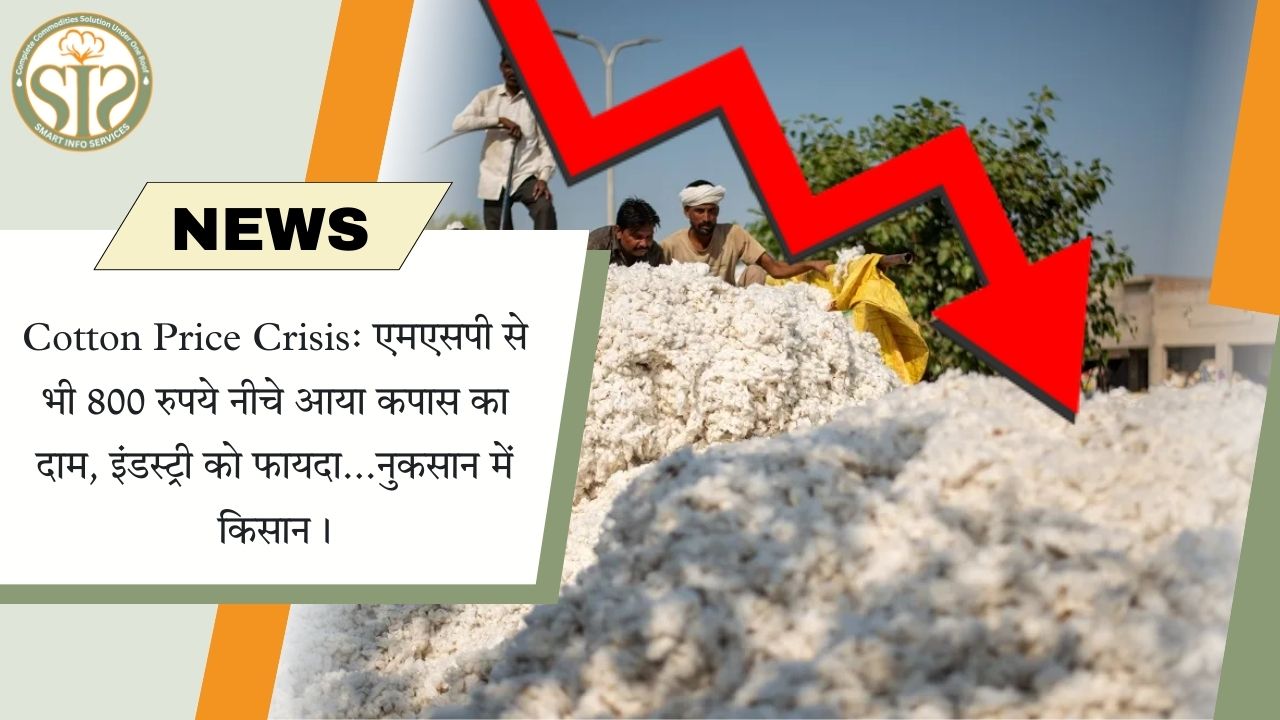
Cotton Price Crisis: एमएसपी से भी 800 रुपये नीचे आया कपास का दाम, इंडस्ट्री को फायदा...नुकसान में किसान।देश में कपास के दाम लगातार गिर रहे हैं और किसानों को MSP से 700–800 रुपये कम कीमत मिल रही है. जीरो इंपोर्ट ड्यूटी से जहां कपड़ा उद्योग को बड़ा फायदा हो रहा है, वहीं बढ़ते आयात और कमजोर मांग की वजह से किसानों को उनकी उपज का उचित मूल्य नहीं मिल पा रहा, जिससे वे कपास छोड़कर दूसरी फसलों की ओर जा रहे हैं.सोयाबीन और मक्के के बाद अब कपास का नंबर है. देश में कपास की कीमतें लगातार गिर रही हैं. सरकारी डेटा बताता है कि किसानों को एमएसपी से 700-800 रुपये तक कम रेट मिल रहे हैं. मिनिमम सपोर्ट प्राइस (MSP) की बात करें तो केंद्र सरकार ने मध्यम रेशे वाले कपास के लिए 7710 रुपये प्रति क्विंटल और लंबे रेशे वाले कपास के लिए 8110 रुपये रेट तय किया है. मंडियों में अभी अधिक आवक मध्यम रेशे वाले कपास की है, जिसका रेट 6988 रुपये चल रहा है, जबकि एमएसपी 7710 रुपये है. रेट की यह जानकारी सरकारी एजेंसी एगमार्कनेट ने दी है. कीमतों में यह गिरावट ऐसे समय में देखी जा रही है जब केंद्र सरकार ने कपास की इंपोर्ट ड्यूटी जीरो कर रखी है. रेट की गिरावट से साफ है कि सरकार के इस फैसले का फायदा व्यापारियों और मिल मालिकों को मिल रहा है जबकि किसान एमएसपी के लिए भी जूझ रहे हैं. मतलब साफ है कि इंपोर्ट ड्यूटी जीरो करने के बाद किसानों पर बड़ी आर्थिक चोट पड़ी है. अगर यही हाल रहा तो किसान कपास की खेती को और कम कर देंगे. आवक कम, दाम भी कम सरकार का एक आंकड़ा बताता है कि जिस तेजी से कपास की एमएसपी में वृद्धि हुई है, उसके ठीक उलट किसानों को मिलने वाले मॉडल प्राइस में गिरावट आई है. चौंकाने वाली बात ये है कि मंडियों में कपास की आवक समय के साथ गिरी है. ट्रेड का एक सामान्य नियम है कि जब आवक गिरती है, सप्लाई घटती है तो प्रोडक्ट का दाम बढ़ता है. लेकिन कपास के मामले में ऐसा नहीं हुआ. इसके दाम बढ़ने के बजाय गिर गए और इसकी सबसे बड़ी वजह है जीरो इंपोर्ट ड्यूटी.मिल मालिकों को फायदा, किसानों को नुकसान भारत में कपास पर जीरो इंपोर्ट ड्यूटी है. इसका मतलब हुआ कि देश का कोई भी व्यापारी या मिलर जीरो आयात शुल्क के साथ कपास का आयात कर सकता है. सरकार ने इसे 31 दिसंबर तक के लिए जारी रखा है. सरकार का तर्क है कि जीरो इंपोर्ट ड्यूटी होने से देश के कपड़ा उद्योग की लागत स्थिर होगी जिससे कपड़ा कंपनियों को मदद मिलेगी और किसानों के कपास की खरीद बढ़ेगी.सरकार का यह तर्क नियम के अनुरूप है, मगर धरातल पर इसका कोई फायदा नहीं दिख रहा है. धरातल पर हालात यह हैं कि किसानों को नुकसान हो रहा है. अगर फायदा होता तो किसानों को कपास की अच्छी कीमतें मिलतीं. हालत तो ये है कि किसान कपास की एमएसपी भी नहीं ले पा रहे हैं. दूसरी ओर कपड़ा कंपनियां और मिल मालिक फायदा उठा रहे हैं.तहस-नहस को जाएगी खेती इस ट्रेंड के बारे में कपास के एक्सपर्ट विजय जावंघिया कहते हैं, इंपोर्ट ड्यूटी जीरो होने से कपड़े का दाम 2से 2.5 रुपये तक कम होगा जिसका सीधा फायदा मिलों और व्यापारियों को मिलेगा. एक अनुमान के मुताबिक, इपोर्ट ड्यूटी के इस फैसले से कपड़ा इंडस्ट्री को 15,000 करोड़ रुपये का फायदा होगा जबकि किसानों की पूरी खेती तहस-नहस हो जाएगी. इसका प्रभाव भी दिखने लगा है क्योंकि किसान अब कपास के ध्यान हटाकर दलहन और तिलहन पर टिका रहे हैं. इसका सीधा-सीधा कारण कपास की गिरती कीमतें और जीरो इंपोर्ट ड्यूटी है.आयात से नुकसान खेती और ट्रेड का एक सीधा फंडा है कि जब कोई माल बाहर से आना शुरू होता है तो लोकल स्तर पर उसका प्रोडक्शन घटने लगता है. यह नियम सरकार को भी पता है, उसके बावजूद दिसंबर तक कपास पर इंपोर्ट ड्यूटी जीरो करना सोच से परे है क्योंकि कपास का सीजन अक्तूबर से शुरू होता है और कॉटन कॉरपोरेशन ऑफ इंडिया (CCI) खरीद शुरू करता है. कपास का आयात देखें तो इसमें लगातार वृद्धि जारी है. कितना बढ़ा आयात सरकार का आंकड़ा बताता है कि 2023-24 में जहां 1550312 बेल्स (एक बेल में 170 किलो) का आयात हुआ, वहीं 2024-25 में यह बढ़कर 4139941 बेल्स हो गया. जिस दौरान कपास का आयात बढ़ता गया, उस दौरान देश में कपास की खेती सिकुड़ती गई. इसके बावजूद किसानों को अच्छे दाम नहीं मिले. वजह है, विदेश से कपास की खरीद. जब मिलों और व्यापारियों को विदेशी माल आसानी से और कम रेट पर मिल जाएगा तो वे देश के किसानों से कपास क्यों खरीदेंगे? इससे किसानों में हताशा है और वे कपास की जगह किसी और फसल की ओर रुख कर रहे हैं. कितनी है कीमत रेट की इस हालत के पीछे ग्लोबल ट्रेंड को भी जिम्मेदार बताया जा रहा है. यानी पूरी दुनिया में कपास की खरीद सुस्त है, इसलिए भारत के कपास की मांग गिर गई है. एक्सपर्ट बताते हैं कि कमजोर डिमांड के बीच ग्लोबल प्राइस ट्रेंड की वजह से कीमतें MSP से नीचे बनी हुई हैं, इसलिए उम्मीद की जा रही है कि सीसीआई यानी कॉटन कारपोरेशन ऑफ इंडिया MSP पर खरीद करके किसानों को राहत देगा. लेकिन यह राहत तब काम आएगी जब किसानों को एमएसपी वाला दाम मिलेगा.सीसीआई की खरीद से ही पता चलता है कि प्राइवेट ट्रेड में कच्चे कॉटन (कपास) की कीमतें 6,500 रुपये और 7,500 रुपये प्रति क्विंटल के बीच चल रही हैं, जो 8,100 रुपये के MSP से कम है.जाहिर सी बात है कि जब सरकारी एजेंसी भी किसानों को एमएसपी रेट नहीं दे रही है तो किसान व्यापारियों से क्या उम्मीद कर सकते हैं. कुल मिलाकर, किसानों के लिए एमएसपी दूर की कौड़ी बन गई है जिसके बारे में वे सुनते जरूर हैं, मगर वह रेट उनके हाथ नहीं आता. अब किसानों की पूरी उम्मीद सरकार पर टिकी है कि वह बाजार में किसी तरह से दखल दे और कपास की एमएसपी दिलवाए.और पढ़ें :- महाराष्ट्र: कॉटन खरीद में किसानों का CCI की ओर बढ़ता रुझान
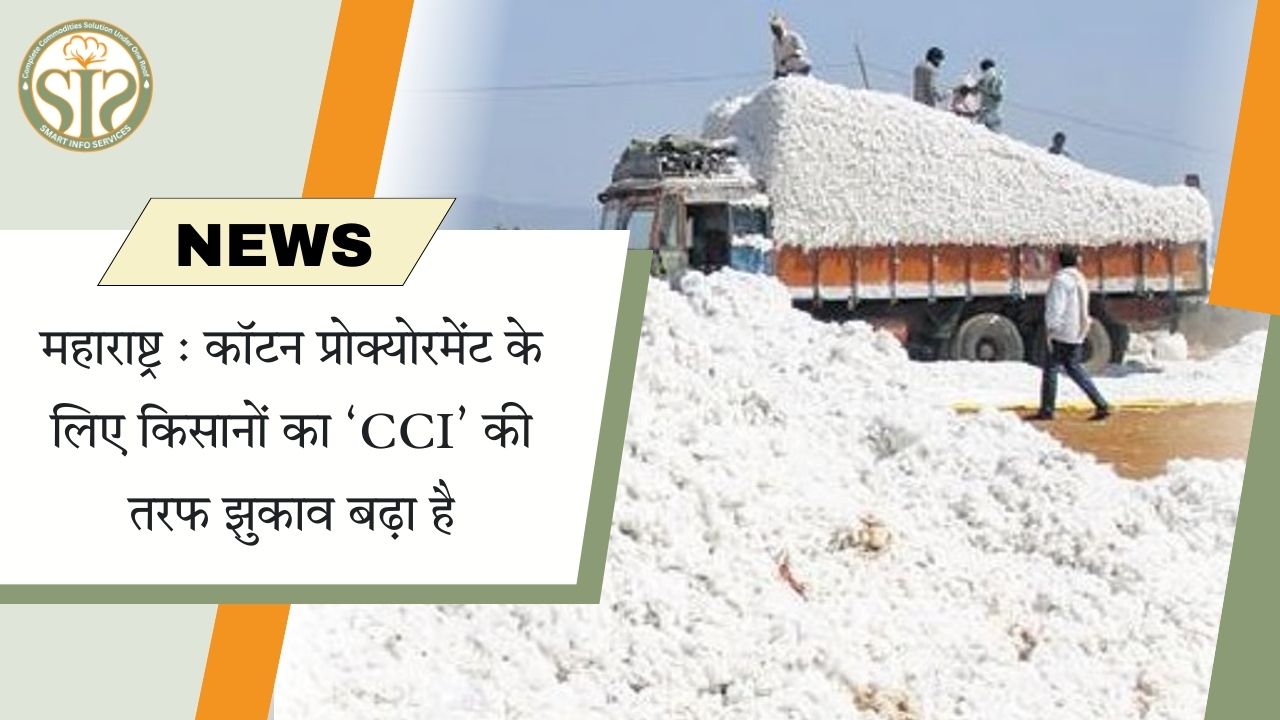
महाराष्ट्र : कॉटन प्रोक्योरमेंट के लिए किसानों का ‘CCI’ की तरफ झुकाव बढ़ा हैबीड : सरकारी कॉटन प्रोक्योरमेंट सेंटर को प्राइवेट प्रोक्योरमेंट सेंटर के मुकाबले बेहतर रेट मिलने से कॉटन उगाने वालों का झुकाव CCI की तरफ काफी बढ़ा है। हालांकि, रजिस्ट्रेशन, अप्रूवल और दूसरी मुश्किल शर्तों की वजह से किसानों को बार-बार मार्केट कमेटी ऑफिस और जिनिंग के चक्कर लगाने पड़ रहे हैं, जिससे उनकी दिक्कतें बढ़ गई हैं।इस साल खरीफ सीजन में तीस हजार कॉटन लगाया गया था। बोने में देरी के बाद, लगातार बारिश ने फिर से कॉटन को भारी नुकसान पहुंचाया। इसके बावजूद किसानों ने महंगी खाद और पेस्टीसाइड का स्प्रे करके कॉटन की खेती की। लेकिन भारी बारिश की वजह से कॉटन खराब हो गया। पेड़ों पर लगा कॉटन सिर्फ दो कटाई में ही खत्म हो गया।अभी, रबी की बुआई चल रही है, इसलिए किसान कॉटन बेचने को प्राथमिकता दे रहे हैं। सरकार ने शुरू में सरकारी कॉटन प्रोक्योरमेंट सेंटर शुरू किए थे, लेकिन उन पर लगाई गई मुश्किल शर्तों ने किसानों की परेशानी बढ़ा दी है। पिछले साल CCI ने प्रति हेक्टेयर तीस क्विंटल कॉटन खरीदा था; लेकिन, इस साल खरीद की लिमिट सिर्फ तेरह क्विंटल प्रति हेक्टेयर तय की गई है और किसान इसे रद्द करने की मांग कर रहे हैं। वहीं, कपास बेचने के लिए ‘कॉटन किसान’ ऐप पर CCI के साथ रजिस्ट्रेशन ज़रूरी है। रजिस्ट्रेशन के बाद मार्केट कमेटी ऑफिस से मंज़ूरी, फिर स्लॉट बुकिंग वगैरह ने किसानों को उलझन में डाल दिया है।आंकड़े खुद ही सब कुछ बयां कर रहे हैं...प्राइवेट खरीद केंद्र: छहकपास खरीदा गया: छब्बीस हज़ार क्विंटलखरीद शुरू होने की तारीख: 27 अक्टूबरमिले रेट: छह हज़ार पाँच सौ से सात हज़ार एक सौ रुपये प्रति क्विंटलCCI खरीद केंद्र: छहकपास खरीदा गया: पच्चीस हज़ार क्विंटलखरीद शुरू होने की तारीख: 10 नवंबरमिले रेट: सात हज़ार सात सौ से आठ हज़ार रुपये प्रति क्विंटलकुल कपास खरीदा गया: 51 हज़ार क्विंटलअगर आपको कपास बेचने या रजिस्ट्रेशन से जुड़ी कोई दिक्कत है, तो कृपया मार्केट कमेटी ऑफिस में संपर्क करें।और पढ़ें :- रुपया 16 पैसे गिरकर 89.22 प्रति डॉलर पर बंद हुआ

मंगलवार को भारतीय रुपया 16 पैसे गिरकर 89.22 प्रति डॉलर पर बंद हुआ, जबकि सुबह यह 89.06 पर खुला था।बंद होने पर, सेंसेक्स 313.70 पॉइंट या 0.37 प्रतिशत गिरकर 84,587.01 पर था, और निफ्टी 74.70 पॉइंट या 0.29 प्रतिशत गिरकर 25,884.80 पर था। लगभग 2022 शेयर बढ़े, 1972 शेयर गिरे, और 149 शेयर बिना बदले।और पढ़ें :- घरेलू मांग से चीन का भारत को सोया तेल निर्यात बढ़ा
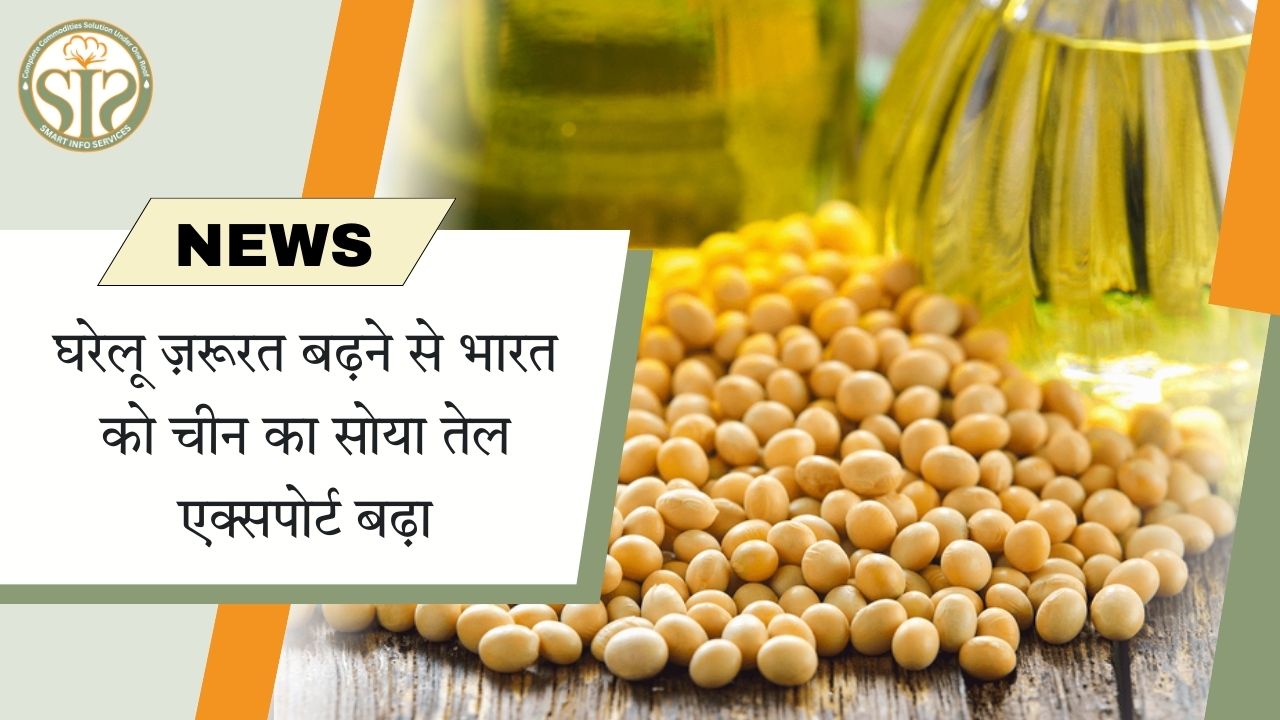
घरेलू ज़रूरत बढ़ने से भारत को चीन का सोया तेल एक्सपोर्ट बढ़ाचीन का भारत को सोयाबीन तेल का एक्सपोर्ट बढ़ रहा है क्योंकि खाना पकाने की इस चीज़ की घरेलू मांग कमज़ोर है और साथ ही साउथ अमेरिका और हाल ही में US से सोयाबीन का ज़्यादा इम्पोर्ट हो रहा है।कस्टम डेटा के मुताबिक, एशिया की सबसे बड़ी इकॉनमी ने अक्टूबर में रिकॉर्ड 70,877 टन खाना पकाने का तेल भेजा, जिसमें से ज़्यादातर भारत गया। साल के पहले 10 महीनों में एक्सपोर्ट 329,000 टन तक पहुँच गया है, जो पूरे 2024 के मुकाबले लगभग तीन गुना है।बीजिंग लंबे समय से विदेशी सोयाबीन पर अपनी निर्भरता को, जिसे जानवरों के चारे और खाना पकाने के तेल में प्रोसेस किया जाता है, एक ऐसी दुनिया में कमज़ोरी के तौर पर देखता रहा है जहाँ जियोपॉलिटिक्स और वायरस कमोडिटी फ्लो को तेज़ी से रोक सकते हैं। हालाँकि, साउथ अमेरिका से ज़्यादा इम्पोर्ट काफी धीमी लोकल इकॉनमी पर असर डाल रहा है, जिससे चीनी सोया तेल प्रोसेसर नए बाज़ार तलाशने पर मजबूर हो रहे हैं।यह चीन में खपत कम होने का एक और उदाहरण है, जिससे सरप्लस हो गया है, और ज़्यादा ग्लोबल मार्केट में आ रहा है। इस मामले में, यह एक ऐसा डेवलपमेंट है जिसका भारत में स्वागत है, जो दुनिया का सबसे बड़ा सोयाबीन तेल इंपोर्टर है। यह नया बना ट्रेड रूट और भी बिज़ी होने की संभावना है, क्योंकि पिछले महीने के ट्रेड समझौते के बाद चीन US सोयाबीन खरीदना फिर से शुरू कर रहा है, और बीजिंग और नई दिल्ली के बीच रिश्ते बेहतर हो रहे हैं।देश के टॉप वेजिटेबल-ऑयल खरीदारों में से एक, पतंजलि फूड्स लिमिटेड के वाइस प्रेसिडेंट आशीष आचार्य ने कहा कि यह ट्रेड भारत के लिए लॉजिस्टिकली सही है। “क्वालिटी साउथ अमेरिकन सप्लाई के बराबर है, कीमतें कॉम्पिटिटिव हैं और चीनी एक्सपोर्टर भरोसेमंद खरीदार ढूंढ रहे हैं।”आचार्य ने कहा कि चीनी सोयाबीन तेल साउथ अमेरिका के मुकाबले US$10 (RM41.36) से US$15 प्रति टन के डिस्काउंट पर ट्रेड कर रहा है, और यह ब्राज़ील और अर्जेंटीना से 50 से 60 दिन के सफर की तुलना में लगभग 10 से 12 दिनों में भारत के ईस्ट कोस्ट तक पहुंच सकता है। उन्होंने कहा कि नवंबर में अब तक चीन से इम्पोर्ट लगभग 70,000 टन है और महीने के आखिर तक यह 12,000 टन और बढ़ सकता है।चीन दुनिया का सबसे बड़ा सोयाबीन तेल प्रोड्यूसर है, जो हर साल लगभग 20 मिलियन टन बनाता है। वह पहले लगभग सारा प्रोडक्शन अपने देश में ही इस्तेमाल कर लेता था, और अक्सर लोकल डिमांड को पूरा करने के लिए उसे इम्पोर्ट करना पड़ता था। लेकिन जैसे-जैसे इकॉनमी ठंडी हुई है, लोगों ने बाहर खाना कम कर दिया है, जिससे रेस्टोरेंट में सोया तेल की खपत कम हो गई है।चीन में सोयाबीन तेल की ज़्यादा सप्लाई से इस ट्रेड को बढ़ावा मिल रहा है। कमोडिटी कंसल्टेंसी मायस्टील ने एक नोट में कहा कि नवंबर के बीच में कमर्शियल स्टॉक एक मिलियन टन से ज़्यादा था, जो उस समय के लिए सात साल का सबसे ज़्यादा था। उसने कहा कि चीनी क्रशर से हाई लेवल की एक्टिविटी बनाए रखने की उम्मीद है और लोकल डिमांड को ठीक होने में समय लगेगा। वायर परचीन ने अमेरिकी सोयाबीन खरीदना जारी रखा, हालांकि ट्रेडर्स इस बात को लेकर सतर्क हैं कि क्या एशियाई देश इस साल उम्मीद से ज़्यादा खरीदारी करेगा।नवंबर में चीन को लिक्विफाइड नेचुरल गैस के समुद्री शिपमेंट में सालाना आधार पर लगातार 13वें महीने गिरावट आने वाली है, जिससे घरेलू आउटपुट और पाइप्ड इंपोर्ट के मज़बूत बने रहने के बावजूद खरीदारी में गिरावट और बढ़ेगी।जापान के प्रधानमंत्री साने ताकाइची के संसद में ताइवान पर संभावित हमले पर कमेंट करने के लगभग तीन हफ़्तों के बाद से, चीन ने अपनी नाराज़गी दिखाने के लिए आर्थिक जवाबी हमले, राष्ट्रवादी कटाक्ष और डिप्लोमैटिक हमला किया है।और पढ़ें :- CCI की MSP पर कपास खरीद में तेजी, कीमतें पिछले साल से ऊपर जा सकती हैं
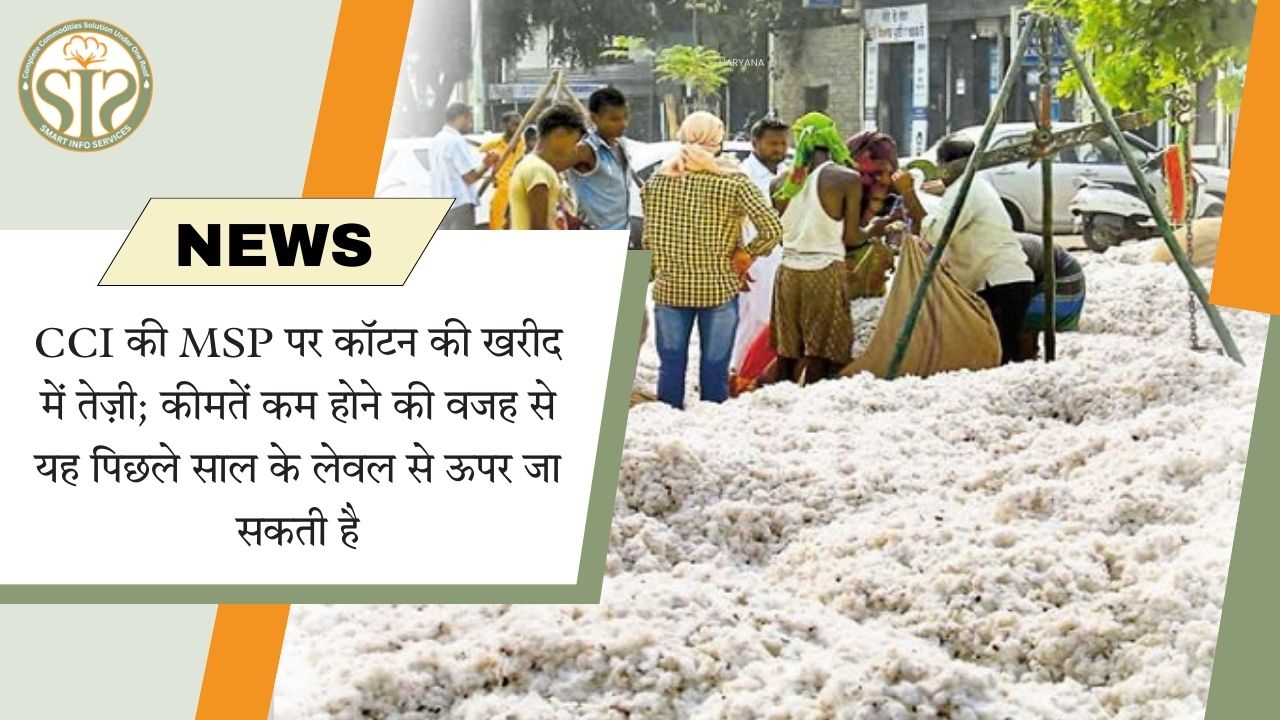
CCI की MSP पर कॉटन की खरीद तेज़ हुई; कम कीमतों की वजह से कीमतें पिछले साल के लेवल से ज़्यादा हो सकती हैं।CAI ने हाल ही में 2025-26 की फसल का अनुमान 30.5 मिलियन बेल (हर बेल का वज़न 170 kg) लगाया है, जो पिछले साल के 31.24 मिलियन बेल से 2% कम है।कॉटन की आवक बढ़ने के साथ, सरकारी कंपनी कॉटन कॉर्पोरेशन ऑफ़ इंडिया (CCI) ने मिनिमम सपोर्ट प्राइस (MSP) पर नैचुरल फ़ाइबर फसल की खरीद तेज़ कर दी है, और रोज़ाना की खरीद एक लाख बेल (170 kg) से ज़्यादा हो गई है। ट्रेड के मुताबिक, सोमवार को आवक दो लाख बेल से ज़्यादा हो गई।CCI के चेयरमैन और मैनेजिंग डायरेक्टर ललित कुमार गुप्ता ने कहा, "ओडिशा को छोड़कर सभी कॉटन उगाने वाले राज्यों में खरीद शुरू हो गई है। पिछले शुक्रवार को, हमने एक दिन में 1 लाख बेल पार कर ली थी और इस सीज़न में हमने कुल मिलाकर लगभग 8 लाख पार कर ली है।" क्योंकि ग्लोबल प्राइस ट्रेंड और कमज़ोर डिमांड की वजह से कीमतें MSP लेवल से नीचे बनी हुई हैं, इसलिए उम्मीद है कि CCI को MSP पर खरीद करके मार्केट में दखल देकर भारी काम करना होगा। प्राइवेट ट्रेड में कच्चे कॉटन (कपास) की कीमतें ₹6,500 और ₹7,500 प्रति क्विंटल के बीच हैं, जो ₹8,100 के MSP से कम है।गुप्ता ने कहा, "उम्मीद है कि हमारी खरीद पिछले साल के लेवल को पार कर जाएगी क्योंकि कीमतों में बहुत बड़ा अंतर है," साथ ही उन्होंने यह भी कहा कि इस साल क्वालिटी की समस्या ज़्यादा है। पिछले साल, CCI ने 170 kg की 1 करोड़ से ज़्यादा गांठें खरीदी थीं।CCI ने लगभग 570 सेंटर खोले हैं, जिनमें से 400 चालू हैं। उन्होंने कहा कि हर दिन 15 सेंटर खुल रहे हैं।इस साल बेमौसम और ज़्यादा बारिश ने कॉटन की फ़सल की क्वालिटी पर असर डाला है, जबकि रकबा कम था क्योंकि किसानों के एक हिस्से ने मक्का और तिलहन जैसी दूसरी फ़सलें उगानी शुरू कर दी थीं।कॉटन एसोसिएशन ऑफ़ इंडिया (CAI) के प्रेसिडेंट विनय एन कोटक ने कहा, “आवक दिन-ब-दिन बढ़ रही है और CCI ने भी बड़ी मात्रा में खरीदना शुरू कर दिया है। कीमतें स्थिर हो जाएंगी क्योंकि CCI ने ज़ोरदार खरीदारी शुरू कर दी है।”कोटक ने कहा कि बेमौसम बारिश की वजह से पिछले साल के मुकाबले अच्छी क्वालिटी का कॉटन कम हो रहा है, क्वालिटी को बहुत नुकसान हुआ है। उन्होंने कहा, “क्वांटिटी का नुकसान कम है, लेकिन क्वालिटी का नुकसान ज़्यादा है और इस वजह से कम क्वालिटी और क्वालिटी के बीच का अंतर बढ़ता रहेगा।”CAI ने हाल ही में 2025-26 की फ़सल का अनुमान 305 लाख गांठ (हर गांठ 170 kg) लगाया था, जो पिछले साल के 312.40 लाख गांठ से 2 परसेंट कम है। रायचूर के एक सोर्सिंग एजेंट रामानुज दास बूब ने कहा, “इस साल क्वालिटी एक बड़ा मुद्दा है क्योंकि सभी राज्यों में बहुत अंतर है।” उन्होंने कहा, “यार्न की कमज़ोर डिमांड ने मिलों की खरीदारी कम कर दी है। खरीदार सही कीमत पर अच्छी क्वालिटी का कॉटन खरीदने को तैयार हैं, जबकि बड़ी मिलों ने इम्पोर्टेड कॉटन चुनकर अपनी पोजीशन कवर कर ली है।” उन्होंने कहा कि अच्छी क्वालिटी का कॉटन 356 kg की कैंडी के लिए ₹50,500-52,000 की रेंज में है, जबकि कम क्वालिटी वाला प्रोडक्ट ₹47,500-49,000 के लेवल पर है।और पढ़ें :- कपास किसानों की समस्याएं गवर्नर के समक्ष रखीं

तेलंगाना: किसानों के संगठन ने गवर्नर को कपास किसानों की परेशानियों से अवगत कराया।हैदराबाद : तेलंगाना एग्रीकल्चर एंड फार्मर्स वेलफेयर कमीशन की एक टीम ने सोमवार को राजभवन में गवर्नर जिष्णु देव वर्मा से मुलाकात की और तेलंगाना में कपास किसानों के सामने आ रही मुश्किलों से उनका ध्यान दिलाया।मीटिंग के दौरान, कमीशन के चेयरमैन एम कोडंडा रेड्डी ने भूमि सुनील समेत सदस्यों के साथ बताया कि कॉटन कॉर्पोरेशन ऑफ इंडिया (CCI) ने अपने खरीद केंद्र उम्मीद से देर से खोले, जिससे किसानों को मुश्किलें हो रही हैं, जिन्हें अब अपनी फसल बेचने के लिए नए लॉन्च हुए कपास किसान ऐप पर रजिस्टर करना होगा।इसके अलावा, प्रति एकड़ सिर्फ सात क्विंटल कपास की इजाज़त देने की रोक ने किसानों की परेशानियों को और बढ़ा दिया है। इस साल, पूरे राज्य में 4.8 मिलियन एकड़ में कपास उगाया गया था, लेकिन भारी बारिश और साइक्लोन मोन्था के कारण किसानों को काफी नुकसान हुआ।कोडंडा रेड्डी ने गवर्नर को CCI के नियमों से पैदा होने वाली दिक्कतों के बारे में बताया, जो पहले से ही साइक्लोन से बुरी तरह प्रभावित किसानों की मुश्किलों को और बढ़ा रहे थे। पूरे राज्य के किसानों की शिकायतें कमीशन के ऑफिस में आ रही थीं, जिसके बाद टीम ने गवर्नर के सामने ये चिंताएं उठाईं।उन्होंने केंद्र सरकार के जारी किए गए सीड एक्ट 2025 के ड्राफ्ट पर भी अपनी आपत्ति जताई, यह देखते हुए कि इस कानून को लेकर राज्य के किसानों और किसान एसोसिएशन के बीच अलग-अलग राय थी।गवर्नर ने कॉटन किसानों के बारे में कमीशन की पेश की गई याचिका पर अच्छा जवाब दिया और CCI का मुद्दा केंद्रीय अधिकारियों के सामने उठाने का वादा किया। उन्होंने सीड एक्ट के ड्राफ्ट के बारे में और डिटेल्स पर चर्चा करने के लिए एक फॉलो-अप मीटिंग भी बुलाने को कहा।और पढ़ें :- रुपया 17 पैसे बढ़कर 89.06 पर खुला

डॉलर के मुकाबले रुपया 17 पैसे बढ़कर 89.06 पर खुलापिछले सेशन में 89.23 पर बंद होने के बाद यह US डॉलर के मुकाबले 89.06 पर खुला।और पढ़ें :- श्रीकरणपुर में नरमा खरीद शुरू, 90 क्विंटल की उठान
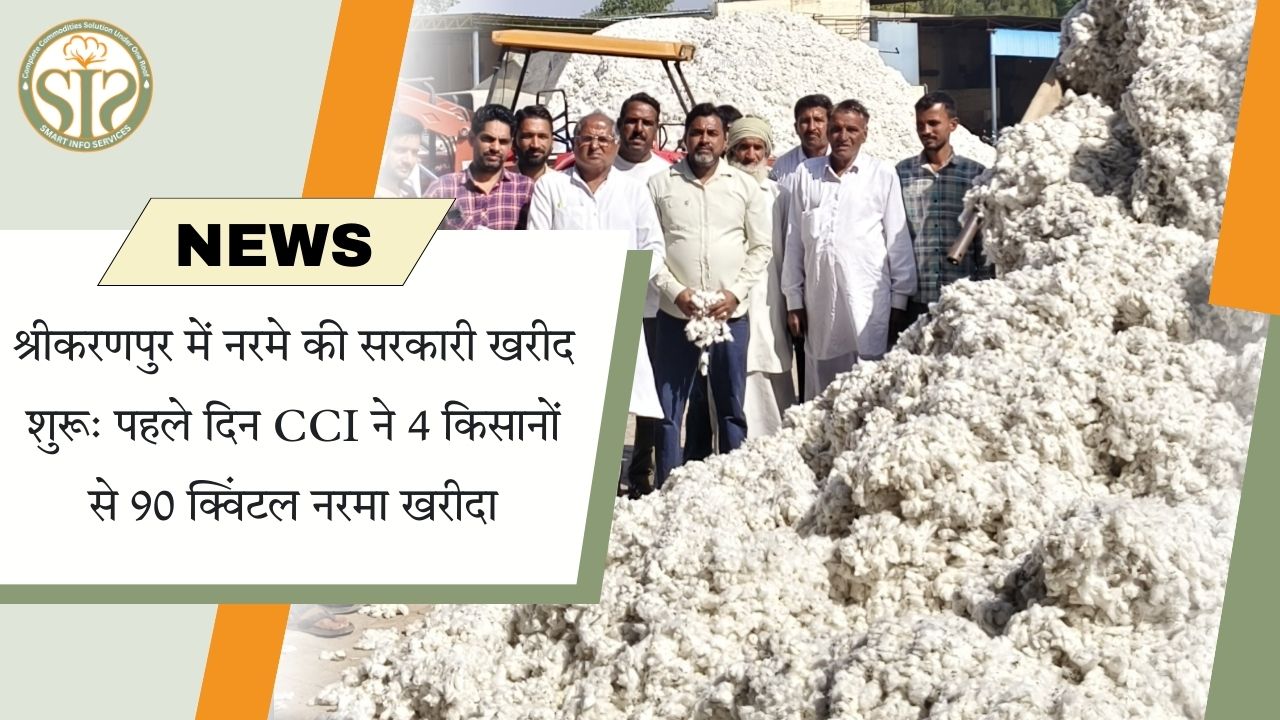
*श्रीकरणपुर में नरमे की सरकारी खरीद शुरू: पहले दिन CCI ने 4 किसानों से 90 क्विंटल नरमा खरीदा*श्रीकरणपुर में सफेद सोना कहे जाने वाले नरमे की सरकारी खरीद का शुभारंभ हो गया है। सिंगला इंडस्ट्रीज में भारतीय कपास निगम (CCI) द्वारा नरमे की खरीद की जा रही है। पहले दिन कुल 4 किसानों से लगभग 90 क्विंटल नरमा खरीदा गया।धानमंडी के वरिष्ठ व्यापारी और नगरपालिका के चेयरमैन रमेश बंसल, सिंगला इंडस्ट्रीज के मालिक सुमित सिंगला, धानमंडी के व्यापारी बंटी सिंगला और गौरव ने मिलकर नरमे की समर्थन मूल्य खरीद का उद्घाटन किया। इस दौरान भारतीय कपास निगम के बाबू विजेंद्र यादव और प्रवीण कुमार मौजूद रहे।पहले दिन चक 7FF के किसान महेंद्र सिंह पुत्र तारा सिंह का नरमा 7860 रुपए प्रति क्विंटल की दर से खरीदा गया। इसके अलावा, 43GG के किसान गुरचरण सिंह पुत्र हरपाल सिंह का नरमा 7702 रुपए प्रति क्विंटल और सुखवंत सिंह पुत्र सरदार दिलभाग सिंह का नरमा 7545 रुपए प्रति क्विंटल की दर से CCI ने खरीदा। किसान प्रभजीत सिंह पुत्र कुलवंत सिंह 48F भी नरमा लेकर पहुंचे थे।CCI के बाबू प्रवीण ने बताया कि सिंगला इंडस्ट्रीज को CCI ने अनुबंध पर लिया है। जो किसान नरमे का पंजीकरण करवा चुके हैं, वे ही किसान सिंगला इंडस्ट्रीज में CCI को अपना नरमा बेचने के लिए आ सकते हैं।और पढ़ें:- टेक्सटाइल इंडस्ट्री ने नए लेबर कोड का स्वागत किया

इंडियन टेक्सटाइल इंडस्ट्री ने नए यूनिफाइड लेबर कोड की तारीफ़ कीइंडियन टेक्सटाइल इंडस्ट्री ने देश के लेबर कानून सुधारों का स्वागत किया है। सदर्न इंडिया मिल्स एसोसिएशन (SIMA) ने कहा कि हाल ही में घोषित लेबर कोड लेबर नियमों को आसान बनाएंगे, मालिकों और कर्मचारियों दोनों के हितों की रक्षा करेंगे, और विकसित भारत की दिशा में देश की प्रगति में मदद करेंगे।SIMA के चेयरमैन दुरई पलानीसामी ने इस बड़ी और नई पहल के लिए प्रधानमंत्री नरेंद्र मोदी की तारीफ़ की। उन्होंने कहा कि इन लेबर कोड को लागू करना सरकार के लिए एक और ऐतिहासिक उपलब्धि है, जो टैक्स सिस्टम में बदलाव के बाद हुए कई बड़े बदलावों में एक मील का पत्थर है।भारत सरकार ने इंडस्ट्रियल रिलेशन कोड, 2020; सोशल सिक्योरिटी कोड, 2020; ऑक्यूपेशनल सेफ्टी, हेल्थ, और वर्किंग कंडीशंस (OSHWC) कोड, 2020; और वेज कोड, 2019 को नोटिफाई किया है। ये नियम, जो 21 नवंबर, 2025 से लागू होंगे, 29 मौजूदा लेबर कानूनों को बेहतर बनाएंगे।पलानीसामी ने कहा कि नए लेबर कोड भारतीय इंडस्ट्री को यूरोपियन यूनियन और US जैसे बड़े क्षेत्रों द्वारा तय किए गए सोशल अकाउंटेबिलिटी स्टैंडर्ड का पालन करने में मदद करेंगे। उन्होंने कहा कि नई पॉलिसी पहल से इंडस्ट्री को जल्द ही EU और US के साथ होने वाले फ्री ट्रेड एग्रीमेंट से फायदा होगा।नए लेबर कोड में काम के घंटों में छूट, फ्लेक्सिबल फिक्स्ड-टर्म एम्प्लॉयमेंट, कम्प्लायंस कॉस्ट में बराबरी का मौका, कानून को आसान बनाना, बिजनेस करने में आसानी, एक ही लाइसेंस और एक ही रजिस्ट्रेशन के ज़रिए पूरे भारत में सर्टिफिकेशन, वर्कर्स के लिए ज़रूरी हेल्थ चेक-अप, अपॉइंटमेंट लेटर जारी करना ज़रूरी, रात की शिफ्ट के दौरान ज़्यादा सुरक्षा के साथ ज़्यादा महिलाओं को काम पर रखने के लिए इंसेंटिव, और एन्युइटी-बेस्ड ग्रेच्युटी बेनिफिट जैसे नियम शामिल हैं।SIMA ने कहा कि हालांकि नए लेबर कोड के तहत वर्कर्स के लिए अतिरिक्त वेलफेयर नियमों के कारण कंपनियों की लागत बढ़ सकती है, लेकिन वर्कर्स के हितों की अच्छी तरह से रक्षा की जाती है।एसोसिएशन ने कहा कि वह लेबर से जुड़े कामों में सबसे आगे रहा है और उसने लगातार सरकार से पुराने लेबर कानूनों को आसान बनाने और एक यूनिफाइड कोड लाने की अपील की है, जिससे भारत को सोशल अकाउंटेबिलिटी में दुनिया भर में आगे रहने में मदद मिलेगी।और पढ़ें :- रुपया 09 पैसे गिरकर 89.23 प्रति डॉलर पर बंद हुआ।

सोमवार को रुपया सुबह 89.14 पर खुलने के बाद 09 पैसे गिरकर 89.23 प्रति डॉलर पर बंद हुआ।बंद होने पर, सेंसेक्स 331.21 पॉइंट या 0.39 प्रतिशत गिरकर 84,900.71 पर और निफ्टी 108.65 पॉइंट या 0.42 प्रतिशत गिरकर 25,959.50 पर था। लगभग 1120 शेयर बढ़े, 2786 शेयर गिरे, और 156 शेयर बिना किसी बदलाव के बंद हुए।और पढ़ें :- भारत-जॉर्जिया: रेशम-टेक्सटाइल सहयोग बढ़ा

भारत, जॉर्जिया ने सिल्क और टेक्सटाइल में सहयोग बढ़ाने के लिए कदम उठाएभारत ने टेक्सटाइल, सेरीकल्चर और व्यापार में जॉर्जिया के साथ सहयोग बढ़ाने के लिए एक बड़ा कदम उठाया है। सेंट्रल सिल्क बोर्ड (CSB) के मेंबर सेक्रेटरी और इंटरनेशनल सेरीकल्चर कमीशन (ISC) के सेक्रेटरी जनरल पी. शिवकुमार के नेतृत्व में टेक्सटाइल मंत्रालय का एक हाई-लेवल डेलीगेशन 17 से 21 नवंबर तक जॉर्जिया का पांच दिन का दौरा पूरा कर चुका है।इस दौरे का मकसद सेरीकल्चर, टेक्सटाइल, कपड़े और कालीन व्यापार में पार्टनरशिप को गहरा करना था।टेक्सटाइल मंत्रालय के मुताबिक, डेलीगेशन ने 11वें BACSA इंटरनेशनल कॉन्फ्रेंस - CULTUSERI 2025 में हिस्सा लिया, जहां शिवकुमार ने शुरुआती भाषण में भारत और ISC को रिप्रेजेंट किया।उन्होंने पारंपरिक सिल्क ज्ञान में भारत की मजबूत नींव और यह कैसे क्रिएटिव और कल्चरल इंडस्ट्री को आकार दे रहा है, इस बारे में बात की। कॉन्फ्रेंस के दौरान, उन्होंने "द क्रॉनिकल्स ऑफ वाइल्ड सिल्क" नाम का एक पेपर भी पेश किया, जिसमें ग्लोबल सेरीकल्चर प्रैक्टिस में भारत के योगदान को बताया गया।भारत के टेक्निकल जुड़ाव को और बढ़ाते हुए, CSB के डायरेक्टर (टेक्निकल) एस. मंथिरा मूर्ति ने भारत और बुल्गारिया के बीच मिलकर की गई रिसर्च को दिखाया। उनका प्रेजेंटेशन भारतीय हालात के हिसाब से एक प्रोडक्टिव बाइवोल्टाइन सिल्कवर्म हाइब्रिड बनाने पर फोकस था, जो सिल्क रिसर्च में चल रहे इंटरनेशनल सहयोग को दिखाता है।इस दौरे की एक बड़ी खासियत भारत के "5-इन-1 सिल्क स्टोल" का प्रेजेंटेशन था, जो एक अनोखा क्रिएशन है जिसमें मलबेरी, ओक तसर, ट्रॉपिकल तसर, मूगा और एरी सिल्क को एक ही प्रोडक्ट में मिलाया गया है। शिवकुमार की पहल पर बनाया गया यह स्टोल भारत की अलग-अलग तरह की सिल्क विरासत को दिखाता है और प्रीमियम हाथ से बने प्रोडक्ट के लिए ग्लोबल मार्केट में मज़बूत पोटेंशियल दिखाता है।भारतीय डेलीगेशन ने जॉर्जियाई सरकार के सीनियर अधिकारियों के साथ-साथ यूनिवर्सिटी, सेरीकल्चर लैब, रिसर्च सेंटर, टेक्सटाइल बनाने वालों, कालीन व्यापारियों और जॉर्जियन चैंबर ऑफ कॉमर्स एंड इंडस्ट्री (GCCI) के प्रतिनिधियों से मुलाकात की। इन मीटिंग में आपसी व्यापार को मज़बूत करने, मार्केट एक्सेस को बेहतर बनाने और सेरीकल्चर और टेक्सटाइल में मिलकर की गई रिसर्च को बढ़ावा देने पर फोकस किया गया।इस दौरे के नतीजों में टेक्सटाइल रिसर्च और ट्रेड में भारत-जॉर्जिया के बीच नए सिरे से सहयोग, कपड़ों और कालीनों में जॉइंट वेंचर के लिए नए मौकों की पहचान, और इंस्टीट्यूशनल और टेक्निकल पार्टनरशिप के लिए रास्ते बनाना शामिल था। BACSA इंटरनेशनल प्लेटफॉर्म में भारत की एक्टिव भूमिका ने सिल्क और टेक्सटाइल इनोवेशन में ग्लोबल लीडर के तौर पर इसकी स्थिति को भी मज़बूत किया।और पढ़ें :- "2024-25: राज्यवार CCI कपास बिक्री"
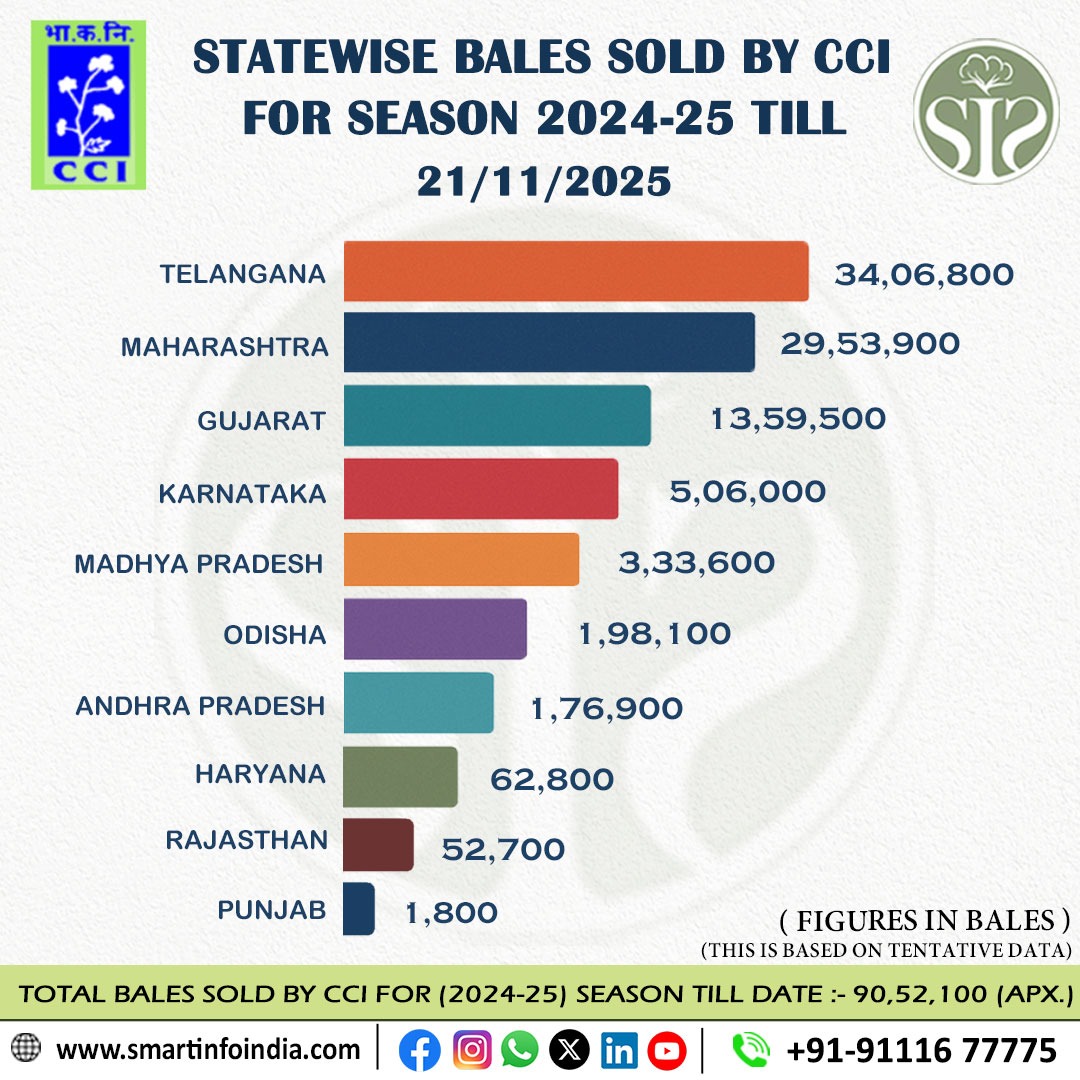
राज्य के अनुसार CCI कपास बिक्री विवरण – 2024-25 सीज़नभारतीय कपास निगम (CCI) ने इस सप्ताह अपनी कीमतों में कोई बदलाव नहीं किया जिससे 2024-25 सीज़न में अब तक कुल बिक्री लगभग 90,52,100 गांठों तक पहुँच गई है। यह आंकड़ा अब तक की कुल खरीदी गई कपास का लगभग 90.52% है।राज्यवार बिक्री आंकड़ों से पता चलता है कि महाराष्ट्र, तेलंगाना और गुजरात से बिक्री में प्रमुख भागीदारी रही है, जो अब तक की कुल बिक्री का 85.28% से अधिक हिस्सा रखते हैं।यह आंकड़े कपास बाजार में स्थिरता लाने और प्रमुख कपास उत्पादक राज्यों में नियमित आपूर्ति सुनिश्चित करने के लिए CCI के सक्रिय प्रयासों को दर्शाते हैं।और पढ़ें :- रुपया 26 पैसे मजबूत होकर 89.14 प्रति डॉलर पर खुला

रुपया 26 पैसे बढ़कर 89.14/USD पर खुलाभारतीय रुपया सोमवार को 26 पैसे बढ़कर 89.14 प्रति डॉलर पर खुला, जबकि शुक्रवार को यह 89.40 पर बंद हुआ था।और पढ़ें :- “कपास से कपड़े तक: 10 साल का मजबूत मिशन”

खेती से सिलाई तक: कपास के हर धागे को मजबूत करेगा 10 साल का मिशनभारत सरकार ने कपास (Cotton) उत्पादकता बढ़ाने के लिए एक बड़ा कदम उठाया है. पहले यह मिशन 5 साल के लिए चलाने की तैयारी थी, लेकिन प्रधानमंत्री कार्यालय (PMO) ने सुझाव दिया कि 5 साल कम हैं. इसलिए अब कपास उत्पादकता मिशन को 10 साल की अवधि देने की तैयारी है. इस मिशन का उद्देश्य कपास उत्पादन बढ़ाना, बेहतर किस्में उपलब्ध कराना और किसानों की आमदनी में बढ़ोतरी करना है.मिशन क्यों ज़रूरी है? देश में कपास उत्पादन लगातार उतार–चढ़ाव में है. 2023-24 में उत्पादन 32.52 मिलियन गांठ था. 2024-25 में यह घटकर 29.72 मिलियन गांठ रह गया.2025-26 के लिए सटीक आंकड़े सरकार ने अभी जारी नहीं किए, लेकिन व्यापारिक संस्थाएं अनुमान लगा रही हैं कि उत्पादन लगभग 30.5 मिलियन गांठ रह सकता है. इस गिरावट से किसान और टेक्सटाइल उद्योग दोनों प्रभावित होते हैं. इसलिए सरकार का यह मिशन बेहद महत्वपूर्ण माना जा रहा है.क्या मिलेगा किसानों को इस मिशन से?1. बेहतर बीज और तकनीकICAR (भारतीय कृषि अनुसंधान परिषद) किसानों को नई, बेहतर और ज्यादा उत्पादन देने वाली कपास की किस्में उपलब्ध कराएगी. परंतु सरकार ने यह भी साफ किया है कि बीज अनुसंधान का काम पहले से ही “हाई-यील्डिंग सीड मिशन” में प्रस्तावित है, इसलिए दोनों योजनाओं में दोहराव नहीं होगा.2. खेती की आधुनिक तकनीकेंइस मिशन के तहत किसानों को आधुनिक खेती तकनीकें, मिट्टी प्रबंधन, कीट नियंत्रण और जल प्रबंधन के बारे में प्रशिक्षण मिलेगा.3. लंबी रेशे वाली कपास का प्रचारसरकार एक्स्ट्रा-लॉन्ग स्टेपल कॉटन (Extra Long Staple Cotton) को बढ़ावा देगी, जिससे कपड़ा उद्योग को बेहतर गुणवत्ता वाला रेशा मिलेगा और किसानों को अधिक कीमत.क्या है 5F विज़न?वित्त मंत्री निर्मला सीतारमण ने बजट भाषण में बताया कि यह मिशन भारत के 5F विज़न पर आधारित है:Farm → Fibre → Factory → Fashion → Foreign. इसका मतलब है कि खेती से लेकर कपड़ा फैक्ट्री, फैशन और विदेशों में निर्यात तक एक मजबूत सप्लाई चेन बनाई जाएगी. इससे कपास किसानों को बेहतर कीमत और निश्चित बाजार मिलेगा.जट और मंत्रालयों में खींचतान *शुरू में इस मिशन के लिए लगभग ₹5,000 करोड़ खर्च का अनुमान था. *लेकिन अब जब मिशन की अवधि 10 साल होने की संभावना है, तो खर्च बढ़ सकता है.टेक्सटाइल मंत्रालय चाहता है कि इस धन का कुछ हिस्सा जिनिंग फैक्ट्रियों के आधुनिकीकरण पर लगाया जाए. पर वित्त विभाग और नीति आयोग ने इस प्रस्ताव को मंज़ूरी नहीं दी. उनका कहना है कि बजट में यह बात घोषित नहीं की गई थी, इसलिए इसे हटाना होगा.केंद्र और राज्य सरकारों की भूमिकावित्त विभाग ने सलाह दी है कि यह मिशन सेंट्रली स्पॉन्सर्ड स्कीम होना चाहिए ताकि खर्च केंद्र और राज्य मिलकर करें. चूंकि कृषि राज्य का विषय है, इसलिए राज्यों की भागीदारी जरूरी है. सरकार चाहती है कि ICAR अपना अंतिम प्रस्ताव सीधे PMO को भेज दे ताकि ऊपरी स्तर पर सभी मंत्रालयों की बैठक कर जल्द निर्णय लिया जा सके. मिशन के शुरू होने में थोड़ा समय लग रहा है, लेकिन तैयारियां तेजी से चल रही हैं.कपास किसानों की आमदनी बढ़ाने की पहलकपास उत्पादकता मिशन भारत के लाखों कपास किसानों के लिए एक बड़ा अवसर है. 10 साल तक चलने वाला यह मिशन बेहतर बीज, आधुनिक खेती तकनीक और गुणवत्ता सुधार पर फोकस करेगा. इससे किसानों की आमदनी बढ़ेगी और देश का टेक्सटाइल उद्योग भी मजबूत होगा. यह मिशन भारत को वैश्विक कपास बाजार में और अधिक प्रतिस्पर्धी बनाएगा.और पढ़ें :- CCI ने 90% कपास बिक्री पूरी की, कीमतें स्थिर
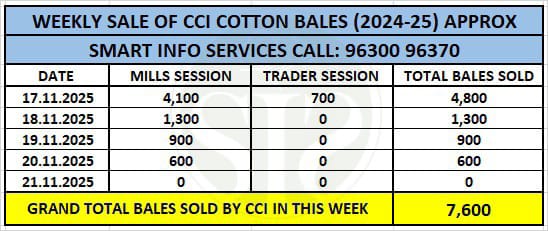
भारतीय कपास निगम (CCI) ने इस सप्ताह अपनी कीमतों में कोई बदलाव नहीं किया और ई-नीलामी के माध्यम से अपने 2024-25 सीजन के कुल कपास खरीद का 90.52% बेच दिया।17 नवंबर से 21 नवंबर 2025 के पूरे सप्ताह के दौरान, CCI ने मिल और ट्रेडर सत्रों में ऑनलाइन नीलामियाँ आयोजित कीं, जिनमें लगभग 7,600 गांठों की कुल बिक्री हुई। खास बात यह रही कि CCI ने इस सप्ताह कीमतों में किसी भी प्रकार का बदलाव नहीं किया।साप्ताहिक बिक्री 17 नवंबर 2025 : सप्ताह की सबसे अधिक बिक्री दर्ज की गई — 4,800 गांठें, जिनमें से 4,100 गांठें मिलों ने और 700 गांठें व्यापारियों ने खरीदीं।18 नवंबर 2025 : कुल 1,300 गांठों की बिक्री हुई, जो पूरी तरह मिलों द्वारा खरीदी गईं।19 नवंबर 2025 : बिक्री 900 गांठों पर रही, और सभी गांठें मिलों ने खरीदीं।20 नवंबर 2025 : कुल बिक्री 600 गांठों की रही, जिन्हें पूरी तरह मिलों ने खरीदा।21 नवंबर 2025 : सप्ताह का समापन दोनों सत्रों में शून्य बिक्री के साथ हुआ।CCI ने पूरे सप्ताह में लगभग 7,600 गांठें बेचीं। इसके साथ ही 2024-25 सीजन में उसकी कुल बिक्री बढ़कर 90,52,100 गांठें हो गई, जो उसकी कुल खरीद का 90.52% है।

शुक्रवार को भारतीय रुपया 73 पैसे गिरकर 89.40 प्रति डॉलर पर बंद हुआ, जबकि सुबह यह 88.67 पर खुला था।बंद होने पर, सेंसेक्स 400.76 पॉइंट या 0.47 प्रतिशत गिरकर 85,231.92 पर था, और निफ्टी 124 पॉइंट या 0.47 प्रतिशत गिरकर 26,068.15 पर था। लगभग 1113 शेयर बढ़े, 2711 शेयर गिरे, और 131 शेयर बिना बदले।और पढ़ें :- रुपया 03 पैसे मजबूत होकर 88.67 पर खुला

रुपया 03 पैसे बढ़कर 88.67 पर खुलाशुक्रवार को भारतीय रुपया डॉलर के मुकाबले 88.67 पर खुला, जबकि गुरुवार को यह 88.70 पर बंद हुआ था।और पढ़ें :- रुपया 08 पैसे गिरकर 88.70 प्रति डॉलर पर बंद हुआ।

गुरुवार को भारतीय रुपया 08 पैसे गिरकर 88.70 प्रति डॉलर पर बंद हुआ, जबकि सुबह यह 88.62 पर खुला था।बंद होने पर, सेंसेक्स 446.21 पॉइंट या 0.52 प्रतिशत बढ़कर 85,632.68 पर और निफ्टी 139.50 पॉइंट या 0.54 प्रतिशत बढ़कर 26,192.15 पर था। लगभग 1764 शेयर बढ़े, 2224 शेयर गिरे, और 167 शेयर बिना बदले।और पढ़ें :- कॉटन खरीद ढील के लिए किसानों का 19-26 नवंबर तक विरोध
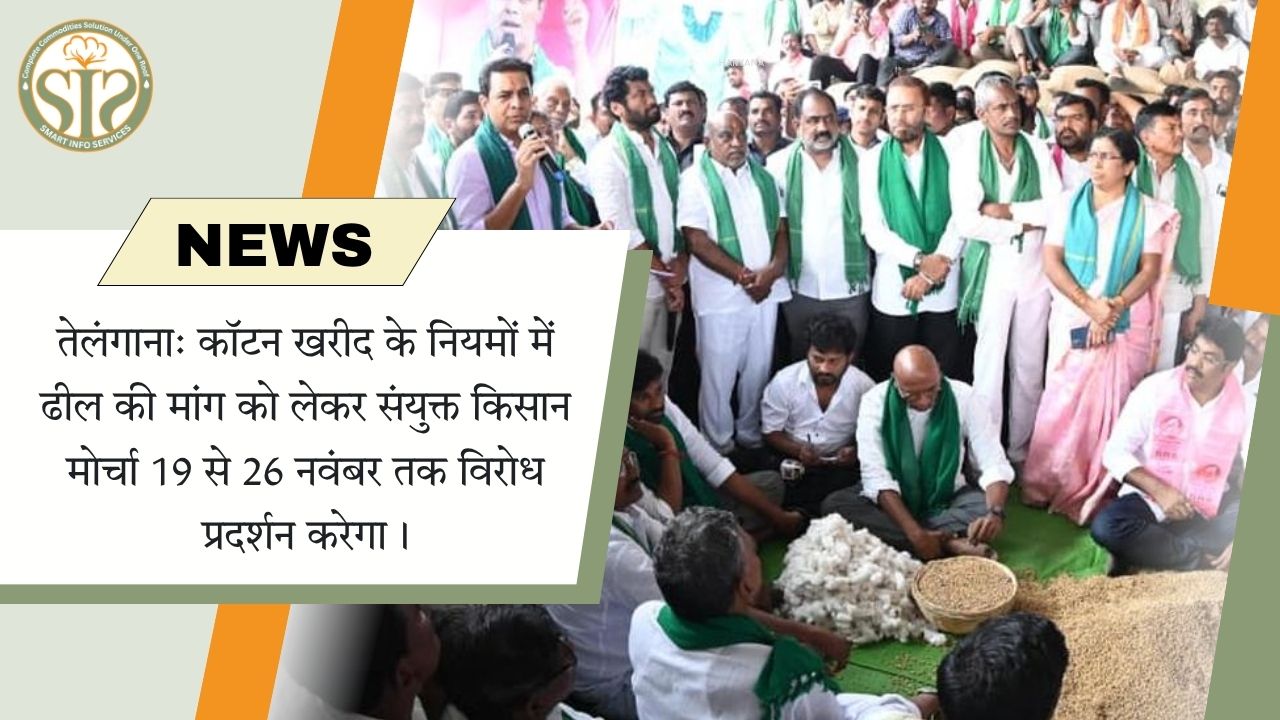
तेलंगाना: कॉटन खरीद के नियमों में ढील की मांग को लेकर संयुक्त किसान मोर्चा 19 से 26 नवंबर तक विरोध प्रदर्शन करेगा।खम्मम: संयुक्त किसान मोर्चा ने कॉटन कॉर्पोरेशन ऑफ इंडिया (CCI) द्वारा कॉटन खरीद के नियमों में ढील और किसानों की दूसरी लंबे समय से पेंडिंग मांगों के लिए दबाव बनाने के लिए 19 से 25 नवंबर तक खम्मम जिले के गांवों में विरोध प्रदर्शन का आह्वान किया है।एक बयान में, CPI (M) से जुड़े तेलंगाना रायथू संघम के जिला सचिव बोंथु रामबाबू ने सभी किसान और मजदूर संगठनों से हाल ही में हुई भारी बारिश और कॉटन खरीद पर CCI की “पाबंदियों” से परेशान किसानों के मुद्दों को उठाने के लिए विरोध कार्यक्रमों में सक्रिय रूप से भाग लेने का आह्वान किया।उन्होंने कहा कि केंद्र की “किसान विरोधी” और “मजदूर विरोधी” नीतियों के विरोध में 26 नवंबर को खम्मम शहर में एक रैली-कम-प्रदर्शन आयोजित किया जाएगा।और पढ़ें :- एनुमामुला मार्केट में कॉटन ट्रेडिंग दोबारा शुरू
JP Morgan warns of steep oil price fall to $30s by FY27: ReportIf realised, such a correction would offer meaningful relief for India, where oil imports weigh heavily on macro stabilityJP Morgan has issued a striking forecast on global energy markets, with The Economic Times reporting that the investment bank sees Brent crude potentially slipping into the $30 range by the end of FY27.The projection is built on expectations of a widening supply glut that continues to outpace demand growth through the next three years.If realised, such a correction would offer meaningful relief for India, where oil imports weigh heavily on macro stability.The Economic Times notes that global oil demand is set to rise by 0.9 mbd in 2025, lifting total consumption to 105.5 mbd. Demand growth is likely to remain steady in 2026 and pick up to 1.2 mbd in 2027. However, JP Morgan's estimates suggest supply will expand almost three times faster than demand in both 2025 and 2026. Even though supply growth eases in 2027, it is still expected to exceed what the market can comfortably absorb.A key driver behind this mismatch is the renewed strength of non-OPEC+ output. As highlighted by The Economic Times, JP Morgan believes that half of the incremental supply through 2027 will originate outside the producer alliance, supported by strong offshore projects and persistent momentum in global shale. Offshore, once dismissed as an expensive and cyclical business, has evolved into a dependable, low-cost growth stream. It is projected to contribute 0.5 mbd in 2025, 0.9 mbd in 2026 and a further 0.4 mbd in 2027. With almost all FPSOs through 2029 already in place, the bank sees exceptionally high visibility on upcoming offshore additions.Shale oil remains the system's most responsive supply lever. Though US shale growth has cooled, productivity gains and better capital efficiency continue to bolster output. Beyond the US, Argentina's Vaca Muerta has matured into a cost-competitive, scalable basin backed by expanding export capacity. As reported by The Economic Times, global shale output increased by 0.8 mbd in 2025, and if crude remains in the mid-$50 band, shale supply could rise another 0.4 mbd in 2026 and 0.5 mbd in 2027.These additions have contributed to a sizeable inventory build-up. The Economic Times cites JP Morgan's assessment that global observable stocks have risen by 1.5 mbd so far this year, with nearly 1 mbd located in oil-on-water and Chinese inventories. The bank expects this accumulated surplus to spill over into 2026, potentially widening the glut to 2.8 mbd in 2026 and 2.7 mbd in 2027 without corrective action.Such an overhang, The Economic Times reports, implies Brent could slip below $60 next year, drift into the low $50s by late 2026, and end that year with prices showing a $4 handle. For 2027, JP Morgan projects an average of around $42, with the possibility of prices falling into the $30s by the close of the fiscal year. While the bank acknowledges that the full downside may not materialise, it expects market balancing to occur primarily through voluntary and forced production cuts. JP Morgan's working forecast for Brent in 2026 stands at $58, while current Brent prices hover just above $60 per barrel.read more :- High Court seeks response from CCI on lack of cotton centres in Vidarbha

High Court Notice to CCI: Shortage of Cotton Procurement Centers in Vidarbha; High Court Tells Cotton CorporationHigh Court Notice to CCI: Vidarbha, the country's largest cotton producer, faces a severe shortage of procurement centers. The High Court has reprimanded the Cotton Corporation for opening only 89 centers, while hundreds of farmers are awaiting them, and urged immediate action in the interests of farmers. (High Court Notice to CCI)High Court Notice to CCI: Cotton farmers in Vidarbha have once again been discriminated against. Despite the need for at least 557 procurement centers in Vidarbha, which has 16,86,485 hectares of cotton cultivation, the Cotton Corporation has opened only 89 centers. (High Court Notice to CCI)On Tuesday, the Nagpur Bench of the Bombay High Court reprimanded the Cotton Corporation for this serious negligence and ordered a detailed response within three weeks. (High Court Notice to CCI)Public Interest Litigation and Court HearingA public interest litigation filed by Shriram Satpute, District Secretary of the Consumer Panchayat of Maharashtra, was heard before a bench of Justices Anil Kilor and Rajneesh Vyas.On this occasion, an affidavit submitted by court friend Advocate Purushottam Patil sharply criticized the Cotton Corporation's reckless policies and described the true plight of farmers.557 centers needed – only 89 centers operational: Court's questionAccording to the data provided in the petition,Nagpur Division: 10.39 lakh hectares of cotton cultivation, but 213 centers are needed.Amravati Division: 10.39 lakh hectares of cotton cultivation, but 344 centers are needed.But the actual centers operational are only 35 and 54!Expressing anger over this major misstep, the bench questioned on what basis the corporation told farmers that there were enough centers. A double blow to farmers; private traders benefited.Like in previous years, the corporation began procurement this year in the second week of November.As a result, millions of farmers were left with no choice but to sell cotton to private traders.A rate 8,000-1,000 rupees lower than the minimum support price.Massive financial loss.Advocate Patil clearly stated that this situation is a direct result of the corporation's delayed policy.Debate in court on procurement limit and moisture percentageCurrently, registration through the 'Cotton Kisan' app is required.And the procurement limit is 5 quintals per acre.However, the average production in Vidarbha is 6 to 10 quintals per acre.Therefore, a demand was made in court to increase the limit to 10 quintals.Additionally, it has been suggested that the moisture limit be increased from 12% to 15%.1 - The Corporation should begin cotton procurement on or before September 31st every year.2 - Registration and slot booking should not be mandatory. Farmers should be provided with both online and offline facilities.3 - The Corporation should compensate farmers who have to sell cotton below the minimum support price.4 - Cotton procurement centers should remain operational until the end of April every year.read more :- Rupee opens 03 paise down at 89.25

Rupee opens 3 paise down at 89.25 on persistent dollar demandThe rupee opened at 89.25 against the US dollar after ending the previous session at 89.22.read more :- Cotton price crisis: Rs 800 below MSP, farmers in loss
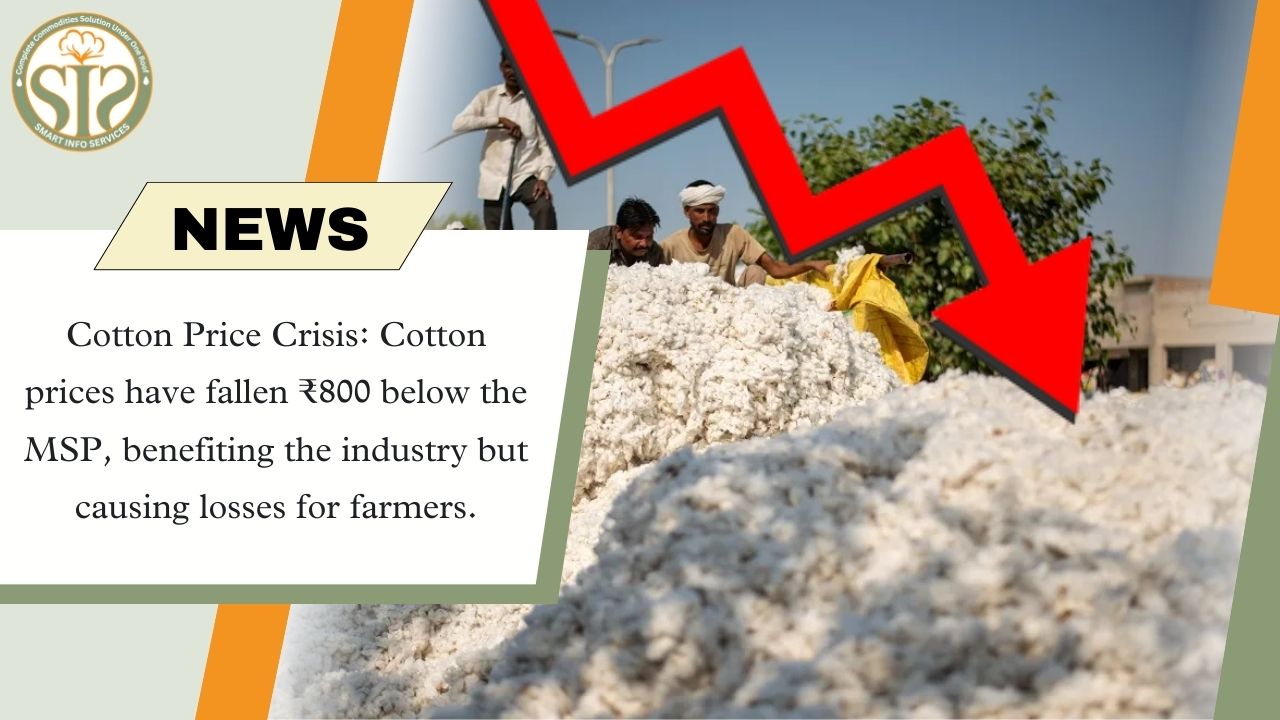
Cotton Price Crisis: Cotton prices have fallen ₹800 below the MSP, benefiting the industry but causing losses for farmers.Cotton prices in the country are continuously falling, and farmers are receiving prices ₹700–₹800 below the MSP. While zero import duty is significantly benefiting the textile industry, rising imports and weak demand are preventing farmers from receiving fair prices for their produce, forcing them to shift away from cotton and toward other crops. After soybeans and maize, cotton is now next in line. Cotton prices in the country are continuously falling. Government data shows that farmers are receiving rates ₹700–₹800 below the MSP. Regarding the Minimum Support Price (MSP), the central government has fixed the rate at ₹7,710 per quintal for medium-staple cotton and ₹8,110 for long-staple cotton. Currently, the market is seeing the majority of arrivals of medium-fiber cotton, which is trading at ₹6,988, compared to the MSP of ₹7,710. This rate information is provided by the government agency AgMarknet.This decline in prices comes at a time when the central government has reduced the import duty on cotton to zero. The decline clearly indicates that traders and mill owners are benefiting from this government decision, while farmers are struggling to secure MSP. This clearly indicates that farmers have suffered a significant financial blow following the zero import duty. If this situation continues, farmers will further reduce cotton cultivation.Low Inflows, Low PricesGovernment data shows that the model price received by farmers has declined in contrast to the rapid increase in the MSP. Surprisingly, cotton arrivals in the markets have fallen over time. A common trade rule is that when imports and supplies fall, the price of the product rises. However, this did not happen with cotton. Instead of rising, its prices fell, and the main reason for this is the zero import duty.Benefits for mill owners, losses for farmersIndia has zero import duty on cotton. This means that any trader or miller in the country can import cotton at zero import duty. The government has extended this until December 31st. The government argues that zero import duty will stabilize the cost of the textile industry, which will help textile companies and increase the purchase of cotton from farmers.The government's argument is in accordance with the rules, but on the ground, it seems to be showing no benefit. The situation on the ground is that farmers are suffering losses. If there were any benefit, they would receive good prices for cotton. The situation is such that farmers are not even able to get the MSP for cotton. On the other hand, textile companies and mill owners are benefiting.Agriculture will be devastatedCotton expert Vijay Jawanghia says about this trend, "Zero import duty will reduce the price of cloth by 2 to 2.5 rupees, directly benefiting mills and traders." According to one estimate, this import duty decision will benefit the textile industry by 15,000 crore rupees, while farmers' entire agriculture will be devastated. Its impact is already visible, as farmers are now shifting their focus from cotton to pulses and oilseeds. This is directly due to falling cotton prices and zero import duty.Loss from ImportsA simple principle of agriculture and trade is that when goods start coming from abroad, local production begins to decline. The government is also aware of this principle, yet zeroing the import duty on cotton until December is unimaginable, as the cotton season begins in October and the Cotton Corporation of India (CCI) begins procurement. Considering the cotton imports, they continue to rise.How much did imports increase?Government data shows that while imports in 2023-24 were 1,550,312 bales (one bale contains 170 kg), they increased to 4,139,941 bales in 2024-25. While cotton imports increased, cotton cultivation in the country declined. Despite this, farmers did not receive good prices. The reason is the purchase of cotton from abroad. When mills and traders can easily obtain foreign goods at low prices, why would they buy cotton from domestic farmers? This has caused frustration among farmers, and they are turning to other crops instead of cotton.How much is the price?Global trends are also being blamed for this price situation. This means that cotton purchases worldwide are sluggish, leading to a decline in demand for Indian cotton. Experts say that due to weak demand and global price trends, prices are remaining below the MSP. Therefore, it is expected that the Cotton Corporation of India (CCI) will provide relief to farmers by purchasing at the MSP. However, this relief will only be effective if farmers receive the MSP price.The CCI's purchases reveal that raw cotton prices in private trade are hovering between Rs 6,500 and Rs 7,500 per quintal, which is lower than the MSP of Rs 8,100.Clearly, when even government agencies are not providing MSP rates to farmers, what can farmers expect from traders? Overall, MSP has become a distant dream for farmers; they hear about it, but they cannot get it. Now, farmers' entire hope rests on the government to intervene in the market and ensure that cotton receives the MSP.read more :- Maharashtra: Farmers increasingly turn to CCI for cotton procurement
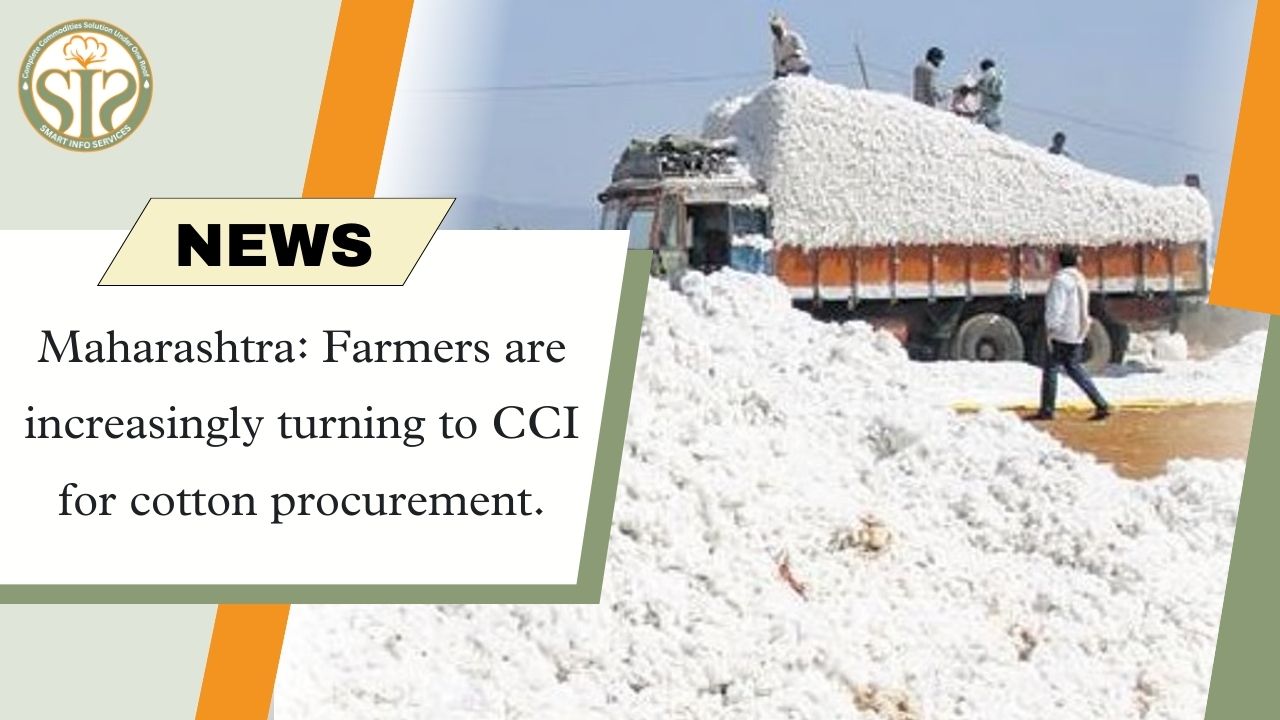
Maharashtra: Farmers are increasingly turning to CCI for cotton procurement.Beed: Government cotton procurement centers are offering better rates than private procurement centers, leading to a significant increase in cotton growers' inclination towards CCI. However, registration, approval, and other complex requirements have forced farmers to repeatedly visit market committee offices and ginning centers, exacerbating their problems.Thirty thousand quintals of cotton were planted in this year's Kharif season. After a delay in sowing, continuous rains again caused significant damage to the cotton. Despite this, farmers resorted to expensive fertilizers and pesticide sprays. However, the heavy rains damaged the cotton. The cotton on the trees was destroyed in just two harvests.Currently, Rabi sowing is underway, so farmers are prioritizing selling cotton. The government initially established government cotton procurement centers, but the stringent conditions imposed on them have exacerbated farmers' problems. Last year, CCI purchased thirty quintals of cotton per hectare; However, this year, the procurement limit has been set at only thirteen quintals per hectare, and farmers are demanding its repeal. Meanwhile, registration with the CCI on the "Cotton Kisan" app is required to sell cotton. After registration, approval from the Market Committee office, followed by slot booking, has left farmers confused.The figures speak for themselves...Private procurement centers: SixCotton purchased: Twenty-six thousand quintalsProcurement start date: October 27Rates received: Six thousand five hundred to seven thousand one hundred rupees per quintalCCI procurement centers: SixCotton purchased: Twenty-five thousand quintalsProcurement start date: November 10Rates received: Seven thousand seven hundred to eight thousand rupees per quintalTotal cotton purchased: 51 thousand quintalsIf you have any problems selling cotton or registering, please contact the Market Committee office.read more :- INR Drops 16 Paise, Closes at 89.22 per Dollar

The Indian rupee on tuesday lower 16 paise to close at 89.22 per dollar, while it opened at 89.06 in the morning.At close, the Sensex was down 313.70 points or 0.37 percent at 84,587.01, and the Nifty was down 74.70 points or 0.29 percent at 25,884.80. About 2022 shares advanced, 1972 shares declined, and 149 shares unchanged.read more :- China's soy oil exports to India rise on domestic demand
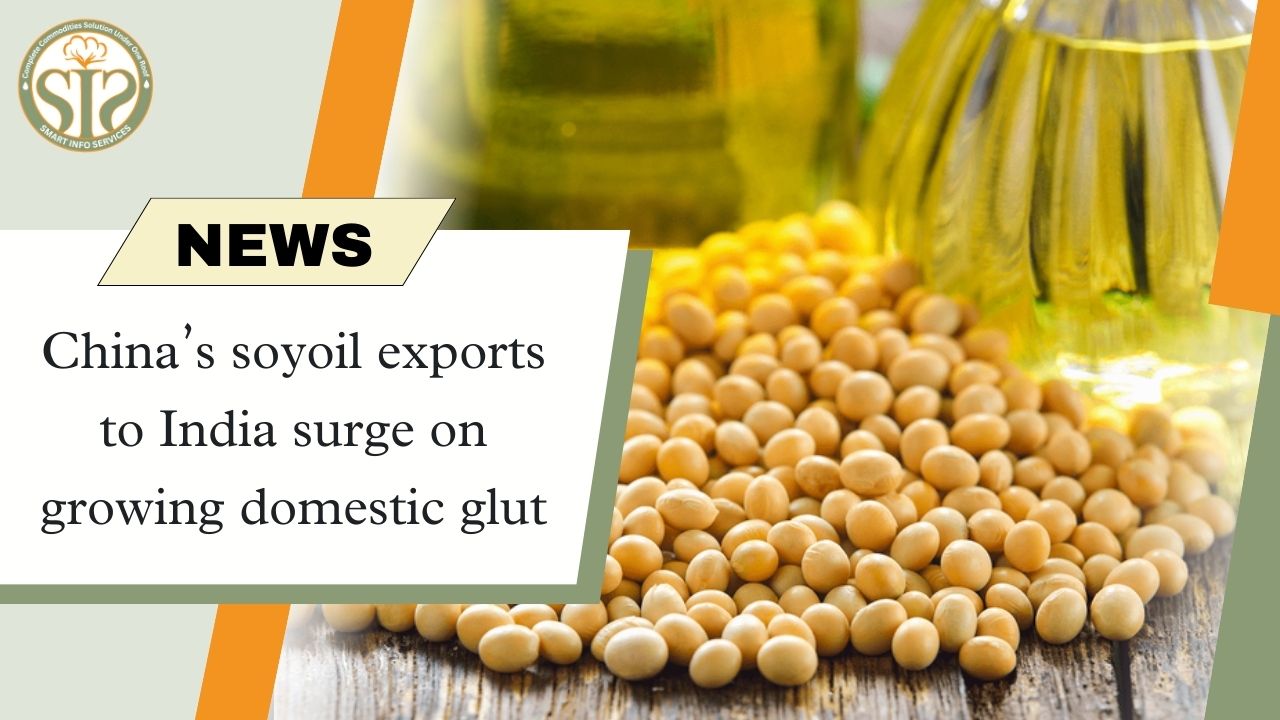
China’s soyoil exports to India surge on growing domestic glutChina’s exports of soybean oil to India are surging as weak domestic demand for the cooking ingredient coincides with robust imports of soybeans from South America and, more recently, the US. Asia’s largest economy shipped a record 70,877 tonnes of the cooking oil in October, according to customs data, most of which went to India. Exports in the first 10 months of the year have reached 329,000 tonnes, almost triple what they were for the whole of 2024. Beijing has long viewed its dependence on foreign soybeans, which are processed into animal feed and cooking oil, as a vulnerability in a world where geopolitics and viruses can quickly disrupt commodity flows. However, robust imports from South America are hitting a fairly tepid local economy, forcing Chinese soyoil processors to seek new markets.It’s another example of flagging consumption in China resulting in a surplus, with the excess flooding into global markets. In this case it’s a development that’s welcome in India, the world’s biggest importer of soybean oil. This newly forged trade route is likely to become busier, as China returns to buying US soybeans after last month’s trade truce, and relations between Beijing and New Delhi improve. The trade makes logistical sense for India, said Aashish Acharya, a vice president at Patanjali Foods Ltd, one of the country’s top vegetable-oil buyers. “Quality is comparable with South American supplies, prices are competitive and Chinese exporters are seeking reliable buyers.” Chinese soybean oil is trading at a discount of US$10 (RM41.36) to US$15 a tonne to that from South America, and can reach India’s east coast in about 10 to 12 days, compared with the 50- to 60-day journey from Brazil and Argentina, Acharya said. Imports from China are at about 70,000 tonnes so far in November and could increase by another 12,000 tonnes by month end, he said.China is the world’s biggest producer of soybean oil, churning out around 20 million tonnes a year. It used to consume nearly all of that output at home, often having to resort to imports to meet local demand. But as the economy has cooled, people have cut back on eating out, damping soyoil consumption from restaurants.The trade is being abetted by a glut of soybean oil that’s built up in China. Commercial stockpiles were at more than one million tonnes in mid-November, a seven-year high for that time of year, commodities consultancy Mysteel said in a note. Chinese crushers are expected to maintain a high level of activity and it will take time for local demand to recover, it said.On the wireChina continued its buying of American soybeans, though traders remain cautious over whether the Asian nation will come through with the much larger level of expected purchases this year.Seaborne shipments of liquefied natural gas to China in November are set to drop for a 13th straight month on an annual basis, extending a slump in purchases as domestic output and piped imports remain strong.In the roughly three weeks since Japanese Prime Minister Sanae Takaichi commented on a possible Taiwan contingency in parliament, China has unleashed economic reprisals, nationalist barbs and a diplomatic offensive to show its displeasure.read more :- CCI to ramp up cotton procurement at MSP, prices may rise above last year's

CCI's cotton procurement at MSP accelerates; prices may exceed last year's levels due to lower prices.CAI recently estimated the 2025-26 crop at 30.5 million bales (each bale weighing 170 kg), down 2% from last year's 31.24 million bales. As cotton arrivals increase, the state-owned Cotton Corporation of India (CCI) has accelerated its procurement of the natural fiber crop at the Minimum Support Price (MSP), with daily purchases surpassing one lakh bales (170 kg). According to trade, arrivals surpassed two lakh bales on Monday."Procurement has begun in all cotton-growing states except Odisha. Last Friday, we crossed 1 lakh bales in a day and this season we have crossed nearly 8 lakh in total," said CCI Chairman and Managing Director Lalit Kumar Gupta.As prices continue to remain bearish - below MSP levels - influenced by the global price trend amidst weak demand, the expectation is that CCI will have to do the heavy lifting through its market intervention buying at MSP. The raw cotton (kapas) prices in the private trade are ruling between ₹6.500 and ₹7,500 per quintal, lower than the the MSP of ₹8,100. “The expectation is that our procurement will likely cross last year’s levels because the price gap is wide open,” Gupta said, while adding that the quality issue is more this year. Last year, CCI had procured over 1 crore bales of 170 kg each.CCI has opened around 570 centres, of which 400 are operational. Every day 15 centres are coming up, he said.Unseasonal and excess rains had impacted the quality of the cotton crop this year, while the acreages were lower as a section of farmers had switched over to other crops like maize and oilseeds.“The arrivals are increasing day-by-day and CCI has also started buying in bulk quantity. The prices will stabilise as CCI has started aggressive buying,” said Vinay N Kotak, President, Cotton Association of India (CAI), the apex trade body.Kotak said the good quality cotton is getting scarce compared to last year because of the unseasonal rains, there is a huge damage to quality. “The quantity damage is smaller, but the quality damage is bigger and because of that the difference between the lower quality and quality will keep widening,” he said.CAI had recently estimated the 2025-26 crop at 305 lakh bales of 170 kg each, down 2 per cent from previous year’s 312.40 lakh bales.“Quality is a big issue this year as there’s a lot variation in all the States,” said Ramanuj Das Boob, a sourcing agent from Raichur. “Weak yarn demand has reduced mill buying. Buyers are willing to buy quality cotton at reasonable price, while the big mills have covered their positions opting for imported cotton,” he said. Quality cotton is hovering in the range of ₹50,500-52,000 per candy of 356 kg, while the lower quality produce is around ₹47,500-49,000 levels, he said. read more :- Cotton farmers' problems were placed before the Governor.

Telangana : Farmers’ body apprises guv on cotton ryots’ woes.Hyderabad: A Telangana Agriculture and Farmers Welfare Commission team on Monday met governor Jishnu Dev Varma at Raj Bhavan and brought to his attention the challenges being faced by cotton farmers in Telangana.During the meeting, commission chairman M Kodanda Reddy along with members, including Bhumi Sunil, highlighted that the Cotton Corporation of India (CCI) opened its procurement centres later than expected, causing difficulties for farmers who now need to register on the newly launched Kapas Kisan app to sell their produce.Furthermore, the restriction allowing only seven quintals of cotton per acre has added to the farmers' woes. This year, cotton was grown on 4.8 million acres across the state, but due to heavy rain and cyclone Montha, farmers endured significant losses.Kodanda Reddy informed the governor about the issues stemming from CCI's regulations, which were exacerbating the struggles of farmers already hit hard by the cyclone. Complaints from farmers statewide were flooding the commission's office, prompting the team to raise these concerns with the governor. They also expressed their objections to the draft Seed Act 2025 issued by the central govt, noting that there were differing opinions among the state's farmers and farmer associations regarding this legislation.The governor responded favourably to the petition presented by the commission regarding the cotton farmers and promised to raise the CCI issue with the central authorities. He also asked for a follow-up meeting to further discuss the details surrounding the draft Seed Act.read more :- INR Opens Stronger by 17 Paise at 89.06

Rupee opens 17 paise up at 89.06 against dollar It opened at 89.06 against the US dollar after ending the previous session at 89.23.read more :- Cotton procurement begins in Srikaranpur, 90 quintals lifted
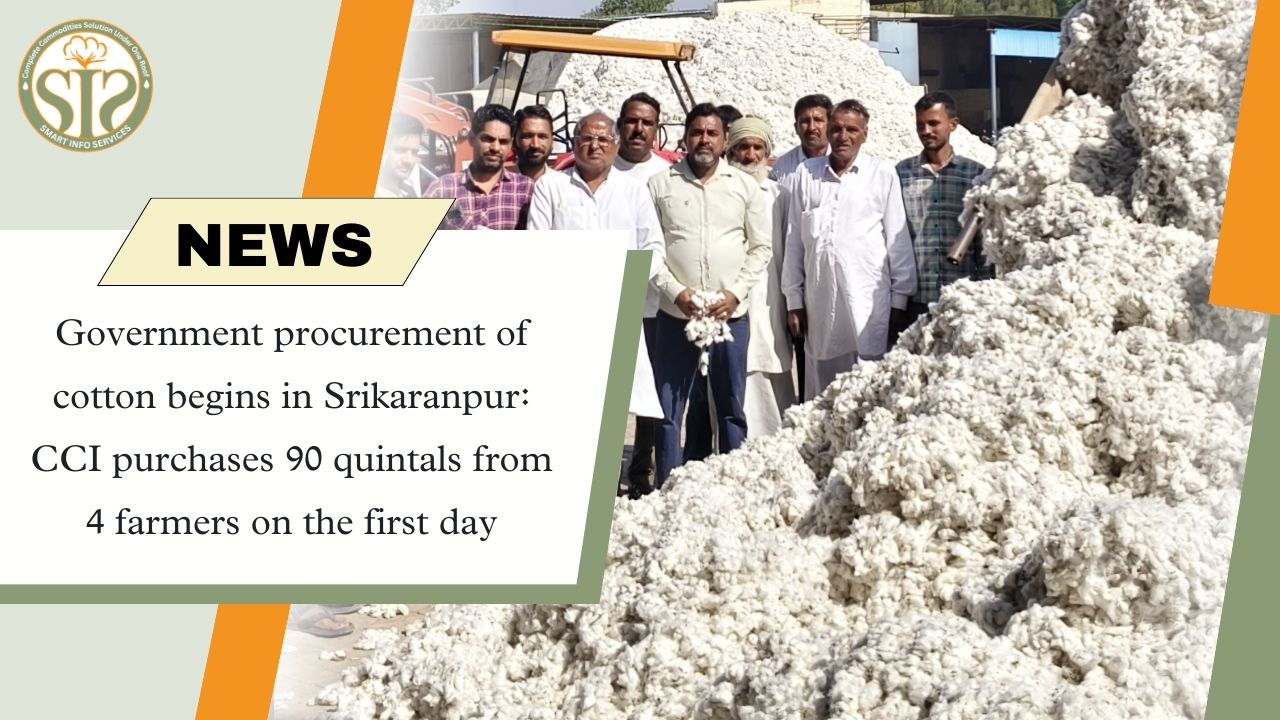
*Government procurement of cotton begins in Srikaranpur: CCI purchases 90 quintals from 4 farmers on the first day*Government procurement of cotton, known as white gold, has begun in Srikaranpur. The Cotton Corporation of India (CCI) is purchasing cotton from Singla Industries. On the first day, approximately 90 quintals of cotton was purchased from 4 farmers.Senior Dhan Mandi trader and Municipal Chairman Ramesh Bansal, Singla Industries owner Sumit Singla, Dhan Mandi traders Bunty Singla and Gaurav jointly inaugurated the cotton procurement at the support price. Babu Vijendra Yadav and Praveen Kumar of the Cotton Corporation of India were present.On the first day, cotton from farmer Mahendra Singh, son of Tara Singh, of Chak 7FF, was purchased at a rate of ₹7,860 per quintal. Furthermore, CCI purchased cotton from farmer Gurcharan Singh, son of Harpal Singh, of 43GG, at ₹7,702 per quintal, and cotton from Sukhwant Singh, son of Sardar Dilbhag Singh, at ₹7,545 per quintal. Farmer Prabhjeet Singh, son of Kulwant Singh, 48F, also arrived with cotton.CCI's Babu Praveen explained that Singla Industries has been contracted by the CCI. Only farmers who have registered their cotton can come to Singla Industries to sell their cotton to the CCI.read more:- Textile industry welcomes new labour code

Indian Textile Industry Praises New Unified Labor CodeThe Indian textile industry has welcomed the country's labor law reforms. The Southern India Mills Association (SIMA) stated that the recently announced labor codes will simplify labor regulations, protect the interests of both employers and employees, and help the country progress towards a developed India.SIMA Chairman Durai Palanisamy praised Prime Minister Narendra Modi for this major and innovative initiative. He said that the implementation of these labor codes is another historic achievement for the government, marking a milestone in the many major changes that have taken place, following the changes in the tax system.The Government of India has notified the Industrial Relations Code, 2020; the Social Security Code, 2020; the Occupational Safety, Health, and Working Conditions (OSHWC) Code, 2020; and the Wage Code, 2019. These rules, which will come into effect on November 21, 2025, will improve 29 existing labor laws.Palanisamy said the new labor codes will help Indian industry comply with social accountability standards set by major regions like the European Union and the US. He said the new policy initiatives will benefit the industry from the upcoming free trade agreements with the EU and US.The new labor codes include provisions such as flexible working hours, flexible fixed-term employment, leveling the playing field in compliance costs, simplification of laws, ease of doing business, certification across India through a single license and registration, mandatory health check-ups for workers, mandatory issuance of appointment letters, increased safety during night shifts, incentives to hire more women, and annuity-based gratuity benefits.SIMA stated that although the new labor code may increase costs for companies due to additional welfare rules for workers, workers' interests are well protected.The association stated that it has been at the forefront of labor-related work and has consistently urged the government to simplify outdated labor laws and introduce a unified code, which will help India remain a global leader in social accountability.read more :- The rupee fell 09 paise to close at 89.23 per dollar.

On monday, the rupee fell 09 paise to close at 89.23 per dollar, after opening at 89.14 in the morning.At close, the Sensex was down 331.21 points or 0.39 percent at 84,900.71, and the Nifty was down 108.65 points or 0.42 percent at 25,959.50. About 1120 shares advanced, 2786 shares declined, and 156 shares unchanged.read more :- India-Georgia: Silk-textile cooperation grows

India, Georgia move to boost silk and textile collaborationIndia has taken a significant step to boost cooperation with Georgia in textiles, sericulture, and trade. A high-level delegation from the Ministry of Textiles, led by P. Sivakumar, Member Secretary of the Central Silk Board (CSB) and Secretary General of the International Sericultural Commission (ISC), concluded a five-day visit to Georgia from November 17 to 21.The visit aimed to deepen partnerships in sericulture, textiles, apparel, and carpet trade.According to the Ministry of Textiles, the delegation took part in the 11th BACSA International Conference - CULTUSERI 2025, where Sivakumar represented India and the ISC in the opening address.He spoke about India's strong foundation in traditional silk knowledge and how it continues to shape the creative and cultural industries. During the conference, he also presented a paper titled "The Chronicles of Wild Silk", underlining India's contribution to global sericulture practices.Adding to India's technical engagement, S. Manthira Moorthy, Director (Technical), CSB, showcased collaborative research between India and Bulgaria. His presentation focused on developing a productive bivoltine silkworm hybrid tailored for Indian conditions, reflecting ongoing international cooperation in silk research.One of the major highlights of the visit was the presentation of India's "5-in-1 Silk Stole," a unique creation that combines Mulberry, Oak Tasar, Tropical Tasar, Muga, and Eri silks in a single product. Conceived under the initiative of Sivakumar, the stole represents India's diverse silk heritage and demonstrates strong potential in global markets for premium handmade products.The Indian delegation met senior officials of the Georgian government, as well as representatives from universities, sericulture laboratories, research centres, textile manufacturers, carpet traders, and the Georgian Chamber of Commerce & Industry (GCCI). These meetings focused on strengthening bilateral trade, improving market access, and promoting collaborative research in sericulture and textiles.The outcomes of the visit included renewed India-Georgia cooperation in textile research and trade, identification of new opportunities for joint ventures in apparel and carpets, and the establishment of pathways for institutional and technical partnerships. India's active role in the BACSA international platform also reinforced its position as a global leader in silk and textile innovation.read more :- "2024-25: State-wise CCI Cotton Sales"
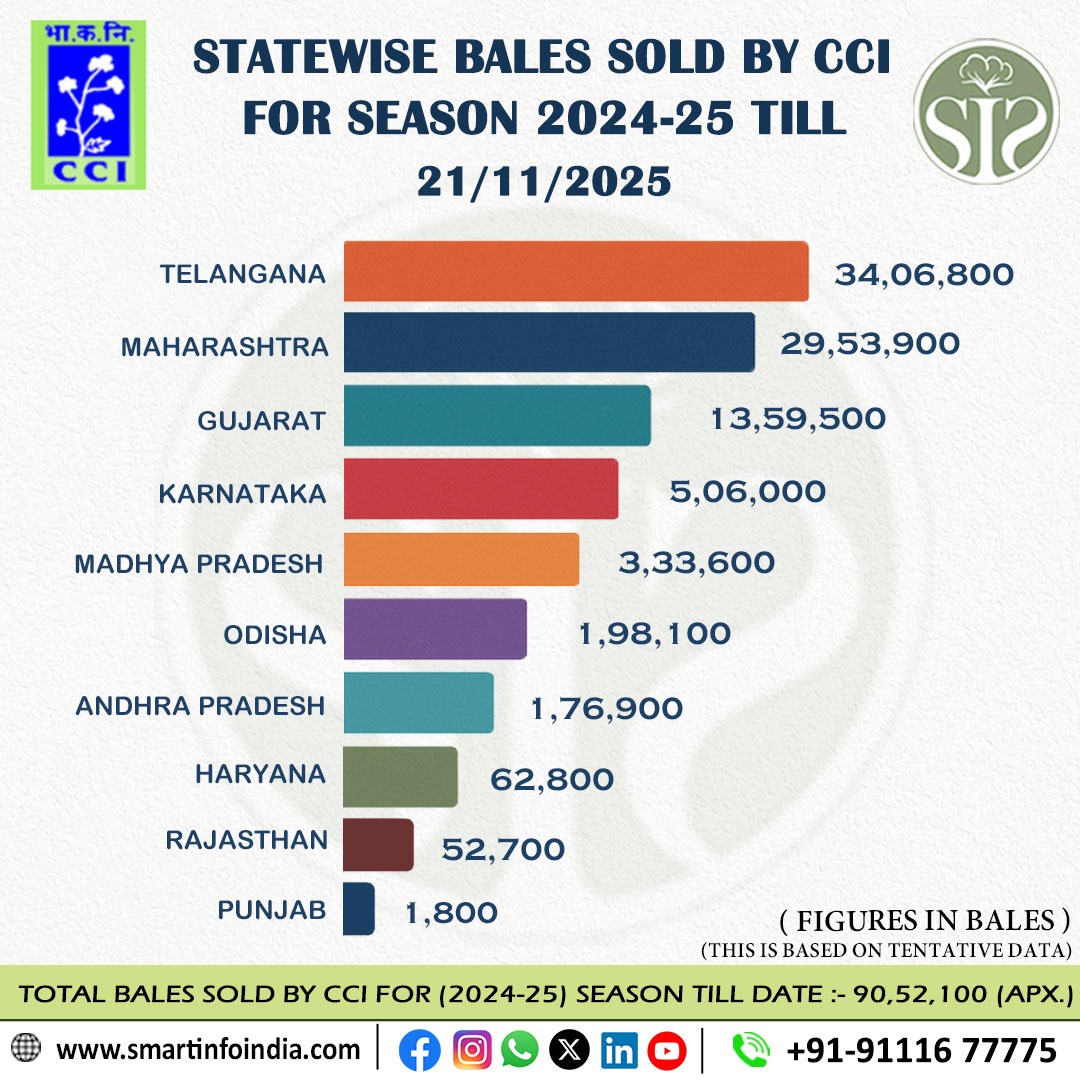
State-wise CCI Cotton Sales Details – 2024-25 SeasonThe Cotton Corporation of India (CCI) kept its prices unchanged this week. The total cotton bales sales for the 2024-25 season to approximately 90,52,100 bales. This represents around 90.52% of the total cotton procured so far this season.A state-wise breakdown of sales indicates strong activity from Maharashtra, Telangana, and Gujarat, which together account for over 85.28% of the total sales to date.This data underscores CCI’s proactive efforts in stabilizing the cotton market and ensuring steady supply across key cotton-producing states.read more :- Rupee opened 26 paise stronger at 89.14 per dollar

Rupee opens 26 paise up at 89.14/USD Indian rupee opened higher by 26 paise at 89.14 per dollar on Monday versus Friday's close of 89.40.read more :- “From Cotton to Fabric: A 10-Year Strong Mission”

From Farming to Sewing: A 10-Year Mission Will Strengthen Every Thread of CottonThe Indian government has taken a major step to increase cotton productivity. Initially, the mission was planned for a five-year period, but the Prime Minister's Office (PMO) suggested that five years was too short. Therefore, the Cotton Productivity Mission is now being extended to a ten-year period. The mission aims to increase cotton production, provide improved varieties, and boost farmers' incomes.Why is the mission necessary?Cotton production in the country is constantly fluctuating.Production was projected to be 32.52 million bales in 2023-24.It is projected to decline to 29.72 million bales in 2024-25.The government has not yet released exact figures for 2025-26, but trade organizations estimate that production could be around 30.5 million bales. This decline affects both farmers and the textile industry. Therefore, this government mission is considered extremely important.What will farmers gain from this mission?1. Improved Seeds and TechnologyICAR (Indian Council of Agricultural Research) will provide farmers with new, improved, and high-yielding cotton varieties. However, the government has clarified that seed research work is already proposed under the "High-Yielding Seed Mission," so there will be no duplication between the two schemes.2. Modern Farming TechniquesUnder this mission, farmers will receive training on modern farming techniques, soil management, pest control, and water management.3. Promotion of Long Staple CottonThe government will promote Extra Long Staple Cotton, which will provide better quality fiber to the textile industry and higher prices for farmers.What is the 5F Vision?Finance Minister Nirmala Sitharaman stated in her budget speech that this mission is based on India's 5F vision:Farm → Fiber → Factory → Fashion → Foreign. This means that a strong supply chain will be built from farming to textile factories, fashion, and export abroad. This will provide cotton farmers with better prices and a secure market.Tussle between Jat and ministries*Initially, the estimated cost for this mission was approximately ₹5,000 crore.But now that the mission's duration is expected to be 10 years, the cost may increase.The Textile Ministry wants to use some of this funding to modernize ginning factories. However, the Finance Department and NITI Aayog have rejected this proposal, stating that it was not announced in the budget and will therefore have to be removed.Role of Central and State GovernmentsThe Finance Department has recommended that this mission be a centrally sponsored scheme so that the central and state governments share the expenditure. Since agriculture is a state subject, state participation is essential. The government wants ICAR to send its final proposal directly to the Prime Minister's Office (PMO) so that a meeting of all ministries at the higher level can be held and a decision can be made quickly. The mission is taking some time to launch, but preparations are progressing rapidly.Initiatives to Increase Cotton Farmers' IncomeThe Cotton Productivity Mission is a major opportunity for millions of cotton farmers in India. This 10-year mission will focus on improved seeds, modern farming techniques, and quality improvement. This will increase farmers' incomes and strengthen the country's textile industry. This mission will make India more competitive in the global cotton market.read more:- CCI completes 90% cotton sales, prices stable
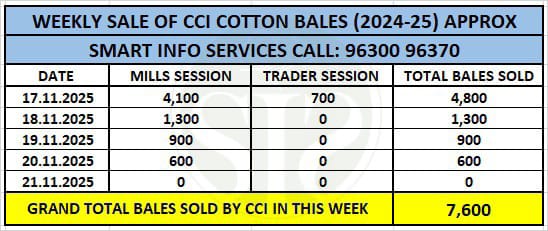
The Cotton Corporation of India (CCI) kept its prices unchanged this week. and sold 90.52% of its 2024-25 cotton procurement through e-auctions.During the entire week from 17 November to 21 November 2025, CCI conducted online auctions at its mill and trader sessions, achieving total sales of approximately 7,600 bales. Significantly, CCI maintained the same price levels this week with no revisions.Weekly Sales Performance17 November, 2025: The highest sales of the week were recorded at 4,800 bales, with mills purchasing 4,100 bales and traders purchasing 700 bales.18 November, 2025: A total of 1,300 bales were sold, all of which were purchased exclusively by mills.19 November, 2025: Sales stood at 900 bales, with mills being the sole buyers..20 November, 2025: Overall sales touched 600 bales, and every bale was bought by mills.21 November, 2025: The week ended with no bales sold in both the session on this day.CCI sold a total of approximately 7,600 bales during the week, taking its cumulative sales for the season to 90,52,100 bales, which is 90.52% of its total purchases for 2024-25.

The Indian rupee on friday lower 73 paise to close at 89.40 per dollar, while it opened at 88.67 in the morning.At close, the Sensex was down 400.76 points or 0.47 percent at 85,231.92, and the Nifty was down 124 points or 0.47 percent at 26,068.15. About 1113 shares advanced, 2711 shares declined, and 131 shares unchanged.read more :- Rupee opened 03 paisa stronger at 88.67

Rupee Opens at 88.67, Up 03 PaisaIndian rupee opened higher at 88.67 per dollar on friday versus Thursday's close of 88.70.read more :- The rupee fell 08 paise to close at 88.70 per dollar.
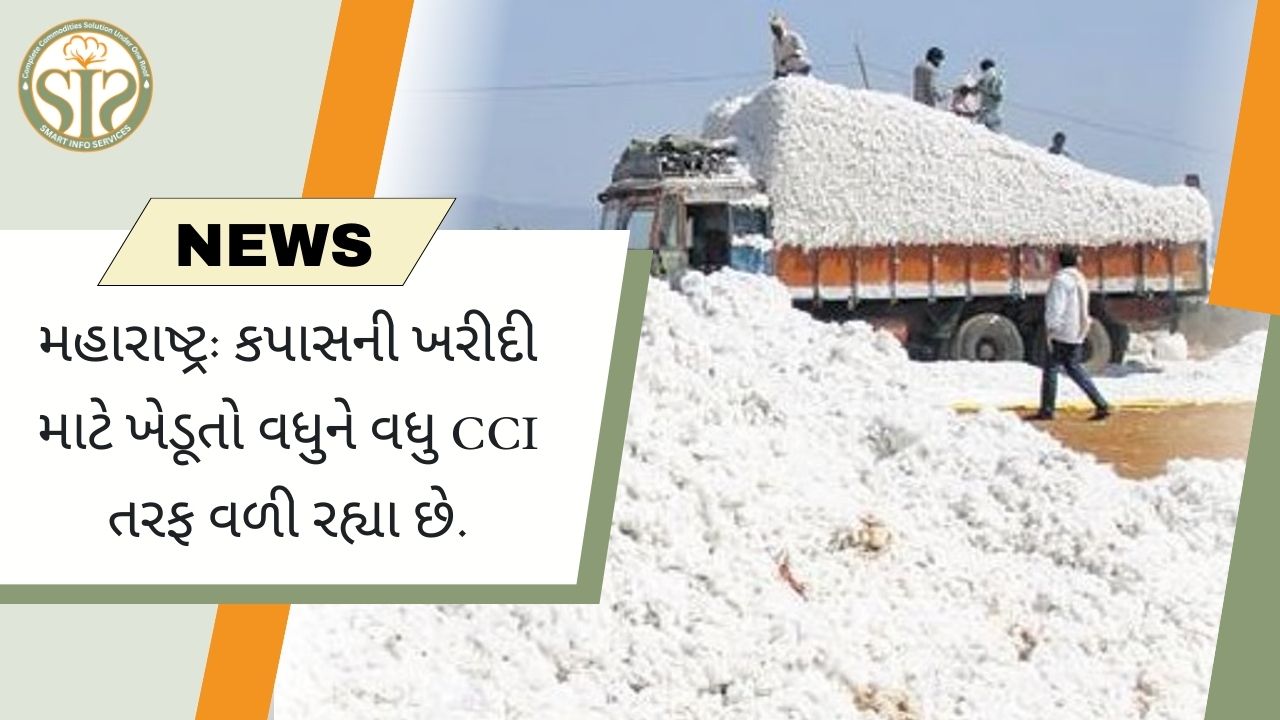
મહારાષ્ટ્ર: કપાસની ખરીદી માટે ખેડૂતો વધુને વધુ CCI તરફ વળી રહ્યા છે.બીડ: સરકારી કપાસ ખરીદી કેન્દ્રો ખાનગી ખરીદી કેન્દ્રો કરતાં વધુ સારા ભાવ આપી રહ્યા છે, જેના કારણે કપાસ ઉત્પાદકોનો CCI તરફનો ઝુકાવ નોંધપાત્ર રીતે વધ્યો છે. જોકે, નોંધણી, મંજૂરી અને અન્ય જટિલ જરૂરિયાતોને કારણે ખેડૂતોને વારંવાર બજાર સમિતિની કચેરીઓ અને જીનિંગ કેન્દ્રોની મુલાકાત લેવાની ફરજ પડી છે, જેના કારણે તેમની સમસ્યાઓ વધી ગઈ છે.આ વર્ષે ખરીફ સિઝનમાં ત્રીસ હજાર ક્વિન્ટલ કપાસનું વાવેતર થયું હતું. વાવણીમાં વિલંબ થયા પછી, સતત વરસાદને કારણે ફરીથી કપાસને નોંધપાત્ર નુકસાન થયું. તેમ છતાં, ખેડૂતોએ મોંઘા ખાતરો અને જંતુનાશકોનો છંટકાવ કર્યો. જોકે, ભારે વરસાદથી કપાસને નુકસાન થયું. ઝાડ પરનો કપાસ માત્ર બે પાકમાં જ નાશ પામ્યો.હાલમાં રવિ વાવણી ચાલી રહી છે, તેથી ખેડૂતો કપાસ વેચવાને પ્રાથમિકતા આપી રહ્યા છે. સરકારે શરૂઆતમાં સરકારી કપાસ ખરીદી કેન્દ્રો સ્થાપ્યા હતા, પરંતુ તેમના પર લાદવામાં આવેલી કડક શરતોએ ખેડૂતોની સમસ્યાઓમાં વધારો કર્યો છે. ગયા વર્ષે, CCI એ પ્રતિ હેક્ટર ત્રીસ ક્વિન્ટલ કપાસ ખરીદ્યો હતો; જોકે, આ વર્ષે, ખરીદી મર્યાદા પ્રતિ હેક્ટર માત્ર તેર ક્વિન્ટલ નક્કી કરવામાં આવી છે, અને ખેડૂતો તેને રદ કરવાની માંગ કરી રહ્યા છે. દરમિયાન, કપાસ વેચવા માટે "કપાસ કિસાન" એપ પર CCI સાથે નોંધણી કરાવવી જરૂરી છે. નોંધણી પછી, બજાર સમિતિ કાર્યાલયની મંજૂરી અને ત્યારબાદ સ્લોટ બુકિંગથી ખેડૂતો મૂંઝવણમાં મુકાયા છે.આંકડા પોતે જ બોલે છે...ખાનગી ખરીદી કેન્દ્રો: છખરીદાયેલ કપાસ: છવીસ હજાર ક્વિન્ટલખરીદી શરૂ થવાની તારીખ: 27 ઓક્ટોબરપ્રાપ્ત દર: છ હજાર પાંચસોથી સાત હજાર એકસો રૂપિયા પ્રતિ ક્વિન્ટલCCI ખરીદી કેન્દ્રો: છખરીદાયેલ કપાસ: પચીસ હજાર ક્વિન્ટલખરીદી શરૂ થવાની તારીખ: 10 નવેમ્બરપ્રાપ્ત દર: સાત હજાર સાતસોથી આઠ હજાર રૂપિયા પ્રતિ ક્વિન્ટલખરીદાયેલ કુલ કપાસ: 51 હજાર ક્વિન્ટલજો તમને કપાસ વેચવામાં અથવા નોંધણી કરવામાં કોઈ સમસ્યા હોય, તો કૃપા કરીને બજાર સમિતિ કાર્યાલયનો સંપર્ક કરો.વધુ વાંચો :- INR 16 પૈસા ઘટીને 89.22 પ્રતિ ડોલર પર બંધ થયો

મંગળવારે ભારતીય રૂપિયો ૧૬ પૈસા ઘટીને ૮૯.૨૨ પ્રતિ ડોલર પર બંધ થયો, જે સવારે ૮૯.૦૬ ના શરૂઆતના ભાવથી બંધ થયો હતો.બંધ સમયે, સેન્સેક્સ ૩૧૩.૭૦ પોઈન્ટ અથવા ૦.૩૭ ટકા ઘટીને ૮૪,૫૮૭.૦૧ પર અને નિફ્ટી ૭૪.૭૦ પોઈન્ટ અથવા ૦.૨૯ ટકા ઘટીને ૨૫,૮૮૪.૮૦ પર બંધ થયો હતો. લગભગ ૨,૦૨૨ શેર વધ્યા, ૧,૯૭૨ શેર ઘટ્યા અને ૧૪૯ શેર યથાવત રહ્યા.વધુ વાંચો :- સ્થાનિક માંગને કારણે ચીનની ભારતમાં સોયા તેલની નિકાસમાં વધારો થયો છે.

ચીનની સોયાતેલની નિકાસ ભારતમાં વધતી જતી સ્થાનિક ભરાવાને કારણે વધી રહી છેચીન દ્વારા ભારતમાં સોયાબીન તેલની નિકાસ વધી રહી છે કારણ કે રસોઈ ઘટકની નબળી સ્થાનિક માંગ દક્ષિણ અમેરિકા અને તાજેતરમાં જ અમેરિકામાંથી સોયાબીનની મજબૂત આયાત સાથે સુસંગત છે.કસ્ટમ્સ ડેટા અનુસાર, એશિયાના સૌથી મોટા અર્થતંત્રે ઓક્ટોબરમાં રેકોર્ડ 70,877 ટન રસોઈ તેલ મોકલ્યું હતું, જેમાંથી મોટાભાગનું ભારતમાં ગયું હતું. વર્ષના પ્રથમ 10 મહિનામાં નિકાસ 329,000 ટન સુધી પહોંચી ગઈ છે, જે સમગ્ર 2024 કરતા લગભગ ત્રણ ગણી વધારે છે.બેઇજિંગ લાંબા સમયથી વિદેશી સોયાબીન પર તેની નિર્ભરતાને એક એવી દુનિયામાં નબળાઈ તરીકે જોતું આવ્યું છે જ્યાં ભૂરાજકીય અને વાયરસ ઝડપથી કોમોડિટી પ્રવાહને વિક્ષેપિત કરી શકે છે. જો કે, દક્ષિણ અમેરિકામાંથી મજબૂત આયાત સ્થાનિક અર્થતંત્રને ખૂબ જ નબળી પાડી રહી છે, જેના કારણે ચીની સોયાતેલ પ્રોસેસરોને નવા બજારો શોધવાની ફરજ પડી રહી છે.ચીનમાં વપરાશમાં ઘટાડો થવાનું આ બીજું ઉદાહરણ છે જેના પરિણામે સરપ્લસ થાય છે, જેના કારણે વૈશ્વિક બજારોમાં વધારાનો પૂર આવે છે. આ કિસ્સામાં, સોયાબીન તેલનો વિશ્વનો સૌથી મોટો આયાતકાર, ભારતમાં આ એક આવકાર્ય વિકાસ છે. ગયા મહિનાના વેપાર યુદ્ધવિરામ પછી ચીન યુએસ સોયાબીન ખરીદવા તરફ પાછું ફર્યું હોવાથી અને બેઇજિંગ અને નવી દિલ્હી વચ્ચેના સંબંધોમાં સુધારો થતાં, આ નવો બનાવટી વેપાર માર્ગ વધુ વ્યસ્ત બનવાની શક્યતા છે.દેશના ટોચના વનસ્પતિ-તેલ ખરીદદારોમાંના એક, પતંજલિ ફૂડ્સ લિમિટેડના વાઇસ પ્રેસિડેન્ટ આશિષ આચાર્યએ જણાવ્યું હતું કે, આ વેપાર ભારત માટે લોજિસ્ટિક અર્થપૂર્ણ છે. "ગુણવત્તા દક્ષિણ અમેરિકાના પુરવઠા સાથે તુલનાત્મક છે, કિંમતો સ્પર્ધાત્મક છે અને ચીની નિકાસકારો વિશ્વસનીય ખરીદદારો શોધી રહ્યા છે."ચીની સોયાબીન તેલ દક્ષિણ અમેરિકાથી 10 યુએસ ડોલર (RM41.36) થી 15 યુએસ ડોલર પ્રતિ ટન ડિસ્કાઉન્ટ પર વેપાર કરી રહ્યું છે, અને બ્રાઝિલ અને આર્જેન્ટિનાથી 50 થી 60 દિવસની મુસાફરીની તુલનામાં લગભગ 10 થી 12 દિવસમાં ભારતના પૂર્વ કિનારે પહોંચી શકે છે, આચાર્યએ જણાવ્યું હતું. નવેમ્બરમાં ચીનથી અત્યાર સુધીમાં આયાત લગભગ 70,000 ટન છે અને મહિનાના અંત સુધીમાં તેમાં વધુ 12,000 ટનનો વધારો થઈ શકે છે, એમ તેમણે જણાવ્યું હતું.ચીન વિશ્વનો સૌથી મોટો સોયાબીન તેલ ઉત્પાદક દેશ છે, જે દર વર્ષે લગભગ 20 મિલિયન ટન સોયાબીન તેલનું ઉત્પાદન કરે છે. તે લગભગ તમામ ઉત્પાદન ઘરે જ વાપરે છે, ઘણીવાર સ્થાનિક માંગને પહોંચી વળવા માટે આયાતનો આશરો લેવો પડતો હતો. પરંતુ અર્થતંત્ર ઠંડુ થતાં, લોકોએ બહાર ખાવાનું બંધ કરી દીધું છે, જેના કારણે રેસ્ટોરન્ટમાં સોયાબીન તેલનો વપરાશ ઓછો થયો છે.ચીનમાં સોયાબીન તેલનો ભરાવો વધી રહ્યો છે જેના કારણે વેપારમાં વધારો થઈ રહ્યો છે. કોમોડિટી કન્સલ્ટન્સી માયસ્ટીલે એક નોંધમાં જણાવ્યું હતું કે નવેમ્બરના મધ્યમાં વાણિજ્યિક સ્ટોક દસ લાખ ટનથી વધુ હતો, જે વર્ષના તે સમય માટે સાત વર્ષનો ઉચ્ચ સ્તર છે. ચીની ક્રશર્સમાં ઉચ્ચ સ્તરની પ્રવૃત્તિ જાળવવાની અપેક્ષા છે અને સ્થાનિક માંગને પુનઃપ્રાપ્ત કરવામાં સમય લાગશે, એમ તેણે જણાવ્યું હતું.ચીને અમેરિકન સોયાબીનની ખરીદી ચાલુ રાખી છે, જોકે વેપારીઓ આ વર્ષે અપેક્ષિત ખરીદીના ખૂબ મોટા સ્તર સાથે એશિયન રાષ્ટ્ર પસાર થશે કે કેમ તે અંગે સાવચેત રહે છે.નવેમ્બરમાં ચીનમાં લિક્વિફાઇડ નેચરલ ગેસના દરિયાઈ શિપમેન્ટમાં વાર્ષિક ધોરણે સતત 13મા મહિને ઘટાડો થવાની ધારણા છે, જેના કારણે સ્થાનિક ઉત્પાદન અને પાઇપ દ્વારા આયાત મજબૂત રહેવાને કારણે ખરીદીમાં ઘટાડો જોવા મળશે.જાપાનના વડા પ્રધાન સના તાકાઇચીએ સંસદમાં સંભવિત તાઇવાન આકસ્મિકતા પર ટિપ્પણી કર્યા પછી લગભગ ત્રણ અઠવાડિયામાં, ચીને આર્થિક બદલો, રાષ્ટ્રવાદી આક્રમણ અને રાજદ્વારી આક્રમણ શરૂ કર્યું છે જેથી તેનો અસંતોષ વ્યક્ત કરી શકાય.વધુ વાંચો :- CCI MSP પર કપાસની ખરીદી વધારશે, ગયા વર્ષ કરતાં ભાવ વધી શકે છે
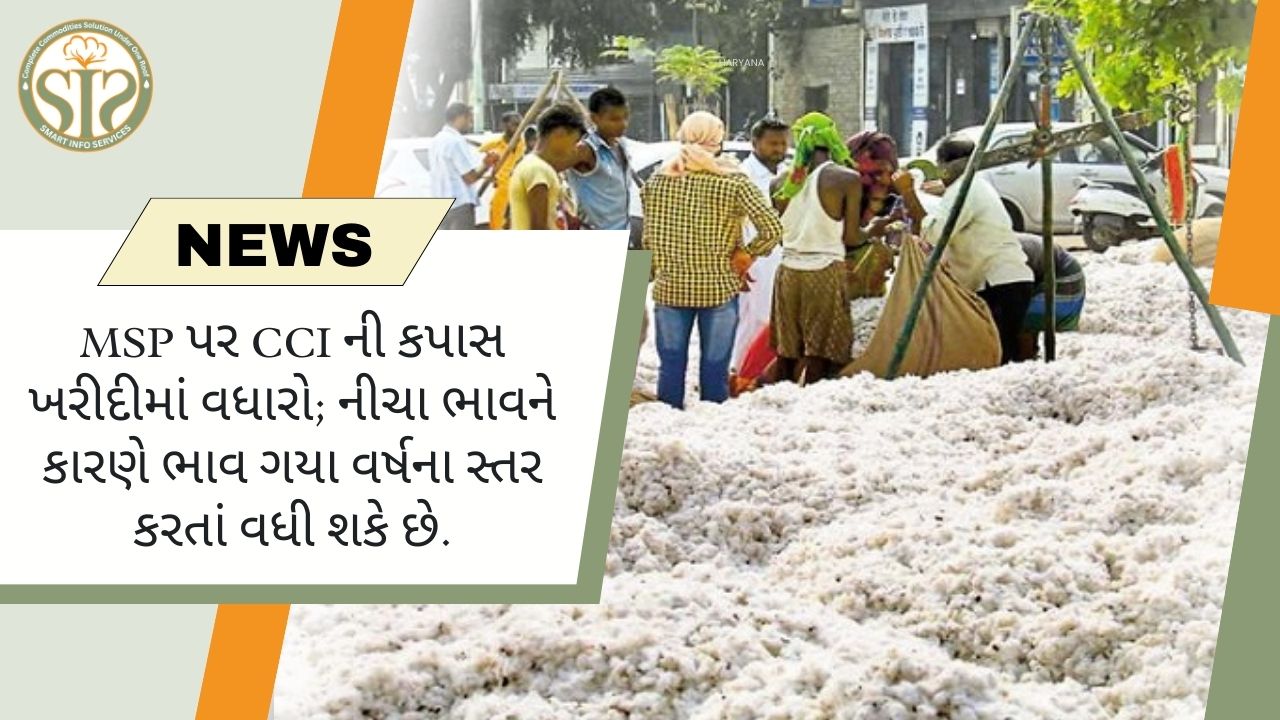
MSP પર CCI ની કપાસ ખરીદીમાં વધારો થયો છે; નીચા ભાવને કારણે ભાવ ગયા વર્ષના સ્તર કરતાં વધી શકે છે.CCI એ તાજેતરમાં 2025-26 ના પાકનો અંદાજ 30.5 મિલિયન ગાંસડી (દરેક ગાંસડી 170 કિલો વજનની) રાખ્યો હતો, જે ગયા વર્ષના 31.24 મિલિયન ગાંસડી કરતા 2% ઓછો છે.કપાસની આવકમાં વધારો થતાં, રાજ્ય માલિકીની કોટન કોર્પોરેશન ઓફ ઈન્ડિયા (CCI) એ ન્યૂનતમ ટેકાના ભાવ (MSP) પર કુદરતી રેસા પાકની ખરીદી ઝડપી બનાવી છે, જેમાં દૈનિક ખરીદી 100,000 ગાંસડી (170 કિલો) થી વધુ થઈ ગઈ છે. વેપાર મુજબ, સોમવારે કપાસની આવક 200,000 ગાંસડીને વટાવી ગઈ છે.CCI ના ચેરમેન અને મેનેજિંગ ડિરેક્ટર લલિત કુમાર ગુપ્તાએ જણાવ્યું હતું કે, "ઓડિશા સિવાયના તમામ કપાસ ઉગાડતા રાજ્યોમાં ખરીદી શરૂ થઈ ગઈ છે. ગયા શુક્રવારે, અમે એક જ દિવસમાં 100,000 ગાંસડીને વટાવી દીધી હતી, અને આ સિઝનમાં અમે કુલ લગભગ 800,000 ગાંસડીને વટાવી દીધી છે." વૈશ્વિક ભાવ વલણો અને નબળી માંગને કારણે ભાવ MSP સ્તરથી નીચે હોવાથી, CCI ને MSP પર ખરીદી કરીને બજારમાં ભારે હસ્તક્ષેપ કરવો પડશે તેવી અપેક્ષા છે. ખાનગી વેપારમાં કાચા કપાસના ભાવ ₹6,500 થી ₹7,500 પ્રતિ ક્વિન્ટલની વચ્ચે છે, જે ₹8,100 ની MSP કરતા ઓછા છે.ગુપ્તાએ જણાવ્યું હતું કે, "અમને આશા છે કે અમારી ખરીદી ગયા વર્ષના સ્તરને વટાવી જશે કારણ કે ભાવમાં મોટો તફાવત છે," તેમણે ઉમેર્યું હતું કે આ વર્ષે ગુણવત્તાના મુદ્દાઓ વધુ પ્રચલિત છે. ગયા વર્ષે, CCI એ 170 કિલોગ્રામની 10 મિલિયનથી વધુ ગાંસડી ખરીદી હતી.CCI એ લગભગ 570 કેન્દ્રો ખોલ્યા છે, જેમાંથી 400 કાર્યરત છે. તેમણે કહ્યું કે 15 કેન્દ્રો દરરોજ ખુલી રહ્યા છે.આ વર્ષે, કમોસમી અને અતિશય વરસાદે કપાસના પાકની ગુણવત્તા પર અસર કરી છે, જ્યારે વાવેતર વિસ્તાર ઓછો હતો કારણ કે ખેડૂતોનો એક ભાગ મકાઈ અને તેલીબિયાં જેવા અન્ય પાકો તરફ વળ્યો હતો.કોટન એસોસિએશન ઓફ ઈન્ડિયા (CAI) ના પ્રમુખ વિનય એન. કોટકે જણાવ્યું હતું કે, "દિવસે દિવસેને દિવસે આવકો વધી રહી છે, અને CCI એ પણ મોટી માત્રામાં ખરીદી શરૂ કરી છે. CCI એ આક્રમક ખરીદી શરૂ કરી હોવાથી ભાવ સ્થિર થશે."કોટકે કહ્યું કે કમોસમી વરસાદને કારણે, ગયા વર્ષની સરખામણીમાં સારી ગુણવત્તાવાળા કપાસની ગુણવત્તામાં નોંધપાત્ર ઘટાડો થઈ રહ્યો છે, અને ગુણવત્તામાં નોંધપાત્ર ઘટાડો થયો છે. તેમણે કહ્યું, "જથ્થામાં ઘટાડો ઓછો છે, પરંતુ ગુણવત્તામાં ઘટાડો વધુ છે, અને તેના કારણે, ઓછી ગુણવત્તા અને સારી ગુણવત્તા વચ્ચેનો તફાવત વધતો રહેશે."CAI એ તાજેતરમાં 2025-26 ના પાકનો અંદાજ 30.5 મિલિયન ગાંસડી (દરેક ગાંસડીનું વજન 170 કિલો છે), જે ગયા વર્ષના 31.24 મિલિયન ગાંસડી કરતા 2% ઓછો છે. રાયચુરના સોર્સિંગ એજન્ટ રામાનુજ દાસ બૂબે જણાવ્યું હતું કે, "આ વર્ષે ગુણવત્તા એક મોટો મુદ્દો છે કારણ કે રાજ્યોમાં ભારે તફાવત છે." "યાર્નની નબળી માંગને કારણે મિલોની ખરીદીમાં ઘટાડો થયો છે. ખરીદદારો યોગ્ય ભાવે સારી ગુણવત્તાનો કપાસ ખરીદવા તૈયાર છે, જ્યારે મોટી મિલોએ આયાતી કપાસ પસંદ કરીને પોતાની સ્થિતિ સુરક્ષિત કરી છે," તેમણે કહ્યું. તેમણે કહ્યું કે 356 કિલોગ્રામ કેન્ડી માટે સારી ગુણવત્તાવાળા કપાસની કિંમત ₹50,500-52,000 ની રેન્જમાં છે, જ્યારે ઓછી ગુણવત્તાવાળા ઉત્પાદનની કિંમત ₹47,500-49,000 છે.વધુ વાંચો :- કપાસના ખેડૂતોની સમસ્યાઓ રાજ્યપાલ સમક્ષ મૂકવામાં આવી.

તેલંગાણા: ખેડૂત સંગઠને રાજ્યપાલને કપાસના ખેડૂતોની સમસ્યાઓથી વાકેફ કર્યા.હૈદરાબાદ: તેલંગાણા કૃષિ અને ખેડૂત કલ્યાણ આયોગની એક ટીમે સોમવારે રાજભવન ખાતે રાજ્યપાલ જિષ્ણુ દેવ વર્માને મળ્યા અને તેલંગાણામાં કપાસના ખેડૂતોને પડતી મુશ્કેલીઓ તેમના ધ્યાન પર લાવી.બેઠક દરમિયાન, કમિશનના અધ્યક્ષ એમ. કોડંડા રેડ્ડી, ભૂમિ સુનિલ સહિતના સભ્યો સાથે, સમજાવ્યું કે કોટન કોર્પોરેશન ઓફ ઈન્ડિયા (CCI) એ અપેક્ષા કરતા મોડા તેના ખરીદી કેન્દ્રો ખોલ્યા, જેના કારણે ખેડૂતોને મુશ્કેલીઓનો સામનો કરવો પડ્યો, જેમણે હવે તેમના ઉત્પાદન વેચવા માટે નવી શરૂ કરાયેલ કોટન ફાર્મર એપ પર નોંધણી કરાવવી પડશે.વધુમાં, પ્રતિ એકર માત્ર સાત ક્વિન્ટલ કપાસની મંજૂરી આપવાના પ્રતિબંધે ખેડૂતોની સમસ્યાઓમાં વધુ વધારો કર્યો છે. આ વર્ષે, રાજ્યભરમાં 4.8 મિલિયન એકર જમીન પર કપાસનું વાવેતર કરવામાં આવ્યું હતું, પરંતુ ભારે વરસાદ અને ચક્રવાત મોન્થાને કારણે નોંધપાત્ર નુકસાન થયું હતું.કોડંડા રેડ્ડીએ રાજ્યપાલને CCI નિયમો દ્વારા ઉભી થયેલી મુશ્કેલીઓ વિશે માહિતી આપી, જે પહેલાથી જ ચક્રવાતથી ગંભીર રીતે પ્રભાવિત ખેડૂતોની મુશ્કેલીઓમાં વધારો કરી રહી હતી. રાજ્યભરના ખેડૂતો તરફથી કમિશનની ઓફિસમાં ફરિયાદોનો વરસાદ થઈ રહ્યો હતો, જેના કારણે ટીમે રાજ્યપાલ સમક્ષ આ ચિંતાઓ ઉઠાવી હતી.તેમણે કેન્દ્ર સરકાર દ્વારા જારી કરાયેલા બીજ અધિનિયમ 2025ના મુસદ્દા સામે પણ વાંધો વ્યક્ત કર્યો હતો, જેમાં નોંધ્યું હતું કે રાજ્યના ખેડૂતો અને ખેડૂત સંગઠનોમાં આ કાયદા અંગે વિવિધ મંતવ્યો છે.રાજ્યપાલે કપાસના ખેડૂતો અંગે કમિશનની અરજીનો સકારાત્મક પ્રતિભાવ આપ્યો હતો અને કેન્દ્રીય અધિકારીઓ સમક્ષ CCIનો મુદ્દો ઉઠાવવાનું વચન આપ્યું હતું. તેમણે બીજ અધિનિયમના મુસદ્દાની વધુ વિગતોની ચર્ચા કરવા માટે ફોલો-અપ બેઠક પણ બોલાવી હતી.વધુ વાંચો :- INR 17 પૈસા મજબૂત થઈને 89.06 પર ખુલ્યો.

ડોલર સામે રૂપિયો ૧૭ પૈસા વધીને ૮૯.૦૬ પર ખુલ્યો.પાછલા સત્રમાં ૮૯.૨૩ પર બંધ થયા પછી, તે યુએસ ડોલર સામે ૮૯.૦૬ પર ખુલ્યો.વધુ વાંચો :- શ્રીકરણપુરમાં કપાસની ખરીદી શરૂ, 90 ક્વિન્ટલ ઉપાડ
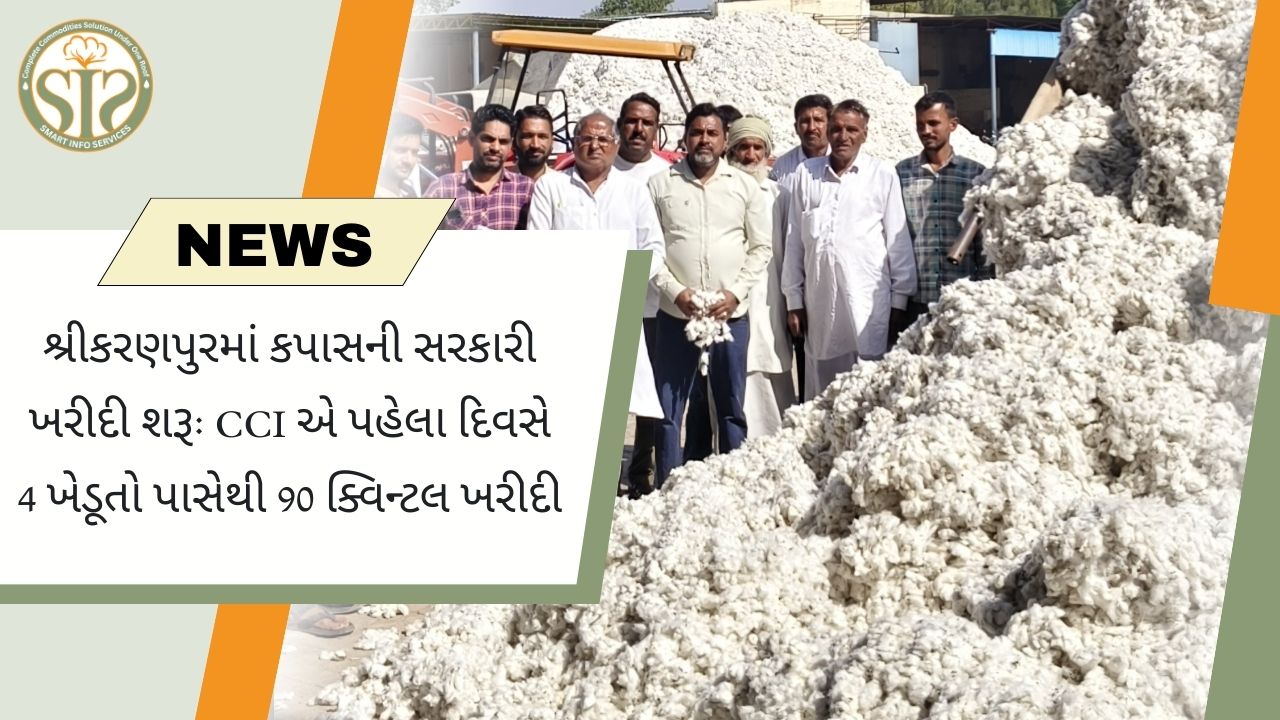
શ્રીકરણપુરમાં કપાસની સરકારી ખરીદી શરૂ: CCI એ પહેલા દિવસે 4 ખેડૂતો પાસેથી 90 ક્વિન્ટલ ખરીદીશ્રીકરણપુરમાં સફેદ સોના તરીકે ઓળખાતા કપાસની સરકારી ખરીદી શરૂ થઈ ગઈ છે. કોટન કોર્પોરેશન ઓફ ઈન્ડિયા (CCI) સિંગલા ઇન્ડસ્ટ્રીઝ પાસેથી કપાસ ખરીદી રહી છે. પહેલા દિવસે 4 ખેડૂતો પાસેથી આશરે 90 ક્વિન્ટલ કપાસ ખરીદવામાં આવ્યો હતો.ધાન મંડીના વરિષ્ઠ વેપારી અને મ્યુનિસિપલ ચેરમેન રમેશ બંસલ, સિંગલા ઇન્ડસ્ટ્રીઝના માલિક સુમિત સિંગલા, ધાન મંડીના વેપારીઓ બંટી સિંગલા અને ગૌરવે સંયુક્ત રીતે ટેકાના ભાવે કપાસ ખરીદીનું ઉદ્ઘાટન કર્યું. કોટન કોર્પોરેશન ઓફ ઈન્ડિયાના બાબુ વિજેન્દ્ર યાદવ અને પ્રવીણ કુમાર હાજર રહ્યા હતા.પ્રથમ દિવસે, ચક 7FF ના ખેડૂત તારા સિંહના પુત્ર મહેન્દ્ર સિંહ પાસેથી કપાસ ₹7,860 પ્રતિ ક્વિન્ટલના દરે ખરીદવામાં આવ્યો હતો. વધુમાં, CCI એ 43GG ના ખેડૂત હરપાલ સિંહના પુત્ર ગુરચરણ સિંહ પાસેથી ₹7,702 પ્રતિ ક્વિન્ટલના ભાવે કપાસ ખરીદ્યો, અને સરદાર દિલભાગ સિંહના પુત્ર સુખવંત સિંહ પાસેથી ₹7,545 પ્રતિ ક્વિન્ટલના ભાવે કપાસ ખરીદ્યો. કુલવંત સિંહ, 48F ના પુત્ર ખેડૂત પ્રભજીત સિંહ પણ કપાસ લઈને આવ્યા.CCI ના બાબુ પ્રવીણે સમજાવ્યું કે CCI દ્વારા સિંગલા ઇન્ડસ્ટ્રીઝને કરાર આપવામાં આવ્યો છે. જે ખેડૂતોએ પોતાનો કપાસ રજીસ્ટર કરાવ્યો છે તેઓ જ CCI ને પોતાનો કપાસ વેચવા માટે સિંગલા ઇન્ડસ્ટ્રીઝમાં આવી શકે છે.વધુ વાંચો:- કાપડ ઉદ્યોગ નવા શ્રમ સંહિતાનું સ્વાગત કરે છે

ભારતીય કાપડ ઉદ્યોગ નવા એકીકૃત શ્રમ સંહિતાની પ્રશંસા કરે છેભારતીય કાપડ ઉદ્યોગે દેશના શ્રમ કાયદા સુધારાઓનું સ્વાગત કર્યું છે. સધર્ન ઇન્ડિયા મિલ્સ એસોસિએશન (SIMA) એ જણાવ્યું હતું કે તાજેતરમાં જાહેર કરાયેલા શ્રમ સંહિતા શ્રમ નિયમોને સરળ બનાવશે, નોકરીદાતાઓ અને કર્મચારીઓ બંનેના હિતોનું રક્ષણ કરશે અને દેશને વિકસિત ભારત તરફ આગળ વધવામાં મદદ કરશે.SIMA ના ચેરમેન દુરાઈ પલાનીસામીએ આ મુખ્ય અને નવીન પહેલ માટે વડા પ્રધાન નરેન્દ્ર મોદીની પ્રશંસા કરી. તેમણે કહ્યું કે આ શ્રમ સંહિતાનો અમલ સરકાર માટે બીજી એક ઐતિહાસિક સિદ્ધિ છે, જે કર પ્રણાલીમાં ફેરફારો પછી થયેલા ઘણા મોટા ફેરફારોમાં એક સીમાચિહ્નરૂપ છે.ભારત સરકારે ઔદ્યોગિક સંબંધો સંહિતા, 2020; સામાજિક સુરક્ષા સંહિતા, 2020; વ્યવસાયિક સલામતી, આરોગ્ય અને કાર્યકારી પરિસ્થિતિઓ (OSHWC) સંહિતા, 2020; અને વેતન સંહિતા, 2019 ને સૂચિત કર્યા છે. આ નિયમો, જે 21 નવેમ્બર, 2025 થી અમલમાં આવશે, 29 હાલના શ્રમ કાયદાઓમાં સુધારો કરશે.પલાનીસામીએ જણાવ્યું હતું કે નવા શ્રમ સંહિતા ભારતીય ઉદ્યોગોને યુરોપિયન યુનિયન અને યુએસ જેવા મુખ્ય પ્રદેશો દ્વારા નિર્ધારિત સામાજિક જવાબદારીના ધોરણોનું પાલન કરવામાં મદદ કરશે. તેમણે કહ્યું કે નવી નીતિગત પહેલો EU અને યુએસ સાથેના આગામી મુક્ત વેપાર કરારોથી ઉદ્યોગને લાભ કરશે.નવા શ્રમ સંહિતાઓમાં લવચીક કામના કલાકો, લવચીક નિયત-અવધિ રોજગાર, પાલન ખર્ચમાં રમતના ક્ષેત્રને સમાન બનાવવું, કાયદાઓનું સરળીકરણ, વ્યવસાય કરવામાં સરળતા, એક જ લાઇસન્સ અને નોંધણી દ્વારા સમગ્ર ભારતમાં પ્રમાણપત્ર, કામદારો માટે ફરજિયાત આરોગ્ય તપાસ, નિમણૂક પત્રોનું ફરજિયાત જારી, રાત્રિ શિફ્ટ દરમિયાન સલામતીમાં વધારો, વધુ મહિલાઓને નોકરી પર રાખવા માટે પ્રોત્સાહનો અને વાર્ષિકી-આધારિત ગ્રેચ્યુઇટી લાભો જેવી જોગવાઈઓ શામેલ છે.SIMA એ જણાવ્યું હતું કે નવા શ્રમ સંહિતા કામદારો માટે વધારાના કલ્યાણ નિયમોને કારણે કંપનીઓ માટે ખર્ચમાં વધારો કરી શકે છે, તેમ છતાં કામદારોના હિતોનું સારી રીતે રક્ષણ કરવામાં આવે છે.એસોસિએશને જણાવ્યું હતું કે તે શ્રમ-સંબંધિત કાર્યમાં મોખરે રહ્યું છે અને સરકારને સતત વિનંતી કરી છે કે તેઓ જૂના શ્રમ કાયદાઓને સરળ બનાવે અને એકીકૃત કોડ રજૂ કરે, જે ભારતને સામાજિક જવાબદારીમાં વૈશ્વિક નેતા રહેવામાં મદદ કરશે.વધુ વાંચો :- રૂપિયો 09 પૈસા ઘટીને 89.23 પ્રતિ ડોલર પર બંધ થયો.

સોમવારે રૂપિયો ૮૯.૧૪ પર ખુલ્યા પછી ૦૯ પૈસા ઘટીને ૮૯.૨૩ પ્રતિ ડોલર પર બંધ થયો.બંધ સમયે, સેન્સેક્સ ૩૩૧.૨૧ પોઈન્ટ અથવા ૦.૩૯ ટકા ઘટીને ૮૪,૯૦૦.૭૧ પર અને નિફ્ટી ૧૦૮.૬૫ પોઈન્ટ અથવા ૦.૪૨ ટકા ઘટીને ૨૫,૯૫૯.૫૦ પર બંધ થયો. લગભગ ૧,૧૧૦ શેર વધ્યા, ૨,૭૮૬ શેર ઘટ્યા અને ૧૫૬ શેર યથાવત રહ્યા.વધુ વાંચો :- ભારત-જ્યોર્જિયા: સિલ્ક-કાપડ સહયોગ વધ્યો

ભારત, જ્યોર્જિયાએ રેશમ અને કાપડ સહયોગ વધારવા માટે પગલાં લીધાંભારતે કાપડ, રેશમ ઉછેર અને વેપારમાં જ્યોર્જિયા સાથે સહયોગ વધારવા માટે એક મોટું પગલું ભર્યું છે. સેન્ટ્રલ સિલ્ક બોર્ડ (CSB) ના સભ્ય સચિવ અને ઇન્ટરનેશનલ સેરિકલ્ચર કમિશન (ISC) ના સેક્રેટરી જનરલ પી. શિવકુમારના નેતૃત્વમાં કાપડ મંત્રાલયના ઉચ્ચ સ્તરીય પ્રતિનિધિમંડળે 17 થી 21 નવેમ્બર સુધી જ્યોર્જિયાની પાંચ દિવસની મુલાકાત પૂર્ણ કરી.આ મુલાકાતનો હેતુ રેશમ ઉછેર, કાપડ, કપડાં અને કાર્પેટ વેપારમાં ભાગીદારીને વધુ ગાઢ બનાવવાનો હતો.કાપડ મંત્રાલયના જણાવ્યા અનુસાર, પ્રતિનિધિમંડળે 11મા BACSA આંતરરાષ્ટ્રીય પરિષદ - CULTUSERI 2025 માં ભાગ લીધો હતો, જ્યાં શિવકુમારે ઉદ્ઘાટન સંબોધનમાં ભારત અને ISCનું પ્રતિનિધિત્વ કર્યું હતું.તેમણે પરંપરાગત રેશમ જ્ઞાનમાં ભારતના મજબૂત પાયા અને તે સર્જનાત્મક અને સાંસ્કૃતિક ઉદ્યોગને કેવી રીતે આકાર આપી રહ્યું છે તે વિશે વાત કરી. કોન્ફરન્સ દરમિયાન, તેમણે "ધ ક્રોનિકલ્સ ઓફ વાઇલ્ડ સિલ્ક" નામનો એક પેપર પણ રજૂ કર્યો, જેમાં વૈશ્વિક રેશમ ઉછેર પ્રથાઓમાં ભારતના યોગદાનને પ્રકાશિત કરવામાં આવ્યું.ભારતના ટેકનિકલ જોડાણને આગળ ધપાવતા, CSB ડિરેક્ટર (ટેકનિકલ) એસ. મંથિરા મૂર્તિએ ભારત અને બલ્ગેરિયા વચ્ચે સંયુક્ત રીતે હાથ ધરાયેલા સંશોધનનું પ્રદર્શન કર્યું. તેમનું પ્રેઝન્ટેશન ભારતીય પરિસ્થિતિઓને અનુરૂપ ઉત્પાદક બાયવોલ્ટાઇન સિલ્કવોર્મ હાઇબ્રિડ વિકસાવવા પર કેન્દ્રિત હતું, જે રેશમ સંશોધનમાં ચાલી રહેલા આંતરરાષ્ટ્રીય સહયોગનું પ્રદર્શન કરે છે.મુલાકાતનું એક મુખ્ય આકર્ષણ ભારતનું "5-ઇન-1 સિલ્ક સ્ટોલ" રજૂ કરવાનું હતું, જે એક અનોખી રચના છે જે શેતૂર, ઓક ટસર, ઉષ્ણકટિબંધીય ટસર, મુગા અને એરી સિલ્કને એક જ ઉત્પાદનમાં જોડે છે. શિવકુમારની પહેલ પર બનાવવામાં આવેલ, આ સ્ટોલ ભારતના વૈવિધ્યસભર રેશમ વારસાને દર્શાવે છે અને પ્રીમિયમ હાથથી વણાયેલા ઉત્પાદનો માટે મજબૂત વૈશ્વિક બજાર સંભાવનાને પ્રકાશિત કરે છે.ભારતીય પ્રતિનિધિમંડળે જ્યોર્જિયન સરકારના વરિષ્ઠ અધિકારીઓ, તેમજ યુનિવર્સિટીઓ, રેશમ ઉત્પાદન પ્રયોગશાળાઓ, સંશોધન કેન્દ્રો, કાપડ ઉત્પાદકો, કાર્પેટ વેપારીઓ અને જ્યોર્જિયન ચેમ્બર ઓફ કોમર્સ એન્ડ ઇન્ડસ્ટ્રી (GCCI) ના પ્રતિનિધિઓ સાથે મુલાકાત કરી. આ બેઠકો પરસ્પર વેપારને મજબૂત બનાવવા, બજાર ઍક્સેસ સુધારવા અને રેશમ ઉત્પાદન અને કાપડમાં સંયુક્ત સંશોધનને પ્રોત્સાહન આપવા પર કેન્દ્રિત હતી.આ મુલાકાતના પરિણામોમાં કાપડ સંશોધન અને વેપારમાં ભારત-જ્યોર્જિયા સહયોગને નવેસરથી શરૂ કરવો, કાપડ અને કાર્પેટમાં સંયુક્ત સાહસો માટે નવી તકો ઓળખવી અને સંસ્થાકીય અને તકનીકી ભાગીદારી માટે માર્ગો બનાવવાનો સમાવેશ થાય છે. BACSA આંતરરાષ્ટ્રીય પ્લેટફોર્મમાં ભારતની સક્રિય ભૂમિકાએ રેશમ અને કાપડ નવીનતામાં વૈશ્વિક નેતા તરીકે તેની સ્થિતિને પણ મજબૂત બનાવી.વધુ વાંચો :- "૨૦૨૪-૨૫: રાજ્યવાર CCI કપાસનું વેચાણ"
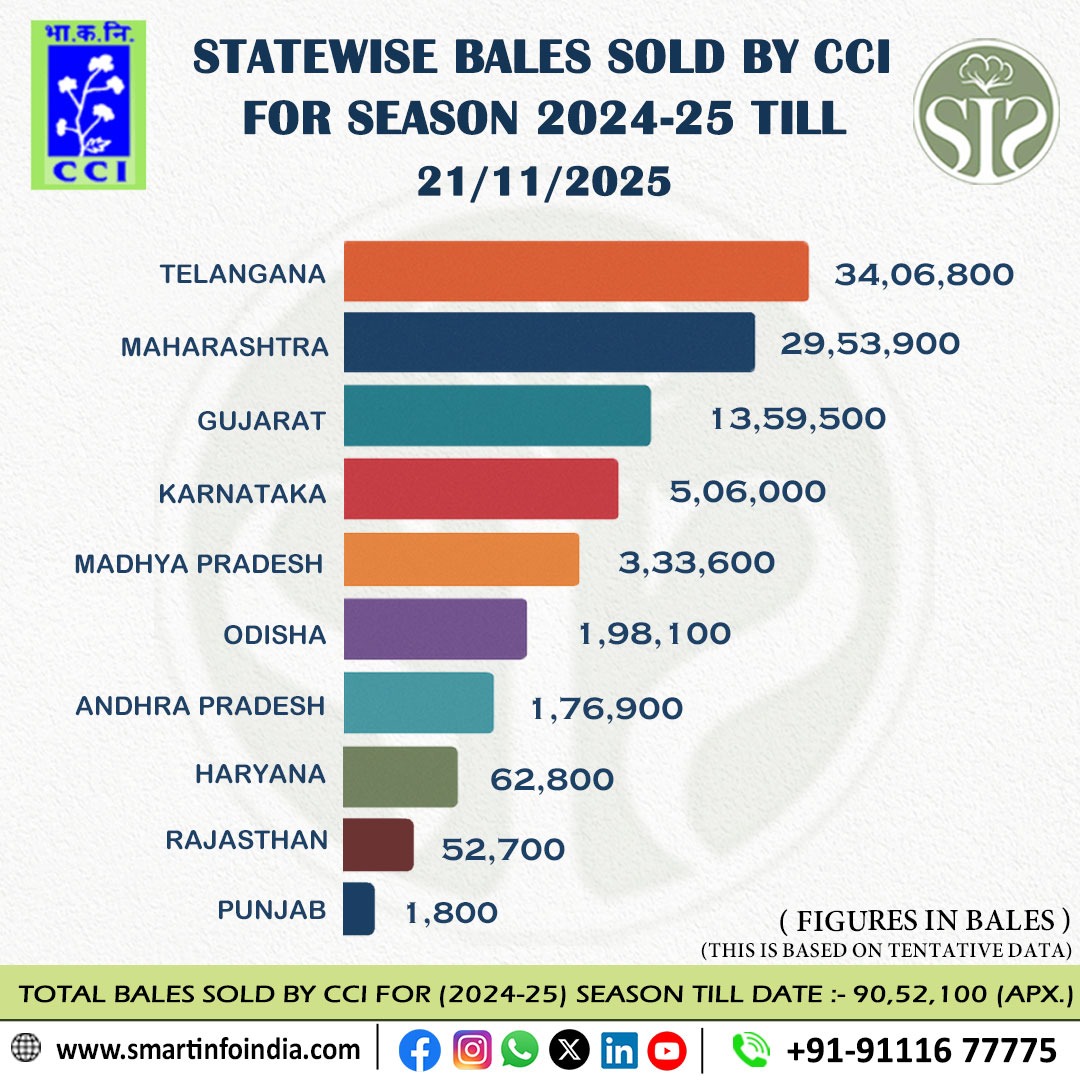
રાજ્ય પ્રમાણે CCI કપાસના વેચાણની વિગતો - 2024-25 સીઝનકોટન કોર્પોરેશન ઓફ ઇન્ડિયા (CCI) એ આ અઠવાડિયે તેના ભાવ યથાવત રાખ્યા છે, જેના કારણે 2024-25 સીઝનમાં અત્યાર સુધીમાં કુલ વેચાણ આશરે 90,52,100 ગાંસડી થયું છે. આ આંકડો અત્યાર સુધીમાં ખરીદાયેલા કુલ કપાસના આશરે 90.52% દર્શાવે છે.રાજ્યવાર વેચાણના આંકડા દર્શાવે છે કે મહારાષ્ટ્ર, તેલંગાણા અને ગુજરાતે વેચાણમાં મોખરે રહ્યા છે, જે અત્યાર સુધીમાં કુલ વેચાણના 85.28% થી વધુ હિસ્સો ધરાવે છે.આ આંકડા કપાસ બજારને સ્થિર કરવા અને મુખ્ય કપાસ ઉત્પાદક રાજ્યોને નિયમિત પુરવઠો સુનિશ્ચિત કરવા માટે CCI ના સક્રિય પ્રયાસોને પ્રતિબિંબિત કરે છે.વધુ વાંચો :- ડોલર દીઠ રૂપિયો 26 પૈસા મજબૂત થઈને 89.14 પર ખુલ્યો.

રૂપિયો ૨૬ પૈસા વધીને ૮૯.૧૪/યુએસડી પર ખુલ્યો.સોમવારે ભારતીય રૂપિયો ૨૬ પૈસા વધીને ૮૯.૧૪ પ્રતિ ડોલર પર ખુલ્યો, જે શુક્રવારે ૮૯.૪૦ ના બંધ ભાવથી શરૂ થયો હતો.વધુ વાંચો :- "કપાસથી કાપડ સુધી: 10 વર્ષનું મજબૂત મિશન"

ખેતીથી સીવણ સુધી: ૧૦ વર્ષનું મિશન કપાસના દરેક દોરાને મજબૂત બનાવશેભારત સરકારે કપાસની ઉત્પાદકતા વધારવા માટે એક મોટું પગલું ભર્યું છે. શરૂઆતમાં, આ મિશન પાંચ વર્ષના સમયગાળા માટે આયોજન કરવામાં આવ્યું હતું, પરંતુ વડા પ્રધાન કાર્યાલય (PMO) એ સૂચવ્યું હતું કે પાંચ વર્ષ ખૂબ ટૂંકા છે. તેથી, કપાસ ઉત્પાદકતા મિશન હવે દસ વર્ષના સમયગાળા સુધી લંબાવવામાં આવી રહ્યું છે. આ મિશનનો હેતુ કપાસનું ઉત્પાદન વધારવા, સુધારેલી જાતો પૂરી પાડવા અને ખેડૂતોની આવક વધારવાનો છે.મિશન શા માટે જરૂરી છે?દેશમાં કપાસનું ઉત્પાદન સતત વધઘટ થઈ રહ્યું છે.૨૦૨૩-૨૪માં ઉત્પાદન ૩૨.૫૨ મિલિયન ગાંસડી રહેવાનો અંદાજ હતો.૨૦૨૪-૨૫માં તે ઘટીને ૨૯.૭૨ મિલિયન ગાંસડી થવાનો અંદાજ છે.સરકારે હજુ સુધી ૨૦૨૫-૨૬ માટે ચોક્કસ આંકડા જાહેર કર્યા નથી, પરંતુ વેપાર સંગઠનોનો અંદાજ છે કે ઉત્પાદન ૩૦.૫ મિલિયન ગાંસડીની આસપાસ હોઈ શકે છે. આ ઘટાડો ખેડૂતો અને કાપડ ઉદ્યોગ બંનેને અસર કરે છે. તેથી, આ સરકારી મિશન અત્યંત મહત્વપૂર્ણ માનવામાં આવે છે.ખેડૂતોને આ મિશનથી શું ફાયદો થશે?૧. સુધારેલ બીજ અને ટેકનોલોજીઆઈસીએઆર (ભારતીય કૃષિ સંશોધન પરિષદ) ખેડૂતોને નવી, સુધારેલ અને ઉચ્ચ ઉપજ આપતી કપાસની જાતો પૂરી પાડશે. જોકે, સરકારે સ્પષ્ટતા કરી છે કે "ઉચ્ચ ઉપજ આપતી બીજ મિશન" હેઠળ બીજ સંશોધન કાર્ય પહેલાથી જ પ્રસ્તાવિત છે, તેથી બંને યોજનાઓ વચ્ચે કોઈ પુનરાવર્તન થશે નહીં.૨. આધુનિક ખેતી તકનીકોઆ મિશન હેઠળ, ખેડૂતોને આધુનિક ખેતી તકનીકો, માટી વ્યવસ્થાપન, જીવાત નિયંત્રણ અને પાણી વ્યવસ્થાપન પર તાલીમ આપવામાં આવશે.૩. લાંબા સ્ટેપલ કપાસનો પ્રચારસરકાર એક્સ્ટ્રા લોંગ સ્ટેપલ કપાસને પ્રોત્સાહન આપશે, જે કાપડ ઉદ્યોગને વધુ સારી ગુણવત્તાવાળા ફાઇબર અને ખેડૂતોને વધુ ભાવ પ્રદાન કરશે.૫એફ વિઝન શું છે?નાણામંત્રી નિર્મલા સીતારમણે તેમના બજેટ ભાષણમાં જણાવ્યું હતું કે આ મિશન ભારતના ૫એફ વિઝન પર આધારિત છે:ખેતર → ફાઇબર → ફેક્ટરી → ફેશન → વિદેશી. આનો અર્થ એ છે કે ખેતીથી કાપડ ફેક્ટરીઓ, ફેશન અને વિદેશમાં નિકાસ સુધી એક મજબૂત સપ્લાય ચેઇન બનાવવામાં આવશે. આનાથી કપાસના ખેડૂતોને સારા ભાવ અને સુરક્ષિત બજાર મળશે.જાટ અને મંત્રાલયો વચ્ચે ઝઘડો*શરૂઆતમાં, આ મિશનનો અંદાજિત ખર્ચ આશરે ₹5,000 કરોડ હતો.પરંતુ હવે જ્યારે મિશનનો સમયગાળો 10 વર્ષનો હોવાની ધારણા છે, ત્યારે ખર્ચ વધી શકે છે.કાપડ મંત્રાલય આ ભંડોળનો કેટલોક ભાગ જીનિંગ ફેક્ટરીઓને આધુનિક બનાવવા માટે વાપરવા માંગે છે. જો કે, નાણા વિભાગ અને નીતિ આયોગે આ દરખાસ્તને નકારી કાઢી છે, એમ કહીને કે તેની જાહેરાત બજેટમાં કરવામાં આવી નથી અને તેથી તેને દૂર કરવી પડશે.કેન્દ્ર અને રાજ્ય સરકારોની ભૂમિકાનાણા વિભાગે ભલામણ કરી છે કે આ મિશન કેન્દ્ર દ્વારા પ્રાયોજિત યોજના હોય જેથી કેન્દ્ર અને રાજ્ય સરકારો ખર્ચ વહેંચી શકે. કૃષિ રાજ્યનો વિષય હોવાથી, રાજ્યની ભાગીદારી આવશ્યક છે. સરકાર ઇચ્છે છે કે ICAR તેનો અંતિમ પ્રસ્તાવ સીધો પ્રધાનમંત્રી કાર્યાલય (PMO) ને મોકલે જેથી ઉચ્ચ સ્તરે તમામ મંત્રાલયોની બેઠક યોજી શકાય અને ઝડપથી નિર્ણય લઈ શકાય. મિશન શરૂ થવામાં થોડો સમય લાગી રહ્યો છે, પરંતુ તૈયારીઓ ઝડપથી આગળ વધી રહી છે.કપાસ ખેડૂતોની આવક વધારવા માટેની પહેલકપાસ ઉત્પાદકતા મિશન ભારતના લાખો કપાસ ખેડૂતો માટે એક મોટી તક છે. આ 10 વર્ષનું મિશન સુધારેલા બીજ, આધુનિક ખેતી તકનીકો અને ગુણવત્તા સુધારણા પર ધ્યાન કેન્દ્રિત કરશે. આનાથી ખેડૂતોની આવક વધશે અને દેશના કાપડ ઉદ્યોગને મજબૂત બનાવવામાં આવશે. આ મિશન ભારતને વૈશ્વિક કપાસ બજારમાં વધુ સ્પર્ધાત્મક બનાવશે.વધુ વાંચો :- CCI એ 90% કપાસનું વેચાણ પૂર્ણ કર્યું, ભાવ સ્થિર રહ્યા
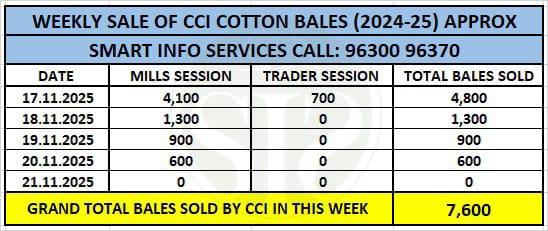
કોટન કોર્પોરેશન ઓફ ઈન્ડિયા (CCI) એ આ અઠવાડિયે તેના ભાવ યથાવત રાખ્યા છે અને 2024-25 સીઝન માટે તેની કુલ કપાસ ખરીદીના 90.52% ઈ-ઓક્શન દ્વારા વેચ્યા છે.17 નવેમ્બરથી 21 નવેમ્બર, 2025 સુધીના સમગ્ર અઠવાડિયા દરમિયાન, CCI એ મિલ અને ટ્રેડર સત્રોમાં ઓનલાઈન હરાજી હાથ ધરી હતી, જેમાં કુલ આશરે 7,600 ગાંસડીનું વેચાણ થયું હતું. નોંધપાત્ર રીતે, CCI એ આ અઠવાડિયે ભાવમાં કોઈ ફેરફાર કર્યો નથી.સાપ્તાહિક વેચાણ17 નવેમ્બર, 2025: અઠવાડિયાનું સૌથી વધુ વેચાણ નોંધાયું હતું - 4,800 ગાંસડી, જેમાંથી 4,100 મિલો દ્વારા અને 700 વેપારીઓ દ્વારા ખરીદવામાં આવી હતી.18 નવેમ્બર, 2025: કુલ 1,300 ગાંસડી વેચાઈ હતી, જે બધી મિલો દ્વારા ખરીદવામાં આવી હતી.19 નવેમ્બર, 2025: વેચાણ 900 ગાંસડી રહ્યું હતું, જેમાં બધી ગાંસડી મિલો દ્વારા ખરીદવામાં આવી હતી.૨૦ નવેમ્બર, ૨૦૨૫: કુલ વેચાણ ૬૦૦ ગાંસડી રહ્યું, જે બધી મિલો દ્વારા ખરીદવામાં આવી હતી.૨૧ નવેમ્બર, ૨૦૨૫: બંને સત્રોમાં શૂન્ય વેચાણ સાથે સપ્તાહનો અંત આવ્યો.CCI એ આખા અઠવાડિયા દરમિયાન આશરે ૭,૬૦૦ ગાંસડી વેચી. આનાથી ૨૦૨૪-૨૫ સીઝન માટે તેનું કુલ વેચાણ ૯,૦૫૨,૧૦૦ ગાંસડી થયું, જે તેની કુલ ખરીદીના ૯૦.૫૨% છે.

શુક્રવારે ભારતીય રૂપિયો 73 પૈસા ઘટીને 89.40 પ્રતિ ડોલર પર બંધ થયો હતો, જ્યારે સવારે તે 88.67 પર ખુલ્યો હતો.બંધ સમયે, સેન્સેક્સ 400.76 પોઈન્ટ અથવા 0.47 ટકા ઘટીને 85,231.92 પર અને નિફ્ટી 124 પોઈન્ટ અથવા 0.47 ટકા ઘટીને 26,068.15 પર બંધ થયો હતો. લગભગ 1113 શેર વધ્યા, 2711 શેર ઘટ્યા અને 131 શેર યથાવત રહ્યા.વધુ વાંચો :- રૂપિયો 03 પૈસા મજબૂત થઈને 88.67 પર ખુલ્યો.

રૂપિયો 03 પૈસા વધીને 88.67 પર ખુલ્યો.શુક્રવારે ડોલર સામે ભારતીય રૂપિયો 88.67 પર ખુલ્યો, જે ગુરુવારે 88.70 ના બંધ સ્તરથી શરૂ થયો હતો.વધુ વાંચો :- રૂપિયો 08 પૈસા ઘટીને 88.70 પ્રતિ ડોલર પર બંધ થયો.

ગુરુવારે ભારતીય રૂપિયો 08 પૈસા ઘટીને 88.70 પ્રતિ ડોલર પર બંધ થયો, જ્યારે સવારે તે 88.62 પર ખુલ્યો.બંધ સમયે, સેન્સેક્સ 446.21 પોઈન્ટ અથવા 0.52 ટકા વધીને 85,632.68 પર અને નિફ્ટી 139.50 પોઈન્ટ અથવા 0.54 ટકા વધીને 26,192.15 પર બંધ થયો. લગભગ 1764 શેર વધ્યા, 2224 શેર ઘટ્યા અને 167 શેર યથાવત રહ્યા.વધુ વાંચો :- કપાસ ખરીદીમાં છૂટછાટ માટે ખેડૂતો ૧૯ થી ૨૬ નવેમ્બર સુધી વિરોધ પ્રદર્શન કરશે
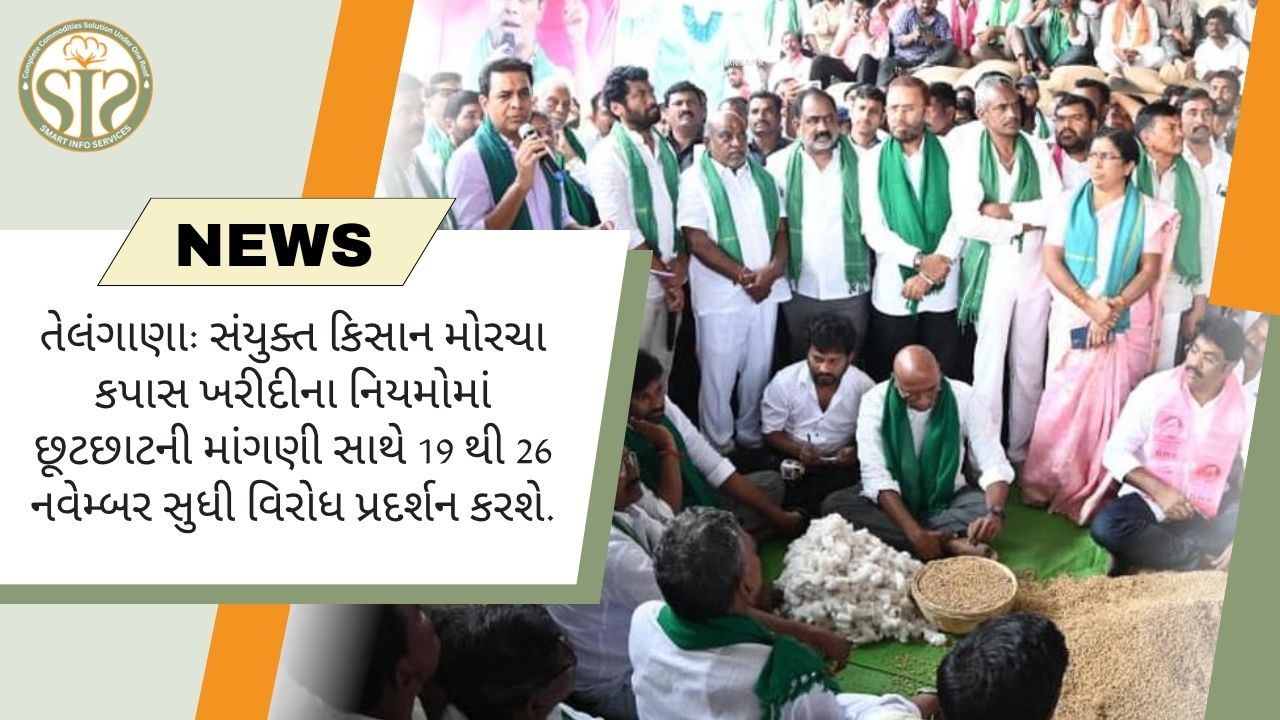
તેલંગાણા: સંયુક્ત કિસાન મોરચા કપાસ ખરીદીના નિયમોમાં છૂટછાટની માંગણી સાથે 19 થી 26 નવેમ્બર સુધી વિરોધ પ્રદર્શન કરશે.ખમ્મમ: સંયુક્ત કિસાન મોરચાએ કોટન કોર્પોરેશન ઓફ ઇન્ડિયા (CCI) દ્વારા કપાસ ખરીદીના નિયમોમાં છૂટછાટ અને ખેડૂતોની અન્ય લાંબા સમયથી પડતર માંગણીઓ માટે દબાણ લાવવા માટે 19 થી 25 નવેમ્બર સુધી ખમ્મમ જિલ્લાના ગામડાઓમાં વિરોધ પ્રદર્શનનું આહ્વાન કર્યું છે.એક નિવેદનમાં, CPI(M) સાથે જોડાયેલા તેલંગાણા રાયથુ સંઘમના જિલ્લા સચિવ બોન્થુ રામબાબુએ તમામ ખેડૂત અને મજૂર સંગઠનોને તાજેતરના ભારે વરસાદ અને કપાસ ખરીદી પર CCIના "પ્રતિબંધો"થી પીડિત ખેડૂતોના મુદ્દાઓ ઉઠાવવા માટે વિરોધ કાર્યક્રમોમાં સક્રિયપણે ભાગ લેવા હાકલ કરી છે.તેમણે કહ્યું કે કેન્દ્ર સરકારની "ખેડૂત વિરોધી" અને "મજૂર વિરોધી" નીતિઓનો વિરોધ કરવા માટે 26 નવેમ્બરે ખમ્મમ શહેરમાં રેલી-સહ-પ્રદર્શન યોજાશે.વધુ વાંચો :- એનુમામુલા બજારમાં કપાસનો વેપાર ફરી શરૂ થયો
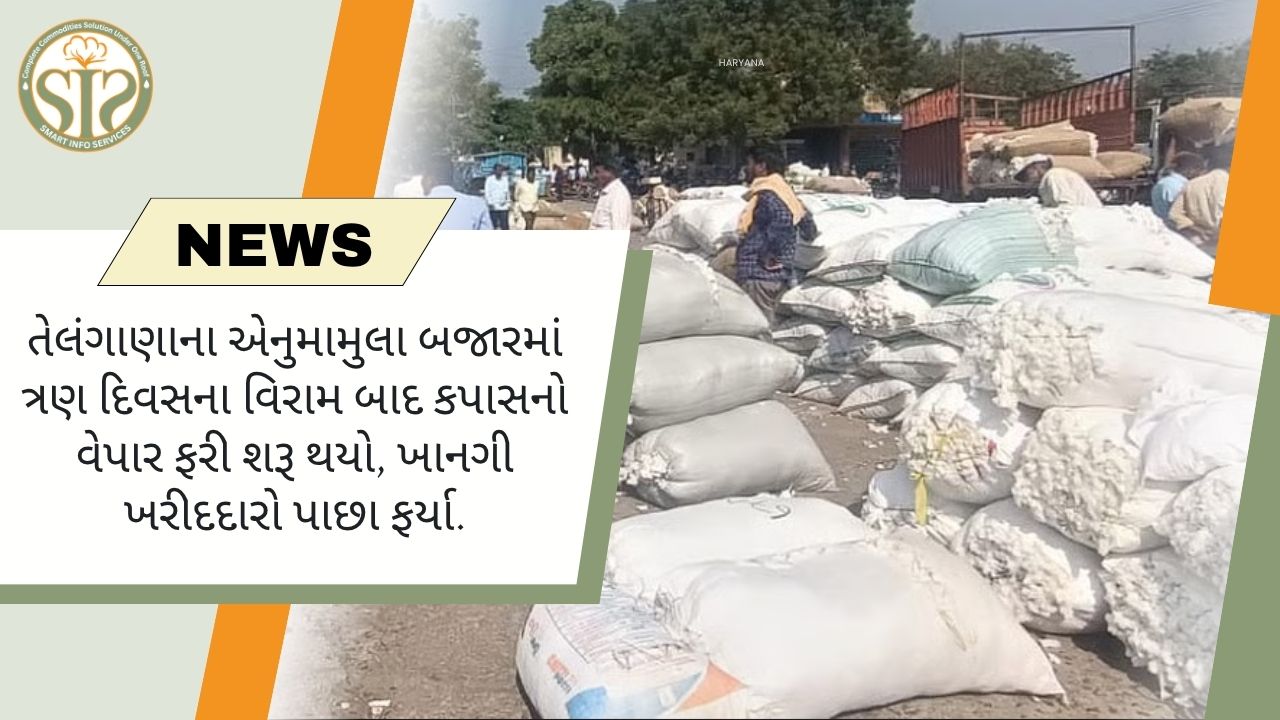
તેલંગાણાના એનુમામુલા બજારમાં ત્રણ દિવસના વિરામ બાદ કપાસનો વેપાર ફરી શરૂ થયો, ખાનગી ખરીદદારો પાછા ફર્યા.વારંગલ : ત્રણ દિવસના વિરામ બાદ, બુધવારે વારંગલના એનુમામુલા કૃષિ બજારમાં કપાસનો વેપાર ફરી શરૂ થયો, જેના કારણે એશિયાના સૌથી મોટા કપાસ કેન્દ્રોમાંના એક તરફ મોટી સંખ્યામાં ખેડૂતો આકર્ષાયા. ખાનગી વેપારીઓએ ઝડપથી ખરીદી ફરી શરૂ કરી હોવાથી બજારમાં ભારે ઉહાપોહ અને કપાસનો ભારે પ્રવાહ જોવા મળ્યો, જેના કારણે વાજબી ભાવની રાહ જોનારાઓમાં આશા અને નિરાશા વધી.કોટન કોર્પોરેશન ઓફ ઈન્ડિયા (CCI) એ અગાઉ ખરીદી પર રોક લગાવી હતી, જેના કારણે બજાર ત્રણ દિવસ માટે બંધ રાખવાની ફરજ પડી હતી. તેલંગાણા કોટન મિલર્સ એન્ડ ટ્રેડર્સ વેલફેર એસોસિએશનના બજાર અધિકારીઓ અને સભ્યોએ રાજ્યભરની જિનિંગ મિલોને કપાસની ફાળવણી સંબંધિત સમસ્યાઓના ઉકેલ માટે કૃષિ મંત્રી થુમ્મલા નાગેશ્વર રાવનો સંપર્ક કર્યો.ઘણી બેઠકો પછી, રાજ્ય સરકારે કપાસ ખરીદદારો અને જિનિંગ મિલોની ચિંતાઓને દૂર કરવાનો નિર્ણય લીધો, કપાસના વેપાર માટે એનુમામુલા કૃષિ બજાર ફરીથી ખોલ્યું. ખાનગી વેપારીઓએ તાત્કાલિક મોટી માત્રામાં કપાસ ખરીદવાનું શરૂ કર્યું. CCI એ 8% થી 12% ભેજવાળા કપાસ માટે પ્રતિ ક્વિન્ટલ ₹8,100 ભાવ નક્કી કર્યો છે, જ્યારે અધિકારીઓ આ ભેજ સ્તરથી ઉપર કપાસ ખરીદવાનો ઇનકાર કરી રહ્યા છે.જ્યારે TNIE એ બજારની મુલાકાત લીધી, ત્યારે અધિકારીઓએ જણાવ્યું કે બુધવારે કપાસની 2,000 થેલીઓ આવી હતી અને ખેડૂતો માટે સરળ વેચાણ સુનિશ્ચિત કરવા માટે પગલાં લેવામાં આવ્યા હતા.વાજબી ભાવની માંગ105 લાઇસન્સ પ્રાપ્ત વેપારીઓ દ્વારા દર્શાવવામાં આવેલ MSP પ્રતિ ક્વિન્ટલ ₹6,830 હતો, જ્યારે મહત્તમ ઓફર ₹6,300 અને લઘુત્તમ ઓફર ₹5,000 હતી. TNIE સાથે વાત કરતા, રાયપર્થી મંડળના ખેડૂત પી. મધુસુધનએ જણાવ્યું હતું કે, “ખાનગી વેપારીઓ સરકાર દ્વારા નક્કી કરાયેલ ₹6,830 ના MSP કરતા ઓછા ભાવે ખરીદી કરી રહ્યા છે. તેઓ બજારમાં ફક્ત ₹6,100 ઓફર કરી રહ્યા છે, જેનો અર્થ છે કે અમને પ્રતિ ક્વિન્ટલ ₹730 નું નુકસાન થઈ રહ્યું છે. ખેડૂતોને લાભ થાય તે માટે રાજ્ય સરકારે કપાસ માટે MSP દર નક્કી કરવાની જરૂર છે.”વર્ધનપેટા મંડળના ખેડૂત ઇસ્લાવથ જીવાએ પરિસ્થિતિ પર નિરાશા વ્યક્ત કરી. તેમણે કહ્યું, "મેં ચાર એકરમાં કપાસની ખેતી કરવા માટે ₹1 લાખનું રોકાણ કર્યું હતું, પરંતુ ઉપજ અપેક્ષા કરતા ઘણી ઓછી હતી, અને તાજેતરના ભારે વરસાદથી પાકને વધુ નુકસાન થયું હતું. હવે અમને વાજબી ભાવ મળી રહ્યો નથી. ખાનગી વેપારીઓ જે કંઈ પણ ઓફર કરી રહ્યા છે તે મજૂરોને ચૂકવવા માટે પણ પૂરતું નથી. આ સિઝનમાં કપાસના ખેડૂતોને ભારે નુકસાન થયું છે."વધુ વાંચો :- કોઈમ્બતુર મિલોમાં ઉત્પાદન ઓછું, નકામા કપાસના ભાવ વધ્યા
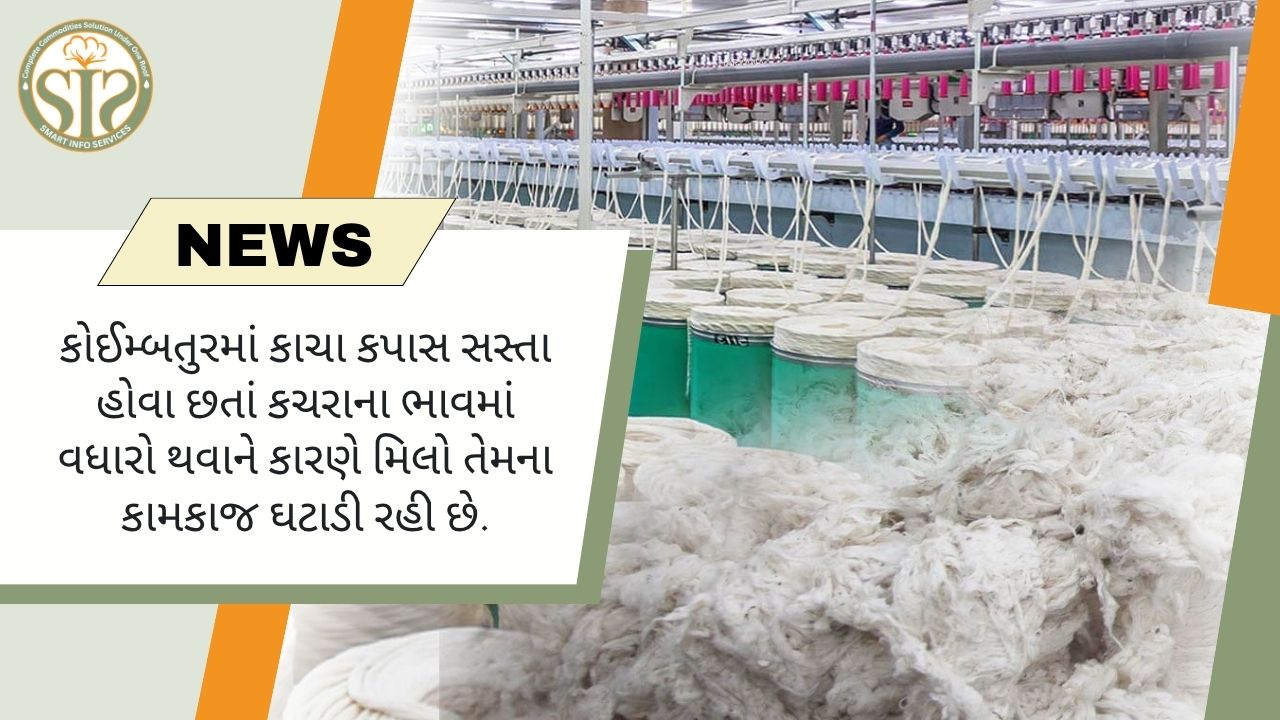
કોઈમ્બતુરમાં કાચા કપાસ સસ્તા હોવા છતાં કચરાના ભાવમાં વધારો થવાને કારણે મિલો તેમના કામકાજ ઘટાડી રહી છે.કોઈમ્બતુર: કચરાના ભાવમાં વધારો થતાં, મોટાભાગના ઓપન-એન્ડ (OE) મિલ સંચાલકોએ નવેમ્બરના બીજા અઠવાડિયાથી સ્પિનિંગ મિલો પાસેથી તેને ખરીદવાનું બંધ કરી દીધું છે.કાચા ફાઇબરને યાર્નમાં રૂપાંતરિત કરતા મિલ સંચાલકો કહે છે કે કચરાના કપાસને રિસાયક્લિંગ કરવું હવે આર્થિક રીતે સધ્ધર નથી કારણ કે સ્પિનિંગ મિલો બિનજરૂરી રીતે ભાવ વધારી રહી છે.કચરો કપાસ કાપડ ઉદ્યોગમાંથી બચેલો ફાઇબર અને ભંગાર છે. તેને નવા યાર્ન, ઇન્સ્યુલેશન, સફાઈ કાપડ અને વધુ બનાવવા માટે રિસાયકલ કરી શકાય છે.એક કેન્ડીનું વજન આશરે 356 કિલો છે.કોઈમ્બતુરના પેરિયાનાઇકેનપલયમમાં OE મિલ ચલાવતા જે બાલાજીએ જણાવ્યું હતું કે, "અમે સ્પિનિંગ મિલોમાંથી નકામા કપાસ ખરીદીએ છીએ અને બે ગણાથી 30 ગણા સુધીના યાર્ન બનાવીએ છીએ. ત્યારબાદ અમે હેન્ડલૂમ અને પાવરલૂમ્સને યાર્ન સપ્લાય કરીએ છીએ. સરકારી હસ્તક્ષેપ પછી કપાસના ભાવમાં ઘટાડો થયો હોવા છતાં, સ્પિનિંગ મિલોએ ટૂંકા ગાળામાં કોમ્બર નોઇલ કોટન જેવા નકામા કપાસના ભાવ 100 રૂપિયાથી વધારીને 108 રૂપિયા પ્રતિ કિલો અને FS કપાસના ભાવ 85 રૂપિયાથી વધારીને 92 રૂપિયા કરી દીધા છે. નકામા કપાસના ભાવમાં વધારાને કારણે, અમને હાલના ઓર્ડરના ઉત્પાદન ખર્ચને પહોંચી વળવામાં મુશ્કેલી પડી રહી છે. મારી જેમ, ઘણા OE મિલ સંચાલકોએ 10 નવેમ્બરથી સ્પિનિંગ મિલોમાંથી નકામા કપાસ ખરીદવાનું બંધ કરી દીધું છે."(યાર્ન કાઉન્ટ એ એક સંખ્યાત્મક પદ્ધતિ છે જે યાર્નની લંબાઈ અને વજનને જોડીને તેની બારીકાઈ અથવા બરછટતા માપે છે. કોમ્બર નોઈલ કોટન એ રિંગ સ્પન યાર્ન સ્પિનિંગ પ્રક્રિયાનું આડપેદાશ છે. જ્યારે કપાસને કોમ્બર મશીનમાં કોમ્બિંગ કરવામાં આવે છે ત્યારે તે બનાવવામાં આવે છે.)બાલાજીએ એમ પણ કહ્યું કે તેમણે તેમના યુનિટનું કામ અઠવાડિયામાં 2-3 દિવસ સુધી ઘટાડી દીધું છે. તેમણે કહ્યું, "મારી પાસે મિલ ચલાવવા માટે પૂરતો કાચો માલ છે. તેવી જ રીતે, નવેમ્બરના બીજા અઠવાડિયાથી મોટાભાગની OE મિલોએ તેમનું કામ ઘટાડી દીધું છે." "બજારમાં નવો કપાસ આવવા લાગ્યો તેમ, ભાવ ઘટીને 4,000 થી 6,000 રૂપિયા પ્રતિ કેન્ડી થઈ ગયો, જેના કારણે દેશભરની સ્પિનિંગ મિલોને ઓક્ટોબરથી તેમના યાર્નના ભાવમાં 8 થી 10 રૂપિયા પ્રતિ કિલોગ્રામનો ઘટાડો કરવાની ફરજ પડી," રિસાયકલ ટેક્સટાઇલ ફેડરેશનના પ્રમુખ એમ જયબાલે જણાવ્યું. "જોકે, છેલ્લા બે મહિનામાં, નકામા કપાસના ભાવમાં આડેધડ વધારો કરવામાં આવ્યો છે. નકામા કપાસના વધેલા ભાવને મેચ કરવા માટે OE મિલો તેમના યાર્નના ભાવમાં વધારો કરી શકતી નથી." તેમણે વધુમાં જણાવ્યું હતું કે, "છેલ્લા ચાર મહિનામાં, પૂરતા ઓર્ડરના અભાવે 30-કાઉન્ટ વણાટ યાર્નનું ઉત્પાદન ઘટ્યું છે, જેના કારણે OE યાર્ન અને કાપડ સામગ્રીનો સંગ્રહ થયો છે. સ્પિનિંગ મિલોને ડર છે કે જો તેઓ 'કડા' (શીટિંગ) ફેબ્રિક માટે ઉપયોગમાં લેવાતા 20-કાઉન્ટ યાર્નની કિંમત ઘટાડશે, તો પહેલાથી વેચાયેલા, હાલમાં સ્ટોકમાં રહેલા અને પાવર-લૂમ પરના બધા કારાઓના ભાવ ઘટશે. આ ભય એ હકીકતથી વધુ વકરી ગયો છે કે ઉત્તર ભારતીય કારા વેપારીઓ દિવાળી પછી ચૂકવણી પરત કરવામાં ધીમા રહ્યા છે અને નવી ખરીદી કરવામાં અચકાતા છે."તેમણે ઉમેર્યું, "આ સ્થિતિમાં, અમે ગયા મહિનાના ભાવે નકામા કપાસ ખરીદવાનો નિર્ણય લીધો છે. જો ભાવ ઘટશે નહીં, તો મિલો નુકસાન ટાળવા માટે તેમના નકામા કપાસના હાલના સ્ટોક પર કામ કરશે."તમિલનાડુમાં, OE મિલોની 8.5 લાખ રોટર ક્ષમતામાંથી, 3.5 લાખ રોટર ગ્રે યાર્નનું ઉત્પાદન કરે છે. બાકીના ૫,૦૦,૦૦૦ રોટર્સ ૨ થી ૪૦ કાઉન્ટ સુધીના વિવિધ પ્રકારના યાર્નનું ઉત્પાદન કરે છે, જેમાં બ્લીચ્ડ, કલર્ડ, મેલેન્જ, કોટન-પોલિએસ્ટર, વિસ્કોસ-કોટન અને વિસ્કોસ-પોલિએસ્ટરનો સમાવેશ થાય છે, જે ૪૫ થી વધુ રંગોમાં ઉપલબ્ધ છે. આ મિલો મુખ્યત્વે તિરુપ્પુર, કોઈમ્બતુર, ઇરોડ, સેલમ, કરુર, મદુરાઈ અને વિરુધુનગર જિલ્લાઓમાં પાવર લૂમ્સને ૧૦/૨૦/૨૫/૩૦ કાઉન્ટના ગ્રે યાર્ન સપ્લાય કરે છે.વધુ વાંચો :- તેલંગાણામાં હડતાળ સમાપ્ત, કપાસની ખરીદીમાં વધારો