

डॉलर इंडेक्स में तेज़ी के चलते भारतीय रुपया 16 पैसे गिरकर 87.81 पर खुला।भारतीय रुपया 87.65 के पिछले बंद भाव की तुलना में 16 पैसे गिरकर 87.81 प्रति डॉलर पर कारोबार कर रहा है।और पढ़ें :- कृषि समाचार: किसानों के लिए खुशखबरी! 'सीसीआई' ने 8,100 रुपये में कपास की पेशकश की
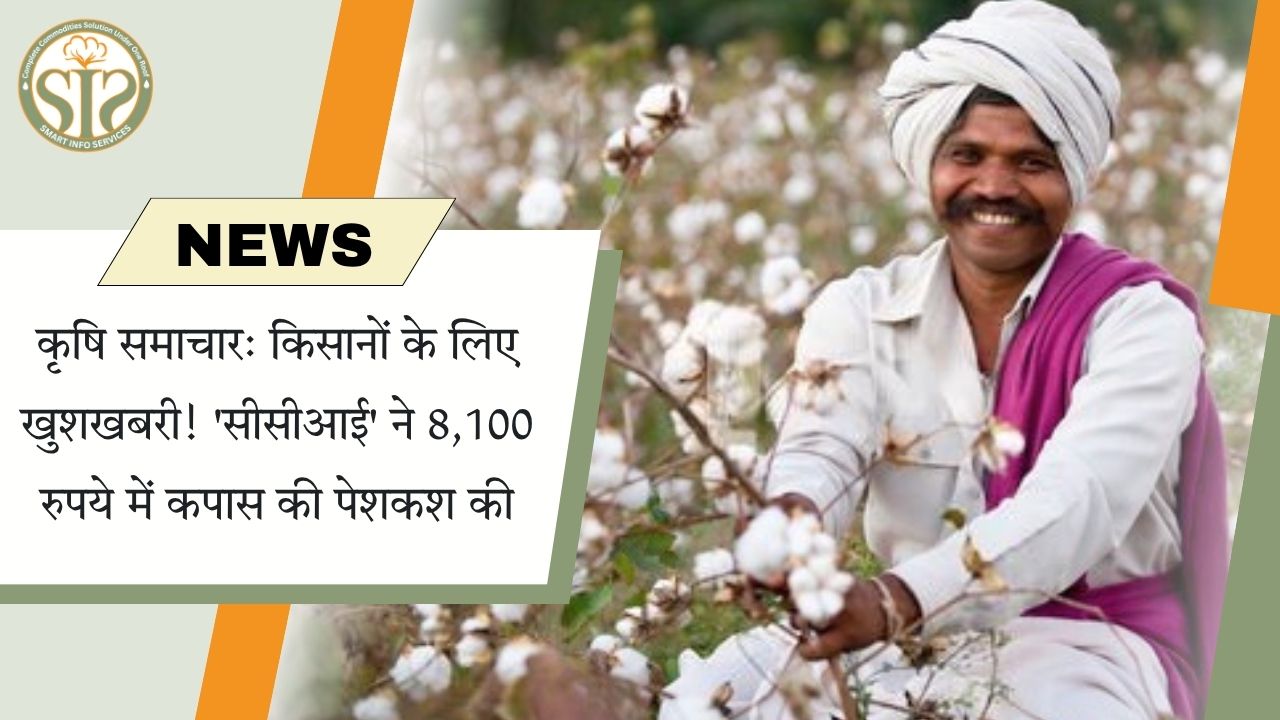
सीसीआई ने कपास के लिए 8,100 रुपये की पेशकश, किसानों को राहतजलगांव: इस साल जिले में सात लाख हेक्टेयर में खरीफ की फसलें बोई गई हैं। हालाँकि, 'सफेद सोना' कहे जाने वाले कपास की खेती में डेढ़ लाख हेक्टेयर की कमी आई है। वहीं, किसानों ने आर्थिक स्थिरता प्रदान करने वाली मक्का और सोयाबीन की खेती को चुना है। पिछले साल तक 'सीसीआई' ने व्यापारियों के साथ मिलकर कपास के कम दाम दिए थे। हालाँकि, इस साल 'सीसीआई' किसानों को आठ हज़ार एक सौ रुपये प्रति क्विंटल के भाव पर कपास की पेशकश करेगा। इससे किसानों में संतुष्टि देखी जा रही है।पिछले साल सीसीआई ने साढ़े सात हज़ार रुपये के भाव पर कपास की पेशकश की थी। हालाँकि, इसके लिए पहले से 'सीसीआई' में पंजीकरण कराना होगा और आधार कार्ड बैंक खाते से लिंक करना होगा। इसमें कपास की गिनती करते समय की जाने वाली कटौती किसानों की आय को प्रभावित करती है। उसमें भी भुगतान कुछ महीनों बाद किया जाता है। इस वजह से किसान 'सीसीआई' को कपास बेचते हैं। हालाँकि, ज़रूरतमंद किसान कपास की गिनती के तुरंत बाद व्यापारियों से पैसे ले लेते हैं। अब तक का अनुभव यही है।पिछले साल व्यापारियों ने सिर्फ़ कपास की किस्म देखकर 7,000 से 7,200 रुपये तक के भाव दिए थे। किसानों ने कपास के भाव बढ़ने की उम्मीद में उसे अपने घरों में रखा। आख़िरकार, कपास व्यापारियों को जो भाव मिला, उसी पर बेचना पड़ा। क्योंकि 'सीसीआई' ने कपास ख़रीद केंद्र सीज़न ख़त्म होने से पहले ही बंद कर दिए थे।व्यापारी कितनी क़ीमत देंगे?इस सीज़न के लिए 8,100 रुपये प्रति क्विंटल का भाव घोषित किया गया है। व्यापारियों ने कपास के लिए 7 से 7,300 रुपये का भाव नहीं दिया है। ऐसे में क्या व्यापारी 'सीसीआई' के अनुसार कपास के लिए 8,100 रुपये देंगे? किसानों के बीच यह सवाल उठ खड़ा हुआ है। व्यापारी ख़ुद भी कपास के भाव को लेकर चिंतित होंगे।खरीद केंद्र जल्दी खोले जाने चाहिए।अक्टूबर में नया कपास बाज़ार में आता है। पहले कुछ व्यापारी ऊँची क़ीमत पर कपास ख़रीद लेते हैं। इससे कपास के भाव को लेकर किसानों की उम्मीदें बढ़ जाती हैं। हालांकि, बाद में व्यापारी कम दाम पर कपास खरीद लेते हैं। इससे किसान परेशान हो जाते हैं।किसानों को उम्मीद है कि भविष्य में ऐसा नहीं होगा। हालाँकि, किसान कपास सीसीआई को तभी सौंपेंगे जब सीसीआई सीजन शुरू होते ही खरीद केंद्र शुरू कर दे। इस संबंध में, सीसीआई द्वारा अभी से खरीद केंद्र शुरू करने की दिशा में कदम उठाने की उम्मीद है।सोयाबीन की खेती बढ़ीइस साल मूंगफली की जगह सोयाबीन की खेती बढ़ी है। इसमें मूंगफली 1045 हेक्टेयर, कुसुम, सूरजमुखी 29 और तिल 104 हेक्टेयर जैसे तिलहनों की खेती का रकबा कम हुआ है। हालाँकि, सोयाबीन की खेती वास्तव में 19 हज़ार 498 हेक्टेयर की बजाय 35 हज़ार हेक्टेयर बढ़ी है, यानी दोगुनी। औसतन 21 हज़ार 292 हेक्टेयर की बजाय 36 हज़ार 208 हेक्टेयर, यानी तिलहन किस्मों की खेती में 15 हज़ार हेक्टेयर की वृद्धि हुई है।और पढ़ें :- कपास-मूंगफली: सौराष्ट्र बुवाई का 86% हिस्सा

सौराष्ट्र समाचार विश्लेषण: ज़िले की बुवाई में कपास और मूंगफली का 86% हिस्साइस वर्ष ज़िले में 82% से ज़्यादा बारिश होने के बाद, कपास, मूंगफली और बाजरा की बुवाई हो रही है।इस वर्ष लगातार बारिश के कारण, जुलाई के अंत तक कपास की बुवाई उम्मीद के मुताबिक नहीं हो पाई है। हालाँकि, इस वर्ष भी गोहिलवाड़ में कुल खरीफ़ बुवाई 3,65,700 हेक्टेयर भूमि पर हुई है। भावनगर ज़िले में हर साल खरीफ़ बुवाई में कपास और मूंगफली का सबसे बड़ा हिस्सा होता है।यह परंपरा इस वर्ष भी कायम है। कुल बुवाई में कपास का योगदान 55.76% और मूंगफली का 30.46% है, जिससे गोहिलवाड़ की कुल बुवाई में इन दोनों फसलों का हिस्सा 86.22% हो जाता है। जबकि शेष 13.78 प्रतिशत में बाजरा, अरहर, मूंग, उड़द, सब्ज़ियाँ, ज्वार जैसी अन्य सभी फसलें शामिल हैं।भावनगर ज़िले में कपास की बुवाई का हिस्सा 55.76 प्रतिशत है। कपास की बुवाई 2,03,900 हेक्टेयर भूमि पर हुई है, जबकि मूंगफली की बुवाई कुल बुवाई क्षेत्र का 30.46 प्रतिशत है और मूंगफली का कुल बुवाई क्षेत्र 1,11,400 हेक्टेयर रहा है।बांध से पानी छोड़े जाने और लगातार बारिश के बाद खेतों में जलभराव और लगातार पानी के कारण, पिछले साल की तुलना में जुलाई के अंत तक कपास की बुवाई उतनी नहीं हो पाई है जितनी होनी चाहिए थी।भावनगर जिले में कुल बुवाई क्षेत्र में कपास प्रथम है, जिसमें कपास प्रथम है, इसी प्रकार सागर सौराष्ट्र में भी कपास बुवाई क्षेत्र में प्रथम है।पूरे राज्य में 20,16,800 हेक्टेयर में कपास की बुवाई हुई है, जिसमें अकेले सौराष्ट्र का योगदान 14,75,300 हेक्टेयर है, यानी पूरे राज्य में बोए गए कपास में सौराष्ट्र का योगदान 73.15 प्रतिशत है, और शेष राज्य का योगदान 26.85 प्रतिशत है।राज्य में 20,16,800 हेक्टेयर में कपास की बुवाई हुई है, जिसमें अकेले सौराष्ट्र में 14,75,300 हेक्टेयर है, और भावनगर जिले में वर्तमान में कुल बुवाई क्षेत्र 3,65,700 हेक्टेयर है, और बुवाई क्षेत्र में भी कपास प्रथम स्थान पर है, और इसी प्रकार, पूरे सौराष्ट्र में बुवाई क्षेत्र में कपास प्रथम स्थान पर है।पूरे राज्य में 20,16,800 हेक्टेयर में कपास बोया गया है, जिसमें अकेले सौराष्ट्र का योगदान 14,75,300 हेक्टेयर है, यानी पूरे राज्य में बोए गए कपास में सौराष्ट्र का योगदान 73.15 प्रतिशत है, और शेष राज्य का योगदान 26.85 प्रतिशत है।और पढ़ें :- रुपया 40 पैसे गिरकर 87.65 पर बंद हुआ।

सोमवार को भारतीय रुपया 40 पैसे गिरकर 87.65 प्रति डॉलर पर बंद हुआ, जबकि सुबह यह 87.25 पर खुला था।बंद होने पर, सेंसेक्स 418.81 अंक या 0.52 प्रतिशत बढ़कर 81,018.72 पर और निफ्टी 157.40 अंक या 0.64 प्रतिशत बढ़कर 24,722.75 पर बंद हुआ। लगभग 2047 शेयरों में तेजी आई, 1607 शेयरों में गिरावट आई और 154 शेयरों में कोई बदलाव नहीं हुआ।और पढ़ें:- मिस्र का कपास बना दुनिया का सबसे महंगा सफेद सोना
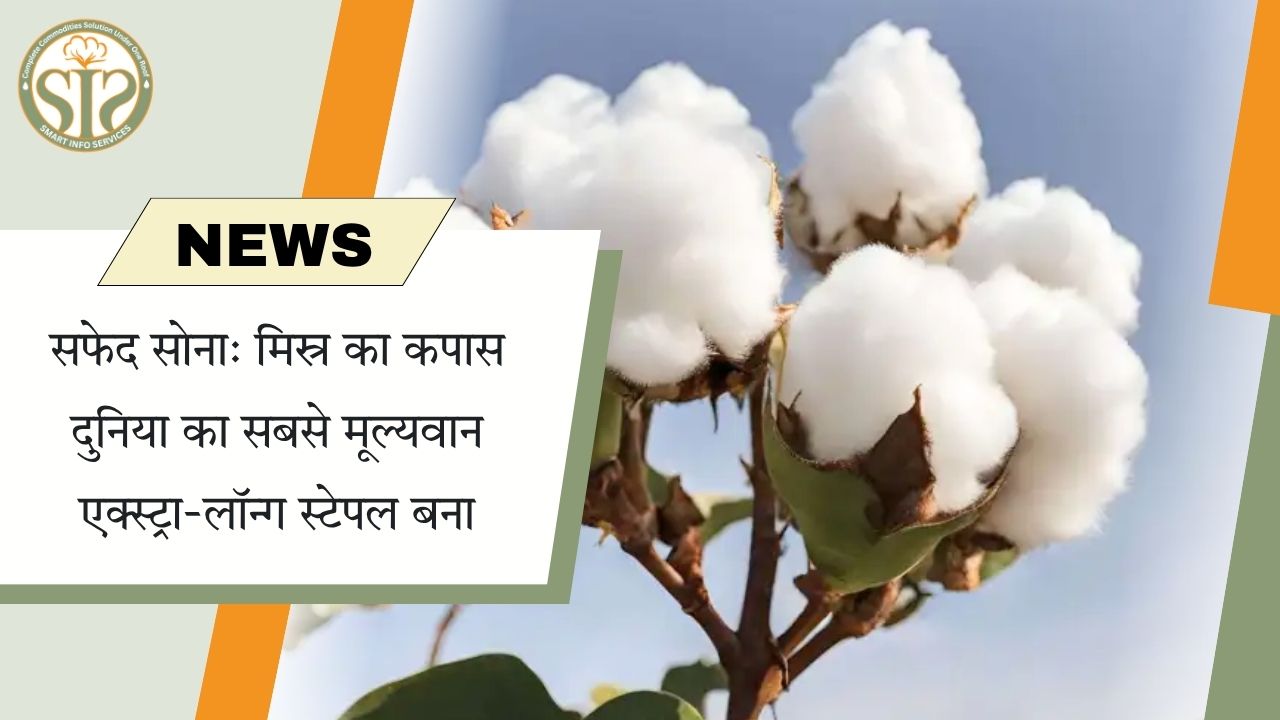
सफेद सोना: मिस्र का कपास बना दुनिया का सबसे महंगा एक्स्ट्रा-लॉन्ग स्टेपलमिस्र का कपास एक बार फिर वैश्विक बाजार में अपनी ऐतिहासिक पहचान हासिल कर चुका है और अब यह दुनिया की सबसे महंगी एक्स्ट्रा-लॉन्ग स्टेपल (ELS) कपास किस्म बन गया है। 21वीं सदी में पहली बार, इसने गुणवत्ता और शिपमेंट के मामले में लंबे समय से अग्रणी अमेरिकी पिमा कपास को पीछे छोड़ दिया है।मिस्र के कपास निर्यातक संघ के अनुसार, मिस्री कपास की कीमत बढ़कर 172–175 सेंट प्रति पाउंड हो गई है, जबकि अमेरिकी पिमा कपास लगभग 167 सेंट प्रति पाउंड पर स्थिर है। गीज़ा-94 किस्म ने एशियाई बाजारों में मजबूत पकड़ बनाई है, जो प्रीमियम ELS कपास के प्रमुख खरीदार माने जाते हैं।विशेषज्ञों के अनुसार, यह बदलाव ऐतिहासिक है। वर्षों तक अमेरिकी पिमा कपास गुणवत्ता और ब्रांडिंग के कारण प्रीमियम पर बना रहा, लेकिन अब बेहतर गुणवत्ता और सीमित वैश्विक आपूर्ति के चलते खरीदार मिस्री कपास की ओर रुख कर रहे हैं।कीमतों में यह उछाल अंतरराष्ट्रीय मांग में वृद्धि और स्थानीय स्तर पर गुणवत्ता में सुधार के कारण आया है। एक साल पहले तक अमेरिकी पिमा कपास को मिस्री कपास पर करीब 100 सेंट प्रति पाउंड का मूल्य लाभ प्राप्त था।अगस्त-सितंबर डिलीवरी के लिए मिस्री कपास लगभग 2.25 डॉलर प्रति पाउंड पर कारोबार कर रहा है, जो इसकी प्रीमियम स्थिति को और मजबूत करता है।वहीं, अमेरिकी पिमा कपास में भी हल्की बढ़त देखी गई है, जहां 24 जुलाई को समाप्त सप्ताह में शुद्ध बिक्री 100 गांठ बढ़ी और कुल शिपमेंट 8,700 गांठ तक पहुंच गया।2024-25 सीजन में मिस्र में कपास की बुवाई लगभग 3.11 लाख फेडन (करीब 1.3 लाख हेक्टेयर) में हुई। फसल की बुवाई मार्च 2024 में हुई और कटाई अक्टूबर में की गई। सरकार ने शुरुआत में ₹12,000 ईजीपी प्रति क्विंटल का गारंटी मूल्य तय किया था, जिसे बाद में घटाकर ₹10,000 ईजीपी कर दिया गया।सितंबर 2024 से 20 जुलाई 2025 तक मिस्र ने करीब 36,400 मीट्रिक टन कपास का निर्यात किया, जिसकी कीमत लगभग 120 मिलियन डॉलर रही। यह निर्यात 17 एशियाई और यूरोपीय देशों को किया गया।उद्योग विशेषज्ञों का मानना है कि उच्च गुणवत्ता वाले ELS कपास की बढ़ती मांग और सीमित वैश्विक आपूर्ति के चलते आने वाले समय में मिस्री कपास की कीमतें मजबूत बनी रह सकती हैं।और पढ़ें:- रुपया 27 पैसे मजबूत होकर 87.25 पर खुला

डॉलर सूचकांक में गिरावट के कारण रुपया 27 पैसे बढ़कर 87.25/USD पर खुला।स्थानीय मुद्रा अमेरिकी डॉलर के मुकाबले 87.25 पर खुली, जबकि पिछले बंद भाव पर डॉलर 87.52 पर था।और पढ़ें :- राज्यवार सीसीआई कपास बिक्री 2024-25
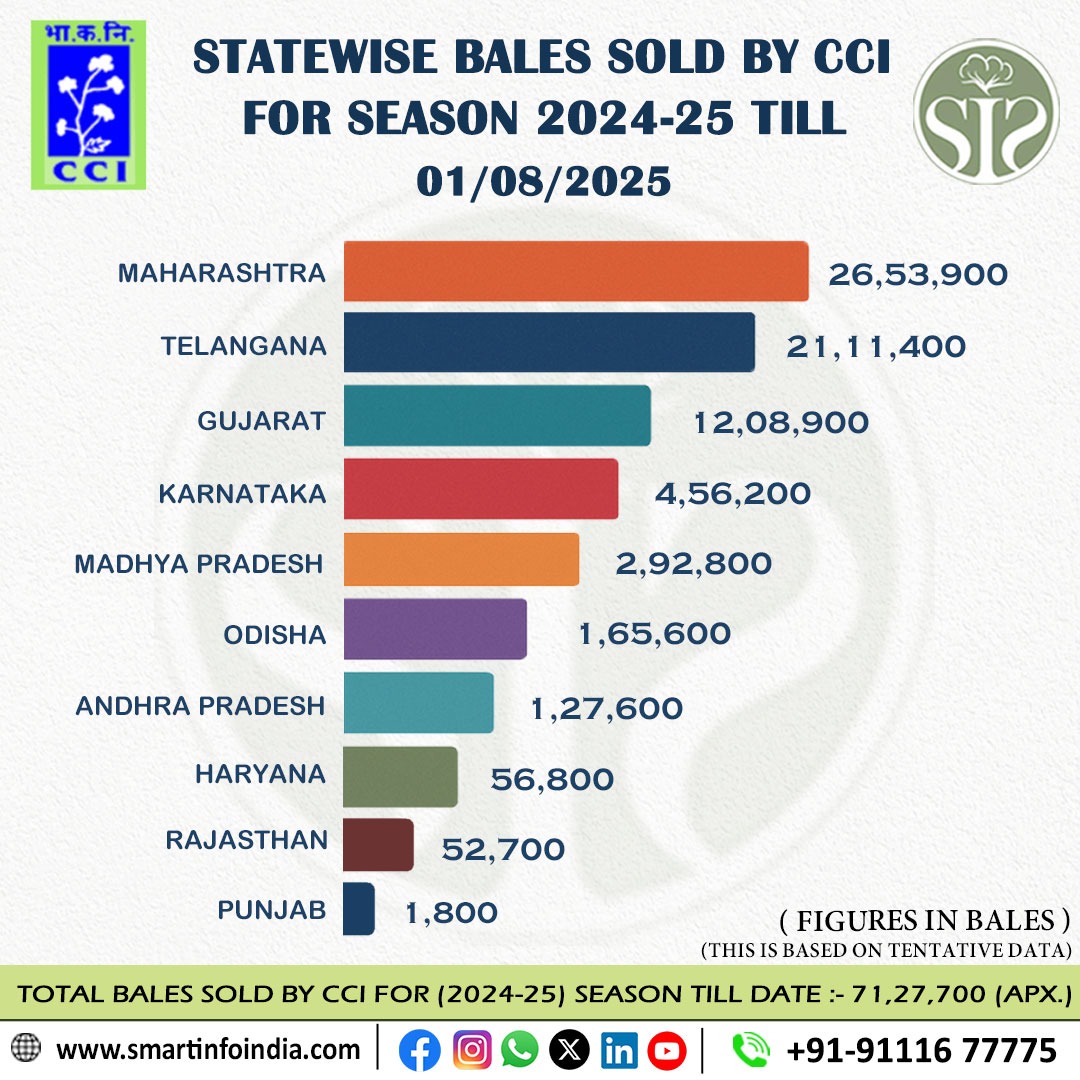
राज्य के अनुसार CCI कपास बिक्री विवरण – 2024-25 सीज़नभारतीय कपास निगम (CCI) ने इस सप्ताह प्रति कैंडी मूल्य में कोई बदलाव नहीं किये है। मूल्य संशोधन के बाद भी, CCI ने इस सप्ताह कुल 79,400 गांठों की बिक्री की, जिससे 2024-25 सीज़न में अब तक कुल बिक्री लगभग 71,27,700 गांठों तक पहुँच गई है। यह आंकड़ा अब तक की कुल खरीदी गई कपास का लगभग 71.27% है।राज्यवार बिक्री आंकड़ों से पता चलता है कि महाराष्ट्र, तेलंगाना और गुजरात से बिक्री में प्रमुख भागीदारी रही है, जो अब तक की कुल बिक्री का 83.81% से अधिक हिस्सा रखते हैं।यह आंकड़े कपास बाजार में स्थिरता लाने और प्रमुख कपास उत्पादक राज्यों में नियमित आपूर्ति सुनिश्चित करने के लिए CCI के सक्रिय प्रयासों को दर्शाते हैं।
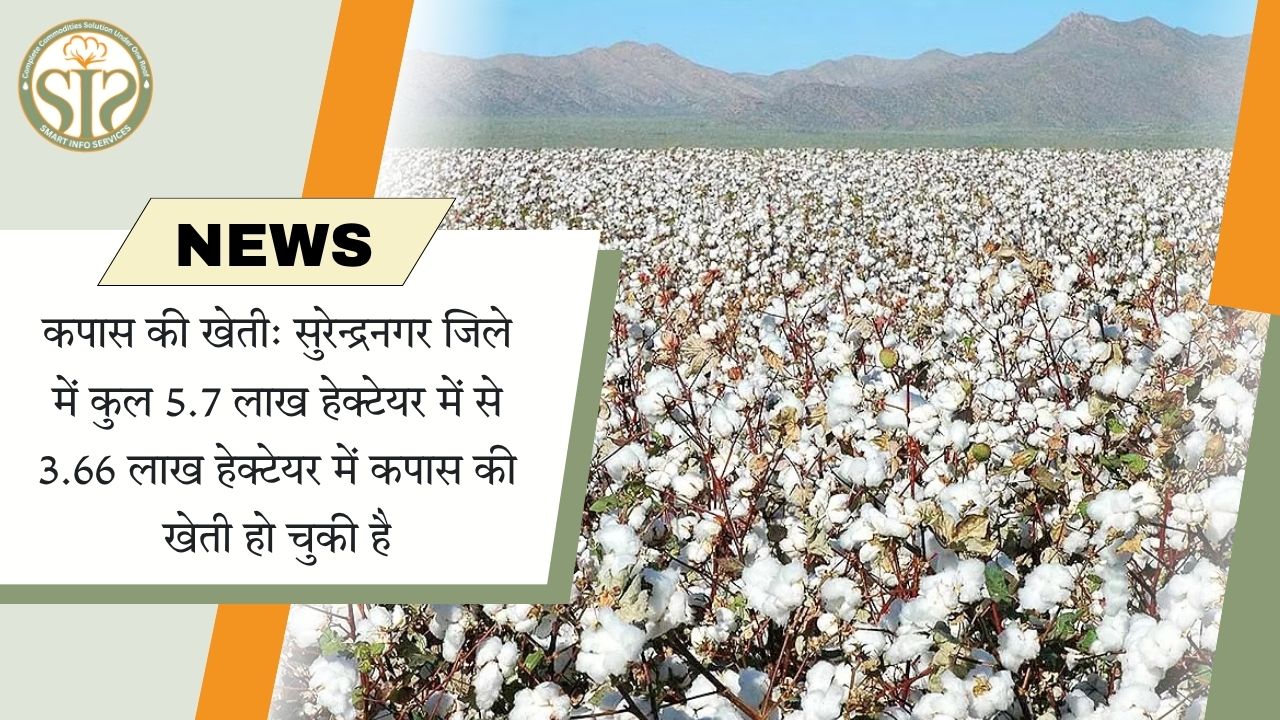
कपास की खेती: सुरेन्द्रनगर जिले में कुल 5.7 लाख हेक्टेयर में से 3.66 लाख हेक्टेयर में कपास की खेती हो चुकी हैकपास में रसचूसक कीट, मूंगफली में झुलसा रोगइस साल सुरेन्द्रनगर जिले में मानसून सीजन की शुरुआत धमाकेदार रही। बाद में, बारिश धीरे-धीरे कम होती गई। अब तक 3825 मिमी यानी मौसम की 64.07 प्रतिशत बारिश हो चुकी है। इस साल अच्छी बारिश की उम्मीद में किसानों ने अब तक जिले में कुल 5,07,250 हेक्टेयर में बुवाई की है।जिसमें से सबसे ज़्यादा 3,66,919 हेक्टेयर में कपास और 39,706 हेक्टेयर में मूंगफली की खेती हो चुकी है। लेकिन लगातार बादल छाए रहने और बारिश की स्थिति के कारण फसल पर असर पड़ रहा है। इस बीच, कपास में रसचूसक कीटों और मूंगफली में पपड़ी, झुलसा रोग, पत्ती धब्बा रोग, जड़ सड़न रोग और एफिड्स का प्रकोप बढ़ रहा है।इस वजह से किसानों को उन बीमारियों से बीमार होने का डर सता रहा है जो उन्हें लग चुकी हैं। इसलिए, जिला कृषि अधिकारी एमआर परमार ने उन्हें रासायनिक उर्वरकों के प्रयोग और रोग नियंत्रण हेतु दवाओं के छिड़काव सहित फसल रोग नियंत्रण के उपाय करने को कहा है।यदि महामारी का पता चले, तो नाइट्रोजन युक्त उर्वरक देकर प्रभाव कम किया जा सकता है।यदि वर्तमान फसल में महामारी का पता चले, तो अंतर-फसलीय खेती करनी चाहिए और खरपतवारों को हटाना चाहिए। इसके साथ ही, फसल को प्रभावित होने से बचाने के लिए यूरिया और नाइट्रोजन युक्त उर्वरक देकर महामारी के प्रभाव को कम किया जा सकता है। जनकभाई कलोत्रा, सेवानिवृत्त कृषि अधिकारीकपास पर नीम के बीज का घोल डालें। धान के खेत में खरपतवारों को उखाड़कर नष्ट कर दें। लीफहॉपर और थ्रिप्स के जैविक नियंत्रण के लिए, शिकारी हरे पतंगे (क्राइसोपा) के 2 से 3 दिन पुराने कैटरपिलर को 10,000 प्रति हेक्टेयर की दर से 15 दिनों के अंतराल पर दो बार डालें।5% नीम के बीज का घोल या एजाडिरेक्टिन जैसे गैर-रासायनिक एजेंट का प्रयोग करें।लीफहॉपर और सफेद मक्खियों का सर्वेक्षण और नियंत्रण करने के लिए पीले चिपचिपे जाल का प्रयोग करें। वर्टिसिलियम विल्ट या बूवेरिया बेसिया का छिड़काव करें।और पढ़ें :- CCI ने 2024-25 में 71% कपास ई-बोली से बेचा, कीमतों में तेज़ी
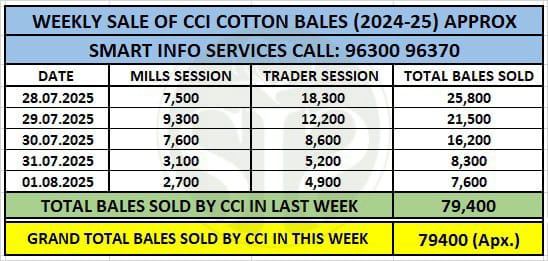
CCI ने कपास की कीमतों में तेज़ी लायी, 2024-25 की कुल ख़रीद का 71% ई-बोली के ज़रिए बेचाभारतीय कपास निगम (CCI) ने पूरे सप्ताह कपास की गांठों के लिए ऑनलाइन बोली लगाई, जिसमें मिलों और व्यापारियों, दोनों सत्रों में उल्लेखनीय व्यापारिक गतिविधि देखी गई। पाँच दिनों के दौरान, CCI की कीमतें अपरिवर्तित रहीं।अब तक, CCI ने 2024-25 सीज़न के लिए लगभग 71,27,700 कपास गांठें बेची हैं, जो इस सीज़न के लिए उसकी कुल ख़रीद का 71.27% है।तिथिवार साप्ताहिक बिक्री सारांश:28 जुलाई 2025:इस दिन सप्ताह की सबसे ज़्यादा दैनिक बिक्री दर्ज की गई, जिसमें 2024-25 सीज़न की 25,800 गांठें बेची गईं।मिल्स सत्र: 7,500 गांठेंव्यापारी सत्र: 18,300 गांठें29 जुलाई 2025:2024-25 सीज़न में कुल 21,500 गांठें बिकीं।मिल्स सत्र: 9,300 गांठेंव्यापारी सत्र: 12,200 गांठें30 जुलाई 2025:बिक्री 16,200 गांठें रही, जो सभी 2024-25 सीज़न में बिकीं।मिल्स सत्र: 7,600 गांठेंव्यापारी सत्र: 8,600 गांठें31 जुलाई 2025:2024-25 सीज़न में कुल 8,300 गांठें बिकीं।मिल्स सत्र: 3,100 गांठेंव्यापारी सत्र: 5,200 गांठें01 अगस्त 2025:सप्ताह का समापन 7,600 गांठों की बिक्री के साथ हुआ।मिल्स सत्र: 2,700 गांठेंव्यापारी सत्र: 4,900 गांठेंसाप्ताहिक योग:CCI ने इस सप्ताह लगभग 79,400 गांठों की कुल बिक्री हासिल की, जो इसके मजबूत बाजार जुड़ाव और इसके डिजिटल लेनदेन प्लेटफॉर्म की बढ़ती दक्षता को दर्शाता है।और पढ़ें :- भारतीय रुपया 06 पैसे बढ़कर 87.52 प्रति डॉलर पर बंद हुआ

शुक्रवार को भारतीय रुपया 06 पैसे बढ़कर 87.52 प्रति डॉलर पर बंद हुआ, जबकि सुबह यह 87.58 पर खुला था।बंद होने पर, सेंसेक्स 585.67 अंक या 0.72 प्रतिशत की गिरावट के साथ 80,599.91 पर और निफ्टी 203 अंक या 0.82 प्रतिशत की गिरावट के साथ 24,565.35 पर बंद हुआ। लगभग 1264 शेयरों में तेजी, 2582 शेयरों में गिरावट और 154 शेयरों में कोई बदलाव नहीं हुआ।और पढ़ें :- पंजाब में लीफहॉपर के प्रकोप से कपास को खतरा
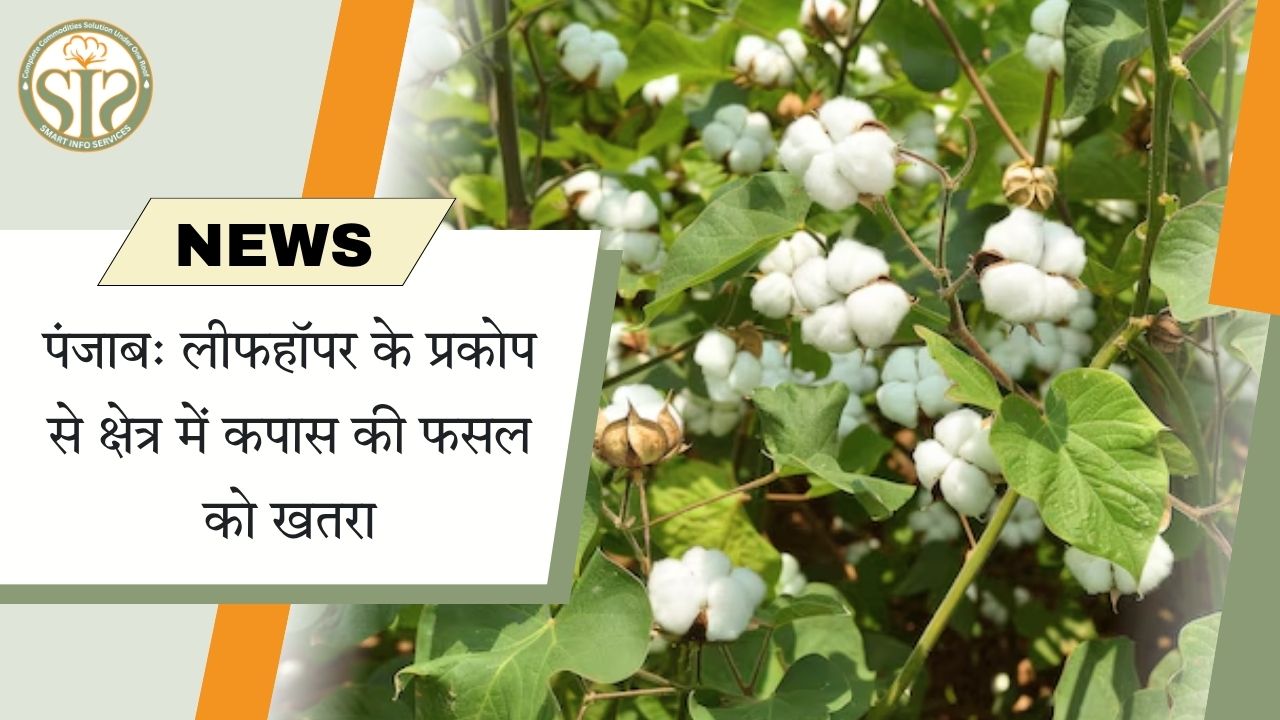
पंजाब: लीफहॉपर के प्रकोप से क्षेत्र में कपास की फसल को खतराबठिंडा : दक्षिण एशिया जैव प्रौद्योगिकी केंद्र, एक वैज्ञानिक संगठन, ने पंजाब, हरियाणा और राजस्थान के प्रमुख कपास उत्पादक जिलों में कपास पर हरे लीफहॉपर (जैसिड), जिसे आमतौर पर 'हरा तेला' के रूप में जाना जाता है, के संक्रमण का खुलासा किया है। इसका प्रभाव पंजाब के मानसा, बठिंडा और फाजिल्का, हरियाणा के हिसार, फतेहाबाद और सिरसा, तथा राजस्थान के हनुमानगढ़ और श्रीगंगानगर में स्पष्ट रूप से देखा जा रहा है। एसएबीसी ने जोधपुर स्थित केंद्र, जिसका अनुसंधान एवं विकास केंद्र सिरसा में है, द्वारा परियोजना बंधन के तहत किए गए एक क्षेत्र सर्वेक्षण के दौरान इस प्रकोप का पता लगाया।दिलीप मोंगा, भागीरथ चौधरी, नरेश, दीपक जाखड़ और केएस भारद्वाज के नेतृत्व वाली क्षेत्रीय टीम ने प्रति पत्ती 12-15 लीफहॉपर के संक्रमण स्तर की सूचना दी, जो आर्थिक सीमा स्तर (ईटीएल) से काफी ऊपर है। क्षेत्रीय सर्वेक्षण में क्षति वर्गीकरण प्रणाली के आधार पर कपास की पत्तियों को ईटीएल से अधिक क्षति होने की भी सूचना मिली।पिछले तीन हफ़्तों से, हरे लीफ़हॉपर (जैसिड) की आबादी ETL से ज़्यादा हो गई है, जिससे पत्तियों के किनारे पीले पड़ गए हैं और वे नीचे की ओर मुड़ गई हैं, जो जैसिड के हमले के विशिष्ट लक्षण हैं। इस प्रकोप का कारण मौसम की कई स्थितियाँ हैं, जिनमें औसत से ज़्यादा बारिश, बारिश के दिनों की संख्या में वृद्धि, लगातार नमी और बादल छाए रहना शामिल है, इन सभी ने जैसिड के प्रसार के लिए आदर्श परिस्थितियाँ पैदा कीं।अमरास्का बिगुट्टुला बिगुट्टुला (इशिडा), जिसे आमतौर पर भारतीय कपास जैसिड या 'हरा तेला' कहा जाता है, कपास का एक मौसम भर चूसने वाला कीट है। लीफ़हॉपर वयस्क बहुत सक्रिय होते हैं, हल्के हरे रंग के, लगभग 3.5 मिमी लंबे, अगले पंखों और शीर्ष पर दो अलग-अलग काले धब्बों वाले, जो पत्तियों पर अपनी विशिष्ट विकर्ण गति से आसानी से पहचाने जा सकते हैं, इसलिए इन्हें 'लीफ़हॉपर' कहा जाता है। लीफ़हॉपर की आबादी पूरे मौसम में होती है, लेकिन जुलाई-अगस्त के दौरान कीट का दर्जा प्राप्त कर लेती है। अनुमान है कि कपास पर प्रति मौसम 11 पीढ़ियाँ तक पाई जाती हैं।लीफहॉपर के शिशु और वयस्क दोनों ही कपास के ऊतकों से कोशिका रस चूसते हैं और विषाक्त पदार्थों को बाहर निकालते हैं, जिससे 'हॉपर बर्न' लक्षण उत्पन्न होता है, जिसमें पत्तियों का पीला पड़ना, भूरा पड़ना और सूखना शामिल है। प्रभावित पत्तियों में सिकुड़न और कर्लिंग के लक्षण दिखाई देते हैं, और चरम स्थितियों में, प्रकाश संश्लेषण की क्रिया कम हो जाती है, पत्तियां भूरी पड़ जाती हैं और सूख जाती हैं, जिससे कपास की उत्पादकता में काफी कमी आ सकती है, और अगर इसका प्रबंधन न किया जाए तो उपज में 30% तक की हानि हो सकती है।लीफहॉपर के ≥5 पौधों में ग्रेड II/III/IV क्षति दिखाई देती है, ग्रेड II में निचली पत्तियों में मामूली सिकुड़न, कर्लिंग और पीलापन दिखाई देता है, ग्रेड III में पत्तियों में सिकुड़न, कर्लिंग और पूरे पौधे में सिकुड़न देखी जाती है; विकास अवरुद्ध होता है, ग्रेड IV में पत्तियों का गंभीर कांस्यीकरण, सिकुड़न, कर्लिंग और सूखना दिखाई देता है। अनुसंधान वैज्ञानिक दीपक जाखड़ ने कहा कि यदि 20 नमूनों में से ≥5 पौधों में ग्रेड II या उससे अधिक क्षति दिखाई देती है, तो तत्काल कार्रवाई आवश्यक है।हालांकि, पीएयू के वैज्ञानिक परमजीत सिंह ने कहा कि कोई चिंताजनक स्थिति नहीं है क्योंकि लीफहॉपर कीट ईटीएल से थोड़ा ही ऊपर है।सर्वेक्षण दल ने पाया कि इस हरे लीफहॉपर कीट के संक्रमण को तुरंत नियंत्रित न करने से आने वाले दिनों में कपास की फसल को नुकसान हो सकता है। किसानों को सतर्क रहना चाहिए और संभावित उपज हानि से बचने के लिए कीट का प्रभावी ढंग से प्रबंधन करने के लिए तत्काल कार्रवाई करनी चाहिए।एसएबीसी ने कपास किसानों से हरे लीफहॉपर कीट (जैसिड) के बढ़ते खतरे को प्रभावी ढंग से प्रबंधित और नियंत्रित करने के लिए विज्ञान-समर्थित उपाय अपनाने का आग्रह किया है, जैसे नियमित रूप से खेतों की निगरानी, कीटों की सटीक पहचान और संक्रमण की गंभीरता का आकलन।हल्के संक्रमण के प्रबंधन के लिए नीम-आधारित जैव-कीटनाशकों या अन्य पर्यावरण-अनुकूल, जैविक कीटनाशकों का उपयोग करने की सिफारिश की गई है। सुबह जल्दी या देर शाम को जब हवा शांत हो, छिड़काव करें। पूरी तरह से छिड़काव सुनिश्चित करें, खासकर पत्तियों के नीचे, जहाँ कीट आमतौर पर छिपे रहते हैं। खेत के अंदर और किनारों पर खरपतवारों को हटा दें, क्योंकि वे लीफहॉपर कीट और अन्य कीटों के लिए वैकल्पिक मेजबान के रूप में काम करते हैं।और पढ़ें :- रुपया 2 पैसे मजबूत होकर 87.58 पर खुला

ट्रम्प टैरिफ़ को लेकर बनी चिंताओं के बीच भारतीय रुपया 2 पैसे बढ़कर 87.58/USD पर खुला।स्थानीय मुद्रा अमेरिकी डॉलर के मुकाबले 87.58 पर खुली, जबकि पिछले बंद भाव पर डॉलर के मुकाबले यह 87.60 पर थी।और पढ़ें :- ट्रंप के 25% टैरिफ से भारत के कपड़ा निर्यातकों को बड़ा नुकसान होगा
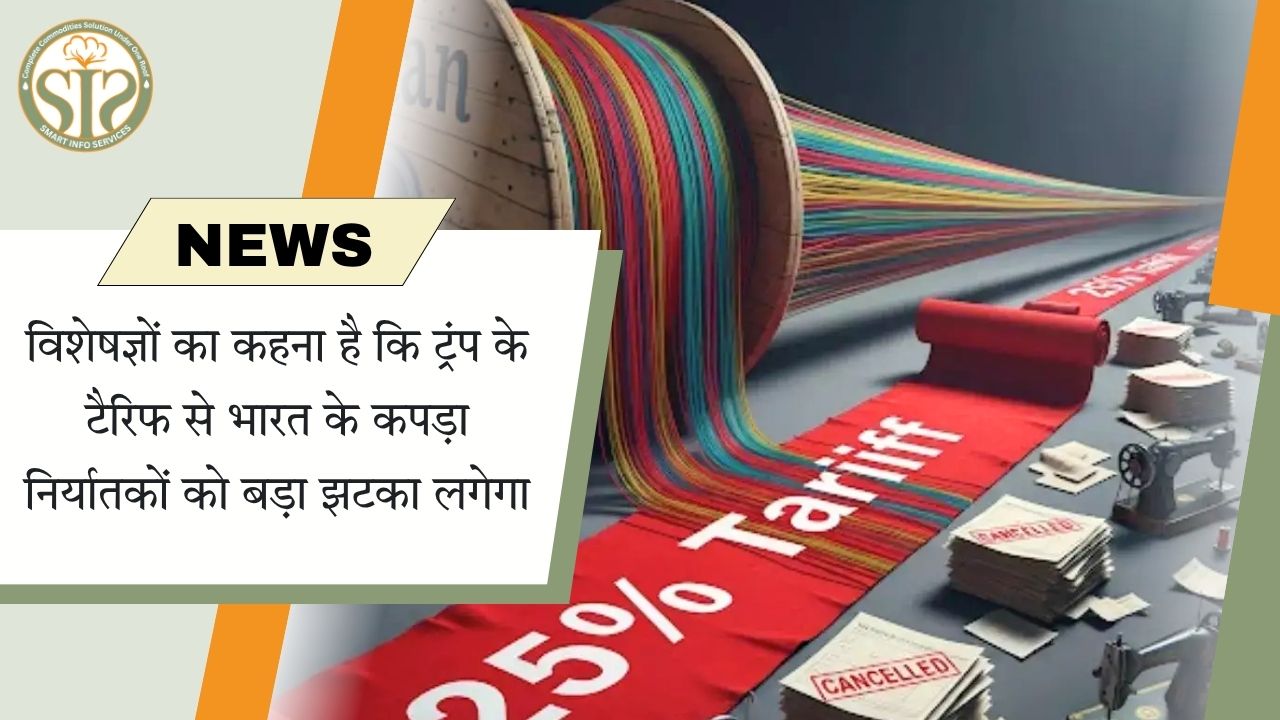
विशेषज्ञों का कहना है कि ट्रंप के टैरिफ से भारत के कपड़ा निर्यातकों को बड़ा झटका लगेगानई दिल्ली: अमेरिकी राष्ट्रपति डोनाल्ड ट्रंप द्वारा भारत से आयातित वस्तुओं पर 25 प्रतिशत अतिरिक्त आयात शुल्क और जुर्माना लगाने की घोषणा से देश के कपड़ा निर्यातकों को बड़ा झटका लगेगा, क्योंकि वियतनाम और इंडोनेशिया जैसे प्रतिस्पर्धियों को अब कम टैरिफ के कारण कीमतों में बढ़त मिल गई है। विशेषज्ञों ने गुरुवार को यह जानकारी दी।यह शुल्क 1 अगस्त से लागू होगा। रूस से कच्चा तेल और सैन्य उपकरण खरीदने पर भारत पर यह अनिर्दिष्ट जुर्माना लगाया गया था।अमेरिका, कपड़ा और परिधान निर्यात के लिए भारत का सबसे बड़ा बाजार है।व्यापार खुफिया फर्म साइबेक्स एक्जिम सॉल्यूशंस के अनुसार, कई भारतीय निर्यातकों को ऑर्डर रद्द होने और कीमतें कम करने के दबाव का सामना करना पड़ सकता है, जिससे लागत बढ़ सकती है और वियतनाम तथा इंडोनेशिया से प्रतिस्पर्धात्मक नुकसान हो सकता है।साइबेक्स एक्ज़िम सॉल्यूशंस ने कहा, "अमेरिका द्वारा घोषित 25 प्रतिशत टैरिफ भारत के कपड़ा और परिधान निर्यातकों के लिए एक बड़ा झटका है। हम 17 अरब डॉलर के रेडीमेड परिधान निर्यात करते हैं, जिसमें से 5.6 अरब डॉलर सिर्फ़ अमेरिका को जाता है। यह एक बड़ा हिस्सा है। रातोंरात बढ़ती लागत के कारण, कई निर्यातकों को ऑर्डर रद्द होने या कीमतें कम करने के दबाव का सामना करना पड़ सकता है। वियतनाम और इंडोनेशिया जैसे देशों के पास अब मूल्य निर्धारण में बढ़त है क्योंकि उनके टैरिफ कम हैं।""हालांकि गुणवत्ता के मामले में भारत अभी भी बांग्लादेश और कंबोडिया से आगे है, लेकिन यह कदम हमारे निर्माताओं, खासकर छोटे निर्माताओं पर वास्तविक दबाव डालता है। अब समय आ गया है कि हम सिर्फ़ अमेरिका से आगे देखें और अन्य बाज़ारों में और अधिक आक्रामक तरीके से प्रवेश करें।"पीटीआई से बात करते हुए, भारतीय कपड़ा उद्योग परिसंघ (सीआईटीआई) की महासचिव चंद्रिमा चटर्जी ने कहा कि वे अनिर्दिष्ट जुर्माने को लेकर "बेहद चिंतित" हैं, क्योंकि इससे उन निर्यात ऑर्डर देने वालों के लिए स्पष्टता का अभाव पैदा हो गया है, जिन्हें अगले कुछ महीनों में पूरा किया जाना है।चटर्जी ने कहा, "हम पर इसका गंभीर असर पड़ेगा। हममें से ज़्यादातर लोगों ने 25 प्रतिशत टैरिफ़ को गंभीरता से नहीं लिया है, लेकिन हम जुर्माने को लेकर बेहद चिंतित हैं क्योंकि हम अभी भी बहुत ही सट्टा बाज़ार में हैं।"उनके अनुसार, वियतनाम में भारत की तुलना में 20 प्रतिशत टैरिफ़ है, जबकि इंडोनेशिया को अमेरिका से 19 प्रतिशत आयात शुल्क का सामना करना पड़ता है।चटर्जी ने आगे कहा कि भारतीय निर्यातक यूके, ईयू, यूएई, जापान और कोरिया जैसे वैकल्पिक बाज़ारों में ज़्यादा आक्रामक तरीक़े से निवेश कर सकते हैं।आरएसडब्लूएम लिमिटेड के संयुक्त प्रबंध निदेशक राजीव गुप्ता ने कहा, "एक और गंभीर चिंता रूस के साथ भारत के संबंधों से जुड़ा अनिर्धारित दंडात्मक प्रावधान है, जो अनिश्चितता की एक परत जोड़ता है।"गुप्ता ने कहा, "भारतीय उद्यमी और निर्माता मज़बूत हैं, और हमें विश्वास है कि योजनाबद्ध रणनीतियों के साथ व्यापार की गति लगातार बढ़ती रहेगी। चीन के ख़िलाफ़ टैरिफ़ की स्थिति पर स्पष्टता सबसे अहम है।"और पढ़ें :- डॉलर के मुकाबले रुपया 11 पैसे मजबूत होकर 87.60 पर बंद हुआ

गुरुवार को भारतीय रुपया 11 पैसे बढ़कर 87.60 प्रति डॉलर पर बंद हुआ, जबकि सुबह यह 87.71 पर खुला था।बंद होने पर, सेंसेक्स 296.28 अंक या 0.36 प्रतिशत की गिरावट के साथ 81,185.58 पर और निफ्टी 86.70 अंक या 0.35 प्रतिशत की गिरावट के साथ 24,768.35 पर बंद हुआ। लगभग 1490 शेयरों में तेजी, 2365 शेयरों में गिरावट और 135 शेयरों में कोई बदलाव नहीं हुआ।और पढ़ें :- न मौसम, न मुनाफा… कैसे पंजाब से मुरझा गई ‘कपास’?
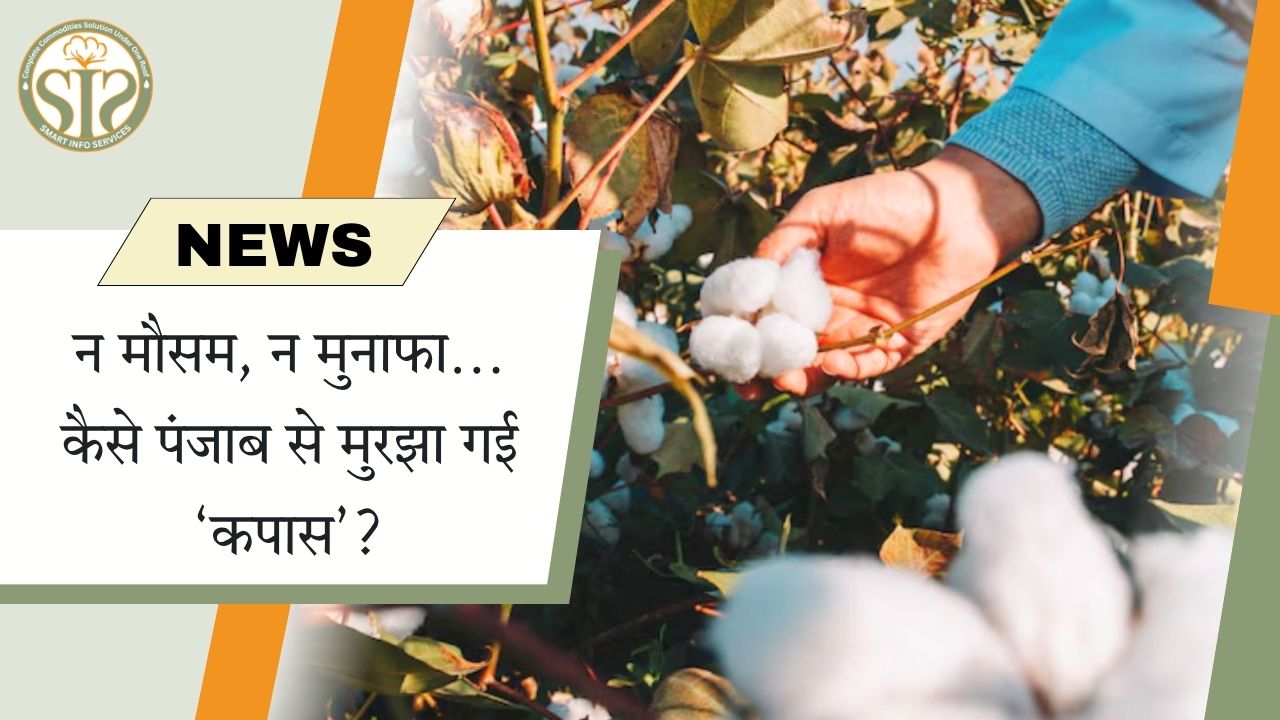
क्यों मुरझा गई पंजाब की कपास?पंजाब में तीन अहम बेल्ट मालवा, माझा, दोआबा हैं. माझा बेल्ट को कॉटन बेल्ट यानी कपास के खेती को लिए जाना जाता है. कारण कपास में कम पानी लगता है. वहीं मालवा बेल्ट में भी ज्यादा कपास की ही खेती होती थी, लेकिन बाजार में नकली बीज, डुप्लीकेट पेस्टिसाइड ने किसानों की कमर तोड़ दी है. पंजाब सरकार जहां लगातार किसानों को फसल में विविधीकरण के लिए जागरूक कर रही है तो वहीं पंजाब के किसानों का कपास की फसल से मोहभंग होता जा रहा है. किसान अब कपास की खेती करना नहीं चाहते हैं. इसका नतीजा यह है कि इस साल प्रदेश में कपास की खेती में कमी आती जा रही है. वहीं अगर पिछले 10 साल का जिक्र करें तो 25.66 प्रतिशत कपास का उत्पादन गिर गया है. किसान नेता जंगवीर सिंह कहते हैं कि आज से 10 साल पहले मालवा वेल्ट के किसान कपास बहुत लगाते थे, लेकिन अब हालात यह हो गई है कि किसान कपास का जगह वह फसल लगाना चाहते हैं, जसमें पेस्टिसाइड कम पड़े और फसल की कीमत भी एमएसपी के उचित दाम पर मिलती हो.पंजाब में तीन अहम बेल्ट मालवा, माझा, दोआबा हैं. माझा बेल्ट को कॉटन बेल्ट यानी कपास के खेती को लिए जाना जाता है. कारण कपास में कम पानी लगता है. वहीं मालवा बेल्ट में भी ज्यादा कपास की ही खेती होती थी, लेकिन बाजार में नकली बीज, डुप्लीकेट पेस्टिसाइड ने किसानों की कमर तोड़ दी. नजीता साल बीतते गए और कपास का खेती कम होती गई. हाल यह हो गया है कि किसान अब बस धान और गेहूं की खेती कर रहे हैं.किसान नेता जंगवीर सिंह ने कहा कि एक समस्या यह भी है कि किसान जिस फसल की तरफ जाता है, उससे अलग दूसरी फसल की खेती ही नहीं करता. नतीजन वह फसल इतनी हो जाती है कि उसके दाम कम हो जाते हैं. इस समय पंजाब में माझा और मालवा बेल्ट में सफेदी की ही फसल (यूकेलिप्टस) हो रही है. पंजाब यूनिवर्सिटी के कृषि वैज्ञानिक डॉ. हर्ष ने बताया कि किसान कपास की फसल तो चाहता है, लेकिन गुलाबी सुंडी और सफेद मक्खी के प्रकोप ने किसानों का इस खेती से मुंह मोड़ दिया है.कितनी मिलनी चाहिए कपास की कीमतदूसरा सबसे बड़ा कारण रहा है, न्यूनतम समर्थन मूल्य (एमएसपी) पर अनिश्चितता होना. फसल कम दाम पर मिलना. कृषि वैज्ञानिक डॉ. हर्ष के मुताबिक, कपास की कीमत सात से आठ हजार पर क्विंटल होनी चाहिए, पर वह नहीं है. वहीं मालवा बेल्ट अब कैंसर बेल्ट बनती जा रही है. इसका सबसे बड़ा, वहां जो फसलों के लिए पेस्टीसाइड इस्तेमाल किए गए, वह जाकर भूमिगत जल (ग्राउंड वाटर) मिल गए. इस वजह से पानी इतना दूषित हो गया कि लोग इस बीमारी से ग्रस्त होते जा रहे हैं.वहीं कपास की खेती से किसानों के मोहभंग होने को लेकर जब पंजाब के कृषि मंत्री गुरमीत सिंह खुडियां से सवाल किया गया तो उन्होंने कहा कि हम किसानों को प्रोत्साहित कर रहे हैं, किसानों का समझा रहे हैं कि वह कपास की खेती करें. किसानों को कपास का उचित दाम भी मिलेगा.पंजाब के 118 ब्लॉक रेड जोन में चले गएएक रिपोर्ट के मुताबिक, पंजाब के भूजल का स्तर पहले ही गिर रहा है, जिसका जिक्र मुख्यमंत्री भगवंत सिंह मान खुद करते रहते हैं. जल स्तत को ठीक करने के लिए ही लोगों को कम पानी वाली फसल उगाने को लिए प्रोत्साहित किया जा रहा है. 118 ब्लॉक रेड जोन में चले गए हैं. इस रिपोर्ट ने सरकार की चिंता अब और भी बढ़ा दी है. रिपोर्ट के अनुसार, कपास का उत्पादन 2023-24 में 6.09 लाख से घटकर 2024-25 में 2.52 लाख गांठों तक रह गया है. इसी तरह एरिया भी 2.14 लाख से घटकर एक लाख हेक्टेयर तक पहुंच गया है.कॉटन कॉरपोरेशन ऑफ इंडिया की रिपोर्टपंजाब में कपास की एमएसपी पर खरीद में गिरावट दर्ज की गई है. मार्च में कॉटन कॉरपोरेशन ऑफ इंडिया की एक रिपोर्ट के अनुसार, पंजाब में वर्ष 2024-25 में सिर्फ दो हजार गांठों की एमएसपी पर खरीद हुई, जबकि वर्ष 2019-20 में 3.56 लाख गांठों की एमएसपी पर खरीद हुई, 2020-21 में 5.36 लाख गांठों की एमएसपी पर खरीद हुई, 2021-22 और 2022-23 के दौरान कपास का मार्केट प्राइस एमएसपी से ऊपर था. इसलिए इन दो वर्षों के दौरान एमएसपी पर खरीद नहीं हुई, लेकिन साल 2023-24 में सिर्फ 38 हजार गांठों की एमएसपी पर खरीद हुई. किसानों और एक्सपर्ट का कहना है कि हम चाहते हैं कि सरकार फसलों पर सही मूल्य दे, नकली बीज की समस्या खत्म करे, तभी पंजाब में फसलों की हालत सही होगी.और पढ़ें :- अमेरिकी टैरिफ से भारतीय कपड़ा निर्यात पर दबाव
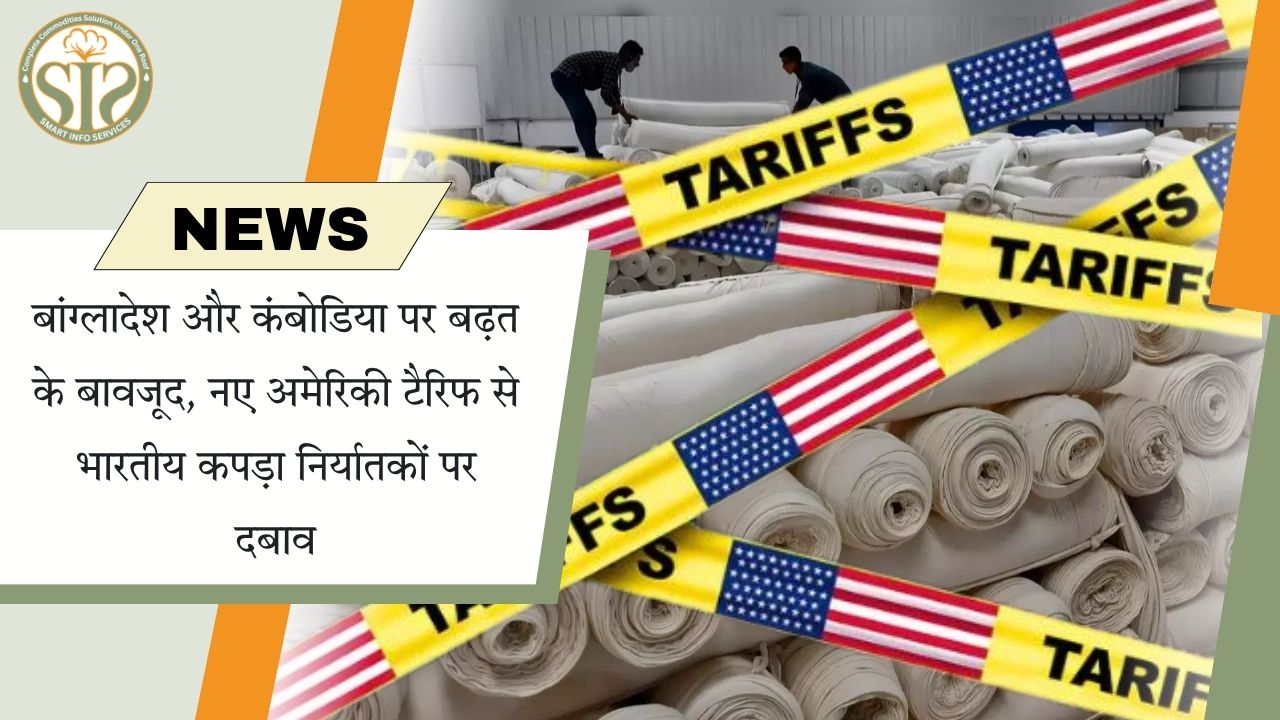
बांग्लादेश और कंबोडिया पर बढ़त के बावजूद, नए अमेरिकी टैरिफ से भारतीय कपड़ा निर्यातकों पर दबावयह भारतीय कपड़ा और परिधान निर्यातकों के लिए मिला-जुला परिणाम है, क्योंकि बांग्लादेश और कंबोडिया जैसे उत्पादन केंद्रों, जहाँ टैरिफ ज़्यादा हैं, की तुलना में अमेरिका को निर्यात के लिए ये निर्यात लाभप्रद स्थिति में होंगे। वहीं इंडोनेशिया और वियतनाम जैसे देश इस क्षेत्र में भारत के लिए नए प्रतिस्पर्धी बनकर उभर सकते हैं।अमेरिका ने अगस्त से भारत पर 25% टैरिफ और अतिरिक्त दंडात्मक शुल्क लगाने की घोषणा की है, जबकि वह बांग्लादेश और कंबोडिया पर क्रमशः 35% और 36% टैरिफ लगा चुका है। हालाँकि, इंडोनेशिया और वियतनाम पर अमेरिकी टैरिफ क्रमशः 19% और 20% कम है। अब तक, भारत से अमेरिका को टैरिफ 10% था।भारतीय वस्त्र उद्योग परिसंघ (CITI) के अध्यक्ष राकेश मेहरा ने कहा, "नई टैरिफ दर भारत के कपड़ा और परिधान निर्यातकों के दृढ़ संकल्प और लचीलेपन की कड़ी परीक्षा लेगी क्योंकि बांग्लादेश को छोड़कर, जिनके साथ हम अमेरिकी बाजार में बड़े हिस्से के लिए प्रतिस्पर्धा करते हैं, कई अन्य देशों की तुलना में हमें शुल्क अंतर का कोई खास लाभ नहीं मिलेगा।"कपड़ा और परिधान निर्यात के लिए अमेरिका भारत का सबसे बड़ा बाजार है। जनवरी-मई 2025 के दौरान, भारत से अमेरिका द्वारा कपड़ा और परिधान का आयात 4.59 अरब डॉलर का था, जो पिछले वर्ष की इसी अवधि की तुलना में 13% से अधिक की वृद्धि है। चीन अमेरिका का सबसे बड़ा निर्यातक है, उसके बाद वियतनाम, भारत और बांग्लादेश का स्थान आता है।उद्योग को अब उम्मीद है कि भारत और अमेरिका के बीच द्विपक्षीय व्यापार समझौते के बाद टैरिफ का मुद्दा सुलझ जाएगा। टीटी इंडस्ट्रीज के प्रबंध निदेशक संजय जैन ने कहा कि भारत ने अमेरिका को अपने कपड़ा निर्यात में 10-15% की वृद्धि का लक्ष्य रखा था, जो नए टैरिफ के कारण प्रभावित होगा।और पढ़ें :- ब्राज़ील से कपास आयात में बढ़ोतरी, भारत का आयात ज़्यादा, निर्यात कम

महाराष्ट्र : कपास आयात: ब्राज़ील से कपास का आयात बढ़ रहा है; भारत का आयात ज़्यादा, निर्यात कम देश में उत्पादन में गिरावट और अंतरराष्ट्रीय बाजार में कम कीमतों के कारण इस साल देश में कपास का आयात बढ़ रहा है। चालू सीजन के पहले 8 महीनों में आयात पिछले छह सालों के उच्चतम स्तर पर पहुँच गया है। देश ने 27 लाख गांठ कपास का आयात किया। गौरतलब है कि इस साल अमेरिका और ऑस्ट्रेलिया की तुलना में ब्राज़ील से ज़्यादा आयात हुआ है। अंतरराष्ट्रीय बाजार में कीमतें अभी भी कम हैं। इसलिए आयातकों का कहना है कि कपास का आयात और बढ़ने की संभावना है।भारत कपास निर्यातक के रूप में जाना जाता है। हालाँकि, देश में उत्पादन में गिरावट और खपत बढ़ने के कारण आयात बढ़ रहा है। देश में कपास का उत्पादन इस साल पिछले कई सालों के निचले स्तर पर पहुँच गया है। वहीं दूसरी ओर, कपास की खपत स्थिर है। इसलिए भारत को अपनी ज़रूरतें कपास का आयात करके पूरी करनी पड़ रही हैं। दूसरी बात, देश में उत्पादन कम हुआ है, लेकिन माँग बढ़ने से कीमतों में भी सुधार हुआ है। इस बीच, अंतरराष्ट्रीय बाजार में कपास की कीमतों पर दबाव बना हुआ है। इसके चलते देश में आयात बढ़ रहा है।अक्टूबर 2024 से मई 2025 तक के 8 महीनों के दौरान देश ने पिछले 6 सालों में सबसे ज़्यादा आयात किया है। पिछले वित्तीय वर्ष में 15 लाख गांठ कपास का आयात हुआ था। इससे पहले 2018-19 में 35 लाख गांठ कपास का आयात हुआ था। देश में उत्पादन कम रहने और खपत बढ़ने के बाद आयात में भी बढ़ोतरी हुई है। हालाँकि, निर्यात पिछले 18 सालों में सबसे निचले स्तर पर देखा जा रहा है। अब तक देश से सिर्फ़ 13 लाख गांठ कपास का निर्यात हुआ है। इससे पहले सबसे कम 23 लाख गांठ कपास का निर्यात 2008-09 में हुआ था। निर्यातकों का कहना है कि इस साल इतने निर्यात की संभावना कम है।चालू सीज़न में यानी 2024-25 के पहले 8 महीनों में 27 लाख गांठ कपास का आयात हुआ। सबसे ज़्यादा आयात ब्राज़ील से हुआ। क्योंकि ब्राज़ीलियाई कपास के दाम कम रहे। इस वर्ष अब तक ब्राज़ील से साढ़े छह लाख गांठ कपास का आयात किया जा चुका है। इसके बाद अमेरिका से साढ़े पाँच लाख गांठ, ऑस्ट्रेलिया से पाँच लाख गांठ, माली से एक लाख 79 हज़ार गांठ और मिस्र से 83 हज़ार गांठ कपास का आयात किया गया है। गौरतलब है कि इन सभी देशों में कपास की कीमतें भारत की तुलना में कम थीं। इस वजह से देश में कपास का आयात बढ़ा है।देश में कपास का आयात (गांठों में)2024-25*---27 लाख2023-24---15 लाख2022-23---14 लाख2021-22---21 लाख2020-21---11 लाख2019-20---15.50 लाखऔर पढ़ें :- महाराष्ट्र: बारिश से 7000 हेक्टेयर कपास फसल झुलसा रोग से प्रभावित

महाराष्ट्र : बारिश का असर: 7000 हेक्टेयर कपास की फसल झुलसा रोग से प्रभावित, कृषि और...पैठण तालुका के कई हिस्सों में कपास के खेत झुलसा रोग से प्रभावित हुए हैं। तालुका में 55,600 हेक्टेयर में कपास की खेती होती है और आज 7,000 हेक्टेयर कपास की फसल इस रोग से प्रभावित होने का खतरा है। मराठवाड़ा में भारी बारिश के बाद यह स्थिति बनी।किसानों ने महंगे बीज, उर्वरक और कीटनाशकों का इस्तेमाल करके कपास की फसल उगाई थी। लेकिन लंबे समय तक पानी की कमी के कारण मिट्टी का तापमान बढ़ गया। अगर ऐसे समय में बारिश होती है, तो पेड़ों को झटका लगता है। इससे पेड़ सूख जाते हैं। पत्ते झड़ जाते हैं। बाद में पेड़ मर जाते हैं। ये लक्षण बारिश के 36 से 48 घंटों के भीतर दिखाई देने लगे हैं। इसलिए, उत्पादन में भारी नुकसान की संभावना है। किसानों को कपास के खेतों से अतिरिक्त पानी जल्द से जल्द निकाल देना चाहिए। जैसे ही पानी वापस आए, उन्हें निराई और कटाई कर लेनी चाहिए। 200 ग्राम यूरिया, 100 ग्राम सफेद पोटाश (00:00:50 उर्वरक), 25 ग्राम कॉपर ऑक्सीक्लोराइड को 10 लीटर पानी में मिलाकर तैयार घोल 100 मिलीलीटर की मात्रा में प्रत्येक पेड़ को देना चाहिए। या, 13:00:45 उर्वरक का एक किलो, 2 ग्राम कोबाल्ट क्लोराइड, 250 ग्राम कॉपर ऑक्सीक्लोराइड को 200 लीटर पानी में 100 मिलीलीटर की मात्रा में पेड़ों को देना चाहिए। फिर पेड़ के पास की मिट्टी को पैर से दबाना चाहिए। जैसे ही यह ध्यान आए कि पेड़ सूखने लगे हैं, यह उपाय 24 से 48 घंटों के भीतर किया जाना चाहिए। इससे आगे की क्षति को रोका जा सकेगा। साथ ही, कृषि विभाग द्वारा किए गए उपायों को अपनाया जाना चाहिए। पैठण सहित मराठवाड़ा में डेढ़ लाख हेक्टेयर से अधिक क्षेत्र में कपास ब्लाइट रोग से प्रभावित हुआ है। इसे देखते हुए, किसान नेता जयाजी सूर्यवंशी ने पैठण सहित मराठवाड़ा में इस रोग के प्रकोप से क्षतिग्रस्त कपास का पंचनामा करने की मांग की है। कृषि विभाग की एक टीम ब्लाइट रोग के मद्देनजर किसानों से मिलने के लिए गठित की गई है। यह टीम बांध पर जाकर किसानों का मार्गदर्शन कर रही है और इसमें कृषि अनुसंधान विशेषज्ञ भी शामिल हैं, ऐसा तालुका कृषि अधिकारी विकास पाटिल ने बताया।और पढ़ें :- मक्का की ओर झुकाव से MP में कपास रकबा 3.7% घटा
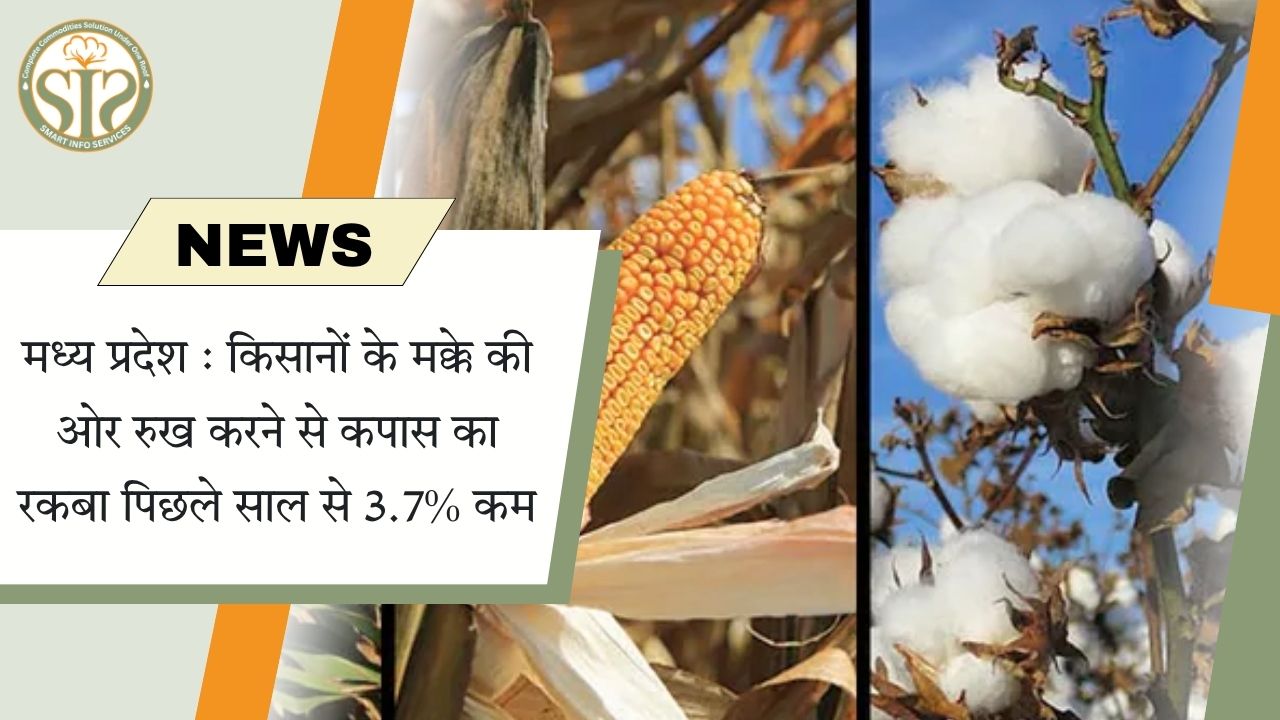
मध्य प्रदेश : किसानों के मक्के की ओर रुख करने से कपास का रकबा पिछले साल से 3.7% कमइंदौर : चालू खरीफ सीजन में मक्के की ओर रुख करने के कारण, प्रमुख खरीफ फसल, कपास का रकबा इंदौर संभाग में लगभग 5 लाख हेक्टेयर रहने की उम्मीद है, जो पिछले वर्ष की तुलना में लगभग 3.7 प्रतिशत कम है।आधिकारिक आंकड़ों के अनुसार, कृषि विभाग ने कपास के लिए 5.17 लाख हेक्टेयर का लक्ष्य रखा है, जबकि पिछले वर्ष यह रकबा 5.37 लाख हेक्टेयर था।कृषि विभाग, इंदौर के संयुक्त निदेशक आलोक मीणा ने कहा, "कपास और अन्य खरीफ फसलें अच्छी स्थिति में हैं और बारिश से कोई नुकसान नहीं हुआ है। इंदौर संभाग में कपास का रकबा 5 लाख हेक्टेयर से ऊपर देखा जा रहा है।"किसानों और कृषि विशेषज्ञों को उम्मीद है कि इस सीजन में कपास की पैदावार लगभग 10-12 क्विंटल प्रति एकड़ रहेगी।कपास किसान रघुराम पाटिल ने कहा, "अभी तक बारिश से कोई नुकसान नहीं हुआ है और विकास अच्छा दिख रहा है। मक्के के कारण रकबे में कुछ कमी आई है, लेकिन कुल मिलाकर फसल की स्थिति अच्छी दिख रही है जिससे बेहतर पैदावार में मदद मिलेगी।"इंदौर संभाग के प्रमुख कपास उत्पादक जिलों में खरगोन, खंडवा, बड़वानी, मनावर, धार, रतलाम और देवास शामिल हैं। इस संभाग में, मुख्य खरीफ फसलों में सोयाबीन, कपास, मक्का और दलहन शामिल हैं।सिंचित क्षेत्रों में कपास की बुवाई आमतौर पर मई के मध्य तक शुरू हो जाती है, जबकि असिंचित क्षेत्रों में जून में बुवाई शुरू हो जाती है।खरगोन के एक किसान और जिनिंग इकाइयों के मालिक कैलाश अग्रवाल ने कहा, "कपास की फसल अच्छी तरह से बढ़ रही है और अच्छी स्थिति में है। बेहतर कीमत मिलने के कारण इस साल मक्का ने कपास और सोयाबीन के कुछ रकबे पर कब्ज़ा कर लिया है।"किसानों ने कहा कि मक्के की खेती की लागत कपास की लागत का लगभग 10 प्रतिशत है, जिससे कई लोग अपनी बुवाई के विकल्पों पर पुनर्विचार कर रहे हैं।इस संभाग में, जहाँ खरीफ सीजन में सोयाबीन की खेती पारंपरिक रूप से प्रमुखता से होती है, राज्य कृषि विभाग का अनुमान है कि इस सीजन में खरीफ फसलें लगभग 22.5 लाख हेक्टेयर में बोई जाएँगी।और पढ़ें :- रुपया 29 पैसे गिरकर 87.71 प्रति डॉलर पर खुला

रुपया 29 पैसे गिरकर 87.71 प्रति डॉलर पर खुलागुरुवार को भारतीय रुपया 87.42 प्रति डॉलर के पिछले बंद भाव की तुलना में 29 पैसे गिरकर 87.71 प्रति डॉलर पर खुला।और पढ़ें :- ट्रम्प बोले: टैरिफ पर तत्काल रोक नहीं, 1 अगस्त की समयसीमा जारी रहेगी

Textiles ministry may discuss US tariffs with industryUnion Textiles Minister Giriraj Singh will meet industry stakeholders next week to deliberate upon the potential impact of US President Donald Trump's announcement to impose a 25 per cent tariff on India and seek their views on the issue, according to sources.The US is India's largest market for textile and apparel exports, accounting for about 25 per cent of the country's total outbound shipment from the sector.Discussions in the meeting will also revolve around realising opportunities arising for India's textile sector from the UK-India FTA, which was signed last month, as the government and industry want to leave no stone unturned to achieve the textile export target of USD 100 billion by 2030, and mitigate the potential impact of the US tariff announcement, sources told PTI.While it would be "premature" to talk about any measures being considered to support domestic textile exporters in light of the US announcement, they said, the government wants to seek the industry's feedback at this juncture and discuss the challenges and opportunities in terms of the UK-India FTA and other markets with untapped potential."We are continuously engaging with the industry. The minister has asked for a meeting. We will be talking to different players, the major garment export firms from India. Discussions will also revolve around realising opportunities arising for the textile sector from the UK-India FTA," according to sources."The industry has set a target of USD 100 billion by 2030, which it is keen to achieve. So, they are looking at a variety of products and also at different markets. They are looking at strengthening and consolidating the existing markets. The government has also announced the Export Promotion Mission." The US on Friday slapped a 25 per cent tariff on India, potentially impacting about half of the USD 86 billion Indian exports to America, while the other half, including pharmaceuticals, electronics, and petroleum products, continued to be exempted from the levy.The sectors, which would bear the brunt of 25 per cent duty include textiles/ clothing (10.3 billion), gems and jewellery (12 billion), shrimp (USD 2.24 billion), leather and footwear (USD 1.18 billion), animal products (USD 2 billion), chemicals (2.34 billion), and electrical and mechanical machinery (about USD 9 billion).read more :- Telengana : Robust Cotton Crop Anticipated In Adilabad
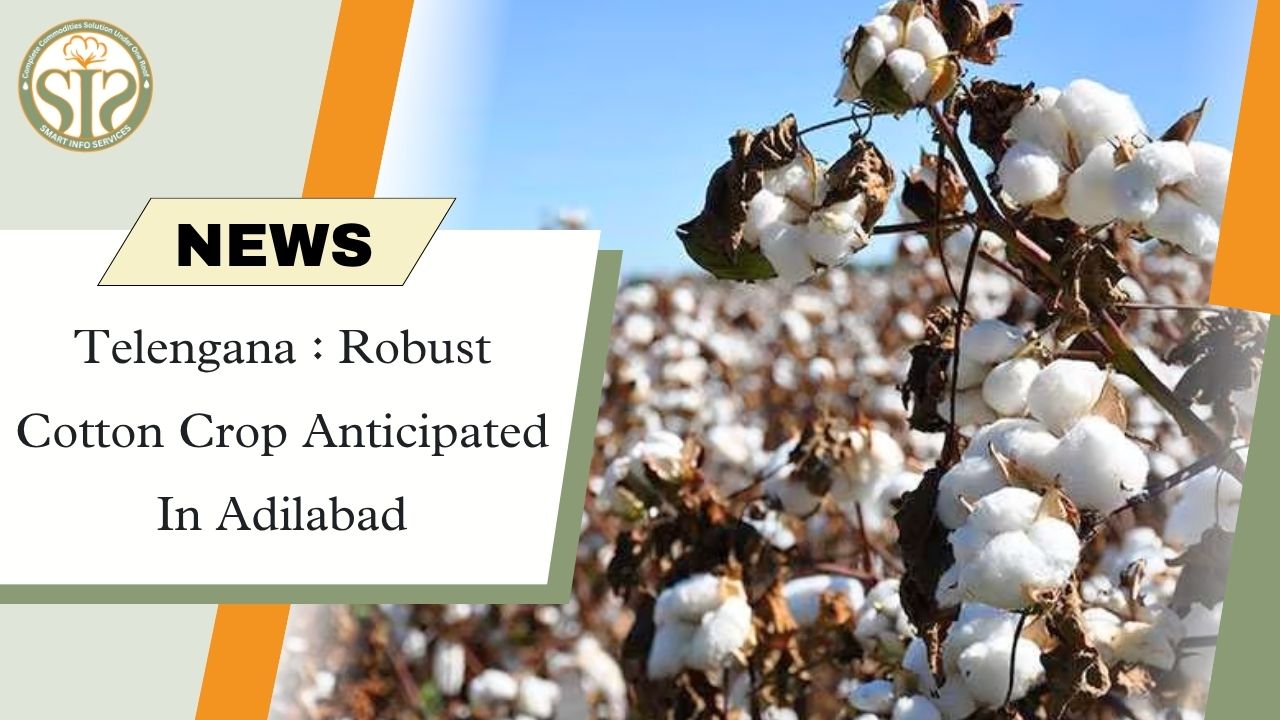
Telangana: Good yield expected from cotton crop in AdilabadAdilabad : A robust cotton crop is anticipated this season in Adilabad district, thanks to timely rains and full seed germination. Farmers are currently busy weeding their fields. The agriculture department expects high yields under these favourable weather conditions. The Central government has raised the minimum support price (MSP) for cotton to ₹8,110 per quintal, up from last year’s ₹7,521. Farmers are hopeful of strong returns, though private traders typically set purchase prices; the Cotton Corporation of India intervenes only if market rates fall below the MSP.District agriculture officer Sridhar Swamy reported that 4.40 lakh acres were sown with cotton this kharif. While initial urea shortages delayed fertiliser application for some, supplies arrived in time to support healthy plant growth. Recent heavy rains have spurred significant weed growth, and farmers have hired laborers for weeding operations. Local grower Dayakar Patel noted that farmers who followed departmental sowing guidelines are likely to see the best outcomes. Although full germination occurred, a few farmers plan second sowings due to earlier urea delays. In July, Adilabad police seized 150 bags (67.5 quintals) of urea, worth ₹3 lakh, being smuggled to Maharashtra from Bela mandal. Meanwhile, flood inundation along the Penganga River caused less crop damage in Jainad and Bela mandals this year than in the previous monsoon.read more :- Rupee open Falls 16 Paise to 87.81/USD

Indian rupee opens 16 paise lower at 87.81 on rally in dollar indexIndian rupee is trading lower by 16 paise at 87.81 per dollar versus previous close of 87.65.read more :- Agriculture News: Good news for farmers! 'CCI' offers cotton at Rs 8,100

CCI offers Rs 8,100 for cotton, relief to farmersJalgaon: This year, Kharif crops have been sown in seven lakh hectares in the district. However, there has been a decrease of one and a half lakh hectares in the cultivation of cotton, called 'white gold'. At the same time, farmers have opted for the cultivation of maize and soybean, which provide economic stability. Till last year, 'CCI', in collaboration with traders, had given low prices for cotton. However, this year 'CCI' will offer cotton to farmers at the rate of eight thousand one hundred rupees per quintal. Satisfaction is being seen among the farmers due to this.Last year, CCI offered cotton at the rate of seven and a half thousand rupees. However, for this, registration has to be done in 'CCI' in advance and Aadhar card has to be linked to the bank account. In this, the deduction made while counting cotton affects the income of the farmers. In that too, payment is made after a few months. Because of this, farmers sell cotton to 'CCI'. However, needy farmers take money from traders immediately after counting the cotton. This is the experience so far.Last year, traders had quoted prices ranging from Rs 7,000 to Rs 7,200 just by looking at the variety of cotton. Farmers kept the cotton in their homes hoping that the price would increase. Ultimately, the cotton had to be sold at the price traders got. Because 'CCI' had closed the cotton procurement centers even before the season ended.How much price will the traders pay?The price declared for this season is Rs 8,100 per quintal. Traders have not quoted a price of Rs 7 to Rs 7,300 for cotton. In such a situation, will the traders pay Rs 8,100 for cotton as per 'CCI'? This question has arisen among the farmers. Traders themselves will also be worried about the price of cotton.Procurement centers should be opened early.New cotton comes to the market in October. Earlier, some traders buy cotton at a higher price. This increases the expectations of farmers regarding the price of cotton. However, later traders buy cotton at a lower price. This upsets the farmers.Farmers hope that this will not happen in the future. However, farmers will hand over cotton to CCI only when CCI starts the procurement center as soon as the season begins. In this regard, CCI is expected to take steps towards starting the procurement center from now onwards.Soybean cultivation increasedThis year, soybean cultivation has increased instead of peanuts. In this, the area under cultivation of oilseeds like peanut 1045 hectares, safflower, sunflower 29 and sesame 104 hectares has decreased. However, soybean cultivation has actually increased by 35 thousand hectares instead of 19 thousand 498 hectares, i.e. double. On average, 36 thousand 208 hectares instead of 21 thousand 292 hectares, i.e. the cultivation of oilseed varieties has increased by 15 thousand hectares.read more :- Cotton-Groundnut: Saurashtra accounts for 86% of sowing
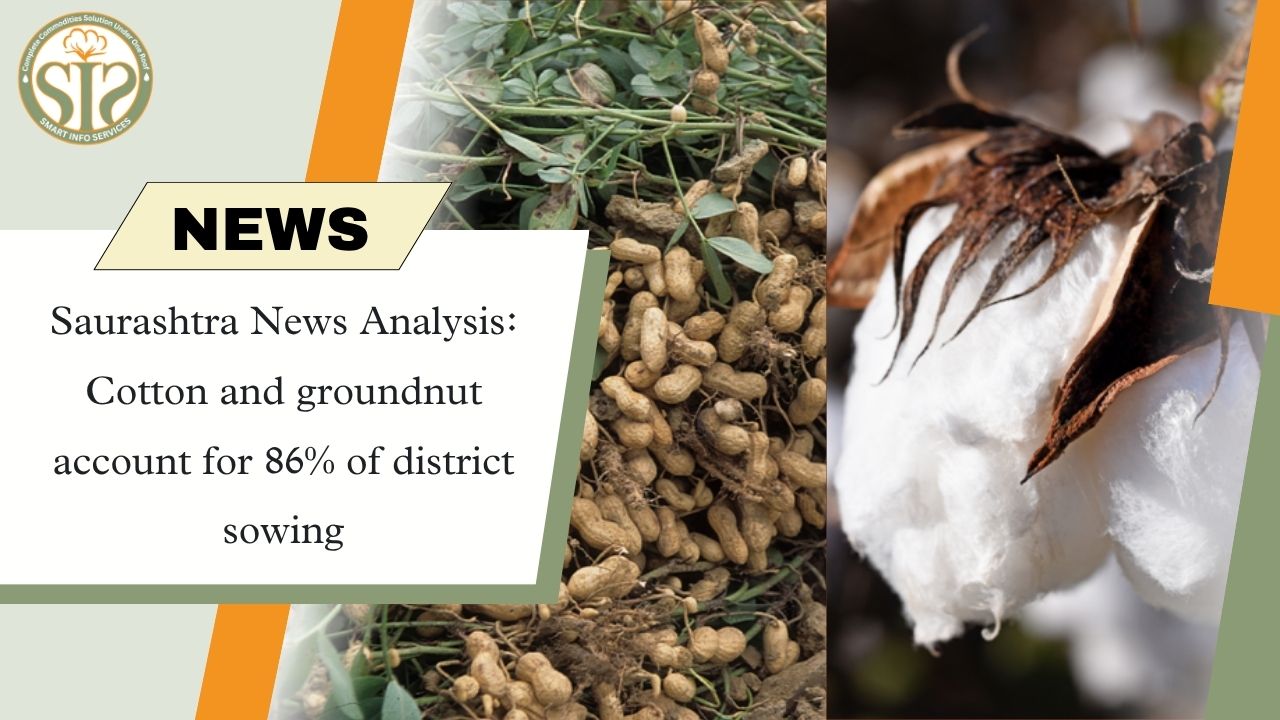
Saurashtra News Analysis: Cotton and groundnut account for 86% of district sowingAfter receiving more than 82% rainfall in the district this year, cotton, groundnut and millet sowing is being done.Due to continuous rains this year, cotton sowing has not been completed as expected till the end of July. However, this year too, total Kharif sowing in Gohilwad has been done on 3,65,700 hectares of land. Cotton and groundnut have the largest share in Kharif sowing every year in Bhavnagar district.This tradition continues this year as well. Cotton contributes 55.76% of total sowing and groundnut 30.46%, making the share of these two crops in total sowing of Gohilwad 86.22%. While the remaining 13.78 percent includes all other crops like millet, tur, moong, urad, vegetables, jowar.Cotton sowing in Bhavnagar district accounts for 55.76 percent. Cotton has been sown on 2,03,900 hectares of land, while peanut sowing is 30.46 percent of the total sown area and the total sown area of peanut has been 1,11,400 hectares.Due to waterlogging in the fields after the release of water from the dam and continuous rains, cotton sowing has not been as much as it should have been till the end of July as compared to last year.Cotton is first in the total sown area in Bhavnagar district, in which cotton is first, similarly Sagar is also first in cotton sowing area in Saurashtra.Cotton has been sown in 20,16,800 hectares in the entire state, in which Saurashtra alone contributes 14,75,300 hectares, i.e. Saurashtra contributes 73.15 percent of the cotton sown in the entire state, and the rest of the state contributes 26.85 percent.Cotton has been sown in 20,16,800 hectares in the state, out of which Saurashtra alone has 14,75,300 hectares, and the total sown area at present in Bhavnagar district is 3,65,700 hectares, and cotton is also in the first place in sowing area, and similarly, cotton is in the first place in sowing area in entire Saurashtra.Cotton has been sown in 20,16,800 hectares in the entire state, out of which Saurashtra alone has contributed 14,75,300 hectares, i.e. Saurashtra's contribution in the cotton sown in the entire state is 73.15 percent, and the rest of the state's contribution is 26.85 percent.read more :- Rupee fell 40 paise to close at 87.65

The Indian rupee on monday lower 40 paise to close at 87.65 per dollar, while it opened at 87.25 in the morning.At close, the Sensex was up 418.81 points or 0.52 percent at 81,018.72, and the Nifty was up 157.40 points or 0.64 percent at 24,722.75. About 2047 shares advanced, 1607 shares declined, and 154 shares unchanged.read more :- Egyptian cotton becomes the world's most expensive white gold

Egyptian “White Gold” Becomes World’s Most Expensive ELS Cotton, Overtakes US PimaEgyptian cotton, popularly known as “white gold,” has regained its dominance in the global premium fibre market and has become the world’s most expensive extra-long staple (ELS) cotton. For the first time in the 21st century, it has overtaken US Pima cotton in comparable global trading conditions.According to sources from the Egyptian Cotton Exporters Association, Egyptian cotton prices have risen to 172–175 cents per pound, while US Pima cotton remains steady at around 167 cents per pound. The premium Giza 94 variety is witnessing strong demand, especially in Asian markets, where US cotton once held a dominant position.Industry experts say this marks a historic shift. US Pima cotton has long been considered the global benchmark for quality and consistency, but rising demand for Egyptian cotton and tighter global supply have strengthened Egypt’s position in the premium segment.For August–September delivery, Egyptian ELS cotton is trading at around $2.25 per pound, further reinforcing its top-tier pricing status.During the 2024–25 season, Egypt cultivated cotton over approximately 311,000 feddans (around 130,000 hectares). The country exported 36,400 metric tons of ginned cotton worth about $120 million to 17 countries across Asia and Europe.However, industry observers expect price volatility in the coming months due to strong global demand for high-grade ELS fibres and limited supply conditions, even as Egyptian cotton continues to maintain its premium global position.read more:- INR Opens Stronger by 27 Paise at 87.25

Rupee opens 27 paise up at 87.25/USD on easing dollar indexThe local currency opened at 87.25 against the US dollar, as compared to 87.52 against the greenback at previous close.read more :- Statewise CCI Cotton Sales 2024-25
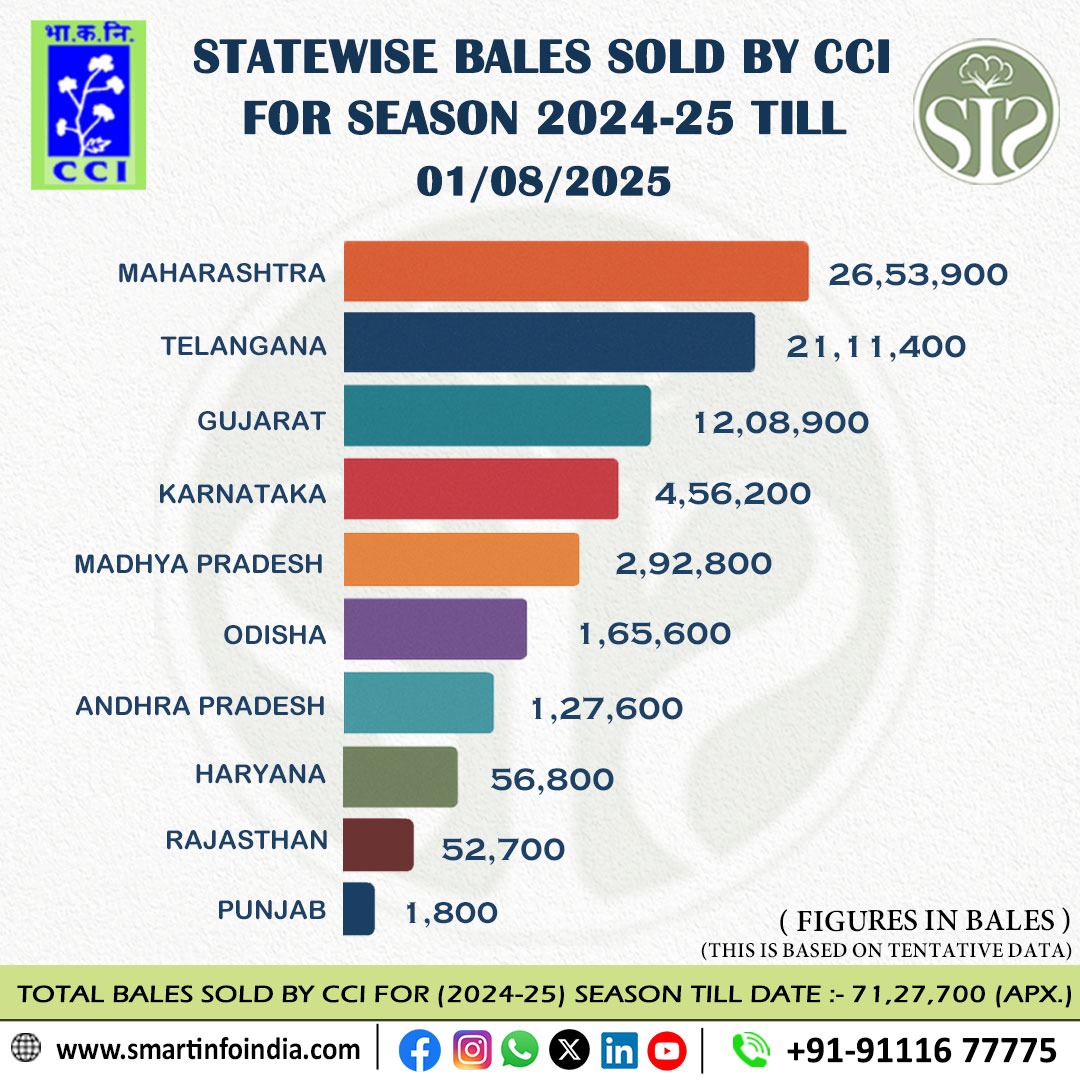
State-wise CCI Cotton Sales Details – 2024-25 SeasonThe Cotton Corporation of India (CCI) made no changes in per candy price this week. Following the price revision, CCI sold approximately 79,400 bales during the week, bringing the total cotton bales sales for the 2024-25 season to approximately 71,27,700 bales. This represents around 71.27% of the total cotton procured so far this season.A state-wise breakdown of sales indicates strong activity from Maharashtra, Telangana, and Gujarat, which together account for over 83.81% of the total sales to date.This data underscores CCI’s proactive efforts in stabilizing the cotton market and ensuring steady supply across key cotton-producing states.
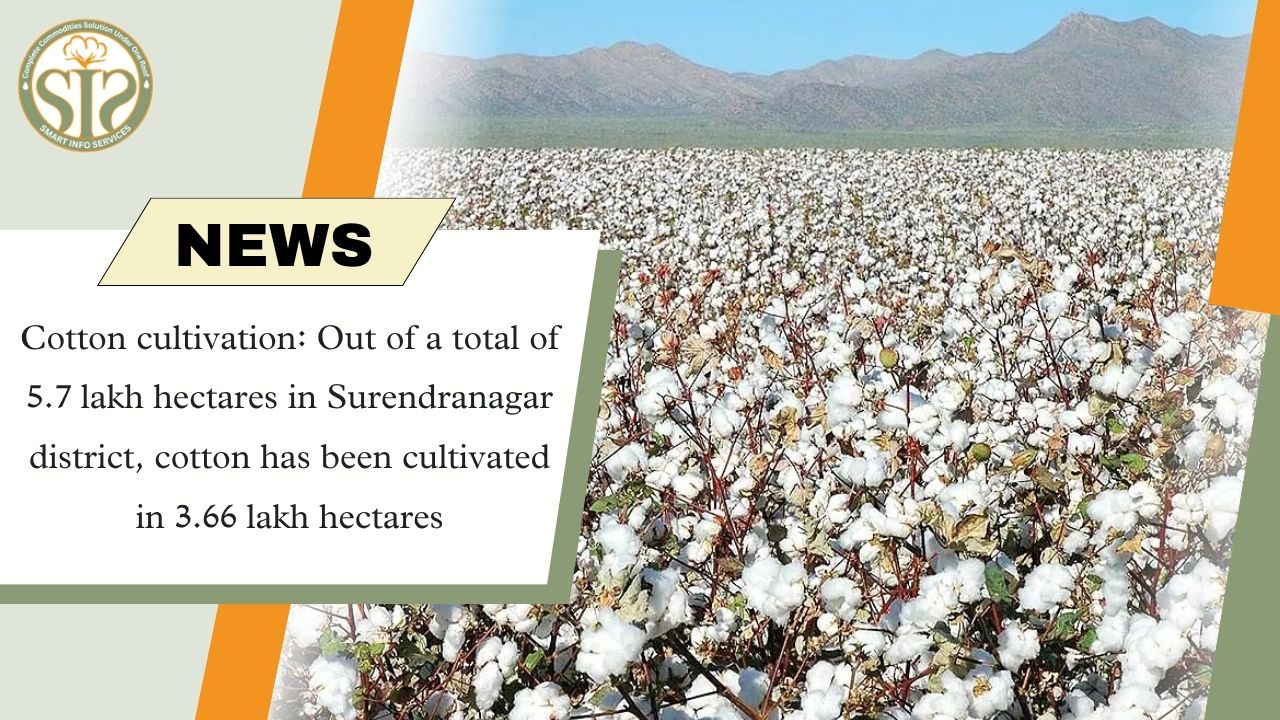
Cotton cultivation: Out of a total of 5.7 lakh hectares in Surendranagar district, cotton has been cultivated in 3.66 lakh hectaresSucking insects in cotton, blight in groundnutThis year, the monsoon season started with a bang in Surendranagar district. Later, the rain gradually decreased. So far, 3825 mm i.e. 64.07 percent of the season's rain has occurred. In the hope of good rains this year, farmers have sowed in a total of 5,07,250 hectares in the district so far.Out of which, cotton has been cultivated in the highest 3,66,919 hectares and groundnut in 39,706 hectares. But due to continuous cloudy and rainy conditions, the crop is getting affected. Meanwhile, the infestation of sucking insects in cotton and scab, blight, leaf spot disease, root rot disease and aphids in groundnut is increasing.Due to this, farmers are afraid of getting sick from the diseases they have already contracted. Therefore, District Agriculture Officer MR Parmar has asked them to take crop disease control measures including use of chemical fertilizers and spraying of medicines for disease control.If epidemic is detected, the effect can be reduced by giving nitrogen-rich fertilizers.If epidemic is detected in the current crop, inter-cropping should be done and weeds should be removed. Along with this, the effect of epidemic can be reduced by giving urea and nitrogen-rich fertilizers to prevent the crop from getting affected. Janakbhai Kalotra, Retired Agriculture OfficerApply neem seed solution on cotton. Uproot and destroy weeds in paddy field. For biological control of leafhoppers and thrips, apply 2 to 3 days old caterpillars of predatory green moth (Chrysopa) at the rate of 10,000 per hectare twice at an interval of 15 days.Use a non-chemical agent like 5% neem seed solution or Azadirachtin.Use yellow sticky traps to survey and control leafhoppers and whiteflies. Spray Verticillium wilt or Beauveria bassiae.read more :- CCI sold 71% of cotton in 2024-25 through e-bidding, prices rIse
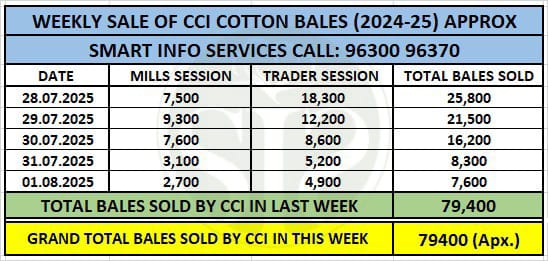
CCI Boosts Cotton Prices, sold 71% of 2024–25 Procurement via E-BiddingThe Cotton Corporation of India (CCI) conducted online bidding for cotton bales throughout the week, with significant trading activity observed across both the Mills and Traders sessions. Over the course of five days, CCI prices are unchanged.As of now, CCI has sold approximately 71,27,700 cotton bales for the 2024–25 season, representing 71.27% of its total procurement for the season.Date wise weekly Sales Summary :28 July 2025:The highest daily sales of the week were recorded on this day, with 25,800 bales sold from the 2024–25 season.Mills session : 7,500 balesTraders session : 18,300 bales29 July 2025:A total of 21,500 bales were sold from the 2024–25 season.Mills session : 9,300 balesTraders session : 12,200 bales30 July 2025:Sales amounted to 16,200 bales, all from the 2024–25 season.Mills session: 7,600 balesTraders session: 8,600 bales31 July 2025:A total of 8,300 bales were sold from the 2024–25 season.Mills session : 3,100 balesTraders session : 5,200 bales01 Aug 2025:The week concluded with sales of 7,600 bales.Mills session: 2,700 balesTraders session: 4,900 balesWeekly Total:CCI achieved total sales of approximately 79,400 bales for the week, underscoring its strong market engagement and the growing efficiency of its digital transaction platform.read more :- Indian Rupee higher 06 Paisa, Ends at 87.52 per Dollar

The Indian rupee on friday higher 06 paise to close at 87.52 per dollar, while it opened at 87.58 in the morning.At close, the Sensex was down 585.67 points or 0.72 percent at 80,599.91, and the Nifty was down 203 points or 0.82 percent at 24,565.35. About 1264 shares advanced, 2582 shares declined, and 154 shares unchanged.read more :- Leafhopper infestation in Punjab threatens cotton
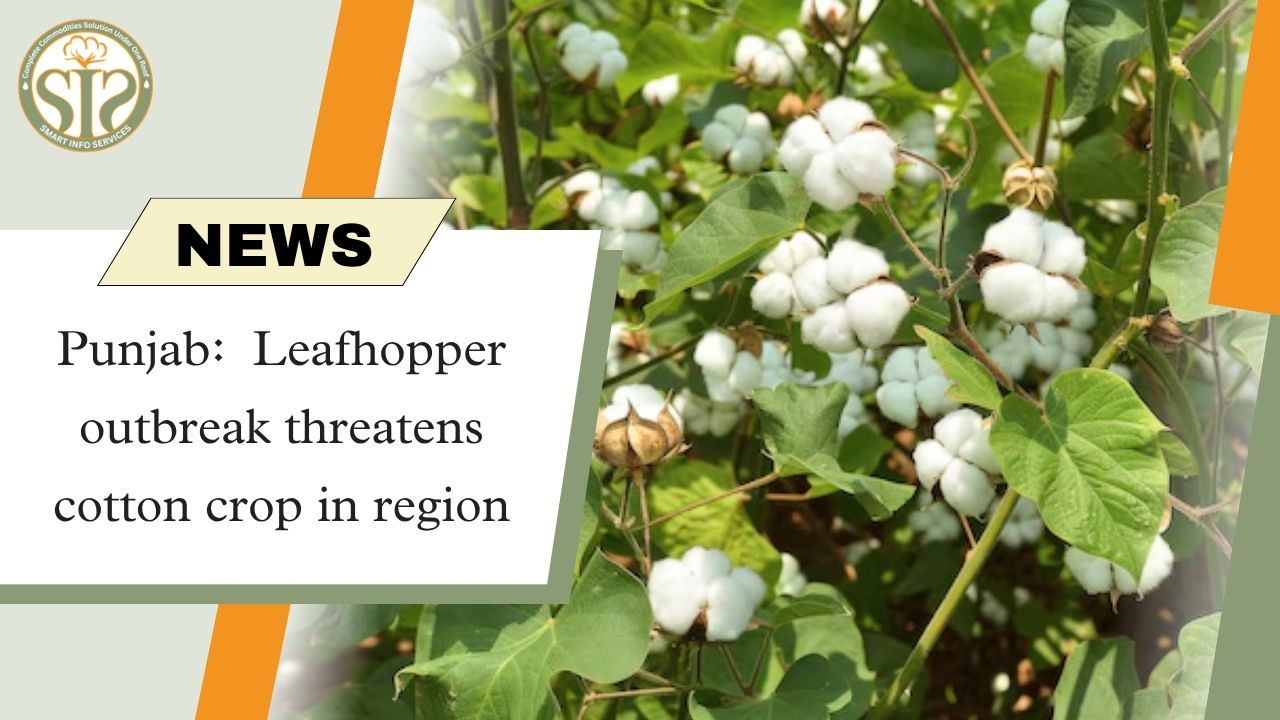
Punjab: Leafhopper outbreak threatens cotton crop in regionBathinda: The South Asia Biotechnology Centre, a scientific organisation, has revealed an infestation of green leafhoppers (jassid), commonly known as ‘hara tela', on cotton across major cotton-growing districts of Punjab, Haryana, and Rajasthan. The impact is notable in Mansa, Bathinda, and Fazilka in Punjab, Hisar, Fatehabad, and Sirsa in Haryana, and Hanumangarh and Sri Ganganagar in Rajasthan. SABC observed the outbreak during a field survey conducted under Project Bandhan by the Jodhpur-based centre, which has its research and development centre at Sirsa.The field team, led by Dilip Monga, Bhagirath Choudhary, Naresh, Deepak Jakhar, and KS Bhardwaj, reported infestation levels of 12-15 leafhoppers per leaf, significantly above the Economic Threshold Level (ETL). The field survey also reported cotton leaf injuries exceeding ETL based on the damage grading system.For the past three consecutive weeks, green leafhopper (jassid) populations exceeded ETL, triggering yellowing of leaf margins and downward curling, classic symptoms of jassid attack. The outbreak is attributed to a confluence of weather conditions, including above-average rainfall, an increased number of rainy days, persistent humidity, and cloud cover, all of which created ideal conditions for jassid proliferation.Amrasca biguttula biguttula (Ishida), commonly referred to as the Indian cotton jassid or ‘hara tela', is a season-long sucking pest of cotton. Leafhopper adults are very active, pale green in colour, measuring about 3.5mm in length with two distinct black spots on forewings and vertex, readily identified by their characteristic diagonal movement on the leaves, hence referred to as ‘leafhoppers'. The population of leafhoppers occurs throughout the season but attains pest status during July-August. Up to 11 generations per season have been estimated to occur on cotton.Both nymphs and adults of leafhoppers suck the cell sap from the cotton tissue and inject toxins, causing the ‘hopper burn' symptom, characterised by yellowing, browning, and drying of leaves. The affected leaves show crinkling and curling symptoms, and in extreme situations, result in reduced photosynthetic activity, browning, and drying of leaves, which can considerably hamper the productivity of the cotton, leading to yield losses of up to 30% if unmanaged.Leafhopper ≥5 plants showing damage grade II/III/IV, grade II shows minor crinkling, curling, and yellowing in lower leaves, grade III is observed with leaf crinkling, curling, and crinkling across the plant; stunted growth, grade IV with severe bronzing, crinkling, curling, and drying of leaves. If ≥5 plants per 20 sampled show grade II or above damage, immediate action is necessary, said Research Scientist Deepak Jakhar.However, PAU Scientist Paramjit Singh said there is no alarming situation as the leafhopper is only slightly above ETL.The survey team noted that failure to control this green leafhopper infestation promptly could lead to damage to the cotton crop in the coming days. Farmers must remain alert and take immediate action to manage the pest effectively to avoid potential yield losses.SABC has urged cotton farmers to adopt science-backed measures to effectively manage and control the growing menace of green leafhoppers (jassids), such as regular field monitoring, accurate pest identification, and assessing infestation severity.It has been recommended to use neem-based bio-insecticides or other eco-friendly, organic pesticides to manage mild infestations. Spray during early morning or late evening when the wind is calm. Ensure thorough coverage, especially on the underside of leaves, where pests usually hide. Eliminate weeds within the field and along borders, as they serve as alternative hosts for leafhoppers and other pests. read more :- INR Opens Stronger by 02 Paise at 87.58

Indian rupee opens 2 paise higher at 87.58/USD on lingering worries over Trump tariffThe local currency opened at 87.58 against the US dollar as compared to 87.60 against the greenback at previous close.read more :- Trump tariffs to hit India's textile exporters in a big way, say experts
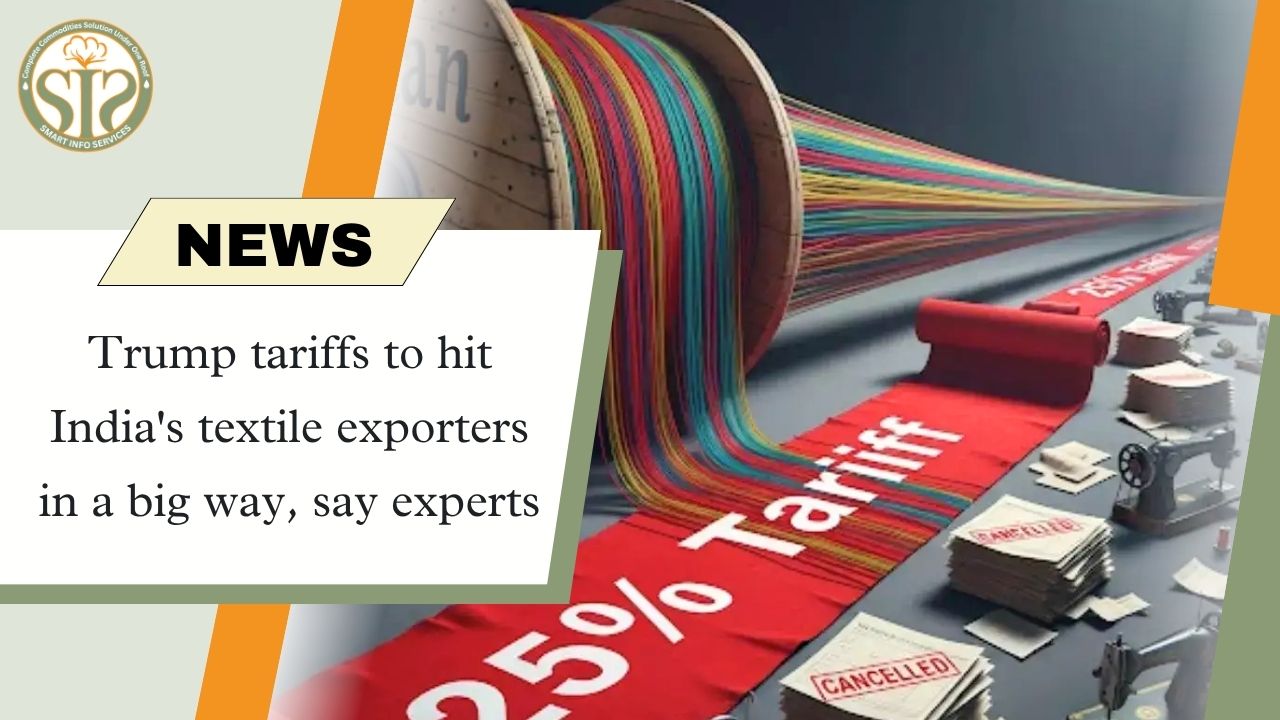
Trump's 25% tariff will cause huge losses to Indian textile exportersNew Delhi: US President Donald Trump's announcement regarding the imposition of 25 per cent additional import duty plus penalty on goods imported from India will hit the country's textile exporters in a big way, as competitors, including Vietnam and Indonesia now have a pricing edge by virtue of lower tariffs, experts said on Thursday.The duty will come into effect from August 1. The unspecified penalty was imposed on India for purchasing crude oil and military equipment from Russia.The US is India's largest market for textile and apparel exports.According to trade intelligence firm Cybex Exim Solutions, many Indian exporters may face order cancellations and the pressure to reduce prices, with costs going up and competitive disadvantage from Vietnam and Indonesia."The 25 per cent tariff announced by the US is a big hit for India's textile and garment exporters. Out of the USD 17 billion we export in ready-made garments, USD 5.6 billion goes just to the US. That's a big chunk. With costs going up overnight, many exporters might face order cancellations or pressure to reduce prices. Countries like Vietnam and Indonesia now have a pricing edge because their tariffs are lower," Cybex Exim Solutions stated."While India is still ahead of Bangladesh and Cambodia in terms of quality, this move puts real pressure on our manufacturers, especially smaller ones. It is time we look beyond just the US and start tapping into other markets more aggressively," it added.Speaking to PTI, Secretary General of the Confederation of Indian Textile Industry (CITI) Chandrima Chatterjee said it was "extremely concerned" about the unspecified penalty, as it has caused a lack of clarity for those placing an export order which needs to be serviced in the next couple of months."We will be seriously impacted. While most of us have taken the 25 per cent tariff with a pinch of salt but the penalty is where we are extremely concerned because we still are in a very speculative space there," Chatterjee said.According to her, Vietnam has a lower tariff than India at 20 per cent, whereas Indonesia faces a 19 per cent import tariff from the United States.Indian exporters could look at tapping alternative markets like the UK, EU, UAE, Japan and Korea more aggressively, Chatterjee added.Rajeev Gupta, Joint Managing Director, RSWM Ltd, said a "more pressing concern is the undefined penalty clause linked to India's ties with Russia, which adds a layer of uncertainty"."Indian entrepreneurs and manufacturers are resilient, and we are confident that business momentum will be consistently rising with planned strategies. What remains crucial is clarity on the tariff position against China," Gupta stated.read more :- Rupee strengthened by 11 paise against dollar and closed at 87.60

The Indian rupee on thursday higher 11 paise to close at 87.60 per dollar, while it opened at 87.71 in the morning.At close, the Sensex was down 296.28 points or 0.36 percent at 81,185.58, and the Nifty was down 86.70 points or 0.35 percent at 24,768.35. About 1490 shares advanced, 2365 shares declined, and 135 shares unchanged.read more :- Neither season, nor profit… how did ‘cotton’ wither from Punjab?
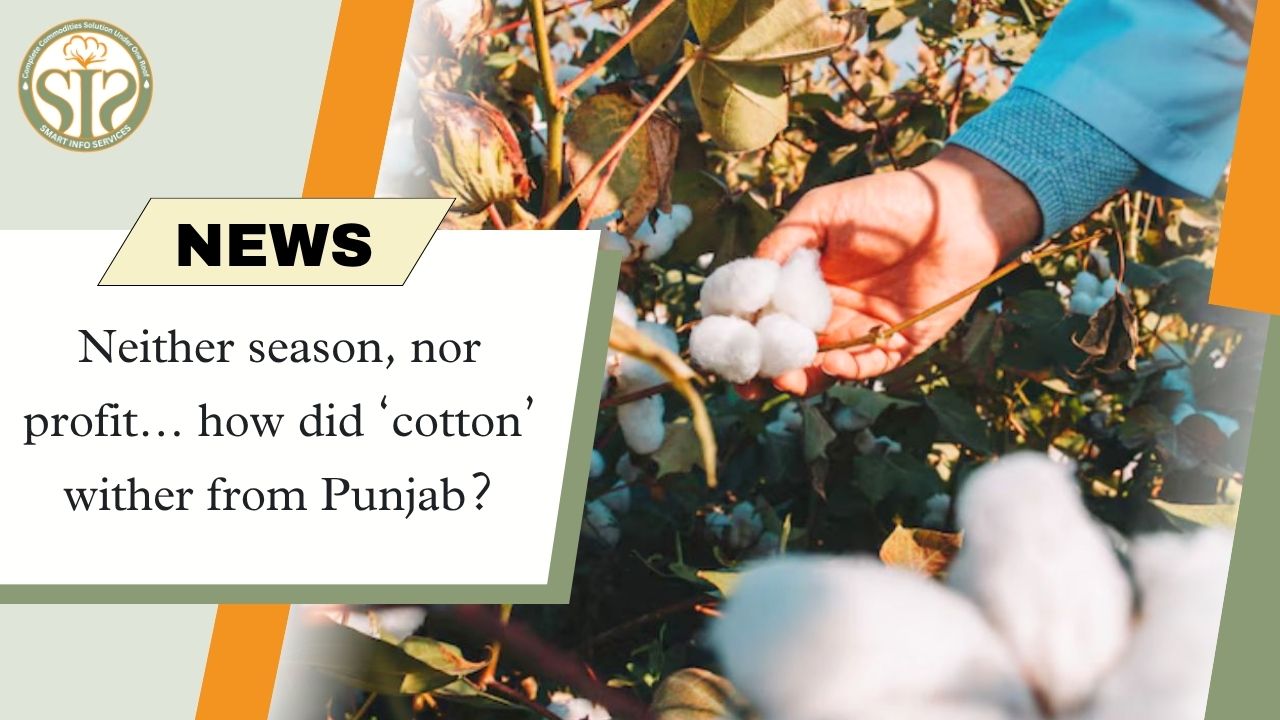
Why did Punjab's cotton wither?There are three important belts in Punjab – Malwa, Majha, Doaba. Majha belt is known for cotton belt i.e. cotton cultivation. The reason is that cotton requires less water. Cotton cultivation was also done in large quantity in Malwa belt, but fake seeds, duplicate pesticides in the market have broken the back of the farmers.While the Punjab government is constantly making farmers aware for crop diversification, the farmers of Punjab are getting disillusioned with the cotton crop. Farmers no longer want to cultivate cotton. The result of this is that this year cotton cultivation is decreasing in the state. On the other hand, if we talk about the last 10 years, cotton production has fallen by 25.66 percent. Farmer leader Jangveer Singh says that 10 years ago, farmers of Malwa belt used to grow a lot of cotton, but now the situation has become such that instead of cotton, farmers want to grow crops which require less pesticide and also get the price of the crop at a reasonable price of MSP.There are three important belts in Punjab, Malwa, Majha, Doaba. Majha belt is known as cotton belt i.e. for cotton cultivation. The reason is that cotton requires less water. At the same time, cotton was cultivated in large quantities in Malwa belt, but fake seeds and duplicate pesticides in the market broke the back of the farmers. As a result, years passed and cotton cultivation decreased. The situation has become such that farmers are now cultivating only paddy and wheat.Farmer leader Jangveer Singh said that one problem is that the farmer does not cultivate any other crop other than the crop he goes for. As a result, that crop becomes so much that its price goes down. At present, only white eucalyptus crop is being grown in Majha and Malwa belts of Punjab. Dr. Harsh, an agricultural scientist of Punjab University, said that farmers want cotton crop, but the outbreak of pink caterpillar and white fly has turned farmers away from this farming.How much should be the price of cotton?The second biggest reason has been the uncertainty over the minimum support price (MSP). The crop is available at a low price. According to agricultural scientist Dr. Harsh, the price of cotton should be seven to eight thousand per quintal, but it is not. On the other hand, Malwa belt is now becoming a cancer belt. The biggest reason for this is that the pesticides used for the crops there, go and mix with the ground water. Due to this, the water has become so contaminated that people are getting afflicted with this disease.On the other hand, when Punjab Agriculture Minister Gurmeet Singh Khudian was questioned about farmers getting disillusioned with cotton farming, he said that we are encouraging the farmers, explaining to the farmers that they should cultivate cotton. Farmers will also get a fair price for cotton.118 blocks of Punjab have gone into the red zoneAccording to a report, the groundwater level of Punjab is already falling, which Chief Minister Bhagwant Singh Mann himself keeps mentioning. To improve the water situation, people are being encouraged to grow low-water crops. 118 blocks have gone into the red zone. This report has now increased the concern of the government even more. According to the report, cotton production has come down from 6.09 lakh bales in 2023-24 to 2.52 lakh bales in 2024-25. Similarly, the area has also come down from 2.14 lakh to one lakh hectares.Cotton Corporation of India reportThere has been a decline in the purchase of cotton at MSP in Punjab. According to a report of the Cotton Corporation of India in March, only two thousand bales were purchased at MSP in Punjab in the year 2024-25, whereas 3.56 lakh bales were purchased at MSP in the year 2019-20, 5.36 lakh bales were purchased at MSP in 2020-21, during 2021-22 and 2022-23 the market price of cotton was above MSP. Therefore, there was no purchase at MSP during these two years, but in the year 2023-24 only 38 thousand bales were purchased at MSP. Farmers and experts say that we want the government to give the right price on crops, end the problem of fake seeds, only then the condition of crops in Punjab will be right.read more :- US tariffs put pressure on Indian textile exports
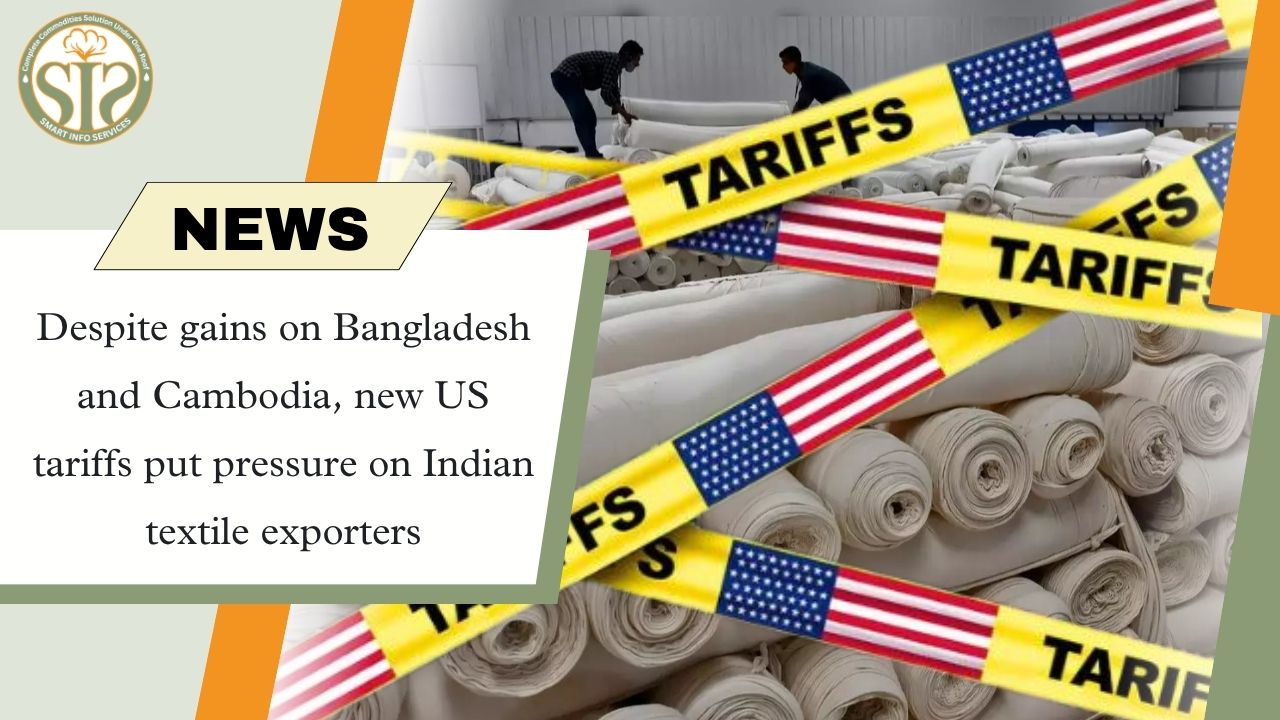
Despite gains on Bangladesh and Cambodia, new US tariffs put pressure on Indian textile exportersThis is a mixed bag for Indian textile and apparel exporters, as these exports to the US will be at an advantage compared to production hubs like Bangladesh and Cambodia, where tariffs are high. At the same time, countries like Indonesia and Vietnam could emerge as new competitors for India in this sector.The US has announced a 25% tariff and additional punitive duty on India from August, while it has already imposed 35% and 36% tariffs on Bangladesh and Cambodia, respectively. However, the US tariff on Indonesia and Vietnam is lower at 19% and 20%, respectively. Till now, the tariff from India to the US was 10%.Rakesh Mehra, president, Confederation of Indian Textile Industry (CITI), said, "The new tariff rate will put the resolve and resilience of India's textile and apparel exporters to a severe test as we will not get any significant benefit of duty differential compared to many other countries, except Bangladesh, with whom we compete for a large share in the US market."The US is India's largest market for textile and apparel exports. During January-May 2025, textile and apparel imports by the US from India were worth $4.59 billion, a growth of over 13% compared to the same period last year. China is the largest exporter to the US, followed by Vietnam, India and Bangladesh.The industry is now hopeful that the tariff issue will be resolved after a bilateral trade deal between India and the US. Sanjay Jain, managing director, TT Industries, said India had targeted a 10-15% growth in its textile exports to the US, which will be impacted due to the new tariffs.read more :- Increase in cotton imports from Brazil, India imports more, exports less
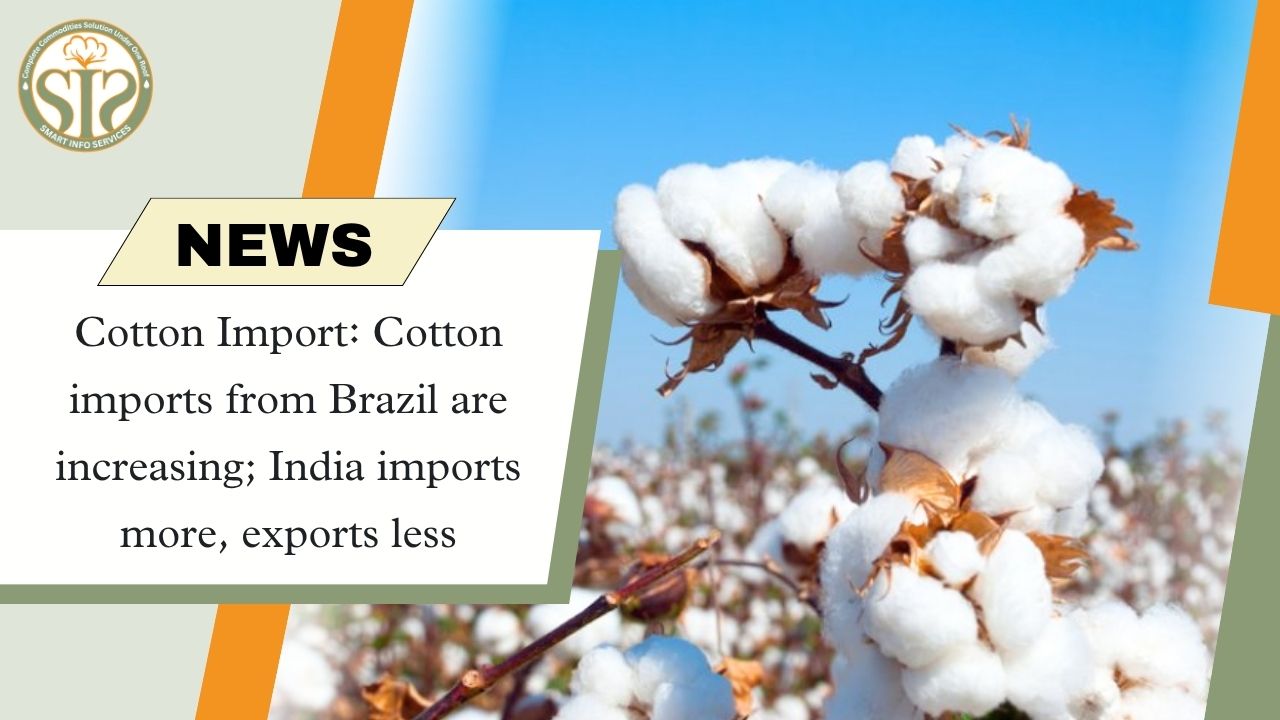
Cotton Import Surge: Brazil Leads as India Imports Rise, Exports Hit Multi-Year LowCotton imports in India are witnessing a sharp rise this season, driven by lower domestic production and cheaper prices in the international market. In the first eight months of the 2024–25 season, the country has imported around 27 lakh bales of cotton—the highest level in the past six years.Interestingly, Brazil has emerged as the top supplier this year, overtaking traditional exporters like the United States and Australia. The continued softness in global cotton prices has encouraged Indian importers to increase purchases, and industry experts believe imports may rise further in the coming months.India, traditionally a major cotton exporter, is now facing a shift in trade dynamics. A decline in domestic production—now at its lowest in several years—combined with steady consumption has forced the country to rely more on imports to meet demand. While domestic demand has supported prices to some extent, global price weakness continues to exert pressure on the market.Between October 2024 and May 2025, India recorded its highest cotton imports in six years. In comparison, imports stood at 15 lakh bales in 2023–24 and 14 lakh bales in 2022–23. The last time imports were significantly higher was in 2018–19, when they reached 35 lakh bales.At the same time, cotton exports have dropped sharply, touching their lowest level in 18 years. So far this season, only 13 lakh bales have been exported, compared to the previous lowest of 23 lakh bales in 2008–09. Exporters remain pessimistic about any major recovery in shipments this year.Country-wise import data shows that Brazil accounted for the highest share, with around 6.5 lakh bales imported so far. This is followed by the United States (5.5 lakh bales), Australia (5 lakh bales), Mali (1.79 lakh bales), and Egypt (83,000 bales). Lower prices in these countries compared to India have been the key factor driving imports.Cotton Imports Trend (in lakh bales):2024–25* — 272023–24 — 152022–23 — 142021–22 — 212020–21 — 112019–20 — 15.5read more :- Maharashtra: 7000 hectares of cotton crop affected by blight due to rain

Maharashtra: Impact of rain: 7000 hectares of cotton crop affected by blight disease, agriculture and...Cotton fields in many parts of Paithan taluka have been affected by blight disease. Cotton is cultivated in 55,600 hectares in the taluka and today 7,000 hectares of cotton crop is at risk of being affected by this disease. This situation arose after heavy rains in Marathwada.Farmers had grown cotton crop using expensive seeds, fertilizers and pesticides. But due to lack of water for a long time, the temperature of the soil increased. If it rains at such a time, the trees get shocked. This causes the trees to dry up. The leaves fall. Later the trees die. These symptoms have started appearing within 36 to 48 hours of rain. Therefore, there is a possibility of huge loss in production.Farmers should drain out excess water from cotton fields as soon as possible. As soon as the water returns, they should do weeding and harvesting. 200 grams of urea, 100 grams of white potash (00:00:50 fertilizer), 25 grams of copper oxychloride should be mixed in 10 liters of water and the prepared solution should be given to each tree in the amount of 100 ml. Or, one kg of 13:00:45 fertilizer, 2 grams of cobalt chloride, 250 grams of copper oxychloride should be given to the trees in the amount of 100 ml in 200 liters of water. Then the soil near the tree should be pressed with the foot. As soon as it is noticed that the trees have started drying, this measure should be taken within 24 to 48 hours.This will prevent further damage. Also, the measures taken by the Agriculture Department should be adopted. Cotton in more than one and a half lakh hectares of area in Marathwada including Paithan has been affected by blight disease. In view of this, farmer leader Jayaji Suryavanshi has demanded a panchnama of cotton damaged by the outbreak of this disease in Marathwada including Paithan. A team of the agriculture department has been formed to meet the farmers in view of the blight disease. This team is visiting the dam and guiding the farmers and agricultural research experts are also included in it, said Taluka Agriculture Officer Vikas Patil.read more :- Cotton acreage in MP decreased by 3.7% due to shift towards maize

સોમવારે ભારતીય રૂપિયો ૪૦ પૈસા ઘટીને ૮૭.૬૫ પ્રતિ ડોલર પર બંધ થયો હતો, જ્યારે સવારે તે ૮૭.૨૫ પર ખુલ્યો હતો.બંધ સમયે, સેન્સેક્સ ૪૧૮.૮૧ પોઈન્ટ અથવા ૦.૫૨ ટકા વધીને ૮૧૮,૦૧૮.૭૨ પર અને નિફ્ટી ૧૫૭.૪૦ પોઈન્ટ અથવા ૦.૬૪ ટકા વધીને ૨૪,૭૨૨.૭૫ પર બંધ થયો હતો. લગભગ ૨૦૪૭ શેર વધ્યા, ૧૬૦૭ શેર ઘટ્યા અને ૧૫૪ શેર યથાવત રહ્યા.વધુ વાંચો :- INR 27 પૈસા મજબૂત થઈને 87.25 પર ખુલ્યો.
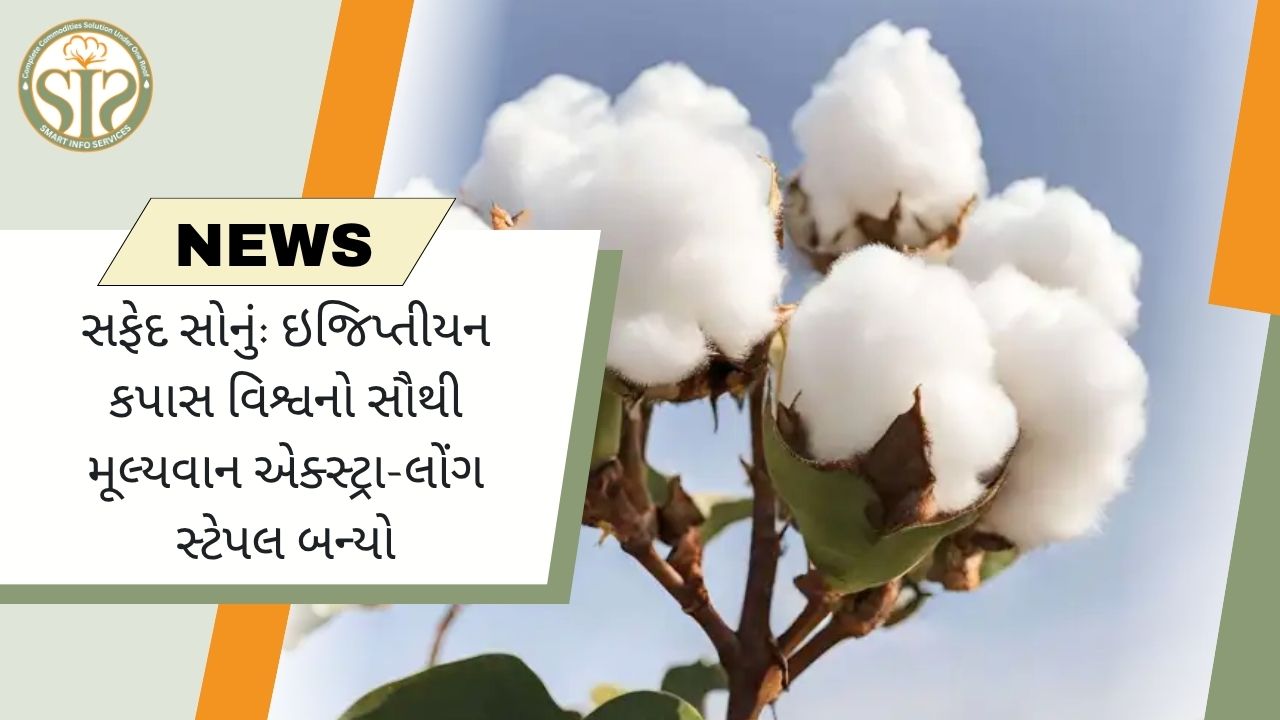
સફેદ સોનું: ઇજિપ્તીયન કપાસ વિશ્વનો સૌથી મૂલ્યવાન એક્સ્ટ્રા-લોંગ સ્ટેપલ બન્યોઇજિપ્તીયન કપાસે વૈશ્વિક મંચ પર તેની ઐતિહાસિક પ્રતિષ્ઠા પાછી મેળવી છે, અને હવે તે વિશ્વની સૌથી મોંઘી એક્સ્ટ્રા-લોંગ સ્ટેપલ (ELS) કપાસની જાત તરીકે સ્થાન મેળવ્યું છે. 21મી સદીમાં પહેલીવાર, તે તુલનાત્મક શિપિંગ અને ગુણવત્તાની પરિસ્થિતિઓમાં લાંબા સમયથી પ્રબળ યુએસ પિમા કપાસને પાછળ છોડી ગયું છે.ઇજિપ્તીયન કપાસ નિકાસકારો એસોસિએશનના જાણકાર સૂત્રોના જણાવ્યા અનુસાર, ઇજિપ્તના "સફેદ સોના" ની કિંમત 172-175 સેન્ટ પ્રતિ પાઉન્ડ થઈ ગઈ છે, જે યુએસ પિમા કપાસ કરતાં આગળ છે, જે 167 સેન્ટ પ્રતિ પાઉન્ડ પર સ્થિર રહ્યો છે. બેન્ચમાર્ક ગીઝા 94 વિવિધતાએ મુખ્ય એશિયન બજારોમાં સ્થાન મેળવ્યું છે, જે પરંપરાગત રીતે પ્રીમિયમ ELS કપાસનો ગઢ રહ્યો છે."આ એક ઐતિહાસિક ભાવ પરિવર્તન દર્શાવે છે," એક સૂત્રએ જણાવ્યું. "વર્ષોથી, યુ.એસ. પિમા કપાસ તેના સુસંગતતા અને માર્કેટિંગ વર્ચસ્વને કારણે પ્રીમિયમ મેળવતો હતો. પરંતુ હવે, વૈશ્વિક ખરીદદારો ઇજિપ્તીયન પાકની શ્રેષ્ઠ ગુણવત્તા અને વૈશ્વિક પુરવઠામાં ઘટાડાને પ્રતિસાદ આપી રહ્યા છે."ઇજિપ્તીયન કપાસના ભાવમાં આ ઉછાળો આંતરરાષ્ટ્રીય માંગમાં વધારો અને સ્થાનિક પાકની ગુણવત્તામાં નોંધપાત્ર સુધારા વચ્ચે આવ્યો છે. માત્ર એક વર્ષ પહેલાં, યુ.એસ. પિમા કપાસને તેના ઇજિપ્તીયન સમકક્ષ કરતાં 100 સેન્ટ પ્રતિ પાઉન્ડ સુધીનો ભાવ લાભ મળ્યો હતો.ઓગસ્ટ અને સપ્ટેમ્બર ડિલિવરી માટે ઇજિપ્તીયન કપાસ હાલમાં પ્રતિ પાઉન્ડ $2.25 પર ટ્રેડ થઈ રહ્યો છે, જે તેની ટોચની કિંમતની સ્થિતિને વધુ મજબૂત બનાવે છે.24 જુલાઈના રોજ પૂરા થયેલા સપ્તાહના ડેટામાં પણ યુ.એસ. પિમા કપાસમાં સાધારણ વધારો જોવા મળ્યો હતો, જેમાં ચોખ્ખા વેચાણમાં 100 ગાંસડીનો વધારો થયો હતો અને કુલ શિપમેન્ટ 8,700 ગાંસડી (દરેક યુ.એસ. ગાંસડી 480 પાઉન્ડની સમકક્ષ છે) સુધી પહોંચ્યું હતું.૨૦૨૪-૨૦૨૫ સીઝન દરમિયાન ઇજિપ્તમાં કપાસનું કુલ વાવેતર ૩૧૧,૦૦૦ ફેડન (આશરે ૧૩૦,૦૦૦ હેક્ટર) થયું હતું. માર્ચ ૨૦૨૪માં પાકનું વાવેતર કરવામાં આવ્યું હતું અને ઓક્ટોબરમાં લણણી કરવામાં આવી હતી. સરકારે પ્રારંભિક ગેરંટીકૃત કિંમત ૧૨,૦૦૦ EGP પ્રતિ ક્વિન્ટલ નક્કી કરી હોવા છતાં, લઘુત્તમ કિંમત પાછળથી સુધારીને ૧૦,૦૦૦ EGP કરવામાં આવી હતી, જે જાહેર હરાજી માટે પ્રારંભિક કિંમત તરીકે પણ કામ કરશે.સપ્ટેમ્બર ૨૦૨૪ માં નિકાસ સીઝનની શરૂઆતથી ૨૦ જુલાઈ, ૨૦૨૫ સુધી, ઇજિપ્તે આશરે $૧૨૦ મિલિયનના મૂલ્યના ૩૬,૪૦૦ મેટ્રિક ટન જિન્ડ કપાસની નિકાસ કરી હતી, જેમાં ૧૭ એશિયન અને યુરોપિયન દેશોએ નિકાસ મેળવી હતી.ઉદ્યોગ સૂત્રોનો અંદાજ છે કે ઉચ્ચ-ગ્રેડ ELS ફાઇબરની વધતી માંગ અને મર્યાદિત વૈશ્વિક પુરવઠાને કારણે આગામી મહિનાઓમાં ઇજિપ્તીયન કપાસના ભાવ દબાણ હેઠળ રહેશે.વધુ વાંચો:- INR 27 પૈસા મજબૂત થઈને 87.25 પર ખુલ્યો.

ડોલર ઇન્ડેક્સમાં ઘટાડો થવાથી રૂપિયો ૨૭ પૈસા વધીને ૮૭.૨૫/યુએસડી પર ખુલ્યો.સ્થાનિક ચલણ યુએસ ડોલર સામે ૮૭.૨૫ પર ખુલ્યું, જે અગાઉના બંધ સમયે ગ્રીનબેક સામે ૮૭.૫૨ હતું.વધુ વાંચો :- રાજ્યવાર CCI કપાસ વેચાણ 2024-25
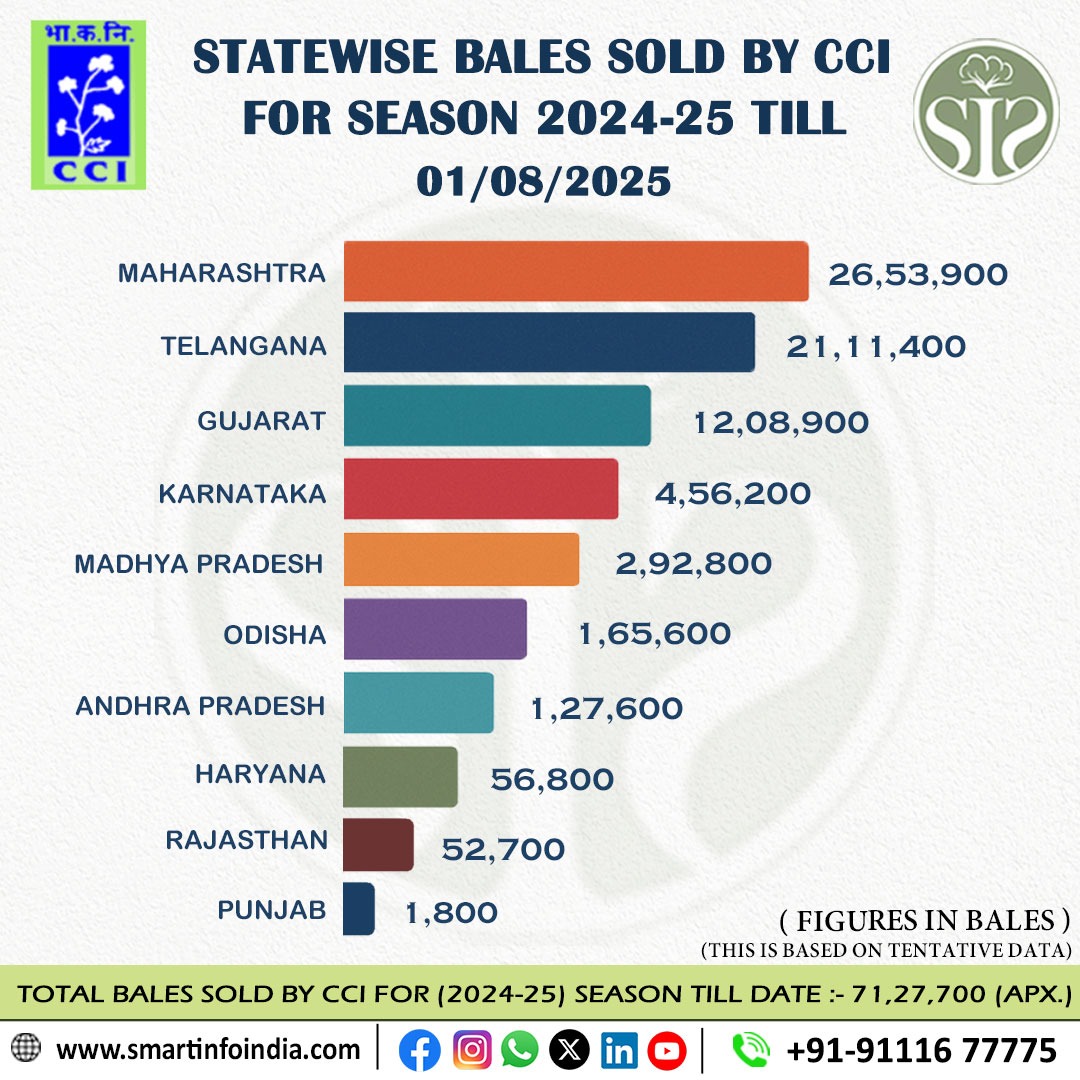
રાજ્યવાર CCI કપાસ વેચાણ વિગતો - 2024-25 સીઝનભારતીય કોટન કોર્પોરેશન (CCI) એ આ અઠવાડિયે પ્રતિ કેન્ડી ભાવમાં કોઈ ફેરફાર કર્યો નથી. ભાવ સુધારા પછી પણ, CCI એ આ અઠવાડિયે કુલ 79,400 ગાંસડી વેચી છે, જેનાથી 2024-25 સીઝનમાં અત્યાર સુધી કુલ વેચાણ 71,27,700 ગાંસડી થયું છે. આ આંકડો અત્યાર સુધી ખરીદાયેલા કુલ કપાસના લગભગ 71.27% છે.રાજ્યવાર વેચાણના આંકડા દર્શાવે છે કે વેચાણમાં મુખ્ય ભાગીદારી મહારાષ્ટ્ર, તેલંગાણા અને ગુજરાતમાંથી રહી છે, જે સંયુક્ત રીતે અત્યાર સુધીના કુલ વેચાણમાં 83.81% થી વધુ હિસ્સો ધરાવે છે.આ આંકડા કપાસ બજારમાં સ્થિરતા લાવવા અને મુખ્ય કપાસ ઉત્પાદક રાજ્યોમાં નિયમિત પુરવઠો સુનિશ્ચિત કરવા માટે CCI ના સક્રિય પ્રયાસોને પ્રતિબિંબિત કરે છે.
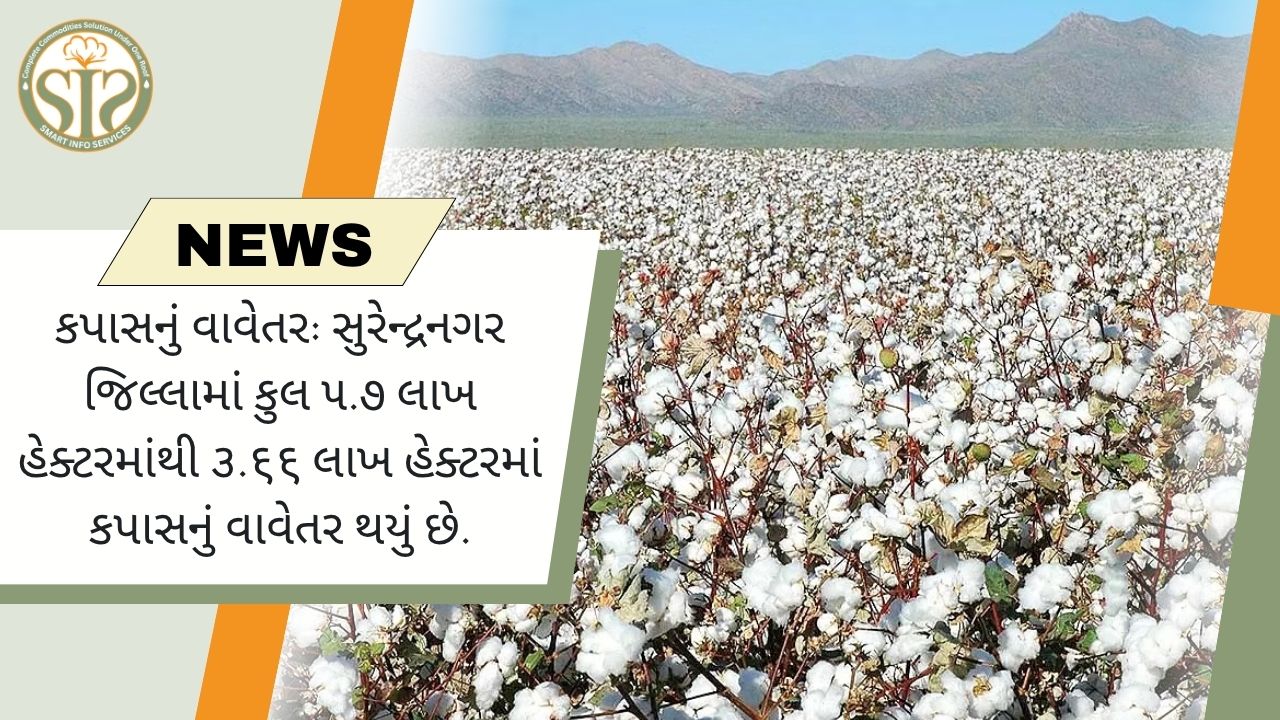
કપાસનું વાવેતર: સુરેન્દ્રનગર જિલ્લામાં કુલ ૫.૭ લાખ હેક્ટરમાંથી ૩.૬૬ લાખ હેક્ટરમાં કપાસનું વાવેતર થયું છે.કપાસમાં શોષક જીવાત, મગફળીમાં સુકારોઆ વર્ષે સુરેન્દ્રનગર જિલ્લામાં ચોમાસાની શરૂઆત જોરદાર રીતે થઈ હતી. બાદમાં, વરસાદ ધીમે ધીમે ઓછો થયો. અત્યાર સુધીમાં ૩૮૨૫ મીમી એટલે કે સિઝનના ૬૪.૦૭ ટકા વરસાદ થયો છે. આ વર્ષે સારા વરસાદની આશાએ, ખેડૂતોએ જિલ્લામાં અત્યાર સુધીમાં કુલ ૫,૦૭,૨૫૦ હેક્ટરમાં વાવણી કરી છે.જેમાંથી સૌથી વધુ ૩,૬૬,૯૧૯ હેક્ટરમાં કપાસ અને ૩૯,૭૦૬ હેક્ટરમાં મગફળીનું વાવેતર થયું છે. પરંતુ સતત વાદળછાયું અને વરસાદી વાતાવરણને કારણે પાકને અસર થઈ રહી છે. દરમિયાન, કપાસમાં શોષક જીવાત અને મગફળીમાં સ્કેબ, સુકારો, પાનના ટપકાનો રોગ, મૂળના સડાનો રોગ અને એફિડનો ઉપદ્રવ વધી રહ્યો છે.આના કારણે, ખેડૂતોને પહેલાથી જ લાગી ગયેલા રોગોથી બીમાર થવાનો ભય છે. તેથી, જિલ્લા કૃષિ અધિકારી એમ.આર. પરમારે તેમને પાકમાં રોગ નિયંત્રણના પગલાં લેવા જણાવ્યું છે જેમાં રાસાયણિક ખાતરોનો ઉપયોગ અને રોગ નિયંત્રણ માટે દવાઓનો છંટકાવ શામેલ છે.જો રોગચાળો જોવા મળે, તો નાઇટ્રોજનયુક્ત ખાતરો આપીને અસર ઘટાડી શકાય છે.જો ચાલુ પાકમાં રોગચાળો જોવા મળે, તો આંતર-પાક કરવું જોઈએ અને નીંદણ દૂર કરવા જોઈએ. આ સાથે, પાકને અસર થતી અટકાવવા માટે યુરિયા અને નાઇટ્રોજનયુક્ત ખાતરો આપીને રોગચાળાની અસર ઘટાડી શકાય છે. જનકભાઈ કલોત્રા, નિવૃત્ત કૃષિ અધિકારીકપાસ પર લીમડાના બીજનું દ્રાવણ લગાવો. ડાંગરના ખેતરમાં નીંદણને જડમૂળથી ઉખેડી નાખો અને નાશ કરો. તીતીઘોડા અને થ્રીપ્સના જૈવિક નિયંત્રણ માટે, 15 દિવસના અંતરાલે બે વાર 10,000 પ્રતિ હેક્ટરના દરે શિકારી લીલા મોથ (ક્રિસોપા) ના 2 થી 3 દિવસના ઈયળોનો ઉપયોગ કરો.5% લીમડાના બીજના દ્રાવણ અથવા એઝાડિરાક્ટીન જેવા બિન-રાસાયણિક એજન્ટનો ઉપયોગ કરો.તીતીઘોડા અને સફેદ માખીઓનું સર્વેક્ષણ અને નિયંત્રણ કરવા માટે પીળા સ્ટીકી ટ્રેપનો ઉપયોગ કરો. વર્ટીસિલિયમ વિલ્ટ અથવધુ વાંચો :-CCI એ 2024-25 માં ઈ-બિડિંગ દ્વારા 71% કપાસ વેચ્યો, ભાવ વધ્યા
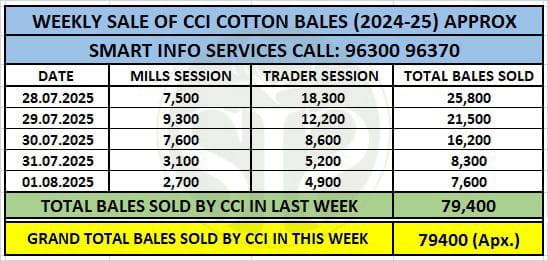
CCI એ કપાસના ભાવમાં વધારો કર્યો, 2024-25 ની કુલ ખરીદીમાંથી 71% ઈ-બિડિંગ દ્વારા વેચીકોટન કોર્પોરેશન ઓફ ઈન્ડિયા (CCI) એ આખા અઠવાડિયા દરમિયાન કપાસની ગાંસડી માટે ઓનલાઈન બિડિંગ હાથ ધર્યું હતું, જેમાં મિલો અને ટ્રેડર્સ બંને સત્રોમાં નોંધપાત્ર ટ્રેડિંગ પ્રવૃત્તિ જોવા મળી હતી. પાંચ દિવસ દરમિયાન, CCI ના ભાવ યથાવત રહ્યા.અત્યાર સુધી, CCI એ 2024-25 સીઝન માટે લગભગ 71,27,700 કપાસની ગાંસડી વેચી છે, જે સીઝન માટે તેની કુલ ખરીદીના 71.27% છે.તારીખ મુજબ સાપ્તાહિક વેચાણ સારાંશ:28 જુલાઈ 2025:આ દિવસે અઠવાડિયાનું સૌથી વધુ દૈનિક વેચાણ જોવા મળ્યું, જેમાં 2024-25 સીઝનની 25,800 ગાંસડી વેચાઈ.મિલ્સ સત્ર: 7,500 ગાંસડીટ્રેડિંગ સત્ર: 18,300 ગાંસડી29 જુલાઈ 2025:2024-25 સીઝનમાં કુલ 21,500 ગાંસડી વેચાઈ હતી.મિલ્સ સત્ર: 9,300 ગાંસડીટ્રેડિંગ સત્ર: 12,200 ગાંસડી30 જુલાઈ 2025:વેચાણ 16,200 ગાંસડી રહ્યું હતું, જે બધી 2024-25 સીઝનમાં વેચાઈ હતી.મિલ્સ સત્ર: 7,600 ગાંસડીટ્રેડિંગ સત્ર: 8,600 ગાંસડી31 જુલાઈ 2025:2024-25 સીઝનમાં કુલ 8,300 ગાંસડી વેચાઈ હતી.મિલ્સ સત્ર: 3,100 ગાંસડીવેપારી સત્ર: 5,200 ગાંસડી01 ઓગસ્ટ 2025:સપ્તાહ 7,600 ગાંસડીના વેચાણ સાથે બંધ થયો.મિલ્સ સત્ર: 2,700 ગાંસડીવેપારી સત્ર: 4,900 ગાંસડીસાપ્તાહિક કુલ:CCI એ આ અઠવાડિયે લગભગ 79,400 ગાંસડીનું કુલ વેચાણ હાંસલ કર્યું, જે તેના મજબૂત બજાર જોડાણ અને તેના ડિજિટલ ટ્રાન્ઝેક્શન પ્લેટફોર્મની વધતી કાર્યક્ષમતાને પ્રતિબિંબિત કરે છે.વધુ વાંચો :- ભારતીય રૂપિયો 06 પૈસા વધીને 87.52 પ્રતિ ડોલર પર બંધ થયો

શુક્રવારે ભારતીય રૂપિયો 06 પૈસા વધીને 87.52 પર બંધ થયો હતો, જ્યારે સવારે તે 87.58 પર ખુલ્યો હતો.બંધ સમયે, સેન્સેક્સ 585.67 પોઈન્ટ અથવા 0.72 ટકા ઘટીને 80,599.91 પર અને નિફ્ટી 203 પોઈન્ટ અથવા 0.82 ટકા ઘટીને 24,565.35 પર બંધ થયો હતો. લગભગ 1264 શેર વધ્યા, 2582 શેર ઘટ્યા અને 154 શેર યથાવત રહ્યા.વધુ વાંચો :- પંજાબમાં તીતીઘોડાના ઉપદ્રવથી કપાસ પર ખતરો
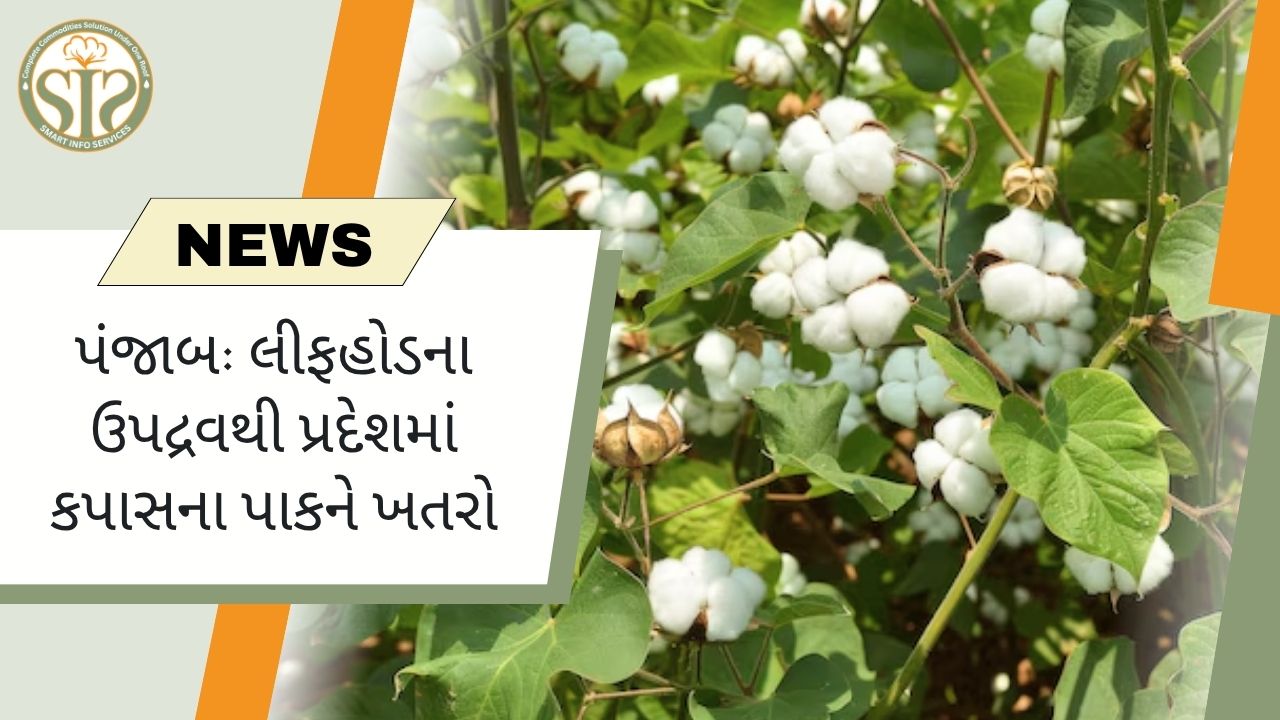
પંજાબ: લીફહોડના ઉપદ્રવથી પ્રદેશમાં કપાસના પાકને ખતરોભટિંડા : દક્ષિણ એશિયા બાયોટેકનોલોજી સેન્ટર, એક વૈજ્ઞાનિક સંસ્થાએ પંજાબ, હરિયાણા અને રાજસ્થાનના મુખ્ય કપાસ ઉત્પાદક જિલ્લાઓમાં કપાસ પર લીલા તીતીઘોડા (જસીદ), જેને સામાન્ય રીતે 'હરા તેલા' તરીકે ઓળખવામાં આવે છે, તેનો ઉપદ્રવ જાહેર કર્યો છે. પંજાબના માનસા, ભટિંડા અને ફાઝિલ્કા, હરિયાણાના હિસાર, ફતેહાબાદ અને સિરસા અને રાજસ્થાનના હનુમાનગઢ અને શ્રીગંગાનગરમાં તેની અસર સ્પષ્ટપણે દેખાય છે. જોધપુર સ્થિત કેન્દ્ર દ્વારા પ્રોજેક્ટ બંધન હેઠળ હાથ ધરવામાં આવેલા ક્ષેત્ર સર્વેક્ષણ દરમિયાન SABC એ ઉપદ્રવ શોધી કાઢ્યો, જેનું સિરસા ખાતે સંશોધન અને વિકાસ કેન્દ્ર છે.દિલીપ મોંગા, ભગીરથ ચૌધરી, નરેશ, દીપક જાખર અને કે.એસ. ભારદ્વાજની આગેવાની હેઠળની ક્ષેત્ર ટીમે પ્રતિ પાન 12-15 તીતીઘોડાના ઉપદ્રવનું સ્તર નોંધાવ્યું, જે આર્થિક થ્રેશોલ્ડ સ્તર (ETL) થી ઘણું ઉપર છે. ક્ષેત્ર સર્વેક્ષણમાં નુકસાન વર્ગીકરણ પ્રણાલીના આધારે કપાસના પાંદડાઓને ETL થી ઉપર નુકસાન પણ નોંધાયું છે.છેલ્લા ત્રણ અઠવાડિયાથી, લીલા તીતીઘોડા (જેસીડ) ની વસ્તી ETL કરતાં વધી ગઈ છે, જેના કારણે પાંદડા પીળા થઈ જાય છે અને નીચે તરફ વળે છે, જે જેસીડના હુમલાના લાક્ષણિક લક્ષણો છે. આ ઉપદ્રવ હવામાન પરિસ્થિતિઓના સંયોજનને આભારી છે, જેમાં સરેરાશથી વધુ વરસાદ, વરસાદી દિવસોની સંખ્યામાં વધારો, સતત ભેજ અને વાદળછાયાપણું શામેલ છે, જે બધાએ જેસીડના ફેલાવા માટે આદર્શ પરિસ્થિતિઓ બનાવી છે.અમરાસ્કા બિગુટ્ટુલા બિગુટ્ટુલા (ઇશિડા), જેને સામાન્ય રીતે ભારતીય કપાસ જેસીડ અથવા 'લીલો તેલા' કહેવામાં આવે છે, તે કપાસનો એક મોસમ-લાંબા શોષક જીવાત છે. જેસીડના પુખ્ત વયના લોકો ખૂબ જ સક્રિય, આછા લીલા રંગના, લગભગ 3.5 મીમી લાંબા, આગળના પાંખો અને ટોચ પર બે અલગ કાળા ફોલ્લીઓ સાથે, પાંદડા પર તેમની લાક્ષણિક ત્રાંસા ગતિ દ્વારા સરળતાથી ઓળખી શકાય છે, તેથી તેમને 'લીફહોપર્સ' કહેવામાં આવે છે. જેસીડના દર સીઝનમાં વસ્તી જોવા મળે છે, પરંતુ જુલાઈ-ઓગસ્ટ દરમિયાન જંતુના દરજ્જા સુધી પહોંચે છે. એવો અંદાજ છે કે કપાસ પર દર સીઝનમાં 11 પેઢીઓ સુધી જોવા મળે છે.લીફહોપર નીમ્ફ અને પુખ્ત વયના લોકો કપાસના પેશીઓમાંથી કોષનો રસ ચૂસે છે અને ઝેર સ્ત્રાવ કરે છે, જેના કારણે 'હોપર બર્ન' ના લક્ષણો દેખાય છે, જેમાં પાંદડા પીળા પડવા, ભૂરા પડવા અને સુકાઈ જવાનો સમાવેશ થાય છે. અસરગ્રસ્ત પાંદડા સુકાઈ જવા અને કર્લિંગના લક્ષણો દર્શાવે છે, અને આત્યંતિક કિસ્સાઓમાં, પ્રકાશસંશ્લેષણ ઓછું થાય છે, પાંદડા ભૂરા અને સુકાઈ જાય છે, જે કપાસની ઉત્પાદકતામાં નોંધપાત્ર ઘટાડો કરી શકે છે, અને જો તેનું સંચાલન ન કરવામાં આવે તો 30% સુધી ઉપજમાં ઘટાડો થઈ શકે છે.ગ્રેડ II/III/IV નુકસાન ≥5 લીફહોપર છોડમાં જોવા મળે છે, ગ્રેડ II માં નીચલા પાંદડા સહેજ સંકોચાઈ જાય છે, કર્લિંગ અને પીળા પડે છે, ગ્રેડ III માં સમગ્ર છોડમાં પાંદડા સંકોચાઈ જાય છે, કર્લિંગ અને સુકાઈ જાય છે; વૃદ્ધિ અટકી જાય છે, ગ્રેડ IV માં પાંદડા ગંભીર કાંસ્ય, સંકોચાઈ જાય છે, કર્લિંગ અને સુકાઈ જાય છે તે દર્શાવે છે. સંશોધન વૈજ્ઞાનિક દીપક જાખરે જણાવ્યું હતું કે જો 20 નમૂનાઓમાંથી ≥5 છોડ ગ્રેડ II અથવા વધુ નુકસાન દર્શાવે છે તો તાત્કાલિક પગલાં લેવાની જરૂર છે.જોકે, PAU વૈજ્ઞાનિક પરમજીત સિંહે જણાવ્યું હતું કે કોઈ ચિંતાજનક પરિસ્થિતિ નથી કારણ કે લીફહોપર જીવાત ETL થી થોડી ઉપર છે.સર્વે ટીમને જાણવા મળ્યું કે આ લીલા તીતીઘોડાના ઉપદ્રવને તાત્કાલિક નિયંત્રિત કરવામાં નિષ્ફળતા આગામી દિવસોમાં કપાસના પાકને નુકસાન પહોંચાડી શકે છે. ખેડૂતોએ સતર્ક રહેવું જોઈએ અને સંભવિત ઉપજ નુકશાન ટાળવા માટે અસરકારક રીતે જીવાતનું સંચાલન કરવા માટે તાત્કાલિક પગલાં લેવા જોઈએ.SABC એ કપાસના ખેડૂતોને વિનંતી કરી છે કે તેઓ લીલા તીતીઘોડાના જીવાત (જેસિડ) ના વધતા જોખમને અસરકારક રીતે સંચાલિત અને નિયંત્રિત કરવા માટે વિજ્ઞાન-સમર્થિત પગલાં અપનાવે, જેમ કે નિયમિત ખેતરનું નિરીક્ષણ, જીવાતોની સચોટ ઓળખ અને ઉપદ્રવની તીવ્રતાનું મૂલ્યાંકન.હળવા ઉપદ્રવના સંચાલન માટે લીમડા આધારિત બાયોપેસ્ટીસાઇડ અથવા અન્ય પર્યાવરણને અનુકૂળ, કાર્બનિક જંતુનાશકોનો ઉપયોગ કરવાની ભલામણ કરવામાં આવે છે. વહેલી સવારે અથવા મોડી સાંજે જ્યારે પવન શાંત હોય ત્યારે છંટકાવ કરો. સંપૂર્ણ છંટકાવની ખાતરી કરો, ખાસ કરીને પાંદડાની નીચેની બાજુએ, જ્યાં જીવાતો સામાન્ય રીતે છુપાયેલા હોય છે. ખેતરમાં અને તેની આસપાસ નીંદણ દૂર કરો, કારણ કે તેઓ લીતીઘોડાના જીવાત અને અન્ય જીવાતો માટે વૈકલ્પિક યજમાન તરીકે સેવા આપે છે.વધુ વાંચો :- INR 02 પૈસા મજબૂત થઈને 87.58 પર ખુલ્યો.

ટ્રમ્પ ટેરિફ અંગેની ચિંતાઓને કારણે ભારતીય રૂપિયો 2 પૈસા વધીને 87.58/USD પર ખુલ્યો.સ્થાનિક ચલણ યુએસ ડોલર સામે 87.58 પર ખુલ્યું, જે અગાઉના બંધ સમયે ગ્રીનબેક સામે 87.60 હતું.વધુ વાંચો :- ટ્રમ્પના 25% ટેરિફથી ભારતીય કાપડ નિકાસકારોને ભારે નુકસાન થશે
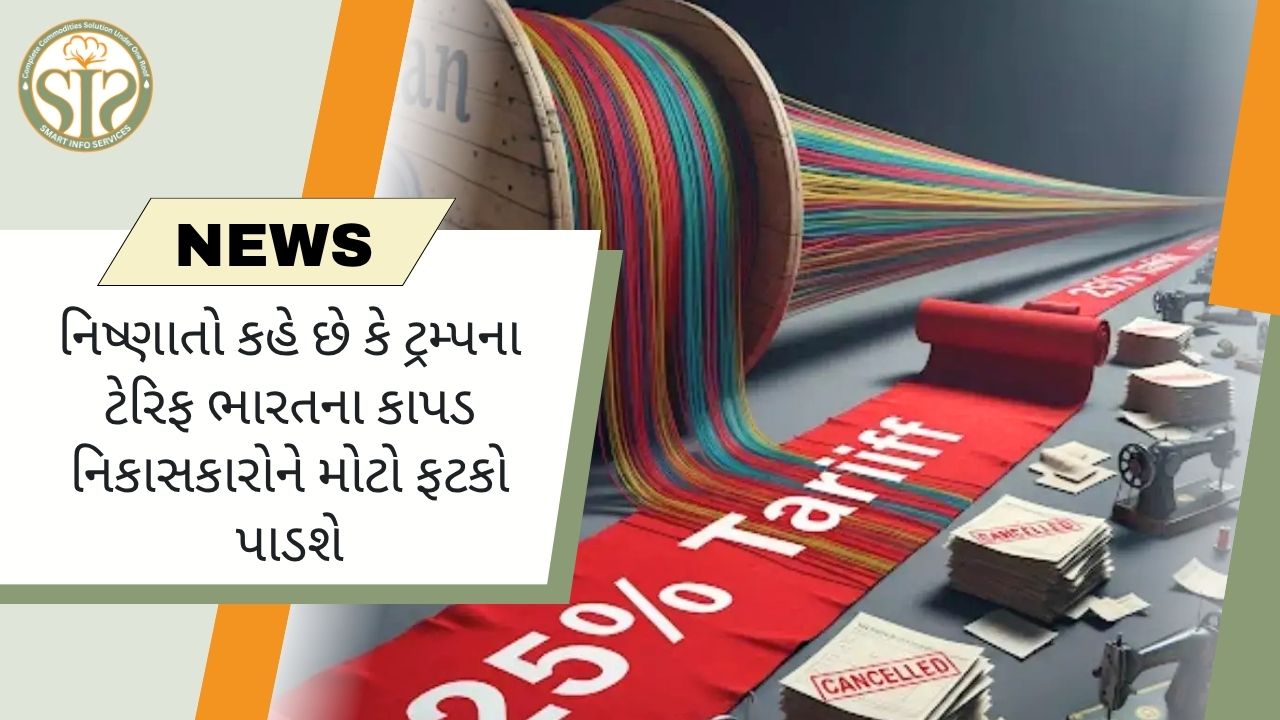
નિષ્ણાતો કહે છે કે ટ્રમ્પના ટેરિફ ભારતના કાપડ નિકાસકારોને મોટો ફટકો પાડશેનવી દિલ્હી: યુએસ પ્રમુખ ડોનાલ્ડ ટ્રમ્પ દ્વારા ભારતમાંથી આયાત થતી ચીજવસ્તુઓ પર વધારાની 25 ટકા આયાત ડ્યુટી અને દંડ લાદવાની જાહેરાત દેશના કાપડ નિકાસકારોને મોટો ફટકો પાડશે કારણ કે વિયેતનામ અને ઇન્ડોનેશિયા જેવા સ્પર્ધકો હવે ઓછા ટેરિફને કારણે ભાવમાં ઘટાડો કરી રહ્યા છે, એમ નિષ્ણાતોએ ગુરુવારે જણાવ્યું હતું.આ ડ્યુટી 1 ઓગસ્ટથી અમલમાં આવશે. રશિયા પાસેથી ક્રૂડ ઓઇલ અને લશ્કરી સાધનો ખરીદવા બદલ ભારત પર આ અનિશ્ચિત દંડ લાદવામાં આવ્યો હતો.ટેક્સટાઇલ અને વસ્ત્રોની નિકાસ માટે અમેરિકા ભારતનું સૌથી મોટું બજાર છે.ટ્રેડ ઇન્ટેલિજન્સ ફર્મ સાયબેક્સ એક્ઝિમ સોલ્યુશન્સ અનુસાર, ઘણા ભારતીય નિકાસકારોને ઓર્ડર રદ કરવા અને કિંમતો ઘટાડવાના દબાણનો સામનો કરવો પડી શકે છે, જેના કારણે ખર્ચ વધી શકે છે અને વિયેતનામ અને ઇન્ડોનેશિયા તરફથી સ્પર્ધાત્મક ગેરલાભ થઈ શકે છે.સાયબેક્સ એક્ઝિમ સોલ્યુશન્સે જણાવ્યું હતું કે, "યુએસ દ્વારા જાહેર કરાયેલ 25 ટકા ટેરિફ ભારતના કાપડ અને વસ્ત્રોના નિકાસકારો માટે મોટો ફટકો છે. અમે 17 અબજ ડોલરના રેડીમેડ ગાર્મેન્ટ્સ નિકાસ કરીએ છીએ, જેમાંથી 5.6 અબજ ડોલર ફક્ત અમેરિકામાં જાય છે. આ એક મોટો હિસ્સો છે. રાતોરાત ખર્ચ વધવાથી, ઘણા નિકાસકારોને ઓર્ડર રદ કરવાનો અથવા ભાવ ઘટાડવાના દબાણનો સામનો કરવો પડી શકે છે. વિયેતનામ અને ઇન્ડોનેશિયા જેવા દેશો હવે કિંમતોમાં ફાયદો મેળવે છે કારણ કે તેમના ટેરિફ ઓછા છે.""જ્યારે ભારત ગુણવત્તાની દ્રષ્ટિએ બાંગ્લાદેશ અને કંબોડિયાથી આગળ છે, ત્યારે આ પગલું અમારા ઉત્પાદકો પર, ખાસ કરીને નાના ઉત્પાદકો પર, વાસ્તવિક દબાણ લાવે છે. હવે ફક્ત અમેરિકાથી આગળ જોવાનો અને અન્ય બજારોમાં વધુ આક્રમક રીતે પ્રવેશવાનો સમય છે."પીટીઆઈ સાથે વાત કરતા, કન્ફેડરેશન ઓફ ઇન્ડિયન ટેક્સટાઇલ ઇન્ડસ્ટ્રી (CITI) ના સેક્રેટરી જનરલ ચંદ્રિમા ચેટરજીએ જણાવ્યું હતું કે તેઓ અનિશ્ચિત દંડ અંગે "અત્યંત ચિંતિત" છે કારણ કે તેનાથી આગામી થોડા મહિનામાં પૂરા થનારા નિકાસ ઓર્ડર ધરાવતા લોકો માટે સ્પષ્ટતાનો અભાવ સર્જાયો છે."તે આપણા પર ગંભીર અસર કરશે. આપણામાંથી મોટાભાગના લોકોએ 25 ટકા ટેરિફને ગંભીરતાથી લીધો નથી, પરંતુ અમે દંડ વિશે ખૂબ જ ચિંતિત છીએ કારણ કે આપણે હજુ પણ ખૂબ જ સટ્ટાકીય બજારમાં છીએ," ચેટર્જીએ કહ્યું.તેમના મતે, વિયેતનામમાં ભારતની તુલનામાં 20 ટકા ટેરિફ છે, જ્યારે ઇન્ડોનેશિયામાં યુએસથી 19 ટકા આયાત ડ્યુટીનો સામનો કરવો પડે છે.ચેટર્જીએ વધુમાં કહ્યું કે ભારતીય નિકાસકારો યુકે, યુરોપિયન યુનિયન, યુએઈ, જાપાન અને કોરિયા જેવા વૈકલ્પિક બજારોમાં વધુ આક્રમક રીતે રોકાણ કરી શકે છે."બીજી ગંભીર ચિંતા એ છે કે ભારતના રશિયા સાથેના સંબંધો સાથે સંકળાયેલ અવ્યાખ્યાયિત દંડાત્મક જોગવાઈ છે, જે અનિશ્ચિતતાનું સ્તર ઉમેરે છે," RSWM લિમિટેડના સંયુક્ત મેનેજિંગ ડિરેક્ટર રાજીવ ગુપ્તાએ જણાવ્યું."ભારતીય ઉદ્યોગસાહસિકો અને ઉત્પાદકો મજબૂત છે, અને અમે માનીએ છીએ કે આયોજિત વ્યૂહરચનાઓ સાથે વેપાર ગતિ વધતી રહેશે. ચીન સામે ટેરિફ સ્થિતિ પર સ્પષ્ટતા અત્યંત મહત્વપૂર્ણ છે," ગુપ્તાએ ઉમેર્યું.વધુ વાંચો :- ડોલર સામે રૂપિયો 11 પૈસા મજબૂત થઈને 87.60 પર બંધ થયો

ગુરુવારે ભારતીય રૂપિયો ૧૧ પૈસા વધીને ૮૭.૬૦ પ્રતિ ડોલર પર બંધ થયો હતો, જ્યારે સવારે તે ૮૭.૭૧ પર ખુલ્યો હતો.બંધ સમયે, સેન્સેક્સ ૨૯૬.૨૮ પોઈન્ટ અથવા ૦.૩૬ ટકા ઘટીને ૮૧,૧૮૫.૫૮ પર અને નિફ્ટી ૮૬.૭૦ પોઈન્ટ અથવા ૦.૩૫ ટકા ઘટીને ૨૪,૭૬૮.૩૫ પર બંધ થયો હતો. લગભગ ૧૪૯૦ શેર વધ્યા, ૨૩૬૫ શેર ઘટ્યા અને ૧૩૫ શેર યથાવત રહ્યા.વધુ વાંચો :- ન તો મોસમ, ન નફો... પંજાબમાંથી 'કપાસ' કેવી રીતે સુકાઈ ગયો?
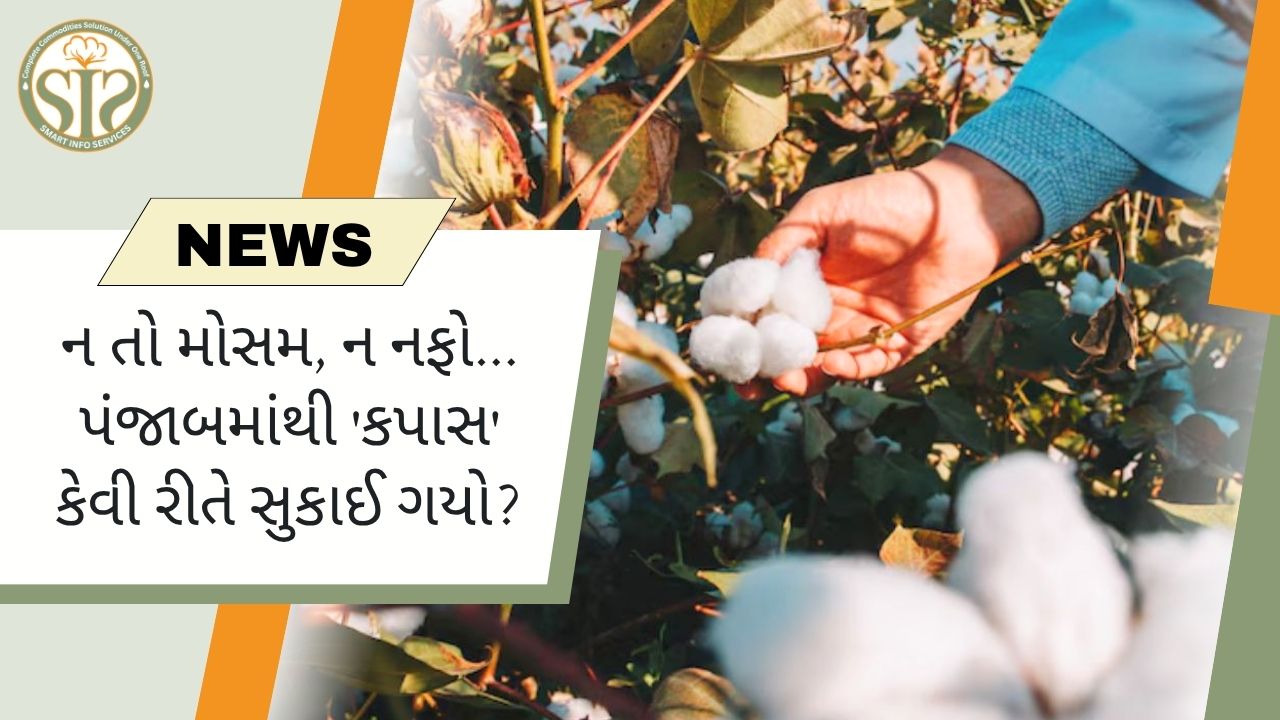
પંજાબનો કપાસ કેમ સુકાઈ ગયો?પંજાબમાં ત્રણ મહત્વપૂર્ણ પટ્ટા છે - માલવા, માઝા, દોઆબા. માઝા પટ્ટો કપાસના પટ્ટા એટલે કે કપાસની ખેતી માટે જાણીતો છે. કારણ એ છે કે કપાસને ઓછા પાણીની જરૂર પડે છે. માલવા પટ્ટામાં પણ કપાસની ખેતી મોટી માત્રામાં થતી હતી, પરંતુ નકલી બિયારણ, બજારમાં નકલી જંતુનાશકોએ ખેડૂતોની કમર તોડી નાખી છે.પંજાબ સરકાર ખેડૂતોને પાક વૈવિધ્યકરણ માટે સતત જાગૃત કરી રહી છે, ત્યારે પંજાબના ખેડૂતો કપાસના પાકથી નિરાશ થઈ રહ્યા છે. ખેડૂતો હવે કપાસની ખેતી કરવા માંગતા નથી. તેનું પરિણામ એ આવ્યું છે કે આ વર્ષે રાજ્યમાં કપાસનું વાવેતર ઘટી રહ્યું છે. બીજી તરફ, જો આપણે છેલ્લા 10 વર્ષની વાત કરીએ તો કપાસનું ઉત્પાદન 25.66 ટકા ઘટ્યું છે. ખેડૂત નેતા જંગવીર સિંહ કહે છે કે ૧૦ વર્ષ પહેલાં, માલવા પટ્ટાના ખેડૂતો કપાસનું ખૂબ વાવેતર કરતા હતા, પરંતુ હવે પરિસ્થિતિ એવી બની ગઈ છે કે કપાસને બદલે ખેડૂતો એવા પાક ઉગાડવા માંગે છે જેને ઓછા જંતુનાશકોની જરૂર પડે અને પાકના ભાવ પણ વાજબી ભાવે MSP મળે.પંજાબમાં ત્રણ મહત્વપૂર્ણ પટ્ટા છે, માલવા, માઝા, દોઆબા. માઝા પટ્ટાને કપાસના પટ્ટા તરીકે ઓળખવામાં આવે છે એટલે કે કપાસની ખેતી માટે. કારણ એ છે કે કપાસને ઓછા પાણીની જરૂર પડે છે. તે જ સમયે, માલવા પટ્ટામાં કપાસની ખેતી મોટી માત્રામાં થતી હતી, પરંતુ બજારમાં નકલી બિયારણ અને નકલી જંતુનાશકોએ ખેડૂતોની કમર તોડી નાખી. પરિણામે, વર્ષો વીતી ગયા અને કપાસની ખેતી ઓછી થઈ ગઈ. પરિસ્થિતિ એવી બની ગઈ છે કે ખેડૂતો હવે ફક્ત ડાંગર અને ઘઉંની ખેતી કરી રહ્યા છે.ખેડૂત નેતા જંગવીર સિંહે કહ્યું કે એક સમસ્યા એ છે કે ખેડૂત જે પાક માટે જાય છે તે સિવાય બીજો કોઈ પાક ઉગાડતો નથી. પરિણામે, તે પાક એટલો બધો થઈ જાય છે કે તેની કિંમત નીચે જાય છે. હાલમાં, પંજાબના માઝા અને માલવા પટ્ટામાં ફક્ત સફેદ નીલગિરીનો પાક જ ઉગાડવામાં આવી રહ્યો છે. પંજાબ યુનિવર્સિટીના કૃષિ વૈજ્ઞાનિક ડૉ. હર્ષે જણાવ્યું હતું કે ખેડૂતો કપાસનો પાક ઇચ્છે છે, પરંતુ ગુલાબી ઈયળ અને સફેદ માખીના ઉપદ્રવથી ખેડૂતો આ ખેતીથી દૂર થઈ ગયા છે.કપાસનો ભાવ કેટલો હોવો જોઈએ?બીજું સૌથી મોટું કારણ લઘુત્તમ ટેકાના ભાવ (MSP) અંગે અનિશ્ચિતતા છે. પાક ઓછા ભાવે મળે છે. કૃષિ વૈજ્ઞાનિક ડૉ. હર્ષના મતે, કપાસનો ભાવ પ્રતિ ક્વિન્ટલ સાતથી આઠ હજાર હોવો જોઈએ, પરંતુ એવું નથી. બીજી તરફ, માલવા પટ્ટો હવે કેન્સરનો પટ્ટો બની રહ્યો છે. તેનું સૌથી મોટું કારણ એ છે કે ત્યાંના પાક માટે વપરાતા જંતુનાશકો ભૂગર્ભજળમાં ભળી જાય છે. આને કારણે, પાણી એટલું દૂષિત થઈ ગયું છે કે લોકો આ રોગથી પીડાઈ રહ્યા છે.બીજી તરફ, જ્યારે પંજાબના કૃષિ મંત્રી ગુરમીત સિંહ ખુદિયાનને કપાસની ખેતીથી ખેડૂતોના મોહભંગ થવા અંગે પ્રશ્ન કરવામાં આવ્યો, ત્યારે તેમણે કહ્યું કે અમે ખેડૂતોને પ્રોત્સાહિત કરી રહ્યા છીએ, ખેડૂતોને સમજાવી રહ્યા છીએ કે તેઓએ કપાસની ખેતી કરવી જોઈએ. ખેડૂતોને કપાસનો વાજબી ભાવ પણ મળશે.પંજાબના ૧૧૮ બ્લોક રેડ ઝોનમાં ગયા છેએક અહેવાલ મુજબ, પંજાબનું ભૂગર્ભજળ સ્તર પહેલાથી જ ઘટી રહ્યું છે, જેનો ઉલ્લેખ મુખ્યમંત્રી ભગવંત સિંહ માન પોતે કરતા રહે છે. પાણીની સ્થિતિ સુધારવા માટે, લોકોને ઓછા પાણીવાળા પાક ઉગાડવા માટે પ્રોત્સાહિત કરવામાં આવી રહ્યા છે. ૧૧૮ બ્લોક રેડ ઝોનમાં ગયા છે. આ અહેવાલે હવે સરકારની ચિંતામાં વધુ વધારો કર્યો છે. અહેવાલ મુજબ, કપાસનું ઉત્પાદન ૨૦૨૩-૨૪માં ૬.૦૯ લાખ ગાંસડીથી ઘટીને ૨૦૨૪-૨૫માં ૨.૫૨ લાખ ગાંસડી થયું છે. તેવી જ રીતે, વિસ્તાર પણ ૨.૧૪ લાખથી ઘટીને એક લાખ હેક્ટર થયો છે.કોટન કોર્પોરેશન ઓફ ઇન્ડિયાનો અહેવાલપંજાબમાં MSP પર કપાસની ખરીદીમાં ઘટાડો થયો છે. માર્ચ મહિનામાં કોટન કોર્પોરેશન ઓફ ઈન્ડિયાના એક અહેવાલ મુજબ, પંજાબમાં વર્ષ ૨૦૨૪-૨૫માં MSP પર માત્ર બે હજાર ગાંસડી ખરીદવામાં આવી હતી, જ્યારે વર્ષ ૨૦૧૯-૨૦માં ૩.૫૬ લાખ ગાંસડી MSP પર ખરીદવામાં આવી હતી, ૨૦૨૦-૨૧માં ૫.૩૬ લાખ ગાંસડી MSP પર ખરીદવામાં આવી હતી, ૨૦૨૧-૨૨ અને ૨૦૨૨-૨૩ દરમિયાન કપાસનો બજાર ભાવ MSP કરતા વધારે હતો. તેથી, આ બે વર્ષ દરમિયાન MSP પર કોઈ ખરીદી થઈ ન હતી, પરંતુ વર્ષ ૨૦૨૩-૨૪માં ફક્ત ૩૮ હજાર ગાંસડી MSP પર ખરીદવામાં આવી હતી. ખેડૂતો અને નિષ્ણાતો કહે છે કે અમે ઇચ્છીએ છીએ કે સરકાર પાક પર યોગ્ય ભાવ આપે, નકલી બિયારણની સમસ્યાનો અંત લાવે, તો જ પંજાબમાં પાકની સ્થિતિ યોગ્ય થશે.વધુ વાંચો :- અમેરિકાના ટેરિફથી ભારતીય કાપડ નિકાસ પર દબાણ
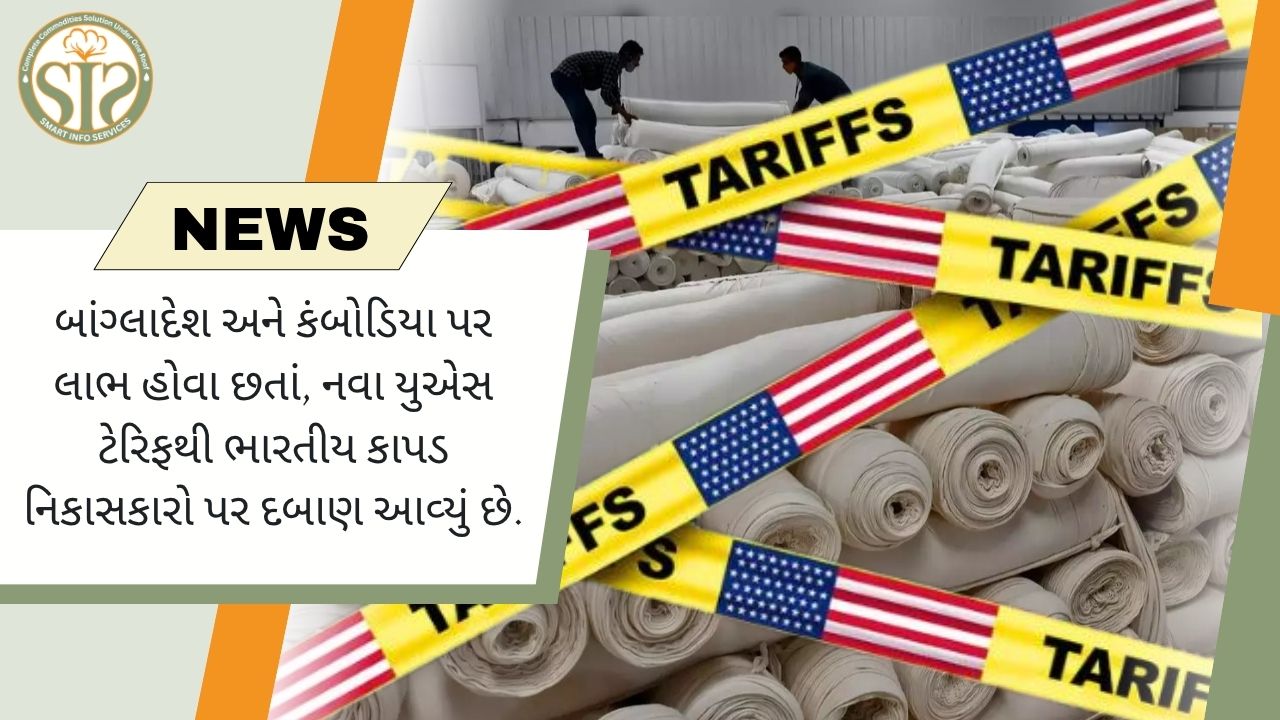
બાંગ્લાદેશ અને કંબોડિયા પર લાભ હોવા છતાં, નવા યુએસ ટેરિફથી ભારતીય કાપડ નિકાસકારો પર દબાણ આવ્યું છે.ભારતીય કાપડ અને વસ્ત્ર નિકાસકારો માટે આ મિશ્ર સ્થિતિ છે, કારણ કે બાંગ્લાદેશ અને કંબોડિયા જેવા ઉત્પાદન કેન્દ્રોની તુલનામાં અમેરિકામાં આ નિકાસ ફાયદાકારક રહેશે, જ્યાં ટેરિફ વધારે છે. તે જ સમયે, ઇન્ડોનેશિયા અને વિયેતનામ જેવા દેશો આ ક્ષેત્રમાં ભારત માટે નવા સ્પર્ધકો તરીકે ઉભરી શકે છે.અમેરિકાએ ઓગસ્ટથી ભારત પર 25% ટેરિફ અને વધારાની દંડાત્મક ડ્યુટીની જાહેરાત કરી છે, જ્યારે તેણે બાંગ્લાદેશ અને કંબોડિયા પર પહેલાથી જ અનુક્રમે 35% અને 36% ટેરિફ લાદ્યા છે. જોકે, ઇન્ડોનેશિયા અને વિયેતનામ પર યુએસ ટેરિફ અનુક્રમે 19% અને 20% થી ઓછો છે. અત્યાર સુધી, ભારતથી યુએસમાં ટેરિફ 10% હતો.કન્ફેડરેશન ઓફ ઇન્ડિયન ટેક્સટાઇલ ઇન્ડસ્ટ્રી (CITI) ના પ્રમુખ રાકેશ મહેરાએ જણાવ્યું હતું કે, "નવા ટેરિફ દર ભારતના કાપડ અને વસ્ત્ર નિકાસકારોના સંકલ્પ અને સ્થિતિસ્થાપકતાની કઠોર કસોટી કરશે કારણ કે બાંગ્લાદેશ સિવાય, જેમની સાથે આપણે યુએસ બજારમાં મોટા હિસ્સા માટે સ્પર્ધા કરીએ છીએ, તેમની સરખામણીમાં અમને ડ્યુટી ડિફરન્શિયલનો કોઈ નોંધપાત્ર લાભ મળશે નહીં."ટેક્સટાઇલ અને વસ્ત્ર નિકાસ માટે અમેરિકા ભારતનું સૌથી મોટું બજાર છે. જાન્યુઆરી-મે 2025 દરમિયાન, ભારતમાંથી અમેરિકા દ્વારા કાપડ અને વસ્ત્રોની આયાત $4.59 બિલિયનની હતી, જે ગયા વર્ષના સમાન સમયગાળાની તુલનામાં 13% થી વધુ વૃદ્ધિ દર્શાવે છે. ચીન અમેરિકાનો સૌથી મોટો નિકાસકાર છે, ત્યારબાદ વિયેતનામ, ભારત અને બાંગ્લાદેશનો ક્રમ આવે છે.ઉદ્યોગ હવે આશાવાદી છે કે ભારત અને અમેરિકા વચ્ચે દ્વિપક્ષીય વેપાર કરાર પછી ટેરિફનો મુદ્દો ઉકેલાઈ જશે. TT ઇન્ડસ્ટ્રીઝના મેનેજિંગ ડિરેક્ટર સંજય જૈને જણાવ્યું હતું કે ભારતે અમેરિકામાં તેની કાપડ નિકાસમાં 10-15% વૃદ્ધિનું લક્ષ્ય રાખ્યું છે, જે નવા ટેરિફને કારણે પ્રભાવિત થશે.વધુ વાંચો :- બ્રાઝિલથી કપાસની આયાતમાં વધારો, ભારતની આયાત વધુ, નિકાસ ઓછી

મહારાષ્ટ્ર: કપાસની આયાત: બ્રાઝિલથી કપાસની આયાત વધી રહી છે; ભારત આયાત વધુ, નિકાસ ઓછી દેશમાં ઉત્પાદનમાં ઘટાડો અને આંતરરાષ્ટ્રીય બજારમાં નીચા ભાવને કારણે આ વર્ષે દેશમાં કપાસની આયાત વધી રહી છે. ચાલુ સિઝનના પ્રથમ 8 મહિનામાં, આયાત છેલ્લા છ વર્ષમાં સૌથી વધુ સ્તરે પહોંચી ગઈ છે. દેશમાં 27 લાખ ગાંસડી કપાસની આયાત કરવામાં આવી છે. નોંધનીય છે કે આ વર્ષે અમેરિકા અને ઓસ્ટ્રેલિયા કરતાં બ્રાઝિલથી વધુ આયાત કરવામાં આવી છે. આંતરરાષ્ટ્રીય બજારમાં ભાવ હજુ પણ ઓછા છે. તેથી, આયાતકારો કહે છે કે કપાસની આયાતમાં વધુ વધારો થવાની સંભાવના છે.ભારત કપાસના નિકાસકાર તરીકે જાણીતું છે. જોકે, ઉત્પાદનમાં ઘટાડો અને દેશમાં વપરાશમાં વધારો થવાને કારણે આયાત વધી રહી છે. આ વર્ષે દેશમાં કપાસનું ઉત્પાદન છેલ્લા ઘણા વર્ષોમાં સૌથી નીચા સ્તરે પહોંચ્યું છે. બીજી તરફ, કપાસનો વપરાશ સ્થિર છે. તેથી, ભારતે કપાસની આયાત કરીને પોતાની જરૂરિયાતો પૂરી કરવી પડશે. બીજું, દેશમાં ઉત્પાદન ઘટ્યું છે, પરંતુ માંગ વધવાને કારણે ભાવમાં પણ સુધારો થયો છે. દરમિયાન, આંતરરાષ્ટ્રીય બજારમાં કપાસના ભાવ પર દબાણ છે. આ કારણે દેશમાં આયાત વધી રહી છે.ઓક્ટોબર 2024 થી મે 2025 સુધીના 8 મહિના દરમિયાન, દેશમાં છેલ્લા 6 વર્ષમાં સૌથી વધુ આયાત કરવામાં આવી છે. ગયા નાણાકીય વર્ષમાં, 15 લાખ ગાંસડી કપાસની આયાત કરવામાં આવી હતી. 2018-19 ની શરૂઆતમાં, 35 લાખ ગાંસડી કપાસની આયાત કરવામાં આવી હતી. દેશમાં ઉત્પાદન ઓછું રહ્યા પછી અને વપરાશ વધ્યો પછી આયાત પણ વધી છે. જોકે, છેલ્લા 18 વર્ષમાં નિકાસ સૌથી નીચા સ્તરે જોવા મળી રહી છે. અત્યાર સુધી, દેશમાંથી ફક્ત 13 લાખ ગાંસડી કપાસની નિકાસ કરવામાં આવી છે. અગાઉ, 2008-09 માં 23 લાખ ગાંસડી કપાસની સૌથી ઓછી નિકાસ કરવામાં આવી હતી. નિકાસકારો કહે છે કે આ વર્ષે આવી નિકાસની શક્યતા ઓછી છે.ચાલુ સિઝનમાં એટલે કે 2024-25 ના પહેલા 8 મહિનામાં, 27 લાખ ગાંસડી કપાસની આયાત કરવામાં આવી હતી. સૌથી વધુ આયાત બ્રાઝિલથી થઈ હતી. કારણ કે બ્રાઝિલિયન કપાસના ભાવ નીચા રહ્યા હતા. આ વર્ષે અત્યાર સુધીમાં બ્રાઝિલથી સાડા છ લાખ ગાંસડી કપાસની આયાત કરવામાં આવી છે. ત્યારબાદ અમેરિકાથી સાડા પાંચ લાખ ગાંસડી, ઓસ્ટ્રેલિયાથી પાંચ લાખ ગાંસડી, માલીથી એક લાખ ૭૯ હજાર ગાંસડી અને ઇજિપ્તથી ૮૩ હજાર ગાંસડી કપાસની આયાત કરવામાં આવી છે. નોંધનીય છે કે આ બધા દેશોમાં કપાસના ભાવ ભારત કરતા ઓછા હતા. આને કારણે દેશમાં કપાસની આયાતમાં વધારો થયો છે.દેશમાં કપાસની આયાત (ગાંસડીમાં)૨૦૨૪-૨૫*---૨૭ લાખ૨૦૨૩-૨૪---૧૫ લાખ૨૦૨૨-૨૩---૧૪ લાખ૨૦૨૧-૨૨---૨૧ લાખ૨૦૨૦-૨૧---૧૧ લાખ૨૦૧૯-૨૦---૧૫.૫૦ લાખવધુ વાંચો :- મહારાષ્ટ્ર: વરસાદને કારણે 7000 હેક્ટર કપાસના પાકને સુકારોથી અસર થઈ

મહારાષ્ટ્ર: વરસાદની અસર: 7000 હેક્ટર કપાસના પાકને સુકારો રોગનો ભોગ, ખેતી અને...પૈઠણ તાલુકાના ઘણા ભાગોમાં કપાસના ખેતરો સુકારો રોગથી પ્રભાવિત થયા છે. તાલુકામાં 55,600 હેક્ટરમાં કપાસની ખેતી થાય છે અને આજે 7,000 હેક્ટર કપાસના પાકને આ રોગનો ભય છે. મરાઠવાડામાં ભારે વરસાદ બાદ આ પરિસ્થિતિ ઉભી થઈ હતી.ખેડૂતોએ મોંઘા બિયારણ, ખાતર અને જંતુનાશકોનો ઉપયોગ કરીને કપાસનો પાક ઉગાડ્યો હતો. પરંતુ લાંબા સમય સુધી પાણી ન મળવાને કારણે જમીનનું તાપમાન વધી ગયું. જો આવા સમયે વરસાદ પડે તો વૃક્ષોને આઘાત લાગે છે. જેના કારણે વૃક્ષો સુકાઈ જાય છે. પાંદડા ખરી પડે છે. બાદમાં વૃક્ષો મરી જાય છે. વરસાદના 36 થી 48 કલાકમાં આ લક્ષણો દેખાવા લાગે છે. તેથી, ઉત્પાદનમાં ભારે નુકસાન થવાની સંભાવના છે.ખેડૂતોએ શક્ય તેટલી વહેલી તકે કપાસના ખેતરોમાંથી વધારાનું પાણી કાઢી નાખવું જોઈએ. પાણી પાછું આવતાની સાથે જ તેમણે નીંદણ અને કાપણી કરવી જોઈએ. ૧૦ લિટર પાણીમાં ૨૦૦ ગ્રામ યુરિયા, ૧૦૦ ગ્રામ સફેદ પોટાશ (૦૦:૦૦:૫૦ ખાતર), ૨૫ ગ્રામ કોપર ઓક્સીક્લોરાઇડ ભેળવીને તૈયાર કરેલું દ્રાવણ ૧૦૦ મિલી માત્રામાં દરેક ઝાડને આપવું જોઈએ. અથવા, એક કિલો ૧૩:૦૦:૪૫ ખાતર, ૨ ગ્રામ કોબાલ્ટ ક્લોરાઇડ, ૨૫૦ ગ્રામ કોપર ઓક્સીક્લોરાઇડ ૧૦૦ મિલી માત્રામાં ૨૦૦ લિટર પાણીમાં ભેળવીને ઝાડને આપવું જોઈએ. પછી ઝાડની નજીકની માટીને પગથી દબાવી દેવી જોઈએ. ઝાડ સુકાઈ ગયા હોવાનું જણાય કે તરત જ, ૨૪ થી ૪૮ કલાકમાં આ પગલાં લેવા જોઈએ.આનાથી વધુ નુકસાન થતું અટકાવી શકાશે. ઉપરાંત, કૃષિ વિભાગ દ્વારા લેવામાં આવેલા પગલાં અપનાવવા જોઈએ. પૈઠણ સહિત મરાઠવાડામાં દોઢ લાખ હેક્ટરથી વધુ વિસ્તારમાં કપાસને બ્લાઈટ રોગ થયો છે. આને ધ્યાનમાં રાખીને, ખેડૂત નેતા જયાજી સૂર્યવંશીએ પૈઠણ સહિત મરાઠવાડામાં આ રોગના પ્રકોપથી નુકસાન પામેલા કપાસના પંચનામાની માંગણી કરી છે. સુકારો રોગને ધ્યાનમાં રાખીને ખેડૂતોને મળવા માટે કૃષિ વિભાગની એક ટીમ બનાવવામાં આવી છે. આ ટીમ ડેમની મુલાકાત લઈ ખેડૂતોને માર્ગદર્શન આપી રહી છે અને તેમાં કૃષિ સંશોધન નિષ્ણાતોનો પણ સમાવેશ કરવામાં આવ્યો છે, એમ તાલુકા કૃષિ અધિકારી વિકાસ પાટીલે જણાવ્યું હતું.વધુ વાંચો :- મકાઈ તરફ વળવાને કારણે મધ્યપ્રદેશમાં કપાસના વાવેતર વિસ્તારમાં ૩.૭%નો ઘટાડો થયો
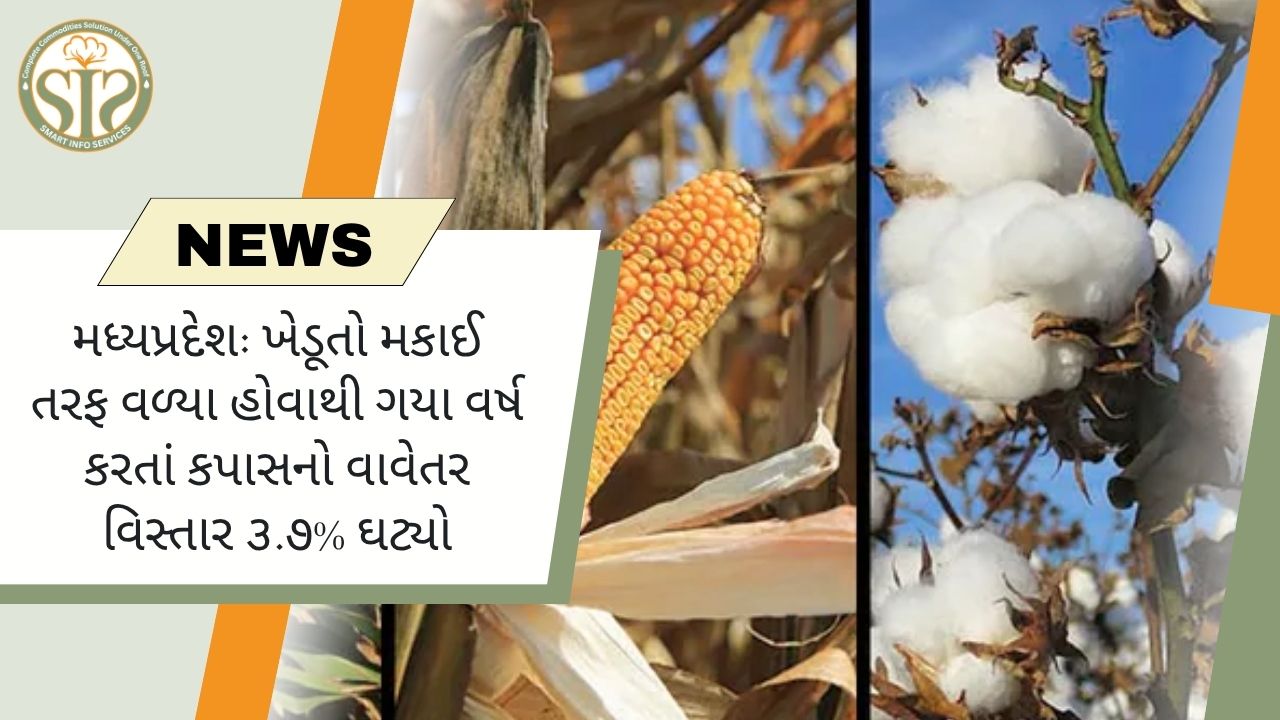
મધ્યપ્રદેશ: ખેડૂતો મકાઈ તરફ વળ્યા હોવાથી ગયા વર્ષ કરતાં કપાસનો વાવેતર વિસ્તાર ૩.૭% ઘટ્યોઈન્દોર : ચાલુ ખરીફ સિઝનમાં ખેડૂતો મકાઈ તરફ વળ્યા હોવાથી ઈન્દોર વિભાગમાં મુખ્ય ખરીફ પાક કપાસનો વાવેતર વિસ્તાર આશરે ૫ લાખ હેક્ટર રહેવાની ધારણા છે, જે ગયા વર્ષની સરખામણીમાં આશરે ૩.૭ ટકા ઓછો છે.સત્તાવાર માહિતી અનુસાર, કૃષિ વિભાગે કપાસ માટે ૫.૧૭ લાખ હેક્ટરનો લક્ષ્યાંક રાખ્યો છે, જ્યારે ગયા વર્ષે આ વાવેતર વિસ્તાર ૫.૩૭ લાખ હેક્ટર હતો.ઈન્દોરના કૃષિ વિભાગના સંયુક્ત નિયામક આલોક મીણાએ જણાવ્યું હતું કે, "કપાસ અને અન્ય ખરીફ પાક સારી સ્થિતિમાં છે અને વરસાદને કારણે કોઈ નુકસાન થયું નથી. ઈન્દોર વિભાગમાં કપાસનો વાવેતર વિસ્તાર ૫ લાખ હેક્ટરથી વધુ જોવા મળી રહ્યો છે."ખેડૂતો અને કૃષિ નિષ્ણાતો આ સિઝનમાં કપાસનું ઉત્પાદન પ્રતિ એકર ૧૦-૧૨ ક્વિન્ટલ રહેવાની ધારણા ધરાવે છે."અત્યાર સુધી વરસાદથી કોઈ નુકસાન થયું નથી અને વૃદ્ધિ સારી દેખાઈ રહી છે. મકાઈના વાવેતર વિસ્તારમાં થોડો ઘટાડો થયો છે, પરંતુ એકંદરે પાકની સ્થિતિ સારી દેખાય છે જે વધુ સારા ઉપજમાં મદદ કરશે," કપાસના ખેડૂત રઘુરામ પાટીલે જણાવ્યું.ઇન્દોર વિભાગના મુખ્ય કપાસ ઉત્પાદક જિલ્લાઓમાં ખરગોન, ખંડવા, બરવાણી, મનાવર, ધાર, રતલામ અને દેવાસનો સમાવેશ થાય છે. આ વિભાગમાં, મુખ્ય ખરીફ પાકોમાં સોયાબીન, કપાસ, મકાઈ અને કઠોળનો સમાવેશ થાય છે.સિંચાઈવાળા વિસ્તારોમાં, કપાસની વાવણી સામાન્ય રીતે મેના મધ્યમાં શરૂ થાય છે, જ્યારે બિન-સિંચાઈવાળા વિસ્તારોમાં, વાવણી જૂનમાં શરૂ થાય છે.ખરગોનમાં ખેડૂત અને જિનિંગ યુનિટના માલિક કૈલાશ અગ્રવાલે જણાવ્યું હતું કે, "કપાસનો પાક સારી રીતે વધી રહ્યો છે અને સારી સ્થિતિમાં છે. સારા ભાવને કારણે આ વર્ષે મકાઈએ કપાસ અને સોયાબીનનો થોડો વિસ્તાર કબજે કર્યો છે."ખેડૂતોએ જણાવ્યું હતું કે મકાઈના વાવેતરનો ખર્ચ કપાસના વાવેતરના ખર્ચ કરતાં લગભગ 10 ટકા છે, જેના કારણે ઘણા લોકોને તેમના વાવણી વિકલ્પો પર પુનર્વિચાર કરવાની ફરજ પડી છે.આ વિભાગમાં, જ્યાં ખરીફ સિઝન દરમિયાન પરંપરાગત રીતે સોયાબીનની ખેતીનું પ્રભુત્વ રહે છે, રાજ્ય કૃષિ વિભાગનો અંદાજ છે કે આ સિઝનમાં લગભગ 22.5 લાખ હેક્ટરમાં ખરીફ પાકનું વાવેતર થશે.વધુ વાંચો :- ડોલર સામે રૂપિયો 29 પૈસા ઘટીને 87.71 પર ખુલ્યો

INR 29 પૈસા ઘટીને 87.71 પ્રતિ ડોલર પર ખુલ્યો.ગુરુવારે ભારતીય રૂપિયો 29 પૈસા ઘટીને 87.71 પ્રતિ ડોલર પર ખુલ્યો, જે અગાઉના બંધ 87.42 હતો.વધુ વાંચો :- ટ્રમ્પે કહ્યું: ટેરિફ પર તાત્કાલિક પ્રતિબંધ નહીં, 1 ઓગસ્ટની સમયમર્યાદા ચાલુ રહેશે

ટ્રમ્પ ટેરિફ લાઇવ અપડેટ્સ: યુએસ-ચીન વાટાઘાટો પછી ટેરિફ પર તાત્કાલિક રોક નહીં; ટ્રમ્પે કહ્યું કે 1 ઓગસ્ટની સમયમર્યાદા ચાલુ રહેશેરાષ્ટ્રપતિ ટ્રમ્પે મંગળવારે કહ્યું હતું કે ભારત 20% થી 25% સુધીના ટેરિફને પાત્ર હોઈ શકે છે. ભારત અમેરિકાના સૌથી મોટા વેપારી ભાગીદારોમાંનો એક છે જે ટ્રમ્પની 1 ઓગસ્ટની સમયમર્યાદા પહેલાં કરાર પર પહોંચવા માંગે છે, કારણ કે જે દેશો હજુ સુધી કરાર પર પહોંચ્યા નથી તેમને વધુ ટેરિફનો સામનો કરવો પડશે."ભારત એક સારો મિત્ર રહ્યો છે, પરંતુ ભારતે લગભગ કોઈપણ અન્ય દેશ કરતાં વધુ ટેરિફ લાદ્યા છે," ટ્રમ્પે ટ્રુથ સોશિયલ પર એક પોસ્ટમાં કહ્યું.ટ્રમ્પે ભારત પર રશિયા પાસેથી "મોટી માત્રામાં" લશ્કરી સાધનો ખરીદવાનો પણ આરોપ લગાવ્યો."બધું બરાબર નથી! તેથી ભારતે 1 ઓગસ્ટથી ઉપરોક્ત માટે 25% ટેરિફ અને દંડ ચૂકવવો પડશે," ટ્રમ્પે પોસ્ટ કર્યું.ટ્રમ્પે બુધવારે ફરીથી કહ્યું કે તેઓ દેશોના નેતાઓને મોકલવામાં આવેલા કરારો અથવા પત્રોમાં દર્શાવેલ સ્તરો સુધી ટેરિફ લાદવાની શુક્રવારની સમયમર્યાદા લંબાવશે નહીં.ટ્રમ્પે કહ્યું, "૧ ઓગસ્ટની અંતિમ તારીખ ૧ ઓગસ્ટની અંતિમ તારીખ છે - તે મજબૂત છે, અને તેને લંબાવવામાં આવશે નહીં. અમેરિકા માટે એક મહાન દિવસ!!!"ટ્રમ્પે આ અઠવાડિયે પુષ્ટિ આપી હતી કે ૧૫% નવા ટેરિફ એ દેશો માટે "લઘુત્તમ થ્રેશોલ્ડ" છે જેમના દર તેઓ વેપાર કરારોની ગેરહાજરીમાં નેતાઓને સૂચવી રહ્યા છે.દરમિયાન, અમેરિકા અને ચીને મંગળવારે સ્વીડનમાં ટેરિફ અને વેપાર વાટાઘાટોનો તેમનો નવીનતમ રાઉન્ડ પૂર્ણ કર્યો. બંને પક્ષોએ પ્રગતિનો દાવો કર્યો હતો, પરંતુ ટેરિફમાં વધુ વિલંબની તાત્કાલિક જાહેરાત કરી ન હતી. ટ્રેઝરી સેક્રેટરી સ્કોટ બેસન્ટે જણાવ્યું હતું કે રાષ્ટ્રપતિ ટ્રમ્પ વિશ્વની બે સૌથી મોટી અર્થવ્યવસ્થાઓ વચ્ચે વેપાર યુદ્ધવિરામ લંબાવવા અંગે અંતિમ નિર્ણય લેશે.આ અઠવાડિયાની વાટાઘાટો દેશો માટે વાટાઘાટોનો ત્રીજો રાઉન્ડ હતો, જેમણે એપ્રિલમાં ટ્રમ્પ દ્વારા મોટા પાયે ટેરિફ લાદવામાં આવ્યા પછી ધીમે ધીમે વેપાર તણાવ ઘટાડ્યો છે, અને ચીને બદલો લીધો હતો. બંને દેશોએ તે ટેરિફને ૯૦ દિવસ માટે સ્થગિત કરી દીધા છે - સસ્પેન્શન ૧૨ ઓગસ્ટના રોજ સમાપ્ત થવાનું છે. બેસન્ટે કહ્યું કે વધુ ૯૦ દિવસનું વિસ્તરણ શક્ય છે.વધુમાં, યુ.એસ. અને ઇયુ શુક્રવાર પહેલા તેમના મુખ્ય નવા વેપાર સોદાની અંતિમ વિગતોને અંતિમ સ્વરૂપ આપવાનો પ્રયાસ કરી રહ્યા છે.ઇયુના ટોચના ટીકાકારો કહે છે કે તે ઉતાવળમાં વાટાઘાટો કરાયેલ કરાર છે. જર્મન ચાન્સેલર ફ્રેડરિક મેર્ઝે પરિણામને અસંતોષકારક ગણાવ્યું, અને ફ્રાન્સના બાયરોએ ઇયુના "શરણાગતિ" ને "કાળો દિવસ" ગણાવ્યો. આ કરારમાં યુ.એસ.માં આયાત કરાયેલા મોટાભાગના ઇયુ માલ પર 15% મૂળભૂત ટેરિફ દરનો સમાવેશ થાય છે. ટ્રમ્પે આ સોદાને "અત્યાર સુધીનો સૌથી મહાન" ગણાવ્યો.વધુ વાંચો :- કપાસમાં ગુલાબી ઈયળનું નિવારણ: કૃષિ વિભાગની મુખ્ય સલાહ
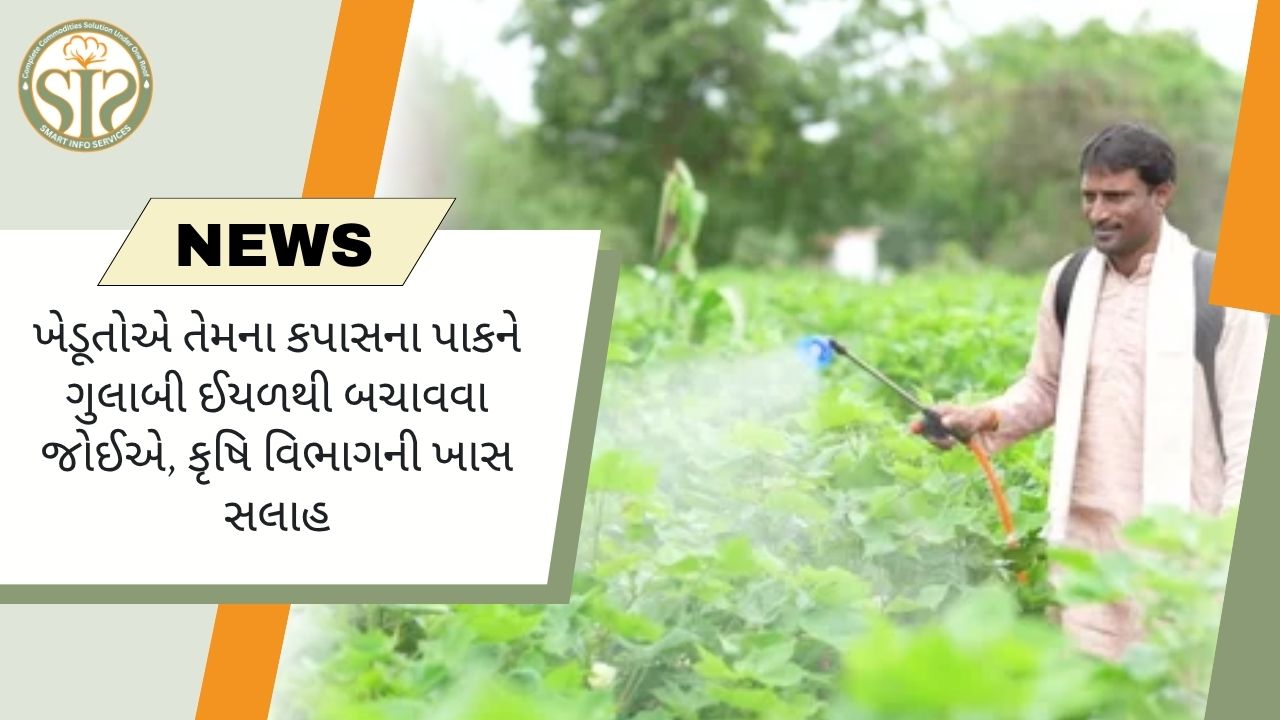
ખેડૂતોએ તેમના કપાસના પાકને ગુલાબી ઈયળથી બચાવવા જોઈએ, કૃષિ વિભાગની ખાસ સલાહ નારનૌલ (મહેન્દ્રગઢ). સતત વરસાદને કારણે કપાસના પાકમાં ગુલાબી ઈયળના હુમલાની શક્યતા છે. કૃષિ અને ખેડૂત કલ્યાણ વિભાગના નાયબ કૃષિ નિયામક (DDA) દેવેન્દ્ર સિંહે ખેડૂતોને ગુલાબી ઈયળના હુમલાથી પાકને બચાવવા માટે અત્યંત સાવધ રહેવા વિનંતી કરી છે.તેમણે ચેતવણી આપી હતી કે આ સમય ગુલાબી ઈયળના હુમલા માટે સંવેદનશીલ છે, જે કપાસના ઉત્પાદનને ગંભીર અસર કરી શકે છે. તેમણે ખેડૂતોને તેમના કપાસના પાકનું નિયમિત અને નજીકથી નિરીક્ષણ કરવાની સલાહ આપી છે જેથી ગુલાબી ઈયળના શરૂઆતના લક્ષણો સમયસર ઓળખી શકાય.રાસાયણિક છંટકાવ: ફક્ત ભલામણ કરેલ જંતુનાશકોનો જ ઉપયોગ કરોતેમણે ભાર મૂક્યો કે જો જીવાતનો ઉપદ્રવ વધે છે, તો ખેડૂતોએ ફક્ત કૃષિ અને ખેડૂત કલ્યાણ વિભાગ દ્વારા ભલામણ કરેલ જંતુનાશકોનો છંટકાવ કરવો જોઈએ. જંતુનાશકોનો મનસ્વી ઉપયોગ ફક્ત બિનઅસરકારક જ નહીં, પણ પાક અને પર્યાવરણ માટે પણ હાનિકારક હોઈ શકે છે.ખેડૂતોની જાગૃતિ અને સમયસર યોગ્ય પગલાં લેવા એ કપાસના પાકને ગુલાબી ઈયળથી બચાવવા અને તેમની આવક સુરક્ષિત કરવાની ચાવી છે. આ ખાતરી કરશે કે કપાસનો પાક સ્વસ્થ રહે અને ખેડૂતોને તેમની મહેનતનું સંપૂર્ણ ફળ મળે.ખેડૂતોએ આ સંકેતો પર ધ્યાન આપવું જોઈએ* કળીઓની અંદર લાલ અથવા ગુલાબી ઈયળ: આ ગુલાબી ઈયળની હાજરીનો સ્પષ્ટ સંકેત છે.* ફૂટેલી કળીઓ: ઈયળના હુમલાને કારણે કળીઓ અકાળે ફૂટી શકે છે.* કપાસના યુવાન બોલમાં નાના છિદ્રો: આ છિદ્રો ઈયળ દ્વારા થયેલા નુકસાનને દર્શાવે છે.* સુકાઈ ગયેલી ડાળીઓ અને પાંદડા: ઈયળના કારણે છોડના ભાગો સુકાઈ શકે છે.* છોડ પર કાળા ચીકણા ટીપાં (મધનો ઝાકળ): આ પણ જીવાતના હુમલાનો સંકેત હોઈ શકે છે.ફેરોમોન ટ્રેપનો ઉપયોગ અને જીવાતોનું નિરીક્ષણગુલાબી ઈયળના સંચાલન માટે, DDA એ અસરકારક પગલાં સૂચવ્યા છે:* ફેરોમોન ટ્રેપ: પ્રતિ એકર બે ફેરોમોન ટ્રેપ લગાવો.* નિયમિત તપાસ: દર ત્રણ દિવસે આ ટ્રેપમાં ફસાયેલા જીવાતોની સંખ્યા તપાસો.* તાત્કાલિક કાર્યવાહી: જો દરેક ટ્રેપમાં જીવાતોની સંખ્યા સતત ત્રણ દિવસ સુધી 100 થી વધુ રહે, તો તે ગંભીર ઉપદ્રવનો સંકેત છે અને તાત્કાલિક કાર્યવાહી કરવી આવશ્યક છે.વધુ વાંચો :- રૂપિયો 30 પૈસા ઘટીને 87.42 પ્રતિ ડોલર પર બંધ થયો.

બુધવારે ભારતીય રૂપિયો ૩૦ પૈસા ઘટીને ૮૭.૪૨ પ્રતિ ડોલર પર બંધ થયો હતો, જ્યારે સવારે તે ૮૭.૧૨ પર ખુલ્યો હતો.બંધ સમયે, સેન્સેક્સ ૧૪૩.૯૧ પોઈન્ટ અથવા ૦.૧૮ ટકા વધીને ૮૧,૪૮૧.૮૬ પર અને નિફ્ટી ૩૩.૯૫ પોઈન્ટ અથવા ૦.૧૪ ટકા વધીને ૨૪,૮૫૫.૦૫ પર બંધ થયો હતો. લગભગ ૧૯૬૦ શેર વધ્યા, ૧૮૭૭ શેર ઘટ્યા અને ૧૫૪ શેર યથાવત રહ્યા. વધુ વાંચો :- મહારાષ્ટ્ર: કપાસ ઉત્પાદકતા વધારવા માટે વિશેષ પ્રોજેક્ટ