
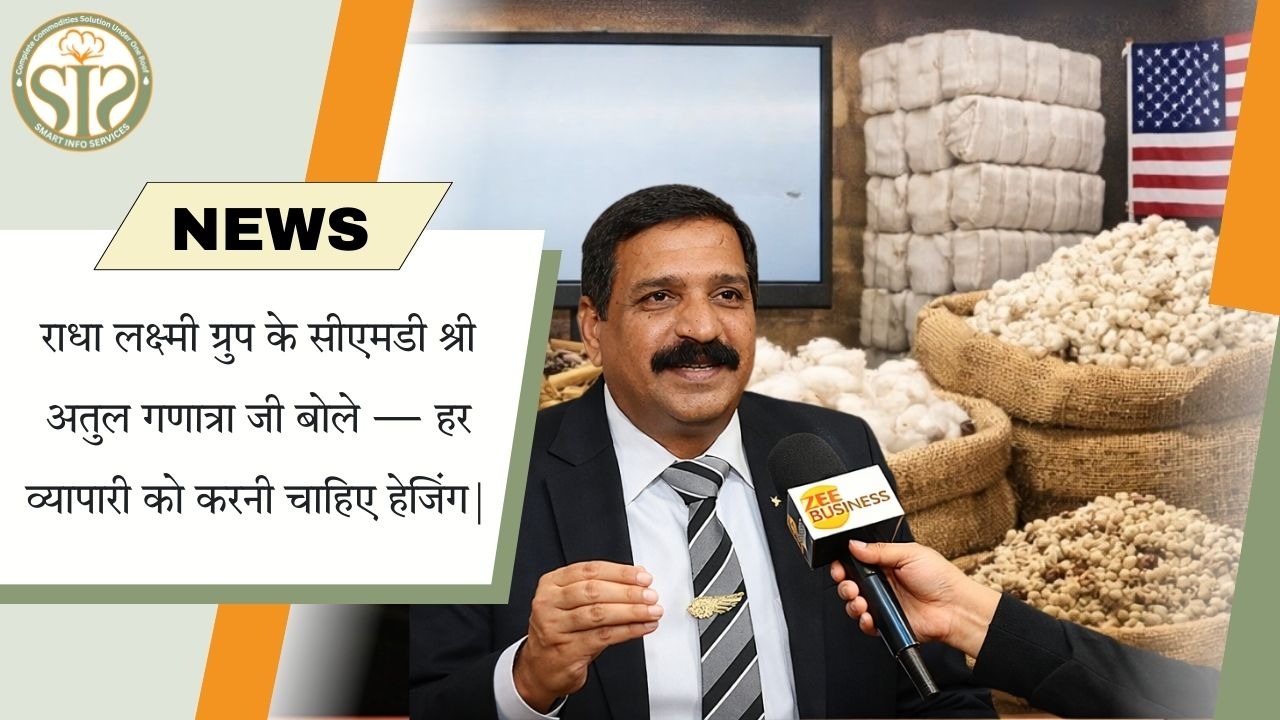
राधा लक्ष्मी ग्रुप के सीएमडी श्री अतुल गणात्रा जी बोले — हर व्यापारी को करनी चाहिए हेजिंग |राधा लक्ष्मी ग्रुप के चेयरमैन एवं प्रबंध निदेशक (CMD) ने ज़ी बिज़नेस से खास बातचीत में कहा कि हर व्यापारी को हेजिंग (Hedging) का इस्तेमाल ज़रूर करना चाहिए।उन्होंने बताया कि NCDEX का “कपास” और “खली” कॉन्ट्रैक्ट किसानों और जिनर्स (Ginners) के लिए अत्यंत उपयोगी है। पहले भारत में MCX पर कॉटन का प्लेटफ़ॉर्म मौजूद था, जहां व्यापारी हेजिंग कर पाते थे। लेकिन अब MCX के कॉन्ट्रैक्ट में लिक्विडिटी नहीं रही है, जिससे वहाँ कारोबार ठप-सा हो गया है। ऐसे में NCDEX का कपास कॉन्ट्रैक्ट कपास व्यापारियों के लिए बहुत महत्वपूर्ण और लाभदायक साबित हो रहा है।सीएमडी ने बताया कि इस साल ज़्यादातर जिनर्स ने कपास बीज (Cotton Seed) का बड़ा स्टॉक जमा कर रखा है। पिछले वर्षों की तुलना में इस बार फसल अधिक होने की संभावना है — पिछले साल जहां 312 लाख बेल (bales) का उत्पादन हुआ था, वहीं इस वर्ष 317 लाख बेल का अनुमान है। फसल बढ़ने के कारण बीज के भाव में गिरावट आई है। ऐसे में जिनर्स के लिए यह सही समय है कि वे अपने स्टॉक को सुरक्षित रखने हेतु हेजिंग करें। NCDEX के कपास और खली दोनों कॉन्ट्रैक्ट इस काम के लिए बेहद उपयोगी साबित हो सकते हैं।उन्होंने आगे बताया कि केंद्रीय मंत्री Piyush Goyal द्वारा हाल ही में दिए गए बयान के अनुसार, जो व्यापारिक समझौता (Trade Deal) बांग्लादेश को मिला है, वही ऑफर भारत को भी प्राप्त हुआ है। यदि यह समझौता साकार होता है, तो अमेरिका से आयातित कॉटन ड्यूटी-फ्री (Duty-Free) हो सकता है। वर्तमान में भारत जनवरी 2026 तक लगभग 35–40 लाख बेल कॉटन का आयात कर चुका है, और यदि यह डील लागू होती है तो 10–15 लाख बेल का अतिरिक्त आयात संभव है। इससे घरेलू कॉटन मार्केट पर दबाव बढ़ सकता है, लेकिन किसानों पर इसका बड़ा असर नहीं पड़ेगा क्योंकि CCI (Cotton Corporation of India) पहले ही लगभग 95–97 लाख बेल कॉटन एमएसपी ₹8100 प्रति क्विंटल पर खरीद चुकी है।इसलिए यह कहा जा सकता है कि यह ट्रेड डील पूरी टेक्सटाइल इंडस्ट्री के लिए बेहद सकारात्मक साबित होगी।उन्होंने आगे कहा कि जिनर्स ने इस बार कॉटन बीज और कॉटन बेल्स दोनों का पर्याप्त स्टॉक किया है। जनवरी में आई तेजी के दौरान सभी जिनिंग फैक्ट्रियों ने स्टॉक बढ़ा लिया था — वर्तमान में जिनर्स के पास लगभग 35–40 लाख बेल्स और CCI के पास 95 लाख बेल्स का स्टॉक है। पिछले 15 दिनों में कॉटन की कीमतों में लगभग 10% की गिरावट आई है। ऐसे में जिनर्स के लिए NCDEX का प्लेटफ़ॉर्म बेहद उपयोगी है, क्योंकि यहाँ कपास खली में पर्याप्त लिक्विडिटी उपलब्ध है।सीएमडी ने सुझाव दिया —“अगर किसी जिनर के पास 200 ट्रक कॉटन सीड का स्टॉक है, तो वह 50–100 लॉट बेचकर हेजिंग कर सकता है। इससे उसका स्टॉक सुरक्षित रहेगा। हेजिंग के लिए यह एक उत्कृष्ट प्लेटफ़ॉर्म है और हर जिनर को इसका उपयोग करना चाहिए ताकि वह जोखिम से सुरक्षित रह सके।”और पढ़ें :- रुपया 02 पैसे बढ़कर 90.65 पर खुला।

डॉलर के मुकाबले रुपया 02 पैसे बढ़कर 90.65 पर खुला।भारतीय रुपया बुधवार को डॉलर के मुकाबले मामूली बढ़त के साथ 90.65 पर खुला, जबकि मंगलवार को यह 90.67 पर बंद हुआ था।और पढ़ें :- US-भारत डील से बांग्लादेश गारमेंट इंडस्ट्री पर असर
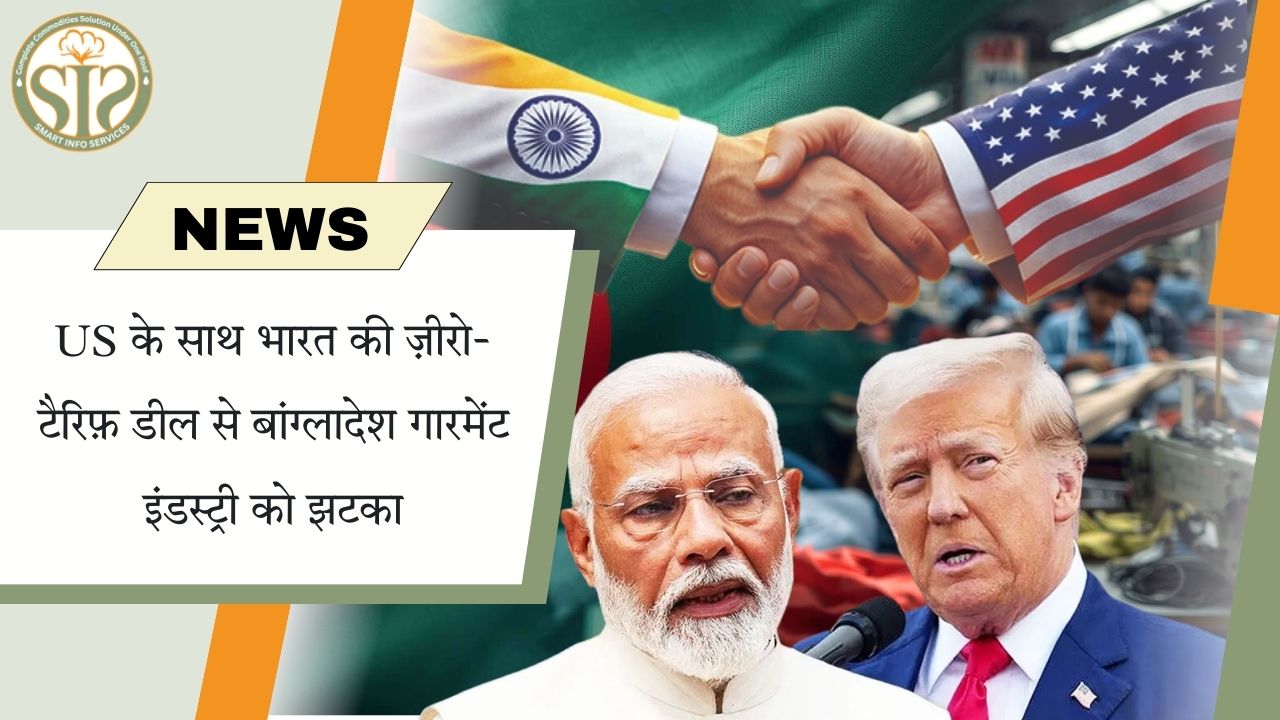
US के साथ भारत की ज़ीरो-टैरिफ़ डील से बांग्लादेश गारमेंट इंडस्ट्री को झटकाभारत के नए ट्रेड कदम ने बांग्लादेश के गारमेंट सेक्टर में हलचल मचा दी है, जिससे US मार्केट में अपनी लंबे समय से चली आ रही कॉम्पिटिटिव बढ़त खोने की चिंता बढ़ गई है।(SIS)केंद्रीय कॉमर्स मिनिस्टर पीयूष गोयल ने घोषणा की कि भारत जल्द ही अमेरिका को टेक्सटाइल एक्सपोर्ट पर ज़ीरो परसेंट टैरिफ डील कर सकता है, जैसा कि अभी बांग्लादेश को मिल रहा है। प्रस्तावित ट्रेड समझौते के तहत, अमेरिकी कॉटन का इस्तेमाल करके भारत में बने कपड़ों को US मार्केट में ड्यूटी-फ्री एक्सेस मिलेगा।इस डेवलपमेंट से बांग्लादेश के एक्सपोर्टर्स परेशान हैं, जिन्हें डर है कि इस कदम से उनका प्राइस एडवांटेज खत्म हो सकता है।बांग्लादेश गारमेंट मैन्युफैक्चरर्स एंड एक्सपोर्टर्स एसोसिएशन के पूर्व प्रेसिडेंट अनवर-उल-आलम चौधरी ने द डेली स्टार को दिए एक इंटरव्यू में कहा, "अगर भारतीय एक्सपोर्टर्स को भी इसी तरह के ट्रेड बेनिफिट दिए जाते हैं, तो बांग्लादेश US मार्केट में अपनी कॉम्पिटिटिवनेस कुछ हद तक खो सकता है।"(SIS)उन्होंने कहा कि भारत की कम प्रोडक्शन कॉस्ट, आसान कस्टम प्रोसेस और मजबूत सरकारी सपोर्ट उसे एक अच्छी स्थिति देते हैं। चौधरी ने आगे कहा, “प्रोडक्शन की लागत, US के बराबर कस्टम ट्रीटमेंट और भारत सरकार की एक्सपोर्ट सुविधाओं के मामले में भारत फायदे की स्थिति में है।”चिंताओं के बावजूद, बांग्लादेशी इंडस्ट्री लीडर्स को उम्मीद है कि कॉटन एक्सपोर्टर के तौर पर भारत का स्टेटस – बांग्लादेश के उलट, जो इंपोर्ट पर बहुत ज़्यादा निर्भर है – बैलेंस बना सकता है।भारत, जो दुनिया का दूसरा सबसे बड़ा रॉ कॉटन एक्सपोर्टर है, ने FY 2024–25 में US$6.4 बिलियन से ज़्यादा कीमत का कॉटन भेजा, जो मुख्य रूप से बांग्लादेश, चीन और वियतनाम को भेजा गया। इसी समय के दौरान इसने US कॉटन की लगभग 4.13 मिलियन गांठें भी इंपोर्ट कीं।(SIS)हालांकि, बांग्लादेश टेक्सटाइल मिल्स एसोसिएशन के प्रेसिडेंट शौकत अज़ीज़ रसेल ने कहा कि डोनाल्ड ट्रंप एडमिनिस्ट्रेशन की टैरिफ रियायतें शायद सिर्फ़ कॉटन इंपोर्टर्स पर लागू हों।उन्होंने द डेली स्टार को बताया, “भारत कॉटन इंपोर्ट पर 12 परसेंट ड्यूटी लगाता है, जबकि बांग्लादेश पर ज़ीरो ड्यूटी है। इसलिए, बांग्लादेश अभी भी कॉटन के एक बड़े इंपोर्टर के तौर पर कुछ फायदे उठा सकता है।” फिर भी, एक्सपर्ट्स ने चेतावनी दी है कि बांग्लादेश की इम्पोर्टेड रॉ मटेरियल पर डिपेंडेंस की वजह से उसकी प्रोडक्शन कॉस्ट भारत से ज़्यादा है। इस बीच, भारत ग्लोबल टेक्सटाइल सप्लाई चेन में अपनी पकड़ मज़बूत कर रहा है। इंडस्ट्री डेटा से पता चलता है कि 2025 में 77 परसेंट US फैशन ब्रांड्स और रिटेलर्स ने भारत से मटेरियल लिया — यह ट्रेंड 2027 तक जारी रहने की उम्मीद है।(SIS)और पढ़ें :- रुपया 90.67 पर स्थिर बंद हुआ।

मंगलवार को भारतीय रुपया डॉलर के मुकाबले 90.67 पर बंद हुआ, यह वही लेवल है जिस पर यह सुबह खुला था।बंद होने पर, सेंसेक्स 173.81 पॉइंट या 0.21 प्रतिशत बढ़कर 83,450.96 पर था, और निफ्टी 42.65 पॉइंट या 0.17 प्रतिशत बढ़कर 25,725.40 पर था। लगभग 2297 शेयर बढ़े, 1730 शेयर गिरे, और 142 शेयर बिना किसी बदलाव के बंद हुए।और पढ़ें :- सीसीआई ने मनावर मंडी में 1.15 लाख क्विंटल कपास खरीदा, अंतिम तारीख 27 फरवरी है
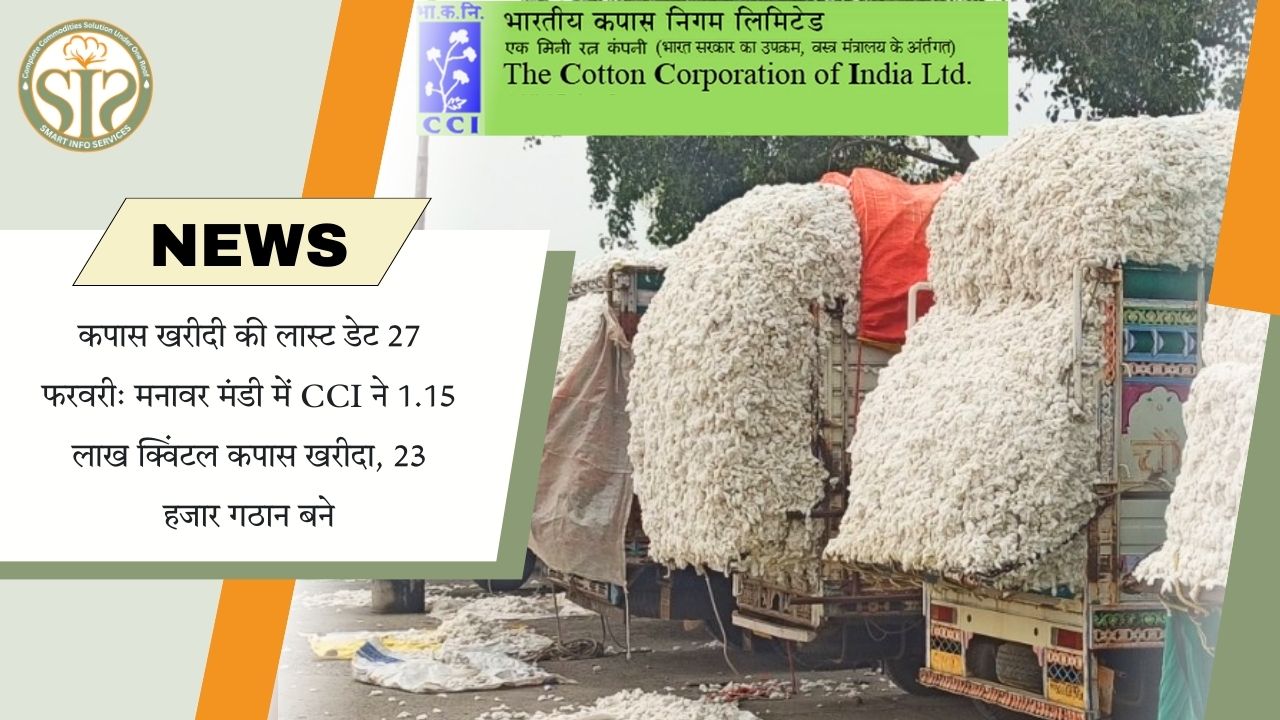
कपास खरीदी की लास्ट डेट 27 फरवरी: मनावर मंडी में CCI ने 1.15 लाख क्विंटल कपास खरीदा, 23 हजार गठान बनेमनावर सेमल्दा मार्ग स्थित मंडी में भारतीय कपास निगम (CCI) की कपास खरीदी अब अपने आखिरी दौर में पहुंच गई है। मंडी प्रशासन ने साफ कर दिया है कि पंजीकृत किसानों से कपास की खरीदी 27 फरवरी को पूरी तरह बंद कर दी जाएगी।इस सीजन के पिछले तीन महीनों में मनावर मंडी में कपास की जबरदस्त आवक रही। सीसीआई ने रिकॉर्ड 1 लाख 15 हजार क्विंटल कपास खरीदा है, जिससे करीब 23 हजार कपास की गठानें तैयार की गई हैं। किसानों का कहना है कि केंद्र सरकार की सीसीआई नीतियों और समर्थन मूल्य पर खरीदी से उन्हें अपनी फसल का सही दाम मिला है और वे आर्थिक रूप से मजबूत हुए हैं।मंडी का बढ़ा राजस्वमंडी सचिव भगतसिंह डावर ने बताया कि सीसीआई की लगातार खरीदी की वजह से मंडी के राजस्व (कमाई) में भी अच्छी बढ़ोतरी दर्ज की गई है। हालांकि, सीसीआई से मिले पत्र के अनुसार अब 27 फरवरी के बाद खरीदी नहीं की जाएगी। इसके लिए 16 और 20 फरवरी तक की तारीखें कपास की आवक के लिए महत्वपूर्ण मानी जा रही हैं।निजी बाजारों की ओर किसानों का रुझानमनावर जिनिंग मैनेजर पवन कुशवाह के मुताबिक, फरवरी के अंत तक ही मंडी में कपास आने की उम्मीद है। उन्होंने एक खास बात यह भी बताई कि इन दिनों निजी जिनिंग फैक्ट्रियों में कपास के दाम बढ़ गए हैं। इस वजह से अब किसान सीसीआई के बजाय निजी व्यापारियों को अपना माल बेचने में ज्यादा दिलचस्पी दिखा रहे हैं।और पढ़ें :- जनवरी में टेक्सटाइल एक्सपोर्ट 3.75% घटा, US डील से राहत
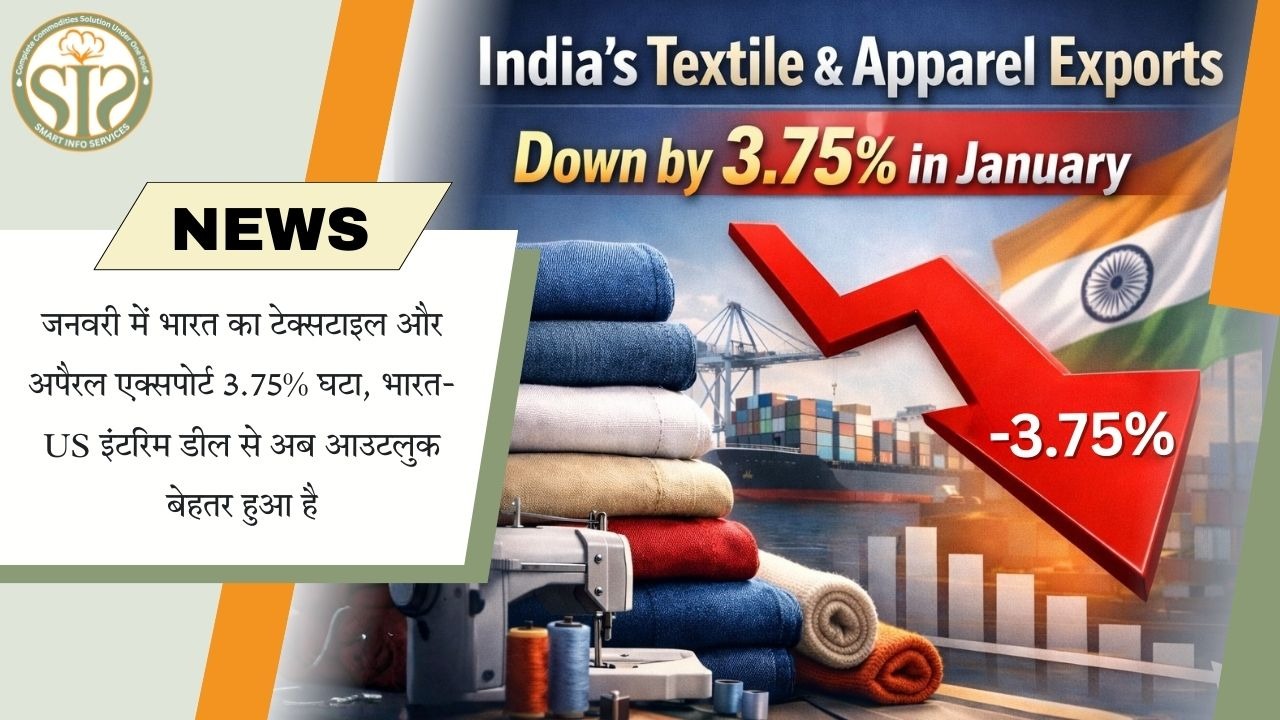
जनवरी में भारत का टेक्सटाइल और अपैरल एक्सपोर्ट 3.75% घटा, भारत-US इंटरिम डील से अब आउटलुक बेहतर हुआ हैनई दिल्ली: भारत के टेक्सटाइल और कपड़ों के एक्सपोर्ट में जनवरी में पिछले साल इसी समय की तुलना में गिरावट दर्ज की गई, जिसका मुख्य कारण यूनाइटेड स्टेट्स द्वारा लगाए गए ऊंचे टैरिफ थे जो 7 फरवरी तक लागू रहे।टैरिफ ने एक्सपोर्ट कॉम्पिटिटिवनेस पर असर डाला और महीने के दौरान शिपमेंट कम हो गए।कन्फेडरेशन ऑफ इंडियन टेक्सटाइल इंडस्ट्री (CITI) द्वारा शेयर किए गए डेटा के अनुसार, जनवरी में टेक्सटाइल एक्सपोर्ट में -3.68 प्रतिशत की गिरावट आई है, जबकि जनवरी 2025 की तुलना में जनवरी 2026 में कपड़ों का एक्सपोर्ट -3.84 प्रतिशत कम है।कुल मिलाकर, जनवरी 2026 में टेक्सटाइल और कपड़ों का कंबाइंड एक्सपोर्ट 3,275.44 मिलियन US डॉलर रहा, जो जनवरी 2025 में 3,403.19 मिलियन US डॉलर से कम है, जिसमें -3.75 प्रतिशत की गिरावट दर्ज की गई।यह गिरावट मुख्य रूप से खास टेक्सटाइल सेगमेंट में देखी गई। कॉटन यार्न, फैब्रिक, मेड-अप्स और हैंडलूम प्रोडक्ट्स का एक्सपोर्ट जनवरी 2025 के 1,038.69 मिलियन US डॉलर से जनवरी 2026 में -4.15 परसेंट घटकर 995.58 मिलियन US डॉलर रह गया।कारपेट एक्सपोर्ट भी -12.05 परसेंट की भारी गिरावट के साथ 118.99 मिलियन US डॉलर रह गया, जबकि इसी दौरान फ्लोर कवरिंग सहित जूट से बने प्रोडक्ट्स का एक्सपोर्ट -18.92 परसेंट तक काफी कम हो गया। हाथ से बने कारपेट को छोड़कर हैंडीक्राफ्ट में भी -2.70 परसेंट की गिरावट देखी गई। हालांकि, मैन-मेड यार्न, फैब्रिक और मेड-अप्स के एक्सपोर्ट में कुछ सुधार दिखा और जनवरी 2026 में 1.01 परसेंट की मामूली बढ़ोतरी हुई, जो जनवरी 2025 के 425.97 मिलियन US डॉलर के मुकाबले बढ़कर 430.29 मिलियन US डॉलर हो गई।डेटा से यह भी पता चला कि अप्रैल 2025 से जनवरी 2026 के दौरान, टेक्सटाइल एक्सपोर्ट में -2.35 परसेंट की गिरावट दर्ज की गई, जबकि पिछले फाइनेंशियल ईयर के इसी समय के मुकाबले कपड़ों के एक्सपोर्ट में 1.59 परसेंट की बढ़ोतरी दर्ज की गई।कपड़ों के एक्सपोर्ट में इस बढ़ोतरी के बावजूद, अप्रैल 2025 से जनवरी 2026 के दौरान कुल टेक्सटाइल और कपड़ों के एक्सपोर्ट में अप्रैल 2024 से जनवरी 2025 के मुकाबले -0.65 परसेंट की मामूली गिरावट दर्ज की गई।भारत के कुल एक्सपोर्ट में टेक्सटाइल और कपड़ों के एक्सपोर्ट का हिस्सा भी कम हुआ। जनवरी 2026 में कुल एक्सपोर्ट में इस सेक्टर का हिस्सा 8.96 परसेंट था, जबकि जनवरी 2025 में यह 9.37 परसेंट था।अप्रैल 2025 से जनवरी 2026 के समय में, यह हिस्सा 8.13 परसेंट रहा, जो पिछले साल इसी समय के 8.36 परसेंट से कम है।इम्पोर्ट की बात करें तो, जनवरी 2026 में कॉटन रॉ और वेस्ट का इम्पोर्ट काफी 12.33 परसेंट बढ़ा और अप्रैल 2025 से जनवरी 2026 के समय में यह तेज़ी से 72.36 परसेंट बढ़ा। यह बढ़ोतरी कच्चे माल की ज़्यादा घरेलू मांग या टेक्सटाइल इंडस्ट्री में सप्लाई एडजस्टमेंट का संकेत देती है।अब 7 फरवरी को यूनाइटेड स्टेट्स के टैरिफ कम करने के बाद आगे आउटलुक बेहतर होने की उम्मीद है। टैरिफ में कमी से भारत की एक्सपोर्ट कॉम्पिटिटिवनेस में सुधार होने और आने वाले महीनों में टेक्सटाइल और कपड़ों के शिपमेंट में रिकवरी को सपोर्ट मिलने की संभावना है।और पढ़ें :- रुपया 02 पैसे गिरकर 90.67/USD पर खुला।

रुपया 02 पैसे गिरकर 90.67 प्रति डॉलर पर खुला।भारतीय रुपया मंगलवार को 90.67 प्रति डॉलर पर खुला, जबकि पिछला बंद भाव 90.65 था।और पढ़ें :- अमेरिका की डील: आर्थिक हितों का विस्तार

अमेरिकी व्यापार समझौता: शर्तों के पीछे की रणनीतिढाका और वाशिंगटन के बीच 9 फरवरी को हस्ताक्षरित नए पारस्परिक व्यापार समझौते को शुरू में बड़ी कूटनीतिक सफलता माना गया था। लेकिन अब बांग्लादेश के 47 अरब डॉलर के परिधान उद्योग में “कपास खंड” को लेकर भ्रम और चिंता बढ़ गई है। यह प्रावधान कहता है कि पारस्परिक टैरिफ में छूट तभी मिलेगी जब परिधान अमेरिकी कपास या मानव निर्मित फाइबर से बनाए जाएँ।समझौते के तहत बांग्लादेशी परिधानों पर पहले से लागू लगभग 16.5 प्रतिशत एमएफएन शुल्क के अलावा 19 प्रतिशत पारस्परिक टैरिफ लगाया गया है। राहत न मिलने की स्थिति में कुल शुल्क 35.5 प्रतिशत तक पहुंच जाता है। सरकार का कहना है कि अमेरिकी कच्चे माल से बने कपड़ों पर 19 प्रतिशत टैरिफ हटाया जाएगा, लेकिन उद्योग जगत का तर्क है कि मूल शुल्क फिर भी लागू रहेगा।बीजीएमईए के अध्यक्ष महमूद हसन खान ने स्पष्ट किया कि समझौते से पहले के शुल्क माफ नहीं होंगे। उनका कहना है कि रियायत मिलने पर भी निर्यातकों को 16.5 प्रतिशत शुल्क देना होगा, जिससे लागत ऊंची बनी रहेगी। साथ ही, समझौते में “निर्दिष्ट मात्रा” की सीमा तय की गई है, जो अमेरिका से आयात किए जाने वाले कच्चे माल की मात्रा पर निर्भर करेगी।विश्लेषकों और थिंक-टैंक विशेषज्ञों का मानना है कि समझौते की भाषा अस्पष्ट है और कई तकनीकी पहलू साफ नहीं हैं। यदि भारत जैसे प्रतिस्पर्धी देशों को भी समान लाभ मिलता है, तो बांग्लादेश की प्रतिस्पर्धात्मक बढ़त कमजोर पड़ सकती है। ऐसे में सरकार के लिए जरूरी है कि वह समझौते की शर्तों को स्पष्ट करे, अन्यथा यह बहुचर्चित सौदा अपेक्षित सुरक्षा देने में विफल हो सकता है।और पढ़ें :- डॉलर के मुकाबले रुपया 05 पैसे गिरकर 90.65 पर बंद हुआ।

सोमवार को, भारतीय रुपया डॉलर के मुकाबले 90.65 पर बंद हुआ, जबकि इसकी ओपनिंग रेट 90.60 थी।बंद होने पर, सेंसेक्स 650.39 पॉइंट्स या 0.79 परसेंट बढ़कर 83,277.15 पर था, और निफ्टी 211.65 पॉइंट्स या 0.83 परसेंट बढ़कर 25,682.75 पर था। लगभग 1676 शेयर बढ़े, 2443 शेयर गिरे, और 181 शेयर बिना बदले रहे।और पढ़ें :- OUTR के सहयोग से मजबूत होगा वस्त्र उद्योग
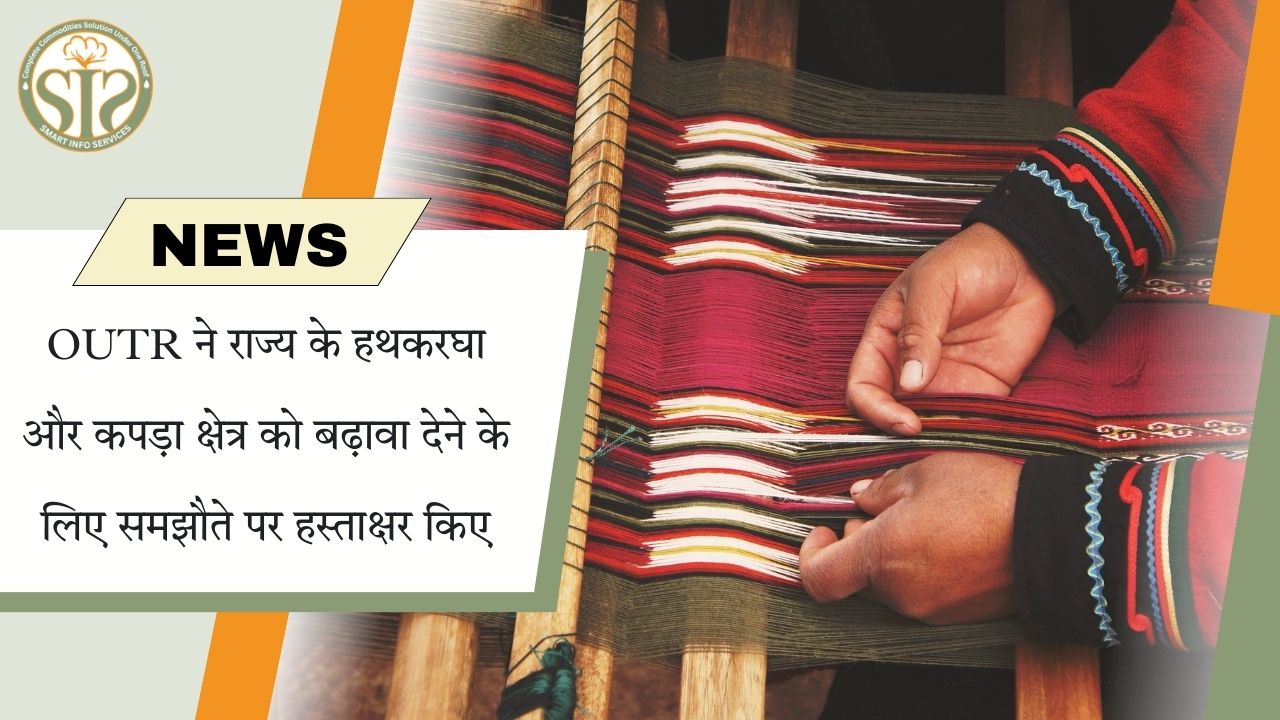
OUTR ने राज्य के हथकरघा और कपड़ा क्षेत्र को बढ़ावा देने के लिए समझौते पर हस्ताक्षर किएभुवनेश्वर: ओडिशा यूनिवर्सिटी ऑफ टेक्नोलॉजी एंड रिसर्च (ओयूटीआर) ने हथकरघा और कपड़ा क्षेत्र में अनुसंधान, प्रौद्योगिकी हस्तांतरण, क्षमता निर्माण और नवाचार पर सहयोग करने के लिए राज्य कपड़ा निदेशालय के साथ एक समझौता ज्ञापन (एमओयू) पर हस्ताक्षर किए हैं।उपमुख्यमंत्री केवी सिंह देव की उपस्थिति में शनिवार शाम को 'भव्य तोशाली स्वदेशी मेला' के उद्घाटन पर तीन साल के समझौते पर हस्ताक्षर किए गए।ओयूटीआर के कुलपति विभूति भूषण बिस्वाल ने कहा, "एमओयू प्रौद्योगिकी उन्नयन, उत्पाद की गुणवत्ता में सुधार और बुनकरों और अन्य हितधारकों के लिए प्रशिक्षण कार्यक्रमों पर केंद्रित है। इसमें गुणवत्ता परीक्षण और मानकीकरण सुविधाएं स्थापित करना, बाजार संबंधों का समर्थन करना, टिकाऊ और पर्यावरण-अनुकूल प्रक्रियाओं और सामग्रियों को विकसित करना और पारंपरिक कपड़ा ज्ञान और प्रथाओं का दस्तावेजीकरण करना शामिल है।"उन्होंने कहा, "यह सहयोग करघा प्रौद्योगिकी, रंगाई और गुणवत्ता नियंत्रण में संयुक्त अनुसंधान परियोजनाओं को कवर करेगा। बुनकर समूहों और उत्पादन केंद्रों के साथ छात्र इंटर्नशिप, क्षेत्रीय परियोजनाओं और अंतिम वर्ष की परियोजनाओं की सुविधा प्रदान की जाएगी।"आधिकारिक सूत्रों ने कहा कि अन्य क्षेत्रों में उत्पादकता में सुधार, कठिन परिश्रम को कम करने और उत्पाद की गुणवत्ता बढ़ाने, समकालीन सौंदर्यशास्त्र के साथ पारंपरिक रूपांकनों के संयोजन वाले डिजाइन हस्तक्षेप और कार्यशालाओं, सेमिनारों और कौशल विकास कार्यक्रमों के माध्यम से क्षमता निर्माण की पहल के लिए उपकरणों, उपकरणों और प्रक्रियाओं का विकास शामिल है।यह समझौता पारंपरिक ज्ञान के दस्तावेज़ीकरण, तकनीकी साहित्य और केस अध्ययन की तैयारी, परामर्श और सलाहकार सेवाओं और बुनियादी ढांचे, प्रयोगशालाओं और विशेषज्ञता के संसाधन साझा करने का प्रावधान करता है।और पढ़ें :- एमपी में शिवराज सिंह चौहान ने लॉन्च की नई कपास कटाई मशीन
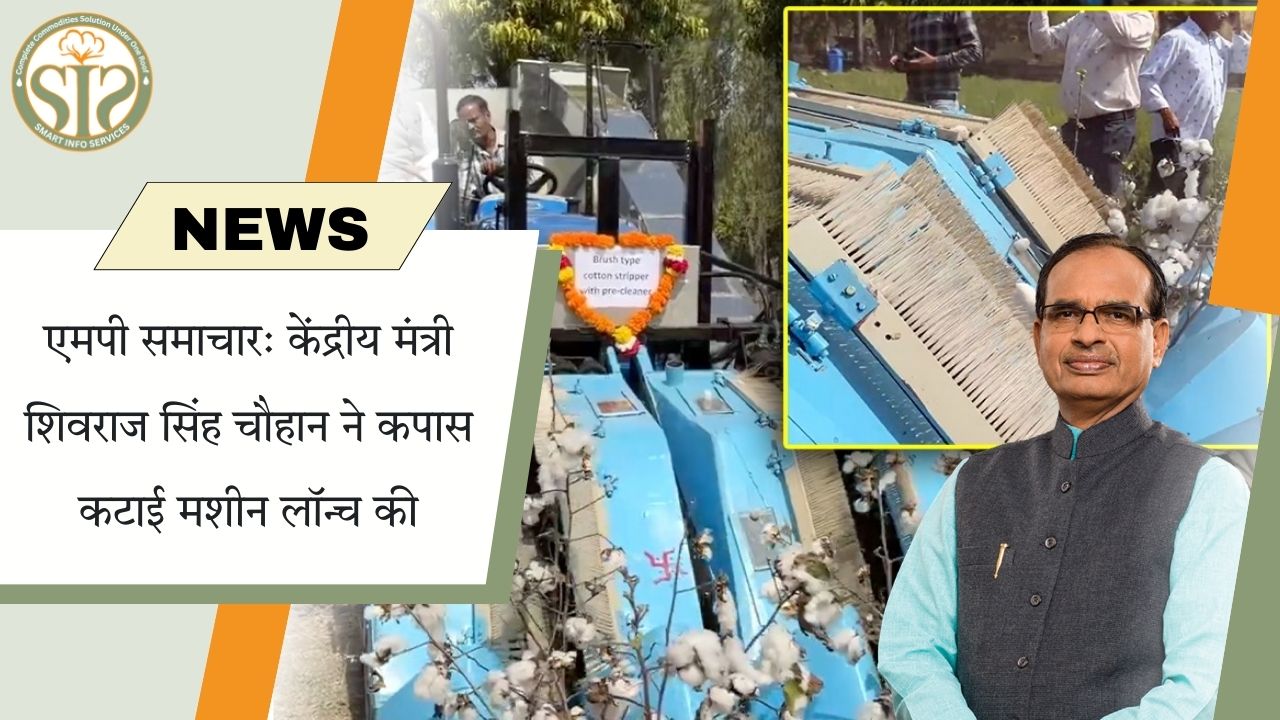
एमपी समाचार: केंद्रीय मंत्री शिवराज सिंह चौहान ने कपास कटाई मशीन लॉन्च कीभोपाल (मध्य प्रदेश): केंद्रीय कृषि मंत्री और मध्य प्रदेश के पूर्व मुख्यमंत्री शिवराज सिंह चौहान ने महाशिवरात्रि के अवसर पर भोपाल में आईसीएआर - केंद्रीय कृषि इंजीनियरिंग संस्थान (सीआईएई) में किसानों को एक कपास कटाई मशीन समर्पित की।मंत्री ने कहा कि अब तक कपास की चुगाई मैन्युअल रूप से करनी पड़ती थी, जिसमें अधिक समय, श्रम और अधिक लागत लगती थी।किसान लंबे समय से कपास की कटाई को आसान बनाने के लिए मशीन की मांग कर रहे थे और यह मांग अब पूरी हो गई है।उन्होंने स्वयं मशीन से कपास कटाई प्रक्रिया का अवलोकन किया। उन्होंने कहा कि नई तकनीक से समय की बचत होगी, लागत कम होगी और कपास की खेती अधिक लाभदायक बनेगी।मंत्री ने यह भी कहा कि अधिक उपज वाली रोग प्रतिरोधी कपास की नई किस्में विकसित करने के प्रयास चल रहे हैं।किसानों की आय बढ़ाने में मदद के लिए प्रति एकड़ पौधों की संख्या बढ़ाने पर भी काम किया जा रहा है।और पढ़ें :- रुपया 04 पैसे मजबूत होकर 90.60 प्रति डॉलर पर खुला

रुपया 04 पैसे बढ़कर 90.60/USD पर खुलाभारतीय रुपया सोमवार को मामूली बढ़त के साथ 90.60 प्रति डॉलर पर खुला, जबकि शुक्रवार को यह 90.64 पर बंद हुआ था।और पढ़ें :- CCI कपास बिक्री विवरण 2025-26
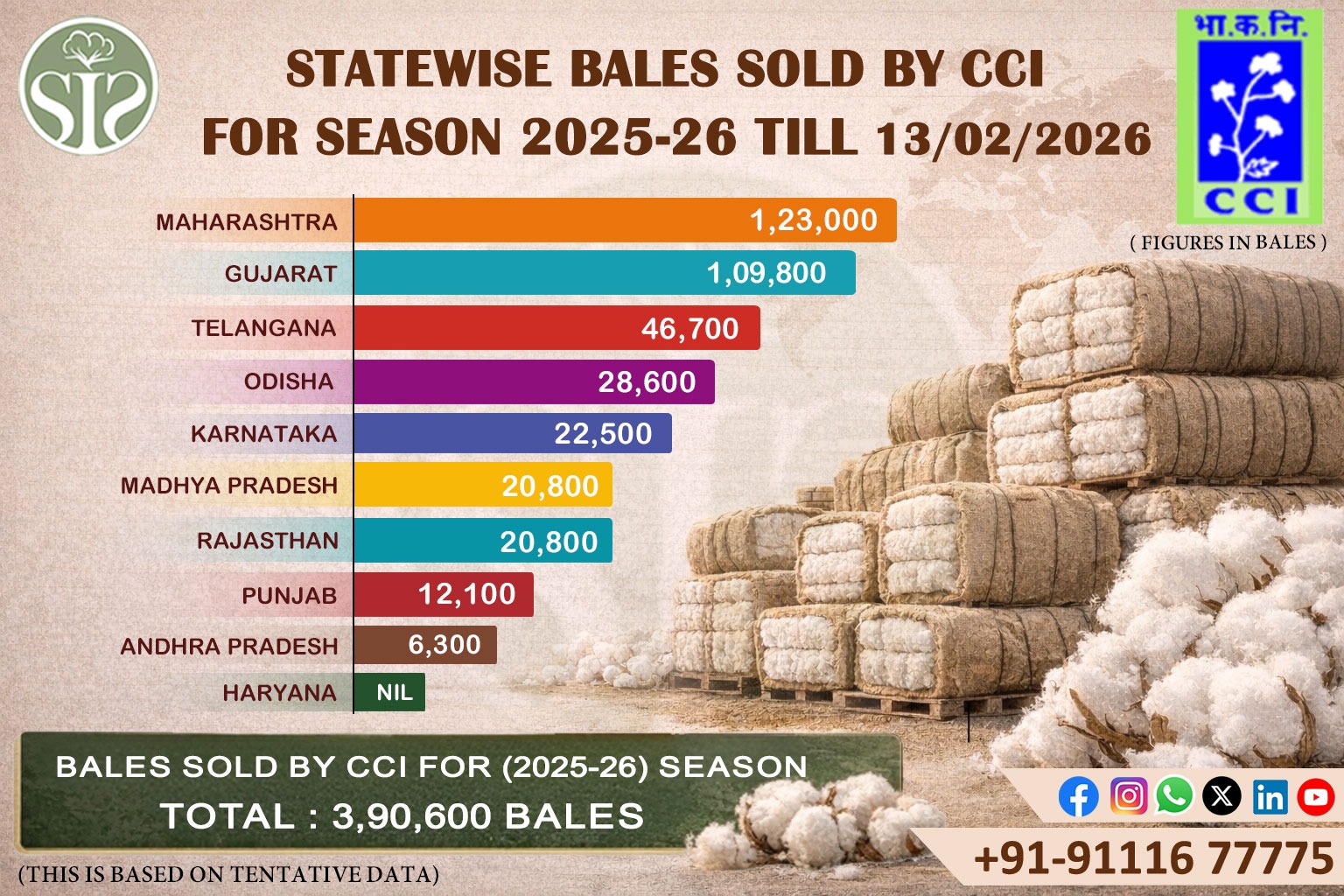
राज्य-वार CCI कपास बिक्री विवरण – 2025-26 सीज़नकॉटन कॉर्पोरेशन ऑफ़ इंडिया (CCI) ने 2025-26 सीज़न के लिए इस सप्ताह अपनी कपास की कीमतें ₹1,400- ₹1,700 प्रति कैंडी घटा दी। अब तक CCI द्वारा सीजन 2025-26 की लगभग 3,90,600 कपास गांठें (बेल्स) बेची जा चुकी हैं। बिक्री कुछ प्रमुख कपास उत्पादक राज्यों में केंद्रित है, जिसमें महाराष्ट्र और गुजरात सबसे आगे हैं।
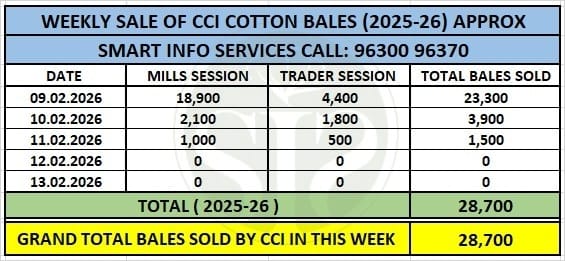
CCI ने कॉटन की कीमतें ₹1,400- ₹1,700 प्रति कैंडी कम कीं; इस हफ़्ते की नीलामी में बिक्री करीब 28,700 गांठें रही कॉटन कॉर्पोरेशन ऑफ़ इंडिया (CCI) ने 13 फरवरी, 2026 को खत्म हुए हफ़्ते में अपनी कॉटन की कीमतें ₹1,400 घटाकर ₹1,700 प्रति कैंडी कर दीं। कीमत में कटौती के बावजूद, एजेंसी ने 9 फरवरी से 13 फरवरी तक कई सेंटर्स पर अपनी रेगुलर ई-नीलामी जारी रखी, जिसमें मौजूदा 2025-26 सीज़न से लगभग 28,700 गांठों की बिक्री इस हफ़्ते दर्ज की, जिसमें मिलों और व्यापारियों दोनों ने हिस्सा लिया।साप्ताहिक बिक्री रिपोर्ट 9 फरवरी, 2026: हफ़्ते की शुरुआत अच्छी मांग के साथ हुई, जिसमें 2025-26 सीज़न से 23,300 गांठें बिकीं। मिलों ने 18,900 गांठों के साथ सबसे ज़्यादा खरीदारी की, जबकि व्यापारियों ने 4,400 गांठें खरीदीं।10 फरवरी, 2026: बिक्री तेज़ी से घटकर 3,900 गाँठ रह गई, जिसमें 2,100 गाठें मिलों ने और 1,800 गाठें व्यापारियों ने खरीदीं, ये सभी मौजूदा सीज़न की हैं।11 फरवरी, 2026: सीज़न 2025-26 के लिए बिक्री और घटकर 1,500 गाँठ रह गई, जिसमें मिलों ने 1,000 गाँठ और व्यापारियों ने 500 गाँठ खरीदीं।12–13 फरवरी, 2026: CCI के ऑनलाइन ऑक्शन में 2025–26 या 2024–25 सीज़न के लिए कोई बिक्री दर्ज नहीं की गई, जो हफ़्ते के आखिर में कमज़ोर डिमांड दिखाता है।कुल बिक्री:ऑक्शन के बाद, CCI की कुल बिक्री इस तरह पहुंची:2025–26 सीज़न के लिए 3,90,600 बेल, और2024–25 सीज़न के लिए 98,82,400 बेल।
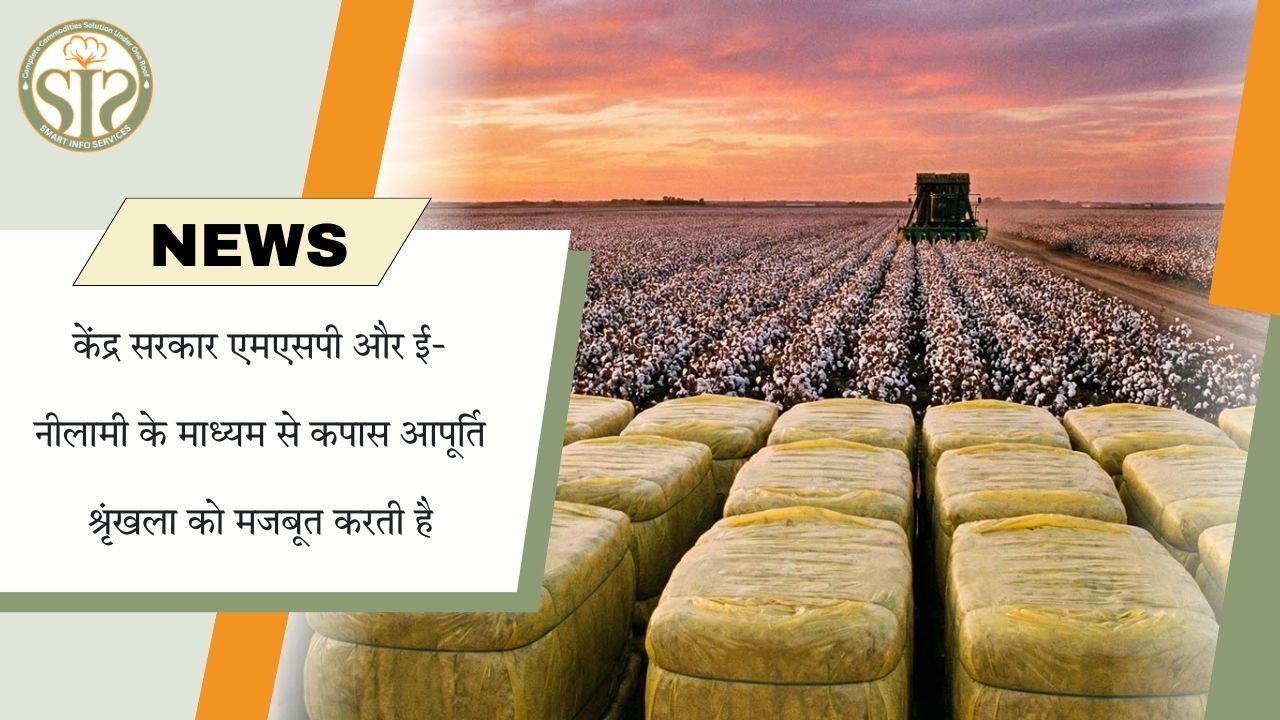
केंद्र सरकार एमएसपी और ई-नीलामी के माध्यम से कपास आपूर्ति श्रृंखला को मजबूत करती हैनई दिल्ली: कपड़ा राज्य मंत्री पबित्रा मार्गेरिटा ने राज्यसभा में एक प्रश्न के लिखित उत्तर में कहा कि सरकार न्यूनतम समर्थन मूल्य (एमएसपी) संचालन के तहत भारतीय कपास निगम (सीसीआई) द्वारा खरीदे गए स्टॉक को जारी करके घरेलू कपड़ा और कताई उद्योगों को कपास की उपलब्धता की सुविधा प्रदान करती है।प्रतिस्पर्धी मूल्य खोज को सक्षम करने के लिए ये स्टॉक एक पारदर्शी ऑनलाइन ई-नीलामी प्रणाली के माध्यम से बेचे जाते हैं। जब बाजार की कीमतें समर्थन स्तर से नीचे गिर जाती हैं तो किसानों के हितों की रक्षा करने और निरंतर कपास उत्पादन सुनिश्चित करने के लिए कपास के लिए एमएसपी सालाना घोषित किया जाता है।मंत्री ने कहा कि कपास की उत्पादकता, गुणवत्ता और किसानों की आय बढ़ाने के लिए कई नीतिगत और कार्यक्रम संबंधी हस्तक्षेप किए गए हैं।केंद्रीय बजट 2025-26 में कपास उत्पादकता के लिए पांच साल के मिशन की घोषणा की गई थी, जिसमें कृषि अनुसंधान और शिक्षा विभाग को नोडल विभाग और कपड़ा मंत्रालय को भागीदार बनाया गया था।मिशन अनुसंधान और विस्तार के माध्यम से कपास उत्पादन को मजबूत करने पर केंद्रित है, जिसमें उन्नत प्रजनन और जैव प्रौद्योगिकी उपकरणों का उपयोग करके एक्स्ट्रा लॉन्ग स्टेपल (ईएलएस) कपास सहित जलवायु-लचीला, कीट-प्रतिरोधी और उच्च उपज देने वाली किस्मों का विकास शामिल है।इसके अलावा, राष्ट्रीय खाद्य सुरक्षा मिशन (एनएफएसएम) के तहत कपास पर एक विशेष परियोजना कपड़ा मंत्रालय के समन्वय से आईसीएआर-सीआईसीआर, नागपुर के माध्यम से 2023-24 से लागू की गई है।एमएसपी संचालन को मजबूत करने के लिए, सीसीआई ने अपने खरीद नेटवर्क को 2024-25 में 508 केंद्रों से बढ़ाकर 2025-26 में 571 केंद्रों तक बढ़ा दिया है, जिसमें 11 कपास उगाने वाले राज्यों के 150 जिले शामिल हैं। 2024-25 कपास सीज़न के दौरान, सीसीआई ने 37,437 करोड़ रुपये मूल्य की 100.16 लाख गांठें खरीदीं। 2025-26 में (5 फरवरी 2026 तक), 36,355 करोड़ रुपये मूल्य की 90.97 लाख गांठें खरीदी गई हैं।और पढ़ें :- ट्रम्प कार्यकाल के दौरान भारत-अमेरिका कपास व्यापार में तेजी आई
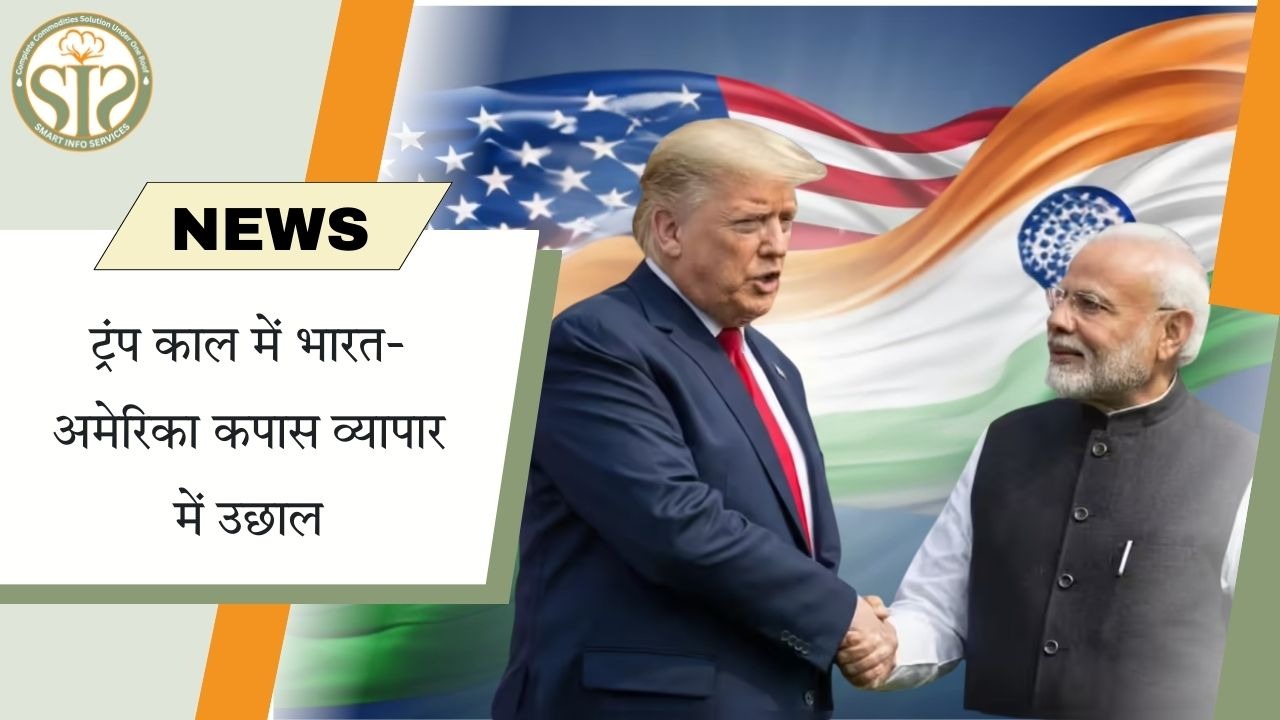
ट्रंप काल में भारत–अमेरिका कपास व्यापार में तेज़ी, आयात निर्भरता में बड़ा बदलावनई दिल्ली: व्यापार डेटा के विश्लेषण के अनुसार, अमेरिकी राष्ट्रपति डोनाल्ड ट्रंप के पहले कार्यकाल के दौरान भारत और अमेरिका के बीच कपास व्यापार में उल्लेखनीय वृद्धि दर्ज की गई थी। इस दौरान भारत, अमेरिका के लिए कच्चे कपास के प्रमुख आयातकों में से एक के रूप में उभरा।ट्रंप प्रशासन की शुरुआत के समय 2014 में अमेरिकी कपास निर्यात में भारत की हिस्सेदारी लगभग 1.5% थी, जो 2016 तक बढ़कर 4.7% हो गई। यह रुझान आगे भी जारी रहा और 2017 में हिस्सेदारी 6% तथा 2019 तक बढ़कर 7.7% तक पहुंच गई।हालांकि, कोविड-19 महामारी के बाद आए व्यवधानों के कारण यह हिस्सेदारी घटकर लगभग 3% के स्तर पर आ गई और हाल के वर्षों में इसी के आसपास स्थिर बनी हुई है।भारत की आयात निर्भरता में उतार-चढ़ावभारत के कुल कपास आयात में अमेरिका की हिस्सेदारी में भी इसी तरह का बदलाव देखा गया। 2017 में यह हिस्सेदारी बढ़कर 47.9% और 2018 में 53.2% तक पहुंच गई थी। बाद में सोर्सिंग में विविधता आने के कारण यह घटती गई और 2024 तक लगभग 19.3% रह गई।इसके बावजूद, अमेरिका अब भी भारत के लिए कपास का एक महत्वपूर्ण आपूर्तिकर्ता बना हुआ है। 2024 में भारत, अमेरिकी कच्चे कपास का सातवां सबसे बड़ा आयातक रहा, जिसने लगभग 209 मिलियन डॉलर मूल्य का आयात किया। उस वर्ष चीन, पाकिस्तान और वियतनाम प्रमुख खरीदारों में शामिल थे।व्यापार समझौतों से फिर बदल सकते हैं रुझानविशेषज्ञों का मानना है कि प्रस्तावित भारत–अमेरिका अंतरिम व्यापार समझौता लागू होने पर कपास व्यापार प्रवाह में फिर से बड़ा बदलाव देखने को मिल सकता है। वाणिज्य एवं उद्योग मंत्री पीयूष गोयल के अनुसार, भारतीय टेक्सटाइल निर्यातकों को अमेरिकी कपास से बने उत्पादों पर शून्य-पारस्परिक-शुल्क (zero-reciprocal tariff) का लाभ मिल सकता है, जिससे अमेरिकी कपास की मांग बढ़ सकती है।वैश्विक प्रतिस्पर्धा का असरयह पूरा घटनाक्रम बांग्लादेश जैसे देशों से बढ़ती प्रतिस्पर्धा के बीच सामने आया है, जिसने अमेरिकी बाजार तक बेहतर पहुंच हासिल की है और अमेरिकी कपास के प्रमुख आयातकों में अपनी स्थिति मजबूत की है।विश्लेषणों के अनुसार, यदि बांग्लादेश को अधिक अनुकूल व्यापार शर्तें मिलती हैं, तो भारत के कपास एवं टेक्सटाइल व्यापार का लगभग एक-चौथाई हिस्सा—करीब 1.5 अरब डॉलर—प्रतिस्पर्धी दबाव में आ सकता है।ऐसे में आने वाली भारत–अमेरिका व्यापार वार्ताएं भविष्य के कपास व्यापार पैटर्न को तय करने में महत्वपूर्ण भूमिका निभा सकती हैं।और पढ़ें :- जिनिंग उद्योग पर संकट, प्रदीप जैन का अलर्ट

खानदेश में 150 से अधिक जिनिंग फैक्ट्रियां अगले साल बंद हो जाएंगी, प्रदीप जैन ने चेतावनी दी खानदेश में कपास उद्योग एक बड़े संकट में है, कपास की कीमतों में गिरावट और निर्यात रुकने के कारण अगले साल 150 से अधिक जिनिंग फैक्ट्रियों के बंद होने का खतरा है, खानदेश जिनिंग प्रसंस्करण कारखाना संघ के संस्थापक-अध्यक्ष प्रदीप जैन ने आज एफपीजे को दिए एक बयान में चेतावनी दी।किसान संघर्ष कर रहे हैं क्योंकि कपास की कीमतें गिर गई हैं, निर्यात निलंबित है और फसल से आय घट गई है। जैन ने कहा, "गिनर्स ₹7,400-₹7,500 प्रति क्विंटल से अधिक का भुगतान नहीं कर सकते।" "अगर यही स्थिति जारी रही, तो खानदेश में जिनिंग उद्योग ठप हो जाएगा।"खानदेश - जिसमें जलगांव, धुले और नंदुरबार जिले शामिल हैं - महाराष्ट्र का प्रमुख कपास उत्पादक क्षेत्र है, जो सालाना लगभग 15 लाख गांठ का उत्पादन करता है। स्थानीय अर्थव्यवस्था इस क्षेत्र पर बहुत अधिक निर्भर करती है, जिसमें हजारों नौकरियाँ प्रत्यक्ष और अप्रत्यक्ष रूप से जिनिंग परिचालन से जुड़ी हुई हैं।हालाँकि, इस साल की भारी बारिश ने उत्पादन को बुरी तरह प्रभावित किया है। अब तक, केवल 5.5 से 6 लाख गांठें ही निकाली गई हैं, जबकि अन्य 2.5 लाख गांठें बिना बिकी रह गई हैं और किसान बेहतर कीमतों का इंतजार कर रहे हैं।संकट और भी बढ़ गया है, कपास का निर्यात फिलहाल रुका हुआ है, जबकि आयातित कपास की लगभग 40 लाख गांठें घरेलू भंडार में पड़ी हैं, जिससे आंतरिक बाजार की स्थिति खराब हो रही है। हालाँकि किसान अधिक रिटर्न चाहते हैं, लेकिन व्यापारियों का कहना है कि वे ₹7,500 प्रति क्विंटल से अधिक भुगतान नहीं कर सकते, जिससे खरीद रुक गई है।किसानों द्वारा अपनी उपज रोके रखने के कारण बाजारों में कपास की आवक तेजी से घट गई है। इस बीच, वैश्विक मांग भी कमजोर होने से थोक कपास की कीमतें ₹56,000 से गिरकर ₹53,000 प्रति कैंडी हो गई हैं।जैन ने चेतावनी दी, "बाजार में मौजूदा स्थिरता टिकाऊ नहीं है। अगर किसानों को खराब कीमतों का सामना करना जारी रहा, तो वे अगले साल कपास की खेती में कटौती करेंगे - खानदेश में जिनिंग फैक्टरियों को बंद करने के लिए मजबूर होना पड़ेगा।"और पढ़ें :- टेक्सटाइल निर्यात को बढ़ावा, US में नहीं लगेगा शुल्क
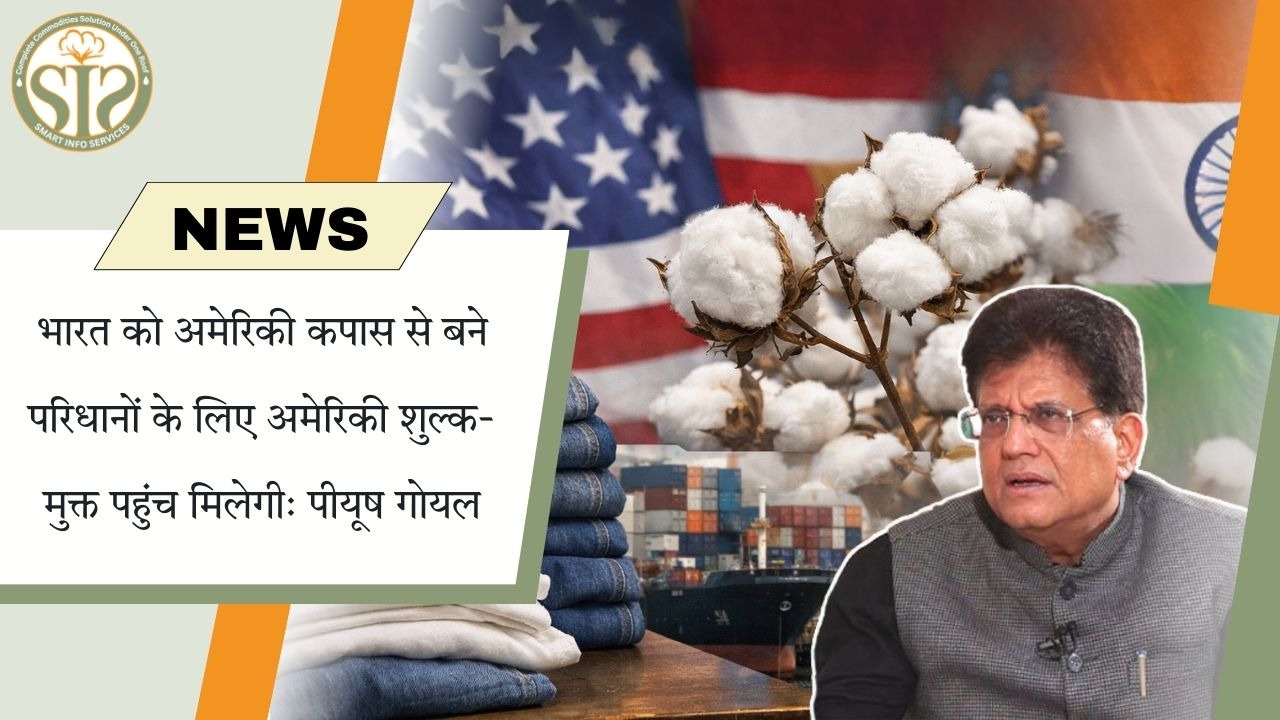
*भारत को अमेरिकी कपास से बने परिधानों के लिए अमेरिकी शुल्क-मुक्त पहुंच मिलेगी: पीयूष गोयल*वाणिज्य और उद्योग मंत्री पीयूष गोयल ने कहा है कि वाशिंगटन के साथ प्रस्तावित अंतरिम व्यापार समझौते के तहत भारत को अमेरिकी यार्न और कपास का उपयोग करके निर्मित कपड़ों के लिए संयुक्त राज्य अमेरिका में रियायती शुल्क पहुंच प्राप्त होगी।गुरुवार को एक स्टार्ट-अप कार्यक्रम के मौके पर बोलते हुए, गोयल ने संकेत दिया कि भारत अमेरिका के साथ अपनी व्यापार व्यवस्था के तहत वर्तमान में बांग्लादेश को दिए गए तुलनीय उपचार को सुरक्षित करेगा। उन्होंने कहा कि बांग्लादेश को जो भी लाभ मिला है उसे भारत के अंतिम समझौते में भी शामिल किया जाएगा।भारत और अमेरिका ने द्विपक्षीय व्यापार समझौते के पहले चरण की रूपरेखा को अंतिम रूप दे दिया है, जिसके मार्च में लागू होने की उम्मीद है। मंत्री के अनुसार, अंतरिम समझौता औपचारिक रूप से संपन्न होने के बाद रूपरेखा विस्तृत प्रावधानों में तब्दील हो जाएगी।प्रस्तावित व्यवस्था के तहत, अमेरिकी बाजार में फिर से निर्यात के लिए परिधान बनाने के लिए अमेरिका से यार्न की सोर्सिंग करने वाली भारतीय कंपनियों को शुल्क मुक्त पहुंच प्राप्त होगी, जो बांग्लादेशी निर्यातकों को उपलब्ध रियायतों को प्रतिबिंबित करेगी। गोयल ने कहा कि यह प्रावधान अमेरिका-बांग्लादेश समझौते का हिस्सा है और इसी तरह यह भारत के समझौते में भी शामिल होगा। उन्होंने कहा कि इस कदम से भारतीय कपास किसानों पर कोई प्रतिकूल प्रभाव नहीं पड़ेगा।उन्होंने आगे स्पष्ट किया कि कपास जैसे कच्चे माल के आयात पर कोई कोटा प्रतिबंध नहीं होगा। यूएस-बांग्लादेश पारस्परिक व्यापार समझौता वर्तमान में अमेरिका में परिधान और वस्त्रों के टैरिफ-मुक्त निर्यात की अनुमति देता है यदि निर्माता अमेरिकी उत्पादित कपास या मानव निर्मित फाइबर इनपुट का उपयोग करते हैं।वर्तमान में, बांग्लादेश निर्मित कपड़ों पर अमेरिकी बाजार में 31% लेवी का सामना करना पड़ता है, जिसमें 12% सर्वाधिक पसंदीदा-राष्ट्र-प्लस शुल्क और 19% पारस्परिक शुल्क शामिल है। जब अमेरिकी फाइबर का उपयोग किया जाता है, तो शुल्क 12% तक गिर जाता है। द्विपक्षीय समझौते के तहत, वाशिंगटन बांग्लादेश पर पारस्परिक टैरिफ को 20% से घटाकर 19% करने के लिए तैयार है, जिससे नई दिल्ली और ढाका के बीच टैरिफ का अंतर एक प्रतिशत अंक तक कम हो जाएगा।बांग्लादेश दुनिया का दूसरा सबसे बड़ा कपड़ा निर्माता है और चीन और वियतनाम के साथ अमेरिकी कपड़ा और परिधान बाजार में भारत का प्रमुख प्रतिस्पर्धी बना हुआ है।गोयल ने कहा कि भारत समझौते के तहत 50 अरब अमेरिकी डॉलर के व्यापार आंकड़े का लक्ष्य बना रहा है। उन्होंने यह भी देखा कि अमेरिकी व्यवसाय भारत को वैश्विक आपूर्ति श्रृंखलाओं में एक विश्वसनीय भागीदार के रूप में देख रहे हैं।और पढ़ें:- डॉलर के मुकाबले रुपया 02 पैसे बढ़कर 90.64 पर बंद हुआ।

शुक्रवार को, भारतीय रुपया डॉलर के मुकाबले 02 पैसे बढ़कर 90.64 पर बंद हुआ, जो 90.66 पर खुला था।बंद होने पर, सेंसेक्स 1,048.16 पॉइंट या 1.25 प्रतिशत गिरकर 82,626.76 पर था, और निफ्टी 336.10 पॉइंट या 1.30 प्रतिशत गिरकर 25,471.10 पर था। लगभग 1236 शेयर बढ़े, 2784 शेयर गिरे, और 148 शेयर बिना किसी बदलाव के बंद हुए।और पढ़ें :- US कॉटन पर भारत को मिल सकता है बांग्लादेश जैसा लाभ
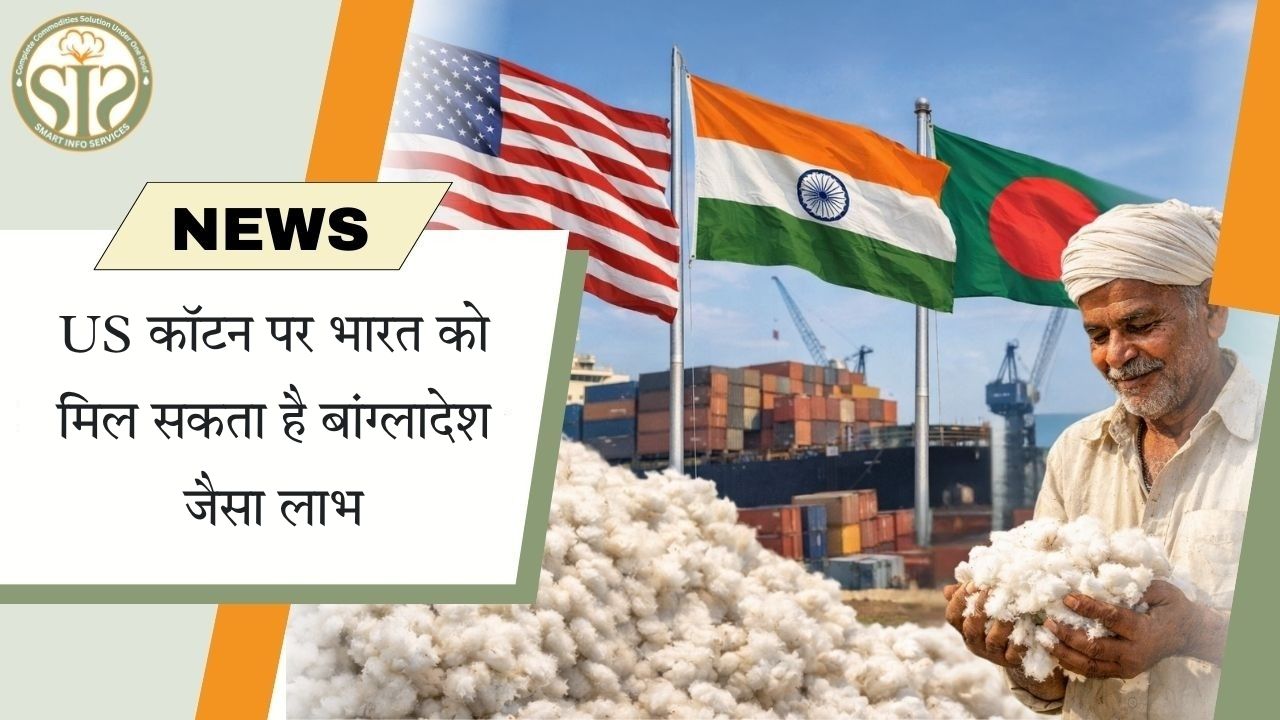
भारत को US कॉटन पर बांग्लादेश जैसे ज़ीरो-ड्यूटी बेनिफिट मिल सकते हैं।कॉमर्स मिनिस्ट्री ने कहा कि भारत को भी बांग्लादेश की तरह यार्न और कॉटन से जुड़े ट्रेड बेनिफिट मिलेंगे, जिससे देश के टेक्सटाइल और अपैरल एक्सपोर्टर्स को बढ़ावा मिलने की उम्मीद है।मिनिस्ट्री के मुताबिक, डील साइन होने के बाद भारतीय टेक्सटाइल और अपैरल एक्सपोर्टर्स को US-ओरिजिनल कॉटन से बने कपड़ों पर ज़ीरो-टैरिफ बेनिफिट मिलने की उम्मीद है। इस कदम को भारत और यूनाइटेड स्टेट्स के बीच बाइलेटरल ट्रेड संबंधों को मजबूत करने और रीजनल प्लेयर्स के साथ कॉम्पिटिटिव बराबरी सुनिश्चित करने की चल रही कोशिशों का हिस्सा माना जा रहा है।यह सफाई ट्रेड डील पर राजनीतिक बहस के बीच आई है। लोकसभा में विपक्ष के नेता राहुल गांधी के सवाल का जवाब देते हुए, केंद्रीय कॉमर्स मिनिस्टर पीयूष गोयल ने कहा कि बांग्लादेश को बेहतर शर्तें मिलने के आरोप गलत हैं। “उन्होंने पार्लियामेंट में एक और झूठ फैलाया कि बांग्लादेश को ट्रेड से इंडिया से ज़्यादा फ़ायदा हुआ है। जैसे बांग्लादेश के पास यह सुविधा है कि अगर अमेरिका से रॉ मटेरियल खरीदा जाता है, तो अगर आप उसे प्रोसेस करके कपड़ा बनाकर एक्सपोर्ट करते हैं, तो वह करेगा।गोयल ने यह भी दोहराया कि बड़े अरेंजमेंट के तहत घरेलू खेती के हितों को सुरक्षित रखा गया है। उन्होंने कहा, “इंडिया में पैदा होने वाले लगभग 90% से 95% खेती के प्रोडक्ट्स को साउथ एशियन देश की US के साथ ट्रेड डील से बाहर रखा गया है, जिसमें किसानों के हितों को सुरक्षित रखा गया है।”और पढ़ें :- रुपया 06 पैसे गिरकर 90.66 पर खुला

Tamil Nadu Unveils Integrated Textile Policy 2025-26; 1,943 crore was allocated for the handloom and textile industry in the interim budgetCoimbatore (Tamil Nadu) [India]: The Tamil Nadu government is implementing a series of strategic policy initiatives and targeted benefits to enhance the global competitiveness of the state's textile industry, which accounts for one-third of India's total textile business.Recognized as a key driver of economic growth, the textile sector is poised to play a key role in realizing Tamil Nadu's vision of achieving a US$ 1 trillion economy by 2031.According to the release, Tamil Nadu Deputy Chief Minister Udhayanidhi Stalin unveiled the Tamil Nadu Integrated Textile Policy 2025-26 at the inaugural function of International Textile Summit 360, the first two-day event organized by the government in Coimbatore on January 29.In the interim budget announced by Finance Minister Thangam Thenarasu today, Rs 1,943 crore has been specifically allocated for the handloom and textile industry, besides an equal amount for MSMEs and Rs 4,282 crore for industries, which will also benefit the textile industry.Durai Palanisamy, president of The Southern India Mills Association, has said that adequate funds have been allocated to set up handloom parks, modernize powerlooms, set up shuttleless looms and attract new investment in technical textile processing and apparel.He also welcomed the proposal to issue a 'New Integrated Renewable Energy Policy' with a budget allocation of Rs 18,091 crore to increase renewable energy capacity in the state. (ANI)read more :- CMD Atul Ganatra: Hedging is necessary in business
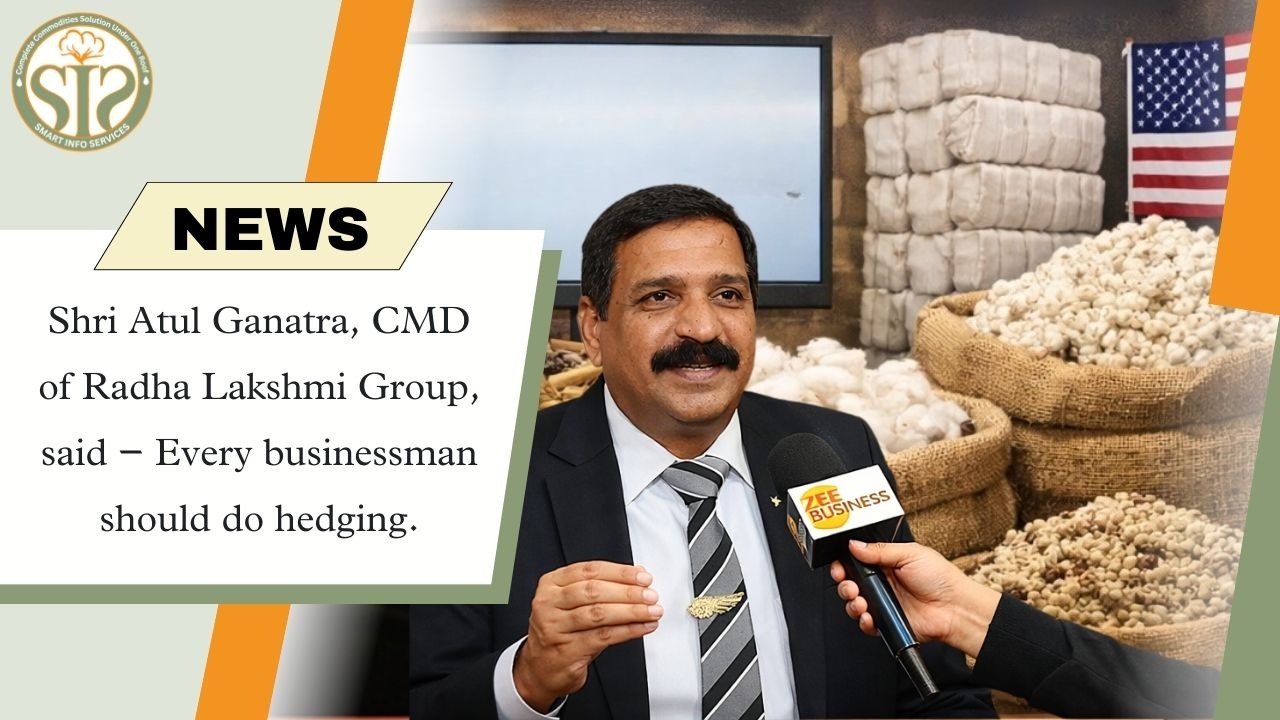
Shri Atul Ganatra, CMD of Radha Lakshmi Group, said – Every businessman should do hedging.Chairman and Managing Director (CMD) of Radha Lakshmi Group, in a special conversation with Zee Business, said that every businessman must use hedging.He said that NCDEX's "Cotton" and "Omace" contracts are very useful for farmers and ginners. Earlier, there was a cotton platform on MCX in India, where traders could do hedging. But now there is no liquidity in MCX contracts, due to which the business there has come to a standstill. In such a situation, the cotton contract of NCDEX is proving to be very important and profitable for the cotton traders.CMD said that this year most of the ginners have stored a large stock of cotton seeds. The crop is expected to be larger this time than in previous years — while 312 lakh bales were produced last year, this year's production is estimated at 317 lakh bales. Due to increase in crop, the price of seeds has declined. In such a situation, it is the right time for farmers to hedge their stocks to keep them safe. Both cotton and cake contracts of NCDEX can prove to be very useful for this purpose.He further said that according to the recent statement given by Union Minister Piyush Goyal, India has also received the same offer for the trade deal which Bangladesh has received. If this agreement materializes, cotton imported from America may become duty-free. Currently, India has imported about 35–40 lakh bales of cotton by January 2026, and if this deal is implemented, an additional import of 10–15 lakh bales is possible. This may increase pressure on the domestic cotton market, but it will not have a major impact on farmers as CCI (Cotton Corporation of India) has already purchased about 95–97 lakh bales of cotton at MSP ₹8100 per quintal.Therefore, it can be said that this trade deal will prove to be very positive for the entire textile industry.He further said that ginners have made adequate stock of both cotton seeds and cotton bales this time. During the January surge, all ginning factories had increased stocks — currently ginners have stocks of about 35-40 lakh bales and CCI has stocks of 95 lakh bales. Cotton prices have fallen by about 10% in the last 15 days. In such a situation, NCDEX platform is very useful for ginners, because there is sufficient liquidity available in cotton cake.CMD suggested “If a ginner has 200 trucks of cotton seed stock, he can hedge by selling 50–100 lots. This will keep his stock safe. This is an excellent platform for hedging and every ginner should use it to stay safe from risk.”read more :- The rupee opened 02 paise higher at 90.65.

The rupee opened 02 paise higher against the dollar at 90.65.Indian rupee opened marginally higher at 90.65 per dollar on Wednesday versus Tuesday's close of 90.67.read more :- US-India deal will impact Bangladesh garment industry
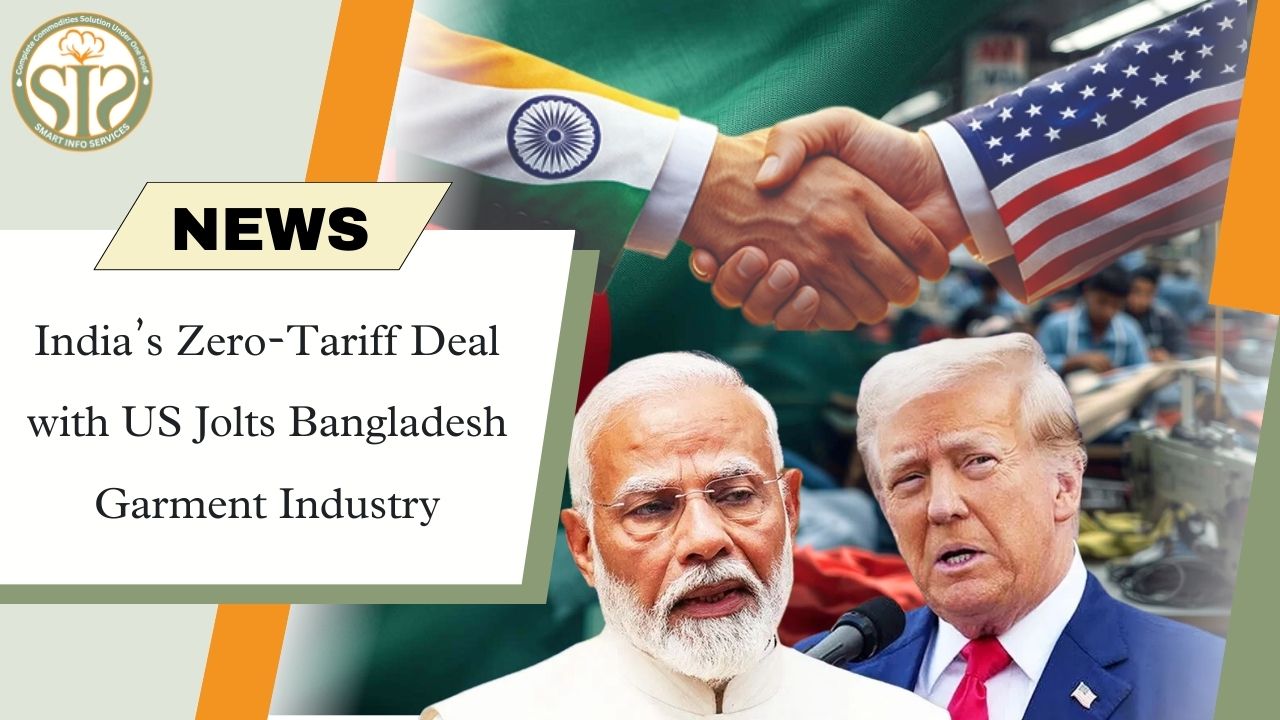
India’s Zero-Tariff Deal with US Jolts Bangladesh Garment IndustryIndia’s latest trade move has sent shockwaves through Bangladesh’s garment sector, raising concerns about losing its long-held competitive edge in the US market.Union Commerce Minister Piyush Goyal announced that India could soon secure a zero per cent tariff deal on textile exports to the United States, similar to the benefits currently enjoyed by Bangladesh. Under the proposed trade pact, Indian-made garments using American cotton will get duty-free access to the US market.The development has rattled Bangladesh’s exporters, who fear the move could erode their price advantage.“Bangladesh may lose its competitiveness to some extent in the US markets if similar trade benefits are extended to Indian exporters,” said Anwar-ul-Alam Chowdhury, former president of the Bangladesh Garment Manufacturers and Exporters Association, in an interview with The Daily Star.He noted that India’s lower production costs, smoother customs procedures, and strong government support give it a favourable position. “India is in an advantageous position in terms of cost of production, equal US customs treatment, and export facilities offered by the Indian government,” Chowdhury added.Despite the concerns, Bangladeshi industry leaders hope that India’s status as a cotton exporter—unlike Bangladesh, which relies heavily on imports—might balance the scales.India, the world’s second-largest exporter of raw cotton, shipped over US$6.4 billion worth of cotton in FY 2024–25, primarily to Bangladesh, China, and Vietnam. It also imported around 4.13 million bales of US cotton during the same period.However, Showkat Aziz Russell, president of the Bangladesh Textile Mills Association, said the tariff concessions by the Donald Trump administration might only apply to cotton importers.“India imposes a 12 per cent duty on cotton imports, while Bangladesh has zero duty. So, Bangladesh can still enjoy some advantages as a major importer of cotton,” he told The Daily Star.Still, experts warn that Bangladesh’s dependence on imported raw materials keeps its production costs higher than India’s. Meanwhile, India continues to strengthen its foothold in the global textile supply chain. Industry data shows that 77 per cent of US fashion brands and retailers sourced materials from India in 2025 — a trend expected to continue through 2027.read more :-

On Tuesday, the Indian rupee closed at 90.67 against the dollar, the same level at which it had opened in the morning.At close, the Sensex was up 173.81 points or 0.21 percent at 83,450.96, and the Nifty was up 42.65 points or 0.17 percent at 25,725.40. About 2297 shares advanced, 1730 shares declined, and 142 shares unchanged.read more :- CCI purchased 1.15 lakh quintals of cotton in Manawar Mandi, last date is 27th February
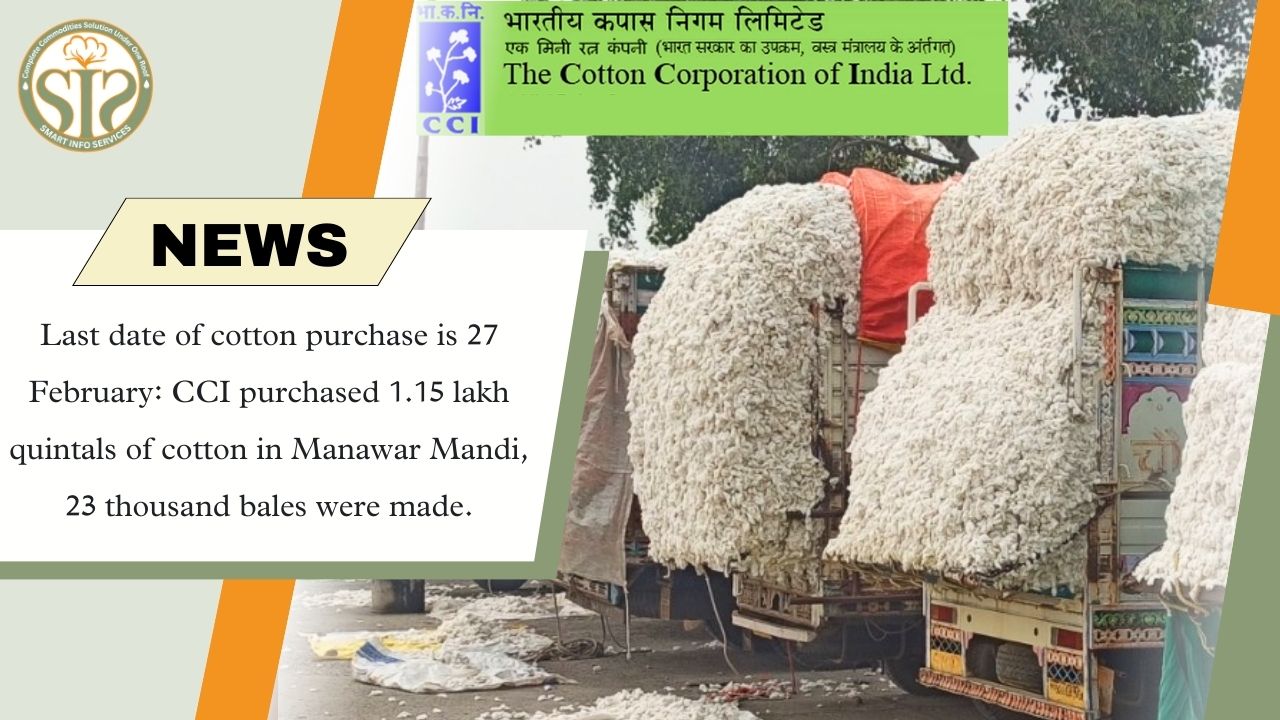
Last date of cotton purchase is 27 February: CCI purchased 1.15 lakh quintals of cotton in Manawar Mandi, 23 thousand bales were made.The Cotton Corporation of India (CCI)'s cotton procurement in the market located at Manawar Semalda Marg has now reached its last phase. The market administration has made it clear that the purchase of cotton from registered farmers will be completely stopped on February 27.There was huge arrival of cotton in Manawar Mandi in the last three months of this season. CCI has purchased a record 1 lakh 15 thousand quintals of cotton, from which about 23 thousand cotton bales have been prepared. Farmers say that due to the CCI policies of the Central Government and procurement at support price, they have got the right price for their crops and have become financially strong.Market revenue increasedMarket Secretary Bhagat Singh Dawar said that due to continuous purchase of CCI, a good increase in the revenue (earnings) of the market has also been recorded. However, according to the letter received from CCI, purchases will not be made after February 27. For this, the dates of 16th and 20th February are considered important for the arrival of cotton.Farmers' inclination towards private marketsAccording to Manawar Ginning Manager Pawan Kushwaha, cotton is expected to arrive in the market only by the end of February. He also told one special thing that these days the prices of cotton have increased in private ginning factories. Because of this, farmers are now showing more interest in selling their goods to private traders instead of CCI.read more :- Textile exports decreased by 3.75% in January, relief from US deal
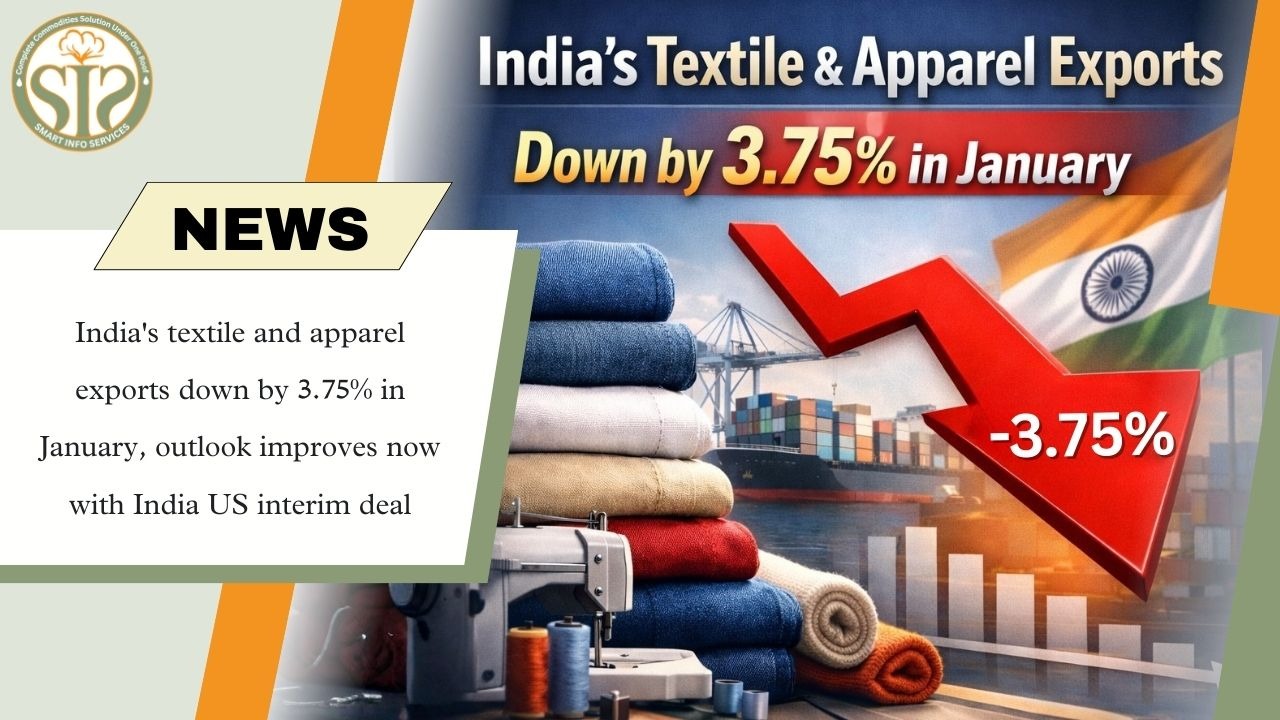
India's textile and apparel exports down by 3.75% in January, outlook improves now with India US interim dealNew Delhi: India's textile and apparel exports registered a decline in January compared with the same period last year, largely due to high tariffs imposed by the United States that remained in force till February 7.The tariffs impacted export competitiveness and led to lower shipments during the month.According to the data shared by Confederation of Indian Textile Industry (CITI), textile exports in January have declined by -3.68 per cent, while apparel exports are down by -3.84 per cent in January 2026 compared with January 2025.Overall, combined exports of textiles and apparel stood at 3,275.44 million US dollars in January 2026, down from 3,403.19 million US dollars in January 2025, registering a degrowth of -3.75 per cent.The decline was mainly seen across key textile segments. Exports of cotton yarn, fabrics, made-ups, and handloom products fell by -4.15 per cent to 995.58 million US dollars in January 2026 from 1,038.69 million US dollars in January 2025.Carpet exports also declined sharply by -12.05 per cent to 118.99 million US dollars, while exports of jute manufactured products, including floor coverings, dropped significantly by -18.92 per cent during the same period. Handicrafts, excluding handmade carpets, also saw a decline of -2.70 per cent.However, exports of man-made yarn, fabrics, and made-ups showed some resilience and recorded a slight growth of 1.01 per cent, rising to 430.29 million US dollars in January 2026 compared with 425.97 million US dollars in January 2025.The data further revealed that during the period from April 2025 to January 2026, textile exports registered a degrowth of -2.35 per cent, while apparel exports recorded a growth of 1.59 per cent compared with the same period of the previous financial year.Despite this growth in apparel exports, cumulative textile and apparel exports during April 2025 to January 2026 registered a marginal decline of -0.65 per cent compared with April 2024 to January 2025.The share of textile and apparel exports in India's total exports also declined. The sector accounted for 8.96 per cent of total exports in January 2026, compared with 9.37 per cent in January 2025.For the April 2025 to January 2026 period, the share stood at 8.13 per cent, lower than 8.36 per cent in the same period of the previous year.On the import side, imports of cotton raw and waste increased significantly by 12.33 per cent in January 2026 and rose sharply by 72.36 per cent during the April 2025 to January 2026 period. This increase suggests higher domestic demand for raw materials or supply adjustments within the textile industry.Now the outlook is expected to improve going forward following the United States' reduction of tariffs on February 7. The tariff reduction is likely to improve India's export competitiveness and support recovery in textile and apparel shipments in the coming months.read more :- The rupee opened 02 paise lower at 90.67/USD.

The rupee opened 02 paise lower at 90.67 per dollar.Indian rupee opened flat at 90.67 per dollar on Tuesday versus previous close of 90.65.read more :- America's deal: expansion of economic interests
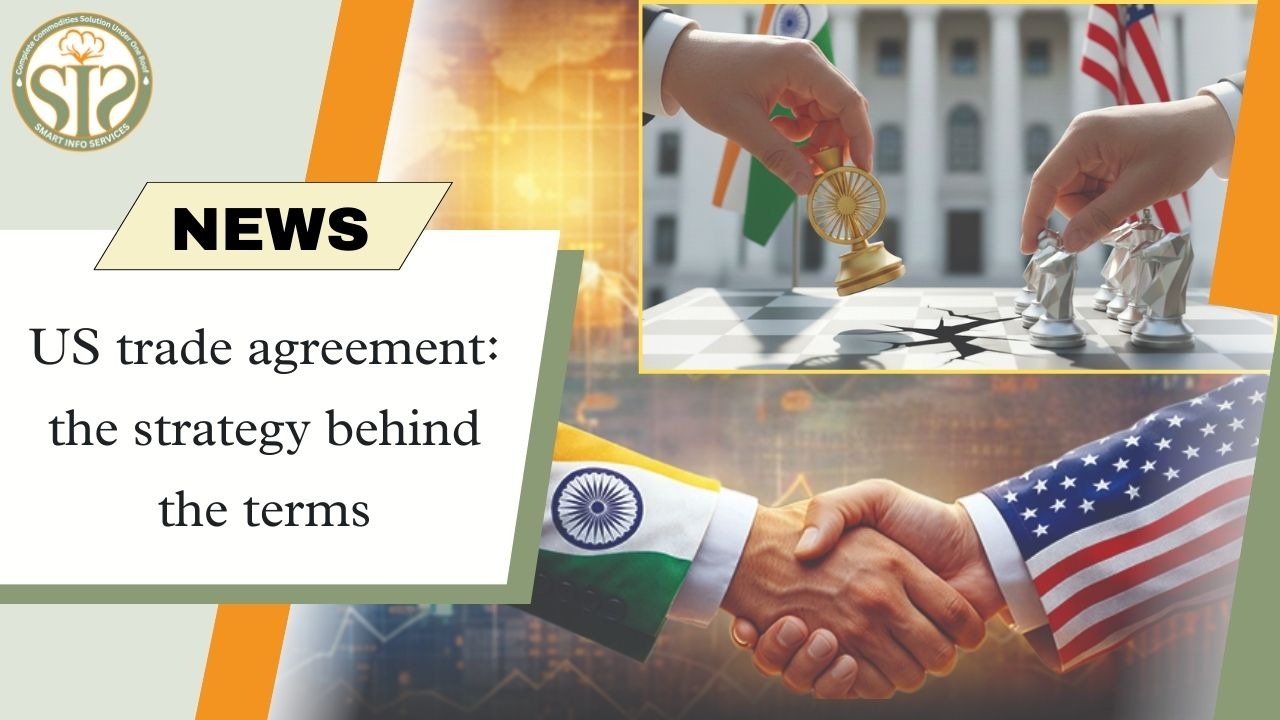
US trade agreement: the strategy behind the termsThe new reciprocal trade agreement signed between Dhaka and Washington on February 9 was initially considered a major diplomatic success. But now there is growing confusion and concern over the “cotton segment” in Bangladesh’s $47 billion apparel industry. This provision states that reciprocal tariff exemption will be available only if the apparel is made from American cotton or man-made fibers.Under the agreement, a 19 percent reciprocal tariff has been imposed on Bangladeshi apparel in addition to the already applicable MFN duty of about 16.5 percent. In case of no relief, the total fee reaches 35.5 percent. The government says that the 19 percent tariff on clothes made from American raw materials will be removed, but the industry argues that the basic duty will still be applicable.BGMEA President Mahmood Hasan Khan clarified that the pre-agreement fees will not be waived. He says that even after getting concession, exporters will have to pay 16.5 percent duty, due to which the cost will remain high. Also, the agreement sets a “specified quantity” limit, which will depend on the amount of raw materials imported from the US.Analysts and think-tank experts believe that the language of the agreement is vague and many technical aspects are not clear. If competing countries like India also get similar benefits, Bangladesh's competitive edge may weaken. In such a situation, it is necessary for the government to clarify the terms of the agreement, otherwise this much talked about deal may fail to provide the expected security.read more :- The rupee closed 05 paise lower against the dollar at 90.65.

On Monday, the Indian rupee closed at 90.65 against the dollar, compared to its opening rate of 90.60.At close, the Sensex was up 650.39 points or 0.79 percent at 83,277.15, and the Nifty was up 211.65 points or 0.83 percent at 25,682.75. About 1676 shares advanced, 2443 shares declined, and 181 shares unchanged.read more :- Textile industry will be strengthened with the cooperation of OUTR
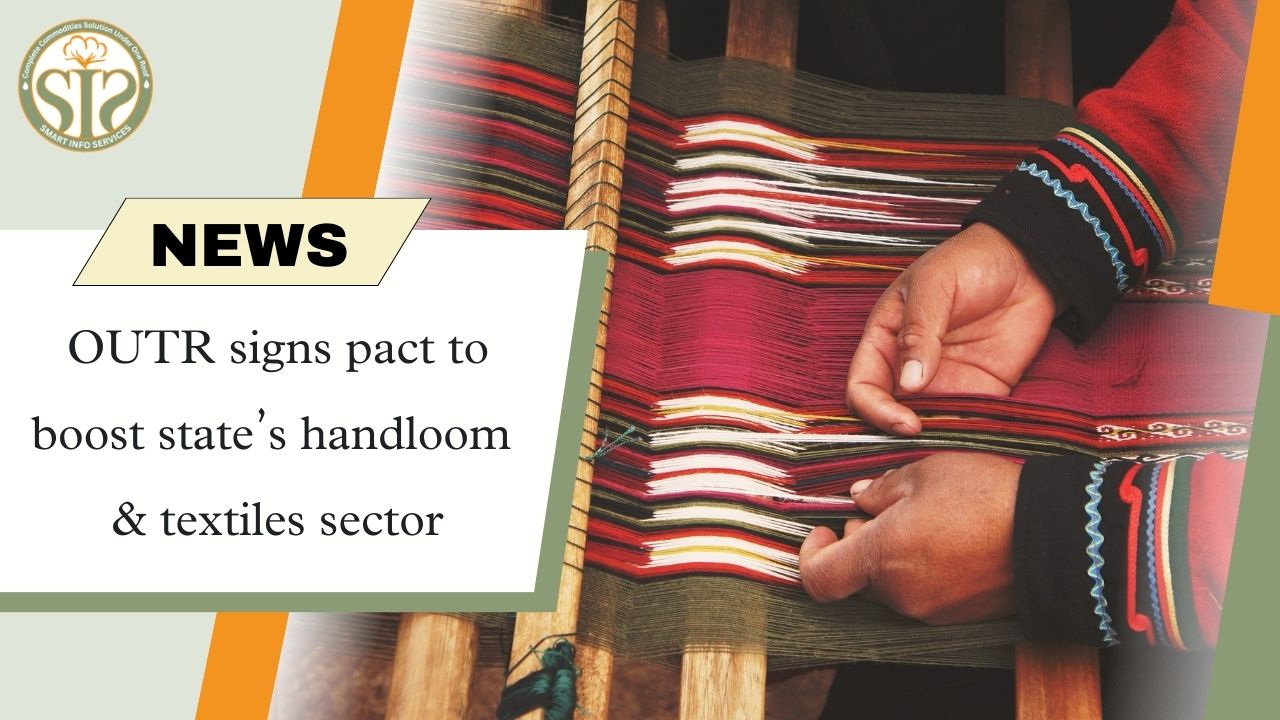
OUTR signs pact to boost state’s handloom & textiles sectorBhubaneswar: Odisha University of Technology and Research (OUTR) has signed a memorandum of understanding (MoU) with the state directorate of textiles to collaborate on research, technology transfer, capacity building and innovation in the handloom and textiles sector.The three-year agreement was signed at the inauguration of the ‘Grand Toshali Swadeshi Mela’ on Saturday evening, in the presence of deputy chief minister KV Singh Deo.OUTR vice-chancellor Bibhuti Bhusan Biswal said, “The MoU focuses on technology upgradation, improving product quality and training programmes for weavers and other stakeholders. It includes setting up quality testing and standardisation facilities, supporting market linkages, developing sustainable and eco-friendly processes and materials, and documenting traditional textile knowledge and practices.”“The collaboration will cover joint research projects in loom technology, dyeing and quality control. Student internships, field projects and final-year projects will be facilitated with weaver clusters and production centres,” he added.Other areas include the development of tools, devices and processes to improve productivity, reduce drudgery and enhance product quality, design interventions combining traditional motifs with contemporary aesthetics, and capacity-building initiatives through workshops, seminars and skill development programmes, official sources said.The agreement provides for documentation of traditional knowledge, preparation of technical literature and case studies, consultancy and advisory services, and resource sharing of infrastructure, laboratories and expertise.read more :- Shivraj Singh Chouhan launches new cotton harvesting machine in MP
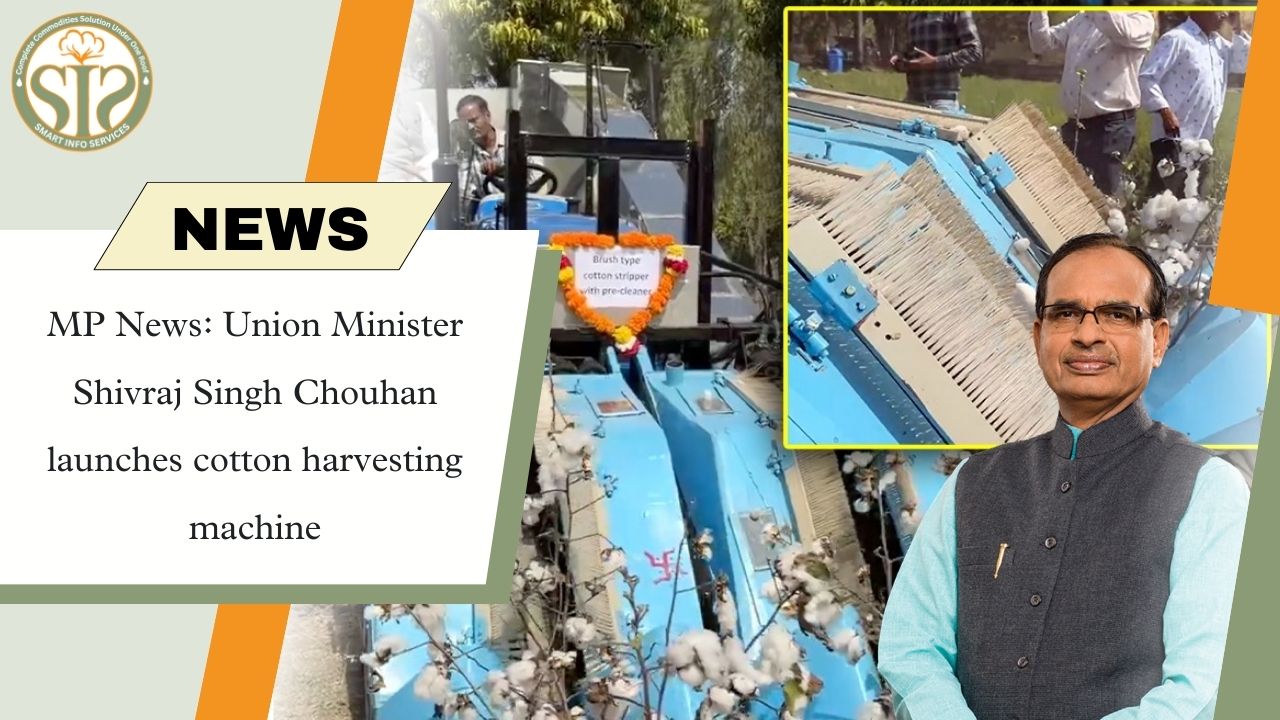
MP News: Union Minister Shivraj Singh Chouhan launches cotton harvesting machineBhopal (Madhya Pradesh): Union Agriculture Minister and former Madhya Pradesh Chief Minister Shivraj Singh Chouhan dedicated a cotton harvesting machine to farmers at ICAR - Central Institute of Agricultural Engineering (CIAE) in Bhopal, on the occasion of Mahashivratri.The minister said that until now, cotton picking had to be done manually, which required more time, labour and higher costs. Farmers had long demanded a machine to make cotton harvesting easier and this demand has now been fulfilled.He personally observed the cotton harvesting process using the machine. He said the new technology would save time, reduce costs and make cotton farming more profitable.The minister also stated that efforts are underway to develop new disease-resistant cotton varieties with higher yield. Work is also being done to increase the number of plants per acre to help boost farmers’ income.read more :- Rupee opened 04 paise stronger at 90.60 per dollar

Rupee opens 04 paise up at 90.60/USD Indian rupee opened with marginal gains at 90.60 per dollar on Monday against Friday's close of 90.64.read more :- CCI Cotton Sales Details 2025-26
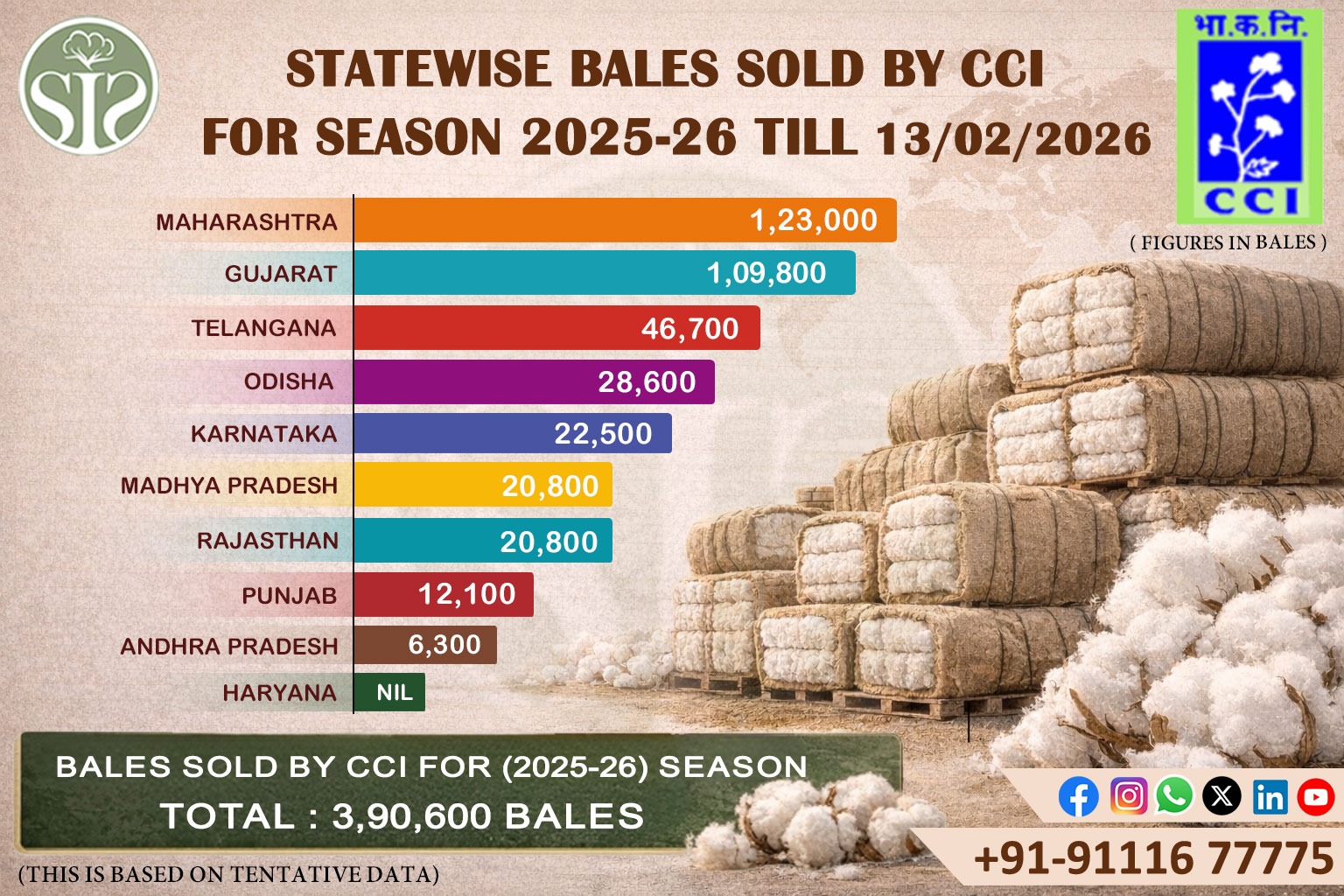
State-wise CCI Cotton Sales Details – 2025-26 SeasonThe Cotton Corporation of India (CCI) reduced its cotton prices by ₹1,400 - ₹1,700 per candy this week for the 2025-26 season. So far, approximately 3,90,600 cotton bales have been sold by CCI during the 2025-26 season. Sales are highly concentrated in a few major cotton-producing states, Maharashtra and Gujarat emerging as the leading contributors.
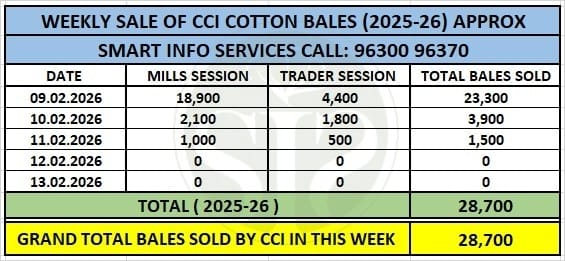
CCI Decrease Cotton Prices by ₹1,400 to ₹1,700 per Candy; Weekly Auction Sales Near 28,700 BalesThe Cotton Corporation of India (CCI) reduced its cotton prices by ₹1,400 to ₹1,700 per candy during the week ending February 13, 2026. Despite the price cut, the agency continued its regular e-auctions from February 9 to February 13 across multiple centers, recording total weekly sales of around 28,700 bales from the ongoing 2025–26 season, with participation from both mills and traders.Daily Sales Report February 9, 2026: The week began with robust demand, with 23,300 bales sold from 2025-26 season. Mills dominated purchases with 18,900 bales, while traders bought 4,400 bales.February 10, 2026: Sales declined sharply to 3,900 bales, including 2,100 bales bought by mills and 1,800 bales by traders all from current season.February 11, 2026: Sales further dropped to 1,500 bales for season 2025-26, with mills purchasing 1,000 bales and traders accounting for 500 bales.February 12–13, 2026: No sales were recorded in CCI’s online auctions for either the 2025–26 or 2024–25 seasons, indicating weak demand toward the end of the week.Cumulative sales :Following the latest auctions, CCI’s total sales reached:3,90,600 bales for the 2025–26 season, and98,82,400 bales for the 2024–25 season.
Centre Government Strengthens Cotton Supply Chain through MSP & E-AuctionsNew Delhi: The government facilitates the availability of cotton to the domestic textile and spinning industries through the release of stocks procured by the Cotton Corporation of India (CCI) under Minimum Support Price (MSP) operations, said Minister of State for Textiles, Pabitra Margherita in written reply to a question in the Rajya Sabha.These stocks are sold through a transparent online e-auction system to enable competitive price discovery. MSP for cotton is declared annually to safeguard farmers’ interests when market prices fall below the support level and to ensure sustained cotton production.To enhance cotton productivity, quality and farmer incomes, several policy and programmatic interventions have been undertaken, the Minister said. A five-year Mission for Cotton Productivity was announced in the Union Budget 2025–26, with the Department of Agricultural Research & Education as the nodal department and the Ministry of Textiles as a partner. The mission focuses on strengthening cotton production through research and extension, including the development of climate-resilient, pest-resistant and high-yielding varieties, including Extra Long Staple (ELS) cotton, using advanced breeding and biotechnology tools.In addition, a Special Project on Cotton under the National Food Security Mission (NFSM) has been implemented since 2023–24 through ICAR-CICR, Nagpur, in convergence with the Ministry of Textiles. To strengthen MSP operations, CCI has expanded its procurement network from 508 centres in 2024–25 to 571 centres in 2025–26, covering 150 districts across 11 cotton-growing States. During the 2024–25 cotton season, CCI procured 100.16 lakh bales valued at Rs 37,437 crore. In 2025–26 (as on 5 February 2026), 90.97 lakh bales valued at Rs 36,355 crore have been procured.read more :- India-US cotton trade booms during Trump tenure
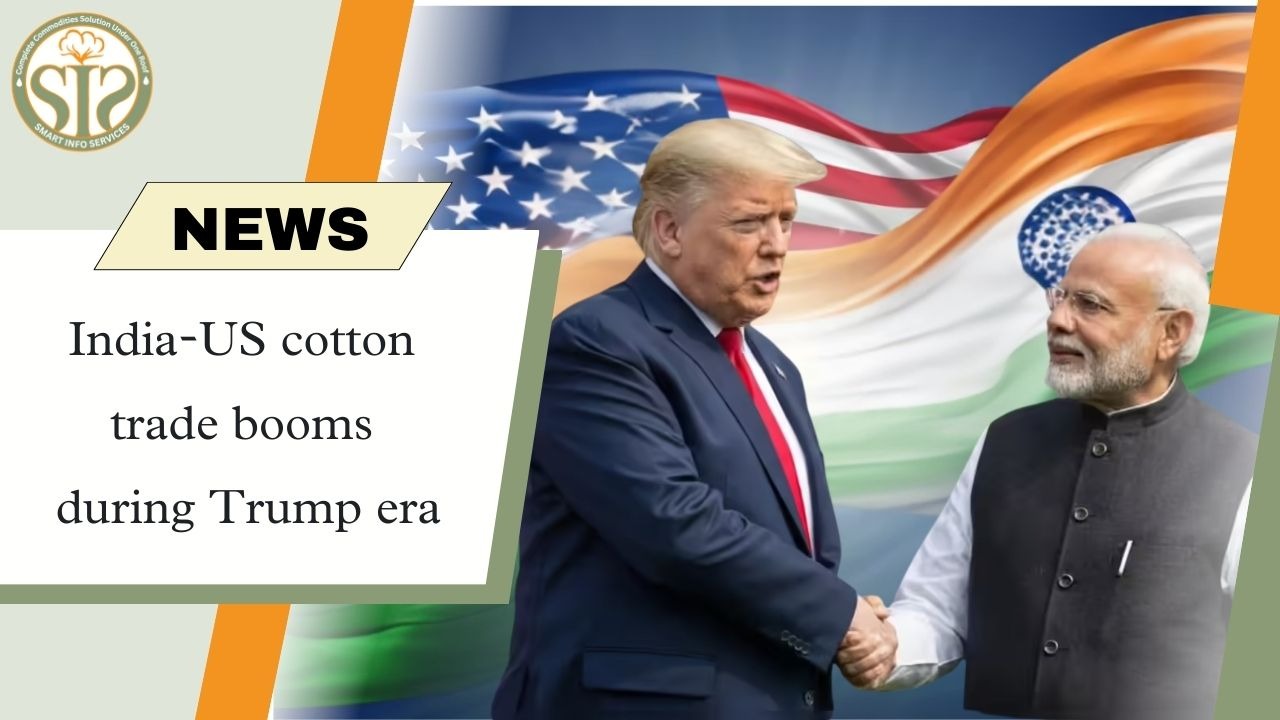
India-US cotton trade booms during Trump eraIndia’s cotton trade with the US strengthened during US President Donald Trump’s first term, with New Delhi emerging as a larger buyer of American cotton compared with earlier years, according to a Moneycontrol analysis of trade data.India’s share of US cotton exports expanded from 1.5 percent in 2014 to 4.7 percent in 2016, around the time Trump assumed office. The trend continued upward, with India’s share reaching 6 percent in 2017 and peaking at 7.7 percent by 2019.However, pandemic disruptions later pushed India’s share back to about 3 percent, where it has broadly stabilised in recent years.A similar pattern is visible in India’s import reliance on American cotton. The US's share of India’s cotton imports climbed sharply to 47.9 percent in 2017 and 53.2 percent in 2018, before easing gradually as sourcing diversified. By 2024, the US accounted for about 19.3 percent of India’s cotton imports, suggesting reduced dependence but continued trade engagement.Despite the moderation, India remains a significant destination for American cotton. In 2024, India was the seventh-largest importer of US raw cotton, buying roughly $209 million worth, only slightly below Bangladesh’s imports. China, Pakistan and Vietnam were the largest buyers that year.Trade flows could shift again if the proposed interim India–US trade agreement materialises. Commerce and Industry Minister Piyush Goyal has indicated that Indian textile exporters may receive a zero-reciprocal-duty window for garments made using US cotton, a move that could incentivise greater sourcing of American fibre.The development comes amid intensifying competition from Bangladesh, which has already secured favourable access to US markets and ranks among the top importers of US cotton. Earlier Moneycontrol analysis suggested that about one-fourth of India’s cotton trade — roughly $1.5 billion — could face competitive pressure if Bangladesh enjoys more favourable trade terms.The next phase of negotiations between New Delhi and Washington could therefore play a decisive role in shaping future cotton trade patterns.read more :- Crisis on ginning industry, Pradeep Jain's alert
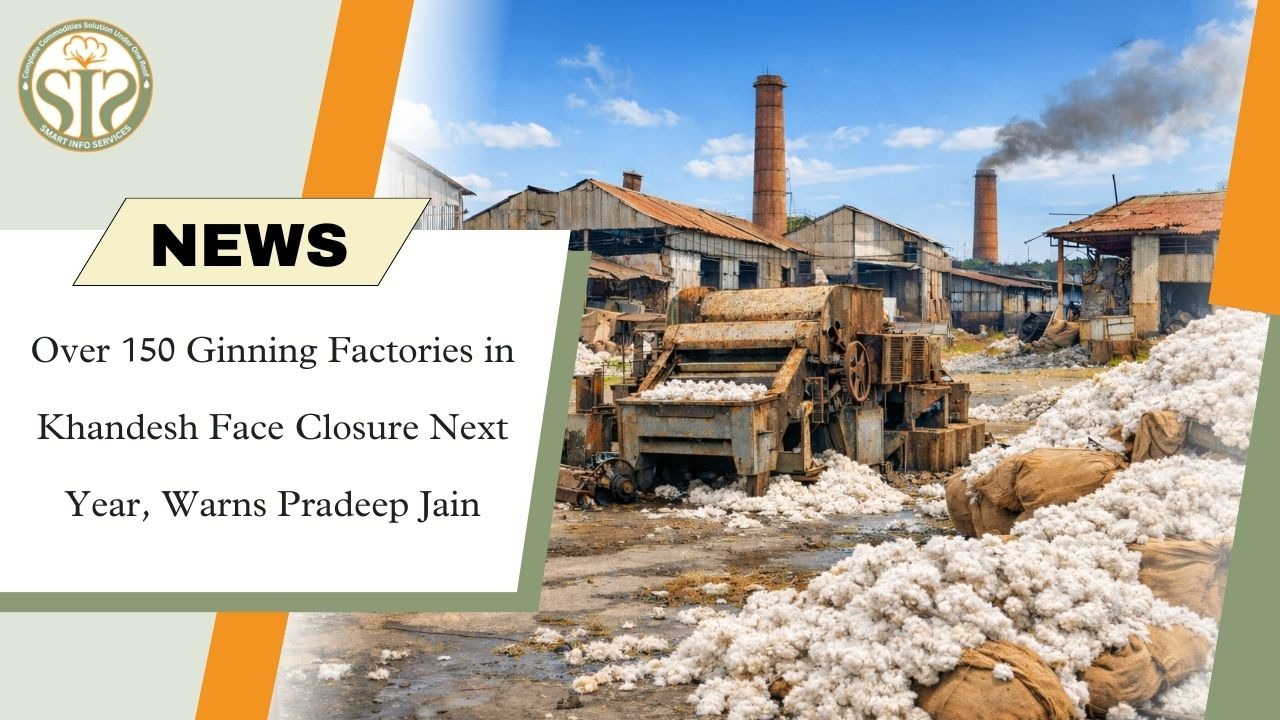
Over 150 Ginning Factories in Khandesh Face Closure Next Year, Warns Pradeep Jain The cotton industry in Khandesh is staring at a major crisis, with over 150 ginning factories at risk of shutting down next year due to plummeting cotton prices and halted exports, warned Pradeep Jain, founder-president of the Khandesh Ginning Prasingh Karkhandar Sangh, in a statement to FPJ today.Farmers are struggling as cotton prices have crashed, exports remain suspended, and income from the crop has dwindled. “Ginners cannot afford to pay more than ₹7,400–₹7,500 per quintal,” Jain said. “If this situation continues, the ginning industry in Khandesh will come to a standstill.”Khandesh—comprising Jalgaon, Dhule, and Nandurbar districts—is Maharashtra’s leading cotton-producing region, yielding about 15 lakh bales annually. The local economy depends heavily on this sector, with thousands of jobs tied directly and indirectly to ginning operations.However, this year’s heavy rains have severely impacted production. So far, only 5.5 to 6 lakh bales have been ginned, while another 2.5 lakh bales remain unsold with farmers waiting for better prices.Adding to the woes, cotton exports are currently halted while nearly 40 lakh bales of imported cotton are lying in domestic stockpiles, worsening the internal market scenario. Although farmers seek higher returns, traders maintain they cannot pay beyond ₹7,500 per quintal, bringing procurement to a halt.Cotton arrivals in markets have dropped sharply as farmers hold back their produce. Meanwhile, wholesale cotton prices have fallen from ₹56,000 to ₹53,000 per candy, with global demand also weakening.“The current market stagnation is unsustainable. If farmers continue to face poor prices, they will cut down on cotton cultivation next year—forcing ginning factories across Khandesh to shut down,” Jain cautioned.read more :-
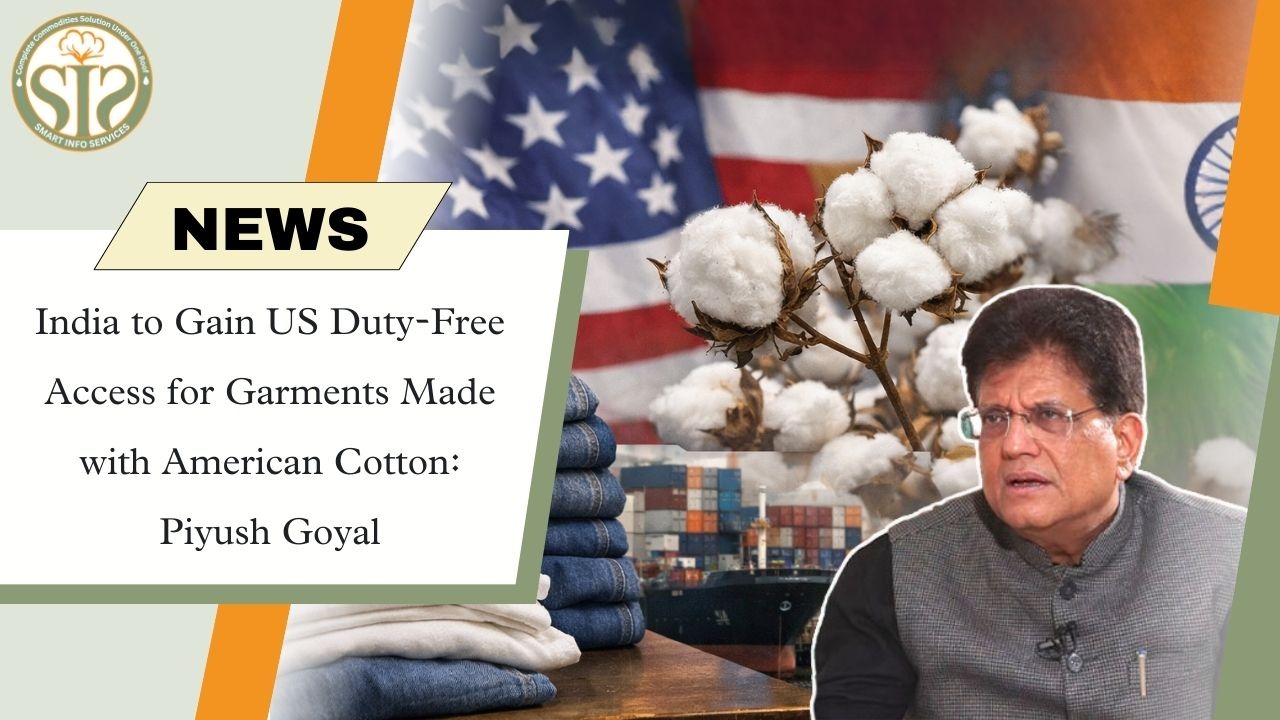
*India to Gain US Duty-Free Access for Garments Made with American Cotton: Piyush Goyal*India will receive concessional duty access to the United States for garments manufactured using American yarn and cotton under the proposed interim trade agreement with Washington, Commerce and Industry Minister Piyush Goyal has said.Speaking on the sidelines of a start-up event on Thursday, Goyal indicated that India would secure treatment comparable to that currently extended to Bangladesh under its trade arrangements with the US. He stated that whatever benefits Bangladesh had obtained would also be incorporated into India’s final agreement.India and the US have finalised a framework for the first phase of a bilateral trade agreement, which is expected to be implemented in March. According to the minister, the framework would translate into detailed provisions once the interim agreement is formally concluded.Under the proposed arrangement, Indian companies sourcing yarn from the US to manufacture garments for re-export to the American market would receive duty-free access, mirroring the concessions available to Bangladeshi exporters. Goyal said this provision formed part of the US-Bangladesh agreement and would similarly feature in India’s pact. He added that the move would have no adverse impact on Indian cotton farmers.He further clarified that there would be no quota restrictions on the import of raw materials such as cotton. The US-Bangladesh reciprocal trade pact currently allows tariff-free exports of apparel and textiles to the US if manufacturers use American-produced cotton or man-made fibre inputs.At present, Bangladesh-made garments face a 31% levy in the US market, comprising a 12% most-favoured-nation-plus duty and a 19% reciprocal tariff. When US fibres are used, the duty falls to 12%. Under the bilateral pact, Washington is set to lower reciprocal tariffs on Bangladesh to 19% from 20%, narrowing the tariff differential between New Delhi and Dhaka to one percentage point.Bangladesh is the world’s second-largest garment manufacturer and remains a key competitor to India in the US textile and apparel market, alongside China and Vietnam.Goyal noted that India was targeting a trade figure of US $ 50 billion under the agreement. He also observed that American businesses were increasingly viewing India as a trusted partner in global supply chains.read more:- The rupee closed 02 paise higher at 90.64 against the dollar.

On Friday, the Indian rupee closed 02 paise higher at 90.64 against the dollar, after opening at 90.66.At close, the Sensex was down 1,048.16 points or 1.25 percent at 82,626.76, and the Nifty was down 336.10 points or 1.30 percent at 25,471.10. About 1236 shares advanced, 2784 shares declined, and 148 shares unchanged.read more :- India can get benefits like Bangladesh on US cotton
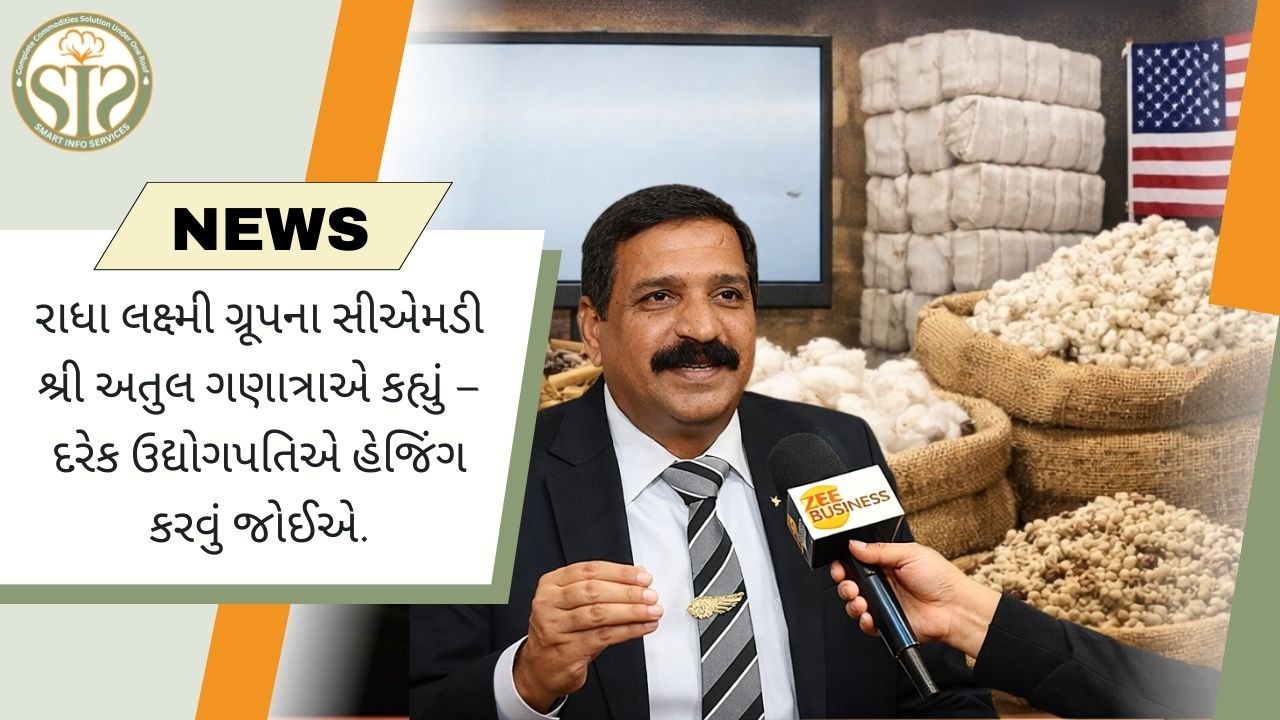
રાધા લક્ષ્મી ગ્રૂપના સીએમડી શ્રી અતુલ ગણાત્રાએ કહ્યું – દરેક ઉદ્યોગપતિએ હેજિંગ કરવું જોઈએ.રાઘા લક્ષ્મી ગ્રૂપના ચેરમેન અને મેનેજિંગ ડિરેક્ટર (CMD) એ ઝી બિઝનેસ સાથેની ખાસ વાતચીતમાં જણાવ્યું હતું કે દરેક બિઝનેસમેને હેજિંગનો ઉપયોગ કરવો જ જોઈએ.તેમણે કહ્યું કે NCDEX ના "કોટન" અને "Omace" કોન્ટ્રાક્ટ ખેડૂતો અને જિનર્સ માટે ખૂબ જ ઉપયોગી છે. અગાઉ, ભારતમાં MCX પર કોટન પ્લેટફોર્મ હતું, જ્યાં વેપારીઓ હેજિંગ કરી શકતા હતા. પરંતુ હવે MCX કોન્ટ્રાક્ટમાં કોઈ પ્રવાહિતા નથી, જેના કારણે ત્યાંનો કારોબાર અટકી ગયો છે. આવી સ્થિતિમાં NCDEXનો કોટન કોન્ટ્રાક્ટ કપાસના વેપારીઓ માટે ખૂબ જ મહત્વપૂર્ણ અને નફાકારક સાબિત થઈ રહ્યો છે.સીએમડીએ જણાવ્યું કે આ વર્ષે મોટાભાગના જિનર્સે કપાસના બિયારણનો મોટો સ્ટોક સંગ્રહિત કર્યો છે. અગાઉના વર્ષો કરતાં આ વખતે પાક વધુ થવાની ધારણા છે - જ્યારે ગયા વર્ષે 312 લાખ ગાંસડીનું ઉત્પાદન થયું હતું, આ વર્ષે ઉત્પાદન 317 લાખ ગાંસડી થવાનો અંદાજ છે. પાક વધવાને કારણે બિયારણના ભાવમાં ઘટાડો થયો છે. આવી સ્થિતિમાં, ખેડૂતોને સુરક્ષિત રાખવા માટે તેમના સ્ટોકને હેજ કરવાનો યોગ્ય સમય છે. NCDEX ના કોટન અને કેક બંને કોન્ટ્રાક્ટ આ હેતુ માટે ખૂબ જ ઉપયોગી સાબિત થઈ શકે છે.તેમણે વધુમાં કહ્યું કે કેન્દ્રીય મંત્રી પીયૂષ ગોયલ દ્વારા આપવામાં આવેલા તાજેતરના નિવેદન મુજબ, ભારતને પણ વેપાર સોદા માટે તે જ ઓફર મળી છે જે બાંગ્લાદેશને મળી છે. જો આ સમજૂતી સાકાર થાય તો અમેરિકાથી આયાત કરવામાં આવતો કપાસ ડ્યુટી ફ્રી બની શકે છે. હાલમાં, ભારતે જાન્યુઆરી 2026 સુધીમાં આશરે 35-40 લાખ ગાંસડી કપાસની આયાત કરી છે, અને જો આ સોદો અમલમાં આવે તો 10-15 લાખ ગાંસડીની વધારાની આયાત શક્ય છે. આનાથી સ્થાનિક કપાસના બજાર પર દબાણ વધી શકે છે, પરંતુ ખેડૂતો પર તેની મોટી અસર થશે નહીં કારણ કે CCI (કોટન કોર્પોરેશન ઓફ ઈન્ડિયા) એ પહેલાથી જ લગભગ 95-97 લાખ ગાંસડી કપાસની MSP ₹8100 પ્રતિ ક્વિન્ટલના ભાવે ખરીદી કરી છે.તેથી, એમ કહી શકાય કે આ વેપાર સોદો સમગ્ર કાપડ ઉદ્યોગ માટે ખૂબ જ સકારાત્મક સાબિત થશે.તેમણે વધુમાં જણાવ્યું હતું કે જિનર્સે આ વખતે કપાસના બિયારણ અને કપાસની ગાંસડી બંનેનો પૂરતો સ્ટોક કર્યો છે. જાન્યુઆરીના ઉછાળા દરમિયાન, તમામ જિનિંગ ફેક્ટરીઓએ સ્ટોકમાં વધારો કર્યો હતો - હાલમાં જિનર્સ પાસે લગભગ 35-40 લાખ ગાંસડીનો સ્ટોક છે અને CCI પાસે 95 લાખ ગાંસડીનો સ્ટોક છે. છેલ્લા 15 દિવસમાં કપાસના ભાવમાં લગભગ 10%નો ઘટાડો થયો છે. આવી સ્થિતિમાં, NCDEX પ્લેટફોર્મ જીનર્સ માટે ખૂબ જ ઉપયોગી છે, કારણ કે કોટન કેકમાં પૂરતી તરલતા ઉપલબ્ધ છે.સીએમડીએ સૂચવ્યું -"જો કોઈ જીનર પાસે કપાસના બિયારણના સ્ટોકની 200 ટ્રક હોય, તો તે 50-100 લોટ વેચીને હેજ કરી શકે છે. આ તેના સ્ટોકને સુરક્ષિત રાખશે. હેજિંગ માટે આ એક ઉત્તમ પ્લેટફોર્મ છે અને દરેક જિનરે જોખમથી સુરક્ષિત રહેવા માટે તેનો ઉપયોગ કરવો જોઈએ."વધુ વાંચો :- રૂપિયો 02 પૈસા વધીને 90.65 પર ખુલ્યો.

ડોલર સામે રૂપિયો 02 પૈસા વધીને 90.65 પર ખુલ્યો.બુધવારે ભારતીય રૂપિયો 90.65 પર નજીવો વધારો થયો, જે મંગળવારના બંધ 90.67 ની સરખામણીમાં ડોલર સામે 90.65 પર ખુલ્યો.વધુ વાંચો :- યુએસ-ભારત ડીલ બાંગ્લાદેશના કપડા ઉદ્યોગને અસર કરશે
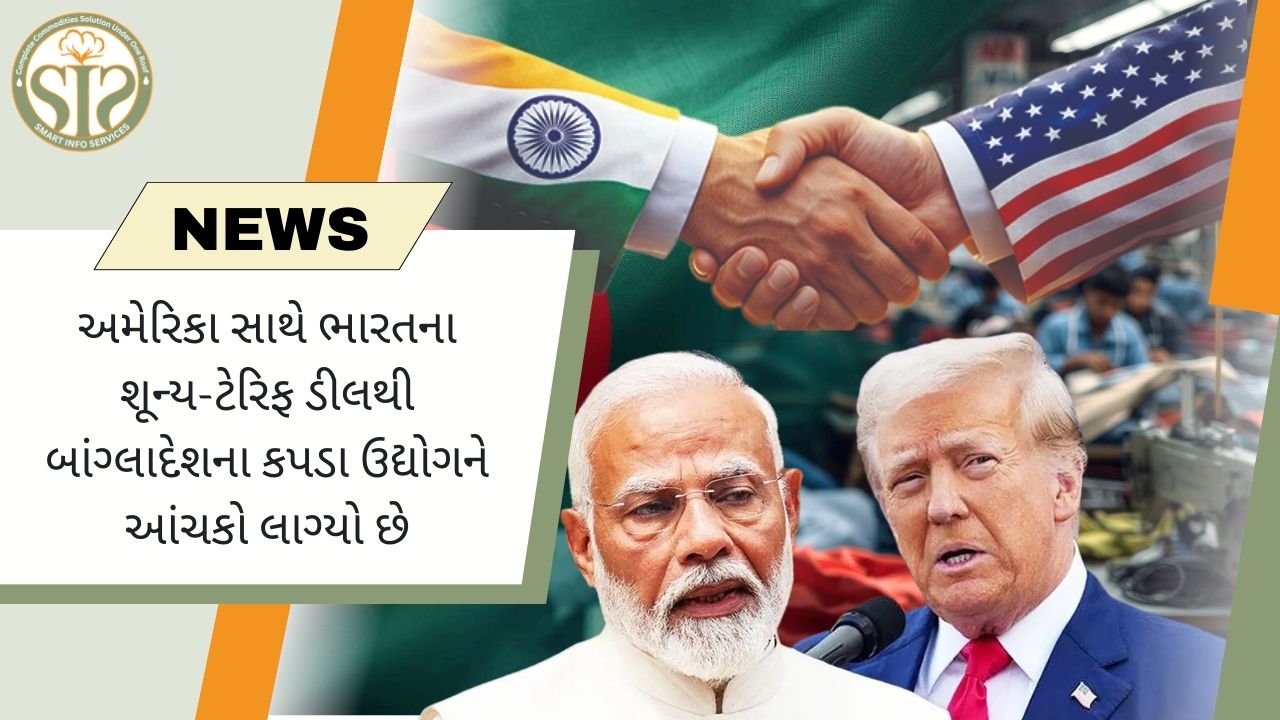
અમેરિકા સાથે ભારતના શૂન્ય-ટેરિફ ડીલથી બાંગ્લાદેશના કપડા ઉદ્યોગને આંચકો લાગ્યો છેભારતના નવા વેપાર પગલાએ બાંગ્લાદેશના ગાર્મેન્ટ સેક્ટરમાં હલચલ મચાવી દીધી છે, જે યુએસ માર્કેટમાં તેની લાંબા સમયથી ચાલતી સ્પર્ધાત્મક ધાર ગુમાવવાની ચિંતામાં વધારો કરે છે.(SIS)કેન્દ્રીય વાણિજ્ય પ્રધાન પીયુષ ગોયલે જાહેરાત કરી હતી કે ભારત ટૂંક સમયમાં યુએસમાં કાપડની નિકાસ પર શૂન્ય ટકા ટેરિફ ડીલ મેળવી શકે છે, જે હાલમાં બાંગ્લાદેશને મળી રહ્યું છે. પ્રસ્તાવિત વેપાર કરાર હેઠળ અમેરિકન કોટનનો ઉપયોગ કરીને ભારતમાં બનતા કપડાંને યુએસ માર્કેટમાં ડ્યુટી ફ્રી એક્સેસ મળશે.આ ઘટનાક્રમે બાંગ્લાદેશી નિકાસકારોને પરેશાન કર્યા છે, જેમને ડર છે કે આ પગલાથી તેમના ભાવ લાભમાં ઘટાડો થશે.બાંગ્લાદેશ ગારમેન્ટ મેન્યુફેક્ચરર્સ એન્ડ એક્સપોર્ટર્સ એસોસિએશનના ભૂતપૂર્વ પ્રમુખ અનવર-ઉલ-આલમ ચૌધરીએ ડેઈલી સ્ટાર સાથેની મુલાકાતમાં જણાવ્યું હતું કે, "જો ભારતીય નિકાસકારોને સમાન વેપાર લાભો આપવામાં આવે તો, બાંગ્લાદેશ યુએસ માર્કેટમાં અમુક અંશે તેની સ્પર્ધાત્મકતા ગુમાવી શકે છે." (SIS)તેમણે કહ્યું કે ભારતનો ઓછો ઉત્પાદન ખર્ચ, સરળ કસ્ટમ પ્રક્રિયાઓ અને મજબૂત સરકારી સમર્થન તેને સારી સ્થિતિ આપે છે. ચૌધરીએ વધુમાં જણાવ્યું હતું કે, "ઉત્પાદન ખર્ચ, યુએસની સમકક્ષ કસ્ટમ સારવાર અને ભારત સરકાર તરફથી નિકાસ સુવિધાઓના સંદર્ભમાં ભારતને ફાયદો છે."ચિંતાઓ હોવા છતાં, બાંગ્લાદેશી ઉદ્યોગના નેતાઓ આશાવાદી છે કે કપાસના નિકાસકાર તરીકે ભારતની સ્થિતિ - બાંગ્લાદેશથી વિપરીત, જે આયાત પર ભારે નિર્ભર છે - સંતુલન બનાવી શકે છે.વિશ્વના બીજા સૌથી મોટા કાચા કપાસના નિકાસકાર ભારતે નાણાકીય વર્ષ 2024-25માં US$6.4 બિલિયનથી વધુની કિંમતનો કપાસ મુખ્યત્વે બાંગ્લાદેશ, ચીન અને વિયેતનામને મોકલ્યો હતો. તેણે આ જ સમયગાળા દરમિયાન લગભગ 4.13 મિલિયન ગાંસડી યુએસ કપાસની આયાત પણ કરી હતી.(SIS)જો કે, બાંગ્લાદેશ ટેક્સટાઇલ મિલ્સ એસોસિએશનના પ્રમુખ શૌકત અઝીઝ રસેલે જણાવ્યું હતું કે ડોનાલ્ડ ટ્રમ્પ વહીવટીતંત્રની ટેરિફ રાહતો માત્ર કપાસના આયાતકારોને જ લાગુ પડી શકે છે."ભારત કપાસની આયાત પર 12 ટકા ડ્યુટી લાદે છે, જ્યારે બાંગ્લાદેશમાં શૂન્ય ડ્યુટી છે. તેથી, બાંગ્લાદેશ કપાસના મોટા આયાતકાર તરીકે હજુ પણ કેટલાક લાભો માણી શકે છે," તેમણે ડેઈલી સ્ટારને જણાવ્યું હતું. તેમ છતાં, નિષ્ણાતોએ ચેતવણી આપી છે કે આયાતી કાચા માલ પર નિર્ભરતાને કારણે બાંગ્લાદેશનો ઉત્પાદન ખર્ચ ભારત કરતા વધારે છે. દરમિયાન, ભારત વૈશ્વિક ટેક્સટાઇલ સપ્લાય ચેઇનમાં તેની પકડ મજબૂત કરી રહ્યું છે. ઇન્ડસ્ટ્રી ડેટા દર્શાવે છે કે 77 ટકા યુએસ ફેશન બ્રાન્ડ્સ અને રિટેલર્સ 2025 માં ભારતમાંથી સામગ્રી મેળવશે - જે 2027 સુધી ચાલુ રહેવાની અપેક્ષા છે.(SIS)વધુ વાંચો :- રૂપિયો 90.67 પર સ્થિર બંધ થયો.

મંગળવારે, ભારતીય રૂપિયો ડોલર સામે 90.67 પર બંધ થયો, જે તે સવારે ખુલ્યો હતો તે જ સ્તરે.બંધ સમયે, સેન્સેક્સ 173.81 પોઈન્ટ અથવા 0.21 ટકા વધીને 83,450.96 પર અને નિફ્ટી 42.65 પોઈન્ટ અથવા 0.17 ટકા વધીને 25,725.40 પર બંધ થયો. લગભગ 2297 શેર વધ્યા, 1730 શેર ઘટ્યા અને 142 શેર યથાવત રહ્યા.વધુ વાંચો :- CCIએ મનવર મંડીમાં 1.15 લાખ ક્વિન્ટલ કપાસની ખરીદી કરી, છેલ્લી તારીખ 27 ફેબ્રુઆરી છે
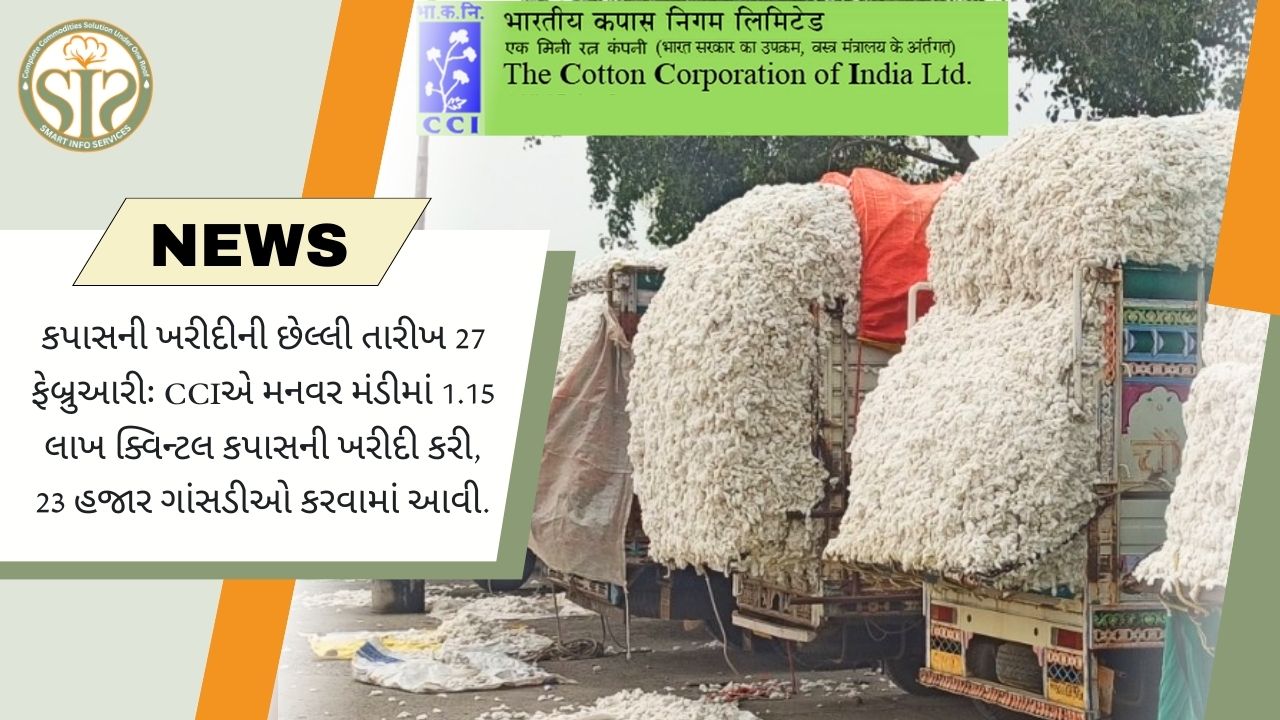
કપાસની ખરીદીની છેલ્લી તારીખ 27 ફેબ્રુઆરીઃ CCIએ મનવર મંડીમાં 1.15 લાખ ક્વિન્ટલ કપાસની ખરીદી કરી, 23 હજાર ગાંસડીઓ કરવામાં આવી.કોટન કોર્પોરેશન ઓફ ઈન્ડિયા (CCI)ની મણવર સેમાલદા માર્ગ સ્થિત બજારમાં કપાસની ખરીદી હવે તેના છેલ્લા તબક્કામાં પહોંચી ગઈ છે. બજાર પ્રશાસને સ્પષ્ટ કર્યું છે કે રજિસ્ટર્ડ ખેડૂતો પાસેથી કપાસની ખરીદી 27 ફેબ્રુઆરીના રોજ સંપૂર્ણપણે બંધ કરી દેવામાં આવશે.આ સિઝનના છેલ્લા ત્રણ મહિનામાં મણવર મંડીમાં કપાસનું જંગી આગમન થયું હતું. સીસીઆઈએ રેકોર્ડ 1 લાખ 15 હજાર ક્વિન્ટલ કપાસની ખરીદી કરી છે, જેમાંથી લગભગ 23 હજાર કપાસની ગાંસડી તૈયાર કરવામાં આવી છે. ખેડૂતોનું કહેવું છે કે કેન્દ્ર સરકારની સીસીઆઈ નીતિઓ અને ટેકાના ભાવે ખરીદીને કારણે તેમને તેમના પાકના યોગ્ય ભાવ મળ્યા છે અને તેઓ આર્થિક રીતે મજબૂત બન્યા છે.બજારની આવક વધીબજાર સચિવ ભગત સિંહ દાવરે જણાવ્યું હતું કે CCIની સતત ખરીદીને કારણે બજારની આવક (કમાણી)માં પણ સારો વધારો નોંધાયો છે. જોકે, CCI તરફથી મળેલા પત્ર મુજબ 27મી ફેબ્રુઆરી પછી ખરીદી કરવામાં આવશે નહીં.આ માટે કપાસના આગમન માટે 16મી અને 20મી ફેબ્રુઆરીની તારીખો મહત્વની માનવામાં આવે છે.ખાનગી બજારો તરફ ખેડૂતોનો ઝુકાવમણવર જિનિંગના મેનેજર પવન કુશવાહાના જણાવ્યા અનુસાર ફેબ્રુઆરીના અંત સુધીમાં જ કપાસ બજારમાં આવવાની ધારણા છે. તેમણે એક ખાસ વાત એ પણ જણાવી કે આ દિવસોમાં ખાનગી જીનીંગ ફેક્ટરીઓમાં કપાસના ભાવ વધી ગયા છે. જેના કારણે હવે ખેડૂતો પોતાનો માલ સીસીઆઈને બદલે ખાનગી વેપારીઓને વેચવામાં વધુ રસ દાખવી રહ્યા છે.વધુ વાંચો :- જાન્યુઆરીમાં કાપડની નિકાસ 3.75% ઘટી, યુએસ ડીલથી રાહત
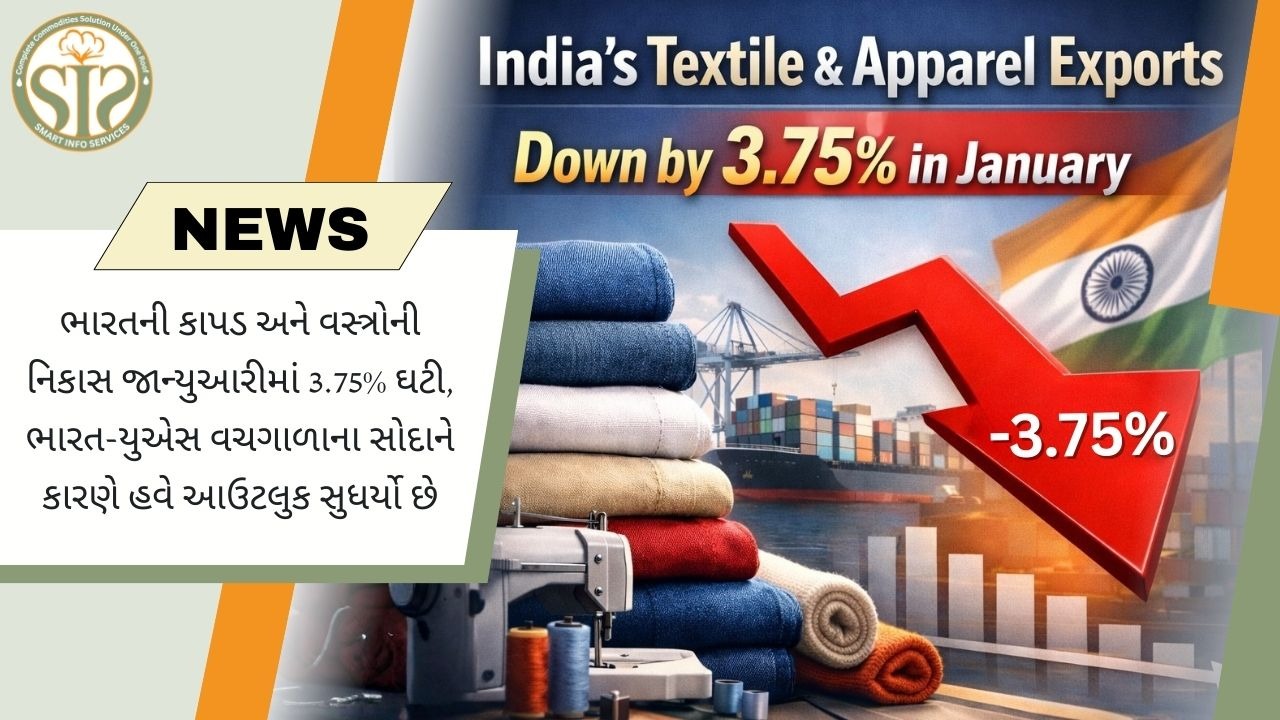
ભારતની કાપડ અને વસ્ત્રોની નિકાસ જાન્યુઆરીમાં 3.75% ઘટી, ભારત-યુએસ વચગાળાના સોદાને કારણે હવે આઉટલુક સુધર્યો છેનવી દિલ્હી: ભારતની કાપડ અને કપડાંની નિકાસ જાન્યુઆરીમાં ગયા વર્ષના સમાન સમયની સરખામણીમાં ઘટી હતી, જેનું મુખ્ય કારણ યુનાઇટેડ સ્ટેટ્સ દ્વારા લાદવામાં આવેલા ઊંચા ટેરિફ છે જે 7 ફેબ્રુઆરી સુધી અમલમાં હતા.ટેરિફની નિકાસ સ્પર્ધાત્મકતાને અસર થઈ અને મહિના દરમિયાન શિપમેન્ટમાં ઘટાડો થયો.કન્ફેડરેશન ઓફ ઈન્ડિયન ટેક્સટાઈલ ઈન્ડસ્ટ્રી (CITI) દ્વારા શેર કરવામાં આવેલા ડેટા અનુસાર, જાન્યુઆરીમાં કાપડની નિકાસમાં -3.68 ટકાનો ઘટાડો થયો છે, જ્યારે જાન્યુઆરી 2025ની સરખામણીમાં જાન્યુઆરી 2026માં કપડાંની નિકાસમાં -3.84 ટકાનો ઘટાડો થયો છે.એકંદરે, કાપડ અને કપડાંની સંયુક્ત નિકાસ જાન્યુઆરી 2026માં US$3,275.44 મિલિયન રહી હતી, જે જાન્યુઆરી 2025માં US$3,403.19 મિલિયનથી ઘટીને -3.75 ટકાનો ઘટાડો નોંધાવી હતી.આ ઘટાડો મુખ્યત્વે સ્પેશિયલ ટેક્સટાઇલ સેગમેન્ટમાં જોવા મળ્યો હતો. કોટન યાર્ન, ફેબ્રિક, મેડ-અપ અને હેન્ડલૂમ પ્રોડક્ટ્સની નિકાસ જાન્યુઆરી 2025માં US $ 1,038.69 મિલિયનથી જાન્યુઆરી 2026માં -4.15 ટકા ઘટીને US $995.58 મિલિયન થઈ છે.કાર્પેટની નિકાસ પણ -12.05 ટકા ઘટીને US$ 118.99 મિલિયન થઈ હતી, જ્યારે આ જ સમયગાળા દરમિયાન, ફ્લોર આવરણ સહિત જ્યુટ ઉત્પાદનોની નિકાસમાં -18.92 ટકાનો નોંધપાત્ર ઘટાડો થયો હતો. હાથથી બનાવેલા કાર્પેટ સિવાય, હેન્ડીક્રાફ્ટમાં પણ -2.70 ટકાનો ઘટાડો જોવા મળ્યો હતો. જો કે, માનવસર્જિત યાર્ન, ફેબ્રિક અને મેકઅપની નિકાસમાં થોડો સુધારો જોવા મળ્યો હતો અને જાન્યુઆરી 2025માં યુએસ $425.97 મિલિયનની સરખામણીએ જાન્યુઆરી 2026માં 1.01 ટકા વધીને US$430.29 મિલિયન થઈ હતી.ડેટામાં એ પણ બહાર આવ્યું છે કે એપ્રિલ 2025 થી જાન્યુઆરી 2026 દરમિયાન કાપડની નિકાસમાં -2.35 ટકાનો ઘટાડો નોંધાયો હતો, જ્યારે કપડાની નિકાસમાં અગાઉના નાણાકીય વર્ષના સમાન સમયગાળાની તુલનામાં 1.59 ટકાનો વધારો નોંધાયો હતો.કાપડની નિકાસમાં આટલો વધારો થયો હોવા છતાં, એપ્રિલ 2024 થી જાન્યુઆરી 2025 ની સરખામણીએ એપ્રિલ 2025 થી જાન્યુઆરી 2026 દરમિયાન કાપડ અને કપડાંની કુલ નિકાસમાં -0.65 ટકાનો થોડો ઘટાડો થયો હતો.ભારતની કુલ નિકાસમાં કાપડ અને કપડાંની નિકાસનો હિસ્સો પણ ઘટ્યો છે. જાન્યુઆરી 2026માં કુલ નિકાસમાં આ ક્ષેત્રનો હિસ્સો 8.96 ટકા હતો, જ્યારે જાન્યુઆરી 2025માં તે 9.37 ટકા હતો.એપ્રિલ 2025થી જાન્યુઆરી 2026ના સમયગાળામાં આ હિસ્સો 8.13 ટકા હતો, જે ગયા વર્ષના સમાન સમયના 8.36 ટકા કરતાં ઓછો છે.આયાતની વાત કરીએ તો, જાન્યુઆરી 2026માં કપાસના કાચા અને કચરાની આયાતમાં 12.33 ટકાનો નોંધપાત્ર વધારો થયો છે અને એપ્રિલ 2025થી જાન્યુઆરી 2026ના સમયગાળામાં તેમાં 72.36 ટકાનો ઝડપથી વધારો થયો છે. આ વધારો કાપડ ઉદ્યોગમાં કાચા માલની ઊંચી સ્થાનિક માંગ અથવા સપ્લાય એડજસ્ટમેન્ટ સૂચવે છે.યુનાઇટેડ સ્ટેટ્સ દ્વારા 7 ફેબ્રુઆરીએ ટેરિફમાં ઘટાડો કર્યા પછી હવે આઉટલૂકમાં સુધારો થવાની ધારણા છે. ટેરિફમાં ઘટાડો ભારતની નિકાસ સ્પર્ધાત્મકતામાં સુધારો કરશે અને આગામી મહિનાઓમાં ટેક્સટાઇલ અને કપડાંના શિપમેન્ટમાં રિકવરીને ટેકો આપશે.વધુ વાંચો :- રૂપિયો 02 પૈસા ઘટીને 90.67/USD પર ખુલ્યો.

રૂપિયો 02 પૈસા ઘટીને 90.67 પ્રતિ ડોલર પર ખુલ્યો.મંગળવારે ભારતીય રૂપિયો 90.67 પ્રતિ ડોલર પર ખુલ્યો, જે અગાઉના બંધ 90.65 હતો.વધુ વાંચો :- અમેરિકાનો સોદો: આર્થિક હિતોનું વિસ્તરણ

યુએસ વેપાર કરાર: શરતો પાછળની વ્યૂહરચનાઢાકા અને વોશિંગ્ટન વચ્ચે 9 ફેબ્રુઆરીના રોજ થયેલ નવા પારસ્પરિક વેપાર કરારને શરૂઆતમાં મોટી રાજદ્વારી સફળતા ગણવામાં આવી હતી. પરંતુ હવે બાંગ્લાદેશના $47 બિલિયન એપેરલ ઉદ્યોગમાં "કોટન સેગમેન્ટ" પર મૂંઝવણ અને ચિંતા વધી રહી છે. આ જોગવાઈ જણાવે છે કે પારસ્પરિક ટેરિફ મુક્તિ ત્યારે જ મળશે જો વસ્ત્રો અમેરિકન કપાસ અથવા માનવ નિર્મિત ફાઇબરમાંથી બનાવવામાં આવે.કરાર હેઠળ, બાંગ્લાદેશી વસ્ત્રો પર લગભગ 16.5 ટકાની પહેલેથી લાગુ MFN ડ્યુટી ઉપરાંત 19 ટકા પારસ્પરિક ટેરિફ લાદવામાં આવ્યો છે. કોઈ રાહત ના કિસ્સામાં, કુલ ફી 35.5 ટકા સુધી પહોંચે છે. સરકાર કહે છે કે અમેરિકન કાચા માલમાંથી બનેલા કપડાં પર 19 ટકા ટેરિફ દૂર કરવામાં આવશે, પરંતુ ઉદ્યોગની દલીલ છે કે મૂળભૂત ડ્યુટી હજુ પણ લાગુ રહેશે.BGMEAના પ્રમુખ મહમૂદ હસન ખાને સ્પષ્ટતા કરી હતી કે કરાર પહેલાની ફી માફ કરવામાં આવશે નહીં. તેમનું કહેવું છે કે છૂટ મળ્યા પછી પણ નિકાસકારોએ 16.5 ટકા ડ્યુટી ચૂકવવી પડશે, જેના કારણે ખર્ચ વધુ રહેશે. ઉપરાંત, કરાર "નિર્દિષ્ટ જથ્થા" મર્યાદા નક્કી કરે છે, જે યુ.એસ.માંથી આયાત કરવામાં આવતા કાચા માલના જથ્થા પર નિર્ભર રહેશે.વિશ્લેષકો અને થિંક-ટેન્ક નિષ્ણાતો માને છે કે કરારની ભાષા અસ્પષ્ટ છે અને ઘણા તકનીકી પાસાઓ સ્પષ્ટ નથી. જો ભારત જેવા હરીફ દેશોને પણ સમાન લાભ મળે તો બાંગ્લાદેશની સ્પર્ધાત્મક ધાર નબળી પડી શકે છે. આવી સ્થિતિમાં, સરકાર માટે કરારની શરતો સ્પષ્ટ કરવી જરૂરી છે, અન્યથા આટલી ચર્ચામાં આવેલ ડીલ અપેક્ષિત સુરક્ષા આપવામાં નિષ્ફળ જઈ શકે છે.વધુ વાંચો :- ડોલર સામે રૂપિયો 05 પૈસા ઘટીને 90.65 પર બંધ થયો.

સોમવારે, ભારતીય રૂપિયો ડોલર સામે 90.65 પર બંધ થયો, જે તેનો શરૂઆતનો દર 90.60 હતો.બંધ સમયે, સેન્સેક્સ 650.39 પોઈન્ટ અથવા 0.79 ટકા વધીને 83,277.15 પર અને નિફ્ટી 211.65 પોઈન્ટ અથવા 0.83 ટકા વધીને 25,682.75 પર બંધ થયો. લગભગ 1676 શેર વધ્યા, 2443 શેર ઘટ્યા અને 181 શેર યથાવત રહ્યા.વધુ વાંચો :- OUTRના સહયોગથી ટેક્સટાઈલ ઉદ્યોગને મજબૂત બનાવવામાં આવશે
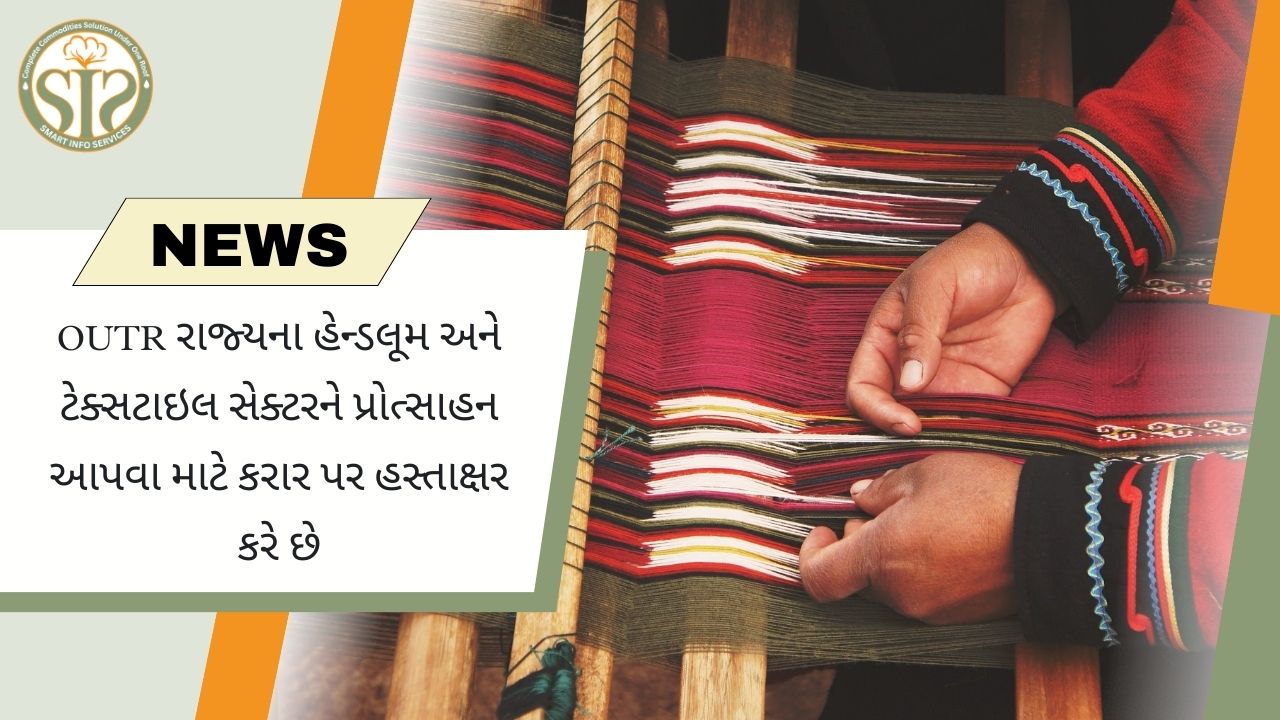
OUTR રાજ્યના હેન્ડલૂમ અને ટેક્સટાઇલ સેક્ટરને પ્રોત્સાહન આપવા માટે કરાર પર હસ્તાક્ષર કરે છેભુવનેશ્વર: ઓડિશા યુનિવર્સિટી ઓફ ટેક્નોલોજી એન્ડ રિસર્ચ (OUTR) એ હેન્ડલૂમ અને ટેક્સટાઇલ સેક્ટરમાં સંશોધન, ટેક્નોલોજી ટ્રાન્સફર, ક્ષમતા નિર્માણ અને નવીનતા પર સહયોગ કરવા માટે ટેક્સટાઇલના રાજ્ય નિર્દેશાલય સાથે સમજૂતીના મેમોરેન્ડમ (MoU) પર હસ્તાક્ષર કર્યા છે.શનિવારે સાંજે નાયબ મુખ્યમંત્રી કે.વી.સિંહ દેવની હાજરીમાં ‘ગ્રાન્ડ તોશાલી સ્વદેશી મેળા’ના ઉદ્ઘાટન સમયે ત્રણ વર્ષના કરાર પર હસ્તાક્ષર કરવામાં આવ્યા હતા.OUTRના વાઇસ ચાન્સેલર બિભૂતિ ભૂષણ બિસ્વાલે જણાવ્યું હતું કે, "એમઓયુ ટેક્નોલોજી અપગ્રેડેશન પર ધ્યાન કેન્દ્રિત કરે છે, વણકરો અને અન્ય હિસ્સેદારો માટે ઉત્પાદનની ગુણવત્તા અને તાલીમ કાર્યક્રમોમાં સુધારો કરે છે. તેમાં ગુણવત્તા પરીક્ષણ અને માનકીકરણ સુવિધાઓની સ્થાપના, બજારના જોડાણને સમર્થન, ટકાઉ અને પર્યાવરણને અનુકૂળ પ્રક્રિયાઓ અને સામગ્રી વિકસાવવા અને પરંપરાગત ટેક્સ્ટનો અભ્યાસ દસ્તાવેજીકરણનો સમાવેશ થાય છે.""સહયોગ લૂમ ટેક્નોલોજી, ડાઇંગ અને ગુણવત્તા નિયંત્રણમાં સંયુક્ત સંશોધન પ્રોજેક્ટ્સને આવરી લેશે. વિદ્યાર્થીઓની ઇન્ટર્નશિપ્સ, ફિલ્ડ પ્રોજેક્ટ્સ અને અંતિમ વર્ષના પ્રોજેક્ટ્સને વણકર ક્લસ્ટરો અને ઉત્પાદન કેન્દ્રો સાથે સુવિધા આપવામાં આવશે," તેમણે ઉમેર્યું.અન્ય ક્ષેત્રોમાં ઉત્પાદકતામાં સુધારો કરવા, કઠોરતાને ઘટાડવા અને ઉત્પાદનની ગુણવત્તા વધારવા માટે સાધનો, ઉપકરણો અને પ્રક્રિયાઓનો વિકાસ, સમકાલીન સૌંદર્ય શાસ્ત્ર સાથે પરંપરાગત ઉદ્દેશ્યને સંયોજિત કરતી ડિઝાઇન હસ્તક્ષેપ અને વર્કશોપ, સેમિનાર અને કૌશલ્ય વિકાસ કાર્યક્રમો દ્વારા ક્ષમતા-નિર્માણ પહેલનો સમાવેશ થાય છે, સત્તાવાર સૂત્રોએ જણાવ્યું હતું.કરાર પરંપરાગત જ્ઞાનના દસ્તાવેજીકરણ, તકનીકી સાહિત્ય અને કેસ સ્ટડીઝની તૈયારી, કન્સલ્ટન્સી અને સલાહકાર સેવાઓ અને ઇન્ફ્રાસ્ટ્રક્ચર, પ્રયોગશાળાઓ અને કુશળતાના સંસાધનોની વહેંચણી માટે પ્રદાન કરે છે.વધુ વાંચો :- શિવરાજ સિંહ ચૌહાણે એમપીમાં કપાસની કાપણીનું નવું મશીન લોન્ચ કર્યું
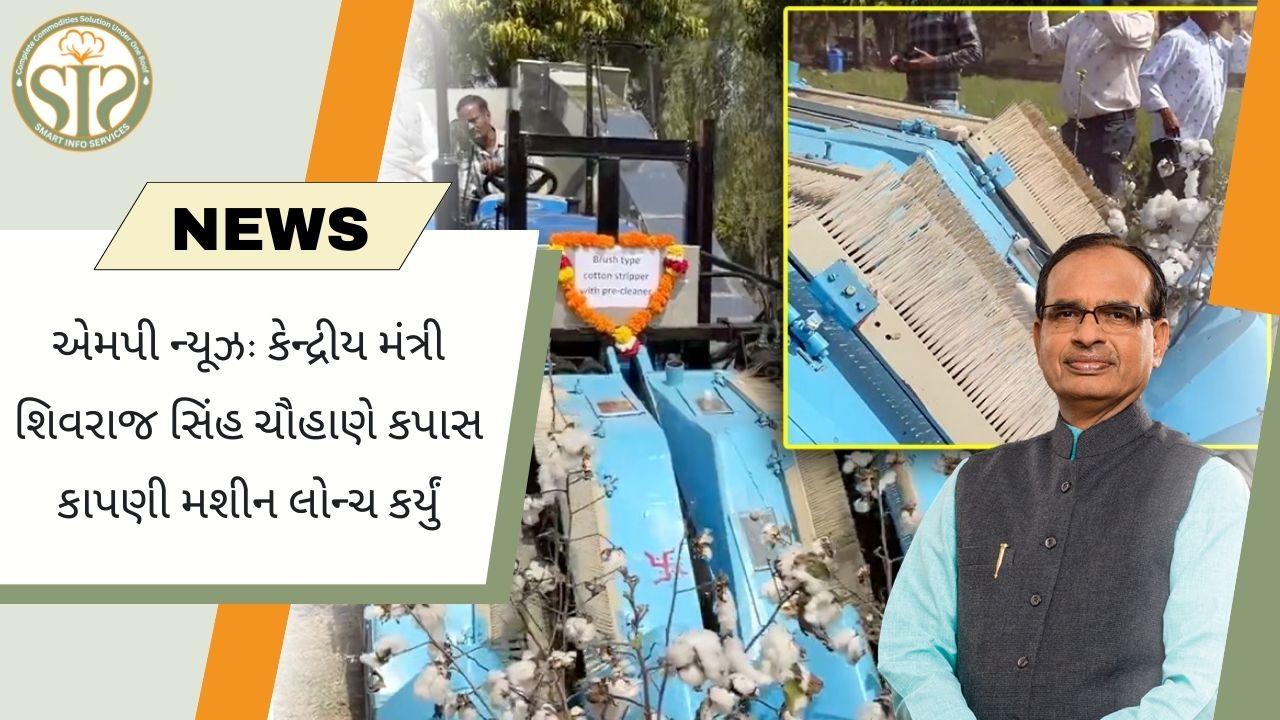
એમપી ન્યૂઝ: કેન્દ્રીય મંત્રી શિવરાજ સિંહ ચૌહાણે કપાસ કાપણી મશીન લોન્ચ કર્યુંભોપાલ (મધ્ય પ્રદેશ): કેન્દ્રીય કૃષિ પ્રધાન અને મધ્ય પ્રદેશના ભૂતપૂર્વ મુખ્ય પ્રધાન શિવરાજ સિંહ ચૌહાણે મહાશિવરાત્રીના અવસર પર ભોપાલમાં ICAR - સેન્ટ્રલ ઇન્સ્ટિટ્યૂટ ઑફ એગ્રીકલ્ચરલ એન્જિનિયરિંગ (CIAE) ખાતે ખેડૂતોને કપાસ કાપણીનું મશીન સમર્પિત કર્યું.મંત્રીએ કહ્યું કે અત્યાર સુધી કપાસની ઉપાડ જાતે જ કરવી પડતી હતી, જેમાં વધુ સમય, શ્રમ અને વધુ ખર્ચની જરૂર હતી.ખેડૂતોએ કપાસની કાપણીને સરળ બનાવવા માટે મશીનની લાંબા સમયથી માંગણી કરી હતી અને હવે આ માંગ પૂર્ણ થઈ છે.મશીનનો ઉપયોગ કરીને કપાસની કાપણીની પ્રક્રિયાનું તેમણે અંગત રીતે નિરીક્ષણ કર્યું હતું. તેમણે કહ્યું કે નવી ટેકનોલોજી સમયની બચત કરશે, ખર્ચમાં ઘટાડો કરશે અને કપાસની ખેતીને વધુ નફાકારક બનાવશે.મંત્રીએ એમ પણ જણાવ્યું હતું કે વધુ ઉપજ સાથે નવી રોગ-પ્રતિરોધક કપાસની જાતો વિકસાવવાના પ્રયાસો ચાલુ છે.ખેડૂતોની આવક વધારવામાં મદદ કરવા માટે પ્રતિ એકર છોડની સંખ્યા વધારવા માટે પણ કામ કરવામાં આવી રહ્યું છે.વધુ વાંચો :- રૂપિયો 04 પૈસા મજબૂત થઈને 90.60 પ્રતિ ડોલર પર ખુલ્યો

રૂપિયો 04 પૈસા વધીને 90.60/USD પર ખુલ્યોશુક્રવારના બંધ 90.64 ની સરખામણીમાં સોમવારે ભારતીય રૂપિયો નજીવા વધારા સાથે 90.60 પ્રતિ ડોલર પર ખુલ્યો.વધુ વાંચો :- CCI કોટન વેચાણની વિગતો 2025-26
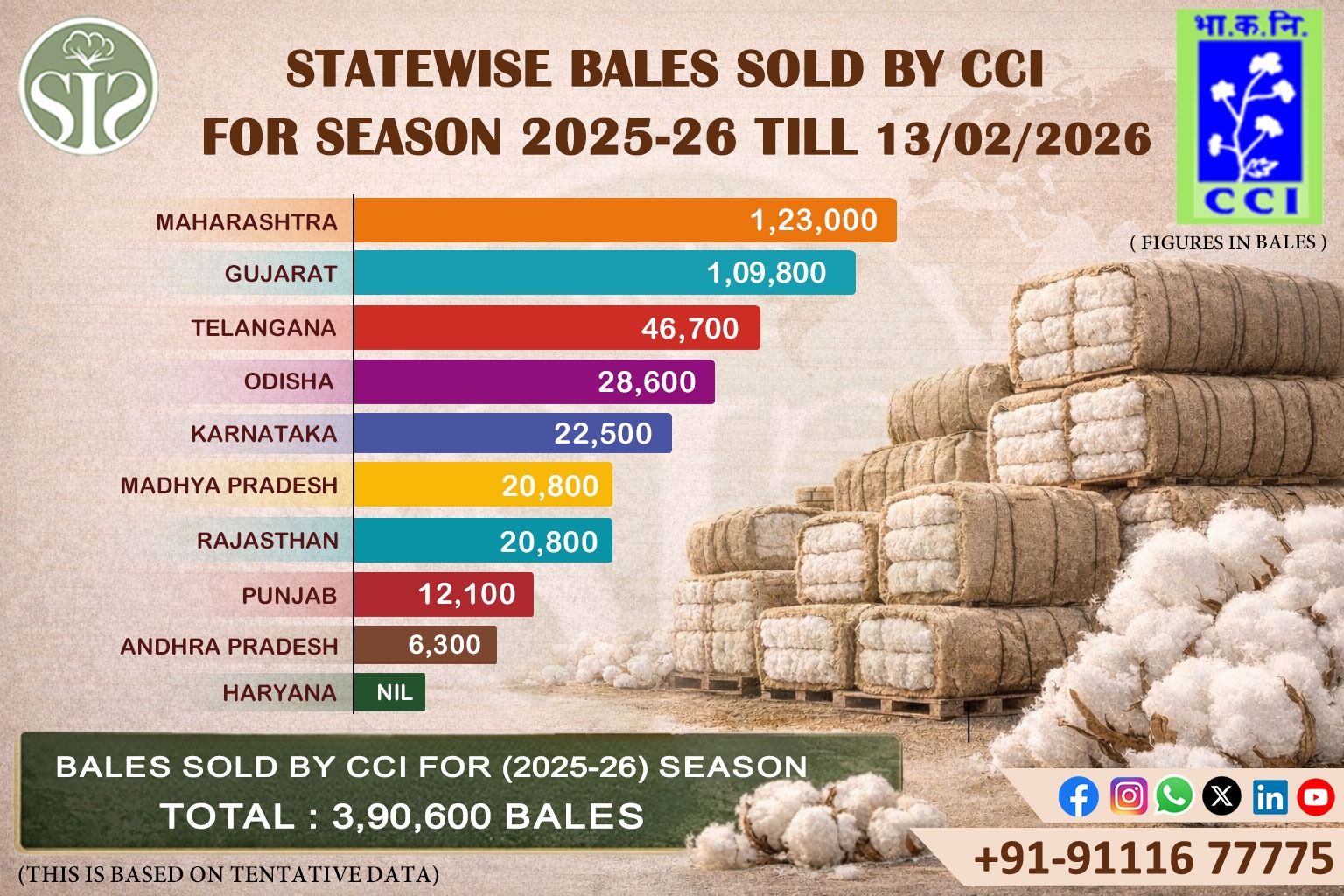
રાજ્યવાર CCI કપાસ વેચાણ વિગતો - 2025-26 સીઝનકોટન કોર્પોરેશન ઓફ ઇન્ડિયા (CCI) એ આ અઠવાડિયે 2025-26 સીઝન માટે કપાસના ભાવમાં પ્રતિ કેન્ડી ₹1,400-₹1,700 નો ઘટાડો કર્યો છે. આજ સુધીમાં, CCI એ 2025-26 સીઝન માટે આશરે 390,600 કપાસની ગાંસડી વેચી છે. વેચાણ કેટલાક મુખ્ય કપાસ ઉત્પાદક રાજ્યોમાં કેન્દ્રિત છે, જેમાં મહારાષ્ટ્ર અને ગુજરાત આગળ છે.
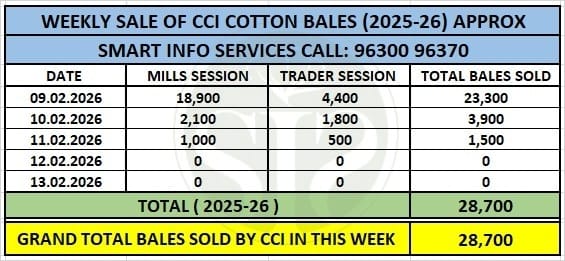
CCI એ કપાસના ભાવમાં પ્રતિ કેન્ડી ₹1,400-₹1,700નો ઘટાડો કર્યો; આ અઠવાડિયાની હરાજીમાં વેચાણ લગભગ 28,700 ગાંસડી હતું.કોટન કોર્પોરેશન ઓફ ઇન્ડિયા (CCI) એ 13 ફેબ્રુઆરી, 2026 ના રોજ પૂરા થતા સપ્તાહ માટે કપાસના ભાવ ₹1,400 ઘટાડીને ₹1,700 પ્રતિ કેન્ડી કર્યા. ભાવ ઘટાડા છતાં, એજન્સીએ 9 થી 13 ફેબ્રુઆરી સુધી ઘણા કેન્દ્રો પર તેની નિયમિત ઇ-હરાજી ચાલુ રાખી, જેમાં વર્તમાન 2025-26 સીઝનથી લગભગ 28,700 ગાંસડીનું વેચાણ નોંધાયું, જેમાં મિલો અને વેપારીઓ બંનેએ ભાગ લીધો.*સાપ્તાહિક વેચાણ અહેવાલ*9 ફેબ્રુઆરી, 2026: સપ્તાહની શરૂઆત સારી માંગ સાથે થઈ, 2025-26 સીઝનથી 23,300 ગાંસડીનું વેચાણ થયું. મિલોએ સૌથી વધુ 18,900 ગાંસડી ખરીદી કરી, જ્યારે વેપારીઓએ 4,400 ગાંસડી ખરીદી.૧૦ ફેબ્રુઆરી, ૨૦૨૬: વેચાણમાં તીવ્ર ઘટાડો થયો અને ૩,૯૦૦ ગાંસડી થઈ ગઈ, જેમાં મિલોએ ૨,૧૦૦ ગાંસડી ખરીદી અને વેપારીઓએ ૧,૮૦૦ ગાંસડી ખરીદી, આ બધી ચાલુ સિઝન માટે.૧૧ ફેબ્રુઆરી, ૨૦૨૬: ૨૦૨૫-૨૬ સિઝન માટે વેચાણ વધુ ઘટીને ૧,૫૦૦ ગાંસડી થઈ ગયું, જેમાં મિલોએ ૧,૦૦૦ ગાંસડી ખરીદી અને વેપારીઓએ ૫૦૦ ગાંસડી ખરીદી.૧૨-૧૩ ફેબ્રુઆરી, ૨૦૨૬: CCI ઓનલાઈન હરાજીમાં ૨૦૨૫-૨૬ અથવા ૨૦૨૪-૨૫ સિઝન માટે કોઈ વેચાણ નોંધાયું ન હતું, જે અઠવાડિયાના અંતે નબળી માંગ દર્શાવે છે.*કુલ વેચાણ:*હરાજી પછી, CCIનું કુલ વેચાણ આ પ્રમાણે હતું:૨૦૨૫-૨૬ સિઝન માટે ૩,૯૦,૬૦૦ ગાંસડી અને૨૦૨૪-૨૫ સિઝન માટે ૯,૮૮૨,૪૦૦ ગાંસડી.

કેન્દ્ર સરકાર MSP અને ઇ-ઓક્શન દ્વારા કપાસની સપ્લાય ચેઇનને મજબૂત બનાવે છેનવી દિલ્હી: સરકાર લઘુત્તમ ટેકાના ભાવ (એમએસપી) કામગીરી હેઠળ કોટન કોર્પોરેશન ઓફ ઈન્ડિયા (સીસીઆઈ) દ્વારા ખરીદવામાં આવેલા સ્ટોકના પ્રકાશન દ્વારા સ્થાનિક કાપડ અને સ્પિનિંગ ઉદ્યોગોને કપાસની ઉપલબ્ધતાની સુવિધા આપે છે, એમ રાજ્યસભામાં એક પ્રશ્નના લેખિત જવાબમાં ટેક્સટાઈલ રાજ્ય મંત્રી પવિત્રા માર્ગેરિતાએ જણાવ્યું હતું.સ્પર્ધાત્મક ભાવ શોધને સક્ષમ કરવા માટે આ શેરોનું વેચાણ પારદર્શક ઓનલાઈન ઈ-ઓક્શન સિસ્ટમ દ્વારા કરવામાં આવે છે. કપાસ માટે MSP વાર્ષિક ધોરણે ખેડૂતોના હિતોની સુરક્ષા માટે જાહેર કરવામાં આવે છે જ્યારે બજારના ભાવ ટેકાના સ્તરથી નીચે જાય છે અને કપાસનું સતત ઉત્પાદન સુનિશ્ચિત કરે છે.મંત્રીએ જણાવ્યું હતું કે કપાસની ઉત્પાદકતા, ગુણવત્તા અને ખેડૂતોની આવક વધારવા માટે અનેક નીતિ અને પ્રોગ્રામેટિક હસ્તક્ષેપ હાથ ધરવામાં આવ્યા છે.કેન્દ્રીય બજેટ 2025-26માં કપાસ ઉત્પાદકતા માટેના પાંચ વર્ષના મિશનની જાહેરાત કરવામાં આવી હતી, જેમાં કૃષિ સંશોધન અને શિક્ષણ વિભાગ નોડલ વિભાગ તરીકે અને કાપડ મંત્રાલય ભાગીદાર તરીકે છે.આ મિશન સંશોધન અને વિસ્તરણ દ્વારા કપાસના ઉત્પાદનને મજબૂત કરવા પર ધ્યાન કેન્દ્રિત કરે છે, જેમાં અદ્યતન સંવર્ધન અને બાયોટેકનોલોજી સાધનોનો ઉપયોગ કરીને એક્સ્ટ્રા લોંગ સ્ટેપલ (ELS) કપાસ સહિત આબોહવા-સ્થિતિસ્થાપક, જંતુ-પ્રતિરોધક અને ઉચ્ચ ઉપજ આપતી જાતોના વિકાસનો સમાવેશ થાય છે.વધુમાં, કાપડ મંત્રાલય સાથે સંકલન કરીને ICAR-CICR, નાગપુર દ્વારા 2023-24 થી રાષ્ટ્રીય ખાદ્ય સુરક્ષા મિશન (NFSM) હેઠળ કપાસ પર એક વિશેષ પ્રોજેક્ટ અમલમાં મૂકવામાં આવ્યો છે.MSP કામગીરીને મજબૂત કરવા માટે, CCIએ 2024-25માં 508 કેન્દ્રોથી 2025-26માં 571 કેન્દ્રો સુધી તેનું પ્રાપ્તિ નેટવર્ક વિસ્તરણ કર્યું છે, જેમાં કપાસ ઉગાડતા 11 રાજ્યોના 150 જિલ્લાઓને આવરી લેવામાં આવ્યા છે. 2024-25 કપાસની સીઝન દરમિયાન, CCIએ રૂ. 37,437 કરોડની કિંમતની 100.16 લાખ ગાંસડીની ખરીદી કરી હતી. 2025-26માં (5 ફેબ્રુઆરી 2026ના રોજ) રૂ. 36,355 કરોડની કિંમતની 90.97 લાખ ગાંસડીની ખરીદી કરવામાં આવી છે.વધુ વાંચો :- જીનીંગ ઉદ્યોગ પર સંકટ, પ્રદીપ જૈનની ચેતવણી

ખાનદેશમાં 150 થી વધુ જિનિંગ ફેક્ટરીઓ આવતા વર્ષે બંધ થવાની ચેતવણી, પ્રદીપ જૈનની ચેતવણી ખાનદેશમાં કપાસ ઉદ્યોગ એક મોટી કટોકટી તરફ નજર કરી રહ્યો છે, કપાસના ભાવમાં ઘટાડો અને નિકાસ અટકાવવાને કારણે આવતા વર્ષે 150 થી વધુ જિનિંગ ફેક્ટરીઓ બંધ થવાના જોખમમાં છે, એમ ખાનદેશ જિનિંગ પ્રસિંઘ કારખાનદાર સંઘના સ્થાપક-પ્રમુખ પ્રદીપ જૈને આજે FPJને આપેલા નિવેદનમાં ચેતવણી આપી હતી.ખેડૂતો સંઘર્ષ કરી રહ્યા છે કારણ કે કપાસના ભાવ તૂટી ગયા છે, નિકાસ સ્થગિત છે અને પાકમાંથી આવક ઘટી છે. જૈને જણાવ્યું હતું કે, "જીનર્સ પ્રતિ ક્વિન્ટલ ₹7,400-₹7,500 થી વધુ ચૂકવણી કરી શકતા નથી." "જો આ સ્થિતિ ચાલુ રહેશે, તો ખાનદેશમાં જીનીંગ ઉદ્યોગ અટકી જશે."જલગાંવ, ધુલે અને નંદુરબાર જિલ્લાનો સમાવેશ કરતું ખાનદેશ - મહારાષ્ટ્રનો અગ્રણી કપાસ ઉત્પાદક પ્રદેશ છે, જે વાર્ષિક આશરે 15 લાખ ગાંસડી ઉપજ આપે છે. સ્થાનિક અર્થતંત્ર આ ક્ષેત્ર પર ખૂબ જ નિર્ભર છે, જેમાં હજારો નોકરીઓ સીધી અને પરોક્ષ રીતે જીનીંગ કામગીરી સાથે જોડાયેલી છે.જો કે, આ વર્ષે ભારે વરસાદને કારણે ઉત્પાદન પર ગંભીર અસર પડી છે. અત્યાર સુધીમાં માત્ર 5.5 થી 6 લાખ ગાંસડી જિનિંગ કરવામાં આવી છે, જ્યારે અન્ય 2.5 લાખ ગાંસડીઓ વેચાયા વગરની રહી છે અને ખેડૂતો સારા ભાવની રાહ જોઈ રહ્યા છે.મુશ્કેલીમાં વધારો કરીને, કપાસની નિકાસ હાલમાં અટકી ગઈ છે જ્યારે આયાતી કપાસની લગભગ 40 લાખ ગાંસડી સ્થાનિક સ્ટોકપાઈલમાં પડી છે, જે આંતરિક બજારની સ્થિતિને વધુ ખરાબ કરી રહી છે. જો કે ખેડૂતો વધુ વળતર માંગે છે, વેપારીઓનું કહેવું છે કે તેઓ પ્રતિ ક્વિન્ટલ ₹7,500થી વધુ ચૂકવણી કરી શકતા નથી, જેના કારણે ખરીદી અટકી જાય છે.ખેડૂતોએ તેમની ઉપજને રોકી રાખી હોવાથી બજારોમાં કપાસની આવકમાં તીવ્ર ઘટાડો થયો છે. દરમિયાન, જથ્થાબંધ કપાસના ભાવ કેન્ડી દીઠ ₹56,000 થી ઘટીને ₹53,000 થયા છે, વૈશ્વિક માંગ પણ નબળી પડી છે."હાલની બજારની સ્થિરતા ટકાઉ નથી. જો ખેડૂતો નબળા ભાવોનો સામનો કરવાનું ચાલુ રાખશે, તો તેઓ આવતા વર્ષે કપાસના વાવેતરમાં ઘટાડો કરશે - સમગ્ર ખાનદેશમાં જિનિંગ ફેક્ટરીઓને બંધ કરવાની ફરજ પાડશે," જૈને ચેતવણી આપી.વધુ વાંચો :- ટેક્સટાઇલ નિકાસને પ્રોત્સાહન આપવામાં આવશે, અમેરિકામાં કોઈ ડ્યુટી લાદવામાં આવશે નહીં
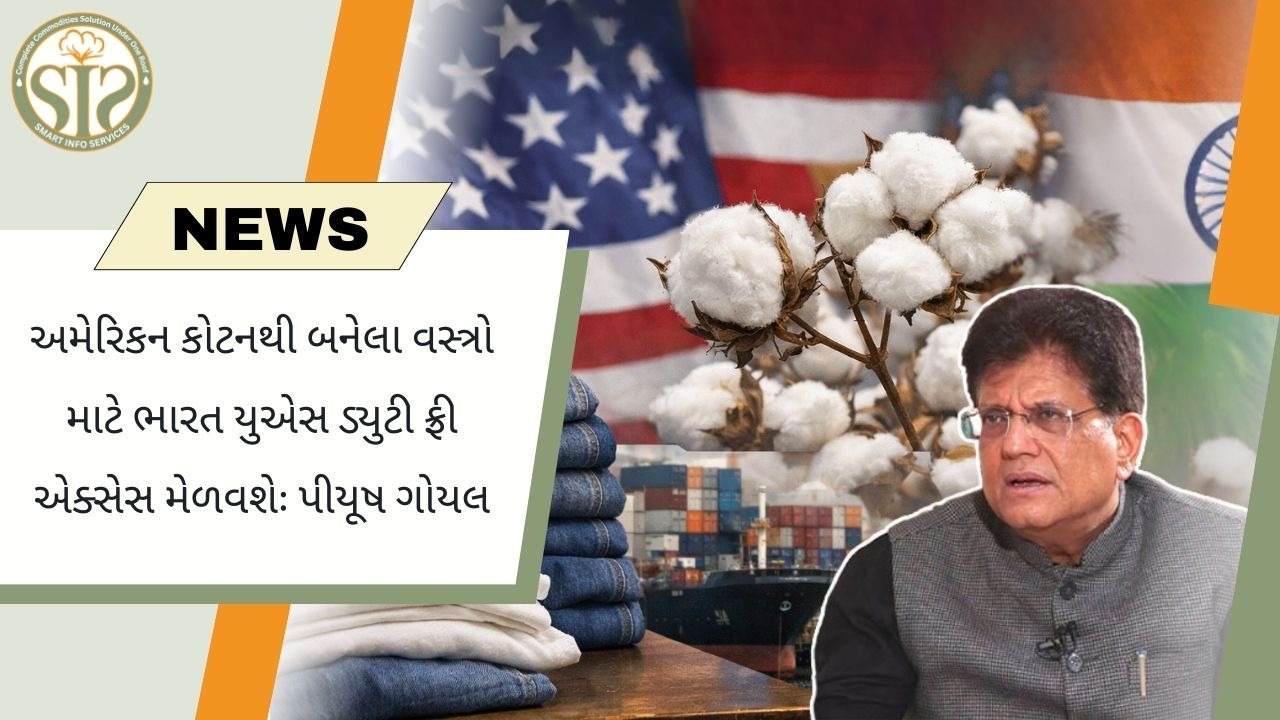
*અમેરિકન કોટનથી બનેલા વસ્ત્રો માટે ભારત યુએસ ડ્યુટી ફ્રી એક્સેસ મેળવશેઃ પીયૂષ ગોયલ*ભારતને વોશિંગ્ટન સાથે પ્રસ્તાવિત વચગાળાના વેપાર કરાર હેઠળ અમેરિકન યાર્ન અને કોટનનો ઉપયોગ કરીને ઉત્પાદિત વસ્ત્રો માટે યુનાઇટેડ સ્ટેટ્સમાં કન્સેશનલ ડ્યુટી એક્સેસ મળશે, એમ વાણિજ્ય અને ઉદ્યોગ પ્રધાન પીયૂષ ગોયલે જણાવ્યું હતું.ગુરુવારે એક સ્ટાર્ટ-અપ ઇવેન્ટની બાજુમાં બોલતા, ગોયલે સંકેત આપ્યો હતો કે ભારત તેની યુએસ સાથેની વેપાર વ્યવસ્થા હેઠળ બાંગ્લાદેશ સુધી વિસ્તરેલી તુલનાત્મક સારવાર સુરક્ષિત કરશે. તેમણે કહ્યું કે બાંગ્લાદેશને જે પણ લાભો મળ્યા છે તે પણ ભારતના અંતિમ કરારમાં સામેલ કરવામાં આવશે.ભારત અને યુએસએ દ્વિપક્ષીય વેપાર કરારના પ્રથમ તબક્કા માટે એક માળખાને અંતિમ સ્વરૂપ આપ્યું છે, જે માર્ચમાં લાગુ થવાની ધારણા છે. મંત્રીના જણાવ્યા અનુસાર, વચગાળાનો કરાર ઔપચારિક રીતે પૂર્ણ થયા પછી ફ્રેમવર્ક વિગતવાર જોગવાઈઓમાં અનુવાદ કરશે.સૂચિત વ્યવસ્થા હેઠળ, અમેરિકન બજારમાં પુનઃ નિકાસ માટે વસ્ત્રોનું ઉત્પાદન કરવા માટે યુએસમાંથી યાર્ન સોર્સ કરતી ભારતીય કંપનીઓને ડ્યુટી ફ્રી એક્સેસ મળશે, જે બાંગ્લાદેશી નિકાસકારો માટે ઉપલબ્ધ રાહતોને પ્રતિબિંબિત કરશે. ગોયલે કહ્યું કે આ જોગવાઈ યુએસ-બાંગ્લાદેશ કરારનો એક ભાગ છે અને તે જ રીતે ભારતના કરારમાં પણ દર્શાવવામાં આવશે. તેમણે ઉમેર્યું હતું કે આ પગલાથી ભારતીય કપાસના ખેડૂતો પર કોઈ પ્રતિકૂળ અસર થશે નહીં.તેમણે વધુમાં સ્પષ્ટતા કરી હતી કે કપાસ જેવા કાચા માલની આયાત પર કોઈ ક્વોટા નિયંત્રણો રહેશે નહીં. યુએસ-બાંગ્લાદેશ પારસ્પરિક વેપાર કરાર હાલમાં યુએસમાં વસ્ત્રો અને કાપડની ટેરિફ-મુક્ત નિકાસને મંજૂરી આપે છે જો ઉત્પાદકો અમેરિકન ઉત્પાદિત કપાસ અથવા માનવસર્જિત ફાઇબર ઇનપુટ્સનો ઉપયોગ કરે છે.હાલમાં, બાંગ્લાદેશ નિર્મિત વસ્ત્રોને યુએસ માર્કેટમાં 31% વસૂલાતનો સામનો કરવો પડે છે, જેમાં 12% મોસ્ટ-ફેવર્ડ-નેશન-પ્લસ ડ્યુટી અને 19% પારસ્પરિક ટેરિફનો સમાવેશ થાય છે. જ્યારે યુએસ ફાઇબરનો ઉપયોગ કરવામાં આવે છે, ત્યારે ડ્યુટી ઘટીને 12% થઈ જાય છે. દ્વિપક્ષીય કરાર હેઠળ, વોશિંગ્ટન બાંગ્લાદેશ પરના પારસ્પરિક ટેરિફને 20% થી ઘટાડીને 19% કરવા માટે સુયોજિત છે, નવી દિલ્હી અને ઢાકા વચ્ચેના ટેરિફ તફાવતને એક ટકા પોઈન્ટ સુધી ઘટાડે છે.બાંગ્લાદેશ વિશ્વનું બીજા ક્રમનું સૌથીhttp:// મોટું ગાર્મેન્ટ ઉત્પાદક છે અને ચીન અને વિયેતનામની સાથે યુએસ ટેક્સટાઇલ અને એપેરલ માર્કેટમાં ભારતનું મુખ્ય હરીફ છે.ગોયલે નોંધ્યું હતું કે કરાર હેઠળ ભારત 50 અબજ યુએસ ડોલરના વેપારના આંકડાને લક્ષ્યાંકિત કરી રહ્યું છે. તેમણે એ પણ અવલોકન કર્યું કે અમેરિકન વ્યવસાયો ભારતને વૈશ્વિક પુરવઠા શૃંખલાઓમાં વધુને વધુ વિશ્વાસપાત્ર ભાગીદાર તરીકે જોઈ રહ્યા છે. વધુ વાંચો:- ડોલર સામે રૂપિયો 02 પૈસા વધીને 90.64 પર બંધ થયો.

શુક્રવારે, ભારતીય રૂપિયો 90.66 પર ખુલ્યા પછી, ડોલર સામે 02 પૈસા વધીને 90.64 પર બંધ થયો.બંધ સમયે, સેન્સેક્સ 1,048.16 પોઈન્ટ અથવા 1.25 ટકા ઘટીને 82,626.76 પર અને નિફ્ટી 336.10 પોઈન્ટ અથવા 1.30 ટકા ઘટીને 25,471.10 પર બંધ થયો. લગભગ 1236 શેર વધ્યા, 2784 શેર ઘટ્યા અને 148 શેર યથાવત રહ્યા.વધુ વાંચો :- યુએસ કોટન પર ભારતને બાંગ્લાદેશ જેવો લાભ મળી શકે છે
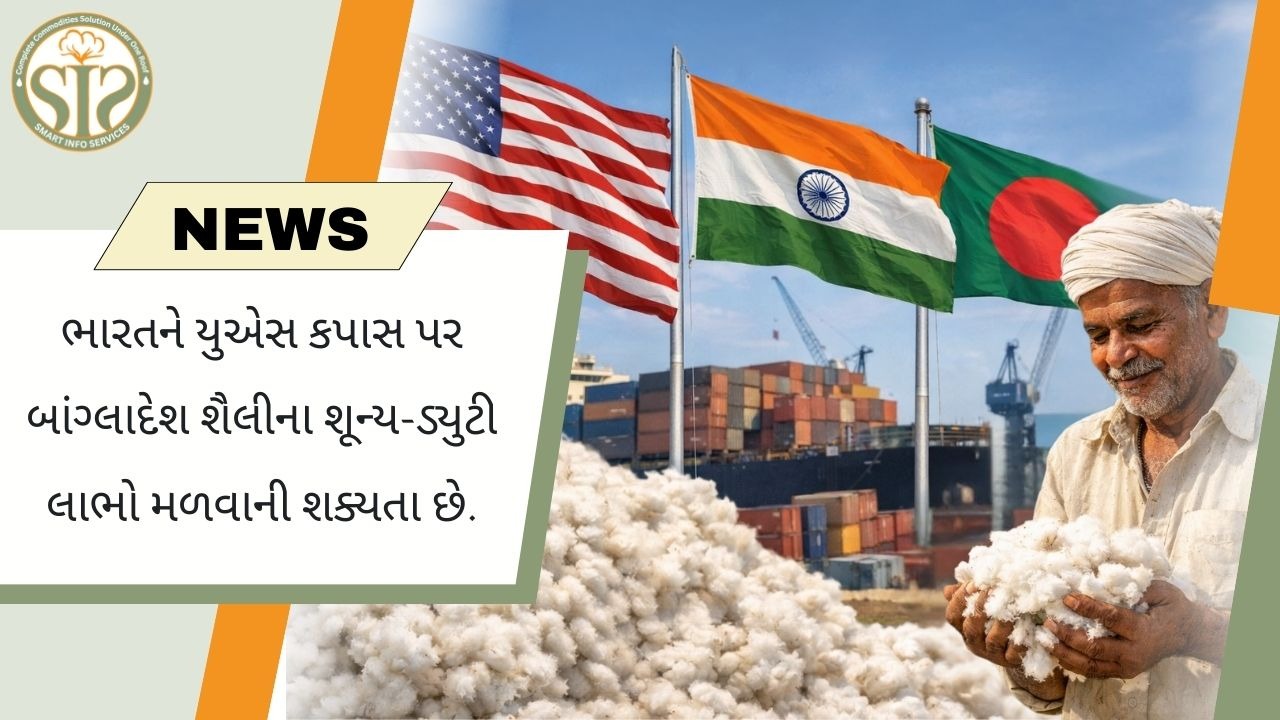
ભારતને યુએસ કપાસ પર બાંગ્લાદેશ શૈલીના શૂન્ય-ડ્યુટી લાભો મળવાની શક્યતા છે.વાણિજ્ય મંત્રાલયે જણાવ્યું હતું કે ભારતને બાંગ્લાદેશને આપવામાં આવેલા સમાન યાર્ન અને કપાસ સંબંધિત વેપાર લાભો મળશે, જે દેશના કાપડ અને વસ્ત્ર નિકાસકારો માટે સંભવિત પ્રોત્સાહનનો સંકેત આપે છે.મંત્રાલયના જણાવ્યા અનુસાર, કરાર પર હસ્તાક્ષર થયા પછી ભારતીય કાપડ અને વસ્ત્ર નિકાસકારોને યુએસ મૂળના કપાસનો ઉપયોગ કરીને બનાવેલા વસ્ત્રો પર શૂન્ય-ટૅરિફ લાભો મળવાની અપેક્ષા છે. આ પગલાને ભારત અને યુનાઇટેડ સ્ટેટ્સ વચ્ચે દ્વિપક્ષીય વેપાર સંબંધોને મજબૂત બનાવવાના ચાલુ પ્રયાસોના ભાગ રૂપે જોવામાં આવે છે, જ્યારે પ્રાદેશિક ખેલાડીઓ સાથે સ્પર્ધાત્મક સમાનતા સુનિશ્ચિત કરવામાં આવે છે.વેપાર સોદા પર રાજકીય ઝઘડા વચ્ચે આ સ્પષ્ટતા આવી છે. લોકસભાના વિરોધ પક્ષના નેતા રાહુલ ગાંધીના જવાબમાં, કેન્દ્રીય વાણિજ્ય પ્રધાન પિયુષ ગોયલે જણાવ્યું હતું કે બાંગ્લાદેશે વધુ સારી શરતો મેળવી હોવાના આરોપો ખોટા છે."તેમણે સંસદમાં બીજું એક જૂઠાણું ફેલાવ્યું કે બાંગ્લાદેશને ભારત કરતાં વેપારથી વધુ ફાયદો થયો છે. જેમ બાંગ્લાદેશ પાસે એવી સુવિધા છે કે જો કાચો માલ અમેરિકા પાસેથી ખરીદવામાં આવે, તો જો તમે તેને પ્રોસેસ કરો અને કાપડ બનાવો અને નિકાસ કરો, તો તે પણ કરશે.ગોયલે એ પણ પુનરોચ્ચાર કર્યો કે વ્યાપક વ્યવસ્થા હેઠળ સ્થાનિક કૃષિ હિતોનું રક્ષણ કરવામાં આવ્યું છે. "ભારતમાં ઉત્પાદિત લગભગ 90% થી 95% કૃષિ ઉત્પાદનોને દક્ષિણ એશિયાઈ રાષ્ટ્રના અમેરિકા સાથેના વેપાર સોદામાંથી બાકાત રાખવામાં આવ્યા છે, જેમાં ખેડૂતોના હિતોનું રક્ષણ કરવામાં આવ્યું છે," તેમણે કહ્યું.વધુ વાંચો :- રૂપિયો 06 પૈસા ઘટીને 90.66 પર ખુલે છે

રૂપિયો 06 પૈસા ઘટીને 90.66/USD પર ખુલ્યોશુક્રવારે ભારતીય રૂપિયો અગાઉના બંધ 90.60 ની સરખામણીમાં 90.66 પ્રતિ ડોલર પર નજીવો ઘટાડો થયો.