

सोमवार को भारतीय रुपया 18 पैसे गिरकर 90.73 प्रति डॉलर पर बंद हुआ, जबकि सुबह यह 90.55 पर खुला था।बाजार बंद होने पर, सेंसेक्स 54.30 पॉइंट या 0.06 प्रतिशत गिरकर 85,213.36 पर और निफ्टी 19.65 पॉइंट या 0.08 प्रतिशत गिरकर 26,027.30 पर था। लगभग 2067 शेयर बढ़े, 1864 शेयर गिरे, और 139 शेयर बिना किसी बदलाव के बंद हुए।और पढ़ें :- एमएसपी पर कपास बेचने के लिए किसान जल्द कराएं रजिस्ट्रेशन, अंतिम तारीख नजदीक
एमएसपी पर कपास बिक्री का मौका, रजिस्ट्रेशन की अंतिम तारीख करीबजानें, कहां और कैसे कराएं रजिस्ट्रेशन और कितना मिलेगा रेटमिनिमम सपोर्ट प्राइस (MSP) पर कपास बेचने की इच्छा रखने वाले किसानों के लिए अब रजिस्ट्रेशन की प्रक्रिया बेहद जरूरी हो गई है। कॉटन कॉर्पोरेशन ऑफ इंडिया (CCI) ने कपास खरीद के लिए रजिस्ट्रेशन की अंतिम तारीख 31 दिसंबर निधारित की है। इसके चलते महाराष्ट्र सहित देशभर के किसान तेजी से कपास किसान ऐप के जरिए रजिस्टर कर रहे हैं। अभी तक सिर्फ महाराष्ट्र से सात लाख और देशभर से करीब 41 लाख किसान अपना पंजीकरण करवा चुके हैं। ऐसे में यदि आप भी अपनी कपास को एमएसपी पर बेचना चाहते हैं, तो तुरंत रजिस्ट्रेशन कर लें।इंपोर्ट ड्यूटी हटने से रेट में गिरावट, एमएसपी ही किसानों का सहाराअमेरिका के साथ टैरिफ तनाव के बाद भारत सरकार ने कॉटन इंपोर्ट ड्यूटी हटाई थी। इसके बाद घरेलू बाजार में कपास के रेट नीचे आ गए। ऐसे में किसान अपनी उपज को एमएसपी (MSP) पर बेचने के लिए सीसीआई (CCI) पर निर्भर हैं। इस साल लंबे स्टेपल ग्रेड कॉटन का एमएसपी (MSP) 8,110 रुपए प्रति क्विंटल तय किया गया है। वहीं इंपोर्ट टैरिफ भी 31 दिसंबर तक हटाया गया है, जिससे ओपन मार्केट में कीमतों में उतार-चढ़ाव जारी है। देशभर में 41 लाख रजिस्ट्रेशन, फिर भी बहस जारीमहाराष्ट्र सहित पूरे देश में 41 लाख किसानों ने एमएसपी सेल के लिए रजिस्ट्रेशन किया है। लेकिन किसान नेताओं का कहना है कि केवल विदर्भ क्षेत्र में ही कपास उगाने वाले किसानों की वास्तविक संख्या इससे कहीं अधिक है। हालांकि, सीसीआई अधिकारियों का कहना है कि ऐप-बेस्ड सिस्टम शुरू होने के बाद किसान रजिस्ट्रेशन प्रक्रिया को तेजी से अपना रहे हैं। एक अधिकारी ने बताया कि हर दिन करीब 50,000 किसान नए रजिस्ट्रेशन कर रहे हैं, जो एमएसपी के प्रति किसानों की बढ़ती रुचि दिखाता है। सीसीआई की बढ़ती खरीद और ओपन मार्केट रेट में सुधारजब से सीसीआई (CCI) ने खरीद बढ़ाई है, प्राइवेट बाजार में भी रेट में हल्का सुधार देखने को मिला है। शुरुआत में जहां कपास लगभग 6,800 रुपए प्रति क्विंटल पर बिक रही थी, वहीं अब कई बाजारों में रेट बढ़कर 7,400 रुपए के आसपास पहुंच गए हैं। हालांकि प्राइवेट व्यापारी अक्सर कपास को कम ग्रेड दिखाकर किसानों को कम कीमत देते हैं। लेकिन एमएसपी का विकल्प होने से किसान अब अपनी उपज का बेहतर मूल्य पा रहे हैं। सीसीआई ने अब तक महाराष्ट्र में लगभग 5 लाख बेल और देशभर में करीब 27 लाख बेल की खरीद की है। कम पैदावार ने कीमतों में सुधार की उम्मीद बढ़ाईयवतमाल जिले के वानी क्षेत्र के एक APMC डायरेक्टर रोशन कोठारी ने बताया कि इस साल कम पैदावार के कारण कपास के दाम उगाने वालों के लिए फायदेमंद रहेंगे। उनके अनुसार, अगर रेट 8,000 रुपए प्रति क्विंटल तक जाते हैं, तो किसानों को अच्छा मुनाफा मिलेगा। कैसे करें कपास किसान ऐप पर रजिस्ट्रेशनएमएसपी पर कपास बेचने के लिए सीसीआई का “Kapas Farmers” ऐप अनिवार्य हो गया है। नीचे आसान भाषा इस ऐप पर रजिस्ट्रेशन की प्रक्रिया को स्टेप-बाय-स्टेप प्रोसेस समझते हैं: सबसे पहले ऐप डाउनलोड करें : इसके लिए अपने स्मार्टफोन के Google Play Store या App Store में जाएं। “Kapas Farmers” सर्च करें और Cotton Corporation of India (CCI) का ऑफिशियल ऐप डाउनलोड करें।रजिस्ट्रेशन शुरू करें : ऐप खोलकर “Farmer Registration” या “Register Now” विकल्प चुनें।व्यक्तिगत जानकारी भरें : आधार से लिंक मोबाइल नंबर दर्ज करें, नाम, पिता/गार्जियन का नाम, जन्म तिथि, जेंडर, पता, जिला, राज्य, पिनकोड आदि की जानकारी भरें। जमीन और फसल की जानकारी दें : इसमें जमीन स्वामित्व (खुद की/लीज पर), खेत का सर्वे नंबर/7/12 उत्तरा व कपास की बुवाई से जुड़ी जानकारी दें। सबमिट करें और वेरिफिकेशन पूरा करें : ऑनलाइन रजिस्ट्रेशन के बाद आपकी डिटेल्स का फिजिकल वेरिफिकेशन स्थानीय APMC या कृषि विभाग द्वारा किया जाता है। यह एमएसपी पात्रता सुनिश्चित करने का एक अनिवार्य चरण है।स्लॉट बुकिंग करें : वेरिफिकेशन के बाद किसान ऐप से अपने नजदीकी CCI खरीद केंद्र पर कपास लाने की तारीख और समय (स्लॉट) बुक कर सकते हैं।कपास के लिए रजिस्ट्रेशन कराते समय इन बातों का रखें ध्यानकपास की एमएसपी (MSP) पर बिक्री के लिए रजिस्ट्रेशन अनिवार्य है।31 दिसंबर 2025 अंतिम तारीख है, इसलिए समय रहते प्रक्रिया पूरी करें।रजिस्ट्रेशन के बाद फिजिकल वेरिफिकेशन जरूरी है। बिना ऐप रजिस्ट्रेशन के कोई भी किसान एमएसपी (MSP) बिक्री का लाभ नहीं ले सकता है।ट्रैक्टर जंक्शन हमेशा आपको अपडेट रखता है। इसके लिए ट्रैक्टरों के नये मॉडलों और उनके कृषि उपयोग के बारे में एग्रीकल्चर खबरें प्रकाशित की जाती हैं। प्रमुख ट्रैक्टर कंपनियों वीएसटी ट्रैक्टर, महिंद्रा ट्रैक्टर आदि की मासिक सेल्स रिपोर्ट भी हम प्रकाशित करते हैं जिसमें ट्रैक्टरों की थोक व खुदरा बिक्री की विस्तृत जानकारी दी जाती है। अगर आप मासिक सदस्यता प्राप्त करना चाहते हैं तो हमसे संपर्क करें।अगर आप नए ट्रैक्टर, पुराने ट्रैक्टर, कृषि उपकरण बेचने या खरीदने के इच्छुक हैं और चाहते हैं कि ज्यादा से ज्यादा खरीददार और विक्रेता आपसे संपर्क करें और आपको अपनी वस्तु का अधिकतम मूल्य मिले तो अपनी बिकाऊ वस्तु को ट्रैक्टर जंक्शन के साथ शेयर करें।और पढ़ें :- रुपया 13 पैसे गिरकर 90.55/USD पर खुला

रुपया 13 पैसे गिरकर 90.55 प्रति डॉलर पर खुलाभारतीय रुपया सोमवार को 90.06 प्रति डॉलर पर खुला, जबकि पिछला बंद भाव 90.42 था।और पढ़ें :- राज्यवार CCI कपास बिक्री विवरण (2024–25)
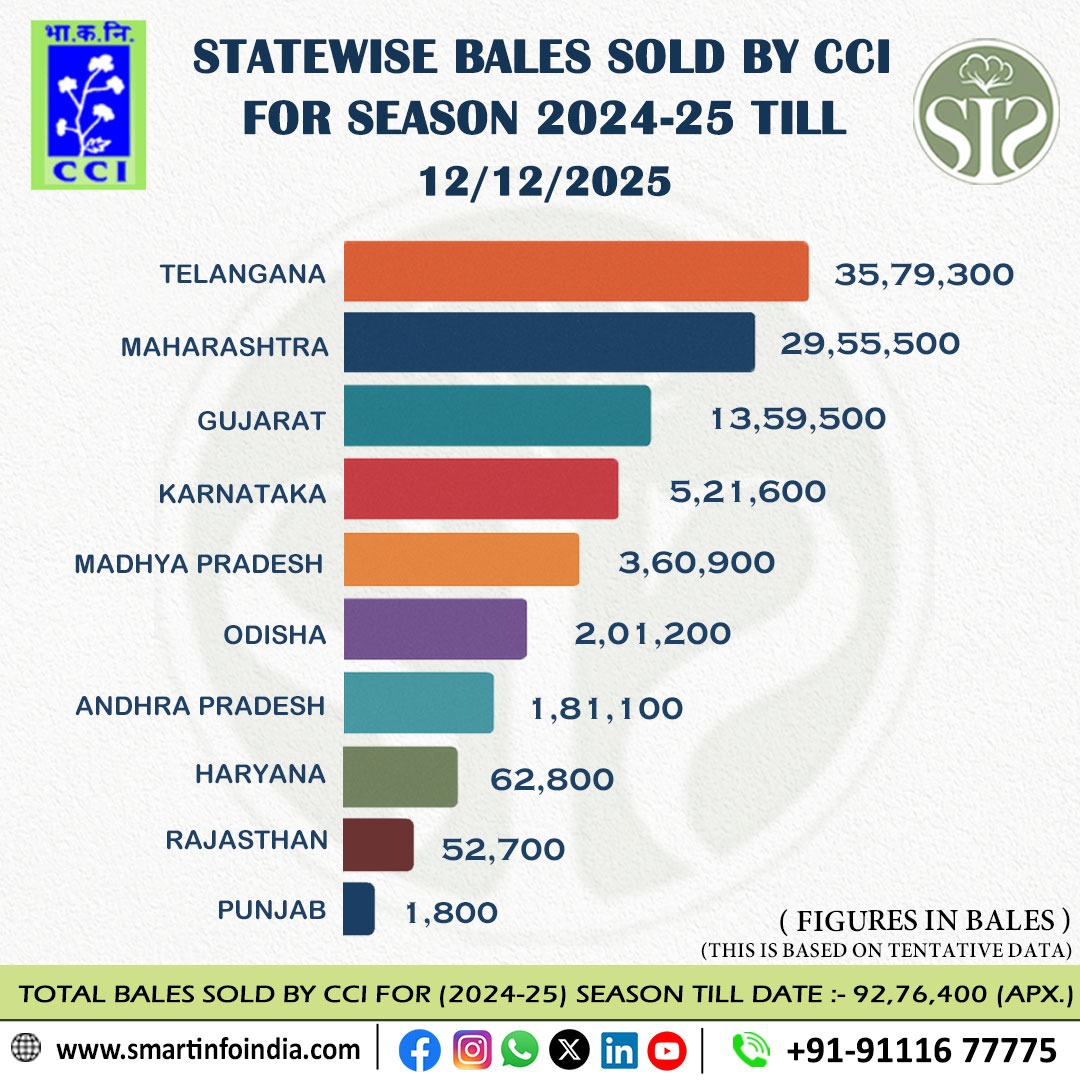
राज्य के अनुसार CCI कपास बिक्री विवरण – 2024-25 सीज़नभारतीय कपास निगम (CCI) ने इस सप्ताह अपनी कीमतों में 100/- रुपय प्रति कैंडी की बढ़त की | सीज़न 2024-25 में अब तक कुल बिक्री लगभग 92,76,400 गांठों तक पहुँच गई है। यह आंकड़ा अब तक की कुल खरीदी गई कपास का लगभग 92.76% है।राज्यवार बिक्री आंकड़ों से पता चलता है कि महाराष्ट्र, तेलंगाना और गुजरात से बिक्री में प्रमुख भागीदारी रही है, जो अब तक की कुल बिक्री का 85.10% से अधिक हिस्सा रखते हैं।यह आंकड़े कपास बाजार में स्थिरता लाने और प्रमुख कपास उत्पादक राज्यों में नियमित आपूर्ति सुनिश्चित करने के लिए CCI के सक्रिय प्रयासों को दर्शाते हैं।
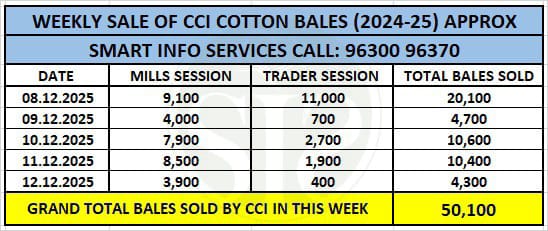
CCI ने कॉटन की कीमतें बढ़ाईं; इस हफ़्ते ई-ऑक्शन में बिक्री 50,100 गांठ तक पहुंचीकॉटन कॉर्पोरेशन ऑफ़ इंडिया (CCI) ने इस हफ़्ते अपने कॉटन की कीमतें ₹100 प्रति कैंडी बढ़ा दीं, CCI ने अब 2024-25 सीज़न के दौरान खरीदे गए कॉटन का 92.76% ई-ऑक्शन के ज़रिए बेच दिया है।8 दिसंबर से 12 दिसंबर 2025 तक के हफ़्ते के दौरान, CCI ने अलग-अलग सेंटर्स पर मिलों और ट्रेडर्स के लिए रेगुलर ऑनलाइन ऑक्शन किए। इन ऑक्शन्स के नतीजे में इस हफ़्ते कुल लगभग 50,100 गांठों की बिक्री हुई, जो दोनों सेगमेंट से लगातार डिमांड को दिखाता है।साप्ताहिक बिक्री रिपोर्ट8 दिसंबर 2025हफ़्ते की शुरुआत मज़बूती से हुई और सबसे ज़्यादा बिक्री 20,100 गांठों के साथ दर्ज की गई। इनमें से 9,100 गांठें मिलों ने खरीदीं, जबकि 11,000 गांठें ट्रेडर्स ने खरीदीं।9 दिसंबर 2025सेल्स तेज़ी से घटकर 4,700 बेल्स रह गई, जिसमें 4,000 बेल्स मिलों ने खरीदीं और 700 बेल्स ट्रेडर्स ने।10 दिसंबर 2025हफ़्ते के बीच की नीलामी में खरीदारी बेहतर हुई, और कुल बिक्री बढ़कर 10,600 बेल्स हो गई। मिलों ने 7,900 बेल्स खरीदीं, जबकि ट्रेडर्स ने 2,700 बेल्स खरीदीं।11 दिसंबर 2025CCI ने इस दिन 10,400 बेल्स बेचीं, जिसमें मिलों ने 8,500 बेल्स और ट्रेडर्स ने 1,900 बेल्स उठाईं।12 दिसंबर 2025हफ़्ता ठीक-ठाक रहा और 4,300 बेल्स बिकीं। इसमें से मिलों ने 3,900 बेल्स खरीदीं, जबकि ट्रेडर्स ने 400 बेल्स खरीदीं।इन साप्ताहिक बिक्री के साथ, चालू सीजन के लिए सीसीआई की कुल कपास बिक्री लगभग 92,76,400 गांठों तक पहुंच गई है, जो 2024-25 सीजन के तहत इसकी कुल खरीद का 92.76% है।और पढ़ें :- "भारत टेक्सटाइल के लिए ग्लोबल मार्केट तलाश रहा है: पबितराजी"
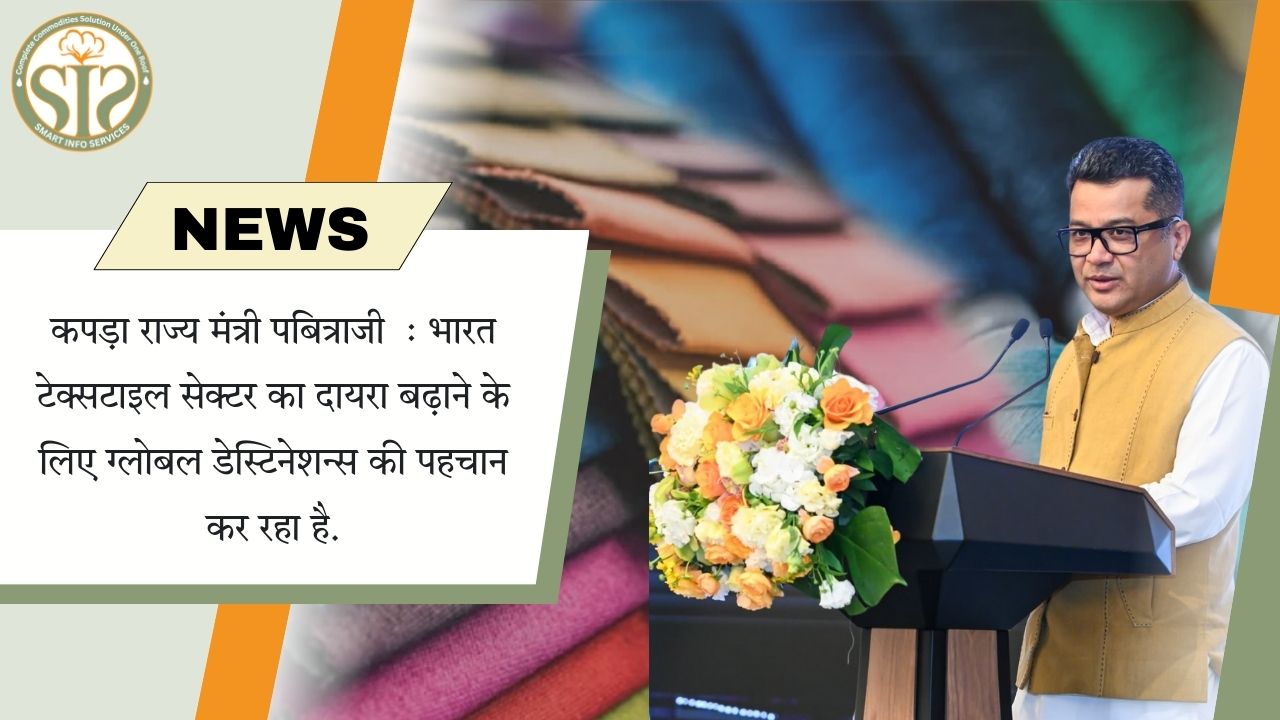
कपड़ा राज्य मंत्री पबित्राजी : भारत टेक्सटाइल सेक्टर का दायरा बढ़ाने के लिए ग्लोबल डेस्टिनेशन्स की पहचान कर रहा है.नई दिल्ली : कपड़ा मंत्रालय ने एक व्यापक 40 देशों की मार्केट डाइवर्सिफिकेशन रणनीति बनाई है, जिसमें हाई-पोटेंशियल ग्लोबल डेस्टिनेशन्स की पहचान की गई है और एक्सपोर्ट प्रमोशन काउंसिल्स (EPCs), इंडस्ट्री डेलीगेशन्स और विदेशों में भारतीय मिशनों के माध्यम से भारत की वैश्विक उपस्थिति को बढ़ाने के लिए संरचित आउटरीच किया जा रहा है, कपड़ा राज्य मंत्री पबित्रा मार्गेरिटा ने शुक्रवार को राज्यसभा में एक लिखित जवाब में यह जानकारी दी।कपड़ा मंत्रालय ने कपड़ा उद्योग को प्रोत्साहित करने और बढ़ावा देने के लिए विभिन्न योजनाओं और कार्यक्रमों को मंजूरी दी है, जैसे कि विश्व स्तरीय औद्योगिक बुनियादी ढांचे के लिए पीएम मेगा इंटीग्रेटेड टेक्सटाइल रीजन्स एंड अपैरल (पीएम मित्रा) पार्क योजना; बड़े पैमाने पर विनिर्माण को बढ़ावा देने और प्रतिस्पर्धात्मकता बढ़ाने के लिए MMF अपैरल, MMF फैब्रिक्स और टेक्निकल टेक्सटाइल्स के लिए प्रोडक्शन लिंक्ड इंसेंटिव (PLI) योजना; अनुसंधान, नवाचार, बाजार विकास और कौशल विकास के लिए राष्ट्रीय तकनीकी वस्त्र मिशन।अन्य योजनाओं में, समर्थ - कपड़ा क्षेत्र में क्षमता निर्माण के लिए योजना; रेशम उत्पादन विकास के लिए सिल्क समग्र-2; आधुनिकीकरण के लिए संशोधित प्रौद्योगिकी उन्नयन निधि योजना (ATUFS); राष्ट्रीय हथकरघा विकास कार्यक्रम, राष्ट्रीय हस्तशिल्प विकास कार्यक्रम, कारीगरों, बुनकरों और हस्तशिल्प समूहों को एंड-टू-एंड सहायता के लिए व्यापक हस्तशिल्प क्लस्टर विकास योजना शामिल हैं, राज्य मंत्री ने अपने लिखित जवाब में कहा।सरकार अंतरराष्ट्रीय और घरेलू बाजार में कपड़ा उद्योग की प्रतिस्पर्धात्मकता बढ़ाने के लिए विभिन्न प्रोत्साहन और लाभ प्रदान करती है।मंत्री ने कहा कि मंत्रालय ने EPCs के सहयोग से 2024 और 2025 में भारत टेक्स का आयोजन किया है - यह एक मेगा ग्लोबल टेक्सटाइल इवेंट है जो अंतरराष्ट्रीय जुड़ाव को मजबूत करने, विभिन्न देशों के प्रदर्शकों और व्यापार आगंतुकों को एक साथ लाने और भारत के कपड़ा पारिस्थितिकी तंत्र के पैमाने, नवाचार और वैश्विक प्रतिस्पर्धात्मकता को प्रदर्शित करने के लिए है।सरकार WTO-अनुरूप शून्य-रेटेड निर्यात के सिद्धांतों के आधार पर अपैरल गारमेंट्स और मेड-अप्स के लिए राज्य और केंद्रीय करों और लेवी की छूट (RoSCTL) योजना लागू कर रही है।मंत्री ने लिखित जवाब में कहा, "जो कपड़ा उत्पाद RoSCTL योजना के तहत कवर नहीं हैं, उन्हें अन्य गैर-कपड़ा क्षेत्रों के साथ निर्यात किए गए उत्पादों पर शुल्क और करों की छूट (RoDTEP) योजना के तहत समर्थन दिया जा रहा है। RoSCTL के तहत, FY 2024-25 के दौरान 15,000 से अधिक निर्यातकों को एम्बेडेड करों पर छूट से लाभ हुआ है।" भारत ने 15 फ्री ट्रेड एग्रीमेंट (FTA) साइन किए हैं, जिसमें इंडिया-यूके कॉम्प्रिहेंसिव इकोनॉमिक एंड ट्रेड एग्रीमेंट (CETA) भी शामिल है। उन्होंने कहा कि इन FTA का मकसद टैरिफ और नॉन-टैरिफ बाधाओं को कम करना, प्रक्रियाओं को आसान बनाना और स्ट्रक्चरल मुद्दों को हल करना है ताकि भारतीय एक्सपोर्टर्स पार्टनर बाजारों में ज़्यादा प्रतिस्पर्धी बन सकें।सरकार ने एक्सपोर्ट प्रमोशन मिशन (EPM) को मंज़ूरी दी है, जो एक सहयोगी फ्रेमवर्क पर आधारित है जिसमें वाणिज्य विभाग, MSME मंत्रालय, वित्त मंत्रालय और अन्य प्रमुख स्टेकहोल्डर्स शामिल हैं, जिनमें वित्तीय संस्थान, एक्सपोर्ट प्रमोशन काउंसिल, कमोडिटी बोर्ड, उद्योग संघ और राज्य सरकारें शामिल हैं।उन्होंने संसद को बताया कि सरकार ने टेक्सटाइल उद्योग के लिए इनपुट सामग्री की लागत को कम करने, पर्याप्त आपूर्ति सुनिश्चित करने और निर्यात प्रतिस्पर्धात्मकता में सुधार करने और समग्र उद्योग दक्षता बढ़ाने के लिए 31 दिसंबर, 2025 तक कपास पर आयात शुल्क से छूट दी है।उन्होंने यह भी कहा कि सरकार ने स्ट्रक्चरल विसंगतियों को दूर करने, लागत कम करने, मांग बढ़ाने, निर्यात को बढ़ावा देने और रोज़गार बनाए रखने के लिए टेक्सटाइल वैल्यू चेन में GST दर को तर्कसंगत बनाया है।एक अन्य लिखित जवाब में, मंत्री ने सदन को बताया कि 2024-25 में भारत का टेक्सटाइल और कपड़ों (हस्तशिल्प सहित) का निर्यात 37,755.0 मिलियन अमेरिकी डॉलर था, जो पिछले वर्ष (2023-24) की तुलना में 5.2 प्रतिशत की वृद्धि दर्शाता है।इसके अलावा, मंत्री ने कहा कि अप्रैल-अक्टूबर 2025 के दौरान भारत का टेक्सटाइल और कपड़ों का निर्यात, जिसमें हस्तशिल्प भी शामिल है, 20,401.95 मिलियन अमेरिकी डॉलर रहा, जो पिछले वर्ष की इसी अवधि (20,728.05 मिलियन अमेरिकी डॉलर) की तुलना में 1.8 प्रतिशत की मामूली गिरावट दर्शाता है, फिर भी वैश्विक टैरिफ-संबंधित और अन्य बाहरी चुनौतियों के बावजूद निर्यात प्रदर्शन में समग्र स्थिरता का संकेत देता है। (ANI)और पढ़ें :- रुपया 90.42/USD पर स्थिर बंद हुआ।

भारतीय रुपया शुक्रवार को डॉलर के मुकाबले 90.42 पर स्थिर बंद हुआ, जबकि सुबह यह 90.42 पर खुला था। क्लोजिंग बेल: सेंसेक्स 449 अंक चढ़कर 85,267 पर बंद हुआ, निफ्टी 26,000 के ऊपर बंद हुआ; टाटा स्टील, एटर्नल को सबसे ज़्यादा फायदा हुआ। और पढ़ें :- रुपया 06 पैसे गिरकर 90.42 पर खुला

रुपया 06 पैसे गिरकर 90.42/USD पर खुलाशुक्रवार को भारतीय रुपया रिकॉर्ड निचले स्तर 90.42 प्रति डॉलर के करीब खुला, जबकि पिछला बंद भाव 90.36 था।और पढ़ें :- रुपया 38 पैसे गिरकर 90.36 प्रति डॉलर पर बंद हुआ।

गुरुवार को भारतीय रुपया 38 पैसे गिरकर 90.36 प्रति डॉलर पर बंद हुआ, जबकि सुबह यह 89.98 पर खुला था।बाजार बंद होने पर सेंसेक्स 426.86 अंक या 0.51 प्रतिशत बढ़कर 84,818.13 पर और निफ्टी 140.55 अंक या 0.55 प्रतिशत बढ़कर 25,898.55 पर बंद हुआ। लगभग 2345 शेयरों में तेजी आई, 1664 शेयरों में गिरावट आई और 138 शेयरों में कोई बदलाव नहीं हुआ।और पढ़ें :- उत्तरी बेल्ट में कॉटन आवक में 49.66% वृद्धि
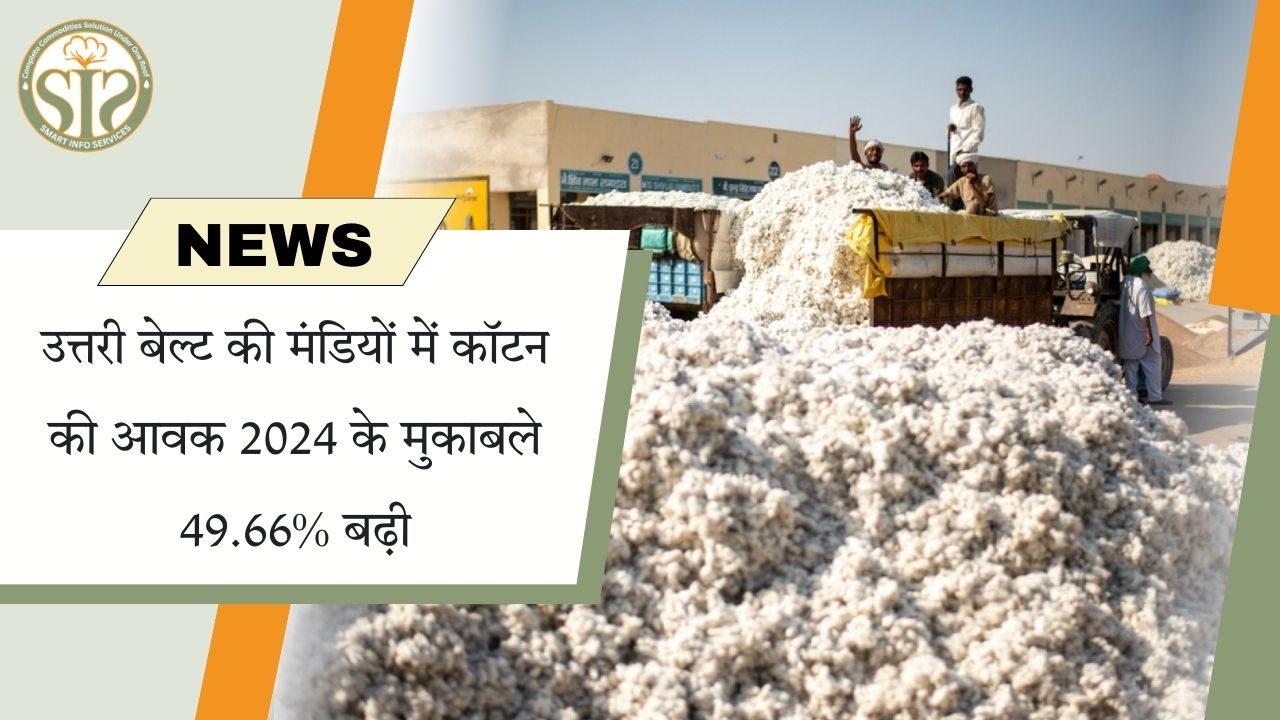
उत्तरी बेल्ट की मंडियों में कॉटन की आवक 2024 के मुकाबले 49.66% बढ़ीउत्तरी कॉटन बेल्ट – जिसमें पंजाब, हरियाणा और राजस्थान शामिल हैं – में इस सीज़न में अब तक मंडियों में कॉटन बॉल्स की आवक में 49.66 परसेंट की बढ़ोतरी दर्ज की गई है, और आने वाले महीनों में और ज़्यादा आवक की उम्मीद है क्योंकि कटाई अभी भी जारी है। तीनों राज्यों की मंडियों में अब तक 13.32 लाख गांठें (एक गांठ ओटा हुआ कॉटन – बीज से अलग किया हुआ कॉटन – जिसका वज़न 170 kg होता है) आ चुकी हैं, जबकि 2024 में इसी समय में 8.90 लाख गांठें आई थीं।यह बढ़ोतरी मंडियों में कपास (कॉटन बॉल्स) की कीमतों की वजह से हुई है, जो मिनिमम सपोर्ट प्राइस (MSP) से काफी नीचे बिक रही हैं। कीमतों में कोई खास सुधार की उम्मीद नहीं है, और कॉटन कॉर्पोरेशन ऑफ़ इंडिया (CCI), जो MSP रेट पर खरीद करता है, की मौजूदा मौजूदगी के कारण, किसान अपनी उपज को रोककर नहीं रख रहे हैं, और इस तरह, सामान्य से ज़्यादा फसलें मंडियों में तेज़ी से ला रहे हैं।क्योंकि कॉटन बल्ब की तुड़ाई सितंबर में शुरू होती है और नवंबर तक खत्म हो जाती है, इसलिए उत्तरी इलाके में कॉटन की आमद का मुख्य सीज़न 1 अक्टूबर से शुरू होता है — हालांकि कुछ शुरुआती फसल सितंबर में भी मंडियों में पहुंच जाती है — और 50-70 परसेंट (कुछ मामलों में 90 परसेंट भी, जो उस सीज़न में मार्केट रेट पर निर्भर करता है) दिसंबर तक मंडियों में पहुंच जाता है, और अगले साल 30 सितंबर तक खत्म हो जाता है।पंजाब में इस साल 1.19 लाख हेक्टेयर में कॉटन की खेती हुई है, जबकि 2024 में यह लगभग 1 लाख हेक्टेयर था, लेकिन भारी बारिश से लगभग 10 से 15 परसेंट फसल खराब हो गई, जिससे खेती का प्रोडक्टिव एरिया पिछले साल के लेवल (यानी लगभग 1 लाख हेक्टेयर) से थोड़ा ऊपर रह गया और क्वालिटी पर भी असर पड़ा। पंजाब में इस साल 1.5 लाख से 1.8 लाख बेल्स की फसल होने की उम्मीद है, जबकि पिछले साल यह 1.51 लाख बेल्स (7.55 लाख क्विंटल) थी।हरियाणा में, इस साल कॉटन की खेती का एरिया 3.80 लाख हेक्टेयर है, जबकि पिछले साल यह 4 लाख हेक्टेयर था। अब तक, हरियाणा की मंडियों में 2.70 लाख बेल्स (13.50 लाख क्विंटल कपास, मतलब बिना ओटा हुआ कॉटन) आ चुकी हैं, जबकि पिछले साल इसी समय तक यह 2.45 लाख बेल्स (12.25 लाख क्विंटल) थी — यह लगभग 0.25 लाख बेल्स, या 10 परसेंट से थोड़ा ज़्यादा है।इस साल, CCI ने हरियाणा में 65,000 गांठें (3.30 लाख क्विंटल) खरीदी हैं, जो पिछले साल की 62,000 गांठों (3.10 लाख क्विंटल) से थोड़ी ज़्यादा है।राजस्थान में अब तक लगभग 10 लाख गांठें आ चुकी हैं, जबकि पिछले साल इसी समय में 6 लाख गांठों से ज़्यादा आवक हुई थी — यह लगभग 4.0 लाख गांठें, या लगभग 66 प्रतिशत की बढ़ोतरी है। इस साल राज्य का कॉटन एरिया 6.50 से 7 लाख हेक्टेयर होने का अनुमान है, जबकि पैदावार औसत, लगभग 8 से 10 क्विंटल प्रति हेक्टेयर रहती है।पंजाब, हरियाणा और राजस्थान में कुल मिलाकर 2025 में लगभग 11.50 लाख हेक्टेयर में कॉटन की खेती होगी, जबकि 2024 में यह लगभग 11 लाख हेक्टेयर होगी। पंजाब और हरियाणा में, कॉटन का एरिया हर साल कम होता जा रहा है, जबकि राजस्थान में यह ट्रेंड ऊपर-नीचे होता रहता है, एक साल थोड़ी गिरावट और अगले साल थोड़ी बढ़ोतरी के साथ। हाल के सालों में ये राज्य बार-बार पिंक बॉलवर्म के हमलों से भी जूझ रहे हैं, जिससे किसानों का भरोसा बहुत कम हो गया है। कहा जाता है कि पंजाब सबसे ज़्यादा प्रभावित है, और एक्सपर्ट्स बताते हैं कि कई साल पहले, राज्य में लगभग 8 लाख हेक्टेयर ज़मीन पर कपास की खेती होती थी। उनका तर्क है कि अगर पंजाब सरकार फसल अलग-अलग तरह की खेती और कपास बेल्ट को बचाने को लेकर सीरियस है, तो उसे पूरे भारत से साइंटिस्ट्स को बुलाना चाहिए ताकि वे लगातार कीड़ों के फैलने की असली वजहों की जांच कर सकें और असरदार हल निकाल सकें।2021-22 से 2023-24 तक कॉटन की कीमतें मज़बूत रहीं और MSP से ऊपर रहीं, लेकिन 2024-25 में तेज़ी से गिरीं, हालांकि वे MSP के करीब रहीं। 2021 में कॉटन का दाम ₹13,000 से ₹14,000 प्रति क्विंटल, 2022 में लगभग ₹10,000, 2023 में ₹8,000 से ₹8,100 और 2024 में ₹6,000 से ₹8,300 के बीच रहा, जिसमें ज़्यादातर फसल ₹7,400 से ₹7,500 पर बिकी—जो लगभग MSP के बराबर है। पिछले साल मीडियम स्टेपल के लिए MSP ₹7,121 प्रति क्विंटल और लॉन्ग स्टेपल के लिए ₹7,521 प्रति क्विंटल थी। इस साल कॉटन का दाम पिछले पांच सालों में सबसे कम है।कॉटन एसोसिएशन ऑफ़ इंडिया (CAI) के चेयरमैन अतुल गणात्रा ने कहा कि राज्यों से मिले इनपुट के आधार पर, CAI का अनुमान है कि पंजाब में लगभग 1.80 लाख बेल (9 लाख क्विंटल), हरियाणा में 6.52 लाख बेल (32.60 लाख क्विंटल) और राजस्थान में 18.80 लाख बेल (94 लाख क्विंटल) की फसल होगी।इन चुनौतियों से निपटने के लिए, यूनियन बजट 2025-26 में पांच साल के “कपास प्रोडक्टिविटी के लिए मिशन” की घोषणा की गई है। इस मिशन का मकसद सभी कपास उगाने वाले राज्यों में स्ट्रेटेजिक दखल, रिसर्च और एक्सटेंशन एक्टिविटी के ज़रिए प्रोडक्टिविटी और क्वालिटी को बढ़ाना, इनोवेशन को बढ़ावा देना और टेक्सटाइल वैल्यू चेन को मजबूत करना है। यह एडवांस्ड ब्रीडिंग और बायोटेक्नोलॉजी टूल्स का इस्तेमाल करके एक्स्ट्रा लॉन्ग स्टेपल (ELS) कपास सहित क्लाइमेट-स्मार्ट, पेस्ट-रेसिस्टेंट और ज़्यादा पैदावार वाली किस्मों को डेवलप करने पर फोकस करेगा।और पढ़ें :- "महाराष्ट्र में 7 लाख किसान कपास किसान ऐप पर रजिस्टर्ड"
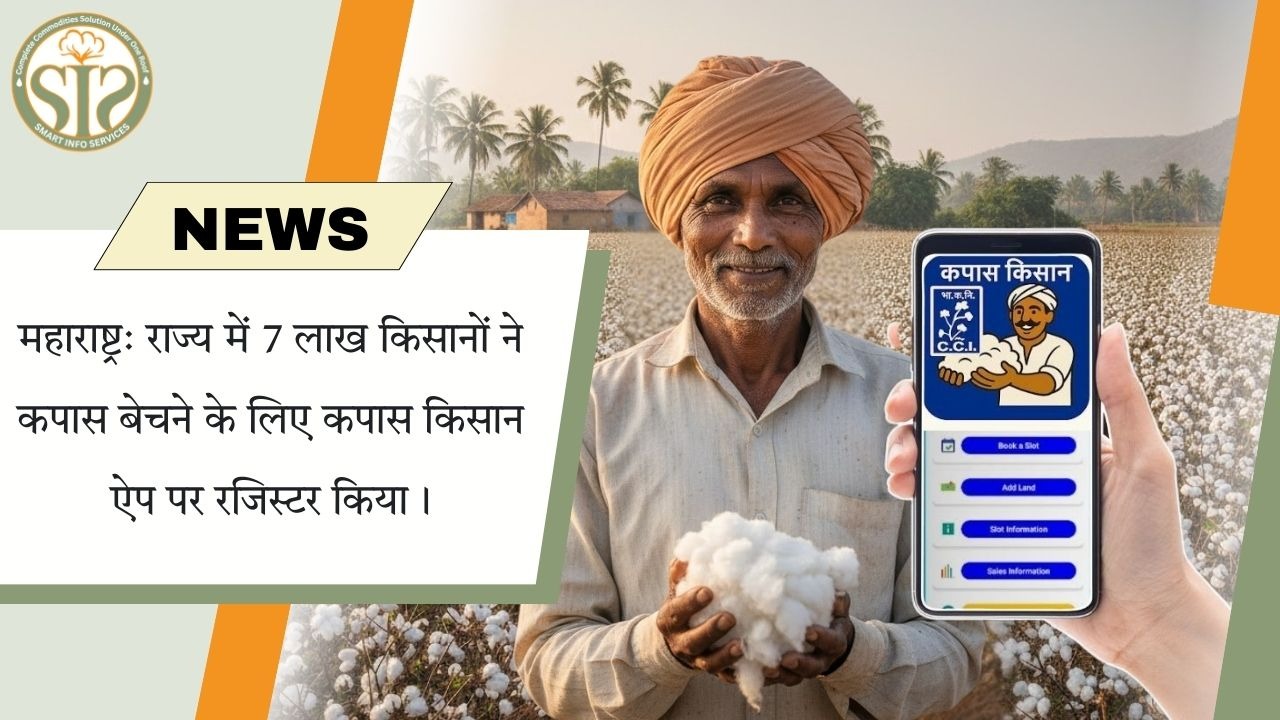
महाराष्ट्र: राज्य में 7 लाख किसानों ने कपास बेचने के लिए कपास किसान ऐप पर रजिस्टर किया।नागपुर : 31 दिसंबर को डेडलाइन खत्म होने से पहले, राज्य भर में लगभग सात लाख किसानों ने कॉटन कॉर्पोरेशन ऑफ इंडिया (CCI) को न्यूनतम समर्थन मूल्य (MSP) पर कपास बेचने के लिए कपास किसान ऐप के ज़रिए रजिस्ट्रेशन कराया है।अमेरिका के साथ टैरिफ टेंशन के बाद भारत द्वारा कपास पर इंपोर्ट ड्यूटी खत्म करने के बाद, इस कमोडिटी की कीमतें गिरी हैं। किसान अपनी फसल को MSP पर बेचने के लिए CCI पर निर्भर हैं, जिसे लॉन्ग स्टेपल ग्रेड के लिए 8,110 रुपये प्रति क्विंटल तय किया गया है। इंपोर्ट टैरिफ भी 31 दिसंबर तक हटा दिया गया है।महाराष्ट्र सहित पूरे देश में लगभग 41 लाख रजिस्ट्रेशन के साथ, MSP बिक्री तक पहुंच रखने वाले किसानों की संख्या बहस का विषय बनी हुई है। हालांकि रजिस्ट्रेशन धीरे-धीरे बढ़े हैं, लेकिन किसान कार्यकर्ता बताते हैं कि अकेले विदर्भ में किसानों की वास्तविक संख्या राज्य की मौजूदा संख्या से ज़्यादा होगी।जैसे ही CCI ने ऐप-आधारित सिस्टम शुरू किया, किसानों को शुरू में रजिस्ट्रेशन कराने में दिक्कतें आईं। हालांकि, CCI के एक सीनियर अधिकारी ने कहा कि हर दिन, पूरे देश में 50,000 नए किसान रजिस्टर हो रहे हैं। इसका मतलब है कि कपास उगाने वाले किसान जब भी अपनी फसल बेचना चाहते हैं, तो MSP बिक्री के लिए अप्लाई कर रहे हैं।इस बीच, CCI की खरीद बढ़ने के बाद खुले बाज़ार की कीमतों में भी सुधार हुआ है। सूत्रों ने बताया कि प्राइवेट ट्रेडर अक्सर कपास को कम ग्रेड का दिखाकर लगभग 7,400 रुपये प्रति क्विंटल की पेशकश कर रहे हैं। ऐसा इसलिए है क्योंकि सबसे अच्छे ग्रेड की कीमतों को MSP से मैच करना होता है।यवतमाल के वानी में एक प्राइवेट एग्रीकल्चर प्रोड्यूस मार्केटिंग कमेटी (APMC) के डायरेक्टर रोशन कोठारी ने कहा कि प्राइवेट बाज़ारों में कीमतों में सुधार हुआ है। शुरू में, कपास की कीमत लगभग 6,800 रुपये प्रति क्विंटल थी। कोठारी ने कहा कि इस साल कम पैदावार को देखते हुए, 8,000 रुपये की कीमत किसानों के लिए अच्छा मुनाफा देगी। इस बीच, CCI ने महाराष्ट्र में लगभग 5 लाख गांठें और पूरे देश में लगभग 27 लाख गांठें खरीदीं।और पढ़ें :- डॉलर के मुकाबले रुपया 01 पैसे गिरकर 89.98 पर खुला।

भारतीय रुपया अमेरिकी डॉलर के मुकाबले 01 पैसे गिरकर 89.98 पर खुलागुरुवार को भारतीय रुपया पिछले बंद भाव 89.97 के मुकाबले 89.98 प्रति डॉलर पर खुला।और पढ़ें :- कॉटन एसोसिएशन ने 11% इंपोर्ट ड्यूटी हटाने की मांग की
कॉटन एसोसिएशन ऑफ़ इंडिया ने सरकार से कच्चे कॉटन के इंपोर्ट पर 11% की इंपोर्ट ड्यूटी हटाने की अपील कीमुंबई: इंडस्ट्री की सबसे बड़ी संस्था, कॉटन एसोसिएशन ऑफ़ इंडिया (CAI) ने केंद्र से मदद करने और पूरे कॉटन और टेक्सटाइल वैल्यू चेन को बचाने के लिए कॉटन पर मौजूदा 11 परसेंट इंपोर्ट ड्यूटी हटाने की अपील की है।CAI के प्रेसिडेंट विनय कोटक ने मंगलवार को कहा, “कम घरेलू प्रोडक्टिविटी और ज़्यादा MSP की वजह से मौजूदा मार्केट की चुनौतियों ने भारतीय कॉटन को दूसरे कॉम्पिटिटिव इंटरनेशनल ग्रोथ के मुकाबले महंगा बना दिया है। भारत में कॉटन इंपोर्ट पर लगाई जाने वाली 11% इंपोर्ट ड्यूटी न सिर्फ कीमतों को बिगाड़ती है बल्कि हमारी टेक्सटाइल इंडस्ट्री की मुश्किलों को भी बढ़ाती है।”उन्होंने कहा, “टेक्सटाइल इंडस्ट्री को बेहतर बनाने का एकमात्र तरीका कच्चे माल की सस्टेनेबल और कॉम्पिटिटिव सप्लाई उपलब्ध कराना है। किसान पहले से ही MSP ऑपरेशन के ज़रिए सुरक्षित हैं। अब 11% इंपोर्ट ड्यूटी हटाने के उपाय से टेक्सटाइल इंडस्ट्री को भी बचाने का समय है। इससे टेक्सटाइल/स्पिनिंग मिलों को कॉम्पिटिटिव कच्चा माल मिलेगा।” उनके अनुसार, यूनाइटेड स्टेट्स के टैरिफ की अनिश्चितता और यूरोप में मंदी के हालात की वजह से इंडस्ट्री को नुकसान हो रहा है।उन्होंने कहा, “अगर टेक्सटाइल इंडस्ट्री को अभी सपोर्ट नहीं किया गया, तो इससे तुरंत बेरोज़गारी, लोन में डिफ़ॉल्ट और पूरी टेक्सटाइल वैल्यू चेन में बैड डेट्स बढ़ सकते हैं।”टेक्सटाइल मिनिस्ट्री का 2030 तक टेक्सटाइल प्रोडक्ट्स के लिए $100 बिलियन का एक्सपोर्ट करने का टारगेट तभी मुमकिन होगा जब मैन्युफैक्चरर्स को कॉम्पिटिटिव रॉ मटेरियल मिलेगा।कोटक ने कहा, “Covid-19 महामारी के दौरान खास हालात में 11% इंपोर्ट ड्यूटी लगाई गई थी। उससे पहले भारत में आमतौर पर कॉटन पर कोई इंपोर्ट ड्यूटी नहीं थी और किसानों पर इसका कोई बुरा असर नहीं पड़ा था।” उन्होंने बताया: “इस मौसम में बेमौसम बारिश की वजह से भारतीय कॉटन की क्वालिटी को बहुत नुकसान हुआ है। इसलिए, हमारी टेक्सटाइल मिलों को खरीदारों की क्वालिटी की ज़रूरत पूरी करने के लिए कॉटन इंपोर्ट करने के लिए मजबूर होना पड़ेगा। अगर 11% इंपोर्ट ड्यूटी नहीं हटाई गई, तो भारतीय टेक्सटाइल सामान मुकाबले में नहीं टिक पाएंगे और खरीदार वियतनाम, बांग्लादेश, पाकिस्तान और दूसरे बाज़ारों में चले जाएंगे। इससे लंबे समय तक नुकसान हो सकता है और दुनिया के कॉटन टेक्सटाइल बाज़ार में भारत का हिस्सा कम हो सकता है।”कोटक ने कहा कि सरकार कई देशों के साथ FTA को फाइनल करने के लिए बहुत मेहनत कर रही है।उन्होंने प्रधानमंत्री नरेंद्र मोदी और कॉमर्स और इंडस्ट्री मिनिस्टर पीयूष गोयल की कोशिशों की तारीफ़ करते हुए कहा, “हम USA टैरिफ़ सॉल्यूशन पर भी पहुँच सकते हैं। इन इवेंट्स से हमारी टेक्सटाइल इंडस्ट्री को यार्न और दूसरे टेक्सटाइल प्रोडक्ट्स को अच्छी मात्रा में एक्सपोर्ट करने और टेक्सटाइल के वर्ल्ड ट्रेड में इंडिया का शेयर बढ़ाने का अच्छा मौका मिलेगा। ये फ़ायदे तभी मिल सकते हैं जब इंडिया में रॉ कॉटन के इम्पोर्ट पर 11% ड्यूटी हटा दी जाए और इस तरह कॉम्पिटिटिव रेट्स पर रॉ मटीरियल मिल सके।”उन्होंने आगे कहा, “असल में, ‘चाइना प्लस वन’ पॉलिसी का मेगा ट्रेंड और अस्थिर पॉलिटिकल सिचुएशन और US डॉलर्स की कमी की वजह से बांग्लादेश से सोर्सिंग का पोटेंशियली शिफ्ट होना, इंडियन टेक्सटाइल इंडस्ट्री के लिए आगे बढ़ने और एक्सपोर्ट बढ़ाने का एक सुनहरा मौका है, बशर्ते 11% इम्पोर्ट ड्यूटी हटाकर हमारी टेक्सटाइल इंडस्ट्री को कॉम्पिटिटिव कॉटन मिल सके।”और पढ़ें :- रुपया 06 पैसे बढ़कर 89.97 प्रति डॉलर पर बंद हुआ

बुधवार को भारतीय रुपया 06 पैसे बढ़कर 89.97 प्रति डॉलर पर बंद हुआ, जबकि सुबह यह 90.03 पर खुला था।बंद होने पर, सेंसेक्स 275.01 पॉइंट या 0.32 प्रतिशत गिरकर 84,391.27 पर और निफ्टी 81.65 पॉइंट या 0.32 प्रतिशत गिरकर 25,758 पर था। लगभग 1830 शेयर बढ़े, 2186 शेयर गिरे, और 133 शेयर बिना बदले।और पढ़ें :- सोयाबीन के दाम गारंटीड प्राइस पार, सांगली में तेजी
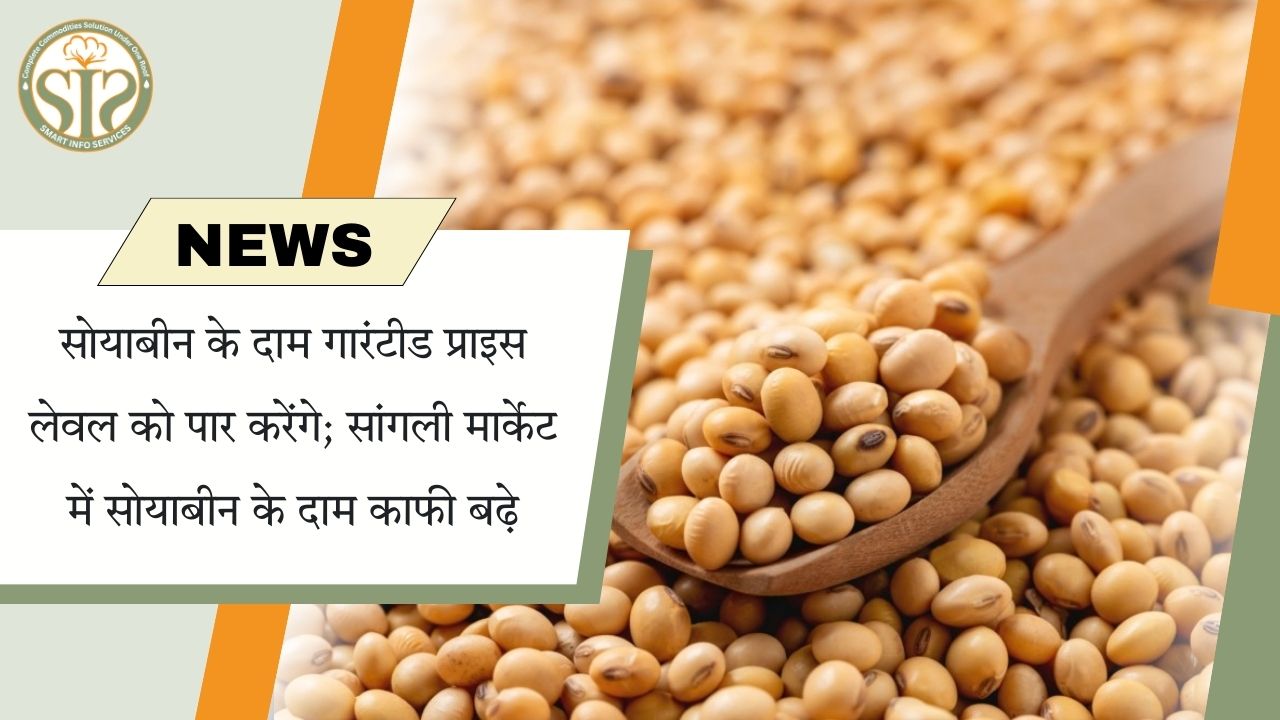
सोयाबीन के दाम में तेजी, MSP पार करने की संभावनासांगली बाजार में सोयाबीन के भाव में हाल के दिनों में तेज उछाल देखने को मिला है। कम उत्पादन और बढ़ती मांग के चलते कीमतों में मजबूती आई है। बाजारों में आवक घटने के बावजूद खरीदारी बढ़ रही है, जिससे भाव ऊपर की ओर जा रहे हैं।अच्छी गुणवत्ता वाले सोयाबीन के दाम केवल दो दिनों में ₹1,000 तक बढ़ गए हैं, जबकि बीज गुणवत्ता वाले सोयाबीन में ₹1,500 तक की तेजी दर्ज की गई है। सोमवार को Sangli मंडी में सोयाबीन का भाव ₹4,500 प्रति क्विंटल तक पहुंच गया, जो कुछ दिन पहले ₹4,250 था।वित्त वर्ष 2025-26 के लिए सोयाबीन का न्यूनतम समर्थन मूल्य (MSP) ₹5,328 प्रति क्विंटल है। हालांकि वर्तमान बाजार भाव अभी MSP से नीचे हैं, लेकिन विशेषज्ञों का मानना है कि मौजूदा ट्रेंड जारी रहा तो कीमतें जल्द ही MSP स्तर को पार कर सकती हैं।कीमतों में तेजी के मुख्य कारण:सोयाबीन तेल की बढ़ती मांग के कारण प्रोसेसिंग इंडस्ट्री की खरीदारी में इजाफाइस साल खरीफ में कम बुवाई, जिससे उत्पादन घटाNational Agricultural Cooperative Marketing Federation of India (NAFED) द्वारा खरीद शुरू होने से बाजार को सपोर्टविशेषज्ञों ने किसानों को सलाह दी है कि वे बाजार की स्थिति को समझकर ही बिक्री का निर्णय लें, ताकि बेहतर कीमत का लाभ मिल सके।और पढ़ें :- अमेरिका की नज़र भारत के कपास बाजार पर
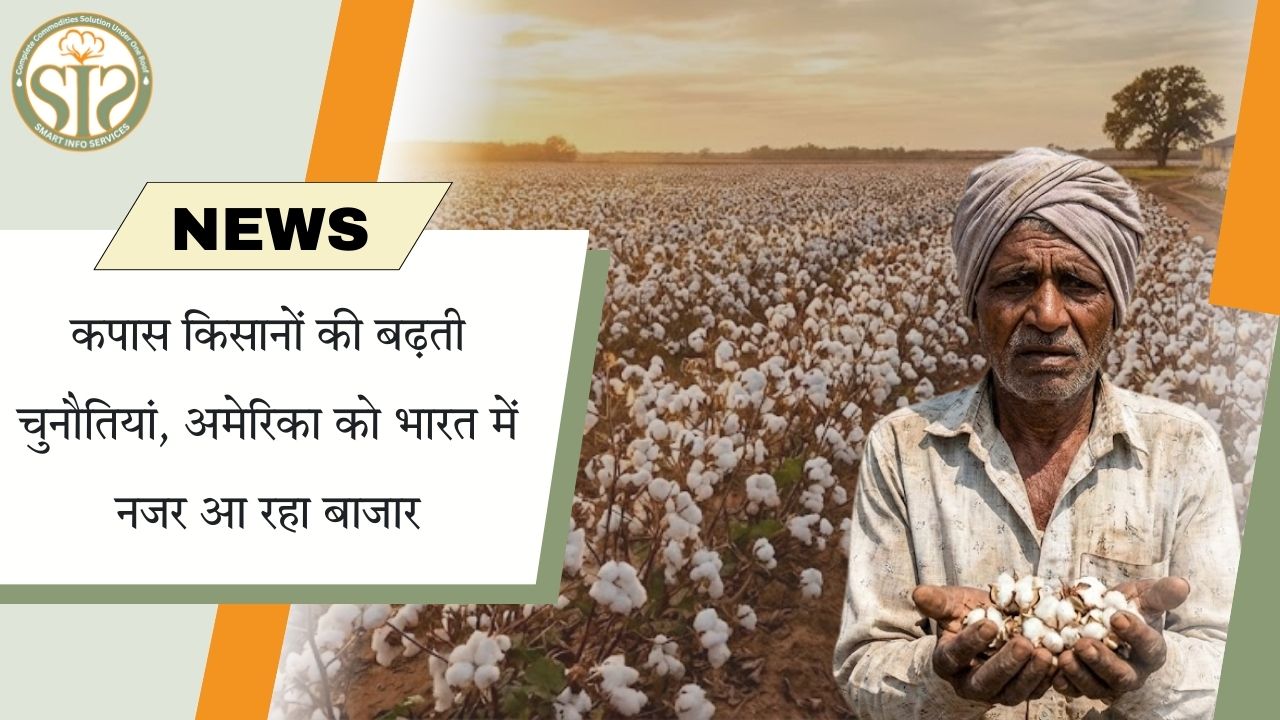
कपास किसानों की बढ़ती चुनौतियां, अमेरिका को भारत में नजर आ रहा बाजारभारत में कच्चे कपास के आयात पर पहले पांच फीसद मूल सीमा शुल्क, पांच फीसद कृषि अवसंरचना और विकास उपकर तथा इन दोनों पर दस फीसद सामाजिक कल्याण अधिभार, यानी कुल मिलाकर ग्यारह फीसद का सीमा शुल्क लगता था।फरवरी, 2021 में किसान आंदोलन के बाद देश के कपास किसानों के हित को ध्यान में रख कर यह शुल्क लगाया गया था। मगर अब सरकार ने कपड़ा उद्योग की मांग पर कच्चे कपास के आयात पर सभी सीमा शुल्क में 19 अगस्त, 2025 से छूट दे दी है।इस फैसले की सराहना देश के कपड़ा उद्योग ने तो की ही, अमेरिकी कृषि विभाग ने भी बाकायदा बयान जारी करके इसे महत्त्वपूर्ण कदम बताया और कहा कि इससे अमेरिकी कपास का भारत में निर्यात बढ़ेगा। इस निर्णय से भले ही अमेरिका को फायदा हो, लेकिन देश के किसान इससे आहत हैं।‘ग्लोबल ट्रेड रिसर्च इनिशिएटिव’ (जीटीआरआइ) के मुताबिक, आयात शुल्क में इस छूट का सबसे बड़ा लाभ निश्चित तौर पर अमेरिका को ही होने वाला है। भारत को कपास निर्यात करने वाला अमेरिका सबसे बड़ा देश है, और वहा कपास की नई फसल बाजार में जुलाई-अगस्त से आनी शुरू हो जाती है।महत्त्वपूर्ण बात यह है कि आयात शुल्क उस वक्त खत्म किया गया, जब भारतीय किसानों के कपास की नई उपज बाजार में आने ही वाली थी। देश में कपास की फसल अक्तूबर से सितंबर तक होती है। इसी दौरान किसानों को कपास के अच्छे दाम मिलने की उम्मीद होती है। अब विदेश से बड़े पैमाने पर कपास आने से घरेलू कपास की कीमतें गिर जाएंगी।सीमा शुल्क में छूट की अधिसूचना जारी होने के दिन भारतीय कपास निगम यानी ‘काटन कार्पोरेशन आफ इंडिया’ (सीसीआइ) ने कपास की कीमत 600 रुपए प्रति कैंडी (एक कैंडी- 356 किग्रा) कम कर दी और उसके दूसरे दिन फिर 500 रुपए प्रति कैंडी कम कर दी। इस तरह महज दस दिनों के भीतर ही कपास के न्यूनतम मूल्य में कुल 1700 रुपए प्रति कैंडी की कमी खुद सरकार की ओर से की गई।अमेरिका कपास उत्पादन में तीसरे स्थान परहालांकि, भारत दुनिया का दूसरा सबसे बड़ा कपास उत्पादक देश है और यहां घरेलू खपत कुल उत्पादन का औसतन 95 फीसद है। मगर यहां उच्च गुणवत्ता वाले या ज्यादा लंबे रेशे वाले कपास (ईएलएस) की पैदावार कम होती है और उसकी जरूरत को आयात के जरिए पूरा किया जाता है।अमेरिकी कृषि व्यापार निकाय काटन काउंसिल इंटरनेशनल (सीसीआइ) तो इस शुल्क को हटाने की मांग लंबे समय से कर रहा था। दरअसल, उच्च गुणवत्ता वाले या अति लंबे रेशे के कपास के आयात पर से ग्यारह फीसद शुल्क सरकार ने 20 फरवरी, 2024 से समाप्त कर दिया है, लेकिन इससे छोटे रेशे के कपास आयात पर शुल्क जारी था, जिसे इस वर्ष अगस्त में खत्म किया गया।इस कदम से सरकार अमेरिकी शुल्क की मार से भारतीय वस्त्र निर्यातकों के मुनाफे को तो कुछ हद तक सुरक्षित कर लेगी, लेकिन इसका खमियाजा देश के किसानों को भुगतना पड़ेगा। खासकर तब जब किसानों की आय दोगुनी करने का जोर-शोर से दावा किया जा रहा है।कपास किसानों का जिक्र करना सरकार भूल गईकपास से सीमा शुल्क हटाने को लेकर जारी बयान में कपड़ा निर्माताओं और उपभोक्ताओं के हितों की बात तो कही गई थी, लेकिन कपास किसानों का जिक्र करना सरकार भूल गई। दूसरी बार जारी बयान में कहा गया कि भारतीय कपास निगम लिमिटेड द्वारा संचालित न्यूनतम समर्थन मूल्य व्यवस्था के माध्यम से किसानों के हितों की रक्षा की जाती है, जो यह सुनिश्चित करती है कि किसानों को उनकी उत्पादन लागत से कम से कम पचास फीसद अधिक मूल्य प्राप्त हो।सरकार न्यूनतम समर्थन मूल्य का निर्धारण ए-2 एफएल फार्मूले के आधार पर करती है। इसके अनुसार, मध्यम रेशे के कपास का न्यूनतम समर्थन मूल्य वर्ष 2024-25 के लिए 7,121 रुपए प्रति कुंतल निर्धारित किया गया है। मगर किसान संगठनों की मांग है कि यह सी-2 फार्मूले के आधार पर निर्धारित किया जाना चाहिए, जिसके अनुसार यह मूल्य 10,075 रुपए प्रति कुंतल होना चाहिए। मालूम हो कि न्यूनतम समर्थन मूल्य के निर्धारण के लिए सी-2 का फार्मूला डा एमएस स्वामीनाथन ने सुझाया था।99 फीसद खरीफ फसल के रूप में होती है कपास की खेतीभारत में कपास की खेती मुख्यत: लगभग 99 फीसद खरीफ फसल के रूप में होती है, जबकि तमिलनाडु और उसके आसपास के दूसरे राज्यों के कुछ हिस्सों में यह रबी की फसल है। भारत में लगभग साठ लाख किसान परिवार कपास की खेती से अपनी आजीविका चलाते हैं। इसके अतिरिक्त 4-5 करोड़ दूसरे लोग भी इसके व्यापार से जुड़े हैं।यहां पिछले वर्ष कुल 114.47 लाख हेक्टेयर कृषि योग्य जमीन पर कपास की खेती की गई, जो पूरी दुनिया में कपास की खेती के रकबे 314.79 लाख हेक्टेयर का 36.36 फीसद है। रकबे के लिहाज से भारत पूरी दुनिया में पहले स्थान पर है और उत्पादन के मामले में चीन के बाद दूसरे स्थान पर है। मगर यहां प्रति हेक्टेयर कपास की पैदावार (437 किग्रा प्रति हेक्टेयर) विश्व की औसत पैदावार (833 किग्रा प्रति हेक्टेयर) से काफी कम है।इस तरह कपास का प्रति वर्ष औसत उत्पादन रहा 337 गांठें और न्यूनतम समर्थन मूल्य पर खरीद केवल 38 गांठें। यानी कुल उपज का मात्र 11.27 फीसद कपास ही सरकार की ओर से खरीदा गया। यही नहीं, प्रति वर्ष कपास की खेती करने वाले लगभग साठ लाख किसानों में से केवल 7.88 लाख किसानों से ही न्यूनतम समर्थन मूल्य पर कपास की खरीददारी की गई। इन हालात में किसानों के हित की रक्षा कैसे होगी?और पढ़ें :- रुपया 15 पैसे गिरकर 90.03/USD पर खुला

डॉलर के मुकाबले रुपया 15 पैसे गिरकर 90.03 पर खुलाभारतीय रुपया बुधवार को डॉलर के मुकाबले 90.03 पर खुला, जबकि मंगलवार को यह 89.88 पर बंद हुआ था।और पढ़ें :- कॉटन संकट गहराया : विपक्ष ने सरकार की निष्क्रियता का विरोध किया; किसानों ने कर्ज माफी, सही दाम की मांग की
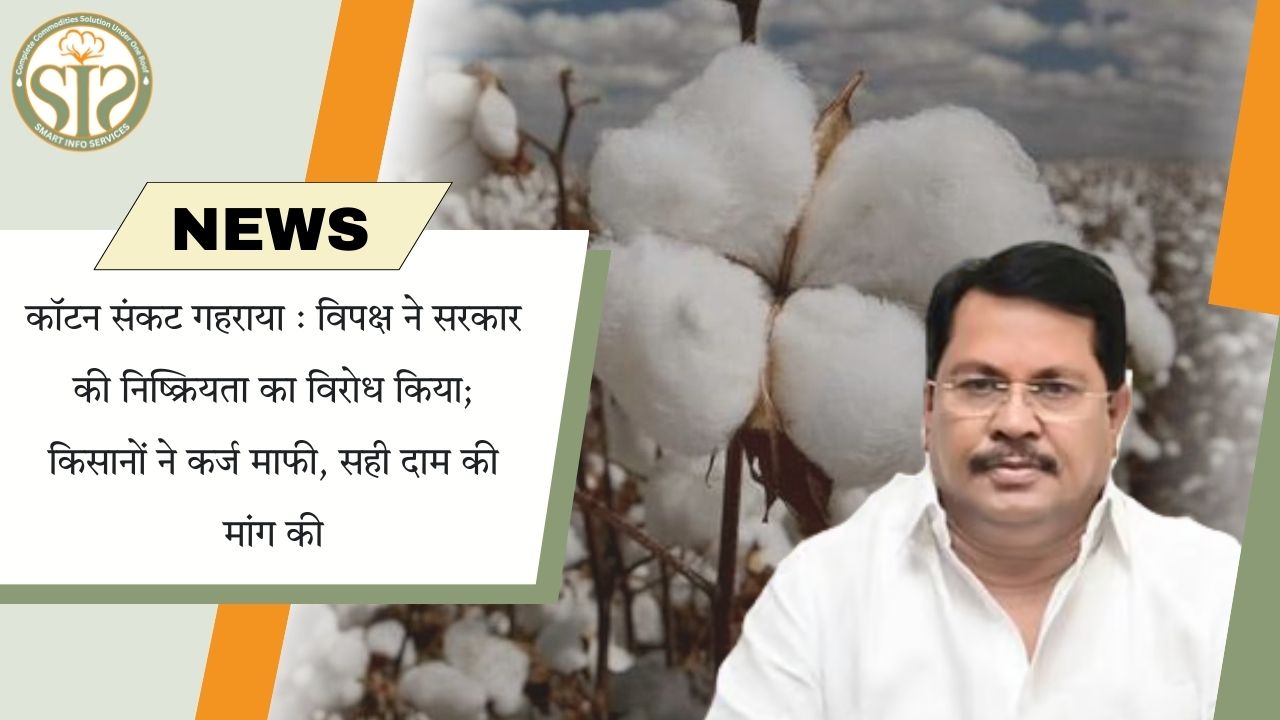
कपास संकट गहराया, विपक्ष ने सरकार पर निशाना साधा, किसानों ने कर्ज माफी की मांग कीनागपुर: विंटर सेशन का दूसरा दिन मंगलवार को टकराव के साथ शुरू हुआ, जब विपक्ष ने कॉटन की गिरती कीमतों और किसानों की बढ़ती परेशानी को लेकर राज्य सरकार को घेरा। कांग्रेस लेजिस्लेचर पार्टी के नेता विजय वड्डेटीवार ने विधान भवन की सीढ़ियों पर विरोध प्रदर्शन किया, और आरोप लगाया कि राज्य सरकार किसानों की भलाई को नज़रअंदाज़ कर रही है, क्योंकि उसने इंपोर्ट टैरिफ को 12% से घटाकर शून्य कर दिया है, जिससे इंपोर्ट ज़्यादा हुआ और स्थानीय किसानों की इनकम कम हुई।यह विरोध प्रदर्शन मुख्यमंत्री देवेंद्र फडणवीस, डिप्टी सीएम एकनाथ शिंदे, कल्चरल मिनिस्टर आशीष शेलार, स्पीकर राहुल नार्वेकर और काउंसिल चेयरपर्सन राम शिंदे के कॉमनवेल्थ पार्लियामेंट्री एसोसिएशन (CPA) के स्टूडेंट्स के साथ एक ऑफिशियल फोटो खिंचवाने के लिए विधान भवन की सीढ़ियों पर इकट्ठा होने के कुछ ही सेकंड बाद शुरू हुआ।हाथ में प्लेकार्ड लिए और नारे लगाते हुए, वड्डेटीवार ने सरकार पर विदर्भ और मराठवाड़ा में कॉटन उगाने वालों को नज़रअंदाज़ करने का आरोप लगाया। “कॉटन को सही रेट मिलना चाहिए। किसानों को उनकी उपज का सही मुआवज़ा चाहिए,” उन्होंने प्रदर्शन को लीड करते हुए चिल्लाया। विरोध ने तेज़ी पकड़ी, और महा विकास अघाड़ी (MVA) कैंप के नेता भी इसमें शामिल हो गए।MPCC के पूर्व प्रेसिडेंट नाना पटोले ने मीडिया से बात करते हुए कहा कि सरकार ने किसानों का लोन माफ़ करने में शॉर्टकट अपनाया है, सिर्फ़ उन लोगों को राहत दी है जिन्होंने कोर्ट का दरवाज़ा खटखटाया है। उन्होंने आरोप लगाया, “1,500 करोड़ रुपये में से सिर्फ़ 500 करोड़ रुपये ही माफ़ किए गए हैं,” और कहा कि सरकार का तरीका किसानों की भलाई से ज़्यादा वोट को ज़्यादा अहमियत देता है।शिवसेना (UBT) लीडर आदित्य ठाकरे किसानों की तकलीफ़ के निशान के तौर पर कॉटन का पौधा पकड़े हुए दिखे। उन्होंने नारे लगाते हुए इसे लहराया और सरकार से तुरंत दखल देने की मांग की। कई अपोज़िशन MLA उनके साथ खड़े थे, जिनके हाथ में बैनर थे जिन पर पूरी लोन माफ़ी और कॉटन सेक्टर को स्टेबल करने के लिए बोनस प्रोक्योरमेंट प्राइस की मांग थी।अपोज़िशन के मुताबिक, मार्केट में उतार-चढ़ाव और प्रोक्योरमेंट में देरी की वजह से किसानों को अपनी उपज मिनिमम सपोर्ट प्राइस (MSP) से बहुत कम कीमत पर बेचने के लिए मजबूर होना पड़ा है। उन्होंने आरोप लगाया कि सरकारी आश्वासन ज़मीन पर नहीं उतरे हैं, जिससे कपास उगाने वालों पर कर्ज़ बढ़ रहा है और वे निराश हैं।विपक्ष ने चेतावनी दी है कि जब तक सरकार कपास उगाने वालों के लिए राहत के उपायों की घोषणा नहीं करती, तब तक वे सदन के अंदर और बाहर विरोध प्रदर्शन तेज़ करेंगे। लगातार दूसरे दिन किसानों के मुद्दों पर चर्चा होने से, विंटर सेशन में और हंगामा होने की उम्मीद है।इससे पहले सुबह, डिप्टी चीफ मिनिस्टर एकनाथ शिंदे ने CPA स्टूडेंट्स को ब्रीफिंग देते हुए विपक्ष पर निशाना साधा और कहा कि विधान भवन की सीढ़ियों पर नारे लगाना "पार्लियामेंट्री प्रोसीजर" नहीं है, क्योंकि असली चर्चा और फैसले सदन के अंदर होते हैं।'और पढ़ें :- रुपया 26 पैसे बढ़कर 89.88 प्रति डॉलर पर बंद हुआ।

मंगलवार को भारतीय रुपया 26 पैसे बढ़कर 89.88 प्रति डॉलर पर बंद हुआ, जबकि सुबह इसकी शुरुआती कीमत 90.14 थी।होने पर, सेंसेक्स 436.41 अंक या 0.51 प्रतिशत की गिरावट के साथ 84,666.28 पर और निफ्टी 120.9 अंक या 0.47 प्रतिशत की गिरावट के साथ 25,839.65 पर बंद हुआ। लगभग 2,403 शेयरों में तेजी आई, 1,455 शेयरों में गिरावट आई और 127 शेयरों के भाव अपरिवर्तित रहे।और पढ़ें :- भारत को पीछे छोड़ते हुए ब्राज़ील बांग्लादेश का शीर्ष कपास आपूर्तिकर्ता बन गया.

ब्राजील बांग्लादेश का शीर्ष कपास आपूर्तिकर्ता बन गयाअमेरिकी कृषि विभाग (यूएसडीए) की रिपोर्ट के अनुसार, ब्राजील, पड़ोसी देश भारत को पीछे छोड़ते हुए, बांग्लादेश के लिए कच्चे कपास का मुख्य आपूर्तिकर्ता बनकर उभरा है। बांग्लादेश विश्व के शीर्ष कपास आयातकों में से एक है तथा दूसरा सबसे बड़ा परिधान निर्यातक है।अगस्त से शुरू होने वाले विपणन वर्ष 2024-25 (MY25) में, बांग्लादेश ने 8.28 मिलियन गांठ कच्चे कपास का आयात किया। ब्राज़ील ने लगभग 1.9 मिलियन गांठ की आपूर्ति की, जो कुल आयात का 23 प्रतिशत है।भारत 1.4 मिलियन गांठों के साथ दूसरा सबसे बड़ा आपूर्तिकर्ता था, उसके बाद बेनिन (1.06 मिलियन गांठें), कैमरून (616,538 गांठें) और संयुक्त राज्य अमेरिका (595,902 गांठें) का स्थान था।यूएसडीए की रिपोर्ट में कहा गया है कि ब्राजीलियाई कपास अपनी प्रतिस्पर्धी कीमत, कटाई के दौरान व्यापक उपलब्धता और स्थिर आपूर्ति के कारण बांग्लादेशी कताई करने वालों के बीच लोकप्रिय हो गया है।वित्तीय वर्ष 2024 में, भारत 1.79 मिलियन गांठ (23 प्रतिशत हिस्सेदारी) निर्यात करके शीर्ष आपूर्तिकर्ता था। बांग्लादेशी आयातकों ने ज़्यादा कीमतों और कुछ गुणवत्ता संबंधी समस्याओं के बावजूद, मुख्य रूप से कोलकाता और बेनापोल बंदरगाहों के ज़रिए कम समय में भारतीय कपास ख़रीदा।चालू विपणन वर्ष, 2026 के लिए, यूएसडीए ने बांग्लादेश से कपास आयात 84 लाख गांठ रहने का अनुमान लगाया है, जो 2025 के मुकाबले 1.4 प्रतिशत अधिक है, और स्थानीय कताई करने वालों द्वारा कपास का अधिक उपयोग इसकी मुख्य वजह है। यह 2024 के 78 लाख गांठों के आयात से 5.2 प्रतिशत अधिक है।रिपोर्ट में इस बात पर प्रकाश डाला गया है कि जुलाई में छात्र-नेतृत्व वाले विद्रोह के बीच पूर्व प्रधानमंत्री शेख हसीना के भाग जाने के बाद अगस्त 2024 में नई अंतरिम सरकार के गठन के बाद आरएमजी उत्पादन में शुरुआती व्यवधानों के बावजूद, एमवाई25 के दौरान कपास का आयात स्थिर रहा।हालांकि, घरेलू कपास उत्पादन 153,000 गांठों पर अपरिवर्तित रहने की उम्मीद है, जो भूमि की कमी और लंबी उत्पादन अवधि के कारण सीमित है, तथा कपास की खेती 45,000-46,000 हेक्टेयर में की जाती है।बांग्लादेश के वस्त्र उद्योग की वार्षिक खपत क्षमता लगभग 15 मिलियन गांठ है, जो कच्चे माल की उपलब्धता, बिजली आपूर्ति और धागे की मांग पर निर्भर करती है।वर्तमान में, इस क्षमता का केवल आधा ही उपयोग किया जा रहा है, और कच्चे कपास की खपत वित्त वर्ष 2025 में 8.3 मिलियन गांठ होने का अनुमान है। यूएसडीए का अनुमान है कि वित्त वर्ष 2026 में खपत बढ़कर 8.5 मिलियन गांठ हो जाएगी, जो कि अपेक्षित आयात में 2.4 प्रतिशत की वृद्धि है।कताई उद्योग कपास और मिश्रित धागे के उत्पादन के लिए कच्चे कपास का उपयोग करता है, और धागे का उत्पादन 2026 में 1.7 मिलियन टन से बढ़कर 1.9 मिलियन टन होने की उम्मीद है।कच्चे कपास के बढ़ते आयात और उपयोग के बावजूद, बांग्लादेश के रेडीमेड परिधान उद्योग द्वारा अभी भी अधिक धागा और कपड़ा आयात किये जाने की उम्मीद है।भारत अपने बड़े कताई उद्योग, कम शिपमेंट समय और कम लॉजिस्टिक्स लागत के कारण बांग्लादेश को सूती धागे का सबसे बड़ा आपूर्तिकर्ता बना हुआ है, जबकि चीन शीर्ष कपड़ा निर्यातक है, जिसके बाद पाकिस्तान और भारत का स्थान है।और पढ़ें :- कपास के दाम गिरने से किसान परेशान

The rupee opened 6 paise lower at 90.79 per dollar.The Indian rupee opened at 90.79 per dollar on Tuesday, compared to its previous close of 90.73.Read More :- Removing import duty on cotton could be confidence-booster.

Removing Cotton Import Duty Could Boost ConfidenceIndia's apex textile industry organisation, the Confederation of Indian Textile Industry (CITI), has said that at a time when the ongoing uncertainty surrounding the US tariff issue remains a major concern for India's textile and apparel sector, the removal of the import duty on cotton can act as a huge confidence-booster by ensuring a crucial raw material like cotton is available at internationally competitive prices.CITI has stressed that the government should remove the 11 per cent import duty on all varieties of cotton to increase the global competitiveness of the country's textile and apparel sector. On August 28, the government had extended the import duty exemption on cotton to December 31, from the earlier announced September 30, 2025CITI Chairman Shri Ashwin Chandran said, "The removal of import duty on cotton of all varieties will reduce the divergence between domestic and global prices and help restore the competitiveness of India's spinning and textile industries." He said the need for such a measure has also arisen in the backdrop of indications that cotton production may decline this year, and fibre quality is expected to deteriorate due to unseasonal rainfall increasing supply-side concerns."Such a step would also ensure that the minimum support price (MSP) and other farmer-support mechanisms can function as intended without creating significant downstream price distortions," the CITI Chairman added. During the current cotton season, the MSP of 'Kapas' has increased by nearly 8 per cent.Incidentally, CITI, along with other industry bodies, has raised the issue of the removal of import duty on cotton at the stakeholder meeting held under the aegis of the Committee on Cotton Production and Consumption for the cotton season 2025-26 on December 8, 2025During the last 10 cotton seasons, the average import of cotton in India has been about 2 million bales, which is around 6 per cent of the average production. Most imports cater to the specific requirements of specialised cotton or are linked to back-to-back arrangements by the industry with brands.One of the biggest generators of jobs and livelihoods, the textile and apparel sector, is currently facing a huge headwind in the form of the 50 per cent US tariff, effective August 27, 2025. The US is the single-largest market for India's textile and apparel exports, contributing almost 28 per cent to the overall revenue of the country's textile and apparel exports India's textile and apparel exports to the US were valued at nearly $11 billion in the financial year 2024-25.The impact of the 50 per cent US tariff has already been seen in India's export data for October 2025. The sharp drop in Indian textile and apparel exports in October 2025 is largely attributable to the high US tariff. Textile exports in October 2025 fell 12.92 per cent compared to October 2024 Apparel exports declined 12.88 per cent during the same periodThe challenge for India's textile and apparel sector has been further enhanced by Mexico's recent decision to impose a 50 per cent tariff on Indian goods. India does not have an FTA with Mexico.read more :- Indian Rupee closes 18 paise lower at 90.73 against the dollar

The Indian rupee closed 18 paise lower at 90.73 against the US dollar on Monday, after opening at 90.55.At the close of the market, the Sensex was down 54.30 points or 0.06 percent at 85,213.36, and the Nifty was down 19.65 points or 0.08 percent at 26,027.30. Approximately 2067 shares advanced, 1864 declined, and 139 remained unchanged.read more :- Farmers should register soon to sell cotton at MSP, deadline approaching

Opportunity to sell cotton at MSP, registration deadline is approaching.Learn where and how to register and what rate you will get For farmers who wish to sell their cotton at the Minimum Support Price (MSP), the registration process has become crucial. The Cotton Corporation of India (CCI) has set December 31st as the last date for registration for cotton procurement. As a result, farmers across the country, including Maharashtra, are rapidly registering through the cotton farmer app. So far, seven lakh farmers from Maharashtra alone and approximately 41 lakh farmers nationwide have registered. Therefore, if you also want to sell your cotton at MSP, register immediately.Removal of import duty leads to price drop, MSP is farmers' only hope After tariff tensions with the US, the Indian government removed the cotton import duty. Following this, cotton prices in the domestic market fell. In this situation, farmers are relying on the CCI to sell their produce at MSP. This year, the MSP for long-staple grade cotton has been fixed at Rs. 8,110 per quintal. The import tariff has also been removed until December 31st, leading to continued price fluctuations in the open market.41 lakh registrations nationwide, yet the debate continues Across the country, including Maharashtra, 41 lakh farmers have registered for MSP sales. However, farmer leaders say that the actual number of cotton-growing farmers in the Vidarbha region alone is much higher. However, CCI officials say that farmers are rapidly adopting the registration process since the app-based system was introduced. An official stated that approximately 50,000 farmers are registering every day, which shows the increasing interest of farmers in MSP.Increased CCI procurement and improvement in open market rates Since the CCI increased its procurement, a slight improvement in rates has also been observed in the private market. Initially, cotton was selling at around Rs. 6,800 per quintal, but now the rates have increased to around Rs. 7,400 in many markets. Although private traders often pay farmers lower prices by misrepresenting the grade of cotton, the availability of the MSP option is now enabling farmers to get better prices for their produce. CCI has so far procured approximately 5 lakh bales in Maharashtra and around 27 lakh bales across the country.Lower Yields Boost Price Expectations Roshan Kothari, an APMC director from the Wani region of Yavatmal district, said that due to lower yields this year, cotton prices will be beneficial for growers. According to him, if the rates reach Rs 8,000 per quintal, farmers will earn a good profit.How to Register on the Cotton Farmer App The CCI’s “Kapas Farmers” app has become mandatory for selling cotton at MSP. Below is a step-by-step process for registering on this app in simple language:First, download the app: Go to the Google Play Store or App Store on your smartphone. Search for “Kapas Farmers” and download the official app from the Cotton Corporation of India (CCI). Start registration: Open the app and select the “Farmer Registration” or “Register Now” option.Fill in personal information:Enter your Aadhaar-linked mobile number, and fill in details such as name, father/guardian's name, date of birth, gender, address, district, state, and pincode.Provide land and crop information: This includes land ownership (owned/leased), farm survey number/7/12 extract, and information related to cotton cultivation.Submit and complete verification: After online registration, your details will be physically verified by the local APMC or agriculture department. This is a mandatory step to ensure MSP eligibility.Book a slot: After verification, farmers can book a date and time (slot) to bring their cotton to the nearest CCI procurement center through the app.Keep these points in mind while registering for cotton:Registration is mandatory for selling cotton at MSP.December 31, 2025, is the last date, so complete the process in time.Physical verification is necessary after registration. No farmer can avail of the Minimum Support Price (MSP) benefit without registering on the app.Tractor Junction always keeps you updated. We publish agricultural news about new tractor models and their applications in farming. We also publish monthly sales reports of leading tractor companies like VST Tractors, Mahindra Tractors, etc., which provide detailed information on wholesale and retail tractor sales. Contact us if you would like to subscribe to our monthly service.If you are interested in buying or selling new or used tractors or agricultural equipment and want to reach a wider audience of buyers and sellers to get the best possible price for your item, share your listing with Tractor Junction.read more :- The rupee opened 13 paise lower at 90.55/USD

The rupee opened 13 paise lower at 90.55 against the dollar.The Indian rupee opened at 90.06 against the dollar on Monday, compared to its previous close of 90.42.Read More :- State-wise CCI cotton sales details (2024–25)

State-wise CCI Cotton Sales Details – 2024-25 SeasonThe Cotton Corporation of India (CCI) increased its prices by Rs. 100/- per candy this week and sold approximately 92,76,400 bales for the season 2024-25. This represents around 92.76% of the total cotton procured so far this season.A state-wise breakdown of sales indicates strong activity from Maharashtra, Telangana, and Gujarat, which together account for over 85.10% of the total sales to date.This data underscores CCI’s proactive efforts in stabilizing the cotton market and ensuring steady supply across key cotton-producing states.

CCI Raises Cotton Prices; Weekly E-Auction Sales Touch 50,100 BalesThe Cotton Corporation of India (CCI) increased its cotton prices by ₹100 per candy this week, CCI has now sold 92.76% of the cotton procured during the 2024–25 season through e-auctions.During the week from 8 December to 12 December 2025, CCI conducted regular online auctions for mills and traders across various centers. These auctions resulted in total weekly sales of approximately 50,100 bales, reflecting steady demand from both segments.Day-Wise Sales Report8 December 2025The week began on a strong note with the highest sales recorded at 20,100 bales. Of these, 9,100 bales were purchased by mills, while 11,000 bales were bought by traders.9 December 2025Sales dropped sharply to 4,700 bales, comprising 4,000 bales purchased by mills and 700 bales by traders.10 December 2025Midweek auctions saw improved buying, with total sales rising to 10,600 bales. Mills accounted for 7,900 bales, while traders purchased 2,700 bales.11 December 2025CCI sold 10,400 bales on this day, with mills lifting 8,500 bales and traders 1,900 bales.12 December 2025The week concluded on a modest note with 4,300 bales sold. Of this, mills purchased 3,900 bales, whereas traders bought 400 bales.With these weekly sales, CCI’s total cotton sales for the ongoing season have reached approx 92,76,400 bales, representing 92.76% of its total procurement under the 2024–25 season.read more :- "India exploring global market for textiles: Pabitraji"

Minister of State for Textiles, Pabitraji: India is identifying global destinations to expand the textile sectorNew Delhi: The Ministry of Textiles has formulated a comprehensive 40-country market diversification strategy, identifying high-potential global destinations, and is carrying out structured outreach to enhance India's global presence through Export Promotion Councils (EPCs), industry delegations, and Indian missions abroad, Minister of State for Textiles, Pabitra Margherita, said in a written reply in the Rajya Sabha on Friday.The Ministry of Textiles has approved various schemes and programs to encourage and promote the textile industry, such as the PM Mega Integrated Textile Regions and Apparel (PM MITRA) Parks scheme for world-class industrial infrastructure; the Production Linked Incentive (PLI) scheme for MMF apparel, MMF fabrics, and technical textiles to promote large-scale manufacturing and enhance competitiveness; National Technical Textiles Mission for research, innovation, market development, and skill development.Other schemes include SAMARTH – a scheme for capacity building in the textile sector; Silk Samagra-2 for sericulture development; Modified Technology Upgradation Fund Scheme (ATUFS) for modernization; National Handloom Development Programme, National Handicrafts Development Programme, and Comprehensive Handicrafts Cluster Development Scheme for end-to-end support to artisans, weavers, and handicraft clusters, the Minister of State said in his written reply.The government provides various incentives and benefits to enhance the competitiveness of the textile industry in the international and domestic market.The Minister said that the Ministry, in collaboration with EPCs, has organized India Tex in 2024 and 2025 – a mega global textile event to strengthen international engagement, bring together exhibitors and trade visitors from various countries, and showcase the scale, innovation, and global competitiveness of India's textile ecosystem.The government is implementing the Remission of State and Central Taxes and Levies (RoSCTL) scheme for apparel, garments, and made-ups based on the principles of WTO-compliant zero-rated exports.The minister said in a written reply, "Textile products not covered under the RoSCTL scheme are being supported under the Remission of Duties and Taxes on Exported Products (RoDTEP) scheme, along with other non-textile sectors. Under RoSCTL, more than 15,000 exporters have benefited from rebates on embedded taxes during FY 2024-25." India has signed 15 free trade agreements (FTAs), including the India-UK Comprehensive Economic and Trade Agreement (CETA). He said that these FTAs aim to reduce tariff and non-tariff barriers, simplify procedures, and address structural issues to make Indian exporters more competitive in partner markets.The government has approved the Export Promotion Mission (EPM), which is based on a collaborative framework involving the Department of Commerce, the Ministry of MSME, the Ministry of Finance, and other key stakeholders, including financial institutions, export promotion councils, commodity boards, industry associations, and state governments.He informed Parliament that the government has exempted import duty on cotton until December 31, 2025, to reduce input material costs for the textile industry, ensure adequate supply, and improve export competitiveness and enhance overall industry efficiency.He also said that the government has rationalized GST rates across the textile value chain to address structural anomalies, reduce costs, increase demand, boost exports, and maintain employment.In another written reply, the Minister informed the House that India's exports of textiles and clothing (including handicrafts) in 2024-25 were US$ 37,755.0 million, showing a growth of 5.2 per cent over the previous year (2023-24).Further, the Minister said that India's exports of textiles and clothing, including handicrafts, during April-October 2025 were US$ 20,401.95 million, showing a marginal decline of 1.8 per cent over the same period last year (US$ 20,728.05 million), yet indicating overall stability in export performance despite global tariff-related and other external challenges. (ANI)read more :- Rupee Ends Flat at 90.42/USD

The Indian rupee closed stable at 90.42 per dollar on Friday, while it had opened at 90.42 in the morning. Closing Bell: Sensex closes 449 pts higher at 85,267, Nifty ends above 26,000; Tata Steel, Eternal gain most read more :- Rupee opens 06 paise down at 90.42

Rupee opens 06 paise lower at 90.42/USD Indian rupee opened near record low at 90.42 per dollar on Friday versus previous close of 90.36.read more :- Rupee fell 38 paise to close at 90.36 per dollar

The Indian rupee lower 38 paise to close at 90.36 per dollar on Thursday, compared to its opening price of 89.98 in the morning.At close, the Sensex was up 426.86 points or 0.51 percent at 84,818.13, and the Nifty was up 140.55 points or 0.55 percent at 25,898.55. About 2345 shares advanced, 1664 shares declined, and 138 shares unchanged.read more :- Cotton arrivals in the northern belt increased by 49.66%.
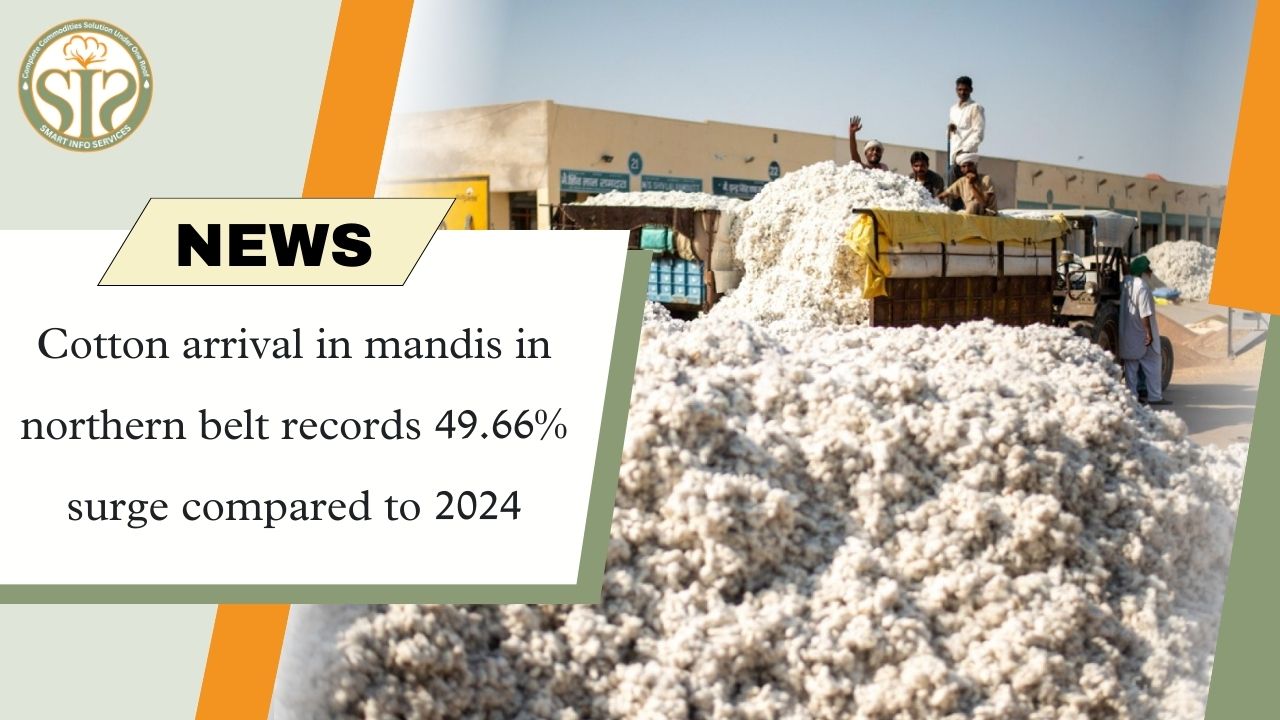
Cotton arrival in mandis in northern belt records 49.66% surge compared to 2024The northern cotton belt — comprising Punjab, Haryana and Rajasthan — has so far recorded a surge of 49.66 per cent in cotton balls’ arrival in mandis this season, and more arrivals are expected in the coming months with harvesting still on. The three states have so far received 13.32 lakh bales (one bale of ginned cotton — cotton separated from seed — weighs 170 kg) in their mandis compared to 8.90 lakh bales in the corresponding period in 2024.This surge has been attributed to kapas (cotton balls) prices in mandis, selling well below the Minimum Support Price (MSP). With no significant price improvement anticipated, and the current presence of Cotton Corporation of India (CCI), which purchases on the MSP rate, in the market, farmers are choosing not to hold back their produce, and thus, pushing more crops to mandis faster than usual.As cotton bulb picking starts in September and concludes by November, the major cotton arrival season in the northern region begins on October 1 — though some early crop reaches mandis even in September — and 50-70 per cent (in some cases even 90 per cent depending on the market rate in the given season) of the produce reaches mandis by December, and ends by September 30 the next year.Also, the Cotton Corporation of India (CCI) has purchased 13,400 bales (67,000 quintals) this year. In the corresponding period last year, however, the CCI had not even entered the market because the prevailing rate was nearly equal to the MSP. Usually, the CCI enters the market when market prices fall below the MSP and buys cotton at the MSP that meets its parameters. CCI official said, farmers should not panic or rush to bring all their produce to the Mandis at once, as CCI will continue purchasing at the MSP in the coming monthe.Punjab has 1.19 lakh hectares under cotton this year compared to around 1 lakh hectares in 2024, but heavy rainfall damaged around 10 to 15 per cent of the crop, reducing the productive area under cultivation to just above last year’s level (i.e. around 1 lakh hectares) and affecting quality too. Punjab is expected to harvest 1.5 lakh to 1.8 lakh bales this year, compared to last year’s 1.51 lakh bales (7.55 lakh quintals).In Haryana, this year, the area under cotton cultivation stands at 3.80 lakh hectares compared to 4 lakh hectares last year. Thus far, 2.70 lakh bales (13.50 lakh quintals kapas, meaning unginned cotton) arrived in mandis across Haryana compared to 2.45 lakh bales (12.25 lakh quintals) by the corresponding period last year — an increase of about 0.25 lakh bales, or just over 10 per cent.This year, the CCI has procured 65,000 bales (3.30 lakh quintals) in Haryana, slightly higher than last year’s 62,000 bales (3.10 lakh quintals).Rajasthan has recorded arrivals of around 10 lakh bales so far, compared to more than 6 lakh bales in the same period last year — an increase of about 4.0 lakh bales, or around 66 per cent. The state’s cotton area this year is estimated to be 6.50 to 7 lakh hectares, while the yield remains average, around 8 to 10 quintals per hectare.Together, Punjab, Haryana and Rajasthan had around 11.50 lakh hectares under cotton cultivation in 2025 compared to around 11 lakh hectares in 2024. In Punjab and Haryana, the cotton area continues to shrink year after year, while in Rajasthan the trend fluctuates with a slight decline one year and a modest rise the next. These states have also been battling repeated pink bollworm attacks in recent years, severely eroding farmers’ confidence. Punjab is said to be the worst affected, and experts point out that several years ago, the state had nearly 8 lakh hectares under cotton. They argue that if the Punjab government is serious about crop diversification and protecting the cotton belt, it must invite scientists from across India to investigate the root causes of persistent pest outbreaks and develop effective solutions.Cotton prices remained strong and above MSP from 2021–22 to 2023–24, but fell sharply in 2024–25, although they stayed close to the MSP. Cotton fetched ₹13,000 to ₹14,000 per quintal in 2021, around ₹10,000 in 2022, ₹8,000 to ₹8,100 in 2023, and between ₹6,000 and ₹8,300 in 2024, with most of the crop selling at ₹7,400 to ₹7,500—almost equal to the MSP. Last year’s MSP was ₹7,121 per quintal for medium staple and ₹7,521 per quintal for long staple. This year’s cotton price is the lowest in the past five years.Cotton Association of India (CAI) Chairman Atul Ganatra said based on inputs from states, the CAI projected that Punjab would harvest around 1.80 lakh bales (9 lakh quintals), Haryana 6.52 lakh bales (32.60 lakh quintals) and Rajasthan 18.80 lakh bales (94 lakh quintals).To address these challenges, a five-year “Mission for Cotton Productivity” has been announced in the Union Budget 2025-26. The mission aims to enhance productivity and quality, promote innovation and strengthen the textile value chain through strategic interventions, research and extension activities across all cotton-growing states. It will focus on developing climate-smart, pest-resistant and high-yielding varieties, including Extra Long Staple (ELS) cotton, using advanced breeding and biotechnology tools.read more :- "7 lakh cotton farmers in Maharashtra are registered on the cotton farmer app."

Maharastra :7L farmers in state register onKapas Kisan app to sell cotton.Nagpur: Around seven lakh farmers across the state have registered through the Kapas Kisan app for selling cotton at the minimum support price (MSP) to the Cotton Corporation of India (CCI) as the deadline ends on Dec 31.After India did away with cotton import duty, following the tariff tension with the US, rates of the commodity have been bearish. Farmers are depending on CCI for selling their produce at MSP, which has been fixed at Rs8,110 per quintal for the long staple grade. Even the import tariff stands removed till Dec 31.With nearly 41 lakh registrations throughout the country including those in Maharashtra, the number of farmers having access to MSP sales remains a matter of debate. Even as the registrations gradually increased, farmer activists point out that the actual number of farmers in Vidarbha alone would be higher as compared to the current tally for the state.As the CCI introduced the app-based system, farmers faced issues getting registered initially. However, a senior official in CCI said that each day, 50,000 new farmers are getting registered throughout the country. This means the cotton growers are applying for MSP sales as and when they want to offload their produce.Meanwhile, the open market rates have also seen an improvement after CCI procurement picked up. Sources said private traders are offering around Rs7,400 a quintal, often by showing the cotton as lower grade. This is because prices of the best grade have to be matched with the MSPRoshan Kothari, director at a private agriculture produce marketing committee (APMC) at Wani in Yavatmal, said the rates have improved in private markets. Initially, the cotton fetched around Rs6,800 a quintal. Kothari said a rate of Rs8,000 would leave a decent margin of profit for the growers, considering the lower yields this year. Meanwhile, CCI purchased around 5 lakh bales in Maharashtra and around 27 lakh bales in the entire country.read more :- The rupee opened 01 paisa lower against the dollar at 89.98.

Indian rupee opens 01 paise lower at 89.98 against US dollarIndian rupee opened at 89.98 per dollar on thursday versus previous close of 89.97.read more :- Cotton Association demands removal of 11% import duty

The Cotton Association of India has appealed to the government to remove the 11% import duty on raw cotton imports.Mumbai: The Cotton Association of India (CAI), the largest industry body, has appealed to the central government to remove the current 11% import duty on cotton to support and protect the entire cotton and textile value chain.“Current market challenges due to low domestic productivity and high MSPs have made Indian cotton more expensive than other competitive international cotton varieties,” CAI President Vinay Kotak said on Tuesday. “The 11% import duty imposed on cotton imports into India not only distorts prices but also exacerbates the hardships of our textile industry.”He said, "The only way to improve the textile industry is to provide a sustainable and competitive supply of raw materials. Farmers are already protected through the MSP system. Now is the time to protect the textile industry by removing the 11% import duty. This will provide textile/spinning mills with competitive raw materials." According to him, the industry is suffering losses due to the uncertainty of United States tariffs and the recession in Europe.He said, "If the textile industry is not supported now, it could immediately lead to unemployment, loan defaults, and bad debts across the entire textile value chain."The Textile Ministry's target of exporting $100 billion in textile products by 2030 will only be achieved if manufacturers have access to competitive raw materials.Kotak said, "The 11% import duty was imposed during the COVID-19 pandemic under special circumstances. Prior to that, there was generally no import duty on cotton in India, and it did not adversely affect farmers." He added: "This season, unseasonal rains have severely damaged the quality of Indian cotton. Therefore, our textile mills will be forced to import cotton to meet buyers' quality requirements. If the 11% import duty is not lifted, Indian textile goods will become uncompetitive, and buyers will shift to Vietnam, Bangladesh, Pakistan, and other markets. This could lead to long-term losses and a decline in India's share of the global cotton textile market."Kotak said the government is working hard to finalize FTAs with several countries.Praising the efforts of Prime Minister Narendra Modi and Commerce and Industry Minister Piyush Goyal, he said, “We can also reach a USA tariff solution. These events will provide our textile industry with a significant opportunity to export yarn and other textile products and increase India's share in world textile trade. These benefits can only be achieved if the 11% duty on raw cotton imports into India is removed, thus providing access to raw materials at competitive rates.”He further said, “In fact, the mega trend of the 'China Plus One' policy and the potential shift of sourcing from Bangladesh due to the unstable political situation and the shortage of US dollars present a golden opportunity for the Indian textile industry to grow and increase exports, provided the 11% import duty is removed and our textile industry can access competitive cotton.”read more :- Rupee higher 06 paise to close at 89.97 per dollar

The Indian rupee on wednesday higher 06 paise to close at 89.97 per dollar, while it opened at 90.03 in the morning.At close, the Sensex was down 275.01 points or 0.32 percent at 84,391.27, and the Nifty was down 81.65 points or 0.32 percent at 25,758. About 1830 shares advanced, 2186 shares declined, and 133 shares unchanged.read more :- Soybean prices cross guaranteed price, rise in Sangli
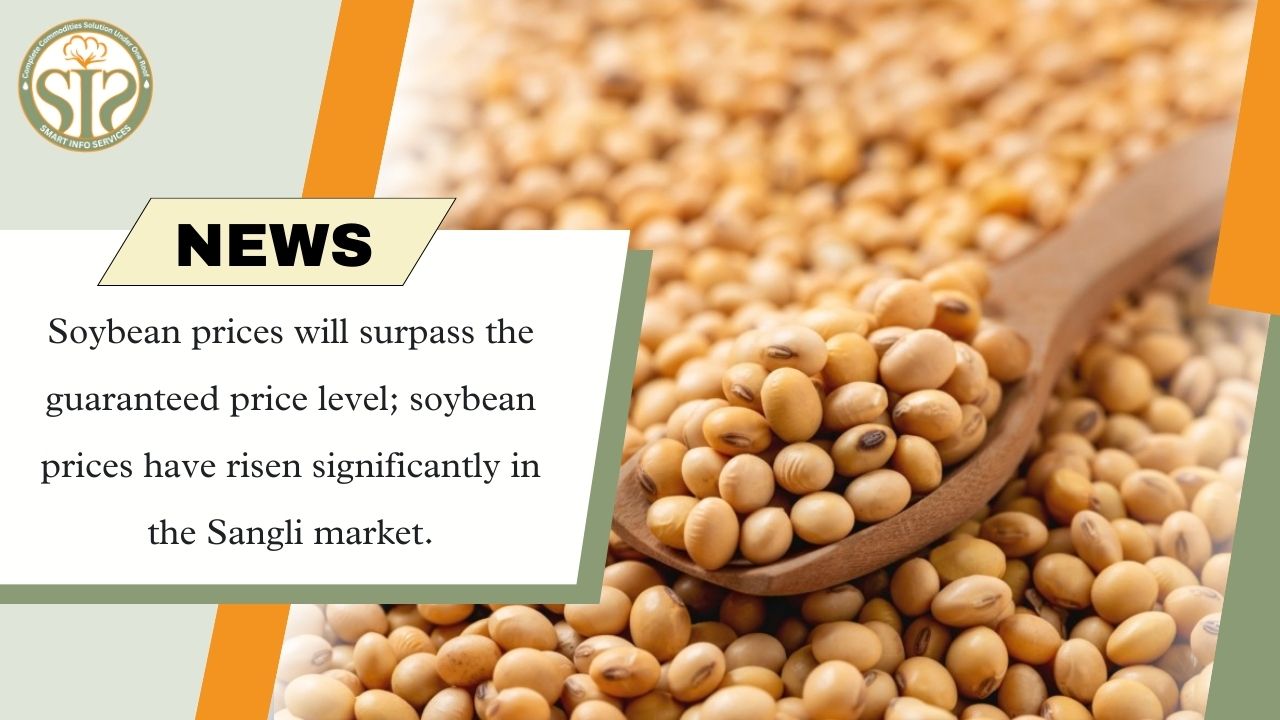
Soybean prices will surpass the guaranteed price level; soybean prices have risen significantly in the Sangli market.Soybean Market Prices: Soybean production in the district has declined this year. This is causing soybean prices to rise somewhat. For the past few days, soybean arrivals to the state's market committees have been declining, but demand is increasing.Soybean Market Prices: Soybean production in the district has declined this year. This is causing soybean prices to rise somewhat. For the past few days, soybean arrivals to the state's market committees have been declining, but demand is increasing.Sangli: There has been a significant increase in soybean demand at the national level. This is having a positive impact on prices, with the price of good quality soybeans increasing by 1,000 in just two days.Therefore, market experts are predicting that soybean prices will surpass the guaranteed price level. On Monday, a transaction at the Sangli market yard fetched a price of ₹4,500 per quintal.The minimum price for soybeans in the financial year 2025-26 is ₹5,328 per quintal. Farmers were unhappy with not receiving the minimum price for soybeans.Soybean production in the district has also declined this year. As a result, soybean prices are currently rising somewhat. For the past few days, soybean arrivals at state market committees have been declining, but demand is increasing. The price of high-quality soybeans, i.e., those used for seed, has increased by ₹1,500 in just two days, and mill-quality soybeans have reached ₹4,500.Two days ago, soybeans fetched up to ₹4,250 per quintal at the Sangli Market Committee, while on Monday, they fetched up to ₹4,500 per quintal at the same market committee.However, farmers are being advised to sell soybeans only after assessing the price.Reasons for Rising Soybean Prices◼️ Demand for soybean oil has increased recently. This has led to increased purchases by processing industries.◼️ On the other hand, soybean sowing has decreased this year's Kharif season.◼️ Furthermore, soybean procurement by NAFED has now begun. This is supporting prices.read more :- America's eyes on India's cotton market
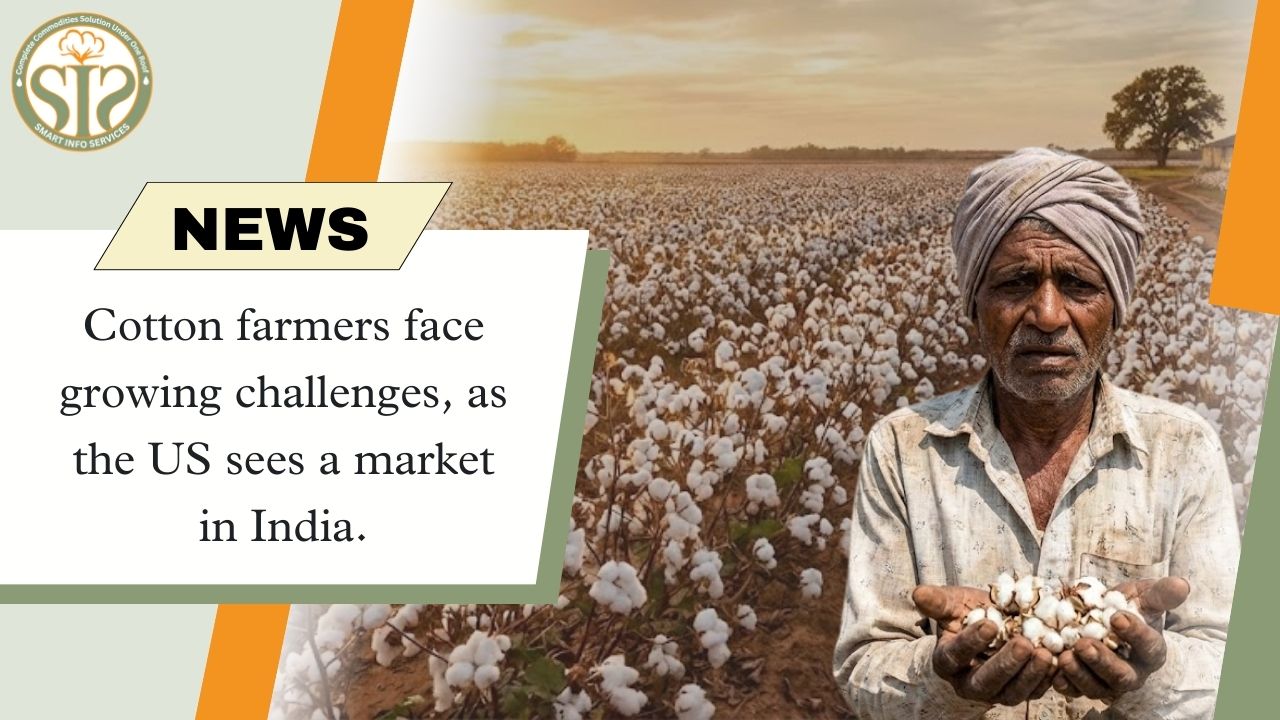
Cotton farmers face growing challenges, as the US sees a market in India.Previously, imports of raw cotton into India were subject to a five percent basic customs duty, a five percent agricultural infrastructure and development cess, and a ten percent social welfare surcharge, totaling eleven percent.This duty was imposed after the farmers' protest in February 2021, keeping in mind the interests of the country's cotton farmers. However, now, responding to the demand of the textile industry, the government has waived all customs duties on raw cotton imports effective August 19, 2025.Not only did the country's textile industry applaud this decision, the US Department of Agriculture also issued a statement, calling it a significant step and stating that it would increase US cotton exports to India. While this decision may benefit the US, it is hurting the country's farmers.According to the Global Trade Research Initiative (GTRI), the biggest beneficiary of this import duty exemption will undoubtedly be the US. The United States is the largest cotton exporter to India, and the new cotton crop begins arriving in the market from July to August.Importantly, the import duty was lifted just as the new cotton crop from Indian farmers was about to arrive in the market. The country's cotton harvest occurs from October to September, during which time farmers expect to receive good prices. Now, with the large-scale import of cotton from abroad, domestic cotton prices will fall.On the day the notification for the customs duty exemption was issued, the Cotton Corporation of India (CCI) reduced the price of cotton by Rs. 600 per candy (one candy = 356 kg), and the next day, it reduced it by another Rs. 500 per candy. Thus, within just ten days, the government itself reduced the minimum price of cotton by a total of Rs. 1700 per candy.The US ranks third in cotton production.Although India is the world's second-largest cotton producer, with domestic consumption accounting for 95 percent of total production. However, India's production of high-quality, or extra-long-staple cotton (ELS), is low, and its demand is met through imports.The Cotton Council International (CCI), a US agricultural trade body, has long demanded the removal of this tariff. The government has eliminated the 11 percent tariff on imports of high-quality, or extra-long-staple cotton, effective February 20, 2024. However, the tariff on short-staple cotton imports remained in place, which was lifted in August of this year.This move will protect Indian textile exporters' profits to some extent from the impact of US tariffs, but the country's farmers will bear the brunt of the impact, especially given the government's strong claims of doubling farmers' income.The government forgot to mention cotton farmers.The statement regarding the removal of customs duty on cotton addressed the interests of textile manufacturers and consumers, but the government neglected to mention cotton farmers. The second statement stated that farmers' interests are protected through the Minimum Support Price (MSP) system operated by the Cotton Corporation of India Limited, which ensures that farmers receive a price at least 50 percent higher than their production costs.The government determines the minimum support price based on the A-2 FL formula. According to this, the minimum support price for medium-staple cotton has been set at ₹7,121 per quintal for the year 2024-25. However, farmers' organizations are demanding that it be determined based on the C-2 formula, which requires it to be ₹10,075 per quintal. It should be noted that the C-2 formula for determining the minimum support price was suggested by Dr. MS Swaminathan.99% of cotton is cultivated as a Kharif crop.In India, cotton cultivation is primarily a Kharif crop, while in some parts of Tamil Nadu and other surrounding states, it is a Rabi crop. Approximately 6 million farming families in India earn their livelihoods from cotton cultivation. Additionally, 40-50 million other people are also involved in the cotton trade.Last year, cotton was cultivated on a total of 114.47 lakh hectares of cultivable land, representing 36.36 percent of the global cotton acreage of 314.79 lakh hectares. India ranks first in the world in terms of acreage and second only to China in production. However, the per hectare yield (437 kg per hectare) is significantly lower than the world average (833 kg per hectare).Thus, the average annual cotton production was 337 bales, while the procurement at the minimum support price was only 38 bales. This means that only 11.27 percent of the total cotton production was purchased by the government. Furthermore, out of the approximately six million cotton farmers who cultivate cotton annually, only 7.88 lakh farmers were purchased from cotton at the minimum support price. How will farmers' interests be protected under these circumstances?read more :- Rupee open Falls 15 Paise to 90.03/USD

Rupee opens 15 paise down at 90.03 against dollarIndian rupee opened lower at 90.03 per dollar on Wednesday against Tuesday's close of 89.88.read more :- Cotton crisis deepens: Opposition protests government inaction; farmers demand loan waivers and fair prices

Cotton Crisis Deepens as Opposition Slams Government, Farmers Demand Loan WaiversNagpur: The second day of the winter session began on a confrontational note on Tuesday, with the opposition cornering the state government over falling cotton prices and growing distress among farmers. Congress Legislature Party leader Vijay Wadettiwar protested on the steps of the Vidhan Bhavan, alleging that the state government was neglecting the welfare of farmers by reducing the import tariff from 12% to zero, leading to increased imports and lower incomes for local farmers.The protest began just seconds after Chief Minister Devendra Fadnavis, Deputy CM Eknath Shinde, Cultural Minister Ashish Shelar, Speaker Rahul Narvekar, and Council Chairperson Ram Shinde gathered on the steps of the Vidhan Bhavan for an official photo session with students from the Commonwealth Parliamentary Association (CPA).Holding a placard and raising slogans, Waddetiwar accused the government of neglecting cotton growers in Vidarbha and Marathwada. “Cotton must get a fair price. Farmers need fair compensation for their produce,” he shouted while leading the demonstration. The protests gained momentum, and leaders from the Maha Vikas Aghadi (MVA) camp also joined in.Speaking to the media, former MPCC president Nana Patole said the government had taken shortcuts in waiving farmers' loans, providing relief only to those who had approached the court. He alleged, “Only 500 crore rupees out of 1,500 crore rupees have been waived,” and said the government's approach prioritized vote bank funding over the welfare of farmers.Shiv Sena (UBT) leader Aditya Thackeray was seen holding a cotton plant as a symbol of farmers' suffering. He waved it while raising slogans and demanding immediate government intervention. Several opposition MLAs stood with him, holding banners demanding complete loan waivers and bonus procurement prices to stabilize the cotton sector.According to the opposition, market fluctuations and procurement delays have forced farmers to sell their produce at prices far below the Minimum Support Price (MSP). They alleged that government assurances have not been implemented, leaving cotton growers in debt and frustrated.The opposition has warned that they will intensify protests inside and outside the House until the government announces relief measures for cotton growers. With farmers' issues being discussed for the second consecutive day, the Winter Session is expected to be more chaotic.Earlier in the morning, Deputy Chief Minister Eknath Shinde, while briefing CPA students, targeted the opposition, saying that raising slogans on the steps of the Vidhan Bhavan is not "parliamentary procedure," as the real discussions and decisions take place inside the House.Read More :- The rupee rose 26 paise to close at 89.88 per dollar.

રૂપિયો ૧૩ પૈસા ઘટીને ૯૦.૫૫/ડોલર પર ખુલ્યોસોમવારે ભારતીય રૂપિયો ૯૦.૦૬/ડોલર પર ખુલ્યો, જે અગાઉના બંધ ૯૦.૪૨ હતો.વધુ વાંચો :- રાજ્યવાર CCI કપાસ વેચાણ વિગતો (૨૦૨૪-૨૫)
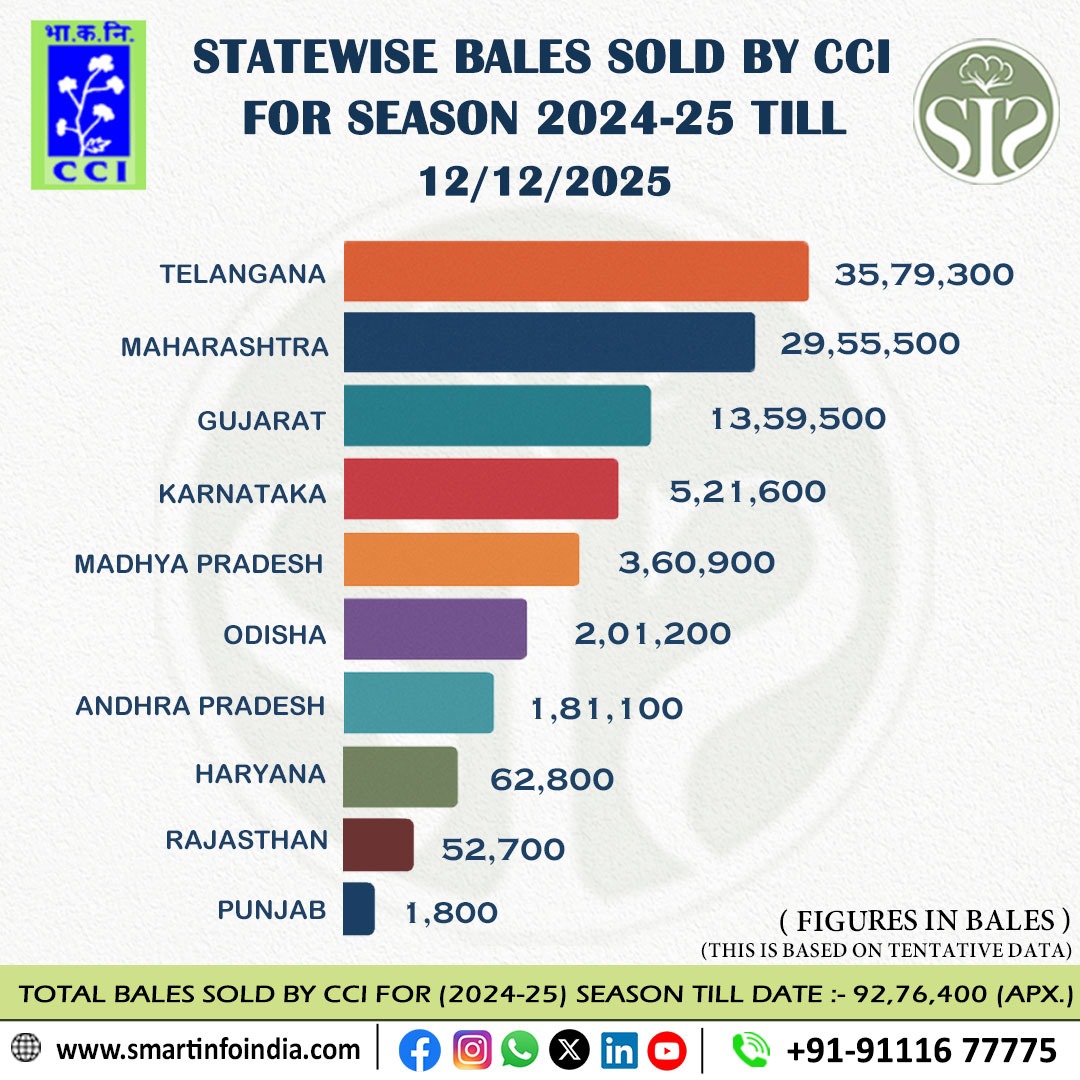
રાજ્ય પ્રમાણે CCI કપાસના વેચાણની વિગતો - 2024-25 સીઝનકોટન કોર્પોરેશન ઓફ ઇન્ડિયા (CCI) એ આ અઠવાડિયે તેના ભાવ પ્રતિ કેન્ડી ₹100 નો વધારો કર્યો છે. 2024-25 સીઝનમાં અત્યાર સુધીમાં કુલ વેચાણ આશરે 92,76,400 ગાંસડી સુધી પહોંચ્યું છે. આ આંકડો અત્યાર સુધીમાં ખરીદાયેલા કુલ કપાસના આશરે 92.76% દર્શાવે છે.રાજ્યવાર વેચાણના આંકડા દર્શાવે છે કે મહારાષ્ટ્ર, તેલંગાણા અને ગુજરાતે વેચાણમાં મોખરે રહ્યા છે, જે અત્યાર સુધીમાં કુલ વેચાણના 85.10% થી વધુ હિસ્સો ધરાવે છે.આ આંકડા કપાસ બજારને સ્થિર કરવા અને મુખ્ય કપાસ ઉત્પાદક રાજ્યોને નિયમિત પુરવઠો સુનિશ્ચિત કરવા માટે CCI ના સક્રિય પ્રયાસોને પ્રતિબિંબિત કરે છે.
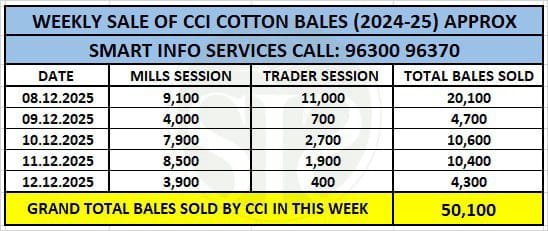
CCI એ કપાસના ભાવમાં વધારો કર્યો; આ અઠવાડિયે ઈ-ઓક્શનનું વેચાણ 50,100 ગાંસડી સુધી પહોંચ્યુંકોટન કોર્પોરેશન ઓફ ઈન્ડિયા (CCI) એ આ અઠવાડિયે કપાસના ભાવ પ્રતિ કેન્ડી ₹100 વધાર્યા છે. CCI એ 2024-25 સીઝન દરમિયાન ખરીદેલા કપાસના 92.76% ઈ-ઓક્શન દ્વારા વેચી દીધા છે.8 ડિસેમ્બર થી 12 ડિસેમ્બર, 2025 ના અઠવાડિયા દરમિયાન, CCI એ વિવિધ કેન્દ્રો પર મિલો અને વેપારીઓ માટે નિયમિત ઓનલાઈન હરાજી હાથ ધરી હતી. આ હરાજીના પરિણામે આ અઠવાડિયે આશરે 50,100 ગાંસડીનું કુલ વેચાણ થયું, જે બંને સેગમેન્ટની સતત માંગને પ્રતિબિંબિત કરે છે.સાપ્તાહિક વેચાણ અહેવાલ8 ડિસેમ્બર, 2025સપ્તાહની શરૂઆત મજબૂત નોંધ પર થઈ હતી, જેમાં 20,100 ગાંસડીનું ટોચનું વેચાણ થયું હતું. આમાંથી, 9,100 ગાંસડી મિલો દ્વારા ખરીદવામાં આવી હતી, જ્યારે 11,000 ગાંસડી વેપારીઓ દ્વારા ખરીદવામાં આવી હતી.9 ડિસેમ્બર, 2025વેચાણ ઝડપથી ઘટીને 4,700 ગાંસડી થયું, જેમાં મિલોએ 4,000 ગાંસડી અને વેપારીઓએ 700 ગાંસડી ખરીદી.10 ડિસેમ્બર, 2025મધ્ય સપ્તાહની હરાજીમાં ખરીદીમાં સુધારો થયો, જેના કારણે કુલ વેચાણ 10,600 ગાંસડી થયું. મિલોએ 7,900 ગાંસડી ખરીદી, જ્યારે વેપારીઓએ 2,700 ગાંસડી ખરીદી.11 ડિસેમ્બર, 2025આ દિવસે CCI એ 10,400 ગાંસડી વેચી, જેમાં મિલોએ 8,500 ગાંસડી અને વેપારીઓએ 1,900 ગાંસડી ખરીદી.12 ડિસેમ્બર, 2025સપ્તાહનો અંત સારો રહ્યો, જેમાં 4,300 ગાંસડી વેચાઈ. આમાંથી, મિલોએ 3,900 ગાંસડી ખરીદી, જ્યારે વેપારીઓએ 400 ગાંસડી ખરીદી.આ સાપ્તાહિક વેચાણ સાથે, ચાલુ સિઝન માટે CCIનું કુલ કપાસનું વેચાણ આશરે 92,76,400 ગાંસડી સુધી પહોંચી ગયું છે, જે 2024-25 સિઝન હેઠળ તેની કુલ ખરીદીના 92.76% છે.વધુ વાંચો :- "ભારત કાપડ માટે વૈશ્વિક બજારની શોધ કરી રહ્યું છે: પવિત્રાજી"
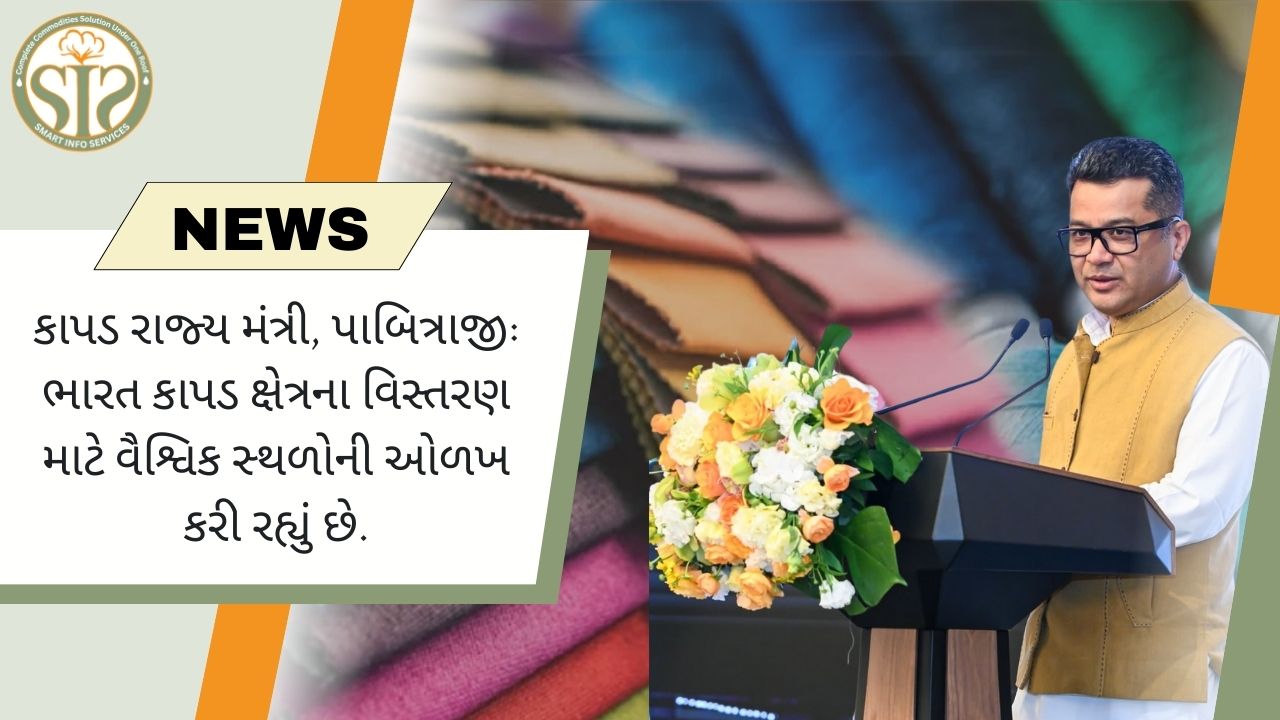
કાપડ રાજ્ય મંત્રી, પાબિત્રાજી: ભારત કાપડ ક્ષેત્રના વિસ્તરણ માટે વૈશ્વિક સ્થળોની ઓળખ કરી રહ્યું છે.નવી દિલ્હી : કાપડ મંત્રાલયે 40 દેશોની બજાર વૈવિધ્યકરણ વ્યૂહરચના ઘડી છે, જેમાં ઉચ્ચ-સંભવિત વૈશ્વિક સ્થળો ઓળખવામાં આવ્યા છે, અને નિકાસ પ્રમોશન કાઉન્સિલ (EPC), ઉદ્યોગ પ્રતિનિધિમંડળો અને વિદેશમાં ભારતીય મિશન દ્વારા ભારતની વૈશ્વિક હાજરી વધારવા માટે માળખાગત આઉટરીચ હાથ ધરવામાં આવી રહી છે, કાપડ રાજ્ય મંત્રી, પાબિત્રા માર્ગેરિતાએ શુક્રવારે રાજ્યસભામાં એક લેખિત જવાબમાં જણાવ્યું હતું.કાપડ મંત્રાલયે કાપડ ઉદ્યોગને પ્રોત્સાહન અને પ્રોત્સાહન આપવા માટે વિવિધ યોજનાઓ અને કાર્યક્રમોને મંજૂરી આપી છે, જેમ કે વિશ્વ કક્ષાના ઔદ્યોગિક માળખા માટે PM મેગા ઇન્ટિગ્રેટેડ ટેક્સટાઇલ રિજિયન્સ એન્ડ એપેરલ (PM MITRA) પાર્ક યોજના; મોટા પાયે ઉત્પાદનને પ્રોત્સાહન આપવા અને સ્પર્ધાત્મકતા વધારવા માટે MMF એપેરલ, MMF ફેબ્રિક્સ અને ટેકનિકલ ટેક્સટાઇલ માટે પ્રોડક્શન લિંક્ડ ઇન્સેન્ટિવ (PLI) યોજના; સંશોધન, નવીનતા, બજાર વિકાસ અને કૌશલ્ય વિકાસ માટે રાષ્ટ્રીય ટેકનિકલ ટેક્સટાઇલ મિશન.અન્ય યોજનાઓમાં SAMARTH - કાપડ ક્ષેત્રમાં ક્ષમતા નિર્માણ માટેની યોજનાનો સમાવેશ થાય છે; રેશમ ઉછેર વિકાસ માટે સિલ્ક સમાગ્રા-2; આધુનિકીકરણ માટે સંશોધિત ટેકનોલોજી અપગ્રેડેશન ફંડ યોજના (ATUFS); કારીગરો, વણકરો અને હસ્તકલા ક્લસ્ટરોને એન્ડ-ટુ-એન્ડ સપોર્ટ માટે રાષ્ટ્રીય હાથવણાટ વિકાસ કાર્યક્રમ, રાષ્ટ્રીય હસ્તકલા વિકાસ કાર્યક્રમ અને વ્યાપક હસ્તકલા ક્લસ્ટર વિકાસ યોજના, રાજ્ય મંત્રીએ તેમના લેખિત જવાબમાં જણાવ્યું હતું.સરકાર આંતરરાષ્ટ્રીય અને સ્થાનિક બજારમાં કાપડ ઉદ્યોગની સ્પર્ધાત્મકતા વધારવા માટે વિવિધ પ્રોત્સાહનો અને લાભો પ્રદાન કરે છે.મંત્રીએ જણાવ્યું હતું કે મંત્રાલયે, EPCs સાથે મળીને, 2024 અને 2025 માં ઇન્ડિયા ટેક્સનું આયોજન કર્યું છે - આંતરરાષ્ટ્રીય જોડાણને મજબૂત કરવા, વિવિધ દેશોના પ્રદર્શકો અને વેપાર મુલાકાતીઓને એકસાથે લાવવા અને ભારતના કાપડ ઇકોસિસ્ટમના સ્કેલ, નવીનતા અને વૈશ્વિક સ્પર્ધાત્મકતા દર્શાવવા માટે એક મેગા ગ્લોબલ ટેક્સટાઇલ ઇવેન્ટ.સરકાર WTO-અનુપાલન શૂન્ય-રેટેડ નિકાસના સિદ્ધાંતોના આધારે વસ્ત્રો, વસ્ત્રો અને મેડ-અપ્સ માટે રાજ્ય અને કેન્દ્રીય કર અને લેવીઝ (RoSCTL) યોજનાનો અમલ કરી રહી છે.મંત્રીએ એક લેખિત જવાબમાં જણાવ્યું હતું કે, "RoSCTL યોજના હેઠળ આવરી લેવામાં ન આવતા કાપડ ઉત્પાદનોને નિકાસ કરાયેલા ઉત્પાદનો પર ડ્યુટીઝ અને ટેક્સીસ (RoDTEP) યોજના હેઠળ, અન્ય નોન-ટેક્સટાઇલ ક્ષેત્રો સાથે, ટેકો આપવામાં આવી રહ્યો છે. RoSCTL હેઠળ, નાણાકીય વર્ષ 2024-25 દરમિયાન 15,000 થી વધુ નિકાસકારોને એમ્બેડેડ ટેક્સ પર રિબેટનો લાભ મળ્યો છે." ભારતે ભારત-યુકે કોમ્પ્રીહેન્સિવ ઇકોનોમિક એન્ડ ટ્રેડ એગ્રીમેન્ટ (CETA) સહિત 15 મુક્ત વેપાર કરારો (FTA) પર હસ્તાક્ષર કર્યા છે. તેમણે કહ્યું કે આ FTAs નો ઉદ્દેશ્ય ટેરિફ અને નોન-ટેરિફ અવરોધો ઘટાડવા, પ્રક્રિયાઓને સરળ બનાવવા અને ભારતીય નિકાસકારોને ભાગીદાર બજારોમાં વધુ સ્પર્ધાત્મક બનાવવા માટે માળખાકીય મુદ્દાઓને સંબોધવાનો છે.સરકારે નિકાસ પ્રમોશન મિશન (EPM) ને મંજૂરી આપી છે, જે વાણિજ્ય વિભાગ, MSME મંત્રાલય, નાણાં મંત્રાલય અને નાણાકીય સંસ્થાઓ, નિકાસ પ્રમોશન કાઉન્સિલ, કોમોડિટી બોર્ડ, ઉદ્યોગ સંગઠનો અને રાજ્ય સરકારો સહિત અન્ય મુખ્ય હિસ્સેદારોને સંડોવતા સહયોગી માળખા પર આધારિત છે.તેમણે સંસદને માહિતી આપી કે સરકારે કાપડ ઉદ્યોગ માટે ઇનપુટ સામગ્રી ખર્ચ ઘટાડવા, પૂરતો પુરવઠો સુનિશ્ચિત કરવા, નિકાસ સ્પર્ધાત્મકતામાં સુધારો કરવા અને એકંદર ઉદ્યોગ કાર્યક્ષમતા વધારવા માટે 31 ડિસેમ્બર, 2025 સુધી કપાસ પર આયાત ડ્યુટી મુક્તિ આપી છે.તેમણે એમ પણ કહ્યું કે સરકારે માળખાકીય વિસંગતતાઓને દૂર કરવા, ખર્ચ ઘટાડવા, માંગ વધારવા, નિકાસ વધારવા અને રોજગાર જાળવવા માટે કાપડ મૂલ્ય શૃંખલામાં GST દરોને તર્કસંગત બનાવ્યા છે.બીજા લેખિત જવાબમાં, મંત્રીએ ગૃહને માહિતી આપી કે 2024-25માં ભારતની કાપડ અને કપડાં (હસ્તકલા સહિત) ની નિકાસ US$ 37,755.0 મિલિયન હતી, જે પાછલા વર્ષ (2023-24) કરતા 5.2 ટકાની વૃદ્ધિ દર્શાવે છે.વધુમાં, મંત્રીએ જણાવ્યું હતું કે એપ્રિલ-ઓક્ટોબર 2025 દરમિયાન ભારતની કાપડ અને કપડાંની નિકાસ, જેમાં હસ્તકલાનો સમાવેશ થાય છે, US$ 20,401.95 મિલિયન હતી, જે ગયા વર્ષના સમાન સમયગાળા (US$ 20,728.05 મિલિયન) કરતાં 1.8 ટકાનો નજીવો ઘટાડો દર્શાવે છે, છતાં વૈશ્વિક ટેરિફ-સંબંધિત અને અન્ય બાહ્ય પડકારો છતાં નિકાસ કામગીરીમાં એકંદર સ્થિરતા દર્શાવે છે. (ANI)વધુ વાંચો :- રૂપિયો 90.42/USD પર સ્થિર બંધ થયો.

શુક્રવારે ભારતીય રૂપિયો ડોલર દીઠ 90.42 પર સ્થિર બંધ થયો, જ્યારે સવારે તે 90.42 પર ખુલ્યો હતો.ક્લોઝિંગ બેલ: સેન્સેક્સ 449 પોઈન્ટ વધીને 85,267 પર બંધ થયો, નિફ્ટી 26,000 ની ઉપર બંધ થયો; ટાટા સ્ટીલ, એટરનલ સૌથી વધુ વધ્યાવધુ વાંચો :- રૂપિયો 06 પૈસા ઘટીને 90.42 પર ખુલ્યો

રૂપિયો 06 પૈસા ઘટીને 90.42/USD પર ખુલ્યોભારતીય રૂપિયો શુક્રવારે 90.36 ના પાછલા બંધ દરની સરખામણીમાં 90.42 પ્રતિ ડોલરના રેકોર્ડ નીચા સ્તરે ખુલ્યો.વધુ વાંચો :- ડોલર દીઠ રૂપિયો 38 પૈસા ઘટીને 90.36 પર બંધ થયો.

ગુરુવારે ભારતીય રૂપિયો ૩૮ પૈસા ઘટીને ૯૦.૩૬ પ્રતિ ડોલર પર બંધ થયો, જે સવારે ૮૯.૯૮ ના ઉદઘાટન ભાવથી શરૂ થયો હતો.બજાર બંધ થવા પર, સેન્સેક્સ ૪૨૬.૮૬ પોઈન્ટ અથવા ૦.૫૧ ટકા વધીને ૮૪,૮૧૮.૧૩ પર અને નિફ્ટી ૧૪૦.૫૫ પોઈન્ટ અથવા ૦.૫૫ ટકા વધીને ૨૫,૮૯૮.૫૫ પર બંધ થયો. લગભગ ૨,૩૪૫ શેર વધ્યા, ૧,૬૬૪ ઘટ્યા અને ૧૩૮ શેર યથાવત રહ્યા.વધુ વાંચો :- ઉત્તરીય પટ્ટામાં કપાસની આવકમાં 49.66% નો વધારો
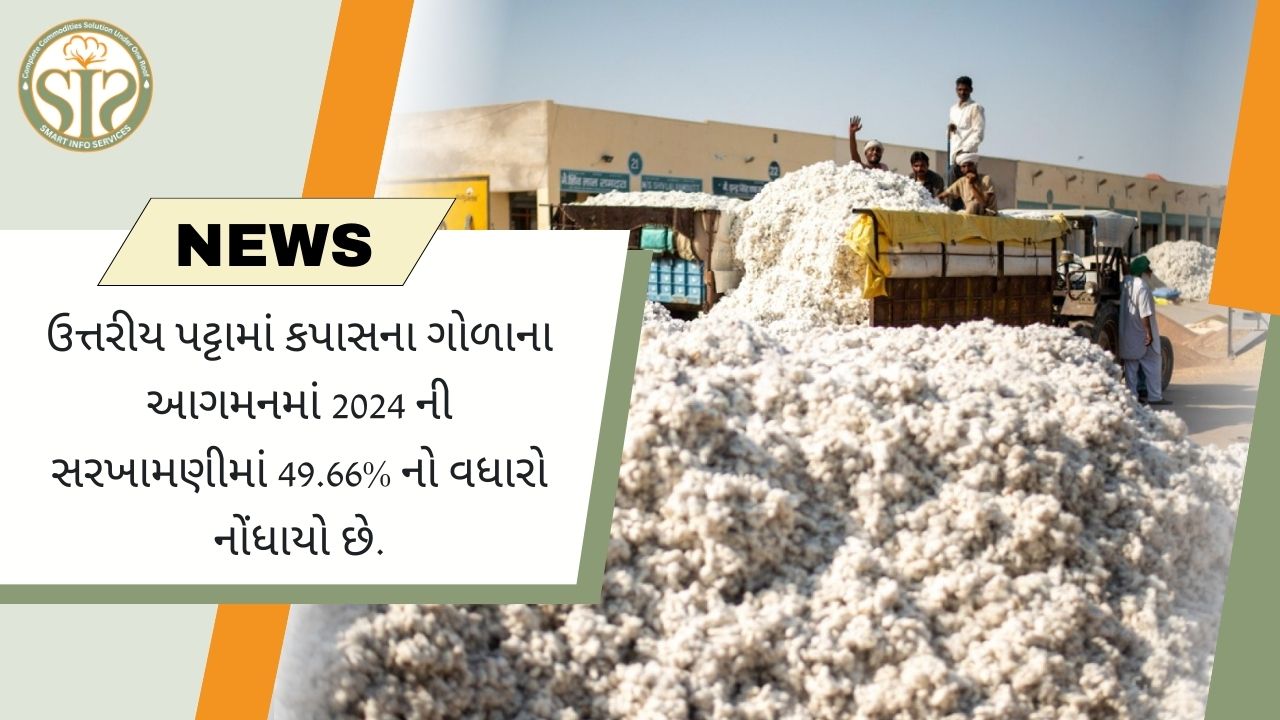
ઉત્તરીય પટ્ટામાં કપાસના ગોળાના આગમનમાં 2024 ની સરખામણીમાં 49.66% નો વધારો નોંધાયો છે.પંજાબ, હરિયાણા અને રાજસ્થાન સહિત ઉત્તરીય કપાસના ગોળાના ગોળાના આગમનમાં આ સિઝનમાં અત્યાર સુધીમાં મંડીઓમાં 49.66% નો વધારો નોંધાયો છે, અને આગામી મહિનાઓમાં વધુ આગમન થવાની અપેક્ષા છે, જ્યારે કાપણી હજુ ચાલુ છે. આ ત્રણેય રાજ્યોએ અત્યાર સુધીમાં 13.32 લાખ ગાંસડી (જિન્ડ કપાસની એક ગાંસડી - બીજથી અલગ કરાયેલ કપાસ - 170 કિલો વજન) પ્રાપ્ત કરી છે, જે 2024 ના સમાન સમયગાળામાં 8.90 લાખ ગાંસડી હતી.આ વધારો મંડીઓમાં કપાસ (કોટન ગોળા) ના ભાવને કારણે થયો છે, જે લઘુત્તમ ટેકાના ભાવ (MSP) કરતા ઘણા ઓછા વેચાય છે. ભાવમાં કોઈ નોંધપાત્ર સુધારો થવાની અપેક્ષા નથી, અને બજારમાં MSP દરે ખરીદી કરતી કોટન કોર્પોરેશન ઓફ ઈન્ડિયા (CCI) ની વર્તમાન હાજરીને કારણે, ખેડૂતો તેમના ઉત્પાદનને રોકી રાખવાનું પસંદ કરી રહ્યા નથી, અને આમ, સામાન્ય કરતાં વધુ પાક મંડીઓમાં ઝડપથી લાવવામાં આવી રહ્યા છે.સપ્ટેમ્બરમાં કપાસની ચૂંટણી શરૂ થાય છે અને નવેમ્બર સુધીમાં પૂર્ણ થાય છે, તેથી ઉત્તરીય પ્રદેશમાં કપાસની મુખ્ય આવકની મોસમ 1 ઓક્ટોબરથી શરૂ થાય છે - જોકે કેટલાક વહેલા પાક સપ્ટેમ્બરમાં પણ મંડીઓમાં પહોંચે છે - અને 50-70 ટકા (કેટલાક કિસ્સાઓમાં આપેલ સિઝનમાં બજાર દરના આધારે 90 ટકા પણ) ઉત્પાદન ડિસેમ્બર સુધીમાં મંડીઓમાં પહોંચે છે અને આવતા વર્ષે 30 સપ્ટેમ્બર સુધીમાં પૂર્ણ થાય છે.ઉપરાંત, કોટન કોર્પોરેશન ઓફ ઇન્ડિયા (CCI) એ આ વર્ષે 13,400 ગાંસડી (67,000 ક્વિન્ટલ) ખરીદી છે. જોકે, ગયા વર્ષના સમાન સમયગાળામાં, CCI બજારમાં પ્રવેશ પણ કર્યો ન હતો કારણ કે પ્રવર્તમાન દર MSP જેટલો જ હતો. સામાન્ય રીતે, CCI બજારમાં પ્રવેશ કરે છે જ્યારે બજાર ભાવ MSP થી નીચે આવે છે અને તેના પરિમાણોને પૂર્ણ કરતા MSP પર કપાસ ખરીદે છે. CCI અધિકારીએ જણાવ્યું હતું કે, ખેડૂતોએ ગભરાવું જોઈએ નહીં કે તેમની બધી પેદાશો એક સાથે મંડીઓમાં લાવવા માટે ઉતાવળ કરવી જોઈએ નહીં, કારણ કે CCI આગામી મહિનામાં MSP પર ખરીદી ચાલુ રાખશે.પંજાબમાં આ વર્ષે કપાસનું વાવેતર ૧.૧૯ લાખ હેક્ટરમાં થયું છે, જે ૨૦૨૪માં લગભગ ૧ લાખ હેક્ટર હતું, પરંતુ ભારે વરસાદને કારણે પાકને લગભગ ૧૦ થી ૧૫ ટકા નુકસાન થયું છે, જેના કારણે વાવેતર હેઠળનો ઉત્પાદક વિસ્તાર ગયા વર્ષના સ્તરથી થોડો વધારે (એટલે કે લગભગ ૧ લાખ હેક્ટર) થઈ ગયો છે અને ગુણવત્તા પર પણ અસર પડી છે. પંજાબમાં આ વર્ષે ૧.૫ લાખ થી ૧.૮ લાખ ગાંસડીનું પાક થવાની ધારણા છે, જે ગયા વર્ષના ૧.૫૧ લાખ ગાંસડી (૭.૫૫ લાખ ક્વિન્ટલ) હતું.હરિયાણામાં, આ વર્ષે કપાસનું વાવેતર વિસ્તાર ૩.૮૦ લાખ હેક્ટર છે જે ગયા વર્ષના ૪ લાખ હેક્ટર હતો. અત્યાર સુધીમાં, હરિયાણાની મંડીઓમાં ૨.૭૦ લાખ ગાંસડી (૧૩.૫૦ લાખ ક્વિન્ટલ કપાસ, જેનો અર્થ થાય છે કપાસ વગરનો કપાસ) આવ્યો છે, જે ગયા વર્ષના સમાન સમયગાળામાં ૨.૪૫ લાખ ગાંસડી (૧૨.૨૫ લાખ ક્વિન્ટલ) હતો - જે લગભગ ૦.૨૫ લાખ ગાંસડી અથવા ૧૦ ટકાથી થોડો વધારે છે.આ વર્ષે, સીસીઆઈએ હરિયાણામાં ૬૫,૦૦૦ ગાંસડી (૩.૩૦ લાખ ક્વિન્ટલ) ખરીદી કરી છે, જે ગયા વર્ષના ૬૨,૦૦૦ ગાંસડી (૩.૧૦ લાખ ક્વિન્ટલ) કરતા થોડો વધારે છે.રાજસ્થાનમાં અત્યાર સુધીમાં લગભગ ૧૦ લાખ ગાંસડીની આવક નોંધાઈ છે, જે ગયા વર્ષના સમાન સમયગાળામાં ૬ લાખ ગાંસડીથી વધુ હતી - જે લગભગ ૪.૦ લાખ ગાંસડી અથવા લગભગ ૬૬ ટકાનો વધારો દર્શાવે છે. આ વર્ષે રાજ્યનો કપાસનો વિસ્તાર 6.50 થી 7 લાખ હેક્ટર રહેવાનો અંદાજ છે, જ્યારે ઉપજ સરેરાશ, પ્રતિ હેક્ટર 8 થી 10 ક્વિન્ટલ જેટલી રહે છે.પંજાબ, હરિયાણા અને રાજસ્થાનમાં મળીને 2025 માં કપાસનું વાવેતર લગભગ 11.50 લાખ હેક્ટર હતું, જે 2024 માં લગભગ 11 લાખ હેક્ટર હતું. પંજાબ અને હરિયાણામાં, કપાસનો વિસ્તાર વર્ષ-દર-વર્ષ ઘટતો રહે છે, જ્યારે રાજસ્થાનમાં આ વલણ વધઘટ થાય છે, જેમાં એક વર્ષ થોડો ઘટાડો થાય છે અને બીજા વર્ષે થોડો વધારો થાય છે. આ રાજ્યો તાજેતરના વર્ષોમાં ગુલાબી ઈયળના વારંવારના હુમલાનો સામનો પણ કરી રહ્યા છે, જેના કારણે ખેડૂતોનો વિશ્વાસ ભારે ઘટી રહ્યો છે. પંજાબ સૌથી વધુ અસરગ્રસ્ત હોવાનું કહેવાય છે, અને નિષ્ણાતો નિર્દેશ કરે છે કે ઘણા વર્ષો પહેલા, રાજ્યમાં કપાસનો વાવેતર વિસ્તાર લગભગ 8 લાખ હેક્ટર હતો. તેમનો દલીલ છે કે જો પંજાબ સરકાર પાક વૈવિધ્યકરણ અને કપાસના પટ્ટાના રક્ષણ માટે ગંભીર હોય, તો તેણે ભારતભરના વૈજ્ઞાનિકોને સતત જીવાતોના પ્રકોપના મૂળ કારણોની તપાસ કરવા અને અસરકારક ઉકેલો વિકસાવવા માટે આમંત્રિત કરવા જોઈએ.૨૦૨૧-૨૨ થી ૨૦૨૩-૨૪ સુધી કપાસના ભાવ મજબૂત અને MSP થી ઉપર રહ્યા, પરંતુ ૨૦૨૪-૨૫ માં તીવ્ર ઘટાડો થયો, જોકે તે MSP ની નજીક રહ્યા. ૨૦૨૧ માં કપાસનો ભાવ પ્રતિ ક્વિન્ટલ ₹૧૩,૦૦૦ થી ₹૧૪,૦૦૦, ૨૦૨૨ માં લગભગ ₹૧૦,૦૦૦, ૨૦૨૩ માં ₹૮,૦૦૦ થી ₹૮,૧૦૦ અને ૨૦૨૪ માં ₹૬,૦૦૦ થી ₹૮,૩૦૦ ની વચ્ચે હતો, જેમાં મોટાભાગનો પાક ₹૭,૪૦૦ થી ₹૭,૫૦૦ માં વેચાયો હતો - જે લગભગ MSP ની બરાબર હતો. ગયા વર્ષે MSP મધ્યમ મુખ્ય માટે ₹૭,૧૨૧ પ્રતિ ક્વિન્ટલ અને લાંબા મુખ્ય માટે ₹૭,૫૨૧ પ્રતિ ક્વિન્ટલ હતો. આ વર્ષે કપાસનો ભાવ છેલ્લા પાંચ વર્ષમાં સૌથી ઓછો છે.કોટન એસોસિએશન ઓફ ઈન્ડિયા (CAI) ના ચેરમેન અતુલ ગણાત્રાએ જણાવ્યું હતું કે રાજ્યો તરફથી મળેલા ઇનપુટ્સના આધારે, CAI એ અંદાજ લગાવ્યો છે કે પંજાબમાં લગભગ 1.80 લાખ ગાંસડી (9 લાખ ક્વિન્ટલ), હરિયાણામાં 6.52 લાખ ગાંસડી (32.60 લાખ ક્વિન્ટલ) અને રાજસ્થાનમાં 18.80 લાખ ગાંસડી (94 લાખ ક્વિન્ટલ) પાક થશે.આ પડકારોનો સામનો કરવા માટે, કેન્દ્રીય બજેટ 2025-26 માં પાંચ વર્ષનું "કપાસ ઉત્પાદકતા માટે મિશન" જાહેર કરવામાં આવ્યું છે. આ મિશનનો ઉદ્દેશ્ય કપાસ ઉગાડતા તમામ રાજ્યોમાં વ્યૂહાત્મક હસ્તક્ષેપો, સંશોધન અને વિસ્તરણ પ્રવૃત્તિઓ દ્વારા ઉત્પાદકતા અને ગુણવત્તા વધારવા, નવીનતાને પ્રોત્સાહન આપવા અને કાપડ મૂલ્ય શૃંખલાને મજબૂત બનાવવાનો છે. તે અદ્યતન સંવર્ધન અને બાયોટેકનોલોજી સાધનોનો ઉપયોગ કરીને એક્સ્ટ્રા લોંગ સ્ટેપલ (ELS) કપાસ સહિત આબોહવા-સ્માર્ટ, જંતુ-પ્રતિરોધક અને ઉચ્ચ ઉપજ આપતી જાતો વિકસાવવા પર ધ્યાન કેન્દ્રિત કરશે.વધુ વાંચો :- "મહારાષ્ટ્રમાં 7 લાખ ખેડૂતોએ કોટન ફાર્મર એપ પર નોંધણી કરાવી"

મહારાષ્ટ્ર: MSP પર કપાસ વેચવા માટે 7 લાખ ખેડૂતોનું ‘Cotton Farmer App’ પર નોંધણીનાગપુર: 31 ડિસેમ્બરની અંતિમ તારીખ પહેલાં મહારાષ્ટ્રના અંદાજે 7 લાખ ખેડૂતોએ કોટન કોર્પોરેશન ઓફ ઈન્ડિયા (CCI) ને લઘુત્તમ ટેકાના ભાવ (MSP) પર કપાસ વેચવા માટે ‘Cotton Farmer App’ દ્વારા નોંધણી કરાવી છે।અમેરિકા સાથેના ટેરિફ તણાવ બાદ ભારતે કપાસ પર આયાત શુલ્ક દૂર કરતાં બજાર ભાવમાં ઘટાડો જોવા મળ્યો છે. આવી સ્થિતિમાં ખેડૂતો MSP પર વેચાણ માટે CCI પર નિર્ભર બન્યા છે, જ્યાં લાંબા રેશાવાળી કપાસનો ભાવ ₹8,110 પ્રતિ ક્વિન્ટલ નક્કી કરવામાં આવ્યો છે. આ છૂટ 31 ડિસેમ્બર સુધી માન્ય છે।દેશભરમાં અત્યાર સુધીમાં લગભગ 41 લાખ ખેડૂતો નોંધણી કરી ચૂક્યા છે, જેમાં મહારાષ્ટ્રનો મોટો હિસ્સો છે. ખેડૂત સંગઠનોનું કહેવું છે કે વિદર્ભ જેવા વિસ્તારોમાં વાસ્તવિક સંખ્યા હજી વધુ હોઈ શકે છે અને નોંધણીઓ સતત વધી રહી છે।શરૂઆતમાં એપ આધારિત સિસ્ટમને લઈને ખેડૂતોને મુશ્કેલીઓનો સામનો કરવો પડ્યો હતો, પરંતુ હવે પ્રક્રિયા ઝડપી બની ગઈ છે. CCIના એક વરિષ્ઠ અધિકારી અનુસાર, દેશભરમાં દરરોજ લગભગ 50,000 નવા ખેડૂત નોંધણી કરી રહ્યા છે, જેના કારણે MSP પર વેચાણની માંગ સતત વધી રહી છે।CCI દ્વારા વધતી ખરીદીના કારણે ખુલ્લા બજારમાં પણ ભાવમાં સુધારો જોવા મળી રહ્યો છે. જોકે, ખાનગી વેપારીઓ ઘણીવાર કપાસને નીચી ગુણવત્તાવાળો ગણાવીને લગભગ ₹7,400 પ્રતિ ક્વિન્ટલનો ભાવ ઓફર કરે છે, કારણ કે ઉચ્ચ ગુણવત્તાવાળી કપાસના ભાવ MSP સાથે સરખા રહેવા જોઈએ।યવતમાળના વાની સ્થિત ખાનગી APMCના ડિરેક્ટર રોશન કોઠારી મુજબ, પહેલા બજાર ભાવ લગભગ ₹6,800 પ્રતિ ક્વિન્ટલ હતો, જે હવે વધતો જોવા મળી રહ્યો છે. તેમણે કહ્યું કે આ વર્ષે ઓછા ઉત્પાદનને ધ્યાનમાં લેતા ₹8,000 પ્રતિ ક્વિન્ટલનો ભાવ ખેડૂતો માટે ફાયદાકારક બની શકે છે।આ દરમિયાન, CCIએ મહારાષ્ટ્રમાં લગભગ 5 લાખ ગાંસડી અને દેશભરમાં અંદાજે 27 લાખ ગાંસડી કપાસની ખરીદી કરી છે।વધુ વાંચો :- ડોલર મુકાબલે રૂપિયો 01 પૈસા गिरकर 89.98 પર ખુલ્લું કરો.

ભારતીય રૂપિયો અમેરિકન ડોલર સામે 01 પૈસા ઘટીને 89.98 પર ખુલ્યો.ગુરુવારે ભારતીય રૂપિયો 89.98 પ્રતિ ડોલર પર ખુલ્યો, જે અગાઉના બંધ 89.97 હતો.વધુ વાંચો :- કોટન એસોસિએશન ૧૧% આયાત ડ્યુટી દૂર કરવાની માંગ કરે છે
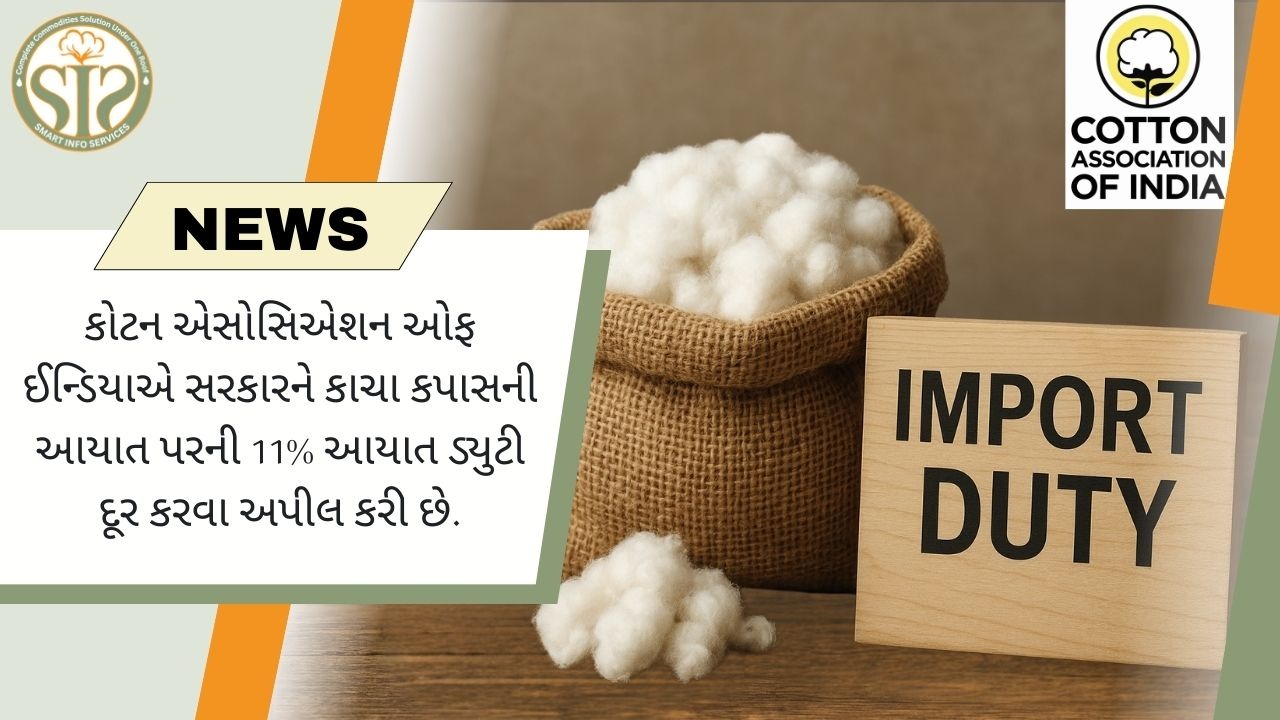
કોટન એસોસિએશન ઓફ ઈન્ડિયાએ સરકારને કાચા કપાસની આયાત પરની 11% આયાત ડ્યુટી દૂર કરવા અપીલ કરી છે.મુંબઈ: સૌથી મોટી ઉદ્યોગ સંસ્થા, કોટન એસોસિએશન ઓફ ઈન્ડિયા (CAI) એ કેન્દ્ર સરકારને અપીલ કરી છે કે સમગ્ર કપાસ અને કાપડ મૂલ્ય શૃંખલાને ટેકો આપવા અને સુરક્ષિત રાખવા માટે કપાસ પરની વર્તમાન 11% આયાત ડ્યુટી દૂર કરવામાં આવે."ઓછી સ્થાનિક ઉત્પાદકતા અને ઊંચા MSPને કારણે વર્તમાન બજાર પડકારોએ ભારતીય કપાસને અન્ય સ્પર્ધાત્મક આંતરરાષ્ટ્રીય કપાસની જાતો કરતાં વધુ મોંઘો બનાવ્યો છે," CAI ના પ્રમુખ વિનય કોટકે મંગળવારે જણાવ્યું હતું. "ભારતમાં કપાસની આયાત પર લાદવામાં આવેલી 11% આયાત ડ્યુટી માત્ર કિંમતોને વિકૃત કરતી નથી પરંતુ આપણા કાપડ ઉદ્યોગની મુશ્કેલીઓને પણ વધારે છે."તેમણે કહ્યું, "કાપડ ઉદ્યોગને સુધારવાનો એકમાત્ર રસ્તો કાચા માલનો ટકાઉ અને સ્પર્ધાત્મક પુરવઠો પૂરો પાડવાનો છે. ખેડૂતોને MSP સિસ્ટમ દ્વારા પહેલાથી જ રક્ષણ આપવામાં આવ્યું છે. હવે 11% આયાત ડ્યુટી દૂર કરીને કાપડ ઉદ્યોગને સુરક્ષિત કરવાનો સમય છે. આનાથી કાપડ/સ્પિનિંગ મિલોને સ્પર્ધાત્મક કાચા માલ મળશે." તેમના મતે, યુનાઇટેડ સ્ટેટ્સના ટેરિફની અનિશ્ચિતતા અને યુરોપમાં મંદીને કારણે ઉદ્યોગ નુકસાન સહન કરી રહ્યો છે.તેમણે કહ્યું, "જો કાપડ ઉદ્યોગને અત્યારે ટેકો આપવામાં નહીં આવે, તો તે તાત્કાલિક બેરોજગારી, લોન ડિફોલ્ટ અને સમગ્ર કાપડ મૂલ્ય શૃંખલામાં ખરાબ દેવા તરફ દોરી શકે છે."કાપડ મંત્રાલયનો 2030 સુધીમાં $100 બિલિયનના કાપડ ઉત્પાદનોની નિકાસ કરવાનો લક્ષ્યાંક ત્યારે જ પ્રાપ્ત થશે જ્યારે ઉત્પાદકોને સ્પર્ધાત્મક કાચા માલની ઉપલબ્ધતા મળશે.કોટકે કહ્યું, "કોવિડ-19 રોગચાળા દરમિયાન ખાસ પરિસ્થિતિઓમાં 11% આયાત ડ્યુટી લાદવામાં આવી હતી. તે પહેલાં, ભારતમાં કપાસ પર સામાન્ય રીતે કોઈ આયાત ડ્યુટી નહોતી, અને તેની ખેડૂતો પર પ્રતિકૂળ અસર થઈ ન હતી." તેમણે ઉમેર્યું: "આ સિઝનમાં, કમોસમી વરસાદે ભારતીય કપાસની ગુણવત્તાને ભારે નુકસાન પહોંચાડ્યું છે. તેથી, ખરીદદારોની ગુણવત્તાની જરૂરિયાતોને પૂર્ણ કરવા માટે અમારી કાપડ મિલોને કપાસની આયાત કરવાની ફરજ પડશે. જો 11% આયાત ડ્યુટી હટાવવામાં નહીં આવે, તો ભારતીય કાપડ માલ બિનસ્પર્ધાત્મક બનશે, અને ખરીદદારો વિયેતનામ, બાંગ્લાદેશ, પાકિસ્તાન અને અન્ય બજારો તરફ જશે. આનાથી લાંબા ગાળાના નુકસાન અને વૈશ્વિક કપાસ કાપડ બજારમાં ભારતના હિસ્સામાં ઘટાડો થઈ શકે છે."કોટકે જણાવ્યું હતું કે સરકાર અનેક દેશો સાથે FTA ને અંતિમ સ્વરૂપ આપવા માટે સખત મહેનત કરી રહી છે.વડા પ્રધાન નરેન્દ્ર મોદી અને વાણિજ્ય અને ઉદ્યોગ પ્રધાન પીયૂષ ગોયલના પ્રયાસોની પ્રશંસા કરતા તેમણે કહ્યું, “આપણે યુએસએ ટેરિફ સોલ્યુશન સુધી પણ પહોંચી શકીએ છીએ. આ ઇવેન્ટ્સ આપણા કાપડ ઉદ્યોગને યાર્ન અને અન્ય કાપડ ઉત્પાદનોની નિકાસ કરવાની અને વિશ્વ કાપડ વેપારમાં ભારતનો હિસ્સો વધારવાની નોંધપાત્ર તક પૂરી પાડશે. આ લાભો ફક્ત ત્યારે જ પ્રાપ્ત થઈ શકે છે જો ભારતમાં કાચા કપાસની આયાત પરની 11% ડ્યુટી દૂર કરવામાં આવે, જેનાથી સ્પર્ધાત્મક દરે કાચા માલની પહોંચ મળે.”તેમણે વધુમાં કહ્યું, “હકીકતમાં, 'ચાઇના પ્લસ વન' નીતિનો મેગા ટ્રેન્ડ અને અસ્થિર રાજકીય પરિસ્થિતિ અને યુએસ ડોલરની અછતને કારણે બાંગ્લાદેશથી સોર્સિંગનું સંભવિત પરિવર્તન ભારતીય કાપડ ઉદ્યોગ માટે નિકાસ વધારવા અને વધારવા માટે એક સુવર્ણ તક રજૂ કરે છે, જો 11% આયાત ડ્યુટી દૂર કરવામાં આવે અને આપણો કાપડ ઉદ્યોગ સ્પર્ધાત્મક કપાસનો ઉપયોગ કરી શકેવધુ વાંચો :- ડોલર દીઠ રૂપિયો 06 પૈસા વધીને 89.97 પર બંધ થયો.

બુધવારે ભારતીય રૂપિયો 06 પૈસા વધીને 89.97 પ્રતિ ડોલર પર બંધ થયો હતો, જ્યારે સવારે તે 90.03 પર ખુલ્યો હતો.બંધ સમયે, સેન્સેક્સ 275.01 પોઈન્ટ અથવા 0.32 ટકા ઘટીને 84,391.27 પર અને નિફ્ટી 81.65 પોઈન્ટ અથવા 0.32 ટકા ઘટીને 25,758 પર બંધ થયો હતો. લગભગ 1830 શેર વધ્યા, 2186 શેર ઘટ્યા અને 133 શેર યથાવત રહ્યા.વધુ વાંચો :- સોયાબીનના ભાવ ગેરંટીકૃત ભાવને વટાવી ગયા, સાંગલીમાં વધારો

સોયાબીનના ભાવમાં તેજી: MSP પાર જવાની શક્યતા, સાંગલી બજારમાં ઉછાળોસાંગલી: જિલ્લામાં આ વર્ષે સોયાબીનના ઉત્પાદનમાં ઘટાડા વચ્ચે બજારમાં ભાવોમાં નોંધપાત્ર વધારો જોવા મળી રહ્યો છે. છેલ્લા કેટલાક દિવસોમાં બજાર સમિતિઓમાં આવક ઘટી રહી છે જ્યારે માંગ સતત વધી રહી છે, જેના કારણે ભાવમાં મજબૂતી આવી છે।રાષ્ટ્રીય સ્તરે વધતી માંગનો સીધો પ્રભાવ બજાર પર પડી રહ્યો છે. ખાસ કરીને સારી ગુણવત્તાવાળા સોયાબીનના ભાવમાં માત્ર બે દિવસમાં આશરે ₹1,000 સુધીનો ઉછાળો નોંધાયો છે. સોમવારે સાંગલી માર્કેટ યાર્ડમાં સોયાબીનનો ભાવ ₹4,500 પ્રતિ ક્વિન્ટલ સુધી પહોંચ્યો હતો।હાલમાં 2025-26 માટે સોયાબીનનો લઘુત્તમ આધાર ભાવ (MSP) ₹5,328 પ્રતિ ક્વિન્ટલ છે. બજાર નિષ્ણાતોનું માનવું છે કે આવનારા સમયમાં ભાવ MSP સ્તરને વટાવી શકે છે, જે ખેડૂતો માટે સકારાત્મક સંકેત છે।જિલ્લામાં ઉત્પાદન ઘટવાથી સપ્લાય ઓછી થઈ છે, જ્યારે માંગમાં વધારો થયો છે. ખાસ કરીને બીજ માટે વપરાતા ઉચ્ચ ગુણવત્તાવાળા સોયાબીનના ભાવમાં બે દિવસમાં ₹1,500 સુધીનો વધારો થયો છે. બે દિવસ પહેલા જે ભાવ ₹4,250 હતો, તે હવે વધીને ₹4,500 સુધી પહોંચી ગયો છે।ખેડૂતોને હાલના બજાર પરિસ્થિતિને ધ્યાનમાં રાખીને યોગ્ય સમયે વેચાણ કરવાની સલાહ આપવામાં આવી રહી છે।ભાવ વધવાના મુખ્ય કારણો:સોયાબીન તેલની વધતી માંગને કારણે પ્રોસેસિંગ ઉદ્યોગોમાં ખરીદી વધીચાલુ ખરીફ સીઝનમાં વાવેતર ઓછું રહેવુંNAFED દ્વારા શરૂ કરાયેલ ખરીદીથી બજારમાં ભાવને ટેકો મળવોકુલ મળીને, સોયાબીન બજારમાં તેજીનો ટ્રેન્ડ જોવા મળી રહ્યો છે અને નજીકના સમયમાં ભાવ વધુ મજબૂત થવાની શક્યતા છે।વધુ વાંચો :- અમેરિકાની નજર ભારતના કપાસ બજાર પર

કપાસના ખેડૂતો વધતા પડકારોનો સામનો કરી રહ્યા છે, કારણ કે અમેરિકા ભારતમાં બજાર જોઈ રહ્યું છે.અગાઉ, ભારતમાં કાચા કપાસની આયાત પર પાંચ ટકા મૂળભૂત કસ્ટમ ડ્યુટી, પાંચ ટકા કૃષિ માળખાગત અને વિકાસ ઉપકર અને દસ ટકા સામાજિક કલ્યાણ સરચાર્જ લાગતો હતો, જે કુલ અગિયાર ટકા હતો.દેશના કપાસના ખેડૂતોના હિતોને ધ્યાનમાં રાખીને, ફેબ્રુઆરી 2021 માં ખેડૂતોના વિરોધ પછી આ ડ્યુટી લાદવામાં આવી હતી. જો કે, હવે, કાપડ ઉદ્યોગની માંગને ધ્યાનમાં રાખીને, સરકારે 19 ઓગસ્ટ, 2025 થી અમલમાં આવતા કાચા કપાસની આયાત પરની તમામ કસ્ટમ ડ્યુટી માફ કરી દીધી છે.દેશના કાપડ ઉદ્યોગે આ નિર્ણયને માત્ર વખાણ્યો જ નહીં, પરંતુ યુએસ ડિપાર્ટમેન્ટ ઓફ એગ્રીકલ્ચરે પણ એક નિવેદન બહાર પાડીને તેને એક મહત્વપૂર્ણ પગલું ગણાવ્યું અને કહ્યું કે તેનાથી ભારતમાં યુએસ કપાસની નિકાસ વધશે. જ્યારે આ નિર્ણય અમેરિકાને ફાયદો કરાવી શકે છે, તે દેશના ખેડૂતોને નુકસાન પહોંચાડી રહ્યો છે.ગ્લોબલ ટ્રેડ રિસર્ચ ઇનિશિયેટિવ (GTRI) અનુસાર, આ આયાત ડ્યુટી મુક્તિનો સૌથી મોટો લાભ નિઃશંકપણે યુએસને મળશે. યુનાઇટેડ સ્ટેટ્સ ભારતમાં કપાસનો સૌથી મોટો નિકાસકાર દેશ છે, અને જુલાઈથી ઓગસ્ટ દરમિયાન નવો કપાસનો પાક બજારમાં આવવાનું શરૂ થાય છે.મહત્વની વાત એ છે કે, ભારતીય ખેડૂતો પાસેથી નવો કપાસનો પાક બજારમાં આવવાનો હતો તે જ સમયે આયાત ડ્યુટી હટાવી લેવામાં આવી હતી. દેશમાં કપાસનો પાક ઓક્ટોબરથી સપ્ટેમ્બર દરમિયાન થાય છે, આ સમય દરમિયાન ખેડૂતોને સારા ભાવ મળવાની અપેક્ષા છે. હવે, વિદેશથી કપાસની મોટા પાયે આયાત સાથે, સ્થાનિક કપાસના ભાવ ઘટશે.જે દિવસે કસ્ટમ ડ્યુટી મુક્તિ માટે સૂચના જારી કરવામાં આવી હતી, તે દિવસે કોટન કોર્પોરેશન ઓફ ઇન્ડિયા (CCI) એ કપાસના ભાવમાં પ્રતિ કેન્ડી 600 રૂપિયા (એક કેન્ડી = 356 કિલો) ઘટાડો કર્યો હતો, અને બીજા દિવસે, તેણે પ્રતિ કેન્ડી 500 રૂપિયાનો ઘટાડો કર્યો હતો. આમ, માત્ર દસ દિવસમાં, સરકારે પોતે કપાસના લઘુત્તમ ભાવમાં પ્રતિ કેન્ડી 1700 રૂપિયાનો ઘટાડો કર્યો હતો.કપાસના ઉત્પાદનમાં યુએસ ત્રીજા ક્રમે છે.જોકે ભારત વિશ્વનો બીજો સૌથી મોટો કપાસ ઉત્પાદક દેશ છે, સ્થાનિક વપરાશ કુલ ઉત્પાદનના 95 ટકા હિસ્સો ધરાવે છે. જોકે, ભારતમાં ઉચ્ચ-ગુણવત્તાવાળા અથવા એક્સ્ટ્રા-લોંગ-સ્ટેપલ કપાસ (ELS) નું ઉત્પાદન ઓછું છે, અને તેની માંગ આયાત દ્વારા પૂરી થાય છે.યુએસ કૃષિ વેપાર સંસ્થા, કોટન કાઉન્સિલ ઇન્ટરનેશનલ (CCI), લાંબા સમયથી આ ટેરિફ દૂર કરવાની માંગ કરી રહી છે. સરકારે 20 ફેબ્રુઆરી, 2024 થી અમલમાં આવતા ઉચ્ચ-ગુણવત્તાવાળા અથવા એક્સ્ટ્રા-લોંગ-સ્ટેપલ કપાસની આયાત પરનો 11 ટકા ટેરિફ નાબૂદ કર્યો છે. જોકે, ટૂંકા-સ્ટેપલ કપાસની આયાત પરનો ટેરિફ યથાવત્ રહ્યો, જે આ વર્ષના ઓગસ્ટમાં ઉઠાવી લેવામાં આવ્યો હતો.આ પગલાથી ભારતીય કાપડ નિકાસકારોના નફાને યુએસ ટેરિફની અસરથી અમુક અંશે રક્ષણ મળશે, પરંતુ દેશના ખેડૂતોને તેની અસરનો ભોગ બનવું પડશે, ખાસ કરીને સરકારના ખેડૂતોની આવક બમણી કરવાના મજબૂત દાવાઓને ધ્યાનમાં રાખીને.સરકાર કપાસના ખેડૂતોનો ઉલ્લેખ કરવાનું ભૂલી ગઈ.કપાસ પર કસ્ટમ ડ્યુટી નાબૂદ કરવા અંગેના નિવેદનમાં કાપડ ઉત્પાદકો અને ગ્રાહકોના હિતોને સંબોધવામાં આવ્યા હતા, પરંતુ સરકારે કપાસના ખેડૂતોનો ઉલ્લેખ કરવાનું અવગણ્યું હતું. બીજા નિવેદનમાં જણાવાયું છે કે ખેડૂતોના હિતોનું રક્ષણ કોટન કોર્પોરેશન ઓફ ઈન્ડિયા લિમિટેડ દ્વારા સંચાલિત લઘુત્તમ ટેકાના ભાવ (MSP) સિસ્ટમ દ્વારા કરવામાં આવે છે, જે ખાતરી કરે છે કે ખેડૂતોને તેમના ઉત્પાદન ખર્ચ કરતાં ઓછામાં ઓછા 50 ટકા વધુ ભાવ મળે.સરકાર A-2 FL ફોર્મ્યુલાના આધારે લઘુત્તમ ટેકાના ભાવ નક્કી કરે છે. આ મુજબ, મધ્યમ-મુખ્ય કપાસ માટે લઘુત્તમ ટેકાના ભાવ વર્ષ 2024-25 માટે ₹7,121 પ્રતિ ક્વિન્ટલ નક્કી કરવામાં આવ્યા છે. જોકે, ખેડૂત સંગઠનો માંગ કરી રહ્યા છે કે તે C-2 ફોર્મ્યુલાના આધારે નક્કી કરવામાં આવે, જેના માટે તે ₹10,075 પ્રતિ ક્વિન્ટલ હોવું જરૂરી છે. એ નોંધવું જોઈએ કે લઘુત્તમ ટેકાના ભાવ નક્કી કરવા માટે C-2 ફોર્મ્યુલા ડૉ. એમ.એસ. સ્વામીનાથન દ્વારા સૂચવવામાં આવ્યું હતું.99% કપાસ ખરીફ પાક તરીકે ઉગાડવામાં આવે છે.ભારતમાં, કપાસની ખેતી મુખ્યત્વે ખરીફ પાક છે, જ્યારે તમિલનાડુ અને આસપાસના અન્ય રાજ્યોના કેટલાક ભાગોમાં, તે રવિ પાક છે. ભારતમાં આશરે 6 મિલિયન ખેડૂત પરિવારો કપાસની ખેતીમાંથી પોતાનું ગુજરાન ચલાવે છે. વધુમાં, 40-50 મિલિયન અન્ય લોકો પણ કપાસના વેપારમાં સામેલ છે.ગયા વર્ષે, કુલ 114.47 લાખ હેક્ટર ખેતીલાયક જમીન પર કપાસનું વાવેતર કરવામાં આવ્યું હતું, જે 314.79 લાખ હેક્ટરના વૈશ્વિક કપાસના વાવેતર વિસ્તારના 36.36 ટકાનું પ્રતિનિધિત્વ કરે છે. ભારત વાવેતર વિસ્તારની દ્રષ્ટિએ વિશ્વમાં પ્રથમ ક્રમે છે અને ઉત્પાદનમાં ચીન પછી બીજા ક્રમે છે. જોકે, પ્રતિ હેક્ટર ઉપજ (437 કિલો પ્રતિ હેક્ટર) વિશ્વ સરેરાશ (833 કિલો પ્રતિ હેક્ટર) કરતા નોંધપાત્ર રીતે ઓછી છે.આમ, સરેરાશ વાર્ષિક કપાસનું ઉત્પાદન 337 ગાંસડી હતું, જ્યારે લઘુત્તમ ટેકાના ભાવે ખરીદી માત્ર 38 ગાંસડી હતી. આનો અર્થ એ થયો કે કુલ કપાસ ઉત્પાદનના માત્ર 11.27 ટકા જ સરકારે ખરીદી હતી. વધુમાં, વાર્ષિક કપાસ ઉગાડતા આશરે છ મિલિયન કપાસ ખેડૂતોમાંથી, ફક્ત 7.88 લાખ ખેડૂતોને લઘુત્તમ ટેકાના ભાવે કપાસમાંથી ખરીદી કરવામાં આવી હતી. આ સંજોગોમાં ખેડૂતોના હિતોનું રક્ષણ કેવી રીતે થશે?વધુ વાંચો :- રૂપિયો 15 પૈસા ઘટીને 90.03/યુએસડી પર ખુલ્યો

ડોલર સામે રૂપિયો ૧૫ પૈસા ઘટીને ૯૦.૦૩ પર ખુલ્યો.બુધવારે ડોલર સામે ભારતીય રૂપિયો ૯૦.૦૩ પર ખુલ્યો, જે મંગળવારે ૮૯.૮૮ ના ઉચ્ચતમ સ્તર પર બંધ થયો હતો.વધુ વાંચો :- કપાસનું સંકટ વધુ ઘેરું: સરકારની નિષ્ક્રિયતાનો વિરોધ; ખેડૂતોએ લોન માફી અને વાજબી ભાવની માંગણી કરી

કપાસનું સંકટ વધુ ઘેરું બન્યું, વિપક્ષ સરકારની ટીકા કરી રહ્યું છે, ખેડૂતોએ લોન માફીની માંગ કરી છેનાગપુર: મંગળવારે શિયાળુ સત્રનો બીજો દિવસ ઘર્ષણપૂર્ણ રીતે શરૂ થયો, જેમાં કપાસના ભાવમાં ઘટાડો અને ખેડૂતોમાં વધતી જતી તકલીફને લઈને વિપક્ષે રાજ્ય સરકારને ઘેરી લીધી. કોંગ્રેસ વિધાનસભા પક્ષના નેતા વિજય વાડેટ્ટીવારે વિધાન ભવનના પગથિયાં પર વિરોધ પ્રદર્શન કર્યું, અને આરોપ લગાવ્યો કે રાજ્ય સરકાર આયાત ટેરિફ 12% થી ઘટાડીને શૂન્ય કરીને ખેડૂતોના કલ્યાણની અવગણના કરી રહી છે, જેના કારણે આયાતમાં વધારો થયો છે અને સ્થાનિક ખેડૂતોની આવકમાં ઘટાડો થયો છે.મુખ્યમંત્રી દેવેન્દ્ર ફડણવીસ, નાયબ મુખ્યમંત્રી એકનાથ શિંદે, સાંસ્કૃતિક મંત્રી આશિષ શેલાર, સ્પીકર રાહુલ નાર્વેકર અને કાઉન્સિલના અધ્યક્ષ રામ શિંદે કોમનવેલ્થ પાર્લામેન્ટરી એસોસિએશન (CPA) ના વિદ્યાર્થીઓ સાથે સત્તાવાર ફોટો સેશન માટે વિધાન ભવનના પગથિયાં પર એકઠા થયા તેના થોડીવાર પછી જ વિરોધ પ્રદર્શન શરૂ થયું.પ્લેકાર્ડ પકડીને અને સૂત્રોચ્ચાર કરતા, વાડેટ્ટીવારે સરકાર પર વિદર્ભ અને મરાઠવાડામાં કપાસ ઉગાડનારાઓની અવગણના કરવાનો આરોપ લગાવ્યો. "કપાસને વાજબી ભાવ મળવો જોઈએ. ખેડૂતોને તેમના ઉત્પાદન માટે વાજબી વળતરની જરૂર છે," તેમણે પ્રદર્શનનું નેતૃત્વ કરતી વખતે બૂમ પાડી. વિરોધ પ્રદર્શનોએ જોર પકડ્યું અને મહા વિકાસ આઘાડી (MVA) કેમ્પના નેતાઓ પણ તેમાં જોડાયા.મીડિયા સાથે વાત કરતા, ભૂતપૂર્વ MPCC પ્રમુખ નાના પટોલેએ જણાવ્યું હતું કે સરકારે ખેડૂતોના દેવા માફ કરવામાં ટૂંકા ગાળાનો રસ્તો અપનાવ્યો છે, ફક્ત કોર્ટમાં ગયેલા લોકોને જ રાહત આપી છે. તેમણે આરોપ લગાવ્યો કે, "1,500 કરોડ રૂપિયામાંથી ફક્ત 500 કરોડ રૂપિયા માફ કરવામાં આવ્યા છે," અને કહ્યું કે સરકારનો અભિગમ ખેડૂતોના કલ્યાણ કરતાં વોટ બેંક ભંડોળને પ્રાથમિકતા આપે છે.શિવસેના (UBT) ના નેતા આદિત્ય ઠાકરે ખેડૂતોના દુઃખના પ્રતીક તરીકે કપાસનો છોડ પકડીને જોવા મળ્યા. તેમણે સૂત્રોચ્ચાર કરતા અને તાત્કાલિક સરકારી હસ્તક્ષેપની માંગણી કરતી વખતે તેને લહેરાવ્યો. ઘણા વિપક્ષી ધારાસભ્યો તેમની સાથે ઉભા હતા, કપાસ ક્ષેત્રને સ્થિર કરવા માટે સંપૂર્ણ લોન માફી અને બોનસ ખરીદી ભાવની માંગ કરતા બેનરો પકડીને ઉભા હતા.વિપક્ષના મતે, બજારમાં વધઘટ અને ખરીદીમાં વિલંબને કારણે ખેડૂતો લઘુત્તમ ટેકાના ભાવ (MSP) કરતા ઘણા ઓછા ભાવે તેમની ઉપજ વેચવા મજબૂર થયા છે. તેમણે આરોપ લગાવ્યો કે સરકારી ખાતરીઓનો અમલ કરવામાં આવ્યો નથી, જેના કારણે કપાસના ખેડૂતો દેવામાં ડૂબી ગયા છે અને હતાશ થઈ ગયા છે.વિપક્ષે ચેતવણી આપી છે કે જ્યાં સુધી સરકાર કપાસ ઉગાડનારાઓ માટે રાહત પગલાંની જાહેરાત નહીં કરે ત્યાં સુધી તેઓ ગૃહની અંદર અને બહાર વિરોધ પ્રદર્શનો વધુ તીવ્ર બનાવશે. સતત બીજા દિવસે ખેડૂતોના મુદ્દાઓ પર ચર્ચા થઈ રહી હોવાથી, શિયાળુ સત્ર વધુ અસ્તવ્યસ્ત બનવાની ધારણા છે.વહેલી સવારે, નાયબ મુખ્યમંત્રી એકનાથ શિંદેએ સીપીએ વિદ્યાર્થીઓને બ્રીફિંગ કરતી વખતે વિપક્ષ પર નિશાન સાધતા કહ્યું કે વિધાન ભવનના પગથિયાં પર સૂત્રોચ્ચાર કરવા એ "સંસદીય પ્રક્રિયા" નથી, કારણ કે વાસ્તવિક ચર્ચાઓ અને નિર્ણયો ગૃહની અંદર થાય છે.વધુ વાંચો :- રૂપિયો ૨૬ પૈસા વધીને ૮૯.૮૮ પ્રતિ ડોલર પર બંધ થયો.

મંગળવારે, ભારતીય રૂપિયો ૨૬ પૈસા વધીને ૮૯.૮૮ પ્રતિ ડોલર પર બંધ થયો, જે સવારે ૯૦.૧૪ ના શરૂઆતના ભાવથી બંધ થયો હતો.બંધ સમયે, સેન્સેક્સ ૪૩૬.૪૧ પોઈન્ટ અથવા ૦.૫૧ ટકા ઘટીને ૮૪,૬૬૬.૨૮ પર અને નિફ્ટી ૧૨૦.૯ પોઈન્ટ અથવા ૦.૪૭ ટકા ઘટીને ૨૫,૮૩૯.૬૫ પર બંધ થયો. લગભગ ૨,૪૦૩ શેર વધ્યા, ૧,૪૫૫ શેર ઘટ્યા અને ૧૨૭ શેર યથાવત રહ્યા.વધુ વાંચો :- બ્રાઝિલ ભારતને પાછળ છોડીને બાંગ્લાદેશનો ટોચનો કપાસ સપ્લાયર બન્યો છે.

બ્રાઝિલ બાંગ્લાદેશનું ટોપ કોટન સપ્લાયર બન્યુંયુએસ ડિપાર્ટમેન્ટ ઓફ એગ્રીકલ્ચર (યુએસડીએ) ના અહેવાલ મુજબ, બ્રાઝિલ પડોશી ભારતને પાછળ છોડીને બાંગ્લાદેશનો કાચા કપાસનો અગ્રણી સપ્લાયર બન્યો છે. બાંગ્લાદેશ વિશ્વના ટોચના કપાસ આયાતકારોમાંનો એક છે અને બીજા ક્રમનો સૌથી મોટો કપડા નિકાસકાર છે.ઓગસ્ટમાં શરૂ થયેલા 2024-25 માર્કેટિંગ વર્ષ (MY25) માં, બાંગ્લાદેશે 8.28 મિલિયન ગાંસડી કાચા કપાસની આયાત કરી હતી. બ્રાઝિલે આશરે 1.9 મિલિયન ગાંસડીનો સપ્લાય કર્યો હતો, જે કુલ આયાતના 23 ટકા જેટલો હતો.ભારત 1.4 મિલિયન ગાંસડી સાથે બીજા ક્રમનો સૌથી મોટો સપ્લાયર હતો, ત્યારબાદ બેનિન (1.06 મિલિયન ગાંસડી), કેમરૂન (616,538 ગાંસડી) અને યુનાઇટેડ સ્ટેટ્સ (595,902 ગાંસડી) આવે છે.યુએસડીએના અહેવાલમાં જણાવાયું છે કે બ્રાઝિલિયન કપાસ તેની સ્પર્ધાત્મક કિંમત, લણણી દરમિયાન વ્યાપક ઉપલબ્ધતા અને સ્થિર પુરવઠાને કારણે બાંગ્લાદેશી સ્પિનરોમાં લોકપ્રિય બન્યો છે.નાણાકીય વર્ષ ૨૦૨૪ માં, ભારત ૧.૭૯ મિલિયન ગાંસડી (૨૩ ટકા હિસ્સો) નિકાસ કરીને ટોચનો સપ્લાયર હતો. ઊંચા ભાવ અને કેટલીક ગુણવત્તા સમસ્યાઓ હોવા છતાં, બાંગ્લાદેશી આયાતકારોએ ટૂંકા ગાળામાં મુખ્યત્વે કોલકાતા અને બેનાપોલ બંદરો દ્વારા ભારતીય કપાસ ખરીદ્યો.વર્તમાન માર્કેટિંગ વર્ષ, ૨૦૨૬ માટે, યુએસડીએનો અંદાજ છે કે બાંગ્લાદેશથી કપાસની આયાત ૮.૪ મિલિયન ગાંસડી થશે, જે ૨૦૨૫ કરતા ૧.૪ ટકા વધુ છે, મુખ્યત્વે સ્થાનિક સ્પિનરો દ્વારા કપાસના વધુ વપરાશને કારણે. ૨૦૨૪ માં ૭.૮ મિલિયન ગાંસડીની આયાત કરતા આ ૫.૨ ટકાનો વધારો છે.અહેવાલમાં પ્રકાશિત કરવામાં આવ્યું છે કે જુલાઈમાં વિદ્યાર્થી-નેતૃત્વ હેઠળના બળવા દરમિયાન ભૂતપૂર્વ વડા પ્રધાન શેખ હસીના ભાગી ગયા પછી ઓગસ્ટ ૨૦૨૪ માં નવી વચગાળાની સરકારની રચના પછી આરએમજી ઉત્પાદનમાં પ્રારંભિક વિક્ષેપો હોવા છતાં, MY25 દરમિયાન કપાસની આયાત સ્થિર રહી હતી.જોકે, જમીનની અછત અને લાંબા ઉત્પાદન સમયગાળાને કારણે સ્થાનિક કપાસનું ઉત્પાદન 153,000 ગાંસડી પર યથાવત રહેવાની ધારણા છે, જેમાં 45,000-46,000 હેક્ટરમાં કપાસનું વાવેતર થાય છે.બાંગ્લાદેશના કાપડ ઉદ્યોગની વાર્ષિક વપરાશ ક્ષમતા આશરે 15 મિલિયન ગાંસડી છે, જે કાચા માલની ઉપલબ્ધતા, વીજ પુરવઠો અને યાર્નની માંગ પર આધાર રાખે છે.હાલમાં, આ ક્ષમતાનો માત્ર અડધો ઉપયોગ થઈ રહ્યો છે, અને નાણાકીય વર્ષ 2025 માં કાચા કપાસનો વપરાશ 8.3 મિલિયન ગાંસડી સુધી પહોંચવાનો અંદાજ છે. USDA નો અંદાજ છે કે નાણાકીય વર્ષ 2026 માં વપરાશ વધીને 8.5 મિલિયન ગાંસડી થશે, જે અપેક્ષિત આયાતમાં 2.4 ટકાનો વધારો છે.સ્પિનિંગ ઉદ્યોગ કપાસ અને મિશ્રિત યાર્નનું ઉત્પાદન કરવા માટે કાચા કપાસનો ઉપયોગ કરે છે, અને યાર્નનું ઉત્પાદન 2026 માં 1.7 મિલિયન ટનથી વધીને 1.9 મિલિયન ટન થવાની ધારણા છે.કાચા કપાસની આયાત અને ઉપયોગ વધવા છતાં, બાંગ્લાદેશનો તૈયાર વસ્ત્ર ઉદ્યોગ હજુ પણ વધુ યાર્ન અને કાપડની આયાત કરે તેવી અપેક્ષા છે.ભારત બાંગ્લાદેશને કોટન યાર્નનો સૌથી મોટો સપ્લાયર છે કારણ કે તેનો મોટો સ્પિનિંગ ઉદ્યોગ, ઓછો શિપમેન્ટ સમય અને ઓછો લોજિસ્ટિક્સ ખર્ચ છે, જ્યારે ચીન ટોચનો કાપડ નિકાસકાર છે, ત્યારબાદ પાકિસ્તાન અને ભારતનો ક્રમ આવે છે.વધુ વાંચો :- કપાસના ભાવ ઘટવાથી ખેડૂતો ચિંતિત
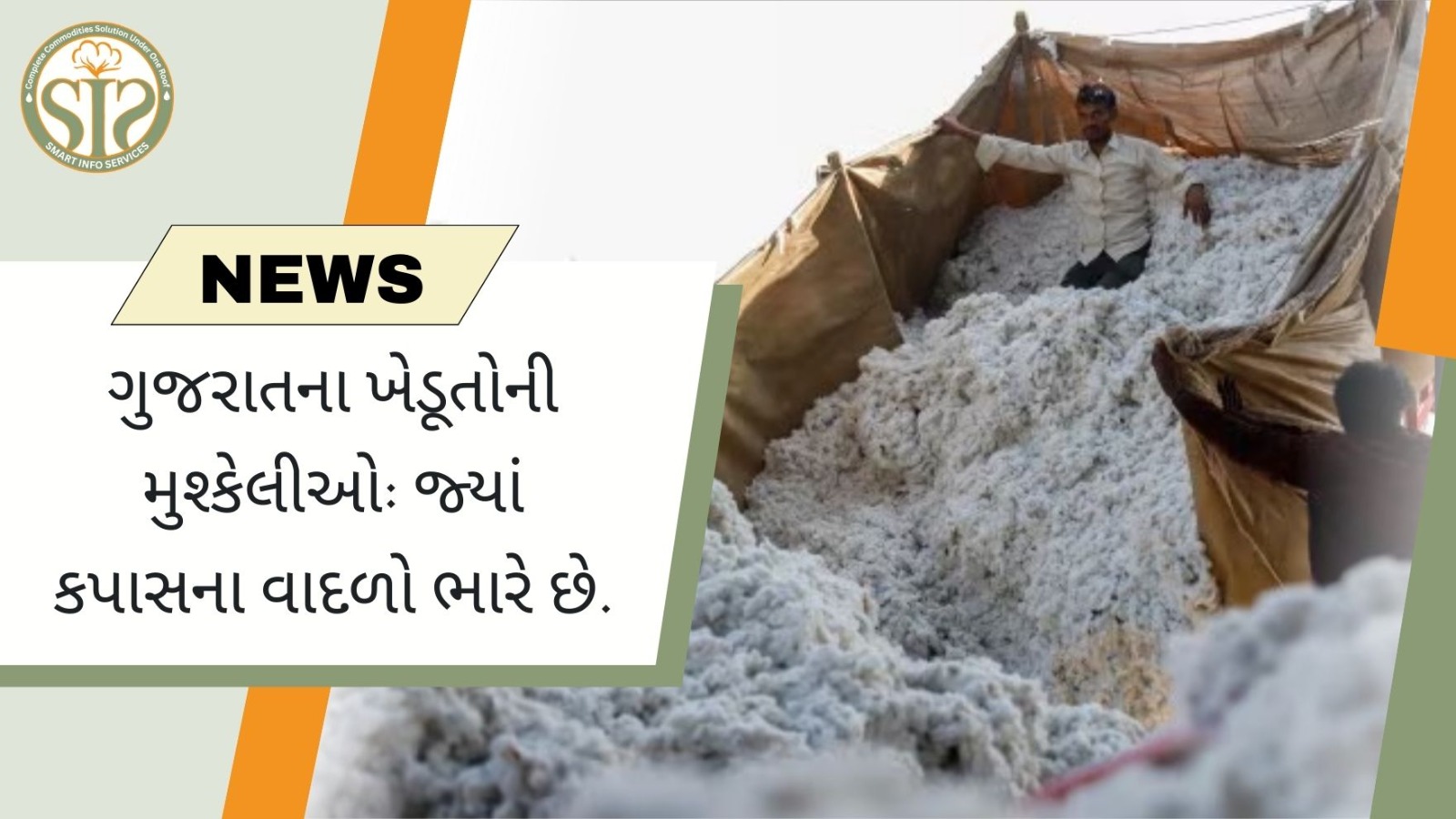
ગુજરાતના ખેડૂતોની મુશ્કેલીઓ: જ્યાં કપાસના વાદળો ભારે છે.ગુજરાતમાં કપાસની ખેતીના સંકટનો એક ઝાંખીભારતના ગુજરાતના કપાસના ખેડૂતોએ તાજેતરમાં આર્થિક અને પર્યાવરણીય પડકારોનો સામનો કર્યો છે, જેના કારણે નોંધપાત્ર તકલીફો થઈ છે અને ખેડૂતો આત્મહત્યા તરફ દોરી ગયા છે. આ સારાંશ આ કટોકટીના કારણો, સરકારી નીતિની અસર અને વિવિધ હિસ્સેદારોના પ્રતિભાવોની તપાસ કરે છે.આર્થિક અને પર્યાવરણીય પડકારોઘટતા ભાવ: ખેડૂતોને કપાસના નીચા ભાવ મળ્યા, આશરે ₹1,200–1,300 પ્રતિ મણ (20 કિલો), જે પાછલા વર્ષો કરતા નોંધપાત્ર રીતે ઓછા છે.હવામાન પડકારો: ઓક્ટોબરમાં કમોસમી અને અતિશય વરસાદથી પાકને નુકસાન થયું, જેનાથી ખેડૂતોની આર્થિક મુશ્કેલીમાં વધુ વધારો થયો.સરકારી પ્રતિભાવરાહત પેકેજ: મુખ્યમંત્રીએ આશરે ₹10,000 કરોડના રાહત અને સહાય પેકેજની જાહેરાત કરી, જેમાં ટેકાના ભાવે વિવિધ પાક ખરીદવાની યોજનાઓનો સમાવેશ થાય છે.આયાત ડ્યુટી માફી: કેન્દ્ર સરકારે કાચા કપાસની આયાત પર કસ્ટમ ડ્યુટી માફ કરી, જેનો હેતુ કાપડ ખર્ચને સ્થિર કરવાનો હતો, પરંતુ તેનાથી સ્થાનિક કપાસના ભાવ પર પ્રતિકૂળ અસર પડી.આયાત નીતિની અસરવધેલી આયાત: ભારતે ગયા વર્ષની સરખામણીમાં કપાસની આયાત લગભગ બમણી કરી, જેનાથી સ્થાનિક ભાવ વધુ નીચા ગયા.ઉદ્યોગ વિરુદ્ધ ખેડૂતો: જ્યારે કાપડ ઉદ્યોગ સસ્તા આયાતી કપાસથી લાભ મેળવે છે, ત્યારે ભારતીય ખેડૂતોને તેમના ઉત્પાદન માટે ઓછા ભાવ મળે છે.કૃષિ અને બજારની સ્થિતિઉત્પાદન અને વાવેતર: 2024-25 માટે કપાસનો કામચલાઉ વાવેતર વિસ્તાર 114.47 લાખ હેક્ટર છે, જે 2023-24 કરતા ઓછો છે, અને ઉપજ સ્થિર રહેવાની અપેક્ષા છે.બજાર ઍક્સેસ સમસ્યાઓ: ખેડૂતોને લોજિસ્ટિકલ અવરોધોનો સામનો કરવો પડે છે, જેમ કે સ્થાનિક બજાર યાર્ડનો અભાવ, જેના કારણે તેઓ દૂરના જિલ્લાઓમાં તેમની પેદાશ વેચવા મજબૂર થાય છે.ખેડૂતોના વિરોધઆત્મહત્યા અને વિરોધ: તાજેતરના મહિનાઓમાં, છ ખેડૂતો, મુખ્યત્વે કપાસ ઉગાડનારાઓએ આત્મહત્યા કરી છે, જેના કારણે સરકારી નીતિઓ અને પર્યાપ્ત ભાવ સહાયના અભાવે વિરોધ થયો છે. કપાસના ઉત્પાદનમાં પડકારોઇનપુટ ખર્ચ: બિયારણ અને જંતુનાશકોના વધતા ભાવ અને સ્થિર કપાસના ભાવે ખેડૂતોને કપાસની ખેતી કરવાથી નિરાશ કર્યા છે.વૈકલ્પિક પાક તરફ વળવું: ઘણા ખેડૂતો ઇનપુટ ખર્ચ ઘટાડવા માટે મગફળી, કઠોળ અથવા કાળા કપાસ જેવી પરંપરાગત કપાસની જાતો તરફ વળ્યા છે.ઉદ્યોગ દ્રષ્ટિકોણગુણવત્તા અને ઉપજના મુદ્દાઓ: ઓછી ગુણવત્તાવાળા બીજ અને ઓછી ઉપજ મુખ્ય પડકારો છે. ખેડૂતો ઉત્પાદકતા વધારવા માટે નવા બીજ મંજૂરીની હિમાયત કરી રહ્યા છે.જીનિંગ મિલ પર અસર: ડ્યુટી-મુક્ત આયાત નીતિ સ્પિનિંગ મિલોને ફાયદો પહોંચાડે છે પરંતુ જીનિંગ મિલોને ખતરો ઉભો કરે છે, જેના કારણે ઘણી મિલ બંધ થઈ જાય છે.નિષ્કર્ષગુજરાતમાં કપાસની ખેતીનો સામનો કરી રહેલ સંકટ બહુપક્ષીય છે, જેમાં આર્થિક, પર્યાવરણીય અને પ્રણાલીગત પડકારોનો સમાવેશ થાય છે. જ્યારે સરકારી પગલાં ઉદ્યોગને સ્થિર કરવાનો હેતુ ધરાવે છે, ત્યારે તેઓ ઘણીવાર ખેડૂતોની તકલીફના મૂળ કારણોને સંબોધવામાં નિષ્ફળ જાય છે. ટકાઉ ઉકેલો માટે, ઉદ્યોગ વૃદ્ધિ અને ખેડૂત સુખાકારીને સંતુલિત કરવા માટે વ્યાપક નીતિગત હસ્તક્ષેપોની જરૂર છે. વધુ વાંચો :- રૂપિયો ૦૫ પૈસા ઘટીને ૯૦.૧૪/યુએસડી પર ખુલ્યો.

રૂપિયો ૦૫ પૈસા ઘટીને ૯૦.૧૪/ડોલર પર ખુલ્યો.મંગળવારે ભારતીય રૂપિયો ૯૦.૧૪/ડોલર પર ખુલ્યો, જે અગાઉ ૯૦.૦૯ ના બંધ ભાવની સરખામણીમાં હતો.વધુ વાંચો :- રૂપિયો 03 પૈસા ઘટીને 90.09 પ્રતિ ડોલર પર બંધ થયો.