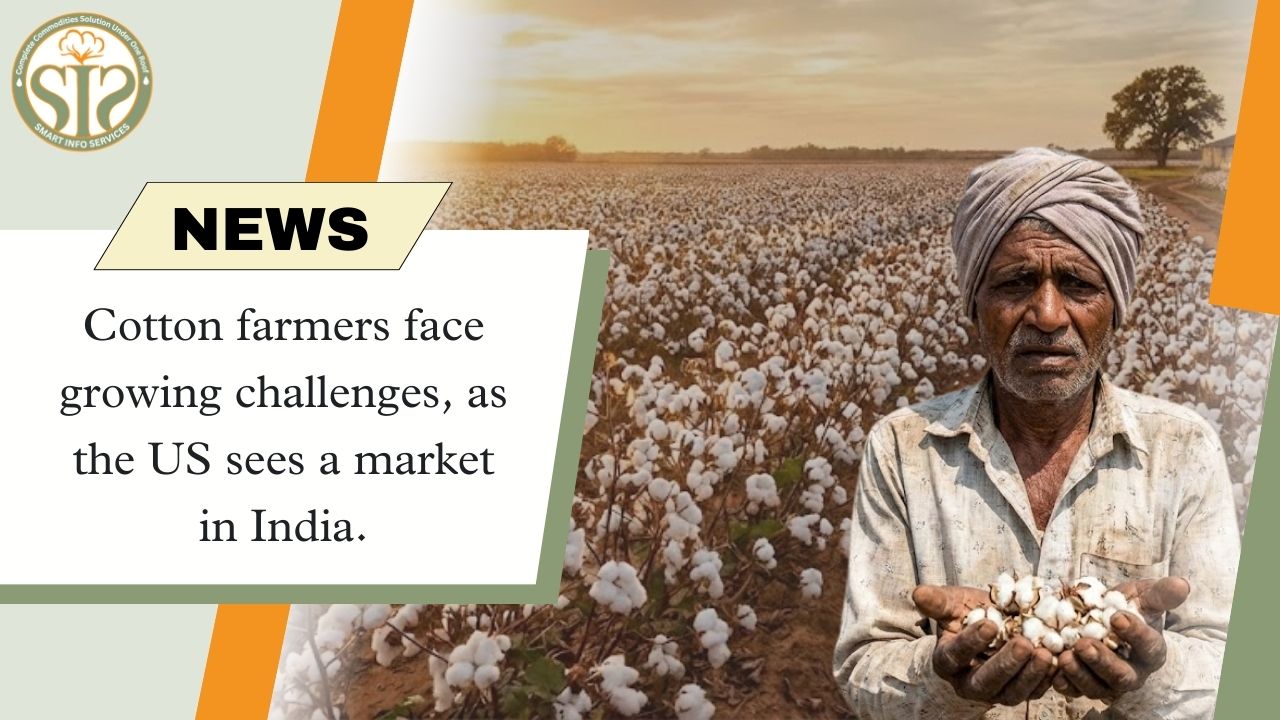
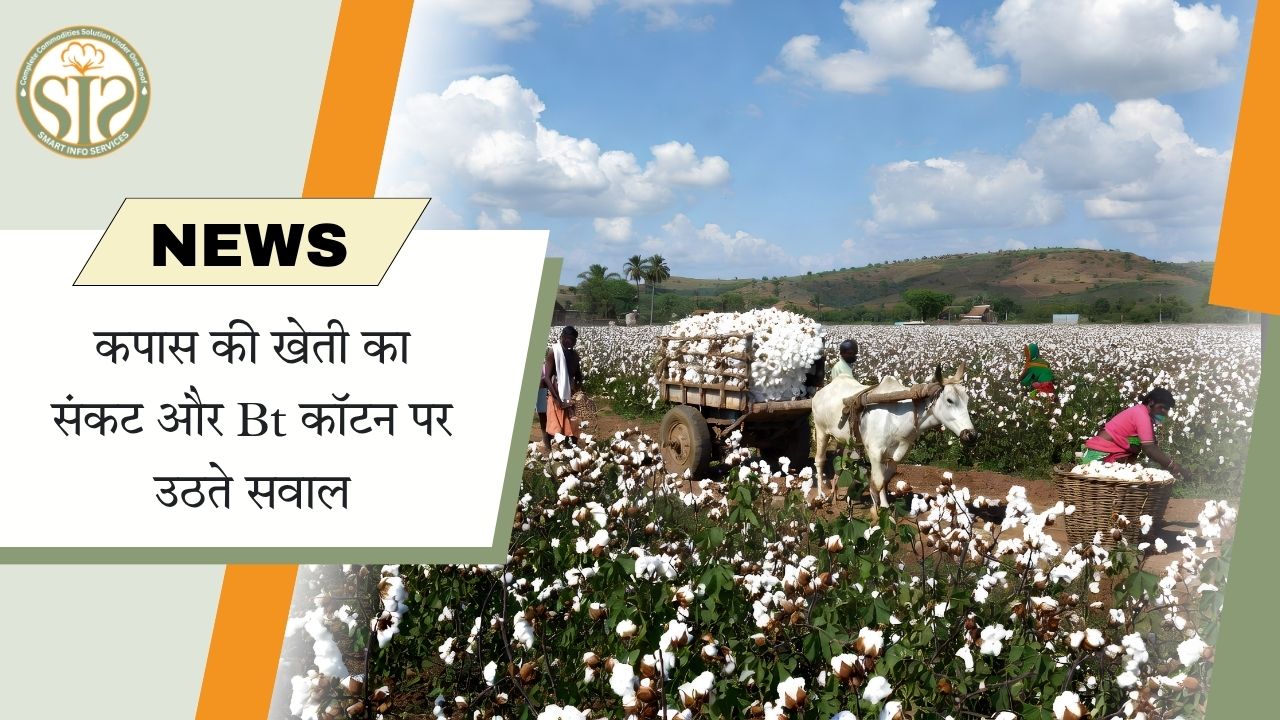
Cotton farmers face growing challenges, as the US sees a market in India.
Previously, imports of raw cotton into India were subject to a five percent basic customs duty, a five percent agricultural infrastructure and development cess, and a ten percent social welfare surcharge, totaling eleven percent.
This duty was imposed after the farmers' protest in February 2021, keeping in mind the interests of the country's cotton farmers. However, now, responding to the demand of the textile industry, the government has waived all customs duties on raw cotton imports effective August 19, 2025.
Not only did the country's textile industry applaud this decision, the US Department of Agriculture also issued a statement, calling it a significant step and stating that it would increase US cotton exports to India. While this decision may benefit the US, it is hurting the country's farmers.
According to the Global Trade Research Initiative (GTRI), the biggest beneficiary of this import duty exemption will undoubtedly be the US. The United States is the largest cotton exporter to India, and the new cotton crop begins arriving in the market from July to August.
Importantly, the import duty was lifted just as the new cotton crop from Indian farmers was about to arrive in the market. The country's cotton harvest occurs from October to September, during which time farmers expect to receive good prices. Now, with the large-scale import of cotton from abroad, domestic cotton prices will fall.
On the day the notification for the customs duty exemption was issued, the Cotton Corporation of India (CCI) reduced the price of cotton by Rs. 600 per candy (one candy = 356 kg), and the next day, it reduced it by another Rs. 500 per candy. Thus, within just ten days, the government itself reduced the minimum price of cotton by a total of Rs. 1700 per candy.
The US ranks third in cotton production.
Although India is the world's second-largest cotton producer, with domestic consumption accounting for 95 percent of total production. However, India's production of high-quality, or extra-long-staple cotton (ELS), is low, and its demand is met through imports.
The Cotton Council International (CCI), a US agricultural trade body, has long demanded the removal of this tariff. The government has eliminated the 11 percent tariff on imports of high-quality, or extra-long-staple cotton, effective February 20, 2024. However, the tariff on short-staple cotton imports remained in place, which was lifted in August of this year.
This move will protect Indian textile exporters' profits to some extent from the impact of US tariffs, but the country's farmers will bear the brunt of the impact, especially given the government's strong claims of doubling farmers' income.
The government forgot to mention cotton farmers.
The statement regarding the removal of customs duty on cotton addressed the interests of textile manufacturers and consumers, but the government neglected to mention cotton farmers. The second statement stated that farmers' interests are protected through the Minimum Support Price (MSP) system operated by the Cotton Corporation of India Limited, which ensures that farmers receive a price at least 50 percent higher than their production costs.
The government determines the minimum support price based on the A-2 FL formula. According to this, the minimum support price for medium-staple cotton has been set at ₹7,121 per quintal for the year 2024-25. However, farmers' organizations are demanding that it be determined based on the C-2 formula, which requires it to be ₹10,075 per quintal. It should be noted that the C-2 formula for determining the minimum support price was suggested by Dr. MS Swaminathan.
99% of cotton is cultivated as a Kharif crop.
In India, cotton cultivation is primarily a Kharif crop, while in some parts of Tamil Nadu and other surrounding states, it is a Rabi crop. Approximately 6 million farming families in India earn their livelihoods from cotton cultivation. Additionally, 40-50 million other people are also involved in the cotton trade.
Last year, cotton was cultivated on a total of 114.47 lakh hectares of cultivable land, representing 36.36 percent of the global cotton acreage of 314.79 lakh hectares. India ranks first in the world in terms of acreage and second only to China in production. However, the per hectare yield (437 kg per hectare) is significantly lower than the world average (833 kg per hectare).
Thus, the average annual cotton production was 337 bales, while the procurement at the minimum support price was only 38 bales. This means that only 11.27 percent of the total cotton production was purchased by the government. Furthermore, out of the approximately six million cotton farmers who cultivate cotton annually, only 7.88 lakh farmers were purchased from cotton at the minimum support price. How will farmers' interests be protected under these circumstances?