

ऑक्सफ़ोर्ड 22-24 जनवरी को कला और शिल्प से चमकेगा।ऑल यॉल फ़ाइबर द्वारा आयोजित, यह इवेंट टेक्सटाइल, यार्न और बनाने की कला के शौकीन किसी भी व्यक्ति के लिए ज़रूर देखने लायक है। आकर्षक पावरहाउस कम्युनिटी आर्ट्स सेंटर की पृष्ठभूमि में आयोजित, यह फ़ेस्टिवल वर्कशॉप, लाइव डेमो और एक हलचल भरे मेकर मार्केट का एक जीवंत मिश्रण पेश करने के लिए तैयार है, जो फ़ाइबर आर्ट्स के शौकीनों के लिए एक शानदार अनुभव प्रदान करेगा।ऑक्सफ़ोर्ड फ़ाइबर फ़ेस्टिवल उन लोगों के लिए एकदम सही इवेंट है जो बुनाई, कताई, रंगाई और अन्य कपड़े-आधारित शिल्पों के पीछे की सुंदरता और कारीगरी की सराहना करते हैं। इस साल का फ़ेस्टिवल टेक्सटाइल कला का एक व्यापक उत्सव होने वाला है, जो नए लोगों और अनुभवी कारीगरों दोनों के लिए विभिन्न प्रकार की गतिविधियाँ और सीखने के अनुभव प्रदान करेगा।यह इवेंट अपने हैंड्स-ऑन वर्कशॉप की श्रृंखला से आगंतुकों को प्रेरित करने का वादा करता है, जहाँ प्रतिभागी खुद को बनाने की कला में डुबो सकते हैं। ये वर्कशॉप विभिन्न टेक्सटाइल शिल्पों को कवर करेंगी, बुनाई की कला में महारत हासिल करने से लेकर यार्न की रंगाई की जटिल प्रक्रिया की खोज तक, उपस्थित लोगों को नए कौशल विकसित करने और अपनी तकनीकों को बेहतर बनाने का अवसर प्रदान करेंगी। चाहे आप बिल्कुल नए हों या एक अनुभवी कारीगर, इन इंटरैक्टिव सीखने के अनुभवों से कुछ न कुछ हासिल करने को मिलेगा।वर्कशॉप के अलावा, पूरे फ़ेस्टिवल में लाइव डेमो की एक श्रृंखला आयोजित की जाएगी, जो आगंतुकों को टेक्सटाइल उत्पादन प्रक्रिया का नज़दीकी नज़ारा प्रदान करेगी। ये डेमो दिखाएंगे कि कच्चे माल को कला के सुंदर कार्यों में कैसे बदला जाता है, और इनका नेतृत्व स्थानीय और क्षेत्रीय कारीगर करेंगे। विशेषज्ञों को काम करते हुए देखकर, उपस्थित लोगों को हर धागे, कपड़े और टेक्सटाइल उत्पाद के पीछे की कारीगरी के बारे में बहुमूल्य जानकारी मिलेगी। यह टेक्सटाइल बनाने में लगने वाले जटिल काम और इस्तेमाल किए गए सामग्रियों के पीछे की कहानियों को देखने का एक दुर्लभ अवसर प्रदान करता है।ऑक्सफ़ोर्ड फ़ाइबर फ़ेस्टिवल के केंद्र में इन पर्सन मार्केट है, जो शुक्रवार, 23 जनवरी और शनिवार, 24 जनवरी दोनों दिन सुबह 9 बजे से शाम 5 बजे तक खुला रहेगा। यह मार्केट हस्तनिर्मित सामानों और फ़ाइबर-संबंधित उत्पादों का एक विविध संग्रह पेश करने के लिए तैयार है। आगंतुकों को उच्च-गुणवत्ता वाले हाथ से रंगे हुए यार्न, अद्वितीय बैग, क्विल्टिंग उपकरण और अन्य कारीगरी वाले उत्पाद खरीदने का मौका मिलेगा, जिनमें से कई विशेष रूप से फ़ेस्टिवल में उपलब्ध होंगे। यह शानदार मार्केट विज़िटर्स के लिए अनोखी चीज़ें ढूंढने का एक बेहतरीन मौका होगा, जो लोकल और रीजनल बनाने वालों की क्रिएटिविटी और स्किल को दिखाती हैं। यह कारीगरों और क्रिएटर्स की कम्युनिटी को सपोर्ट करने का भी एक मौका है जो अपनी कला को ज़िंदा रखने के लिए बिना थके काम करते हैं। चाहे आप कोई खास तोहफ़ा ढूंढ रहे हों, अपने कलेक्शन के लिए कोई नई चीज़, या अपने खुद के प्रोजेक्ट्स के लिए सामान, ऑक्सफ़ोर्ड फ़ाइबर फ़ेस्टिवल मार्केट में सभी के लिए कुछ न कुछ होगा।एक्साइटमेंट को बढ़ाते हुए, मार्केट क्रॉल पूरे फ़ेस्टिवल के दौरान एक इंटरैक्टिव एक्टिविटी होगी। पार्टिसिपेंट्स को अलग-अलग मार्केट बूथ पर जाने और स्टैम्प इकट्ठा करने का मौका मिलेगा, और क्रॉल पूरा करने पर रोमांचक इनाम जीतने का मौका भी मिलेगा। यह मज़ेदार एक्टिविटी विज़िटर्स को पूरे मार्केट को एक्सप्लोर करने और ऑफ़र पर मौजूद सभी शानदार प्रोडक्ट्स को खोजने के लिए प्रोत्साहित करती है। यह फ़ेस्टिवल से जुड़ने और वेंडर्स से कनेक्ट होने का एक शानदार तरीका है।शनिवार को, मेहमान मीट अवर मेकर्स सेशन का भी इंतज़ार कर सकते हैं, जहाँ उन्हें क्रिएशन्स के पीछे के टैलेंटेड कारीगरों से बातचीत करने का मौका मिलेगा। ये तय मीट-एंड-ग्रीट सेशन विज़िटर्स को कलाकारों के प्रोसेस के बारे में जानने, उनकी कहानियाँ सुनने और अपने खुद के क्रिएटिव कामों के लिए प्रेरणा पाने का मौका देते हैं। चाहे आप नए मेकर हों या अनुभवी कारीगर, यह दूसरे समान सोच वाले लोगों से जुड़ने और टेक्सटाइल आर्ट्स की दुनिया में जानकारी हासिल करने का एक अनमोल मौका है।क्रिएटिव लोगों की कम्युनिटी में शामिल होंऑक्सफ़ोर्ड फ़ाइबर फ़ेस्टिवल सिर्फ़ शॉपिंग और सीखने के बारे में नहीं है - यह मेकर्स और टेक्सटाइल के शौकीनों की एक कम्युनिटी बनाने के बारे में है। यह इवेंट सहयोग और जुड़ाव की भावना को बढ़ावा देता है, जहाँ विज़िटर्स मिल सकते हैं, आइडिया शेयर कर सकते हैं और एक-दूसरे को प्रेरित कर सकते हैं। जो लोग फ़ाइबर आर्ट्स के बारे में पैशनेट हैं, उनके लिए यह फ़ेस्टिवल एक साथ आने, क्रिएटिविटी का जश्न मनाने और एक-दूसरे से सीखने की जगह है।फ़ेस्टिवल का आरामदायक और स्वागत करने वाला माहौल अटेंडीज़ के लिए साथी फ़ाइबर उत्साही लोगों से मिलना और आइडिया एक्सचेंज करना आसान बना देगा। चाहे आप इस क्षेत्र में लंबे समय से एक्सपर्ट हों या अभी टेक्सटाइल की दुनिया को एक्सप्लोर करना शुरू कर रहे हों, आपके लिए ऐसे लोगों से जुड़ने की जगह है जो आपके पैशन को शेयर करते हैं।अटेंडीज़ फ़ेस्टिवल से प्रेरित, मोटिवेटेड और टेक्सटाइल आर्ट्स की दुनिया में और गहराई से उतरने के लिए तैयार होकर जाने की उम्मीद कर सकते हैं। चाहे आपको कोई नई क्राफ़्टिंग टेक्नीक मिले, कोई सुंदर हाथ से बनी चीज़, या किसी साथी मेकर से जुड़ाव, ऑक्सफ़ोर्ड फ़ाइबर फ़ेस्टिवल एक स्थायी छाप छोड़ने का वादा करता है।और पढ़ें :- 2025 में ब्राज़ील में कपास की कीमतें गिरीं, निर्यात ने अतिरिक्त स्टॉक को खपाया

निर्यात में बढ़ोतरी के कारण ब्राजील में कपास की कीमतें गिरीं।2025 में ब्राज़ील के कपास बाज़ार को कीमतों में भारी दबाव का सामना करना पड़ा, क्योंकि रिकॉर्ड उत्पादन, कम घरेलू खपत और वैश्विक चुनौतियों के कारण कीमतों पर असर पड़ा।शुरुआती बढ़त के बावजूद, साल भर में घरेलू कीमतें लगभग 17 प्रतिशत गिर गईं। मज़बूत निर्यात ने अतिरिक्त आपूर्ति को खपाने में मदद की, जिससे वैश्विक व्यापार में ब्राज़ील की हिस्सेदारी बढ़कर 31 प्रतिशत हो गई और दुनिया के अग्रणी कपास निर्यातक के रूप में इसकी स्थिति मज़बूत हुई।सेंटर फॉर एडवांस्ड स्टडीज़ ऑन एप्लाइड इकोनॉमिक्स (CEPEA) के अनुसार, ब्राज़ील के कपास बाज़ार के लिए 2025 एक चुनौतीपूर्ण साल रहा, जिसमें रिकॉर्ड आपूर्ति, कम खपत और नरम अंतरराष्ट्रीय बाज़ारों के कारण घरेलू कीमतों पर लगातार दबाव बना रहा, जबकि निर्यात ने अतिरिक्त मात्रा को खपाने में महत्वपूर्ण भूमिका निभाई।CEPEA/ESALQ इंडेक्स साल भर में 16.89 प्रतिशत गिर गया, और 26 दिसंबर, 2025 को BRL 3.4862 (~$0.64) प्रति पाउंड पर बंद हुआ। इसी अवधि में निर्यात समानता 16.6 प्रतिशत कम हो गई। इसके विपरीत, कॉटलुक A इंडेक्स 6.68 प्रतिशत घटकर $0.74 प्रति पाउंड हो गया, जबकि अमेरिकी डॉलर ब्राज़ीलियाई रियल के मुकाबले 10.29 प्रतिशत कमज़ोर होकर BRL 5.544 हो गया।2025 के पहले पांच महीनों के दौरान कीमतें मज़बूत रहीं, मई में चरम पर पहुंच गईं, जिसे ऑफ-सीज़न में विक्रेताओं के सख्त व्यवहार, उच्च अंतरराष्ट्रीय बेंचमार्क और कॉटलुक A इंडेक्स में बढ़त से समर्थन मिला। जून से, कीमतें तेज़ी से गिरीं क्योंकि वैश्विक कीमतें नरम हुईं, विनिमय दर कम हुई, 2023-24 का बचा हुआ स्टॉक बेचा गया और 2024-25 की रिकॉर्ड फसल आने वाली थी। CEPEA ने ब्राज़ीलियाई कपास बाज़ार पर अपनी नवीनतम पाक्षिक रिपोर्ट में कहा कि उच्च उपलब्धता और नकदी प्रवाह की ज़रूरतों ने दूसरी छमाही में गिरावट को तेज़ किया।तैयार उत्पादों की कम खपत और टर्म कॉन्ट्रैक्ट के माध्यम से आरामदायक औद्योगिक आपूर्ति के बीच खरीदारों की मांग सतर्क बनी रही। नवंबर तक, 2026 की शुरुआत और अगले सीज़न के लिए व्यापारिक गतिविधि बढ़ गई, जो टर्म बाज़ार के बढ़ते महत्व को उजागर करता है।निर्यात ने एक महत्वपूर्ण सहारा प्रदान किया। 2024-25 सीज़न में ब्राज़ीलियाई कपास का शिपमेंट रिकॉर्ड 2.835 मिलियन टन तक पहुंच गया, जो साल-दर-साल 6 प्रतिशत अधिक है। जनवरी और दिसंबर 2025 के बीच, कुल एक्सपोर्ट 2.89 मिलियन टन रहा, जो 2024 की तुलना में 4.2 प्रतिशत ज़्यादा था, जिसमें पाकिस्तान, बांग्लादेश, वियतनाम, चीन, भारत और इंडोनेशिया मुख्य डेस्टिनेशन थे। औसत एक्सपोर्ट कीमतें 12.4 प्रतिशत गिरकर $0.7381 प्रति पाउंड हो गईं।नेशनल सप्लाई कंपनी (CONAB) के अनुसार, ब्राज़ील का 2024-25 का कपास उत्पादन 4.076 मिलियन टन होने का अनुमान है, जो 10.13 प्रतिशत ज़्यादा है, जिसका कारण ज़्यादा बुवाई का रकबा और प्रोडक्टिविटी है। दिसंबर 2025 में एंडिंग स्टॉक में साल-दर-साल 17.05 प्रतिशत की बढ़ोतरी होने का अनुमान है।विश्व स्तर पर, USDA का अनुमान है कि 2024-25 में कपास की सप्लाई 25.97 मिलियन टन होगी, जो 2017-18 के बाद सबसे ज़्यादा है। वैश्विक कपास व्यापार में ब्राज़ील की हिस्सेदारी 31 प्रतिशत थी, जिसने अमेरिका को पीछे छोड़कर सबसे बड़े निर्यातक का स्थान हासिल किया।और पढ़ें :- रुपया डॉलर के मुकाबले 02 पैसे गिरकर 89.98 पर खुला।

रुपया 02 पैसे गिरकर 89.98 /USD पर खुलाघरेलू करेंसी अमेरिकी डॉलर के मुकाबले 89.98 पर खुली, जबकि पिछले क्लोजिंग पर यह डॉलर के मुकाबले 89.96 पर थी।और पढ़ें :- रुपया डॉलर के मुकाबले 03 पैसे गिरकर 89.96 पर बंद हुआ।

गुरुवार को भारतीय रुपया डॉलर के मुकाबले 89.96 पर बंद हुआ, जबकि खुलने के समय यह 89.93 पर था।बाजार बंद होने पर सेंसेक्स 32 अंक या 0.04 प्रतिशत गिरकर 85,188.60 पर और निफ्टी 16.95 अंक या 0.06 प्रतिशत बढ़कर 26,146.55 पर बंद हुआ। लगभग 2113 शेयरों में तेज़ी आई, 1872 शेयरों में गिरावट आई और 159 शेयरों में कोई बदलाव नहीं हुआ।
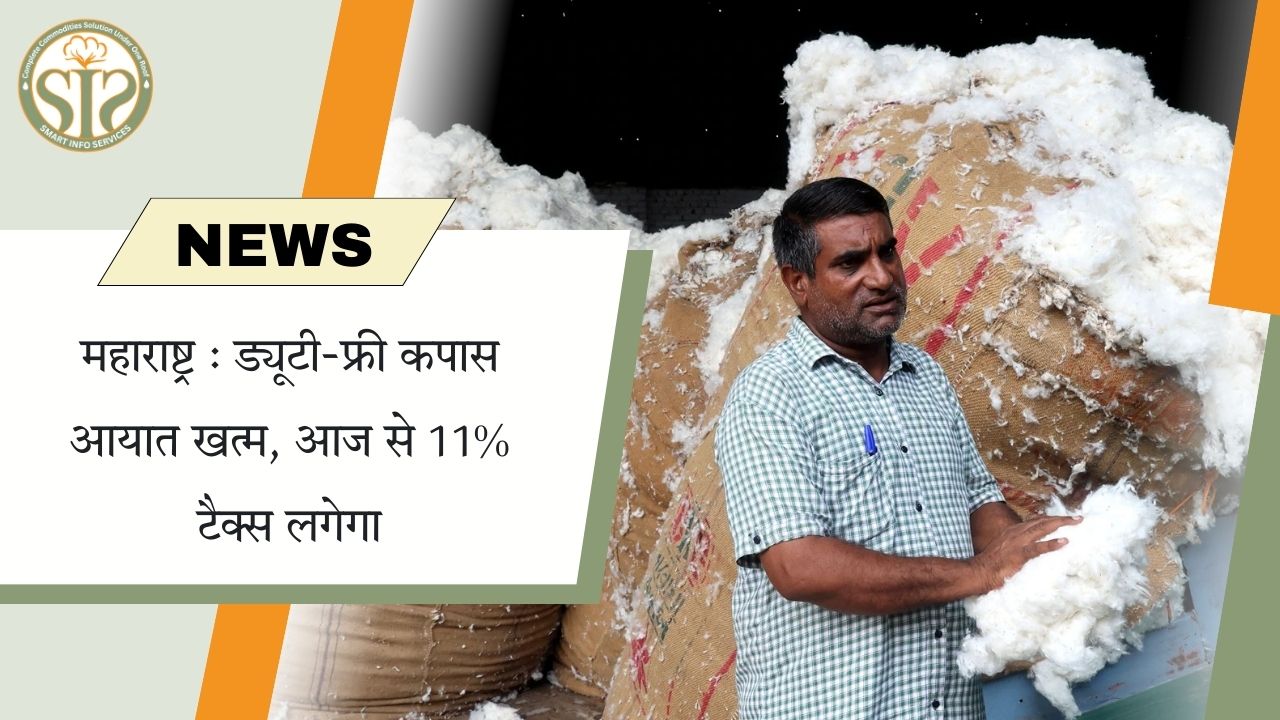
महाराष्ट्र ने शुल्क-मुक्त कपास आयात बंद कियानागपुर : ड्यूटी-फ्री कपास आयात की समय सीमा बुधवार को खत्म हो गई, और सरकार की ओर से इसे बढ़ाने के बारे में कोई नोटिफिकेशन जारी नहीं किया गया। नतीजतन, 1 जनवरी से कपास आयात पर 11% ड्यूटी लगेगी, जब तक कि कोई नया आदेश जारी नहीं होता।जहां टेक्सटाइल कंपनियों ने प्रोसेस्ड कपास (लिंट) की बढ़ती कीमतों की सूचना दी, वहीं विदर्भ के किसानों ने न्यूनतम समर्थन मूल्य (MSP) से कम कीमत पर कच्चा कपास बेचना जारी रखा। बाजार सूत्रों के अनुसार, बाजार दरें 7,500 से 7,700 रुपये प्रति क्विंटल थीं, जबकि MSP 8,110 रुपये था।सूत्रों ने बताया कि जहां व्यापार और उद्योग ने कम से कम एक तिमाही के लिए ड्यूटी में छूट बनाए रखने के लिए लॉबिंग की, वहीं किसान संघों ने ड्यूटी का समर्थन करते हुए ज्ञापन सौंपे। छूट से टेक्सटाइल कंपनियों के लिए आयात सस्ता हो गया, लेकिन इससे किसानों के लिए कच्चे कपास की कीमतें कम हो गईं।अगस्त में, अमेरिका के साथ टैरिफ तनाव के बाद, भारत ने कपास पर 11% आयात शुल्क हटा दिया था। अमेरिका स्थित इंटरनेशनल कॉटन एडवाइजरी कमेटी (ICAC) के अनुसार, भारत ने सितंबर के मध्य तक 36 लाख गांठ कपास का आयात किया था। इसमें सबसे बड़ा हिस्सा ब्राजील का 23%, उसके बाद अमेरिका का 20% और ऑस्ट्रेलिया का 19% था।आगे ड्यूटी-फ्री आदेशों की कमी से टेक्सटाइल उद्योग चिंतित है। ड्यूटी फिर से लगाने से किसानों के लिए कच्चे कपास की कीमतें घटकर 6,700 रुपये प्रति क्विंटल तक हो गई हैं। इस सीजन में, किसानों ने कॉटन कॉर्पोरेशन ऑफ इंडिया (CCI) द्वारा MSP खरीद पर भरोसा किया, जिसने 30 दिसंबर तक 61.5 लाख गांठें खरीदीं। किसानों के लिए MSP पर बेचने के लिए रजिस्ट्रेशन की अंतिम तिथि 31 दिसंबर से बढ़ाकर 16 जनवरी कर दी गई थी।विदर्भ की एक टेक्सटाइल यूनिट, गीमा टेक्स इंडस्ट्रीज के एमडी प्रशांत मोहता ने कहा, "घरेलू कपास की दरें 58,500 रुपये प्रति गांठ तक पहुंच गई हैं, और टैरिफ युद्ध के कारण आयात 4,000 रुपये महंगा हो गया है, जिससे वैश्विक प्रतिस्पर्धा पर असर पड़ रहा है।"और पढ़ें :- ऑर्गेनिक कॉटन की ज़रूरत: पता लगाने की क्षमता और भरोसा
ऑर्गेनिक कॉटन: पता लगाने की क्षमता और विश्वासग्लोबल ऑर्गेनिक कॉटन मार्केट तेज़ी से बढ़ रहा है। 2023 में इसकी कीमत $1.1 बिलियन थी, और अनुमान है कि 2032 तक यह $25 बिलियन तक पहुँच जाएगा (फॉर्च्यून बिजनेस इनसाइट्स)।1 जैसे-जैसे पारदर्शिता की मांग बढ़ रही है और ज़्यादा किसान ऑर्गेनिक तरीकों को अपना रहे हैं, एक बात साफ़ है: मॉडर्न टेक्सटाइल सप्लाई चेन में सफलता के लिए भरोसेमंद, पता लगाने योग्य सबूत अब ज़रूरी हैं।ऑर्गेनिक ईमानदारी सुनिश्चित करनाऑर्गेनिक कॉटन से पर्यावरण को बड़े फायदे होते हैं—पानी और एनर्जी का कम इस्तेमाल, और कम ज़हरीले केमिकल। लेकिन यह बदलाव मुश्किल है और इसके लिए नए स्किल्स, रिसोर्स और लंबे समय तक ब्रांड सपोर्ट की ज़रूरत होती है। CottonConnect इस बदलाव में मदद करता है, बीज से लेकर शेल्फ तक ईमानदारी बनाए रखता है:किसानों को सशक्त बनाना: ऑर्गेनिक फार्म मैनेजमेंट, मिट्टी की उर्वरता, और प्राकृतिक कीट नियंत्रण में ट्रेनिंग।मज़बूत आश्वासन: एक वेरिफिकेशन फ्रेमवर्क जो उच्चतम ऑर्गेनिक स्टैंडर्ड को बनाए रखने की कोशिश करता है। 2023–24 में, हमारे प्रोग्राम्स ने 99% ऑर्गेनिक कॉटन की ईमानदारी हासिल की (इम्पैक्ट रिपोर्ट 2024)।2TraceBale के साथ डिजिटल पता लगाने की क्षमताएक बार जब फार्म-लेवल पर ईमानदारी सुनिश्चित हो जाती है, तो इसे बनाए रखने के लिए पता लगाने की क्षमता महत्वपूर्ण हो जाती है और ब्रांड के दावों को साबित करने में मदद मिलती है। TraceBale, हमारा डिजिटल टूल, इसके ज़रिए वेरिफ़ाएबल, बॉटम-अप सोर्सिंग डेटा के साथ मज़बूत सप्लाई चेन बनाता है:किसानों के लिए यूनिक QR कोडMEL ऐप जो फार्म-लेवल प्रोडक्शन डेटा कैप्चर करता हैसटीक लोकेशन ट्रैकिंग के लिए GIS फार्म मैपिंगTraceBale फार्म ग्रुप से लेकर तैयार प्रोडक्ट तक विज़िबिलिटी देता है, जिससे ब्रांड्स को सस्टेनेबिलिटी के दावों को सपोर्ट करने के लिए भरोसेमंद, कार्रवाई योग्य जानकारी मिलती है।DNA मार्कर का फायदाआश्वासन को और मज़बूत करने के लिए, हम Haelixa के साथ पार्टनरशिप करके फाइबर में फिजिकल DNA मार्कर लगाते हैं, जो ओरिजिन का वैज्ञानिक सबूत देता है।डिजिटल पता लगाने की क्षमता, फिजिकल मार्कर, और पारदर्शी डेटा मैनेजमेंट को इंटीग्रेट करके, CottonConnect किसानों को ग्लोबल ब्रांड्स से जोड़ता है—ऑर्गेनिक कॉटन को सिर्फ़ एक पर्यावरणीय प्रतिबद्धता नहीं, बल्कि एक व्यवहार्य, लाभदायक बिजनेस मॉडल बनाने में मदद करता है।“रेगुलेटरी कंप्लायंस हासिल करने के लिए पता लगाने की क्षमता महत्वपूर्ण है, लेकिन यह ज़िम्मेदार बिजनेस की नींव भी बनाती है। यह सुनिश्चित करने में मदद करता है कि सप्लाई चेन के हर स्टेज को समझा जाए, जिससे समस्याओं को सीधे हल किया जा सके।”और पढ़ें :- रुपया डॉलर के मुकाबले 06 पैसे गिरकर 89.93 पर खुला।

रुपया 06 पैसे गिरकर 89.93 /USD पर खुलासेंसेक्स 186.17 अंक या 0.22 प्रतिशत ऊपर 85,406.77 पर और निफ्टी 64.95 अंक या 0.25 प्रतिशत ऊपर 26,194.55 पर था। लगभग 1284 शेयर बढ़े, 728 शेयर गिरे और 151 शेयर अपरिवर्तित रहे।और पढ़ें :- रुपया 09 पैसे बढ़कर 89.87/USDपर खुला

बुधवार को भारतीय रुपया 89.87 प्रति डॉलर पर बंद हुआ, जबकि सुबह यह 89.87 पर खुला था।अंत में, सेंसेक्स 545.52 अंक या 0.64 प्रतिशत ऊपर 85,220.60 पर था, और निफ्टी 190.75 अंक या 0.74 प्रतिशत ऊपर 26,129.60 पर था। लगभग 2555 शेयर बढ़े, 1330 शेयर गिरे और 123 शेयर अपरिवर्तित रहे।और पढ़ें :- रुपया डॉलर के मुकाबले 15 पैसे बढ़कर 89.78 पर बंद हुआ।

डॉलर के मुकाबले रुपया 09 पैसे बढ़कर 89.87 पर खुलाभारतीय रुपया बुधवार को डॉलर के मुकाबले 89.87 पर खुला, जबकि मंगलवार को यह 89.78 पर बंद हुआ था।और पढ़ें :-रुपया डॉलर के मुकाबले 15 पैसे बढ़कर 89.78 पर बंद हुआ।

बुधवार को भारतीय रुपया डॉलर के मुकाबले 15 पैसे बढ़कर 89.78 पर बंद हुआ, जबकि यह 89.93 पर खुला था।बाजार बंद होने पर सेंसेक्स 20.46 अंक या 0.02 प्रतिशत गिरकर 84,675.08 पर और निफ्टी 3.25 अंक या 0.01 प्रतिशत गिरकर 25,938.85 पर बंद हुआ। लगभग 1718 शेयरों में तेजी आई, 2113 शेयरों में गिरावट आई और 137 शेयरों में कोई बदलाव नहीं हुआ।और पढ़ें :- भारतीय सरकार द्वारा MSP पर 38 लाख गांठें खरीदने से कपास की सप्लाई कम हुई
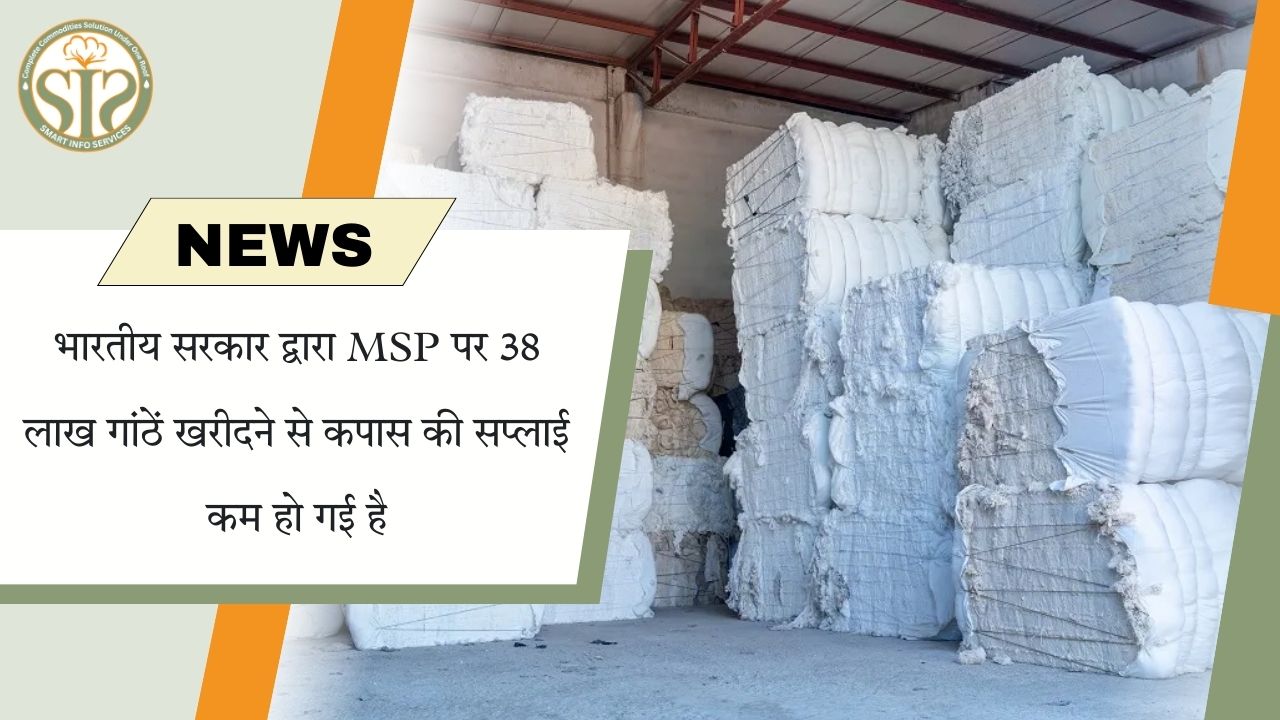
भारत द्वारा MSP पर 38 लाख गांठें खरीदने से कपास की सप्लाई कम हो गई है।कॉटन कॉर्पोरेशन ऑफ़ इंडिया की MSP के तहत खरीद से 38.7 लाख कपास की गांठें खरीदी गई हैं, जिससे यार्न, कपड़े और गारमेंट की कमजोर मांग के बावजूद खुले बाजार में सप्लाई कम हो गई है।स्टॉक गोदामों में बंद होने के कारण, कपास की कीमतें ऊंची बनी हुई हैं, जिससे स्पिनिंग मार्जिन कम हो रहा है।उद्योग वैल्यू चेन को फिर से संतुलित करने के लिए, खासकर प्रमुख उत्पादक राज्यों में, मांग के अनुसार CCI स्टॉक को चरणबद्ध तरीके से जारी करने की मांग कर रहा है।कॉटन कॉर्पोरेशन ऑफ़ इंडिया (CCI) द्वारा जारी खरीद आंकड़ों के अनुसार, भारतीय सरकार ने 19 दिसंबर तक 230.23 लाख क्विंटल बीज कपास (कपास) खरीदा है। यह 1 अक्टूबर से शुरू हुए 2025-26 मार्केटिंग सीजन के पहले 80 दिनों में खरीदे गए 170 किलोग्राम कपास की 38.70 लाख गांठों के बराबर है। CCI न्यूनतम समर्थन मूल्य (MSP) पर कपास खरीद रहा है, जो वर्तमान में बाजार की मौजूदा कीमतों से अधिक है। नतीजतन, CCI की खरीद और डाउनस्ट्रीम उद्योगों से कम मांग के कारण घरेलू बाजार में कपास की कीमतें ऊंची बनी हुई हैं।चल रहे 2025-26 सीजन में CCI की आक्रामक खरीद डाउनस्ट्रीम कपड़ा उद्योग के लिए एक विरोधाभास पैदा कर रही है। जबकि MSP समर्थित खरीद ने फार्म-गेट कीमतों को सहारा दिया है, CCI गोदामों में बड़ी मात्रा में कपास जाने से खुले बाजार में उपलब्धता कम हो गई है, जबकि कपास यार्न, कपड़े और गारमेंट की मांग कमजोर बनी हुई है।घरेलू उद्योग को मिले CCI खरीद आंकड़ों के अनुसार, कॉर्पोरेशन ने 19 दिसंबर, 2025 तक 230.23 लाख क्विंटल कपास खरीदा था। 35 प्रतिशत की औसत लिंट रिकवरी पर, यह लगभग 38.70 लाख गांठों के बराबर है। इस मात्रा को प्रभावी रूप से खुले बाजार से हटा लिया गया है, जिससे स्पिनर्स और जिनर्स के लिए निकट भविष्य में उपलब्धता कम हो गई है।उद्योग सूत्रों का कहना है कि खुले बाजार से कपास को हटाने का समय महत्वपूर्ण है। यार्न की बिक्री धीमी बनी हुई है, कपड़े का स्टॉक पर्याप्त है, और गारमेंट की मांग (घरेलू और निर्यात दोनों) सतर्क बनी हुई है। ऐसे मांग के माहौल में, सीमित उपलब्धता के कारण कपास की ऊंची कीमतें वैल्यू-चेन रिकवरी का समर्थन करने के बजाय स्पिनिंग मार्जिन पर दबाव डाल रही हैं।इसका असर मध्य और दक्षिण भारत में सबसे ज्यादा दिख रहा है, जहां खरीद केंद्रित रही है। तेलंगाना और महाराष्ट्र मिलकर अब तक कुल CCI खरीद का 60 प्रतिशत से ज़्यादा हिस्सा हैं, जिससे इन क्षेत्रों की मिलें स्पॉट-मार्केट सप्लाई के बजाय वेयरहाउस से जुड़े कपास पर ज़्यादा निर्भर हो गई हैं।स्पिनर्स का कहना है कि मुश्किल सालों में MSP खरीद ज़रूरी है, लेकिन बिना किसी साफ़ लिक्विडेशन रोडमैप के बड़ी मात्रा में पहले से खरीदारी करने से आर्टिफिशियल कमी पैदा होने का खतरा है। वेयरहाउस में कपास बंद होने से, कीमतें डाउनस्ट्रीम डिमांड की असलियत को नहीं दिखा पातीं, जिससे कच्चे माल की लागत और तैयार माल की बिक्री के बीच का अंतर बढ़ जाता है।इसलिए इंडस्ट्री के स्टेकहोल्डर्स CCI स्टॉक को चरणबद्ध और पारदर्शी तरीके से जारी करने की अपील कर रहे हैं, जो यार्न और कपड़े की डिमांड साइकिल के हिसाब से हो, ताकि वैल्यू चेन में संतुलन बहाल हो सके और मिलों की इकोनॉमी पर लंबे समय तक दबाव न पड़े।और पढ़ें :- तमिलनाडु: ओपन-एंड मिलों में प्रोडक्शन बंद होने के बाद धागे की कीमत बढ़ी।

ओपन-एंड मिलें बंद होने के बाद तमिलनाडु में धागे की कीमतें बढ़ीं।कोयंबटूर : ओपन-एंड (OE) मिलों द्वारा पावरलूम को सप्लाई किए जाने वाले धागे की कीमत पिछले हफ्ते प्रोडक्शन बंद होने के कारण 5 रुपये प्रति किलोग्राम बढ़ गई है, जिससे लगातार डिमांड बनी हुई है।पिछले हफ्ते धागे की कीमत 137 रुपये प्रति किलोग्राम से बढ़कर 142 रुपये हो गई है।हालांकि, OE मिलों ने स्पिनिंग मिलों से वेस्ट कॉटन खरीदना बंद कर दिया है क्योंकि इसकी कीमत में कोई बदलाव नहीं हुआ है।OE मिलों के ऑपरेटर्स ने कहा कि उन्होंने हाथ में मौजूद वेस्ट कॉटन से प्रोडक्शन फिर से शुरू कर दिया है और स्पिनिंग मिलों से नई खरीदारी नहीं की है।OE मिलों ने प्रोडक्शन में 50% की कटौती की थी और कुछ ने पूरी तरह से प्रोडक्शन बंद कर दिया था, यह दावा करते हुए कि वे पिछले तीन महीनों में स्पिनिंग मिलों से खरीदे गए वेस्ट कॉटन की कीमत में 13 रुपये प्रति किलोग्राम की बढ़ोतरी के कारण मिलों को चला नहीं पा रहे थे।तमिलनाडु के कोयंबटूर, तिरुपुर, इरोड, सेलम, करूर, मदुरै और विरुधुनगर में लगभग 600 OE मिलों ने 21 दिसंबर को प्रोडक्शन बंद करने की घोषणा की थी।रिसाइकिल टेक्सटाइल फेडरेशन के अध्यक्ष एम जयबाल ने कहा, "जबकि स्पिनिंग मिलें वेस्ट कॉटन की कीमत को बिना किसी वजह के बढ़ा रही हैं, 20s वेफ्ट यार्न टाइप के OE धागे की कीमत पिछले दो महीनों में 8 रुपये प्रति किलोग्राम कम हो गई थी। प्रोडक्शन बंद होने और पावरलूम से लगातार डिमांड के कारण, पिछले आठ दिनों में कीमत में 5 रुपये प्रति किलोग्राम की बढ़ोतरी हुई है।चूंकि धागे की कीमत धीरे-धीरे ठीक हो गई है, इसलिए OE मिलों ने स्टॉक में मौजूद वेस्ट कॉटन के साथ काम शुरू कर दिया है।" उन्होंने आगे कहा कि मिलों ने स्पिनिंग मिलों से वेस्ट कॉटन खरीदना बंद कर दिया है क्योंकि उन्होंने कीमत में कोई बदलाव नहीं किया है। "कपास 53,000 रुपये प्रति कैंडी के रेट से बिक रहा है। वेस्ट कॉटन की कीमत पिछले 15 सालों की कपास की कीमत के आधार पर तय की गई थी। मौजूदा कपास की कीमत को देखते हुए, वेस्ट कॉटन 97 रुपये प्रति किलो से कम में बेचा जाना चाहिए। हालांकि, स्पिनिंग मिलों ने सिंडिकेट बनाकर कीमत 100 रुपये से बढ़ाकर 113 रुपये प्रति किलो (कॉम्बर नोइल रोज़) कर दी है।जब नेशनल टेक्सटाइल कॉर्पोरेशन के तहत स्पिनिंग मिलें चल रही थीं, तो OE मिलें नीलामी के आधार पर वेस्ट कॉटन खरीदती थीं। नीलामी की कीमत के आधार पर, प्राइवेट स्पिनिंग मिलें भी उसी कीमत पर सप्लाई करती थीं।NTC मिलों के प्रोडक्शन बंद होने के बाद, स्पिनिंग मिलों ने बिना नीलामी के सिंडिकेट बनाकर वेस्ट कॉटन की कीमतें तय करना शुरू कर दिया है," ओपन-एंड मिल्स एसोसिएशन (OSMA) के प्रेसिडेंट जी अरुलमोझी ने कहा।उन्होंने आगे कहा कि अगर स्पिनिंग मिलें कीमत कम से कम 5 रुपये प्रति किलो कम करती हैं, तो OE मिलें उनसे वेस्ट कॉटन खरीदना शुरू कर सकती हैं।और पढ़ें :- पीयूष गोयल ने कहा, ऑस्ट्रेलिया 1 जनवरी से भारतीय एक्सपोर्ट पर 100% टैरिफ हटा देगा
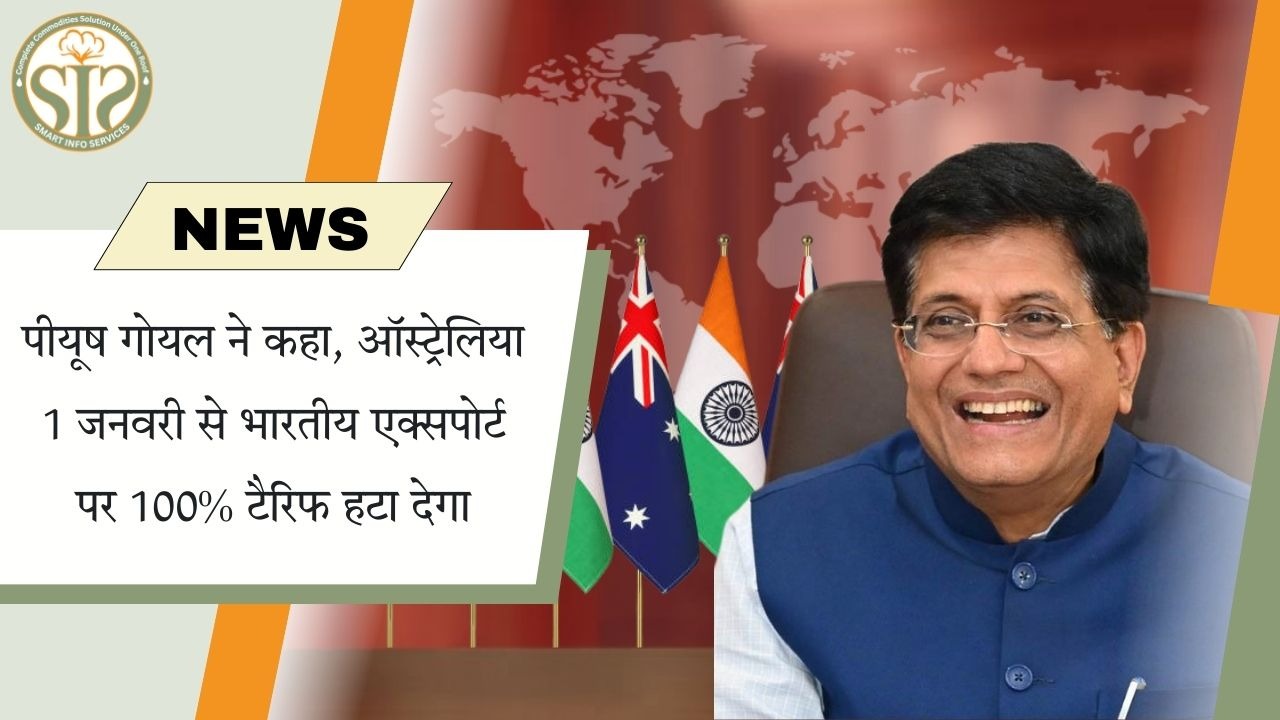
ऑस्ट्रेलिया 1 जनवरी से भारतीय एक्सपोर्ट पर 100% टैरिफ खत्म करेगा: पीयूष गोयलवाणिज्य मंत्री पीयूष गोयल ने सोमवार (29 दिसंबर, 2025) को कहा कि दोनों देशों के बीच आर्थिक सहयोग और व्यापार समझौते (ECTA) के तहत ऑस्ट्रेलिया 1 जनवरी, 2026 से सभी भारतीय एक्सपोर्ट पर ड्यूटी-फ्री एक्सेस देगा। मंत्री इस डील की तीसरी सालगिरह पर टिप्पणी कर रहे थे, जो 29 दिसंबर, 2022 को लागू हुई थी।श्री गोयल ने सोमवार (29 दिसंबर, 2025) को X पर शेयर किया, "1 जनवरी 2026 से, भारतीय एक्सपोर्ट के लिए 100% ऑस्ट्रेलियाई टैरिफ लाइनें जीरो-ड्यूटी होंगी।" "पिछले तीन सालों में, इस समझौते से लगातार एक्सपोर्ट ग्रोथ, बेहतर मार्केट एक्सेस और मजबूत सप्लाई-चेन लचीलापन मिला है, जिससे भारतीय एक्सपोर्टर्स, MSMEs, किसानों और मजदूरों सभी को फायदा हुआ है।"ECTA एक 'अर्ली हार्वेस्ट' डील थी, जिसमें दोनों देशों के बीच व्यापार से जुड़े कुछ मुद्दों को शामिल किया गया था, और दोनों पक्ष अभी एक व्यापक आर्थिक सहयोग समझौते (CECA) के लिए बातचीत कर रहे हैं जो दायरे में व्यापक और गहरा होगा।श्री गोयल के अनुसार, 2024-25 में ऑस्ट्रेलिया को भारत का एक्सपोर्ट 8% बढ़ा, जिससे भारत का व्यापार संतुलन बेहतर हुआ, और मैन्युफैक्चरिंग, केमिकल्स, टेक्सटाइल्स, प्लास्टिक, फार्मास्यूटिकल्स, पेट्रोलियम प्रोडक्ट्स और रत्न और आभूषण जैसे क्षेत्रों में "मजबूत बढ़ोतरी" देखी गई।श्री गोयल ने कहा, "कृषि-एक्सपोर्ट में व्यापक वृद्धि दर्ज की गई, जिसमें फल और सब्जियों, समुद्री उत्पादों, मसालों में तेज वृद्धि और कॉफी में असाधारण वृद्धि हुई।" और पढ़ें :-टेक्सटाइल मंत्रालय कॉटन प्रोडक्टिविटी मिशन से 122 मिलियन अमेरिकी डॉलर हासिल करने की तैयारी में है
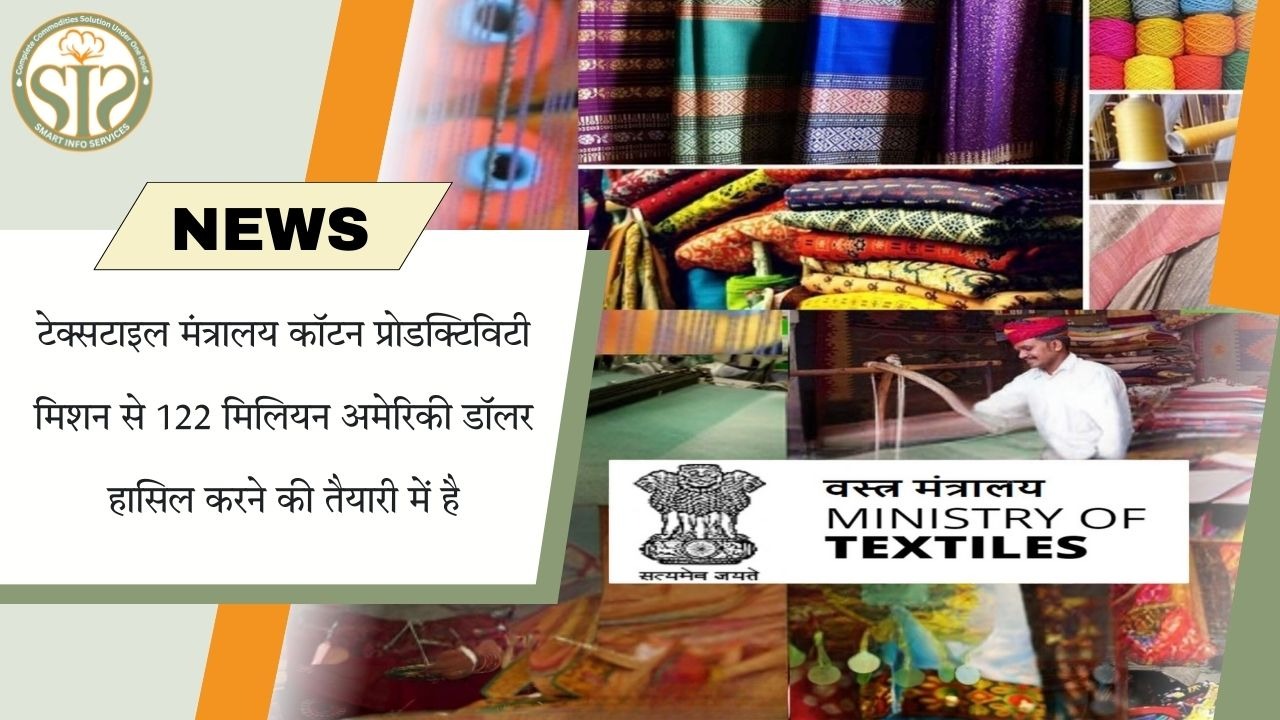
टेक्सटाइल मंत्रालय को कपास उत्पादकता मिशन के लिए $122 मिलियन का बूस्ट मिलेगा।उद्योग सूत्रों के अनुसार, टेक्सटाइल मंत्रालय को भारत सरकार के नए कॉटन प्रोडक्टिविटी मिशन से लगभग 1,100 करोड़ रुपये (122 मिलियन अमेरिकी डॉलर) का आवंटन मिलने वाला है। इस कदम का मकसद देश की टेक्सटाइल वैल्यू चेन को मजबूत करना है। यह आवंटन मिशन के कुल प्रस्तावित बजट लगभग 6,000 करोड़ रुपये (668 मिलियन अमेरिकी डॉलर) का 20% से ज़्यादा है।यह फंडिंग पांच साल के कॉटन प्रोडक्टिविटी मिशन से आ रही है, जिसकी घोषणा केंद्रीय बजट 2025-26 में भारत में घटते कपास उत्पादन और गुणवत्ता की समस्या को दूर करने और देश के टेक्सटाइल सेक्टर को फिर से मजबूत करने के मकसद से की गई थी। इस योजना के तहत, कुल खर्च का बड़ा हिस्सा कृषि अनुसंधान और उत्पादन में शामिल एजेंसियों को दिया जा रहा है, लेकिन टेक्सटाइल मंत्रालय ने कटाई के बाद और प्रोसेसिंग गतिविधियों के लिए एक बड़ा हिस्सा हासिल करने के लिए बातचीत की है।चर्चाओं से परिचित अधिकारियों के अनुसार, मंत्रालय इन फंड्स का इस्तेमाल जिनिंग और प्रेसिंग सुविधाओं को आधुनिक बनाने, लिंट गुणवत्ता नियंत्रण में सुधार करने और कपास की गांठों की हैंडलिंग को बेहतर बनाने के लिए करेगा ताकि उच्च गुणवत्ता वाला कच्चा माल टेक्सटाइल मिलों तक पहुंचे। इन कदमों का मकसद प्रदूषण और कमियों को कम करना है जो वर्तमान में घरेलू और निर्यात दोनों बाजारों में प्रतिस्पर्धा को कमजोर करते हैं।जानकारों का कहना है कि भारत में कपास का उत्पादन लगातार कई सीज़न से गिरा है, और प्रति हेक्टेयर उपज वैश्विक औसत से काफी कम है - ये ऐसे कारक हैं जिन्होंने टेक्सटाइल उद्योग के लिए कच्चे माल की आपूर्ति पर दबाव बढ़ा दिया है। मिशन के समर्थकों का तर्क है कि इस प्रवृत्ति को पलटने और आयातित कपास पर निर्भरता कम करने के लिए कटाई के बाद के बुनियादी ढांचे में निवेश महत्वपूर्ण है।मिशन का कार्यान्वयन और फंड जारी करना अभी भी अंतिम कैबिनेट मंजूरी पर निर्भर है, जिसमें योजना की पहली घोषणा के बाद से देरी हुई है। सरकारी प्रतिनिधियों ने कार्यक्रम को लागू करने के लिए लगातार अंतर-मंत्रालयी समन्वय की आवश्यकता पर जोर दिया है।यह मिशन खुद कपास उत्पादकता में सुधार करने, अतिरिक्त-लंबे स्टेपल कपास सहित उच्च-मूल्य वाली किस्मों की खेती को प्रोत्साहित करने और भारत के टेक्सटाइल निर्यात की प्रतिस्पर्धात्मकता को मजबूत करने की व्यापक सरकारी रणनीति का हिस्सा है।और पढ़ें :- INR 05 पैसे की बढ़त के साथ 89.93 पर खुला।

रुपया 05 पैसे बढ़कर 89.93/USD पर खुलाभारतीय रुपया मंगलवार को डॉलर के मुकाबले मामूली बढ़त के साथ 89.93 पर खुला, जबकि सोमवार को यह 89.98 पर बंद हुआ था।और पढ़ें :- बांग्लादेश के टेक्सटाइल और गारमेंट बॉडीज़ ने लोकल यार्न इंसेंटिव को फिर से शुरू करने की मांग की
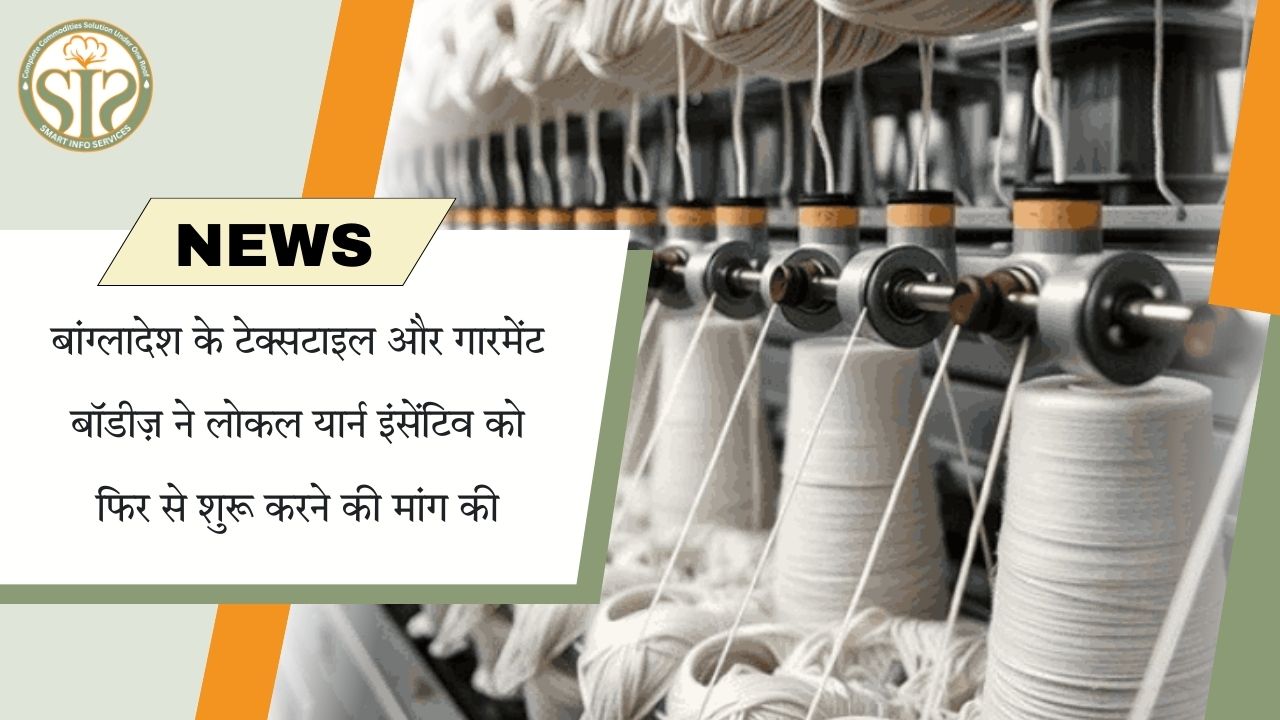
बांग्लादेशी टेक्सटाइल और अपैरल संगठन चाहते हैं कि घरेलू धागे पर मिलने वाली इंसेंटिव को फिर से शुरू किया जाए।बांग्लादेश के रेडीमेड गारमेंट (RMG) एक्सपोर्टर्स और टेक्सटाइल मिलर्स ने मिलकर लोकल यार्न के इस्तेमाल पर सरकारी कैश इंसेंटिव को फिर से शुरू करने और मज़बूत करने की मांग की है। उन्होंने चेतावनी दी है कि मौजूदा पॉलिसी देश की टेक्सटाइल-अपैरल सप्लाई चेन की स्टेबिलिटी और एक्सपोर्ट कॉम्पिटिटिवनेस के लिए खतरा है।एक साथ की गई अपील में, बांग्लादेश गारमेंट मैन्युफैक्चरर्स एंड एक्सपोर्टर्स एसोसिएशन (BGMEA), बांग्लादेश निटवियर मैन्युफैक्चरर्स एंड एक्सपोर्टर्स एसोसिएशन (BKMEA) और बांग्लादेश टेक्सटाइल मिल्स एसोसिएशन (BTMA) के लीडर्स ने फाइनेंस मिनिस्ट्री से लोकल यार्न पर कैश इंसेंटिव को 5% पर वापस लाने की मांग की है। यह रिक्वेस्ट हाल ही में इंसेंटिव को घटाकर 1.5% करने के बाद की गई है, जिसे बांग्लादेश के लीस्ट डेवलप्ड कंट्री (LDC) स्टेटस से बाहर निकलने के हिस्से के तौर पर लागू किया गया था।इंडस्ट्री के रिप्रेजेंटेटिव्स ने कहा कि भारी कटौती से एक्सपोर्टर्स के लिए इनपुट कॉस्ट बढ़ गई है और टेक्सटाइल सेक्टर में बैकवर्ड लिंकेज कमजोर हो गए हैं। उनका कहना था कि ज़्यादा इंसेंटिव फिर से शुरू करने से घरेलू वैल्यू एडिशन को बढ़ावा मिलेगा, जो अमेरिका के रेसिप्रोकल टैरिफ फ्रेमवर्क समेत नए टैरिफ सिस्टम के तहत कॉम्पिटिटिवनेस बनाए रखने के लिए बहुत ज़रूरी है।24 दिसंबर के एक लेटर में, BTMA के प्रेसिडेंट शौकत अज़ीज़ रसेल ने इस सेक्टर पर घरेलू और ग्लोबल दबावों के मिले-जुले असर पर ज़ोर दिया, जिसमें रूस-यूक्रेन और इज़राइल-फ़िलिस्तीन झगड़ों से पैदा हुई जियोपॉलिटिकल अनिश्चितताएं, टका का डेप्रिसिएशन, गैस टैरिफ और लेबर कॉस्ट में काफ़ी बढ़ोतरी, और एनर्जी सप्लाई में लगातार रुकावटें शामिल हैं। एसोसिएशन ने बांग्लादेश बैंक FE सर्कुलर नंबर 28 के तहत एक्सपोर्ट कैश इंसेंटिव फैसिलिटी को बढ़ाने की भी मांग की है, जिसमें इसकी एक्सपायरी 31 दिसंबर, 2025 से बढ़ाकर 31 दिसंबर, 2028 करने का प्रस्ताव है।एक्सपोर्टर्स ने लोकल यार्न प्रोडक्शन को फिर से शुरू करने और खासकर भारत से सस्ते इंपोर्ट से होने वाले कॉम्पिटिटिव नुकसान का मुकाबला करने के लिए स्पिनिंग मिलों के लिए 10% डायरेक्ट इंसेंटिव का प्रस्ताव दिया है। खबर है कि लोकल मिलें बिना बिके बड़े स्टॉक से जूझ रही हैं, जिससे कई मिलों को प्रोडक्शन कम करना पड़ रहा है और उन्हें इंस्टॉल्ड कैपेसिटी से कम पर काम करना पड़ रहा है।इंडस्ट्री लीडर्स ने चेतावनी दी कि सही इंसेंटिव्स की बहाली के बिना, बैकवर्ड लिंकेज इंडस्ट्री और कमजोर हो सकती है, जिससे RMG मैन्युफैक्चरर्स को यार्न सप्लाई में रुकावट आ सकती है। टेक्सटाइल और अपैरल सेक्टर मिलकर बांग्लादेश की कुल एक्सपोर्ट कमाई का लगभग 85% हिस्सा हैं और फॉरेन एक्सचेंज बनाए रखने में अहम भूमिका निभाते हैं।स्टेकहोल्डर्स ने यह भी बताया कि वर्ल्ड ट्रेड ऑर्गनाइजेशन के नियम ग्रेजुएटेड इकॉनमी को एक तय ग्रेस पीरियड के लिए ट्रांज़िशन असिस्टेंस मेजर्स बनाए रखने की इजाज़त देते हैं। उन्होंने बांग्लादेश की कैश इंसेंटिव्स को लगभग पूरी तरह से वापस लेने की योजना के पीछे के लॉजिक पर सवाल उठाया, ऐसे समय में जब कॉम्पिटिटर टेक्सटाइल-एक्सपोर्ट करने वाले देश अपनी इंडस्ट्रीज़ को सरकारी सपोर्ट देना जारी रखे हुए हैं।फाइनेंशियल ईयर के खत्म होने के साथ, एक्सपोर्टर्स और मिलर्स सरकार के रिस्पॉन्स पर करीब से नज़र रख रहे हैं, और इंसेंटिव फ्रेमवर्क को एक्सपोर्ट ग्रोथ बनाए रखने और बांग्लादेश के इंडस्ट्रियल बेस को मजबूत करने में एक ज़रूरी फैक्टर के तौर पर देख रहे हैं।और पढ़ें :- डॉलर के मुकाबले रुपया 05 पैसे गिरकर 89.98 पर बंद हुआ।

सोमवार को भारतीय रुपया 89.98 प्रति डॉलर पर बंद हुआ, जबकि सुबह यह 89.93 पर खुला था।बाजार बंद होने पर, सेंसेक्स 345.91 अंक या 0.41 प्रतिशत गिरकर 84,695.54 पर और निफ्टी 100.2 अंक या 0.38 प्रतिशत गिरकर 25,942.10 पर बंद हुआ। लगभग 1395 शेयरों में तेजी आई, 2595 शेयरों में गिरावट आई और 144 शेयरों में कोई बदलाव नहीं हुआ।और पढ़ें :- टैरिफ का असर H2 FY26 में भारतीय कॉटन यार्न रियलाइज़ेशन को कम करेगा: ICRA

ICRA: H2 FY26 में कॉटन यार्न पर टैरिफ का असर कम होगाICRA ने कहा कि H1 FY26 में सपाट प्रदर्शन के बाद, भारतीय कॉटन स्पिनर्स पर US टैरिफ के असर से H2 में कॉटन यार्न रियलाइज़ेशन कम होने की उम्मीद है।कॉटन स्पिनर्स के रेवेन्यू में FY26 में 4-6 प्रतिशत की गिरावट का अनुमान है और मार्जिन में 50-100 bps की कमी आने की संभावना है।कॉटन की कीमतों में नरमी से इस असर को कुछ हद तक कम किया जा सकता है।FY26 में क्षमता निर्माण में बड़े विस्तार की उम्मीद नहीं है।ICRA के अनुसार, वित्त वर्ष 2025-26 (FY26) के पहले छमाही (H1) में सपाट प्रदर्शन के बाद, भारतीय कॉटन स्पिनर्स पर US टैरिफ के असर से दूसरी छमाही में कॉटन यार्न रियलाइज़ेशन कम होने की उम्मीद है।कॉटन स्पिनर्स के रेवेन्यू में FY26 में 4-6 प्रतिशत की गिरावट का अनुमान है और मार्जिन में 50-100 बेसिस पॉइंट्स (bps) की कमी आने की संभावना है। कॉटन की कीमतों में नरमी से इस असर को कुछ हद तक कम करने की उम्मीद है।मूडीज़ रेटिंग्स से जुड़ी कंपनी ने 'इंडियन कॉटन स्पिनिंग इंडस्ट्री: ट्रेंड्स एंड आउटलुक' शीर्षक वाली एक रिपोर्ट में कहा कि संयुक्त राज्य अमेरिका के साथ चल रही टैरिफ से संबंधित बातचीत में किसी भी सकारात्मक विकास से इस असर को कुछ हद तक कम करने में मदद मिल सकती है।FY25 में घरेलू यार्न की खपत में साल-दर-साल (YoY) 2 प्रतिशत की वृद्धि के साथ मामूली रिकवरी देखने के बाद, भारतीय कॉटन स्पिनिंग इंडस्ट्री FY26 में स्थिर घरेलू मांग और भारतीय कपड़ों के निर्यात पर संयुक्त राज्य अमेरिका द्वारा लगाए गए जवाबी और दंडात्मक टैरिफ के प्रभावों के मिश्रण के बीच एक चुनौतीपूर्ण दौर से गुजर रही है।इस असर को कम करने के लिए, भारतीय कपड़ों के निर्यातक बड़ी छूट दे रहे हैं, जिसे पूरी वैल्यू चेन (स्पिनर्स सहित) में अवशोषित किया जा रहा है।इसमें कहा गया है कि दिसंबर 2025 तक भारत में कॉटन आयात पर आयात शुल्क में छूट और विस्कोस स्टेपल फाइबर (VSF) और कई यार्न और पॉलिएस्टर फाइबर दोनों के लिए गुणवत्ता नियंत्रण आदेशों में हालिया छूट से मैनमेड फाइबर (MMF) यार्न निर्माताओं के लिए कच्चे माल की कीमतें कम होने की संभावना है।ICRA ने कहा, "हालांकि यह रेडीमेड कपड़ों के निर्माताओं को प्रतिस्पर्धी कीमतों पर कच्चे माल तक पहुंच प्रदान करता है, लेकिन यह घरेलू MMF यार्न निर्माताओं को आयात आपूर्तिकर्ताओं से प्रतिस्पर्धा के सामने खड़ा करता है।" नवंबर 2025 में घरेलू कपास फाइबर की कीमतों में महीने-दर-महीने (MoM) लगभग 3 प्रतिशत की गिरावट आई। औसत कॉटन यार्न की कीमतों में 4 प्रतिशत की गिरावट आई।इसके चलते नवंबर 2025 में कॉन्ट्रिब्यूशन लेवल H1 FY26 के ₹103 प्रति किलोग्राम से घटकर ₹96 प्रति किलोग्राम हो गया। ICRA का अनुमान है कि H2 FY26 में रियलाइज़ेशन में कमी आने की उम्मीद के कारण FY26 में कॉन्ट्रिब्यूशन लेवल ₹98-100 प्रति किलोग्राम पर स्थिर हो सकता है।ICRA के 13 कंपनियों के सैंपल सेट, जो इंडस्ट्री के रेवेन्यू का 25-30 प्रतिशत है, से FY26 में सालाना आधार पर रेवेन्यू में 4-6 प्रतिशत की गिरावट की उम्मीद है।इसके अलावा, FY26 में मार्जिन में 50-100 बेसिस पॉइंट्स की कमी आने की उम्मीद है, मुख्य रूप से H2 में कमजोर परफॉर्मेंस के कारण।ICRA ने आगे कहा कि उपलब्ध कैपेसिटी को देखते हुए, FY26 में इस सेक्टर में कैपेसिटी क्रिएशन में बड़े विस्तार की उम्मीद नहीं है।और पढ़ें :- रुपया 08 पैसे गिरकर 89.93/USD पर खुला

रुपया 08 पैसे गिरकर 89.93 प्रति डॉलर पर खुलाभारतीय रुपया सोमवार को 89.93 प्रति डॉलर पर खुला, जबकि पिछला बंद भाव 89.85 था।और पढ़ें :- TASMA ने वित्त मंत्री से ड्यूटी-फ्री कपास आयात सुविधा को बढ़ाने का आग्रह किया है।

TASMA ने वित्त मंत्री से ड्यूटी-फ्री कपास आयात कार्यक्रम का विस्तार करने का अनुरोध किया है।इससे देश की मिलों को नेचुरल फाइबर की कमी को दूर करने और प्रतिस्पर्धी बने रहने में मदद मिलेगी।तमिलनाडु स्पिनिंग मिल्स एसोसिएशन (TASMA) ने वित्त मंत्री निर्मला सीतारमण से 31 दिसंबर, 2025 के बाद भी कपास के ड्यूटी-फ्री आयात को बढ़ाने का आग्रह किया है, क्योंकि कम उत्पादन को देखते हुए देश में कपास की कमी हो सकती है।TASMA के अध्यक्ष ए पी अप्पुकुट्टी ने वित्त मंत्री को लिखे एक पत्र में कहा कि ड्यूटी-फ्री आयात बढ़ाने से कपास की उपलब्धता आसान हो सकती है और मिलों को वैश्विक बाजार में अपने उत्पादों की प्रतिस्पर्धी कीमत तय करने में मदद मिलेगी।सरकार द्वारा ड्यूटी-फ्री आयात को 30 सितंबर, 2025 से बढ़ाकर 31 दिसंबर, 2025 करने के कदम का स्वागत करते हुए उन्होंने कहा कि इससे मिलों को 11 प्रतिशत कम कीमत पर कपास आयात करने और वैश्विक बाजार में अपने उत्पादों को प्रतिस्पर्धी कीमत पर पेश करने में मदद मिली।यह फैसला तब महत्वपूर्ण साबित हुआ जब अमेरिका द्वारा सभी आयातों पर 50 प्रतिशत टैरिफ लगाने के कारण उद्योग को एक गंभीर स्थिति का सामना करना पड़ा।कम उत्पादन का अनुमानकपास उत्पादन और खपत पर समिति का हवाला देते हुए, जिसने इस सीजन (अक्टूबर 2025-सितंबर 2026) के लिए कपास उत्पादन का अनुमान 292.15 लाख गांठ (170 किलोग्राम) कम लगाया है, अप्पुकुट्टी ने कहा कि पिछले कुछ वर्षों की तुलना में घरेलू उपलब्धता सबसे कम होगी।ड्यूटी-फ्री आयात को और बढ़ाने से मिलों को फायदा होगा, खासकर ऐसे समय में जब कपास की आवक कम बताई जा रही है।और पढ़ें :- चीन के शिनजियांग ने 2025 में रिकॉर्ड कपास उत्पादन हासिल किया।

Mills Jittery as Duty-Free Cotton Window ClosesTextile mills in the country are worried over the lack of communication from the Centre on extending duty-free import of cotton, which ended on December 31, 2025. This will likely support prices in the domestic market.The duty waiver, introduced in August and extended till December-end, was meant to augment supplies and ease pressure on textile units struggling with 50 per cent US tariffs.K Venkatachalam, Chief Advisor, Tamil Nadu Spinning Mills Association (TASMA), said textile mills are concerned as cotton arrivals are at least 60 lakh bales (of 170 kg each) lower than last year, and the production this year is below 300 lakh bales. TASMA is among the organisations which sought extension of the duty-free facility.Durai Palanisamy, Chairman of the Southern India Mills Association (SIMA), said as of now, it seems the duty-free regime has ended.“We have asked for an extension of the facility. Cotton in transit may be affected. This season, the quality of cotton has been affected due to rain, while production is lower. The industry will be affected,” he said. With an upcoming free trade agreement and higher US tariffs, mills may be unable to stay competitive, though farmers will not be impacted, he said.Price differenceStating that there was a difference of over ₹10,000 a candy (356 kg) between the minimum support price (MSP) and market price, Palanisamy said export of yarns, made-ups and garments would suffer. “Even if the duty regime exists for a month, it takes several months to recover. We are finding it difficult to retain buyers,” he said.Traders believe the discontinuation of duty exemption will support the domestic prices, which are ruling below the minimum support price levels. “The Cotton Corporation of India has purchased around 64-65 lakh bales till now. So the prices will hinge on CCI’s selling strategy,” said Ramanuj Das Boob, a sourcing agent in Raichur.Anand Popat of Cotyarn Tradelink said about 70-80 per cent of the raw cotton arrivals is going to CCI, leaving limited supply in the private market with quality concerns likely to support prices. Also, the balance sheet for the current season is indicating that closing stock will be around 90 lakh bales. “Prices will depend on the selling policy of the CCI,” Popat said.Atul Ganatra, former President, CAI, said around 32 lakh bales had arrived by the end of December. Another 4-5 lakh bales of long staple cotton and 3 lakh bales of Australian cotton, which are duty free, will come in the next 9 months, along with 4-5 lakh bales of African cotton at 5.5 per cent duty.“Mills doing exports can buy against open licence and will face only 4 per cent duty. Brazilian cotton is available at ₹50,000 per candy (356 kg) port delivery. So if the Indian prices go up, then mills will have options to buy Brazilian cotton,” he said.The Cabinet is inclined to extend the duty waiver and the Ministry of Textiles has backed it, but the Agriculture Ministry has to concur, a source said.READ MORE :- Amidst Global Trade Turmoil Caused by Trump's Tariffs, India Officially Assumes BRICS Chairmanship for 2026

India Takes BRICS Helm for 2026 Amid Trade TurmoilIndia formally assumed the rotating chairmanship of the BRICS group on Thursday, framing the role as a platform to promote inclusive development and strengthen the voice of the Global South in global economic governance, at a time when US President Donald Trump's tariff measures have disrupted trade flows.New Delhi's chairmanship begins against two overlapping realities: BRICS has expanded into a much larger club, and the global trading system is facing rising protectionism.What BRICS looks like now and why membership is complicatedBRICS began as Brazil, Russia, India, China, and South Africa. In the last two years, the bloc has added Egypt, Ethiopia, Indonesia, Iran, and the United Arab Emirates.Saudi Arabia's status is still disputed: the BRICS website lists it as a member, but several reports still indicate that Riyadh has yet to formally complete the process.In terms of size, the expanded group is massive. According to recent reports citing World Bank data, BRICS accounts for approximately 49 percent of the world's population, 29 percent of global GDP, and 23 percent of international trade.Trump's tariffs are the immediate point of pressureThe trade context is crucial because India's relations with Washington have been strained since Trump imposed 50 percent tariffs on Indian goods, including additional duties on India for buying oil from Russia.India will likely steer clear of directly pursuing de-dollarizationTrump has repeatedly warned against BRICS launching a common currency, threatening 100% tariffs and declaring "BRICS is over" in public comments early in his term. Against this backdrop, Prerna Gandhi, an associate fellow at India’s Vivekananda International Foundation, told Nikkei Asia that India would likely resist confrontational de-dollarization and instead promote local currency settlements to safeguard strategic autonomy.Raj Kumar Sharma, a senior research fellow at NatStrat, told Nikkei Asia that India would use the presidency to "defend and strengthen multilateralism" as protectionism rises — and push for reforms of global institutions. The 'Global South' strategy is back, but with a new rival calendar.Sharma told Nikkei Asia that India is expected to continue its emphasis on the Global South during its 2023 G20 presidency, prioritizing human welfare and inclusive development, and placing issues such as food and fuel shortages, debt restructuring, and climate finance on the agenda.He also pointed to a political reality: the Global South agenda could face competition from the US G20 presidency, where these priorities might not be given the same weight.Expansion and Pakistan: Where India might draw the lineDebate is also swirling around India's presidency as well as membership. Sharma told Nikkei Asia that New Delhi would likely insist on clear criteria to prevent BRICS from losing its relevance due to unplanned expansion, including transparent benchmarks and consensus-based decisions.Separately, Pakistan, facing economic distress, is keen to join the BRICS-backed New Development Bank (NDB) to broaden its borrowing options and has previously applied for BRICS membership. This adds a geopolitical dimension to a group otherwise seen as development-focused.READ MORE :- Oxford, Mississippi, will come alive with color, creativity, and craftsmanship from January 22-24, 2026.

Oxford to Shine With Art and Craft, Jan. 22–24Organized by All Y'all Fiber, this event is a must-see for anyone passionate about textiles, yarn, and the art of making. Set against the backdrop of the charming Powerhouse Community Arts Center, the festival is poised to offer a vibrant mix of workshops, live demonstrations, and a bustling maker market, providing a fantastic experience for fiber arts enthusiasts.The Oxford Fiber Festival is the perfect event for those who appreciate the beauty and craftsmanship behind weaving, spinning, dyeing, and other fabric-based crafts. This year's festival promises to be a comprehensive celebration of textile arts, offering a diverse range of activities and learning experiences for both newcomers and seasoned artisans.The event promises to inspire visitors with its series of hands-on workshops, where participants can immerse themselves in the art of making. These workshops will cover a variety of textile crafts, from mastering the art of weaving to exploring the intricate process of yarn dyeing, providing attendees with the opportunity to develop new skills and refine their techniques. Whether you're a complete beginner or an experienced crafter, there's something to gain from these interactive learning experiences.In addition to the workshops, a series of live demonstrations will be held throughout the festival, offering visitors an up-close look at the textile production process. These demonstrations will showcase how raw materials are transformed into beautiful works of art and will be led by local and regional artisans. By watching experts at work, attendees will gain valuable insights into the craftsmanship behind every thread, fabric, and textile product. This offers a rare opportunity to witness the intricate work involved in textile making and the stories behind the materials used.At the heart of the Oxford Fibre Festival is the in-person market, open from 9 am to 5 pm on both Friday, January 23rd and Saturday, January 24th. This market is set to showcase a diverse collection of handcrafted goods and fibre-related products. Visitors will have the chance to purchase high-quality hand-dyed yarns, unique bags, quilting supplies, and other artisanal products, many of which will be exclusively available at the festival. This vibrant market will be a fantastic opportunity for visitors to discover unique items that showcase the creativity and skill of local and regional makers. It's also a chance to support the community of artisans and creators who work tirelessly to keep their crafts alive. Whether you're looking for a special gift, a new addition to your collection, or supplies for your own projects, the Oxford Fibre Festival market will have something for everyone.Adding to the excitement, a Market Crawl will be an interactive activity throughout the festival. Participants will have the chance to visit different market booths and collect stamps, with the opportunity to win exciting prizes upon completing the crawl. This fun activity encourages visitors to explore the entire market and discover all the wonderful products on offer. It's a great way to engage with the festival and connect with the vendors.On Saturday, guests can also look forward to the Meet Our Makers sessions, where they will have the opportunity to interact with the talented artisans behind the creations. These scheduled meet-and-greet sessions allow visitors to learn about the artists' processes, hear their stories, and gain inspiration for their own creative endeavors. Whether you're a new maker or an experienced artisan, this is an invaluable opportunity to connect with other like-minded individuals and gain insights into the world of textile arts.Join a Community of Creative MindsThe Oxford Fibre Festival is more than just shopping and learning – it's about building a community of makers and textile enthusiasts. This event fosters a spirit of collaboration and connection, where visitors can meet, share ideas, and inspire one another. For those passionate about fiber arts, the festival is a place to come together, celebrate creativity, and learn from each other.The festival's relaxed and welcoming atmosphere will make it easy for attendees to connect with fellow fiber enthusiasts and exchange ideas. Whether you're a long-time expert in the field or just beginning to explore the world of textiles, there's a place for you to connect with others who share your passion.Attendees can expect to leave the festival feeling inspired, motivated, and ready to delve even deeper into the world of textile arts. Whether you discover a new crafting technique, a beautiful handmade item, or a connection with a fellow maker, the Oxford Fibre Festival promises to leave a lasting impression.READ MORE :- Brazil cotton prices slide in 2025 as exports absorb surplus

Brazil Cotton Prices Slide on Export SurplusBrazil's cotton market faced sharp price pressure in 2025 as record output, weak domestic consumption and global headwinds weighed on values.Domestic prices fell nearly 17 per cent over the year, despite early gains.Strong exports helped absorb surplus supply, lifting Brazil's share of global trade to 31 per cent and reinforcing its position as the world's leading cotton exporter. Brazil’s cotton market endured a challenging 2025, with domestic prices under sustained pressure from record supply, subdued consumption and softer international markets, even as exports played a critical role in absorbing excess volumes, as per the Centre for Advanced Studies on Applied Economics (CEPEA).The CEPEA/ESALQ Index dropped 16.89 per cent over the year, closing at BRL 3.4862 (~$0.64) per pound on December 26, 2025. Export parity declined 16.6 per cent over the same period. In contrast, the Cotlook A Index eased by 6.68 per cent to $0.74 per pound, while the US dollar weakened 10.29 per cent against the Brazilian real to BRL 5.544.Prices firmed during the first five months of 2025, peaking in May, supported by tight seller behaviour in the off-season, higher international benchmarks and gains in the Cotlook A Index. From June onwards, values fell more sharply as global prices softened, the exchange rate moved lower, remaining 2023-24 stocks were sold and a record 2024-25 harvest approached. High availability and cash-flow needs accelerated the decline in the second half, CEPEA said in its latest fortnightly report on the Brazilian cotton market.Demand from buyers remained cautious amid weak consumption of manufactured products and comfortable industrial supply through term contracts. By November, trading activity increased for early 2026 and the next season, highlighting the growing importance of the term market.Exports provided a key cushion. Brazilian cotton shipments reached a record 2.835 million tons in the 2024-25 season, up 6 per cent year on year. Between January and December 2025, exports totalled 2.89 million tons, 4.2 per cent higher than in 2024, with Pakistan, Bangladesh, Vietnam, China, India and Indonesia as the main destinations. Average export prices fell 12.4 per cent to $0.7381 per pound.According to National Supply Company (CONAB), Brazil’s 2024-25 cotton output is estimated at 4.076 million tons, up 10.13 per cent, supported by higher planted area and productivity. Ending stocks in December 2025 are projected to rise 17.05 per cent year on year.Globally, the USDA estimates 2024-25 cotton supply at 25.97 million tons, the highest since 2017-18. Brazil accounted for 31 per cent of global cotton trade, overtaking the US as the largest exporter.READ MORE :-The rupee opened 2 paise lower against the dollar at 89.98.

The rupee opened 2 paise lower at 89.98/USD.The domestic currency opened at 89.98 against the US dollar, compared to its previous closing of 89.96 against the dollar.READ MORE :- The rupee closed 03 paise lower against the dollar at 89.96.

On thursday, the Indian rupee closed at 89.96 against the dollar, compared to its opening rate of 89.93.At close, the Sensex was down 32 points or 0.04 percent at 85,188.60, and the Nifty was up 16.95 points or 0.06 percent at 26,146.55. About 2113 shares advanced, 1872 shares declined, and 159 shares unchanged.
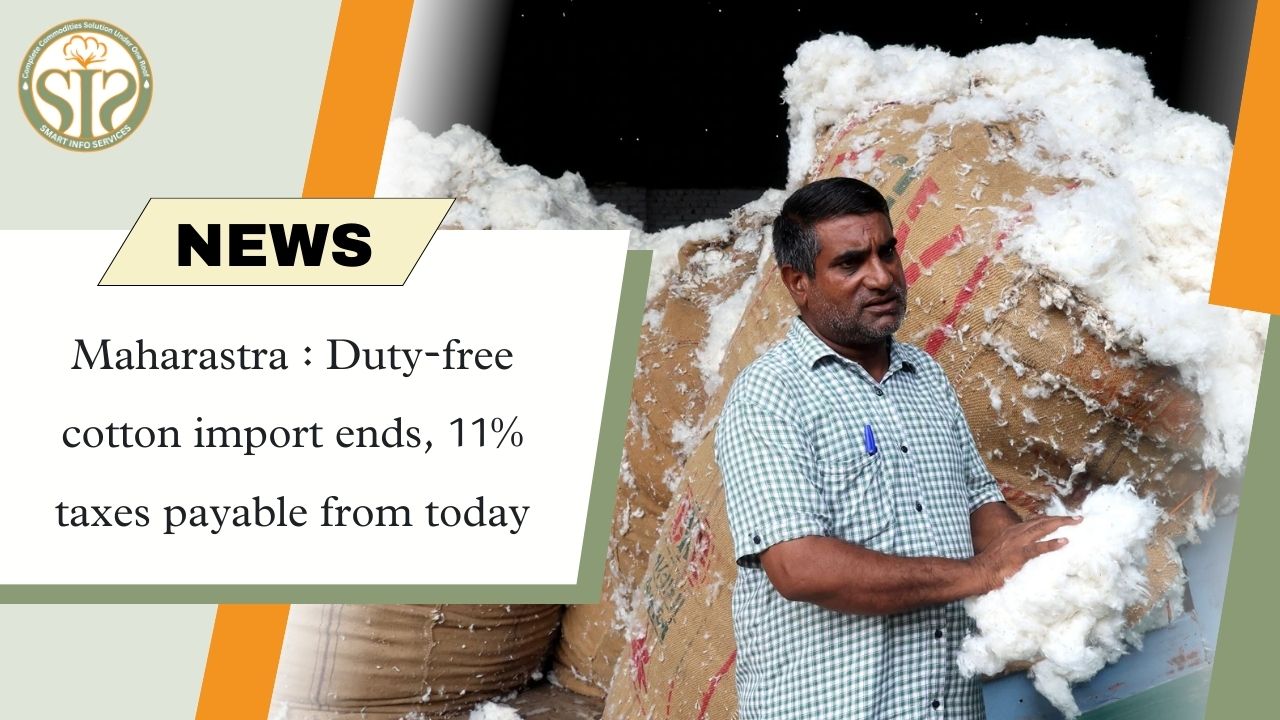
Maharastra : Duty-free cotton import ends, 1 1% taxes payable from today*Nagpur* : The window for duty-free cotton imports expired on Wednesday, with no govt notification regarding an extension. As a result, an 11% duty will apply to cotton imports from January 1, unless a fresh order is issued.While textile players reported rising prices for processed cotton (lint), farmers in Vidarbha continued to sell raw cotton below the minimum support price (MSP). Market rates ranged from 7,500 to 7,700 per quintal, compared with the MSP of 8,110, say market sources.Sources added that while trade and industry lobbied to maintain the duty exemption for at least a quarter, farmers' associations submitted representations supporting the duty. While exemption allowed cheaper imports for textile companies, it pushed down raw cotton prices for farmers.In August, following tariff tensions with the US, India removed 11% import duty on cotton. According to US-based International Cotton Advisory Committee (ICAC), India imported 36 lakh bales of cotton until mid-September. Brazil accounted for largest share at 23%, followed by US at 20% and Australia at 19%.Absence of further duty-free orders has left the textile industry concerned. Reimposing duty has reduced raw cotton prices for farmers to as low as 6,700 per quintal. This season, farmers relied on MSP procurement by Cotton Corporation of India (CCI), which purchased 61.5 lakh bales by December 30. Registration deadline for farmers to sell at MSP was extended to January 16 from original date of Dec 31."Domestic cotton rates reached 58,500 per bale, and imports have become costlier by 4,000 due to tariff war, affecting global competitiveness," said Prashant Mohta, MD of Gima Tex Industries, a textile unit in Vidarbha.READ MORE :- The Organic Cotton Imperative: Traceability & Trust

Organic Cotton: Traceability & TrustThe global organic cotton market is expanding rapidly. Valued at $1.1 billion in 2023, it is projected to reach $25 billion by 2032 (Fortune Business Insights).1 As demand for transparency accelerates and more farmers shift to organic practices, one thing is clear: credible, traceable evidence is now essential for success in the modern textile supply chain.Ensuring Organic IntegrityOrganic cotton delivers major environmental benefits—reduced water and energy use, and minimal toxic chemicals. But the transition is demanding and requires new skills, resources, and long-term brand support. CottonConnect helps in this shift, safeguarding integrity from seed to shelf through:Farmer Empowerment: Training in organic farm management, soil fertility, and natural pest control.Robust Assurance: A verification framework that strives to uphold the highest organic standards. In 2023–24, our programmes achieved 99% organic cotton integrity (Impact Report 2024).2Digital Traceability with TraceBaleOnce farm-level integrity is assured, traceability becomes crucial to maintain it and provides support in substantiating brand claims. TraceBale, our digital tool, creates resilient supply chains with verifiable, bottom-up sourcing data through: Unique farmer QR codesMEL App capturing farm-level production dataGIS farm mapping for precise location trackingTraceBale delivers visibility from farm group to finished product, giving brands reliable, actionable insights to support sustainability claims.The DNA Marker AdvantageTo strengthen assurance further, we partner with Haelixa to integrate physical DNA markers into fiber, providing scientific evidence of origin.By integrating digital traceability, physical markers, and transparent data management, CottonConnect connects farmers with global brands—helping make organic cotton a viable, profitable business model, not just an environmental commitment.“Traceability is important to achieving regulatory compliance, but it also forms the bedrock of responsible business. It helps ensure every stage of the supply chain is understood, allowing issues to be addressed head-on.”READ MORE :- The rupee opened 6 paise lower against the dollar at 89.93.

The rupee opened 6 paise lower at 89.93/USD.The Sensex was up 186.17 points or 0.22 percent at 85,406.77 and the Nifty was up 64.95 points or 0.25 percent at 26,194.55. Approximately 1284 shares advanced, 728 declined, and 151 remained unchanged.READ MORE :- The rupee opened 9 paise higher at 89.87/USD.

On Wednesday, the Indian rupee closed at 89.87 against the dollar, the same level at which it had opened in the morning.Finally, the Sensex was up 545.52 points or 0.64 percent at 85,220.60, and the Nifty was up 190.75 points or 0.74 percent at 26,129.60. Approximately 2555 shares advanced, 1330 declined, and 123 remained unchanged.Read More :- The rupee opened 9 paise higher at 89.87/USD.

The rupee opened 9 paise higher against the dollar at 89.87.The Indian rupee opened at 89.87 against the dollar on Wednesday, compared to its closing rate of 89.78 on Tuesday.READ MORE :- The rupee closed 15 paise higher at 89.78 against the dollar.

On Wednesday, the Indian rupee closed 15 paise higher at 89.78 against the dollar, after opening at 89.93.At close, the Sensex was down 20.46 points or 0.02 percent at 84,675.08, and the Nifty was down 3.25 points or 0.01 percent at 25,938.85. About 1718 shares advanced, 2113 shares declined, and 137 shares unchanged.read more :- Cotton supply tightens as Indian govt procures 38 lakh bales at MSP
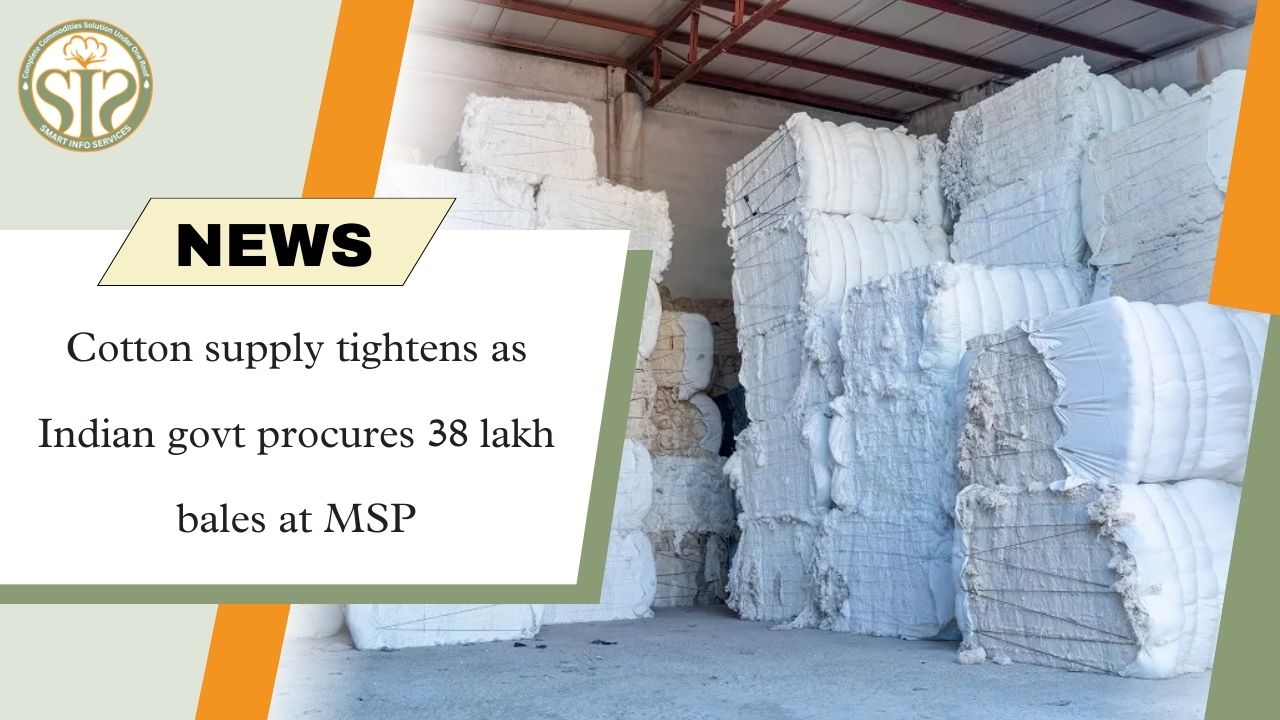
Cotton Supply Tightens as India Buys 38 Lakh Bales at MSPThe Cotton Corporation of India's MSP-led procurement has absorbed 38.7 lakh cotton bales, tightening open-market supply despite weak yarn, fabric and garment demand.With stocks locked in warehouses, cotton prices remain elevated, squeezing spinning margins.Industry is seeking phased CCI stock releases aligned with demand to rebalance the value chain, especially in key producing states.The Indian government has procured 230.23 lakh quintals of seed cotton (kapas) until December 19, according to procurement figures released by the Cotton Corporation of India (CCI). This translates into 38.70 lakh bales of 170 kg cotton procured over the first 80 days of the 2025–26 marketing season, which began on October 1. CCI has been purchasing cotton at the minimum support price (MSP), which is currently higher than prevailing market prices. As a result, the domestic market is facing elevated cotton prices amid CCI’s procurement and subdued demand from downstream industries.CCI’s aggressive procurement in the ongoing 2025–26 season is creating a paradox for the downstream textile industry. While MSP-backed buying has supported farm-gate prices, the large volume of cotton moving into CCI warehouses has reduced free-market availability, even as demand for cotton yarn, fabrics and garments remains weak.According to CCI procurement figures received by the domestic industry, the corporation had procured 230.23 lakh quintals of kapas as of December 19, 2025. At an average lint recovery of 35 per cent, this translates into roughly 38.70 lakh bales. This quantity has effectively been withdrawn from open circulation, tightening near-term availability for spinners and ginners.Industry sources point out that the timing of this withdrawal of cotton from the open market is critical. Yarn offtake remains sluggish, fabric inventories are comfortable, and garment demand (both domestic and export-led) continues to be cautious. In such a demand environment, higher cotton prices driven by restricted availability are exerting pressure on spinning margins rather than supporting value-chain recovery.The impact is most visible in central and southern India, where procurement has been concentrated. Telangana and Maharashtra together account for more than 60 per cent of total CCI purchases so far, leaving mills in these regions increasingly dependent on warehouse-linked cotton rather than spot-market supplies.Spinners maintain that while MSP procurement is necessary in distress years, large front-loaded buying without a clearly defined liquidation roadmap risks creating artificial tightness. With cotton locked in warehouses, prices fail to reflect downstream demand realities, widening the gap between raw material costs and finished goods realisations.Industry stakeholders are therefore urging a phased and transparent release of CCI stocks, aligned with yarn and fabric demand cycles, to restore balance across the value chain and prevent prolonged stress on mill economics.Read more :- Tamil Nadu : Yarn price rises after open-end mills stopped production.
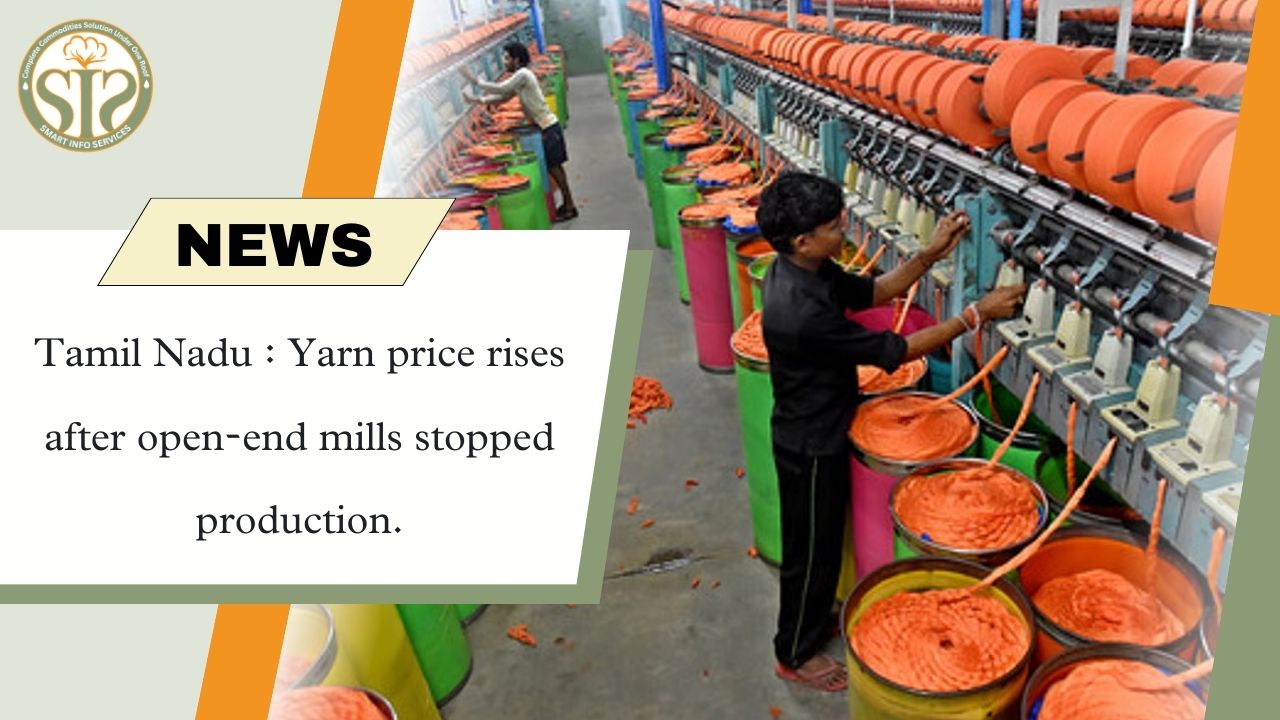
Yarn Rates Rise in Tamil Nadu After Open-End Mills Shut DownCOIMBATORE: The price of yarn supplied by open-end (OE) mills to powerlooms has risen by Rs 5 per kilogram due to their halt in production for the last week, resulting in continuous demand.The yarn price has increased to Rs 142 from Rs 137 per kg in the last week. However, OE mills have stopped procuring waste cotton from the spinning mills as its price remains unchanged.Operators of the OE mills said they have resumed the production with waste cotton in hand and without going for new purchase from the spinning mills.The OE mills cut production by 50% and some had ceased production fully, claiming they could not operate the mills due to increase in the price of waste cotton procured from the spinning mills by Rs 13 per kg in the last three months.About 600 OE mills in Coimbatore, Tiruppur, Erode, Salem, Karur, Madurai and Virudhunagar in Tamil Nadu announced production halt on December 21.M Jayabal, the president of the Recycle Textile Federation said, "While the spinning mills are escalating the price for the waste cotton irrationally, OE yarn price for the 20s weft yarn type dipped in the last two months by Rs 8 per kg. Due to the production halt and subsequent demand from powerloom, the price has increased by Rs 5 per kg in the last eight days.Since the yarn price has recovered gradually, OE mills have started operation with the waste cotton in stock." The mills have stopped the purchase of waste cotton from the spinning mills as they have not changed the price, he added."Cotton is sold at the rate of Rs 53,000 per candy. Waste cotton price was fixed based on the cotton price for the last 15 years. Considering the present cotton price, the waste cotton should be sold below Rs 97 per kg. However, the spinning mills have increased the price from Rs 100 to Rs 113 per kg (comber noil rose) in a syndicate manner.When the spinning mills under the National Textile Corporation were in operation, the waste cotton was procured on auction basis by OE mills. Based on the auction price, private spinning mills were supplying at the same price.After NTC mills ceased their production, spinning mills started fixing prices for waste cotton in a syndicate manner without auction," said G Arulmozhi, the president of the Open-End Mills Association (OSMA).OE mills could start procuring waste cotton from spinning mills if they reduce the price by at least Rs 5 per kg, he added.READ MORE :- Piyush Goyal says Australia will remove 100% tariffs on Indian exports from January 1
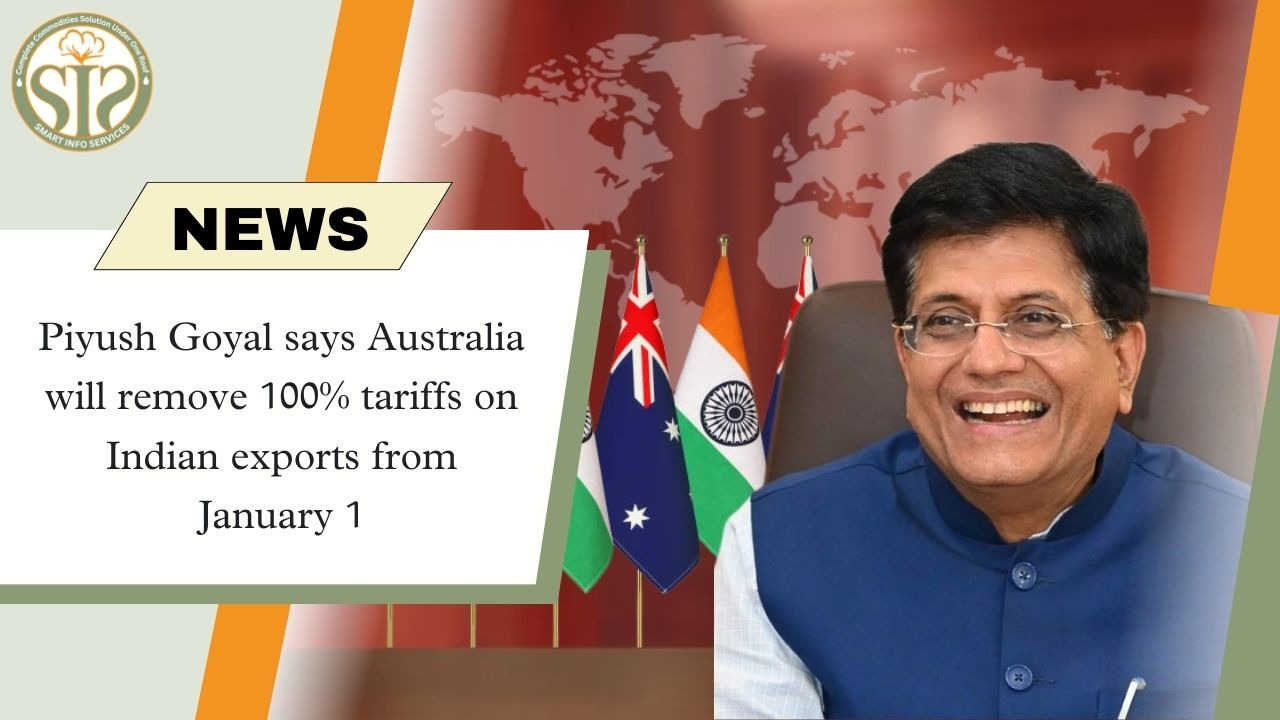
Australia to Scrap 100% Tariffs on Indian Exports from Jan 1: Piyush GoyalCommerce Minister Piyush Goyal said on Monday (December 29, 2025) that under the Economic Cooperation and Trade Agreement (ECTA) between the two countries, Australia will provide duty-free access to all Indian exports from January 1, 2026. The minister was commenting on the third anniversary of the deal, which came into effect on December 29, 2022."From January 1, 2026, 100% of Australian tariff lines for Indian exports will be zero-duty," Mr. Goyal shared on X on Monday (December 29, 2025). "Over the past three years, this agreement has resulted in consistent export growth, improved market access, and strengthened supply chain resilience, benefiting Indian exporters, MSMEs, farmers, and workers alike."The ECTA was an 'early harvest' deal, covering certain trade-related issues between the two countries, and both sides are currently negotiating a Comprehensive Economic Cooperation Agreement (CECA) that will be broader and deeper in scope.According to Mr. Goyal, India's exports to Australia increased by 8% in 2024-25, improving India's trade balance, and saw "robust growth" in sectors such as manufacturing, chemicals, textiles, plastics, pharmaceuticals, petroleum products, and gems and jewelry."Agricultural exports registered broad-based growth, with sharp increases in fruits and vegetables, marine products, spices, and exceptional growth in coffee," Mr. Goyal added.READ MORE :- Textile Ministry Set to Receive $122 Million from Cotton Productivity Mission

Textile Ministry to Get $122M Boost for Cotton Productivity MissionAccording to industry sources, the Ministry of Textiles is poised to receive an allocation of approximately ₹1,100 crore (US$122 million) from the Indian government's new Cotton Productivity Mission. This move aims to strengthen the country's textile value chain. This allocation represents more than 20% of the mission's total proposed budget of approximately ₹6,000 crore (US$668 million).The funding is coming from the five-year Cotton Productivity Mission, announced in the Union Budget 2025-26, with the objective of addressing declining cotton production and quality issues in India and revitalizing the country's textile sector. Under the scheme, a significant portion of the total expenditure is being allocated to agencies involved in agricultural research and production, but the Ministry of Textiles has negotiated for a substantial share to be directed towards post-harvest and processing activities.According to officials familiar with the discussions, the ministry will utilize these funds to modernize ginning and pressing facilities, improve lint quality control, and enhance the handling of cotton bales to ensure high-quality raw material reaches textile mills. These measures aim to reduce contamination and deficiencies that currently undermine competitiveness in both domestic and export markets.Experts note that cotton production in India has declined for several consecutive seasons, and yield per hectare remains significantly lower than the global average – factors that have put increasing pressure on raw material supply for the textile industry. Proponents of the mission argue that investment in post-harvest infrastructure is crucial to reversing this trend and reducing reliance on imported cotton.The implementation of the mission and the release of funds are still contingent on final cabinet approval, which has been delayed since the initial announcement of the scheme. Government representatives have consistently emphasized the need for sustained inter-ministerial coordination to effectively implement the program. This mission is part of a broader government strategy to improve cotton productivity, encourage the cultivation of high-value varieties, including extra-long staple cotton, and strengthen the competitiveness of India's textile exports.READ MORE :- INR Opens Stronger by 05 Paise at 89.93

Rupee opened 05 paise higher at 89.93/USDIndian rupee opened marginally higher at 89.93 per dollar on Tuesday against Monday's close of 89.98.read more :- Bangladesh textile and garment bodies seek restoration of local yarn incentives

Bangladeshi Textile Industry Demands Restoration of Yarn Incentives Amid Rising Cost PressuresBangladesh’s ready-made garment (RMG) exporters and textile millers have jointly intensified calls for the restoration of government cash incentives on the use of locally produced yarn, warning that the recent policy changes could weaken the country’s textile–apparel supply chain and hurt export competitiveness.Leading industry bodies, including the Bangladesh Garment Manufacturers and Exporters Association (BGMEA), Bangladesh Knitwear Manufacturers and Exporters Association (BKMEA), and Bangladesh Textile Mills Association (BTMA), have urged the Ministry of Finance to reinstate a 5% cash incentive on local yarn usage. The request follows a recent reduction in the incentive to 1.5% as part of Bangladesh’s transition from Least Developed Country (LDC) status.Industry leaders argue that the sharp cut has increased production costs for exporters and weakened the backward linkage textile sector. They believe restoring higher incentives would help boost local value addition, which is becoming increasingly important for maintaining competitiveness under evolving global trade conditions, including the United States’ reciprocal tariff framework.In a letter dated December 24, BTMA President Shawkat Aziz Russell highlighted multiple pressures facing the sector, including geopolitical tensions from ongoing global conflicts, depreciation of the taka, rising gas tariffs, higher labour costs, and disruptions in energy supply. The association has also requested an extension of the export cash incentive scheme under Bangladesh Bank FE Circular No. 28, proposing that it be extended from December 31, 2025, to December 31, 2028.Exporters have additionally suggested a 10% direct incentive for spinning mills to revive domestic yarn production and offset competition from cheaper imports, particularly from India. Many local mills are reportedly facing large unsold inventories, forcing them to reduce production and operate below capacity.Industry stakeholders warn that without adequate incentive support, Bangladesh’s backward linkage industry could weaken further, potentially disrupting yarn supply for the RMG sector. Together, textiles and apparel account for nearly 85% of Bangladesh’s total export earnings and remain critical to foreign exchange stability.Stakeholders also note that WTO rules allow developing economies transitional policy support during adjustment periods. They question Bangladesh’s move toward phasing out cash incentives while competing textile-exporting countries continue to support their industries through subsidies and policy incentives.With the fiscal year-end approaching, exporters and millers are closely watching government decisions, as the incentive framework is seen as crucial for sustaining export growth and maintaining the strength of Bangladesh’s industrial base.Read More :- The rupee closed 5 paise lower against the dollar at 89.98.

On Monday, the Indian rupee closed at 89.98 against the dollar, compared to its opening rate of 89.93.At the close of the market, the Sensex fell by 345.91 points or 0.41 percent to 84,695.54, and the Nifty declined by 100.2 points or 0.38 percent to 25,942.10. Approximately 1395 shares advanced, 2595 declined, and 144 remained unchanged.Read More :- Tariff impact to moderate H2 FY26 Indian cotton yarn realisation: ICRA
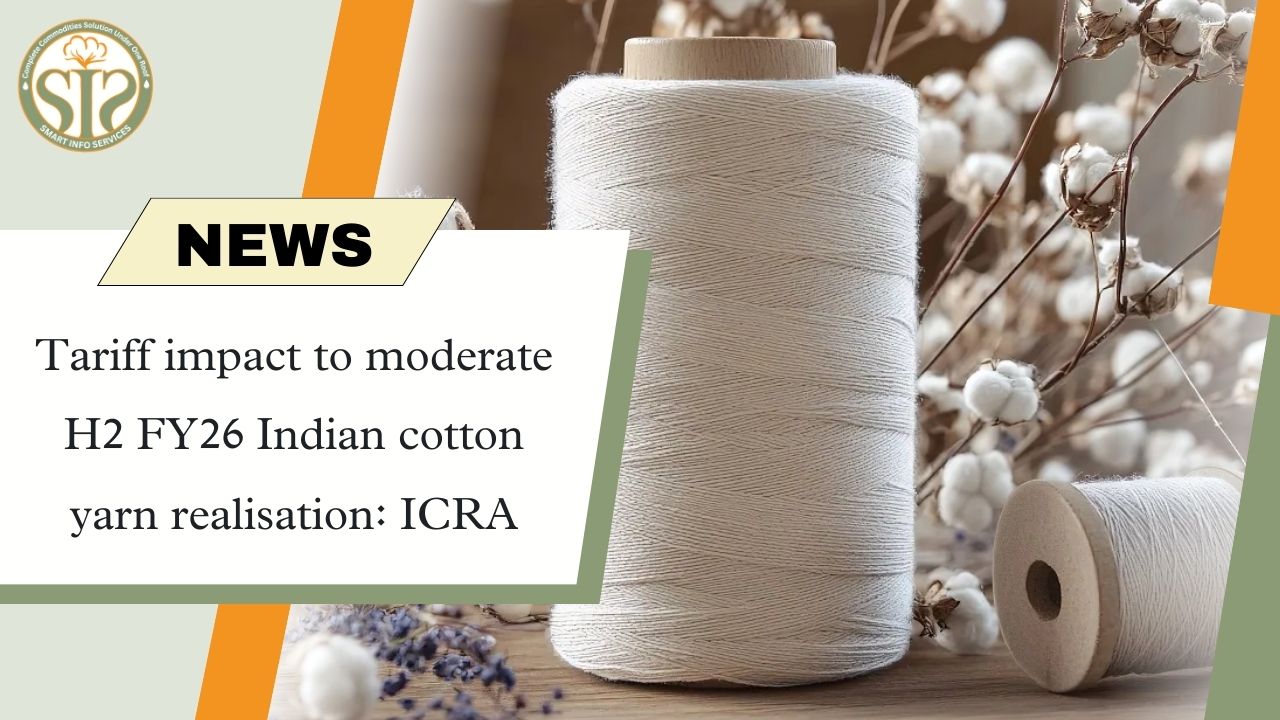
ICRA: Tariff Impact on Cotton Yarn to Ease in H2 FY26Following a flattish H1 FY26, the impact of US tariff on Indian cotton spinners is expected to moderate cotton yarn realisation in H2, ICRA said.Cotton spinners' revenues are projected to drop by 4-6 per cent in FY26 and margin contraction is likely to be 50-100 bps.Moderation in cotton prices is likely to offset the impact to an extent.Material expansion in capacity creations is not expected in FY26.Following a flattish first half (H1) of fiscal 2025-26 (FY26), the trickle-down effect of US tariff on Indian cotton spinners is expected to moderate cotton yarn realisation in the second half, according to ICRA.Revenues of cotton spinners are projected to decline by 4-6 per cent in FY26 and margin contraction is likely to be 50-100 basis points (bps). Moderation in cotton prices is expected to offset the impact to an extent.Any positive developments around the ongoing tariff-related negotiations with the United States could help soften the impact to an extent, the Moody’s Ratings affiliate said in a report titled ‘Indian Cotton Spinning Industry: Trends & Outlook’After witnessing a modest recovery in FY25 with increase in domestic yarn consumption by 2 per cent year on year (YoY), the Indian cotton spinning industry, is navigating a challenging phase in FY26 amidst a mix of stable domestic demand and effects of reciprocal and punitive tariffs levied by the United States on Indian apparel exports.To mitigate the impact, Indian apparel exporters are providing sizeable discounts, which are being absorbed throughout the value chain (including spinners).The import duty exemption on cotton imports in India till December 2025 and recent relaxation on quality control orders for both viscose staple fibre (VSF) and several yarns and polyester fibres is likely to moderate raw material prices for manmade fibre (MMF) yarn manufacturers, it said.“While this supports readymade garments manufacturers with access to raw material at competitive prices, it exposes domestic MMF yarn manufacturers to competition from import suppliers,” noted ICRA.Domestic cotton fibre prices fell by around 3 per cent month on month (MoM) in November 2025. Average cotton yarn prices fell by 4 per cent.This resulted in contribution levels moderating to ₹96/kg in November 2025 from ₹103 per kg in H1 FY26. ICRA anticipates contribution levels are likely to stabilise at ₹98-100 per kg for FY26 due to moderation in realisation expected in H2 FY26.ICRA's sample set of 13 companies, which accounts for 25-30 per cent of the industry's revenue, is expected to report a 4-6 per cent decline in revenues on a YoY basis in FY26.Additionally, margins are expected to contract by 50-100 basis points in FY26, primarily due to weaker performance expected in H2.Given the available capacities, material expansion in capacity creations is not expected in FY26 in the sector, ICRA added.READ MORE :-The rupee opened 8 paise lower at 89.93/USD.

રૂપિયો ૦.૨ પૈસા ઘટીને ૮૯.૯૮/USD પર ખુલ્યો.સ્થાનિક ચલણ યુએસ ડોલર સામે ૮૯.૯૮ પર ખુલ્યું, જ્યારે અગાઉના બંધ સમયે તે ડોલર સામે ૮૯.૯૬ પર હતું.વધુ વાંચો :- ડોલર સામે રૂપિયો 03 પૈસા ઘટીને 89.96 પર બંધ થયો.

ગુરુવારે, ભારતીય રૂપિયો ડોલર સામે 89.96 પર બંધ થયો, જે તેનો શરૂઆતનો દર 89.93 હતો.બંધ સમયે, સેન્સેક્સ 32 પોઈન્ટ અથવા 0.04 ટકા ઘટીને 85,188.60 પર અને નિફ્ટી 16.95 પોઈન્ટ અથવા 0.06 ટકા વધીને 26,146.55 પર બંધ થયો. લગભગ 2113 શેર વધ્યા, 1872 શેર ઘટ્યા અને 159 શેર યથાવત રહ્યા.વધુ વાંચો :-
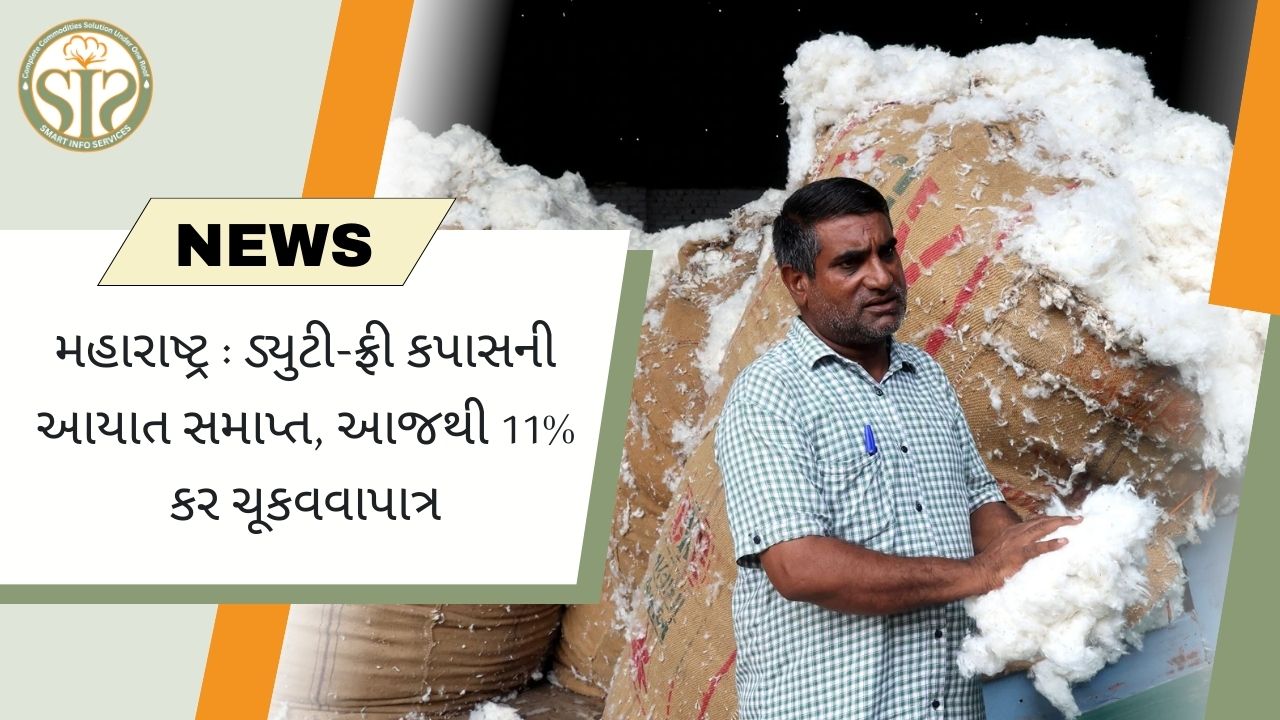
મહારાષ્ટ્રે ડ્યુટી-ફ્રી કપાસની આયાત બંધ કરીનાગપુર : ડ્યુટી-ફ્રી કપાસની આયાત માટેની વિન્ડો બુધવારે સમાપ્ત થઈ ગઈ, લંબાવવા અંગે કોઈ સરકારી સૂચના આપવામાં આવી નથી. પરિણામે, 1 જાન્યુઆરીથી કપાસની આયાત પર 11% ડ્યુટી લાગુ થશે, જ્યાં સુધી નવો ઓર્ડર જારી ન થાય.કાપડ ઉદ્યોગોએ પ્રોસેસ્ડ કપાસ (લિન્ટ) ના ભાવમાં વધારો નોંધાવ્યો હોવા છતાં, વિદર્ભના ખેડૂતોએ લઘુત્તમ ટેકાના ભાવ (MSP) કરતા નીચે કાચો કપાસ વેચવાનું ચાલુ રાખ્યું. બજાર સૂત્રો કહે છે કે બજાર ભાવ 8,110 ની MSP ની સરખામણીમાં 7,500 થી 7,700 પ્રતિ ક્વિન્ટલ સુધી હતા.સૂત્રોએ ઉમેર્યું હતું કે વેપાર અને ઉદ્યોગે ઓછામાં ઓછા એક ક્વાર્ટર માટે ડ્યુટી મુક્તિ જાળવી રાખવા માટે લોબિંગ કર્યું હતું, ત્યારે ખેડૂત સંગઠનોએ ડ્યુટીને ટેકો આપતા રજૂઆતો રજૂ કરી હતી. જ્યારે છૂટથી કાપડ કંપનીઓને સસ્તી આયાતની મંજૂરી મળી હતી, ત્યારે તેનાથી ખેડૂતો માટે કાચા કપાસના ભાવમાં ઘટાડો થયો હતો.ઓગસ્ટમાં, યુએસ સાથેના ટેરિફ તણાવને પગલે, ભારતે કપાસ પરની 11% આયાત ફરજ દૂર કરી. અમેરિકા સ્થિત ઇન્ટરનેશનલ કોટન એડવાઇઝરી કમિટી (ICAC) અનુસાર, ભારતે સપ્ટેમ્બરના મધ્ય સુધીમાં ૩૬ લાખ ગાંસડી કપાસની આયાત કરી હતી. બ્રાઝિલનો હિસ્સો ૨૩% સાથે સૌથી મોટો હતો, ત્યારબાદ અમેરિકાનો ૨૦% અને ઓસ્ટ્રેલિયાનો ૧૯% હતો.વધુ ડ્યુટી-ફ્રી ઓર્ડરના અભાવે કાપડ ઉદ્યોગ ચિંતિત છે. ફરીથી ડ્યુટી લાદવાથી ખેડૂતો માટે કાચા કપાસના ભાવ ઘટીને ૬,૭૦૦ પ્રતિ ક્વિન્ટલ થયા છે. આ સિઝનમાં, ખેડૂતો કોટન કોર્પોરેશન ઓફ ઇન્ડિયા (CCI) દ્વારા MSP ખરીદી પર આધાર રાખતા હતા, જેણે ૩૦ ડિસેમ્બર સુધીમાં ૬૧.૫ લાખ ગાંસડી ખરીદી હતી. ખેડૂતો માટે MSP પર વેચાણ માટે નોંધણીની અંતિમ તારીખ ૩૧ ડિસેમ્બરની મૂળ તારીખથી ૧૬ જાન્યુઆરી સુધી લંબાવવામાં આવી હતી."ઘરેલુ કપાસના ભાવ ૫૮,૫૦૦ પ્રતિ ગાંસડી સુધી પહોંચી ગયા છે, અને ટેરિફ વોરને કારણે આયાત ૪,૦૦૦ પ્રતિ ગાંસડી મોંઘી થઈ છે," વિદર્ભના ટેક્સટાઇલ યુનિટ, ગિમા ટેક્સ ઇન્ડસ્ટ્રીઝના MD પ્રશાંત મોહતાએ જણાવ્યું હતું.વધુ વાંચો :- ઓર્ગેનિક કપાસની જરૂરિયાત: ટ્રેસેબિલિટી અને ટ્રસ્ટ

ઓર્ગેનિક કપાસ: ટ્રેસેબિલિટી અને ટ્રસ્ટવૈશ્વિક ઓર્ગેનિક કપાસ બજાર ઝડપથી વધી રહ્યું છે. 2023 માં તેનું મૂલ્ય $1.1 બિલિયન હતું અને 2032 સુધીમાં $25 બિલિયન સુધી પહોંચવાનો અંદાજ છે (ફોર્ચ્યુન બિઝનેસ ઇનસાઇટ્સ). જેમ જેમ પારદર્શિતાની માંગ વધે છે અને વધુ ખેડૂતો ઓર્ગેનિક પદ્ધતિઓ અપનાવે છે, તેમ તેમ એક વાત સ્પષ્ટ છે: આધુનિક કાપડ પુરવઠા શૃંખલામાં સફળતા માટે વિશ્વસનીય, ટ્રેસેબલ પુરાવા હવે આવશ્યક છે.ઓર્ગેનિક અખંડિતતા સુનિશ્ચિત કરવીઓર્ગેનિક કપાસ નોંધપાત્ર પર્યાવરણીય લાભો પ્રદાન કરે છે - પાણી અને ઉર્જાનો ઉપયોગ ઓછો થાય છે, અને ઓછા ઝેરી રસાયણો. પરંતુ આ સંક્રમણ મુશ્કેલ છે અને તેને નવા કૌશલ્યો, સંસાધનો અને લાંબા ગાળાના બ્રાન્ડ સપોર્ટની જરૂર છે. કોટનકનેક્ટ આ પરિવર્તનને સરળ બનાવવામાં મદદ કરે છે, બીજથી શેલ્ફ સુધી અખંડિતતા જાળવી રાખે છે:ખેડૂતોને સશક્તિકરણ: ઓર્ગેનિક ફાર્મ મેનેજમેન્ટ, માટીની ફળદ્રુપતા અને કુદરતી જંતુ નિયંત્રણમાં તાલીમ.મજબૂત ખાતરી: એક ચકાસણી માળખું જે ઉચ્ચતમ ઓર્ગેનિક ધોરણો જાળવવાનો પ્રયાસ કરે છે. 2023-24 માં, અમારા કાર્યક્રમોએ 99% ઓર્ગેનિક કપાસ અખંડિતતા પ્રાપ્ત કરી (ઇમ્પેક્ટ રિપોર્ટ 2024).ટ્રેસબેલ સાથે ડિજિટલ ટ્રેસેબિલિટીએકવાર ખેતી-સ્તરની અખંડિતતા સુનિશ્ચિત થઈ જાય, પછી તેને જાળવવા અને બ્રાન્ડ દાવાઓને સાબિત કરવામાં મદદ કરવા માટે ટ્રેસેબિલિટી મહત્વપૂર્ણ બની જાય છે. ટ્રેસબેલ, અમારું ડિજિટલ સાધન, ચકાસણીયોગ્ય, બોટમ-અપ સોર્સિંગ ડેટા સાથે મજબૂત સપ્લાય ચેઇન બનાવે છે:ખેડૂતો માટે અનન્ય QR કોડ્સMEL એપ્લિકેશન જે ખેતી-સ્તરના ઉત્પાદન ડેટાને કેપ્ચર કરે છેચોક્કસ સ્થાન ટ્રેકિંગ માટે GIS ફાર્મ મેપિંગટ્રેસબેલ ફાર્મ જૂથથી ફિનિશ્ડ પ્રોડક્ટ સુધી દૃશ્યતા પ્રદાન કરે છે, જે બ્રાન્ડ્સને ટકાઉપણું દાવાઓને સમર્થન આપવા માટે વિશ્વસનીય, કાર્યક્ષમ માહિતી આપે છે.*DNA માર્કર્સના ફાયદા*ખાતરી વધુ મજબૂત બનાવવા માટે, અમે ફાઇબરમાં ભૌતિક DNA માર્કર્સને એમ્બેડ કરવા માટે Haelixa સાથે ભાગીદારી કરીએ છીએ, જે મૂળના વૈજ્ઞાનિક પુરાવા પ્રદાન કરે છે.ડિજિટલ ટ્રેસેબિલિટી, ભૌતિક માર્કર્સ અને પારદર્શક ડેટા મેનેજમેન્ટને એકીકૃત કરીને, CottonConnect ખેડૂતોને વૈશ્વિક બ્રાન્ડ્સ સાથે જોડે છે - ઓર્ગેનિક કપાસને માત્ર પર્યાવરણીય પ્રતિબદ્ધતા જ નહીં, પરંતુ એક વ્યવહારુ, નફાકારક વ્યવસાય મોડેલ બનાવવામાં મદદ કરે છે."નિયમનકારી પાલન પ્રાપ્ત કરવા માટે ટ્રેસેબિલિટી મહત્વપૂર્ણ છે, પરંતુ તે જવાબદાર વ્યવસાયનો પાયો પણ બનાવે છે. તે ખાતરી કરવામાં મદદ કરે છે કે સપ્લાય ચેઇનના દરેક તબક્કાને સમજી શકાય છે, જેનાથી સમસ્યાઓનો સીધો ઉકેલ લાવી શકાય છે."વધુ વાંચો :- ડોલર સામે રૂપિયો 06 પૈસા ઘટીને 89.93 પર ખુલ્યો.

રૂપિયો 06 પૈસા ઘટીને 89.93/USD પર ખુલ્યો.સેન્સેક્સ 186.17 પોઈન્ટ અથવા 0.22 ટકા વધીને 85,406.77 પર અને નિફ્ટી 64.95 પોઈન્ટ અથવા 0.25 ટકા વધીને 26,194.55 પર બંધ થયો. લગભગ 1,284 શેર વધ્યા, 728 શેર ઘટ્યા અને 151 શેર યથાવત રહ્યા.વધુ વાંચો :- રૂપિયો 09 પૈસા વધીને 89.87/USD પર ખુલ્યો.

ભારતીય રૂપિયો બુધવારે ૮૯.૮૭/ડોલર પર ખુલ્યા પછી, ૮૯.૮૭/ડોલર પર બંધ થયો.બંધ સમયે, સેન્સેક્સ ૫૪૫.૫૨ પોઈન્ટ અથવા ૦.૬૪ ટકા વધીને ૮૫,૨૨૦.૬૦ પર અને નિફ્ટી ૧૯૦.૭૫ પોઈન્ટ અથવા ૦.૭૪ ટકા વધીને ૨૬,૧૨૯.૬૦ પર બંધ થયો. લગભગ ૨,૫૫૫ શેર વધ્યા, ૧,૩૩૦ ઘટ્યા અને ૧૨૩ શેર યથાવત રહ્યા.વધુ વાંચો :- રૂપિયો 09 પૈસા વધીને 89.87/USD પર ખુલ્યો.

ડોલર સામે રૂપિયો 09 પૈસા વધીને 89.87 પર ખુલ્યો.બુધવારે ડોલર સામે ભારતીય રૂપિયો 89.87 પર ખુલ્યો, જે મંગળવારે 89.78 ના ઉચ્ચતમ સ્તર પર બંધ થયો હતો.વધુ વાંચો :- ડોલર સામે રૂપિયો 15 પૈસા વધીને 89.78 પર બંધ થયો.

બુધવારે, ભારતીય રૂપિયો 89.93 પર ખુલ્યા પછી, ડોલર સામે 15 પૈસા વધીને 89.78 પર બંધ થયો.બંધ સમયે, સેન્સેક્સ 20.46 પોઈન્ટ અથવા 0.02 ટકા ઘટીને 84,675.08 પર અને નિફ્ટી 3.25 પોઈન્ટ અથવા 0.01 ટકા ઘટીને 25,938.85 પર બંધ થયો. લગભગ 1718 શેર વધ્યા, 2113 શેર ઘટ્યા અને 137 શેર યથાવત રહ્યા.વધુ વાંચો :- ભારત સરકાર MSP પર 38 લાખ ગાંસડી ખરીદે છે, જેના કારણે કપાસનો પુરવઠો વધુ મજબૂત બને છે.
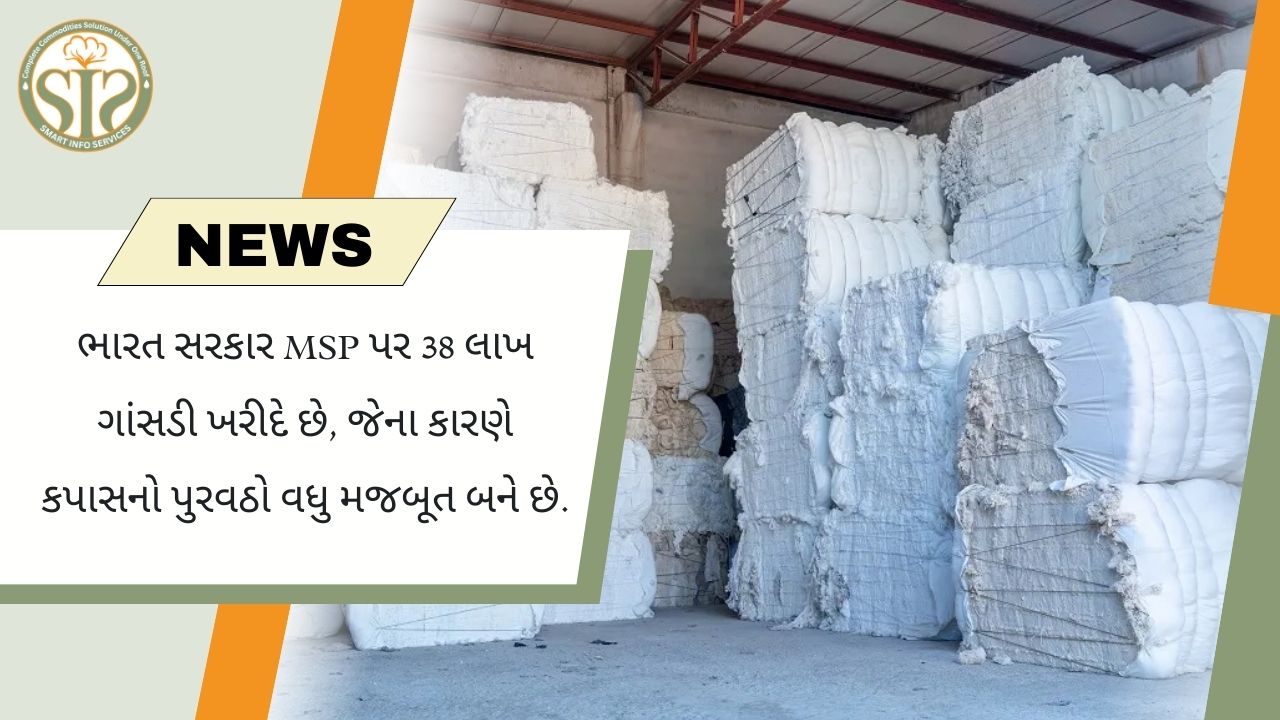
ભારતે MSP પર 38 લાખ ગાંસડી ખરીદતાં કપાસનો પુરવઠો વધુ કડક બન્યોકોટન કોર્પોરેશન ઓફ ઇન્ડિયાની MSP-આધારિત ખરીદીએ 38.7 લાખ કપાસ ગાંસડી ખરીદી છે, જે યાર્ન, કાપડ અને કપડાની માંગ નબળી હોવા છતાં ખુલ્લા બજારમાં પુરવઠો વધુ કડક બનાવે છે.વેરહાઉસમાં સ્ટોક બંધ હોવાથી, કપાસના ભાવ ઊંચા રહે છે, જે સ્પિનિંગ માર્જિનને દબાવી દે છે.ઉદ્યોગો માંગ સાથે સુસંગત તબક્કાવાર CCI સ્ટોક રિલીઝ ઇચ્છે છે, ખાસ કરીને મુખ્ય ઉત્પાદક રાજ્યોમાં.કોટન કોર્પોરેશન ઓફ ઇન્ડિયા (CCI) દ્વારા જાહેર કરાયેલા ખરીદીના આંકડા અનુસાર, ભારત સરકારે 19 ડિસેમ્બર સુધી 230.23 લાખ ક્વિન્ટલ બીજ કપાસ (કપા) ખરીદ્યો છે. આનો અર્થ એ થાય કે 1 ઓક્ટોબરથી શરૂ થયેલી 2025-26 માર્કેટિંગ સીઝનના પ્રથમ 80 દિવસમાં 170 કિલો કપાસની 38.70 લાખ ગાંસડી ખરીદાઈ છે. CCI લઘુત્તમ ટેકાના ભાવ (MSP) પર કપાસ ખરીદી રહ્યું છે, જે હાલમાં પ્રવર્તમાન બજાર ભાવ કરતાં વધુ છે. પરિણામે, CCI ની ખરીદી અને ડાઉનસ્ટ્રીમ ઉદ્યોગો તરફથી માંગમાં ઘટાડો થવાને કારણે સ્થાનિક બજાર કપાસના ભાવમાં વધારો અનુભવી રહ્યું છે.ચાલુ 2025-26 સીઝનમાં CCI ની આક્રમક ખરીદી ડાઉનસ્ટ્રીમ કાપડ ઉદ્યોગ માટે વિરોધાભાસ પેદા કરી રહી છે. MSP-સમર્થિત ખરીદીએ ખેતરમાં ભાવને ટેકો આપ્યો છે, જ્યારે CCI વેરહાઉસમાં કપાસના મોટા જથ્થાને કારણે મુક્ત બજાર ઉપલબ્ધતામાં ઘટાડો થયો છે, જ્યારે કપાસના યાર્ન, કાપડ અને વસ્ત્રોની માંગ નબળી રહી છે.સ્થાનિક ઉદ્યોગ દ્વારા પ્રાપ્ત CCI ખરીદીના આંકડા અનુસાર, કોર્પોરેશને 19 ડિસેમ્બર, 2025 સુધીમાં 230.23 લાખ ક્વિન્ટલ કપાસ ખરીદ્યા હતા. સરેરાશ 35 ટકા લિન્ટ રિકવરી પર, આ આશરે 38.70 લાખ ગાંસડીમાં રૂપાંતરિત થાય છે. આ જથ્થો ખુલ્લા પરિભ્રમણમાંથી અસરકારક રીતે પાછો ખેંચી લેવામાં આવ્યો છે, જે સ્પિનર્સ અને જિનર્સ માટે નજીકના ગાળાની ઉપલબ્ધતાને કડક બનાવે છે.ઉદ્યોગ સૂત્રો નિર્દેશ કરે છે કે ખુલ્લા બજારમાંથી કપાસના આ ઉપાડનો સમય મહત્વપૂર્ણ છે. યાર્નનો ઉપાડ ધીમો રહે છે, ફેબ્રિક ઇન્વેન્ટરી આરામદાયક છે, અને કપડાની માંગ (ઘરેલું અને નિકાસ આધારિત બંને) હજુ પણ સાવચેતીભર્યું છે. આવા માંગ વાતાવરણમાં, મર્યાદિત ઉપલબ્ધતાને કારણે કપાસના ઊંચા ભાવ મૂલ્ય-શૃંખલા પુનઃપ્રાપ્તિને ટેકો આપવાને બદલે સ્પિનિંગ માર્જિન પર દબાણ લાવી રહ્યા છે.આ અસર મધ્ય અને દક્ષિણ ભારતમાં સૌથી વધુ દેખાય છે, જ્યાં ખરીદી કેન્દ્રિત થઈ છે. તેલંગાણા અને મહારાષ્ટ્ર મળીને અત્યાર સુધીની કુલ CCI ખરીદીમાં 60 ટકાથી વધુ હિસ્સો ધરાવે છે, જેના કારણે આ પ્રદેશોમાં મિલો સ્પોટ-માર્કેટ સપ્લાયને બદલે વેરહાઉસ-લિંક્ડ કપાસ પર વધુને વધુ નિર્ભર રહે છે.સ્પિનર્સનું માનવું છે કે જ્યારે કટોકટીના વર્ષોમાં MSP ખરીદી જરૂરી છે, ત્યારે સ્પષ્ટ રીતે વ્યાખ્યાયિત લિક્વિડેશન રોડમેપ વિના મોટી ફ્રન્ટ-લોડેડ ખરીદી કૃત્રિમ કડકતાનું જોખમ ઊભું કરે છે. કપાસ વેરહાઉસમાં બંધ હોવાથી, ભાવ ડાઉનસ્ટ્રીમ માંગ વાસ્તવિકતાઓને પ્રતિબિંબિત કરવામાં નિષ્ફળ જાય છે, કાચા માલના ખર્ચ અને તૈયાર માલની પ્રાપ્તિ વચ્ચેનું અંતર વધારે છે.તેથી, ઉદ્યોગના હિસ્સેદારો યાર્ન અને ફેબ્રિક માંગ ચક્ર સાથે સંતુલિત CCI સ્ટોકના તબક્કાવાર અને પારદર્શક પ્રકાશનનો આગ્રહ કરી રહ્યા છે, જેથી મૂલ્ય શૃંખલામાં સંતુલન પુનઃસ્થાપિત થાય અને મિલ અર્થશાસ્ત્ર પર લાંબા સમય સુધી તણાવ ન રહે.વધુ વાંચો :- તમિલનાડુ: ઓપન-એન્ડ મિલોએ ઉત્પાદન બંધ કર્યા પછી યાર્નના ભાવમાં વધારો થયો છે.
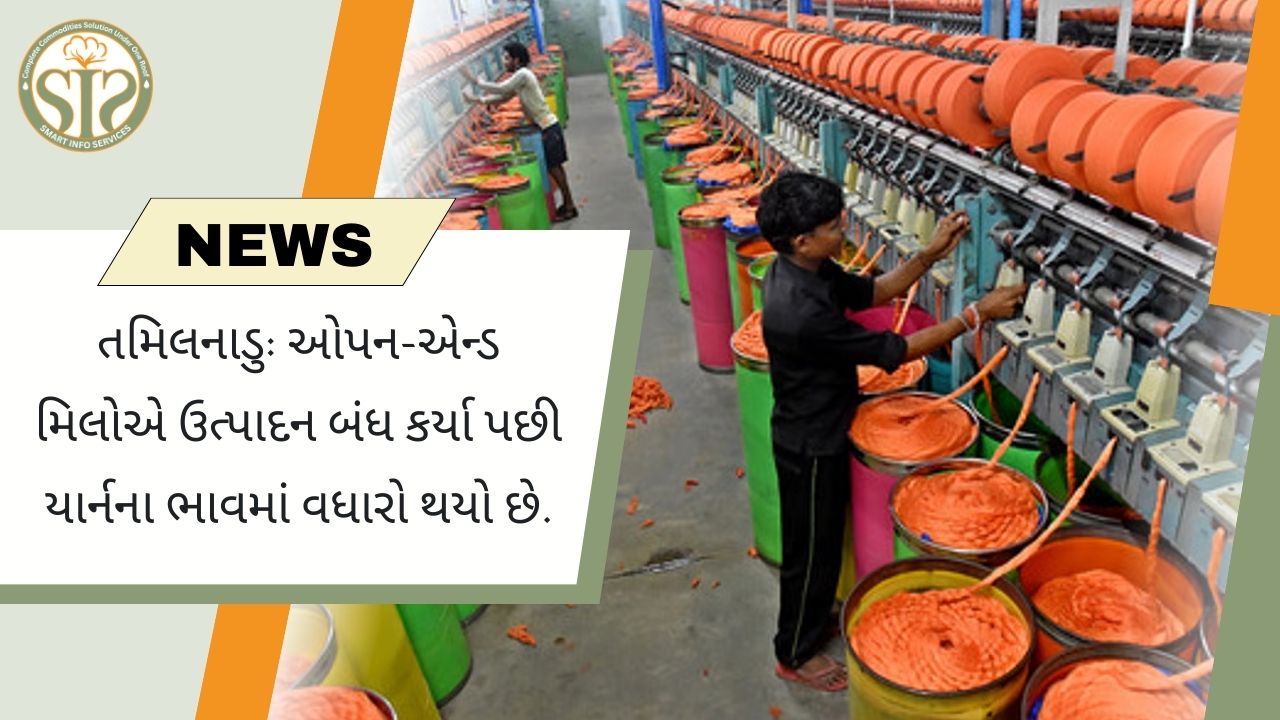
ઓપન-એન્ડ મિલો બંધ થયા પછી તમિલનાડુમાં યાર્નના ભાવમાં વધારો થયોકોઈમ્બતુર: ઓપન-એન્ડ (OE) મિલોએ પાવરલૂમ્સને પૂરા પાડતા યાર્નના ભાવમાં છેલ્લા અઠવાડિયાથી ઉત્પાદન બંધ હોવાથી પ્રતિ કિલોગ્રામ રૂ. 5 નો વધારો થયો છે, જેના કારણે માંગ સતત વધી રહી છે.ગયા અઠવાડિયામાં યાર્નનો ભાવ રૂ. 137 થી વધીને રૂ. 142 થયો છે.જોકે, OE મિલોએ સ્પિનિંગ મિલ પાસેથી નકામા કપાસ ખરીદવાનું બંધ કરી દીધું છે કારણ કે તેની કિંમત યથાવત છે.OE મિલોના સંચાલકોએ જણાવ્યું હતું કે તેઓએ સ્પિનિંગ મિલ પાસેથી નવી ખરીદી કર્યા વિના અને કચરો કપાસ હાથમાં રાખીને ઉત્પાદન ફરી શરૂ કર્યું છે.OE મિલોએ ઉત્પાદનમાં 50% ઘટાડો કર્યો હતો અને કેટલીકએ ઉત્પાદન સંપૂર્ણપણે બંધ કરી દીધું હતું, અને દાવો કર્યો હતો કે છેલ્લા ત્રણ મહિનામાં સ્પિનિંગ મિલ પાસેથી ખરીદેલા નકામા કપાસના ભાવમાં રૂ. 13 પ્રતિ કિલોગ્રામનો વધારો થવાને કારણે તેઓ મિલો ચલાવી શકતા નથી.તમિલનાડુના કોઈમ્બતુર, તિરુપુર, ઇરોડ, સેલમ, કરુર, મદુરાઈ અને વિરુધુનગરમાં લગભગ 600 OE મિલોએ 21 ડિસેમ્બરે ઉત્પાદન બંધ કરવાની જાહેરાત કરી હતી.રિસાયકલ ટેક્સટાઇલ ફેડરેશનના પ્રમુખ એમ જયબાલે જણાવ્યું હતું કે, "જ્યારે સ્પિનિંગ મિલો નકામા કપાસના ભાવમાં અતાર્કિક રીતે વધારો કરી રહી છે, ત્યારે 20 ના દાયકાના વેફ્ટ યાર્ન પ્રકારના OE યાર્નના ભાવમાં છેલ્લા બે મહિનામાં પ્રતિ કિલો રૂ. 8 નો ઘટાડો થયો છે. ઉત્પાદન બંધ થવાને કારણે અને પાવરલૂમની માંગને કારણે, છેલ્લા આઠ દિવસમાં ભાવમાં પ્રતિ કિલો રૂ. 5 નો વધારો થયો છે.યાર્નના ભાવ ધીમે ધીમે સુધર્યા હોવાથી, OE મિલોએ સ્ટોકમાં રહેલા કચરાના કપાસ સાથે કામગીરી શરૂ કરી દીધી છે." મિલોએ સ્પિનિંગ મિલોમાંથી નકામા કપાસની ખરીદી બંધ કરી દીધી છે કારણ કે તેઓએ ભાવમાં કોઈ ફેરફાર કર્યો નથી, તેમણે ઉમેર્યું."કપાસ પ્રતિ કેન્ડી રૂ. ૫૩,૦૦૦ ના ભાવે વેચાય છે. છેલ્લા ૧૫ વર્ષથી કપાસના ભાવના આધારે નકામા કપાસનો ભાવ નક્કી કરવામાં આવતો હતો. હાલના કપાસના ભાવને ધ્યાનમાં લેતા, નકામા કપાસ પ્રતિ કિલો રૂ. ૯૭ ની નીચે વેચવો જોઈએ. જોકે, સ્પિનિંગ મિલોએ સિન્ડિકેટ રીતે ભાવ ૧૦૦ રૂપિયાથી વધારીને રૂ. ૧૧૩ પ્રતિ કિલો (કોમ્બર નોઇલ રોઝ) કર્યો છે.જ્યારે નેશનલ ટેક્સટાઇલ કોર્પોરેશન હેઠળની સ્પિનિંગ મિલો કાર્યરત હતી, ત્યારે ઓઇ મિલો દ્વારા કચરો કપાસ હરાજીના આધારે ખરીદવામાં આવતો હતો. હરાજીના ભાવના આધારે, ખાનગી સ્પિનિંગ મિલો તે જ ભાવે સપ્લાય કરતી હતી.એનટીસી મિલોએ તેમનું ઉત્પાદન બંધ કર્યા પછી, સ્પિનિંગ મિલોએ હરાજી વિના સિન્ડિકેટ રીતે કચરો કપાસ માટે ભાવ નક્કી કરવાનું શરૂ કર્યું," ઓપન-એન્ડ મિલ્સ એસોસિએશન (OSMA) ના પ્રમુખ જી અરુલમોઝીએ જણાવ્યું હતું.જો ઓઇ મિલો ઓછામાં ઓછા ૫ રૂપિયા પ્રતિ કિલો ભાવ ઘટાડે તો તેઓ સ્પિનિંગ મિલો પાસેથી કચરો કપાસ ખરીદવાનું શરૂ કરી શકે છે, એમ તેમણે ઉમેર્યું.વધુ વાંચો :- પિયુષ ગોયલે કહ્યું, ઓસ્ટ્રેલિયા 1 જાન્યુઆરીથી ભારતીય નિકાસ પર 100% ટેરિફ દૂર કરશે.
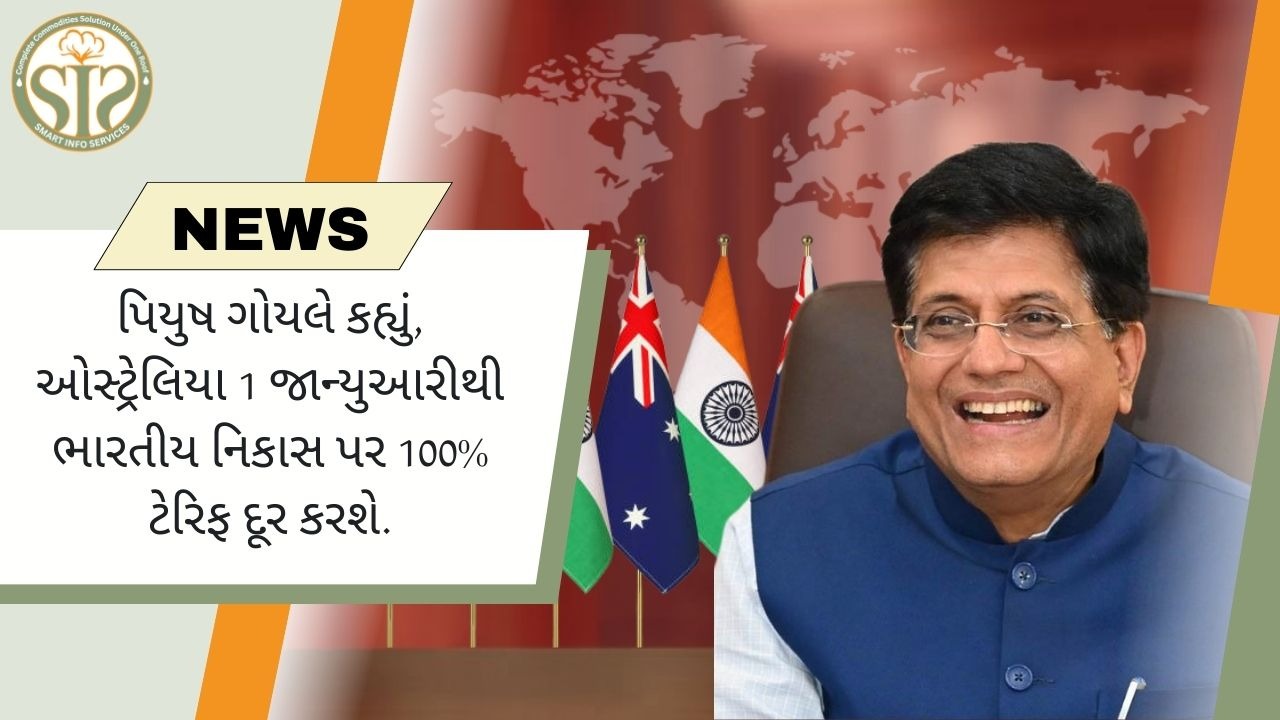
ઓસ્ટ્રેલિયા 1 જાન્યુઆરીથી ભારતીય નિકાસ પર 100% ટેરિફ નાબૂદ કરશે: પિયુષ ગોયલવાણિજ્ય મંત્રી પિયુષ ગોયલે સોમવારે (29 ડિસેમ્બર, 2025) જણાવ્યું હતું કે ઓસ્ટ્રેલિયા બંને દેશો વચ્ચેના આર્થિક સહકાર અને વેપાર કરાર (ECTA) હેઠળ 1 જાન્યુઆરી, 2026 થી તમામ ભારતીય નિકાસને ડ્યુટી-મુક્ત ઍક્સેસ પ્રદાન કરશે. મંત્રી 29 ડિસેમ્બર, 2022 થી અમલમાં આવેલા આ કરારની ત્રીજી વર્ષગાંઠ પર ટિપ્પણી કરી રહ્યા હતા."1 જાન્યુઆરી, 2026 થી, ભારતીય નિકાસ માટે 100% ઓસ્ટ્રેલિયન ટેરિફ લાઇન શૂન્ય-ડ્યુટી હશે," શ્રી ગોયલે સોમવારે (29 ડિસેમ્બર, 2025) X પર શેર કર્યું. "છેલ્લા ત્રણ વર્ષોમાં, આ કરારથી સતત નિકાસ વૃદ્ધિ, સુધારેલ બજાર ઍક્સેસ અને મજબૂત સપ્લાય-ચેઇન સ્થિતિસ્થાપકતા પ્રાપ્ત થઈ છે, જેનાથી ભારતીય નિકાસકારો, MSME, ખેડૂતો અને મજૂરોને બંનેને ફાયદો થયો છે."ECTA એક 'પ્રારંભિક પાક' સોદો હતો જેણે બંને દેશો વચ્ચેના કેટલાક વેપાર-સંબંધિત મુદ્દાઓને સંબોધિત કર્યા હતા, અને બંને પક્ષો હાલમાં એક વ્યાપક આર્થિક સહકાર કરાર (CECA) પર વાટાઘાટો કરી રહ્યા છે જેનો વ્યાપ વધુ વ્યાપક અને ઊંડો હશે.શ્રી ગોયલના મતે, 2024-25માં ઓસ્ટ્રેલિયામાં ભારતની નિકાસમાં 8%નો વધારો થયો હતો, જેનાથી ભારતના વેપાર સંતુલનમાં સુધારો થયો હતો, અને ઉત્પાદન, રસાયણો, કાપડ, પ્લાસ્ટિક, ફાર્માસ્યુટિકલ્સ, પેટ્રોલિયમ ઉત્પાદનો અને રત્નો અને ઝવેરાત જેવા ક્ષેત્રોમાં "મજબૂત વૃદ્ધિ" જોવા મળી હતી.શ્રી ગોયલે જણાવ્યું હતું કે, "કૃષિ-નિકાસમાં વ્યાપક વૃદ્ધિ નોંધાઈ હતી, જેમાં ફળો અને શાકભાજી, સીફૂડ, મસાલા અને કોફીમાં અસાધારણ વૃદ્ધિ જોવા મળી હતી."વધુ વાંચો :- કાપડ મંત્રાલયને કપાસ ઉત્પાદકતા મિશન તરફથી 122 મિલિયન યુએસ ડોલર મળવાની તૈયારી છે.
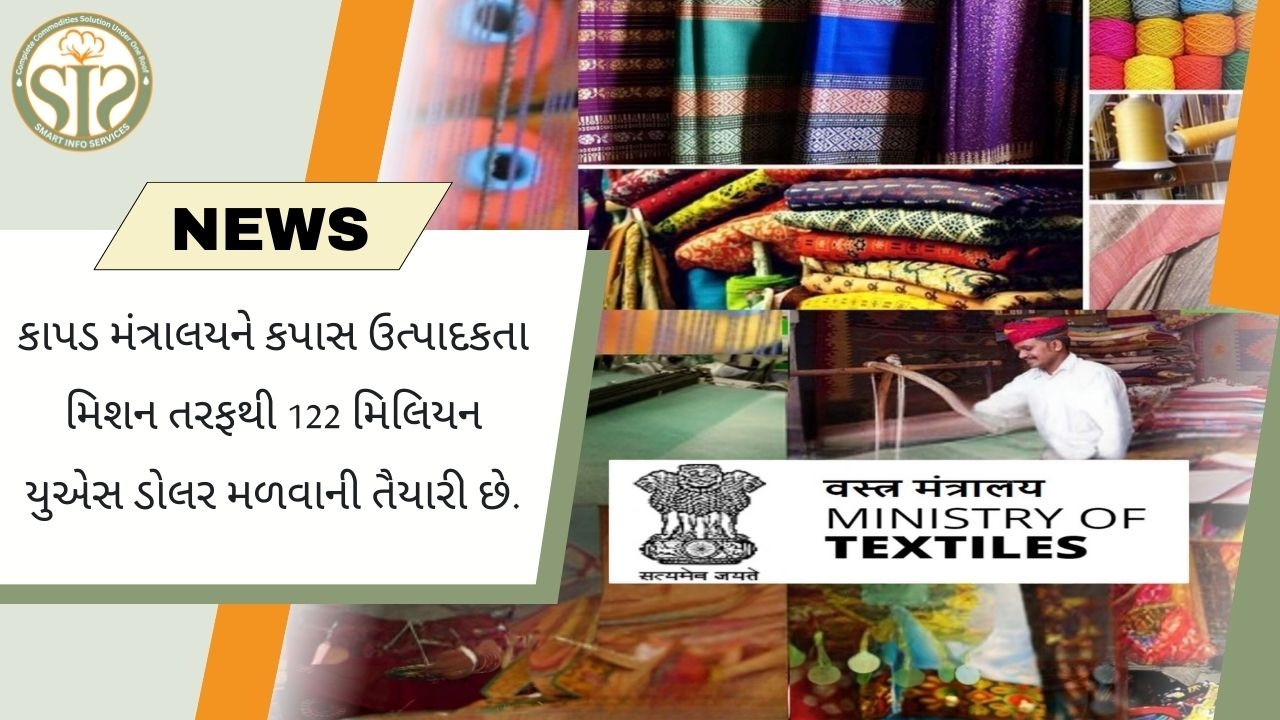
કાપડ મંત્રાલયને કપાસ ઉત્પાદકતા મિશન માટે $122 મિલિયનનું પ્રોત્સાહન મળશેઉદ્યોગ સૂત્રોના જણાવ્યા અનુસાર, કાપડ મંત્રાલયને ભારત સરકારના નવા કપાસ ઉત્પાદકતા મિશન તરફથી આશરે ₹1,100 કરોડ (US$122 મિલિયન) ની ફાળવણી મળવાની તૈયારી છે. આ પહેલનો હેતુ દેશની કાપડ મૂલ્ય શૃંખલાને મજબૂત બનાવવાનો છે. આ ફાળવણી મિશનના કુલ પ્રસ્તાવિત અંદાજે ₹6,000 કરોડ (US$668 મિલિયન) બજેટના 20% થી વધુનું પ્રતિનિધિત્વ કરે છે.આ ભંડોળ પાંચ વર્ષના કપાસ ઉત્પાદકતા મિશનમાંથી આવે છે, જેની જાહેરાત કેન્દ્રીય બજેટ 2025-26 માં ભારતના ઘટતા કપાસ ઉત્પાદન અને ગુણવત્તાના મુદ્દાઓને સંબોધવા અને દેશના કાપડ ક્ષેત્રને પુનર્જીવિત કરવા માટે કરવામાં આવી હતી. આ યોજના હેઠળ, કુલ ખર્ચનો મોટો હિસ્સો કૃષિ સંશોધન અને ઉત્પાદનમાં સામેલ એજન્સીઓને ફાળવવામાં આવે છે, પરંતુ કાપડ મંત્રાલયે લણણી પછી અને પ્રક્રિયા પ્રવૃત્તિઓ માટે મોટો હિસ્સો મેળવવા માટે વાટાઘાટો કરી છે.ચર્ચાઓથી પરિચિત અધિકારીઓના જણાવ્યા મુજબ, મંત્રાલય આ ભંડોળનો ઉપયોગ જિનિંગ અને પ્રેસિંગ સુવિધાઓને આધુનિક બનાવવા, લિન્ટ ગુણવત્તા નિયંત્રણમાં સુધારો કરવા અને કપાસની ગાંસડીઓના સંચાલનમાં સુધારો કરવા માટે કરશે જેથી ઉચ્ચ ગુણવત્તાવાળા કાચા માલ કાપડ મિલો સુધી પહોંચે. આ પગલાંનો ઉદ્દેશ્ય પ્રદૂષણ અને ખામીઓને ઘટાડવાનો છે જે હાલમાં સ્થાનિક અને નિકાસ બજારોમાં સ્પર્ધાત્મકતાને નબળી પાડે છે.નિષ્ણાતો કહે છે કે ભારતમાં કપાસનું ઉત્પાદન સતત ઘણી સીઝનથી ઘટ્યું છે, અને પ્રતિ હેક્ટર ઉપજ વૈશ્વિક સરેરાશ કરતા નોંધપાત્ર રીતે ઓછું છે - જે પરિબળો કાપડ ઉદ્યોગ માટે કાચા માલના પુરવઠા પર દબાણ વધાર્યું છે. મિશનના સમર્થકો દલીલ કરે છે કે આ વલણને ઉલટાવી દેવા અને આયાતી કપાસ પર નિર્ભરતા ઘટાડવા માટે લણણી પછીના માળખામાં રોકાણ મહત્વપૂર્ણ છે.મિશનનો અમલ અને ભંડોળનું પ્રકાશન હજુ પણ અંતિમ કેબિનેટ મંજૂરી પર આધારિત છે, જે યોજનાની જાહેરાત થઈ ત્યારથી વિલંબિત છે. સરકારી પ્રતિનિધિઓએ કાર્યક્રમને અમલમાં મૂકવા માટે આંતર-મંત્રાલય સંકલનની જરૂરિયાત પર સતત ભાર મૂક્યો છે.મિશન પોતે કપાસની ઉત્પાદકતામાં સુધારો કરવા, વધારાના લાંબા મુખ્ય કપાસ સહિત ઉચ્ચ-મૂલ્યની જાતોની ખેતીને પ્રોત્સાહન આપવા અને ભારતના કાપડ નિકાસની સ્પર્ધાત્મકતાને મજબૂત કરવા માટે એક વ્યાપક સરકારી વ્યૂહરચનાનો એક ભાગ છે.વધુ વાંચો :- INR 05 પૈસા મજબૂત થઈને 89.93 પર ખુલ્યો.

રૂપિયો ૦૫ પૈસા વધીને ૮૯.૯૩/યુએસડી પર ખુલ્યો.મંગળવારે ભારતીય રૂપિયો ડોલર સામે ૮૯.૯૩ પર થોડો વધારે ખુલ્યો, જે સોમવારે ૮૯.૯૮ ના ઉચ્ચતમ સ્તર પર બંધ થયો હતો.વધુ વાંચો :- બાંગ્લાદેશ કાપડ અને ગાર્મેન્ટ સંસ્થાઓ સ્થાનિક યાર્ન પ્રોત્સાહનો પુનઃસ્થાપિત કરવા માંગે છે
બાંગ્લાદેશી કાપડ અને વસ્ત્ર સંગઠનો ઇચ્છે છે કે સ્થાનિક યાર્ન પરના પ્રોત્સાહનો ફરીથી લાગુ કરવામાં આવે.બાંગ્લાદેશના રેડીમેડ ગાર્મેન્ટ (RMG) નિકાસકારો અને ટેક્સટાઇલ મિલરોએ સ્થાનિક રીતે ઉત્પાદિત યાર્નના ઉપયોગ પર સરકારી રોકડ પ્રોત્સાહનોને પુનઃસ્થાપિત કરવા અને મજબૂત કરવા માટે સંયુક્ત રીતે હાકલ કરી છે, ચેતવણી આપી છે કે વર્તમાન નીતિ દેશની કાપડ-એપરલ સપ્લાય ચેઇન અને નિકાસ સ્પર્ધાત્મકતાની સ્થિરતાને જોખમમાં મૂકે છે.એક સંકલિત અપીલમાં, બાંગ્લાદેશ ગાર્મેન્ટ મેન્યુફેક્ચરર્સ એન્ડ એક્સપોર્ટર્સ એસોસિએશન (BGMEA), બાંગ્લાદેશ નીટવેર મેન્યુફેક્ચરર્સ એન્ડ એક્સપોર્ટર્સ એસોસિએશન (BKMEA) અને બાંગ્લાદેશ ટેક્સટાઇલ મિલ્સ એસોસિએશન (BTMA) ના નેતાઓએ નાણા મંત્રાલયને સ્થાનિક યાર્ન પર રોકડ પ્રોત્સાહન 5% પર પુનઃસ્થાપિત કરવા વિનંતી કરી છે. આ વિનંતી તાજેતરમાં પ્રોત્સાહનમાં 1.5% ના ઘટાડા બાદ કરવામાં આવી છે, જે બાંગ્લાદેશના ઓછામાં ઓછા વિકસિત દેશ (LDC) દરજ્જામાંથી બહાર નીકળવાના ભાગ રૂપે લાગુ કરવામાં આવી છે.ઉદ્યોગ પ્રતિનિધિઓએ જણાવ્યું હતું કે તીવ્ર કાપથી નિકાસકારો માટે ઇનપુટ ખર્ચમાં વધારો થયો છે અને પછાત જોડાણ કાપડ ક્ષેત્ર નબળું પડ્યું છે. તેઓએ દલીલ કરી હતી કે ઉચ્ચ પ્રોત્સાહન પુનઃસ્થાપિત કરવાથી સ્થાનિક મૂલ્યવર્ધનને વેગ મળશે, જે યુનાઇટેડ સ્ટેટ્સના પારસ્પરિક ટેરિફ ફ્રેમવર્ક સહિત ઉભરતા ટેરિફ શાસન હેઠળ સ્પર્ધાત્મકતા જાળવવા માટે વધુને વધુ મહત્વપૂર્ણ છે.24 ડિસેમ્બરના રોજ લખેલા પત્રમાં, BTMA ના પ્રમુખ શૌકત અઝીઝ રસેલે રશિયા-યુક્રેન અને ઇઝરાયલ-પેલેસ્ટાઇન સંઘર્ષોથી ઉદ્ભવતા ભૂ-રાજકીય અનિશ્ચિતતાઓ, ટાકાના મૂલ્યમાં ઘટાડો, ગેસ ટેરિફ અને મજૂર ખર્ચમાં નોંધપાત્ર વધારો અને ઉર્જા પુરવઠામાં સતત વિક્ષેપો સહિત આ ક્ષેત્ર પર સ્થાનિક અને વૈશ્વિક દબાણના સંયોજન પર પ્રકાશ પાડ્યો હતો. એસોસિએશને બાંગ્લાદેશ બેંક FE પરિપત્ર નંબર 28 હેઠળ નિકાસ રોકડ પ્રોત્સાહન સુવિધાને લંબાવવાની પણ માંગ કરી છે, જેમાં તેની સમાપ્તિ 31 ડિસેમ્બર 2025 થી 31 ડિસેમ્બર 2028 સુધી ખસેડવાનો પ્રસ્તાવ મૂક્યો છે.નિકાસકારોએ સ્થાનિક યાર્ન ઉત્પાદનને પુનર્જીવિત કરવા અને સસ્તી આયાત, ખાસ કરીને ભારતમાંથી ઉદ્ભવતા સ્પર્ધાત્મક ગેરફાયદાનો સામનો કરવા માટે સ્પિનિંગ મિલો માટે 10% સીધી પ્રોત્સાહનનો પ્રસ્તાવ મૂક્યો છે. સ્થાનિક મિલો મોટા પ્રમાણમાં વેચાયેલી ઇન્વેન્ટરીથી ઝઝૂમી રહી હોવાના અહેવાલ છે, જેના કારણે ઘણી મિલો ઉત્પાદન ઘટાડીને સ્થાપિત ક્ષમતાથી નીચે કામ કરવા મજબૂર થઈ રહી છે.ઉદ્યોગના નેતાઓએ ચેતવણી આપી હતી કે અર્થપૂર્ણ પ્રોત્સાહનોની પુનઃસ્થાપના વિના, બેકવર્ડ લિંકેજ ઉદ્યોગ વધુ નબળો પડી શકે છે, જે RMG ઉત્પાદકોને યાર્ન પુરવઠામાં વિક્ષેપ પાડી શકે છે. એકસાથે, કાપડ અને વસ્ત્ર ક્ષેત્રો બાંગ્લાદેશની કુલ નિકાસ કમાણીમાં લગભગ 85% હિસ્સો ધરાવે છે અને વિદેશી હૂંડિયામણ જાળવી રાખવામાં મહત્વપૂર્ણ ભૂમિકા ભજવે છે.હિસ્સેદારોએ એ પણ નિર્દેશ કર્યો છે કે વિશ્વ વેપાર સંગઠનના નિયમો ગ્રેજ્યુએટેડ અર્થતંત્રોને નિર્ધારિત ગ્રેસ પીરિયડ માટે સંક્રમણ સહાય પગલાં જાળવવાની મંજૂરી આપે છે. તેમણે એવા સમયે રોકડ પ્રોત્સાહનો લગભગ સંપૂર્ણપણે પાછી ખેંચવાની બાંગ્લાદેશની યોજનાઓ પાછળના તર્ક પર પ્રશ્ન ઉઠાવ્યો જ્યારે સ્પર્ધાત્મક કાપડ-નિકાસ કરનારા દેશો તેમના ઉદ્યોગોને સરકારી સહાય આપવાનું ચાલુ રાખે છે.નાણાકીય વર્ષના અંત નજીક આવતાની સાથે, નિકાસકારો અને મિલરો સરકારના પ્રતિભાવ પર નજીકથી નજર રાખી રહ્યા છે, પ્રોત્સાહન માળખાને નિકાસ વૃદ્ધિ ટકાવી રાખવા અને બાંગ્લાદેશના ઔદ્યોગિક આધારને મજબૂત બનાવવા માટે નિર્ણાયક પરિબળ તરીકે જોઈ રહ્યા છે.વધુ વાંચો:- ડોલર સામે રૂપિયો 05 પૈસા ઘટીને 89.98 પર બંધ થયો

સોમવારે, ભારતીય રૂપિયો 89.98 પર બંધ થયો, જ્યારે સવારે તે 89.93 પર ખુલ્યો.બજાર બંધ સમયે, સેન્સેક્સ 345.91 પોઈન્ટ અથવા 0.41 ટકા ઘટીને 84,695.54 પર બંધ થયો અને નિફ્ટી 100.2 પોઈન્ટ અથવા 0.38 ટકા ઘટીને 25,942.10 પર બંધ થયો. લગભગ 1395 શેર વધ્યા, 2595 શેર ઘટ્યા અને 144 શેર યથાવત રહ્યા.વધુ વાંચો :- ભારતીય કોટન યાર્નની આવકમાં નાણાકીય વર્ષ 26 ના બીજા છ મહિનામાં ટેરિફની અસર: ICRA

ICRA: નાણાકીય વર્ષ 26 ના બીજા છ મહિનામાં કોટન યાર્ન પર ટેરિફ અસર હળવી થશેFY26 ના પહેલા છ મહિનામાં સ્થિર રહ્યા પછી, ભારતીય કોટન સ્પિનર્સ પર યુએસ ટેરિફની અસરથી બીજા છ મહિનામાં કોટન યાર્નની આવકમાં ઘટાડો થવાની ધારણા છે, ICRA એ જણાવ્યું.કોટન સ્પિનર્સની આવકમાં નાણાકીય વર્ષ 26 માં 4-6 ટકાનો ઘટાડો થવાનો અંદાજ છે અને માર્જિન સંકોચન 50-100 bps રહેવાની શક્યતા છે.કપાસના ભાવમાં ઘટાડો આ અસરને અમુક હદ સુધી સરભર કરશે તેવી શક્યતા છે.ક્ષમતા નિર્માણમાં નાણાકીય વર્ષ 2025-26 (FY26) ના પ્રથમ છ મહિનામાં સ્થિર રહ્યા પછી, ભારતીય કોટન સ્પિનર્સ પર યુએસ ટેરિફની અસરથી બીજા છ મહિનામાં કોટન યાર્નની આવકમાં ઘટાડો થવાની ધારણા છે, ICRA અનુસાર.કોટન સ્પિનર્સની આવકમાં નાણાકીય વર્ષ 26 માં 4-6 ટકાનો ઘટાડો થવાનો અંદાજ છે અને માર્જિન સંકોચન થવાની શક્યતા છે. ૫૦-૧૦૦ બેસિસ પોઈન્ટ (બીપીએસ) હશે. કપાસના ભાવમાં ઘટાડો થવાથી અસરને અમુક હદ સુધી ઘટાડી શકાય તેવી અપેક્ષા છે.યુનાઇટેડ સ્ટેટ્સ સાથે ચાલી રહેલી ટેરિફ-સંબંધિત વાટાઘાટોની આસપાસના કોઈપણ સકારાત્મક વિકાસથી અસરને અમુક હદ સુધી ઘટાડી શકાય છે, એમ મૂડીઝ રેટિંગ્સ સંલગ્ન સંસ્થાએ 'ઇન્ડિયન કોટન સ્પિનિંગ ઇન્ડસ્ટ્રી: ટ્રેન્ડ્સ એન્ડ આઉટલુક' શીર્ષકવાળા અહેવાલમાં જણાવ્યું છે.નાણાકીય વર્ષ 25 માં સ્થાનિક યાર્ન વપરાશમાં વાર્ષિક ધોરણે 2 ટકાનો વધારો જોવા મળ્યા પછી, ભારતીય કોટન સ્પિનિંગ ઉદ્યોગ, સ્થિર સ્થાનિક માંગ અને ભારતીય વસ્ત્ર નિકાસ પર યુનાઇટેડ સ્ટેટ્સ દ્વારા લાદવામાં આવેલા પારસ્પરિક અને દંડાત્મક ટેરિફના મિશ્રણ વચ્ચે નાણાકીય વર્ષ 26 માં પડકારજનક તબક્કામાં પ્રવેશ કરી રહ્યો છે.અસર ઘટાડવા માટે, ભારતીય વસ્ત્ર નિકાસકારો નોંધપાત્ર ડિસ્કાઉન્ટ આપી રહ્યા છે, જે સમગ્ર મૂલ્ય શૃંખલા (સ્પિનર્સ સહિત) માં શોષાઈ રહ્યા છે.ડિસેમ્બર 2025 સુધી ભારતમાં કપાસની આયાત પર આયાત ડ્યુટી મુક્તિ અને વિસ્કોસ સ્ટેપલ ફાઇબર (VSF) અને કેટલાક યાર્ન અને પોલિએસ્ટર ફાઇબર બંને માટે ગુણવત્તા નિયંત્રણ ઓર્ડર પર તાજેતરમાં છૂટછાટ માનવસર્જિત ફાઇબર (MMF) યાર્ન ઉત્પાદકો માટે કાચા માલના ભાવમાં ઘટાડો થવાની સંભાવના છે, તે જણાવ્યું હતું."જ્યારે આ રેડીમેડ ગાર્મેન્ટ ઉત્પાદકોને સ્પર્ધાત્મક ભાવે કાચા માલની ઉપલબ્ધતામાં ટેકો આપે છે, ત્યારે તે સ્થાનિક MMF યાર્ન ઉત્પાદકોને આયાત સપ્લાયર્સ પાસેથી સ્પર્ધામાં મૂકે છે," ICRA એ નોંધ્યું.નવેમ્બર 2025 માં સ્થાનિક કપાસના રેસાના ભાવમાં માસિક (MoM) લગભગ 3 ટકાનો ઘટાડો થયો હતો. સરેરાશ કપાસના યાર્નના ભાવમાં 4 ટકાનો ઘટાડો થયો હતો.આના પરિણામે નવેમ્બર 2025 માં યોગદાનનું સ્તર ₹96/કિલો થયું હતું જે નાણાકીય વર્ષ 26 ના પહેલા છ મહિનામાં ₹103 પ્રતિ કિગ્રા હતું. ICRA એ અપેક્ષા રાખી છે કે નાણાકીય વર્ષ 26 ના બીજા છ મહિનામાં પ્રાપ્તિમાં મધ્યમ ઘટાડાને કારણે નાણાકીય વર્ષ 26 માટે યોગદાન સ્તર ₹98-100 પ્રતિ કિલો પર સ્થિર થવાની સંભાવના છે.ICRA ના 13 કંપનીઓના નમૂના સમૂહ, જે ઉદ્યોગની આવકના 25-30 ટકા હિસ્સો ધરાવે છે, નાણાકીય વર્ષ 26 માં વાર્ષિક ધોરણે આવકમાં 4-6 ટકાનો ઘટાડો નોંધાવે તેવી અપેક્ષા છે.વધુમાં, નાણાકીય વર્ષ 26 માં માર્જિન 50-100 બેસિસ પોઈન્ટ ઘટવાની અપેક્ષા છે, મુખ્યત્વે H2 માં અપેક્ષિત નબળા પ્રદર્શનને કારણે.ઉપલબ્ધ ક્ષમતાઓને ધ્યાનમાં રાખીને, નાણાકીય વર્ષ 26 માં ક્ષેત્રમાં ક્ષમતા નિર્માણમાં સામગ્રી વિસ્તરણની અપેક્ષા નથી, ICRA એ ઉમેર્યું.વધુ વાંચો :- રૂપિયો 08 પૈસા ઘટીને 89.93/USD પર ખુલ્યો.

રૂપિયો 08 પૈસા ઘટીને 89.93/ડોલર પર ખુલ્યો.સોમવારે ભારતીય રૂપિયો 89.93/ડોલર પર ખુલ્યો, જે તેના અગાઉના બંધ 89.85 ની સરખામણીમાં હતો.વધુ વાંચો :- TASMA એ નાણામંત્રીને ડ્યુટી-ફ્રી કપાસ આયાત સુવિધા લંબાવવા વિનંતી કરી છે.

TASMA એ નાણામંત્રીને ડ્યુટી-ફ્રી કપાસ આયાત કાર્યક્રમ લંબાવવા વિનંતી કરી છે.આનાથી દેશની મિલોને કુદરતી રેસાની અછત દૂર કરવામાં અને સ્પર્ધાત્મક રહેવામાં મદદ મળશે.તમિલનાડુ સ્પિનિંગ મિલ્સ એસોસિએશન (TASMA) એ નાણામંત્રી નિર્મલા સીતારમણને 31 ડિસેમ્બર, 2025 પછી ડ્યુટી-ફ્રી કપાસ આયાત સુવિધા લંબાવવા વિનંતી કરી છે, કારણ કે ઓછા ઉત્પાદનને કારણે દેશમાં કપાસની અછતનો સામનો કરવો પડી શકે છે.TASMA ના પ્રમુખ એ.પી. અપ્પુકુટ્ટીએ નાણામંત્રીને લખેલા પત્રમાં જણાવ્યું હતું કે ડ્યુટી-ફ્રી આયાત લંબાવવાથી કપાસની ઉપલબ્ધતા સરળ થઈ શકે છે અને મિલોને વૈશ્વિક બજારમાં તેમના ઉત્પાદનોની સ્પર્ધાત્મક કિંમત નક્કી કરવામાં મદદ મળી શકે છે.30 સપ્ટેમ્બર, 2025 થી 31 ડિસેમ્બર, 2025 સુધી ડ્યુટી-ફ્રી આયાત સુવિધા લંબાવવાના સરકારના પગલાનું સ્વાગત કરતા, તેમણે કહ્યું કે આનાથી મિલોને 11 ટકા ઓછા ભાવે કપાસની આયાત કરવામાં અને વૈશ્વિક બજારમાં સ્પર્ધાત્મક ભાવે તેમના ઉત્પાદનો ઓફર કરવામાં મદદ મળશે.અમેરિકા દ્વારા તમામ આયાત પર ૫૦ ટકા ટેરિફ લાદવાને કારણે ઉદ્યોગને ગંભીર પરિસ્થિતિનો સામનો કરવો પડ્યો ત્યારે આ નિર્ણય મહત્વપૂર્ણ સાબિત થયો.નીચા ઉત્પાદન અંદાજકપાસ ઉત્પાદન અને વપરાશ સમિતિ, જેણે આ સિઝન (ઓક્ટોબર ૨૦૨૫-સપ્ટેમ્બર ૨૦૨૬) માટે કપાસનું ઉત્પાદન ૨૯૨.૧૫ લાખ ગાંસડી (૧૭૦ કિલો) હોવાનો અંદાજ મૂક્યો છે, તેને ટાંકીને, અપ્પુકુટ્ટીએ કહ્યું કે સ્થાનિક ઉપલબ્ધતા છેલ્લા કેટલાક વર્ષોની તુલનામાં સૌથી ઓછી હશે.ડ્યુટી-મુક્ત આયાતમાં વધુ વધારો મિલોને ફાયદો કરાવશે, ખાસ કરીને એવા સમયે જ્યારે કપાસની આવક ઓછી હોવાનું જાણવા મળે છે.વધુ વાંચો :- ચીનના શિનજિયાંગે 2025 માં કપાસનું રેકોર્ડ ઉત્પાદન હાંસલ કર્યું.

શિનજિયાંગે 2025 માં કપાસ ઉત્પાદનનો રેકોર્ડ બનાવ્યો29 સપ્ટેમ્બર, 2025 ના રોજ, ઉત્તરપશ્ચિમ ચીનના શિનજિયાંગ ઉઇગુર સ્વાયત્ત પ્રદેશના બેઇંગોલિનના મોંગોલિયન સ્વાયત્ત પ્રીફેક્ચરમાં કપાસના ખેતરોમાં કાપણી મશીનો કાર્યરત હતા.રાષ્ટ્રીય આંકડા બ્યુરો અનુસાર, આ વર્ષે આ પ્રદેશે 6.165 મિલિયન ટન કપાસનું ઉત્પાદન કર્યું હતું, જે રાષ્ટ્રીય કુલ પાકના 92.8 ટકા જેટલું છે.શિનજિયાંગમાં કપાસનું વાવેતર વિસ્તાર વધીને આશરે 38.88 મિલિયન મ્યુ (લગભગ 2.59 મિલિયન હેક્ટર) થયો, જે ગયા વર્ષ કરતા 5.9 ટકા વધુ છે, અને સરેરાશ ઉપજ 158.6 કિલોગ્રામ પ્રતિ મ્યુ હતી, જે ગયા વર્ષ કરતા 2.4 ટકા વધુ છે.નિષ્ણાતો કહે છે કે સમગ્ર વધતી મોસમ દરમિયાન અનુકૂળ હવામાન પરિસ્થિતિઓએ ઉત્પાદનમાં વધારો કરવામાં મદદ કરી, જ્યારે મજબૂત નીતિ સમર્થન, કૃષિ ટેકનોલોજીમાં પ્રગતિ અને સુધારેલ પ્રતિભા વિકાસએ પણ ઉચ્ચ ઉત્પાદકતામાં ફાળો આપ્યો.શિનજિયાંગમાં કપાસની ખેતી અને લણણીનો એકંદર યાંત્રિકીકરણ દર આ વર્ષે 97.5 ટકાથી વધુ થવાની ધારણા છે, જે મોટા પાયે, યાંત્રિક અને બુદ્ધિશાળી કપાસ ઉત્પાદનને વધુ પ્રોત્સાહન આપશે.શિનજિયાંગ ચીનનો સૌથી મોટો કપાસ ઉત્પાદક પ્રદેશ રહ્યો છે. દેશમાં કપાસનું ઉત્પાદન 2024 થી 7.7 ટકા વધીને 2025 માં 6.641 મિલિયન ટન થવાનો અંદાજ છે.વધુ વાંચો :- કાપડ મંત્રાલયને ગુણવત્તા અને ઉત્પાદનને પ્રોત્સાહન આપવા માટે કોટન પ્રોડક્ટિવિટી મિશનમાંથી 1,100 કરોડ રૂપિયા મળી શકે છે.
આ અઠવાડિયે, કોટન કોર્પોરેશન ઓફ ઈન્ડિયા (CCI) એ 2024-2025 માટે તેની કપાસ ખરીદીનો 94.28% હિસ્સો ઓનલાઈન હરાજી દ્વારા વેચી દીધો, જ્યારે તેની વર્તમાન કિંમતો જાળવી રાખી.કાપડ મંત્રાલયને કોટન પ્રોડક્ટિવિટી મિશનમાંથી ₹1,100 કરોડથી વધુ મળવાની તૈયારી છે, જે યોજનાના કુલ ₹6,000 કરોડ બજેટના આશરે 22 ટકા છે. આ ફાળવણી આ વર્ષની શરૂઆતમાં કેન્દ્રીય બજેટમાં જાહેર કરાયેલી પાંચ વર્ષની યોજનામાંથી આવે છે, જે ભારતના સંઘર્ષ કરી રહેલા કપાસ ક્ષેત્રને સુધારવા માટે રચાયેલ છે. મંત્રાલયના ભંડોળનો ઉપયોગ ફેક્ટરીઓને આધુનિક બનાવવા, લિન્ટ ગુણવત્તા સુધારવા અને ખેતરોથી ફિનિશ્ડ ફેબ્રિક સુધી કાપડ શૃંખલાને મજબૂત બનાવવા માટે કરવામાં આવશે. ભંડોળ હજુ પણ અંતિમ કેબિનેટ મંજૂરીની રાહ જોઈ રહ્યું છે, જે લગભગ એક વર્ષ વિલંબિત છે.ભારતની કપાસની સમસ્યા વાસ્તવિક છે અને વધુ ખરાબ થઈ રહી છે. ઉત્પાદન સતત ત્રણ વર્ષથી ઘટી રહ્યું છે, જે 2023-24માં 32.52 મિલિયન ગાંસડીથી ઘટીને 2025-26માં 29.22 મિલિયન ગાંસડી થયું છે. ચાર વર્ષમાં કપાસના વાવેતર વિસ્તારમાં 2 મિલિયન હેક્ટરનો ઘટાડો થયો છે. ભારતમાં કપાસનું ઉત્પાદન પ્રતિ હેક્ટર 5 ક્વિન્ટલથી નીચે અટકી ગયું છે, જ્યારે વિશ્વ સરેરાશ 9 ક્વિન્ટલ છે અને યુનાઇટેડ સ્ટેટ્સને પ્રતિ હેક્ટર 10 ક્વિન્ટલ મળે છે. સરકાર માને છે કે આ નવું ભંડોળ આ ઘટાડાને ઉલટાવી શકે છે અને ભારતને કાપડ ક્ષેત્રમાં વૈશ્વિક સ્પર્ધાત્મકતા પાછી મેળવવામાં મદદ કરી શકે છે.₹6,000 કરોડનું મિશન બજેટ કેવી રીતે વહેંચવામાં આવશેકપાસ ઉત્પાદકતા મિશન ભંડોળ વિવિધ સરકારી સંસ્થાઓમાં તેમની ભૂમિકાઓના આધારે વહેંચવામાં આવી રહ્યું છે. કૃષિ અને ખેડૂત કલ્યાણ વિભાગને સૌથી મોટો હિસ્સો, ₹4,000 કરોડથી વધુ મળે છે, જે કુલ ભંડોળના આશરે 69 ટકા છે. ભારતીય કૃષિ સંશોધન પરિષદને ₹600 કરોડથી ઓછો હિસ્સો મળે છે, જે લગભગ 9 ટકા છે. કાપડ મંત્રાલયને કાપડ સંબંધિત બાબતોને સંભાળવા માટે ₹1,100 કરોડ મળે છે.આ વિભાગને કારણે સરકારમાં કેટલાક મતભેદ થયા છે. નાગપુરમાં ICAR ના કોટન રિસર્ચ સેન્ટરના વૈજ્ઞાનિકોએ અહેવાલ આપ્યો છે કે તેમની સંસ્થાને મિશનના તમામ લક્ષ્યોને પ્રાપ્ત કરવાનું કામ સોંપવામાં આવ્યું છે, પરંતુ તે કરવા માટે ખૂબ જ ઓછું ભંડોળ મળી રહ્યું છે. ICAR સમગ્ર મિશન ડિઝાઇન કરવા અને લક્ષ્યો નક્કી કરવા માટે જવાબદાર છે, પરંતુ તેમની પાસે સંસાધનોનો અભાવ છે. કાપડ મંત્રાલયે ₹1,100 કરોડ મેળવવા માટે સખત મહેનત કરી કારણ કે ખર્ચ વિભાગે શરૂઆતમાં વધુ ફાળવણી કરવાનો ઇનકાર કર્યો હતો. હવે જ્યારે તેમની પાસે આ પૈસા છે, ત્યારે મંત્રાલય ભંડોળનો ઉપયોગ જિનિંગ ફેક્ટરીઓના વિસ્તરણ, લિન્ટ ગુણવત્તા સુધારવા અને વધુ સારી ગાંસડીઓનું ઉત્પાદન કરવા માટે કરવાની યોજના ધરાવે છે.કાપડ મંત્રાલય ₹1,100 કરોડનું શું કરશે?કાપડ મંત્રાલય ભારતના કપાસથી કાપડ શૃંખલામાં એક મોટી સમસ્યાનો સામનો કરી રહ્યું છે. ખેડૂતો ખેતરોમાં કપાસ ઉગાડે છે, પરંતુ કાપડ મિલોને નબળી ગુણવત્તાનો કાચો માલ મળે છે. ઉપજ ઘટવાથી, લિન્ટ ગુણવત્તામાં પણ ઘટાડો થાય છે. સુધારેલ જિનિંગ સુવિધાઓ, યોગ્ય ગાંસડી હેન્ડલિંગ અને સુધારેલ ગુણવત્તા ચકાસણી કાપડ ફેક્ટરીઓ સુધી પહોંચતા માલમાં નોંધપાત્ર ફરક લાવી શકે છે. ₹1,100 કરોડ આ લણણી પછીની કામગીરી પર ધ્યાન કેન્દ્રિત કરશે, જ્યાં ભેળસેળ અને નબળી હેન્ડલિંગ કપાસની ગુણવત્તાને બગાડે છે.આ ભંડોળ ભારતના મોટા કાપડ લક્ષ્યોને પણ સમર્થન આપે છે, જેમાં 2030 સુધીમાં ₹250 બિલિયનના ઉદ્યોગનું કદ હાંસલ કરવાનો સમાવેશ થાય છે, જેમાંથી ₹100 બિલિયન નિકાસમાંથી આવશે. કપાસ ભારતના પરંપરાગત કાપડ વ્યવસાયનો મુખ્ય ભાગ છે, જે લાખો લોકોને રોજગારી આપે છે અને વિદેશમાં શિપમેન્ટ ચલાવે છે. વિશ્વસનીય ઉચ્ચ-ગુણવત્તાવાળા સ્થાનિક કપાસ વિના, મિલોને મોંઘા વિદેશી ફાઇબર ખરીદવા અથવા ઓછી ગુણવત્તાવાળા સ્થાનિક કપાસનો ઉપયોગ કરવાની ફરજ પડે છે. બંને પરિસ્થિતિઓ ભારતની સ્પર્ધાત્મકતાને નુકસાન પહોંચાડે છે. મંત્રાલયનું ભંડોળ પાયાના માળખાગત સમસ્યાઓનું નિરાકરણ કરે છે જેનો ઉકેલ ફક્ત ખેડૂત-સ્તરના સુધારા દ્વારા જ શક્ય નથી.કાપડ મંત્રાલયે સમગ્ર આયોજન પ્રક્રિયા દરમિયાન દલીલ કરી હતી કે તેને મુખ્ય ભાગીદાર બનવાની જરૂર છે. અધિકારીઓએ જણાવ્યું હતું કે કપાસની ગુણવત્તા ફક્ત ખેડૂતો શું ઉગાડે છે તેના પર જ નહીં, પરંતુ જિનિંગ, પ્રેસિંગ અને પ્રમાણપત્ર તબક્કામાં ફાઇબરને કેવી રીતે સારવાર આપવામાં આવે છે તેના પર પણ આધાર રાખે છે. આ તબક્કે કાપડ ઉદ્યોગનું જ્ઞાન મહત્વપૂર્ણ છે. આ દલીલથી નાણા પંચને ખાસ કરીને કાપડ પ્રવૃત્તિઓ માટે મંત્રાલયને ₹1,100 કરોડ ફાળવવા માટે રાજી કરવામાં આવ્યા.વધુ વાંચો :- કોટન કોર્પોરેશન ઓફ ઈન્ડિયા (CCI) એ આ અઠવાડિયે તેના ભાવ યથાવત રાખ્યા અને ઈ-ઓક્શન દ્વારા 2024-25 ની તેની કપાસ ખરીદીના 94.28% વેચ્યા