

भारतीय रुपया अमेरिकी डॉलर के मुकाबले 01 पैसे गिरकर 89.98 पर खुलागुरुवार को भारतीय रुपया पिछले बंद भाव 89.97 के मुकाबले 89.98 प्रति डॉलर पर खुला।और पढ़ें :- कॉटन एसोसिएशन ने 11% इंपोर्ट ड्यूटी हटाने की मांग की
कॉटन एसोसिएशन ऑफ़ इंडिया ने सरकार से कच्चे कॉटन के इंपोर्ट पर 11% की इंपोर्ट ड्यूटी हटाने की अपील कीमुंबई: इंडस्ट्री की सबसे बड़ी संस्था, कॉटन एसोसिएशन ऑफ़ इंडिया (CAI) ने केंद्र से मदद करने और पूरे कॉटन और टेक्सटाइल वैल्यू चेन को बचाने के लिए कॉटन पर मौजूदा 11 परसेंट इंपोर्ट ड्यूटी हटाने की अपील की है।CAI के प्रेसिडेंट विनय कोटक ने मंगलवार को कहा, “कम घरेलू प्रोडक्टिविटी और ज़्यादा MSP की वजह से मौजूदा मार्केट की चुनौतियों ने भारतीय कॉटन को दूसरे कॉम्पिटिटिव इंटरनेशनल ग्रोथ के मुकाबले महंगा बना दिया है। भारत में कॉटन इंपोर्ट पर लगाई जाने वाली 11% इंपोर्ट ड्यूटी न सिर्फ कीमतों को बिगाड़ती है बल्कि हमारी टेक्सटाइल इंडस्ट्री की मुश्किलों को भी बढ़ाती है।”उन्होंने कहा, “टेक्सटाइल इंडस्ट्री को बेहतर बनाने का एकमात्र तरीका कच्चे माल की सस्टेनेबल और कॉम्पिटिटिव सप्लाई उपलब्ध कराना है। किसान पहले से ही MSP ऑपरेशन के ज़रिए सुरक्षित हैं। अब 11% इंपोर्ट ड्यूटी हटाने के उपाय से टेक्सटाइल इंडस्ट्री को भी बचाने का समय है। इससे टेक्सटाइल/स्पिनिंग मिलों को कॉम्पिटिटिव कच्चा माल मिलेगा।” उनके अनुसार, यूनाइटेड स्टेट्स के टैरिफ की अनिश्चितता और यूरोप में मंदी के हालात की वजह से इंडस्ट्री को नुकसान हो रहा है।उन्होंने कहा, “अगर टेक्सटाइल इंडस्ट्री को अभी सपोर्ट नहीं किया गया, तो इससे तुरंत बेरोज़गारी, लोन में डिफ़ॉल्ट और पूरी टेक्सटाइल वैल्यू चेन में बैड डेट्स बढ़ सकते हैं।”टेक्सटाइल मिनिस्ट्री का 2030 तक टेक्सटाइल प्रोडक्ट्स के लिए $100 बिलियन का एक्सपोर्ट करने का टारगेट तभी मुमकिन होगा जब मैन्युफैक्चरर्स को कॉम्पिटिटिव रॉ मटेरियल मिलेगा।कोटक ने कहा, “Covid-19 महामारी के दौरान खास हालात में 11% इंपोर्ट ड्यूटी लगाई गई थी। उससे पहले भारत में आमतौर पर कॉटन पर कोई इंपोर्ट ड्यूटी नहीं थी और किसानों पर इसका कोई बुरा असर नहीं पड़ा था।” उन्होंने बताया: “इस मौसम में बेमौसम बारिश की वजह से भारतीय कॉटन की क्वालिटी को बहुत नुकसान हुआ है। इसलिए, हमारी टेक्सटाइल मिलों को खरीदारों की क्वालिटी की ज़रूरत पूरी करने के लिए कॉटन इंपोर्ट करने के लिए मजबूर होना पड़ेगा। अगर 11% इंपोर्ट ड्यूटी नहीं हटाई गई, तो भारतीय टेक्सटाइल सामान मुकाबले में नहीं टिक पाएंगे और खरीदार वियतनाम, बांग्लादेश, पाकिस्तान और दूसरे बाज़ारों में चले जाएंगे। इससे लंबे समय तक नुकसान हो सकता है और दुनिया के कॉटन टेक्सटाइल बाज़ार में भारत का हिस्सा कम हो सकता है।”कोटक ने कहा कि सरकार कई देशों के साथ FTA को फाइनल करने के लिए बहुत मेहनत कर रही है।उन्होंने प्रधानमंत्री नरेंद्र मोदी और कॉमर्स और इंडस्ट्री मिनिस्टर पीयूष गोयल की कोशिशों की तारीफ़ करते हुए कहा, “हम USA टैरिफ़ सॉल्यूशन पर भी पहुँच सकते हैं। इन इवेंट्स से हमारी टेक्सटाइल इंडस्ट्री को यार्न और दूसरे टेक्सटाइल प्रोडक्ट्स को अच्छी मात्रा में एक्सपोर्ट करने और टेक्सटाइल के वर्ल्ड ट्रेड में इंडिया का शेयर बढ़ाने का अच्छा मौका मिलेगा। ये फ़ायदे तभी मिल सकते हैं जब इंडिया में रॉ कॉटन के इम्पोर्ट पर 11% ड्यूटी हटा दी जाए और इस तरह कॉम्पिटिटिव रेट्स पर रॉ मटीरियल मिल सके।”उन्होंने आगे कहा, “असल में, ‘चाइना प्लस वन’ पॉलिसी का मेगा ट्रेंड और अस्थिर पॉलिटिकल सिचुएशन और US डॉलर्स की कमी की वजह से बांग्लादेश से सोर्सिंग का पोटेंशियली शिफ्ट होना, इंडियन टेक्सटाइल इंडस्ट्री के लिए आगे बढ़ने और एक्सपोर्ट बढ़ाने का एक सुनहरा मौका है, बशर्ते 11% इम्पोर्ट ड्यूटी हटाकर हमारी टेक्सटाइल इंडस्ट्री को कॉम्पिटिटिव कॉटन मिल सके।”और पढ़ें :- रुपया 06 पैसे बढ़कर 89.97 प्रति डॉलर पर बंद हुआ
बुधवार को भारतीय रुपया 06 पैसे बढ़कर 89.97 प्रति डॉलर पर बंद हुआ, जबकि सुबह यह 90.03 पर खुला था।बंद होने पर, सेंसेक्स 275.01 पॉइंट या 0.32 प्रतिशत गिरकर 84,391.27 पर और निफ्टी 81.65 पॉइंट या 0.32 प्रतिशत गिरकर 25,758 पर था। लगभग 1830 शेयर बढ़े, 2186 शेयर गिरे, और 133 शेयर बिना बदले।और पढ़ें :- सोयाबीन के दाम गारंटीड प्राइस पार, सांगली में तेजी
सोयाबीन के दाम में तेजी, MSP पार करने की संभावनासांगली बाजार में सोयाबीन के भाव में हाल के दिनों में तेज उछाल देखने को मिला है। कम उत्पादन और बढ़ती मांग के चलते कीमतों में मजबूती आई है। बाजारों में आवक घटने के बावजूद खरीदारी बढ़ रही है, जिससे भाव ऊपर की ओर जा रहे हैं।अच्छी गुणवत्ता वाले सोयाबीन के दाम केवल दो दिनों में ₹1,000 तक बढ़ गए हैं, जबकि बीज गुणवत्ता वाले सोयाबीन में ₹1,500 तक की तेजी दर्ज की गई है। सोमवार को Sangli मंडी में सोयाबीन का भाव ₹4,500 प्रति क्विंटल तक पहुंच गया, जो कुछ दिन पहले ₹4,250 था।वित्त वर्ष 2025-26 के लिए सोयाबीन का न्यूनतम समर्थन मूल्य (MSP) ₹5,328 प्रति क्विंटल है। हालांकि वर्तमान बाजार भाव अभी MSP से नीचे हैं, लेकिन विशेषज्ञों का मानना है कि मौजूदा ट्रेंड जारी रहा तो कीमतें जल्द ही MSP स्तर को पार कर सकती हैं।कीमतों में तेजी के मुख्य कारण:सोयाबीन तेल की बढ़ती मांग के कारण प्रोसेसिंग इंडस्ट्री की खरीदारी में इजाफाइस साल खरीफ में कम बुवाई, जिससे उत्पादन घटाNational Agricultural Cooperative Marketing Federation of India (NAFED) द्वारा खरीद शुरू होने से बाजार को सपोर्टविशेषज्ञों ने किसानों को सलाह दी है कि वे बाजार की स्थिति को समझकर ही बिक्री का निर्णय लें, ताकि बेहतर कीमत का लाभ मिल सके।और पढ़ें :- अमेरिका की नज़र भारत के कपास बाजार पर
कपास किसानों की बढ़ती चुनौतियां, अमेरिका को भारत में नजर आ रहा बाजारभारत में कच्चे कपास के आयात पर पहले पांच फीसद मूल सीमा शुल्क, पांच फीसद कृषि अवसंरचना और विकास उपकर तथा इन दोनों पर दस फीसद सामाजिक कल्याण अधिभार, यानी कुल मिलाकर ग्यारह फीसद का सीमा शुल्क लगता था।फरवरी, 2021 में किसान आंदोलन के बाद देश के कपास किसानों के हित को ध्यान में रख कर यह शुल्क लगाया गया था। मगर अब सरकार ने कपड़ा उद्योग की मांग पर कच्चे कपास के आयात पर सभी सीमा शुल्क में 19 अगस्त, 2025 से छूट दे दी है।इस फैसले की सराहना देश के कपड़ा उद्योग ने तो की ही, अमेरिकी कृषि विभाग ने भी बाकायदा बयान जारी करके इसे महत्त्वपूर्ण कदम बताया और कहा कि इससे अमेरिकी कपास का भारत में निर्यात बढ़ेगा। इस निर्णय से भले ही अमेरिका को फायदा हो, लेकिन देश के किसान इससे आहत हैं।‘ग्लोबल ट्रेड रिसर्च इनिशिएटिव’ (जीटीआरआइ) के मुताबिक, आयात शुल्क में इस छूट का सबसे बड़ा लाभ निश्चित तौर पर अमेरिका को ही होने वाला है। भारत को कपास निर्यात करने वाला अमेरिका सबसे बड़ा देश है, और वहा कपास की नई फसल बाजार में जुलाई-अगस्त से आनी शुरू हो जाती है।महत्त्वपूर्ण बात यह है कि आयात शुल्क उस वक्त खत्म किया गया, जब भारतीय किसानों के कपास की नई उपज बाजार में आने ही वाली थी। देश में कपास की फसल अक्तूबर से सितंबर तक होती है। इसी दौरान किसानों को कपास के अच्छे दाम मिलने की उम्मीद होती है। अब विदेश से बड़े पैमाने पर कपास आने से घरेलू कपास की कीमतें गिर जाएंगी।सीमा शुल्क में छूट की अधिसूचना जारी होने के दिन भारतीय कपास निगम यानी ‘काटन कार्पोरेशन आफ इंडिया’ (सीसीआइ) ने कपास की कीमत 600 रुपए प्रति कैंडी (एक कैंडी- 356 किग्रा) कम कर दी और उसके दूसरे दिन फिर 500 रुपए प्रति कैंडी कम कर दी। इस तरह महज दस दिनों के भीतर ही कपास के न्यूनतम मूल्य में कुल 1700 रुपए प्रति कैंडी की कमी खुद सरकार की ओर से की गई।अमेरिका कपास उत्पादन में तीसरे स्थान परहालांकि, भारत दुनिया का दूसरा सबसे बड़ा कपास उत्पादक देश है और यहां घरेलू खपत कुल उत्पादन का औसतन 95 फीसद है। मगर यहां उच्च गुणवत्ता वाले या ज्यादा लंबे रेशे वाले कपास (ईएलएस) की पैदावार कम होती है और उसकी जरूरत को आयात के जरिए पूरा किया जाता है।अमेरिकी कृषि व्यापार निकाय काटन काउंसिल इंटरनेशनल (सीसीआइ) तो इस शुल्क को हटाने की मांग लंबे समय से कर रहा था। दरअसल, उच्च गुणवत्ता वाले या अति लंबे रेशे के कपास के आयात पर से ग्यारह फीसद शुल्क सरकार ने 20 फरवरी, 2024 से समाप्त कर दिया है, लेकिन इससे छोटे रेशे के कपास आयात पर शुल्क जारी था, जिसे इस वर्ष अगस्त में खत्म किया गया।इस कदम से सरकार अमेरिकी शुल्क की मार से भारतीय वस्त्र निर्यातकों के मुनाफे को तो कुछ हद तक सुरक्षित कर लेगी, लेकिन इसका खमियाजा देश के किसानों को भुगतना पड़ेगा। खासकर तब जब किसानों की आय दोगुनी करने का जोर-शोर से दावा किया जा रहा है।कपास किसानों का जिक्र करना सरकार भूल गईकपास से सीमा शुल्क हटाने को लेकर जारी बयान में कपड़ा निर्माताओं और उपभोक्ताओं के हितों की बात तो कही गई थी, लेकिन कपास किसानों का जिक्र करना सरकार भूल गई। दूसरी बार जारी बयान में कहा गया कि भारतीय कपास निगम लिमिटेड द्वारा संचालित न्यूनतम समर्थन मूल्य व्यवस्था के माध्यम से किसानों के हितों की रक्षा की जाती है, जो यह सुनिश्चित करती है कि किसानों को उनकी उत्पादन लागत से कम से कम पचास फीसद अधिक मूल्य प्राप्त हो।सरकार न्यूनतम समर्थन मूल्य का निर्धारण ए-2 एफएल फार्मूले के आधार पर करती है। इसके अनुसार, मध्यम रेशे के कपास का न्यूनतम समर्थन मूल्य वर्ष 2024-25 के लिए 7,121 रुपए प्रति कुंतल निर्धारित किया गया है। मगर किसान संगठनों की मांग है कि यह सी-2 फार्मूले के आधार पर निर्धारित किया जाना चाहिए, जिसके अनुसार यह मूल्य 10,075 रुपए प्रति कुंतल होना चाहिए। मालूम हो कि न्यूनतम समर्थन मूल्य के निर्धारण के लिए सी-2 का फार्मूला डा एमएस स्वामीनाथन ने सुझाया था।99 फीसद खरीफ फसल के रूप में होती है कपास की खेतीभारत में कपास की खेती मुख्यत: लगभग 99 फीसद खरीफ फसल के रूप में होती है, जबकि तमिलनाडु और उसके आसपास के दूसरे राज्यों के कुछ हिस्सों में यह रबी की फसल है। भारत में लगभग साठ लाख किसान परिवार कपास की खेती से अपनी आजीविका चलाते हैं। इसके अतिरिक्त 4-5 करोड़ दूसरे लोग भी इसके व्यापार से जुड़े हैं।यहां पिछले वर्ष कुल 114.47 लाख हेक्टेयर कृषि योग्य जमीन पर कपास की खेती की गई, जो पूरी दुनिया में कपास की खेती के रकबे 314.79 लाख हेक्टेयर का 36.36 फीसद है। रकबे के लिहाज से भारत पूरी दुनिया में पहले स्थान पर है और उत्पादन के मामले में चीन के बाद दूसरे स्थान पर है। मगर यहां प्रति हेक्टेयर कपास की पैदावार (437 किग्रा प्रति हेक्टेयर) विश्व की औसत पैदावार (833 किग्रा प्रति हेक्टेयर) से काफी कम है।इस तरह कपास का प्रति वर्ष औसत उत्पादन रहा 337 गांठें और न्यूनतम समर्थन मूल्य पर खरीद केवल 38 गांठें। यानी कुल उपज का मात्र 11.27 फीसद कपास ही सरकार की ओर से खरीदा गया। यही नहीं, प्रति वर्ष कपास की खेती करने वाले लगभग साठ लाख किसानों में से केवल 7.88 लाख किसानों से ही न्यूनतम समर्थन मूल्य पर कपास की खरीददारी की गई। इन हालात में किसानों के हित की रक्षा कैसे होगी?और पढ़ें :- रुपया 15 पैसे गिरकर 90.03/USD पर खुला

डॉलर के मुकाबले रुपया 15 पैसे गिरकर 90.03 पर खुलाभारतीय रुपया बुधवार को डॉलर के मुकाबले 90.03 पर खुला, जबकि मंगलवार को यह 89.88 पर बंद हुआ था।और पढ़ें :- कॉटन संकट गहराया : विपक्ष ने सरकार की निष्क्रियता का विरोध किया; किसानों ने कर्ज माफी, सही दाम की मांग की
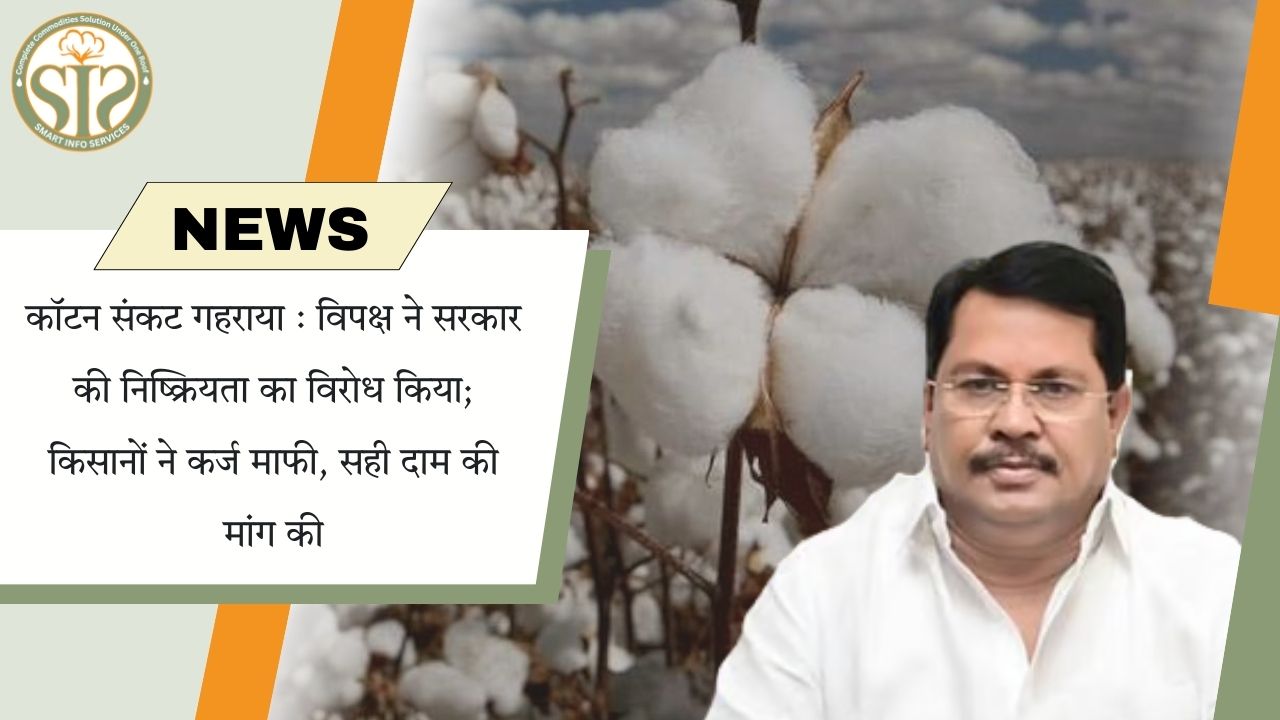
कपास संकट गहराया, विपक्ष ने सरकार पर निशाना साधा, किसानों ने कर्ज माफी की मांग कीनागपुर: विंटर सेशन का दूसरा दिन मंगलवार को टकराव के साथ शुरू हुआ, जब विपक्ष ने कॉटन की गिरती कीमतों और किसानों की बढ़ती परेशानी को लेकर राज्य सरकार को घेरा। कांग्रेस लेजिस्लेचर पार्टी के नेता विजय वड्डेटीवार ने विधान भवन की सीढ़ियों पर विरोध प्रदर्शन किया, और आरोप लगाया कि राज्य सरकार किसानों की भलाई को नज़रअंदाज़ कर रही है, क्योंकि उसने इंपोर्ट टैरिफ को 12% से घटाकर शून्य कर दिया है, जिससे इंपोर्ट ज़्यादा हुआ और स्थानीय किसानों की इनकम कम हुई।यह विरोध प्रदर्शन मुख्यमंत्री देवेंद्र फडणवीस, डिप्टी सीएम एकनाथ शिंदे, कल्चरल मिनिस्टर आशीष शेलार, स्पीकर राहुल नार्वेकर और काउंसिल चेयरपर्सन राम शिंदे के कॉमनवेल्थ पार्लियामेंट्री एसोसिएशन (CPA) के स्टूडेंट्स के साथ एक ऑफिशियल फोटो खिंचवाने के लिए विधान भवन की सीढ़ियों पर इकट्ठा होने के कुछ ही सेकंड बाद शुरू हुआ।हाथ में प्लेकार्ड लिए और नारे लगाते हुए, वड्डेटीवार ने सरकार पर विदर्भ और मराठवाड़ा में कॉटन उगाने वालों को नज़रअंदाज़ करने का आरोप लगाया। “कॉटन को सही रेट मिलना चाहिए। किसानों को उनकी उपज का सही मुआवज़ा चाहिए,” उन्होंने प्रदर्शन को लीड करते हुए चिल्लाया। विरोध ने तेज़ी पकड़ी, और महा विकास अघाड़ी (MVA) कैंप के नेता भी इसमें शामिल हो गए।MPCC के पूर्व प्रेसिडेंट नाना पटोले ने मीडिया से बात करते हुए कहा कि सरकार ने किसानों का लोन माफ़ करने में शॉर्टकट अपनाया है, सिर्फ़ उन लोगों को राहत दी है जिन्होंने कोर्ट का दरवाज़ा खटखटाया है। उन्होंने आरोप लगाया, “1,500 करोड़ रुपये में से सिर्फ़ 500 करोड़ रुपये ही माफ़ किए गए हैं,” और कहा कि सरकार का तरीका किसानों की भलाई से ज़्यादा वोट को ज़्यादा अहमियत देता है।शिवसेना (UBT) लीडर आदित्य ठाकरे किसानों की तकलीफ़ के निशान के तौर पर कॉटन का पौधा पकड़े हुए दिखे। उन्होंने नारे लगाते हुए इसे लहराया और सरकार से तुरंत दखल देने की मांग की। कई अपोज़िशन MLA उनके साथ खड़े थे, जिनके हाथ में बैनर थे जिन पर पूरी लोन माफ़ी और कॉटन सेक्टर को स्टेबल करने के लिए बोनस प्रोक्योरमेंट प्राइस की मांग थी।अपोज़िशन के मुताबिक, मार्केट में उतार-चढ़ाव और प्रोक्योरमेंट में देरी की वजह से किसानों को अपनी उपज मिनिमम सपोर्ट प्राइस (MSP) से बहुत कम कीमत पर बेचने के लिए मजबूर होना पड़ा है। उन्होंने आरोप लगाया कि सरकारी आश्वासन ज़मीन पर नहीं उतरे हैं, जिससे कपास उगाने वालों पर कर्ज़ बढ़ रहा है और वे निराश हैं।विपक्ष ने चेतावनी दी है कि जब तक सरकार कपास उगाने वालों के लिए राहत के उपायों की घोषणा नहीं करती, तब तक वे सदन के अंदर और बाहर विरोध प्रदर्शन तेज़ करेंगे। लगातार दूसरे दिन किसानों के मुद्दों पर चर्चा होने से, विंटर सेशन में और हंगामा होने की उम्मीद है।इससे पहले सुबह, डिप्टी चीफ मिनिस्टर एकनाथ शिंदे ने CPA स्टूडेंट्स को ब्रीफिंग देते हुए विपक्ष पर निशाना साधा और कहा कि विधान भवन की सीढ़ियों पर नारे लगाना "पार्लियामेंट्री प्रोसीजर" नहीं है, क्योंकि असली चर्चा और फैसले सदन के अंदर होते हैं।'और पढ़ें :- रुपया 26 पैसे बढ़कर 89.88 प्रति डॉलर पर बंद हुआ।

मंगलवार को भारतीय रुपया 26 पैसे बढ़कर 89.88 प्रति डॉलर पर बंद हुआ, जबकि सुबह इसकी शुरुआती कीमत 90.14 थी।होने पर, सेंसेक्स 436.41 अंक या 0.51 प्रतिशत की गिरावट के साथ 84,666.28 पर और निफ्टी 120.9 अंक या 0.47 प्रतिशत की गिरावट के साथ 25,839.65 पर बंद हुआ। लगभग 2,403 शेयरों में तेजी आई, 1,455 शेयरों में गिरावट आई और 127 शेयरों के भाव अपरिवर्तित रहे।और पढ़ें :- भारत को पीछे छोड़ते हुए ब्राज़ील बांग्लादेश का शीर्ष कपास आपूर्तिकर्ता बन गया.

ब्राजील बांग्लादेश का शीर्ष कपास आपूर्तिकर्ता बन गयाअमेरिकी कृषि विभाग (यूएसडीए) की रिपोर्ट के अनुसार, ब्राजील, पड़ोसी देश भारत को पीछे छोड़ते हुए, बांग्लादेश के लिए कच्चे कपास का मुख्य आपूर्तिकर्ता बनकर उभरा है। बांग्लादेश विश्व के शीर्ष कपास आयातकों में से एक है तथा दूसरा सबसे बड़ा परिधान निर्यातक है।अगस्त से शुरू होने वाले विपणन वर्ष 2024-25 (MY25) में, बांग्लादेश ने 8.28 मिलियन गांठ कच्चे कपास का आयात किया। ब्राज़ील ने लगभग 1.9 मिलियन गांठ की आपूर्ति की, जो कुल आयात का 23 प्रतिशत है।भारत 1.4 मिलियन गांठों के साथ दूसरा सबसे बड़ा आपूर्तिकर्ता था, उसके बाद बेनिन (1.06 मिलियन गांठें), कैमरून (616,538 गांठें) और संयुक्त राज्य अमेरिका (595,902 गांठें) का स्थान था।यूएसडीए की रिपोर्ट में कहा गया है कि ब्राजीलियाई कपास अपनी प्रतिस्पर्धी कीमत, कटाई के दौरान व्यापक उपलब्धता और स्थिर आपूर्ति के कारण बांग्लादेशी कताई करने वालों के बीच लोकप्रिय हो गया है।वित्तीय वर्ष 2024 में, भारत 1.79 मिलियन गांठ (23 प्रतिशत हिस्सेदारी) निर्यात करके शीर्ष आपूर्तिकर्ता था। बांग्लादेशी आयातकों ने ज़्यादा कीमतों और कुछ गुणवत्ता संबंधी समस्याओं के बावजूद, मुख्य रूप से कोलकाता और बेनापोल बंदरगाहों के ज़रिए कम समय में भारतीय कपास ख़रीदा।चालू विपणन वर्ष, 2026 के लिए, यूएसडीए ने बांग्लादेश से कपास आयात 84 लाख गांठ रहने का अनुमान लगाया है, जो 2025 के मुकाबले 1.4 प्रतिशत अधिक है, और स्थानीय कताई करने वालों द्वारा कपास का अधिक उपयोग इसकी मुख्य वजह है। यह 2024 के 78 लाख गांठों के आयात से 5.2 प्रतिशत अधिक है।रिपोर्ट में इस बात पर प्रकाश डाला गया है कि जुलाई में छात्र-नेतृत्व वाले विद्रोह के बीच पूर्व प्रधानमंत्री शेख हसीना के भाग जाने के बाद अगस्त 2024 में नई अंतरिम सरकार के गठन के बाद आरएमजी उत्पादन में शुरुआती व्यवधानों के बावजूद, एमवाई25 के दौरान कपास का आयात स्थिर रहा।हालांकि, घरेलू कपास उत्पादन 153,000 गांठों पर अपरिवर्तित रहने की उम्मीद है, जो भूमि की कमी और लंबी उत्पादन अवधि के कारण सीमित है, तथा कपास की खेती 45,000-46,000 हेक्टेयर में की जाती है।बांग्लादेश के वस्त्र उद्योग की वार्षिक खपत क्षमता लगभग 15 मिलियन गांठ है, जो कच्चे माल की उपलब्धता, बिजली आपूर्ति और धागे की मांग पर निर्भर करती है।वर्तमान में, इस क्षमता का केवल आधा ही उपयोग किया जा रहा है, और कच्चे कपास की खपत वित्त वर्ष 2025 में 8.3 मिलियन गांठ होने का अनुमान है। यूएसडीए का अनुमान है कि वित्त वर्ष 2026 में खपत बढ़कर 8.5 मिलियन गांठ हो जाएगी, जो कि अपेक्षित आयात में 2.4 प्रतिशत की वृद्धि है।कताई उद्योग कपास और मिश्रित धागे के उत्पादन के लिए कच्चे कपास का उपयोग करता है, और धागे का उत्पादन 2026 में 1.7 मिलियन टन से बढ़कर 1.9 मिलियन टन होने की उम्मीद है।कच्चे कपास के बढ़ते आयात और उपयोग के बावजूद, बांग्लादेश के रेडीमेड परिधान उद्योग द्वारा अभी भी अधिक धागा और कपड़ा आयात किये जाने की उम्मीद है।भारत अपने बड़े कताई उद्योग, कम शिपमेंट समय और कम लॉजिस्टिक्स लागत के कारण बांग्लादेश को सूती धागे का सबसे बड़ा आपूर्तिकर्ता बना हुआ है, जबकि चीन शीर्ष कपड़ा निर्यातक है, जिसके बाद पाकिस्तान और भारत का स्थान है।और पढ़ें :- कपास के दाम गिरने से किसान परेशान
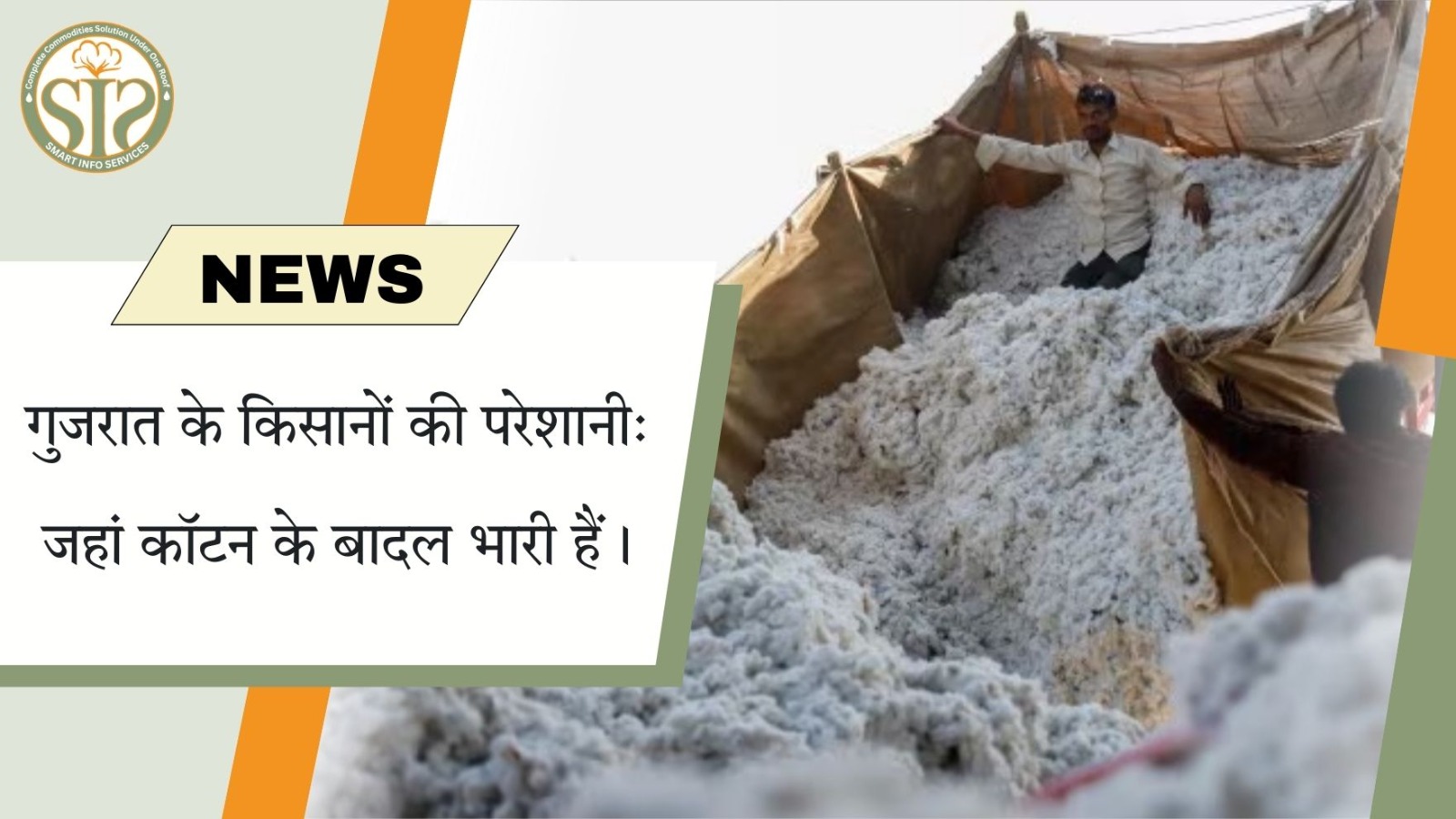
गुजरात के किसानों की परेशानी: जहां कॉटन के बादल भारी हैं।गुजरात में कॉटन की खेती के संकट का ओवरव्यूभारत के गुजरात में कॉटन किसानों को हाल ही में आर्थिक और पर्यावरण से जुड़ी चुनौतियों का सामना करना पड़ा है, जिससे वे बहुत परेशान हैं, जिससे किसानों के सुसाइड के मामले सामने आए हैं। यह समरी इस संकट के कारणों, सरकारी पॉलिसी के असर और अलग-अलग स्टेकहोल्डर्स के जवाबों को दिखाती है।आर्थिक और पर्यावरण से जुड़ी चुनौतियांकीमतों में गिरावट: किसानों को कॉटन की कम कीमतें मिलीं, लगभग ₹1,200-1,300 प्रति मन (20 kg), जो पिछले सालों के मुकाबले काफी कम थी।मौसम की दिक्कतें: अक्टूबर में बिना मौसम और बहुत ज़्यादा बारिश से फसलों को नुकसान हुआ, जिससे किसानों की पैसे की तंगी और बढ़ गई।सरकार का जवाबराहत पैकेज: मुख्यमंत्री ने लगभग ₹10,000 करोड़ के राहत और मदद पैकेज का ऐलान किया, जिसमें सपोर्ट कीमतों पर अलग-अलग फसलें खरीदने का प्लान है।इंपोर्ट ड्यूटी में छूट: केंद्र सरकार ने कच्चे कॉटन के इंपोर्ट पर कस्टम ड्यूटी माफ कर दी, जिसका मकसद टेक्सटाइल की लागत को स्थिर करना था, लेकिन इससे घरेलू कॉटन की कीमतों पर बुरा असर पड़ा।इम्पोर्ट पॉलिसी का असरबढ़ा हुआ इम्पोर्ट: भारत ने पिछले साल के मुकाबले अपने कॉटन इम्पोर्ट को लगभग दोगुना कर दिया, जिससे घरेलू कीमतों में और गिरावट आई।इंडस्ट्री बनाम किसान: जहां टेक्सटाइल इंडस्ट्री को सस्ते इम्पोर्टेड कॉटन से फायदा होता है, वहीं भारतीय किसानों को अपनी उपज के लिए कम कीमत मिलती है।खेती और मार्केट के हालातप्रोडक्शन और रकबा: 2024-25 के लिए कॉटन का प्रोविजनल रकबा 114.47 लाख हेक्टेयर है, जो 2023-24 से कम है, और पैदावार स्थिर रहने की उम्मीद है।मार्केट एक्सेस की समस्याएं: किसानों को लॉजिस्टिक रुकावटों का सामना करना पड़ता है, जैसे कि लोकल मार्केट यार्ड की कमी, जिससे उन्हें दूर के जिलों में उपज बेचने के लिए मजबूर होना पड़ता है।किसानों का विरोधसुसाइड और विरोध: हाल के महीनों में छह किसानों, जिनमें मुख्य रूप से कॉटन उगाने वाले किसान शामिल हैं, ने सुसाइड कर लिया है, जिससे सरकार की पॉलिसी और सही कीमत सपोर्ट की कमी के खिलाफ विरोध प्रदर्शन शुरू हो गए हैं। कॉटन प्रोडक्शन में चुनौतियाँइनपुट कॉस्ट: बीज और पेस्टिसाइड की बढ़ती कीमतों और कॉटन की स्थिर कीमतों ने किसानों को कॉटन की खेती करने से हतोत्साहित किया है।वैकल्पिक फसलों की ओर बदलाव: कई किसान इनपुट कॉस्ट कम करने के लिए मूंगफली, दालें, या काला कपास जैसी पारंपरिक कॉटन किस्मों की ओर रुख कर रहे हैं।इंडस्ट्री का नज़रियाक्वालिटी और पैदावार के मुद्दे: कम क्वालिटी वाले बीज और कम पैदावार बड़ी चुनौतियाँ हैं। किसान प्रोडक्टिविटी बढ़ाने के लिए नए बीज अप्रूवल की वकालत कर रहे हैं।जिनिंग मिलों पर असर: ड्यूटी-फ्री इंपोर्ट पॉलिसी से स्पिनिंग मिलों को फायदा होता है, लेकिन जिनिंग मिलों के लिए खतरा पैदा होता है, जिससे कई मिल बंद हो जाती हैं।निष्कर्षगुजरात में कॉटन की खेती का संकट कई तरह का है, जिसमें आर्थिक, पर्यावरण और सिस्टम से जुड़ी चुनौतियाँ शामिल हैं। जबकि सरकारी उपायों का मकसद इंडस्ट्री को स्थिर करना है, वे अक्सर किसानों की परेशानी के मूल कारणों को दूर करने में नाकाम रहते हैं। टिकाऊ समाधानों के लिए, ऐसे व्यापक पॉलिसी दखल की ज़रूरत है जो इंडस्ट्री की ग्रोथ और किसानों की भलाई के बीच संतुलन बनाए रखें।और पढ़ें :- रुपया 05 पैसे गिरकर 90.14/USD पर खुला।

रुपया 05 पैसे गिरकर 90.14 प्रति डॉलर पर खुला।भारतीय रुपया मंगलवार को 90.14 प्रति डॉलर पर खुला, जबकि पिछली बार यह 90.09 पर बंद हुआ था।और पढ़ें :- रुपया 03 पैसे गिरकर 90.09 प्रति डॉलर पर बंद हुआ

सोमवार को भारतीय रुपया 03 पैसे गिरकर 90.09 प्रति डॉलर पर बंद हुआ, जबकि सुबह यह 90.06 पर खुला था।बंद होने पर, सेंसेक्स 609.68 पॉइंट या 0.71 प्रतिशत गिरकर 85,102.69 पर था, और निफ्टी 225.90 पॉइंट या 0.86 प्रतिशत गिरकर 25,960.55 पर था। लगभग 824 शेयर बढ़े, 3146 शेयर गिरे, और 145 शेयर बिना किसी बदलाव के बंद हुए।और पढ़ें :- सतारा में गारंटीड भाव से 83 लाख रु. की सोयाबीन खरीदी
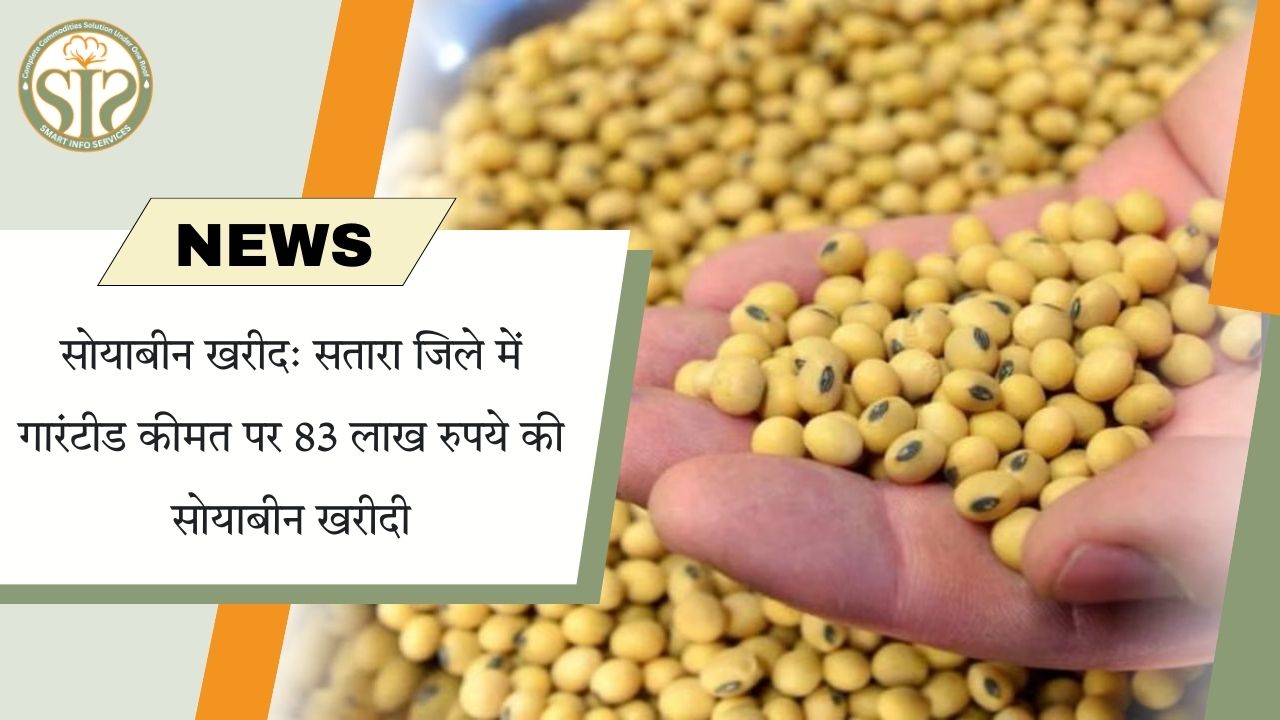
सोयाबीन खरीद: सतारा जिले में गारंटीड कीमत पर 83 लाख रुपये की सोयाबीन खरीदी सतारा जिले में सोयाबीन खरीदने के लिए दो सेंटर, कोरेगांव और मसूर (ताल. करहाद) 5,328 रुपये प्रति क्विंटल के बेस प्राइस पर शुरू किए गए हैं, और उन्होंने 5 दिसंबर के आखिर तक 83,17,000 रुपये कीमत के 1,1561 क्विंटल सोयाबीन खरीदे हैं। बाकी चार मंज़ूर सेंटर अभी शुरू नहीं हुए हैं।इस साल जिले में 86,000 हेक्टेयर में सोयाबीन बोया गया था। कटाई के तुरंत बाद, ज़्यादातर किसानों ने 4.50 रुपये से 4,700 रुपये के रेट पर बड़ी मात्रा में सोयाबीन बेचना शुरू कर दिया।उस समय बेस प्राइस पर खरीद सेंटर शुरू हो जाने चाहिए थे; लेकिन जिले के सतारा, फलटण, वाई, कोरेगांव, करहाद और मसूर सेंटर का रजिस्ट्रेशन 15 अक्टूबर को मज़दूरी के साथ शुरू हुआ। लेकिन, असल में, इन सेंटर्स को शुरू करने के लिए नवंबर का पहला हफ़्ता ही शुरू हुआ। इसलिए, कोरेगांव और मसूर को छोड़कर कहीं भी इन सेंटर्स को ज़्यादा रिस्पॉन्स नहीं मिला है।कोरेगांव सेंटर पर कुल 1,101 क्विंटल मसूर और 460 क्विंटल मसूर की खरीदी हुई है, और कुल 1,561 क्विंटल मसूर 5,328 रुपये प्रति क्विंटल के हिसाब से खरीदी गई है। ज़िले के सतारा सेंटर पर 17 किसानों ने, फलटण सेंटर पर 142 ने, और वाई सेंटर पर 61 किसानों ने रजिस्टर किया है; लेकिन सेंटर्स अभी तक शुरू नहीं हुए हैं।किसानों से कम रिस्पॉन्सक्योंकि खरीफ सीज़न में सोयाबीन मुख्य फ़सल है, इसलिए सबसे ज़्यादा प्रोडक्शन होता है। कटाई के समय हो रही बारिश और प्रोक्योरमेंट सेंटर की कमी के कारण, सोयाबीन उगाने वाले किसानों से कम रिस्पॉन्स मिला है। हालांकि सेंटर के हालात और ट्रांसपोर्टेशन की वजह से किसानों को कम दाम मिल रहे हैं, लेकिन ट्रेडर्स ने सोयाबीन बेच दिया है।पिछले तीन सालों से दामों में सुधार न होने की वजह से सोयाबीन के स्टोरेज की मात्रा भी कम हो गई है। किसानों के फायदे के लिए सरकार मांग कर रही है कि सोयाबीन की फसल से पहले और तालुका लेवल के बजाय हर चार से पांच गांवों में से एक पर सेंटर बनाए जाएं।और पढ़ें :- नांदेड़ में कॉटन प्रोक्योरमेंट प्रक्रिया धीमी, खरीद में सुस्ती
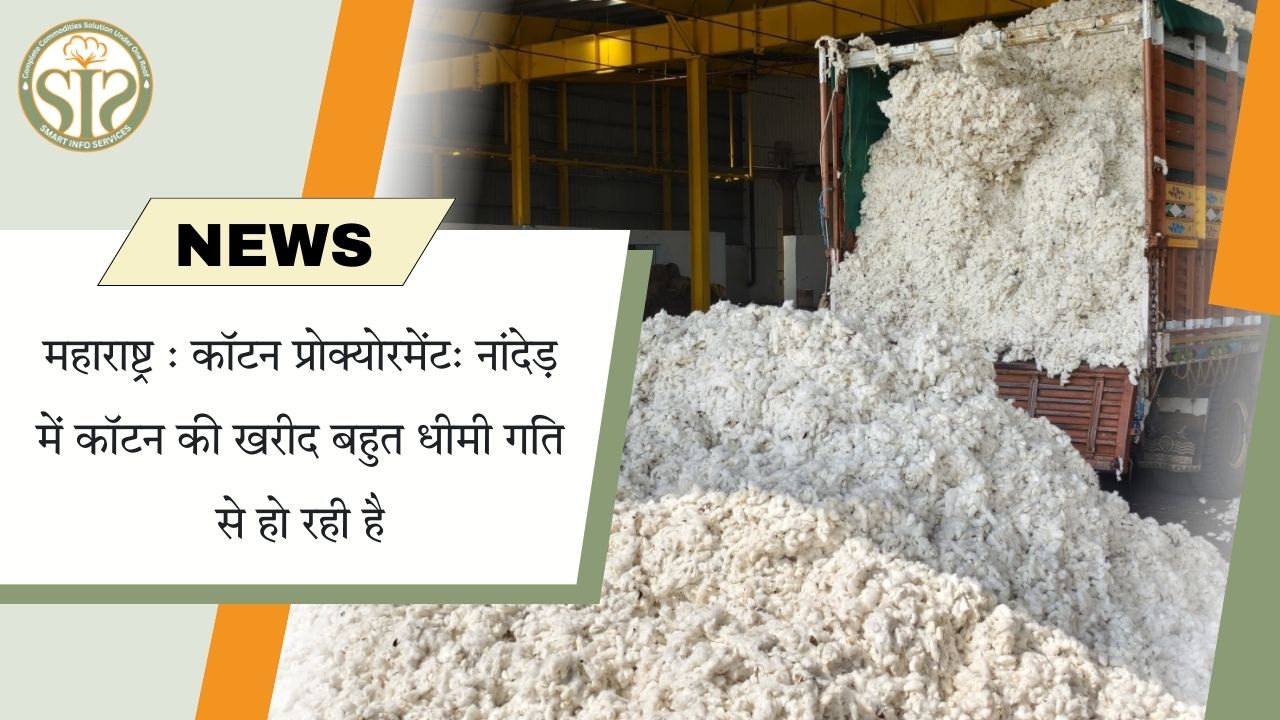
महाराष्ट्र : कॉटन प्रोक्योरमेंट: नांदेड़ में कॉटन की खरीद बहुत धीमी गति से हो रही हैनांदेड़ : नांदेड़ जिले के अलग-अलग कॉटन प्रोक्योरमेंट सेंटर्स पर प्रोक्योरमेंट प्रोसेस में अभी भी तेज़ी नहीं आई है। 1 दिसंबर तक जिले में 1,933 किसानों से कुल 28,847 क्विंटल कॉटन खरीदा गया था। जिले में कॉटन बेचने के लिए कुल 14,619 किसानों ने रजिस्टर कराया था, जिनमें से 5051 एंट्रीज़ को मार्केट कमेटी ने मंज़ूरी दे दी है, और पेंडिंग एंट्रीज़ की संख्या 8,107 है। सबसे ज़्यादा 11,908 क्विंटल कॉटन न्यू भारत कॉटन नायगांव सेंटर पर खरीदा गया।जिले में कॉटन की खरीद केंद्र सरकार के मिनिमम गारंटीड प्राइस के हिसाब से हो रही है। इसमें मीडियम-यार्न कॉटन का प्राइस 7,710 रुपये प्रति क्विंटल है, जबकि लॉन्ग-यार्न कॉटन का प्राइस 8,110 रुपये प्रति क्विंटल है। जिले में नौ जगहों पर खरीद हो रही है, जिनके नाम हैं किनवट, अर्धापुर, भोकर, नायगांव और हडगांव तालुका।कलडगांव, अर्धापुर तालुका में सालासर जिनिंग में 282 किसानों से 4650.05 क्विंटल कपास खरीदा गया। इस सेंटर पर 1559 किसानों ने रजिस्टर कराया है। नटराज और बालाजी जिनिंग, तसगा (ताल. हडगांव) में 2391 क्विंटल खरीदा गया। नटराज और बालाजी जिनिंग सेंटर पर कुल 1658 किसानों ने रजिस्टर कराया है। वेंकटेश कॉटन, भोकर में 218 किसानों से 2923 क्विंटल कपास खरीदा गया।इस सेंटर पर 3161 किसानों ने रजिस्टर कराया है। न्यू भारत कॉटन, नायगांव में 11 हजार 908 क्विंटल कपास खरीदा गया। इस सेंटर पर सबसे ज्यादा 5023 किसानों ने रजिस्टर कराया है। इनमें से 777 रजिस्टर्ड किसानों का कपास खरीदा गया। तीन सेंटर्स, मंजीत कॉटन, एल.बी. कॉटन और महावीर जिनिंग ने 5194 क्विंटल कॉटन खरीदा है। 366 किसानों का कॉटन खरीदा गया। विजय कॉटन, किनवट में 1585 किसानों ने रजिस्टर्ड किया। इनमें से 74 किसानों से 1370 क्विंटल कॉटन खरीदा गया।और पढ़ें :- “बंजर जमीन पर कपास की खेती से 80 हजार की कमाई”
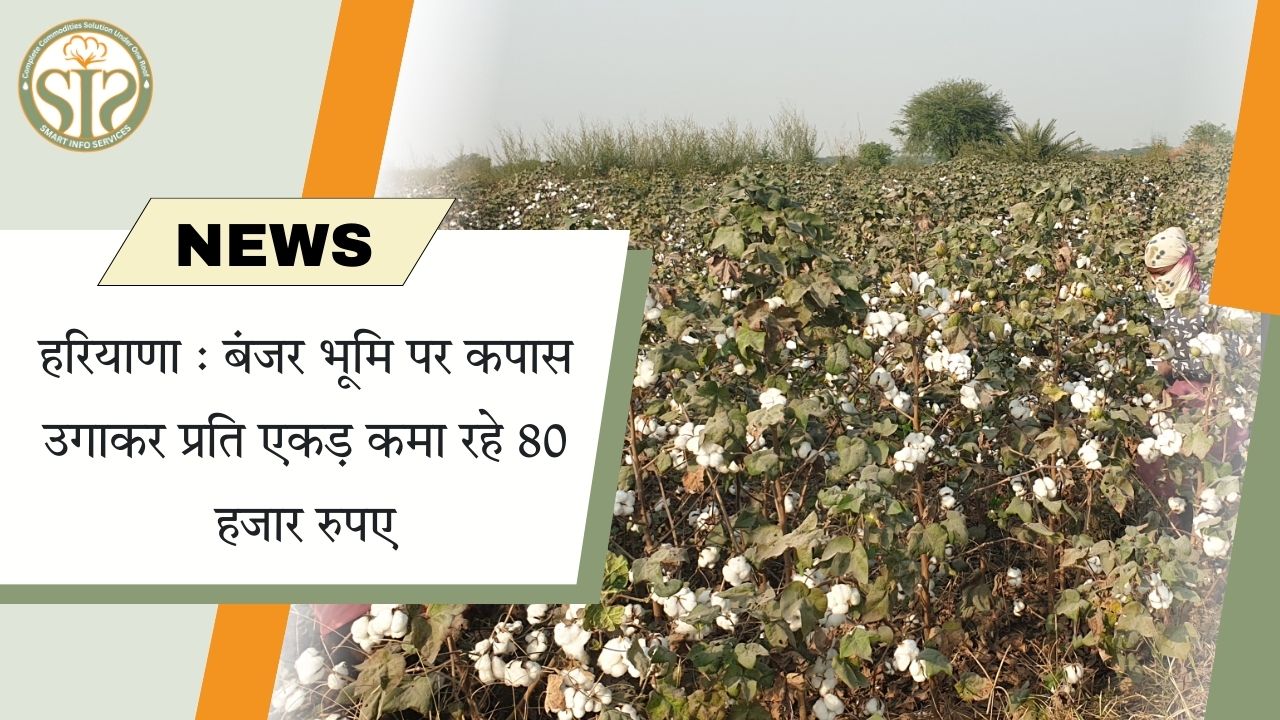
हरियाणा : बंजर भूमि पर कपास उगाकर प्रति एकड़ कमा रहे 80 हजार रुपएजब क्षेत्र के किसान केवल धान फसल के भरोसे है और जिस भूमि को वे बंजर व अनुपजाऊ समझकर खाली छोड़ देते हैं, उसी भूमि पर कपास की खेती करके हरियाणा के किसान हजारों रुपए प्रति एकड़ के दर से लाभ कमा रहे हैं।यहां से 10 किलोमीटर दूर ग्राम रावन की 120 एकड़ पड़त भूमि को लीज में लेकर हरियाणा के रोहतक जिले से आकर किसान नवीन हुड्डा पिछले 5-6 सालों से कपास की खेती करते हुए प्रति एकड़ 75 हजार से 80 हजार रुपए से अधिक की आमदनी ले रहे हैं। उक्त किसान ने बताया कि बिना सिंचाई साधन वाले उक्त भूमि पर केवल बारिश के भरोसे बीते कुछ सालों से कपास की खेती करते आ रहे हैं।इसके अलावा पत्थरचुवा आदि गांवों में भी हरियाणा से आए रामहेत, जगबीर, कुलदीप आदि किसान इसी प्रकार की भूमि पर कपास की खेती कर रहे हैं। उन्होंने बताया कि 50 से 100 एकड़ का एक प्लाट हरियाणा में उपलब्ध नहीं रहता। इसलिए छत्तीसगढ़ में आकर इसकी खेती करते हैं। उन्होंने कहा कि छत्तीसगढ़ अथवा क्षेत्र के किसान भी चाहे तो इसे कर सकते हैं परंतु शायद उनकी रुचि नहीं है। तिल्दाबांधा के रामप्रसाद यदू, दरस साहू, जीवन साहू आदि कृष्ण से जब इस पर चर्चा की गई तो उन्होंने कहा कि जिस भूमि पर हम धान की फसल लेते हैं उसमें पहले दलहन तिलहन लेते थे परंतु बंदरों के प्रकोप के कारण नहीं ले पा रहे हैं।गन्ना, कपास आदि फसल लेने के बारे में विशेष जानकारी नहीं है धीरे-धीरे जागरूकता आने पर निश्चित रूप से इन फसलों का उत्पादन भी बढ़ेगा तो लाभ बढ़ेगा। किसान ने बताया कि 6 से 8 महीने में आने वाली इस फसल का बीज, भूमि की जुताई, डाले जाने वाली खाद व कीट नाशक तथा कपास निकालने तक प्रति एकड़ लगभग ₹25000 का खर्च आता है। इसके अलावा भूमि की लीज, फसल की ट्रांसपोर्टिंग का खर्च अलग रहता है। उन्होंने बताया कि कपास का उत्पादन प्रति एकड़ लगभग 18 क्विंटल आ जाता है जिन्हें पंजाब से आए और स्थानीय मजदूरों से ₹8 प्रति किलो की दर से निकलवाने के बाद छत्तीसगढ़ के बेरला और महाराष्ट्र के नागपुर आदि स्थानों पर ले जाकर लगभग 7000 से ₹8000 प्रति क्विंटल की दर से बेचते हैं।और पढ़ें :- रुपया 08 पैसे गिरकर 90.06/USD पर खुला

रुपया 08 पैसे गिरकर 90.06 प्रति डॉलर पर खुलाभारतीय रुपया सोमवार को 90.06 प्रति डॉलर पर खुला, जबकि पिछला बंद भाव 89.98 था।और पढ़ें :- “2024-25: राज्यवार CCI कपास बिक्री विवरण”
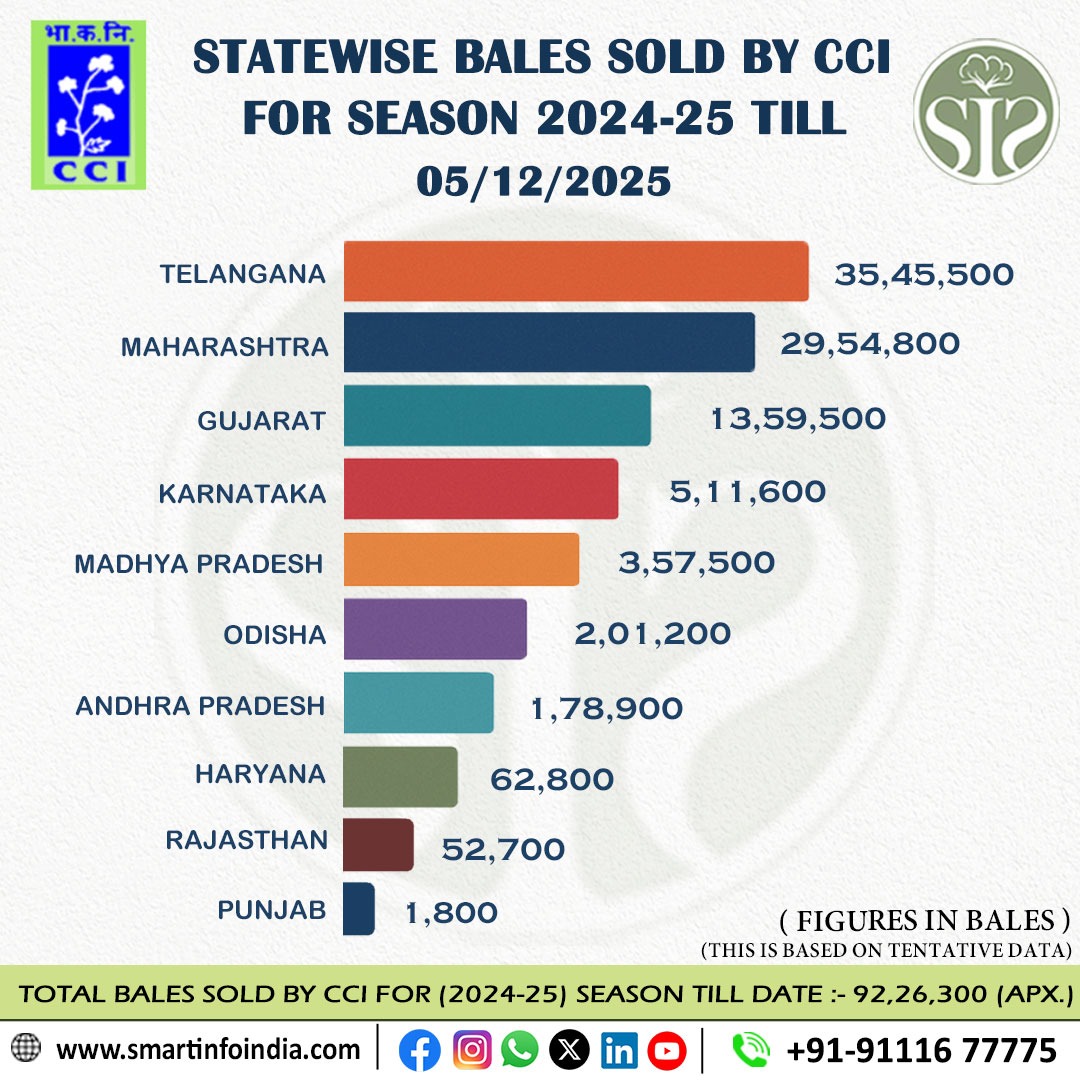
राज्य के अनुसार CCI कपास बिक्री विवरण – 2024-25 सीज़नभारतीय कपास निगम (CCI) ने इस सप्ताह अपनी कीमतों में कोई बदलाव नहीं किया और 2024-25 सीज़न में अब तक कुल बिक्री लगभग 92,26,300 गांठों तक पहुँच गई है। यह आंकड़ा अब तक की कुल खरीदी गई कपास का लगभग 92.26% है।राज्यवार बिक्री आंकड़ों से पता चलता है कि महाराष्ट्र, तेलंगाना और गुजरात से बिक्री में प्रमुख भागीदारी रही है, जो अब तक की कुल बिक्री का 85.18% से अधिक हिस्सा रखते हैं।यह आंकड़े कपास बाजार में स्थिरता लाने और प्रमुख कपास उत्पादक राज्यों में नियमित आपूर्ति सुनिश्चित करने के लिए CCI के सक्रिय प्रयासों को दर्शाते हैं।
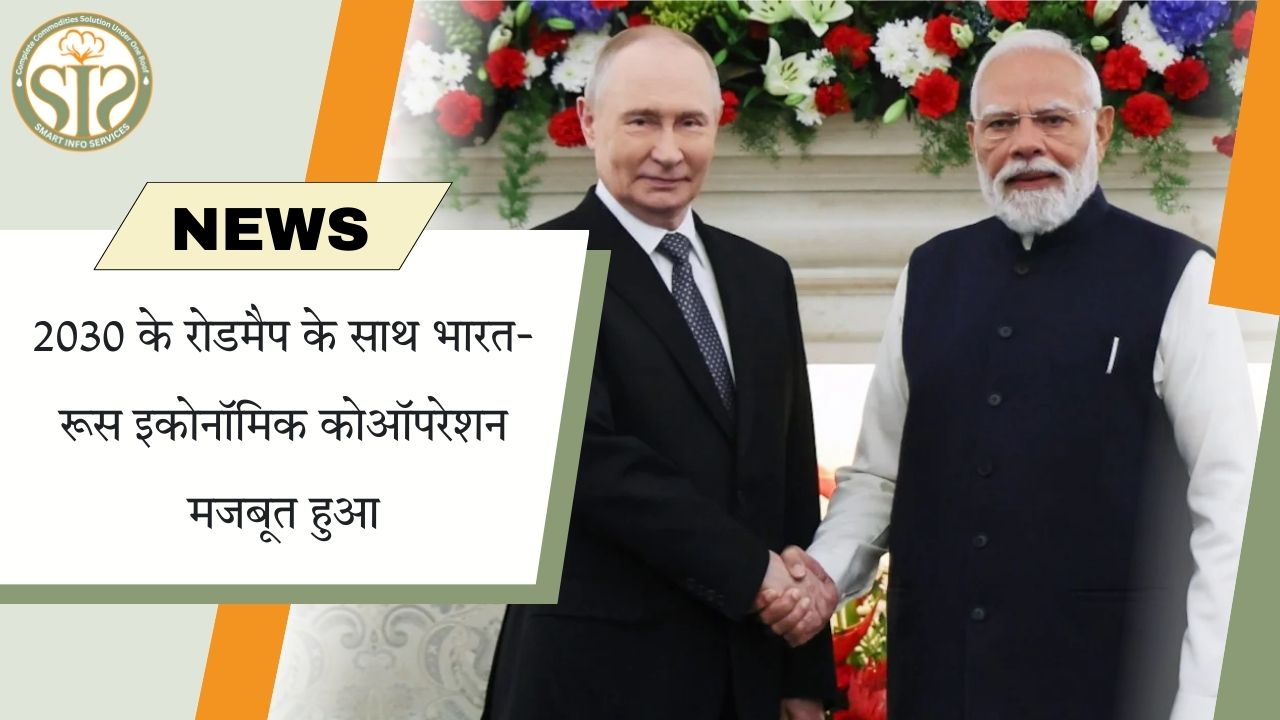
2030 के रोडमैप के साथ भारत-रूस इकोनॉमिक कोऑपरेशन मजबूत हुआभारत और रूस ने अपने इकोनॉमिक कोऑपरेशन को बढ़ाने के लिए एक बड़ा प्लान पेश किया है, जिसमें 4-5 दिसंबर, 2025 को प्रेसिडेंट व्लादिमीर पुतिन के नई दिल्ली के स्टेट विज़िट के दौरान 2030 तक इकोनॉमिक कोऑपरेशन के लिए एक बड़े प्रोग्राम की घोषणा की गई।भारत के प्रधानमंत्री नरेंद्र मोदी और प्रेसिडेंट पुतिन ने फिर से कहा कि उनकी आठ दशक पुरानी पार्टनरशिप—जो भरोसे, आपसी सम्मान और स्ट्रेटेजिक मेलजोल से तय होती है—ग्लोबल जियोपॉलिटिकल अनिश्चितता के बीच स्थिरता का सहारा बनी हुई है।PM मोदी ने कहा कि नया रोडमैप आपसी व्यापार को “ज़्यादा डायवर्सिफाइड, बैलेंस्ड और सस्टेनेबल” बनाएगा, साथ ही को-प्रोडक्शन, को-इनोवेशन और गहरे इंडस्ट्रियल कोऑपरेशन के रास्ते खोलेगा। इस मकसद के सेंटर में भारत और यूरेशियन इकोनॉमिक यूनियन के बीच एक फ्री ट्रेड एग्रीमेंट पर चल रही बातचीत है, जिसके पूरा होने के बाद एक्सपोर्ट की नई संभावनाएं खुलने की उम्मीद है।एक खास बात ‘प्रोग्राम 2030’ को अपनाना था, जो बैलेंस्ड ट्रेड, आसान पेमेंट सिस्टम, टैरिफ और नॉन-टैरिफ रुकावटों को हटाने और ज़्यादा लॉजिस्टिक्स एफिशिएंसी को प्राथमिकता देता है। दोनों पक्ष नेशनल करेंसी में सेटलमेंट को मजबूत करने और पेमेंट सिस्टम और डिजिटल करेंसी प्लेटफॉर्म के बीच इंटरऑपरेबिलिटी का पता लगाने के लिए काम कर रहे हैं। दोनों देशों ने एक जॉइंट स्टेटमेंट में कहा कि 2030 तक $100 बिलियन के बदले हुए बाइलेटरल ट्रेड टारगेट को फिर से कन्फर्म किया गया।एनर्जी सिक्योरिटी—जो लंबे समय से पार्टनरशिप की रीढ़ रही है—पर नया ज़ोर दिया गया। दोनों देशों ने तेल, गैस, पेट्रोकेमिकल्स, अंडरग्राउंड कोल गैसिफिकेशन, LNG और LPG इंफ्रास्ट्रक्चर, और न्यूक्लियर एनर्जी में सहयोग बढ़ाने का वादा किया। रूस और भारत कुडनकुलम न्यूक्लियर पावर प्लांट के लिए इक्विपमेंट और फ्यूल की डिलीवरी शेड्यूल को फास्ट-ट्रैक करने और भारत में दूसरी न्यूक्लियर साइट पर बातचीत जारी रखने पर सहमत हुए।कनेक्टिविटी एक टॉप प्रायोरिटी के रूप में उभरी, जिसमें इंटरनेशनल नॉर्थ-साउथ ट्रांसपोर्ट कॉरिडोर (INSTC), चेन्नई-व्लादिवोस्तोक मैरीटाइम कॉरिडोर और नॉर्दर्न सी रूट के लिए नई रफ़्तार आई। पोलर ऑपरेशन के लिए भारतीय नाविकों को ट्रेनिंग देने पर एक MoU से आर्कटिक में सहयोग मज़बूत होने और रोज़गार के नए मौके बनने की उम्मीद है।रशियन फ़ार ईस्ट और आर्कटिक में गहरे जुड़ाव की फिर से पुष्टि की गई, जिसे 2024–2029 के लिए एक अलग सहयोग प्रोग्राम से सपोर्ट मिला। खेती, एनर्जी, मैनपावर, माइनिंग, डायमंड, फार्मास्यूटिकल्स और समुद्री ट्रांसपोर्ट जैसे सेक्टर फोकस एरिया होंगे।नेताओं ने क्लीन एनर्जी और हाई-टेक मैन्युफैक्चरिंग के लिए ज़रूरी मिनरल्स की बढ़ती अहमियत पर भी ज़ोर दिया। दोनों पक्षों ने फर्टिलाइज़र और लंबे समय की सप्लाई व्यवस्था में जॉइंट वेंचर की योजनाओं के साथ-साथ एक्सप्लोरेशन, प्रोसेसिंग और रीसाइक्लिंग टेक्नोलॉजी में मज़बूत सहयोग का वादा किया।लोगों पर केंद्रित पहल चर्चा का एक बड़ा हिस्सा थीं। भारत ने हाल ही में येकातेरिनबर्ग और कज़ान में नए कॉन्सुलेट खोले हैं, जबकि रूस को जल्द ही 30-दिन के मुफ़्त ई-टूरिस्ट वीज़ा और ग्रुप वीज़ा स्कीम का फ़ायदा मिलेगा। स्किल्ड मैनपावर मोबिलिटी, जॉइंट वोकेशनल ट्रेनिंग और बढ़े हुए एकेडमिक एक्सचेंज पर नए समझौतों का मकसद समाज के साथ गहरे जुड़ाव बनाना है।मोदी और पुतिन ने काउंटर-टेररिज्म पर लंबे समय से चल रहे सहयोग को दोहराया, भारत और रूस में हाल के हमलों की निंदा की, और एक्सट्रीमिज्म पर ज़ीरो-टॉलरेंस पॉलिसी अपनाने की अपील की। उन्होंने UN, G20, BRICS और SCO जैसे खास मल्टीलेटरल प्लेटफॉर्म पर करीबी तालमेल की भी पुष्टि की, जिसमें रूस ने UN सिक्योरिटी काउंसिल की परमानेंट मेंबरशिप के लिए भारत की कोशिश का समर्थन दोहराया।सिविल न्यूक्लियर टेक्नोलॉजी और स्पेस सहयोग से – जिसमें रॉकेट इंजन और ह्यूमन स्पेसफ्लाइट पर मिलकर काम करना शामिल है – से लेकर मेक इन इंडिया के तहत डिफेंस को-डेवलपमेंट और को-प्रोडक्शन को बढ़ाने तक, इस समिट ने भारत-रूस पार्टनरशिप की मल्टी-डाइमेंशनल गहराई को दिखाया।पुतिन ने मोदी को उनकी गर्मजोशी भरी मेहमाननवाज़ी के लिए धन्यवाद दिया और उन्हें 2026 में अगले सालाना समिट के लिए रूस आने का न्योता दिया, जो दोनों देशों के “स्पेशल और प्रिविलेज्ड” बताए गए रिश्ते के लगातार विकास में एक और कदम है।और पढ़ें :- "कपास खरीद रोक पर किसानों की PM से अपील"
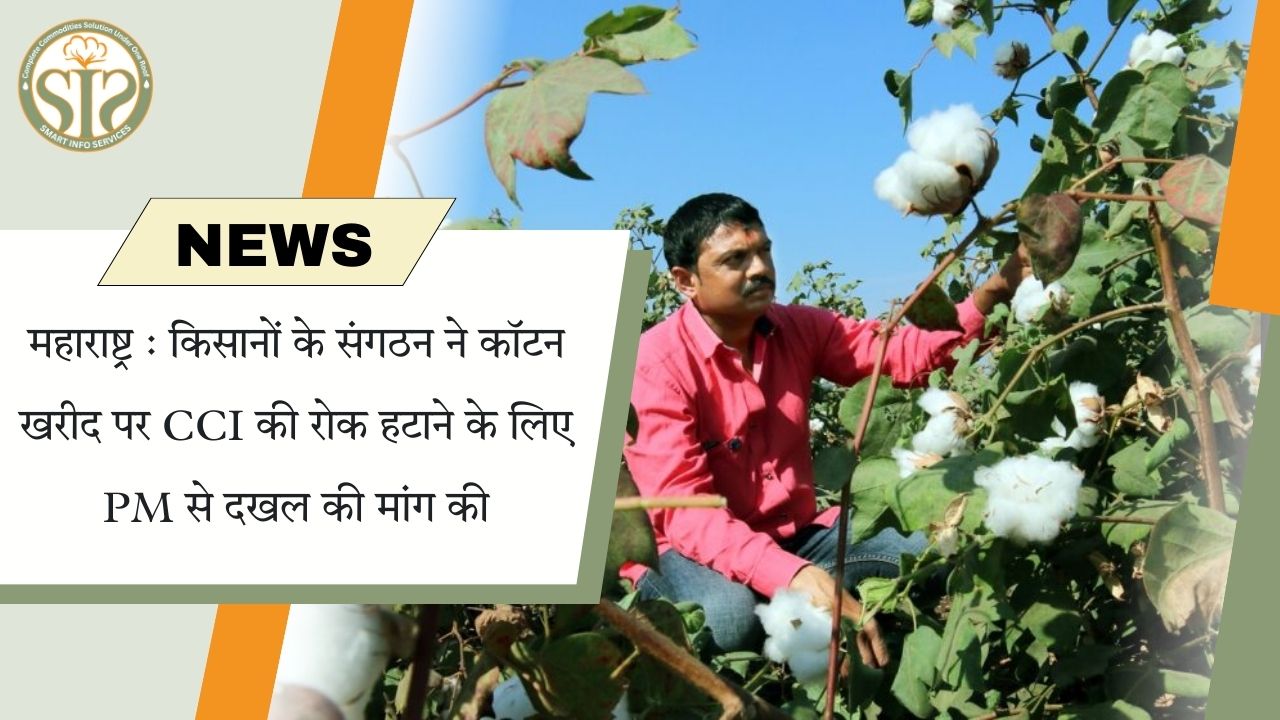
महाराष्ट्र: CCI की कपास खरीद पर लगी पाबंदियां हटाने के लिए किसानों ने PM से हस्तक्षेप की मांग कीनागपुर: किसानों के संगठन काउंसिल फॉर प्रोटेक्शन ऑफ फार्मर्स राइट्स (CPFR)–किसान भारती ने प्रधानमंत्री Narendra Modi से हस्तक्षेप की मांग की है। संगठन का कहना है कि Cotton Corporation of India (CCI) की मौजूदा कपास खरीद नीतियां किसानों के लिए गंभीर संकट पैदा कर रही हैं।संगठन के अध्यक्ष बैरिस्टर Vinod Tiwari ने प्रधानमंत्री को भेजी अपील में कहा कि CCI द्वारा कपास खरीद की सीमा 13 क्विंटल प्रति एकड़ से घटाकर 7 क्विंटल प्रति एकड़ कर दी गई है, जिससे महाराष्ट्र और पड़ोसी Telangana के लाखों किसानों की परेशानी बढ़ गई है।तिवारी के अनुसार, खरीफ सीजन में यील्ड सर्वे के बाद इस सीमा में की गई कटौती ने किसानों को अपनी लगभग 80% उपज निजी व्यापारियों को कम कीमत पर बेचने के लिए मजबूर कर दिया है। वर्तमान स्थिति में किसानों को कपास ₹6500 प्रति क्विंटल या उससे कम कीमत पर बेचना पड़ रहा है, जो ₹8110 प्रति क्विंटल के न्यूनतम समर्थन मूल्य (MSP) से लगभग 25% कम है।सबसे अधिक प्रभावित वे किसान हैं जिनकी पैदावार 5 क्विंटल प्रति एकड़ से अधिक है। खरीद सीमा के कारण वे अपनी पूरी उपज CCI को नहीं बेच पा रहे और मजबूरी में निजी व्यापारियों को कम दाम पर बेच रहे हैं।इसके अलावा, CCI द्वारा निर्धारित 8–12% नमी (मॉइस्चर) की सख्त शर्तों ने स्थिति को और जटिल बना दिया है। कोहरा, अनियमित बारिश और ठंड के कारण कपास में प्राकृतिक नमी अधिक रहती है। किसानों का कहना है कि कई दिनों तक सुखाने के बावजूद नमी 20% या उससे अधिक बनी रहती है, जिसके कारण CCI खरीद केंद्रों पर उनकी उपज अस्वीकार कर दी जाती है।उदाहरण के तौर पर, Yavatmal district में 2.36 लाख से अधिक किसानों ने 8.25 लाख एकड़ में कपास की खेती की, जिससे लगभग 33 लाख क्विंटल उत्पादन हुआ। इसके बावजूद, CCI ने केवल 7,921 क्विंटल कपास की खरीद की, जबकि निजी व्यापारियों ने करीब 1.15 लाख क्विंटल कपास कम कीमत पर खरीद लिया।संगठन का आरोप है कि CCI के कठोर नियम किसानों को निजी व्यापारियों के हाथों सस्ते में कपास बेचने के लिए मजबूर कर रहे हैं।इसके अलावा, घोषित 27 खरीद केंद्रों में से केवल कुछ ही सक्रिय हैं, जिससे किसानों को लंबी कतारों, परिवहन लागत और लॉजिस्टिक समस्याओं का सामना करना पड़ रहा है।तिवारी ने मांग की है कि:खरीद सीमा को बढ़ाकर कम से कम 12 क्विंटल प्रति एकड़ किया जाए,नमी की सीमा को प्राकृतिक परिस्थितियों को ध्यान में रखते हुए 22% तक बढ़ाया जाए,और अधिक खरीद केंद्र खोलकर प्रक्रिया को तेज किया जाए।उन्होंने कहा कि CCI, जो MSP खरीद की नोडल एजेंसी है, का दायित्व किसानों के हितों की रक्षा करना है। इसलिए प्रधानमंत्री को तत्काल हस्तक्षेप कर किसानों को राहत देने के निर्देश देने चाहिए, इससे पहले कि स्थिति और गंभीर हो।और पढ़ें :- “CCI ने भाव स्थिर रखे, 92% कपास ई-ऑक्शन में बेची”
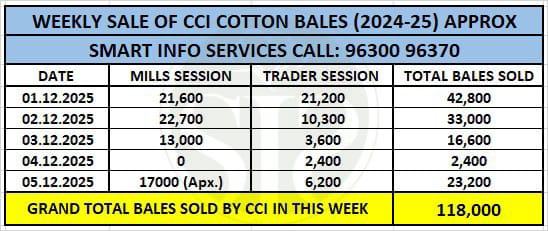
कॉटन कॉर्पोरेशन ऑफ़ इंडिया (CCI) ने इस सप्ताह अपनी कीमतों में कोई बदलाव नहीं किया और 2024-25 की अपनी कॉटन खरीद का 92.26% ई-ऑक्शन के ज़रिए बेचा।01 दिसंबर से 05 दिसंबर 2025 तक पूरे हफ़्ते के दौरान, CCI ने अपनी मिलों और ट्रेडर सेशन में ऑनलाइन ऑक्शन किए, जिससे कुल लगभग 1,18,000 बेल्स की बिक्री हुई।साप्ताहिक बिक्री रिपोर्ट01 दिसंबर, 2025: इस दिन हफ़्ते की सबसे ज़्यादा बिक्री 42,800 बेल्स के साथ दर्ज की गई, जिसमें मिलों द्वारा खरीदी गई 21,600 बेल्स और ट्रेडर्स द्वारा ली गई 21,200 बेल्स शामिल हैं।03 दिसंबर, 2025: इस दिन कुल बिक्री 16,600 बेल तक पहुंच गई, जिसमें मिलों ने 13,000 बेल और व्यापारियों ने 3,600 बेल खरीदीं।04 दिसंबर, 2025: कुल 2,400 बेल बिकीं, जो सभी सिर्फ़ व्यापारियों ने खरीदीं।05 दिसंबर, 2025: यह हफ़्ता मिलों और व्यापारियों द्वारा खरीदी गई लगभग 23,200 बेल की कुल बिक्री के साथ बंद हुआ।CCI ने हफ़्ते के दौरान कुल लगभग 1,18,000 बेल बेचीं, जिससे इस सीज़न में उसकी कुल बिक्री 92,26,300 बेल हो गई, जो 2024-25 के लिए उसकी कुल खरीद का 92.26% है।और पढ़ें :- “CCI की बंपर खरीद से पंजाब में कपास 7,500 के पार”
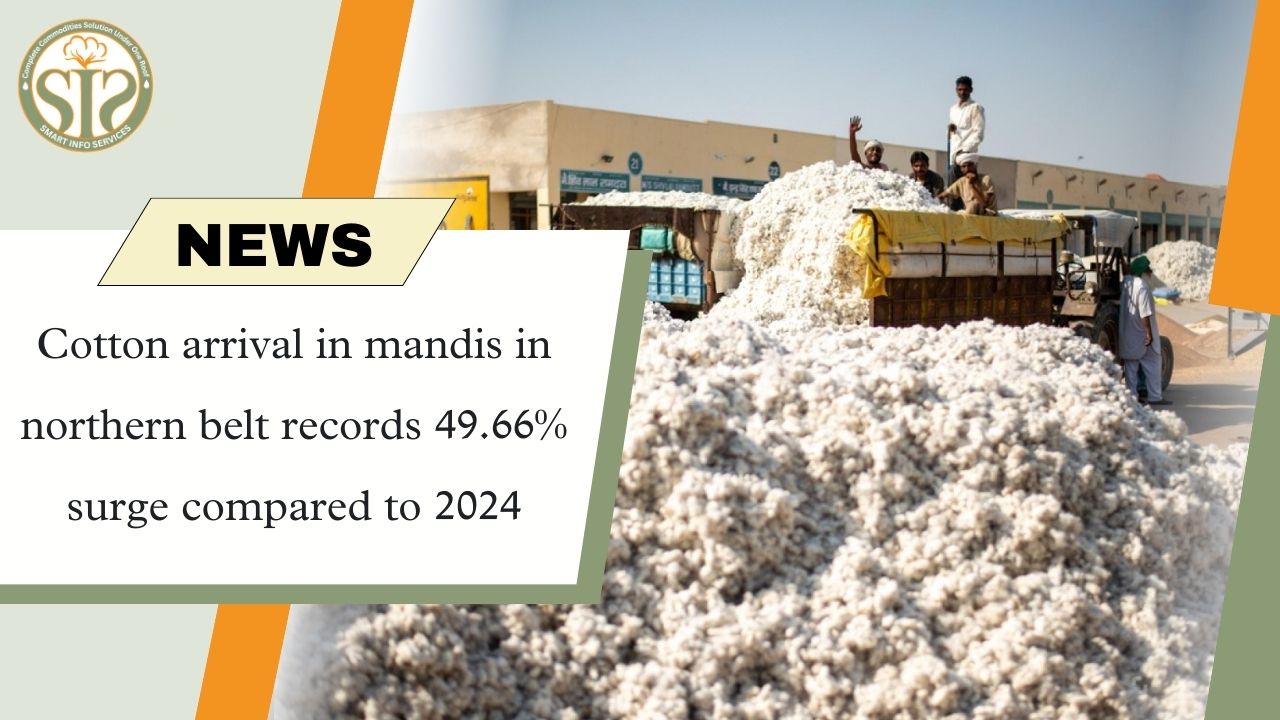
Cotton arrival in mandis in northern belt records 49.66% surge compared to 2024The northern cotton belt — comprising Punjab, Haryana and Rajasthan — has so far recorded a surge of 49.66 per cent in cotton balls’ arrival in mandis this season, and more arrivals are expected in the coming months with harvesting still on. The three states have so far received 13.32 lakh bales (one bale of ginned cotton — cotton separated from seed — weighs 170 kg) in their mandis compared to 8.90 lakh bales in the corresponding period in 2024.This surge has been attributed to kapas (cotton balls) prices in mandis, selling well below the Minimum Support Price (MSP). With no significant price improvement anticipated, and the current presence of Cotton Corporation of India (CCI), which purchases on the MSP rate, in the market, farmers are choosing not to hold back their produce, and thus, pushing more crops to mandis faster than usual.As cotton bulb picking starts in September and concludes by November, the major cotton arrival season in the northern region begins on October 1 — though some early crop reaches mandis even in September — and 50-70 per cent (in some cases even 90 per cent depending on the market rate in the given season) of the produce reaches mandis by December, and ends by September 30 the next year.Also, the Cotton Corporation of India (CCI) has purchased 13,400 bales (67,000 quintals) this year. In the corresponding period last year, however, the CCI had not even entered the market because the prevailing rate was nearly equal to the MSP. Usually, the CCI enters the market when market prices fall below the MSP and buys cotton at the MSP that meets its parameters. CCI official said, farmers should not panic or rush to bring all their produce to the Mandis at once, as CCI will continue purchasing at the MSP in the coming monthe.Punjab has 1.19 lakh hectares under cotton this year compared to around 1 lakh hectares in 2024, but heavy rainfall damaged around 10 to 15 per cent of the crop, reducing the productive area under cultivation to just above last year’s level (i.e. around 1 lakh hectares) and affecting quality too. Punjab is expected to harvest 1.5 lakh to 1.8 lakh bales this year, compared to last year’s 1.51 lakh bales (7.55 lakh quintals).In Haryana, this year, the area under cotton cultivation stands at 3.80 lakh hectares compared to 4 lakh hectares last year. Thus far, 2.70 lakh bales (13.50 lakh quintals kapas, meaning unginned cotton) arrived in mandis across Haryana compared to 2.45 lakh bales (12.25 lakh quintals) by the corresponding period last year — an increase of about 0.25 lakh bales, or just over 10 per cent.This year, the CCI has procured 65,000 bales (3.30 lakh quintals) in Haryana, slightly higher than last year’s 62,000 bales (3.10 lakh quintals).Rajasthan has recorded arrivals of around 10 lakh bales so far, compared to more than 6 lakh bales in the same period last year — an increase of about 4.0 lakh bales, or around 66 per cent. The state’s cotton area this year is estimated to be 6.50 to 7 lakh hectares, while the yield remains average, around 8 to 10 quintals per hectare.Together, Punjab, Haryana and Rajasthan had around 11.50 lakh hectares under cotton cultivation in 2025 compared to around 11 lakh hectares in 2024. In Punjab and Haryana, the cotton area continues to shrink year after year, while in Rajasthan the trend fluctuates with a slight decline one year and a modest rise the next. These states have also been battling repeated pink bollworm attacks in recent years, severely eroding farmers’ confidence. Punjab is said to be the worst affected, and experts point out that several years ago, the state had nearly 8 lakh hectares under cotton. They argue that if the Punjab government is serious about crop diversification and protecting the cotton belt, it must invite scientists from across India to investigate the root causes of persistent pest outbreaks and develop effective solutions.Cotton prices remained strong and above MSP from 2021–22 to 2023–24, but fell sharply in 2024–25, although they stayed close to the MSP. Cotton fetched ₹13,000 to ₹14,000 per quintal in 2021, around ₹10,000 in 2022, ₹8,000 to ₹8,100 in 2023, and between ₹6,000 and ₹8,300 in 2024, with most of the crop selling at ₹7,400 to ₹7,500—almost equal to the MSP. Last year’s MSP was ₹7,121 per quintal for medium staple and ₹7,521 per quintal for long staple. This year’s cotton price is the lowest in the past five years.Cotton Association of India (CAI) Chairman Atul Ganatra said based on inputs from states, the CAI projected that Punjab would harvest around 1.80 lakh bales (9 lakh quintals), Haryana 6.52 lakh bales (32.60 lakh quintals) and Rajasthan 18.80 lakh bales (94 lakh quintals).To address these challenges, a five-year “Mission for Cotton Productivity” has been announced in the Union Budget 2025-26. The mission aims to enhance productivity and quality, promote innovation and strengthen the textile value chain through strategic interventions, research and extension activities across all cotton-growing states. It will focus on developing climate-smart, pest-resistant and high-yielding varieties, including Extra Long Staple (ELS) cotton, using advanced breeding and biotechnology tools.read more :- "7 lakh cotton farmers in Maharashtra are registered on the cotton farmer app."

Maharastra :7L farmers in state register onKapas Kisan app to sell cotton.Nagpur: Around seven lakh farmers across the state have registered through the Kapas Kisan app for selling cotton at the minimum support price (MSP) to the Cotton Corporation of India (CCI) as the deadline ends on Dec 31.After India did away with cotton import duty, following the tariff tension with the US, rates of the commodity have been bearish. Farmers are depending on CCI for selling their produce at MSP, which has been fixed at Rs8,110 per quintal for the long staple grade. Even the import tariff stands removed till Dec 31.With nearly 41 lakh registrations throughout the country including those in Maharashtra, the number of farmers having access to MSP sales remains a matter of debate. Even as the registrations gradually increased, farmer activists point out that the actual number of farmers in Vidarbha alone would be higher as compared to the current tally for the state.As the CCI introduced the app-based system, farmers faced issues getting registered initially. However, a senior official in CCI said that each day, 50,000 new farmers are getting registered throughout the country. This means the cotton growers are applying for MSP sales as and when they want to offload their produce.Meanwhile, the open market rates have also seen an improvement after CCI procurement picked up. Sources said private traders are offering around Rs7,400 a quintal, often by showing the cotton as lower grade. This is because prices of the best grade have to be matched with the MSPRoshan Kothari, director at a private agriculture produce marketing committee (APMC) at Wani in Yavatmal, said the rates have improved in private markets. Initially, the cotton fetched around Rs6,800 a quintal. Kothari said a rate of Rs8,000 would leave a decent margin of profit for the growers, considering the lower yields this year. Meanwhile, CCI purchased around 5 lakh bales in Maharashtra and around 27 lakh bales in the entire country.read more :- The rupee opened 01 paisa lower against the dollar at 89.98.

Indian rupee opens 01 paise lower at 89.98 against US dollarIndian rupee opened at 89.98 per dollar on thursday versus previous close of 89.97.read more :- Cotton Association demands removal of 11% import duty

The Cotton Association of India has appealed to the government to remove the 11% import duty on raw cotton imports.Mumbai: The Cotton Association of India (CAI), the largest industry body, has appealed to the central government to remove the current 11% import duty on cotton to support and protect the entire cotton and textile value chain.“Current market challenges due to low domestic productivity and high MSPs have made Indian cotton more expensive than other competitive international cotton varieties,” CAI President Vinay Kotak said on Tuesday. “The 11% import duty imposed on cotton imports into India not only distorts prices but also exacerbates the hardships of our textile industry.”He said, "The only way to improve the textile industry is to provide a sustainable and competitive supply of raw materials. Farmers are already protected through the MSP system. Now is the time to protect the textile industry by removing the 11% import duty. This will provide textile/spinning mills with competitive raw materials." According to him, the industry is suffering losses due to the uncertainty of United States tariffs and the recession in Europe.He said, "If the textile industry is not supported now, it could immediately lead to unemployment, loan defaults, and bad debts across the entire textile value chain."The Textile Ministry's target of exporting $100 billion in textile products by 2030 will only be achieved if manufacturers have access to competitive raw materials.Kotak said, "The 11% import duty was imposed during the COVID-19 pandemic under special circumstances. Prior to that, there was generally no import duty on cotton in India, and it did not adversely affect farmers." He added: "This season, unseasonal rains have severely damaged the quality of Indian cotton. Therefore, our textile mills will be forced to import cotton to meet buyers' quality requirements. If the 11% import duty is not lifted, Indian textile goods will become uncompetitive, and buyers will shift to Vietnam, Bangladesh, Pakistan, and other markets. This could lead to long-term losses and a decline in India's share of the global cotton textile market."Kotak said the government is working hard to finalize FTAs with several countries.Praising the efforts of Prime Minister Narendra Modi and Commerce and Industry Minister Piyush Goyal, he said, “We can also reach a USA tariff solution. These events will provide our textile industry with a significant opportunity to export yarn and other textile products and increase India's share in world textile trade. These benefits can only be achieved if the 11% duty on raw cotton imports into India is removed, thus providing access to raw materials at competitive rates.”He further said, “In fact, the mega trend of the 'China Plus One' policy and the potential shift of sourcing from Bangladesh due to the unstable political situation and the shortage of US dollars present a golden opportunity for the Indian textile industry to grow and increase exports, provided the 11% import duty is removed and our textile industry can access competitive cotton.”read more :- Rupee higher 06 paise to close at 89.97 per dollar

The Indian rupee on wednesday higher 06 paise to close at 89.97 per dollar, while it opened at 90.03 in the morning.At close, the Sensex was down 275.01 points or 0.32 percent at 84,391.27, and the Nifty was down 81.65 points or 0.32 percent at 25,758. About 1830 shares advanced, 2186 shares declined, and 133 shares unchanged.read more :- Soybean prices cross guaranteed price, rise in Sangli
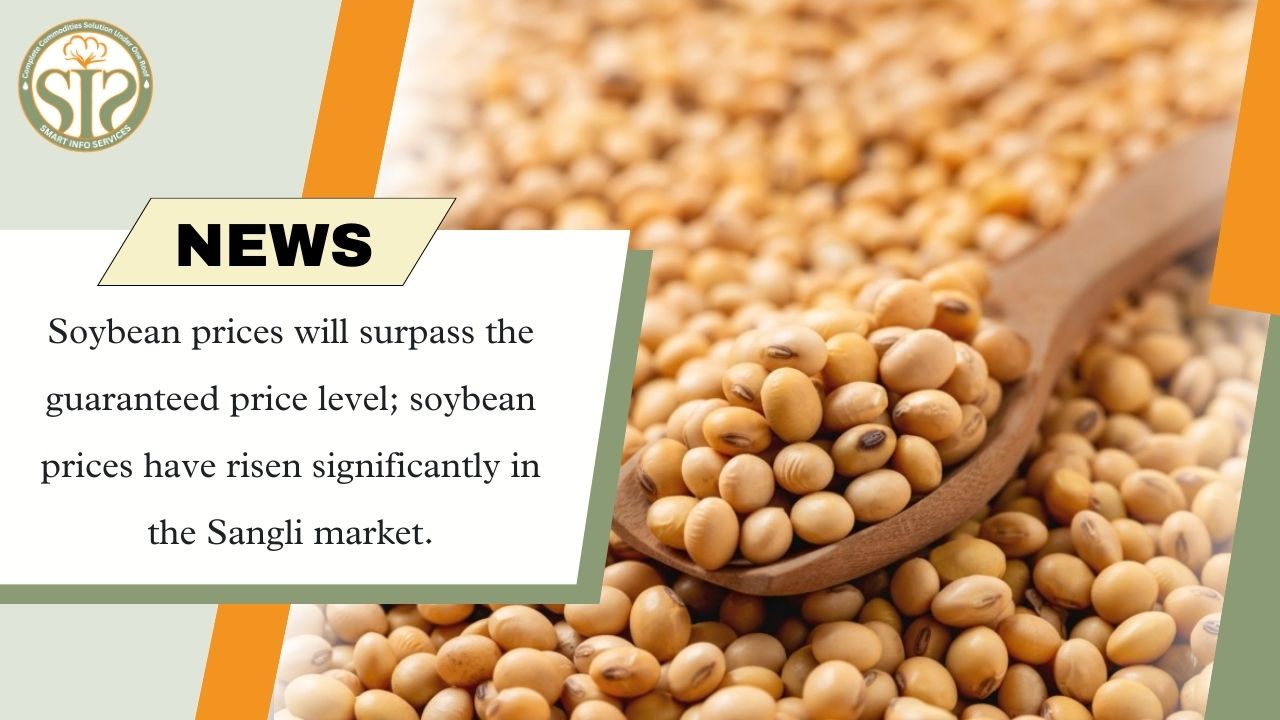
Soybean prices will surpass the guaranteed price level; soybean prices have risen significantly in the Sangli market.Soybean Market Prices: Soybean production in the district has declined this year. This is causing soybean prices to rise somewhat. For the past few days, soybean arrivals to the state's market committees have been declining, but demand is increasing.Soybean Market Prices: Soybean production in the district has declined this year. This is causing soybean prices to rise somewhat. For the past few days, soybean arrivals to the state's market committees have been declining, but demand is increasing.Sangli: There has been a significant increase in soybean demand at the national level. This is having a positive impact on prices, with the price of good quality soybeans increasing by 1,000 in just two days.Therefore, market experts are predicting that soybean prices will surpass the guaranteed price level. On Monday, a transaction at the Sangli market yard fetched a price of ₹4,500 per quintal.The minimum price for soybeans in the financial year 2025-26 is ₹5,328 per quintal. Farmers were unhappy with not receiving the minimum price for soybeans.Soybean production in the district has also declined this year. As a result, soybean prices are currently rising somewhat. For the past few days, soybean arrivals at state market committees have been declining, but demand is increasing. The price of high-quality soybeans, i.e., those used for seed, has increased by ₹1,500 in just two days, and mill-quality soybeans have reached ₹4,500.Two days ago, soybeans fetched up to ₹4,250 per quintal at the Sangli Market Committee, while on Monday, they fetched up to ₹4,500 per quintal at the same market committee.However, farmers are being advised to sell soybeans only after assessing the price.Reasons for Rising Soybean Prices◼️ Demand for soybean oil has increased recently. This has led to increased purchases by processing industries.◼️ On the other hand, soybean sowing has decreased this year's Kharif season.◼️ Furthermore, soybean procurement by NAFED has now begun. This is supporting prices.read more :- America's eyes on India's cotton market
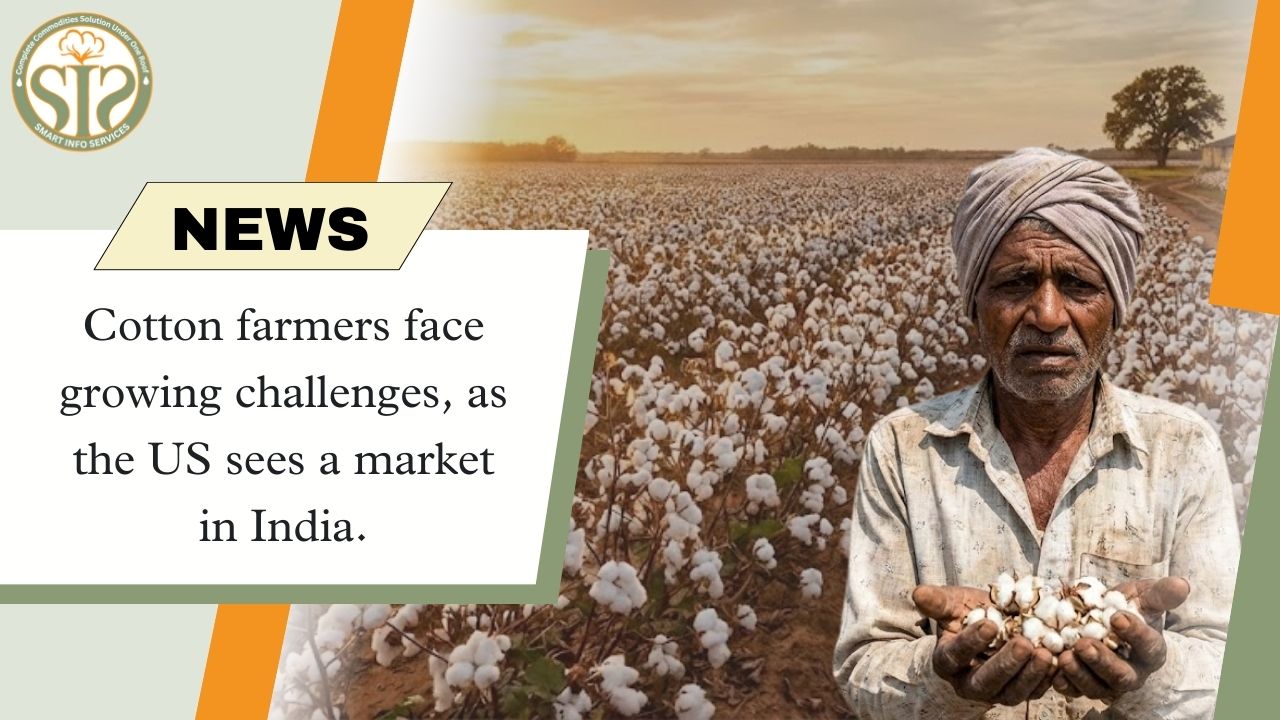
Cotton farmers face growing challenges, as the US sees a market in India.Previously, imports of raw cotton into India were subject to a five percent basic customs duty, a five percent agricultural infrastructure and development cess, and a ten percent social welfare surcharge, totaling eleven percent.This duty was imposed after the farmers' protest in February 2021, keeping in mind the interests of the country's cotton farmers. However, now, responding to the demand of the textile industry, the government has waived all customs duties on raw cotton imports effective August 19, 2025.Not only did the country's textile industry applaud this decision, the US Department of Agriculture also issued a statement, calling it a significant step and stating that it would increase US cotton exports to India. While this decision may benefit the US, it is hurting the country's farmers.According to the Global Trade Research Initiative (GTRI), the biggest beneficiary of this import duty exemption will undoubtedly be the US. The United States is the largest cotton exporter to India, and the new cotton crop begins arriving in the market from July to August.Importantly, the import duty was lifted just as the new cotton crop from Indian farmers was about to arrive in the market. The country's cotton harvest occurs from October to September, during which time farmers expect to receive good prices. Now, with the large-scale import of cotton from abroad, domestic cotton prices will fall.On the day the notification for the customs duty exemption was issued, the Cotton Corporation of India (CCI) reduced the price of cotton by Rs. 600 per candy (one candy = 356 kg), and the next day, it reduced it by another Rs. 500 per candy. Thus, within just ten days, the government itself reduced the minimum price of cotton by a total of Rs. 1700 per candy.The US ranks third in cotton production.Although India is the world's second-largest cotton producer, with domestic consumption accounting for 95 percent of total production. However, India's production of high-quality, or extra-long-staple cotton (ELS), is low, and its demand is met through imports.The Cotton Council International (CCI), a US agricultural trade body, has long demanded the removal of this tariff. The government has eliminated the 11 percent tariff on imports of high-quality, or extra-long-staple cotton, effective February 20, 2024. However, the tariff on short-staple cotton imports remained in place, which was lifted in August of this year.This move will protect Indian textile exporters' profits to some extent from the impact of US tariffs, but the country's farmers will bear the brunt of the impact, especially given the government's strong claims of doubling farmers' income.The government forgot to mention cotton farmers.The statement regarding the removal of customs duty on cotton addressed the interests of textile manufacturers and consumers, but the government neglected to mention cotton farmers. The second statement stated that farmers' interests are protected through the Minimum Support Price (MSP) system operated by the Cotton Corporation of India Limited, which ensures that farmers receive a price at least 50 percent higher than their production costs.The government determines the minimum support price based on the A-2 FL formula. According to this, the minimum support price for medium-staple cotton has been set at ₹7,121 per quintal for the year 2024-25. However, farmers' organizations are demanding that it be determined based on the C-2 formula, which requires it to be ₹10,075 per quintal. It should be noted that the C-2 formula for determining the minimum support price was suggested by Dr. MS Swaminathan.99% of cotton is cultivated as a Kharif crop.In India, cotton cultivation is primarily a Kharif crop, while in some parts of Tamil Nadu and other surrounding states, it is a Rabi crop. Approximately 6 million farming families in India earn their livelihoods from cotton cultivation. Additionally, 40-50 million other people are also involved in the cotton trade.Last year, cotton was cultivated on a total of 114.47 lakh hectares of cultivable land, representing 36.36 percent of the global cotton acreage of 314.79 lakh hectares. India ranks first in the world in terms of acreage and second only to China in production. However, the per hectare yield (437 kg per hectare) is significantly lower than the world average (833 kg per hectare).Thus, the average annual cotton production was 337 bales, while the procurement at the minimum support price was only 38 bales. This means that only 11.27 percent of the total cotton production was purchased by the government. Furthermore, out of the approximately six million cotton farmers who cultivate cotton annually, only 7.88 lakh farmers were purchased from cotton at the minimum support price. How will farmers' interests be protected under these circumstances?read more :- Rupee open Falls 15 Paise to 90.03/USD

Rupee opens 15 paise down at 90.03 against dollarIndian rupee opened lower at 90.03 per dollar on Wednesday against Tuesday's close of 89.88.read more :- Cotton crisis deepens: Opposition protests government inaction; farmers demand loan waivers and fair prices

Cotton Crisis Deepens as Opposition Slams Government, Farmers Demand Loan WaiversNagpur: The second day of the winter session began on a confrontational note on Tuesday, with the opposition cornering the state government over falling cotton prices and growing distress among farmers. Congress Legislature Party leader Vijay Wadettiwar protested on the steps of the Vidhan Bhavan, alleging that the state government was neglecting the welfare of farmers by reducing the import tariff from 12% to zero, leading to increased imports and lower incomes for local farmers.The protest began just seconds after Chief Minister Devendra Fadnavis, Deputy CM Eknath Shinde, Cultural Minister Ashish Shelar, Speaker Rahul Narvekar, and Council Chairperson Ram Shinde gathered on the steps of the Vidhan Bhavan for an official photo session with students from the Commonwealth Parliamentary Association (CPA).Holding a placard and raising slogans, Waddetiwar accused the government of neglecting cotton growers in Vidarbha and Marathwada. “Cotton must get a fair price. Farmers need fair compensation for their produce,” he shouted while leading the demonstration. The protests gained momentum, and leaders from the Maha Vikas Aghadi (MVA) camp also joined in.Speaking to the media, former MPCC president Nana Patole said the government had taken shortcuts in waiving farmers' loans, providing relief only to those who had approached the court. He alleged, “Only 500 crore rupees out of 1,500 crore rupees have been waived,” and said the government's approach prioritized vote bank funding over the welfare of farmers.Shiv Sena (UBT) leader Aditya Thackeray was seen holding a cotton plant as a symbol of farmers' suffering. He waved it while raising slogans and demanding immediate government intervention. Several opposition MLAs stood with him, holding banners demanding complete loan waivers and bonus procurement prices to stabilize the cotton sector.According to the opposition, market fluctuations and procurement delays have forced farmers to sell their produce at prices far below the Minimum Support Price (MSP). They alleged that government assurances have not been implemented, leaving cotton growers in debt and frustrated.The opposition has warned that they will intensify protests inside and outside the House until the government announces relief measures for cotton growers. With farmers' issues being discussed for the second consecutive day, the Winter Session is expected to be more chaotic.Earlier in the morning, Deputy Chief Minister Eknath Shinde, while briefing CPA students, targeted the opposition, saying that raising slogans on the steps of the Vidhan Bhavan is not "parliamentary procedure," as the real discussions and decisions take place inside the House.Read More :- The rupee rose 26 paise to close at 89.88 per dollar.

On tuesday, the Indian rupee rose 26 paise to close at 89.88 per dollar, compared to its opening price of 90.14 in the morning.At close, the Sensex was down 436.41 points, or 0.51 percent, at 84,666.28, and the Nifty was down 120.9 points, or 0.47 percent, at 25,839.65. About 2,403 shares advanced, 1,455 shares declined, and 127 shares remained unchanged.Read More :- Brazil has overtaken India to become Bangladesh's top cotton supplier.

Brazil Becomes Bangladesh’s Top Cotton SupplierAccording to a US Department of Agriculture (USDA) report, Brazil has overtaken neighboring India to become Bangladesh's leading supplier of raw cotton. Bangladesh is one of the world's top cotton importers and the second-largest garment exporter.In the 2024-25 marketing year (MY25), which began in August, Bangladesh imported 8.28 million bales of raw cotton. Brazil supplied approximately 1.9 million bales, accounting for 23 percent of total imports.India was the second-largest supplier with 1.4 million bales, followed by Benin (1.06 million bales), Cameroon (616,538 bales), and the United States (595,902 bales).The USDA report states that Brazilian cotton has become popular among Bangladeshi spinners due to its competitive price, wide availability during harvest, and stable supply.In FY2024, India was the top supplier, exporting 1.79 million bales (23 percent share). Bangladeshi importers purchased Indian cotton in a short period of time, primarily through the Kolkata and Benapole ports, despite higher prices and some quality issues.For the current marketing year, 2026, USDA estimates cotton imports from Bangladesh at 8.4 million bales, a 1.4 percent increase over 2025, primarily due to higher cotton consumption by local spinners. This is a 5.2 percent increase from 2024 imports of 7.8 million bales.The report highlights that cotton imports remained stable during MY25, despite initial disruptions to RMG production following the formation of a new interim government in August 2024 after former Prime Minister Sheikh Hasina fled amid a student-led uprising in July.However, domestic cotton production is expected to remain unchanged at 153,000 bales, limited by land scarcity and a long production period, with cotton cultivated on 45,000–46,000 hectares.The annual consumption capacity of Bangladesh's textile industry is approximately 15 million bales, depending on the availability of raw materials, power supply, and yarn demand.Currently, only half of this capacity is being utilized, and raw cotton consumption is projected to reach 8.3 million bales in fiscal year 2025. The USDA estimates that consumption will increase to 8.5 million bales in fiscal year 2026, a 2.4 percent increase in expected imports.The spinning industry uses raw cotton to produce cotton and blended yarn, and yarn production is expected to increase from 1.7 million tons to 1.9 million tons in 2026.Despite increasing imports and use of raw cotton, Bangladesh's readymade garment industry is still expected to import more yarn and fabric.India remains the largest supplier of cotton yarn to Bangladesh due to its large spinning industry, shorter shipment times, and lower logistics costs, while China is the top textile exporter, followed by Pakistan and IndiaRead More :- Farmers worried due to falling cotton prices

Gujarat farmer distress: Where cotton clouds hang heavy*Overview of Cotton Farming Crisis in Gujarat*The recent economic and environmental challenges faced by cotton farmers in Gujarat, India, have resulted in severe distress, leading to instances of farmer suicides. This summary explores the contributing factors to this crisis, the impact of government policies, and the responses from various stakeholders.*Economic and Environmental Challenges*Price Declines: Farmers faced low cotton prices, around ₹1,200-1,300 per mann (20 kg), which was a significant decline from previous years. Weather Issues: Non-seasonal and excessive rains in October damaged crops, further exacerbating the farmers' financial struggles.*Government Response*Relief Package: Chief Minister announced a relief and assistance package worth approximately ₹10,000 crore, with plans to procure various crops at support prices.Import Duty Waivers: The Union government waived customs duties on raw cotton imports, aiming to stabilize textile costs but adversely affecting domestic cotton prices.*Impact of Import Policies*Increased Imports: India nearly doubled its cotton imports compared to the previous year, leading to a further decline in domestic prices. Industry vs. Farmers: While the textile industry benefits from cheaper imported cotton, Indian farmers receive lower prices for their produce.*Agricultural and Market Dynamics*Production and Acreage: The provisional cotton acreage for 2024-25 is 114.47 lakh ha, a decrease from 2023-24, with yields expected to remain constant. Market Access Issues: Farmers face logistical barriers, such as the absence of local market yards, forcing them to sell produce in distant districts.*Farmer Protests*Suicides and Protests: Six farmers, primarily cotton growers, have died by suicide in recent months, prompting protests against the government's policies and lack of adequate price support.Challenges in Cotton ProductionInput Costs: Rising costs of seeds and pesticides, coupled with stagnant cotton prices, have discouraged farmers from cultivating cotton.Shift to Alternative Crops: Many farmers are shifting to peanuts, pulses, or traditional cotton varieties like kala kapas to reduce input costs.*Industry Perspectives*Quality and Yield Issues: Low-quality seeds and reduced yields are major challenges. Farmers are advocating for new seed approvals to enhance productivity.Impact on Ginning Mills: The duty-free import policy benefits spinning mills but poses a threat to ginning mills, causing many to shut down.*Conclusion*The cotton farming crisis in Gujarat is multifaceted, involving economic, environmental, and systemic challenges. While government measures aim to stabilize the industry, they often fall short of addressing the root causes of farmer distress. For sustainable solutions, there is a need for comprehensive policy interventions that balance industry growth with farmer welfare.read more :- The rupee fall 05 paise to open at 90.14/USD.

he rupee fell 05 paise to open at 90.14 per dollar.The Indian rupee opened at 90.14 per dollar on tuesday, compared to the previous close of 90.09.read more :- Rupee falls 03 paise to close at 90.09 per dollar

On Monday, the Indian rupee fell 03 paise to close at 90.09 per dollar, compared to its opening price of 90.06 in the morning.At the close, the Sensex fell 609.68 points, or 0.71 percent, to 85,102.69, and the Nifty fell 225.90 points, or 0.86 percent, to 25,960.55. Around 824 shares advanced, 3,146 declined, and 145 remained unchanged.read more :- Soybeans worth Rs 83 lakh purchased at guaranteed price in Satara

Soybean Procurement: Satara District Purchases Soybeans Worth ₹83 Lakh at Guaranteed PriceTwo soybean procurement centers in Satara district, Koregaon and Masur (Tal. Karhad), have been opened at a base price of ₹5,328 per quintal, and by the end of December 5th, they had procured 1,1561 quintals of soybeans worth ₹83,17,000. The remaining four approved centers have not yet been operational.This year, soybeans were sown on 86,000 hectares in the district. Immediately after harvesting, most farmers began selling large quantities of soybeans at rates ranging from ₹4.50 to ₹4,700.Procurement centers should have been operational at that time at the base price; however, registration for the Satara, Phaltan, Wai, Koregaon, Karhad, and Masur centers in the district began on October 15th, with labor charges. However, the actual opening of these centers only began in the first week of November. Therefore, these centers have not received much response except in Koregaon and Masur.A total of 1,101 quintals of lentils and 460 quintals of masoor have been purchased at the Koregaon center, and a total of 1,561 quintals of lentils have been purchased at a rate of ₹5,328 per quintal. Seventeen farmers have registered at the Satara center in the district, 142 at the Phaltan center, and 61 at the Wai center; but the centers have not yet been operational.Low Response from FarmersSince soybean is the main crop during the Kharif season, production is highest. Due to rains during harvest time and a lack of procurement centers, there has been a low response from soybean farmers. Although farmers are receiving low prices due to the conditions at the center and transportation problems, traders have sold their soybean.Due to the lack of improvement in prices over the past three years, the storage capacity for soybeans has also decreased. To benefit farmers, the government is demanding that soybean centers be established before the harvest and at one in every four to five villages, rather than at the taluka level. read more :- Cotton procurement process slows in Nanded, buying slows down

Maharashtra: Cotton Procurement: Cotton procurement in Nanded is progressing at a very slow pace.Nanded: The procurement process at various cotton procurement centers in Nanded district has still not picked up pace. As of December 1, a total of 28,847 quintals of cotton had been procured from 1,933 farmers in the district. A total of 14,619 farmers had registered to sell cotton in the district, of which 5,051 entries have been approved by the market committee, and the number of pending entries is 8,107. The highest quantity of cotton, 11,908 quintals, was procured at the New Bharat Cotton Naigaon Center.Cotton procurement in the district is being done according to the central government's minimum guaranteed price. The price for medium-yarn cotton is ₹7,710 per quintal, while the price for long-yarn cotton is ₹8,110 per quintal. Procurement is taking place at nine locations in the district, namely Kinwat, Ardhapur, Bhokar, Naigaon, and Hadgaon talukas.4650.05 quintals of cotton was purchased from 282 farmers at Salasar Ginning Center in Kaldagaon, Ardhapur taluka. 1559 farmers have registered at this center. 2391 quintals were purchased at Nataraj and Balaji Ginning Center, Tasga (Tal. Hadgaon). A total of 1658 farmers have registered at Nataraj and Balaji Ginning Centers. 2923 quintals of cotton was purchased from 218 farmers at Venkatesh Cotton, Bhokar.3161 farmers have registered at this center. 11,908 quintals of cotton was purchased at New Bharat Cotton, Naigaon. The highest number of 5023 farmers have registered at this center. Of these, cotton from 777 registered farmers was purchased.Three centers, Manjeet Cotton, L.B. Cotton and Mahavir Ginning purchased 5,194 quintals of cotton. Cotton was purchased from 366 farmers. Vijay Cotton, Kinwat, had 1,585 registered farmers. Of these, 1,370 quintals of cotton was purchased from 74 farmers.read more :-“Earning 80,000 rupees by cultivating cotton on barren land”

Haryana: Earning 80,000 Rupees per acre by growing cotton on barren landWhile farmers in the region rely solely on paddy crops and abandon land they consider barren and infertile, Haryana farmers are earning thousands of rupees per acre by cultivating cotton on that very land.Farmer Naveen Hooda, who leased 120 acres of fallow land in village Ravan, 10 kilometers away, has been cultivating cotton for the past 5-6 years, earning over 75,000 to 80,000 Rupees per acre. The farmer explained that he has been cultivating cotton on this land, which lacks irrigation facilities, relying solely on rain for the past few years.Furthermore, in villages like Pattharchuwa, farmers from Haryana like Ramhet, Jagbir, and Kuldeep are also cultivating cotton on similar land. They explained that a plot of 50 to 100 acres is not available in Haryana, so they come to Chhattisgarh to cultivate cotton. He said that farmers in Chhattisgarh and the region could also do this if they wanted to, but perhaps they aren't interested. When this was discussed with Ramprasad Yadav, Dars Sahu, Jeevan Sahu, and Krishna of Tildabandha, they said that they used to grow pulses and oilseeds on the land where they grow paddy, but are unable to do so due to the monkey menace.They don't have much knowledge about growing crops like sugarcane and cotton. Gradually, as awareness grows, the production of these crops will certainly increase, leading to increased profits. The farmers explained that this crop, which takes six to eight months to mature, costs approximately ₹25,000 per acre for seeds, plowing the land, applying fertilizers and pesticides, and harvesting the cotton. Furthermore, there are additional costs for land lease and crop transportation. He told that the production of cotton per acre is about 18 quintals, which after being harvested by local labourers coming from Punjab at the rate of ₹8 per kg, is taken to places like Berla in Chhattisgarh and Nagpur in Maharashtra and sold at the rate of about ₹7000 to ₹8000 per quintal.read more :- Rupee open Falls 08 Paise to 90.06 /USD

Rupee falls 08 paisa to open at 90.06 per dollarIndian rupee opened at 90.06 per dollar on monday versus previous close of 89.98.read more :- “2024-25: State-wise CCI Cotton Sales Details”
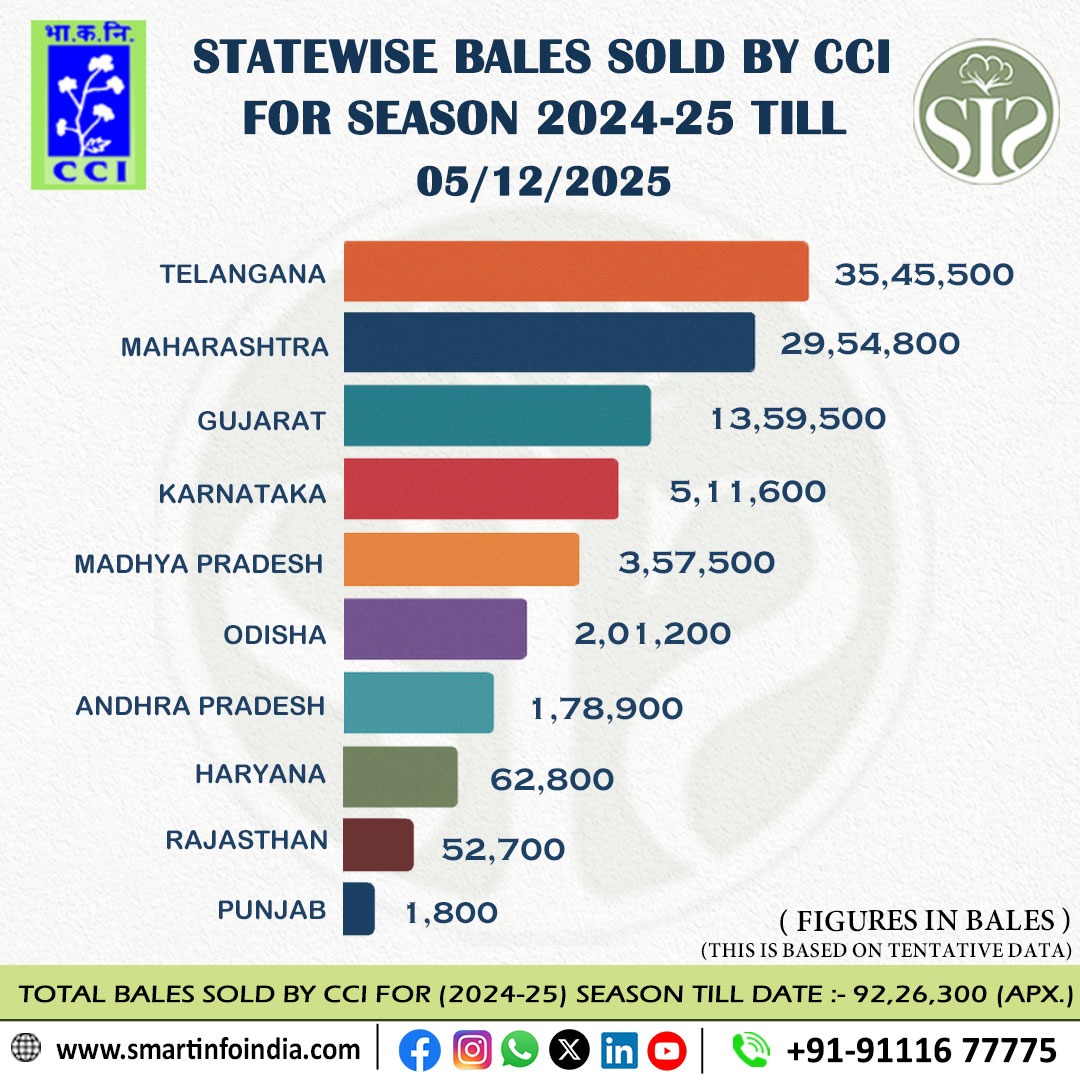
State-wise CCI Cotton Sales Details – 2024-25 SeasonThe Cotton Corporation of India (CCI) kept its prices unchanged this week and sold approximately 92,26,300 bales for the season 2024-25. This represents around 92.26% of the total cotton procured so far this season.A state-wise breakdown of sales indicates strong activity from Maharashtra, Telangana, and Gujarat, which together account for over 85.18% of the total sales to date.This data underscores CCI’s proactive efforts in stabilizing the cotton market and ensuring steady supply across key cotton-producing states.

India-Russia Economic Cooperation Strengthens with 2030 RoadmapIndia and Russia have unveiled a comprehensive plan to expand their economic cooperation, announcing a comprehensive program for economic cooperation until 2030 during President Vladimir Putin's state visit to New Delhi on December 4-5, 2025.Indian Prime Minister Narendra Modi and President Putin reiterated that their eight-decade-old partnership—built on trust, mutual respect, and strategic convergence—remains a pillar of stability amid global geopolitical uncertainty.PM Modi stated that the new roadmap will make mutual trade "more diversified, balanced, and sustainable," and will open up avenues for co-production, co-innovation, and deeper industrial cooperation. Central to this objective are ongoing negotiations on a free trade agreement between India and the Eurasian Economic Union, the completion of which is expected to open up new export opportunities.A key highlight was the adoption of the "Program 2030," which prioritizes balanced trade, simplified payment systems, the removal of tariff and non-tariff barriers, and greater logistics efficiency. Both sides are working to strengthen settlements in national currencies and explore interoperability between payment systems and digital currency platforms. The two countries reaffirmed the revised bilateral trade target of $100 billion by 2030 in a joint statement.Energy security—which has long been the backbone of the partnership—was given renewed emphasis. The two countries pledged to expand cooperation in oil, gas, petrochemicals, underground coal gasification, LNG and LPG infrastructure, and nuclear energy. Russia and India agreed to fast-track the delivery schedule of equipment and fuel for the Kudankulam Nuclear Power Plant and to continue negotiations on a second nuclear site in India.Connectivity emerged as a top priority, with new momentum being provided for the International North-South Transport Corridor (INSTC), the Chennai-Vladivostok Maritime Corridor, and the Northern Sea Route. An MoU on training Indian sailors for polar operations is expected to strengthen cooperation in the Arctic and create new employment opportunities.Deep engagement in the Russian Far East and the Arctic was reaffirmed, supported by a separate cooperation program for 2024–2029. Sectors such as agriculture, energy, manpower, mining, diamonds, pharmaceuticals, and maritime transport will be focus areas.Leaders also emphasized the growing importance of minerals essential for clean energy and high-tech manufacturing. Both sides pledged stronger cooperation in exploration, processing, and recycling technologies, along with plans for joint ventures in fertilizers and long-term supply arrangements.People-focused initiatives were a major part of the discussions. India recently opened new consulates in Yekaterinburg and Kazan, while Russia will soon benefit from free 30-day e-tourist visas and a group visa scheme. New agreements on skilled manpower mobility, joint vocational training, and enhanced academic exchanges aim to build deeper societal ties.Modi and Putin reiterated their long-standing cooperation on counter-terrorism, condemned recent attacks in India and Russia, and called for a zero-tolerance policy on extremism. They also reaffirmed their close coordination on key multilateral platforms such as the UN, G20, BRICS, and SCO, with Russia reiterating its support for India's bid for permanent membership of the UN Security Council.From civil nuclear technology and space cooperation – including working together on rocket engines and human spaceflight – to enhancing defense co-development and co-production under Make in India, the summit demonstrated the multi-dimensional depth of the India-Russia partnership.Putin thanked Modi for his warm hospitality and invited him to visit Russia for the next annual summit in 2026, marking another step in the continued development of the relationship he described as “special and privileged.”read more :- "Farmers appeal to PM on cotton procurement ban"
બુધવારે ભારતીય રૂપિયો 06 પૈસા વધીને 89.97 પ્રતિ ડોલર પર બંધ થયો હતો, જ્યારે સવારે તે 90.03 પર ખુલ્યો હતો.બંધ સમયે, સેન્સેક્સ 275.01 પોઈન્ટ અથવા 0.32 ટકા ઘટીને 84,391.27 પર અને નિફ્ટી 81.65 પોઈન્ટ અથવા 0.32 ટકા ઘટીને 25,758 પર બંધ થયો હતો. લગભગ 1830 શેર વધ્યા, 2186 શેર ઘટ્યા અને 133 શેર યથાવત રહ્યા.વધુ વાંચો :- સોયાબીનના ભાવ ગેરંટીકૃત ભાવને વટાવી ગયા, સાંગલીમાં વધારો

સોયાબીનના ભાવમાં તેજી: MSP પાર જવાની શક્યતા, સાંગલી બજારમાં ઉછાળોસાંગલી: જિલ્લામાં આ વર્ષે સોયાબીનના ઉત્પાદનમાં ઘટાડા વચ્ચે બજારમાં ભાવોમાં નોંધપાત્ર વધારો જોવા મળી રહ્યો છે. છેલ્લા કેટલાક દિવસોમાં બજાર સમિતિઓમાં આવક ઘટી રહી છે જ્યારે માંગ સતત વધી રહી છે, જેના કારણે ભાવમાં મજબૂતી આવી છે।રાષ્ટ્રીય સ્તરે વધતી માંગનો સીધો પ્રભાવ બજાર પર પડી રહ્યો છે. ખાસ કરીને સારી ગુણવત્તાવાળા સોયાબીનના ભાવમાં માત્ર બે દિવસમાં આશરે ₹1,000 સુધીનો ઉછાળો નોંધાયો છે. સોમવારે સાંગલી માર્કેટ યાર્ડમાં સોયાબીનનો ભાવ ₹4,500 પ્રતિ ક્વિન્ટલ સુધી પહોંચ્યો હતો।હાલમાં 2025-26 માટે સોયાબીનનો લઘુત્તમ આધાર ભાવ (MSP) ₹5,328 પ્રતિ ક્વિન્ટલ છે. બજાર નિષ્ણાતોનું માનવું છે કે આવનારા સમયમાં ભાવ MSP સ્તરને વટાવી શકે છે, જે ખેડૂતો માટે સકારાત્મક સંકેત છે।જિલ્લામાં ઉત્પાદન ઘટવાથી સપ્લાય ઓછી થઈ છે, જ્યારે માંગમાં વધારો થયો છે. ખાસ કરીને બીજ માટે વપરાતા ઉચ્ચ ગુણવત્તાવાળા સોયાબીનના ભાવમાં બે દિવસમાં ₹1,500 સુધીનો વધારો થયો છે. બે દિવસ પહેલા જે ભાવ ₹4,250 હતો, તે હવે વધીને ₹4,500 સુધી પહોંચી ગયો છે।ખેડૂતોને હાલના બજાર પરિસ્થિતિને ધ્યાનમાં રાખીને યોગ્ય સમયે વેચાણ કરવાની સલાહ આપવામાં આવી રહી છે।ભાવ વધવાના મુખ્ય કારણો:સોયાબીન તેલની વધતી માંગને કારણે પ્રોસેસિંગ ઉદ્યોગોમાં ખરીદી વધીચાલુ ખરીફ સીઝનમાં વાવેતર ઓછું રહેવુંNAFED દ્વારા શરૂ કરાયેલ ખરીદીથી બજારમાં ભાવને ટેકો મળવોકુલ મળીને, સોયાબીન બજારમાં તેજીનો ટ્રેન્ડ જોવા મળી રહ્યો છે અને નજીકના સમયમાં ભાવ વધુ મજબૂત થવાની શક્યતા છે।વધુ વાંચો :- અમેરિકાની નજર ભારતના કપાસ બજાર પર

કપાસના ખેડૂતો વધતા પડકારોનો સામનો કરી રહ્યા છે, કારણ કે અમેરિકા ભારતમાં બજાર જોઈ રહ્યું છે.અગાઉ, ભારતમાં કાચા કપાસની આયાત પર પાંચ ટકા મૂળભૂત કસ્ટમ ડ્યુટી, પાંચ ટકા કૃષિ માળખાગત અને વિકાસ ઉપકર અને દસ ટકા સામાજિક કલ્યાણ સરચાર્જ લાગતો હતો, જે કુલ અગિયાર ટકા હતો.દેશના કપાસના ખેડૂતોના હિતોને ધ્યાનમાં રાખીને, ફેબ્રુઆરી 2021 માં ખેડૂતોના વિરોધ પછી આ ડ્યુટી લાદવામાં આવી હતી. જો કે, હવે, કાપડ ઉદ્યોગની માંગને ધ્યાનમાં રાખીને, સરકારે 19 ઓગસ્ટ, 2025 થી અમલમાં આવતા કાચા કપાસની આયાત પરની તમામ કસ્ટમ ડ્યુટી માફ કરી દીધી છે.દેશના કાપડ ઉદ્યોગે આ નિર્ણયને માત્ર વખાણ્યો જ નહીં, પરંતુ યુએસ ડિપાર્ટમેન્ટ ઓફ એગ્રીકલ્ચરે પણ એક નિવેદન બહાર પાડીને તેને એક મહત્વપૂર્ણ પગલું ગણાવ્યું અને કહ્યું કે તેનાથી ભારતમાં યુએસ કપાસની નિકાસ વધશે. જ્યારે આ નિર્ણય અમેરિકાને ફાયદો કરાવી શકે છે, તે દેશના ખેડૂતોને નુકસાન પહોંચાડી રહ્યો છે.ગ્લોબલ ટ્રેડ રિસર્ચ ઇનિશિયેટિવ (GTRI) અનુસાર, આ આયાત ડ્યુટી મુક્તિનો સૌથી મોટો લાભ નિઃશંકપણે યુએસને મળશે. યુનાઇટેડ સ્ટેટ્સ ભારતમાં કપાસનો સૌથી મોટો નિકાસકાર દેશ છે, અને જુલાઈથી ઓગસ્ટ દરમિયાન નવો કપાસનો પાક બજારમાં આવવાનું શરૂ થાય છે.મહત્વની વાત એ છે કે, ભારતીય ખેડૂતો પાસેથી નવો કપાસનો પાક બજારમાં આવવાનો હતો તે જ સમયે આયાત ડ્યુટી હટાવી લેવામાં આવી હતી. દેશમાં કપાસનો પાક ઓક્ટોબરથી સપ્ટેમ્બર દરમિયાન થાય છે, આ સમય દરમિયાન ખેડૂતોને સારા ભાવ મળવાની અપેક્ષા છે. હવે, વિદેશથી કપાસની મોટા પાયે આયાત સાથે, સ્થાનિક કપાસના ભાવ ઘટશે.જે દિવસે કસ્ટમ ડ્યુટી મુક્તિ માટે સૂચના જારી કરવામાં આવી હતી, તે દિવસે કોટન કોર્પોરેશન ઓફ ઇન્ડિયા (CCI) એ કપાસના ભાવમાં પ્રતિ કેન્ડી 600 રૂપિયા (એક કેન્ડી = 356 કિલો) ઘટાડો કર્યો હતો, અને બીજા દિવસે, તેણે પ્રતિ કેન્ડી 500 રૂપિયાનો ઘટાડો કર્યો હતો. આમ, માત્ર દસ દિવસમાં, સરકારે પોતે કપાસના લઘુત્તમ ભાવમાં પ્રતિ કેન્ડી 1700 રૂપિયાનો ઘટાડો કર્યો હતો.કપાસના ઉત્પાદનમાં યુએસ ત્રીજા ક્રમે છે.જોકે ભારત વિશ્વનો બીજો સૌથી મોટો કપાસ ઉત્પાદક દેશ છે, સ્થાનિક વપરાશ કુલ ઉત્પાદનના 95 ટકા હિસ્સો ધરાવે છે. જોકે, ભારતમાં ઉચ્ચ-ગુણવત્તાવાળા અથવા એક્સ્ટ્રા-લોંગ-સ્ટેપલ કપાસ (ELS) નું ઉત્પાદન ઓછું છે, અને તેની માંગ આયાત દ્વારા પૂરી થાય છે.યુએસ કૃષિ વેપાર સંસ્થા, કોટન કાઉન્સિલ ઇન્ટરનેશનલ (CCI), લાંબા સમયથી આ ટેરિફ દૂર કરવાની માંગ કરી રહી છે. સરકારે 20 ફેબ્રુઆરી, 2024 થી અમલમાં આવતા ઉચ્ચ-ગુણવત્તાવાળા અથવા એક્સ્ટ્રા-લોંગ-સ્ટેપલ કપાસની આયાત પરનો 11 ટકા ટેરિફ નાબૂદ કર્યો છે. જોકે, ટૂંકા-સ્ટેપલ કપાસની આયાત પરનો ટેરિફ યથાવત્ રહ્યો, જે આ વર્ષના ઓગસ્ટમાં ઉઠાવી લેવામાં આવ્યો હતો.આ પગલાથી ભારતીય કાપડ નિકાસકારોના નફાને યુએસ ટેરિફની અસરથી અમુક અંશે રક્ષણ મળશે, પરંતુ દેશના ખેડૂતોને તેની અસરનો ભોગ બનવું પડશે, ખાસ કરીને સરકારના ખેડૂતોની આવક બમણી કરવાના મજબૂત દાવાઓને ધ્યાનમાં રાખીને.સરકાર કપાસના ખેડૂતોનો ઉલ્લેખ કરવાનું ભૂલી ગઈ.કપાસ પર કસ્ટમ ડ્યુટી નાબૂદ કરવા અંગેના નિવેદનમાં કાપડ ઉત્પાદકો અને ગ્રાહકોના હિતોને સંબોધવામાં આવ્યા હતા, પરંતુ સરકારે કપાસના ખેડૂતોનો ઉલ્લેખ કરવાનું અવગણ્યું હતું. બીજા નિવેદનમાં જણાવાયું છે કે ખેડૂતોના હિતોનું રક્ષણ કોટન કોર્પોરેશન ઓફ ઈન્ડિયા લિમિટેડ દ્વારા સંચાલિત લઘુત્તમ ટેકાના ભાવ (MSP) સિસ્ટમ દ્વારા કરવામાં આવે છે, જે ખાતરી કરે છે કે ખેડૂતોને તેમના ઉત્પાદન ખર્ચ કરતાં ઓછામાં ઓછા 50 ટકા વધુ ભાવ મળે.સરકાર A-2 FL ફોર્મ્યુલાના આધારે લઘુત્તમ ટેકાના ભાવ નક્કી કરે છે. આ મુજબ, મધ્યમ-મુખ્ય કપાસ માટે લઘુત્તમ ટેકાના ભાવ વર્ષ 2024-25 માટે ₹7,121 પ્રતિ ક્વિન્ટલ નક્કી કરવામાં આવ્યા છે. જોકે, ખેડૂત સંગઠનો માંગ કરી રહ્યા છે કે તે C-2 ફોર્મ્યુલાના આધારે નક્કી કરવામાં આવે, જેના માટે તે ₹10,075 પ્રતિ ક્વિન્ટલ હોવું જરૂરી છે. એ નોંધવું જોઈએ કે લઘુત્તમ ટેકાના ભાવ નક્કી કરવા માટે C-2 ફોર્મ્યુલા ડૉ. એમ.એસ. સ્વામીનાથન દ્વારા સૂચવવામાં આવ્યું હતું.99% કપાસ ખરીફ પાક તરીકે ઉગાડવામાં આવે છે.ભારતમાં, કપાસની ખેતી મુખ્યત્વે ખરીફ પાક છે, જ્યારે તમિલનાડુ અને આસપાસના અન્ય રાજ્યોના કેટલાક ભાગોમાં, તે રવિ પાક છે. ભારતમાં આશરે 6 મિલિયન ખેડૂત પરિવારો કપાસની ખેતીમાંથી પોતાનું ગુજરાન ચલાવે છે. વધુમાં, 40-50 મિલિયન અન્ય લોકો પણ કપાસના વેપારમાં સામેલ છે.ગયા વર્ષે, કુલ 114.47 લાખ હેક્ટર ખેતીલાયક જમીન પર કપાસનું વાવેતર કરવામાં આવ્યું હતું, જે 314.79 લાખ હેક્ટરના વૈશ્વિક કપાસના વાવેતર વિસ્તારના 36.36 ટકાનું પ્રતિનિધિત્વ કરે છે. ભારત વાવેતર વિસ્તારની દ્રષ્ટિએ વિશ્વમાં પ્રથમ ક્રમે છે અને ઉત્પાદનમાં ચીન પછી બીજા ક્રમે છે. જોકે, પ્રતિ હેક્ટર ઉપજ (437 કિલો પ્રતિ હેક્ટર) વિશ્વ સરેરાશ (833 કિલો પ્રતિ હેક્ટર) કરતા નોંધપાત્ર રીતે ઓછી છે.આમ, સરેરાશ વાર્ષિક કપાસનું ઉત્પાદન 337 ગાંસડી હતું, જ્યારે લઘુત્તમ ટેકાના ભાવે ખરીદી માત્ર 38 ગાંસડી હતી. આનો અર્થ એ થયો કે કુલ કપાસ ઉત્પાદનના માત્ર 11.27 ટકા જ સરકારે ખરીદી હતી. વધુમાં, વાર્ષિક કપાસ ઉગાડતા આશરે છ મિલિયન કપાસ ખેડૂતોમાંથી, ફક્ત 7.88 લાખ ખેડૂતોને લઘુત્તમ ટેકાના ભાવે કપાસમાંથી ખરીદી કરવામાં આવી હતી. આ સંજોગોમાં ખેડૂતોના હિતોનું રક્ષણ કેવી રીતે થશે?વધુ વાંચો :- રૂપિયો 15 પૈસા ઘટીને 90.03/યુએસડી પર ખુલ્યો

ડોલર સામે રૂપિયો ૧૫ પૈસા ઘટીને ૯૦.૦૩ પર ખુલ્યો.બુધવારે ડોલર સામે ભારતીય રૂપિયો ૯૦.૦૩ પર ખુલ્યો, જે મંગળવારે ૮૯.૮૮ ના ઉચ્ચતમ સ્તર પર બંધ થયો હતો.વધુ વાંચો :- કપાસનું સંકટ વધુ ઘેરું: સરકારની નિષ્ક્રિયતાનો વિરોધ; ખેડૂતોએ લોન માફી અને વાજબી ભાવની માંગણી કરી

કપાસનું સંકટ વધુ ઘેરું બન્યું, વિપક્ષ સરકારની ટીકા કરી રહ્યું છે, ખેડૂતોએ લોન માફીની માંગ કરી છેનાગપુર: મંગળવારે શિયાળુ સત્રનો બીજો દિવસ ઘર્ષણપૂર્ણ રીતે શરૂ થયો, જેમાં કપાસના ભાવમાં ઘટાડો અને ખેડૂતોમાં વધતી જતી તકલીફને લઈને વિપક્ષે રાજ્ય સરકારને ઘેરી લીધી. કોંગ્રેસ વિધાનસભા પક્ષના નેતા વિજય વાડેટ્ટીવારે વિધાન ભવનના પગથિયાં પર વિરોધ પ્રદર્શન કર્યું, અને આરોપ લગાવ્યો કે રાજ્ય સરકાર આયાત ટેરિફ 12% થી ઘટાડીને શૂન્ય કરીને ખેડૂતોના કલ્યાણની અવગણના કરી રહી છે, જેના કારણે આયાતમાં વધારો થયો છે અને સ્થાનિક ખેડૂતોની આવકમાં ઘટાડો થયો છે.મુખ્યમંત્રી દેવેન્દ્ર ફડણવીસ, નાયબ મુખ્યમંત્રી એકનાથ શિંદે, સાંસ્કૃતિક મંત્રી આશિષ શેલાર, સ્પીકર રાહુલ નાર્વેકર અને કાઉન્સિલના અધ્યક્ષ રામ શિંદે કોમનવેલ્થ પાર્લામેન્ટરી એસોસિએશન (CPA) ના વિદ્યાર્થીઓ સાથે સત્તાવાર ફોટો સેશન માટે વિધાન ભવનના પગથિયાં પર એકઠા થયા તેના થોડીવાર પછી જ વિરોધ પ્રદર્શન શરૂ થયું.પ્લેકાર્ડ પકડીને અને સૂત્રોચ્ચાર કરતા, વાડેટ્ટીવારે સરકાર પર વિદર્ભ અને મરાઠવાડામાં કપાસ ઉગાડનારાઓની અવગણના કરવાનો આરોપ લગાવ્યો. "કપાસને વાજબી ભાવ મળવો જોઈએ. ખેડૂતોને તેમના ઉત્પાદન માટે વાજબી વળતરની જરૂર છે," તેમણે પ્રદર્શનનું નેતૃત્વ કરતી વખતે બૂમ પાડી. વિરોધ પ્રદર્શનોએ જોર પકડ્યું અને મહા વિકાસ આઘાડી (MVA) કેમ્પના નેતાઓ પણ તેમાં જોડાયા.મીડિયા સાથે વાત કરતા, ભૂતપૂર્વ MPCC પ્રમુખ નાના પટોલેએ જણાવ્યું હતું કે સરકારે ખેડૂતોના દેવા માફ કરવામાં ટૂંકા ગાળાનો રસ્તો અપનાવ્યો છે, ફક્ત કોર્ટમાં ગયેલા લોકોને જ રાહત આપી છે. તેમણે આરોપ લગાવ્યો કે, "1,500 કરોડ રૂપિયામાંથી ફક્ત 500 કરોડ રૂપિયા માફ કરવામાં આવ્યા છે," અને કહ્યું કે સરકારનો અભિગમ ખેડૂતોના કલ્યાણ કરતાં વોટ બેંક ભંડોળને પ્રાથમિકતા આપે છે.શિવસેના (UBT) ના નેતા આદિત્ય ઠાકરે ખેડૂતોના દુઃખના પ્રતીક તરીકે કપાસનો છોડ પકડીને જોવા મળ્યા. તેમણે સૂત્રોચ્ચાર કરતા અને તાત્કાલિક સરકારી હસ્તક્ષેપની માંગણી કરતી વખતે તેને લહેરાવ્યો. ઘણા વિપક્ષી ધારાસભ્યો તેમની સાથે ઉભા હતા, કપાસ ક્ષેત્રને સ્થિર કરવા માટે સંપૂર્ણ લોન માફી અને બોનસ ખરીદી ભાવની માંગ કરતા બેનરો પકડીને ઉભા હતા.વિપક્ષના મતે, બજારમાં વધઘટ અને ખરીદીમાં વિલંબને કારણે ખેડૂતો લઘુત્તમ ટેકાના ભાવ (MSP) કરતા ઘણા ઓછા ભાવે તેમની ઉપજ વેચવા મજબૂર થયા છે. તેમણે આરોપ લગાવ્યો કે સરકારી ખાતરીઓનો અમલ કરવામાં આવ્યો નથી, જેના કારણે કપાસના ખેડૂતો દેવામાં ડૂબી ગયા છે અને હતાશ થઈ ગયા છે.વિપક્ષે ચેતવણી આપી છે કે જ્યાં સુધી સરકાર કપાસ ઉગાડનારાઓ માટે રાહત પગલાંની જાહેરાત નહીં કરે ત્યાં સુધી તેઓ ગૃહની અંદર અને બહાર વિરોધ પ્રદર્શનો વધુ તીવ્ર બનાવશે. સતત બીજા દિવસે ખેડૂતોના મુદ્દાઓ પર ચર્ચા થઈ રહી હોવાથી, શિયાળુ સત્ર વધુ અસ્તવ્યસ્ત બનવાની ધારણા છે.વહેલી સવારે, નાયબ મુખ્યમંત્રી એકનાથ શિંદેએ સીપીએ વિદ્યાર્થીઓને બ્રીફિંગ કરતી વખતે વિપક્ષ પર નિશાન સાધતા કહ્યું કે વિધાન ભવનના પગથિયાં પર સૂત્રોચ્ચાર કરવા એ "સંસદીય પ્રક્રિયા" નથી, કારણ કે વાસ્તવિક ચર્ચાઓ અને નિર્ણયો ગૃહની અંદર થાય છે.વધુ વાંચો :- રૂપિયો ૨૬ પૈસા વધીને ૮૯.૮૮ પ્રતિ ડોલર પર બંધ થયો.

મંગળવારે, ભારતીય રૂપિયો ૨૬ પૈસા વધીને ૮૯.૮૮ પ્રતિ ડોલર પર બંધ થયો, જે સવારે ૯૦.૧૪ ના શરૂઆતના ભાવથી બંધ થયો હતો.બંધ સમયે, સેન્સેક્સ ૪૩૬.૪૧ પોઈન્ટ અથવા ૦.૫૧ ટકા ઘટીને ૮૪,૬૬૬.૨૮ પર અને નિફ્ટી ૧૨૦.૯ પોઈન્ટ અથવા ૦.૪૭ ટકા ઘટીને ૨૫,૮૩૯.૬૫ પર બંધ થયો. લગભગ ૨,૪૦૩ શેર વધ્યા, ૧,૪૫૫ શેર ઘટ્યા અને ૧૨૭ શેર યથાવત રહ્યા.વધુ વાંચો :- બ્રાઝિલ ભારતને પાછળ છોડીને બાંગ્લાદેશનો ટોચનો કપાસ સપ્લાયર બન્યો છે.

બ્રાઝિલ બાંગ્લાદેશનું ટોપ કોટન સપ્લાયર બન્યુંયુએસ ડિપાર્ટમેન્ટ ઓફ એગ્રીકલ્ચર (યુએસડીએ) ના અહેવાલ મુજબ, બ્રાઝિલ પડોશી ભારતને પાછળ છોડીને બાંગ્લાદેશનો કાચા કપાસનો અગ્રણી સપ્લાયર બન્યો છે. બાંગ્લાદેશ વિશ્વના ટોચના કપાસ આયાતકારોમાંનો એક છે અને બીજા ક્રમનો સૌથી મોટો કપડા નિકાસકાર છે.ઓગસ્ટમાં શરૂ થયેલા 2024-25 માર્કેટિંગ વર્ષ (MY25) માં, બાંગ્લાદેશે 8.28 મિલિયન ગાંસડી કાચા કપાસની આયાત કરી હતી. બ્રાઝિલે આશરે 1.9 મિલિયન ગાંસડીનો સપ્લાય કર્યો હતો, જે કુલ આયાતના 23 ટકા જેટલો હતો.ભારત 1.4 મિલિયન ગાંસડી સાથે બીજા ક્રમનો સૌથી મોટો સપ્લાયર હતો, ત્યારબાદ બેનિન (1.06 મિલિયન ગાંસડી), કેમરૂન (616,538 ગાંસડી) અને યુનાઇટેડ સ્ટેટ્સ (595,902 ગાંસડી) આવે છે.યુએસડીએના અહેવાલમાં જણાવાયું છે કે બ્રાઝિલિયન કપાસ તેની સ્પર્ધાત્મક કિંમત, લણણી દરમિયાન વ્યાપક ઉપલબ્ધતા અને સ્થિર પુરવઠાને કારણે બાંગ્લાદેશી સ્પિનરોમાં લોકપ્રિય બન્યો છે.નાણાકીય વર્ષ ૨૦૨૪ માં, ભારત ૧.૭૯ મિલિયન ગાંસડી (૨૩ ટકા હિસ્સો) નિકાસ કરીને ટોચનો સપ્લાયર હતો. ઊંચા ભાવ અને કેટલીક ગુણવત્તા સમસ્યાઓ હોવા છતાં, બાંગ્લાદેશી આયાતકારોએ ટૂંકા ગાળામાં મુખ્યત્વે કોલકાતા અને બેનાપોલ બંદરો દ્વારા ભારતીય કપાસ ખરીદ્યો.વર્તમાન માર્કેટિંગ વર્ષ, ૨૦૨૬ માટે, યુએસડીએનો અંદાજ છે કે બાંગ્લાદેશથી કપાસની આયાત ૮.૪ મિલિયન ગાંસડી થશે, જે ૨૦૨૫ કરતા ૧.૪ ટકા વધુ છે, મુખ્યત્વે સ્થાનિક સ્પિનરો દ્વારા કપાસના વધુ વપરાશને કારણે. ૨૦૨૪ માં ૭.૮ મિલિયન ગાંસડીની આયાત કરતા આ ૫.૨ ટકાનો વધારો છે.અહેવાલમાં પ્રકાશિત કરવામાં આવ્યું છે કે જુલાઈમાં વિદ્યાર્થી-નેતૃત્વ હેઠળના બળવા દરમિયાન ભૂતપૂર્વ વડા પ્રધાન શેખ હસીના ભાગી ગયા પછી ઓગસ્ટ ૨૦૨૪ માં નવી વચગાળાની સરકારની રચના પછી આરએમજી ઉત્પાદનમાં પ્રારંભિક વિક્ષેપો હોવા છતાં, MY25 દરમિયાન કપાસની આયાત સ્થિર રહી હતી.જોકે, જમીનની અછત અને લાંબા ઉત્પાદન સમયગાળાને કારણે સ્થાનિક કપાસનું ઉત્પાદન 153,000 ગાંસડી પર યથાવત રહેવાની ધારણા છે, જેમાં 45,000-46,000 હેક્ટરમાં કપાસનું વાવેતર થાય છે.બાંગ્લાદેશના કાપડ ઉદ્યોગની વાર્ષિક વપરાશ ક્ષમતા આશરે 15 મિલિયન ગાંસડી છે, જે કાચા માલની ઉપલબ્ધતા, વીજ પુરવઠો અને યાર્નની માંગ પર આધાર રાખે છે.હાલમાં, આ ક્ષમતાનો માત્ર અડધો ઉપયોગ થઈ રહ્યો છે, અને નાણાકીય વર્ષ 2025 માં કાચા કપાસનો વપરાશ 8.3 મિલિયન ગાંસડી સુધી પહોંચવાનો અંદાજ છે. USDA નો અંદાજ છે કે નાણાકીય વર્ષ 2026 માં વપરાશ વધીને 8.5 મિલિયન ગાંસડી થશે, જે અપેક્ષિત આયાતમાં 2.4 ટકાનો વધારો છે.સ્પિનિંગ ઉદ્યોગ કપાસ અને મિશ્રિત યાર્નનું ઉત્પાદન કરવા માટે કાચા કપાસનો ઉપયોગ કરે છે, અને યાર્નનું ઉત્પાદન 2026 માં 1.7 મિલિયન ટનથી વધીને 1.9 મિલિયન ટન થવાની ધારણા છે.કાચા કપાસની આયાત અને ઉપયોગ વધવા છતાં, બાંગ્લાદેશનો તૈયાર વસ્ત્ર ઉદ્યોગ હજુ પણ વધુ યાર્ન અને કાપડની આયાત કરે તેવી અપેક્ષા છે.ભારત બાંગ્લાદેશને કોટન યાર્નનો સૌથી મોટો સપ્લાયર છે કારણ કે તેનો મોટો સ્પિનિંગ ઉદ્યોગ, ઓછો શિપમેન્ટ સમય અને ઓછો લોજિસ્ટિક્સ ખર્ચ છે, જ્યારે ચીન ટોચનો કાપડ નિકાસકાર છે, ત્યારબાદ પાકિસ્તાન અને ભારતનો ક્રમ આવે છે.વધુ વાંચો :- કપાસના ભાવ ઘટવાથી ખેડૂતો ચિંતિત
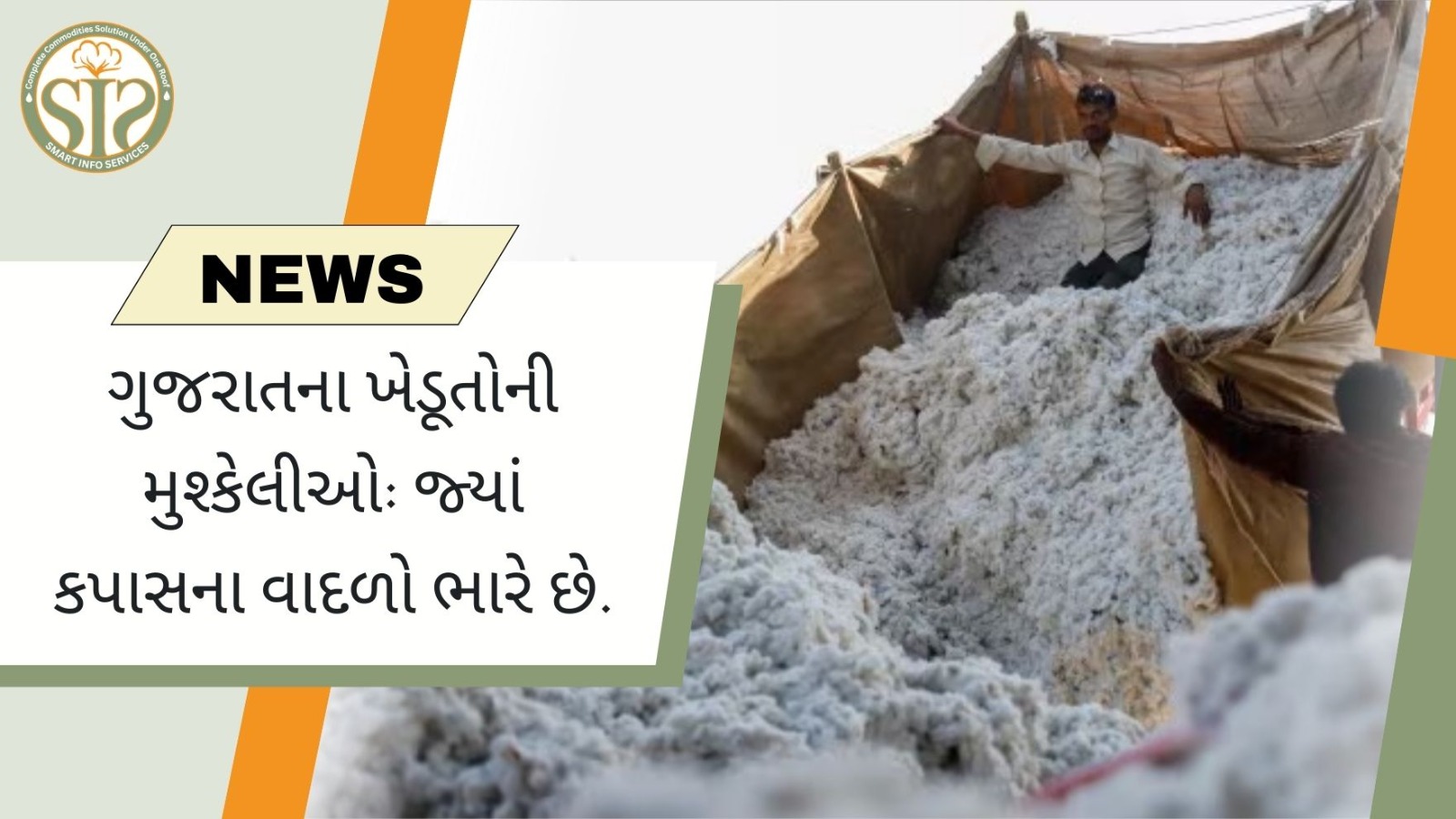
ગુજરાતના ખેડૂતોની મુશ્કેલીઓ: જ્યાં કપાસના વાદળો ભારે છે.ગુજરાતમાં કપાસની ખેતીના સંકટનો એક ઝાંખીભારતના ગુજરાતના કપાસના ખેડૂતોએ તાજેતરમાં આર્થિક અને પર્યાવરણીય પડકારોનો સામનો કર્યો છે, જેના કારણે નોંધપાત્ર તકલીફો થઈ છે અને ખેડૂતો આત્મહત્યા તરફ દોરી ગયા છે. આ સારાંશ આ કટોકટીના કારણો, સરકારી નીતિની અસર અને વિવિધ હિસ્સેદારોના પ્રતિભાવોની તપાસ કરે છે.આર્થિક અને પર્યાવરણીય પડકારોઘટતા ભાવ: ખેડૂતોને કપાસના નીચા ભાવ મળ્યા, આશરે ₹1,200–1,300 પ્રતિ મણ (20 કિલો), જે પાછલા વર્ષો કરતા નોંધપાત્ર રીતે ઓછા છે.હવામાન પડકારો: ઓક્ટોબરમાં કમોસમી અને અતિશય વરસાદથી પાકને નુકસાન થયું, જેનાથી ખેડૂતોની આર્થિક મુશ્કેલીમાં વધુ વધારો થયો.સરકારી પ્રતિભાવરાહત પેકેજ: મુખ્યમંત્રીએ આશરે ₹10,000 કરોડના રાહત અને સહાય પેકેજની જાહેરાત કરી, જેમાં ટેકાના ભાવે વિવિધ પાક ખરીદવાની યોજનાઓનો સમાવેશ થાય છે.આયાત ડ્યુટી માફી: કેન્દ્ર સરકારે કાચા કપાસની આયાત પર કસ્ટમ ડ્યુટી માફ કરી, જેનો હેતુ કાપડ ખર્ચને સ્થિર કરવાનો હતો, પરંતુ તેનાથી સ્થાનિક કપાસના ભાવ પર પ્રતિકૂળ અસર પડી.આયાત નીતિની અસરવધેલી આયાત: ભારતે ગયા વર્ષની સરખામણીમાં કપાસની આયાત લગભગ બમણી કરી, જેનાથી સ્થાનિક ભાવ વધુ નીચા ગયા.ઉદ્યોગ વિરુદ્ધ ખેડૂતો: જ્યારે કાપડ ઉદ્યોગ સસ્તા આયાતી કપાસથી લાભ મેળવે છે, ત્યારે ભારતીય ખેડૂતોને તેમના ઉત્પાદન માટે ઓછા ભાવ મળે છે.કૃષિ અને બજારની સ્થિતિઉત્પાદન અને વાવેતર: 2024-25 માટે કપાસનો કામચલાઉ વાવેતર વિસ્તાર 114.47 લાખ હેક્ટર છે, જે 2023-24 કરતા ઓછો છે, અને ઉપજ સ્થિર રહેવાની અપેક્ષા છે.બજાર ઍક્સેસ સમસ્યાઓ: ખેડૂતોને લોજિસ્ટિકલ અવરોધોનો સામનો કરવો પડે છે, જેમ કે સ્થાનિક બજાર યાર્ડનો અભાવ, જેના કારણે તેઓ દૂરના જિલ્લાઓમાં તેમની પેદાશ વેચવા મજબૂર થાય છે.ખેડૂતોના વિરોધઆત્મહત્યા અને વિરોધ: તાજેતરના મહિનાઓમાં, છ ખેડૂતો, મુખ્યત્વે કપાસ ઉગાડનારાઓએ આત્મહત્યા કરી છે, જેના કારણે સરકારી નીતિઓ અને પર્યાપ્ત ભાવ સહાયના અભાવે વિરોધ થયો છે. કપાસના ઉત્પાદનમાં પડકારોઇનપુટ ખર્ચ: બિયારણ અને જંતુનાશકોના વધતા ભાવ અને સ્થિર કપાસના ભાવે ખેડૂતોને કપાસની ખેતી કરવાથી નિરાશ કર્યા છે.વૈકલ્પિક પાક તરફ વળવું: ઘણા ખેડૂતો ઇનપુટ ખર્ચ ઘટાડવા માટે મગફળી, કઠોળ અથવા કાળા કપાસ જેવી પરંપરાગત કપાસની જાતો તરફ વળ્યા છે.ઉદ્યોગ દ્રષ્ટિકોણગુણવત્તા અને ઉપજના મુદ્દાઓ: ઓછી ગુણવત્તાવાળા બીજ અને ઓછી ઉપજ મુખ્ય પડકારો છે. ખેડૂતો ઉત્પાદકતા વધારવા માટે નવા બીજ મંજૂરીની હિમાયત કરી રહ્યા છે.જીનિંગ મિલ પર અસર: ડ્યુટી-મુક્ત આયાત નીતિ સ્પિનિંગ મિલોને ફાયદો પહોંચાડે છે પરંતુ જીનિંગ મિલોને ખતરો ઉભો કરે છે, જેના કારણે ઘણી મિલ બંધ થઈ જાય છે.નિષ્કર્ષગુજરાતમાં કપાસની ખેતીનો સામનો કરી રહેલ સંકટ બહુપક્ષીય છે, જેમાં આર્થિક, પર્યાવરણીય અને પ્રણાલીગત પડકારોનો સમાવેશ થાય છે. જ્યારે સરકારી પગલાં ઉદ્યોગને સ્થિર કરવાનો હેતુ ધરાવે છે, ત્યારે તેઓ ઘણીવાર ખેડૂતોની તકલીફના મૂળ કારણોને સંબોધવામાં નિષ્ફળ જાય છે. ટકાઉ ઉકેલો માટે, ઉદ્યોગ વૃદ્ધિ અને ખેડૂત સુખાકારીને સંતુલિત કરવા માટે વ્યાપક નીતિગત હસ્તક્ષેપોની જરૂર છે. વધુ વાંચો :- રૂપિયો ૦૫ પૈસા ઘટીને ૯૦.૧૪/યુએસડી પર ખુલ્યો.

રૂપિયો ૦૫ પૈસા ઘટીને ૯૦.૧૪/ડોલર પર ખુલ્યો.મંગળવારે ભારતીય રૂપિયો ૯૦.૧૪/ડોલર પર ખુલ્યો, જે અગાઉ ૯૦.૦૯ ના બંધ ભાવની સરખામણીમાં હતો.વધુ વાંચો :- રૂપિયો 03 પૈસા ઘટીને 90.09 પ્રતિ ડોલર પર બંધ થયો.

સોમવારે, ભારતીય રૂપિયો 03 પૈસા ઘટીને 90.09 પ્રતિ ડોલર પર બંધ થયો, જે સવારે 90.06 ના શરૂઆતના ભાવથી બંધ થયો હતો.બંધ સમયે, સેન્સેક્સ 609.68 પોઈન્ટ અથવા 0.71 ટકા ઘટીને 85,102.69 પર અને નિફ્ટી 225.90 પોઈન્ટ અથવા 0.86 ટકા ઘટીને 25,960.55 પર બંધ થયો. લગભગ 824 શેર વધ્યા, 3,146 ઘટ્યા અને 145 યથાવત રહ્યા.વધુ વાંચો :- સતારામાં ગેરંટીકૃત ભાવે ૮૩ લાખ રૂપિયાના સોયાબીન ખરીદાયા

સોયાબીન ખરીદી: સતારા જિલ્લામાં ગેરંટીકૃત ભાવે ₹83 લાખના સોયાબીનની ખરીદી સતારા જિલ્લામાં બે સોયાબીન ખરીદી કેન્દ્રો, કોરેગાંવ અને મસુર (તા. કરહડ), ₹5,328 પ્રતિ ક્વિન્ટલના મૂળ ભાવે ખોલવામાં આવ્યા છે, અને 5 ડિસેમ્બરના અંત સુધીમાં, તેમણે ₹83,17,000 ની કિંમતના 1,1561 ક્વિન્ટલ સોયાબીન ખરીદ્યા હતા. બાકીના ચાર મંજૂર કેન્દ્રો હજુ સુધી કાર્યરત થયા નથી.આ વર્ષે, જિલ્લામાં 86,000 હેક્ટરમાં સોયાબીનનું વાવેતર કરવામાં આવ્યું હતું. લણણી પછી તરત જ, મોટાભાગના ખેડૂતોએ ₹4.50 થી ₹4,700 ના ભાવે મોટા પ્રમાણમાં સોયાબીન વેચવાનું શરૂ કર્યું.ખરીદી કેન્દ્રો તે સમયે મૂળ ભાવે કાર્યરત હોવા જોઈએ; જોકે, જિલ્લામાં સતારા, ફલટણ, વાઈ, કોરેગાંવ, કરહડ અને મસુર કેન્દ્રો માટે નોંધણી ૧૫ ઓક્ટોબરથી શરૂ થઈ હતી, જેમાં મજૂરી ખર્ચનો સમાવેશ થતો હતો. જોકે, આ કેન્દ્રો ખરેખર નવેમ્બરના પહેલા અઠવાડિયામાં જ ખુલવા લાગ્યા હતા. તેથી, કોરેગાંવ અને મસુર સિવાય આ કેન્દ્રોને બહુ પ્રતિસાદ મળ્યો નથી.કોરેગાંવ કેન્દ્ર પર કુલ ૧,૧૦૧ ક્વિન્ટલ મસૂર અને ૪૬૦ ક્વિન્ટલ મસૂર ખરીદવામાં આવ્યા છે, અને કુલ ૧,૫૬૧ ક્વિન્ટલ મસૂર ₹૫,૩૨૮ પ્રતિ ક્વિન્ટલના દરે ખરીદવામાં આવ્યા છે. જિલ્લામાં સતારા કેન્દ્ર પર સત્તર ખેડૂતો, ફલટણ કેન્દ્ર પર ૧૪૨ અને વાઈ કેન્દ્ર પર ૬૧ ખેડૂતોએ નોંધણી કરાવી છે; પરંતુ કેન્દ્રો હજુ સુધી કાર્યરત થયા નથી.ખેડૂતો તરફથી ઓછો પ્રતિસાદખરીફ સિઝન દરમિયાન સોયાબીન મુખ્ય પાક હોવાથી, ઉત્પાદન સૌથી વધુ હોય છે. લણણીના સમયે વરસાદ અને ખરીદી કેન્દ્રોના અભાવને કારણે, સોયાબીનના ખેડૂતો તરફથી ઓછો પ્રતિસાદ મળ્યો છે. કેન્દ્રની પરિસ્થિતિ અને પરિવહન સમસ્યાઓને કારણે ખેડૂતોને ઓછા ભાવ મળી રહ્યા હોવા છતાં, વેપારીઓએ તેમના સોયાબીન વેચી દીધા છે.છેલ્લા ત્રણ વર્ષમાં ભાવમાં કોઈ સુધારો ન થવાને કારણે, સોયાબીનની સંગ્રહ ક્ષમતામાં પણ ઘટાડો થયો છે. ખેડૂતોને લાભ આપવા માટે, સરકાર માંગ કરી રહી છે કે લણણી પહેલાં અને દર ચારથી પાંચ ગામમાં એક જગ્યાએ સોયાબીન કેન્દ્રો સ્થાપિત કરવામાં આવે, નહીં કે તાલુકા સ્તરે.વધુ વાંચો :- નાંદેડમાં કપાસ ખરીદી પ્રક્રિયા ધીમી પડી, ખરીદી ધીમી પડી

મહારાષ્ટ્ર: કપાસ ખરીદી: નાંદેડમાં કપાસની ખરીદી ખૂબ જ ધીમી ગતિએ ચાલી રહી છે.નાંદેડ : નાંદેડ જિલ્લાના વિવિધ કપાસ ખરીદી કેન્દ્રો પર ખરીદી પ્રક્રિયા હજુ પણ ગતિ પકડી શકી નથી. 1 ડિસેમ્બર સુધીમાં, જિલ્લામાં 1,933 ખેડૂતો પાસેથી કુલ 28,847 ક્વિન્ટલ કપાસની ખરીદી કરવામાં આવી હતી. જિલ્લામાં કુલ 14,619 ખેડૂતોએ કપાસ વેચવા માટે નોંધણી કરાવી હતી, જેમાંથી 5,051 એન્ટ્રીઓને બજાર સમિતિ દ્વારા મંજૂરી આપવામાં આવી છે, અને બાકી એન્ટ્રીઓની સંખ્યા 8,107 છે. ન્યૂ ભારત કોટન નાયગાંવ સેન્ટર ખાતે સૌથી વધુ 11,908 ક્વિન્ટલ કપાસની ખરીદી કરવામાં આવી હતી.જિલ્લામાં કપાસની ખરીદી કેન્દ્ર સરકારના લઘુત્તમ ગેરંટીકૃત ભાવ અનુસાર કરવામાં આવી રહી છે. મધ્યમ-યાન કપાસનો ભાવ ₹7,710 પ્રતિ ક્વિન્ટલ છે, જ્યારે લાંબા-યાન કપાસનો ભાવ ₹8,110 પ્રતિ ક્વિન્ટલ છે. જિલ્લામાં કિનવત, અર્ધપુર, ભોકર, નાયગાંવ અને હડગાંવ તાલુકા એમ નવ સ્થળોએ ખરીદી થઈ રહી છે.અર્ધપુર તાલુકાના કાલડાગાંવમાં આવેલા સાલાસર જીનિંગ સેન્ટર ખાતે ૨૮૨ ખેડૂતો પાસેથી ૪૬૫૦.૦૫ ક્વિન્ટલ કપાસની ખરીદી કરવામાં આવી હતી. આ કેન્દ્ર પર ૧૫૫૯ ખેડૂતોએ નોંધણી કરાવી છે. તાસગા (તા. હડગાંવ) સ્થિત નટરાજ અને બાલાજી જીનિંગ સેન્ટર ખાતે ૨૩૯૧ ક્વિન્ટલ કપાસની ખરીદી કરવામાં આવી હતી. નટરાજ અને બાલાજી જીનિંગ સેન્ટર ખાતે કુલ ૧૬૫૮ ખેડૂતોએ નોંધણી કરાવી છે. ભોકરના વેંકટેશ કોટન ખાતે ૨૧૮ ખેડૂતો પાસેથી ૨૯૨૩ ક્વિન્ટલ કપાસની ખરીદી કરવામાં આવી હતી.આ કેન્દ્ર પર ૩૧૬૧ ખેડૂતોએ નોંધણી કરાવી છે. નાયગાંવ સ્થિત ન્યુ ભારત કોટન ખાતે ૧૧,૯૦૮ ક્વિન્ટલ કપાસની ખરીદી કરવામાં આવી હતી. આ કેન્દ્ર પર સૌથી વધુ ૫૦૨૩ ખેડૂતોએ નોંધણી કરાવી છે. આમાંથી ૭૭૭ નોંધાયેલા ખેડૂતો પાસેથી કપાસની ખરીદી કરવામાં આવી હતી.ત્રણ કેન્દ્રો, મનજીત કોટન, એલ.બી. કોટન અને મહાવીર જિનિંગે 5,194 ક્વિન્ટલ કપાસ ખરીદ્યો. 366 ખેડૂતો પાસેથી કપાસ ખરીદવામાં આવ્યો. કિનવતના વિજય કોટનમાં 1,585 નોંધાયેલા ખેડૂતો હતા. આમાંથી, 74 ખેડૂતો પાસેથી 1,370 ક્વિન્ટલ કપાસ ખરીદવામાં આવ્યો.વધુ વાંચો :- "ઉજ્જડ જમીન પર કપાસની ખેતી કરીને 80,000 રૂપિયા કમાતા"

હરિયાણા: ઉજ્જડ જમીન પર કપાસ ઉગાડીને પ્રતિ એકર 80,000 રૂપિયા કમાય છેજ્યારે આ પ્રદેશના ખેડૂતો ફક્ત ડાંગરના પાક પર આધાર રાખે છે અને જે જમીનને તેઓ ઉજ્જડ અને બિનઉપજાઉ માને છે તેને છોડી દે છે, ત્યારે હરિયાણાના ખેડૂતો તે જ જમીન પર કપાસની ખેતી કરીને પ્રતિ એકર હજારો રૂપિયા કમાય છે.ખેડૂત નવીન હુડા, જેમણે 10 કિલોમીટર દૂર રાવણ ગામમાં 120 એકર પડતર જમીન ભાડે લીધી હતી, તે છેલ્લા 5-6 વર્ષથી કપાસની ખેતી કરી રહ્યા છે, જેનાથી તેઓ પ્રતિ એકર 75,000 થી 80,000 રૂપિયાથી વધુ કમાણી કરી રહ્યા છે. ખેડૂતે સમજાવ્યું કે તેઓ આ જમીન પર કપાસની ખેતી કરી રહ્યા છે, જેમાં છેલ્લા કેટલાક વર્ષોથી સિંચાઈ સુવિધાઓનો અભાવ છે, ફક્ત વરસાદ પર આધાર રાખે છે.વધુમાં, પત્થરચુવા જેવા ગામોમાં, રામહેત, જગબીર અને કુલદીપ જેવા હરિયાણાના ખેડૂતો પણ આવી જ જમીન પર કપાસની ખેતી કરી રહ્યા છે. તેમણે સમજાવ્યું કે હરિયાણામાં 50 થી 100 એકરનો પ્લોટ ઉપલબ્ધ નથી, તેથી તેઓ કપાસની ખેતી કરવા છત્તીસગઢ આવે છે. તેમણે કહ્યું કે છત્તીસગઢ અને તેના પ્રદેશના ખેડૂતો ઇચ્છે તો આ કરી શકે છે, પરંતુ કદાચ તેમને રસ નથી. જ્યારે તિલ્ડાબંધાના રામપ્રસાદ યાદવ, દર્શ સાહુ, જીવન સાહુ અને કૃષ્ણા સાથે આ અંગે ચર્ચા કરવામાં આવી, ત્યારે તેમણે કહ્યું કે તેઓ જે જમીન પર ડાંગર ઉગાડે છે ત્યાં કઠોળ અને તેલીબિયાં ઉગાડતા હતા, પરંતુ વાંદરાઓના ત્રાસને કારણે તેઓ તેમ કરી શકતા નથી.તેમને શેરડી અને કપાસ જેવા પાક ઉગાડવા વિશે વધુ જાણકારી નથી. ધીમે ધીમે, જેમ જેમ જાગૃતિ વધશે, તેમ તેમ આ પાકોનું ઉત્પાદન ચોક્કસપણે વધશે, જેનાથી નફો વધશે. ખેડૂતોએ સમજાવ્યું કે આ પાક, જેને પાકવામાં છ થી આઠ મહિના લાગે છે, તેને બિયારણ, જમીન ખેડવા, ખાતર અને જંતુનાશકો નાખવા અને કપાસની લણણી માટે પ્રતિ એકર આશરે ₹25,000 ખર્ચ થાય છે. વધુમાં, જમીન ભાડાપટ્ટે અને પાક પરિવહન માટે વધારાના ખર્ચ થાય છે. તેમણે જણાવ્યું કે પ્રતિ એકર કપાસનું ઉત્પાદન લગભગ ૧૮ ક્વિન્ટલ છે, જે પંજાબથી આવતા સ્થાનિક મજૂરો દ્વારા ૮ રૂપિયા પ્રતિ કિલોના ભાવે કાપ્યા પછી છત્તીસગઢના બેરલા અને મહારાષ્ટ્રના નાગપુર જેવા સ્થળોએ લઈ જવામાં આવે છે અને લગભગ ૭૦૦૦ થી ૮૦૦૦ રૂપિયા પ્રતિ ક્વિન્ટલના ભાવે વેચાય છે.વધુ વાંચો :- રૂપિયો 08 પૈસા ઘટીને 90.06 / USD પર ખુલ્યો

રૂપિયો 08 પૈસા ઘટીને 90.06 પ્રતિ ડોલર પર ખુલ્યો.સોમવારે ભારતીય રૂપિયો 90.06 પ્રતિ ડોલર પર ખુલ્યો, જે અગાઉના બંધ 89.98 હતો.વધુ વાંચો :- “૨૦૨૪-૨૫: રાજ્યવાર CCI કપાસ વેચાણ વિગતો”
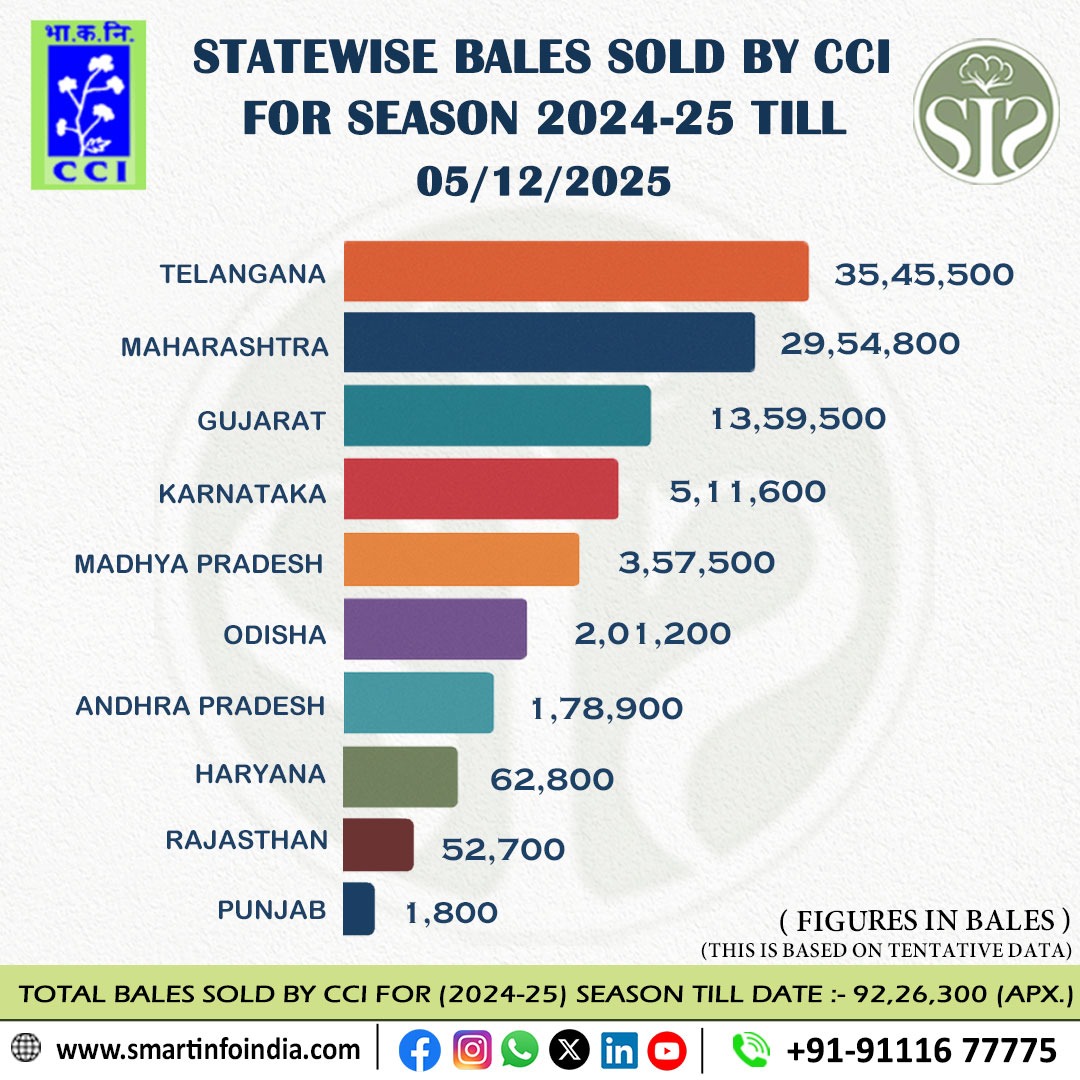
રાજ્યવાર CCI કપાસ વેચાણ વિગતો - 2024-25 સીઝનકોટન કોર્પોરેશન ઓફ ઇન્ડિયા (CCI) એ આ અઠવાડિયે તેના ભાવ યથાવત રાખ્યા છે, જેના કારણે 2024-25 સીઝનમાં અત્યાર સુધીમાં કુલ વેચાણ આશરે 92,26,300 ગાંસડી થયું છે. આ આંકડો અત્યાર સુધીમાં ખરીદાયેલા કુલ કપાસના આશરે 92.26% દર્શાવે છે.રાજ્યવાર વેચાણના આંકડા દર્શાવે છે કે મહારાષ્ટ્ર, તેલંગાણા અને ગુજરાતે વેચાણમાં મોખરે રહ્યા છે, જે અત્યાર સુધીમાં કુલ વેચાણના 85.18% થી વધુ હિસ્સો ધરાવે છે.આ આંકડા કપાસ બજારને સ્થિર કરવા અને મુખ્ય કપાસ ઉત્પાદક રાજ્યોને નિયમિત પુરવઠો સુનિશ્ચિત કરવા માટે CCI ના સક્રિય પ્રયાસોને પ્રતિબિંબિત કરે છે.

ભારત-રશિયા આર્થિક સહયોગ 2030 રોડમેપ સાથે મજબૂત બને છેભારત અને રશિયાએ 4-5 ડિસેમ્બર, 2025 ના રોજ રાષ્ટ્રપતિ વ્લાદિમીર પુતિનની નવી દિલ્હીની રાજ્ય મુલાકાત દરમિયાન 2030 સુધી આર્થિક સહયોગ માટે એક વ્યાપક કાર્યક્રમની જાહેરાત કરીને તેમના આર્થિક સહયોગને વિસ્તૃત કરવા માટે એક વ્યાપક યોજનાનું અનાવરણ કર્યું છે.ભારતીય વડા પ્રધાન નરેન્દ્ર મોદી અને રાષ્ટ્રપતિ પુતિને પુનરોચ્ચાર કર્યો કે તેમની આઠ દાયકા જૂની ભાગીદારી - વિશ્વાસ, પરસ્પર આદર અને વ્યૂહાત્મક સંકલન પર બનેલી - વૈશ્વિક ભૂ-રાજકીય અનિશ્ચિતતા વચ્ચે સ્થિરતાનો આધારસ્તંભ બની રહી છે.પીએમ મોદીએ જણાવ્યું હતું કે નવો રોડમેપ પરસ્પર વેપારને "વધુ વૈવિધ્યસભર, સંતુલિત અને ટકાઉ" બનાવશે અને સહ-ઉત્પાદન, સહ-નવીનતા અને ઊંડા ઔદ્યોગિક સહયોગ માટે માર્ગો ખોલશે. આ ઉદ્દેશ્યના કેન્દ્રમાં ભારત અને યુરેશિયન આર્થિક સંઘ વચ્ચે મુક્ત વેપાર કરાર પર ચાલી રહેલી વાટાઘાટો છે, જેની પૂર્ણતાથી નવી નિકાસ તકો ખુલવાની અપેક્ષા છે."કાર્યક્રમ 2030" અપનાવવામાં આવ્યું હતું, જે સંતુલિત વેપાર, સરળ ચુકવણી પ્રણાલીઓ, ટેરિફ અને નોન-ટેરિફ અવરોધો દૂર કરવા અને વધુ લોજિસ્ટિક્સ કાર્યક્ષમતાને પ્રાથમિકતા આપે છે. બંને પક્ષો રાષ્ટ્રીય ચલણોમાં સમાધાનને મજબૂત બનાવવા અને ચુકવણી પ્રણાલીઓ અને ડિજિટલ ચલણ પ્લેટફોર્મ વચ્ચે આંતર-કાર્યક્ષમતા શોધવા માટે કામ કરી રહ્યા છે. બંને દેશોએ સંયુક્ત નિવેદનમાં 2030 સુધીમાં $100 બિલિયનના સુધારેલા દ્વિપક્ષીય વેપાર લક્ષ્યને ફરીથી સમર્થન આપ્યું.ઊર્જા સુરક્ષા - જે લાંબા સમયથી ભાગીદારીની કરોડરજ્જુ રહી છે - પર નવેસરથી ભાર મૂકવામાં આવ્યો. બંને દેશોએ તેલ, ગેસ, પેટ્રોકેમિકલ્સ, ભૂગર્ભ કોલસા ગેસિફિકેશન, LNG અને LPG ઈન્ફ્રાસ્ટ્રક્ચર અને પરમાણુ ઊર્જામાં સહયોગ વધારવાનું વચન આપ્યું. રશિયા અને ભારત કુડનકુલમ ન્યુક્લિયર પાવર પ્લાન્ટ માટે સાધનો અને ઇંધણના ડિલિવરી શેડ્યૂલને ઝડપી બનાવવા અને ભારતમાં બીજા ન્યુક્લિયર સાઇટ પર વાટાઘાટો ચાલુ રાખવા સંમત થયા.કનેક્ટિવિટી ટોચની પ્રાથમિકતા તરીકે ઉભરી આવી, જેમાં ઇન્ટરનેશનલ નોર્થ-સાઉથ ટ્રાન્સપોર્ટ કોરિડોર (INSTC), ચેન્નાઈ-વ્લાદિવોસ્ટોક મેરીટાઇમ કોરિડોર અને નોર્ધન સી રૂટ માટે નવી ગતિ પૂરી પાડવામાં આવી. ધ્રુવીય કામગીરી માટે ભારતીય ખલાસીઓને તાલીમ આપવા અંગેના સમજૂતી કરારથી આર્કટિકમાં સહયોગ મજબૂત થશે અને રોજગારની નવી તકો ઊભી થશે તેવી અપેક્ષા છે.રશિયન દૂર પૂર્વ અને આર્કટિકમાં ઊંડા જોડાણને પુનઃપુષ્ટિ આપવામાં આવી હતી, જેને 2024-2029 માટે એક અલગ સહકાર કાર્યક્રમ દ્વારા સમર્થન આપવામાં આવ્યું હતું. કૃષિ, ઉર્જા, માનવશક્તિ, ખાણકામ, હીરા, ફાર્માસ્યુટિકલ્સ અને દરિયાઈ પરિવહન જેવા ક્ષેત્રો ધ્યાન કેન્દ્રિત ક્ષેત્રો હશે.નેતાઓએ સ્વચ્છ ઉર્જા અને ઉચ્ચ-ટેક ઉત્પાદન માટે આવશ્યક ખનિજોના વધતા મહત્વ પર પણ ભાર મૂક્યો. બંને પક્ષોએ ખાતરોમાં સંયુક્ત સાહસો અને લાંબા ગાળાની પુરવઠા વ્યવસ્થા માટેની યોજનાઓ સાથે શોધ, પ્રક્રિયા અને રિસાયક્લિંગ તકનીકોમાં મજબૂત સહયોગનું વચન આપ્યું.લોકો-કેન્દ્રિત પહેલ ચર્ચાનો મુખ્ય ભાગ હતી. ભારતે તાજેતરમાં યેકાટેરિનબર્ગ અને કાઝાનમાં નવા કોન્સ્યુલેટ ખોલ્યા છે, જ્યારે રશિયા ટૂંક સમયમાં મફત 30-દિવસના ઈ-ટૂરિસ્ટ વિઝા અને જૂથ વિઝા યોજનાનો લાભ મેળવશે. કુશળ માનવશક્તિ ગતિશીલતા, સંયુક્ત વ્યાવસાયિક તાલીમ અને ઉન્નત શૈક્ષણિક આદાનપ્રદાન પરના નવા કરારોનો હેતુ ઊંડા સામાજિક સંબંધો બનાવવાનો છે.મોદી અને પુતિને આતંકવાદ વિરોધી લાંબા સમયથી ચાલતા સહકારનો પુનરોચ્ચાર કર્યો, ભારત અને રશિયામાં તાજેતરના હુમલાઓની નિંદા કરી અને ઉગ્રવાદ પર શૂન્ય-સહિષ્ણુતા નીતિ માટે હાકલ કરી. તેમણે UN, G20, BRICS અને SCO જેવા મુખ્ય બહુપક્ષીય પ્લેટફોર્મ પર તેમના ગાઢ સંકલનને પણ પુનરોચ્ચાર કર્યો, જેમાં રશિયાએ UN સુરક્ષા પરિષદમાં કાયમી સભ્યપદ માટે ભારતના પ્રયાસને સમર્થન આપ્યું.નાગરિક પરમાણુ ટેકનોલોજી અને અવકાશ સહયોગ - જેમાં રોકેટ એન્જિન અને માનવ અવકાશ ઉડાન પર સાથે મળીને કામ કરવાનો સમાવેશ થાય છે - થી લઈને મેક ઇન ઇન્ડિયા હેઠળ સંરક્ષણ સહ-વિકાસ અને સહ-ઉત્પાદન વધારવા સુધી, સમિટે ભારત-રશિયા ભાગીદારીની બહુ-પરિમાણીય ઊંડાણ દર્શાવી.પુતિને મોદીનો ઉષ્માભર્યો આતિથ્ય બદલ આભાર માન્યો અને તેમને 2026 માં આગામી વાર્ષિક સમિટ માટે રશિયાની મુલાકાત લેવા આમંત્રણ આપ્યું, જે તેમણે "વિશેષ અને વિશેષાધિકૃત" તરીકે વર્ણવેલા સંબંધોના સતત વિકાસમાં વધુ એક પગલું છે.વધુ વાંચો :- "કપાસ ખરીદી પર પ્રતિબંધ મુકવા માટે ખેડૂતોએ પ્રધાનમંત્રીને અપીલ કરી"

મહારાષ્ટ્ર: ખેડૂત સંગઠને કપાસ ખરીદી પર CCIનો પ્રતિબંધ હટાવવા માટે પ્રધાનમંત્રીના હસ્તક્ષેપની માંગ કરી છે.નાગપુર: ખેડૂત અધિકાર સંરક્ષણ પરિષદ-કિસાન ભારતીએ પ્રધાનમંત્રી નરેન્દ્ર મોદીને વિનંતી કરી છે કે તેઓ રાજ્યના ખેડૂતોને અસર કરતા કપાસ ખરીદીના પ્રતિબંધિત નિયમો પાછા ખેંચવા માટે ભારતીય કપાસ નિગમ (CCI) ને નિર્દેશ આપવા માટે હસ્તક્ષેપ કરે.પ્રધાનમંત્રીને કરેલી અપીલમાં, CPFR-કિસાન ભારતીના પ્રમુખ બેરિસ્ટર વિનોદ તિવારીએ જણાવ્યું હતું કે CCIના તાજેતરના પગલા - કપાસ ખરીદીને ફક્ત 7 ક્વિન્ટલ/એકર સુધી મર્યાદિત રાખવાથી, જે અગાઉની 13 ક્વિન્ટલ/એકરની મર્યાદા કરતાં લગભગ અડધી છે - મહારાષ્ટ્ર અને પડોશી તેલંગાણામાં લાખો કપાસ ખેડૂતોની મુશ્કેલીઓમાં વધારો થયો છે.તિવારીએ કહ્યું, "આ ખરીફ સિઝનમાં ઉપજ સર્વેક્ષણ પછી મર્યાદામાં આ વાહિયાત ઘટાડાથી ખેડૂતોને તેમના ઉત્પાદનનો લગભગ 80 ટકા હિસ્સો ખૂબ જ ઓછા ભાવે ખાનગી વેપારીઓને વેચવાની ફરજ પડી છે. આનાથી ખેતરો પર પહેલેથી જ ગંભીર મુશ્કેલીઓ વધી ગઈ છે." ઘટાડાને કારણે, ખેડૂતો પાસે તેમના કપાસના સ્ટોકને લગભગ ₹6,500/ક્વિન્ટલ કે તેથી ઓછા ભાવે વેચવા સિવાય કોઈ વિકલ્પ નથી, જે ₹8,110/ક્વિન્ટલના MSP કરતાં લગભગ 25% ઓછો છે.સૌથી વધુ અસર એવા ખેડૂતોને થાય છે જેઓ 5 ક્વિન્ટલ/એકરથી વધુ ઉત્પાદન કરે છે, જેઓ પ્રતિબંધોને કારણે, તેમનો સંપૂર્ણ પાક CCI ને વેચી શકતા નથી અને તેથી, તેઓ તેને કોઈપણ ખાનગી ખરીદનારને ઘણા ઓછા ભાવે અને MSP કરતા ઘણા ઓછા ભાવે વેચી શકે છે.તેમણે કહ્યું, “CCI ની 8-12% ની કડક ભેજની જરૂરિયાતોને કારણે કટોકટી વધી રહી છે, જે જાળવી રાખવી મુશ્કેલ છે. ધુમ્મસ, તૂટક તૂટક વરસાદ અને શિયાળાના તાપમાનમાં ઘટાડાને કારણે, કપાસમાં કુદરતી રીતે ભેજનું સ્તર ઊંચું હોય છે. ઘણા દિવસો સુધી ખુલ્લામાં સૂકવવા છતાં, ખેડૂતો 20% કે તેથી વધુ ભેજનું સ્તર નોંધાવે છે, અને CCI ખરીદી કેન્દ્રો પર તેમનો સ્ટોક ફક્ત નકારી કાઢવામાં આવે છે.” એક ઉદાહરણ આપતાં, CPFR-કિસાન ભારતીએ જણાવ્યું હતું કે એકલા યવતમાળ જિલ્લામાં, 236,752 ખેડૂતોએ 825,932 એકર જમીન પર કપાસનું વાવેતર કર્યું હતું, જેમાંથી આશરે 3.3 મિલિયન ક્વિન્ટલ ઉત્પાદન થયું હતું.જોકે, આ વિશાળ જથ્થામાંથી, CCI એ માંડ 7,921 ક્વિન્ટલ ખરીદ્યા હતા, અને ખાનગી વેપારીઓએ આશરે 115,000 ક્વિન્ટલ ઓછા ભાવે ખરીદ્યા હતા - જે સરકારી વચનો અને વાસ્તવિકતા વચ્ચેનું અંતર ઉજાગર કરે છે.ખેડૂતોએ અફસોસ વ્યક્ત કર્યો હતો કે CCI ના કઠોર નિયમો તેમને સીધા ખાનગી વેપારીઓના ચુંગાલમાં ધકેલી રહ્યા છે, જેઓ ઓછા ભાવે કપાસનો સ્ટોક મેળવવા માટે ભારે સોદાબાજી કરે છે.CPFR-કિસાન ભારતીએ જણાવ્યું હતું કે CCI દ્વારા જાહેર કરાયેલા 27 ખરીદી કેન્દ્રોમાંથી ભાગ્યે જ થોડા કાર્યરત છે, જેના કારણે લાંબી કતારો, પરિવહન ખર્ચમાં વધારો અને પહેલાથી જ મુશ્કેલીમાં મુકાયેલા ખેડૂતો માટે લોજિસ્ટિક્સ સમસ્યાઓ ઊભી થાય છે.તિવારીએ કહ્યું, “અમારી માંગણી છે કે ખરીદી ઓછામાં ઓછી ૧૨ ક્વિન્ટલ/એકર સુધી વધારીએ, કુદરતી આફતોને કારણે ભેજની મર્યાદા ૨૨% સુધી ઘટાડીએ અને પ્રક્રિયા ઝડપી બનાવવા માટે વધુ ખરીદી કેન્દ્રો ખોલીએ.”સીસીઆઈ એમએસપી ખરીદી માટે નોડલ એજન્સી હોવાથી, તે ખેડૂતોના હિતોનું રક્ષણ કરે તેવી અપેક્ષા રાખવામાં આવે છે, તેના નિયંત્રણની બહારની બાબતો માટે તેમને સજા ન કરે. તેથી, પીએમએ કોઈપણ કડક પગલાં લેતા પહેલા ખેડૂતોને જરૂરી સહાય પૂરી પાડવા માટે તાત્કાલિક સીસીઆઈને નિર્દેશ આપવો જોઈએ, એમ તેમણે જણાવ્યું હતું.વધુ વાંચો :-
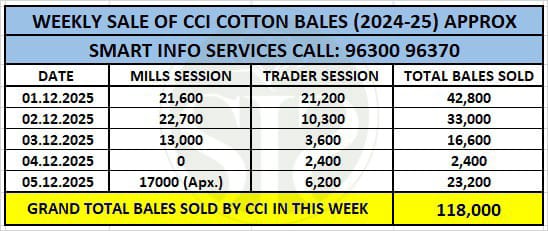
કોટન કોર્પોરેશન ઓફ ઈન્ડિયા (CCI) એ આ અઠવાડિયે તેના ભાવ યથાવત રાખ્યા છે અને ઈ-ઓક્શન દ્વારા 2024-25 ની તેની કપાસ ખરીદીના 92.26% વેચાણ કર્યા છે.1 ડિસેમ્બર થી 5 ડિસેમ્બર, 2025 ના અઠવાડિયા દરમિયાન, CCI એ તેની મિલો અને ટ્રેડર સત્રોમાં ઓનલાઈન હરાજી હાથ ધરી હતી, જેમાં કુલ આશરે 118,000 ગાંસડીનું વેચાણ થયું હતું.સાપ્તાહિક વેચાણ અહેવાલ1 ડિસેમ્બર, 2025: આ દિવસે અઠવાડિયાનું સૌથી વધુ વેચાણ 42,800 ગાંસડી નોંધાયું હતું, જેમાં મિલો દ્વારા ખરીદાયેલી 21,600 ગાંસડી અને વેપારીઓ દ્વારા 21,200 ગાંસડીનો સમાવેશ થાય છે.2 ડિસેમ્બર, 2025: CCI એ 33,000 ગાંસડીનું વેચાણ નોંધ્યું હતું, જેમાં મિલો દ્વારા ખરીદાયેલી 22,700 ગાંસડી અને વેપારીઓ દ્વારા 10,300 ગાંસડીનો સમાવેશ થાય છે.૩ ડિસેમ્બર, ૨૦૨૫: આ દિવસે કુલ વેચાણ ૧૬,૬૦૦ ગાંસડીએ પહોંચ્યું, જેમાં મિલોએ ૧૩,૦૦૦ ગાંસડી ખરીદી અને વેપારીઓએ ૩,૬૦૦ ગાંસડી ખરીદી.૪ ડિસેમ્બર, ૨૦૨૫: કુલ ૨,૪૦૦ ગાંસડી વેચાઈ, જે બધી ફક્ત વેપારીઓ દ્વારા જ ખરીદી હતી.૫ ડિસેમ્બર, ૨૦૨૫: સપ્તાહનો અંત આશરે ૨૩,૨૦૦ ગાંસડીના કુલ વેચાણ સાથે થયો, જે મિલો અને વેપારીઓ દ્વારા ખરીદવામાં આવ્યું.સીસીઆઈએ સપ્તાહ દરમિયાન કુલ ૧૧૮,૦૦૦ ગાંસડી વેચી, જેનાથી સીઝનનું કુલ વેચાણ ૯૨૨૬,૩૦૦ ગાંસડી થયું, જે ૨૦૨૪-૨૫ માટે તેની કુલ ખરીદીના ૯૨.૨૬% છે.વધુ વાંચો :- "CCI દ્વારા બમ્પર ખરીદીને કારણે પંજાબમાં કપાસના ભાવ રૂ. 7,500 ને વટાવી ગયા"
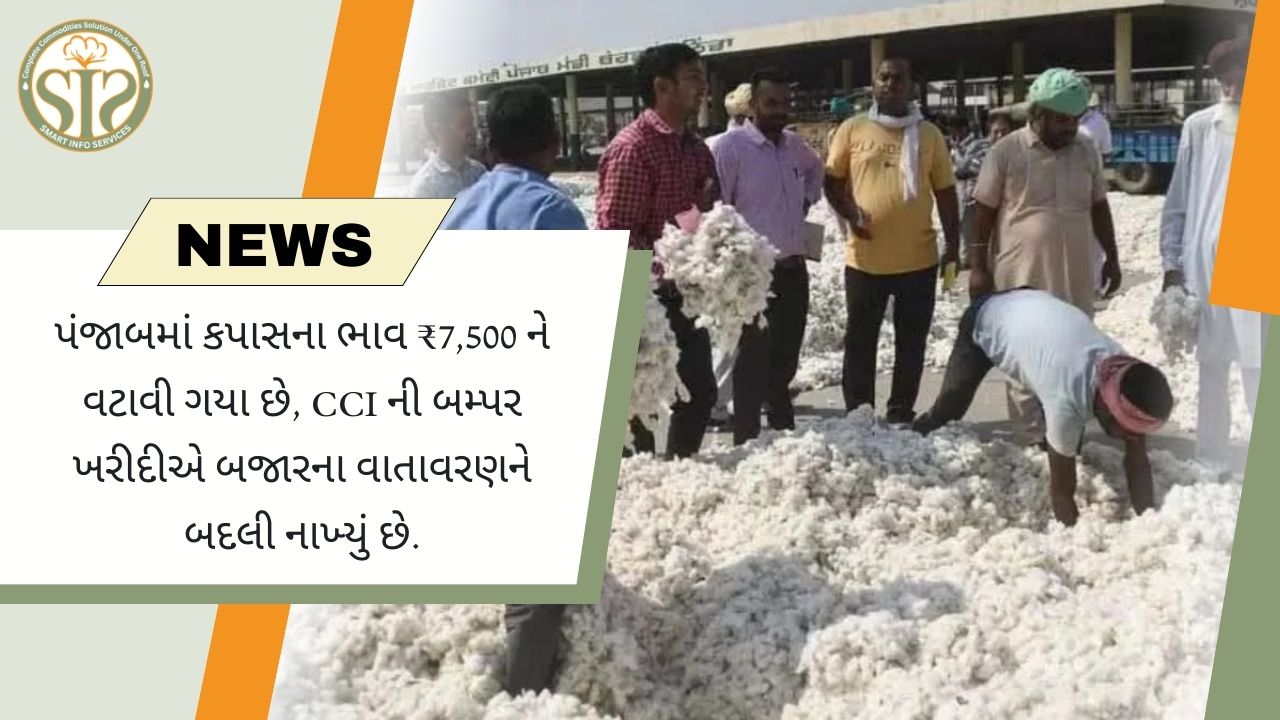
પંજાબમાં કપાસના ભાવ ₹7,500 ને વટાવી ગયા છે, CCI ની બમ્પર ખરીદીએ બજારના વાતાવરણને બદલી નાખ્યું છે.ચંદીગઢ: આ વર્ષે, કપાસના ભાવ (કપાસ અને દેશી બંને) લઘુત્તમ ટેકાના ભાવ (MSP) થી નીચે આવી રહ્યા હતા. શરૂઆતમાં, જ્યારે મંડીઓમાં કપાસ આવવાનું શરૂ થયું, ત્યારે ખાનગી વેપારીઓ તેને ₹5,700 થી ₹6,800 પ્રતિ ક્વિન્ટલની વચ્ચે ખરીદી રહ્યા હતા. આ ભાવ MSP કરતા નોંધપાત્ર રીતે ઓછા હતા, જેના કારણે ખેડૂતોમાં ચિંતા ફેલાઈ હતી.CCI ની સક્રિય ભાગીદારીને કારણે, કપાસના ભાવમાં નોંધપાત્ર સુધારો થયો છે. આજે, પંજાબ મંડી બોર્ડના ડેટા પુષ્ટિ કરે છે કે કપાસનો સરેરાશ ભાવ ₹7,500 પ્રતિ ક્વિન્ટલને વટાવી ગયો છે, જે ₹7,710 પ્રતિ ક્વિન્ટલના MSPની ખૂબ નજીક છે. દરમિયાન, દેશી કપાસના ભાવમાં પણ નોંધપાત્ર ઉછાળો જોવા મળ્યો છે. આ ખેડૂતો માટે મોટી રાહત છે જેઓ અગાઉ ઓછા ભાવે પોતાનો પાક વેચવા માટે મજબૂર અનુભવતા હતા. માન સરકારની પહેલને કારણે, તેઓ હવે તેમની મહેનતનું વાજબી મૂલ્ય મેળવી રહ્યા છે.આ વર્ષે પંજાબના કેટલાક ભાગોમાં ભારે વરસાદ અને પૂર છતાં, કપાસની આવક ગયા વર્ષ કરતાં 100,000 ક્વિન્ટલ વધી ગઈ છે. આ દર્શાવે છે કે ખેડૂતોને માન સરકારની કપાસની ખેતી માટેની નીતિઓમાં વિશ્વાસ છે. મંડી બોર્ડના ડેટા અનુસાર, રાજ્ય સરકારના સક્રિય અભિગમના પરિણામે, ગયા વર્ષે સમાન સમયગાળા દરમિયાન CCI એ માત્ર 170 ક્વિન્ટલ કપાસ ખરીદ્યો હતો, પરંતુ આ વખતે, સરકારી દબાણને પગલે, CCI એ 35,348 ક્વિન્ટલથી વધુ કપાસની ખરીદી સુનિશ્ચિત કરી છે. આ મોટા પાયે ખરીદીએ સકારાત્મક બજાર વાતાવરણ બનાવ્યું છે અને ભાવ ઘટતા અટકાવ્યા છે.પંજાબના ખેડૂતોને તેમના ઉત્પાદનને MSP કરતાં નીચે વેચવાની સમસ્યાનો સામનો કરવો ન જોઈએ. 1 ડિસેમ્બર સુધીમાં ખરીદેલા 230,423 ક્વિન્ટલ કપાસમાંથી, શરૂઆતમાં 60% થી વધુ MSP કરતાં નીચે વેચવામાં આવ્યું હતું, પરંતુ CCI ના પ્રવેશ પછી આ વલણ સંપૂર્ણપણે ઉલટું થઈ ગયું છે.આ પહેલ સ્પષ્ટપણે દર્શાવે છે કે સરકાર કટોકટીના સમયમાં પણ ખેડૂતોના હિતોનું રક્ષણ કરવા માટે તાત્કાલિક અને અસરકારક પગલાં લેવા તૈયાર છે. સરકાર ખેડૂતોના ગૌરવ અને સમૃદ્ધિ માટે પ્રતિબદ્ધ છે!વધુ વાંચો :- "૨૦૨૫/૨૬: બ્રાઝિલ કપાસની નિકાસ ૧૦% વધશે"

નિકાસકારોના જૂથનું કહેવું છે કે 2025/26 માં બ્રાઝિલની કપાસ નિકાસમાં 10% નો વધારો થવાની ધારણા છે.બ્રાઝિલિયન કોટન એક્સપોર્ટર્સ એસોસિએશન (Anea) ના પ્રમુખના જણાવ્યા મુજબ, 2025/26 સીઝનમાં બ્રાઝિલની કપાસ નિકાસમાં લગભગ 10% નો વધારો થવાનો અંદાજ છે, જે પાછલા ચક્રની તુલનામાં આશરે 3.2 મિલિયન મેટ્રિક ટન સુધી પહોંચશે.Anea ના પ્રમુખ ડેવિડ વાઝક્વેઝે રોઇટર્સને જણાવ્યું હતું કે આ વૃદ્ધિને વૈશ્વિક બજારમાં બ્રાઝિલની મજબૂત સ્પર્ધાત્મકતા, આંતરરાષ્ટ્રીય ખરીદદારોનો મોટો આધાર અને ભારતમાંથી વધુ માંગ દ્વારા ટેકો મળશે.Vazquez એ જણાવ્યું હતું કે નવી દિલ્હી દ્વારા 31 ડિસેમ્બર સુધી કપાસ આયાત ટેરિફ સ્થગિત કર્યા પછી ભારતની ખરીદીમાં વધારો થયો છે. આ સિઝનમાં અત્યાર સુધી, બ્રાઝિલની કપાસ નિકાસમાં ભારતનો હિસ્સો આશરે 16% રહ્યો છે.Anea ના ડેટા દર્શાવે છે કે ઓક્ટોબર સુધીમાં, બ્રાઝિલની કપાસ નિકાસ કુલ 677,000 ટન હતી - જે લણણીમાં વિલંબને કારણે વાર્ષિક ધોરણે 7% ઘટાડો દર્શાવે છે. જોકે, તાજેતરના મહિનાઓમાં શિપમેન્ટમાં વધારો થયો છે અને દેશ મોટા સ્ટોક સાફ કરશે તેમ તેમાં વધારો થવાની ધારણા છે.ગુરુવારે જાહેર કરાયેલા સરકારી આંકડા દર્શાવે છે કે નવેમ્બરમાં કપાસની નિકાસ એક વર્ષ અગાઉની તુલનામાં 34.4% વધીને લગભગ 402,000 ટન થઈ છે.વધુ વાંચો :- રૂપિયો ૧૩ પૈસા ઘટીને ૮૯.૯૮ પ્રતિ ડોલર પર બંધ થયો