Pearl Millet Replaces Cotton as Preferred Crop in South Haryana
By jayesh chouhan 2026-06-11 12:16:10
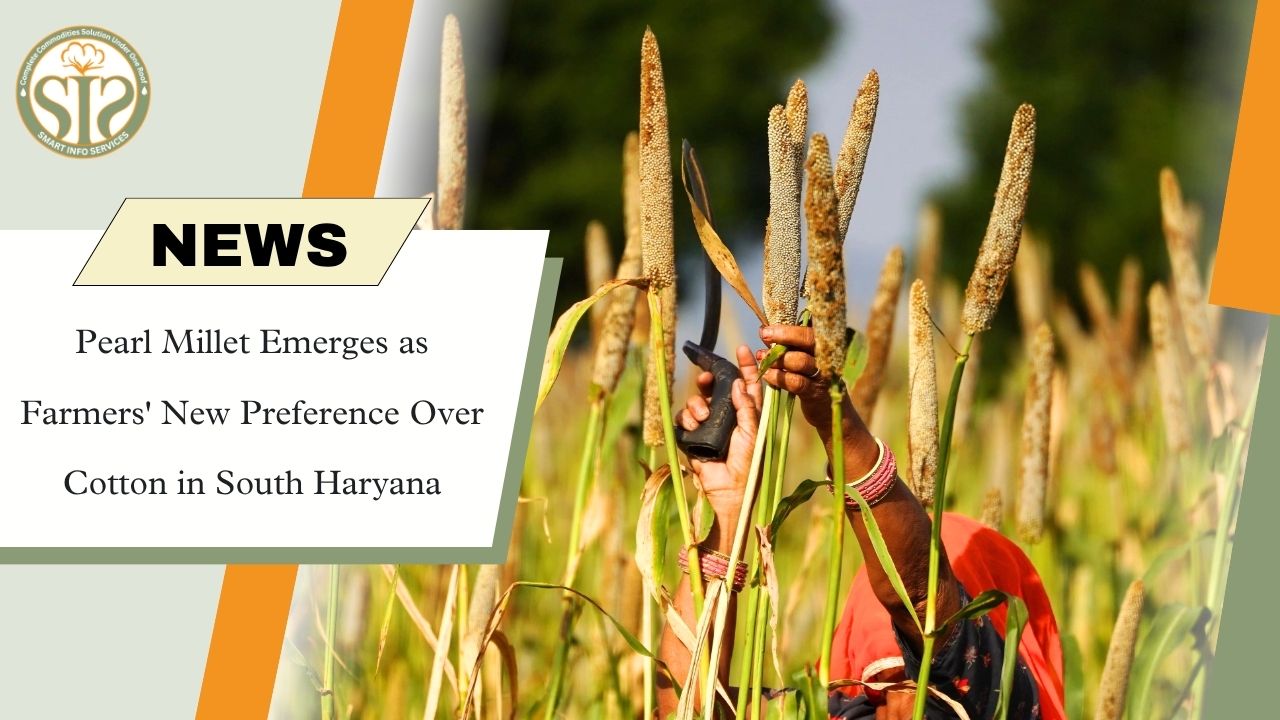
Pearl Millet Emerges as Farmers' New Preference Over Cotton in South Haryana
The agricultural landscape in South Haryana is undergoing rapid change. Farmers in districts like Mahendragarh, Bhiwani, Jhajjar, and Charkhi Dadri—once known for cotton production—are now shifting towards large-scale cultivation of pearl millet (*bajra*). The primary reasons for this shift are the rising risks associated with cotton farming, pest infestations, and weather uncertainties.
According to government data, the area under cotton cultivation in Haryana has hit a seven-year low. The total area dedicated to cotton in the state has shrunk by approximately 70 percent, dropping to 2.82 lakh hectares. Agricultural experts believe that persistent attacks by the pink bollworm have most severely impacted cotton growers. This pest is now challenging the pest-resistance capabilities of Bt-cotton, causing farmers to suffer repeated crop losses.
Factors such as the use of expensive pesticides, high nutrient requirements, and weather-related challenges—like unseasonal rainfall—are driving up cultivation costs. Consequently, for many farmers, cotton farming has turned into a loss-making venture rather than a profitable one.
In contrast, pearl millet is a low-cost crop that requires less water. It is drought-tolerant and yields well even in sandy soils and high-temperature conditions. This is why farmers in the water-scarce regions of South Haryana view it as a safer alternative. While farmers with adequate irrigation facilities are shifting towards paddy cultivation, the cultivation of pearl millet and cluster beans (*guar*) is rapidly increasing in arid areas.
According to experts from the Mahendragarh Department of Agriculture and Farmers' Welfare, pearl millet is benefiting from the Minimum Support Price (MSP) regime, the *Bhavantar Bharpai Yojana* (Price Deficit Compensation Scheme), and government policies aimed at promoting coarse grains. The government is actively encouraging its cultivation by providing incentives for improved seeds, micro-irrigation techniques, and pearl millet processing units. For these very reasons, the area under cotton cultivation in southern Haryana is steadily declining, while pearl millet is emerging as a more sustainable, profitable, and reliable option for farmers.