Filter

Recent News

US Senate Advances Russia Sanctions Bill; India May Face 100% Tariffs

US Senate Clears Russia Sanctions Bill, India Could Face 100% TariffsThe US Senate has moved a step closer to imposing tougher sanctions on Russia, with potential consequences for India. On Tuesday, senators voted 86-12 to advance a bipartisan bill that would give President Donald Trump broad powers to target Russia's energy trade and countries buying its oil and gas.The proposed legislation would allow the US president to impose a 500% tariff on Russian imports and an additional 100% tariff on the world's five largest buyers of Russian crude and natural gas, as well as countries helping Moscow evade energy sanctions. India and China, among Russia's biggest energy customers, could be affected if the bill becomes law.The measure also extends the Iran Sanctions Act until 2031 and allows the president to waive sanctions if deemed in US national interest. While the Senate could pass the bill later this week, it is unlikely to become law before September as the House is in August recess.Trump has backed the proposal and met Ukrainian President Volodymyr Zelenskyy before the vote. Zelenskyy urged US lawmakers to maintain sanctions pressure on Moscow, calling it "a big signal to Europe and Ukraine." Senate Democratic leader Chuck Schumer said the bill would send a strong message to Russian President Vladimir Putin, though some lawmakers cautioned it would significantly expand the president's tariff powers. If enacted, the legislation could reshape global energy trade and impact India's imports of discounted Russian crude.READ MORE :- India Cotton Stocks Rise as 2025-26 Closing Inventory Seen at 89.59 Lakh Bales

India Cotton Stocks Rise as 2025-26 Closing Inventory Seen at 89.59 Lakh Bales

A SUMMARISE REPORT ON PRESENT COTTON SCENARIO (POSITION AS ON 30/06/2026) (Each bale170 kgs.)▪️Total pressing estimate during crop year 2025-2026 is estimated as 337.80 lakh bales & considering above , the closing stock at the end of season 25-26 ,september 30th 2026 is calculated as 89.59 lakh bales , higher by 34.00 lakh bales of last year closing.▪️Cotton consumption in this cotton season may touch 348.00 lakh bales and upto 30-06-2026 about 261.00 lakh bales reported as consumed. ▪️Export upto June-2026 end is found total 15.00 lakh bales against estimation  for this season year of 18.00 lakh bales .Upto 30-June-2026 about 11.25 lakh bales are estimated to have been shipped by the country.▪️It is revealed that during current crop  end total 60.00 lakh bales may be imported. Upto June-2026 about 51.00 lakh bales have been arrived at different indian ports. ▪️Kepping in view the above , total available stock as on 30.06.2026 is calculated to the tune 434.97 lakh bales, consisting of opening stock, total pressing & import. ▪️As on 30-June-2026 closing stock is estimated at 162.72 lakh bales out of which stock with the mills is found to the tune of 94.50 lakh bales where as with CCI/MFED MNCS, Ginner , Treaders and Exporters it comes around 68.22 lakh bales.READ MORE :- India–Mali Textile Partnership Gains Momentum as Bilateral Trade Surges 55%

India–Mali Textile Partnership Gains Momentum as Bilateral Trade Surges 55%

India–Mali Textile Partnership Strengthens as Bilateral Trade Jumps 55%India and Mali are accelerating cooperation in cotton, textiles and manufacturing as rapidly expanding trade paves the way for long-term investment partnerships. The inaugural India–Mali Forum for the Promotion of Exports in Bamako highlighted opportunities across textiles, mining, energy, pharmaceuticals and infrastructure.Bilateral trade reached US$326.61 million in FY 2025–26, marking a robust 55% year-on-year increase. The forum brought together senior government officials and nearly 30 Indian business leaders to identify new commercial opportunities through B2B, B2G and government-level engagements.For the textile sector, Mali’s position as one of Africa’s largest cotton producers presents a significant opportunity. The country produces 600,000–700,000 tonnes of cotton lint in strong crop years but exports most of it as raw material. With plans to expand domestic spinning, weaving, processing and garment manufacturing, Mali is seeking partners that can help build an integrated textile value chain.Indian companies, with strengths in cotton processing, spinning, textile machinery, fabrics, apparel manufacturing and sustainable production technologies, are well placed to support this transformation. Mali’s import-dependent textile and apparel market, estimated at US$200–300 million annually, also offers scope for increased exports of fabrics, garments, home textiles and machinery.The forum identified textiles and cotton among the priority sectors for collaboration, alongside renewable energy, mining, agro-industry and healthcare. Discussions focused on translating business interest into commercial partnerships and MoUs. Mali will further showcase investment opportunities at its Investment Forum on 3–4 December 2026, reinforcing its ambition to develop a value-added textile manufacturing ecosystem with India as a key partner.READ MORE :-Rupee Rises 7 Paise to Open at 95.58 Against Dollar.

Kasturi Cotton Drives Sustainable Growth

Kasturi Cotton: India's Sustainable Answer to Global ApparelAs the world's second-largest exporter of cotton—a key raw material for the global apparel industry—India is increasingly focusing on sustainable cotton cultivation. Leading this effort is the Cotton Textiles Export Promotion Council (TEXPROCIL), which, in collaboration with the Government of India, is promoting Kasturi Cotton, a premium cotton brand produced through sustainable and traceable farming practices.Kasturi Cotton is the first joint initiative of its kind by the Ministry of Textiles, Government of India, in partnership with textile trade bodies and industry stakeholders. The initiative aims to establish "Kasturi Cotton" as a premium global brand while enhancing the value and competitiveness of cotton grown in India.Speaking to Fibre2Fashion during Bharat Tex, Jayesh Kakkad, Deputy Director of Marketing at TEXPROCIL, said the Kasturi Cotton Bharat initiative is built on three core pillars: quality, traceability, and sustainability."Quality is ensured through standardised specifications, while farm-level traceability is enabled through a blockchain-based platform called KCTrack. On the sustainability front, we collaborate with organisations such as Better Cotton, Regenagri, CottonConnect, and CITI-CDRA's Cotton Cluster Verification and Rating (CTCVR) programme," Kakkad said.He added that cotton grown under recognised sustainable farming programmes can be certified as Kasturi Cotton, provided it meets the brand's quality specifications and standards. Such cotton is awarded dual recognition—certified both as Kasturi Cotton and under the respective sustainable cotton standard—reinforcing India's commitment to producing high-quality, responsibly sourced cotton for global markets.read  more :- Rupee higher 07 Paise, Closes at 95.65 Against US Dollar

CAI Launches Farmer Support Initiative to Boost Cotton Productivity and Quality

CAI Launches Major Farmer Support Initiative; Focus on Higher Cotton Productivity and Better QualityDondaicha (Dhule), 28 July 2026: The Cotton Association of India (CAI) has launched a new initiative to promote scientific cotton cultivation and improve productivity and quality across India's cotton-growing regions.Speaking at the Farmers' Training Programme in Dondaicha, CAI President Shri Vinay N. Kotak announced the continuation of CAI's pheromone trap distribution programme, which has been helping cotton farmers control pest attacks for the past eight years.CAI also introduced the CAI Farmers Mobile Krishi School, an initiative led by former Agriculture Commissioner Dr. S. K. Mayee, under which agricultural scientists will visit farming regions to provide practical training and modern cultivation techniques directly to farmers.Shri Kotak said Maharashtra has the largest cotton cultivation area in India but significant scope to improve productivity through scientific farming. He emphasized that better yields and higher-quality cotton will benefit farmers while strengthening the entire cotton value chain, including ginners, traders, brokers, spinning mills, and the textile industry.The programme marks CAI's first organized farmer training initiative, with plans to expand it across Maharashtra. The association reaffirmed its commitment to supporting every stakeholder in the cotton sector and helping farmers become more productive, profitable, and self-reliant.READ MORE :- Cotton Prices Volatile as China Reserve Sales and Xinjiang Heat Shape Market Outlook

Cotton Prices Volatile as China Reserve Sales and Xinjiang Heat Shape Market Outlook

Price Fluctuations in Cotton Market Driven by Reserve Sales and Weather ConditionsBeijing: The cotton market witnessed volatility last week amidst concerns regarding rising supply and production outlooks. Sales from government cotton reserves improved domestic availability, while persistently high temperatures in Xinjiang exerted pressure on the potential yield of the new cotton crop.According to SunSirs, the domestic spot price for 3128B grade lint cotton stood at 17,658 RMB/tonne as of July 27, marking a 0.70% increase compared to the previous week.Strong Response to Reserve SalesSales from the government cotton reserve began on July 20. During the first week (July 20–24), a total of 40,100 tonnes of cotton were offered for sale, and the entire volume was sold, resulting in a 100% sales rate.The average transaction price was 17,405 RMB/tonne, equivalent to approximately 18,004 RMB/tonne on a 3128 grade basis. The high premiums achieved in the auction signaled strong buying interest from textile companies.The average transaction price for Xinjiang cotton was 16,994 RMB/tonne, while the average price for imported cotton was recorded at 17,516 RMB/tonne.**Hot Weather Pressures New Crop**Temperatures in key cotton-producing regions of Xinjiang remained significantly above normal over the past two weeks, while rainfall was below average. Extreme heat led to issues such as the shedding of flowers and cotton bolls in some areas, raising concerns about the new crop's yield.According to the Ministry of Agriculture and Rural Affairs' analysis in July, the cotton production forecast for the 2026/27 season has been revised down to 6.34 million tonnes. Meanwhile, the estimated yield per *mu* has been lowered to 147 kilograms. Weak Demand in the Textile SectorThe downstream textile industry is currently going through the traditional off-season. Mill purchasing activity remains sluggish due to weak orders and limited demand.Last week, the operating rate of textile mills in key regions stood at 72.0%. Yarn inventory levels have risen to an average of 20–30 days. Many small and medium-sized mills are restricting purchases to immediate requirements due to cash flow constraints.Market OutlookSales from government cotton reserves have temporarily eased supply pressure and limited the likelihood of a sharp rise in prices. However, a potential recovery in demand during the upcoming peak season and high premiums realized in reserve auctions could provide price support.Going forward, the trajectory of cotton prices will depend on weather conditions, the actual yield of the new crop, and demand from the textile industry.READ MORE :- Maharashtra Weather Update: Red Alert in Vidarbha, Schools Closed in Nagpur, Gadchiroli and Chandrapur

Maharashtra Weather Update: Red Alert in Vidarbha, Schools Closed in Nagpur, Gadchiroli and Chandrapur

Strong Return of Rain in the State: Orange Alert for Vidarbha, Yellow Alert for the Rest of Maharashtra; Schools Closed in Nagpur and GadchiroliMaharashtra Weather Update: Rainfall intensity has increased across Maharashtra due to the formation of a low-pressure area over the Bay of Bengal. The India Meteorological Department (IMD) has issued a 'Red Alert' for heavy to very heavy rainfall in three districts of Vidarbha—Chandrapur, Gadchiroli, and Gondia. Considering rain-related risks and student safety, a holiday has been declared for all schools, colleges, Anganwadis, and coaching classes in Nagpur, Gadchiroli, and Chandrapur districts on July 29.Likelihood of Heavy Rain Across the State from July 29 to 31According to the weather department's forecast, moderate to heavy rainfall is expected between July 29 and July 31 in Vidarbha, North Marathwada, Khandesh, Konkan, and the Ghat regions of Central Maharashtra. The heaviest rainfall is predicted for Eastern Vidarbha today. Meanwhile, heavy rain is forecast for Western Vidarbha, Khandesh, North Marathwada, Konkan, Thane, Palghar, and Raigad on Thursday. Rainfall intensity is expected to persist in the Mumbai Metropolitan Region, Khandesh, and Ghat areas on Friday.Current Alert Status for VidarbhaRed Alert: Chandrapur, Gadchiroli, GondiaOrange Alert: Nagpur, Wardha, BhandaraYellow Alert: All other districts of VidarbhaHoliday Declared by AdministrationFollowing the IMD's 'Red Alert' for July 29, Chandrapur District Collector Vasumana Pant has declared a one-day holiday for all schools, colleges, Anganwadis, and private coaching classes in the district. As a safety measure, Gadchiroli District Collector Avishyant Panda has ordered the closure of schools, colleges, Ashramshalas (residential schools for tribal students), ITIs, and vocational training institutes in the district on July 29. Similarly, all educational institutions in Nagpur district will remain closed due to heavy rainfall. The heavy rain poses a significant risk of waterlogging in low-lying areas, flooding in rivers and streams, landslides, and traffic disruptions.According to the Meteorological Department's forecast, moderate to very heavy rainfall is expected across various parts of the state today, July 29. A 'Red Alert' has been issued for the Chandrapur, Gadchiroli, and Gondia districts of Eastern Vidarbha, as these areas are likely to bear the brunt of the rainfall. An 'Orange Alert' has been issued for the Nagpur, Wardha, and Bhandara districts, while a 'Yellow Alert' is in place for the rest of Vidarbha. Additionally, moderate to heavy rainfall is predicted for the Konkan region, Northern Marathwada, Khandesh, and the Ghat areas of Central Maharashtra. Meanwhile, the intensity of rainfall is likely to be somewhat lower in Southern Marathwada and the southern parts of Central Maharashtra.READ MORE :- Cotton Sowing Accelerates as Monsoon Strengthens, Acreage Crosses 100 Lakh Hectares
Cotton Sowing Accelerates as Monsoon Strengthens, Acreage Crosses 100 Lakh Hectares

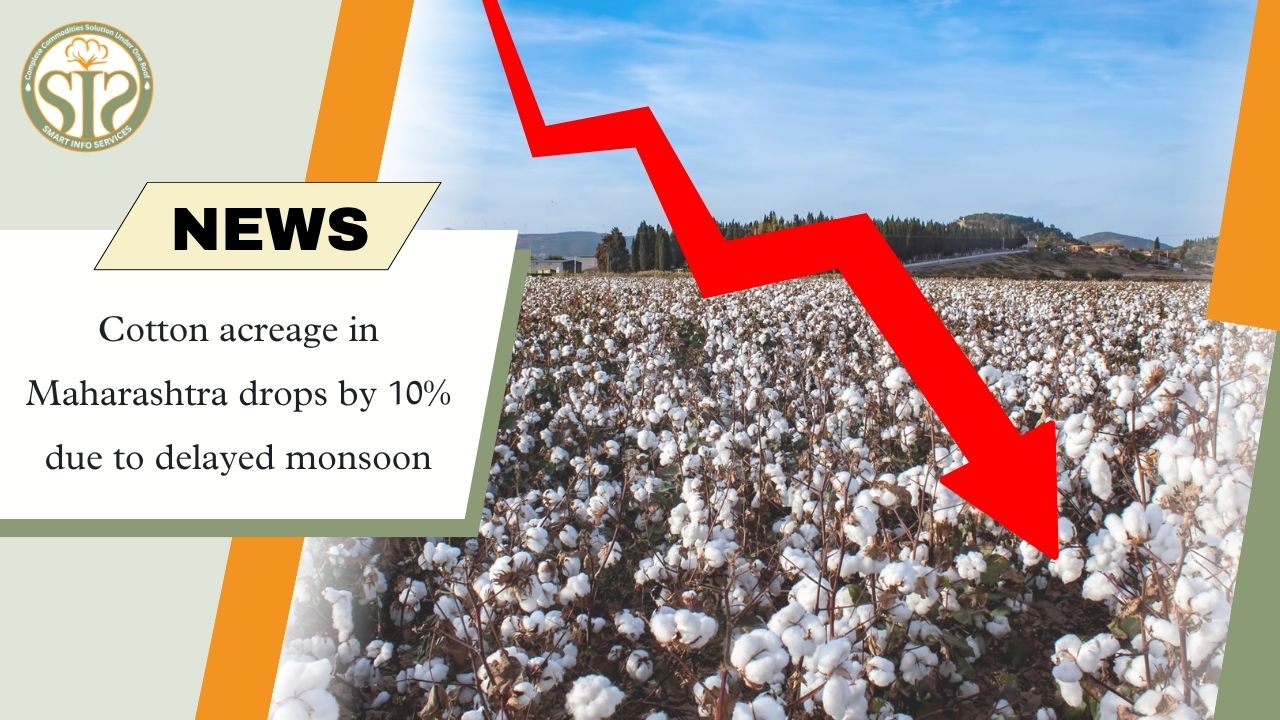
Cotton Sowing Picks Up Pace as Monsoon Intensifies; Acreage Crosses 100 Lakh HectaresCotton sowing has accelerated across the country's major cotton-producing states following the intensification of the monsoon. So far this season, the cotton acreage has surpassed 100 lakh hectares. Telangana, Madhya Pradesh, and Andhra Pradesh have recorded an increase in the area under cultivation compared to last year. Experts believe that if the rainfall continues, the total acreage could even exceed last year's levels.According to Atul Ganatra, Chairman of the Crop Committee of the Cotton Association of India (CAI), cotton sowing has gained significant momentum despite a 20–30 day delay in the monsoon's arrival. Recent good rainfall has provided farmers in low-rainfall regions with the opportunity to sow the crop. He noted that the sowing window has been extended to August 25 this year, and it is possible to achieve the government's target of 120 lakh hectares by August 20. Currently, cotton is being sown across approximately 50,000 hectares daily.In terms of individual states, cotton acreage has increased by 31 percent in Andhra Pradesh and 4 percent in Telangana. The area under cultivation in Madhya Pradesh has reached 5.79 lakh hectares. In Gujarat, cotton acreage is expected to rise by 7 to 10 percent this year, driven by recent rains and a subsidy of ₹14,000 per acre announced by the state government. However, cotton acreage in Maharashtra has remained slightly lower compared to the previous year.According to the CAI, the condition of the cotton crop across the country is currently satisfactory. Arrivals of the early-sown crop from North India and parts of South India are expected to begin in the first week of September. Crops in several regions, including Raichur in Karnataka and Adoni in Andhra Pradesh, have benefited from the recent rainfall. Meanwhile, in the Khandesh region of Maharashtra, crops in irrigated areas are in good condition; however, the cotton acreage there could decline by 5 to 10 percent as some farmers shift towards maize.READ MORE :- China Cotton Reserve Sales May Boost Demand for U.S. Cotton Exports

Related News

Youtube Videos

साप्ताहिक कपास बाजार में गिरावट 😱 Weekly Cotton Market Rate #kapas
साप्ताहिक कपास बाजार में गिरावट 😱 Weekly Cotton Market Rate...
जन्माष्टमी पर कपास बाजार में गिरावट 😱 आज का कपास भाव  #cotton
जन्माष्टमी पर कपास बाजार में गिरावट 😱 आज का कपास भाव #cott...
📉 कपास बाजार में गिरावट! रुई 800₹ टूटी 🔥 CCI Auction | Cotton Sowing Report #kapas
📉 कपास बाजार में गिरावट! रुई 800₹ टूटी 🔥 CCI Auction | Cot...
Application Download
Whatsapp Contact