STAY UPDATED WITH COTTON UPDATES ON WHATSAPP AT AS LOW AS 6/- PER DAY
Start Your 7 Days Free Trial TodayRupee opens 18 paise down at 86.83 as dollar index surgesThe currency opened at 86.83 against the US dollar after ending the previous day at 86.65.read more :- Rupee fell 18 paise to close at 86.65
The Indian rupee on monday lower 18 paise to close at 86.65 per dollar, while it opened at 86.47 in the morning.At close, the Sensex was down 572.07 points or 0.70 percent at 80,891.02, and the Nifty was down 156.10 points or 0.63 percent at 24,680.90. About 1206 shares advanced, 2767 shares declined, and 152 shares unchanged.read more :- APEDA Refutes Misleading Allegations on Organic Cotton Certification Under NPOP
APEDA rejects allegations on organic cotton certificationIn a decisive and forward-looking move, the Union Cabinet chaired by Prime Minister Narendra Modi has approved the long-awaited Research Development and Innovation (RDI) Scheme with a staggering outlay of ₹1 lakh crore. The scheme is poised to redefine India’s innovation, research, and technology ecosystem by providing long-term, affordable financing to the private sector — enabling the nation to stake its claim as a global innovation and product powerhouse by 2047.The RDI Scheme has been carefully structured to address one of India’s long-standing challenges: the lack of private-sector-led investment in high-impact research and innovation. By offering low or nil-interest, long-tenure loans and risk capital, the scheme directly incentivizes the private sector to invest in sunrise domains and strategic sectors that are critical for India’s economic and technological sovereignty.According to the government’s official statement, the scheme will:✅ Encourage private-sector innovation in sunrise sectors with strategic importance✅ Support technology acquisition of high strategic relevance✅ Finance transformative projects up to higher levels of Technology Readiness (TRL)✅ Facilitate a Deep-Tech Fund of Funds to build a robust technology venture ecosystemThe RDI Scheme’s governance structure will be anchored by the Anusandhan National Research Foundation (ANRF), with its Governing Board chaired by the Hon’ble Prime Minister. The scheme will be implemented through the Department of Science and Technology (DST), with oversight by an Empowered Group of Secretaries led by the Cabinet Secretary — ensuring that the program stays mission-aligned and results-focused.Industry Leaders Applaud a Landmark ReformIndustry captains and technology pioneers have welcomed this path-breaking step as a historic opportunity for India’s R&D landscape.Ashok Chandak, President of IESA and SEMI India, described the scheme as a landmark step in India’s journey toward becoming a global innovation hub. “By unlocking ₹1 lakh crore of long-term capital for sunrise and strategic sectors, this initiative will catalyze private-sector-led innovation in areas critical to India’s economic and technological sovereignty — including semiconductors, deep-tech, and electronics,” Chandak stated.He highlighted that IESA has already started collaborating with the ANRF, DST, and MeitY to advance the RDI mission. According to Chandak, IESA will play a proactive role by: Implementing identified high-impact R&D opportunities in semiconductors, electronic systems, and embedded technologies Facilitating collaboration between startups, academia, and industry to accelerate technology readiness Enabling industry sponsorships and funding high-impact R&D projects Supporting commercialization pipelines and deep-tech venture growth“The RDI scheme has the potential to transform India’s innovation landscape — and IESA is committed to being a strategic enabler in this journey,” Chandak affirmed.Translational Research to Power a Product NationDr. Ajai Chowdhry, Founder of HCL and Chairman of the EPIC Foundation, hailed the Cabinet’s decision as a crucial milestone to fulfill India’s Viksit Bharat 2047 aspirations: “This initiative will be a crucial step towards achieving technology sovereignty and realising the vision of Viksit Bharat by 2047. I warmly welcome the Union Cabinet's approval of the Research Development and Innovation (RDI) Scheme with a substantial outlay of ₹1 lakh crore, a milestone I've eagerly anticipated for the past 2-3 years,” he said. “Covid-19 catapulted us to the top league of connected nations. We made the right choices and the world watched us do that. Recently, Operation Sindoor has taught us another valuable lesson: we need belief in our own capabilities, invest in secure and indigenous infrastructure, become a product nation, and lead with conviction, not dependency,” Dr. Chowdhry added.He underscored that placing the scheme under DST, with the Prime Minister personally chairing the ANRF’s Governing Board, sends a powerful policy signal of India’s unwavering commitment to homegrown, secure, and scalable innovation.read more :- Desi cotton: New hope for Punjab farmers
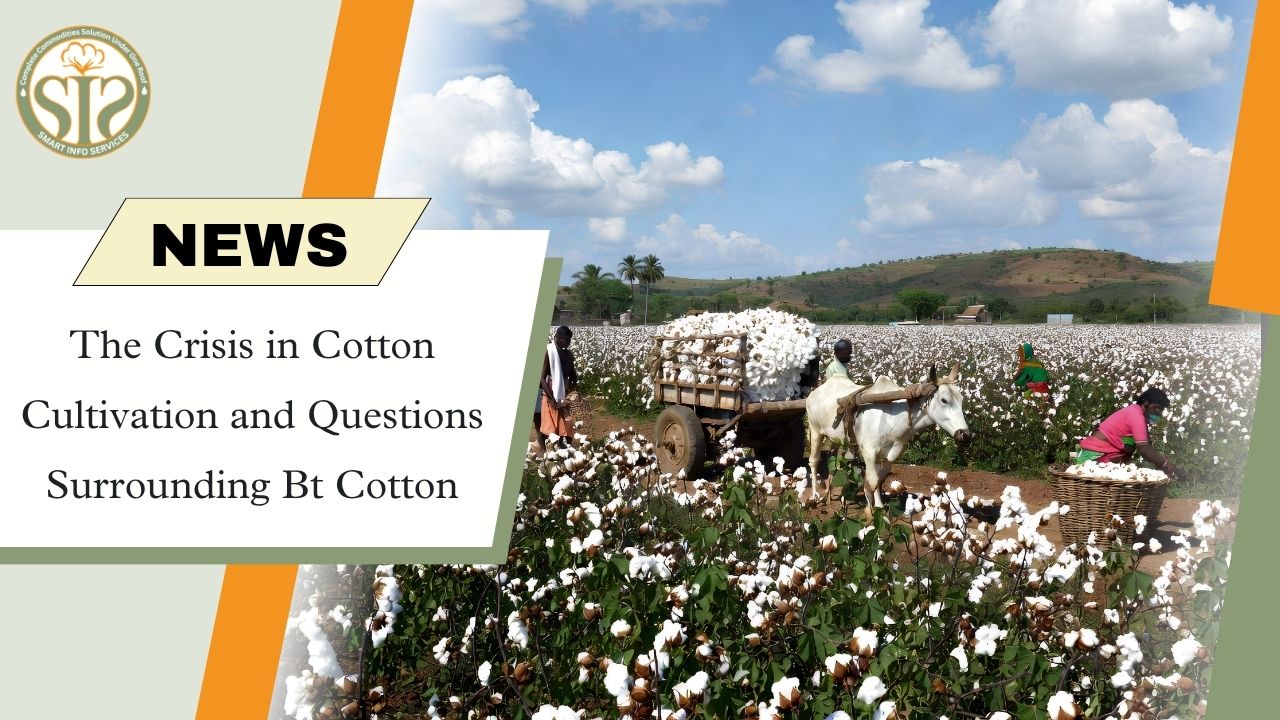
Unravelling the Bt bind: Desi cotton weaves a new future for Punjab farmersAfter years of struggling with pest-infested Bt cotton and shrinking profits, a section of farmers in Punjab are turning back to a traditional crop with a modern promise — indigenous desi cotton — to overcome an economic crisis following dismal cotton seasons since 2021.Once sidelined by genetically modified varieties, desi cotton is now being revived with institutional support, scientific backing, and farmer-led trials. The state’s agriculture department has begun actively promoting desi cotton this kharif season, marking a major shift in crop strategy aimed at restoring sustainability and profitability to Punjab’s cotton belt.Bt cotton, introduced in 2005 in Punjab, has dominated for nearly two decades. However, this kharif season, the state has begun promoting desi cotton in an organised manner for the first time in years.Progressive farmers and agricultural experts say desi cotton is commercially viable, especially in the medical sector, and intercropping with vegetables can further support farmers financially until new pest-resistant hybrids are introduced following ongoing scientific trials.Charanjeet Singh, deputy director (cotton) in the state agriculture department, said around 2,200 hectares are currently under recommended varieties of desi cotton this season, with plans to boost acreage further next year.He explained that since 2021, Punjab has seen a decline in cotton sowing due to repeated pest attacks on Bt cotton and other factors. As a result, many farmers in the southeastern districts began shifting away from the traditional cash crop.“Last year, we observed that some farmers were still sowing desi cotton in small patches. There was no focused attention on the varieties, but they continued cultivating it as a sustainable crop,” he said.“Impressed by their confidence in desi cotton — thanks to low input costs and negligible pest attacks — we submitted a report to the Punjab Agricultural University (PAU),” Singh added.“During field visits, indigenous cotton was spotted after several years,” Kumar said. “A new variety, PBD 88, has completed the first phase of trials and is being sown in farmers’ fields in semi-arid south Malwa. It is likely to be released next kharif season.”Kumar added that these varieties show natural resistance to whitefly and the leaf curl virus, two major threats to cotton crops in the region.Ravi Kant Geaidher, a progressive cotton grower from Nihal Khera village in Fazilka, said he has been sowing desi cotton on 2 to 6 acres of his family’s 10-acre farm for almost two decades.“When Bt cotton was profitable, many farmers switched to hybrids and abandoned local varieties,” said Geaidher. “But desi cotton is highly suitable for intercropping. I earn an average of ₹35,000 per acre additionally by sowing vegetables like phoot kakri and banga, both from the cucumber family.”Geaidher, who works closely with PAU on seed trials, said that desi cotton’s resistance to pests and soil-enriching intercropping make it a strong alternative for regions with brackish groundwater, where other crops struggle to survive.“The only drawback is that desi cotton bolls need to be harvested faster than Bt cotton,” he noted. “But in the southwest region, increasing area under high-yield desi varieties could revive the traditional cotton economy,” he added.read more :- Rupee opened 04 paise higher at 86.47 against dollar
Rupee opens 4 paise up at 86.47 dollar as dollar index easesThe currency opened at 86.47 against the dollar after closing the previous session at 86.51. read more :- "2024-25: State-wise CCI cotton sale details"
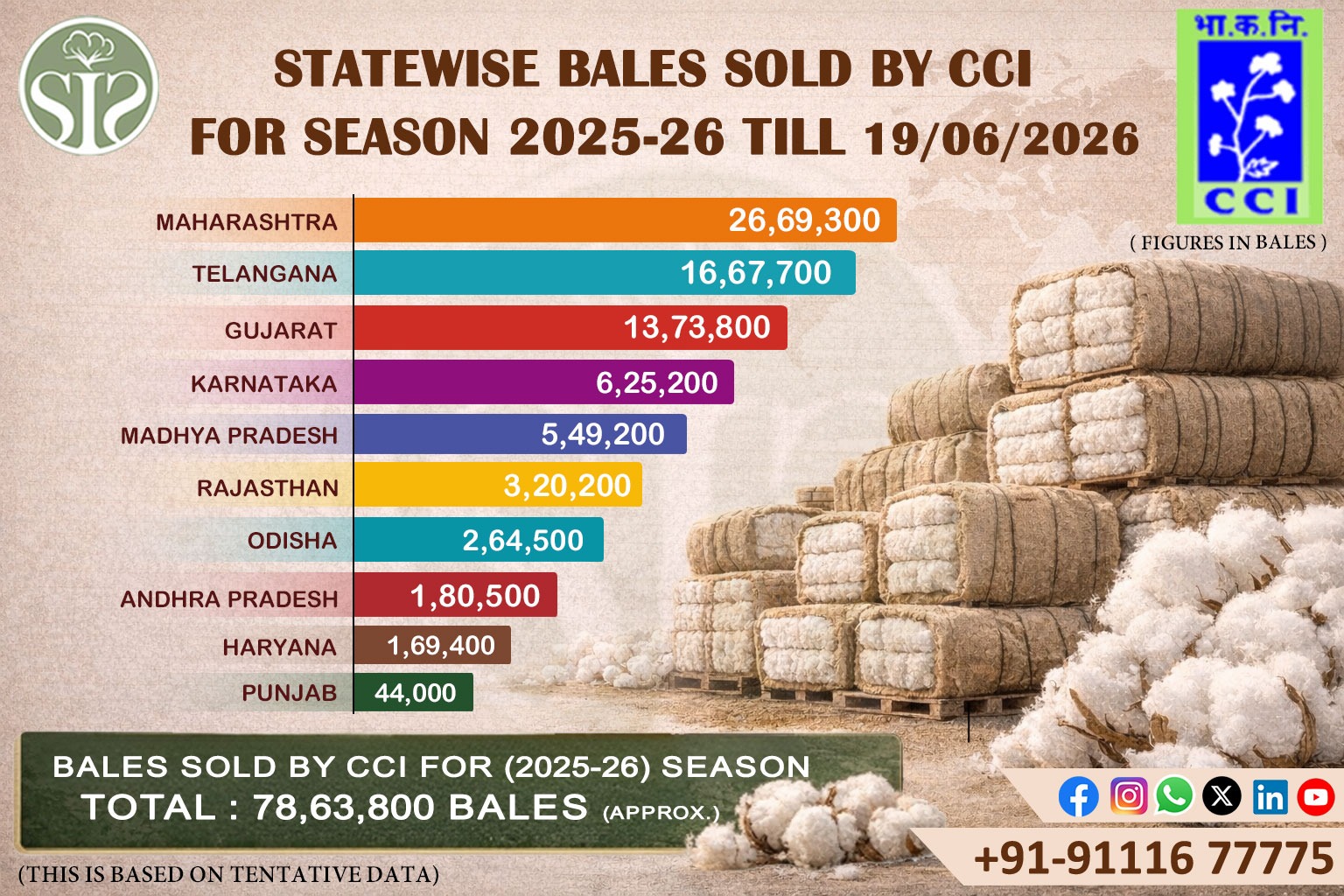
State-wise CCI Cotton Sales Details – 2024-25 SeasonThe Cotton Corporation of India (CCI) made no changes in per candy price this week. Following the price revision, CCI sold approximately 31,200 bales during the week, bringing the total cotton bales sales for the 2024-25 season to approximately 70,48,300 bales. This represents around 70.48% of the total cotton procured so far this season.A state-wise breakdown of sales indicates strong activity from Maharashtra, Telangana, and Gujarat, which together account for over 83.72% of the total sales to date.This data underscores CCI’s proactive efforts in stabilizing the cotton market and ensuring steady supply across key cotton-producing states.

Decline in cotton production in KhandeshJalgaon : Cotton production is low in Khandesh this year. Due to shortage of cotton, the production of cotton bales is slow, and it appears that the processing industry in Khandesh will produce about 18 lakh cotton bales (one bale is equal to 170 kg of cotton) this season (by the end of September 2025).Every year 22 to 23 lakh cotton bales are produced in Khandesh during the cotton season. But production has been continuously decreasing in the last few years. In Jalgaon district, cotton productivity is decreasing due to low cotton cultivation and diseases in 2024. It is also certain that cotton production will also be low.Because the cotton season of 2024-25 will end in September 2025. Currently cotton is not arriving. There is the biggest slowdown in the cotton processing industry. Some factories are closed. The cotton processing industry in Khandesh is running fast in the post-Diwali period. But this year the process was slow due to low supply of cotton.Last year, there were continuous rains in October and before that, which affected the cotton crop. This led to a decrease in cotton production. In 2024, cotton sowing also decreased in Jalgaon in about 66 thousand hectares. The total cotton cultivation in Jalgaon was 5 lakh 11 thousand hectares. The target of cotton production could not be achieved due to less cotton being received by the producers and other institutions.There is no arrival of cotton at present. In November and December, an average of 18 thousand quintals of cotton used to arrive per day. This was till mid-June. Now, since there is no cotton in every village, there is not much purchase from the villages. Farmers do not have cotton stock. Therefore, cotton production will not reach 18 lakh bales this year.Frequently Asked Questions (FAQ):1. Why did cotton production decrease in Khandesh this year?Cultivation and production decreased due to the impact of rain and disease.2. How many bales of cotton will be produced?It is estimated that 18 lakh bales will be produced, but that too may remain incomplete.3. How are cotton processing industries being affected?Factories are running slow or closed due to insufficient cotton supply.4. Why are farmers running out of cotton stock?Farmers are running out of stock due to low production.5. When did this problem start being felt?This problem became serious in 2024, when sowing decreased and this problem arose due to winter rains.
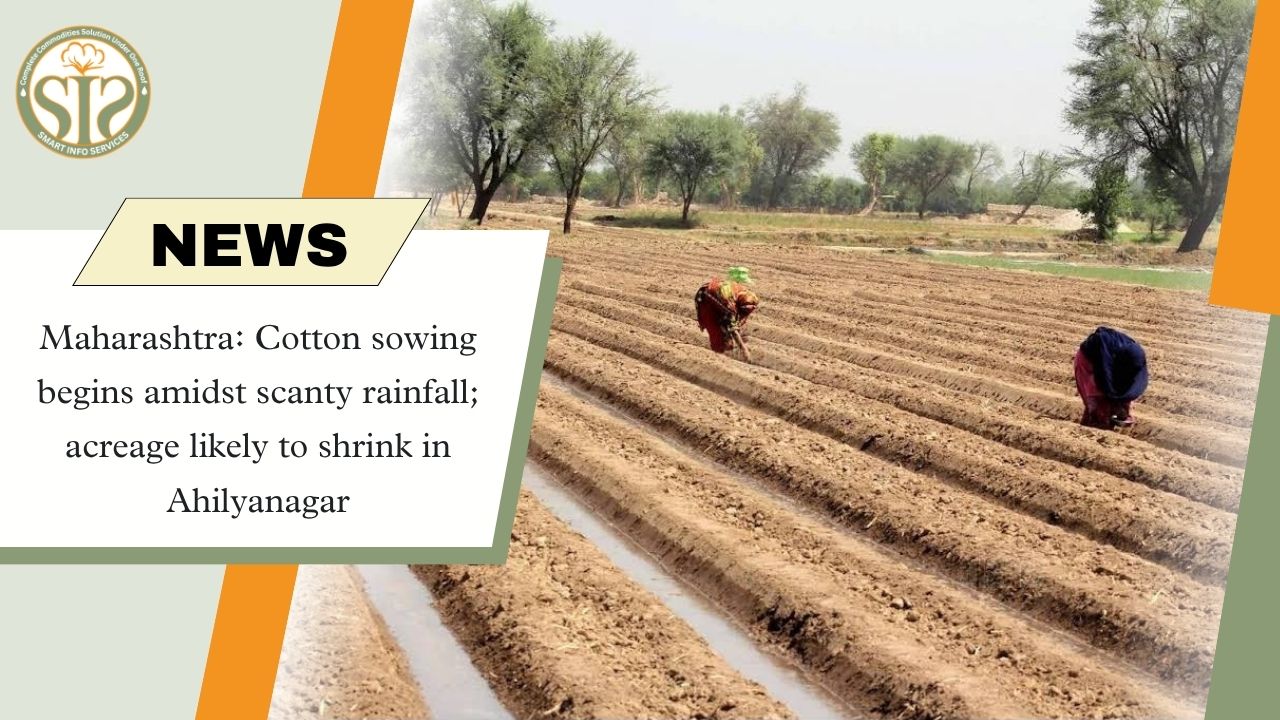
Maharashtra: Cotton acreage increased in Dariyapur taluka; Rs 4,000 spent per acre on weedingAfter the rains in the last few days in Dariyapur, farming work has started rapidly. Weeding of cotton is going on rapidly with the help of furrows. For this, the practice of gutdari of women laborers has started on a large scale. Weeding of cotton is being done at the rate of Rs 3 to 4,000 per acre. Cotton has been cultivated in 50,875 hectares in Dariyapur taluka. Cotton crop is seen as a cash crop for farmers. This year the area of cotton has increased compared to last year. Weedicides are available for other crops. However, out of 78,000 hectares suitable for sowing in Dariyapur taluka, 73,995 hectares have been cultivated. Soybean has been sown in 11,745 hectares in the taluka. Arhar is followed by green gram in 8,872 hectares, while moong has been sown in only 135 hectares. Due to this, cotton cultivation is currently becoming expensive and difficult for the producing farmers. The cost is becoming a headache. Weeding work has to be done due to the growth of weeds in the cotton crop. Due to this, weeding work is being done by women laborers in cotton. For this, the cost of weeding has to be paid in lump sum at the rate of Rs 4,000 per acre. Apart from this, there is a separate cost for weeding, farmer Nilesh Pundkar told. A female laborer weeding the cotton crop in a field in Dariyapur taluka.Cotton crop has the highest cost; spraying is also expensive Although cotton is seen as a cash crop for farmers, apart from this, weeding, fertilizer-watering, spraying work has to be done regularly. Because of this, the cost of cotton crop is higher than other crops. Due to this, some farmers are leaning towards soybean, pigeon pea and green gram crops. Laborers have to be found. Since weedicides also have an effect on crops for some time, weeding of cotton crop and cutting of weeds near trees is done by employing laborers for this. Work has gained momentum by employing laborers for this. Women have to be paid 300 to 350 rupees per day as wages. Apart from this, farmers also have to provide facilities like vehicles and drinking water in jars to the laborers for commuting to the fields.
Herbicide tolerant cotton not a panacea, only ecological disaster.Contrary to false projections by international companies, HT cotton demands indiscriminate spraying of glyphosate herbicide for weed control which can lead to ecological disasters of creating monster weeds (herbicide-resistant weeds) and endanger the whole agricultural crop production systems in IndiaOnce the world’s largest cotton producer and exporter, India has witnessed a significant drop in cotton production due to sharp decline in its area of cultivation over the last five years.During the period between 2020-21 and 2024-25, country’s CAGR (compound annual growth rate) for area and production of cotton recorded a negative growth of (-) 4.12 per cent and (-) 3.70 per cent respectively. Cotton production, during this phase, fell from 352.48 lakh bales to 306.92 lakh bales.The reason for decline in area of cultivation is primarily attributed to failure of Bt cotton against pink bollworms & other insects-pests which make it economically less attractive compared to the low-risk and highly remunerative crops like maize, rice, sugarcane etc. Further, climate change induced irregularity of monsoon has also added to the instability of cotton yield.Despite declaration of minimum support price (MSP), price volatility in the cotton market further compounds the problem. Farmers are compelled to sell at prices below the MSP due to lack of 'legal guarantee' which disincentivises cotton cultivation. Adding to the problem, sharp increase of inputs prices of Bt cotton seeds, pesticides and labour without any significant yield gains during the last decade has made cotton an economically unviable option for farmers in the agriculturally progressive zones.This crisis of cotton production has presented MNCs an opportunity in pressuring Indian policymakers to seek legalisation of HT cotton (herbicide tolerant) hybrids with false promises to double cotton production. However, the approval of HT cotton directly cannot increase yield in absence of improved high yielding varieties (HYVs) /hybrids as compared to readily-available cereals, rice, maize and cash crops like sugarcane.Farmers are already facing serious problems of higher tolerance shown by American pink bollworm and others insects-pests created due to introduction of Bt cotton in 2002 which covered over 95 per cent areas of cotton cultivation in India by 2013. Bt cotton is now also affected by a new pest, tobacco streak virus (TSV), causing a disease known as cotton necrosis. TSV is an emerging issue in India and causing significant yield losses in cotton crop.To boost cotton production in India, the goal should be development of climate- resilient HYVs/hybrids with improved resistance against insects-pests as successfully done in the cereals crops. On policy decisions fronts, the emphasis should be directed towards self-sufficiency through development of Indian HYVs/ hybrids with total legal ban on GM crops including Bt cotton and providing remunerative MSP with legal guarantee to farmers as incentives to grow more cotton.read more :- CCI hikes cotton prices, 70% purchases made through e-bidding
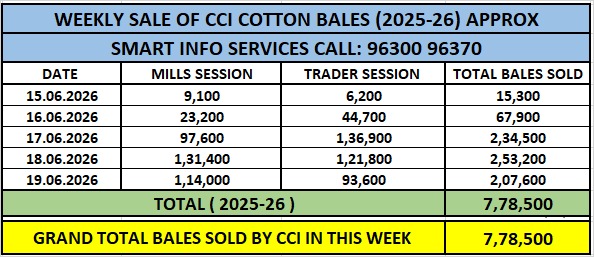
CCI Boosts Cotton Prices, sold 70% of 2024–25 Procurement via E-BiddingThe Cotton Corporation of India (CCI) conducted online bidding for cotton bales throughout the week, with significant trading activity observed across both the Mills and Traders sessions. Over the course of five days, CCI prices are unchanged.As of now, CCI has sold approximately 70,48,300 cotton bales for the 2024–25 season, representing 70.48% of its total procurement for the season.Date wise weekly Sales Summary :21 July 2025:The highest daily sales of the week were recorded on this day, with 6,000 bales sold from the 2024–25 season.Mills session : 3,100 balesTraders session : 2,900 bales22 July 2025:A total of 2,200 bales were sold from the 2024–25 season.Mills session : 800 balesTraders session : 1,400 bales23 July 2025:Sales amounted to 2,800 bales, all from the 2024–25 season.Mills session: 800 balesTraders session: 2,000 bales24 July 2025:A total of 4,300 bales were sold from the 2024–25 season.Mills session : 700 balesTraders session : 3,600 bales25 July 2025:The week concluded with sales of 15,900 bales.Mills session: 13,600 balesTraders session: 2,300 balesWeekly Total:CCI achieved total sales of approximately 31,200 bales for the week, underscoring its strong market engagement and the growing efficiency of its digital transaction platform.read more :- INR Gains 06 Paise, Closes at 86.51 per Dollar .
The Indian rupee on friday higher 06 paise to close at 86.51 per dollar, while it opened at 86.57 in the morning. At close, the BSE Sensex quoted at 81,463.09, down 721 points or 0.88 per cent, and the NSE Nifty50 was at 24,837, down 225 points or 0.9 per cent.read more :- Shivraj Singh Chouhan: Strategic initiative to increase soybean-cotton production
Shivraj Singh Chouhan Reviews Strategy to Boost Soybean, Cotton Yields; Calls for Quality Seeds, Mechanisation.To promote the overall development of agriculture, Union Agriculture and Farmers Welfare Minister Shivraj Singh Chouhan has initiated crop-wise and region-wise visits across the country. On July 24, 2025, he chaired a high-level meeting in Delhi with senior officials to review strategies for enhancing the productivity of soybean and cotton.During the meeting, Union Minister highlighted the need to formulate an action plan based on insights gathered from his recent field visits. He directed officials to adopt a mission-mode approach and assign specific responsibilities to dedicated teams of scientists. He also stressed the importance of integrating the soybean and cotton productivity enhancement initiative with the National Mission on Seeds, and recommended disseminating technical information to farmers through videos and mobile messages to ensure wider outreach.Earlier, as part of the Viksit Krishi Sankalp Abhiyan conducted between May 29 and June 12, 2025, Minister Chouhan held consultations with farmers and other stakeholders at the National Soybean Research Institute in Indore on June 26 and the Sugarcane Breeding Institute in Coimbatore on July 11 to explore strategies to improve the productivity of soybean and cotton.In the follow-up meeting held yesterday, at Krishi Bhawan, New Delhi, Agriculture Secretary Devesh Chaturvedi, DARE Secretary and Director General of ICAR Dr. M. L. Jat, and other senior officials were present. ICAR Deputy Director General (Crops) Dr. D.K. Yadav gave a presentation outlining research-based approaches to boost crop productivity.Based on the presentation, Minister directed the formation of a team of scientists for germplasm import in mission mode and asked that this work be aligned with the objectives of the National Seed Mission. Recognizing the critical role of seed quality, he instructed both Secretaries to organize a meeting with government seed corporations to explore ways to ensure the availability of high-quality seeds to farmers.Shivraj Singh also addressed the need for better agricultural mechanization. He suggested evaluating Custom Hiring Centers to identify which types of genetic/agricultural machinery are required and ensure their availability accordingly. In light of the success of the Viksit Krishi Sankalp Abhiyan, he recommended implementing the initiative ahead of major cropping seasons, August-September for Rabi and March-April for Kharif.To enhance farmer outreach, he instructed that all 731 Krishi Vigyan Kendras (KVKs) across the country be equipped with broadband, projectors, and other facilities, so that more farmers can directly engage with agricultural experts.Additionally, the Minister stressed the importance of increasing awareness among registered farmers by strengthening seasonal advisories and spreading technical knowledge about soybean and cotton cultivation through videos and messages.read more :- Indian economy remained stable in June-July: RBI
India's economy stable in June-July amid tensions and apprehensions: RBI BulletinAn article published in the latest issue of the Reserve Bank of India (RBI) Bulletin said that India's economic activity remained stable in June and July this year amid geopolitical tensions and tariff policy uncertainties, with better prospects for the Kharif agricultural season, continued strong momentum in the services sector and modest growth in industrial activity.The global macroeconomic environment remained volatile in these two months.The article on the state of the domestic economy said that core consumer price index (CPI) based inflation remained below 4 per cent for the fifth consecutive month in June due to a decline in food prices.Systemic liquidity remained in surplus to enable faster transmission of policy rate cuts to the debt markets. It said that the external sector remained resilient due to adequate foreign exchange reserves and moderate external debt-to-GDP ratio.Another article in the bulletin mentioned that a 10 per cent increase in global crude oil prices could, according to empirical estimates, raise India's core inflation by about 20 basis points on a contemporaneous basis.The article on the relationship between oil prices and inflation in the country said that there is a need to take measures not only to control the impact on domestic prices due to increased dependence on oil imports but also to gradually move towards alternative sources of fuel for more efficient management of domestic fuel prices in the long term.read more :- Zero duty on raw materials can boost employment opportunities in textile sector in India: Amitabh Kant
Zero Duty on Raw Materials to Boost Textile Jobs: Amitabh KantIndia must eliminate import duty on man-made fibre (MMF) raw materials and scrap quality control orders (QCOs) to make the textile sector globally competitive and create lakhs of manufacturing jobs, according to former Niti Aayog CEO Amitabh Kant."The solution to job creation in India lies in the textile and apparel industry. It has the potential to add lakhs of manufacturing jobs," Kant said in a post on microblogging platform X.He pointed out that 70 per cent of the textile and apparel market globally is based on MMF and the rest on cotton, while in India the ratio is the opposite, which limits competition."At the raw material level, especially in the MMF market, there is a lack of competition. Raw materials such as polyester and viscose attract high import duty," Kant said."Raw material for MMF is about 25 per cent more expensive than our competitors. This cost disadvantage increases further as we move down the value chain," he said."Making raw materials competitive means freeing up millions of small enterprises, boosting their growth, creating a large number of jobs and making India a global textile superpower," he added.read more :- Rupee down 17 Paise to 86.57 Against Dollar
Indian rupee opens 17 paise lower at 86.57 against US dollarThe Indian rupee opened 17 paise lower at 86.57 against the US dollar on July 25, following a dip in Asian currencies and uptick in dollar index, as compared to 86.40 at previous close.read more :- CAI President Atul Ganatra's interview to CNBC Awaaz – Key Points
Key Highlights from the Interview Given by CAI (Cotton Association of India) President Mr. Atul Ganatra to CNBC Awaaz on July 24, 20251. Rising Demand for Alternative Fibers:Mr. Ganatra highlighted that there has been a significant increase in demand for alternative fibers like viscose and polyester over the past four years. In 2021, their daily consumption was around 1,800 tons, which has now risen to 2,600–2,700 tons per day. This upward trend is expected to accelerate further in the coming years.2. Fiber Price Comparison & Yarn Realization Rates:Current Prices:Cotton: ₹170 per kgViscose: ₹155 per kgPolyester: ₹102 per kgYarn Realization (percentage of fiber converted to yarn):Cotton: 86–87%Viscose/Polyester: Approx. 98%3. National vs Global Fiber Usage Ratio:India still uses 70% cotton and 30% synthetic fibers, whereas globally, the trend is reversed—70% manmade fibers and 30% cotton yarn.4. Massive Surge in Cotton Imports:There has been a dramatic rise in cotton imports this year. While only 1.5 million bales were imported last year, this year the number is expected to reach 4 million bales—an increase of over 250%, despite an 11% import duty. This is a concerning development for the Indian economy.5. Competitiveness of Imported Cotton:Currently, November shipment deals from Brazil and African countries are being finalized at ₹50,000–₹51,500 per candy, while domestic cotton prices stand at ₹56,000–₹57,000 per candy, which is 8–10% higher.Imported cotton is considered more competitive due to higher quality, lower contamination, and better yarn recovery compared to Indian cotton.6. Minimum Support Price & Sowing Situation:The MSP for the upcoming season is ₹8,100 per quintal, at which the CCI (Cotton Corporation of India) will procure cotton from farmers. This has boosted farmer confidence.Initially, there were concerns of a 10% decline in sowing area, but recent data shows sowing has already reached 10.1 million hectares, matching last year’s levels. If this trend continues, sowing could see a 3–4% increase this year.Thanks to a timely monsoon, new crop arrivals may begin in North and South India by September 15.7. Impact of Recycled Cotton:Recycled cotton—priced at around 25% of the cost of virgin cotton—is being used in higher volumes, which has also contributed to the reduction in overall cotton demand in the country.read more :- Trump: 15% to 50% tariffs will be imposed on countries
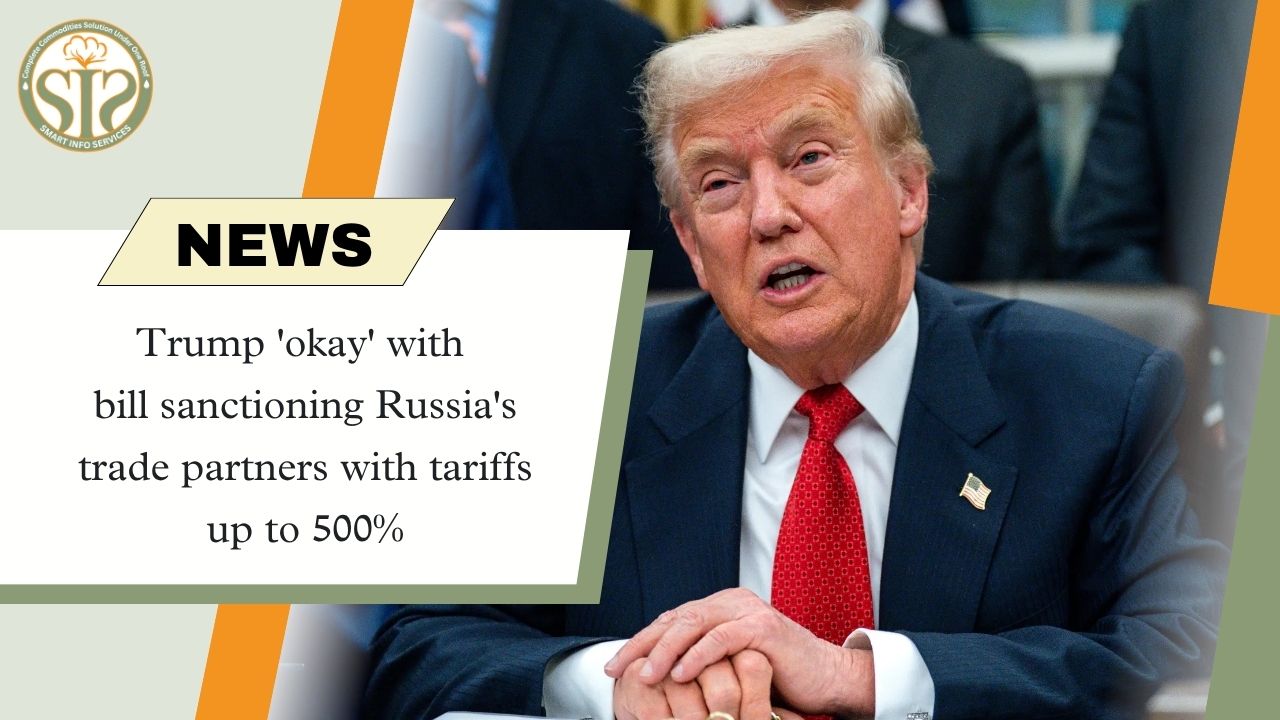
Trump Says Countries Will Face Tariffs Ranging From 15% to 50%US President Donald Trump suggested that he would not go below 15% as he sets so-called reciprocal tariff rates ahead of an Aug. 1 deadline, an indication that the floor for the increased levies was rising.“We’ll have a straight, simple tariff of anywhere between 15% and 50%,” Trump said Wednesday at an AI summit in Washington. “A couple of — we have 50 because we haven’t been getting along with those countries too well.”Trump’s comment declaring that the tariffs would begin at 15% represented the latest twist in his effort to impose duties on nearly every US trading partner, and the latest indication that Trump was looking to more aggressively impose the levies on exports from countries outside the small group that so far has been able to broker trade frameworks with Washington.Trump earlier this month said that more than 150 countries would receive a letter including a tariff rate of “probably 10 or 15%, we haven’t decided yet.” Commerce Secretary Howard Lutnick told CBS News on Sunday that small countries including “the Latin American countries, the Caribbean countries, many countries in Africa” would have a baseline tariff of 10%. And at the first announcement of the tariffs in April, Trump unveiled a universal tariff of 10% on nearly every country.While Trump and his advisers initially expressed hopes of securing multiple deals, the president has been touting the tariff letters themselves as “deals” and suggesting that he is uninterested in back-and-forth negotiations. Still, he has left the door open for countries to make agreements that could lower those rates.On Tuesday, Trump announced he was reducing a threatened 25% tariff on Japan to 15% in exchange for the country removing restrictions on some US products as well as offering to back a $550 billion investment fund.The White House has also discussed a similar fund with South Korea, a nation also focused on reaching a 15% rate including on autos, according to people familiar with the matter. And the Philippines is aiming to bring down its own tariff rate to the 15% level from the current 19% rate, according to the country’s Ambassador to the US Jose Manuel Romualdez.Meantime, officials in Vietnam are weighing the likely cost of their deal. Hanoi estimates its exports to the US could decline by as much as a third if higher tariffs announced by Trump take effect, an internal government assessment shows.Read more: Vietnam Sees Trump Tariffs Cutting Up to a Third of US ExportsOther nations, including India and members of the European Union, are still pushing for an agreements before the heightened tariffs go into effect.On Wednesday, Trump said he would “have a very, very simple tariff for some of the countries” because there were so many nations that “you can’t negotiate deals with everyone.” He said talks with the European Union were “serious.”“If they agree to open up the union to American businesses, then we will let them pay a lower tariff,” Trump said.read more :- India-UK trade agreement: Exemption on Basmati and fruit export, no exemption on dairy and edible oil import
India-UK FTA: Basmati, fruits, cotton exports exempted from tariff; no relaxation on import of dairy, apples and edible oils.Farmers and food-processing units are set to benefit from the India-UK free trade agreement (FTA) as basmati rice, cotton, groundnut, fruits, vegetables, onion, pickles, spices, tea and coffee, etc, would be exempt from duty when exported to the UK.Also, the FTA allows no tariff concessions on import of dairy products, apples, oats and edible oils. It means apple-growers in Himachal Pradesh and Jammu and Kashmir stand protected. Farmers and politicians from both states had been vocal in seeking ‘no exemption’ on apple imports.Agriculture and food processing will have a 14.8 per cent and 10.6 per cent share, respectively, of the agreed products under the FTA, that is scheduled to be signed in London on Thursday.A duty-free access, streamlined trade protocol, and protection for India's agriculture is part of the FTA and it sets the stage for growth in agri exports and value-added products. It unlocks premium UK markets for Indian farm and food-processing units as tariffs would match, or be lower in some cases, with benefits enjoyed by exporters from Germany, the Netherlands, and other EU nations.Agriculture and food processingOver 95% of ‘tariff lines’ agreed upon in the FTA will attract zero duty on Indian agricultural and processed food. India has calculated that this duty-free access is expected to increase agri exports by over 20% in the next three years, contributing to the goal of $100 billion agri exports by 2030 and putting more money in the hands of rural households.In the food-processing sector, India exports $14.07 billion worth of goods globally, while the UK imports $50.68 billion of goods. So far, Indian products make up just $309.5 million of UK imports.In agriculture, India exports $36.63 billion globally, while the UK imports $37.52 billion, but the UK’s imports from India are just $811 million.India can outcompete major global players in crucial segments. For example, in processed food preparations, India would have to gain ground over the US, China and Thailand. In bakery items, Indian produce would be more competitive than those from the US, China, Thailand and Vietnam. In case of preserved vegetables, fruits, nuts, fresh vegetables and Indian produce would get a lower tariff than that applied to Pakistan, Turkiye, the US, Brazil, Thailand and China.read more :- Rupee fell 07 paise to close at 86.40 per dollar
The Indian rupee on thursday lower 07 paise to close at 86.40 per dollar, while it opened at 86.33 in the morning.At close, the Sensex was down 542.47 points or 0.66 percent at 82,184.17, and the Nifty was down 157.80 points or 0.63 percent at 25,062.10. About 1564 shares advanced, 2324 shares declined, and 155 shares unchanged.read more :- Cheap fibres put pressure on global cotton
Cheaper alternative fibres put pressure on global cotton growthIndustry experts and research analysts say global cotton growth is under pressure due to the growing trend towards sustainability and environmentally conscious production, as consumers increasingly prefer responsible materials and manufacturing processes."Although natural fibres such as cotton have traditionally been considered sustainable and clean, overall cotton use is gradually declining due to concerns over excessive consumption, water use and climate sensitivity, driven by declining demand for fast-fashion and a shift towards alternative materials," research agency BMI, a unit of Fitch Solutions, said in its study titled "The Future of Cotton in Asia: Slowing Demand, Innovation and Resilience"."The textile sector is looking at alternative fibres such as bamboo, hemp and recycled cotton. These are cheaper than cotton," says Anand Popat, a Rajkot-based trader of cotton, yarn and cotton waste.Blended fibres are gaining popularity"Cotton blended fibres are gaining popularity. Today, pure cotton accounts for less than 30 per cent of the total fibre usage in the textile industry. Manufacturers have many options," said Ramanuj Das Boob, a Raichur-based sourcing agent and vice-president of the All India Cotton Brokers Association.Prabhu Dhamodharan, convener of the Indian Textile Entrepreneurs Federation (ITF), said alternative fibres have made some progress but cotton still remains the preferred choice among premium consumers. "This segment of consumers exhibits high spending power, leading to a sustained demand for cotton-based fashion products," he said.From India's perspective, for the first time this year, its cotton-based apparel exports accounted for 12 per cent of the US market. "With India's established strength in cotton apparels, this momentum is likely to continue," Dhamodharan said.Pointing to various initiatives launched by the EU and the UK to promote eco-friendly products, BMI said the demand for cotton is likely to become volatile due to the growing trend of synthetic fibres and the progress in affordable, high-quality and bio-based alternatives.Recycled cotton"As consumer preferences shift towards more sustainable alternatives, we expect a gradual decline in demand for the cotton crop, impacting prices and hence reducing production in the long term," the research agency said."The low cost of alternatives is impacting cotton. While the lowest price of cotton yarn is ₹220 per kg, blended yarn is priced at around ₹150," Das Bub said."The prices of recycled cotton are one-fourth of the prices of pure cotton products. Even large retailers are considering reducing costs by opting for blended cotton instead of pure cotton," Popat said.BMI said cotton production has faced several challenges in recent years, particularly the development of resistance to Bt cotton by pink bollworm in India, due to incompatibility with local agronomic and climatic conditions. "This underlines the need for cotton producers to continue innovating and adapting to emerging challenges," it said.Social campaignsSocial campaigns against alleged forced labour in China's Xinjiang cotton industry have led to global boycotts by major fashion brands and consumers. "Domestic demand has also weakened, with Chinese garment manufacturers increasingly turning to imported cotton to avoid the adverse effects of import bans and boycotts," the research agency said.Popat said various agencies are now trying to promote cotton. "It all started when cotton prices touched ₹1 lakh per candy (356 kg). Manufacturers tried to reduce costs and alternatives came up," he said."Nothing can beat the feel of pure cotton. This is a cyclical trend. It can change in a few years," Das Boob said.Dhamodaran said inventory levels in the global fashion sector have normalised, with brands and retailers increasingly leveraging AI and digital tools for demand-based, dynamic planning.Almost five-year low"Production is now closely aligned with consumption patterns, especially in developed markets, and EU import and consumption trends remain very stable. We expect even better momentum in the EU going forward," he said.BMI said India and China have initiated measures to address current problems in the cotton sector. These are likely to bear fruits over time.According to the US Department of Agriculture, global cotton production is estimated to be 25.78 million tonnes (MT) in 2025-26, compared to 26.10 million tonnes in 2024-25. Domestic consumption in producing countries is expected to rise to 25.72 million tonnes (25.40 million tonnes in 2024-25), while exports are likely to rise to 9.73 million tonnes (9.36 million tonnes). This will leave ending stocks at 16.83 million tonnes (16.71 million tonnes), a clear sign of a slowdown.Cotton futures on the New York-based Intercontinental Exchange are trading near a five-year low of 66 cents per pound. In India, benchmark Shankar-6 cotton is trading at ₹57,500 per candy in Rajkot, Gujarat.read more :- Farmers moving towards maize: Decline in soybean and cotton cultivation
| title | Created At | Action |
|---|---|---|
| Rupee open Declines 18 Paise to 86.83 per Dollar | 29-07-2025 17:27:33 | view |
| Rupee fell 18 paise to close at 86.65 | 28-07-2025 22:41:50 | view |
| APEDA Refutes Misleading Allegations on Organic Cotton Certification Under NPOP | 28-07-2025 19:07:44 | view |
| Desi cotton: New hope for Punjab farmers | 28-07-2025 17:53:21 | view |
| Rupee opened 04 paise higher at 86.47 against dollar | 28-07-2025 17:26:39 | view |
| "2024-25: State-wise CCI cotton sale details" | 26-07-2025 22:13:15 | view |
| Maharashtra: Production of cotton bales reduced in Khandesh | 26-07-2025 20:31:11 | view |
| Cotton cultivation increased in Dariyapur, weeding cost ₹4,000 per acre | 26-07-2025 20:07:20 | view |
| Herbicide-resistant cotton: not a panacea, but an environmental crisis | 26-07-2025 18:16:24 | view |
| CCI hikes cotton prices, 70% purchases made through e-bidding | 26-07-2025 01:01:51 | view |
| INR Gains 06 Paise, Closes at 86.51 per Dollar . | 25-07-2025 22:53:15 | view |
| Shivraj Singh Chouhan: Strategic initiative to increase soybean-cotton production | 25-07-2025 22:22:26 | view |
| Indian economy remained stable in June-July: RBI | 25-07-2025 19:02:22 | view |
| Zero duty on raw materials can boost employment opportunities in textile sector in India: Amitabh Kant | 25-07-2025 18:34:59 | view |
| Rupee down 17 Paise to 86.57 Against Dollar | 25-07-2025 17:24:35 | view |
| CAI President Atul Ganatra's interview to CNBC Awaaz – Key Points | 25-07-2025 00:44:37 | view |
| Trump: 15% to 50% tariffs will be imposed on countries | 24-07-2025 23:24:44 | view |
| India-UK trade agreement: Exemption on Basmati and fruit export, no exemption on dairy and edible oil import | 24-07-2025 23:04:06 | view |
| Rupee fell 07 paise to close at 86.40 per dollar | 24-07-2025 22:42:10 | view |
| Cheap fibres put pressure on global cotton | 24-07-2025 20:05:11 | view |