Filter

Recent News

Early Monsoon Sparks Relief Hopes Amid El Niño Concerns

Early Monsoon Brings Relief Hopes, but El Nino Threat Looms Over India’s RainfallIndia’s southwest monsoon is likely to reach Kerala on May 26, nearly six days ahead of its usual June 1 onset, according to the India Meteorological Department (IMD). While an early monsoon often raises hopes of relief from intense summer heat and promises a favourable agricultural season, experts caution that the overall rainfall outlook remains uncertain due to the possible development of El Nino conditions in the Pacific Ocean.El Nino, marked by unusually warm sea surface temperatures in the Pacific, is typically associated with hotter summers and weaker monsoon rainfall in India. Since nearly half of the country’s farmland relies on rain rather than irrigation, any weakness in the monsoon can significantly affect agriculture and water availability.The IMD said the monsoon onset over Kerala could vary by four days on either side of May 26. The weather office also noted favourable conditions for the monsoon’s advance over the south Bay of Bengal, the Andaman Sea, and the Andaman and Nicobar Islands, with widespread rainfall expected along the southern west coast through May 28.However, meteorologists stress that an early onset does not necessarily translate into above-normal rainfall during the season. Weather experts explain that monsoon performance depends on several factors, including ocean temperatures, wind circulation, and the formation of low-pressure systems. The monsoon typically progresses in phases or “surges,” meaning rainfall distribution across June, July, and August can still remain uneven despite an early start.READ MORE :-Once Prosperous from White Gold, Farmers Now Crushed by Pink Plague

Once Prosperous from White Gold, Farmers Now Crushed by Pink Plague

Once rich by growing white gold, now ruined by the pink plague!Cotton farming in some Indian states has been a loss-making venture for farmers for quite some time. The pink bollworm is causing severe damage to cotton crops.White gold... that is, cotton. Thousands of farmers in three Indian states have been transforming their fortunes by cultivating cotton. But now this "white gold" is becoming a loss-making venture for them. The cause of this loss is a "pink plague," the pink bollworm, also known as the pink bollworm. Farmers who have previously earned substantial profits are now incurring losses. The "Hormuz Crisis" is also largely responsible for this loss. As a result, farmers are now cultivating coarse grains like millet and mung beans.In fact, thousands of farmers in Punjab, Haryana, and Rajasthan are gradually abandoning cotton cultivation and turning to millet and other low-cost crops. Cotton cultivation also uses a lot of fertilizer. There's a fertilizer shortage these days.The 'Pink Bollworm' Has Broken Farmers' BacksThe biggest problem facing cotton farmers right now is the pink bollworm. This insect burrows into the cotton pod and destroys the seeds and cotton from within. This results in farmers not even getting a fair price for their cotton in the market. Farmers say that while a few years ago, an acre used to yield 10 to 12 quintals of cotton, production has now fallen by half or even less. Farmers in many areas have suffered huge losses. Areas like Sirsa, Hisar, Fatehabad, and Bhiwani in Haryana, Mansa, Bathinda, and Fazilka in Punjab, and Sriganganagar and Hanumangarh in Rajasthan have long been considered the country's major cotton belts. But now, farmers in these same areas are avoiding cotton.Expensive sprays are also ineffectiveFarmers have to constantly use pesticides to protect their cotton crops. Expensive chemicals have to be sprayed repeatedly to protect against the American bollworm, spotted bollworm, thrips, and other pests. Farmers report spraying 5 to 10 times per season. Despite this, the pink bollworm remains undetected. Excessive fertilizers and pesticides have increased farming costs, while reducing profits.Labour shortage exacerbates the problemPicking cotton from the fields is considered a very laborious task. This work requires a significant number of laborers, but due to the increasing migration from villages to cities, there is a severe labour shortage in the fields. Even the available laborers are demanding wages ranging from 12 to 25 rupees per kilogram for picking cotton. This has increased the cost of farming. Farmers report that a large portion of the income from selling cotton is spent on labour and medicines.Increasing burden of fertilizers and chemicalsCotton cultivation is considered one of the most expensive crops and requires large quantities of fertilizers and chemical pesticides. Several bags of DAP, urea, SSP, and potash have to be applied to just one acre of land. Additionally, expensive pesticides have to be used to protect against various pests. Farmers say that while the prices of fertilizers and pesticides are increasing every year, production and profits are decreasing. Consequently, cotton farming is no longer as profitable as it once was.Why is the trend towards millet increasing?Farmers frustrated with cotton are increasingly turning to crops like millet. The main reasons for this are lower costs and lower risks. Millet requires less fertilizer, very few pesticides, and less water consumption. Furthermore, this crop matures quickly. While cotton takes approximately six months to mature, millet is ready in 90 to 95 days. For these reasons, millet offers farmers a more stable and secure option compared to cotton.Opportunity to harvest three crops in a yearFarmers who cultivate millet have the opportunity to cultivate two more crops in the remaining season of the year. After sowing millet in Kharif, crops like mustard in Rabi and then mung in Zaid season can be easily grown.Procurement at MSP is the biggest demandAfter facing problems like pink bollworm, expensive fertilizers, and high labor, even when farmers go to sell cotton in the market, they do not get the MSP price. Often, they get a price even lower than the MSP.In 2025, the MSP for millet was Rs. 2775 per quintal, but many farmers received only Rs. 2100 per quintal in the market. This year, the MSP has been increased to Rs. 2900 per quintal, but farmers fear that if government procurement does not take place, they may face further losses.Fertilizer crisis increases concernsThis year, the international situation has also increased farmers' concerns. Due to tensions in West Asia and the impact on global supply chains, a fertilizer crisis is being feared. India relies heavily on imports for fertilizers and their raw materials. If fertilizers become expensive or are not available on time, fertilizer-intensive crops like rice, maize, and sugarcane could be severely affected.Are Millets the Future?The United Nations has already declared 2023 the International Year of Millets. India is the world's largest millet producer. Amid changing climate, water scarcity, and rising costs, coarse grains like millet are now becoming a more profitable option for farmers.READ MORE :- Andhra Pradesh Takes Up Cotton Concerns with Union Minister Piyush Goyal

Textile Industry Seeks Relief Amid Soaring Cotton Prices

Textile bodies seek relief to deal with cotton price surge.CHENNAI: The textile industry has raised concerns over a sharp increase in cotton prices in the past two months and tightening domestic supply, along with heightened raw material and logistics costs, could adversely impact the industry, hard-hit by US tariffs last year.Neeraj Jain, managing director of Vardhman Textiles, raised concerns about domestic supply during the company's latest earnings call and flagged the risk of a cotton shortage starting in August. Also, during the analyst call, Arvind Ltd's management said that higher input costs, especially from cotton prices, could exert pressure on margins in the first half of the year, and that it has proactively locked in long-term prices and secured a significant portion of raw materials to manage the inflationary environment. Exporting units of various sizes and industry bodies have demanded that the Union Government provide an exemption from 11% cotton duty at least till December amid a sharp rise in prices and a weakening rupee. Manufacturing units say the price hike pushes up the cost and makes them less competitive with other key hubs."Many competing Asian countries, such as Bangladesh and Vietnam, have zero duty access. A sustained domestic supply gap and higher prices force Indian textile manufacturers and exporters to battle higher input costs, especially at a time of growing orders from key markets.  Some of the units cannot accept orders with certainty, " said Dr A Sakthivel, vice chairman of the Apparel Export Promotion Council. This severely impacts Indian units' flexibility and erodes their market share in price-sensitive markets and segments, he added.Domestic cotton production is projected to drop to 291 lakh bales against the consumption demand of 328 lakh bales, leaving a deficit of 37 lakh bales, a report by the Confederation of Indian Textile Industry (CITI) noted. Dr K Venkatachalam from Tamil Nadu Spinning Mills Association said the supply crunch is more severe than the headline figures indicate and alleged hoarding by traders. He said it would take 45 days to get imports, and govt should make efforts to import cotton on time before it becomes an acute shortage.Apparel exports declined 11.66% on a yearly basis in April 2026, while combined textile and apparel exports declined 3.42%, as per Texprocil data.READ MORE :- The rupee opened 33 paise lower against the dollar at 96.86.

Maharashtra: Preparations Underway for Kharif Sowing Across 75,000 Hectares in Pusad

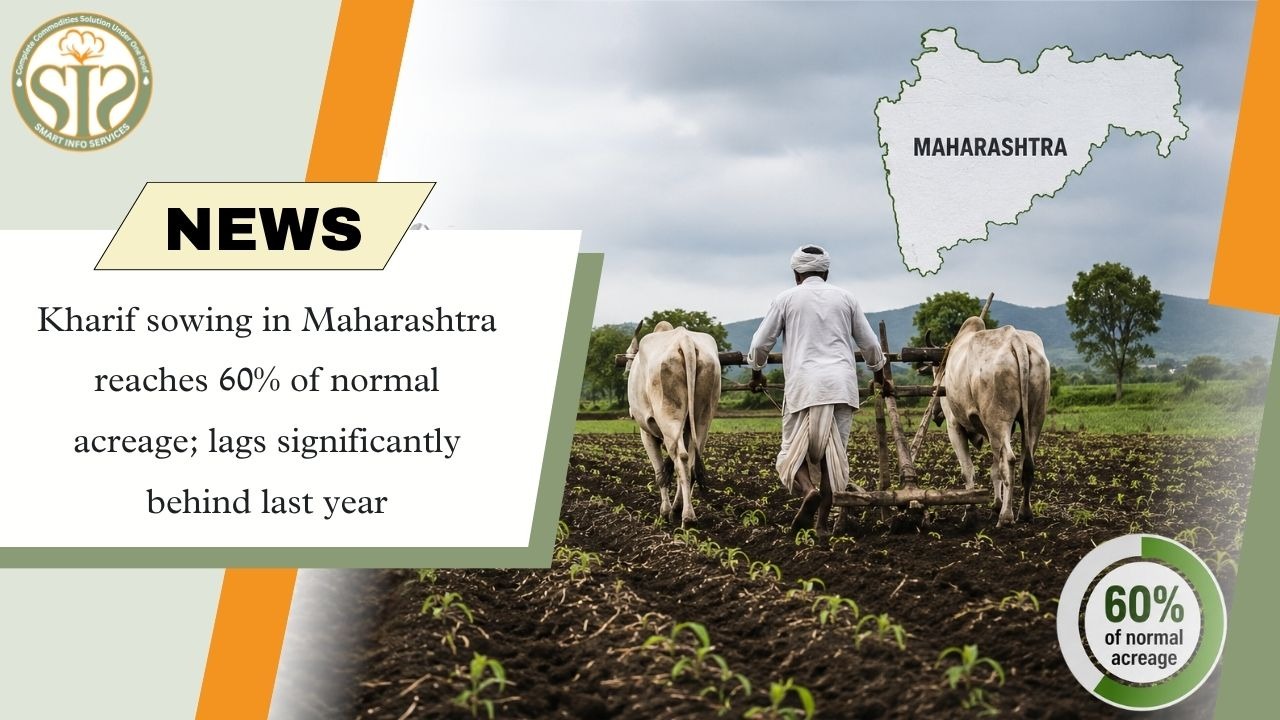
Maharashtra: Preparations Underway for Kharif Cultivation Across 75,000 Hectares in Pusad TalukaAs the Kharif season approaches, the Agriculture Department has finalized the Kharif crop plan for the year 2026–27 for Pusad Taluka in Yavatmal district. According to the department's estimates, Kharif crops are likely to be sown across an area of approximately 75,000 hectares in the taluka this year. This season, an increase in the acreage dedicated to cotton and a slight decline in the area under soybean cultivation are projected.As per the plan, cotton cultivation is proposed for the largest area—31,890 hectares. This is followed by an estimated 28,910 hectares for soybean sowing. Among other crops, cultivation is proposed for Arhar (Pigeon Pea) across 8,110 hectares, Turmeric across 1,890 hectares, Kharif Jowar (Sorghum) across 610 hectares, Moong (Green Gram) across 445 hectares, and Urad (Black Gram) across 350 hectares.The taluka comprises a total of 39,768 registered farmer account holders, including 16,229 marginal farmers, 9,690 small farmers, and 13,839 large landholding farmers.According to the Agriculture Department, approximately 159,450 seed packets of cotton will be required for this Kharif season, while the demand for soybean seeds has been estimated at 8,673 quintals. However, it has been reported that farmers already have approximately 28,210 quintals of soybean seeds available with them.The total requirement for fertilizers has been estimated at 22,863 metric tonnes, comprising 9,509 tonnes of mixed fertilizers, 5,802 tonnes of Urea, 2,304 tonnes of DAP, and 4,266 tonnes of SSP.Amol Aghav of the Agriculture Department has advised farmers against sowing without prior seed treatment, noting that the incidence of soil-borne fungal diseases has increased in recent years. Additionally, he has appealed to farmers to undertake sowing only after receiving at least 100 mm of rainfall and to avoid acting in haste.read more :- Preparations for cotton sowing intensify in Nimar; expected to gain momentum after May 20.

Hosiery Yarn Prices Rise Again in Tiruppur Due to Soaring Cotton Costs

Hosiery Yarn Prices Surge Again in Tiruppur as Cotton Becomes More ExpensiveTiruppur—the country's leading hub for knitwear and ready-made garments—has once again witnessed a sharp increase in hosiery yarn prices. In the month of May, prices for all categories of yarn have been hiked by up to ₹20 per kilogram. This marks the second price hike within the month of May alone. Driven by continuously rising prices, yarn rates have cumulatively increased by up to ₹61 per kilogram over the past five months, thereby rapidly escalating cost pressures on the textile and apparel industry.According to industry sources, rising cotton prices and a global surge in raw material costs are the primary reasons behind this spike. Tiruppur contributes over 68 percent to the country's total knitwear exports, and hosiery yarn is considered the most critical raw material for knitwear production in this region. For several months now, the yarn market has been experiencing continuous volatility, which is having a direct impact on the cost of finished garments.Industry experts note that the Central Government's decision to waive the 11 percent import duty on cotton between August and December of last year had brought temporary relief and stability to the domestic market. However, cotton prices subsequently began to rise again, leading to increased costs for mills and manufacturers.In February of this year, hosiery yarn prices rose by ₹7 per kilogram. This was followed by another hike of ₹7 per kilogram in mid-March. In April, prices were raised in two phases—by ₹10 per kilogram each time—while on May 1st, another increase of ₹7 per kilogram was implemented. Now, the latest hike of ₹20 per kilogram has further heightened concerns within the industry.According to experts, the surge in global crude oil prices—driven by geopolitical tensions—has also impacted the prices of viscose and polyester yarns. Cotton prices have currently reached a range of ₹65,000 to ₹70,000 per candy. Industry estimates suggest that recent price hikes could lead to a 15 to 20 percent increase in apparel manufacturing costs. Under the new rates, prices for combed yarn have risen from ₹244 to ₹372 per kilogram, while semi-combed yarn is trading between ₹309 and ₹362 per kilogram.read more :- The Rupee fell by 15 paise to close at 96.53 per dollar.

Demand to release water in canals soon to save cotton crop intensifies

Demand for Immediate Release of Water into Canals for Cotton IrrigationFarmers in the region have urged the administration to promptly release water into the canals to facilitate the irrigation of their cotton crops. In this regard, farmers and elected representatives visited the local Tehsil office and submitted a memorandum to the Naib Tehsildar.The memorandum highlighted that most farmers in the region are currently engaged in sowing cotton and preparing their fields; however, they are facing difficulties due to the lack of adequate irrigation facilities. As water has not been released into the main canals and sub-canals for a considerable period, the fields remain deficient in moisture, thereby increasing the risk of adverse effects on the cotton crop.The farmers emphasized that cotton is not only the region's primary cash crop but also the main source of livelihood for thousands of farmers. They warned that if water for irrigation is not made available in a timely manner, farmers could suffer severe financial losses. Due to unpredictable weather patterns and continuously depleting groundwater levels, farmers have become increasingly dependent on canal water.The farmers appealed to the administration to prioritize their interests and ensure the immediate release of water into all canals and sub-canals across the region, thereby enabling timely irrigation and safeguarding the cotton crop.Present on the occasion were Block President Rakesh Barman, Janpad Member Pradeep Sen, Nakul Patel, Ramu Seth, Mandalam President Shantilal, Lekhram Randwa, Suresh Kharte, Rameshwar Pawar, Mahendra Jain, Kalu Verma, Vikram Rawat, Mukesh Patel, Ganesh Solanki, Trilok Patel, and other farmers.read more :- The Rupee opened 3 paise lower against the Dollar at 96.38.

Related News
Youtube Videos

जानिए आज का कपास बाज़ार? 😱 Cotton Market Rate Today #kapas
साप्ताहिक कपास बाजार में गिरावट 😱 Weekly Cotton Market Rate #kapas
साप्ताहिक कपास बाजार में गिरावट 😱 Weekly Cotton Market Rate...
जन्माष्टमी पर कपास बाजार में गिरावट 😱 आज का कपास भाव  #cotton
जन्माष्टमी पर कपास बाजार में गिरावट 😱 आज का कपास भाव #cott...
Application Download
Whatsapp Contact