STAY UPDATED WITH COTTON UPDATES ON WHATSAPP AT AS LOW AS 6/- PER DAY
Start Your 7 Days Free Trial TodayIndian rupee opens 2 paise higher at 87.58/USD on lingering worries over Trump tariffThe local currency opened at 87.58 against the US dollar as compared to 87.60 against the greenback at previous close.read more :- Trump tariffs to hit India's textile exporters in a big way, say experts
Trump's 25% tariff will cause huge losses to Indian textile exportersNew Delhi: US President Donald Trump's announcement regarding the imposition of 25 per cent additional import duty plus penalty on goods imported from India will hit the country's textile exporters in a big way, as competitors, including Vietnam and Indonesia now have a pricing edge by virtue of lower tariffs, experts said on Thursday.The duty will come into effect from August 1. The unspecified penalty was imposed on India for purchasing crude oil and military equipment from Russia.The US is India's largest market for textile and apparel exports.According to trade intelligence firm Cybex Exim Solutions, many Indian exporters may face order cancellations and the pressure to reduce prices, with costs going up and competitive disadvantage from Vietnam and Indonesia."The 25 per cent tariff announced by the US is a big hit for India's textile and garment exporters. Out of the USD 17 billion we export in ready-made garments, USD 5.6 billion goes just to the US. That's a big chunk. With costs going up overnight, many exporters might face order cancellations or pressure to reduce prices. Countries like Vietnam and Indonesia now have a pricing edge because their tariffs are lower," Cybex Exim Solutions stated."While India is still ahead of Bangladesh and Cambodia in terms of quality, this move puts real pressure on our manufacturers, especially smaller ones. It is time we look beyond just the US and start tapping into other markets more aggressively," it added.Speaking to PTI, Secretary General of the Confederation of Indian Textile Industry (CITI) Chandrima Chatterjee said it was "extremely concerned" about the unspecified penalty, as it has caused a lack of clarity for those placing an export order which needs to be serviced in the next couple of months."We will be seriously impacted. While most of us have taken the 25 per cent tariff with a pinch of salt but the penalty is where we are extremely concerned because we still are in a very speculative space there," Chatterjee said.According to her, Vietnam has a lower tariff than India at 20 per cent, whereas Indonesia faces a 19 per cent import tariff from the United States.Indian exporters could look at tapping alternative markets like the UK, EU, UAE, Japan and Korea more aggressively, Chatterjee added.Rajeev Gupta, Joint Managing Director, RSWM Ltd, said a "more pressing concern is the undefined penalty clause linked to India's ties with Russia, which adds a layer of uncertainty"."Indian entrepreneurs and manufacturers are resilient, and we are confident that business momentum will be consistently rising with planned strategies. What remains crucial is clarity on the tariff position against China," Gupta stated.read more :- Rupee strengthened by 11 paise against dollar and closed at 87.60
The Indian rupee on thursday higher 11 paise to close at 87.60 per dollar, while it opened at 87.71 in the morning.At close, the Sensex was down 296.28 points or 0.36 percent at 81,185.58, and the Nifty was down 86.70 points or 0.35 percent at 24,768.35. About 1490 shares advanced, 2365 shares declined, and 135 shares unchanged.read more :- Neither season, nor profit… how did ‘cotton’ wither from Punjab?
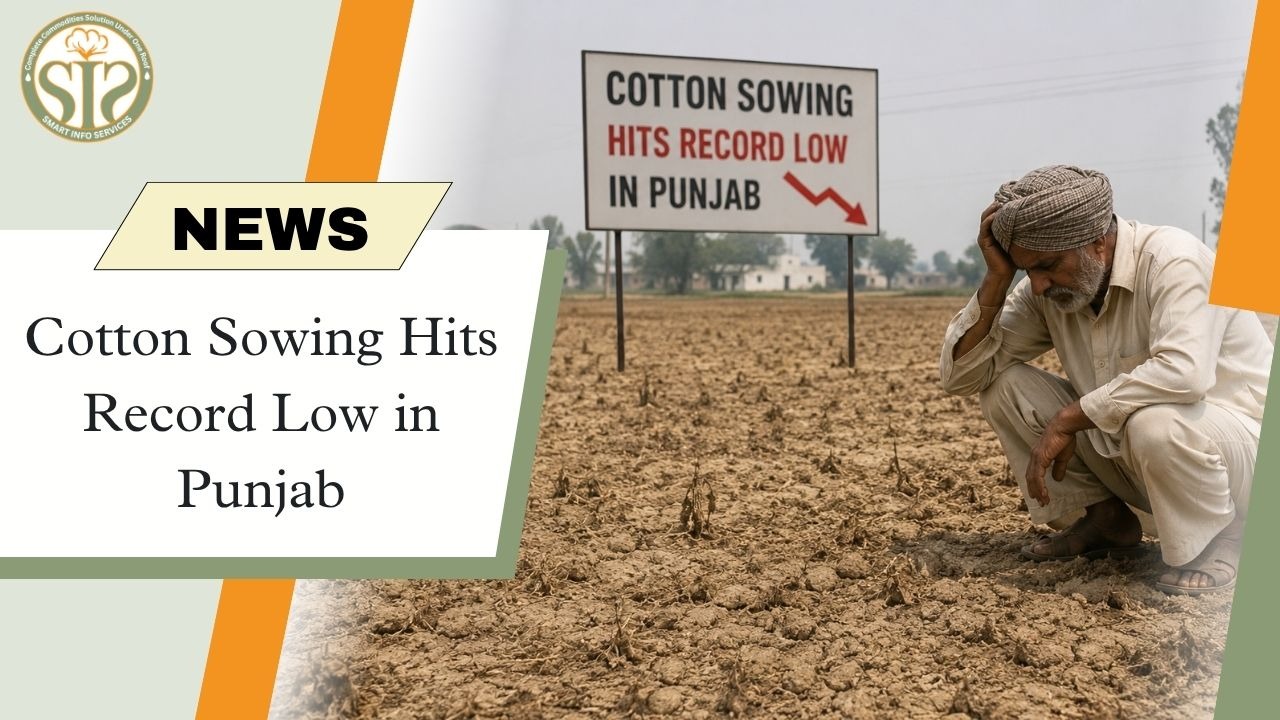
Why did Punjab's cotton wither?There are three important belts in Punjab – Malwa, Majha, Doaba. Majha belt is known for cotton belt i.e. cotton cultivation. The reason is that cotton requires less water. Cotton cultivation was also done in large quantity in Malwa belt, but fake seeds, duplicate pesticides in the market have broken the back of the farmers.While the Punjab government is constantly making farmers aware for crop diversification, the farmers of Punjab are getting disillusioned with the cotton crop. Farmers no longer want to cultivate cotton. The result of this is that this year cotton cultivation is decreasing in the state. On the other hand, if we talk about the last 10 years, cotton production has fallen by 25.66 percent. Farmer leader Jangveer Singh says that 10 years ago, farmers of Malwa belt used to grow a lot of cotton, but now the situation has become such that instead of cotton, farmers want to grow crops which require less pesticide and also get the price of the crop at a reasonable price of MSP.There are three important belts in Punjab, Malwa, Majha, Doaba. Majha belt is known as cotton belt i.e. for cotton cultivation. The reason is that cotton requires less water. At the same time, cotton was cultivated in large quantities in Malwa belt, but fake seeds and duplicate pesticides in the market broke the back of the farmers. As a result, years passed and cotton cultivation decreased. The situation has become such that farmers are now cultivating only paddy and wheat.Farmer leader Jangveer Singh said that one problem is that the farmer does not cultivate any other crop other than the crop he goes for. As a result, that crop becomes so much that its price goes down. At present, only white eucalyptus crop is being grown in Majha and Malwa belts of Punjab. Dr. Harsh, an agricultural scientist of Punjab University, said that farmers want cotton crop, but the outbreak of pink caterpillar and white fly has turned farmers away from this farming.How much should be the price of cotton?The second biggest reason has been the uncertainty over the minimum support price (MSP). The crop is available at a low price. According to agricultural scientist Dr. Harsh, the price of cotton should be seven to eight thousand per quintal, but it is not. On the other hand, Malwa belt is now becoming a cancer belt. The biggest reason for this is that the pesticides used for the crops there, go and mix with the ground water. Due to this, the water has become so contaminated that people are getting afflicted with this disease.On the other hand, when Punjab Agriculture Minister Gurmeet Singh Khudian was questioned about farmers getting disillusioned with cotton farming, he said that we are encouraging the farmers, explaining to the farmers that they should cultivate cotton. Farmers will also get a fair price for cotton.118 blocks of Punjab have gone into the red zoneAccording to a report, the groundwater level of Punjab is already falling, which Chief Minister Bhagwant Singh Mann himself keeps mentioning. To improve the water situation, people are being encouraged to grow low-water crops. 118 blocks have gone into the red zone. This report has now increased the concern of the government even more. According to the report, cotton production has come down from 6.09 lakh bales in 2023-24 to 2.52 lakh bales in 2024-25. Similarly, the area has also come down from 2.14 lakh to one lakh hectares.Cotton Corporation of India reportThere has been a decline in the purchase of cotton at MSP in Punjab. According to a report of the Cotton Corporation of India in March, only two thousand bales were purchased at MSP in Punjab in the year 2024-25, whereas 3.56 lakh bales were purchased at MSP in the year 2019-20, 5.36 lakh bales were purchased at MSP in 2020-21, during 2021-22 and 2022-23 the market price of cotton was above MSP. Therefore, there was no purchase at MSP during these two years, but in the year 2023-24 only 38 thousand bales were purchased at MSP. Farmers and experts say that we want the government to give the right price on crops, end the problem of fake seeds, only then the condition of crops in Punjab will be right.read more :- US tariffs put pressure on Indian textile exports
Despite gains on Bangladesh and Cambodia, new US tariffs put pressure on Indian textile exportersThis is a mixed bag for Indian textile and apparel exporters, as these exports to the US will be at an advantage compared to production hubs like Bangladesh and Cambodia, where tariffs are high. At the same time, countries like Indonesia and Vietnam could emerge as new competitors for India in this sector.The US has announced a 25% tariff and additional punitive duty on India from August, while it has already imposed 35% and 36% tariffs on Bangladesh and Cambodia, respectively. However, the US tariff on Indonesia and Vietnam is lower at 19% and 20%, respectively. Till now, the tariff from India to the US was 10%.Rakesh Mehra, president, Confederation of Indian Textile Industry (CITI), said, "The new tariff rate will put the resolve and resilience of India's textile and apparel exporters to a severe test as we will not get any significant benefit of duty differential compared to many other countries, except Bangladesh, with whom we compete for a large share in the US market."The US is India's largest market for textile and apparel exports. During January-May 2025, textile and apparel imports by the US from India were worth $4.59 billion, a growth of over 13% compared to the same period last year. China is the largest exporter to the US, followed by Vietnam, India and Bangladesh.The industry is now hopeful that the tariff issue will be resolved after a bilateral trade deal between India and the US. Sanjay Jain, managing director, TT Industries, said India had targeted a 10-15% growth in its textile exports to the US, which will be impacted due to the new tariffs.read more :- Increase in cotton imports from Brazil, India imports more, exports less
Cotton Import: Cotton imports from Brazil are increasing; India imports more, exports less Cotton imports in the country are increasing this year due to decline in production in the country and low prices in the international market. In the first 8 months of the current season, imports have reached the highest level in the last six years. The country imported 27 lakh bales of cotton. It is worth noting that this year more imports have been made from Brazil than from America and Australia. Prices are still low in the international market. Therefore, importers say that cotton imports are likely to increase further.India is known as a cotton exporter. However, imports are increasing due to decline in production and increase in consumption in the country. Cotton production in the country has reached the lowest level in the last several years this year. On the other hand, cotton consumption is stable. Therefore, India has to meet its needs by importing cotton. Secondly, production in the country has decreased, but prices have also improved due to increased demand. Meanwhile, there is pressure on cotton prices in the international market. Due to this, imports are increasing in the country.During the 8 months from October 2024 to May 2025, the country has imported the most in the last 6 years. In the last financial year, 15 lakh bales of cotton were imported. Earlier in 2018-19, 35 lakh bales of cotton were imported. Imports have also increased after production remained low in the country and consumption increased. However, exports are being seen at the lowest level in the last 18 years. So far, only 13 lakh bales of cotton have been exported from the country. Earlier, the lowest export of 23 lakh bales of cotton was in 2008-09. Exporters say that the possibility of such exports is low this year.In the current season i.e. in the first 8 months of 2024-25, 27 lakh bales of cotton were imported. The highest imports were from Brazil. Because the prices of Brazilian cotton remained low. So far this year, six and a half lakh bales of cotton have been imported from Brazil. After this, five and a half lakh bales of cotton have been imported from America, five lakh bales from Australia, one lakh 79 thousand bales from Mali and 83 thousand bales from Egypt. It is worth noting that the prices of cotton in all these countries were lower than in India. Due to this, the import of cotton in the country has increased.Import of cotton in the country (in bales)2024-25*---27 lakh2023-24---15 lakh2022-23---14 lakh2021-22---21 lakh2020-21---11 lakh2019-20---15.50 lakhread more :- Maharashtra: 7000 hectares of cotton crop affected by blight due to rain
Maharashtra: Impact of rain: 7000 hectares of cotton crop affected by blight disease, agriculture and...Cotton fields in many parts of Paithan taluka have been affected by blight disease. Cotton is cultivated in 55,600 hectares in the taluka and today 7,000 hectares of cotton crop is at risk of being affected by this disease. This situation arose after heavy rains in Marathwada.Farmers had grown cotton crop using expensive seeds, fertilizers and pesticides. But due to lack of water for a long time, the temperature of the soil increased. If it rains at such a time, the trees get shocked. This causes the trees to dry up. The leaves fall. Later the trees die. These symptoms have started appearing within 36 to 48 hours of rain. Therefore, there is a possibility of huge loss in production.Farmers should drain out excess water from cotton fields as soon as possible. As soon as the water returns, they should do weeding and harvesting. 200 grams of urea, 100 grams of white potash (00:00:50 fertilizer), 25 grams of copper oxychloride should be mixed in 10 liters of water and the prepared solution should be given to each tree in the amount of 100 ml. Or, one kg of 13:00:45 fertilizer, 2 grams of cobalt chloride, 250 grams of copper oxychloride should be given to the trees in the amount of 100 ml in 200 liters of water. Then the soil near the tree should be pressed with the foot. As soon as it is noticed that the trees have started drying, this measure should be taken within 24 to 48 hours.This will prevent further damage. Also, the measures taken by the Agriculture Department should be adopted. Cotton in more than one and a half lakh hectares of area in Marathwada including Paithan has been affected by blight disease. In view of this, farmer leader Jayaji Suryavanshi has demanded a panchnama of cotton damaged by the outbreak of this disease in Marathwada including Paithan. A team of the agriculture department has been formed to meet the farmers in view of the blight disease. This team is visiting the dam and guiding the farmers and agricultural research experts are also included in it, said Taluka Agriculture Officer Vikas Patil.read more :- Cotton acreage in MP decreased by 3.7% due to shift towards maize
Madhya pradesh: Cotton acreage 3.7% less than last year as farmers shift to maizeIndore : The area under cotton, a key kharif crop, is expected to remain around 5 lakh hectare in Indore division, around 3.7 percent less than the previous year due to a shift towards maize in ongoing kharif season.The agriculture department has set a target of 5.17 lakh hectare in cotton, compared to 5.37 lakh hectare recorded the previous year, official data showed."Cotton and other kharif crops are doing well and there is no damage from rain. Cotton acreage is seen above 5 lakh hectare in Indore division," said agriculture department Indore joint director Alok Meena.Farmers and agriculture experts expect cotton yield to remain around 10-12 quintal per acre this season."There is no harm from rain so far and the growth looks good. There is some decline in the acreage due to maize but overall crop health looks good which would help in better yields," said Raghuram Patil, a cotton farmer.Key cotton-growing districts within the Indore division include Khargone, Khandwa, Barwani, Manawar, Dhar, Ratlam, and Dewas. In the division, the primary kharif crops include soybean, cotton, maize, and pulses.Cotton sowing in irrigated areas typically begins by mid-May, while non-irrigated regions start planting in June."Cotton crop is growing well and is in a good state. Maize has taken up some area in cotton and soyabean this year due to better price realisation," said Kailash Agrawal, a farmer and owner of ginning units in Khargone.Farmers said that the cost of cultivating maize is approximately 10 percent of that for cotton, which is prompting many to reconsider their planting choices.In the division, where soyabean traditionally dominates the kharif season, the state agriculture department projects kharif crops to cover about 22.5 lakh hectare this season.read more :- Rupee open Declines 29 Paise to 87.71 per Dollar
INR Drops 29 Paise, Opens at 87.71 per USDIndian rupee opened 29 paise lower at 87.71 per dollar on Thursday versus previous close of 87.42.read more :- Trump said: No immediate ban on tariffs, August 1 deadline will continue
Trump tariffs live updates: No immediate tariff pause after US-China talks; Trump says Aug. 1 deadline will stayPresident Trump said Tuesday that India may be hit with a tariff rate of 20% to 25%. The country is one of the largest US trade partners seeking an agreement ahead of Trump's Aug. 1 deadline, when nations who have not yet reached a deal will face higher tariffs.“India has been a good friend, but India has charged basically more tariffs than almost any other country," Trump said via a post on Truth Social.Trump also accused India of buying a "vast amount" of its military equipment from Russia."ALL THINGS NOT GOOD! INDIA WILL THEREFORE BE PAYING A TARIFF OF 25%, PLUS A PENALTY FOR THE ABOVE, STARTING ON AUGUST FIRST," Trump posted.Trump on Wednesday again said he would not extend Friday's deadline for tariffs to kick in to levels outlined by deals or letters Trump has sent to country leaders."THE AUGUST FIRST DEADLINE IS THE AUGUST FIRST DEADLINE — IT STANDS STRONG, AND WILL NOT BE EXTENDED. A BIG DAY FOR AMERICA!!!" Trump said.Trump confirmed this week that 15% represents the new tariff "floor" for countries, whose rates he has been dictating to leaders in the absence of trade deals.Meanwhile, the US and China concluded their latest round of tariff and trade talks in Sweden on Tuesday, with both sides touting progress but without an immediate announcement of a further tariff delay. Treasury Secretary Scott Bessent said President Trump would make the final call on extending the trade truce between the world's two largest economies.This week's talks were the third round for the countries, which have slowly deescalated trade tensions since Trump imposed gargantuan tariffs in April, and China reciprocated. The countries suspended those tariffs for 90 days — a suspension that is set to end on Aug. 12. Bessent said another 90-day extension is possible.Also, the US and EU are racing to lock in the final details of their major new trade deal before Friday.Top EU critics say it's a rushed fix. German Chancellor Friedrich Merz called the outcome unsatisfying and France’s Bayrou dubbed the EU’s "submission" a "dark day." The agreement includes a baseline tariff rate of 15% on most EU goods imported into the US. Trump called the deal “the biggest of them all." read more :- Prevention of pink bollworm in cotton: Main advice of Agriculture Department
Farmers should protect their cotton crop from pink bollworm, special advice from Agriculture DepartmentCorrespondent, Narnaul (Mahendragarh). Due to continuous rainfall, there is a possibility of pink bollworm attack in cotton crop. Deputy Director Agriculture (DDA) Devendra Singh of Agriculture and Farmers Welfare Department has urged farmers to be extremely cautious to save the crop from the possible attack of pink bollworm.He warned that this time is sensitive for pink bollworm attack, which can seriously affect the production of cotton. He has advised farmers to regularly and closely inspect their cotton crop so that the early symptoms of pink bollworm can be identified in time.Chemical spraying: Use only recommended pesticidesHe emphasized that if the pest infestation increases, farmers should spray only the pesticides recommended by the Agriculture and Farmers Welfare Department. Arbitrary use of pesticides can not only be ineffective, but can also be harmful to the crop and the environment.Awareness of farmers and taking appropriate steps in time is the key to protect the cotton crop from pink bollworm and secure their income. This will ensure that the cotton crop remains healthy and farmers get the full fruits of their hard work.Farmers should pay attention to these signs* Red or pink caterpillars inside the buds: This is a clear sign of the presence of pink bollworm.* Bursted buds: Buds may burst prematurely due to caterpillar attack.* Small holes in young cotton bolls: These holes indicate the damage done by the caterpillar.* Wilted twigs and leaves: Parts of the plant may wilt due to caterpillars.* Black sticky drops (honeydew) on the plant: This can also be an indication of pest attack.Use of pheromone traps and monitoring of pestsFor the management of pink bollworm, DDA has suggested an effective measure:* Pheromone traps: Install two pheromone traps per acre.* Regular checking: Check the number of pests trapped in these traps every three days.* Immediate action: If the number of pests in each trap remains >100 for three consecutive days, it is an indication of severe infestation and immediate action is imperative.read more :- Rupee fell 30 paise to close at 87.42 per dollar
The Indian rupee on wednesday lower 30 paise to close at 87.42 per dollar, while it opened at 87.12 in the morning.At close, the Sensex was up 143.91 points or 0.18 percent at 81,481.86, and the Nifty was up 33.95 points or 0.14 percent at 24,855.05. About 1960 shares advanced, 1877 shares declined, and 154 shares unchanged.read more :- Maharashtra: Special project to increase cotton productivity
Maharashtra: Cotton Productivity: Special Project to Increase Cotton Productivity in the CountryNagpur : HDPS (High Density Plating System) was promoted under a special project to increase cotton productivity in the country. Through this project, increase in cotton productivity has been observed in eight states.Dilip Pohane of Wardha crossed the mark of 24 quintals per acre. Dr. Vijay Waghmare, Director, Central Cotton Research Institute said that this is a big success of this project.A special workshop was organized by City CDRA (Confederation of Indian Textile Industry) for the farmers of Wardha and Nagpur districts involved in the Cotton Productivity Enhancement Project. Dr. Waghmare was speaking as the chairman of this workshop organized in the auditorium of the Cotton Research Institute.On this occasion, Dr. Arvind Waghmare, Special Officer of the Union Ministry of Agriculture, Dr. Arjun Tayade, Coordinator of Cotton Productivity Enhancement Project, Amravati Divisional Agriculture Joint Director Umesh Ghatge, Wardha District Superintendent Agriculture Officer Dr. Nalini Bhoyar, City CDR Project Coordinator Govind Vairale were present. Dr. Waghmare further said that the productivity of cotton has increased due to the intensive cotton farming system.So this year also this project is being implemented through Krishi Vigyan Kendra. Farmer Dilip Pohane achieved a productivity of 24 quintals per acre from it. Therefore, there is a need to emulate his management skills. Union Agriculture Minister Shivraj Singh Chouhan has announced that the country will become self-sufficient in the field of cotton by 2023.Responding to his appeal, he appealed to the farmers to increase their participation in the project to increase the productivity of cotton. Dr. Arjun Tayde presented the details of the implementation of the project in eight states and the success achieved from it.In the second session of the workshop, senior scientists Dr. Ramakrishna, Dr. Babasaheb Phad, Dr. Shailesh Gawande, Dr. Manikandan gave information about the best practices in the cotton management field. Govind Vairale gave the introduction and told how the project was successfully implemented in Maharashtra in the last two years. The programme was conducted by Project Officer Jagdish Neralwar, Yugantar Meshram presented the vote of thanks and Amit Kavade presented the vote of thanks.read more :- Odisha: 33 MoUs signed for $902 million investment in textile sector
Odisha signs 33 MoUs for investments worth $902 million in textile sectorOdisha took a major step to strengthen its textile and apparel industry by signing 33 Memorandums of Understanding (MoUs) worth $902 million (₹7,808 crore). The milestone was achieved during the Odisha-Tex 2025 summit held in Bhubaneswar. The initiative is part of the Odisha Apparel and Technical Textiles Policy 2022, which aims to transform the state into the textile hub of eastern India.Highlights of the announcementMassive investment incentivesThe state government led by Chief Minister Mohan Charan Majhi signed MoUs worth $902 million with over 160 textile companies. Key participants included Page Industries, KPR Mills, Sportking, Adarsh Knitwear, Bon & Co and B.L. International.Employment Generation TargetOdisha has set a target of generating over one lakh jobs in the textile and apparel sector by 2030. This will significantly increase the employment rate of the state and provide opportunities for both skilled and semi-skilled workers.Expansion of Textile ClustersThe government plans to develop textile hubs in six major districts,Bolangir, Keonjhar, Sambalpur, Jagatsinghpur, Ganjam, CuttackThese clusters are expected to attract large-scale textile manufacturing units, thereby strengthening the industrial base of the state.Policy Support and IncentivesApparel and Technical Textiles Policy 2022In line with the Industrial Policy Resolution 2022, the Odisha Apparel and Technical Textiles Policy 2022 offers attractive incentive packages to investors. The policy emphasises on,World-class infrastructureFaster project approvalsEmployment subsidySupportive governanceIncrease in employment subsidyThe Chief Minister announced an increase in employment cost subsidy to encourage greater participation of the workforce,from ₹5,000 to ₹6,000 per month for male workersfrom ₹6,000 to ₹7,000 per month for female workersThis move will not only make the sector labour-friendly but also ensure greater participation of women in the textile industry.Odisha-Tex 2025 SummitThe Odisha-Tex 2025 Summit serves as a global platform to showcase the investment potential of the state. It was attended by over 650 delegates, including global textile brands, technology providers, startups and senior government officials.A dedicated task force has also been set up under the Department of Industries to ensure smooth implementation of the signed MoUs and to provide full government support to the investors.Strategic ImportanceWith this initiative, Odisha is positioning itself as the future textile hub of eastern India. This move, focused on policy reforms, infrastructure development and employment generation, is a game-changer for the state's economy. It will also contribute to India's overall goal of strengthening the textile and apparel export market.read more :- Indian cotton imports from Brazil increased 10 times
Indian cotton imports from Brazil have risen 10-fold this season as shipments hit record levels.Cotton imports from Brazil have risen 10-fold in terms of both volume and value this season (2024-25 ending in September), the central government told the Lok Sabha on Tuesday. Imports from the US have doubled during this period as shipments to the country, especially for the extra long staple variety, have reached record levels to meet demand.Union Minister of State for Agriculture and Farmers Welfare Ram Nath Thakur gave details of cotton imports for the period 2019-20 and 2024-25 (up to May 31, 2025) in a written reply in the Lok Sabha on Tuesday.India's imports from Brazil rose from 67,805 bales (170 kg) worth ₹152 crore in 2023-24 to 6,54,819 bales worth ₹1,620 crore by end-May 2024-25.Cotton exports from the US rose from 2,68,728 bales worth ₹1361 crore in 2023-24 to 5,25,523 bales worth ₹1,802 crore by end-May 2024-25.Overall, 27 lakh bales were imported till May 31, while 15.19 lakh bales were imported for the entire 2023-24 season. Imports from Australia also increased significantly to 5.13 lakh bales as against 3.58 lakh bales in 2023-24.Pradhan Mantri Fasal Bima YojanaResponding to a separate question on settlement of claims under Pradhan Mantri Fasal Bima Yojana (PMFBY) in the last five years, Chauhan informed that 4,992.79 lakh farmer applications have been enrolled during 2020-21 to 2024-25 (up to Kharif 2024). Claims worth ₹86,306.61 crore have been paid to 1,423.22 lakh farmer applications across the country during the same period. Apart from this, ₹5,405.2 crore (5.9 per cent) are pending for payment.He informed that during Kharif 2023 to Kharif 2024, about 69 per cent of the claims have been settled within 30 days of reporting of yield by the States/notification of crop loss by the State or intimation by farmers.read more :- Rupee open Declines 30 Paise to 87.12 per Dollar
Rupee sinks to 4-month low of 87.12 as Trump talks of 25% duty on Indian goodsThe rupee opened at 87.12 against the US dollar, hitting over a four-month low. It had ended the previous session at 86.82.read more :- Change in monsoon: Heavy rain expected in Terai areas
Break-in-Monsoon Conditions Likely: Heavy Rainfall Along Foothills ExpectedAs anticipated, the remnants of Typhoon Wipha have evolved into a significant monsoon system over the Bay of Bengal. After moving through eastern and central India, the system has weakened into a feeble low-pressure area currently positioned over North Madhya Pradesh and East Rajasthan. It is expected to dissipate over the hills of Uttarakhand in the next 2–3 days.Between 29th and 31st August 2025, this low-pressure system and the associated convergence zone will bring heavy rainfall to West Madhya Pradesh, East Rajasthan, and parts of Gujarat. Following this, the system will curve northward toward the Himalayan foothills, weakening and eventually merging with the larger monsoon flow. The monsoon trough will also shift northward along the foothills, stretching from Punjab and Haryana through West Uttar Pradesh, Nepal border regions, Bihar, Sikkim–Sub-Himalayan West Bengal, Arunachal Pradesh, and Assam & Meghalaya.This marks the onset of a Break-in-Monsoon — a phase where the monsoon trough shifts entirely to the Himalayan foothills. During this period, rainfall becomes concentrated along these regions, while much of the rest of the country experiences a lull in monsoon activity. Notably, rainfall along the foothills occurs in narrow, east–west aligned zones (300–400 km wide), though the eastern stretches—particularly Sikkim, North Bengal, and Northeast India—tend to receive more consistent and widespread rain.Elsewhere, the monsoon weakens significantly. While Tamil Nadu and Coastal Andhra Pradesh may see isolated showers, the West Coast typically remains dry. Heavy rains over Bihar and the adjoining plains raise the risk of flooding, especially due to swollen rivers originating in Nepal and Tibet. The Brahmaputra River may also rise, increasing flood risk across Assam and Northeast India.A return to normal monsoon conditions will depend on the formation of a new system over the Bay of Bengal. Such systems help realign the monsoon trough southward and restore widespread rainfall activity across the country. However, a prolonged break can disrupt the seasonal rhythm, potentially affecting crops and water availability.Forecast Summary (Next 24 Hours):Very heavy rain likely over East Rajasthan and adjoining West Madhya PradeshLight to moderate rain, with a few heavy spells, expected in Delhi, Haryana, Uttar Pradesh, Bihar, and nearby regions.read more :- Rupee higher 01 Paisa Against Dollar, Closes at 86.82
The Indian rupee ended 01 paisa higher on tuesday at 86.82 to the dollar, while it opened at 86.83 in the morning.At close, the Sensex was up 446.93 points or 0.55 percent at 81,337.95, and the Nifty was up 140.20 points or 0.57 percent at 24,821.10. About 2399 shares advanced, 1451 shares declined, and 141 shares unchanged.read more :- Kharif sowing 2025 reaches 829.64 lakh hectares; rice rises by 29 lakh hectares, oilseeds and cotton decline
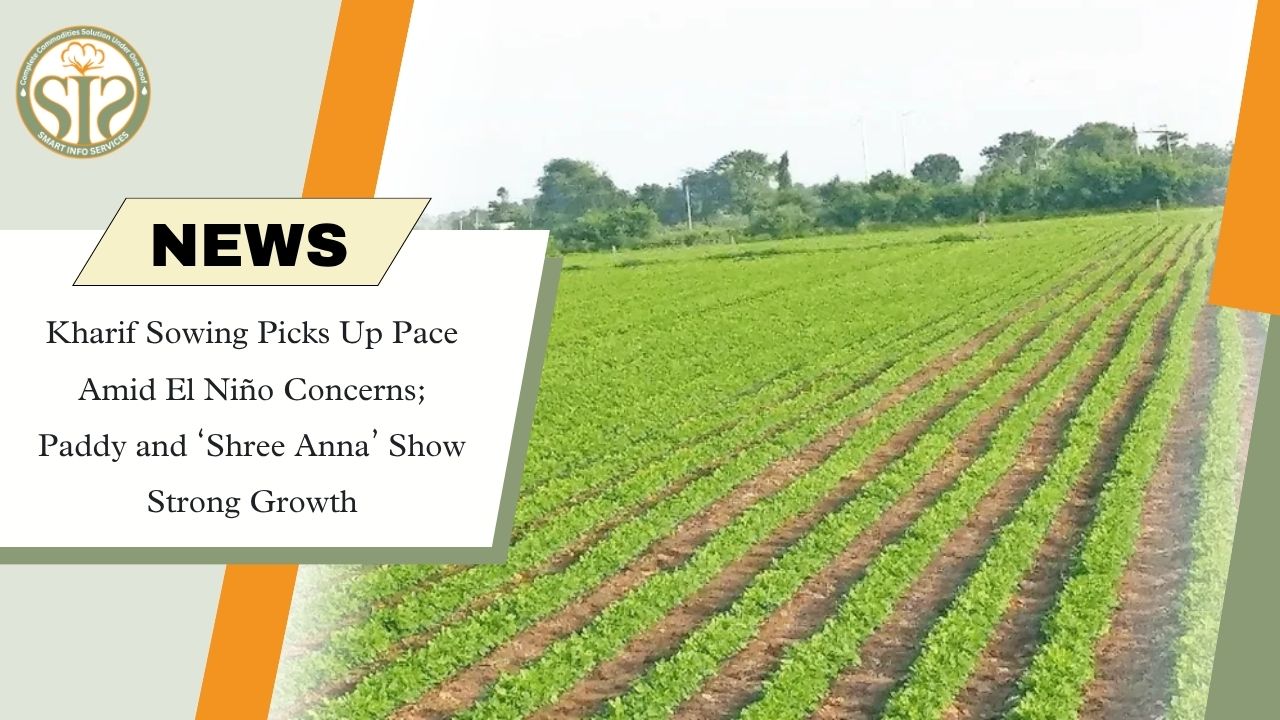
Kharif sowing 2025: Area increased, rice increased, oilseeds-cotton decreasedKharif sowing has increased by 31.73 lakh hectares over last year, with rice and pulses registering the highest increase. However, despite overall positive trends, oilseeds and cotton acreage have seen a decline.Kharif sowing for the 2025-26 season in India has made promising progress, with total acreage under cultivation increasing significantly over the same period last year. According to the latest data released by the Ministry of Agriculture and Farmers Welfare, the total acreage under Kharif crops as on July 25, 2025 was 829.64 lakh hectares, an increase of 31.73 lakh hectares over last year.Among all crops, rice has recorded the highest increase. Rice area has reached 245.13 lakh hectares, about 29 lakh hectares more than in 2024-25. This significant increase reflects favourable monsoon conditions and timely sowing in major rice producing states.Pulses have also seen a marginal increase in area, with the total area increasing to 93.05 lakh hectares from 89.94 lakh hectares last year. This increase is mainly due to increased sowing of moong and moth, although sowing of traditional pulses like tur and urad has recorded a marginal decline.Coarse cereals have also seen positive growth, with the total area reaching 160.72 lakh hectares, 5.75 lakh hectares more than last year. Maize has contributed significantly to this increase, registering an increase of 6.66 lakh hectares. This trend may indicate a change in farmers' preferences due to better market prospects and adaptability to changing weather conditions.In contrast, oilseed acreage declined to 166.89 lakh hectares, down by 3.83 lakh hectares from the previous year. The biggest decline was recorded in soybean, the major oilseed crop, with acreage falling by about 4.7 lakh hectares.Sugarcane acreage remained relatively stable with a marginal increase, while jute and mesta acreage witnessed marginal decline. Cotton sowing also declined by 2.37 lakh hectares from the previous season.Despite some crop-specific constraints, the overall trend of kharif sowing is positive, indicating improvement in agricultural activity. Although total acreage remains lower than the five-year average of 1,096.65 lakh hectares, the year-on-year improvement raises hopes of a promising crop season.read more :- Odisha Tex 2025: Textile Industry Hub of Eastern India
Odisha Tex 2025 establishes the region as the hub of textile industry in eastern India.Odisha is going to become the textile hub of eastern India,” declared Hon’ble Chief Minister Shri Mohan Charan Majhi while inaugurating Odisha Tex 2025, the largest textile and apparel industry event of eastern India, organised by the Government of Odisha in Bhubaneswar.The landmark event was a watershed moment for India’s textile sector, attended by over 650 delegates including global brands, leading textile and apparel companies, investors, technology providers, startups and senior government officials. Odisha Tex 2025 showcased the state’s growing strength in the textile and apparel sector and its commitment to create a world-class ecosystem for manufacturing, innovation and job creation.The event saw several strategic investment commitments from leading textile and apparel companies, promising to make Odisha a hub for apparel and technical textiles. A total of 33 MoUs were signed, leading to investments worth ₹7,808 crore and employment for over 53,300 people.Page Industries, First Step Baby Wear, KPR Mills, Sportking, Adarsh Over 160 companies actively participated in the summit, including reputed companies like Knitwear, Anubhav Apparels, Bon & Co. and B.L. International. Together, these companies represent the entire spectrum of India’s textile value chain, from yarn and fabric to readymade garments and technical textiles.Key announcements and policy highlights– Launch of six state-of-the-art textile and footwear parks with plug-and-play facilities for global-scale manufacturing.– Launch of modern labour hostels to enhance industrial sustainability.– MoU for skill development, which will help youth, especially women, to acquire expertise in automated apparel, textile machinery and wearable technologies.“Hon’ble Chief Minister Shri Mohan Charan Majhi announced that the employment cost subsidy under the Odisha Technical Textiles and Apparel Policy 2022 will be increased from ₹5000 to ₹6000 per month for each male employee and from ₹6000 to ₹7000 per month for each female employee.”“The Hon’ble Chief Minister also announced that Odisha Tex will be an annual event that will showcase Odisha’s rich handloom heritage and the State’s entry into the modern textile, apparel and technical textiles ecosystem.”The Chief Minister said, “Odisha offers the most attractive incentive package in the country under its Industrial Policy Resolution 2022 and Odisha Apparel and Technical Textiles Policy 2022, supported by excellent infrastructure and governance.”Chief Minister Majhi said, “Odisha Tex 2025 is not just an event; it is a declaration that Odisha is poised to lead the textile revolution of Eastern India.” He further added, “With world-class infrastructure, progressive policies and skilled workforce, we are creating unmatched opportunities for investors and livelihoods for our people.”Hon’ble Minister for Handloom, Textiles and Handicrafts Shri Pradeep Bala Samanta said: “Our commitment is to strengthen Odisha’s rich handloom heritage while promoting modern textile investments. By prioritising the development of a strong textile ecosystem, empowering traditional weavers and enhancing market access, the Government ensures inclusive growth. We congratulate investors for partnering with us by signing MoUs and shaping Odisha’s textile future.”With its resounding success, Odisha Tex 2025 has firmly established Odisha as the next big textile destination in India, and has garnered national and global attention for its integrated and sustainable approach to textile development.read more :- Rupee open Declines 18 Paise to 86.83 per Dollar
| title | Created At | Action |
|---|---|---|
| INR Opens Stronger by 02 Paise at 87.58 | 01-08-2025 17:21:14 | view |
| Trump tariffs to hit India's textile exporters in a big way, say experts | 01-08-2025 01:40:15 | view |
| Rupee strengthened by 11 paise against dollar and closed at 87.60 | 31-07-2025 22:50:42 | view |
| Neither season, nor profit… how did ‘cotton’ wither from Punjab? | 31-07-2025 21:53:54 | view |
| US tariffs put pressure on Indian textile exports | 31-07-2025 19:51:32 | view |
| Increase in cotton imports from Brazil, India imports more, exports less | 31-07-2025 19:13:52 | view |
| Maharashtra: 7000 hectares of cotton crop affected by blight due to rain | 31-07-2025 18:44:17 | view |
| Cotton acreage in MP decreased by 3.7% due to shift towards maize | 31-07-2025 18:16:26 | view |
| Rupee open Declines 29 Paise to 87.71 per Dollar | 31-07-2025 17:31:22 | view |
| Trump said: No immediate ban on tariffs, August 1 deadline will continue | 31-07-2025 00:56:15 | view |
| Prevention of pink bollworm in cotton: Main advice of Agriculture Department | 30-07-2025 23:59:10 | view |
| Rupee fell 30 paise to close at 87.42 per dollar | 30-07-2025 22:42:13 | view |
| Maharashtra: Special project to increase cotton productivity | 30-07-2025 19:15:02 | view |
| Odisha: 33 MoUs signed for $902 million investment in textile sector | 30-07-2025 18:44:40 | view |
| Indian cotton imports from Brazil increased 10 times | 30-07-2025 18:16:33 | view |
| Rupee open Declines 30 Paise to 87.12 per Dollar | 30-07-2025 17:44:51 | view |
| Change in monsoon: Heavy rain expected in Terai areas | 29-07-2025 23:21:25 | view |
| Rupee higher 01 Paisa Against Dollar, Closes at 86.82 | 29-07-2025 22:44:37 | view |
| Kharif sowing 2025 reaches 829.64 lakh hectares; rice rises by 29 lakh hectares, oilseeds and cotton decline | 29-07-2025 20:11:37 | view |
| Odisha Tex 2025: Textile Industry Hub of Eastern India | 29-07-2025 19:03:31 | view |