STAY UPDATED WITH COTTON UPDATES ON WHATSAPP AT AS LOW AS 6/- PER DAY
Start Your 7 Days Free Trial TodayCCI Cotton Sales Hit 96.30%, Weekly Volume at 2.02 Lakh BalesThe Cotton Corporation of India (CCI) kept its prices unchanged this week, CCI has now sold 96.30% of the cotton procured during the 2024–25 season through e-auctions.During the week from 29 December 2025 to 02 January 2026, CCI conducted regular online auctions for mills and traders across various centers. These auctions resulted in total weekly sales of approximately 2,02,100 bales, reflecting steady demand from both segments.Day-Wise Sales Report29 December 2025The week began on a strong note with the highest sales recorded at 84,700 bales. Of these, 28,000 bales were purchased by mills, while 56,700 bales were bought by traders.30 December 2025CCI sold 70,200 bales on this day, with mills lifting 26,300 bales and traders purchased 43,900 bales.31 December 2025Total sales stood at 27,700 bales. Mills accounted for 10,100 bales, while traders purchased 17,600 bales.01 January 2026Sales dropped sharply to 7,100 bales, comprising 4,300 bales purchased by mills and 2,800 bales by traders.02 January 2026The week concluded on a modest note with 12,400 bales sold. Of this, mills purchased 8,100 bales, whereas traders bought 4,300 bales.With these weekly sales, CCI’s total cotton sales for the ongoing season have reached approx 96,30,200 bales, representing 96.30% of its total procurement under the 2024–25 season.
Acreage Shifts, Uneven Rainfall To Hurt Cotton Output, Says ICRA.A report by Icra noted that despite leading the world in acreage, the cotton sown area in India has been declining steadily as current levels are 20 per cent lower than the peak acreage levels of 2021. Despite a reduction in acreage, the cotton yield continues to rise, improving by 1.8 per cent YoY in CYi2026.(SIS)However, cotton output is likely to dip by 1.7 per cent YoY to 29.2 million bales in CYi2026, according to the first advance estimates released by Department of Agriculture and Farmers Welfare (DA&FW), taking the output to its lowest levels in the last 10 years. Icra added that domestic consumption, on the other hand, is expected to remain flat.“While domestic demand is stable, the effects of tariffs levied by the United States (US) on Indian apparel exports, on the downstream sectors is likely to affect overall consumption. Amidst lower cotton output, the dependence on cotton imports has been rising, up 85 per cent on a YoY basis to 1.5 million bales of 170 kilogram in 5MFY26. Imports now meet over 10 per cent of demand,” the report highlighted.(SIS)Icra pointed out that due to weak demand and import duty waiver, cotton prices have been trading marginally below the minimum support price (MSP) since Nov 2024. MSP on cotton increased by 8 per cent for the cotton crop year 2026. Following a flat trend in H1FY26, domestic cotton fibre prices fell by 3 per cent month-on-month (MoM) in November 2025. Against this, average cotton yarn prices fell by 4 per cent, thus moderating the contribution levels from Rs 103 per kg in H1FY26 to Rs 96 per kg in November 2025.(SIS)Icra’s sample set of 13 companies, which accounts for 25 to 30 per cent of the industry's revenue, are expected to report a 4 to 6 per cent decline in revenues on a YoY basis in the current fiscal year.read more:- Cotton sales pick up pace, CCI at 96%.
CCI Cotton Sales Hit 96.30%, Weekly Volume at 2.02 Lakh BalesThe Cotton Corporation of India (CCI) kept its prices unchanged this week, CCI has now sold 96.30% of the cotton procured during the 2024–25 season through e-auctions.During the week from 29 December 2025 to 02 January 2026, CCI conducted regular online auctions for mills and traders across various centers. These auctions resulted in total weekly sales of approximately 2,02,100 bales, reflecting steady demand from both segments.Day-Wise Sales Report29 December 2025The week began on a strong note with the highest sales recorded at 84,700 bales. Of these, 28,000 bales were purchased by mills, while 56,700 bales were bought by traders.30 December 2025CCI sold 70,200 bales on this day, with mills lifting 26,300 bales and traders purchased 43,900 bales.31 December 2025Total sales stood at 27,700 bales. Mills accounted for 10,100 bales, while traders purchased 17,600 bales.01 January 2026Sales dropped sharply to 7,100 bales, comprising 4,300 bales purchased by mills and 2,800 bales by traders.02 January 2026The week concluded on a modest note with 12,400 bales sold. Of this, mills purchased 8,100 bales, whereas traders bought 4,300 bales.With these weekly sales, CCI’s total cotton sales for the ongoing season have reached approx 96,30,200 bales, representing 96.30% of its total procurement under the 2024–25 season. read more:- China's major decision: Tariff cuts on cotton and wool.
China to Slash Tariffs on Strategic Cotton, Wool, and Fur by 2026 for Textile Boost.The Asian giant facilitates the sourcing of raw materials for its textile industry. China will apply reduced tariffs during 2026 to a total of 935 imported products, including key inputs for the textile and leather industry, according to the plan approved by the Customs Tariff Commission of the State Council and published by the Chinese Ministry of Finance.According to the official document, “provisional tariffs will be applied to 935 imported products, excluding those subject to quotas.“ The measure will come into force on January 1st, 2026 and will be extended for the whole year, with possible adjustments in subsequent years.In the textile industry, the most relevant reductions affect cotton, one of the country’s main inputs. Uncarded and uncombed cotton and carded or combed cotton will see their most-favored-nation (Mfn) tariff reduced from 6% to a provisional 1%. However, certain volumes of out-of-quota cotton will be managed through a staggered tariff, as stated in the document: “for a certain amount of imported out-of-quota cotton, a provisional tariff will continue to be applied through a staggered system”.In-quota wool and cotton imported into China will have a tariff reduction from 6% to 1%Wool, both raw and in intermediate stages of processing, will also benefit from the cuts. Uncarded and uncombed, greaseless and scoured wool will be reduced from 6% to a provisional 1%, while combed and top-spun wool will have its rate reduced from 8% to 3%, a measure that could favor the supply of industrial spinning.The plan is complemented by additional reductions under existing free trade agreements, including the Regional Comprehensive Economic Partnership (RCEP), which groups China and 14 Asia-Pacific countries such as Japan, South Korea, Australia and New Zealand, as well as bilateral agreements with countries such as Switzerland, Serbia and Chile. According to the official document, “in accordance with the 24 free trade agreements and preferential agreements with 34 trading partners, the preferential tariff rate will continue to be applied to products imported from these partners”, reinforcing the competitiveness of their imports vis-à-vis other global production poles.Countries with free trade agreements or preferential agreements with China will benefit from additional tariff discounts in 2026From a strategic perspective, these measures make key inputs cheaper and consolidate China’s position as a global textile processing center, with advantages in spinning, weaving and tanning, as well as in the integration of the local production chain. For European industry, the adjustment could imply greater competitive pressure, although it could also open up opportunities to integrate Chinese suppliers into strategic supply chains.The plan approved by the Customs Tariff Commission of the Chinese State Council is part of the country’s annual tariff adjustment, which includes 935 products under provisional tariffs, maintains quota systems for products such as wheat and fertilizers, and continues to apply tariff preferences to less developed countries for certain products. read more:- Rupee fell 21 paise to close at 90.19 per dollar
On Friday, the Indian rupee fell 21 paise to close at 90.19 per dollar, compared to its opening price of 89.98 in the morning.At close, the Sensex was up 573.41 points or 0.67 percent at 85,762.01, and the Nifty was up 182 points or 0.70 percent at 26,328.55. About 2527 shares advanced, 1347 shares declined, and 135 shares unchanged.read more :- Mills on edge as duty-free cotton imports window ends
Mills Jittery as Duty-Free Cotton Window ClosesTextile mills in the country are worried over the lack of communication from the Centre on extending duty-free import of cotton, which ended on December 31, 2025. This will likely support prices in the domestic market.The duty waiver, introduced in August and extended till December-end, was meant to augment supplies and ease pressure on textile units struggling with 50 per cent US tariffs.K Venkatachalam, Chief Advisor, Tamil Nadu Spinning Mills Association (TASMA), said textile mills are concerned as cotton arrivals are at least 60 lakh bales (of 170 kg each) lower than last year, and the production this year is below 300 lakh bales. TASMA is among the organisations which sought extension of the duty-free facility.Durai Palanisamy, Chairman of the Southern India Mills Association (SIMA), said as of now, it seems the duty-free regime has ended.“We have asked for an extension of the facility. Cotton in transit may be affected. This season, the quality of cotton has been affected due to rain, while production is lower. The industry will be affected,” he said. With an upcoming free trade agreement and higher US tariffs, mills may be unable to stay competitive, though farmers will not be impacted, he said.Price differenceStating that there was a difference of over ₹10,000 a candy (356 kg) between the minimum support price (MSP) and market price, Palanisamy said export of yarns, made-ups and garments would suffer. “Even if the duty regime exists for a month, it takes several months to recover. We are finding it difficult to retain buyers,” he said.Traders believe the discontinuation of duty exemption will support the domestic prices, which are ruling below the minimum support price levels. “The Cotton Corporation of India has purchased around 64-65 lakh bales till now. So the prices will hinge on CCI’s selling strategy,” said Ramanuj Das Boob, a sourcing agent in Raichur.Anand Popat of Cotyarn Tradelink said about 70-80 per cent of the raw cotton arrivals is going to CCI, leaving limited supply in the private market with quality concerns likely to support prices. Also, the balance sheet for the current season is indicating that closing stock will be around 90 lakh bales. “Prices will depend on the selling policy of the CCI,” Popat said.Atul Ganatra, former President, CAI, said around 32 lakh bales had arrived by the end of December. Another 4-5 lakh bales of long staple cotton and 3 lakh bales of Australian cotton, which are duty free, will come in the next 9 months, along with 4-5 lakh bales of African cotton at 5.5 per cent duty.“Mills doing exports can buy against open licence and will face only 4 per cent duty. Brazilian cotton is available at ₹50,000 per candy (356 kg) port delivery. So if the Indian prices go up, then mills will have options to buy Brazilian cotton,” he said.The Cabinet is inclined to extend the duty waiver and the Ministry of Textiles has backed it, but the Agriculture Ministry has to concur, a source said.READ MORE :- Amidst Global Trade Turmoil Caused by Trump's Tariffs, India Officially Assumes BRICS Chairmanship for 2026
India Takes BRICS Helm for 2026 Amid Trade TurmoilIndia formally assumed the rotating chairmanship of the BRICS group on Thursday, framing the role as a platform to promote inclusive development and strengthen the voice of the Global South in global economic governance, at a time when US President Donald Trump's tariff measures have disrupted trade flows.New Delhi's chairmanship begins against two overlapping realities: BRICS has expanded into a much larger club, and the global trading system is facing rising protectionism.What BRICS looks like now and why membership is complicatedBRICS began as Brazil, Russia, India, China, and South Africa. In the last two years, the bloc has added Egypt, Ethiopia, Indonesia, Iran, and the United Arab Emirates.Saudi Arabia's status is still disputed: the BRICS website lists it as a member, but several reports still indicate that Riyadh has yet to formally complete the process.In terms of size, the expanded group is massive. According to recent reports citing World Bank data, BRICS accounts for approximately 49 percent of the world's population, 29 percent of global GDP, and 23 percent of international trade.Trump's tariffs are the immediate point of pressureThe trade context is crucial because India's relations with Washington have been strained since Trump imposed 50 percent tariffs on Indian goods, including additional duties on India for buying oil from Russia.India will likely steer clear of directly pursuing de-dollarizationTrump has repeatedly warned against BRICS launching a common currency, threatening 100% tariffs and declaring "BRICS is over" in public comments early in his term. Against this backdrop, Prerna Gandhi, an associate fellow at India’s Vivekananda International Foundation, told Nikkei Asia that India would likely resist confrontational de-dollarization and instead promote local currency settlements to safeguard strategic autonomy.Raj Kumar Sharma, a senior research fellow at NatStrat, told Nikkei Asia that India would use the presidency to "defend and strengthen multilateralism" as protectionism rises — and push for reforms of global institutions. The 'Global South' strategy is back, but with a new rival calendar.Sharma told Nikkei Asia that India is expected to continue its emphasis on the Global South during its 2023 G20 presidency, prioritizing human welfare and inclusive development, and placing issues such as food and fuel shortages, debt restructuring, and climate finance on the agenda.He also pointed to a political reality: the Global South agenda could face competition from the US G20 presidency, where these priorities might not be given the same weight.Expansion and Pakistan: Where India might draw the lineDebate is also swirling around India's presidency as well as membership. Sharma told Nikkei Asia that New Delhi would likely insist on clear criteria to prevent BRICS from losing its relevance due to unplanned expansion, including transparent benchmarks and consensus-based decisions.Separately, Pakistan, facing economic distress, is keen to join the BRICS-backed New Development Bank (NDB) to broaden its borrowing options and has previously applied for BRICS membership. This adds a geopolitical dimension to a group otherwise seen as development-focused.READ MORE :- Oxford, Mississippi, will come alive with color, creativity, and craftsmanship from January 22-24, 2026.
Oxford to Shine With Art and Craft, Jan. 22–24Organized by All Y'all Fiber, this event is a must-see for anyone passionate about textiles, yarn, and the art of making. Set against the backdrop of the charming Powerhouse Community Arts Center, the festival is poised to offer a vibrant mix of workshops, live demonstrations, and a bustling maker market, providing a fantastic experience for fiber arts enthusiasts.The Oxford Fiber Festival is the perfect event for those who appreciate the beauty and craftsmanship behind weaving, spinning, dyeing, and other fabric-based crafts. This year's festival promises to be a comprehensive celebration of textile arts, offering a diverse range of activities and learning experiences for both newcomers and seasoned artisans.The event promises to inspire visitors with its series of hands-on workshops, where participants can immerse themselves in the art of making. These workshops will cover a variety of textile crafts, from mastering the art of weaving to exploring the intricate process of yarn dyeing, providing attendees with the opportunity to develop new skills and refine their techniques. Whether you're a complete beginner or an experienced crafter, there's something to gain from these interactive learning experiences.In addition to the workshops, a series of live demonstrations will be held throughout the festival, offering visitors an up-close look at the textile production process. These demonstrations will showcase how raw materials are transformed into beautiful works of art and will be led by local and regional artisans. By watching experts at work, attendees will gain valuable insights into the craftsmanship behind every thread, fabric, and textile product. This offers a rare opportunity to witness the intricate work involved in textile making and the stories behind the materials used.At the heart of the Oxford Fibre Festival is the in-person market, open from 9 am to 5 pm on both Friday, January 23rd and Saturday, January 24th. This market is set to showcase a diverse collection of handcrafted goods and fibre-related products. Visitors will have the chance to purchase high-quality hand-dyed yarns, unique bags, quilting supplies, and other artisanal products, many of which will be exclusively available at the festival. This vibrant market will be a fantastic opportunity for visitors to discover unique items that showcase the creativity and skill of local and regional makers. It's also a chance to support the community of artisans and creators who work tirelessly to keep their crafts alive. Whether you're looking for a special gift, a new addition to your collection, or supplies for your own projects, the Oxford Fibre Festival market will have something for everyone.Adding to the excitement, a Market Crawl will be an interactive activity throughout the festival. Participants will have the chance to visit different market booths and collect stamps, with the opportunity to win exciting prizes upon completing the crawl. This fun activity encourages visitors to explore the entire market and discover all the wonderful products on offer. It's a great way to engage with the festival and connect with the vendors.On Saturday, guests can also look forward to the Meet Our Makers sessions, where they will have the opportunity to interact with the talented artisans behind the creations. These scheduled meet-and-greet sessions allow visitors to learn about the artists' processes, hear their stories, and gain inspiration for their own creative endeavors. Whether you're a new maker or an experienced artisan, this is an invaluable opportunity to connect with other like-minded individuals and gain insights into the world of textile arts.Join a Community of Creative MindsThe Oxford Fibre Festival is more than just shopping and learning – it's about building a community of makers and textile enthusiasts. This event fosters a spirit of collaboration and connection, where visitors can meet, share ideas, and inspire one another. For those passionate about fiber arts, the festival is a place to come together, celebrate creativity, and learn from each other.The festival's relaxed and welcoming atmosphere will make it easy for attendees to connect with fellow fiber enthusiasts and exchange ideas. Whether you're a long-time expert in the field or just beginning to explore the world of textiles, there's a place for you to connect with others who share your passion.Attendees can expect to leave the festival feeling inspired, motivated, and ready to delve even deeper into the world of textile arts. Whether you discover a new crafting technique, a beautiful handmade item, or a connection with a fellow maker, the Oxford Fibre Festival promises to leave a lasting impression.READ MORE :- Brazil cotton prices slide in 2025 as exports absorb surplus

Brazil Cotton Prices Slide on Export SurplusBrazil's cotton market faced sharp price pressure in 2025 as record output, weak domestic consumption and global headwinds weighed on values.Domestic prices fell nearly 17 per cent over the year, despite early gains.Strong exports helped absorb surplus supply, lifting Brazil's share of global trade to 31 per cent and reinforcing its position as the world's leading cotton exporter. Brazil’s cotton market endured a challenging 2025, with domestic prices under sustained pressure from record supply, subdued consumption and softer international markets, even as exports played a critical role in absorbing excess volumes, as per the Centre for Advanced Studies on Applied Economics (CEPEA).The CEPEA/ESALQ Index dropped 16.89 per cent over the year, closing at BRL 3.4862 (~$0.64) per pound on December 26, 2025. Export parity declined 16.6 per cent over the same period. In contrast, the Cotlook A Index eased by 6.68 per cent to $0.74 per pound, while the US dollar weakened 10.29 per cent against the Brazilian real to BRL 5.544.Prices firmed during the first five months of 2025, peaking in May, supported by tight seller behaviour in the off-season, higher international benchmarks and gains in the Cotlook A Index. From June onwards, values fell more sharply as global prices softened, the exchange rate moved lower, remaining 2023-24 stocks were sold and a record 2024-25 harvest approached. High availability and cash-flow needs accelerated the decline in the second half, CEPEA said in its latest fortnightly report on the Brazilian cotton market.Demand from buyers remained cautious amid weak consumption of manufactured products and comfortable industrial supply through term contracts. By November, trading activity increased for early 2026 and the next season, highlighting the growing importance of the term market.Exports provided a key cushion. Brazilian cotton shipments reached a record 2.835 million tons in the 2024-25 season, up 6 per cent year on year. Between January and December 2025, exports totalled 2.89 million tons, 4.2 per cent higher than in 2024, with Pakistan, Bangladesh, Vietnam, China, India and Indonesia as the main destinations. Average export prices fell 12.4 per cent to $0.7381 per pound.According to National Supply Company (CONAB), Brazil’s 2024-25 cotton output is estimated at 4.076 million tons, up 10.13 per cent, supported by higher planted area and productivity. Ending stocks in December 2025 are projected to rise 17.05 per cent year on year.Globally, the USDA estimates 2024-25 cotton supply at 25.97 million tons, the highest since 2017-18. Brazil accounted for 31 per cent of global cotton trade, overtaking the US as the largest exporter.READ MORE :-The rupee opened 2 paise lower against the dollar at 89.98.
The rupee opened 2 paise lower at 89.98/USD.The domestic currency opened at 89.98 against the US dollar, compared to its previous closing of 89.96 against the dollar.READ MORE :- The rupee closed 03 paise lower against the dollar at 89.96.
On thursday, the Indian rupee closed at 89.96 against the dollar, compared to its opening rate of 89.93.At close, the Sensex was down 32 points or 0.04 percent at 85,188.60, and the Nifty was up 16.95 points or 0.06 percent at 26,146.55. About 2113 shares advanced, 1872 shares declined, and 159 shares unchanged.
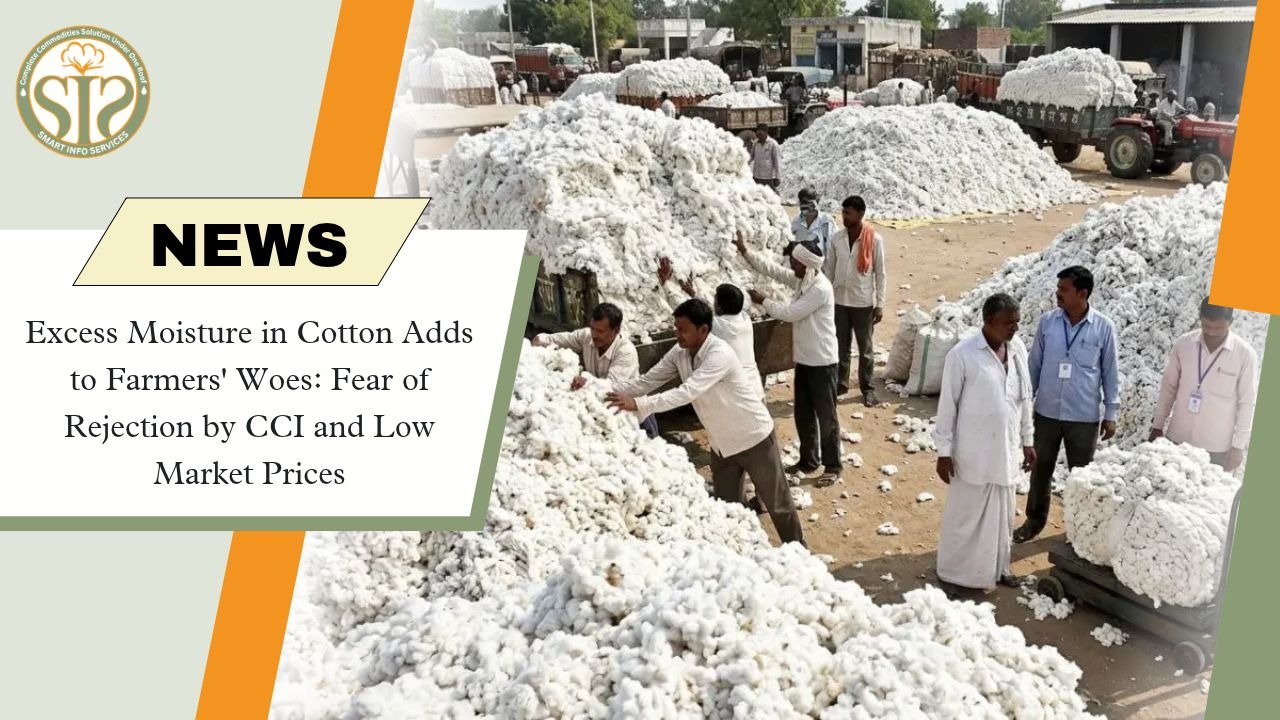
Maharastra : Duty-free cotton import ends, 1 1% taxes payable from today*Nagpur* : The window for duty-free cotton imports expired on Wednesday, with no govt notification regarding an extension. As a result, an 11% duty will apply to cotton imports from January 1, unless a fresh order is issued.While textile players reported rising prices for processed cotton (lint), farmers in Vidarbha continued to sell raw cotton below the minimum support price (MSP). Market rates ranged from 7,500 to 7,700 per quintal, compared with the MSP of 8,110, say market sources.Sources added that while trade and industry lobbied to maintain the duty exemption for at least a quarter, farmers' associations submitted representations supporting the duty. While exemption allowed cheaper imports for textile companies, it pushed down raw cotton prices for farmers.In August, following tariff tensions with the US, India removed 11% import duty on cotton. According to US-based International Cotton Advisory Committee (ICAC), India imported 36 lakh bales of cotton until mid-September. Brazil accounted for largest share at 23%, followed by US at 20% and Australia at 19%.Absence of further duty-free orders has left the textile industry concerned. Reimposing duty has reduced raw cotton prices for farmers to as low as 6,700 per quintal. This season, farmers relied on MSP procurement by Cotton Corporation of India (CCI), which purchased 61.5 lakh bales by December 30. Registration deadline for farmers to sell at MSP was extended to January 16 from original date of Dec 31."Domestic cotton rates reached 58,500 per bale, and imports have become costlier by 4,000 due to tariff war, affecting global competitiveness," said Prashant Mohta, MD of Gima Tex Industries, a textile unit in Vidarbha.READ MORE :- The Organic Cotton Imperative: Traceability & Trust
Organic Cotton: Traceability & TrustThe global organic cotton market is expanding rapidly. Valued at $1.1 billion in 2023, it is projected to reach $25 billion by 2032 (Fortune Business Insights).1 As demand for transparency accelerates and more farmers shift to organic practices, one thing is clear: credible, traceable evidence is now essential for success in the modern textile supply chain.Ensuring Organic IntegrityOrganic cotton delivers major environmental benefits—reduced water and energy use, and minimal toxic chemicals. But the transition is demanding and requires new skills, resources, and long-term brand support. CottonConnect helps in this shift, safeguarding integrity from seed to shelf through:Farmer Empowerment: Training in organic farm management, soil fertility, and natural pest control.Robust Assurance: A verification framework that strives to uphold the highest organic standards. In 2023–24, our programmes achieved 99% organic cotton integrity (Impact Report 2024).2Digital Traceability with TraceBaleOnce farm-level integrity is assured, traceability becomes crucial to maintain it and provides support in substantiating brand claims. TraceBale, our digital tool, creates resilient supply chains with verifiable, bottom-up sourcing data through: Unique farmer QR codesMEL App capturing farm-level production dataGIS farm mapping for precise location trackingTraceBale delivers visibility from farm group to finished product, giving brands reliable, actionable insights to support sustainability claims.The DNA Marker AdvantageTo strengthen assurance further, we partner with Haelixa to integrate physical DNA markers into fiber, providing scientific evidence of origin.By integrating digital traceability, physical markers, and transparent data management, CottonConnect connects farmers with global brands—helping make organic cotton a viable, profitable business model, not just an environmental commitment.“Traceability is important to achieving regulatory compliance, but it also forms the bedrock of responsible business. It helps ensure every stage of the supply chain is understood, allowing issues to be addressed head-on.”READ MORE :- The rupee opened 6 paise lower against the dollar at 89.93.

The rupee opened 6 paise lower at 89.93/USD.The Sensex was up 186.17 points or 0.22 percent at 85,406.77 and the Nifty was up 64.95 points or 0.25 percent at 26,194.55. Approximately 1284 shares advanced, 728 declined, and 151 remained unchanged.READ MORE :- The rupee opened 9 paise higher at 89.87/USD.
On Wednesday, the Indian rupee closed at 89.87 against the dollar, the same level at which it had opened in the morning.Finally, the Sensex was up 545.52 points or 0.64 percent at 85,220.60, and the Nifty was up 190.75 points or 0.74 percent at 26,129.60. Approximately 2555 shares advanced, 1330 declined, and 123 remained unchanged.Read More :- The rupee opened 9 paise higher at 89.87/USD.
The rupee opened 9 paise higher against the dollar at 89.87.The Indian rupee opened at 89.87 against the dollar on Wednesday, compared to its closing rate of 89.78 on Tuesday.READ MORE :- The rupee closed 15 paise higher at 89.78 against the dollar.
On Wednesday, the Indian rupee closed 15 paise higher at 89.78 against the dollar, after opening at 89.93.At close, the Sensex was down 20.46 points or 0.02 percent at 84,675.08, and the Nifty was down 3.25 points or 0.01 percent at 25,938.85. About 1718 shares advanced, 2113 shares declined, and 137 shares unchanged.read more :- Cotton supply tightens as Indian govt procures 38 lakh bales at MSP
Cotton Supply Tightens as India Buys 38 Lakh Bales at MSPThe Cotton Corporation of India's MSP-led procurement has absorbed 38.7 lakh cotton bales, tightening open-market supply despite weak yarn, fabric and garment demand.With stocks locked in warehouses, cotton prices remain elevated, squeezing spinning margins.Industry is seeking phased CCI stock releases aligned with demand to rebalance the value chain, especially in key producing states.The Indian government has procured 230.23 lakh quintals of seed cotton (kapas) until December 19, according to procurement figures released by the Cotton Corporation of India (CCI). This translates into 38.70 lakh bales of 170 kg cotton procured over the first 80 days of the 2025–26 marketing season, which began on October 1. CCI has been purchasing cotton at the minimum support price (MSP), which is currently higher than prevailing market prices. As a result, the domestic market is facing elevated cotton prices amid CCI’s procurement and subdued demand from downstream industries.CCI’s aggressive procurement in the ongoing 2025–26 season is creating a paradox for the downstream textile industry. While MSP-backed buying has supported farm-gate prices, the large volume of cotton moving into CCI warehouses has reduced free-market availability, even as demand for cotton yarn, fabrics and garments remains weak.According to CCI procurement figures received by the domestic industry, the corporation had procured 230.23 lakh quintals of kapas as of December 19, 2025. At an average lint recovery of 35 per cent, this translates into roughly 38.70 lakh bales. This quantity has effectively been withdrawn from open circulation, tightening near-term availability for spinners and ginners.Industry sources point out that the timing of this withdrawal of cotton from the open market is critical. Yarn offtake remains sluggish, fabric inventories are comfortable, and garment demand (both domestic and export-led) continues to be cautious. In such a demand environment, higher cotton prices driven by restricted availability are exerting pressure on spinning margins rather than supporting value-chain recovery.The impact is most visible in central and southern India, where procurement has been concentrated. Telangana and Maharashtra together account for more than 60 per cent of total CCI purchases so far, leaving mills in these regions increasingly dependent on warehouse-linked cotton rather than spot-market supplies.Spinners maintain that while MSP procurement is necessary in distress years, large front-loaded buying without a clearly defined liquidation roadmap risks creating artificial tightness. With cotton locked in warehouses, prices fail to reflect downstream demand realities, widening the gap between raw material costs and finished goods realisations.Industry stakeholders are therefore urging a phased and transparent release of CCI stocks, aligned with yarn and fabric demand cycles, to restore balance across the value chain and prevent prolonged stress on mill economics.Read more :- Tamil Nadu : Yarn price rises after open-end mills stopped production.
Yarn Rates Rise in Tamil Nadu After Open-End Mills Shut DownCOIMBATORE: The price of yarn supplied by open-end (OE) mills to powerlooms has risen by Rs 5 per kilogram due to their halt in production for the last week, resulting in continuous demand.The yarn price has increased to Rs 142 from Rs 137 per kg in the last week. However, OE mills have stopped procuring waste cotton from the spinning mills as its price remains unchanged.Operators of the OE mills said they have resumed the production with waste cotton in hand and without going for new purchase from the spinning mills.The OE mills cut production by 50% and some had ceased production fully, claiming they could not operate the mills due to increase in the price of waste cotton procured from the spinning mills by Rs 13 per kg in the last three months.About 600 OE mills in Coimbatore, Tiruppur, Erode, Salem, Karur, Madurai and Virudhunagar in Tamil Nadu announced production halt on December 21.M Jayabal, the president of the Recycle Textile Federation said, "While the spinning mills are escalating the price for the waste cotton irrationally, OE yarn price for the 20s weft yarn type dipped in the last two months by Rs 8 per kg. Due to the production halt and subsequent demand from powerloom, the price has increased by Rs 5 per kg in the last eight days.Since the yarn price has recovered gradually, OE mills have started operation with the waste cotton in stock." The mills have stopped the purchase of waste cotton from the spinning mills as they have not changed the price, he added."Cotton is sold at the rate of Rs 53,000 per candy. Waste cotton price was fixed based on the cotton price for the last 15 years. Considering the present cotton price, the waste cotton should be sold below Rs 97 per kg. However, the spinning mills have increased the price from Rs 100 to Rs 113 per kg (comber noil rose) in a syndicate manner.When the spinning mills under the National Textile Corporation were in operation, the waste cotton was procured on auction basis by OE mills. Based on the auction price, private spinning mills were supplying at the same price.After NTC mills ceased their production, spinning mills started fixing prices for waste cotton in a syndicate manner without auction," said G Arulmozhi, the president of the Open-End Mills Association (OSMA).OE mills could start procuring waste cotton from spinning mills if they reduce the price by at least Rs 5 per kg, he added.READ MORE :- Piyush Goyal says Australia will remove 100% tariffs on Indian exports from January 1
Australia to Scrap 100% Tariffs on Indian Exports from Jan 1: Piyush GoyalCommerce Minister Piyush Goyal said on Monday (December 29, 2025) that under the Economic Cooperation and Trade Agreement (ECTA) between the two countries, Australia will provide duty-free access to all Indian exports from January 1, 2026. The minister was commenting on the third anniversary of the deal, which came into effect on December 29, 2022."From January 1, 2026, 100% of Australian tariff lines for Indian exports will be zero-duty," Mr. Goyal shared on X on Monday (December 29, 2025). "Over the past three years, this agreement has resulted in consistent export growth, improved market access, and strengthened supply chain resilience, benefiting Indian exporters, MSMEs, farmers, and workers alike."The ECTA was an 'early harvest' deal, covering certain trade-related issues between the two countries, and both sides are currently negotiating a Comprehensive Economic Cooperation Agreement (CECA) that will be broader and deeper in scope.According to Mr. Goyal, India's exports to Australia increased by 8% in 2024-25, improving India's trade balance, and saw "robust growth" in sectors such as manufacturing, chemicals, textiles, plastics, pharmaceuticals, petroleum products, and gems and jewelry."Agricultural exports registered broad-based growth, with sharp increases in fruits and vegetables, marine products, spices, and exceptional growth in coffee," Mr. Goyal added.READ MORE :- Textile Ministry Set to Receive $122 Million from Cotton Productivity Mission
| title | Created At | Action |
|---|---|---|
| CCI's cotton sales exceed 96%, with a weekly volume of 2.02 lakh bales. | 02-01-2026 18:29:29 | view |
| ICRA's warning: Cotton production to take a hit. | 02-01-2026 18:18:04 | view |
| Cotton sales pick up pace, CCI at 96%. | 02-01-2026 18:04:31 | view |
| China's major decision: Tariff cuts on cotton and wool. | 02-01-2026 17:53:08 | view |
| Rupee fell 21 paise to close at 90.19 per dollar | 02-01-2026 15:46:15 | view |
| Mills on edge as duty-free cotton imports window ends | 02-01-2026 12:18:55 | view |
| Amidst Global Trade Turmoil Caused by Trump's Tariffs, India Officially Assumes BRICS Chairmanship for 2026 | 02-01-2026 12:06:23 | view |
| Oxford, Mississippi, will come alive with color, creativity, and craftsmanship from January 22-24, 2026. | 02-01-2026 11:45:10 | view |
| Brazil cotton prices slide in 2025 as exports absorb surplus | 02-01-2026 10:58:50 | view |
| The rupee opened 2 paise lower against the dollar at 89.98. | 02-01-2026 10:38:55 | view |
| The rupee closed 03 paise lower against the dollar at 89.96. | 01-01-2026 15:58:50 | view |
| Maharastra : Duty-free cotton import ends, 1 1% taxes payable from today | 01-01-2026 11:49:27 | view |
| The Organic Cotton Imperative: Traceability & Trust | 01-01-2026 11:34:47 | view |
| The rupee opened 6 paise lower against the dollar at 89.93. | 01-01-2026 10:28:47 | view |
| The rupee closed stable at 89.87/USD. | 31-12-2025 15:56:22 | view |
| The rupee opened 9 paise higher at 89.87/USD. | 31-12-2025 09:53:14 | view |
| The rupee closed 15 paise higher at 89.78 against the dollar. | 30-12-2025 15:49:28 | view |
| Cotton supply tightens as Indian govt procures 38 lakh bales at MSP | 30-12-2025 15:04:32 | view |
| Tamil Nadu : Yarn price rises after open-end mills stopped production. | 30-12-2025 12:34:40 | view |
| Piyush Goyal says Australia will remove 100% tariffs on Indian exports from January 1 | 30-12-2025 11:28:53 | view |