STAY UPDATED WITH COTTON UPDATES ON WHATSAPP AT AS LOW AS 6/- PER DAY
Start Your 7 Days Free Trial TodayIncrease in the price of soft cotton in SrikaranpurRamesh Bansal, Chairman of the Srikaranpur Municipality and a leading cotton trader at the grain market, cited several reasons for this surge in cotton prices. He explained that the central government had waived the import duty on cotton during October, November, and December. However, an 11 percent import duty was reimposed from January 1st.According to Bansal, the increasing demand for cotton from textile factories is also a major factor contributing to the price increase. These factors have led to a continuous upward trend in cotton prices in the market.Rakesh Dhuria, manager of shop number 179, M/s Karam Singh Harnek Singh, at the grain market, provided details of a specific sale. He stated that Balraj Singh, son of Avtar Singh Gill, a resident of Moda, had brought his cotton to their shop.Due to the high quality of the cotton and the prevailing market trend, Balraj Singh's cotton was sold at a rate of Rs. 7796 per quintal. Approximately 20 quintals of this consignment were purchased by M/s Baburam Ramswaroop and another 20 quintals by M/s Singla Industries. This surge in cotton prices has created a positive atmosphere in the market.read more :- INR Gains 29 Paise, Closes at 89.88 per Dollar
The Indian rupee on wednesday higher 29 paise to close at 89.88 per dollar, while it opened at 90.17 in the morning.At close, the Sensex was down 102.20 points or 0.12 percent at 84,961.14, and the Nifty was down 37.95 points or 0.14 percent at 26,140.75. About 1939 shares advanced, 1886 shares declined, and 140 shares unchanged.read more :- Cotton prices firm: End of import duty exemption, impact of Bangladesh tariffs?
Cotton Prices: Cotton Prices Strengthen After Import Duty Exemption Ends; Will Bangladesh's Tariff Plans Have an Impact?Cotton prices have improved in major markets across the country after the import duty exemption on raw cotton expired on December 31. According to trade sources, raw cotton prices have increased by Rs 400 to 500 per quintal in different markets. Despite this increase, prices still remain below the Minimum Support Price (MSP) of Rs 8,100 per quintal.Meanwhile, a new concern is emerging for the Indian cotton and yarn market from Bangladesh. Bangladesh, which has been the largest buyer of Indian yarn for the past few years, is now considering imposing tariffs on imports to protect its domestic yarn producers. The Bangladesh Trade and Tariff Commission recently discussed a proposal to impose a 20 percent duty on yarn imports in a meeting, although no official announcement has been made yet.Apprehension of Impact on Indian Yarn ExportsAccording to Atul Ganatra, former president of the Cotton Association of India, if Bangladesh imposes a duty on yarn imports, it will directly impact India's domestic yarn market. India exports approximately 30 percent of its total yarn production, while domestic consumption accounts for about 70 percent. Bangladesh is a major importer of Indian yarn, and a tariff there could reduce the competitiveness of Indian yarn. Trade sources believe that Bangladesh might impose a duty of between 10 and 20 percent. This would increase the landed cost of Indian yarn, making it more expensive in the Bangladeshi market.Improvement in Domestic Market PricesAfter the expiry of the import duty exemption, prices have increased in several cotton-producing regions of the country. According to Ramanuj Das Boobh, a sourcing agent from Raichur, raw cotton prices have risen to Rs 8,000 per quintal, compared to around Rs 7,500-7,600 a week ago. Meanwhile, pressed cotton prices have also increased by ₹1,000 to ₹1,500 per candy (356 kg). He said this is an opportune time for the Cotton Corporation of India (CCI) to announce the price for the 2025-26 crop, as any delay could lead mills to enter into more import contracts.Procurement and Stock SituationThe government agency, Cotton Corporation of India (CCI), is actively procuring cotton at the Minimum Support Price (MSP) and has so far purchased over 68 lakh bales. Prices have also increased by ₹400–500 per quintal in the Khandesh region of Maharashtra. According to Pradeep Jain, founder president of the Khandesh Gin Press Factory Owners Association, approximately 40 percent of the crop in the region has arrived in the markets, while the remaining crop is being held back by farmers, and harvesting is complete.2024-25 Crop Almost Sold OutAkola-based broker Arun Khetan said that the CCI has sold almost the entire 2024-25 season's crop and now has less than three lakh bales in stock. The market expects the CCI to announce a price of around ₹57,000 per candy for the 2025-26 crop.read more :- Rupee opens steady at 90.17 /USD
Rupee opened stable at 90.17 against dollarIndian rupee opened flat at 90.17 per dollar on versus previous close of 90.17.read more :- Cotton yarn prices surged in North India in January 2026.
Rise in cotton yarn prices in North India in January 2026There is currently a strong environment in the cotton yarn market of North India. Due to continuous rise in the prices of raw cotton, the cost of spinning mills has increased, the direct impact of which is visible on the prices of cotton yarn. To compensate for the rising costs, mills are forced to increase yarn prices.(SIS)Major Market UpdatesLudhianaA slight increase of about two to five rupees per kilogram has been recorded in the prices of cotton yarn in Ludhiana market. Although mills have increased prices, demand from buyers still remains limited.DelhiThe prices in the cotton yarn market of Delhi currently remain stable. There are no signs of any major movement in prices due to weak demand from textile manufacturing units and garment sector.(SIS)panipatA slight improvement has been seen in the prices of recycled cotton yarn and cotton comber in Panipat. However, due to excess supply of recycled PC thread in the market, there has been no significant change in its prices.Major market challengescost pressureDue to high prices of raw cotton, the pressure of production cost on spinning mills is continuously increasing.(SIS)read more :- Indonesia's move: Cotton imports provide relief to the textile industry.
Indonesia protects domestic textile sector from cotton import surge.he Indonesian government’s new policy, which was signed on 22 December, aims to implement safeguard measures when a rise in imports could pose a serious threat to domestic producers, according to local news publication Jakarta Globe ID.This follows the Indonesian Trade Safeguard Committee (KPPI) carrying out an investigation, which suggested that rising cotton woven fabrics had already impacted the country’s local textile sector.The Bea Masuk Tindakan Pengamanan (BMTP) duty will be on top of existing import duties, including most-favoured-nation rates and preferential tariffs under international trade agreements.It is expected to be applied for three years with a declining tariff each year. In the first year, duties will range from Rp3,000 ($0.18) to Rp3,300 per metre based on tariff classification. In the second year, the rate will be Rp2,800-Rp3,100 per metre, and in the final year it will be Rp2,600-Rp2,900.Imports that come from 122 developing countries that are WTO members will be excluded. This includes Malaysia, Thailand, the Philippines, as well as some countries in Africa and Latin America.The publication points out that if the origin requirements are not met, or if a retroactive verification is still underway, the imported products will remain subject to the safeguard duty in accordance with its rules.read more:- Cotton prices surge in the global market.
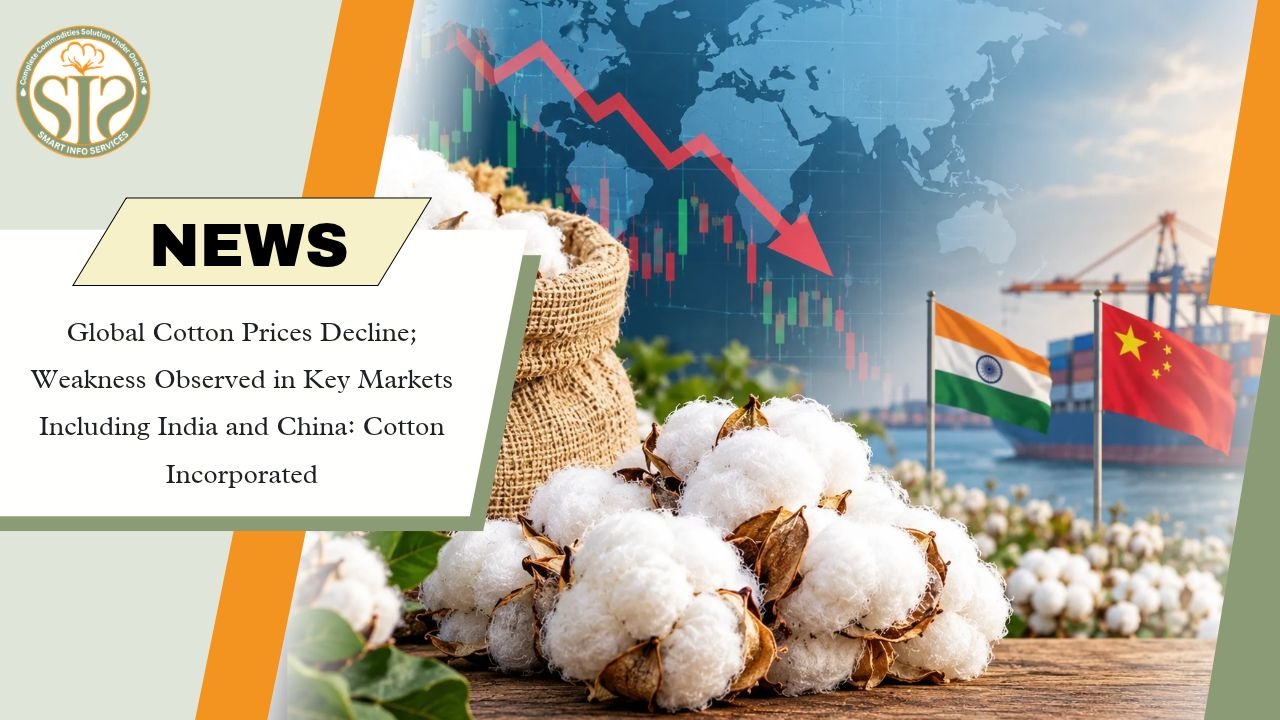
Cotton prices rise on global markets after long period of declineSince the beginning of 2026, cotton prices have been on the rise again. In early January, cotton futures surged to 64.8 cents per pound, the highest level since late December, after several days of decline. However, in year-on-year terms, the price is still about 5.4% lower, and the demand for cotton remains weak.According to Trading Economics, the price increase was driven by the return of investors to the market after the New Year holidays, leading to the closure of "short positions" — meaning the repurchase of contracts on which investors had profited during the price decline. This pushed the prices up. Additional support came from oil, which rose slightly, making polyester — one of cotton’s main substitutes — more expensive, thus making natural fiber more attractive again.As of January 6, 2026, the price of cotton held steady at around 64.82 cents per pound, which is approximately $1.43 per kilogram. However, compared to January of last year, the price is still 5.4% lower.Despite the price recovery, risks for the market persist. Trading Economics notes that market participants remain concerned about weak demand, surplus stocks, and the potential impact of tariffs on U.S. cotton. The U.S. Department of Agriculture's report also heightened concerns, as net cotton export sales for the week ending December 25, 2025, totaled only 134,000 bales, which is perceived as a sign of weak demand.For Tajikistan, the dynamics of cotton prices are especially important given the expected increase in production. According to the Forecast of Key Macroeconomic Indicators of Tajikistan for 2025–2027, the cotton harvest in 2025 is estimated at 390,000 tons, with the production of cotton fiber is estimated at 139,000 tons.Additionally, Tajikistan is increasing its cotton fiber exports. Since the beginning of 2025, Iran has purchased more than 30,000 tons of Tajik cotton fiber for $45.7 million.read more :- Increase in cotton procurement, deadline extended to January 16.
Cotton Procurement Increases in Vadodara District, Gujarat; Slot Booking Facility Introduced for the First Time; Procurement Extended Until January 16Vadodara: Farmers continue to flock to the cotton procurement centers in Vadodara district to sell their cotton at the support price. As a result, the total amount of cotton purchased at the three centers in Vadodara has increased compared to last year. Due to the large number of farmers, the funds allocated for procurement have also been increased.The Cotton Corporation of India (CCI) has established three procurement centers in Vadodara district: Karjan, Dabhoi, and Samlaya. Farmers are required to register online at these centers according to the regulations.This year, the registration deadline for farmers was extended until December 31. However, considering the continued rush of farmers at all three centers and the demand to extend the procurement process, the CCI has decided to continue procurement across the state until January 16.Cotton procurement in Vadodara district has increased compared to last year. With 10 days remaining in the procurement period, the amount of cotton purchased so far has already exceeded last year's figures. Last year, a total of 1.79 lakh quintals of cotton were purchased at the three centers. This year, the figure has already surpassed 1.82 lakh quintals.Farmers' Income Increases Due to the Introduction of Slot Booking FacilityAccording to reports, previously, the CCI would set a deadline for cotton procurement, and farmers had to deliver their cotton accordingly. However, due to the large crowds, private traders were often involved in the process.This year, farmers have been given the option to choose their preferred slot for online procurement, allowing them to directly visit the centers.Cotton Cultivation Leads in Vadodara DistrictVadodara district has a total cultivated area of 3,47,137 hectares. Cotton is the most prominent crop. Last year, cotton was sown on more than 80,000 hectares of land.read more :- Rupee closed 04 paisa higher at 90.17
On Tuesday, the Indian rupee rise 04 paise to close at 90.17 per dollar, compared to its opening price of 90.21 in the morning.At close, the Sensex was down 376.28 points or 0.44 percent at 85,063.34, and the Nifty was down 71.60 points or 0.27 percent at 26,178.70. About 1483 shares advanced, 2342 shares declined, and 144 shares unchanged.read more :- The rupee opened 07 paise higher at 90.21 against the dollar.

The rupee opened 07 paise higher at 90.21 against the dollar.Indian rupee opened higher at 90.21 per dollar on Tuesday versus previous close of 90.28.read more :-
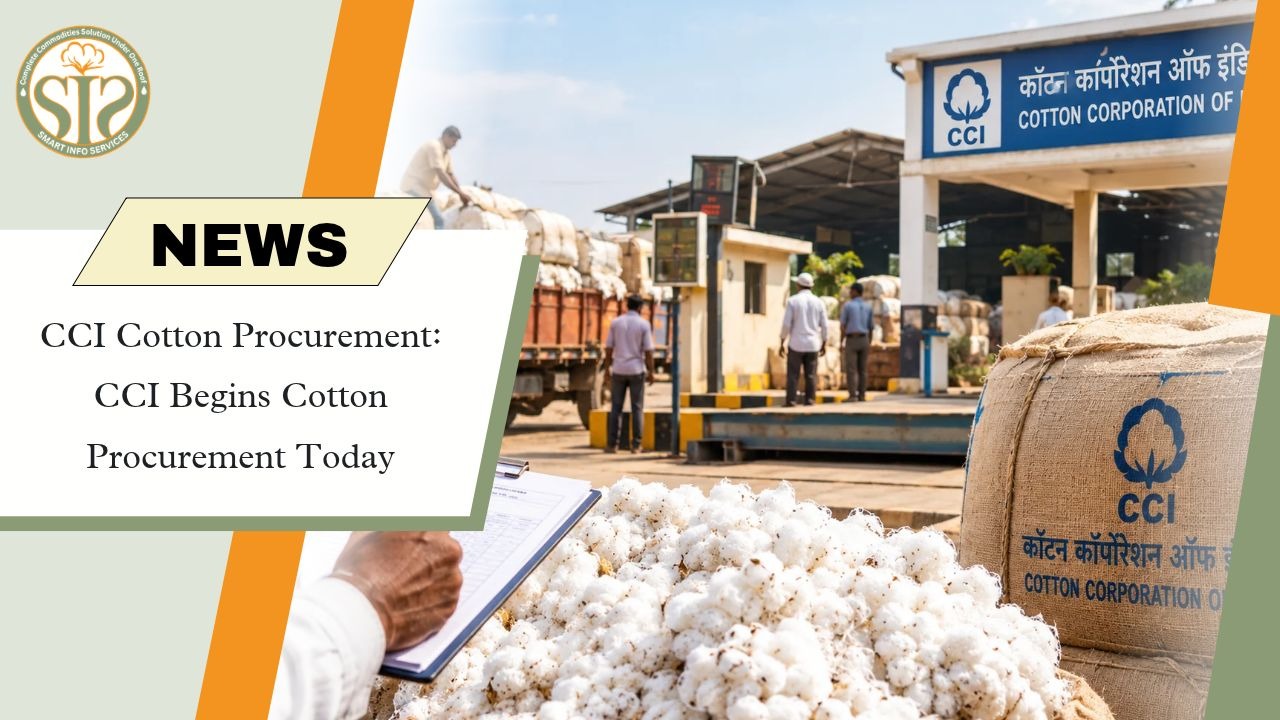
CCI will open window today for farmers selling cottonThe slot booking window for cotton farmers will be opened by the Cotton Corporation of India (CCI) on Saturday after 12 PM. Farmers who book slots will be able to sell their cotton at the minimum support price in the market from January 12 to 30. The market administration has urged farmers to book slots on time and bring their cotton on the scheduled date.For the Khargone market, slots can be booked between January 12 and January 30, excluding Saturdays, Sundays, and government holidays. For the Barwah market and Bagod sub-market, as well as other markets, the slot booking window will open from January 19 to January 30. Farmers are advised to fill in the correct information while booking slots to avoid any problems. The CCI had opened the slot booking window for January 12 to 22 on December 27. However, after some slots were booked, the server was hacked, leaving many farmers unable to book slots.
On Monday, the Indian rupee closed at 90.28 against the dollar, compared to its opening rate of 90.19.At close, the Sensex was down 322.39 points or 0.38 percent at 85,439.62, and the Nifty was down 78.25 points or 0.30 percent at 26,250.30.read more :- Assam: Meeting of textile ministers held in Guwahati, focusing on a $350 billion industry plan.
Assam: National Conference of Textile Ministers in Guwahati to shape $350 Billion Industry PlanGuwahati : A national conference of textile ministers will be held in Guwahati from January 8 to 9 on the theme "India's Textiles: Weaving Growth, Heritage and Innovation," an official said on Sunday.The two-day conference is being organized by the Ministry of Textiles, Government of India, in collaboration with the Government of Assam.The meeting aims to bring together senior officials from the Centre and states, along with central and state textile ministers, to discuss a coordinated national strategy to establish India as a global textile manufacturing hub.The discussions are in line with the national vision of creating a $350 billion textile industry and achieving $100 billion in textile exports by 2030, the official said.The inaugural session will be attended by Union Textile Minister Giriraj Singh, Assam Chief Minister Himanta Biswa Sarma, and Union Minister of State for Textiles Pabitra Margherita, among others.The conference will feature several sessions focusing on infrastructure and investment, export expansion, competitiveness, raw materials and fibers, and emerging areas such as technical textiles, research, and development. Special emphasis will also be placed on reviving traditional textiles, including handlooms and handicrafts, for modern domestic and global markets.Delegates are expected to share best practices, challenges, and policy suggestions aimed at strengthening the textile value chain across regions and districts.As part of the conference, a conclave titled "Strengthening and Empowering the Textile Sector of India's North-Eastern Region" will be held on the first day.The conclave will focus on silk, handloom, and bamboo-based textiles, promoting women-led enterprises, and branding "Textiles from the North-East," aiming to highlight the region's unique textile strengths and integrate them into national and global value chains.read more :-Maharashtra: CCI purchased 7.24 lakh quintals of cotton.
Maharashtra: CCI Cotton Procurement: CCI purchases 7.24 lakh quintals of cottonParbhani : This year, cotton prices are low in the open market. Because of this, farmers in Parbhani and Hingoli districts are selling their cotton at the Cotton Corporation of India (CCI) guaranteed price centers. As of Friday (December 2nd), 7,24,996 quintals of cotton have been purchased at 14 CCI centers in Parbhani and Hingoli districts. Private traders have purchased 2,46,814 quintals. Together, CCI and private traders have purchased a total of 9,71,810 quintals of cotton in these two districts.85,520 farmers from both districts have registered through the Cotton Farmer Mobile App to sell their cotton at guaranteed prices at CCI procurement centers. Of these, 46,881 farmers have been verified and given permission to bring their cotton for sale.8.84 lakh quintals of cotton purchased in Parbhani districtIn Parbhani district, CCI and private traders together purchased a total of 8,84,507 quintals of cotton. 72,166 farmers under 10 Agricultural Produce Market Committees in Parbhani, Bori, Jintur, Selu, Pathri, Sonpeth, Gangakhed, Palam, and Tadkalas have registered to sell cotton at CCI centers, of which 41,539 farmers have been verified and given permission to sell their cotton at the centers.6,42,674 quintals of cotton were purchased at 33 ginning factories in the district, with prices ranging from Rs. 7710 to Rs. 8060 per quintal. In Parbhani district, 241,833 quintals of cotton were purchased from private traders at a rate of Rs 6,700 to Rs 7,440 per quintal across 26 ginning factories under 10 Agricultural Produce Market Committees.87,000 quintals purchased in Hingoli districtIn Hingoli district, a total of 87,303 quintals of cotton were purchased by the Cotton Corporation of India (CCI) and the private sector. 13,354 farmers registered to sell cotton at CCI centers under four Agricultural Produce Market Committees in Hingoli, Akhada Balapur, Vasmat, and Jalalpur. Of these, 5,342 farmers were verified and given permission to bring their cotton to the centers.Under this market committee, 82,322 quintals of cotton were purchased at five ginning factories at a price ranging from Rs 7,712 to Rs 8,060 per quintal. In the private sector, 4,981 quintals of cotton were purchased at three ginning factories under two market committees in the district, at a price ranging from Rs 7,200 to Rs 7,400 per quintal, according to sources from the State Cooperative Cotton Producers Marketing Federation.read more :- Cotton Output Falls Sharply, Rural Employment Pressure Mounts In India.
Rupee opened stable at 90.19 against dollarThe Indian rupee opened at 90.19 per dollar on Monday compared to 90.19 on Friday.read more :- Cotton Output Falls Sharply, Rural Employment Pressure Mounts In India.
India’s Cotton Output Drops, Rural Jobs at RiskIndia’s cotton production is expected to contract by 1.7 per cent in the cotton year 2026 (October 2025–September 2026), taking output to 29.2 million bales, the lowest level in a decade, according to a report by rating agency Icra. The reduction is driven by declining acreage, water shortages, uneven monsoons, and farmers shifting to more profitable crops.The report notes that while yields per hectare are rising modestly, up 1.8 per cent year-on-year, this gain is insufficient to offset shrinking cultivation areas, which have declined nearly 20 per cent from peak levels in 2021. The contraction in output is likely to affect rural employment, as cotton farming continues to provide significant seasonal work under the Mahatma Gandhi National Rural Employment Guarantee Scheme (MGNREGS) and local wage opportunities.Domestic cotton consumption is expected to remain flat in CYi2026, despite subdued output. Analysts cited in the Icra report highlighted that U.S. tariffs on Indian apparel exports are likely to dampen downstream demand, further reducing incentives for higher cotton production.In response to the domestic shortfall, India has increased its dependence on imports, which rose 85 per cent year-on-year in the first five months of FY2026 to 1.5 million bales of 170 kg each. The United States remains the largest supplier, accounting for 22 per cent of imports. Icra emphasised that while import duty exemptions provided between 19 August and 31 December 2025, helped maintain supply, they also contributed to soft cotton prices domestically.Cotton yarn prices mirrored the softness in raw cotton markets. Domestic cotton fibre prices fell 3 per cent month-on-month in November 2025, while average cotton yarn prices dropped 4 per cent, reducing contribution margins from Rs. 103 per kg in the first half of FY2026 to Rs 96 per kg by November 2025. Icra expects margins to stabilise at Rs 98–100 per kg in FY2026, due to moderation in realisations in the second half.The report surveyed 13 cotton spinning companies, representing 25–30 per cent of the industry’s revenue. These companies are projected to see revenue decline by 4–6 per cent in FY2026, with margin contractions of 50–100 basis points, largely due to weaker second-half performance.The slowdown in cotton production and yarn demand has broader implications for rural India, where cotton cultivation is closely tied to local livelihoods. Lower output may reduce casual and seasonal employment, pressuring rural wages and increasing reliance on government employment schemes such as MGNREGS. The report signals a need for policy attention to sustain both farmer incomes and rural employment amid shifting crop patterns and global trade uncertainties.READ MORE :-“State-wise CCI cotton sales in 2024-25”
State-wise CCI Cotton Sales Details – 2024-25 SeasonThe Cotton Corporation of India (CCI) kept its prices unchanged this week and sold approximately 96,30,200 bales for the season 2024-25. This represents around 96.30% of the total cotton procured so far this season.A state-wise breakdown of sales indicates strong activity from Maharashtra, Telangana, and Gujarat, which together account for over 84.74% of the total sales to date.This data underscores CCI’s proactive efforts in stabilizing the cotton market and ensuring steady supply across key cotton-producing states.read more:- Industry appeals against local cotton tax.
Industry bodies urge removal of 4% source tax on local cotton at BTMA meeting.Bangladesh’s textile value chain stakeholders have renewed calls to strengthen domestic cotton production and remove fiscal barriers, as industry bodies and government officials met at the Bangladesh Textile Mills Association (BTMA) headquarters in Gulshan on January 1, 2026.The joint meeting, organised by BTMA, brought together senior officials from the Bangladesh Cotton Development Board (CDB) and members of the Bangladesh Cotton Ginners Association (BCGA). The session was chaired by Mohammad Khorshed Alam, Director, BTMA.Speaking at the meeting, CDB officials highlighted the strategic importance of expanding local cotton cultivation to reduce import dependency and improve supply-chain resilience. The discussion placed strong emphasis on scaling domestic cotton production through better land utilisation, farmer engagement, and closer coordination between growers, ginners, and spinners.Among the key recommendations was the withdrawal of the government-imposed 4% source tax on domestic cotton sales, which participants said discourages trade of locally produced cotton. Ginners also urged Bangladeshi spinning mills to prioritise the procurement of cotton produced by local ginning mills to support domestic value addition.Mohammad Rezaual Amin, Executive Director, Bangladesh Cotton Development Board, along with Dr. Md. Gazi Golam Mortuza, Soil Fertility and Water Management Specialist, Bangladesh Cotton Development Board, and Dr. Khalequzzaman, Senior Scientific Officer, Bangladesh Cotton Development Board, shared technical perspectives on productivity improvement and sustainable cultivation practices. Project-level updates were presented by Dr. A.K.M. Harun-or-Rashid, Project Director, Bangladesh Cotton Development Board.The meeting also discussed awareness-building initiatives among farmers. Ginners requested BTMA’s support in distributing 5,000 BTMA-branded T-shirts at a planned farmer seminar aimed at encouraging cotton cultivation.Mohammad Khorshed Alam, Director, BTMA, stressed the importance of ensuring that cultivable agricultural land remains productive, urging the plantation of cotton trees where land remains idle. He also encouraged ginning mill owners to promote integrated farming, combining cotton with vegetables on fallow or underutilised land to enhance farmer income.Ziaul Hasan Chowdhury, Deputy Secretary General, BTMA, was also present at the meeting, alongside representatives from ginning mills across Kushtia, Jashore, and other cotton-producing regions.read more:- "The first major survey of the textile sector will be conducted in 2027."
Government plans first comprehensive textile sector survey in 2027The government is planning to launch a comprehensive survey of the textile sector in 2027, aiming to build a detailed picture of the financial health, employment structure and market integration of one of India’s most labour-intensive industries, sources told.Unlike earlier exercises that focused largely on production or wages, the proposed survey is expected to go deeper into the financial ecosystem surrounding textile units. Officials said it will examine how firms access finance, whether they are able to obtain formal loans, how much they repay, and the extent to which they are integrated into the formal credit system. Export participation will also be tracked, allowing policymakers to assess how deeply textile enterprises are plugged into global value chains.At present, official data on the sector is fragmented. The labour ministry tracks wages in textiles, but the last such survey was conducted in 2017. There is little systematic information on credit access, financial stress or export orientation across the vast and diverse textile landscape.“Whether they get loans or not, how much they repay, their financial inclusion status, and whether they export—these are some of the things we want to understand. Textile is a labour-intensive secread more:- Government extends deadline for applying to Textile PLI scheme till March 31
Textile PLI Application Deadline Extended to March 31The government has extended the deadline for submitting new applications under the Production Linked Incentive (PLI) scheme for textiles until March 31, 2026.The Ministry of Textiles stated that this extension follows the positive response received after the application portal reopened in August 2025, with textile companies submitting proposals in priority sectors such as Man-Made Fibre (MMF) apparel, MMF fabrics, and technical textiles.In October, the government had extended the deadline for filing new applications under the PLI scheme for the textile sector until December 31, which has now been further extended to March of this year.The ministry said, "This decision reflects the growing investor confidence in India's textile sector and aims to facilitate broader participation by providing eligible applicants with additional time."The PLI scheme for textiles was notified on September 24, 2021, with the objective of promoting the production of MMF apparel and fabrics and technical textile products in the country, enabling the industry to grow in size and scale, become competitive, create employment opportunities, and foster successful enterprises.READ MORE :- CCI's cotton sales exceed 96%, with a weekly volume of 2.02 lakh bales.
| title | Created At | Action |
|---|---|---|
| Soft cotton prices increased in Srikaranpur | 07-01-2026 17:08:50 | view |
| INR Gains 29 Paise, Closes at 89.88 per Dollar | 07-01-2026 15:48:03 | view |
| Cotton prices firm: End of import duty exemption, impact of Bangladesh tariffs? | 07-01-2026 11:44:54 | view |
| Rupee opens steady at 90.17 /USD | 07-01-2026 10:27:14 | view |
| Cotton yarn prices surged in North India in January 2026. | 06-01-2026 18:09:47 | view |
| Indonesia's move: Cotton imports provide relief to the textile industry. | 06-01-2026 17:55:18 | view |
| Cotton prices surge in the global market. | 06-01-2026 17:43:24 | view |
| Increase in cotton procurement, deadline extended to January 16. | 06-01-2026 16:17:26 | view |
| Rupee closed 04 paisa higher at 90.17 | 06-01-2026 15:51:05 | view |
| The rupee opened 07 paise higher at 90.21 against the dollar. | 06-01-2026 10:40:36 | view |

| CCI procurement starts today for cotton farmers | 05-01-2026 18:03:03 | view |
| The rupee closed 09 paise lower against the dollar at 90.28. | 05-01-2026 15:49:35 | view |
| Assam: Meeting of textile ministers held in Guwahati, focusing on a $350 billion industry plan. | 05-01-2026 13:59:28 | view |
| Maharashtra: CCI purchased 7.24 lakh quintals of cotton. | 05-01-2026 13:25:21 | view |
| Rupee opens steady at 90.19 /USD | 05-01-2026 10:40:38 | view |
| Cotton Output Falls Sharply, Rural Employment Pressure Mounts In India. | 05-01-2026 10:38:19 | view |
| “State-wise CCI cotton sales in 2024-25” | 03-01-2026 15:33:15 | view |
| Industry appeals against local cotton tax. | 03-01-2026 15:18:40 | view |
| "The first major survey of the textile sector will be conducted in 2027." | 03-01-2026 14:56:08 | view |
| Government extends deadline for applying to Textile PLI scheme till March 31 | 03-01-2026 11:20:06 | view |