

भारत-यूके मुक्त व्यापार समझौता: बासमती, फल, कपास निर्यात को शुल्क से छूट; डेयरी, सेब और खाद्य तेलों के आयात पर कोई छूट नहीं।भारत-यूके मुक्त व्यापार समझौते (एफटीए) से किसानों और खाद्य प्रसंस्करण इकाइयों को लाभ होगा क्योंकि बासमती चावल, कपास, मूंगफली, फल, सब्जियां, प्याज, अचार, मसाले, चाय और कॉफी आदि को यूके को निर्यात करने पर शुल्क से छूट मिलेगी।इसके अलावा, एफटीए डेयरी उत्पादों, सेब, जई और खाद्य तेलों के आयात पर कोई शुल्क रियायत नहीं देता है। इसका मतलब है कि हिमाचल प्रदेश और जम्मू-कश्मीर के सेब उत्पादक सुरक्षित हैं। दोनों राज्यों के किसान और राजनेता सेब आयात पर 'कोई छूट नहीं' की मांग को लेकर मुखर रहे हैं।इस एफटीए के तहत सहमत उत्पादों में कृषि और खाद्य प्रसंस्करण का क्रमशः 14.8 प्रतिशत और 10.6 प्रतिशत हिस्सा होगा, जिस पर गुरुवार को लंदन में हस्ताक्षर होने हैं।शुल्क-मुक्त पहुँच, सुव्यवस्थित व्यापार प्रोटोकॉल और भारत की कृषि के लिए सुरक्षा, मुक्त व्यापार समझौते का हिस्सा हैं और यह कृषि निर्यात और मूल्यवर्धित उत्पादों में वृद्धि के लिए आधार तैयार करता है। यह भारतीय कृषि और खाद्य प्रसंस्करण इकाइयों के लिए प्रीमियम ब्रिटिश बाज़ारों को खोल देता है क्योंकि शुल्क जर्मनी, नीदरलैंड और अन्य यूरोपीय संघ के देशों के निर्यातकों को मिलने वाले लाभों के बराबर होंगे, या कुछ मामलों में कम भी होंगे।कृषि और खाद्य प्रसंस्करणमुक्त व्यापार समझौते में सहमत 95% से अधिक 'शुल्क रेखाएँ' भारतीय कृषि और प्रसंस्कृत खाद्य पदार्थों पर शून्य शुल्क लागू करेंगी। भारत ने अनुमान लगाया है कि इस शुल्क-मुक्त पहुँच से अगले तीन वर्षों में कृषि निर्यात में 20% से अधिक की वृद्धि होने की उम्मीद है, जिससे 2030 तक 100 अरब डॉलर के कृषि निर्यात के लक्ष्य में योगदान मिलेगा और ग्रामीण परिवारों के हाथों में अधिक धन आएगा।खाद्य-प्रसंस्करण क्षेत्र में, भारत वैश्विक स्तर पर 14.07 अरब डॉलर मूल्य की वस्तुओं का निर्यात करता है, जबकि ब्रिटेन 50.68 अरब डॉलर मूल्य की वस्तुओं का आयात करता है। अब तक, ब्रिटेन के आयात में भारतीय उत्पादों का योगदान केवल 309.5 मिलियन डॉलर है।कृषि के क्षेत्र में, भारत वैश्विक स्तर पर 36.63 बिलियन डॉलर का निर्यात करता है, जबकि ब्रिटेन 37.52 बिलियन डॉलर का आयात करता है, लेकिन भारत से ब्रिटेन का आयात केवल 811 मिलियन डॉलर है।भारत महत्वपूर्ण क्षेत्रों में प्रमुख वैश्विक कंपनियों को पछाड़ सकता है। उदाहरण के लिए, प्रसंस्कृत खाद्य पदार्थों की तैयारी में, भारत को अमेरिका, चीन और थाईलैंड पर बढ़त हासिल करनी होगी। बेकरी उत्पादों के क्षेत्र में, भारतीय उत्पाद अमेरिका, चीन, थाईलैंड और वियतनाम के उत्पादों की तुलना में अधिक प्रतिस्पर्धी होंगे। संरक्षित सब्जियों, फलों, मेवों, ताज़ी सब्जियों और भारतीय उत्पादों पर पाकिस्तान, तुर्की, अमेरिका, ब्राज़ील, थाईलैंड और चीन की तुलना में कम टैरिफ लगेगा।और पढ़ें :- रुपया 07 पैसे गिरकर 86.40 प्रति डॉलर पर बंद हुआ

गुरुवार को भारतीय रुपया 07 पैसे गिरकर 86.40 प्रति डॉलर पर बंद हुआ, जबकि सुबह यह 86.33 पर खुला था।बंद होने पर, सेंसेक्स 542.47 अंक या 0.66 प्रतिशत की गिरावट के साथ 82,184.17 पर और निफ्टी 157.80 अंक या 0.63 प्रतिशत की गिरावट के साथ 25,062.10 पर बंद हुआ। लगभग 1564 शेयरों में तेजी, 2324 शेयरों में गिरावट और 155 शेयरों में कोई बदलाव नहीं हुआ।और पढ़ें :- सस्ते रेशों से वैश्विक कपास पर दबाव
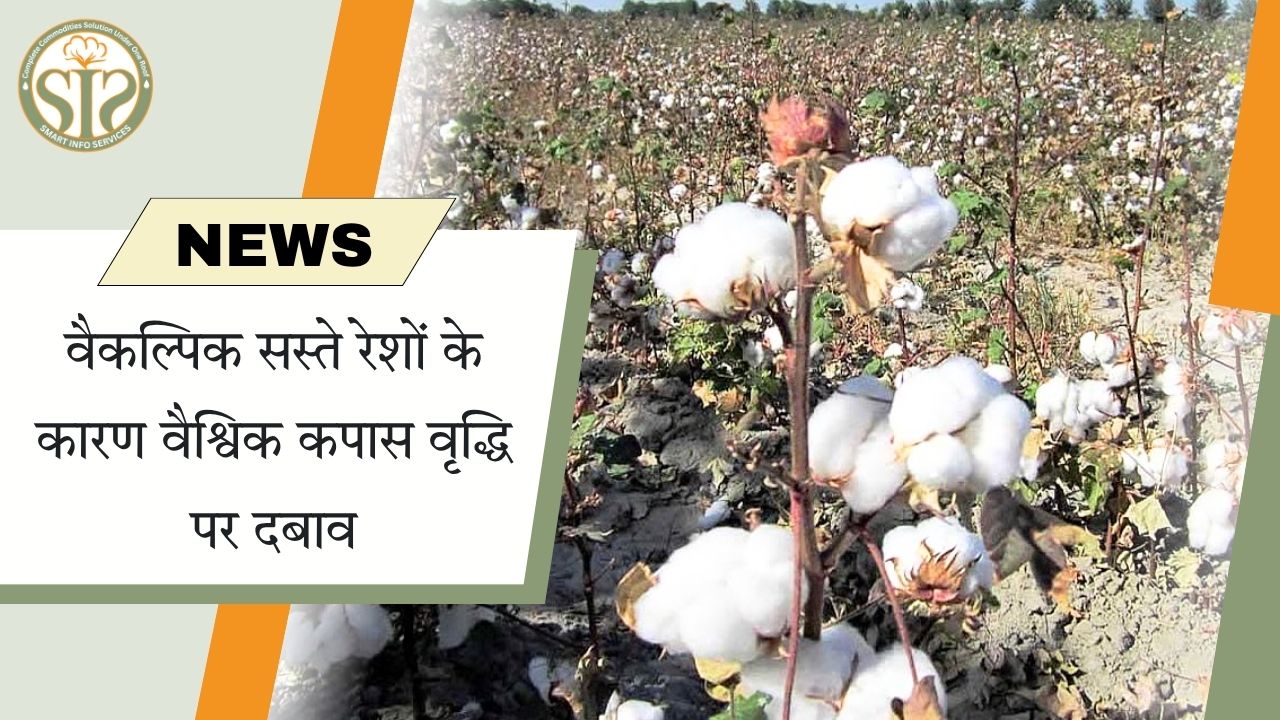
वैकल्पिक सस्ते रेशों के कारण वैश्विक कपास वृद्धि पर दबावउद्योग विशेषज्ञों और शोध विश्लेषकों का कहना है कि कपास की वैश्विक वृद्धि स्थिरता और पर्यावरण के प्रति जागरूक उत्पादन की ओर बढ़ते रुझान के कारण दबाव में है, क्योंकि उपभोक्ता ज़िम्मेदार सामग्रियों और विनिर्माण प्रक्रियाओं को तेज़ी से पसंद कर रहे हैं।"हालांकि कपास जैसे प्राकृतिक रेशों को पारंपरिक रूप से टिकाऊ और स्वच्छ माना जाता रहा है, लेकिन अत्यधिक खपत, पानी के उपयोग और जलवायु संवेदनशीलता को लेकर चिंताओं के कारण कपास के कुल उपयोग में धीरे-धीरे कमी आ रही है, जिसकी एक वजह तेज़-तर्रार फ़ैशन की घटती मांग और वैकल्पिक सामग्रियों की ओर रुझान है," फिच सॉल्यूशंस की एक इकाई, शोध एजेंसी बीएमआई ने अपने "एशिया में कपास का भविष्य: धीमी होती मांग, नवाचार और लचीलापन" शीर्षक वाले अपने अध्ययन में कहा।"कपड़ा क्षेत्र बांस, भांग और पुनर्चक्रित कपास जैसे वैकल्पिक रेशों की ओर देख रहा है। ये कपास से सस्ते हैं," राजकोट स्थित कपास, सूत और कपास अपशिष्ट के व्यापारी आनंद पोपट कहते हैं।मिश्रित रेशों का चलन बढ़ रहा हैरायचूर स्थित सोर्सिंग एजेंट और ऑल इंडिया कॉटन ब्रोकर्स एसोसिएशन के उपाध्यक्ष रामानुज दास बूब ने कहा, "कपास मिश्रित रेशों का चलन बढ़ रहा है। आज, शुद्ध कपास, वस्त्र उद्योग में कुल रेशों के उपयोग का 30 प्रतिशत से भी कम है। निर्माताओं के पास कई विकल्प हैं।"भारतीय कपड़ा उद्यमी महासंघ (आईटीएफ) के संयोजक प्रभु धमोधरन ने कहा कि वैकल्पिक रेशों ने कुछ प्रगति की है, लेकिन प्रीमियम उपभोक्ताओं के बीच कपास अभी भी पसंदीदा विकल्प बना हुआ है। उन्होंने कहा, "उपभोक्ताओं का यह वर्ग खर्च करने की उच्च क्षमता प्रदर्शित करता है, जिससे कपास आधारित फैशन उत्पादों की निरंतर मांग बनी हुई है।"भारत के दृष्टिकोण से, इस वर्ष पहली बार, उसके कपास आधारित परिधान निर्यात की अमेरिकी बाजार में 12 प्रतिशत हिस्सेदारी है। धमोधरन ने कहा, "कपास परिधानों में भारत की स्थापित ताकत के साथ, यह गति बनी रहने की संभावना है।"पर्यावरण-अनुकूल उत्पादों को बढ़ावा देने के लिए यूरोपीय संघ और ब्रिटेन द्वारा शुरू की गई विभिन्न पहलों की ओर इशारा करते हुए, बीएमआई ने कहा कि सिंथेटिक रेशों के बढ़ते चलन और किफायती, उच्च-गुणवत्ता वाले और जैव-आधारित विकल्पों में हो रही प्रगति के कारण कपास की माँग में अस्थिरता बढ़ने की संभावना है।पुनर्चक्रित कपासशोध एजेंसी ने कहा, "जैसे-जैसे उपभोक्ताओं की प्राथमिकताएँ अधिक टिकाऊ विकल्पों की ओर बढ़ रही हैं, हमें कपास की फसल की माँग में धीरे-धीरे कमी आने की आशंका है, जिससे कीमतों पर असर पड़ेगा और इस तरह लंबी अवधि में इसके उत्पादन में कमी आएगी।"दास बूब ने कहा, "विकल्पों की कम लागत कपास को प्रभावित कर रही है। जहाँ सूती धागे की सबसे कम कीमत ₹220 प्रति किलोग्राम है, वहीं मिश्रित धागे की कीमत लगभग ₹150 है।"पोपट ने कहा, "पुनर्चक्रित कपास की कीमतें शुद्ध कपास उत्पादों की कीमतों का एक-चौथाई हैं। यहाँ तक कि बड़े खुदरा विक्रेता भी शुद्ध कपास के बजाय मिश्रित कपास का विकल्प चुनकर लागत कम करने पर विचार कर रहे हैं।"बीएमआई ने कहा कि हाल के वर्षों में कपास उत्पादन में कई चुनौतियाँ सामने आई हैं, खासकर भारत में पिंक बॉलवर्म द्वारा बीटी कपास के प्रति प्रतिरोधक क्षमता का विकास, जो स्थानीय कृषि और जलवायु परिस्थितियों के साथ असंगति के कारण है। "यह कपास उत्पादकों के लिए निरंतर नवाचार और उभरती चुनौतियों के अनुकूल ढलने की आवश्यकता को रेखांकित करता है," उसने कहा।सामाजिक अभियानचीन के शिनजियांग के कपास उद्योग में कथित जबरन मजदूरी के खिलाफ सामाजिक अभियानों के कारण प्रमुख फैशन ब्रांडों और उपभोक्ताओं द्वारा वैश्विक बहिष्कार किया गया है। शोध एजेंसी ने कहा, "घरेलू मांग भी कमजोर हुई है, चीनी परिधान निर्माता आयात प्रतिबंधों और बहिष्कार के दुष्प्रभावों से बचने के लिए तेजी से आयातित कपास की ओर रुख कर रहे हैं।"पोपट ने कहा कि विभिन्न एजेंसियां अब कपास को बढ़ावा देने की कोशिश कर रही हैं। उन्होंने कहा, "यह सब तब शुरू हुआ जब कपास की कीमतें ₹1 लाख प्रति कैंडी (356 किलोग्राम) तक पहुँच गईं। निर्माताओं ने लागत कम करने की कोशिश की और विकल्प सामने आए।"दास बूब ने कहा, "शुद्ध कपास की अनुभूति का कोई मुकाबला नहीं कर सकता। यह एक चक्रीय प्रवृत्ति है। यह कुछ वर्षों में बदल सकती है।"धमोदरन ने कहा कि वैश्विक फ़ैशन क्षेत्र में इन्वेंट्री का स्तर सामान्य हो गया है, ब्रांड और खुदरा विक्रेता माँग-आधारित, गतिशील योजना के लिए एआई और डिजिटल उपकरणों का तेज़ी से लाभ उठा रहे हैं।लगभग पाँच साल का निचला स्तरउन्होंने कहा, "उत्पादन अब उपभोग के पैटर्न के साथ निकटता से जुड़ा हुआ है, खासकर विकसित बाज़ारों में, और यूरोपीय संघ के आयात और उपभोग के रुझान बहुत स्थिर बने हुए हैं। हमें आगे चलकर यूरोपीय संघ में और भी बेहतर गति की उम्मीद है।"बीएमआई ने कहा कि भारत और चीन ने कपास क्षेत्र की मौजूदा समस्याओं से निपटने के लिए उपाय शुरू किए हैं। समय के साथ इनके फल मिलने की संभावना है।अमेरिकी कृषि विभाग के अनुसार, 2025-26 में वैश्विक कपास उत्पादन 25.78 मिलियन टन (एमटी) होने का अनुमान है, जबकि 2024-25 में यह 26.10 मिलियन टन था। उत्पादक देशों में घरेलू उपयोग बढ़कर 25.72 मिलियन टन (2024-25 में 25.40 मिलियन टन) होने की उम्मीद है, जबकि निर्यात बढ़कर 9.73 मिलियन टन (9.36 मिलियन टन) होने की संभावना है। इससे अंतिम स्टॉक 16.83 मिलियन टन (16.71 मिलियन टन) रह जाएगा, जो मंदी का स्पष्ट संकेत है।न्यूयॉर्क स्थित इंटरकांटिनेंटल एक्सचेंज पर कपास वायदा भाव पाँच साल के निचले स्तर 66 सेंट प्रति पाउंड के करीब है। भारत में, गुजरात के राजकोट में बेंचमार्क शंकर-6 कपास की कीमत ₹57,500 प्रति कैंडी पर चल रही है।और पढ़ें :- मक्का की ओर बढ़ते किसान: सोयाबीन-कपास की खेती में गिरावट
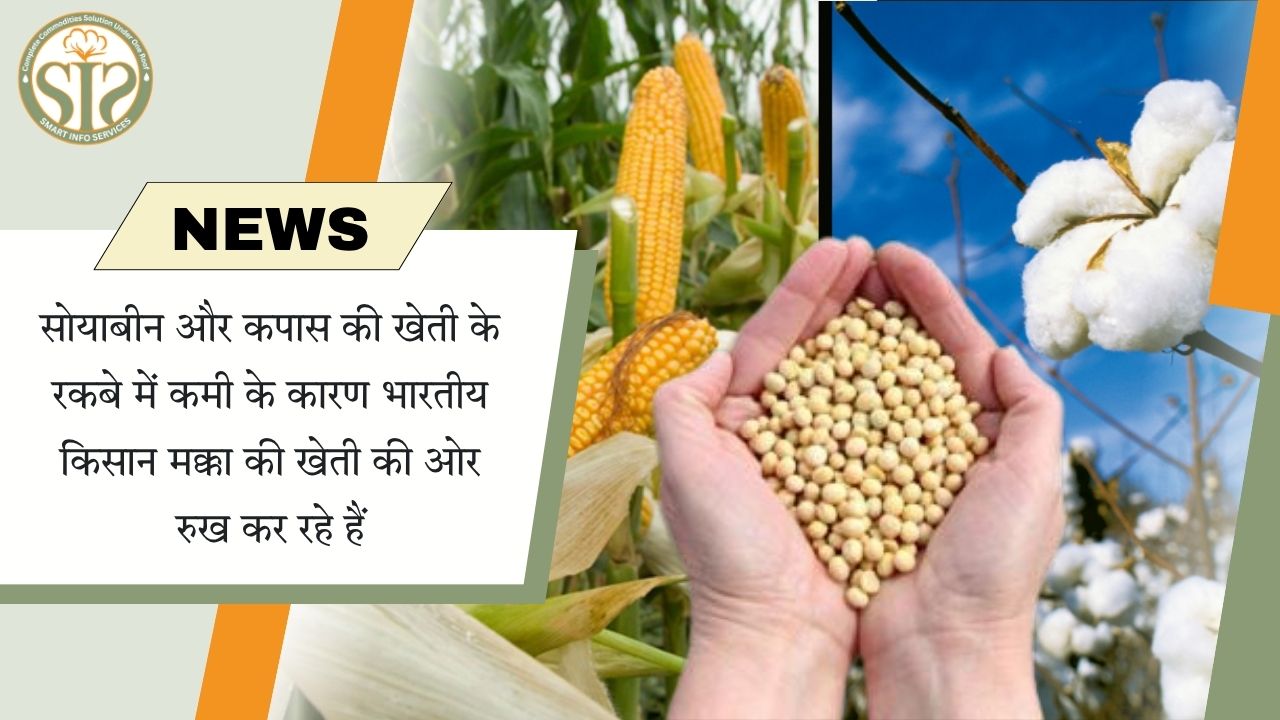
सोयाबीन और कपास की खेती के रकबे में कमी के कारण भारतीय किसान मक्का की खेती की ओर रुख कर रहे हैंदेश भर के किसान मक्का की खेती की ओर काफ़ी बढ़ गए हैं, जबकि बाज़ारों में उम्मीद से कम कमाई के कारण सोयाबीन और कपास की खेती के रकबे में गिरावट आ रही है।देश में खरीफ़ की बुआई के अंतिम चरण में प्रवेश करते हुए, 21 जुलाई तक भारत में 708.31 लाख हेक्टेयर में बुआई हो चुकी है, जबकि पिछले साल 680.38 लाख हेक्टेयर में बुआई हुई थी। इसमें मक्का की बुआई में सबसे ज़्यादा उछाल आया है - पिछले साल के 61.73 लाख हेक्टेयर से बढ़कर इस साल 71.21 लाख हेक्टेयर हो गया है।हालांकि, तिलहन की बुआई में 6 प्रतिशत की गिरावट दर्ज की गई है, जो पिछले साल के 162.80 लाख हेक्टेयर के मुकाबले 156.76 लाख हेक्टेयर है। मुख्य खरीफ तिलहन सोयाबीन की बुवाई इस वर्ष 111.67 लाख हेक्टेयर में हुई है, जबकि पिछले वर्ष यह 118.96 लाख हेक्टेयर थी। प्रमुख लिंट फसल कपास का रकबा भी 202-25 के 102.05 लाख हेक्टेयर से घटकर इस वर्ष 98.55 लाख हेक्टेयर रह गया है।खाद्य तेल विलायक और निष्कर्षक कंपनियों के शीर्ष निकाय, सॉल्वेंट एंड एक्सट्रैक्टर्स एसोसिएशन (SEA) ने भारत की मुख्य ग्रीष्मकालीन तिलहन फसल, सोयाबीन के राष्ट्रीय स्तर पर रकबे में संभावित गिरावट पर चिंता व्यक्त की है।SEA के अध्यक्ष संजीव अस्थाना ने कहा, "सोयाबीन का रकबा पिछले वर्ष की तुलना में 6 प्रतिशत से अधिक कम हो गया है, संभवतः फसल वरीयताओं में बदलाव और क्षेत्रीय मौसम परिवर्तनशीलता के कारण। यह प्रवृत्ति बारीकी से देखने योग्य है, क्योंकि सोयाबीन भारत की तिलहन अर्थव्यवस्था का एक महत्वपूर्ण स्तंभ और तेल एवं खली का एक प्रमुख स्रोत बना हुआ है।"महाराष्ट्र के लातूर जिले के किसान विलास उफाड़े ने बताया कि थोक बाजार में सोयाबीन का भाव फिलहाल 4,000 रुपये प्रति क्विंटल है।उन्होंने कहा, "यह सरकार द्वारा घोषित न्यूनतम समर्थन मूल्य (एमएसपी) 5,328 रुपये के मुकाबले कम है, जो नई फसल के बाजार में आने से पहले ही है। हमें इस साल बंपर फसल की उम्मीद है, इसलिए मुझे चिंता है कि फसल कटने के बाद कीमतों की स्थिति क्या होगी।" खरीफ की बुवाई अपने अंतिम चरण में पहुँच रही है, इसलिए कीमतों में और गिरावट आ सकती है। इथेनॉल उत्पादन के लिए कच्चे माल के रूप में इस्तेमाल होने के कारण मक्के की माँग बढ़ गई है।और पढ़ें :- रुपया 8 पैसे मजबूत होकर 86.33 पर खुला

डॉलर में गिरावट के साथ रुपया 8 पैसे बढ़कर 86.33 पर खुलाडॉलर सूचकांक में गिरावट के साथ 24 जुलाई को रुपया 8 पैसे बढ़कर खुला। पिछले दिन 86.41 पर बंद होने के बाद रुपया डॉलर के मुकाबले 86.33 पर खुला।और पढ़ें :- रुपया 86.41/USD पर स्थिर बंद हुआ

बुधवार को भारतीय रुपया 86.41 प्रति डॉलर पर स्थिर बंद हुआ, जबकि सुबह यह 86.41 पर खुला था।सेंसेक्स 539.83 अंक या 0.66 प्रतिशत बढ़कर 82,726.64 पर और निफ्टी 159 अंक या 0.63 प्रतिशत बढ़कर 25,219.90 पर बंद हुआ। लगभग 1882 शेयरों में तेजी आई, 1989 शेयरों में गिरावट आई और 161 शेयरों में कोई बदलाव नहीं हुआ।और पढ़ें :- सूती वस्त्र निर्यात 35.6 अरब डॉलर पार : गिरिराज सिंह
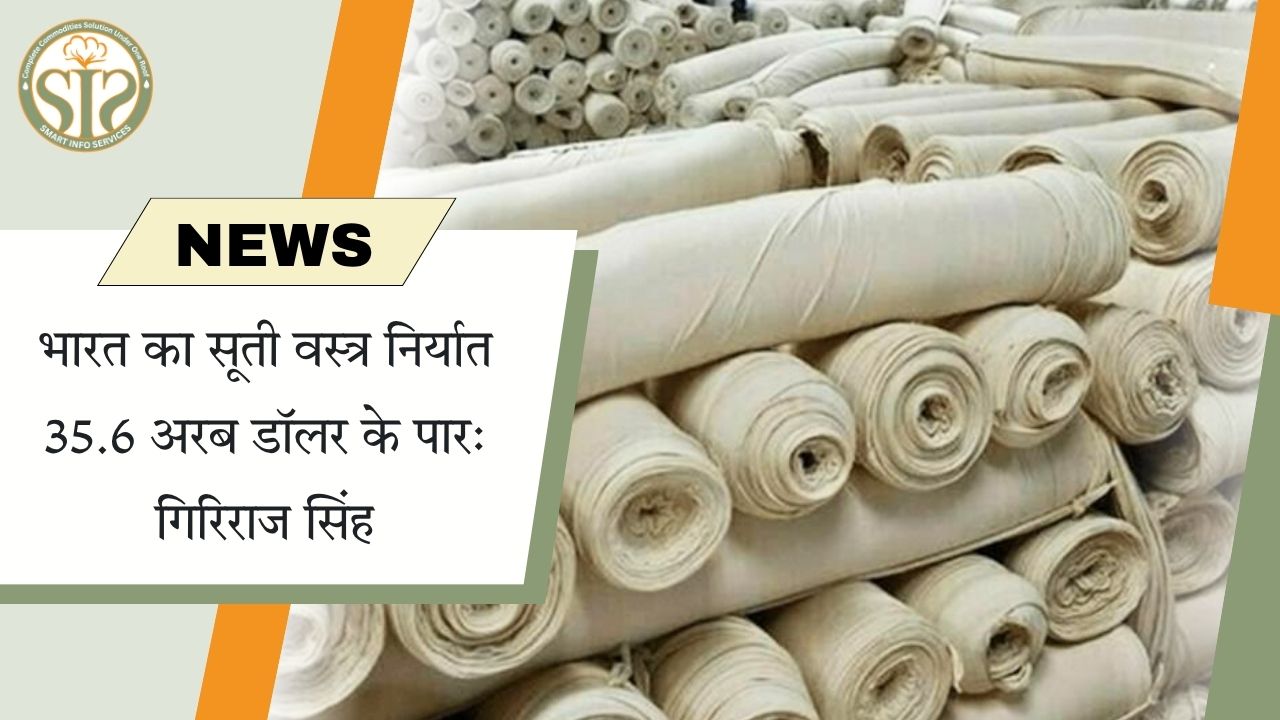
भारत का सूती वस्त्र निर्यात 35.6 अरब डॉलर के पार: गिरिराज सिंहकेंद्रीय कपड़ा मंत्री गिरिराज सिंह ने मंगलवार को संसद को बताया कि पिछले तीन वर्षों के दौरान भारत का सूती वस्त्रों का कुल निर्यात 35.642 अरब डॉलर को पार कर गया है, जिसमें सूती धागा, सूती कपड़े, मेड-अप, अन्य कपड़ा धागा, फैब्रिक मेड-अप और कच्चा कपास शामिल हैं।मंत्री ने यह भी बताया कि विज़न 2030 के अनुरूप कपास की उत्पादकता और गुणवत्ता बढ़ाने, नवाचार को बढ़ावा देने और संपूर्ण कपड़ा मूल्य श्रृंखला को मज़बूत करने के लिए, वित्त मंत्री ने 2025-26 के बजट में एक पाँच वर्षीय 'कपास उत्पादकता मिशन' की घोषणा की थी।कृषि अनुसंधान एवं शिक्षा विभाग (DARE) इस मिशन के कार्यान्वयन के लिए नोडल विभाग है, जिसमें कपड़ा मंत्रालय भागीदार है। इस मिशन का उद्देश्य सभी कपास उत्पादक राज्यों में अनुसंधान और विस्तार गतिविधियों सहित रणनीतिक हस्तक्षेपों के माध्यम से कपास उत्पादन को बढ़ावा देना है।मिशन में उन्नत प्रजनन और जैव प्रौद्योगिकी उपकरणों का उपयोग करके एक्स्ट्रा लॉन्ग स्टेपल (ईएलएस) कपास सहित जलवायु-अनुकूल, कीट-प्रतिरोधी और उच्च उपज देने वाली कपास किस्मों के विकास पर भी ध्यान केंद्रित करने का प्रस्ताव है।आईसीएआर-केंद्रीय कपास अनुसंधान संस्थान (सीआईसीआर), नागपुर द्वारा आठ प्रमुख कपास उत्पादक राज्यों में 'कृषि-पारिस्थितिक क्षेत्रों के लिए प्रौद्योगिकियों का लक्ष्यीकरण - कपास उत्पादकता बढ़ाने हेतु सर्वोत्तम प्रथाओं का बड़े पैमाने पर प्रदर्शन' पर एक विशेष परियोजना लागू की गई है। मंत्री ने आगे बताया कि विशेष परियोजना का कुल परिव्यय 6,032.35 लाख रुपये है।'कपास उत्पादकता मिशन' का उद्देश्य किसानों को अत्याधुनिक वैज्ञानिक और तकनीकी सहायता प्रदान करना है, जिससे उच्च उत्पादकता, बेहतर रेशे की गुणवत्ता और जलवायु एवं कीट-संबंधी चुनौतियों के प्रति बेहतर लचीलापन प्राप्त हो सके। उन्होंने कहा कि सरकार के एकीकृत 5F विज़न, खेत से रेशा, कारखाने से फ़ैशन और फिर विदेश तक, के अनुरूप, इस मिशन से कपास किसानों की आय में वृद्धि, उच्च गुणवत्ता वाले कपास की निरंतर आपूर्ति सुनिश्चित होने और भारत के पारंपरिक कपड़ा क्षेत्र को पुनर्जीवित करने, जिससे इसकी वैश्विक प्रतिस्पर्धात्मकता में वृद्धि होने की उम्मीद है।कपड़ा निर्यात को बढ़ावा देने के कदमों के तहत, मंत्रालय ने भारतीय कपड़ा मूल्य श्रृंखला की ताकत को प्रदर्शित करने, कपड़ा और फ़ैशन उद्योग में नवीनतम प्रगति और नवाचारों पर प्रकाश डालने और भारत को कपड़ा क्षेत्र में सोर्सिंग और निवेश के लिए सबसे पसंदीदा गंतव्य के रूप में स्थापित करने के लिए एक वैश्विक मेगा टेक्सटाइल कार्यक्रम भारत टेक्स 2025 के आयोजन में निर्यात संवर्धन परिषदों का भी समर्थन किया है, मंत्री ने लोकसभा में एक अन्य प्रश्न के उत्तर में कहा।मंत्री ने कहा कि ये सहयोग समझौता ज्ञापनों के माध्यम से संचालित होते हैं जो छात्र और संकाय आदान-प्रदान, संयुक्त अनुसंधान पहल, दोहरी डिग्री और ट्विनिंग कार्यक्रम, सहयोगी पाठ्यक्रम विकास और वैश्विक शैक्षणिक एकीकरण का समर्थन करते हैं।मंत्री महोदय ने बताया, "ये अंतर्राष्ट्रीय सहयोग अकादमिक उत्कृष्टता को बढ़ावा देकर, नवाचार को बढ़ावा देकर और ज्ञान हस्तांतरण को सक्षम बनाकर वैश्विक वस्त्र और फैशन क्षेत्र में भारत की स्थिति को सुदृढ़ करते हैं। ये सहयोग छात्रों और शिक्षकों को वैश्विक डिज़ाइन संवेदनशीलता, तकनीकी प्रगति और उभरते रुझानों से परिचित कराते हैं। पाठ्यक्रम को अंतर्राष्ट्रीय मानकों के अनुरूप बनाकर, ये सहयोग भारतीय स्नातकों को वैश्विक बाज़ारों में प्रभावी ढंग से प्रतिस्पर्धा करने के लिए आवश्यक कौशल और अंतर्दृष्टि से लैस करते हैं और वस्त्र एवं फैशन में रचनात्मक और तकनीकी विशेषज्ञता के केंद्र के रूप में भारत की प्रतिष्ठा को मज़बूत करते हैं।"और पढ़ें :- 2025 में कपास निर्यात देश: भारत की रैंकिंग
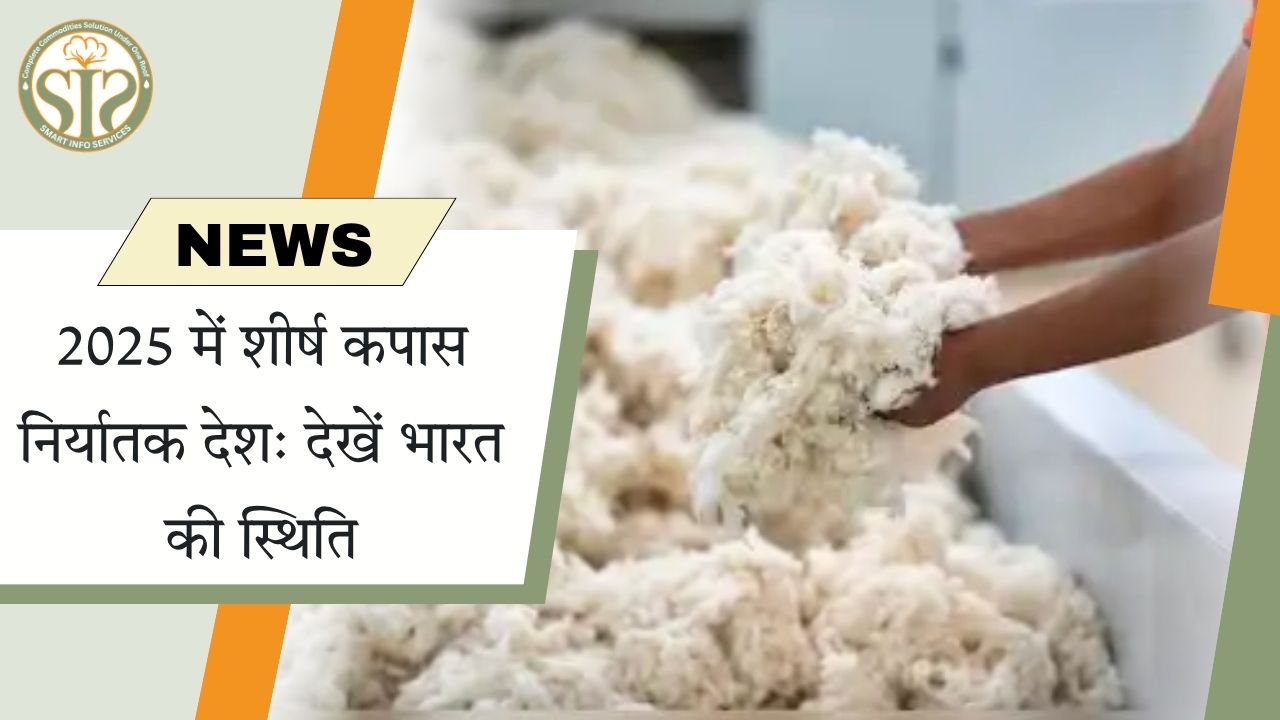
2025 में शीर्ष कपास निर्यातक देश: जानें वैश्विक बाज़ार में भारत की स्थितिकपास विश्व स्तर पर सबसे महत्वपूर्ण प्राकृतिक रेशों में से एक है, जिसका उपयोग वस्त्र, घरेलू सजावट और औद्योगिक उत्पादों में व्यापक रूप से किया जाता है। बढ़ती वैश्विक मांग के बीच कुछ देश कपास निर्यात बाज़ार में अपनी मजबूत पकड़ बनाए हुए हैं।International Cotton Advisory Committee (ICAC) और United States Department of Agriculture (USDA) के अनुसार, 2025 में वैश्विक कपास उत्पादन लगभग 117.8 मिलियन गांठ तक पहुंचने का अनुमान है।शीर्ष 5 कपास निर्यातक देश1. United States – वैश्विक नेतावार्षिक निर्यात: ~3.1 मिलियन टनउन्नत कृषि तकनीकों, बड़े पैमाने की खेती और मजबूत सप्लाई चेन के कारण अमेरिका दुनिया का सबसे बड़ा कपास निर्यातक है। टेक्सास और मिसिसिपी जैसे राज्यों से उच्च गुणवत्ता वाला कपास निर्यात किया जाता है।2. Brazil – तेज़ी से उभरता निर्यातकवार्षिक निर्यात: ~2.3 मिलियन टनअनुकूल जलवायु और विशाल कृषि क्षेत्र के चलते ब्राज़ील ने पिछले दशक में तेज़ वृद्धि दर्ज की है। आधुनिक तकनीकों के उपयोग से उत्पादन और गुणवत्ता दोनों में सुधार हुआ है।3. Australia – प्रीमियम गुणवत्तावार्षिक निर्यात: ~1.7 मिलियन टनऑस्ट्रेलिया उच्च गुणवत्ता और लंबे रेशों वाले कपास के लिए जाना जाता है। यह देश टिकाऊ खेती और जल प्रबंधन में अग्रणी है।4. India – बड़ा उत्पादक, सीमित निर्यातवार्षिक निर्यात: ~0.8 मिलियन टनभारत विश्व के सबसे बड़े कपास उत्पादकों में से एक है, लेकिन अधिकांश उत्पादन घरेलू टेक्सटाइल उद्योग में ही उपयोग हो जाता है। निर्यात मुख्य रूप से अधिशेष पर निर्भर करता है।5. Uzbekistan – सुधार और विकासवार्षिक निर्यात: ~0.5 मिलियन टनउज़्बेकिस्तान ने हाल के वर्षों में अपने कपास उद्योग का आधुनिकीकरण किया है और श्रम सुधारों के जरिए वैश्विक स्तर पर अपनी छवि मजबूत की है।भारत की स्थितिहालांकि India उत्पादन के मामले में अग्रणी है, लेकिन इसका विशाल घरेलू टेक्सटाइल उद्योग अधिकांश कपास की खपत कर लेता है। इसके कारण निर्यात सीमित रहता है, जबकि बांग्लादेश और वियतनाम जैसे पड़ोसी देशों में भारतीय कपास की अच्छी मांग बनी रहती है।और पढ़ें :- रुपया 05 पैसे गिरकर 86.41/USD पर खुला

डॉलर के मुकाबले रुपया 5 पैसे गिरकर 86.41 पर खुलाडॉलर सूचकांक में मामूली बढ़त के चलते 23 जुलाई को रुपया 5 पैसे गिरकर खुला। पिछले दिन 86.36 पर बंद होने के बाद रुपया डॉलर के मुकाबले 86.41 पर खुला।और पढ़ें :- भारतीय रुपया 11 पैसे गिरकर 86.36 प्रति डॉलर पर बंद हुआ

मंगलवार को भारतीय रुपया 11 पैसे गिरकर 86.36 प्रति डॉलर पर बंद हुआ, जबकि सुबह यह 86.25 पर खुला था।बंद होने पर, सेंसेक्स 13.53 अंक या 0.02 प्रतिशत की गिरावट के साथ 82,186.81 पर और निफ्टी 29.80 अंक या 0.12 प्रतिशत की गिरावट के साथ 25,060.90 पर बंद हुआ। लगभग 1724 शेयरों में तेजी, 2126 शेयरों में गिरावट और 172 शेयरों में कोई बदलाव नहीं हुआ।और पढ़ें :- सिरसा में ज़मीन जलमग्न, कपास की फसल बर्बाद
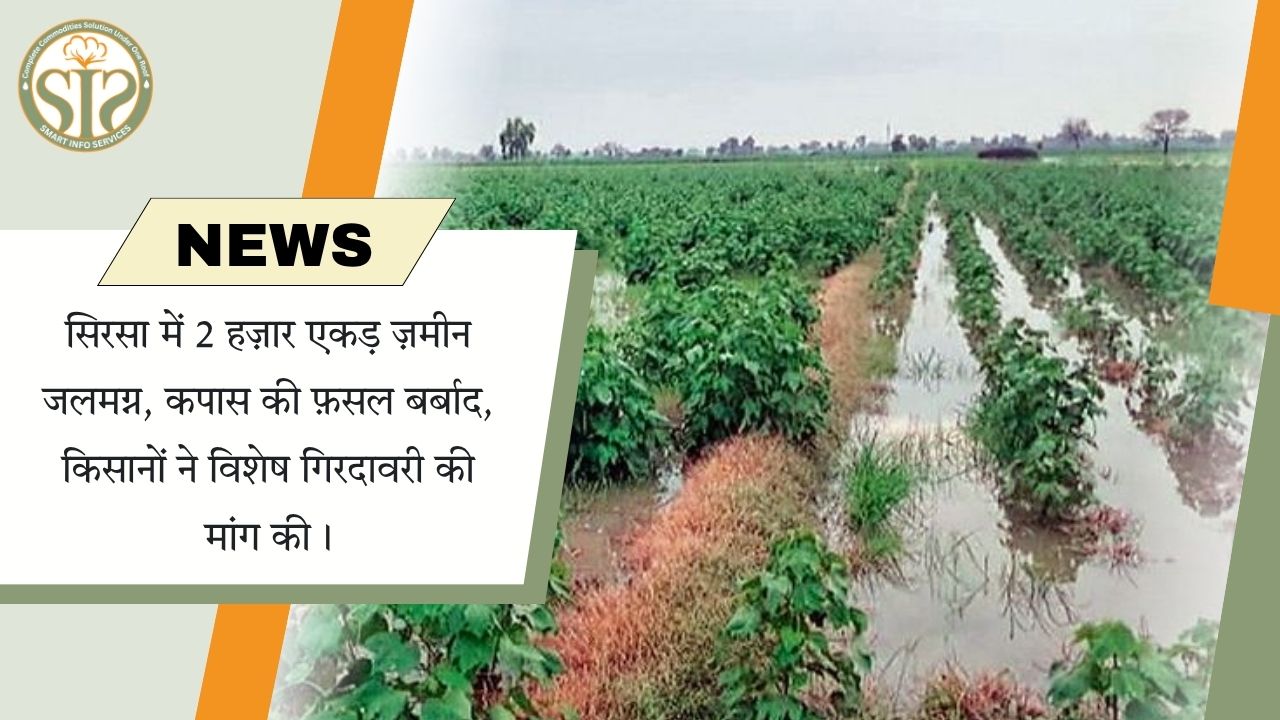
सिरसा में 2 हज़ार एकड़ ज़मीन जलमग्न, कपास की फ़सल बर्बाद, किसानों ने विशेष गिरदावरी की मांग की।सिरसा ज़िले के नाथूसरी चोपता ब्लॉक में हाल ही में हुई भारी बारिश ने सात गाँवों की 2,000 एकड़ से ज़्यादा कृषि भूमि पर तबाही मचा दी है। भारी जलभराव के कारण कपास, ग्वार और मूंगफली की फ़सलों को भारी नुकसान हुआ है, जिसमें कपास सबसे ज़्यादा प्रभावित हुआ है।कई प्रभावित इलाकों में, किसान अब अपने क्षतिग्रस्त कपास के खेतों की जुताई करके धान की खेती करने को मजबूर हो रहे हैं, जो कि नमी को झेलने में ज़्यादा सक्षम है - लेकिन इससे उनका आर्थिक बोझ और बढ़ गया है।रूपाना गंजा (400 एकड़), रूपाना बिश्नोई (300 एकड़), शक्कर मंदूरी (500 एकड़), शाहपुरिया (150 एकड़), नहरना (150 एकड़), तरकावाली (100 एकड़) और चाहरवाला (50 एकड़) में कृषि भूमि जलमग्न हो गई है। सबसे ज़्यादा प्रभावित गाँवों - शक्कर मंदूरी, रूपाना गंजा और रूपाना बिश्नोई - में लगभग 1,200 एकड़ कपास की फसल बर्बाद हो गई है।शक्कर मंदूरी के एक किसान मुकेश कुमार ने कहा, "मुझे अपनी पूरी 7 एकड़ कपास की फसल जोतनी पड़ी। मोटरों से पानी निकालने के बाद भी, रुके हुए पानी ने पौधों को सड़ने पर मजबूर कर दिया।"अनिल कासनिया, बलजीत और वीरेंद्र सहित अन्य किसानों ने भी इसी तरह के नुकसान की बात कही।उनमें से कई लोगों ने ज़मीन पट्टे पर ली थी और कपास पर लगभग 10,000 रुपये प्रति एकड़ का निवेश कर चुके थे। अब, उन्हें धान की तैयारी और बुवाई के लिए 6,000-8,000 रुपये प्रति एकड़ अतिरिक्त खर्च करने होंगे।एक अन्य प्रभावित किसान राज कासनिया ने कहा, "यह दोहरा नुकसान है। बारिश के बाद, खारा भूजल स्तर बढ़ जाता है और मिट्टी को भी नुकसान पहुँचाता है। ऐसी स्थिति में किसान क्या कर सकता है?"चिंता का विषय सेम नाला (जल निकासी नहर) का उफान है, जो बाढ़ग्रस्त खेतों से अतिरिक्त पानी बहा रहा है। किसानों को डर है कि अगर तटबंध टूट गया, तो आसपास के गाँव जलमग्न हो सकते हैं और खड़ी फसलों को और नुकसान हो सकता है। उन्होंने स्थानीय अधिकारियों पर बार-बार याद दिलाने के बावजूद मानसून से पहले नहर की सफाई न करने का आरोप लगाया है।किसानों ने सरकार से विशेष गिरदावरी (फसल नुकसान सर्वेक्षण) कराने और नुकसान के लिए मुआवजे की घोषणा करने का आग्रह किया है।जिला कृषि उपनिदेशक डॉ. सुखदेव कंबोज ने पुष्टि की है कि ज़्यादातर प्रभावित खेत लवणता-प्रवण क्षेत्रों में आते हैं।डॉ. कंबोज ने कहा, "हम किसानों को कम समय में पकने वाली और कम पानी वाली धान की किस्मों जैसे पूसा 1509, 1692, 1847 (बासमती) और पंजाब 126 (परमल) की खेती करने की सलाह दे रहे हैं। इन किस्मों को 33% कम पानी की आवश्यकता होती है और ये लगभग 100 दिनों में पक जाती हैं।"डॉ. कंबोज ने यह भी बताया कि अप्रत्याशित मौसम के कारण कपास एक जोखिम भरी फसल बनती जा रही है।इस वर्ष सिरसा जिले में 1.47 लाख एकड़ में कपास की बुवाई की गई, जबकि धान की बुवाई 1.5 लाख एकड़ से अधिक क्षेत्र में हुई।और पढ़ें :- हरियाणा: केंद्रीय टीम ने गुलाबी सुंडी प्रभावित कपास के खेतों का निरीक्षण किया
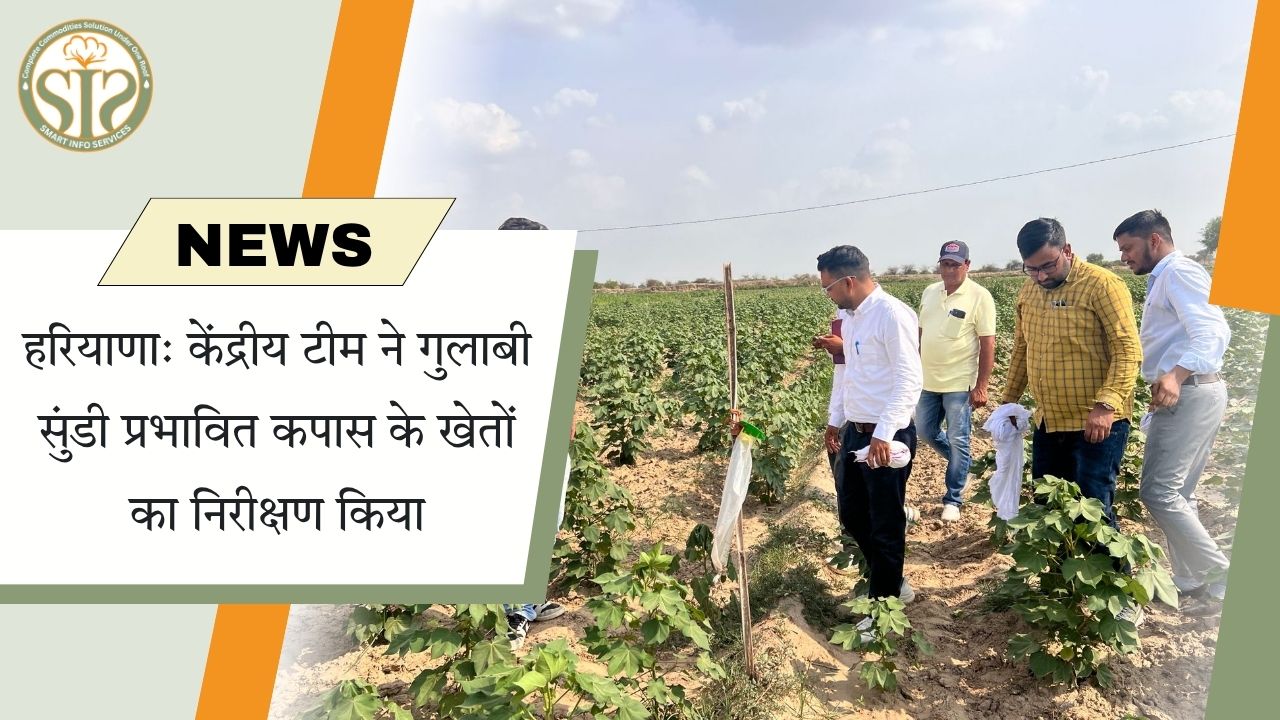
केंद्रीय टीम ने कपास के खेतों का निरीक्षण कियाहिसार : किसानों की शिकायतों के बाद, कीटों, विशेष रूप से गुलाबी सुंडी के संक्रमण को लेकर चिंता के बाद, केंद्र के कृषि मंत्रालय की एक टीम ने जिले का दौरा किया और कपास की फसल का निरीक्षण किया।कृषि एवं किसान कल्याण विभाग के अधिकारियों ने आज बताया कि टीम ने मंगाली झारा गाँव में खेतों का निरीक्षण किया और कपास की फसल में गुलाबी सुंडी के अंश पाए।हालांकि, अधिकारियों ने कहा कि संक्रमण आर्थिक सीमा से नीचे है और किसानों को सतर्क रहने, लेकिन घबराने की सलाह नहीं दी।निरीक्षण दल में क्षेत्रीय एकीकृत नाशीजीव प्रबंधन केंद्र (आरआईपीएमसी), फरीदाबाद के सहायक पौध संरक्षण अधिकारी (एपीपीओ) लक्ष्मीकांत, केपी शर्मा और सूरज बेनीवाल शामिल थे, जिनके साथ हरियाणा कृषि एवं किसान कल्याण विभाग के पौध संरक्षण अधिकारी डॉ. अरुण कुमार यादव और कृषि विकास अधिकारी (एडीओ) रविंदर अंतिल भी थे।डॉ. अरुण कुमार ने कहा कि उन्हें गाँव से गुलाबी सुंडी के बारे में जानकारी मिली है और उन्होंने चंडीगढ़ स्थित मुख्यालय और केंद्र को इसकी सूचना दे दी है। किसान नरसी राम खीचड़ ने बताया कि उन्होंने कुछ दिन पहले इस कीट को देखा और कृषि विभाग के अधिकारियों को इसकी सूचना दी।पिछले तीन वर्षों में हिसार में कपास का रकबा लगातार कम होता जा रहा है, मुख्यतः गुलाबी सुंडी जैसे कीटों की बार-बार होने वाली समस्याओं के कारण। इस सीज़न में, लगभग 2.1 लाख एकड़ में कपास की बुवाई हुई है, जो पिछले साल के 2.5 लाख एकड़ से कम है, जो लगातार नुकसान के कारण किसानों की घटती रुचि को दर्शाता है।डॉ. यादव ने बताया कि कीटनाशकों का छिड़काव केवल तभी करने की सलाह दी जाती है जब प्रति पौधे चार या उससे अधिक सुंडी पाई जाती हैं। अन्यथा, किसानों को नियमित रूप से खेत की निगरानी करने की सलाह दी जाती है। टीम ने यह भी देखा कि पिछले साल के कपास के पौधे के अवशेष (बंचहट्टी) खेत में पड़े हैं, जिनके संक्रमण का वाहक होने का संदेह है। अधिकारियों ने कहा कि बचे हुए पौधे के अवशेषों से गुलाबी सुंडी के हमले का खतरा है।दूसरी ओर, कुछ गाँव, खासकर जिले के आदमपुर के कपास क्षेत्र में, अत्यधिक बारिश के कारण नुकसान झेल रहे हैं। शीशवाल, आदमपुर, लाडवी, महलसरा और कोहली जैसे गाँवों के कपास किसानों ने फसलों को व्यापक नुकसान पहुँचाने की सूचना दी है, और खड़े पानी में पैरा विल्ट रोग के बढ़ने का खतरा है।आदमपुर विधायक चंद्र प्रकाश ने स्थिति का आकलन करने के लिए प्रभावित क्षेत्रों का दौरा किया और सिंचाई विभाग के अधिकारियों को अपने साथ ले गए। विधायक ने अधिकारियों को खेतों से पानी निकालने और फसलों के नुकसान को कम करने के लिए तत्काल कार्रवाई करने के निर्देश दिए।कांग्रेस विधायक ने सरकार से नुकसान का आकलन करने के लिए सर्वेक्षण कराने की भी मांग की और प्रभावित किसानों को तत्काल वित्तीय सहायता देने की मांग की।और पढ़ें:- रुपया 4 पैसे मजबूत होकर 85.25 पर खुला

डॉलर के मुकाबले रुपया 04 पैसे की मामूली बढ़त के साथ 86.25 पर खुला।भारतीय रुपया मंगलवार को मामूली बढ़त के साथ 86.25 प्रति डॉलर पर खुला, जबकि सोमवार को यह 86.29 पर बंद हुआ था।और पढ़ें :- कपास में चूसक कीट प्रबंधन: बुवाई के बाद कदम
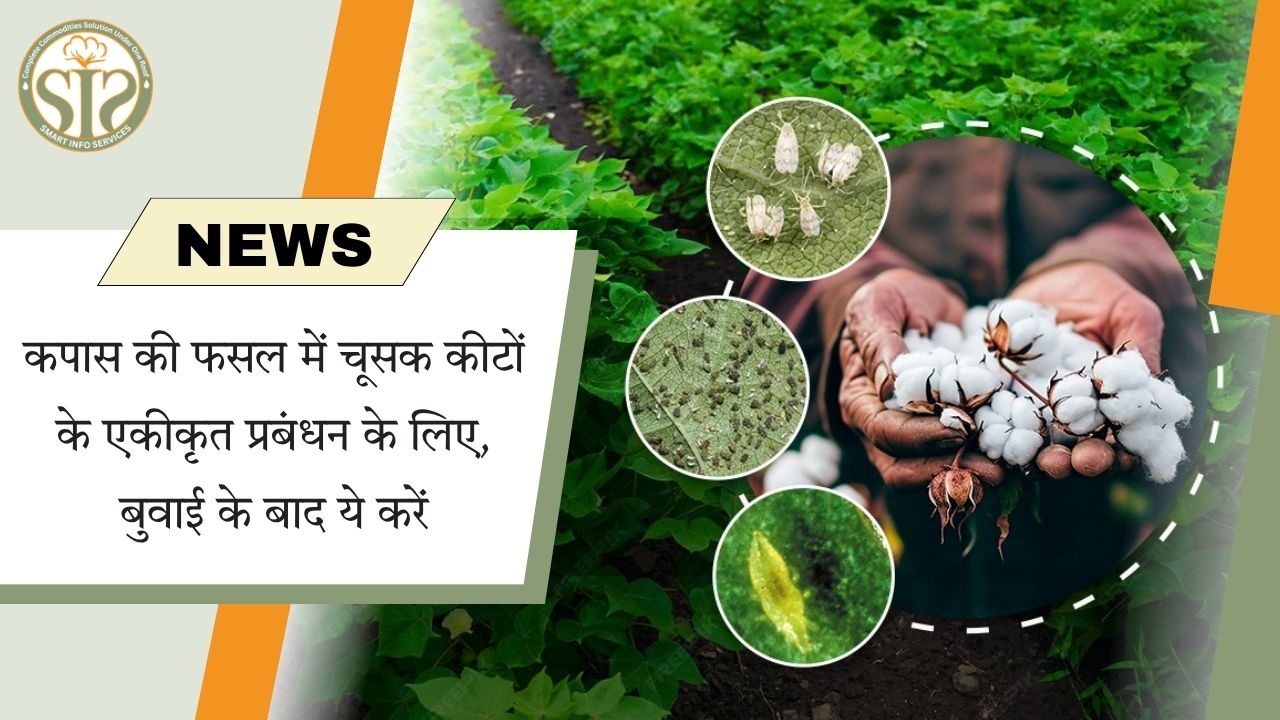
कपास की फसल में चूसक कीटों के एकीकृत प्रबंधन के लिए, बुवाई के बाद ये करेंगुजरात में व्यापक वर्षा के बाद, अधिकांश किसानों ने उत्साहपूर्वक खरीफ फसलों की बुवाई की है। बुवाई के बाद उगी फसलों को रोगों और कीटों से सुरक्षित रखने के लिए, किसानों द्वारा फसल रखरखाव के विभिन्न प्रयास किए जा रहे हैं। राज्य सरकार भी रोगों और कीटों से फसल को होने वाले नुकसान को रोकने के लिए हमेशा किसानों के साथ रही है। इसी क्रम को जारी रखते हुए, कृषि निदेशक कार्यालय-गांधीनगर ने कपास की बुवाई के बाद चूसक कीटों के एकीकृत प्रबंधन के लिए महत्वपूर्ण कदम सुझाते हुए दिशानिर्देश जारी किए हैं।कपास की बुवाई के बाद चूसक कीटों के प्रबंधन के लिए, ये करें:* धान के खेत में खरपतवारों, विशेष रूप से गादर, कंकसी, जंगली भिंडी, कांग्रेस घास और जंगली जसूद जैसे पौधों और घासों की निराई और गुड़ाई करें।* मीलीबग और लीफहॉपर के जैविक नियंत्रण के लिए, शिकारी हरे पतंगे (क्राइसोपा) के 2 से 3 दिन पुराने कैटरपिलर को 10,000 प्रति हेक्टेयर की दर से 15 दिनों के अंतराल पर दो बार छोड़ें।* नीम के बीजों का 5% घोल या अजाडिरेक्टिन जैसे गैर-रासायनिक एजेंट का 1500, 3000 या 10,000 पीपीएम क्रमशः 5 लीटर, 2.5 लीटर और 750 मिलीलीटर प्रति हेक्टेयर की दर से प्रयोग करें।* मीलीबग और सफेद मक्खियों का सर्वेक्षण और नियंत्रण करने के लिए पीले चिपचिपे जाल का प्रयोग करें।* लाल चूषक कीटों और लाल माइट के नियंत्रण के लिए, आधे खुले या पूरी तरह से खुले लार्वा को मिट्टी के तेल के पानी में इकट्ठा करके नष्ट कर दें या पौधे को हिलाएँ और लार्वा को गिराने के लिए दोनों सिरों पर रस्सी पकड़कर एक गोलाकार गति में तेज़ी से चलें।* प्राकृतिक कृषि में चूषक कीटों के नियंत्रण के लिए, प्रति एकड़ 200 लीटर निमास्त्र (बिना पानी मिलाए) का छिड़काव करें। ब्रह्मास्त्र, दशपर्णी अर्क जैसे गैर-रासायनिक कीटनाशकों को 6 से 8 लीटर की मात्रा में 200 लीटर पानी में मिलाकर प्रति एकड़ छिड़काव करना चाहिए।* चूषक कीटों के जैविक नियंत्रण के लिए, फसल की शुरुआत में, जब वातावरण में नमी हो, वर्टिसिलियम लैसिनी या बूवेरिया बेसिया जैसे सूक्ष्मजीवी नियंत्रकों का 50 ग्राम 10 लीटर पानी में मिलाकर छिड़काव करें।* सफेद मक्खी के प्रकोप के नियंत्रण के लिए, जैसे ही इसका प्रकोप दिखाई दे, 10 लीटर पानी में 50 मिलीलीटर एजाडिरेक्टिन 1500 पीपीएम का छिड़काव करें।* टी मच्छर द्वारा पहुँचाए गए नुकसान को तोड़कर नष्ट कर दें और ध्यान रखें कि खेत के अंदर कोई छाया न हो। कीट का पता चलने पर, 10 लीटर पानी में 50 मिलीलीटर एजाडिरेक्टिन 1500 पीपीएम या 40 ग्राम बेवेरिया बेसियाना पाउडर का छिड़काव करें।* यदि कपास की फसल में स्थानिक कीटों का प्रकोप अधिक है, तो अपने क्षेत्र से संबंधित कृषि विश्वविद्यालय द्वारा अनुशंसित रासायनिक कीटनाशकों का उपयोग आवश्यकता और अनुशंसा के अनुसार करें।* कीटनाशकों का उपयोग करते समय, एकीकृत कीट प्रबंधन के अंतर्गत कीटनाशक पर दिए गए लेबल के अनुसार अनुशंसित खुराक और रोग/कीट/फसल का पालन करें।और पढ़ें :- कपास से मोहभंग: पंजाब में उत्पादन गिरा, विविधीकरण को झटका
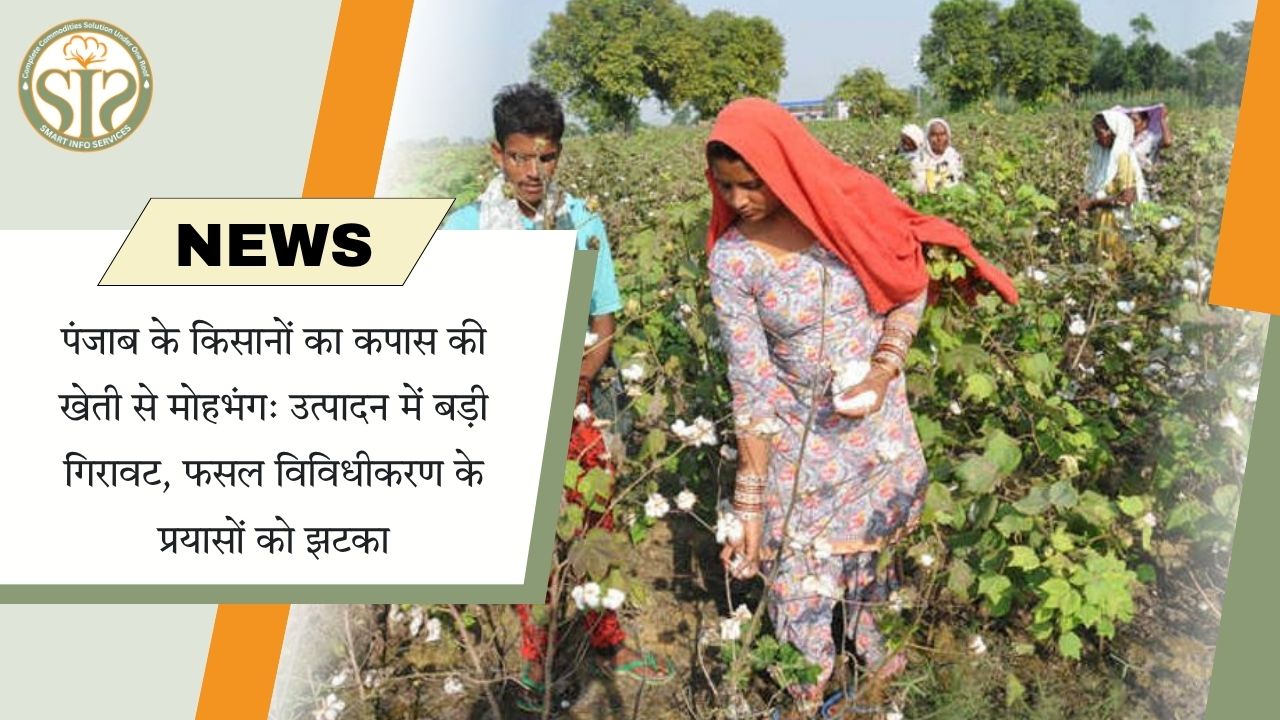
पंजाब के किसानों का कपास की खेती से मोहभंग: उत्पादन में बड़ी गिरावट, फसल विविधीकरण के प्रयासों को झटकामालवा क्षेत्र कपास उत्पादन के लिए जाना जाता है, लेकिन अब यहां का किसान धान और गेहूं की फसलों का रुख कर रहे हैं। न्यूनतम समर्थन मूल्य (एमएसपी) पर अनिश्चितता व गुलाबी सुंडी व सफेद मक्खी का प्रकोप किसानों के कपास की खेती छोड़ने का प्रमुख कारण माना जा रहा है।पंजाब के किसानों का कपास की खेती से मोहभंग होता जा रहा है। इसी का नतीजा है कि इस साल प्रदेश में कपास उत्पादन में 63.48 प्रतिशत की गिरावट दर्ज की गई है। एक साल के अंदर कपास के उत्पादन में बड़ी कमी आने से सरकार के फसल विविधीकरण के प्रयासों को झटका लगा है।पंजाब के किसानों का कपास की खेती से मोहभंग: उत्पादन में बड़ी गिरावट, फसल विविधीकरण के प्रयासों को झटकापंजाब के किसानों का कपास की खेती से मोहभंग होता जा रहा है। इसी का नतीजा है कि इस साल प्रदेश में कपास उत्पादन में 63.48 प्रतिशत की गिरावट दर्ज की गई है। एक साल के अंदर कपास के उत्पादन में बड़ी कमी आने से सरकार के फसल विविधीकरण के प्रयासों को झटका लगा है।न्यूनतम समर्थन मूल्य (एमएसपी) पर अनिश्चितता व गुलाबी सुंडी व सफेद मक्खी का प्रकोप किसानों के कपास की खेती छोड़ने का प्रमुख कारण माना जा रहा है। कॉटन एसोसिएशन ऑफ इंडिया की ताजा रिपोर्ट में कपास का उत्पादन कम होने की बात सामने आई है।मालवा क्षेत्र कपास उत्पादन के लिए जाना जाता है, लेकिन अब यहां का किसान धान और गेहूं की फसलों का रुख कर रहे हैं। प्रदेश के भूजल का स्तर पहले ही गिर रहा है। 118 ब्लॉक रेड जोन में चले गए हैं और इस रिपोर्ट ने सरकार की चिंता अब और भी बढ़ा दी है। रिपोर्ट के अनुसार कपास का उत्पादन 2023-24 में 6.09 लाख से घटकर 2024-25 में 2.52 लाख गांठों तक रह गया है। इसी तरह एरिया भी 2.14 लाख से घटकर 1 लाख हेक्टेयर तक पहुंच गया है।हरियाणा और राजस्थान में स्थिति थोड़ी बेहतर हरियाणा और राजस्थान में भी कपास का उत्पादन पिछले साल के मुकाबले गिरा है लेकिन फिर भी स्थिति वहां थोड़ी बेहतर है। 2024-25 में हरियाणा ने 5.78 लाख हेक्टेयर में कपास की खेती की और 11.96 लाख गांठों का उत्पादन किया, जबकि राजस्थान ने 6.27 लाख हेक्टेयर में खेती की और 17.79 लाख गांठों का उत्पादन किया।कपास की एमएसपी पर खरीद में भी गिरावटपंजाब में कपास की एमएसपी पर खरीद में गिरावट दर्ज की गई है। मार्च में कॉटन कॉरपोरेशन ऑफ इंडिया की एक रिपोर्ट के अनुसार पंजाब में वर्ष 2024-25 में सिर्फ 2 हजार गांठों की एमएसपी पर खरीद हुई, जबकि वर्ष 2019-20 में यह आंकड़ा 3.56 लाख गांठों का था। इसी तरह 2020-21 में 5.36 लाख गांठों की एमएसपी की खरीद हुई। 2021-22 और 2022-23 के दौरान कपास का मार्केट प्राइस एमएसपी से ऊपर था, इसलिए इन दो वर्षों के दौरान एमएसपी पर खरीद नहीं हुई। वर्ष 2023-24 में सिर्फ 38 हजार गांठों की एमएसपी पर खरीद हुई।और पढ़ें :- रुपया 03 पैसे गिरकर 86.29 प्रति डॉलर पर बंद हुआ

सोमवार को भारतीय रुपया 03 पैसे गिरकर 86.29 प्रति डॉलर पर बंद हुआ, जबकि सुबह यह 86.26 पर खुला था।बंद होने पर, सेंसेक्स 442.61 अंक या 0.54 प्रतिशत बढ़कर 82,200.34 पर और निफ्टी 122.30 अंक या 0.49 प्रतिशत बढ़कर 25,090.70 पर बंद हुआ। लगभग 1883 शेयरों में तेजी आई, 2101 शेयरों में गिरावट आई और 168 शेयरों में कोई बदलाव नहीं हुआ।और पढ़ें :- प्राकृतिक रंगीन कपास: धन की कमी और कम पैदावार की चुनौती
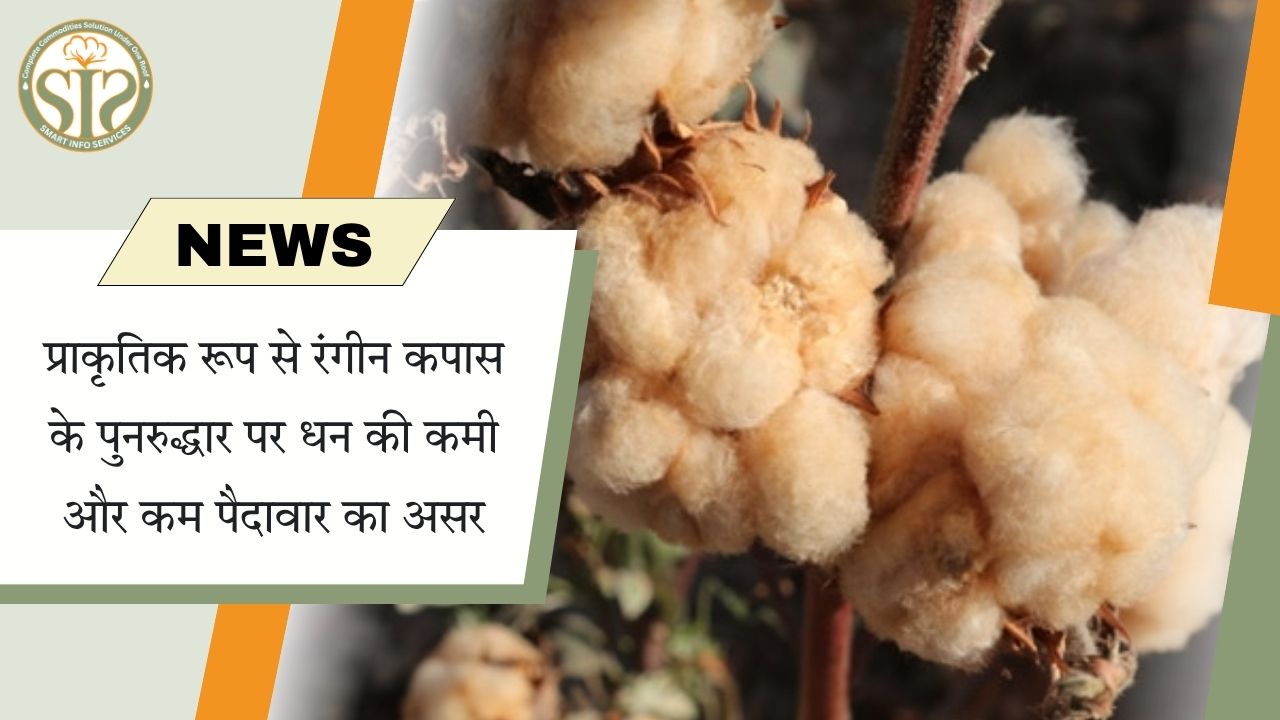
प्राकृतिक रूप से रंगीन कपास के पुनरुद्धार पर धन की कमी और कम पैदावार का असरभारत का प्राकृतिक रूप से रंगीन कपास, जो कभी व्यावसायिक रूप से सफल रहा था, टिकाऊ वस्त्रों की बढ़ती माँग के बावजूद अपनी लोकप्रियता वापस पाने के लिए संघर्ष कर रहा है। उच्च मूल्य निर्धारण और पर्यावरणीय लाभों के बावजूद, कम पैदावार किसानों को इसे अपनाने में बाधा डाल रही है। सरकारी सहायता, उन्नत बीज प्रणाली और बाज़ार संपर्क इसकी निर्यात क्षमता को साकार करने और भारत के वस्त्र स्थायित्व स्वरूप को बदलने के लिए महत्वपूर्ण हैं।भारत का प्राकृतिक रूप से रंगीन कपास, जो 1940 के दशक में व्यावसायिक रूप से फल-फूल रहा था, टिकाऊ वस्त्रों की बढ़ती वैश्विक माँग और दशकों से चल रहे सरकारी अनुसंधान प्रयासों के बावजूद वापसी के लिए संघर्ष कर रहा है।यह विशेष फसल वर्तमान में कर्नाटक, महाराष्ट्र, तमिलनाडु और आंध्र प्रदेश में केवल 200 एकड़ में उगाई जाती है, जिसकी कीमत 240 रुपये प्रति किलोग्राम है, जो 160 रुपये प्रति किलोग्राम के नियमित कपास से 50 प्रतिशत अधिक है। हालाँकि, किसान काफी कम पैदावार के कारण खेती का विस्तार करने में हिचकिचा रहे हैं।आईसीएआर-केंद्रीय कपास प्रौद्योगिकी अनुसंधान संस्थान (सीआईआरसीओटी) के प्रधान वैज्ञानिक अशोक कुमार ने पीटीआई-भाषा को बताया, "हल्के भूरे रंग के कपास की उत्पादकता बहुत कम है, जो 1.5-2 क्विंटल प्रति एकड़ है, जबकि सामान्य कपास की उत्पादकता 6-7 क्विंटल प्रति एकड़ है। यह किसानों को इस फसल के रकबे का विस्तार करने से हतोत्साहित करता है।"इन सीमित एकड़ों से वार्षिक उत्पादन मात्र 330 क्विंटल है, जो इस विशेष फसल के सामने आने वाली चुनौती को रेखांकित करता है, जो संभावित रूप से भारत के वस्त्र स्थायित्व स्वरूप को बदल सकती है।आईसीएआर-सीआईआरसीओटी वर्तमान में हल्के भूरे रंग के कपास पर ध्यान केंद्रित कर रहा है।रंगीन कपास की भारतीय कृषि में प्राचीन जड़ें हैं, जिनकी खेती 2500 ईसा पूर्व से चली आ रही है। स्वतंत्रता से पहले, कोकनाडा 1 और 2 की लाल, खाकी और भूरी किस्में आंध्र प्रदेश के रायलसीमा में व्यावसायिक रूप से उगाई जाती थीं, जिनका निर्यात जापान को किया जाता था। पारंपरिक किस्मों की खेती असम और कर्नाटक के कुमता क्षेत्र में भी की जाती थी।हालाँकि, हरित क्रांति के दौरान उच्च उपज देने वाली सफेद कपास की किस्मों पर ज़ोर देने से रंगीन कपास हाशिये पर चला गया। इस फसल की अंतर्निहित सीमाएँ - कम बीजकोष, कम वज़न, कम रेशे, छोटी रेशे की लंबाई और रंग भिन्नताएँ - इसे बड़े पैमाने पर खेती के लिए आर्थिक रूप से अव्यावहारिक बनाती थीं।भारतीय कृषि संस्थानों ने उन्नत किस्में विकसित की हैं, जिनमें धारवाड़ स्थित कृषि विज्ञान विश्वविद्यालय द्वारा विकसित डीडीसीसी-1, डीडीबी-12, डीएमबी-225 और डीजीसी-78 शामिल हैं। केंद्रीय कपास अनुसंधान संस्थान, नागपुर ने वैदेही-95 विकसित की, जिसे उपलब्ध 4-5 किस्मों में सबसे प्रमुख माना जाता है।2015-19 के बीच, आईसीएआर-सीआईआरसीओटी ने प्रदर्शन बैचों में 17 क्विंटल कपास का प्रसंस्करण किया, जिससे 9,000 मीटर कपड़ा, 2,000 से अधिक जैकेट और 3,000 रूमाल का उत्पादन हुआ, जिससे यह व्यावसायिक रूप से व्यवहार्य साबित हुई।इसके पर्यावरणीय लाभ महत्वपूर्ण हैं। पारंपरिक कपास रंगाई में प्रति मीटर कपड़े के लिए लगभग 150 लीटर पानी की आवश्यकता होती है, जबकि प्राकृतिक रूप से रंगीन कपास में यह आवश्यकता समाप्त हो जाती है, जिससे विषाक्त अपशिष्ट निपटान लागत में 50 प्रतिशत तक की कमी आ सकती है।कुमार ने कहा, "प्राकृतिक रूप से रंगीन कपास में निर्यात की अपार संभावनाएँ हैं। उत्पादन और मूल्यवर्धन बढ़ाने के लिए और अधिक सरकारी सहायता की आवश्यकता है।"उच्च मूल्य निर्धारण और पर्यावरणीय लाभों के बावजूद, विस्तार में बीज प्रणालियों की कमी, कीटों के प्रति संवेदनशीलता और कपास की खेती में आमतौर पर इस्तेमाल होने वाले उच्च कीटनाशकों की आवश्यकता जैसी बाधाएँ हैं।कुमार ने बताया, "उत्पादन कम होने और बाज़ार की कमी के कारण कोई भी किस्म विकसित नहीं कर पा रहा है। यहाँ तक कि कपड़ा मिलें भी कम मात्रा में कपास खरीदने को तैयार नहीं हैं।"पर्यावरण के प्रति जागरूक ब्रांडों, खासकर यूरोप, अमेरिका और जापान में, की बढ़ती माँग के साथ वैश्विक बाज़ार में संभावनाएँ दिखाई दे रही हैं। ऑस्ट्रेलिया और चीन पारंपरिक प्रजनन और आनुवंशिक इंजीनियरिंग का उपयोग करके अनुसंधान में भारी निवेश कर रहे हैं।और पढ़ें :- गुजरात: कपड़ा उद्योग को कपास MSP बढ़ोतरी से खतरे की आशंका

गुजरात: कपड़ा उद्योग ने कपास के न्यूनतम समर्थन मूल्य (MSP) में बढ़ोतरी से होने वाले खतरों की आशंका जताईअहमदाबाद : केंद्र सरकार ने हाल ही में कपास (कच्चे कपास) के न्यूनतम समर्थन मूल्य (MSP) में बढ़ोतरी की है, जिससे सभी श्रेणियों के लिए दरें बढ़ गई हैं - मध्यम स्टेपल 7,460 रुपये से बढ़कर 7,560 रुपये प्रति क्विंटल, मध्यम लंबा स्टेपल 7,710 रुपये से बढ़कर 7,860 रुपये, लंबा स्टेपल 8,010 रुपये से बढ़कर 8,110 रुपये और अतिरिक्त लंबा स्टेपल 8,310 रुपये से बढ़कर 9,310 रुपये हो गया है। हालाँकि इस बढ़ोतरी का उद्देश्य किसानों को समर्थन देना है, लेकिन इस बढ़ोतरी ने गुजरात के कपड़ा उद्योग में चिंता पैदा कर दी है, क्योंकि उन्हें डर है कि कच्चे माल की बढ़ती लागत वैश्विक बाजार में भारत की प्रतिस्पर्धात्मकता को कम कर देगी।उद्योग के नेताओं का तर्क है कि केवल MSP बढ़ाने के बजाय, कपास की उत्पादकता बढ़ाना, उत्पादकों पर दबाव डाले बिना किसानों की आय बढ़ाने का एक अधिक स्थायी तरीका प्रदान करता है। गुजरात स्पिनर्स एसोसिएशन के वरिष्ठ उपाध्यक्ष जयेश पटेल ने कहा, "भारत के पास वैश्विक कपास उत्पादन का 37% हिस्सा है, लेकिन उत्पादन में इसका योगदान केवल 23% है।" उन्होंने आगे कहा, "अगर भारत वैश्विक स्तर पर अग्रणी बनना चाहता है, तो उपज में सुधार पर ध्यान केंद्रित करना ज़रूरी है।"उत्पादक कपास पर आयात शुल्क हटाने की भी मांग कर रहे हैं। पीडीईएक्ससीआईएल के पूर्व अध्यक्ष भरत छाजेड़ ने कहा, "भारतीय कपास अब दुनिया भर में सबसे महंगा है, जिसका सीधा असर हमारी प्रतिस्पर्धात्मकता पर पड़ता है।" उन्होंने आगे कहा, "ऐसे समय में जब वैश्विक ब्रांड भारत को बांग्लादेश के विकल्प के रूप में देख रहे हैं, महंगा कपास हमें कम लाभदायक बनाता है।"कपास व्यापारी अरुण दलाल के अनुसार, संशोधित एमएसपी संरचना किसानों को नमी की मात्रा के आधार पर मूल्य निर्धारण के माध्यम से बेहतर गुणवत्ता वाले कपास की आपूर्ति के लिए प्रोत्साहित करती है। उन्होंने कहा, "इस सीज़न में बुवाई में तेज़ी आई है और ज़्यादा आवक से किसानों को बेहतर मुनाफ़ा मिल सकता है।" हालाँकि, दलाल ने चेतावनी दी कि कपास की लगातार ऊँची कीमतें कताई इकाइयों और सूत निर्माताओं पर और दबाव डाल सकती हैं, जो पहले से ही कमज़ोर माँग और घटते मुनाफ़े से जूझ रहे हैं।उद्योग विशेषज्ञ सरकार से कृषि सहायता और कपड़ा क्षेत्र की सुरक्षा के बीच संतुलन बनाने का आग्रह कर रहे हैं। आयात शुल्क हटाना, उत्पादकता बढ़ाना और रसद लागत कम करना प्रमुख माँगें बनी हुई हैं।और पढ़ें :- रुपया 11 पैसे गिरकर 86.26 प्रति डॉलर पर खुला

डॉलर सूचकांक के फिर से उच्च स्तर पर पहुँचने से रुपया 11 पैसे गिरकर 86.26 पर खुलाडॉलर सूचकांक के उच्च स्तर पर पहुँचने से 21 जुलाई को रुपया 11 पैसे गिरकर खुला। पिछले सत्र में 86.15 पर बंद होने के बाद रुपया डॉलर के मुकाबले 86.26 पर खुला।और पढ़ें :- राज्यवार CCI कपास बिक्री विवरण 2024-25 .

राज्य के अनुसार CCI कपास बिक्री विवरण – 2024-25 सीज़नभारतीय कपास निगम (CCI) ने इस सप्ताह प्रति कैंडी मूल्य में ₹700 की वृद्धि की है। मूल्य संशोधन के बाद भी, CCI ने इस सप्ताह कुल 3,27,900 गांठों की बिक्री की, जिससे 2024-25 सीज़न में अब तक कुल बिक्री लगभग 70,17,100 गांठों तक पहुँच गई है। यह आंकड़ा अब तक की कुल खरीदी गई कपास का लगभग 70.17% है।राज्यवार बिक्री आंकड़ों से पता चलता है कि महाराष्ट्र, तेलंगाना और गुजरात से बिक्री में प्रमुख भागीदारी रही है, जो अब तक की कुल बिक्री का 83.69% से अधिक हिस्सा रखते हैं।यह आंकड़े कपास बाजार में स्थिरता लाने और प्रमुख कपास उत्पादक राज्यों में नियमित आपूर्ति सुनिश्चित करने के लिए CCI के सक्रिय प्रयासों को दर्शाते हैं।और पढ़ें :- पंजाब में बारिश से राहत, सुंडी का खतरा बरकरार
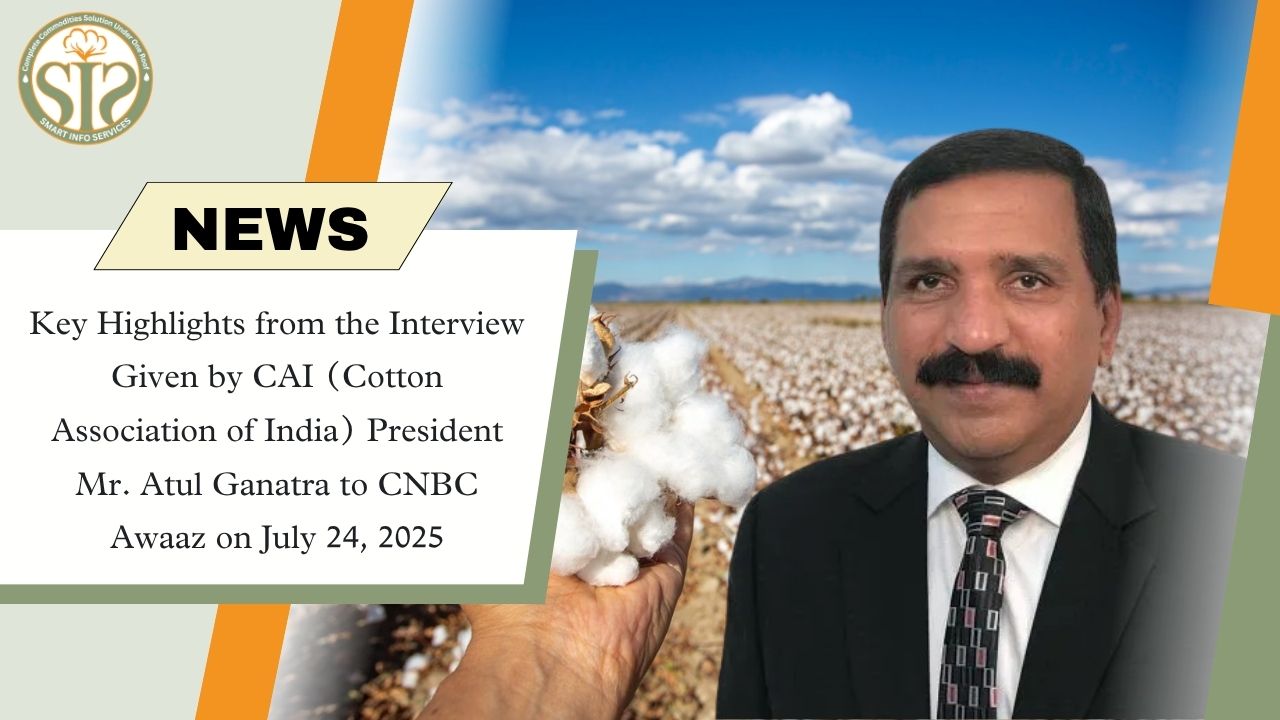
Key Highlights from the Interview Given by CAI (Cotton Association of India) President Mr. Atul Ganatra to CNBC Awaaz on July 24, 20251. Rising Demand for Alternative Fibers:Mr. Ganatra highlighted that there has been a significant increase in demand for alternative fibers like viscose and polyester over the past four years. In 2021, their daily consumption was around 1,800 tons, which has now risen to 2,600–2,700 tons per day. This upward trend is expected to accelerate further in the coming years.2. Fiber Price Comparison & Yarn Realization Rates:Current Prices:Cotton: ₹170 per kgViscose: ₹155 per kgPolyester: ₹102 per kgYarn Realization (percentage of fiber converted to yarn):Cotton: 86–87%Viscose/Polyester: Approx. 98%3. National vs Global Fiber Usage Ratio:India still uses 70% cotton and 30% synthetic fibers, whereas globally, the trend is reversed—70% manmade fibers and 30% cotton yarn.4. Massive Surge in Cotton Imports:There has been a dramatic rise in cotton imports this year. While only 1.5 million bales were imported last year, this year the number is expected to reach 4 million bales—an increase of over 250%, despite an 11% import duty. This is a concerning development for the Indian economy.5. Competitiveness of Imported Cotton:Currently, November shipment deals from Brazil and African countries are being finalized at ₹50,000–₹51,500 per candy, while domestic cotton prices stand at ₹56,000–₹57,000 per candy, which is 8–10% higher.Imported cotton is considered more competitive due to higher quality, lower contamination, and better yarn recovery compared to Indian cotton.6. Minimum Support Price & Sowing Situation:The MSP for the upcoming season is ₹8,100 per quintal, at which the CCI (Cotton Corporation of India) will procure cotton from farmers. This has boosted farmer confidence.Initially, there were concerns of a 10% decline in sowing area, but recent data shows sowing has already reached 10.1 million hectares, matching last year’s levels. If this trend continues, sowing could see a 3–4% increase this year.Thanks to a timely monsoon, new crop arrivals may begin in North and South India by September 15.7. Impact of Recycled Cotton:Recycled cotton—priced at around 25% of the cost of virgin cotton—is being used in higher volumes, which has also contributed to the reduction in overall cotton demand in the country.read more :- Trump: 15% to 50% tariffs will be imposed on countries

Trump Says Countries Will Face Tariffs Ranging From 15% to 50%US President Donald Trump suggested that he would not go below 15% as he sets so-called reciprocal tariff rates ahead of an Aug. 1 deadline, an indication that the floor for the increased levies was rising.“We’ll have a straight, simple tariff of anywhere between 15% and 50%,” Trump said Wednesday at an AI summit in Washington. “A couple of — we have 50 because we haven’t been getting along with those countries too well.”Trump’s comment declaring that the tariffs would begin at 15% represented the latest twist in his effort to impose duties on nearly every US trading partner, and the latest indication that Trump was looking to more aggressively impose the levies on exports from countries outside the small group that so far has been able to broker trade frameworks with Washington.Trump earlier this month said that more than 150 countries would receive a letter including a tariff rate of “probably 10 or 15%, we haven’t decided yet.” Commerce Secretary Howard Lutnick told CBS News on Sunday that small countries including “the Latin American countries, the Caribbean countries, many countries in Africa” would have a baseline tariff of 10%. And at the first announcement of the tariffs in April, Trump unveiled a universal tariff of 10% on nearly every country.While Trump and his advisers initially expressed hopes of securing multiple deals, the president has been touting the tariff letters themselves as “deals” and suggesting that he is uninterested in back-and-forth negotiations. Still, he has left the door open for countries to make agreements that could lower those rates.On Tuesday, Trump announced he was reducing a threatened 25% tariff on Japan to 15% in exchange for the country removing restrictions on some US products as well as offering to back a $550 billion investment fund.The White House has also discussed a similar fund with South Korea, a nation also focused on reaching a 15% rate including on autos, according to people familiar with the matter. And the Philippines is aiming to bring down its own tariff rate to the 15% level from the current 19% rate, according to the country’s Ambassador to the US Jose Manuel Romualdez.Meantime, officials in Vietnam are weighing the likely cost of their deal. Hanoi estimates its exports to the US could decline by as much as a third if higher tariffs announced by Trump take effect, an internal government assessment shows.Read more: Vietnam Sees Trump Tariffs Cutting Up to a Third of US ExportsOther nations, including India and members of the European Union, are still pushing for an agreements before the heightened tariffs go into effect.On Wednesday, Trump said he would “have a very, very simple tariff for some of the countries” because there were so many nations that “you can’t negotiate deals with everyone.” He said talks with the European Union were “serious.”“If they agree to open up the union to American businesses, then we will let them pay a lower tariff,” Trump said.read more :- India-UK trade agreement: Exemption on Basmati and fruit export, no exemption on dairy and edible oil import
India-UK FTA: Basmati, fruits, cotton exports exempted from tariff; no relaxation on import of dairy, apples and edible oils.Farmers and food-processing units are set to benefit from the India-UK free trade agreement (FTA) as basmati rice, cotton, groundnut, fruits, vegetables, onion, pickles, spices, tea and coffee, etc, would be exempt from duty when exported to the UK.Also, the FTA allows no tariff concessions on import of dairy products, apples, oats and edible oils. It means apple-growers in Himachal Pradesh and Jammu and Kashmir stand protected. Farmers and politicians from both states had been vocal in seeking ‘no exemption’ on apple imports.Agriculture and food processing will have a 14.8 per cent and 10.6 per cent share, respectively, of the agreed products under the FTA, that is scheduled to be signed in London on Thursday.A duty-free access, streamlined trade protocol, and protection for India's agriculture is part of the FTA and it sets the stage for growth in agri exports and value-added products. It unlocks premium UK markets for Indian farm and food-processing units as tariffs would match, or be lower in some cases, with benefits enjoyed by exporters from Germany, the Netherlands, and other EU nations.Agriculture and food processingOver 95% of ‘tariff lines’ agreed upon in the FTA will attract zero duty on Indian agricultural and processed food. India has calculated that this duty-free access is expected to increase agri exports by over 20% in the next three years, contributing to the goal of $100 billion agri exports by 2030 and putting more money in the hands of rural households.In the food-processing sector, India exports $14.07 billion worth of goods globally, while the UK imports $50.68 billion of goods. So far, Indian products make up just $309.5 million of UK imports.In agriculture, India exports $36.63 billion globally, while the UK imports $37.52 billion, but the UK’s imports from India are just $811 million.India can outcompete major global players in crucial segments. For example, in processed food preparations, India would have to gain ground over the US, China and Thailand. In bakery items, Indian produce would be more competitive than those from the US, China, Thailand and Vietnam. In case of preserved vegetables, fruits, nuts, fresh vegetables and Indian produce would get a lower tariff than that applied to Pakistan, Turkiye, the US, Brazil, Thailand and China.read more :- Rupee fell 07 paise to close at 86.40 per dollar

The Indian rupee on thursday lower 07 paise to close at 86.40 per dollar, while it opened at 86.33 in the morning.At close, the Sensex was down 542.47 points or 0.66 percent at 82,184.17, and the Nifty was down 157.80 points or 0.63 percent at 25,062.10. About 1564 shares advanced, 2324 shares declined, and 155 shares unchanged.read more :- Cheap fibres put pressure on global cotton

Cheaper alternative fibres put pressure on global cotton growthIndustry experts and research analysts say global cotton growth is under pressure due to the growing trend towards sustainability and environmentally conscious production, as consumers increasingly prefer responsible materials and manufacturing processes."Although natural fibres such as cotton have traditionally been considered sustainable and clean, overall cotton use is gradually declining due to concerns over excessive consumption, water use and climate sensitivity, driven by declining demand for fast-fashion and a shift towards alternative materials," research agency BMI, a unit of Fitch Solutions, said in its study titled "The Future of Cotton in Asia: Slowing Demand, Innovation and Resilience"."The textile sector is looking at alternative fibres such as bamboo, hemp and recycled cotton. These are cheaper than cotton," says Anand Popat, a Rajkot-based trader of cotton, yarn and cotton waste.Blended fibres are gaining popularity"Cotton blended fibres are gaining popularity. Today, pure cotton accounts for less than 30 per cent of the total fibre usage in the textile industry. Manufacturers have many options," said Ramanuj Das Boob, a Raichur-based sourcing agent and vice-president of the All India Cotton Brokers Association.Prabhu Dhamodharan, convener of the Indian Textile Entrepreneurs Federation (ITF), said alternative fibres have made some progress but cotton still remains the preferred choice among premium consumers. "This segment of consumers exhibits high spending power, leading to a sustained demand for cotton-based fashion products," he said.From India's perspective, for the first time this year, its cotton-based apparel exports accounted for 12 per cent of the US market. "With India's established strength in cotton apparels, this momentum is likely to continue," Dhamodharan said.Pointing to various initiatives launched by the EU and the UK to promote eco-friendly products, BMI said the demand for cotton is likely to become volatile due to the growing trend of synthetic fibres and the progress in affordable, high-quality and bio-based alternatives.Recycled cotton"As consumer preferences shift towards more sustainable alternatives, we expect a gradual decline in demand for the cotton crop, impacting prices and hence reducing production in the long term," the research agency said."The low cost of alternatives is impacting cotton. While the lowest price of cotton yarn is ₹220 per kg, blended yarn is priced at around ₹150," Das Bub said."The prices of recycled cotton are one-fourth of the prices of pure cotton products. Even large retailers are considering reducing costs by opting for blended cotton instead of pure cotton," Popat said.BMI said cotton production has faced several challenges in recent years, particularly the development of resistance to Bt cotton by pink bollworm in India, due to incompatibility with local agronomic and climatic conditions. "This underlines the need for cotton producers to continue innovating and adapting to emerging challenges," it said.Social campaignsSocial campaigns against alleged forced labour in China's Xinjiang cotton industry have led to global boycotts by major fashion brands and consumers. "Domestic demand has also weakened, with Chinese garment manufacturers increasingly turning to imported cotton to avoid the adverse effects of import bans and boycotts," the research agency said.Popat said various agencies are now trying to promote cotton. "It all started when cotton prices touched ₹1 lakh per candy (356 kg). Manufacturers tried to reduce costs and alternatives came up," he said."Nothing can beat the feel of pure cotton. This is a cyclical trend. It can change in a few years," Das Boob said.Dhamodaran said inventory levels in the global fashion sector have normalised, with brands and retailers increasingly leveraging AI and digital tools for demand-based, dynamic planning.Almost five-year low"Production is now closely aligned with consumption patterns, especially in developed markets, and EU import and consumption trends remain very stable. We expect even better momentum in the EU going forward," he said.BMI said India and China have initiated measures to address current problems in the cotton sector. These are likely to bear fruits over time.According to the US Department of Agriculture, global cotton production is estimated to be 25.78 million tonnes (MT) in 2025-26, compared to 26.10 million tonnes in 2024-25. Domestic consumption in producing countries is expected to rise to 25.72 million tonnes (25.40 million tonnes in 2024-25), while exports are likely to rise to 9.73 million tonnes (9.36 million tonnes). This will leave ending stocks at 16.83 million tonnes (16.71 million tonnes), a clear sign of a slowdown.Cotton futures on the New York-based Intercontinental Exchange are trading near a five-year low of 66 cents per pound. In India, benchmark Shankar-6 cotton is trading at ₹57,500 per candy in Rajkot, Gujarat.read more :- Farmers moving towards maize: Decline in soybean and cotton cultivation
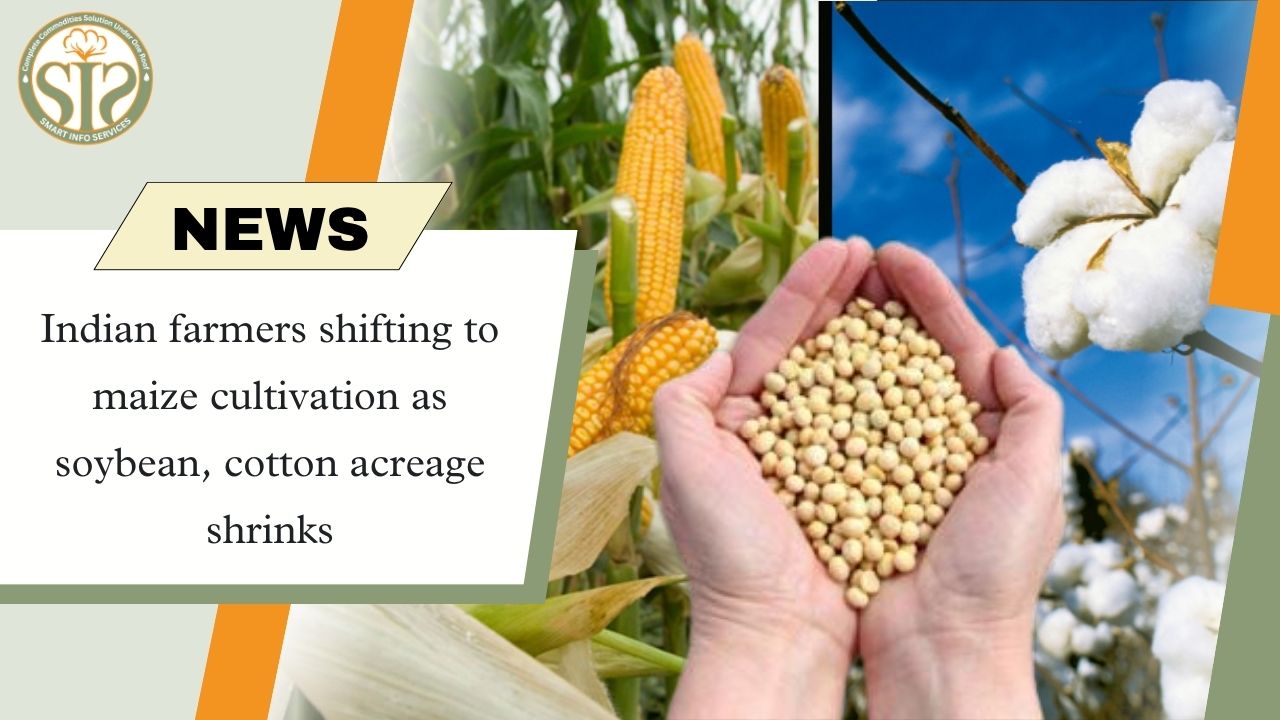
Indian farmers shifting to maize cultivation as soybean, cotton acreage shrinksFarmers across the country have shifted significantly towards maize cultivation while areas dedicated to soybean and cotton farming are declining amid lower-than-expected realisations in the markets.As the country enters the last leg of kharif sowing, India has reported 708.31 lakh hectares of sowing as of July 21, as compared to 680.38 lakh hectares of last year, of which maize recorded the highest jump — from last year’s 61.73 lakh hectares to 71.21 lakh hectares this year.However, oilseeds reported a 6 per cent dip, which is 156.76 lakh hectares as against last year’s 162.80 lakh hectares. Soybean, the main kharif oilseed, was sown over 111.67 lakh hectares this year compared to last year’s 118.96 lakh hectares. Cotton, the major lint crop, has also seen a decrease in the acreage from 102.05 of 202-25 to the present 98.55 lakh hectares of this year.The Solvent and Extractors Association (SEA) – the apex body of edible oil solvent and extractors companies – has expressed concerns about the potential dip in soybean, India’s main summer-sown oilseed crop, acreage nationally.“Soybean acreage has dipped by over 6 per cent compared to the previous year, possibly due to shifting crop preferences and regional weather variability. This trend merits close observation, as soybean remains a crucial pillar in India’s oilseed economy and a major source of oil and meal,” Sanjeeve Asthana, President, SEA, said.Vilas Uphade, a farmer from Latur district of Maharashtra, noted that soybean is currently trading at Rs 4,000 per quintal in the wholesale market.“This is against the government-declared Minimum Support Price (MSP) of Rs 5,328, which is even before the new crop has entered the market. We are expecting a bumper harvest this year, so I worry about what the price conditions will be post the harvest,” he said. With the kharif sowing entering its last phase, prices might see further slide.The demand for maize has increased due to its use as a feedstock for ethanol production.read more :- INR Opens Stronger by 8 Paise at 86.33

Rupee opens 8 paise up at 86.33 as dollar easesThe rupee opened 8 paise up on July 24 as the dollar index eased. The currency opened at 86.33 against the dollar after closing the previous day at 86.41.read more :- Rupee Ends Flat at 86.41/USD

The Indian rupee closed stable at 86.41 per dollar on Wednesday, while it had opened at 86.41 in the morning.The Sensex was up 539.83 points or 0.66 percent at 82,726.64, and the Nifty was up 159 points or 0.63 percent at 25,219.90. About 1882 shares advanced, 1989 shares declined, and 161 shares unchanged.read more :- Cotton textile exports cross $35.6 billion: Giriraj Singh
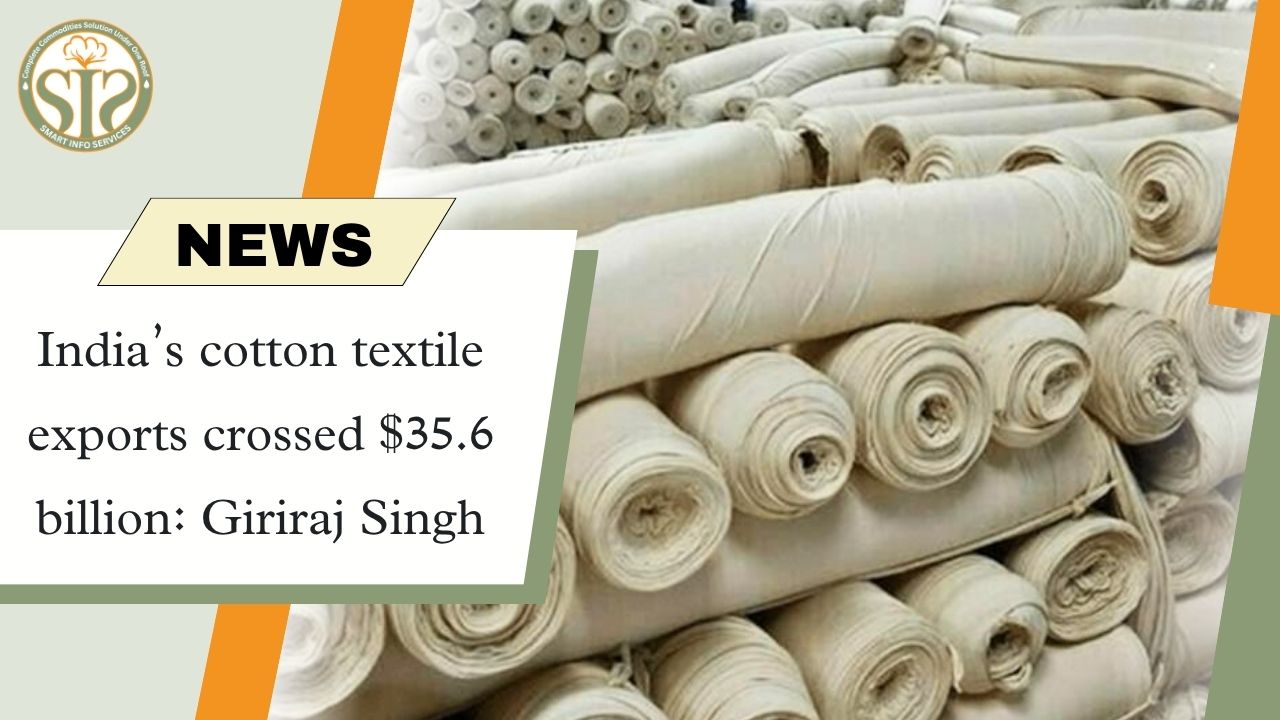
India’s cotton textile exports crossed $35.6 billion: Giriraj SinghIndia’s total exports of cotton textiles, including cotton yarn, cotton fabrics, made-ups, other textile yarn, fabric made-ups and raw cotton, crossed $35.642 billion during the last three years, Union Minister of Textiles Giriraj Singh informed Parliament on Tuesday.The minister also stated that to enhance cotton productivity and quality, promote innovation and strengthen the entire textile value chain in line with the Vision 2030, a five-year ‘Mission for Cotton Productivity’ was announced by the Finance Minister in the Budget for 2025-26.The Department of Agricultural Research and Education (DARE) is the nodal department for implementing the Mission, with the Ministry of Textiles as a partner. The Mission aims to boost cotton production through strategic interventions, including research and extension activities across all cotton-growing states.The Mission also proposes to focus on developing climate-smart, pest-resistant, and high-yielding cotton varieties, including Extra Long Staple (ELS) cotton, using advanced breeding and biotechnology tools.A special project on ‘Targeting technologies to agro-ecological zones-large scale demonstration of best practices to enhance cotton productivity’ has been implemented by ICAR- Central Institute for Cotton Research (CICR), Nagpur, in eight major cotton-growing states. The total outlay of the Special Project is Rs 6,032.35 lakhs, the minister further stated.The ‘Mission for Cotton Productivity’ aims to equip farmers with cutting-edge scientific and technological support, enabling higher productivity, superior fibre quality, and improved resilience against climatic and pest-related challenges. Aligned with the Government’s integrated 5F vision, Farm to Fibre to Factory to Fashion to Foreign, the Mission is expected to boost cotton farmers’ incomes, ensure a steady supply of high-quality cotton, and revitalise India’s traditional textile sector, thereby enhancing its global competitiveness, he added.As part of the steps to boost textile exports, the Ministry has also supported Export Promotion Councils in organizing a global mega textile event Bharat TEX 2025 to showcase the strength of the Indian textiles value chain, highlighting the latest progress innovations in textile & fashion Industry and positioning India as the most preferred destination for sourcing and investment in textile sector, the minister said in reply to another question in the Lok Sabha.These collaborations are governed through MoUs that support student and faculty exchanges, joint research initiatives, dual-degree and twinning programs, collaborative curriculum development, and global academic immersion, the minister said.“These international engagements enhance India’s position in the global textile and fashion sector by fostering academic excellence, promoting innovation, and enabling knowledge transfer. They expose students and faculty to global design sensibilities, technological advancements, and emerging trends. By aligning curricula with international standards, these collaborations equip Indian graduates with the skills and insights needed to compete effectively in global markets and strengthen India’s reputation as a hub for creative and technical expertise in textiles and fashion,” the minister explained.read more :- Cotton Exporting Countries in 2025: India's Ranking
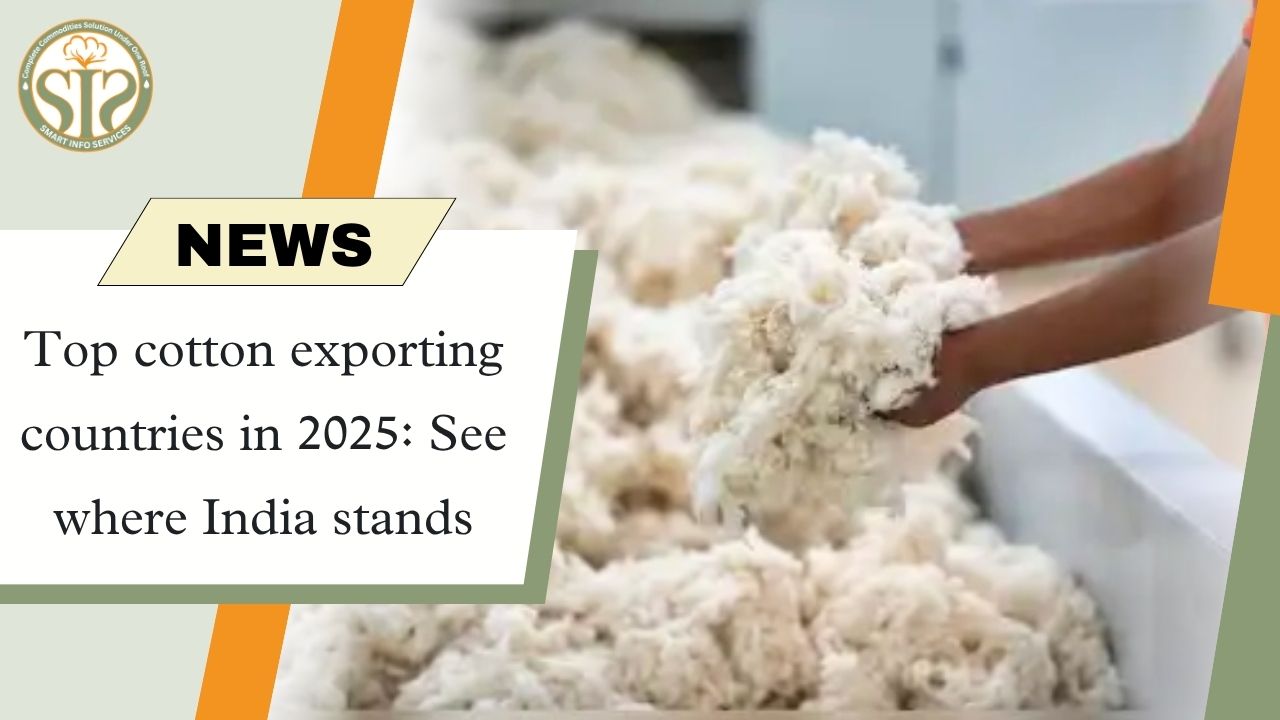
Top cotton exporting countries in 2025: See where India standsCotton is one of the most essential natural fibers used worldwide for clothing, home furnishings, and industrial products. As demand for cotton continues to rise, a few countries dominate the global cotton export market. These top exporters not only meet domestic needs but also supply massive quantities to international buyers.With global cotton production projected to hit 117.8 million bales (each weighing roughly 480 pounds) in 2025, here’s a look at the top 5 cotton exporting countries as per the International Cotton Advisory Committee (ICAC), USDA, 2023–2024 data, and what makes each of them key players in the industry.1. United States – The Global Cotton Powerhouse | Annual Cotton Exports: ~3.1 million tonnes | The United States leads the world in cotton exports thanks to its advanced agricultural practices, large-scale farms, and efficient supply chains. Most US cotton comes from Texas, Mississippi, and other southern states. Known for its high quality, American cotton is a top choice for global textile manufacturers.2. Brazil – Rapid Growth and Strong Export Network | Annual Cotton Exports: ~2.3 million tonnes | Brazil has emerged as a major cotton exporter over the past decade, benefiting from favourable weather and vast agricultural land. Brazilian cotton is primarily exported to Asia and Europe. Investment in modern farming techniques has boosted both output and quality.3. Australia – Premium Quality with Sustainable Practices | Annual Cotton Exports: ~1.7 million tonnes | Australia may produce less cotton than the US or Brazil, but it excels in quality. Known for its long, clean fibers, Australian cotton is favoured in premium textile markets. The country also leads in sustainable farming practices and water-efficient cultivation methods.4. India – A Giant Producer with Limited Exports | Annual Cotton Exports: ~0.8 million tonnes | India is one of the largest producers of cotton globally, but much of it is used domestically. Exports depend on surplus availability. Indian cotton is popular in nearby markets like Bangladesh and Vietnam. The local textile industry consumes a significant portion of the harvest.5. Uzbekistan – Reforming and Rising in Cotton Trade | Annual Cotton Exports: ~0.5 million tonnes | Cotton remains vital to Uzbekistan’s economy. In recent years, the country has focused on modernising its cotton industry and improving labour practices. Efforts to eliminate forced labor and promote ethical farming have improved its global image as a cotton exporter.read more :- Rupee open Falls 05 Paise to 86.41/USD

Rupee opens 5 paise down at 86.41 against the dollarThe rupee opened 5 paise down on July 23 on a marginal rise in dollar index. The currency opened at 86.41 against the dollar after closing the previous day at 86.36.read more :- Indian Rupee lower 11 Paisa, Ends at 86.36 per Dollar

The Indian rupee on tuesday lower 11 paise to close at 86.36 per dollar, while it opened at 86.25 in the morning.At close, the Sensex was down 13.53 points or 0.02 percent at 82,186.81, and the Nifty was down 29.80 points or 0.12 percent at 25,060.90. About 1724 shares advanced, 2126 shares declined, and 172 shares unchanged.read more :- Land submerged in Sirsa, cotton crop destroyed
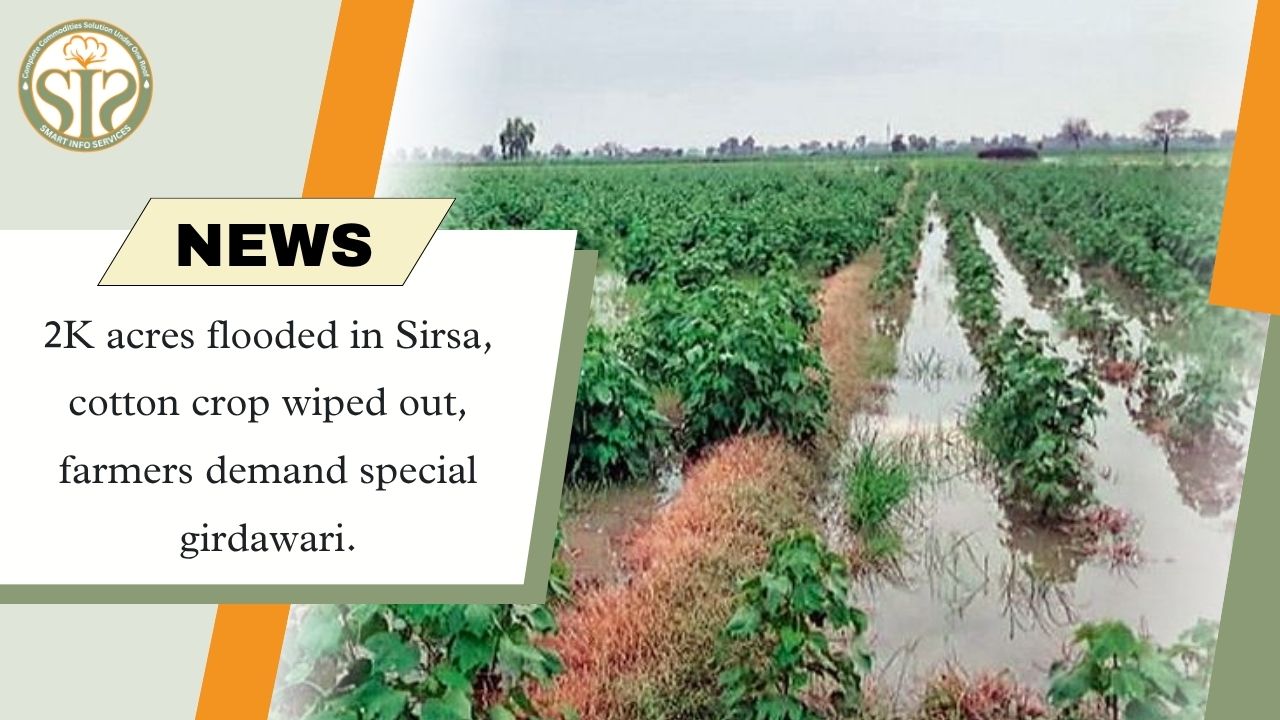
2K acres flooded in Sirsa, cotton crop wiped out, farmers demand special girdawari.Recent heavy rains in Nathusari Chopta block of Sirsa district have left a trail of devastation across over 2,000 acres of farmland in seven villages. Cotton, guar and groundnut crops have suffered extensive damage due to severe waterlogging, with cotton being the worst hit.In many affected areas, farmers are now being forced to plough under their damaged cotton fields and switch to paddy cultivation, a crop more tolerant to wet conditions — but one that adds to their financial burden.Agricultural land has been inundated in Rupana Ganja (400 acres), Rupana Bishnoi (300 acres), Shakkar Mandoori (500 acres), Shahpuria (150 acres), Naharna (150 acres), Tarkawali (100 acres) and Chaharwala (50 acres). The worst-hit villages — Shakkar Mandoori, Rupana Ganja, and Rupana Bishnoi — account for nearly 1,200 acres of lost cotton crop.I had to plough my entire 7-acre cotton crop,” said Mukesh Kumar, a farmer from Shakkar Mandoori. “Even after pumping out water with motors, the stagnant water rotted the plants.”Other farmers including Anil Kasnia, Baljeet and Virender echoed similar losses.Many of them had taken land on lease and had already invested around Rs 10,000 per acre on cotton. Now, they must spend an additional Rs 6,000Rs 8,000 per acre to prepare and sow paddy.“It’s a double loss,” said Raj Kasnia, another affected farmer. “After rains, saline groundwater rises and damages the soil too. What can a farmer do in such a situation?”Adding to the concern is the overflowing sem nala (drainage canal), which is carrying excess water from the flooded fields. Farmers fear that if the embankment breaches, surrounding villages may be submerged, further damaging standing crops. They have blamed local officials for not cleaning the canal before the monsoon, despite repeated reminders.Farmers have urged the government to conduct a special girdawari (crop loss survey) and announce compensation for the losses.District Agriculture Deputy Director Dr Sukhdev Kamboj confirmed that most of the affected fields fall in salinity-prone zones.“We are advising farmers to switch to short-duration and low-water paddy varieties like Pusa 1509, 1692, 1847 (basmati) and Punjab 126 (parmal),” Dr Kamboj said. “These varieties require 33% less water and mature in about 100 days.”Dr Kamboj also noted that with unpredictable weather patterns, cotton is becoming an increasingly risky crop.This year, cotton was sown on 1.47 lakh acres in Sirsa district, while paddy covered over 1.5 lakh acres.read more :- Haryana : Central team inspects pink bollworm-hit cotton fields
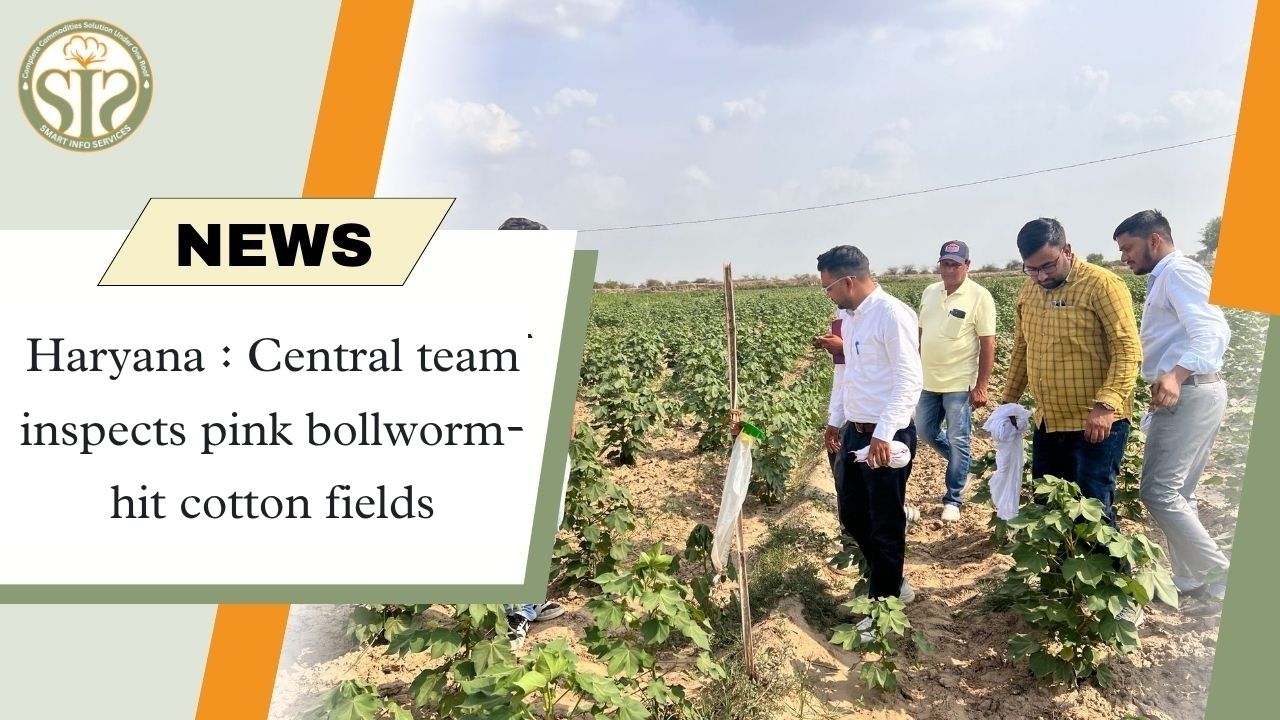
Central Team Inspects Cotton Fields in Hisar Amid Pest and Rain ConcernsHisar: A team from the Union Agriculture Ministry visited Hisar district to inspect cotton crops following complaints from farmers about pest infestations, particularly the pink bollworm.The team carried out field inspections in Mangali Jhara village, where traces of pink bollworm were found in the standing crop, according to officials from the Agriculture and Farmers Welfare Department. However, authorities clarified that the infestation is currently below the economic threshold level and advised farmers to remain vigilant without panicking.The inspection team included Assistant Plant Protection Officers Laxmikant, KP Sharma, and Suraj Beniwal from the Regional Integrated Pest Management Centre (RIPMC), Faridabad, along with Dr. Arun Kumar Yadav, Plant Protection Officer, and Agricultural Development Officer Ravinder Antil.Dr. Arun Kumar Yadav stated that information about the pest incidence was received from local farmers and was promptly reported to higher authorities in Chandigarh and at the Centre. A farmer, Narsi Ram Khichar, said he had noticed the pest earlier and informed the agriculture department.Cotton acreage in Hisar has been declining over the past three years, mainly due to recurring pest attacks such as pink bollworm. This season, cotton has been sown on around 2.1 lakh acres, down from 2.5 lakh acres last year, indicating reduced farmer interest following repeated losses.Officials advised that pesticide spraying should only be carried out if four or more affected bolls are observed per plant. Otherwise, farmers should focus on regular monitoring. The team also noted that leftover cotton plant residues in fields may have contributed to the spread of the pest.Meanwhile, some areas in the district, especially in the Adampur cotton belt, are facing crop damage due to excessive rainfall. Villages such as Sishwal, Adampur, Ladwi, Mahalsara, and Kohli have reported significant losses, with standing water increasing the risk of para wilt disease.Adampur MLA Chander Prakash visited the affected villages to assess the situation and directed irrigation officials to take immediate steps to drain excess water from fields. He also urged the government to conduct a proper survey of the damage and provide prompt financial assistance to the affected farmers.Read More:- INR Opens Stronger by 04 Paise at 85.25

Rupee opens marginally 04 paise higher at 86.25 against dollar Indian rupee opened with marginal gains at 86.25 per dollar on Tuesday versus Monday's close of 86.29.read more :- Sucker Pest Management in Cotton: Post Sowing Steps
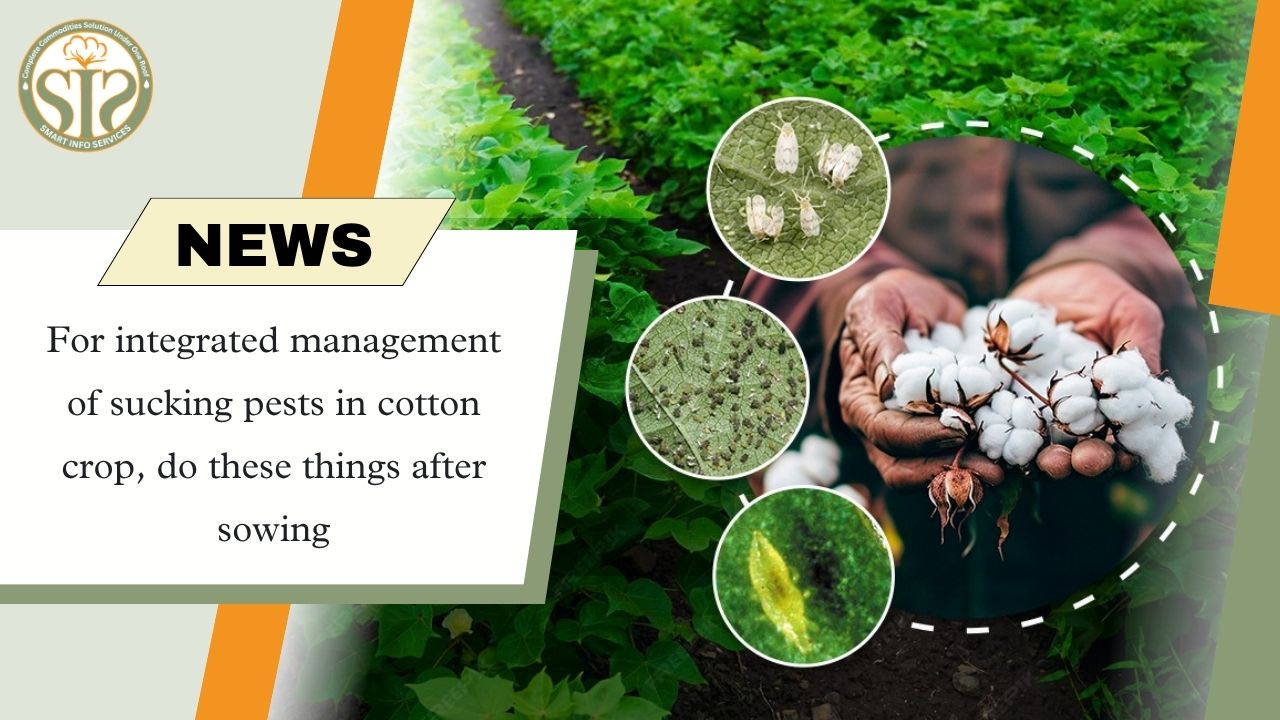
For integrated management of sucking pests in cotton crop, do these things after sowingAfter extensive rainfall in Gujarat, most of the farmers have enthusiastically sowed Kharif crops. To keep the crops grown after sowing safe from diseases and pests, various efforts of crop maintenance are being made by the farmers. The state government has also always been with the farmers to prevent crop damage due to diseases and pests. Continuing the same, the Agriculture Director Office-Gandhinagar has issued guidelines suggesting important steps for integrated management of sucking pests after sowing of cotton.For management of sucking pests after sowing of cotton, do these things:* Weed and hoe the weeds in the paddy field, especially plants and grasses like Gadar, Kanksi, Wild Bhindi, Congress Grass and Wild Jasood.* For biological control of mealybugs and leafhoppers, release 2 to 3 days old caterpillars of predatory green moth (Chrysopa) twice at an interval of 15 days at the rate of 10,000 per hectare.* Use 5% solution of neem seeds or non-chemical agent like Azadirachtin 1500, 3000 or 10,000 ppm at the rate of 5 litres, 2.5 litres and 750 ml per hectare respectively.* Use yellow sticky traps to survey and control mealybugs and white flies.* For control of red sucking pests and red mites, collect and destroy half-opened or fully opened larvae by dipping them in kerosene water or shake the plant and walk briskly in a circular motion holding a rope at both ends to make the larvae fall.* For control of sucking pests in natural farming, spray 200 liters of Nimastra (without dilution) per acre. Non-chemical insecticides like Brahmastra, Dashparni extract should be sprayed in 200 liters of water in the amount of 6 to 8 liters per acre.* For biological control of sucking pests, at the beginning of the crop, when the atmosphere is moist, spray microbial controllers like Verticillium laciniae or Beauveria bassiae 50 grams in 10 liters of water.* For control of white fly infestation, as soon as the infestation is visible, spray 50 ml of Azadiractin 1500 ppm in 10 liters of water.* Destroy the damage caused by the T mosquito by breaking it and take care that there is no shade inside the field. On detection of pest, spray 50 ml Azadirachtin 1500 ppm or 40 gm Beauveria bassiana powder in 10 litres of water.* If the infestation of local pests is high in the cotton crop, use chemical pesticides recommended by the agricultural university related to your area as per requirement and recommendation.* While using pesticides, follow the recommended dosage and disease/pest/crop as per the label given on the pesticide under integrated pest management.read more :- Disillusionment with cotton: Production drops in Punjab, a setback to diversification
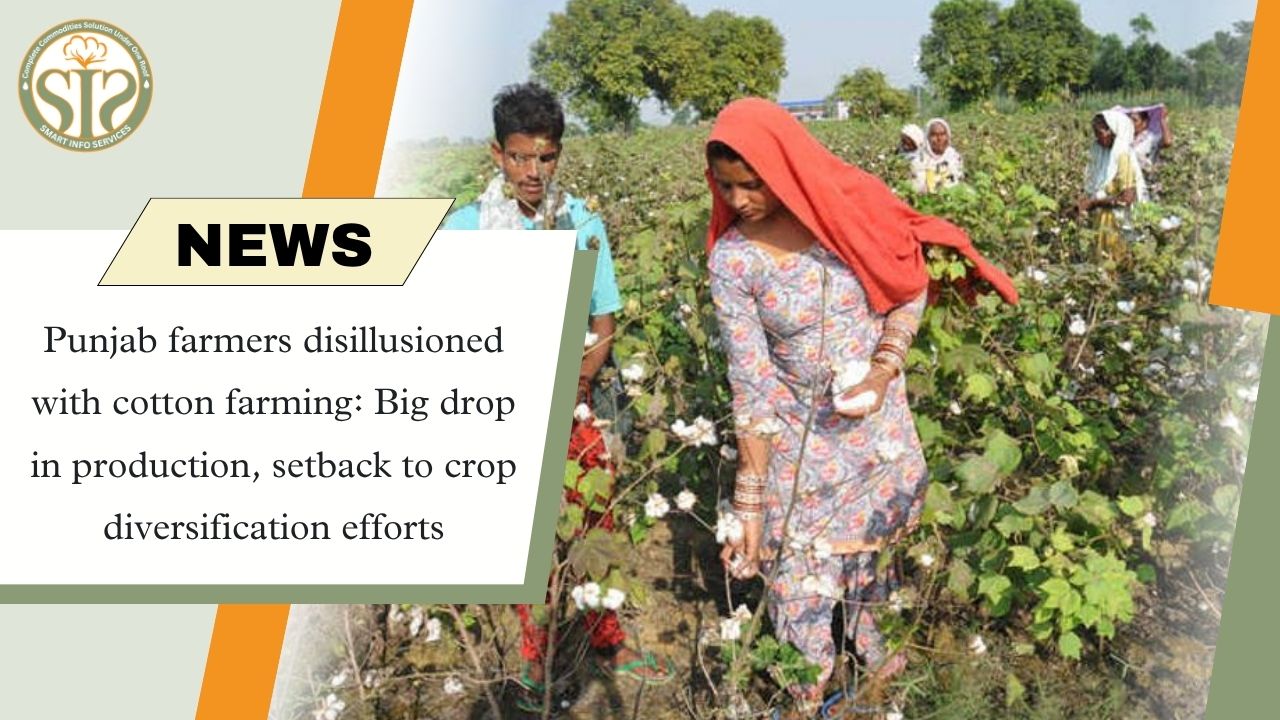
Punjab farmers disillusioned with cotton farming: Big drop in production, setback to crop diversification effortsMalwa region is known for cotton production, but now the farmers here are turning to paddy and wheat crops. Uncertainty over Minimum Support Price (MSP) and the outbreak of pink bollworm and white fly are considered to be the main reasons for farmers leaving cotton farming.Punjab farmers are getting disillusioned with cotton farming. As a result of this, a decline of 63.48 percent has been recorded in cotton production in the state this year. The government's crop diversification efforts have suffered a setback due to a major decrease in cotton production within a year.Punjab farmers disillusioned with cotton farming: Big drop in production, setback to crop diversification effortsPunjab farmers are getting disillusioned with cotton farming. As a result of this, a decline of 63.48 percent has been recorded in cotton production in the state this year. The government's crop diversification efforts have suffered a setback due to a major decline in cotton production within a year.Uncertainty over Minimum Support Price (MSP) and the outbreak of pink bollworm and white fly are believed to be the main reasons for farmers abandoning cotton cultivation. The latest report of the Cotton Association of India has revealed a decrease in cotton production.Malwa region is known for cotton production, but now the farmers here are turning to paddy and wheat crops. The groundwater level of the state is already falling. 118 blocks have gone into the red zone and this report has now increased the concern of the government even more. According to the report, cotton production has come down from 6.09 lakh bales in 2023-24 to 2.52 lakh bales in 2024-25. Similarly, the area has also come down from 2.14 lakh to 1 lakh hectare.Situation slightly better in Haryana and RajasthanCotton production in Haryana and Rajasthan has also fallen as compared to last year, but still the situation is slightly better there. In 2024-25, Haryana cultivated cotton in 5.78 lakh hectares and produced 11.96 lakh bales, while Rajasthan cultivated it in 6.27 lakh hectares and produced 17.79 lakh bales.Decline in purchase of cotton at MSP alsoA decline has been recorded in the purchase of cotton at MSP in Punjab. According to a report of Cotton Corporation of India in March, only 2 thousand bales were purchased at MSP in Punjab in the year 2024-25, whereas in the year 2019-20 this figure was 3.56 lakh bales. Similarly, in 2020-21, MSP purchase of 5.36 lakh bales was done. The market price of cotton was above MSP during 2021-22 and 2022-23, so there was no purchase at MSP during these two years. In the year 2023-24, only 38 thousand bales were purchased at MSP.read more :- INR drop 03 Paise, Closes at 86.29 per Dollar

The Indian rupee on monday lower 03 paise to close at 86.29 per dollar, while it opened at 86.26 in the morning.At close, the Sensex was up 442.61 points or 0.54 percent at 82,200.34, and the Nifty was up 122.30 points or 0.49 percent at 25,090.70. About 1883 shares advanced, 2101 shares declined, and 168 shares unchanged.read more :- Natural coloured cotton: Challenges of shortage of funds and low yield
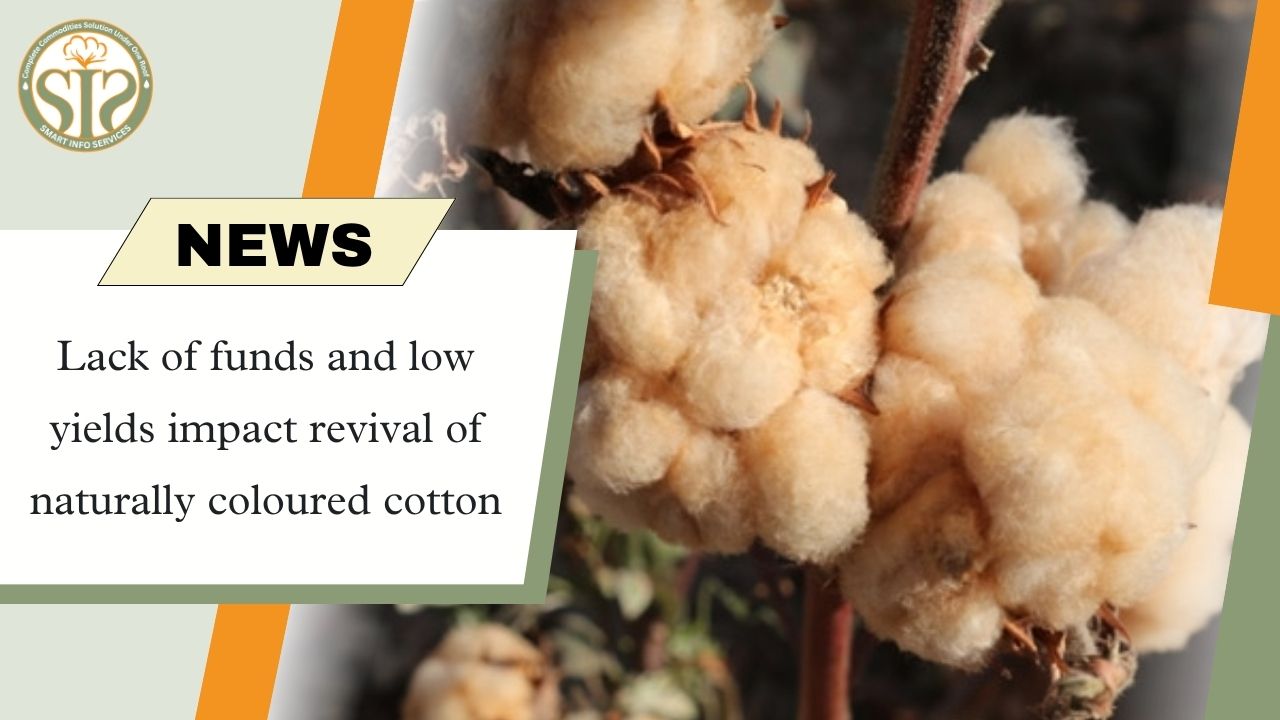
Lack of funds and low yields impact revival of naturally coloured cottonIndia's naturally coloured cotton, which was once commercially successful, is struggling to regain its popularity despite growing demand for sustainable textiles. Despite high pricing and environmental benefits, low yields are deterring farmers from adopting it. Government support, improved seed systems and market linkages are critical to realising its export potential and transforming India's textile sustainability paradigm.India's naturally coloured cotton, which was commercially flourishing in the 1940s, is struggling to make a comeback despite growing global demand for sustainable textiles and decades of government research efforts.This special crop is currently grown on only 200 acres in Karnataka, Maharashtra, Tamil Nadu and Andhra Pradesh, fetching a price of Rs 240 per kg, 50 per cent higher than regular cotton at Rs 160 per kg. However, farmers are hesitant to expand cultivation due to significantly low yields."The productivity of light brown cotton is very low, at 1.5-2 quintals per acre, while the productivity of normal cotton is 6-7 quintals per acre. This discourages farmers from expanding the acreage of this crop," Ashok Kumar, principal scientist at ICAR-Central Institute for Research on Cotton Technology (CIRCOT), told PTI.The annual production from these limited acres is a mere 330 quintals, underlining the challenge faced by this special crop, which can potentially transform India's textile sustainability paradigm.ICAR-CIRCOT is currently focusing on light brown cotton.Coloured cotton has ancient roots in Indian agriculture, with cultivation dating back to 2500 BC. Before Independence, red, khaki and brown varieties of Cocanada 1 and 2 were grown commercially in Rayalaseema in Andhra Pradesh, exported to Japan. Traditional varieties were also cultivated in Assam and the Kumta region of Karnataka.However, the emphasis on high-yielding white cotton varieties during the Green Revolution marginalised coloured cotton. The inherent limitations of this crop – low boll, low weight, low fibre, short fibre length and colour variations – made it economically unviable for large-scale cultivation.Indian agricultural institutions have developed improved varieties, including DDCC-1, DDB-12, DMB-225 and DGC-78 developed by the University of Agricultural Sciences, Dharwad. The Central Institute for Cotton Research, Nagpur developed Vaidehi-95, which is considered the most prominent among the 4-5 varieties available.Between 2015-19, ICAR-CIRCOT processed 17 quintals of cotton in demonstration batches, producing 9,000 metres of cloth, over 2,000 jackets and 3,000 handkerchiefs, proving it commercially viable.Its environmental benefits are significant. Traditional cotton dyeing requires about 150 litres of water per metre of fabric, while naturally coloured cotton eliminates this requirement, which can reduce toxic waste disposal costs by up to 50 per cent."Naturally coloured cotton has immense export potential. More government support is needed to increase production and value addition," said Kumar.Despite high pricing and environmental benefits, expansion faces hurdles such as lack of seed systems, susceptibility to pests and the need for high pesticides commonly used in cotton cultivation."Nobody is able to develop varieties due to low production and lack of market. Even textile mills are not willing to buy cotton in small quantities," said Kumar.The global market is seeing potential with growing demand for eco-conscious brands, especially in Europe, the US and Japan. Australia and China are investing heavily in research using conventional breeding and genetic engineering.read more :- Gujarat: Textile industry fears threat from cotton MSP hike

Gujarat Textile Industry Raises Concerns Over Cotton MSP HikeAhmedabad: The recent increase in the minimum support price (MSP) for kapas (raw cotton) by the central government has raised concerns within Gujarat’s textile industry. While the move aims to support farmers, industry stakeholders fear that rising raw material costs could impact India’s competitiveness in global markets.The revised MSP has been increased across all categories—medium staple cotton to ₹7,560 per quintal, medium-long staple to ₹7,860, long staple to ₹8,110, and extra-long staple to ₹9,310 per quintal.Industry leaders believe that improving cotton productivity would be a more sustainable solution for enhancing farmers’ incomes without burdening manufacturers. They point out that although India accounts for about 37% of global cotton acreage, its share in production is only around 23%, indicating significant scope for yield improvement.Textile manufacturers have also reiterated their demand for the removal of import duties on cotton. They argue that Indian cotton is currently among the most expensive globally, which is affecting export competitiveness, especially at a time when global buyers are looking at India as an alternative sourcing destination.Market experts note that the revised MSP structure could encourage farmers to bring better-quality cotton to the market, particularly with pricing linked to quality parameters like moisture content. Increased sowing activity and higher arrivals may help farmers realise improved returns.However, concerns remain that persistently high cotton prices could put additional pressure on spinning mills and yarn manufacturers, who are already facing weak demand and shrinking profit margins.Industry stakeholders have urged the government to strike a balance between farmer support and industry sustainability by focusing on productivity improvements, reducing import duties, and easing logistics costs.read more :- Rupee open Declines 11 Paise to 86.26 per Dollar

ડોલર ઘટતાં રૂપિયો ૮ પૈસા વધીને ૮૬.૩૩ પર ખુલ્યો૨૪ જુલાઈના રોજ ડોલર ઇન્ડેક્સ ઘટતાં રૂપિયો ૮ પૈસા વધીને ખુલ્યો. ગયા દિવસે ૮૬.૪૧ પર બંધ થયા બાદ ડોલર સામે રૂપિયો ૮૬.૩૩ પર ખુલ્યો.વધુ વાંચો :- રૂપિયો 86.41/USD પર સ્થિર બંધ થયો

બુધવારે ભારતીય રૂપિયો ૮૬.૪૧ પ્રતિ ડોલર પર સ્થિર બંધ થયો હતો, જ્યારે સવારે તે ૮૬.૪૧ પર ખુલ્યો હતો.સેન્સેક્સ ૫૩૯.૮૩ પોઈન્ટ અથવા ૦.૬૬ ટકા વધીને ૮૨,૭૨૬.૬૪ પર બંધ થયો હતો, અને નિફ્ટી ૧૫૯ પોઈન્ટ અથવા ૦.૬૩ ટકા વધીને ૨૫,૨૧૯.૯૦ પર બંધ થયો હતો. લગભગ ૧૮૮૨ શેર વધ્યા, ૧૯૮૯ શેર ઘટ્યા અને ૧૬૧ શેર યથાવત રહ્યા.વધુ વાંચો :- કોટન ટેક્સટાઇલ નિકાસ $35.6 બિલિયનને વટાવી ગઈ: ગિરિરાજ સિંહ
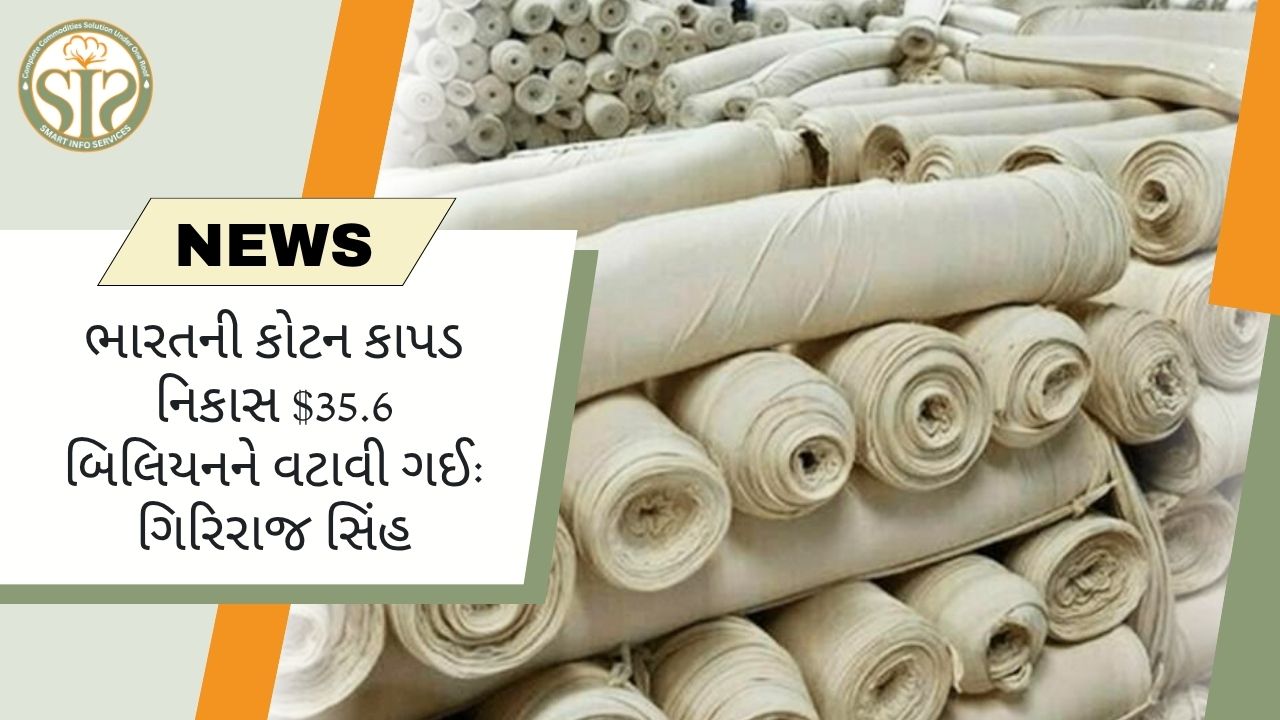
ભારતની કોટન કાપડ નિકાસ $35.6 બિલિયનને વટાવી ગઈ: ગિરિરાજ સિંહકેન્દ્રીય કાપડ મંત્રી ગિરિરાજ સિંહે મંગળવારે સંસદમાં જણાવ્યું હતું કે ભારતની કોટન કાપડની કુલ નિકાસ, જેમાં કોટન યાર્ન, કોટન ફેબ્રિક, મેડ-અપ્સ, અન્ય ટેક્સટાઇલ યાર્ન, ફેબ્રિક મેડ-અપ્સ અને કાચો કપાસનો સમાવેશ થાય છે, છેલ્લા ત્રણ વર્ષ દરમિયાન $35.642 બિલિયનને વટાવી ગઈ છે.મંત્રીએ એ પણ માહિતી આપી હતી કે વિઝન 2030 ને અનુરૂપ, કપાસની ઉત્પાદકતા અને ગુણવત્તા વધારવા, નવીનતાને પ્રોત્સાહન આપવા અને સમગ્ર ટેક્સટાઇલ મૂલ્ય શૃંખલાને મજબૂત બનાવવા માટે, નાણામંત્રીએ 2025-26 ના બજેટમાં પાંચ વર્ષીય 'કોટન પ્રોડક્ટિવિટી મિશન' ની જાહેરાત કરી હતી.કૃષિ સંશોધન અને શિક્ષણ વિભાગ (DARE) આ મિશનના અમલીકરણ માટે નોડલ વિભાગ છે, જેમાં કાપડ મંત્રાલય ભાગીદાર છે. આ મિશનનો હેતુ તમામ કપાસ ઉત્પાદક રાજ્યોમાં સંશોધન અને વિસ્તરણ પ્રવૃત્તિઓ સહિત વ્યૂહાત્મક હસ્તક્ષેપો દ્વારા કપાસના ઉત્પાદનને વેગ આપવાનો છે.આ મિશન અદ્યતન સંવર્ધન અને બાયોટેકનોલોજીકલ સાધનોનો ઉપયોગ કરીને એક્સ્ટ્રા લોંગ સ્ટેપલ (ELS) કપાસ સહિત આબોહવા-સ્થિતિસ્થાપક, જીવાત-પ્રતિરોધક અને ઉચ્ચ ઉપજ આપતી કપાસની જાતોના વિકાસ પર ધ્યાન કેન્દ્રિત કરવાનો પણ પ્રસ્તાવ રાખે છે.ICAR-સેન્ટ્રલ ઇન્સ્ટિટ્યૂટ ફોર કોટન રિસર્ચ (CICR), નાગપુર દ્વારા આઠ મુખ્ય કપાસ ઉત્પાદક રાજ્યોમાં 'કૃષિ-પર્યાવરણીય ક્ષેત્રો માટે ટેકનોલોજીનું લક્ષ્યીકરણ - કપાસ ઉત્પાદકતા વધારવા માટે શ્રેષ્ઠ પ્રથાઓનું મોટા પાયે પ્રદર્શન' પર એક ખાસ પ્રોજેક્ટ અમલમાં મૂકવામાં આવ્યો છે. મંત્રીએ વધુમાં માહિતી આપી કે આ ખાસ પ્રોજેક્ટનો કુલ ખર્ચ રૂ. 6,032.35 લાખ છે.'કપાસ ઉત્પાદકતા મિશન'નો ઉદ્દેશ્ય ખેડૂતોને ઉચ્ચ ઉત્પાદકતા, સુધારેલ ફાઇબર ગુણવત્તા અને આબોહવા અને જીવાત-સંબંધિત પડકારો સામે સુધારેલ સ્થિતિસ્થાપકતા પ્રાપ્ત કરવા માટે અત્યાધુનિક વૈજ્ઞાનિક અને તકનીકી સહાય પૂરી પાડવાનો છે. સરકારના સંકલિત 5F વિઝન, ખેતરથી ફાઇબર, ફેક્ટરીથી ફેશન અને પછી વિદેશમાં, આ મિશન કપાસના ખેડૂતોની આવકમાં વધારો કરશે, ઉચ્ચ ગુણવત્તાવાળા કપાસનો સતત પુરવઠો સુનિશ્ચિત કરશે અને ભારતના પરંપરાગત કાપડ ક્ષેત્રને પુનર્જીવિત કરશે, જેનાથી તેની વૈશ્વિક સ્પર્ધાત્મકતામાં વધારો થશે, એમ તેમણે જણાવ્યું હતું.કાપડ નિકાસને વેગ આપવાના પગલાંના ભાગ રૂપે, મંત્રાલયે ભારતીય કાપડ મૂલ્ય શૃંખલાની મજબૂતાઈ દર્શાવવા, કાપડ અને ફેશન ઉદ્યોગમાં નવીનતમ પ્રગતિ અને નવીનતાઓને પ્રકાશિત કરવા અને કાપડ ક્ષેત્રમાં સોર્સિંગ અને રોકાણ માટે ભારતને સૌથી પસંદગીના સ્થળ તરીકે સ્થાપિત કરવા માટે એક વૈશ્વિક મેગા ટેક્સટાઇલ ઇવેન્ટ ઇન્ડિયા ટેક્સ 2025 ના આયોજનમાં નિકાસ પ્રમોશન કાઉન્સિલને પણ ટેકો આપ્યો છે, એમ મંત્રીએ લોકસભામાં બીજા પ્રશ્નના જવાબમાં જણાવ્યું હતું.આ સહયોગ વિદ્યાર્થી અને ફેકલ્ટી વિનિમય, સંયુક્ત સંશોધન પહેલ, ડ્યુઅલ ડિગ્રી અને ટ્વીનિંગ કાર્યક્રમો, સહયોગી અભ્યાસક્રમ વિકાસ અને વૈશ્વિક શૈક્ષણિક એકીકરણને સમર્થન આપતા એમઓયુ દ્વારા કાર્યરત છે, એમ મંત્રીએ જણાવ્યું હતું.આ સહયોગ વિદ્યાર્થી અને ફેકલ્ટી વિનિમય, સંયુક્ત સંશોધન પહેલ, ડ્યુઅલ ડિગ્રી અને ટ્વીનિંગ કાર્યક્રમો, સહયોગી અભ્યાસક્રમ વિકાસ અને વૈશ્વિક શૈક્ષણિક એકીકરણને સમર્થન આપતા એમઓયુ દ્વારા કાર્યરત છે, એમ મંત્રીએ જણાવ્યું હતું. મંત્રીએ કહ્યું, "આ આંતરરાષ્ટ્રીય સહયોગ શૈક્ષણિક શ્રેષ્ઠતાને પ્રોત્સાહન આપીને, નવીનતાને પ્રોત્સાહન આપીને અને જ્ઞાન ટ્રાન્સફરને સક્ષમ કરીને વૈશ્વિક કાપડ અને ફેશન ક્ષેત્રમાં ભારતનું સ્થાન મજબૂત બનાવે છે. આ સહયોગ વિદ્યાર્થીઓ અને ફેકલ્ટીને વૈશ્વિક ડિઝાઇન સંવેદનશીલતા, તકનીકી પ્રગતિ અને ઉભરતા વલણો સાથે પરિચિત કરાવે છે. અભ્યાસક્રમને આંતરરાષ્ટ્રીય ધોરણો સાથે સમકક્ષ લાવીને, આ સહયોગ ભારતીય સ્નાતકોને વૈશ્વિક બજારોમાં અસરકારક રીતે સ્પર્ધા કરવા અને કાપડ અને ફેશનમાં સર્જનાત્મક અને તકનીકી કુશળતાના કેન્દ્ર તરીકે ભારતની પ્રતિષ્ઠાને મજબૂત બનાવવા માટે જરૂરી કુશળતા અને આંતરદૃષ્ટિથી સજ્જ કરે છે."વધુ વાંચો :- 2025 માં કપાસ નિકાસ કરતા દેશો: ભારતનો રેન્કિંગ
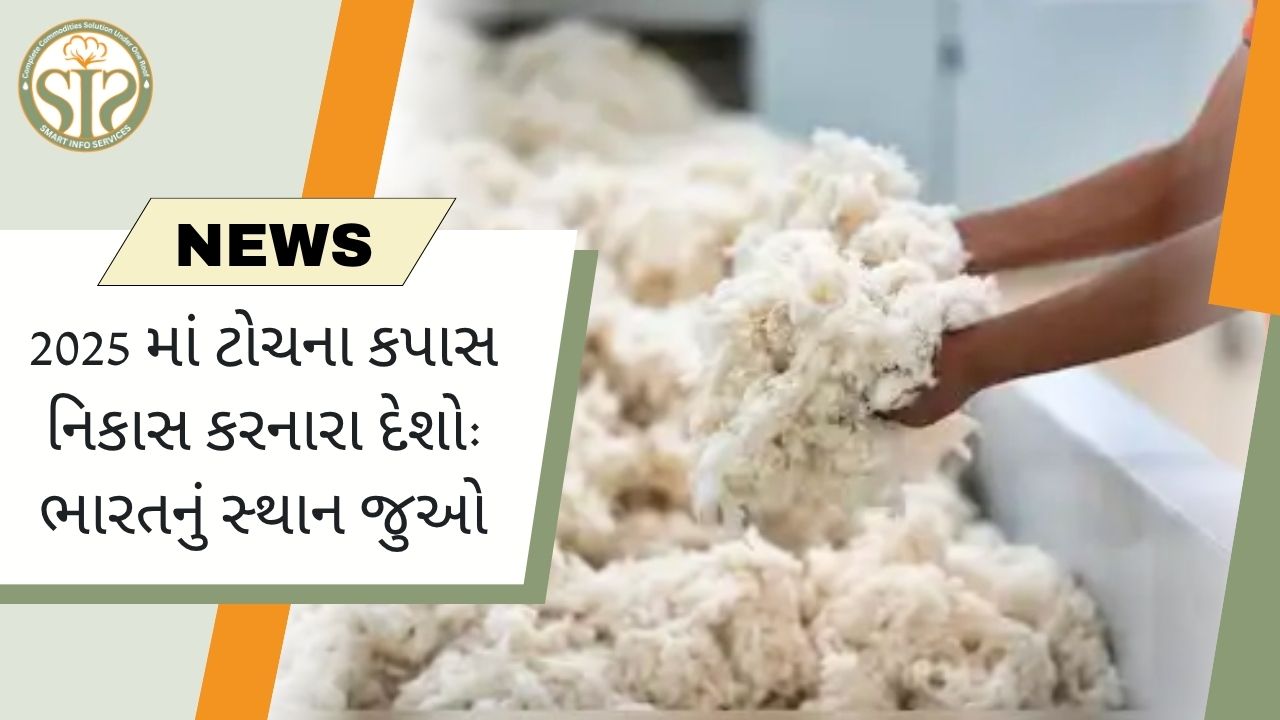
2025 માં ટોચના કપાસ નિકાસ કરનારા દેશો: ભારતનું સ્થાન જુઓકપાસ એ વિશ્વભરમાં કપડાં, ઘરના ફર્નિચર અને ઔદ્યોગિક ઉત્પાદનોમાં વપરાતા સૌથી આવશ્યક કુદરતી રેસામાંથી એક છે. કપાસની માંગ સતત વધી રહી હોવાથી, વૈશ્વિક કપાસ નિકાસ બજારમાં થોડા દેશો પ્રભુત્વ ધરાવે છે. આ ટોચના નિકાસકારો માત્ર સ્થાનિક જરૂરિયાતો જ પૂરી કરતા નથી પરંતુ આંતરરાષ્ટ્રીય ખરીદદારોને પણ મોટી માત્રામાં કપાસનો પુરવઠો પૂરો પાડે છે.2025 માં વૈશ્વિક કપાસનું ઉત્પાદન 117.8 મિલિયન ગાંસડી (દરેક ગાંસડીનું વજન લગભગ 480 પાઉન્ડ) સુધી પહોંચવાનો અંદાજ છે. ઇન્ટરનેશનલ કોટન એડવાઇઝરી કમિટી (ICAC), USDA, 2023-2024 ના ડેટા મુજબ, ટોચના 5 કપાસ નિકાસ કરનારા દેશો અને તેઓ ઉદ્યોગમાં મુખ્ય ખેલાડીઓ કેમ છે તેના પર એક નજર અહીં છે.1. યુનાઇટેડ સ્ટેટ્સ - ગ્લોબલ કોટન પાવરહાઉસ | વાર્ષિક કપાસ નિકાસ: લગભગ 3.1 મિલિયન ટન | યુનાઇટેડ સ્ટેટ્સ તેની અદ્યતન કૃષિ પદ્ધતિઓ, મોટા પાયે ખેતી અને કાર્યક્ષમ સપ્લાય ચેઇનને કારણે કપાસ નિકાસમાં વિશ્વ અગ્રણી છે. મોટાભાગનો યુએસ કપાસ ટેક્સાસ, મિસિસિપી અને અન્ય દક્ષિણ રાજ્યોમાંથી આવે છે. તેની ઉચ્ચ ગુણવત્તા માટે જાણીતું, યુએસ કપાસ વૈશ્વિક કાપડ ઉત્પાદકો માટે ટોચની પસંદગી છે.2. બ્રાઝિલ - ઝડપી વૃદ્ધિ અને મજબૂત નિકાસ નેટવર્ક | વાર્ષિક કપાસ નિકાસ: લગભગ 2.3 મિલિયન ટન | અનુકૂળ હવામાન અને વિશાળ કૃષિ જમીનનો લાભ લઈને, બ્રાઝિલ છેલ્લા દાયકામાં કપાસના મુખ્ય નિકાસકાર તરીકે ઉભરી આવ્યું છે. બ્રાઝિલિયન કપાસ મુખ્યત્વે એશિયા અને યુરોપમાં નિકાસ કરવામાં આવે છે. આધુનિક ખેતી તકનીકોમાં રોકાણથી ઉત્પાદન અને ગુણવત્તા બંનેમાં વધારો થયો છે.3. ઓસ્ટ્રેલિયા - ટકાઉ પ્રથાઓ સાથે પ્રીમિયમ ગુણવત્તા | વાર્ષિક કપાસ નિકાસ: લગભગ 1.7 મિલિયન ટન | ઓસ્ટ્રેલિયા યુએસ અથવા બ્રાઝિલ કરતાં ઓછું કપાસ ઉત્પન્ન કરી શકે છે, પરંતુ તે ગુણવત્તાની દ્રષ્ટિએ શ્રેષ્ઠ છે. તેના લાંબા, સ્વચ્છ રેસા માટે જાણીતું, ઓસ્ટ્રેલિયન કપાસ પ્રીમિયમ કાપડ બજારોમાં પ્રિય છે. દેશ ટકાઉ કૃષિ પદ્ધતિઓ અને પાણી-કાર્યક્ષમ ખેતી પદ્ધતિઓમાં પણ અગ્રેસર છે.4. ભારત - મર્યાદિત નિકાસ સાથે એક વિશાળ ઉત્પાદક | વાર્ષિક કપાસ નિકાસ: લગભગ 0.8 મિલિયન ટન | ભારત વૈશ્વિક સ્તરે કપાસના સૌથી મોટા ઉત્પાદકોમાંનો એક છે, પરંતુ તેનો મોટાભાગનો ઉપયોગ સ્થાનિક સ્તરે થાય છે. નિકાસ વધારાની ઉપલબ્ધતા પર આધાર રાખે છે. ભારતીય કપાસ બાંગ્લાદેશ અને વિયેતનામ જેવા નજીકના બજારોમાં લોકપ્રિય છે. સ્થાનિક કાપડ ઉદ્યોગ પાકનો મોટો હિસ્સો વાપરે છે.૫. ઉઝબેકિસ્તાન - કપાસના વેપારમાં સુધારો અને વૃદ્ધિ | વાર્ષિક કપાસ નિકાસ: લગભગ ૦.૫ મિલિયન ટન | ઉઝબેકિસ્તાનના અર્થતંત્ર માટે કપાસ મહત્વપૂર્ણ રહે છે. તાજેતરના વર્ષોમાં, દેશે તેના કપાસ ઉદ્યોગને આધુનિક બનાવવા અને મજૂર પદ્ધતિઓ સુધારવા પર ધ્યાન કેન્દ્રિત કર્યું છે. ફરજિયાત મજૂરી દૂર કરવા અને નૈતિક ખેતીને પ્રોત્સાહન આપવાના પ્રયાસોએ કપાસ નિકાસકાર તરીકે તેની વૈશ્વિક છબી સુધારી છે.વધુ વાંચો :- રૂપિયો 05 પૈસા ઘટીને 86.41/USD પર ખુલ્યો

ડોલર સામે રૂપિયો ૫ પૈસા ઘટીને ૮૬.૪૧ પર ખુલ્યો૨૩ જુલાઈના રોજ ડોલર ઇન્ડેક્સમાં નજીવા વધારા સાથે રૂપિયો ૫ પૈસા ઘટીને ખુલ્યો. ડોલર સામે ચલણ ૮૬.૪૧ પર ખુલ્યું, જે અગાઉના દિવસે ૮૬.૩૬ પર બંધ થયું હતું.વધુ વાંચો :- ભારતીય રૂપિયો 11 પૈસા ઘટ્યો, ડોલર દીઠ 86.36 પર બંધ થયો

મંગળવારે ભારતીય રૂપિયો ૧૧ પૈસા ઘટીને ૮૬.૩૬ પ્રતિ ડોલર પર બંધ થયો હતો, જ્યારે સવારે તે ૮૬.૨૫ પર ખુલ્યો હતો.બંધ સમયે, સેન્સેક્સ ૧૩.૫૩ પોઈન્ટ અથવા ૦.૦૨ ટકા ઘટીને ૮૨,૧૮૬.૮૧ પર અને નિફ્ટી ૨૯.૮૦ પોઈન્ટ અથવા ૦.૧૨ ટકા ઘટીને ૨૫,૦૬૦.૯૦ પર બંધ થયો હતો. લગભગ ૧૭૨૪ શેર વધ્યા, ૨૧૨૬ શેર ઘટ્યા અને ૧૭૨ શેર યથાવત રહ્યા.વધુ વાંચો :- સિરસામાં જમીન ડૂબી ગઈ, કપાસનો પાક નાશ પામ્યો
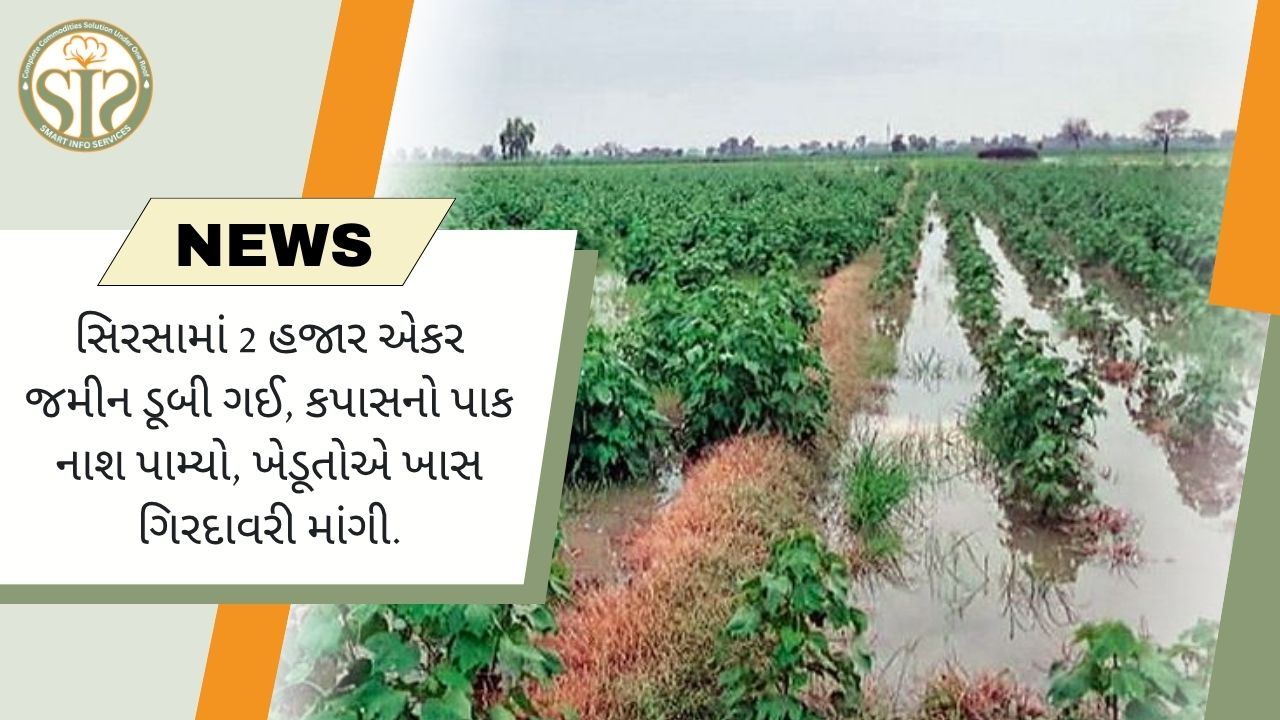
સિરસામાં 2 હજાર એકર જમીન ડૂબી ગઈ, કપાસનો પાક નાશ પામ્યો, ખેડૂતોએ ખાસ ગિરદાવરી માંગી.સિરસા જિલ્લાના નાથુસરી ચોપટા બ્લોકમાં તાજેતરના ભારે વરસાદથી સાત ગામોમાં 2,000 એકરથી વધુ ખેતીલાયક જમીનમાં વિનાશ વેર્યો છે. ભારે પાણી ભરાવાના કારણે કપાસ, ગુવાર અને મગફળીના પાકને ભારે નુકસાન થયું છે, જેમાં કપાસ સૌથી વધુ પ્રભાવિત થયો છે.ઘણા અસરગ્રસ્ત વિસ્તારોમાં, ખેડૂતો હવે તેમના ક્ષતિગ્રસ્ત કપાસના ખેતરો ખેડવા અને ડાંગરની ખેતી કરવા મજબૂર છે, જે ભેજનો સામનો કરવા માટે વધુ સક્ષમ છે - પરંતુ આનાથી તેમના નાણાકીય બોજમાં વધુ વધારો થયો છે.રૂપાણા ગાંજા (400 એકર), રૂપાણા બિશ્નોઈ (300 એકર), શક્કર મંડુરી (500 એકર), શાહપુરિયા (150 એકર), નહરણા (150 એકર), તારકાવલી (100 એકર) અને ચહરવાલા (50 એકર) માં ખેતીલાયક જમીન ડૂબી ગઈ છે. સૌથી વધુ અસરગ્રસ્ત ગામો - શક્કર મંડુરી, રૂપાણા ગાંજા અને રૂપાણા બિશ્નોઈ - માં લગભગ 1,200 એકર કપાસનો પાક નાશ પામ્યો છે.શક્કર મંડુરીના ખેડૂત મુકેશ કુમારે કહ્યું, "મારે મારો આખો 7 એકર કપાસનો પાક ખેડવા પડ્યો. મોટરથી પાણી કાઢી નાખ્યા પછી પણ, સ્થિર પાણીને કારણે છોડ સડી ગયા."અનિલ કાસાનિયા, બલજીત અને વીરેન્દ્ર સહિત અન્ય ખેડૂતોએ પણ આવા જ નુકસાન વિશે વાત કરી.તેમાંના ઘણાએ જમીન ભાડે લીધી હતી અને કપાસ પર પ્રતિ એકર રૂ. 10,000 નું રોકાણ કર્યું હતું. હવે, તેમને ડાંગરની તૈયારી અને વાવણી માટે પ્રતિ એકર રૂ. 6,000-8,000 વધારાના ખર્ચ કરવા પડે છે.અન્ય એક અસરગ્રસ્ત ખેડૂત રાજ કાસાનિયાએ કહ્યું, "આ બમણું નુકસાન છે. વરસાદ પછી, ખારા ભૂગર્ભજળનું સ્તર વધે છે અને જમીનને પણ નુકસાન પહોંચાડે છે. આવી પરિસ્થિતિમાં ખેડૂત શું કરી શકે?"ચિંતાનો વિષય સેમ નાલા (ડ્રેનેજ કેનાલ) ના ઓવરફ્લો છે, જે પૂરગ્રસ્ત ખેતરોમાંથી વધારાનું પાણી કાઢી રહ્યું છે. ખેડૂતોને ડર છે કે જો બંધ તૂટી જશે, તો નજીકના ગામો પાણીમાં ડૂબી જશે અને ઉભા પાકને વધુ નુકસાન થશે. તેમણે સ્થાનિક અધિકારીઓ પર વારંવાર યાદ અપાવવા છતાં ચોમાસા પહેલા કેનાલની સફાઈ ન કરવાનો આરોપ લગાવ્યો છે.ખેડૂતોએ સરકારને ખાસ ગિરદાવરી (પાક નુકસાન સર્વે) કરાવવા અને નુકસાન માટે વળતર જાહેર કરવા વિનંતી કરી છે.જિલ્લા કૃષિ નાયબ નિયામક ડૉ. સુખદેવ કંબોજે પુષ્ટિ આપી છે કે મોટાભાગના અસરગ્રસ્ત ખેતરો ખારાશવાળા વિસ્તારોમાં આવે છે.ડૉ. કંબોજે કહ્યું, "અમે ખેડૂતોને પુસા 1509, 1692, 1847 (બાસમતી) અને પંજાબ 126 (પરમાલ) જેવી ટૂંકા ગાળાની અને ઓછી પાણી લેતી ડાંગરની જાતો ઉગાડવાની સલાહ આપી રહ્યા છીએ. આ જાતોને 33% ઓછા પાણીની જરૂર પડે છે અને લગભગ 100 દિવસમાં પાકી જાય છે."ડૉ. કંબોજે એમ પણ કહ્યું કે અણધારી હવામાનને કારણે કપાસ જોખમી પાક બની રહ્યો છે.આ વર્ષે સિરસા જિલ્લામાં ૧.૪૭ લાખ એકરમાં કપાસનું વાવેતર થયું હતું, જ્યારે ૧.૫ લાખ એકરથી વધુ વિસ્તારમાં ડાંગરનું વાવેતર થયું હતું.વધુ વાંચો :- હરિયાણા: કેન્દ્રીય ટીમે ગુલાબી ઈયળથી પ્રભાવિત કપાસના ખેતરોનું નિરીક્ષણ કર્યું
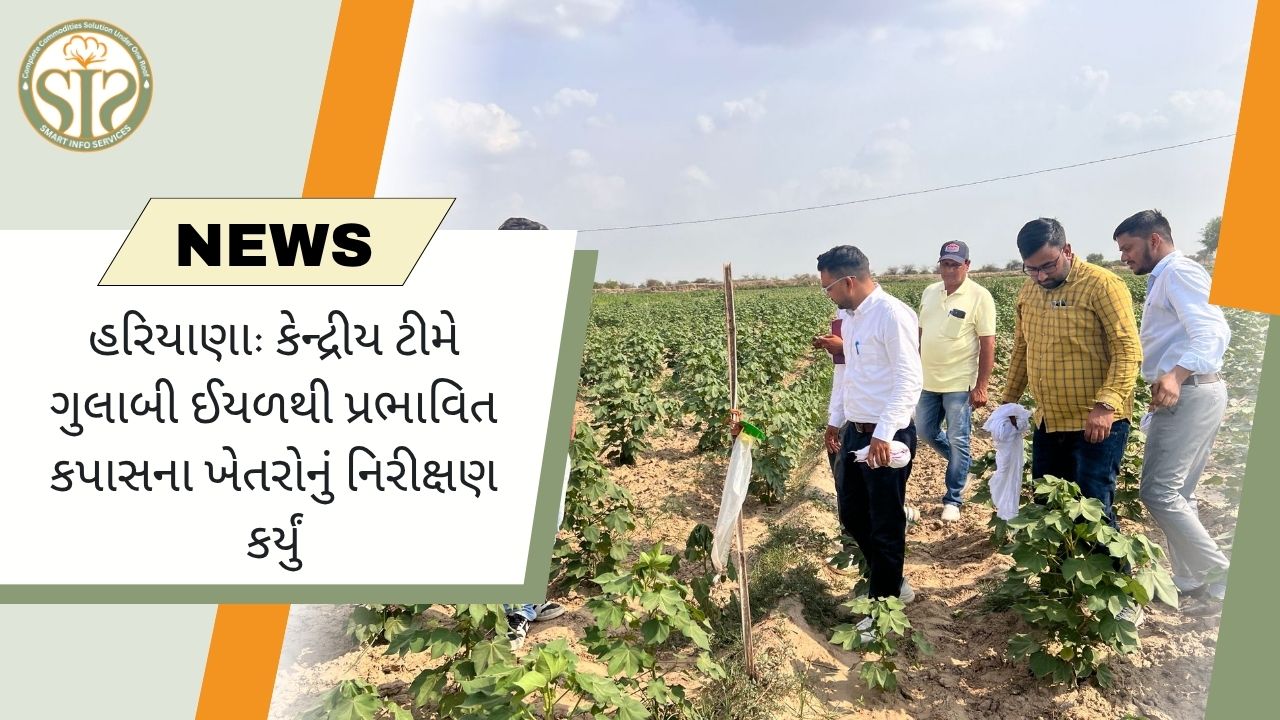
કેન્દ્રીય ટીમે કપાસના ખેતરોનું નિરીક્ષણ કર્યુંહિસાર: ખેડૂતોની ફરિયાદો અને જીવાતોના ઉપદ્રવ, ખાસ કરીને ગુલાબી ઈયળના ઉપદ્રવ અંગે ચિંતાઓને પગલે, કેન્દ્રીય કૃષિ મંત્રાલયની એક ટીમે જિલ્લાની મુલાકાત લીધી અને કપાસના પાકનું નિરીક્ષણ કર્યું.કૃષિ અને ખેડૂત કલ્યાણ વિભાગના અધિકારીઓએ આજે જણાવ્યું હતું કે ટીમે મંગલી ઝારા ગામમાં ખેતરોનું નિરીક્ષણ કર્યું અને કપાસના પાકમાં ગુલાબી ઈયળના નિશાન જોવા મળ્યા.જોકે, અધિકારીઓએ જણાવ્યું હતું કે ઉપદ્રવ આર્થિક મર્યાદાથી નીચે છે અને ખેડૂતોને સતર્ક રહેવાની સલાહ આપી હતી પરંતુ ગભરાવાની જરૂર નથી.નિરીક્ષણ ટીમમાં સહાયક છોડ સંરક્ષણ અધિકારીઓ (APPOs) લક્ષ્મીકાંત, કેપી શર્મા અને ફરીદાબાદના પ્રાદેશિક સંકલિત જીવાત વ્યવસ્થાપન કેન્દ્ર (RIPMC) ના સૂરજ બેનીવાલનો સમાવેશ થતો હતો, તેમની સાથે હરિયાણા કૃષિ અને ખેડૂત કલ્યાણ વિભાગના છોડ સંરક્ષણ અધિકારી ડૉ. અરુણ કુમાર યાદવ અને કૃષિ વિકાસ અધિકારી (ADO) રવિન્દર અંતિલનો સમાવેશ થતો હતો.ડૉ. અરુણ કુમારે જણાવ્યું હતું કે તેમને ગામમાંથી ગુલાબી ઈયળ વિશે માહિતી મળી છે અને તેમણે કેન્દ્ર અને ચંદીગઢ સ્થિત મુખ્યાલયને જાણ કરી છે. ખેડૂત નરસી રામ ખીચડે જણાવ્યું હતું કે તેમણે થોડા દિવસો પહેલા જંતુ જોયો હતો અને કૃષિ વિભાગના અધિકારીઓને જાણ કરી હતી.હિસારમાં કપાસનો વાવેતર વિસ્તાર છેલ્લા ત્રણ વર્ષથી સતત ઘટી રહ્યો છે, જેનું મુખ્ય કારણ ગુલાબી ઈયળ જેવી જીવાતોની વારંવાર થતી સમસ્યાઓ છે. આ સિઝનમાં, લગભગ 2.1 લાખ એકરમાં કપાસનું વાવેતર થયું છે, જે ગયા વર્ષે 2.5 લાખ એકર હતું, જે વારંવાર થતા નુકસાનને કારણે ખેડૂતોના રસમાં ઘટાડો દર્શાવે છે.ડૉ. યાદવે જણાવ્યું હતું કે જો દરેક છોડમાં ચાર કે તેથી વધુ ઈયળ જોવા મળે તો જ જંતુનાશકોનો છંટકાવ કરવાની સલાહ આપવામાં આવે છે. નહિંતર, ખેડૂતોને નિયમિતપણે ખેતરનું નિરીક્ષણ કરવાની સલાહ આપવામાં આવે છે. ટીમે ગયા વર્ષના કપાસના છોડના અવશેષો (બંચાહટ્ટી) પણ ખેતરમાં પડેલા જોયા હતા, જે ચેપના વાહક હોવાની શંકા છે. બાકીના છોડના અવશેષોથી ગુલાબી ઈયળના હુમલાનું જોખમ છે, અધિકારીઓએ જણાવ્યું હતું.બીજી બાજુ, જિલ્લાના આદમપુરના કપાસ પટ્ટામાં કેટલાક ગામડાઓ, ખાસ કરીને અતિ વરસાદને કારણે નુકસાન સહન કરી રહ્યા છે. શિશ્વાલ, આદમપુર, લાડવી, મહાલસરા અને કોહલી જેવા ગામોના કપાસના ખેડૂતોએ પાકને વ્યાપક નુકસાન પહોંચાડ્યું છે અને પાણીમાં પેરા વિલ્ટ રોગ વધવાનું જોખમ છે.આદમપુરના ધારાસભ્ય ચંદ્ર પ્રકાશે પરિસ્થિતિનું મૂલ્યાંકન કરવા માટે અસરગ્રસ્ત વિસ્તારોની મુલાકાત લીધી હતી અને સિંચાઈ વિભાગના અધિકારીઓને પોતાની સાથે લીધા હતા. ધારાસભ્યએ અધિકારીઓને ખેતરોમાંથી પાણી કાઢવા અને પાકને ઓછામાં ઓછું નુકસાન થાય તે માટે તાત્કાલિક પગલાં લેવા નિર્દેશ આપ્યો હતો.કોંગ્રેસના ધારાસભ્યએ સરકારને નુકસાનનું મૂલ્યાંકન કરવા માટે સર્વેક્ષણ કરવાની પણ માંગ કરી હતી અને અસરગ્રસ્ત ખેડૂતોને તાત્કાલિક નાણાકીય સહાયની માંગ કરી હતી.વધુ વાંચો:- INR 04 પૈસા મજબૂત થઈને 85.25 પર ખુલ્યો.

ડોલર સામે રૂપિયો 04 પૈસા વધીને 86.25 પર ખુલ્યોમંગળવારે ભારતીય રૂપિયો 86.25 પ્રતિ ડોલર પર ખુલ્યો, જ્યારે સોમવારે 86.29 પર બંધ રહ્યો હતો.વધુ વાંચો :- કપાસમાં ચૂર્ણ જીવાત વ્યવસ્થાપન: વાવણી પછીના પગલાં

કપાસના પાકમાં ચૂસિયા પ્રકારની જીવાતોના સંકલિત વ્યવસ્થાપન માટે વાવણી બાદ આટલું જરૂર કરોગુજરાતભરમાં સાર્વત્રિક વરસાદ બાદ મોટાભાગના ખેડૂતોએ હોંશભેર ખરીફ પાકોનું વાવેતર કર્યું છે. વાવેતર બાદ ઉગી નીકળેલા પાકોને રોગ-જીવાતથી સુરક્ષિત રાખવા ખેડૂતો દ્વારા પાક માવજત માટેના વિવિધ પ્રયાસો કરવામાં આવી રહ્યા છે. રાજ્ય સરકાર પણ રોગ-જીવાતથી પાકને થતા નુકશાનને અટકાવવા હરહંમેશ ખેડૂતોની પડખે રહી છે. એ જ અનુક્રમને જાળવી રાખતા ખેતી નિયામકની કચેરી-ગાંધીનગર દ્વારા કપાસની વાવણી બાદ ચૂસીયા પ્રકારની જીવાતોના સંકલિત વ્યવસ્થાપન માટેના મહત્વપૂર્ણ પગલાઓ સૂચવતી માર્ગદર્શિકા જાહેર કરવામાં આવી છે.કપાસમાં વાવણી બાદ થતી ચૂસીયા જીવાતોના વ્યવસ્થાપન માટે આટલું જરૂર કરો:* શેઢાપાળા ઉપર નિંદામણો ખાસ કરીને ગાડર, કાંકસી, જંગલી ભીંડા, કોંગ્રેસ ઘાસ અને જંગલી જાસૂદ જેવા છોડ-ઘાસને નિંદામણ કરીને તેનો નાશ કરવો.* મોલોમશી તથા તડતડીયાનાં જૈવિક નિયંત્રણ માટે પરભક્ષી લીલી પોપટી (ક્રાયસોપા)ની ૨ થી ૩ દિવસની ઇયળો હેકટરે ૧૦,૦૦૦ની સંખ્યામાં ૧૫ દિવસના ગાળે બે વખત છોડવી.* લીમડાનાં મીંજનું પ ટકા દ્રાવણ અથવા એઝાડીરેકટીન જેવી બિનરાસાયણિક તત્વ ધરાવતી ૧૫૦૦, ૩૦૦૦ કે ૧૦,૦૦૦ પીપીએમ અનુક્રમે ૫ લીટર, ૨.૫ લીટર અને ૭૫૦ મી.લી પ્રતિ હેકટરે ઉપયોગ કરવી.* મોલો મશી, સફેદ માખીની મોજણી અને નિયંત્રણ માટે પીળા ચીકણાં પિંજરનો ઉપયોગ કરવો.* રાતા ચૂસિયાં અને રૂપલાંના નિયંત્રણ માટે કેરોસીનવાળા પાણીમાં અર્ધ ખુલેલા કે આખા ખુલેલા જીંડવાઓ ખંખેરી રૂપલાં ભેગા કરી નાશ કરવો અથવા છોડ હલાવી અને બે છેડેથી દોરડું પકડી હારમાં ઝડપથી ચાલવાથી આ રૂપલાઓને નીચે પાડી નાશ કરવો.* પ્રાકૃતિક કૃષિમાં ચૂસિયા જીવાતોના નિયંત્રણ માટે ૨૦૦ લિટર નિમાસ્ત્ર (પાણી ભેળવ્યા વિના) એક એકર મુજબ છાંટવું. બ્રહ્માસ્ત્ર, દશપર્ણી અર્ક જેવી બિનરસાયણિક જંતુનાશકો ૬ થી ૮ લીટર માત્રામાં ૨૦૦ લિટર પાણીમાં ભેળવી એક એકર મુજબ છંટકાવ કરવો.* ચૂસિયા જીવાતોના જૈવિક નિયંત્રણ માટે સુક્ષ્મ જૈવિક નિયંત્રકો જેવા કે, વર્ટીસીલીયમ લેકાની અથવા બુવેરીયા બાસીયાના ૫૦ ગ્રામને ૧૦ લીટર પાણીમાં પાકની શરૂઆતની અવસ્થાએ વાતાવરણમાં ભેજ હોય ત્યારે છંટકાવ કરવો.* સફેદમાખીના ઉપદ્ગવની શરૂઆત જણાયેથી તેના નિયંત્રણ માટે એઝાડીરેકટીન ૧૫૦૦ પીપીએમ ૫૦ મીલીને ૧૦ લીટર પાણીમાં ભેળવી છંટકાવ કરવો.* ટી મોસ્કીટો બગથી થયેલ નુક્શાનનો ભાગ તોડીને નાશ કરવો તથા ખેતરની અંદર છાંયડો ન પડે તેની કાળજી રાખવી. જીવાતની શરૂઆત જણાય તે વખતે એઝાડીરેકટીન ૧૫૦૦ પીપીએમ ૫૦ મીલી અથવા બીવેરીયા બેસીયાના નામની ફૂગનો પાઉડર ૪૦ ગ્રામને ૧૦ લીટર પાણીમાં ભેળવી છંટકાવ કરવો.* કપાસના પાકમાં સ્થાનિક જીવાતો (એન્ડેમિક પેસ્ટ)નો વધુ ઉપદ્રવ જણાયેથી આપના કાર્યક્ષેત્રને લગત કૃષિ યુનિવર્સીટી દ્વારા ભલામણ કરેલ રાસાયણિક જંતુનાશક દવાઓનો જરૂરીયાત તેમજ ભલામણ મુજબ ઉપયોગ કરવો.* જંતુનાશક દવાના વપરાશ વખતે દવા ઉપર આપવામાં આવેલ લેબલ મુજબ જે તે પાક માટે, આપવામાં આવેલ ડોઝ અને જે તે રોગ/ જીવાત માટેની દવા છે તે ભલામણ મુજબ સંકલિત જીવાત વ્યવસ્થાપનના ભાગરૂપે તબક્કાવાર અનુસરવા.વધુ વાંચો :- કપાસ પ્રત્યે મોહભંગ: પંજાબમાં ઉત્પાદન ઘટ્યું, વૈવિધ્યકરણ માટે આંચકો
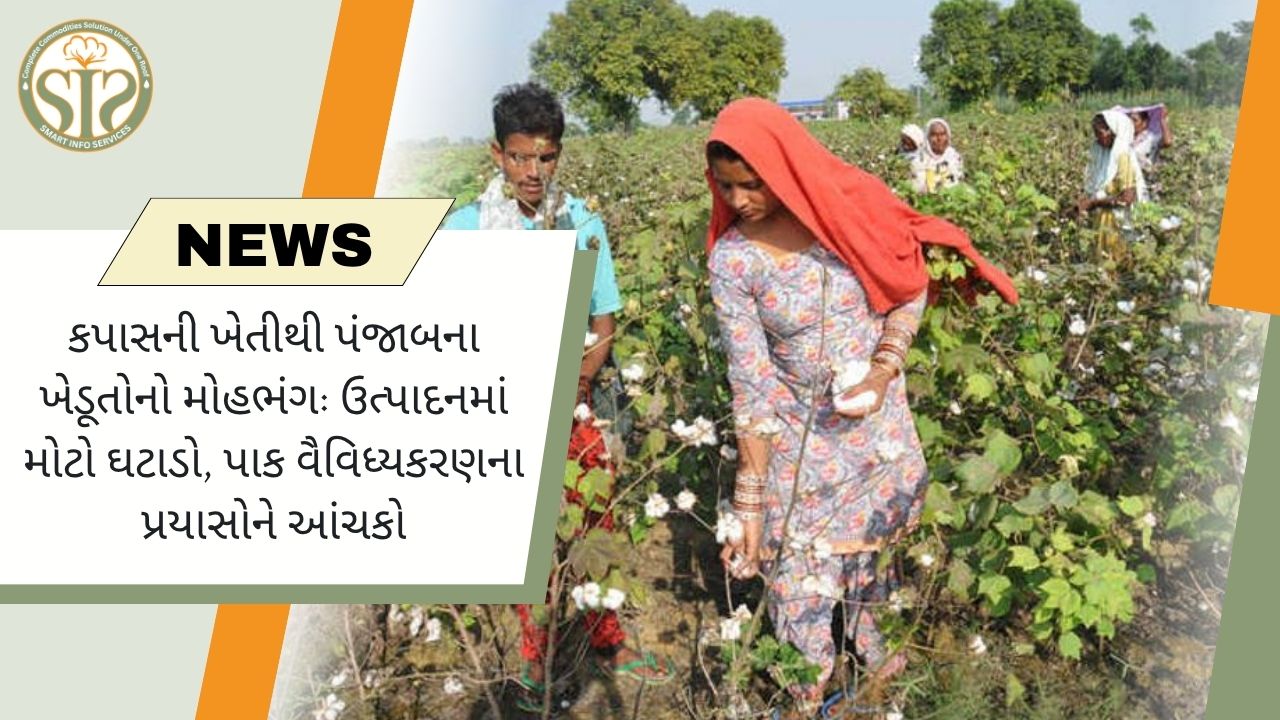
કપાસની ખેતીથી પંજાબના ખેડૂતોનો મોહભંગ: ઉત્પાદનમાં મોટો ઘટાડો, પાક વૈવિધ્યકરણના પ્રયાસોને આંચકોમાલવા પ્રદેશ કપાસના ઉત્પાદન માટે જાણીતો છે, પરંતુ હવે અહીંના ખેડૂતો ડાંગર અને ઘઉંના પાક તરફ વળી રહ્યા છે. લઘુત્તમ ટેકાના ભાવ (MSP) અંગે અનિશ્ચિતતા અને ગુલાબી ઈયળ અને સફેદ માખીનો ઉપદ્રવ ખેડૂતોના કપાસની ખેતી છોડી દેવાના મુખ્ય કારણો માનવામાં આવે છે.પંજાબના ખેડૂતો કપાસની ખેતીથી નિરાશ થઈ રહ્યા છે. આના પરિણામે, આ વર્ષે રાજ્યમાં કપાસના ઉત્પાદનમાં 63.48 ટકાનો ઘટાડો નોંધાયો છે. એક વર્ષમાં કપાસના ઉત્પાદનમાં મોટો ઘટાડો થવાને કારણે સરકારના પાક વૈવિધ્યકરણના પ્રયાસોને આંચકો લાગ્યો છે.કપાસની ખેતીથી પંજાબના ખેડૂતોનો મોહભંગ: ઉત્પાદનમાં મોટો ઘટાડો, પાક વૈવિધ્યકરણના પ્રયાસોને આંચકોપંજાબના ખેડૂતો કપાસની ખેતીથી નિરાશ થઈ રહ્યા છે. આના પરિણામે, આ વર્ષે રાજ્યમાં કપાસના ઉત્પાદનમાં 63.48 ટકાનો ઘટાડો નોંધાયો છે. એક વર્ષમાં કપાસના ઉત્પાદનમાં મોટો ઘટાડો થવાને કારણે સરકારના પાક વૈવિધ્યકરણના પ્રયાસોને આંચકો લાગ્યો છે.ખેડૂતો કપાસની ખેતી છોડી દેવા પાછળ લઘુત્તમ ટેકાના ભાવ (MSP) અંગે અનિશ્ચિતતા અને ગુલાબી ઈયળ અને સફેદ માખીનો ઉપદ્રવ મુખ્ય કારણો હોવાનું માનવામાં આવે છે. કોટન એસોસિએશન ઓફ ઈન્ડિયાના તાજેતરના અહેવાલમાં કપાસના ઉત્પાદનમાં ઘટાડો થયો હોવાનું બહાર આવ્યું છે.માલવા પ્રદેશ કપાસના ઉત્પાદન માટે જાણીતો છે, પરંતુ હવે અહીંના ખેડૂતો ડાંગર અને ઘઉંના પાક તરફ વળી રહ્યા છે. રાજ્યનું ભૂગર્ભજળ સ્તર પહેલાથી જ ઘટી રહ્યું છે. 118 બ્લોક રેડ ઝોનમાં ગયા છે અને આ અહેવાલે હવે સરકારની ચિંતામાં વધુ વધારો કર્યો છે. અહેવાલ મુજબ, કપાસનું ઉત્પાદન 2023-24માં 6.09 લાખ ગાંસડીથી ઘટીને 2024-25માં 2.52 લાખ ગાંસડી થઈ ગયું છે. તેવી જ રીતે, વિસ્તાર પણ 2.14 લાખથી ઘટીને 1 લાખ હેક્ટર થઈ ગયો છે.હરિયાણા અને રાજસ્થાનમાં પરિસ્થિતિ થોડી સારીહરિયાણા અને રાજસ્થાનમાં કપાસનું ઉત્પાદન પણ ગયા વર્ષની સરખામણીમાં ઘટ્યું છે, પરંતુ હજુ પણ ત્યાં પરિસ્થિતિ થોડી સારી છે. ૨૦૨૪-૨૫માં, હરિયાણાએ ૫.૭૮ લાખ હેક્ટરમાં કપાસનું વાવેતર કર્યું હતું અને ૧૧.૯૬ લાખ ગાંસડીનું ઉત્પાદન કર્યું હતું, જ્યારે રાજસ્થાને ૬.૨૭ લાખ હેક્ટરમાં કપાસનું વાવેતર કર્યું હતું અને ૧૭.૭૯ લાખ ગાંસડીનું ઉત્પાદન કર્યું હતું.MSP પર કપાસની ખરીદીમાં પણ ઘટાડોપંજાબમાં MSP પર કપાસની ખરીદીમાં ઘટાડો નોંધવામાં આવ્યો છે. માર્ચમાં કોટન કોર્પોરેશન ઓફ ઇન્ડિયાના અહેવાલ મુજબ, ૨૦૨૪-૨૫માં પંજાબમાં MSP પર માત્ર ૨ હજાર ગાંસડીની ખરીદી કરવામાં આવી હતી, જ્યારે ૨૦૧૯-૨૦માં આ આંકડો ૩.૫૬ લાખ ગાંસડીનો હતો. તેવી જ રીતે, ૨૦૨૦-૨૧માં ૫.૩૬ લાખ ગાંસડીની MSP ખરીદી કરવામાં આવી હતી. ૨૦૨૧-૨૨ અને ૨૦૨૨-૨૩ દરમિયાન કપાસનો બજાર ભાવ MSP કરતાં વધુ હતો, તેથી આ બે વર્ષ દરમિયાન MSP પર કોઈ ખરીદી થઈ ન હતી. વર્ષ ૨૦૨૩-૨૪માં, MSP પર માત્ર ૩૮ હજાર ગાંસડી ખરીદવામાં આવી હતી.વધુ વાંચો :- INR 03 પૈસા ઘટીને 86.29 પ્રતિ ડોલર પર બંધ થયો

સોમવારે ભારતીય રૂપિયો 03 પૈસા ઘટીને 86.29 પ્રતિ ડોલર પર બંધ થયો હતો, જ્યારે સવારે તે 86.26 પર ખુલ્યો હતો.બંધ સમયે, સેન્સેક્સ 442.61 પોઈન્ટ અથવા 0.54 ટકા વધીને 82,200.34 પર અને નિફ્ટી 122.30 પોઈન્ટ અથવા 0.49 ટકા વધીને 25,090.70 પર બંધ થયો હતો. લગભગ 1883 શેર વધ્યા, 2101 શેર ઘટ્યા અને 168 શેર યથાવત રહ્યા.વધુ વાંચો :- કુદરતી રંગીન કપાસ: ભંડોળની અછત અને ઓછી ઉપજના પડકારો
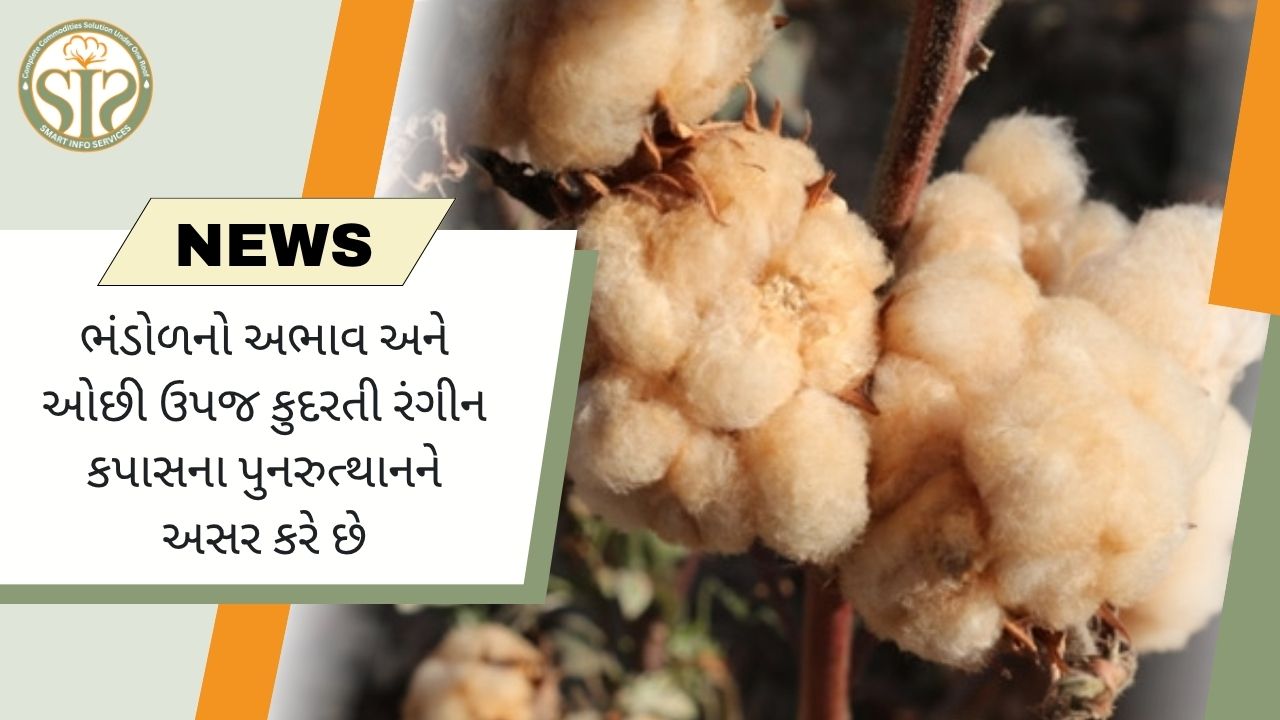
ભંડોળનો અભાવ અને ઓછી ઉપજ કુદરતી રંગીન કપાસના પુનરુત્થાનને અસર કરે છેભારતનો કુદરતી રંગીન કપાસ, જે એક સમયે વ્યાપારી રીતે સફળ રહ્યો હતો, તે ટકાઉ કાપડની વધતી માંગ છતાં તેની લોકપ્રિયતા પાછી મેળવવા માટે સંઘર્ષ કરી રહ્યો છે. ઊંચા ભાવ અને પર્યાવરણીય ફાયદા હોવા છતાં, ઓછી ઉપજ ખેડૂતોને તેને અપનાવવાથી રોકી રહી છે. સરકારી સમર્થન, સુધારેલ બીજ પ્રણાલીઓ અને બજાર જોડાણો તેની નિકાસ ક્ષમતાને સાકાર કરવા અને ભારતના કાપડ ટકાઉપણું લેન્ડસ્કેપને બદલવા માટે મહત્વપૂર્ણ છે.ભારતનો કુદરતી રંગીન કપાસ, જે 1940 ના દાયકામાં વ્યાપારી રીતે ખીલી રહ્યો હતો, ટકાઉ કાપડની વધતી જતી વૈશ્વિક માંગ અને દાયકાઓથી ચાલી રહેલા સરકારી સંશોધન પ્રયાસો છતાં પુનરાગમન માટે સંઘર્ષ કરી રહ્યો છે.આ ખાસ પાક હાલમાં કર્ણાટક, મહારાષ્ટ્ર, તમિલનાડુ અને આંધ્રપ્રદેશમાં માત્ર 200 એકર જમીન પર ઉગાડવામાં આવે છે, જેનો ભાવ પ્રતિ કિલો રૂ. 240 છે, જે નિયમિત કપાસ કરતાં 50 ટકા વધુ રૂ. 160 પ્રતિ કિલો છે. જોકે, નોંધપાત્ર રીતે ઓછી ઉપજને કારણે ખેડૂતો ખેતીનો વિસ્તાર કરવામાં ખચકાટ અનુભવે છે."આછા ભૂરા કપાસની ઉત્પાદકતા ખૂબ જ ઓછી છે, પ્રતિ એકર ૧.૫-૨ ક્વિન્ટલ છે, જ્યારે સામાન્ય કપાસની ઉત્પાદકતા ૬-૭ ક્વિન્ટલ પ્રતિ એકર છે. આ ખેડૂતોને આ પાકના વાવેતર વિસ્તારને વધારવાથી નિરાશ કરે છે," ICAR-સેન્ટ્રલ ઇન્સ્ટિટ્યૂટ ફોર રિસર્ચ ઓન કોટન ટેકનોલોજી (CIRCOT) ના મુખ્ય વૈજ્ઞાનિક અશોક કુમારે PTI ને જણાવ્યું.આ મર્યાદિત એકરમાંથી વાર્ષિક ઉત્પાદન માત્ર ૩૩૦ ક્વિન્ટલ છે, જે આ ખાસ પાક દ્વારા સામનો કરવામાં આવતા પડકારને રેખાંકિત કરે છે, જે સંભવિત રીતે ભારતના કાપડ ટકાઉપણાના દાખલાને બદલી શકે છે.ICAR-CIRCOT હાલમાં હળવા ભૂરા કપાસ પર ધ્યાન કેન્દ્રિત કરી રહ્યું છે.રંગીન કપાસના મૂળ ભારતીય કૃષિમાં પ્રાચીન છે, જેની ખેતી 2500 બીસી પૂર્વેની છે. સ્વતંત્રતા પહેલા, કોકનાડા 1 અને 2 ની લાલ, ખાખી અને ભૂરા જાતો આંધ્રપ્રદેશના રાયલસીમામાં વ્યાપારી રીતે ઉગાડવામાં આવતી હતી, જે જાપાનમાં નિકાસ કરવામાં આવતી હતી. પરંપરાગત જાતો આસામ અને કર્ણાટકના કુમતા ક્ષેત્રમાં પણ ઉગાડવામાં આવતી હતી.જોકે, હરિયાળી ક્રાંતિ દરમિયાન ઉચ્ચ ઉપજ આપતી સફેદ કપાસની જાતો પર ભાર મૂકવામાં આવતા રંગીન કપાસને હાંસિયામાં ધકેલી દેવામાં આવ્યો. આ પાકની અંતર્ગત મર્યાદાઓ - ઓછા બોલ, ઓછા વજન, ઓછા રેસા, ટૂંકા રેસા લંબાઈ અને રંગ ભિન્નતા - તેને મોટા પાયે ખેતી માટે આર્થિક રીતે અયોગ્ય બનાવી દીધી.ભારતીય કૃષિ સંસ્થાઓએ ધારવાડ યુનિવર્સિટી દ્વારા વિકસિત DDCC-1, DDB-12, DMB-225 અને DGC-78 સહિત સુધારેલી જાતો વિકસાવી છે. સેન્ટ્રલ ઇન્સ્ટિટ્યૂટ ફોર કોટન રિસર્ચ, નાગપુરે વૈદેહી-95 વિકસાવી છે, જે ઉપલબ્ધ 4-5 જાતોમાં સૌથી અગ્રણી માનવામાં આવે છે.2015-19 ની વચ્ચે, ICAR-CIRCOT એ પ્રદર્શન બેચમાં 17 ક્વિન્ટલ કપાસનું પ્રક્રિયા કરી, 9,000 મીટર કાપડ, 2,000 થી વધુ જેકેટ અને 3,000 રૂમાલનું ઉત્પાદન કર્યું, જે તેને વ્યાપારી રીતે સક્ષમ સાબિત કર્યું.તેના પર્યાવરણીય લાભો નોંધપાત્ર છે. પરંપરાગત કપાસ રંગવા માટે પ્રતિ મીટર કાપડ માટે લગભગ 150 લિટર પાણીની જરૂર પડે છે, જ્યારે કુદરતી રીતે રંગાયેલા કપાસ આ જરૂરિયાતને દૂર કરે છે, જે ઝેરી કચરાના નિકાલના ખર્ચમાં 50 ટકા સુધીનો ઘટાડો કરી શકે છે."કુદરતી રીતે રંગાયેલા કપાસમાં પુષ્કળ નિકાસ ક્ષમતા છે. ઉત્પાદન અને મૂલ્યવર્ધન વધારવા માટે વધુ સરકારી સહાયની જરૂર છે," કુમારે કહ્યું.ઊંચા ભાવ અને પર્યાવરણીય લાભો હોવા છતાં, વિસ્તરણને બીજ પ્રણાલીનો અભાવ, જંતુઓ પ્રત્યે સંવેદનશીલતા અને કપાસની ખેતીમાં સામાન્ય રીતે ઉપયોગમાં લેવાતા ઉચ્ચ જંતુનાશકોની જરૂરિયાત જેવા અવરોધોનો સામનો કરવો પડે છે."ઓછા ઉત્પાદન અને બજારના અભાવને કારણે કોઈ જાતો વિકસાવી શકતું નથી. કાપડ મિલો પણ ઓછી માત્રામાં કપાસ ખરીદવા તૈયાર નથી," કુમારે કહ્યું.ખાસ કરીને યુરોપ, યુએસએ અને જાપાનમાં પર્યાવરણ પ્રત્યે સભાન બ્રાન્ડ્સની વધતી માંગ સાથે વૈશ્વિક બજારમાં સંભાવના જોવા મળી રહી છે. ઓસ્ટ્રેલિયા અને ચીન પરંપરાગત સંવર્ધન અને આનુવંશિક ઇજનેરીનો ઉપયોગ કરીને સંશોધનમાં ભારે રોકાણ કરી રહ્યા છે.વધુ વાંચો :- ગુજરાત: કાપડ ઉદ્યોગને કપાસના MSP વધારાથી ખતરો છે

ગુજરાત: કપાસના MSPમાં વધારાથી કાપડ ઉદ્યોગને નુકસાન થવાની ભીતિઅમદાવાદ : કેન્દ્ર સરકારે તાજેતરમાં કપાસ (કાચા કપાસ) ના લઘુત્તમ ટેકાના ભાવ (MSP) માં વધારો કર્યો છે, જેમાં તમામ શ્રેણીઓ માટે ભાવમાં વધારો કરવામાં આવ્યો છે - મધ્યમ મુખ્ય રૂ. 7,460 થી રૂ. 7,560 પ્રતિ ક્વિન્ટલ, મધ્યમ લાંબા મુખ્ય રૂ. 7,710 થી રૂ. 7,860, લાંબા મુખ્ય રૂ. 8,010 થી રૂ. 8,110 અને વધારાના લાંબા મુખ્ય રૂ. 8,310 થી રૂ. 9,310. જોકે આ વધારો ખેડૂતોને ટેકો આપવાનો હેતુ છે, પરંતુ તેનાથી ગુજરાતના કાપડ ઉદ્યોગમાં ચિંતા ફેલાઈ છે, કારણ કે તેમને ડર છે કે કાચા માલની વધતી કિંમત વૈશ્વિક બજારમાં ભારતની સ્પર્ધાત્મકતા ઘટાડશે.ઉદ્યોગના નેતાઓ દલીલ કરે છે કે કપાસની ઉત્પાદકતામાં વધારો, ફક્ત MSP વધારવાને બદલે, ખેડૂતોની આવક વધારવાનો વધુ ટકાઉ માર્ગ પ્રદાન કરે છે. "વૈશ્વિક કપાસ ઉત્પાદનમાં ભારતનો હિસ્સો ૩૭% છે પરંતુ ઉત્પાદનમાં તેનું યોગદાન માત્ર ૨૩% છે," ગુજરાત સ્પિનર્સ એસોસિએશનના સિનિયર વાઇસ પ્રેસિડેન્ટ જયેશ પટેલે જણાવ્યું. "જો ભારત વૈશ્વિક નેતા બનવા માંગે છે, તો ઉપજ સુધારવા પર ધ્યાન કેન્દ્રિત કરવું મહત્વપૂર્ણ છે," તેમણે ઉમેર્યું.ખેડૂતો કપાસ પરની આયાત ડ્યુટી દૂર કરવાની પણ માંગ કરી રહ્યા છે. "ભારતીય કપાસ હવે સમગ્ર વિશ્વમાં સૌથી મોંઘો છે, જે આપણી સ્પર્ધાત્મકતાને સીધી અસર કરે છે," PDEXCIL ના ભૂતપૂર્વ ચેરમેન ભરત છજેદે જણાવ્યું. "જ્યારે વૈશ્વિક બ્રાન્ડ્સ ભારતને બાંગ્લાદેશના વિકલ્પ તરીકે જોઈ રહી છે, ત્યારે મોંઘો કપાસ આપણને ઓછો નફાકારક બનાવે છે," તેમણે ઉમેર્યું.કપાસના વેપારી અરુણ દલાલના મતે, સુધારેલ MSP માળખું ખેડૂતોને ભેજના આધારે ભાવ નક્કી કરીને વધુ સારી ગુણવત્તાવાળા કપાસનો પુરવઠો પૂરો પાડવા માટે પ્રોત્સાહિત કરે છે. "આ સિઝનમાં વાવણીમાં વધારો થયો છે અને વધુ આવક ખેડૂતોને વધુ સારો નફો મેળવવામાં મદદ કરી શકે છે," તેમણે જણાવ્યું. જોકે, દલાલે ચેતવણી આપી હતી કે કપાસના સતત ઊંચા ભાવ સ્પિનિંગ યુનિટ્સ અને યાર્ન ઉત્પાદકો પર વધુ દબાણ લાવી શકે છે, જે પહેલાથી જ નબળી માંગ અને ઘટતા નફાનો સામનો કરી રહ્યા છે.ઉદ્યોગ નિષ્ણાતો સરકારને કૃષિ સહાય અને કાપડ ક્ષેત્રના રક્ષણ વચ્ચે સંતુલન જાળવવા વિનંતી કરી રહ્યા છે. આયાત ડ્યુટી દૂર કરવી, ઉત્પાદકતા વધારવી અને લોજિસ્ટિક્સ ખર્ચ ઘટાડવો એ મુખ્ય માંગણીઓ છે.વધુ વાંચો :- ડોલર સામે રૂપિયો 11 પૈસા ઘટીને 86.26 પર ખુલ્યો

ડોલર ઇન્ડેક્સ ફરી ઊંચા સ્તરે ટ્રેડ થવાને કારણે રૂપિયો ૧૧ પૈસા ઘટીને ૮૬.૨૬ પર ખુલ્યો.૨૧ જુલાઈના રોજ ડોલર ઇન્ડેક્સ ઊંચા સ્તરે ટ્રેડ થવાને કારણે રૂપિયો ૧૧ પૈસા ઘટીને ખુલ્યો. પાછલા સત્રના અંતે ૮૬.૧૫ પર સમાપ્ત થયા બાદ ડોલર સામે ચલણ ૮૬.૨૬ પર ખુલ્યું.વધુ વાંચો :- રાજ્યવાર CCI કપાસ વેચાણ વિગતો 2024-25 .
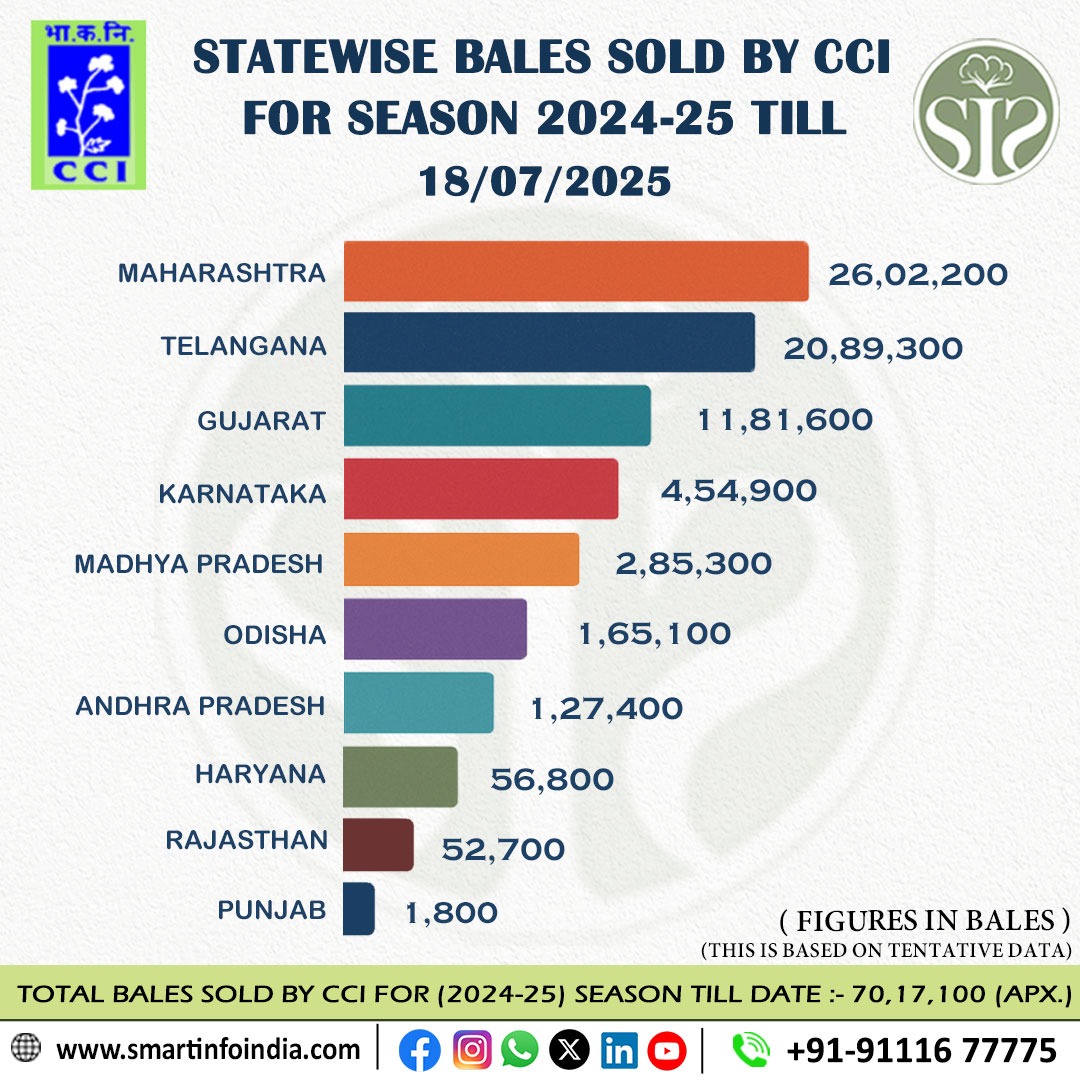
રાજ્યવાર CCI કપાસ વેચાણ વિગતો - 2024-25 સીઝનભારતીય કોટન કોર્પોરેશન (CCI) એ આ અઠવાડિયે પ્રતિ કેન્ડી ભાવમાં ₹700 નો વધારો કર્યો છે. ભાવ સુધારા પછી પણ, CCI એ આ અઠવાડિયે કુલ 3,27,900 ગાંસડીનું વેચાણ કર્યું છે, જેનાથી 2024-25 સીઝનમાં અત્યાર સુધી કુલ વેચાણ 70,17,100 ગાંસડી જેટલું થયું છે. આ આંકડો અત્યાર સુધી ખરીદાયેલા કુલ કપાસના લગભગ 70.17% છે.રાજ્યવાર વેચાણના આંકડા દર્શાવે છે કે વેચાણમાં મુખ્ય ભાગીદારી મહારાષ્ટ્ર, તેલંગાણા અને ગુજરાતમાંથી રહી છે, જે સંયુક્ત રીતે અત્યાર સુધીના કુલ વેચાણમાં 83.69% થી વધુ હિસ્સો ધરાવે છે.આ આંકડા કપાસ બજારમાં સ્થિરતા લાવવા અને મુખ્ય કપાસ ઉત્પાદક રાજ્યોમાં નિયમિત પુરવઠો સુનિશ્ચિત કરવા માટે CCI ના સક્રિય પ્રયાસોને પ્રતિબિંબિત કરે છે.વધુ વાંચો :- પંજાબમાં વરસાદથી રાહત, ઈયળનો ખતરો યથાવત
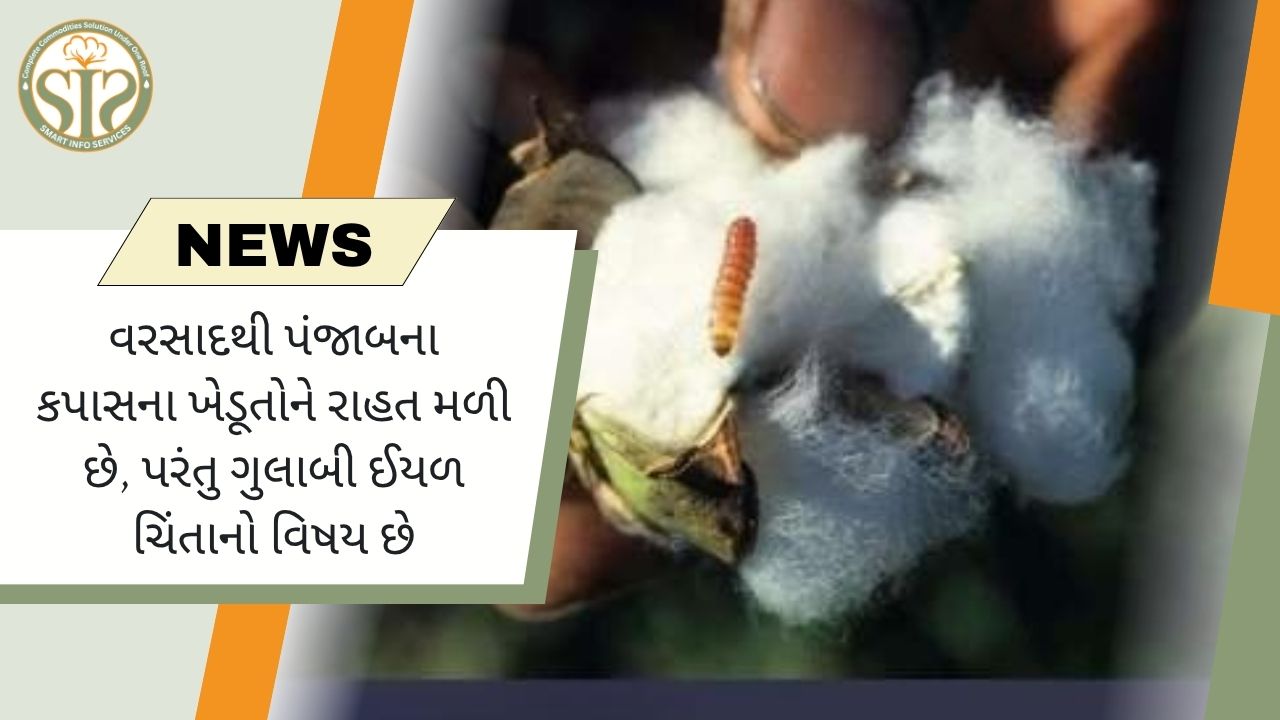
વરસાદથી પંજાબના કપાસના ખેડૂતોને રાહત મળી છે, પરંતુ ગુલાબી ઈયળ ચિંતાનો વિષય છેઅઠવાડિયાના શુષ્ક હવામાન પછી, દક્ષિણપશ્ચિમ પંજાબમાં તાજેતરના વરસાદથી કપાસના ખેડૂતોને રાહત મળી છે, જેનાથી ખરીફ સીઝન સફળ થવાની આશા જાગી છે. વરસાદથી કપાસના પાકને પુનર્જીવિત કરવામાં આવ્યો છે, પરંતુ આ પ્રદેશને અસર કરતી મુખ્ય જીવાતોમાંની એક, સફેદ માખીના ઉપદ્રવનું જોખમ પણ ઓછું થયું છે.જોકે, કૃષિ નિષ્ણાતો ચેતવણી આપે છે કે બીજી વિનાશક જીવાત, ગુલાબી ઈયળ, હજુ પણ એક ભયાનક ખતરો છે. ખાસ કરીને પંજાબમાં કપાસના પાકને નુકસાન પહોંચાડતી, ગુલાબી ઈયળએ છેલ્લી સીઝનમાં નોંધપાત્ર આર્થિક નુકસાન પહોંચાડ્યું છે, જે બીટી કપાસને પણ અસર કરે છે - જે આ જીવાતને રોકવા માટે રચાયેલ આનુવંશિક રીતે સુધારેલી જાત છે.પંજાબ કૃષિ યુનિવર્સિટી (પીએયુ) અને કૃષિ વિજ્ઞાન કેન્દ્રો (કેવીકે) ની ટીમો ખેતરોમાં પરિસ્થિતિનું સક્રિયપણે નિરીક્ષણ કરી રહી છે. પીએયુના મુખ્ય કીટશાસ્ત્રી ડૉ. વિજય કુમારે પુષ્ટિ આપી છે કે વરસાદથી પુખ્ત સફેદ માખીઓને દૂર કરવામાં મદદ મળી છે, જેનાથી તાત્કાલિક ચિંતાઓ ઓછી થઈ છે. "ક્ષેત્ર સર્વેક્ષણો સૂચવે છે કે સફેદ માખીનો ઉપદ્રવ હાલમાં નિયંત્રણમાં છે," તેમણે કહ્યું.વરસાદ પછી ભેજમાં વધારો થવાથી ગુલાબી ઈયળના વિકાસ માટે અનુકૂળ પરિસ્થિતિઓ સર્જાઈ છે. કુમારે શરૂઆતમાં વાવેલા કેટલાક ખેતરોમાં ઉપદ્રવના પ્રારંભિક સંકેતો જોયા અને ખેડૂતોને સતર્ક રહેવા વિનંતી કરી. "આગામી બે થી ત્રણ અઠવાડિયામાં ગુલાબી ઈયળની વસ્તી વધવાની ધારણા છે. ખેડૂતોએ કીટ વ્યવસ્થાપન નિયમોનું કડક પાલન કરવું જોઈએ," તેમણે ચેતવણી આપી.રાજ્યના કૃષિ અધિકારીઓના જણાવ્યા અનુસાર, આ સિઝનમાં લગભગ ૧.૨ લાખ હેક્ટરમાં કપાસનું વાવેતર કરવામાં આવ્યું છે - ગયા વર્ષે ૯૬,૦૦૦ હેક્ટરથી વધુ. આ વિસ્તારમાં ફાઝિલ્કા જિલ્લો લગભગ અડધો હિસ્સો ધરાવે છે, જે ખેડૂતોમાં કપાસની ખેતીમાં નવી રુચિ દર્શાવે છે.ફાઝિલ્કાના મુખ્ય કૃષિ અધિકારી રાજિન્દર કુમારે જણાવ્યું હતું કે અનુકૂળ હવામાન અને યોગ્ય પોષક તત્વોના સંચાલનને કારણે પાક સારી સ્થિતિમાં છે. "અમને સારા પાકની આશા છે કારણ કે અત્યાર સુધી કોઈ મોટી જીવાતનો ઉપદ્રવ નોંધાયો નથી," તેમણે કહ્યું.વધુ વાંચો:- કપાસના પાક પર પેરામિલ્ટ વાયરસનો ખતરો
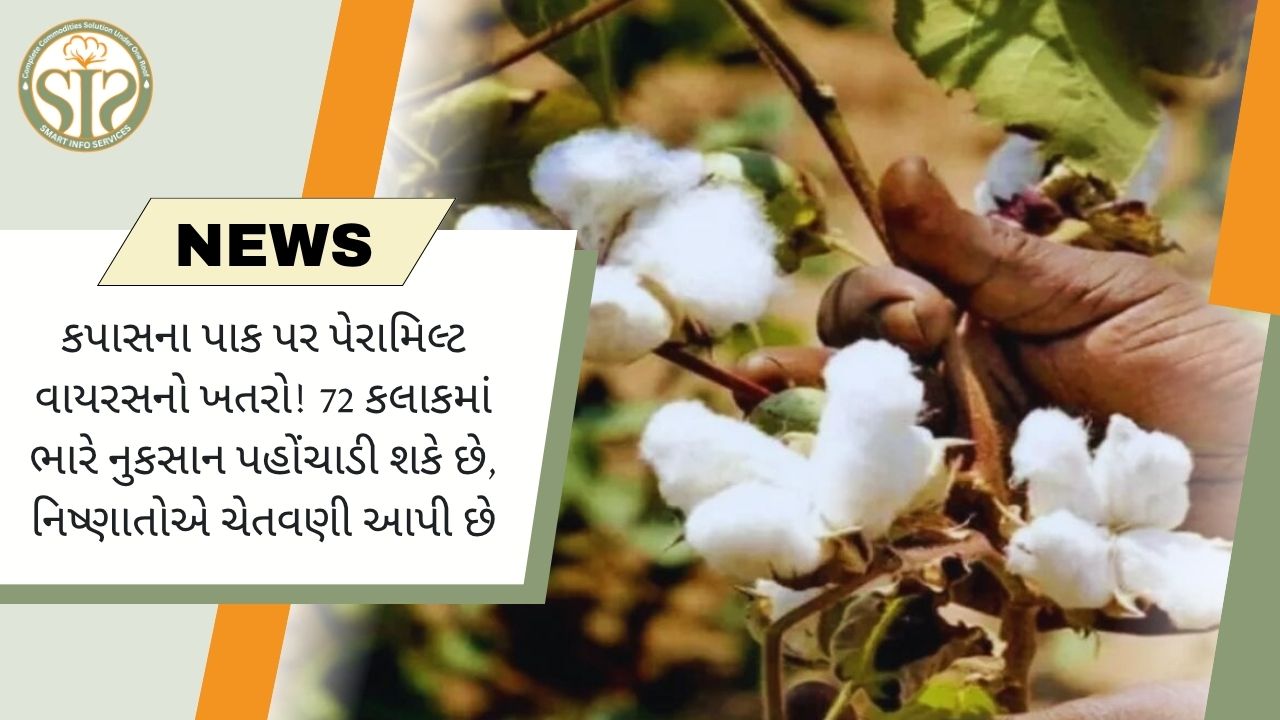
કપાસના પાક પર પેરામિલ્ટ વાયરસનો ખતરો! 72 કલાકમાં ભારે નુકસાન પહોંચાડી શકે છે, નિષ્ણાતોએ ચેતવણી આપી છેખારગોન (મધ્યપ્રદેશ): કપાસના ઉત્પાદનમાં દેશનો અગ્રણી જિલ્લો, ખરગોન, આ દિવસોમાં એક નવા પડકારનો સામનો કરી રહ્યો છે. સમયાંતરે વરસાદ અને પછી અચાનક તીવ્ર સૂર્યપ્રકાશને કારણે, કપાસના પાક પર પેરામિલ્ટ વાયરસ નામની સમસ્યાનો ભય છે. કૃષિ વૈજ્ઞાનિકો કહે છે કે વાયરસ જેવા લક્ષણો ધરાવતો આ રોગ કપાસના છોડને ખૂબ જ ઝડપથી સુકાઈ જાય છે અને જો સમયસર સારવાર ન કરવામાં આવે તો તે 72 કલાકમાં સમગ્ર પાકનો નાશ કરી શકે છે.પેરામિલ્ટ વાયરસ શું છે?કૃષિ વિજ્ઞાન કેન્દ્ર ખરગોનમાં પોસ્ટ કરાયેલા વરિષ્ઠ વૈજ્ઞાનિક ડૉ. રાજીવ સિંહના મતે, પેરામિલ્ટ વાયરસ વાસ્તવમાં પરંપરાગત વાયરસ નથી, પરંતુ તે એક શારીરિક વિકાર છે. આ સમસ્યા ત્યારે ઊભી થાય છે જ્યારે છોડને પૂરતું પાણી અને પોષણ મળતું નથી, ખાસ કરીને જ્યારે હવામાન અચાનક બદલાય છે - જેમ કે સતત વરસાદ પછી તીવ્ર સૂર્યપ્રકાશ અથવા લાંબા દુષ્કાળ અને પછી અચાનક વરસાદ.આ સ્થિતિમાં, ખેતરોમાં ઘણા છોડ એકસાથે સુકાઈ જતા જોવા મળે છે, જે ખેડૂતોને ભારે નુકસાન પહોંચાડી શકે છે.લક્ષણો શું છે?* પેરામિલ્ટના લક્ષણો નીચે મુજબ છે:* પાંદડા અચાનક સુકાઈ જવા* ઉપરની ડાળીઓ વાંકા થઈ જવા અથવા સુકાઈ જવા* છોડનો રંગ પીળો કે ભૂરો થઈ જાય છે* કેટલાક છોડ જમીન પર પડી જાય છે, જાણે તેમને કાપી નાખવામાં આવ્યા હોયસમયસર સારવાર ખૂબ જ મહત્વપૂર્ણ છે: 72 કલાકની સુવર્ણ તકડૉ. સિંહ સલાહ આપે છે કે જો આ લક્ષણો દેખાય, તો 72 કલાકની અંદર સારવાર શરૂ કરવી ફરજિયાત છે.સારવાર માટે:* 10 મિલિગ્રામ કોબાલ્ટ ક્લોરાઇટ + 20 ગ્રામ યુરિયા એક લિટર પાણીમાં ઓગાળીને છોડના મૂળને સિંચાઈ કરો.* આ સારવાર છોડના મૂળની કામગીરીને ફરીથી સક્રિય કરે છે, જેથી છોડ પાણી અને પોષણ શોષી શકે.જો કોબાલ્ટ ક્લોરાઇટ ઉપલબ્ધ ન હોય, તો વિકલ્પોનો ઉપયોગ કરોજો બજારમાં કોબાલ્ટ ક્લોરાઇટ ઉપલબ્ધ ન હોય તો:* એક લિટર પાણીમાં 1 ગ્રામ કાર્બેન્ડાઝીમ + 20 ગ્રામ યુરિયા ભેળવીને મૂળ પર છાંટોઅથવા* એક લિટર પાણીમાં 2.5 ગ્રામ કોપર ઓક્સીક્લોરાઇડ + 20 ગ્રામ યુરિયા ભેળવીને પાક પર છંટકાવ કરો* નોંધ: અસરકારક પરિણામો મેળવવા માટે 72 કલાકની અંદર સારવાર અથવા છંટકાવ કરવો આવશ્યક છેવધુ વાંચો:- કાપડમાં રોકાણ કરવા માટે સાંસદે ઇન્ડિટેક્સને આમંત્રણ આપ્યું

મધ્યપ્રદેશે ઇન્ડિટેક્સને કાપડ રોકાણની તકો વિશે માહિતી આપીસ્પેનના તેમના પ્રવાસના બીજા દિવસે, મુખ્યમંત્રી ડૉ. મોહન યાદવે ગેલિસિયામાં ઇન્ડિટેક્સના મુખ્ય મથક ખાતે કંપનીના વરિષ્ઠ અધિકારીઓ સાથે વાતચીત કરી. તેમણે મધ્યપ્રદેશને 'લીલા, ખર્ચ-સ્પર્ધાત્મક અને સુલભ ઉત્પાદન કેન્દ્ર' તરીકે સ્થાન આપ્યું અને ઇન્ડિટેક્સને રાજ્યના વિકસતા કાપડ ઇકોસિસ્ટમમાં રોકાણ કરવા આમંત્રણ આપ્યું.બેઠક દરમિયાન, ડૉ. યાદવે મધ્યપ્રદેશની મજબૂત ઓળખ પર ભાર મૂક્યો, જેમાં ભારતના ટોચના કપાસ ઉત્પાદકોમાંનો એક હોવાનો સમાવેશ થાય છે, જેનું વાર્ષિક ઉત્પાદન લગભગ 18 લાખ ગાંસડી (3 લાખ મેટ્રિક ટન) છે અને તે ઇન્દોર, મંદસૌર, બુરહાનપુર, ઉજ્જૈન અને નીમચ જેવા શહેરોમાં 15 થી વધુ કાપડ ક્લસ્ટરોનું ઘર છે.તેમણે ધાર જિલ્લામાં આગામી પીએમ મિત્ર ટેક્સટાઇલ પાર્કને ઇન્ડિટેક્સ માટે ટકાઉ અને સંકલિત વસ્ત્ર ઉત્પાદન એકમ સ્થાપવા માટે સુવર્ણ તક ગણાવી. ભારત સરકારની મુખ્ય યોજના હેઠળ વિકસાવવામાં આવેલ, આ પાર્કનો હેતુ અદ્યતન માળખાગત સુવિધાઓ અને લીલા ઉત્પાદન ક્ષમતાઓ દ્વારા વૈશ્વિક ખેલાડીઓને આકર્ષવાનો છે.ડૉ. યાદવે ઓર્ગેનિક કપાસ ઉત્પાદનમાં સહયોગનો પણ પ્રસ્તાવ મૂક્યો, ખાસ કરીને નિમાર અને માલવા પ્રદેશોમાં, જે તેમના GOTS-પ્રમાણિત ખેડૂત જૂથો માટે જાણીતા છે. મધ્યપ્રદેશના જનસંપર્ક વિભાગ દ્વારા જારી કરાયેલા એક પ્રકાશન અનુસાર, તેમણે ઇન્ડિટેક્સના ટકાઉ વિકાસ લક્ષ્યોને અનુરૂપ 'ખેડૂત-થી-કાપડ' મૂલ્ય શૃંખલા વિકસાવવાનું સૂચન કર્યું.અંતે, તેમણે ઇન્ડિટેક્સને પીએમ મિત્રા પાર્ક ખાતે સપ્લાય ચેઇન લીડર તરીકે કાર્ય કરવા અને ESG-પ્રમાણિત MSME પર કેન્દ્રિત ઓર્ગેનિક કપાસ ટ્રેસિંગ પ્લેટફોર્મ અને વિક્રેતા વિકાસ કાર્યક્રમ શરૂ કરવામાં ભાગીદારી કરવા આમંત્રણ આપ્યું."અમે દરેક તબક્કે આ ભાગીદારીને ટેકો આપવા તૈયાર છીએ," ડૉ. યાદવે કહ્યું.વધુ વાંચો:- આંધ્રપ્રદેશ: કપાસના વાવેતરમાં ઘટાડા અંગે નિષ્ણાતો ચિંતિત

આંધ્રપ્રદેશ: દેશભરમાં કપાસના વાવેતરમાં ઘટાડા અંગે નિષ્ણાતો ચિંતિતવિજયવાડા: કપાસ સોલવન્ટ અને એક્સટ્રેક્ટર ઉદ્યોગના નિષ્ણાતો છેલ્લા કેટલાક વર્ષોમાં દેશભરમાં કપાસના વાવેતરમાં ઘટાડા અંગે ચિંતિત છે. કપાસ ઉદ્યોગના અહેવાલ મુજબ, 2024-2025માં કપાસના પાક હેઠળનો વિસ્તાર 9.8% ઘટીને 114.47 લાખ હેક્ટર થવાની ધારણા છે. પરિણામે, ઉત્પાદન ગયા વર્ષે 325 લાખ ગાંસડીથી ઘટીને 307 લાખ ગાંસડી થવાનો અંદાજ છે. કપાસના બીજ કપાસના કુલ વજનના લગભગ બે તૃતીયાંશ ભાગ હોવાથી, ઉદ્યોગના દિગ્ગજો માને છે કે ઉત્પાદનમાં ઘટાડાની સીધી અસર તેલ અને ઘાસચારાના ઉત્પાદન પર પડશે.આ પરિસ્થિતિની ગંભીર નોંધ લેતા, સોલવન્ટ એક્સટ્રેક્ટર્સ એસોસિએશન ઓફ ઈન્ડિયા (SEA) અને ઓલ ઈન્ડિયા કોટનસીડ ક્રશર્સ એસોસિએશન (AICOSCA) એ ભારતની ખાદ્ય તેલ સુરક્ષા, પશુધન ફીડ ઉદ્યોગ અને ગ્રામીણ અર્થતંત્રને વધારવા માટે કપાસિયા તેલ અને તેના ઉપ-ઉત્પાદનોની સંભાવનાને મહત્તમ કરવાના માર્ગો શોધવાનું નક્કી કર્યું છે.SEA ના પ્રમુખ સંજીવ અસ્થાનાના જણાવ્યા અનુસાર, "ભારત વાર્ષિક ૧.૨ મિલિયન ટન કપાસિયા તેલનું ઉત્પાદન કરે છે, જે તેને સોયાબીન અને રેપસીડ પછી ત્રીજું સૌથી મોટું ખાદ્ય તેલ બનાવે છે. તેના ઉત્તમ તળવાના ગુણધર્મોને કારણે, તેનો ઉપયોગ ગુજરાતમાં રસોઈમાં વ્યાપકપણે થાય છે, જ્યારે અન્ય પ્રદેશોમાં તેનો ઉપયોગ મર્યાદિત છે અને મુખ્યત્વે રેસ્ટોરન્ટ્સ અને ફૂડ પ્રોસેસર્સ જેવા સંસ્થાકીય ખરીદદારો દ્વારા તેનો ઉપયોગ થાય છે." "અમે જાગૃતિ લાવવા અને ઘરેલુ વપરાશ માટે કપાસિયા તેલ અપનાવવા પ્રોત્સાહિત કરવા માંગતા હતા, તેના ઘણા ફાયદાઓને ધ્યાનમાં રાખીને," અસ્થાનાએ જણાવ્યું.AICOSCA ના પ્રમુખ સંદીપ બાજોરિયાએ જણાવ્યું હતું કે કપાસિયા તેલ વિશાળ શ્રેણીના મૂલ્યવાન ઉપયોગો પ્રદાન કરે છે. "કપાસિયા તેલ રસોડામાં સૌથી લોકપ્રિય રસોઈ તેલોમાંનું એક છે. તેનો ઉપયોગ અન્ય ખાદ્ય તેલોમાં સ્વાદ અને ગંધના ગુણધર્મોને માપવા માટે એક ધોરણ તરીકે થાય છે. તે મોટાભાગના પ્રાચ્ય ભોજનમાં મુખ્ય ઘટકોમાંનું એક પણ છે." "કપાસિયા એક ઉત્તમ ફીડસ્ટફ ઘટક છે," બાજોરિયાએ જણાવ્યું હતું. તેમણે કહ્યું કે ઉદ્યોગે કપાસિયા તેલના ઉપયોગ અને મૂલ્યને પ્રોત્સાહન આપવા, પ્રક્રિયા તકનીકોને અપગ્રેડ કરવા અને ડેરી પોષણમાં કપાસિયા ભોજનની ભૂમિકાને પ્રોત્સાહન આપવા પર ધ્યાન કેન્દ્રિત કરવાનું શરૂ કર્યું છે.SEAના એક્ઝિક્યુટિવ ડિરેક્ટર ડૉ. બી. વી. મહેતાએ માહિતી આપી હતી કે કપાસિયા તેલનું હાલમાં ઉત્પાદન વાર્ષિક આશરે ૧૧.૫ થી ૧૨ લાખ ટન છે. જોકે, તેમણે કહ્યું કે આ ક્ષમતા લગભગ ૧૮ લાખ ટન છે જેનો ઉપયોગ આધુનિક વૈજ્ઞાનિક પદ્ધતિઓનો ઉપયોગ કરીને કપાસિયા તેલનું પ્રક્રિયા કરીને કરી શકાય છે. આ ખાદ્ય તેલની વધતી જતી જરૂરિયાતને પૂર્ણ કરવામાં અને ખાદ્ય તેલની આયાત પર નિર્ભરતા ઘટાડવામાં પણ મદદ કરશે.શ્રી ધનલક્ષ્મી કોટન એન્ડ રાઇસ મિલ્સ પ્રાઇવેટ લિમિટેડ (ગુંટુર) ના ડિરેક્ટર પી. વીરા નારાયણે જણાવ્યું હતું કે તેઓ ૨ અને ૩ ઓગસ્ટના રોજ વિજયવાડા ખાતે યોજાનારી રાષ્ટ્રીય પરિષદમાં દેશમાં કપાસિયા તેલના પ્રક્રિયા અને ઉપયોગને પુનર્જીવિત કરવા પર ધ્યાન કેન્દ્રિત કરશે. તેમણે કહ્યું કે આંધ્રપ્રદેશ કપાસના સૌથી મોટા ઉત્પાદકોમાંનું એક છે અને તે યોગ્ય છે કે તેઓ વિજયવાડા ખાતે પરિષદનું આયોજન કરી રહ્યા છે. આ રાષ્ટ્રીય પ્લેટફોર્મમાં વૈજ્ઞાનિકો, ઉદ્યોગ નેતાઓ અને વ્યાપાર નેતાઓ સહિત ૩૦૦ થી વધુ પ્રતિનિધિઓ ભાગ લે તેવી અપેક્ષા છે, જે પ્રદેશમાં સહયોગ અને ટકાઉ વિકાસને પ્રોત્સાહન આપશે.વધુ વાંચો:- CCI 2024-25માં ઈ-બિડિંગ દ્વારા 70% કપાસનું વેચાણ કરશે