Filter

Recent News

Sharp jump in cotton imports from zero duty window

Cotton imports zoom as traders reap zero duty window benefit.India imported cotton at a record pace, procuring nearly 3 million bales in the December quarter, as buyers rushed to take advantage of the duty-free window till the year-end.This could lead to a second consecutive year of record imports in FY26 amid lower domestic production, rain-damaged crop quality, and higher local prices.Trade bodies, global merchants, and textile mills estimate that total imports during the October-September cotton marketing season could reach 5-6 million bales, depending on government policy, US tariffs, and trade pacts with the EU and the UK.Acting on a longstanding demand from the cotton textile and yarn industry, the government scrapped a 11% import duty on cotton from August 19 till December 31. The industry had anticipated shortages as the area under cotton cultivation has been declining for the past two years.Cotton acreage fell 3.5% in kharif 2025 from the year earlier, adding to a sharper 9.5% decline in kharif 2024 over 2023."The top 10 mills in the country have covered their cotton requirements until May or June through imports," said Atul Ganatra, chairman, Radhalakshmi Group and former president of the Cotton Association of India (CAI).In addition to the strong imports in the first quarter of the cotton marketing year, the industry expects another 2-3 million bales to be imported in the rest of the year.A key reason is the widespread damage to the quality of Indian cotton due to adverse weather conditions. "The quality of at least 50% of this year's cotton production has been affected, which is reflected in parameters such as strength and shine," said K Selvaraju, secretary general of the Southern India Mills Association (SIMA).Export commitments require specific grades of cotton that are contamination-free and of extra- long staple (ELS), for which India depends on imports. "We will import 300,000 bales of Australian cotton between June and August. At least 500,000 bales of duty-free extra-long staple cotton will be imported by September to meet our normal demand for this variety. More than 500,000 bales may also come from Africa, which attracts lower duties," said Ganatra.Cotton imported by processing mills for their captive consumption attracts only 4% import duty. Large mills can import at lower effective duties when domestic prices remain higher than international prices.Meanwhile, state-owned Cotton Corporation of India (CCI) is holding more than 20% of this year's crop through price support procurement at the minimum support price.read more :-Bangladesh proposes safeguard tariff on Indian cotton yarn imports


Bangladesh Considers 20% Safeguard Duty on Indian Cotton Yarn Imports

Bangladesh Textile Industry Seeks Safeguard Duty on Indian Cotton Yarn ImportsNagpur: Bangladesh’s textile industry is pushing for the imposition of a 20% safeguard tariff on imports of cotton yarn, blended yarn, and grey mélange from India. The proposal comes amid political and economic uncertainty ahead of elections, with industry players seeking protection for domestic manufacturers.A safeguard tariff is a temporary duty imposed to shield local industries from rising imports. According to reports, a note by a foreign trade research officer in Bangladesh has been circulated among key authorities, including the trade and tariff commission and commerce ministry, recommending the duty. The matter was discussed in a meeting held on January 5, although no official decision has been announced yet.The development has raised concerns in India, particularly among textile manufacturers in regions like Vidarbha, where a significant portion of yarn production is exported to Bangladesh. Industry leaders warn that such a move could deal a double blow—impacting both yarn exports and domestic cotton prices.The timing is critical, as India recently reinstated an 11% import duty on raw cotton from January 1, after temporarily lifting it in August. While the earlier duty relaxation allowed cheaper imports and supported the textile sector, the reimposition has already pushed domestic cotton prices closer to the Minimum Support Price (MSP) of ₹8,110 per quintal for premium grades.Higher cotton costs are squeezing margins for Indian textile manufacturers. If Bangladesh goes ahead with the safeguard tariff, it could further weaken India’s export competitiveness in a key market.According to industry estimates, nearly 30% of yarn produced in Vidarbha—around 3,000 tonnes per month—is exported to Bangladesh, with about 45 manufacturing units dependent on this trade. Any disruption could lead to a surplus in the domestic market, potentially dragging down yarn and cotton prices.The demand for a safeguard duty in Bangladesh is reportedly linked to misuse of duty-free import provisions. Certain licensed importers were allowed to import yarn from India duty-free, provided it was used for export-oriented garment production. However, authorities found that some firms diverted these inputs to produce garments for the domestic market, distorting trade practices.Industry experts believe that any tariff imposition could significantly alter trade dynamics between the two countries, affecting both textile exports and the broader cotton value chain.Read More :- Rupee opens 07 paise down at 89.95

Cotton prices firm: End of import duty exemption, impact of Bangladesh tariffs?

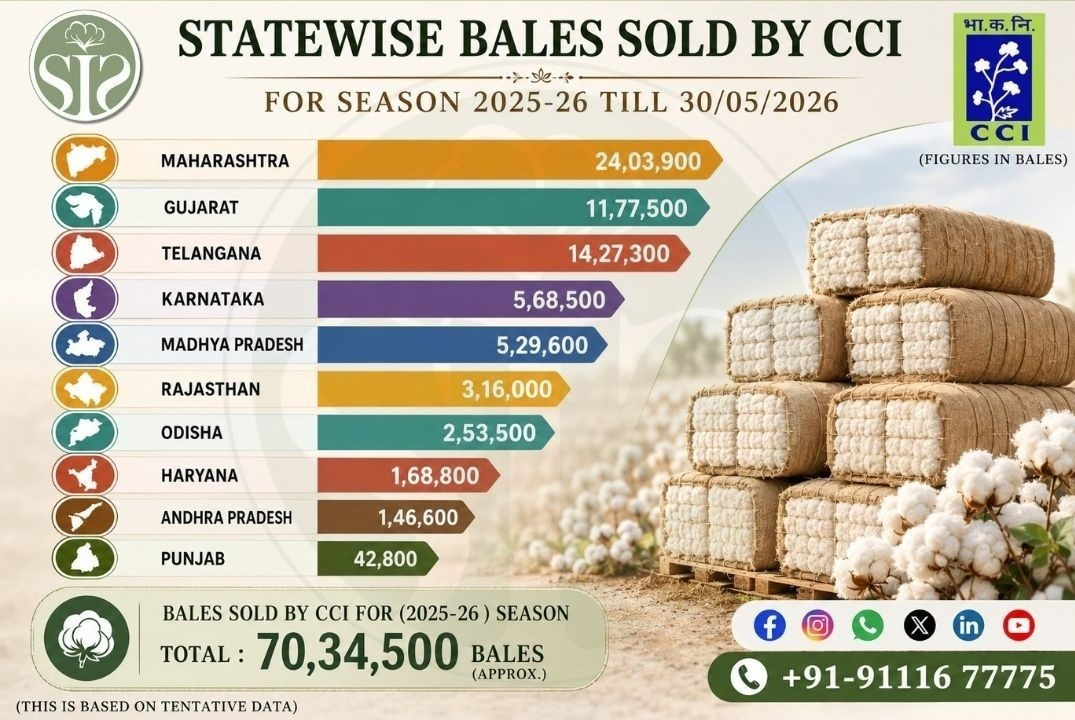
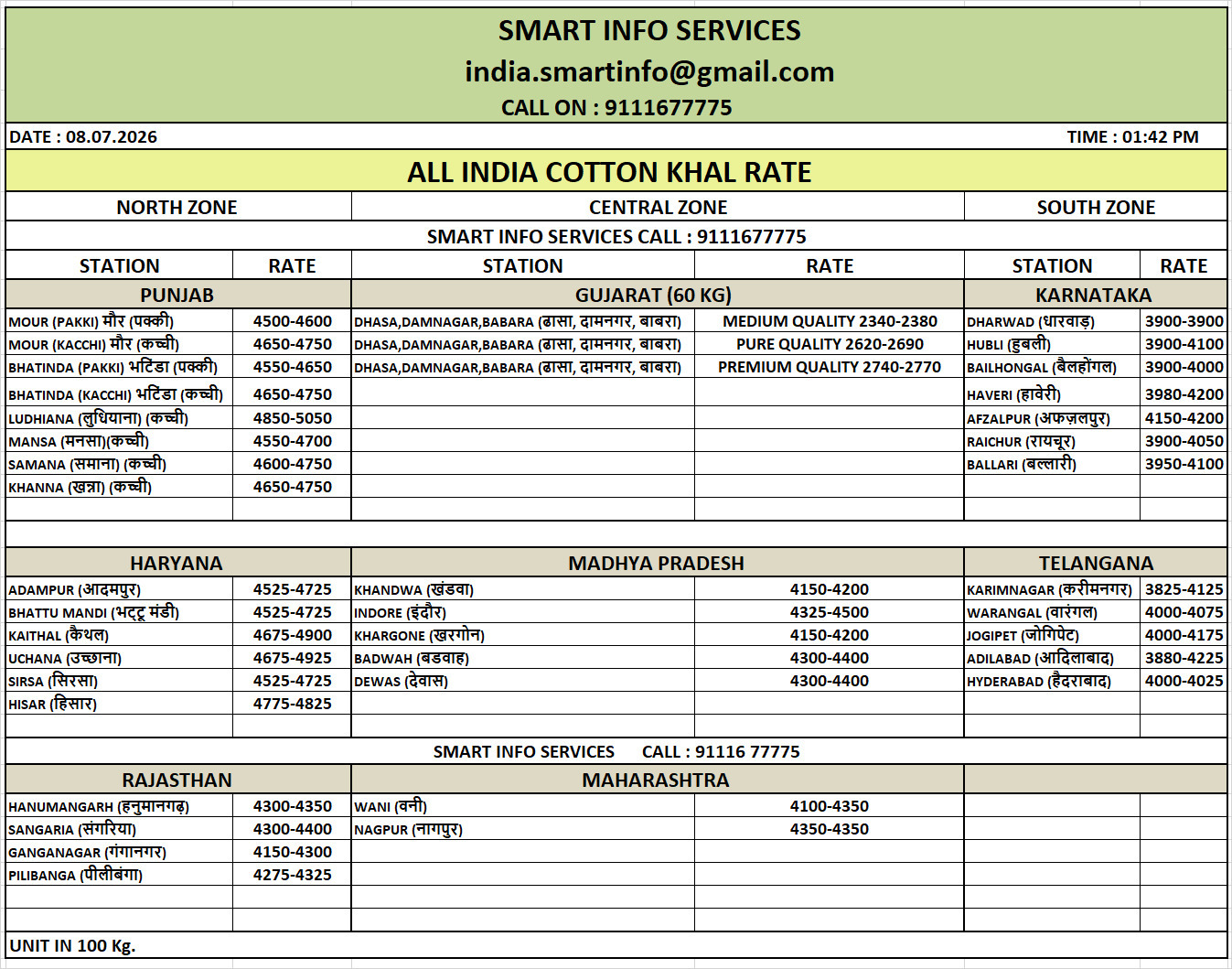
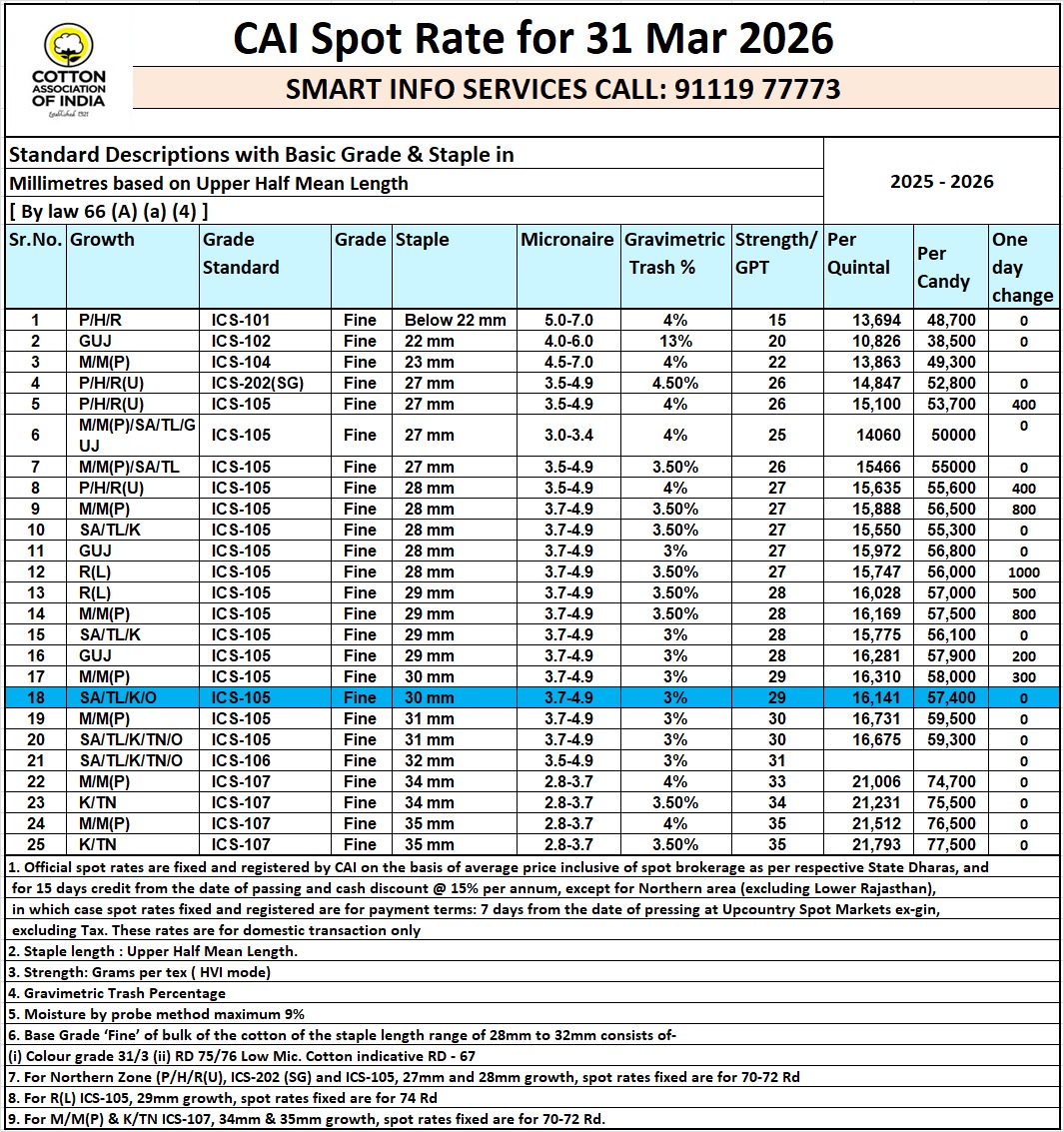
Cotton Prices: Cotton Prices Strengthen After Import Duty Exemption Ends; Will Bangladesh's Tariff Plans Have an Impact?Cotton prices have improved in major markets across the country after the import duty exemption on raw cotton expired on December 31.  According to trade sources, raw cotton prices have increased by Rs 400 to 500 per quintal in different markets. Despite this increase, prices still remain below the Minimum Support Price (MSP) of Rs 8,100 per quintal.Meanwhile, a new concern is emerging for the Indian cotton and yarn market from Bangladesh. Bangladesh, which has been the largest buyer of Indian yarn for the past few years, is now considering imposing tariffs on imports to protect its domestic yarn producers. The Bangladesh Trade and Tariff Commission recently discussed a proposal to impose a 20 percent duty on yarn imports in a meeting, although no official announcement has been made yet.Apprehension of Impact on Indian Yarn ExportsAccording to Atul Ganatra, former president of the Cotton Association of India, if Bangladesh imposes a duty on yarn imports, it will directly impact India's domestic yarn market. India exports approximately 30 percent of its total yarn production, while domestic consumption accounts for about 70 percent. Bangladesh is a major importer of Indian yarn, and a tariff there could reduce the competitiveness of Indian yarn. Trade sources believe that Bangladesh might impose a duty of between 10 and 20 percent. This would increase the landed cost of Indian yarn, making it more expensive in the Bangladeshi market.Improvement in Domestic Market PricesAfter the expiry of the import duty exemption, prices have increased in several cotton-producing regions of the country. According to Ramanuj Das Boobh, a sourcing agent from Raichur, raw cotton prices have risen to Rs 8,000 per quintal, compared to around Rs 7,500-7,600 a week ago. Meanwhile, pressed cotton prices have also increased by ₹1,000 to ₹1,500 per candy (356 kg). He said this is an opportune time for the Cotton Corporation of India (CCI) to announce the price for the 2025-26 crop, as any delay could lead mills to enter into more import contracts.Procurement and Stock SituationThe government agency, Cotton Corporation of India (CCI), is actively procuring cotton at the Minimum Support Price (MSP) and has so far purchased over 68 lakh bales. Prices have also increased by ₹400–500 per quintal in the Khandesh region of Maharashtra. According to Pradeep Jain, founder president of the Khandesh Gin Press Factory Owners Association, approximately 40 percent of the crop in the region has arrived in the markets, while the remaining crop is being held back by farmers, and harvesting is complete.2024-25 Crop Almost Sold OutAkola-based broker Arun Khetan said that the CCI has sold almost the entire 2024-25 season's crop and now has less than three lakh bales in stock. The market expects the CCI to announce a price of around ₹57,000 per candy for the 2025-26 crop.read more :- Rupee opens steady at 90.17 /USD

Indonesia's move: Cotton imports provide relief to the textile industry.

Indonesia protects domestic textile sector from cotton import surge.he Indonesian government’s new policy, which was signed on 22 December, aims to implement safeguard measures when a rise in imports could pose a serious threat to domestic producers, according to local news publication Jakarta Globe ID.This follows the Indonesian Trade Safeguard Committee (KPPI) carrying out an investigation, which suggested that rising cotton woven fabrics had already impacted the country’s local textile sector.The Bea Masuk Tindakan Pengamanan (BMTP) duty will be on top of existing import duties, including most-favoured-nation rates and preferential tariffs under international trade agreements.It is expected to be applied for three years with a declining tariff each year. In the first year, duties will range from Rp3,000 ($0.18) to Rp3,300 per metre based on tariff classification. In the second year, the rate will be Rp2,800-Rp3,100 per metre, and in the final year it will be Rp2,600-Rp2,900.Imports that come from 122 developing countries that are WTO members will be excluded. This includes Malaysia, Thailand, the Philippines, as well as some countries in Africa and Latin America.The publication points out that if the origin requirements are not met, or if a retroactive verification is still underway, the imported products will remain subject to the safeguard duty in accordance with its rules.read more:-  Cotton prices surge in the global market.

Cotton prices surge in the global market.

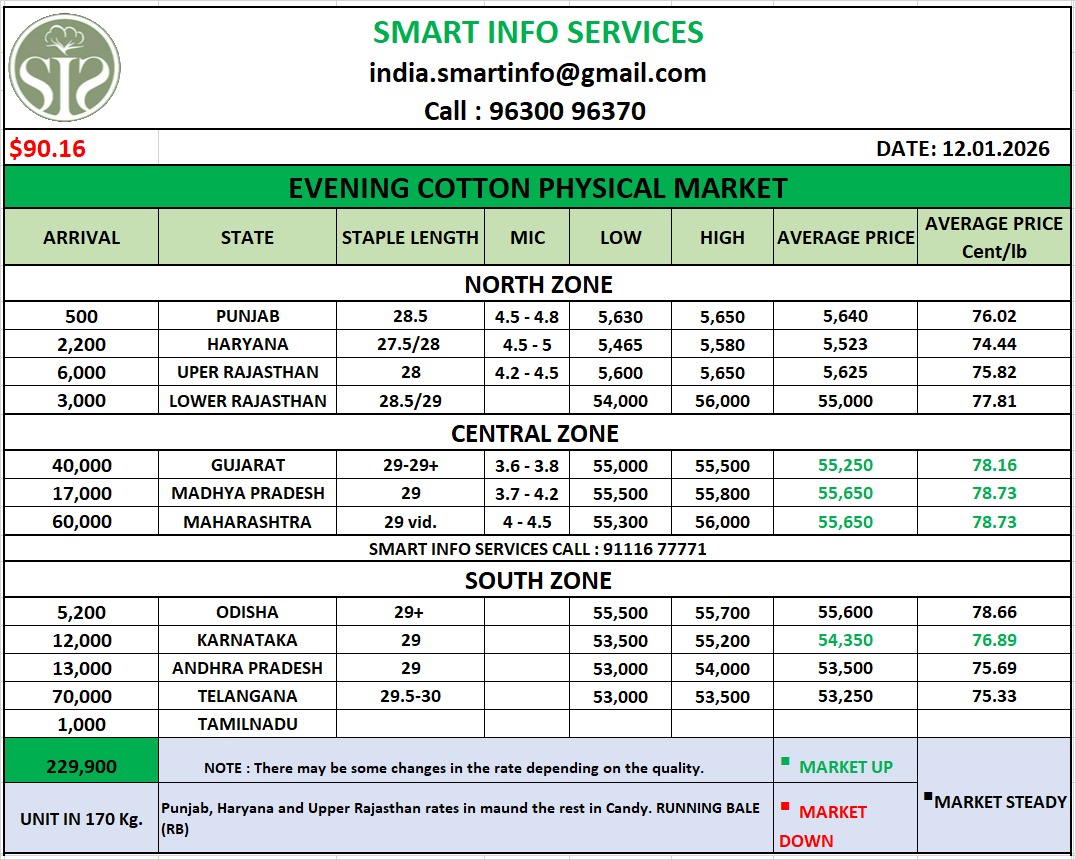
Cotton prices rise on global markets after long period of declineSince the beginning of 2026, cotton prices have been on the rise again. In early January, cotton futures surged to 64.8 cents per pound, the highest level since late December, after several days of decline. However, in year-on-year terms, the price is still about 5.4% lower, and the demand for cotton remains weak.According to Trading Economics, the price increase was driven by the return of investors to the market after the New Year holidays, leading to the closure of "short positions" — meaning the repurchase of contracts on which investors had profited during the price decline. This pushed the prices up. Additional support came from oil, which rose slightly, making polyester — one of cotton’s main substitutes — more expensive, thus making natural fiber more attractive again.As of January 6, 2026, the price of cotton held steady at around 64.82 cents per pound, which is approximately $1.43 per kilogram. However, compared to January of last year, the price is still 5.4% lower.Despite the price recovery, risks for the market persist. Trading Economics notes that market participants remain concerned about weak demand, surplus stocks, and the potential impact of tariffs on U.S. cotton. The U.S. Department of Agriculture's report also heightened concerns, as net cotton export sales for the week ending December 25, 2025, totaled only 134,000 bales, which is perceived as a sign of weak demand.For Tajikistan, the dynamics of cotton prices are especially important given the expected increase in production. According to the Forecast of Key Macroeconomic Indicators of Tajikistan for 2025–2027, the cotton harvest in 2025 is estimated at 390,000 tons, with the production of cotton fiber is estimated at 139,000 tons.Additionally, Tajikistan is increasing its cotton fiber exports. Since the beginning of 2025, Iran has purchased more than 30,000 tons of Tajik cotton fiber for $45.7 million.read more :- Increase in cotton procurement, deadline extended to January 16.

Increase in cotton procurement, deadline extended to January 16.

Cotton Procurement Increases in Vadodara District, Gujarat; Slot Booking Facility Introduced for the First Time; Procurement Extended Until January 16Vadodara:  Farmers continue to flock to the cotton procurement centers in Vadodara district to sell their cotton at the support price. As a result, the total amount of cotton purchased at the three centers in Vadodara has increased compared to last year.  Due to the large number of farmers, the funds allocated for procurement have also been increased.The Cotton Corporation of India (CCI) has established three procurement centers in Vadodara district: Karjan, Dabhoi, and Samlaya. Farmers are required to register online at these centers according to the regulations.This year, the registration deadline for farmers was extended until December 31. However, considering the continued rush of farmers at all three centers and the demand to extend the procurement process, the CCI has decided to continue procurement across the state until January 16.Cotton procurement in Vadodara district has increased compared to last year. With 10 days remaining in the procurement period, the amount of cotton purchased so far has already exceeded last year's figures. Last year, a total of 1.79 lakh quintals of cotton were purchased at the three centers. This year, the figure has already surpassed 1.82 lakh quintals.Farmers' Income Increases Due to the Introduction of Slot Booking FacilityAccording to reports, previously, the CCI would set a deadline for cotton procurement, and farmers had to deliver their cotton accordingly. However, due to the large crowds, private traders were often involved in the process.This year, farmers have been given the option to choose their preferred slot for online procurement, allowing them to directly visit the centers.Cotton Cultivation Leads in Vadodara DistrictVadodara district has a total cultivated area of 3,47,137 hectares. Cotton is the most prominent crop. Last year, cotton was sown on more than 80,000 hectares of land.read more :- Rupee closed 04 paisa higher at 90.17

Showing 584 to 594 of 4460 results
title Created At Action
Sharp jump in cotton imports from zero duty window 08-01-2026 18:41:08 view
Bangladesh Considers 20% Safeguard Duty on Indian Cotton Yarn Imports 08-01-2026 18:24:16 view
Rupee opens 07 paise down at 89.95 08-01-2026 17:28:10 view
Soft cotton prices increased in Srikaranpur 08-01-2026 00:08:50 view
INR Gains 29 Paise, Closes at 89.88 per Dollar 07-01-2026 22:48:03 view
Cotton prices firm: End of import duty exemption, impact of Bangladesh tariffs? 07-01-2026 18:44:54 view
Rupee opens steady at 90.17 /USD 07-01-2026 17:27:14 view
Cotton yarn prices surged in North India in January 2026. 07-01-2026 01:09:47 view
Indonesia's move: Cotton imports provide relief to the textile industry. 07-01-2026 00:55:18 view
Cotton prices surge in the global market. 07-01-2026 00:43:24 view
Increase in cotton procurement, deadline extended to January 16. 06-01-2026 23:17:26 view
Copyright© 2023 | Smart Info Service
Application Download