Filter

Recent News

India’s Cotton Trade Sees Strong Momentum in June 2025: Imports Outpace Exports

June 2025: India's cotton trade boomingIndia's cotton trade remained robust in June 2025, with total exports recorded at 93,890 bales, while imports rose to 1,16,180 bales, according to official trade data.Cotton exports: Bangladesh leads as top buyerIndia exported 93,890 bales of cotton in June, with Bangladesh emerging as the leading buyer, importing a massive 79,440 bales, accounting for nearly 85% of total exports. Other major destinations include:Indonesia: 5,980 balesVietnam: 3,940 balesSri Lanka: 2,250 balesSingapore: 1,795 balesDemand from neighbouring Asian countries is driving India's cotton exports, which is also supported by the needs of the regional textile industry.Cotton imports: Switzerland tops seller listIndia's cotton imports far outpaced exports, reaching 1,16,180 bales in June. Switzerland emerged as the top seller, shipping 26,723 bales to India. Other major cotton suppliers include:Singapore: 25,050 balesUnited States: 21,585 balesNetherlands: 16,117 balesEgypt: 15,850 balesThe increase in imports reflects the need to supplement domestic production and meet the demand from Indian textile mills ahead of peak manufacturing seasons.Market scenarioAnalysts suggest that rising global demand, fluctuations in domestic yields and strategic supplies from key global players are influencing India's cotton trade dynamics. The trade deficit in June indicates a proactive move by Indian mills to increase stocks and ensure production continuity.India remains an important hub in the global cotton trade, as both a major exporter and a major importer, balancing supply chains to meet domestic and international demand.read more :- Maharashtra: Cotton pest infestation in Maregaon taluka; Farmers worried: Farmers fear heavy losses,

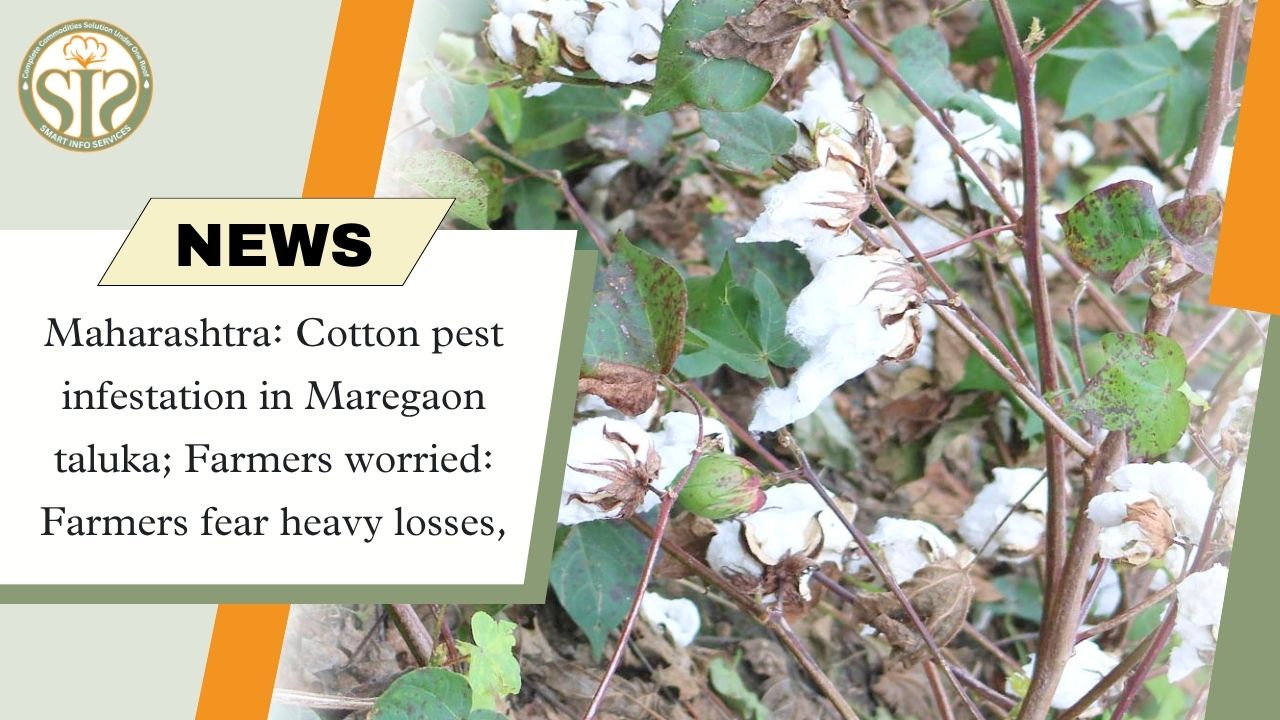
Maharashtra: Cotton pest infestation in Maregaon taluka; Farmers worried: Farmers fear heavy losses,

Cotton Pest Scare in Maregaon, Farmers WorriedCotton crop is being badly affected by pest in many areas of Maregaon taluka. Cotton crop planted in hundreds of acres is in trouble at this time and farmers are fearing heavy losses. Farmers are worried about this.Cotton was sown at the beginning of monsoon. Initially the crop was in good condition, but in recent days the condition of the crop has become worrisome due to the entry of pest. If this pest is not controlled, it will have a direct impact on production.In view of the falling prices of soybean crops in the last few years, the farmers of the taluka turned to cotton cultivation this year in the hope of getting good prices for cotton. Despite the lack of rain early this year, the crop grew well and there was an atmosphere of satisfaction among the farmers. However, now the cotton crop is in trouble due to the pest.Crops grew after a little rain after sowing in areas like Gaurala, Net, Varud, Salebhatti, Akapur, Lakhapur etc. The pest attacked the small cotton plants. Many people's cotton crop was destroyed in just two days.A new crisis has arisen in front of the farmers as hundreds of acres of cotton crop is in danger. Some farmers are looking for seeds and laborers for sowing again. Which crop should be sown due to the problems of nature and wildlife? This question has arisen. Pigs are a problem for tur, deer and monkeys for soybean, and now the problem of pests in cotton has also increased in the cotton crop. There is a demand to give immediate consultation to the Agriculture Department and the government to provide financial assistance to the disaster-affected farmers. On the one hand there is no rain, on the other hand, it is now seen that the farmers of the taluka are worried about the pest infestation.Rotten crops should be removed. This pest does not come regularly. It thrives on rotten cotton residues. Therefore, the rotten crop residues in the field should be removed. For pest control, Chlorpyrifos 20% 30 ml should be mixed in 10 liters of water and the pump nozzle should be removed and the lower part of the crop should be irrigated. - Sandeep Waghmare, Agriculture Officer Pt. S. Maregaon.read more:-  INR Gains 22 Paise, Closes at 85.68 per Dollar

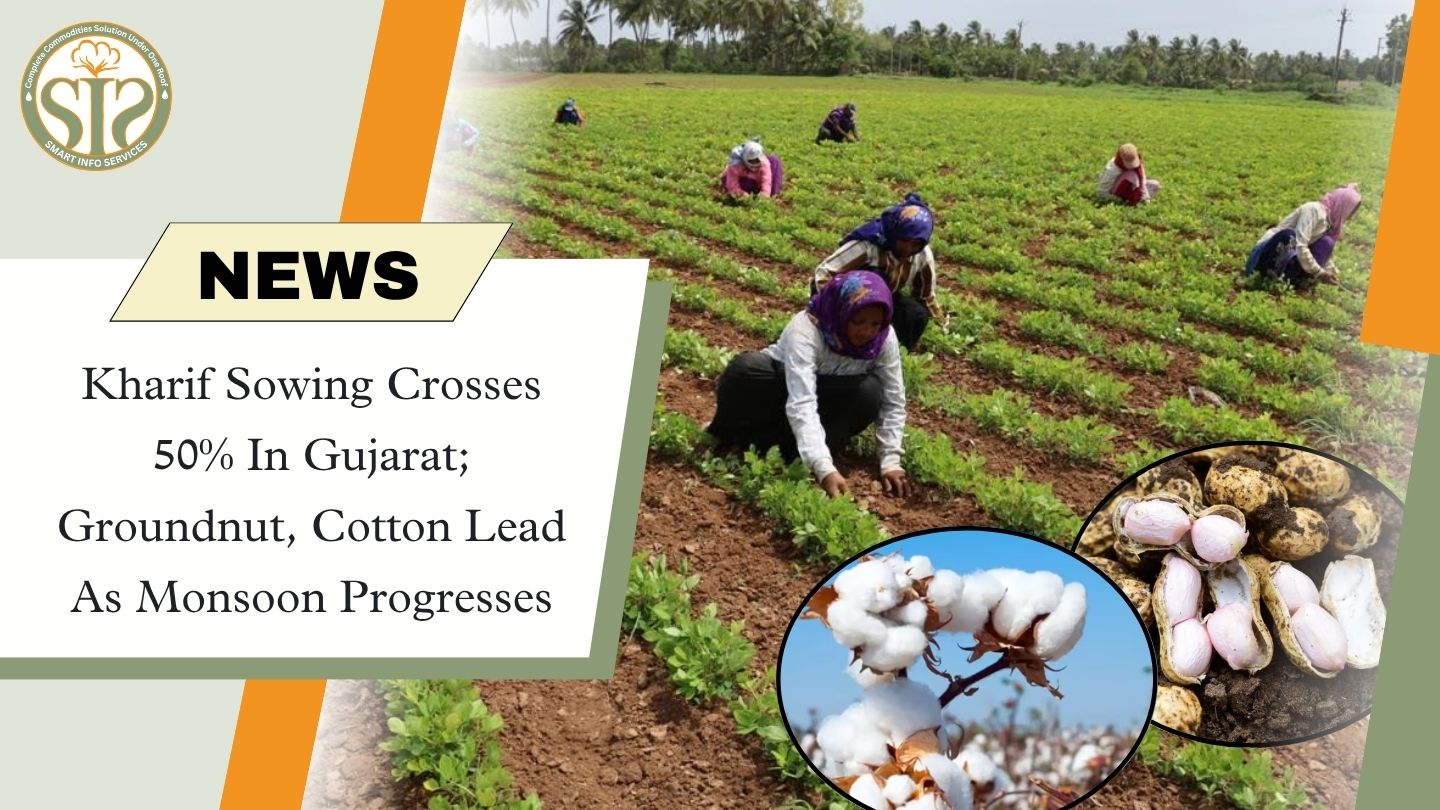
Kharif Sowing Crosses 50% In Gujarat; Groundnut, Cotton Lead As Monsoon Progresses

Kharif sowing crosses 50% in Gujarat, groundnut and cotton aheadGandhinagar : Kharif sowing in Gujarat has reached 50.32 per cent of the total cultivable area as of July 7, according to data released by the state Agriculture Department. The total sown area now stands at 43.05 lakh hectares, marking a steady advancement in crop coverage under the current monsoon conditions. Groundnut continues to dominate Gujarat’s kharif crop landscape, with sowing completed across 17.59 lakh hectares, followed closely by cotton at 17.10 lakhOther major crops include fodder crops (3.10 lakh ha), soybean (1.58 lakh ha), vegetables (1.03 lakh ha), and maize (80,000 ha). Additional sowing has also been reported in millet, paddy, tur, moong, castor, guar, and jowar. The sowing progress coincides with uneven rainfall patterns across the state. According to the State Emergency Operation Centre (SEOC) in Gandhinagar, Gujarat has received an overall 46.89 per cent of its average seasonal rainfall. Among regions, Kutch leads with 56 per cent of seasonal rainfall, followed by South Gujarat (51.12 per cent), Saurashtra (45.92 per cent), East-Central Gujarat (45.29 per cent), and North Gujarat (41.62 per cent). A total of 42 talukas have recorded rainfall averaging 40 inches, while 15 talukas have witnessed up to 80 inches, and 126 talukas have seen between 10 to 20 inches of rain so far this monsoon. In the past 24 hours alone, Borsad received 4 inches, Godhra 3.7 inches, Gandhidham 2.3 inches, and Devbhumi Dwarka 2 inches of rainfall. The rainfall has also impacted the state’s water infrastructure.Currently, 34 dams are on high alert, 20 are on alert, and 19 are on warning levels. The Sardar Sarovar Dam, a critical water resource for the state, is reported to be at 48.21 per cent of its total storage capacity. In light of heavy rains, 4,278 people have been evacuated from low-lying areas across 10 districts, and 685 individuals have been rescued by teams from the local administration, National Disaster Response Force (NDRF), and State Disaster Response Force (SDRF). Despite the weather-related disruptions, most roads and ST bus services remain operational, ensuring continued connectivity across the state.read more:- Madhya Pradesh: Cotton crop in trouble due to rain

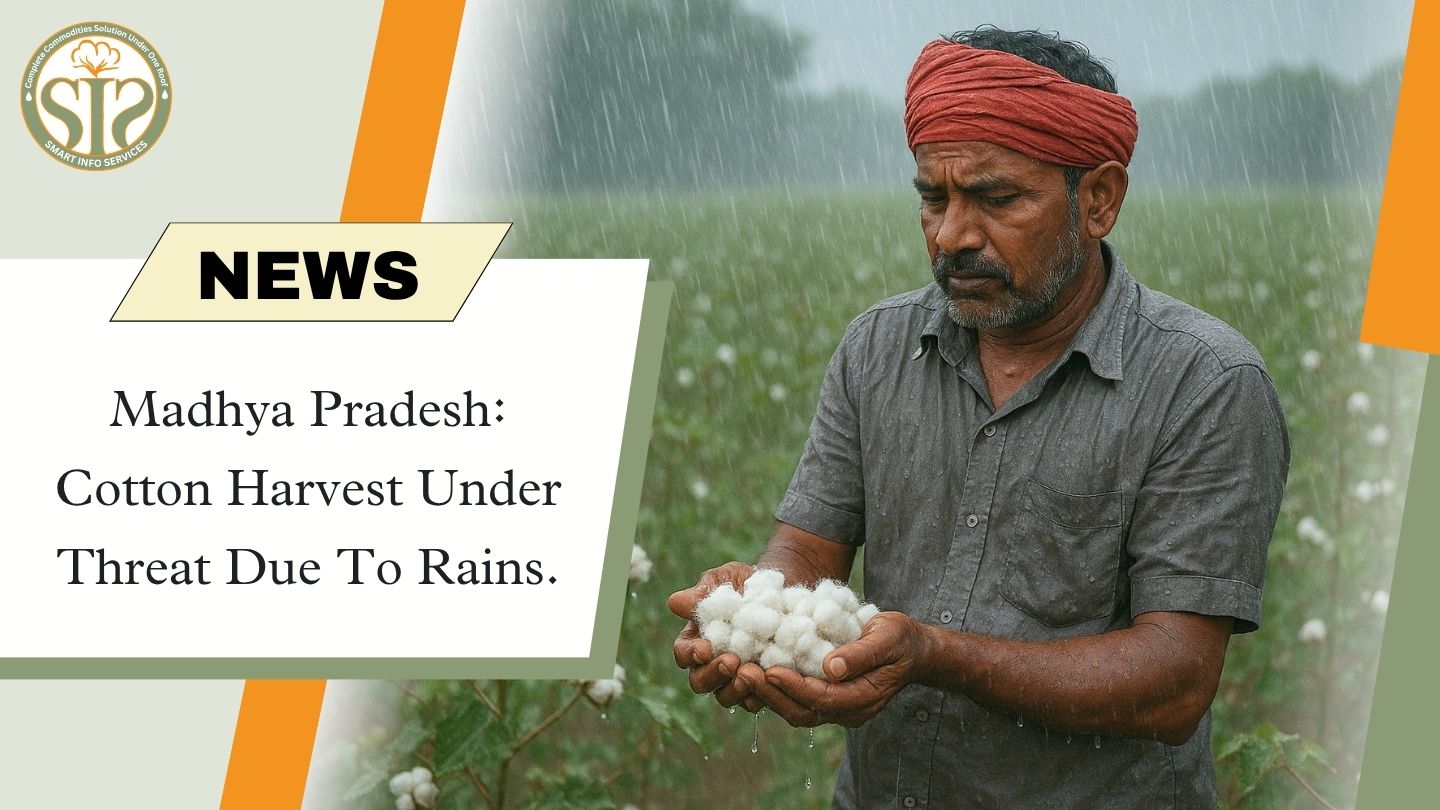
Madhya Pradesh: Cotton crop in trouble due to rain

Madhya Pradesh: Cotton Harvest Under Threat Due To Rains.Manawar (Madhya Pradesh): Cotton crop in Manawar region has been damaged due to recent heavy rains, especially on July 6, which led to flooding of cotton fields.Farmers said that leaves are turning yellow and falling off.Cotton is the main cash crop in Manawar, known for its bumper yields. Thankfully, crops in high-altitude areas remain in better condition, raising hopes for a good harvest.Farmer Raju Devda expressed concern, stating that continuous rain over the past week has caused the plants to turn black. Another farmer, Devram Mukati, highlighted the high costs of weeding and pesticides, making the impact of the rain particularly worrying.Agriculture Department SDO Mahesh Burman advised farmers to drain water from flooded fields. He also recommended spraying fungicide if any signs of rotting appear in the plants to help strengthen their roots.Water level rises in Jirabad damOn a positive note, the rain has benefited the Jirabad Dam, the district's largest irrigation project. Project's SDO Isaram Kannauje reported that the dam's water level has reached 286 meters, with only 11.30 meters of capacity left.In the last two days, the water level has increased by half a meter. Additionally, the rain has raised water levels in rivers, drains, wells and borings, providing farmers with better irrigation options in the coming days.So far, Manawar has recorded 201 mm of rain, significantly higher than last year's 119 mm. The agriculture department predicts that the monsoon will remain active from July 11 to 15, making sunlight crucial for crops like cotton, maize, soybean and moong. If the weather clears, crop conditions may improve, said officials.read more :- Rupee open Declines 21 Paise to 85.90 per Dollar

Cotton Sowing Trends for 2025–26 Reveal Mixed Pattern Across Key Indian States

India’s Cotton Sowing Shows Mixed PatternThe cotton sowing progress for the 2025–26 kharif season presents a mixed picture across India’s major cotton-growing states, with some regions recording a sharp increase in acreage while others show a decline. As per the latest data released by the state agriculture departments, overall sowing is underway across the country, with weather patterns, rainfall distribution, and farmer sentiment playing significant roles in influencing this year’s cropping decisions.Maharashtra, which consistently tops the chart in terms of cotton cultivation, has reported a reduction in its total sown area. The state has recorded 25.57 lakh hectares under cotton cultivation so far in 2025–26, down from 27.63 lakh hectares in the previous year — a drop of over 2 lakh hectares. Delayed monsoon onset in parts of Vidarbha and Marathwada, coupled with concerns over water availability and input costs, have reportedly led some farmers to opt for alternative crops.Telangana Records Slight DipTelangana, another key cotton-producing state, has also seen a marginal decline in sowing. This year, cotton has been sown on 31.90 lakh hectares, compared to 33.05 lakh hectares in 2024–25. While the drop is not substantial, agricultural officers cite a shift toward oilseeds and pulses in certain districts due to better price realization in the previous season.Gujarat Continues Downward TrendGujarat, known for its high-yield cotton zones, has reported a sowing figure of 17.10 lakh hectares this season — lower than last year’s 18.60 lakh hectares. Industry analysts believe that erratic pre-monsoon showers and changing market dynamics have influenced the sowing pattern in the Saurashtra and Kutch regions.Rajasthan and Andhra Pradesh Register Significant GrowthContrary to the above trends, Rajasthan has shown robust growth in cotton sowing, climbing to 6.04 lakh hectares in 2025–26 from 4.44 lakh hectares last year — an impressive 36% increase. A favorable monsoon onset and increased use of high-yielding Bt cotton varieties have been attributed to this rise.Andhra Pradesh has also posted a sharp year-on-year increase, with cotton sowing reaching 1.26 lakh hectares, up from 75,000 hectares last season. Agricultural officials in the state report improved groundwater levels and strong market prices as motivating factors behind the expansion.Karnataka Sees Moderate GrowthKarnataka, too, has shown a positive trend. The state has recorded 6.11 lakh hectares under cotton, compared to 5.47 lakh hectares last year. Timely rainfall in northern districts such as Ballari and Raichur has helped improve planting conditions and farmer morale.Market Outlook and Farmer SentimentDespite mixed acreage trends, farmer interest in cotton remains steady in most regions due to expectations of favorable minimum support prices (MSP) and international market cues. However, agronomists and economists caution that further developments in rainfall distribution, pest incidence, and global demand will play critical roles in shaping the final yield and farmer incomes.As the monsoon progresses, the cotton sowing area may undergo further changes, with late entrants and resowing expected in some parts. A clearer picture will emerge by the end of July.read more:- Trump: No fixed timeline for tariffs, uncertainty in trade

Trump: No fixed timeline for tariffs, uncertainty in trade

Trump Says Tariff Deadline 'Not 100% Firm' Amid Fresh Trade ThreatsU.S. President Donald Trump reignited trade tensions on Monday (July 7, 2025), threatening steep tariffs on over a dozen countries, including key allies Japan and South Korea — but then signaled potential flexibility on the August 1 deadline to finalize deals.In letters posted on Truth Social, Trump said suspended tariffs would snap back in three weeks, with Tokyo and Seoul facing 25% duties and other countries, including Indonesia, Bangladesh, Thailand, South Africa, and Malaysia, hit with tariffs ranging from 25% to 40%.However, Trump left the door open for negotiations. “I would say firm, but not 100% firm,” he told reporters at a dinner with Israeli Prime Minister Benjamin Netanyahu. Asked whether the letters were final, he added, “If they call with a different offer, and I like it, then we’ll do it.”The tariffs stem from Trump’s April 2 “Liberation Day” announcement, which introduced a baseline 10% duty on all imports, with higher rates later suspended for 90 days. Those tariffs were set to take effect Wednesday, but Trump signed an order delaying them until August 1.In near-identical letters to Japanese and South Korean leaders, Trump cited a lack of “reciprocal” trade and warned against retaliation. Indonesia will face a 32% tariff, Bangladesh 35%, and Thailand 36%. Laos and Cambodia saw lower rates than initially threatened.The administration has pledged “90 deals in 90 days” but has finalized only two — with the UK and Vietnam — alongside a de-escalation pact with China.Japan’s Prime Minister Shigeru Ishiba called the tariffs “genuinely regrettable.” South Korea’s National Security Adviser Wi Sung-lac met with U.S. counterpart Marco Rubio, pushing for a summit to resolve key issues. Thai acting PM Phumtham Wechayachai said he was seeking a “better deal” than the proposed 36% duty. Malaysia’s trade ministry reiterated its commitment to a “balanced, mutually beneficial” agreement.White House Press Secretary Karoline Leavitt said Trump chose Japan and South Korea first because “it’s the president’s prerogative.”U.S. Treasury Secretary Scott Bessent promised more agreements soon: “We are going to have several announcements in the next 48 hours.”Markets reacted negatively to the renewed tariff threats. The Nasdaq fell 0.9%, and the S&P 500 dropped 0.8%.Trump also warned of a further 10% tariff on countries aligning with BRICS, accusing them of “anti-American policies” following criticism of his trade agenda at a recent summit.Still, partners are pushing to avoid the looming tariffs. The European Commission said EU chief Ursula von der Leyen had a “good exchange” with Trump in a call Sunday.read more :-  Rupee Gains 06 Paisa, Closes at 85.69 Against Dollar

Copyright© 2023 | Smart Info Service
Application Download