Filter

Recent News

Saurashtra Leads with 30 Lakh Hectares Sown

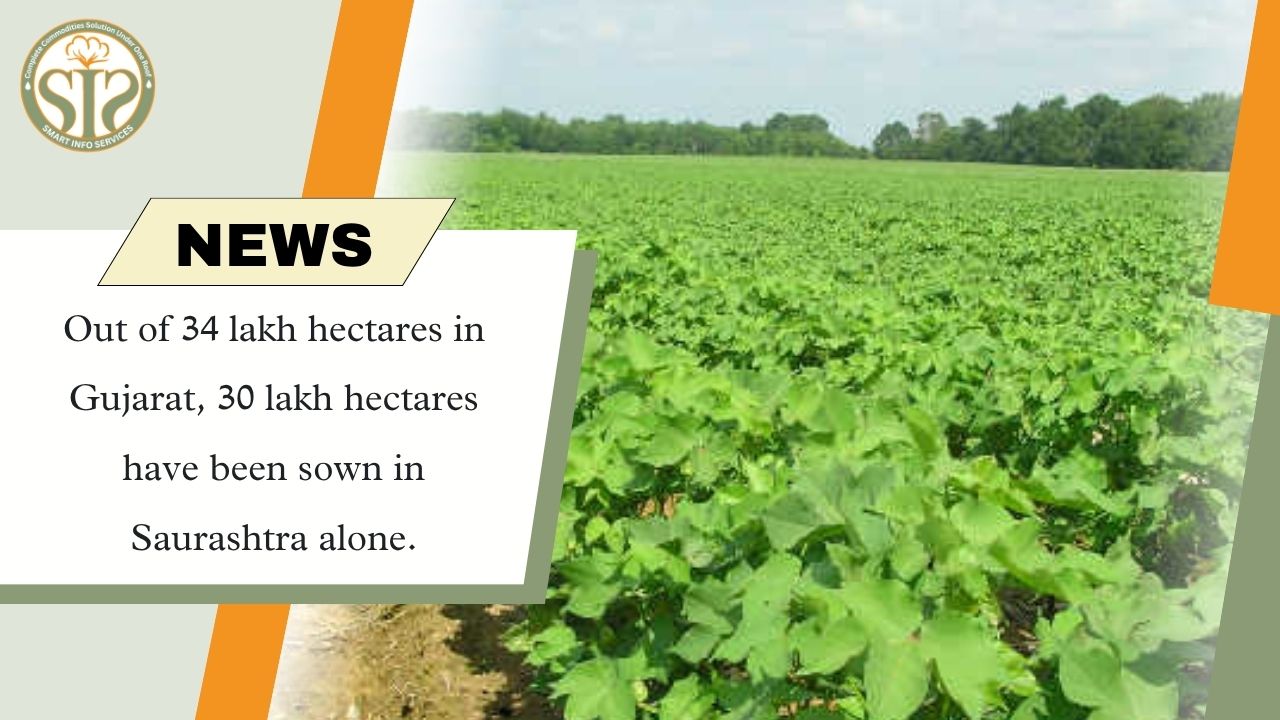
Out of 34 lakh hectares in Gujarat, 30 lakh hectares have been sown in Saurashtra alone.88% of peanuts and 60% of cotton were sown in Saurashtra due to favorable rains in June.Gujarat is the leader in peanut and cotton cultivation in the entire country and most of the cultivation in Gujarat is done in Saurashtra. This year, due to good weather and favorable rains in the month of June, farmers have sown more than 88% peanuts and more than 60% cotton in the first fortnight of monsoon.Till today i.e. 30 June, a total of twenty crops have been sown in 33,91,478 hectares in the entire state, out of which 88% i.e. 29,69,900 hectares have been sown in only 11 districts of Saurashtra.Farmers in Saurashtra have sown 15,44,695 (about 15.45 lakh) hectares this year, as against 8,99,807 (about nine lakh) hectares till the end of June last year.In Saurashtra alone, peanut seeds have been sown in 14.56 lakh hectares. A good crop is expected on this due to the recent rains.Similarly, cotton has been sown in a total of 14 lakh hectares in the state this year as against 12.73 lakh hectares last year, out of which 12.08 lakh hectares have been sown in Saurashtra. In soybean, sowing has been done on more than 1.20 lakh hectares of land this year as against 42 thousand last year, out of which 1.10 lakh hectares have been in Saurashtra. Thus, farmers of Saurashtra have done sowing earlier than last year when the weather was favorable. Apart from groundnut, cotton, soybean, this year the cultivation of millet, maize, moong, tur, urad, pulses, vegetables, fodder etc. has also increased more than last year till 30 June 2024.6.40 lakh hectares more groundnut cultivation than last year, soybean also three times more than last year, enthusiasm in tur, millet, maize too.read more :- Rupee Gains 08 Paisa, Closes at 85.53 Against Dollar

Cotton Sowing Lags Despite Strong Kharif Progress

Cotton Sowing Declines Despite Strong Kharif Progress: Coverage Falls Below Last Year’s LevelsWhile overall Kharif sowing has surged across the country, cotton acreage has shown a notable decline this season. According to the Union Agriculture Ministry’s latest data as of June 27, cotton has been sown over 54.66 lakh hectares, a decrease of over 5 lakh hectares compared to the 59.97 lakh hectares recorded during the same period last year.This dip in cotton cultivation comes in contrast to the broader trend in Kharif crops, where rice, pulses, oilseeds, and coarse cereals have all registered significant growth in sown area, driven by the early and widespread arrival of the southwest monsoon.Experts suggest that the fall in cotton sowing may be attributed to delayed rainfall in some key cotton-growing regions, as well as market uncertainties and price volatility that may have prompted farmers to shift to other crops like soybean or pulses, which are currently offering more favorable returns.The decline raises concerns for the cotton textile and export industries, which heavily rely on domestic cotton production. If the trend continues, it may impact cotton availability and pricing in the coming months.Despite this, officials remain optimistic that improved rainfall in July could help narrow the gap in cotton coverage, especially in parts of Maharashtra, Gujarat, and Telangana, where sowing activity is still ongoing.The government is closely monitoring the situation and may consider support measures if cotton acreage continues to lag significantly behind.read more :- Rupee Rises 14 Paise to 85.61 Against Dollar

Parbhani Kharif Sowing Crosses 5 Lakh Hectares

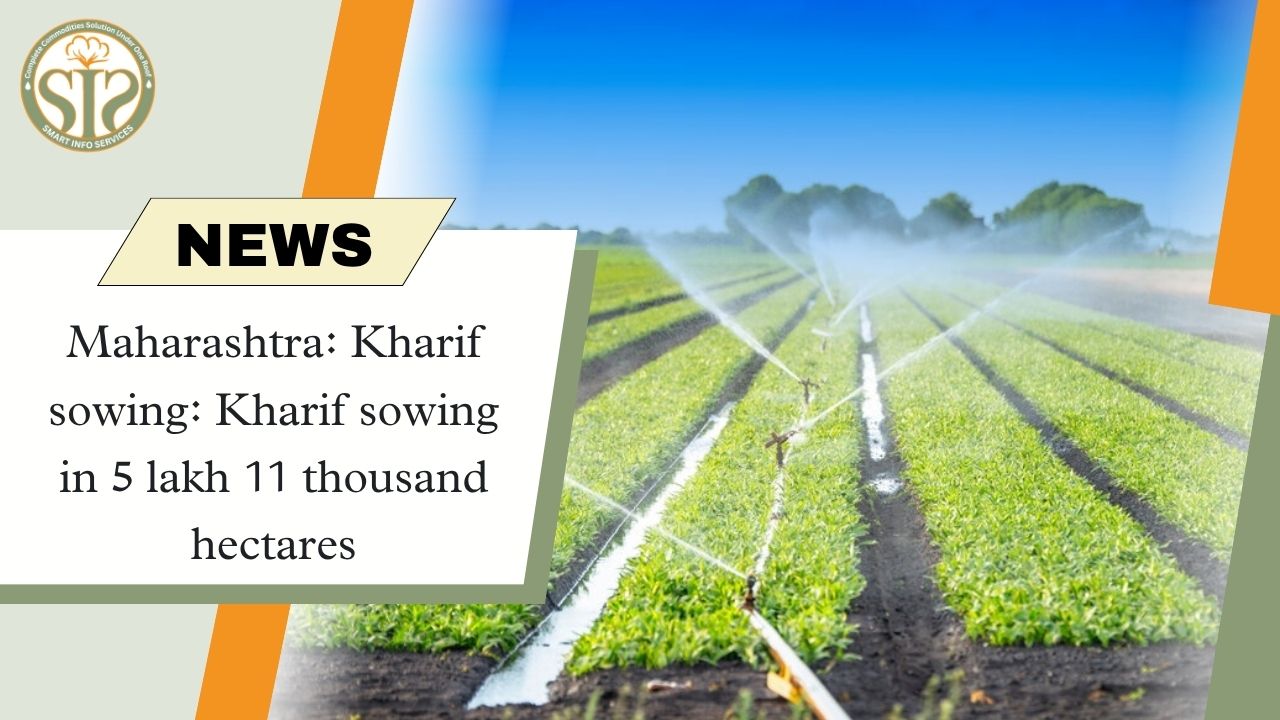
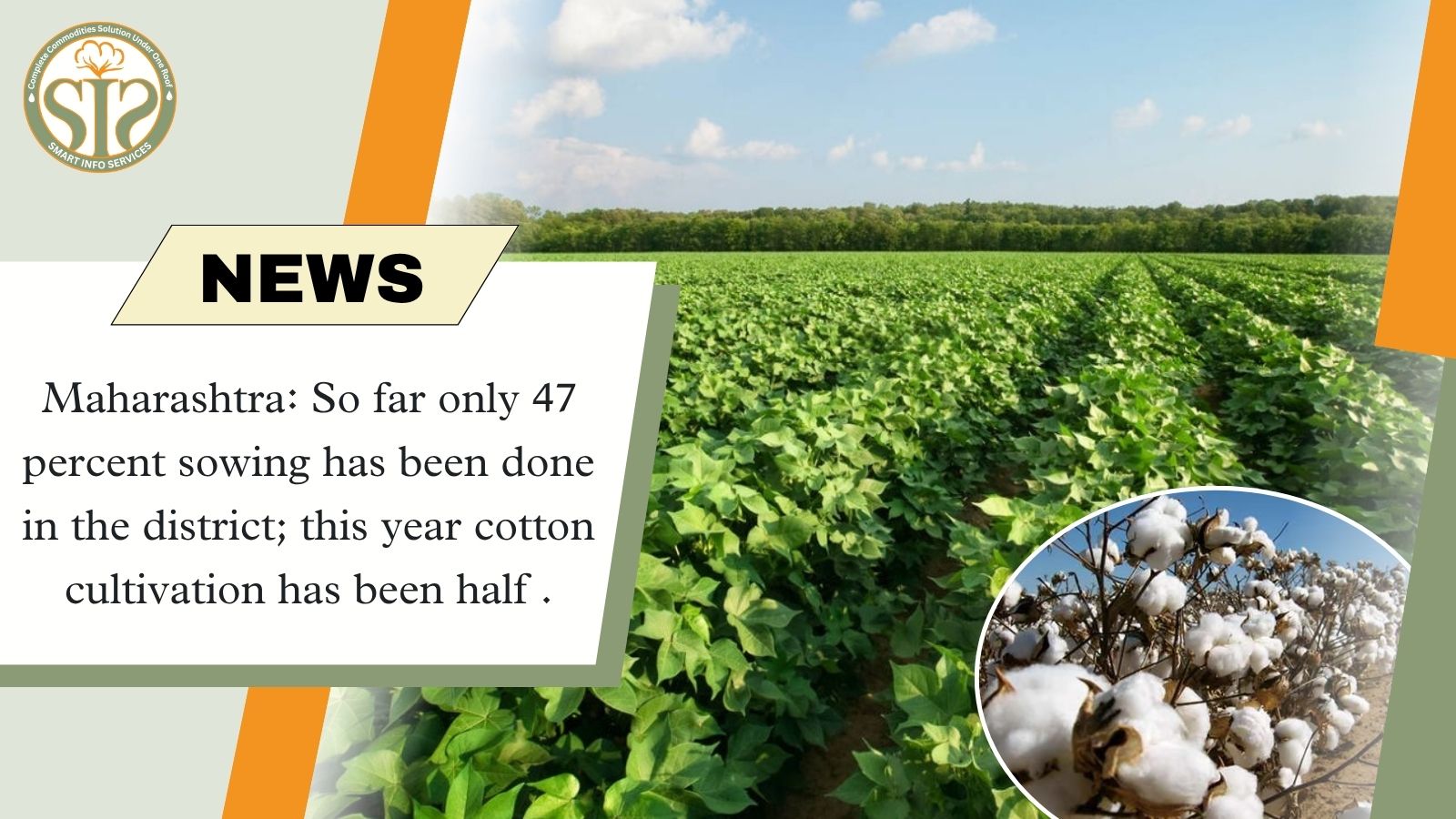
Parbhani: Kharif sowing: Kharif sowing in 5 lakh 11 thousand hectaresParbhani : In the Kharif 2025 season, till Friday (27th), sowing has been done in 2 lakh 89 thousand 5 hectares (55.74 percent) in Parbhani district and 2 lakh 22 thousand 599 hectares (54.24 percent) in Hingoli district. Inter-cropping work is going on in the crops which are in the development stage. However, sowing has been delayed in areas with less rainfall.Out of 5 lakh 18 thousand 468 hectares in Parbhani district, 2 lakh 89 thousand 5 hectares have been wrongly sown. Out of 1 lakh 91 thousand 954 hectares, 1 lakh 24 thousand 446 hectares (64.83 percent) of cotton has been wrongly sown. Soybean sowing has come down from 2 lakh 54 thousand 54 hectares to 1 lakh 43 thousand 855 hectares (56.62 percent) and from 42 thousand 602 hectares to 16 thousand 478 hectares (38.68 percent).Out of 17,600, 2,707 hectares (15.38 percent) of moong, 6,413 hectares (913 hectares) of urad, 291 hectares (7.56 percent) of jowar and 25 hectares (5 percent) of bajra have been sown. In Hingoli district, 2,22,599 hectares (54.24 percent) of sowing has been done.Out of this, cotton has been sown in 23,530 hectares. Soybean has been sown in 1,67,861 hectares, turi in 23,750 hectares, moong in 3,090 hectares, urad in 2,162 hectares and jowar in 1,801 hectares. Many villages in the mandals of these two districts have not received enough rain so far for sowing. In many areas, the seeds have not been able to germinate due to lack of sufficient moisture. Therefore, farmers will have to sow twice. Crops that grow due to lack of moisture in the soil need rain. The rain that occurred last week has given life to the crops. In the areas where sowing has been done, farmers are waiting for heavy rain.read more :- India Sees 9% Above-Average Rainfall in June

"Indian Cotton Crisis Demands Policy Action"

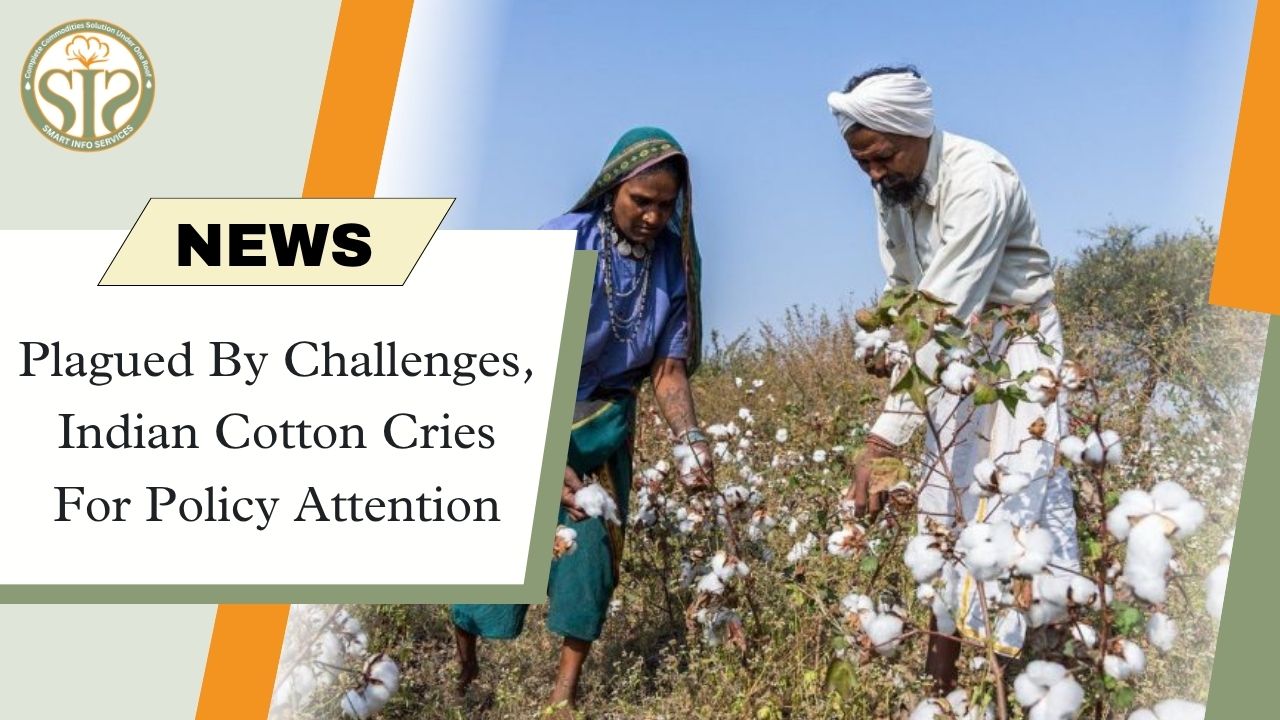
Plagued By Challenges, Indian Cotton Cries For Policy AttentionPolicymakers and industry representatives must be equally concerned over the lack of growthin the country’s cotton economy. In recent years, our domestic cotton crop has been grappling with several challenges, including land constraints, water shortage and climate change.Acreage for cotton crops has stagnated at around 125-130 lakh hectares, and yields have actually declined from the peak of 500 kilograms per hectare to the present, around 425 kg/ha.Cotton output has turned uncertain in terms of quantity and quality. Production has steadily fallen from 360 lakh bales in 2019-20 to 294 lakh bales in 2024-25. Our raw cotton export has been on a declining trend for the last three years. In 2024-25, India has moved from being a net exporter to a net importer of cotton.At the same time, the demand for the natural fibre has been rising, boosted by the addition of a new processing capacity (spindles).The view that the supply and demand fundamentals of cotton are tightening steadily is unmistakable. Import volumes are gathering pace. This raises a serious question. Can India produce enough cotton in the future to remain self-reliant?The answer is not easy, but surely not out of reach. We must abandon the ‘business-as-usual’ approach and adopt a holistic policy for the cotton sector. The cotton economy is a composite economy. It is labour-intensive and export-intensive.Cotton is not just fibre but much more—including the seed and its by-products like oil and meal. Indeed, cotton represents 5Fs—fibre, food, feed, fuel and fertiliser.Its composite nature warrants an ecosystem approach. It involves designing an optimal pathway that balances the economic interests of all stakeholders and, at the same time, advances sustainability principles and practices.As the planted area is stagnating and possibly nearing a saturation point, the only way to boost cotton production is through vertical growth, that is, by raising yields. To achieve this, intervention at multiple levels is necessary.As someone closely tracking agriculture for decades, this author proposes the following four big-ticket ideas: technological intervention, boosting genetic research, replicating high-yield area experience in other areas, and promoting contract farming by large user units.The emphasis should be on research. It is important to remember, “Yesterday’s research is today’s science, and today’s science is tomorrow’s technology.”Technology: Bt cottonseed is facing a technology fatigue. Pink bollworm has probably acquired resistance, as evidenced by the incidence of pest attacks. We need a conducive policy environment to support tech seeds. Sucking pests are taking a toll. New generation seeds (with stacked genes) are available. Indian seed companies should be encouraged to adopt new tech seeds. Tech seeds by themselves will not raise yields, but they will surely help prevent or reduce yield losses. The crop saved is the crop produced. In cotton promotion, ‘stewardship’ is missing. Industry bodies should work with agricultural universities and Krishi Vigyan Kendras (KVKs) to educate growers about farming practices like high-density planting.Genetic research: Cotton needs to fight climate change. The answer is climate-smart agriculture, including climate-resilient inputs and scientific agronomy. For the purpose, a conducive long-term policy to encourage firms to spend on R&D is the only alternative. Currently, many private seed firms have reduced their research expenditure because of non-supportive policy or an uncertain policy environment. Seed research is a long-term play. Reduction in the R&D spend is not good for the country and must be reversed.Replication: While the all-India cotton yield averages around 450 kg/ha, several districts enjoy yields twice the national average. There is something for stakeholders to learn from the experience of high-yield areas—input management, agronomy and so on. Replicating the experience and practices of high-yield areas in low-yield areas will pay dividends.Contract farming: To reduce dependence on cotton imports and generate a genuine export surplus, large user industries have a moral duty to produce the raw material they need. Contract farming is the way forward. Farmer Producer Organisations, or FPOs, can be good partners for contract farming. It will be a win-win for growers and industrial users. Scientific, well-tested and transparent methodologies to price the output in advance are available.Strengthening the cotton ecosystem demands ‘political will’ and active participation of the user industry in its own self-interest.read more :- Cost Push Drives Illegal HTBt Cotton in Maharashtra

Cost Push Drives Illegal HTBt Cotton in Maharashtra

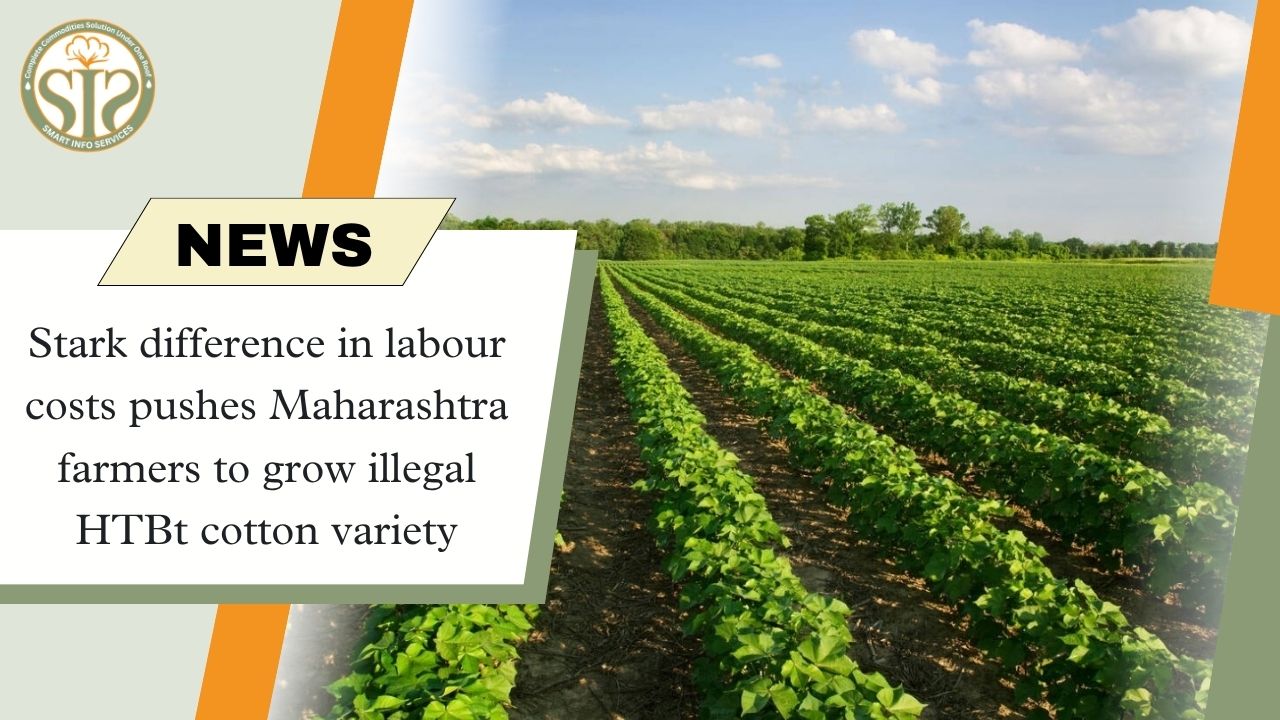
Stark difference in labour costs pushes Maharashtra farmers to grow illegal HTBt cotton varietyOver the past few years, Laxmint Kauthankar has eschewed using genetically modified cotton variety, commonly known as Bt cotton, and started using completely unauthorised herbicide tolerant Bt (HTBT) cotton. This farmer from Adgaon Budruk village in Akola’s Akot taluka knows that such cultivation is illegal, but claims that simple economics forces him to do so.“Weed control alone in Bt cotton would cost me over Rs 20,000 per acre. In case of HTBT, the same expense would be Rs 2,000. So why shouldn’t I adopt it?” Kauthankar says that Bt cotton is hardly sold in his village’s input shop – most farmers have moved to HTBT for the same reasons. Like him, other cotton growers in Maharashtra have adopted the cultivation of unauthorised transgenic cotton, fully aware of the illegality of their act.Central government rules call for fines and jail terms for cultivating unauthorised GM crops. India has so far allowed the commercial release of Bt cotton. Bt stands for Bacillus thuringiensis – the name of the bacterium whose gene has been inserted into cotton seeds. HtBT is the next generation of GM cotton and allows plants to resist spraying of glyphosate, a herbicide commonly used for weed control. But the sale, production and storage of this variety is illegal in the country.But for farmers like Kauthankar, the ground conditions matter. “Consider this: For one acre of land, I will need about four cycles of weeding during the entire 6-7 month cycle of the cotton crop. For one weeding, I will need about 15 labourers and thus the total labour requirement will be around 60. At a daily wage of Rs 300 per day, the total labour expenditure for weeding comes to Rs 18,000. Even if I arrange the money, where are the labourers?,” said the farmer who cultivates cotton and soybean in over 40 acres of his holding. On the other hand, HTBT cotton requires herbicide spraying, and the total cost of this operation comes to Rs 2,000 per acre in the entire cotton crop cycle.read more :- Rupee open Strength 01 Paise to 85.48 per Dollar
Copyright© 2023 | Smart Info Service
Application Download