Recent News

Telangana cotton farmers face marketing crisis

Cotton farmers in Telangana in for a big marketing crisis.Hyderabad: Cotton farmers in the State, already battered by heavy rains, are on the verge of a big marketing crisis. The State’s 341 ginning mills have refused to participate in tenders issued by the Cotton Corporation of India (CCI), citing severe hardships with new regulations. This stand off is likely to jeopardize their operations of the ginning mills and the livelihoods of growers.The impasse was sparked by the latest tender guidelines, introduced this season. The Cotton Corporation of India (CCI) has rolled out tougher rules this cotton season for buying raw cotton from farmers and ginners. Key changes include strict ways to measure cotton fibre (lint) yield, fixed slots for the lowest (L1) and second-lowest (L2) bids in auctions. It also required detailed farm area maps for every order. Ginners in Telangana and their associations complained that these regulations differ from last year’s lenient setup, adding red tape and delays that hurt business and farmers. This standoff has stalled trades, sparking protests for a rollback.“We have urged the CCI to thoroughly review these clauses, particularly the lint percentage for L1 slot bookings and area mapping, and revert to the policy followed in the previous season,” a ginning mill operator and association member stated, adding that without these adjustments, participating in the tenders was not viable.“We’re not against procurement; we’re against rules that could lead to losses for everyone involved, from mills to farmers,” he said.The boycott has persisted despite high-level meetings, where ginning mill owners and the CCI officials discussed the contentious terms. Discussions dragged on for days, but no consensus emerged, leaving the tenders untouched.As of now, not a single mill has come forward to bid, stalling the process at a critical juncture. Telangana’s cotton sector, spanning 43.29 lakh acres, was projected to yield around 24.70 lakh quintals this year. However, relentless heavy rains have inflicted severe damage, impacting expected outputs and leaving farmers vulnerable.The ginning mills’ reluctance is seen as a direct blow to these growers, who rely on timely procurement at support prices to avoid distress sales. State marketing officials, acting on directives of the Government to resolve the deadlock, traveled to Delhi on October 1 for talks with central government authorities.They highlighted how the new rules could spark operational bottlenecks in the procurement chain. In response, officials assured some way out in a week or two. The clauses should be based on ground realities, while facilitating recalibration of lint percentages every 15 days for fairer implementation. The rest of the regulations, however, will remain unchanged, they said.Undeterred by the partial concessions, the mills are holding firm. They remained stuck to their guns demanding full policy rollback to ensure smooth operations and protect the supply chain.read more :- INR Opens Stronger by 04 Paise at 88.74

Heavy Rains Ravage Cotton Crop Across Nashik Region, 30% Area Hit

Maharashtra: Heavy Rains Damage 30% Cotton Crop Area in Nashik RegionNashik: Intense rainfall last month has caused major damage to cotton crops across the Nashik region, impacting nearly 2.75 lakh hectares—about 30% of the total cotton cultivation area this season.The Nashik division, which includes Nashik, Jalgaon, Dhule, Nandurbar, and Ahilyanagar districts, had around 9 lakh hectares under cotton cultivation this year. Among these, Jalgaon leads with 4.36 lakh hectares, followed by Dhule (1.81 lakh ha), Ahilyanagar (1.5 lakh ha), Nandurbar (1.07 lakh ha), and Nashik (30,224 ha).According to the state agriculture department’s initial assessment, crop losses have varied across districts. Ahilyanagar reported the highest damage at 1.36 lakh hectares, followed by Jalgaon with around 1 lakh hectares affected. Nashik recorded losses on 21,299 hectares, Dhule on 10,305 hectares, while Nandurbar saw minimal damage at just 622 hectares.Farmers say the untimely rains have severely impacted cotton output. Sanjaykumar Patil, a farmer from Ganpur village in Jalgaon’s Chopda taluka, said that continuous rain and cloudy weather during September prevented cotton bolls from opening properly.“Usually, cotton picking begins in September when sunlight helps bolls split. But this year, nearly 50% of the bolls didn’t open due to excess rain, reducing production significantly,” he said. Patil added that his yield is likely to drop from 45 quintals last year to just 18–20 quintals this season on nine acres.Another farmer, Swapnil Patil from Erandol, also reported similar damage, noting that the fruiting stage of the crop was badly affected by heavy showers.Data shows that cotton acreage in the region has already declined by 13.7% this year—from 10.47 lakh hectares in the 2024 kharif season to about 9.04 lakh hectares. Along with reduced area, yields are also expected to fall.Industry experts warn of a sharp drop in production. Pradeep Jain, president of the Khandesh Ginning and Pressing Factory Owners Association, estimates that cotton output in the region could decline by more than 40% this year due to the combined impact of reduced acreage and weather damage.read more :- CCI sells 88.62% of cotton through e-auction, weekly sales at 21,400 bales

Ahmedabad traders get GST relief, demand for cotton clothes increases

GST cut benefits Ahmedabad traders, cotton fabric demand up 10%Cotton fabric traders in the city are seeing increased demand during the festive season. They attribute this to the reduction in GST on garments up to ₹2,500. Demand has increased by 10% since the central government announced the GST reduction, and orders are pouring in from across the country.Gaurang Bhagat, president of Maskati Cloth Market Mahajan, said, "Ahmedabad is considered one of the largest cotton fabric suppliers in the country. The period from Navratri to Diwali sees huge demand, contributing to at least 30% of the country's total annual textile demand. This year, the GST reduction has led to an increase of about 10% in production."Bhagat said that before GST 2.0, garments priced above ₹1,000 were subject to 12% GST. Now, garments up to ₹2,500 are subject to only 5% GST."We've also seen an increase in demand for clothing for the wedding season, which begins right after Diwali. The 18% GST on clothing priced above ₹2,500 will certainly have some impact, but we believe buyers will continue to purchase items they like during the wedding season." Mahajan officials also said that a decrease in imports from China has boosted local demand.Mahajan Secretary Naresh Sharma said, "Ahmedabad is one of the largest centers for cotton processing. Cotton prices have remained stable, and import duties on cotton have been removed, creating better prospects for manufacturers. Although US tariffs have impacted exports, domestic demand will provide significant relief." read more :- 
Government Launches 550 Cotton Procurement Centers, Expands Digital MSP System for Farmers

Government Sets Up Record 550 Cotton Procurement Centers Ahead of 2025–26 SeasonNew Delhi: The government has established 550 cotton procurement centers across the country, the highest ever, to ensure better farmer access and improved logistics efficiency during peak arrival periods. These centers will operate across all 11 cotton-producing regions.Phased Procurement Schedule AnnouncedTo align procurement with regional harvest timelines, operations will begin in phases:Northern region (Punjab, Haryana, Rajasthan): October 1Central region (Gujarat, Maharashtra, Madhya Pradesh, Odisha): October 15Southern region (Telangana, Andhra Pradesh, Karnataka, Tamil Nadu): October 21High-Level Review of MSP OperationsA comprehensive review of Minimum Support Price (MSP) operations for the 2025–26 Kharif cotton season was conducted by Neelam Shami Rao, Secretary, Ministry of Textiles. Senior officials from cotton-producing states, the Cotton Corporation of India (CCI), and the Ministry participated in the meeting.The Ministry said the initiative reflects its commitment to a transparent, efficient, and farmer-centric procurement system.Digital Push Through Kapas-Kisan AppThe government is promoting full digital integration in cotton procurement through the “Kapas-Kisan” app, which enables:Farmer self-registration7-day rolling slot bookingReal-time payment trackingFarmers have been advised to complete registration by October 31. Users from existing state systems in Andhra Pradesh, Telangana, Madhya Pradesh, and Haryana are also required to verify their details on the app.Direct Payments and Monitoring SystemPayments under MSP will be directly credited to Aadhaar-linked bank accounts via the NACH system, with SMS alerts at every stage from billing to payment confirmation.Local Monitoring Committees (LMCs) have been set up at all procurement centers to ensure transparency. The CCI has also launched a dedicated WhatsApp helpline to address farmer grievances promptly.The government has urged farmers to register early and use digital tools to avoid distress sales.read more :- INR Opens Stronger by 02 Paise at 88.67



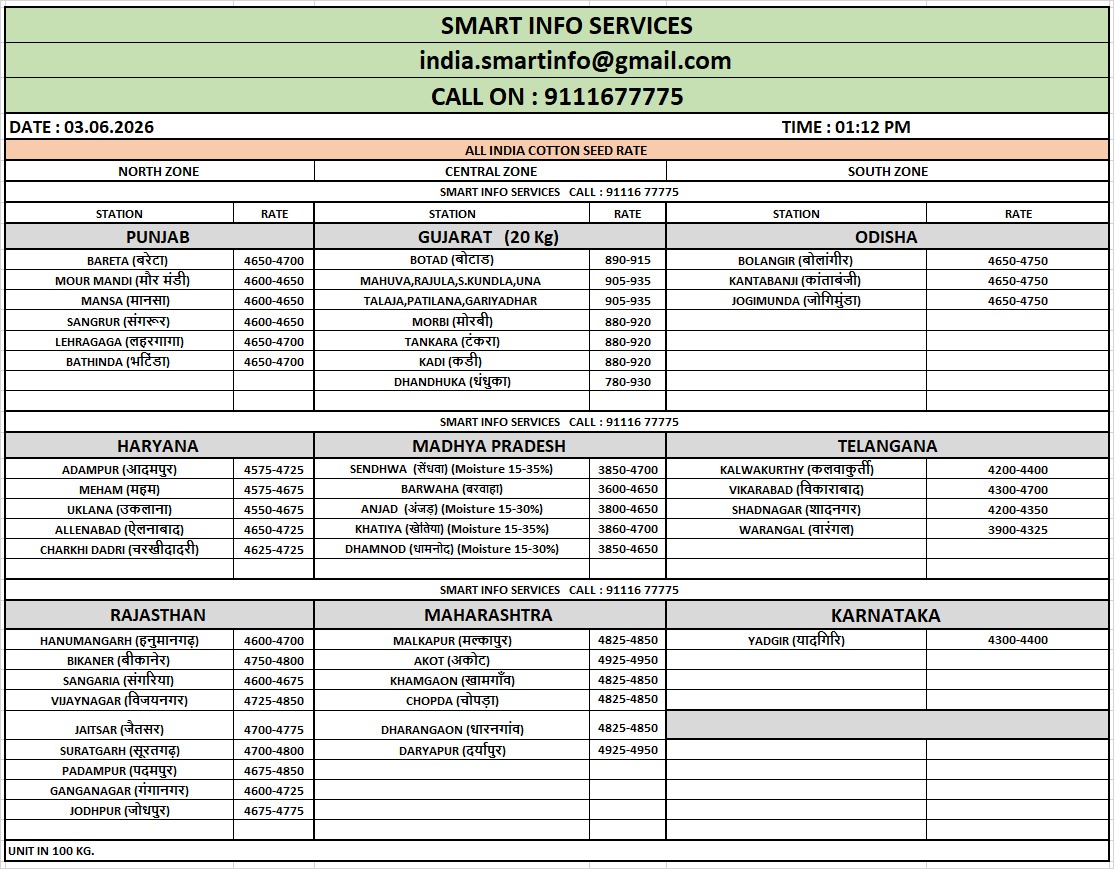
Declining cotton sowing: Policies reduce farmers' interest

Cotton sowing continues to decline, government policies have reduced farmers' interest.While cotton farmers across the country are in an uproar over falling prices, this is directly impacting the area under cotton cultivation. According to data from the Union Ministry of Agriculture and Farmers Welfare, cotton, India's primary Kharif crop, has been experiencing a steady decline for the past two years. According to government data, cotton was sown on 12.95 million hectares annually during the Kharif season from 2019-20 to 2023-24, which declined to 11.295 million hectares in 2024-25.According to the latest data on estimated sowing for this year's Kharif season, the acreage has declined by 2.97 million hectares (approximately 300,000 hectares) to 10.998 million hectares. If government policies remain unchanged, a significant decline in sowing and production is expected in the coming years.Farmers hit by the removal of import dutyThe central government has removed the 11 percent import duty currently imposed on cotton imports, making imports of foreign cotton cheaper, and importers/traders are showing interest in purchasing foreign cotton. Meanwhile, farmers are forced to sell their produce at significantly lower prices than the MSP for the traders and mills that are purchasing domestic cotton.Farmers are reluctant to grow cotton due to the central government's attitudeThis central government's attitude is taking a toll on cotton farmers, and they are gradually withdrawing from cotton cultivation. Farmers are choosing crops that offer reasonable profits instead of cotton. Cotton prices are not the only factor that is dissuading farmers from growing cotton. In recent years, pink bollworms, whiteflies, and weather conditions have also caused concern for farmers. These factors are driving farmers to shift to other crops.Punjab Farmers Not Getting Fair PricesRecent media reports revealed that nearly 80 percent of cotton sold in Punjab's mandis in the past few weeks was sold at prices ₹1,000 or more below the MSP, resulting in significant losses for farmers. Furthermore, the lack of government procurement by the Cotton Corporation of India (CCI) has contributed to this decline in prices in Punjab, as the entire market is controlled by private traders.Cotton Production in These StatesGujarat, Maharashtra (especially the Vidarbha and Marathwada regions), and Telangana are the major cotton producers in India. Cotton is also produced in Andhra Pradesh, Madhya Pradesh, Haryana, Punjab, and Rajasthan. Meanwhile, Madhya Pradesh holds a special place in organic cotton production, producing 40 percent of the country's total organic cotton.read more :- 60 lakh hectares of crops destroyed, decision on aid will be taken: Shinde

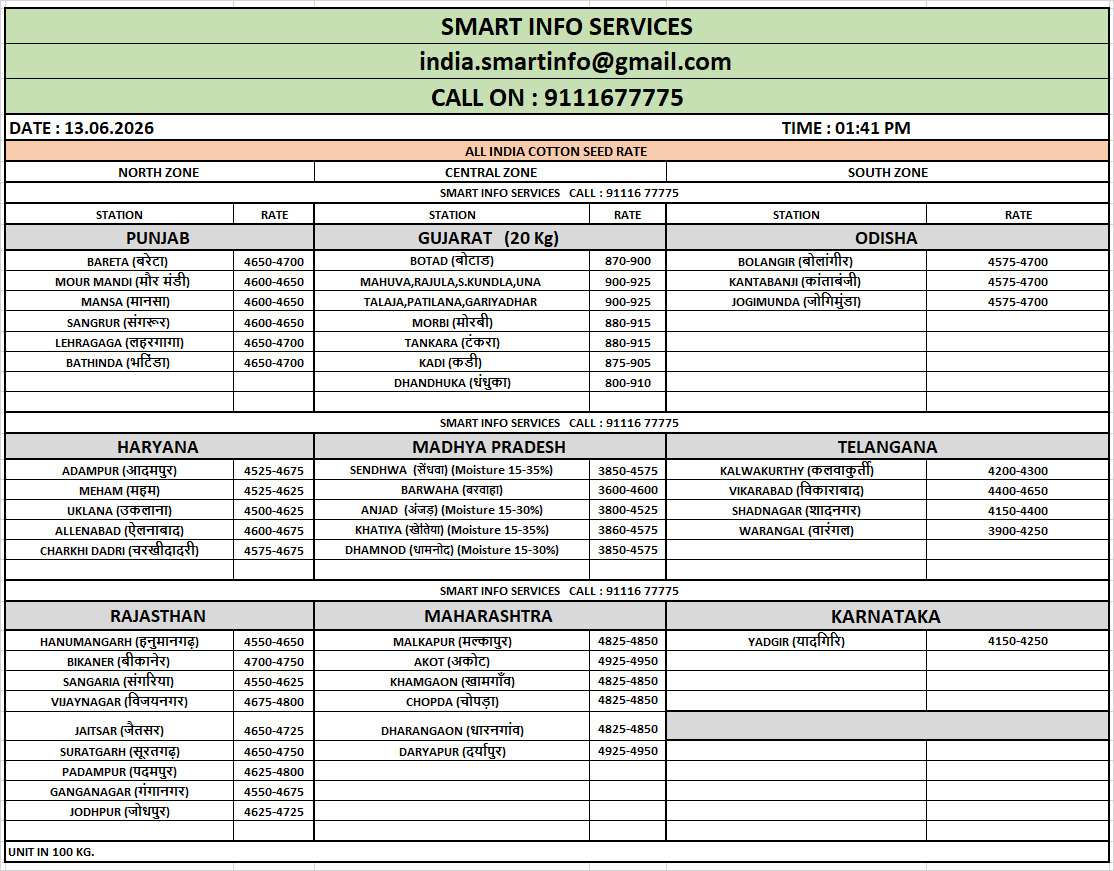
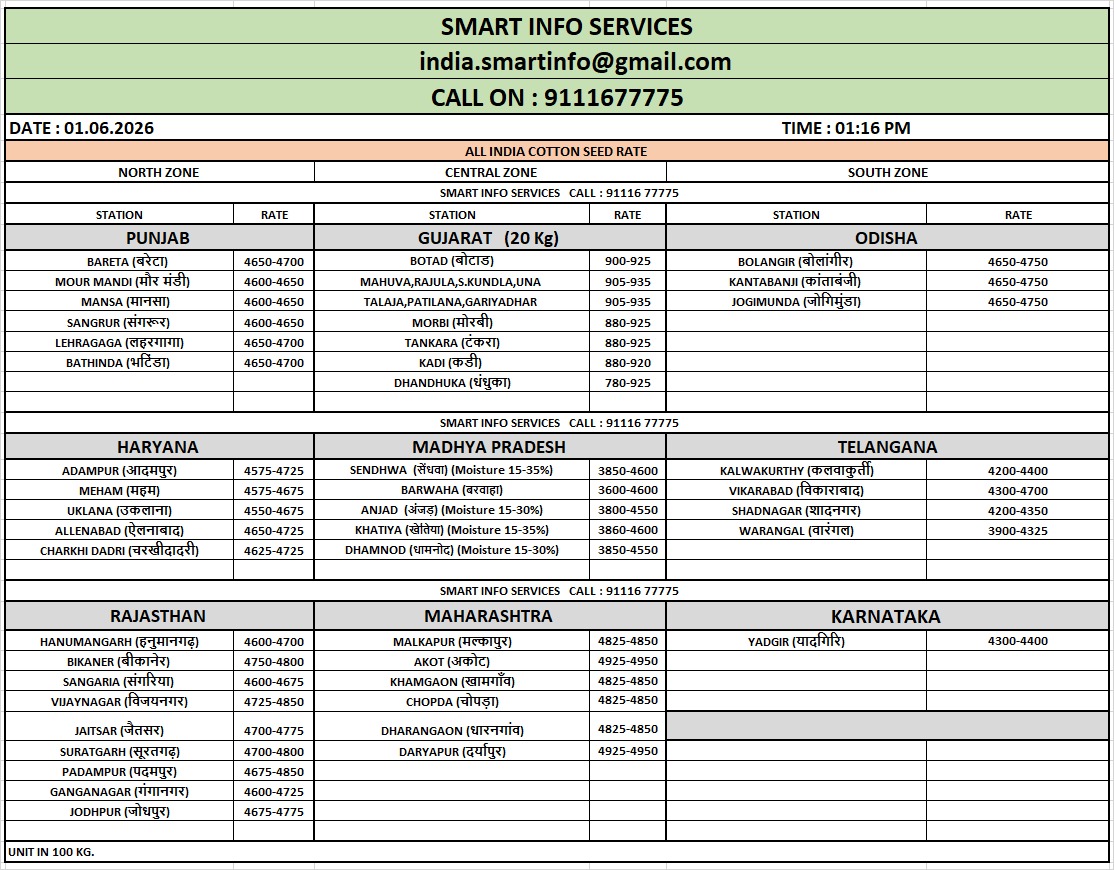
Related News

Youtube Videos

कपास बाजार में आज तेज़ी का रुख 😱Cotton market rate today #youtube
कपास बाजार में आज तेज़ी का रुख 😱Cotton market rate today #yo...
आज देशभर में रुई के ताज़ा भाव 😱 | Cotton market rate today #cotton #kapas
आज देशभर में रुई के ताज़ा भाव 😱 | Cotton market rate today...
ऐसा रहा आज कपास बाज़ार😱🔥Cotton market rate today #youtube
Application Download
Whatsapp Contact