Filter

Recent News

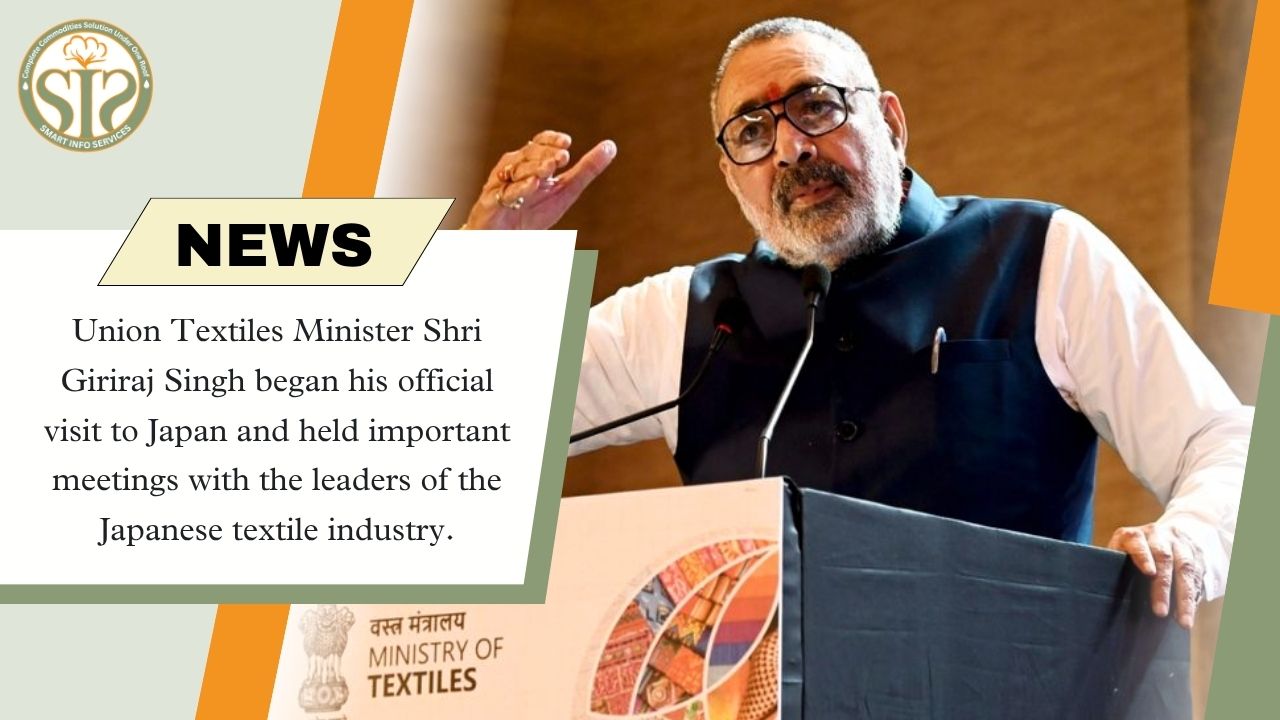
Giriraj Singh's Japan visit, meeting with textile industry heads

Union Textiles Minister Shri Giriraj Singh began his official visit to Japan and held important meetings with the leaders of the Japanese textile industry.Union Textiles Minister Shri Giriraj Singh began his official visit to Tokyo, Japan on 14th July 2025 by paying floral tribute to the statue of Mahatma Gandhi. On the occasion, he highlighted the enduring relevance of Gandhiji’s ideals of truth, non-violence and compassion.Shri Giriraj Singh visited the Indian Embassy in Tokyo and chaired a briefing hosted by Ambassador Shri Sibi George on India-Japan relations and opportunities in the textile sector.This was followed by a strategic meeting with Shri Tadashi Yanai, Chairman, President and CEO, Fast Retailing Co. Ltd., one of the world’s leading apparel retail companies. The meeting discussed the expansion of Fast Retailing’s sourcing, manufacturing and retail operations in India.Shri Giriraj Singh also met the leadership team of leading textile trading and OEM company Stylam Company Limited and invited them to enhance their engagement with India through PM MITRA parks and other Government initiatives.In a significant event, Shri Giriraj Singh met the Directors of Daiso Industries who announced plans to open 200 stores and manufacture cotton products in India. The Minister encouraged them to take advantage of India’s textile infrastructure and incentives.The day concluded with Shri Giriraj Singh chairing an interactive roundtable with CEOs of leading Japanese textile and apparel companies to encourage investments in technical textiles, fibre production and textile machinery. Ambassador Shri Sibi George delivered the inaugural address and Shri Rohit Kansal, Additional Secretary, Ministry of Textiles made a presentation on key Government policies and emerging opportunities in the sector.Read more :-  Indian Rupee higher 16 Paisa, Ends at 85.81 per Dollar

US tariffs may give India a boost in textile exports: SBI

India may gain share in Bangladesh, Cambodia and Indonesia's textile exports amid US tariffs: SBIA report by the State Bank of India suggests that India's apparel exports to the US may increase. This is due to tariff tensions on other Asian exporters. India currently has a 6% share. Gaining an additional 5% share could add 0.1% to India's GDP. Opportunities also exist in agricultural commodities and metal scrap.According to a recent report by the State Bank of India (SBI), India's apparel exports to the US may grow significantly amid the ongoing tariff tensions with major Asian exporters.The report highlights that India, which currently has a 6 per cent share in the US apparel import market, will benefit if it gains an additional 5 per cent share from competing countries. This potential gain could translate into a 0.1 per cent increase in India's GDP.The report said that apart from its strong position in the chemicals sector, India has a clear comparative advantage (RCA) in the textiles industry and exports apparel and accessories to the United States.However, it faces strong competition in this sector from countries such as Bangladesh, Cambodia, Indonesia and Vietnam. Of these, Vietnam currently enjoys a more favourable tariff structure.For the other countries, Bangladesh, Cambodia and Indonesia, the current US tariff structure puts them at a disadvantage compared to India, the report said.It said that "India could capture the apparel export share of Bangladesh, Cambodia and Indonesia".This analysis is supported by US import data for 2024. "Apparel and accessories" is prominent among the top five items imported by the US from Bangladesh, Cambodia and Indonesia, with Bangladesh contributing 88.2 per cent of its US exports, Cambodia 30.8 per cent and Indonesia 15.3 per cent.These countries may now face higher tariffs from the US, opening up opportunities for India to expand its presence.Apart from apparel, the SBI report identifies further export growth opportunities for India in other sectors, especially to countries impacted by US tariff changes.These include agricultural products, livestock and its products, waste and scrap, especially metal scrap, and various processed animal and plant products.The report concludes that India should actively leverage this trade shift and strengthen its export presence, especially in categories where it has a comparative advantage.By taking advantage of emerging opportunities amid changing global trade dynamics, India can not only boost its exports but also drive incremental growth in its economy.read more :- CCI sells over 67 lakh bales of cotton till July 11

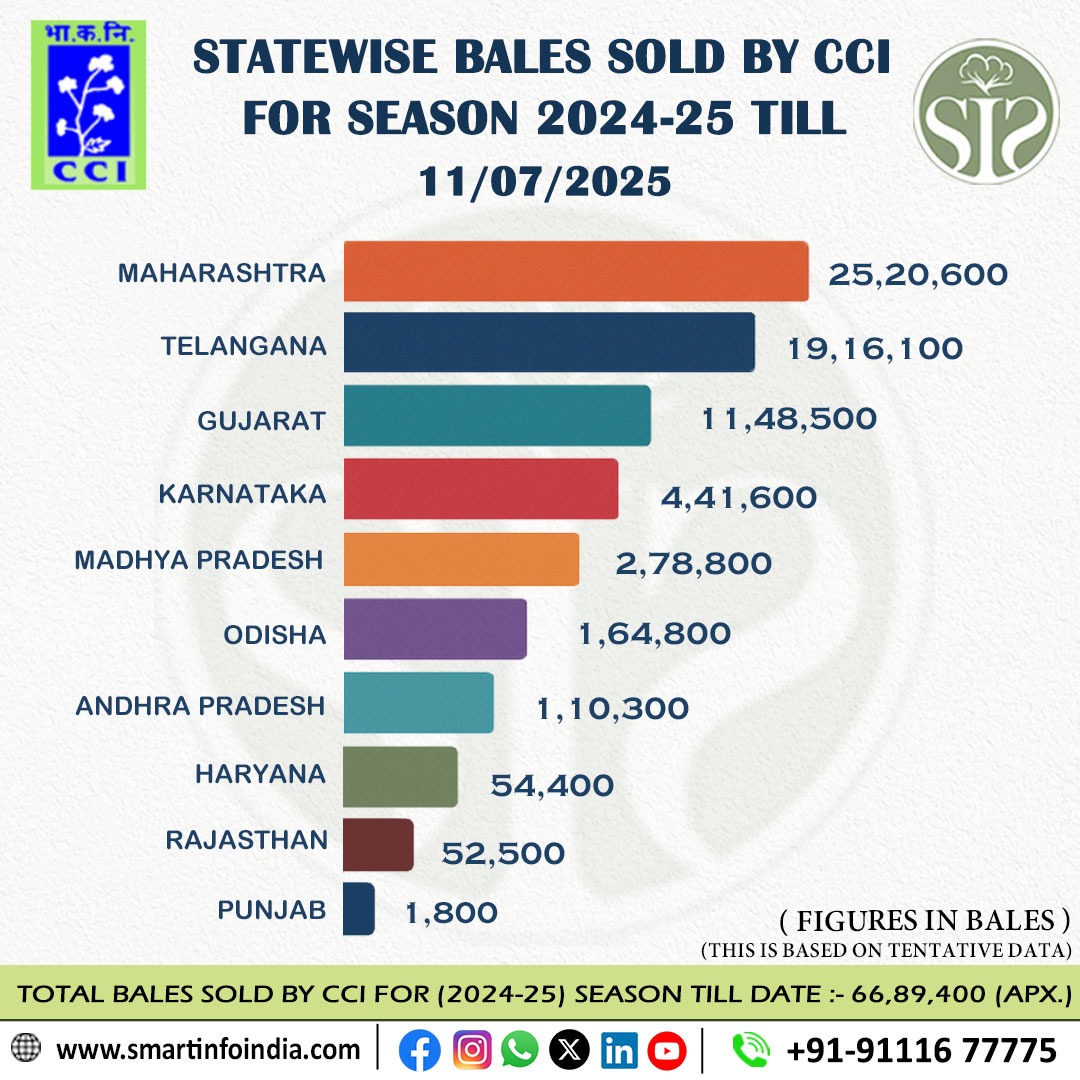
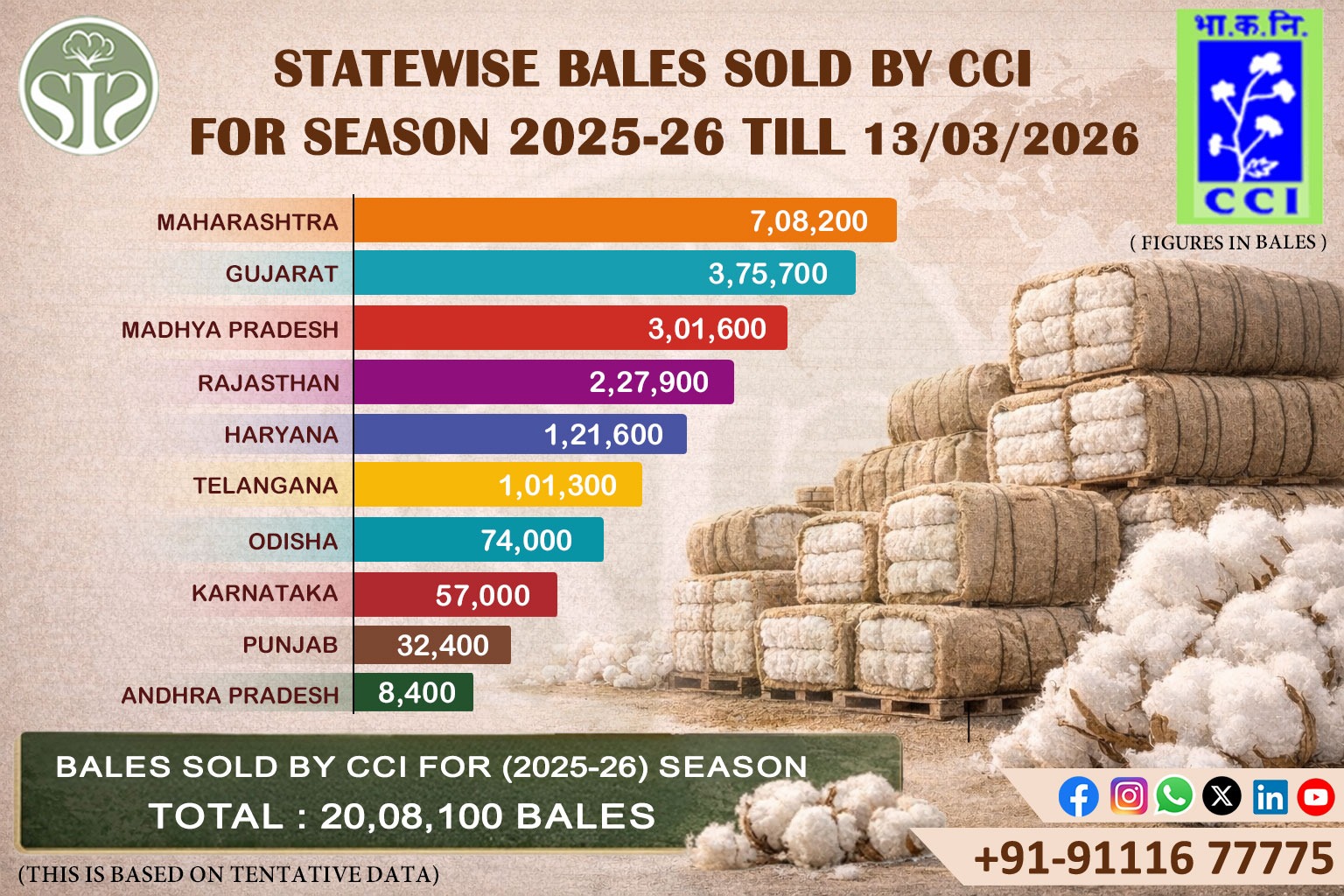
CCI sells over 67 lakh bales of cotton till July 11

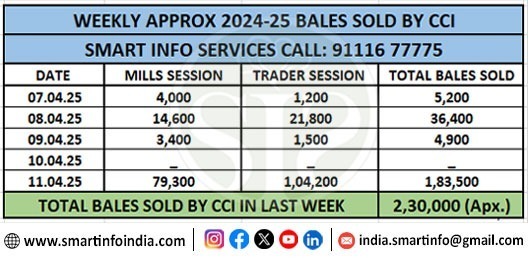
CCI's cotton sales till July 11 was 67 lakh balesAmidst improved demand from mills and depleted stocks with the private trade, the Cotton Corporation of India (CCI) is witnessing good demand for its stocks. The State-run CCI has sold about 67.09 lakh bales (of 170 kg) in the ongoing 2024-25 marketing season till July 11, as per the latest data on its Website. CCI had procured over 1 crore bales at minimum support price (MSP) during the 2024-25 marketing season.Trade sources said the demand for cotton has improved from the mills and also from traders in the recent days. As CCI is currently the only large stockholder, it is witnessing demand for the fibre crop.“Demand for cotton is good and is going up” said Ramanuj Das Boob, a sourcing agent in Raichur and also the Vice President of All India Cotton Brokers Association. CCI, which had reduced the sale price to make its cotton stocks attractive, has now been steadily increasing the price over the past couple of weeks.Turning bullish“Most of the spinning mills have bought cotton and some traders are also buying it. There is no stock of cotton with the trade and the new arrivals will begin only by October. Traders also have covered a good quantity for resale,” said Boob.As the cotton price have gone up, the price of yarn has also seen an improvement. “There is some demand for yarn,” Das Boob said. Prices which were hovering around ₹55,000-55,500 have now inched up to ₹57,000 levels per candy (of 356 kg).Higher carryover stocks“The Indian cotton market has recently turned from bearish to bullish due to aggressive buying by spinners and traders after CCI reduced prices to attractive levels. However, with CCI having sold over 65 per cent of its stock (85 per cent in Gujarat), many mills have already covered their needs. New kapas arrivals are limited, and ginning activity remains largely shut across India. Yarn demand continues to be weak, and mills are cautious with inventory,” said Anand Popat, a trader of cotton, yarn and cotton waste in Rajkot, said in his weekly newsletter.Last week, the Cotton Association of India estimated that the season-end stocks for the current 2024-25 marketing year at around 55.59 lakh balesh, about 84 per cent higher than 30.19 lakh bales last season. The higher than estimated closing stocks are atttributed to the revised crop figures of 311.40 lakh bales from its earlier projections of 301.14 lakh bales.read more :- INR Opens Stronger by 2 Paise at 85.97
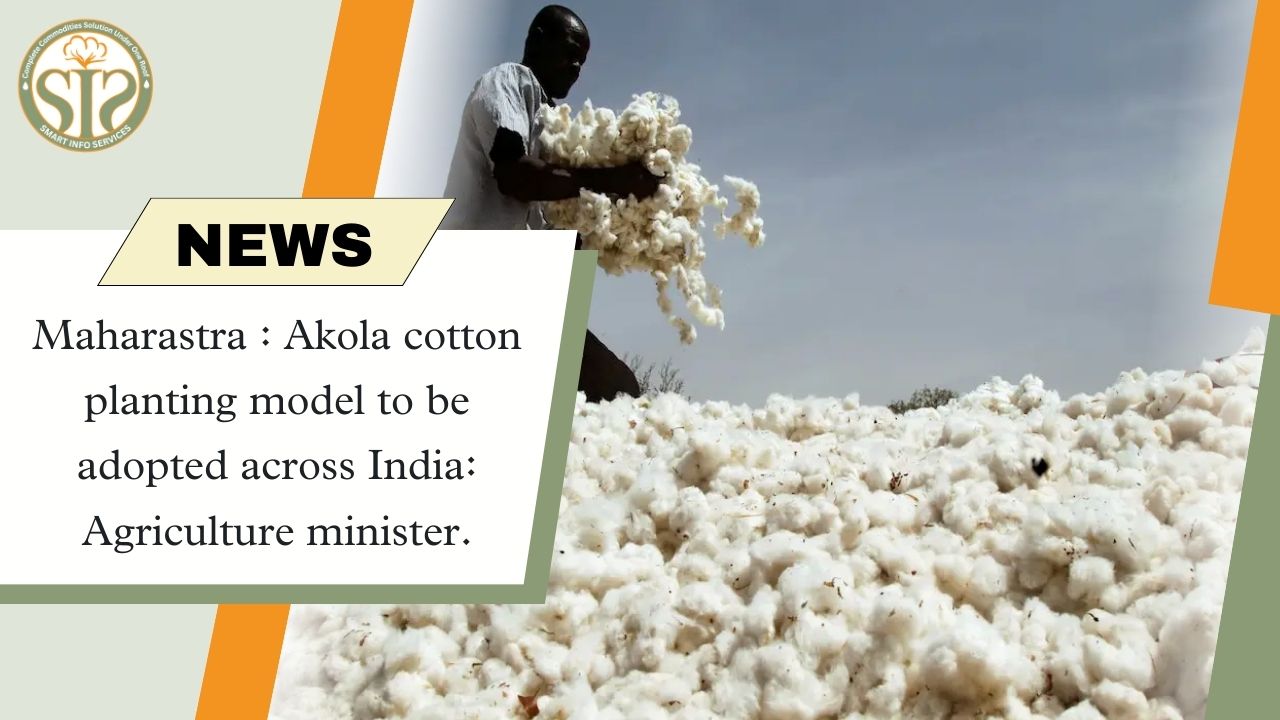
Akola cotton model will be implemented across the country: Agriculture Minister

Maharastra : Akola cotton planting model to be adopted across India: Agriculture minister.Akola: Union agriculture minister Shivraj Singh Chauhan emphasised that in order to stop cotton imports and initiate exports by 2030, high-density cotton planting techniques will be promoted nationwide. Chauhan highlighted that the Akola pattern of high-density cotton planting, implemented by farmer Dilip Thakre, has received national recognition.Similarly, Dilip Pohane from Wardha, with support from the Central Institute for Cotton Research (CICR), achieved increased productivity through dense cotton planting. As the benefits of these methods become evident, the govt plans to promote these across the country.Chauhan urged seed companies and the Indian Council of Agricultural Research (ICAR) to conduct research on cotton varieties best suited for high-density planting. He was speaking at a discussion session held on in Coimbatore, which focused on strategies to enhance cotton productivity.Speaking to, Dilip Thakre said the long-pending demand for an equipment testing institute in South India had been approved immediately."Research and quality improvement of indigenous cotton varieties will also be prioritised. This model will now be implemented across the country to raise productivity," Chauhan said. The minister showed great interest in the Akola pattern of high-density planting, referring to it multiple times in his speech.Present at the session were Union textile minister Giriraj Singh, Maharashtra agriculture minister Manikrao Kokate, vice-chancellor of Dr Panjabrao Deshmukh Agricultural University Dr Sharad Gadakh, vice-chancellor of Vasantrao Naik Marathwada Krishi Vidyapeeth, Parbhani, Dr Indra Mani, CICR director Dr Vijay Waghmare, cotton expert Govind Vairale, and farmers Dilip Pohane and Dilip Thakre.Chauhan acknowledged demand for HTBT technology and said the matter would be discussed with the environment ministry.Currently, unauthorised planting of HTBT (herbicide-tolerant Bt) cotton seeds is taking place in various regions. Considering farmer demands, discussions are underway to explore the possibility of legalising this technology, said the minister. Soil health was also highlighted as a crucial factor in improving productivity.Weed management has become a serious challenge in cotton-growing areas, with labour shortages and rising costs. The agriculture and textile ministries are working together to address this, he said.He stressed that developing new crop varieties and technologies is meaningless if they do not reach farmers. To bridge this gap, a stronger agricultural extension system will be developed to ensure effective transfer of knowledge from "lab to land."Key Points *Use of AI-based pheromone traps for pink bollworm control*Emphasis on affordable and accessible mechanisation*Strict regulation to prevent counterfeit seeds and inputs*Customised solutions for small and marginal farmers*Partnerships with seed companies and research institutes to develop improved varietiesread more :- Rupee falls 21 paise at open to 86.01 against US dollar

CAI increases cotton stock to 55.5 lakh bales

CAI raises cotton stock to 55.5 lakh bales for 2024-25 seasonThe CAI estimates record stocks of cotton for the 2024-25 season, driven by projected growth in production, consumption and imports.The ending stocks of cotton in the country for the current 2024-25 season ending in September are estimated at around 55.59 lakh bales (each of 170 kg) - up by nearly 84 per cent from the previous year's 30.19 lakh bales, according to the latest estimates of trade organisation Cotton Association of India (CAI).In a statement, CAI President Atul Ganatra said cotton crushing for the 2024-25 season is estimated at 311.40 lakh bales - higher than the previous estimate of 301.14 lakh bales due to an increase in crop size.Higher pressuresThis increase is due to higher than expected pressures in Maharashtra (5 lakh bales), Gujarat and Telangana (1.5 lakh bales each) and 1 lakh bale fibre crop pressure in Karnataka. Andhra Pradesh, Haryana and Rajasthan also witnessed marginal increase in pressure numbers due to improved crop arrivals.CAI estimates total cotton supply at end-June to be 356.76 lakh bales, comprising 296.57 lakh bales of pressure, 30 lakh bales of imports and 30.19 lakh bales of opening stocks. Consumption at end-June stood at 233.5 lakh bales, while exports are estimated at 15.25 lakh bales. Opening stocks are estimated at 108.01 lakh bales by end-June 2025. This includes 32.00 lakh bales with textile mills and the remaining 76.01 lakh bales with CCI, Maharashtra Federation and others (MNCs, traders, ginners, exporters, etc.), which includes cotton sold but not delivered.Increase in productionCAI has estimated the total cotton supply by the end of cotton season 2024-25 at 380.59 lakh bales as against the earlier estimate of 370.34 lakh bales due to higher production in some states. Domestic consumption for this season is estimated to increase marginally to 308 lakh bales as against the earlier estimate of 305 lakh bales, while exports are estimated at 17 lakh bales. In fact, exports this season are estimated to be 40 per cent lower than last year's 28.36 lakh bales.Cotton imports for the year 2024-25 are estimated at 39 lakh bales, more than double the previous year's estimate of 15.2 lakh bales. CAI said about 30 lakh bales are expected to reach Indian ports by the end of June.Meanwhile, cotton sowing is going on at a good pace in major producing states. As of July 7, the fibre crop has been sown in about 79.54 lakh hectares (LH), slightly higher than 78.58 LH a year ago.read more :-  Initiative to make cotton farming profitable: Shivraj Singh

Initiative to make cotton farming profitable: Shivraj Singh

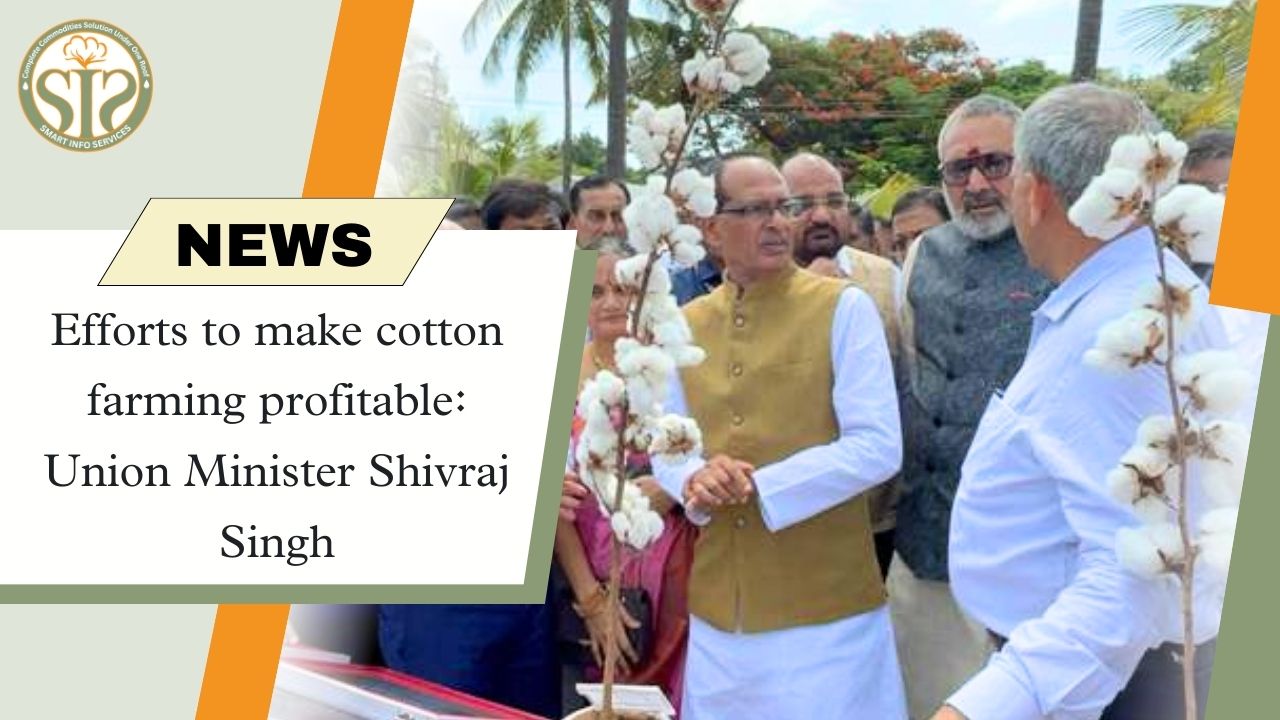
Efforts to make cotton farming profitable: Union Minister Shivraj SinghCOIMBATORE : The penalty and legal action against firms selling substandard cotton seeds and fertilisers will be reframed, statedUnion Minister for Agriculture and Farmers' Welfare Shivraj Singh Chouhan in Coimbatore on Friday.He also said the ministry is working to make cotton farming a profitable business for the farmer.The minister participated in an event named 'Consultation with Stakeholders on Enhancing Cotton Productivity' at ICAR-Sugarcane Breeding Institute.Addressing the press, the minister said, "We will start a new cotton revolution from Coimbatore. We had a discussion on the problems faced in cotton production and how to increase its productivity.?Ways to combat diseases affecting cotton were also discussed, he added."Our farmers should produce the kind of cotton that the industry needs so that the profit of the farmers should increase. We will do research after listening to all these problems. Many experiments are going on. We are using AI to trap and kill the bacteria and viruses that cause diseases in cotton," Chouhan stated.On the increasing human-wildlife conflict issue, the central minister said, "Agriculture and forest are State Subjects. The Union Government has been providing necessary cooperation altogether whenever the State Government requires it."read more :-  CCI increased the price of cotton, 66% sales through e-bidding

Copyright© 2023 | Smart Info Service
Application Download