
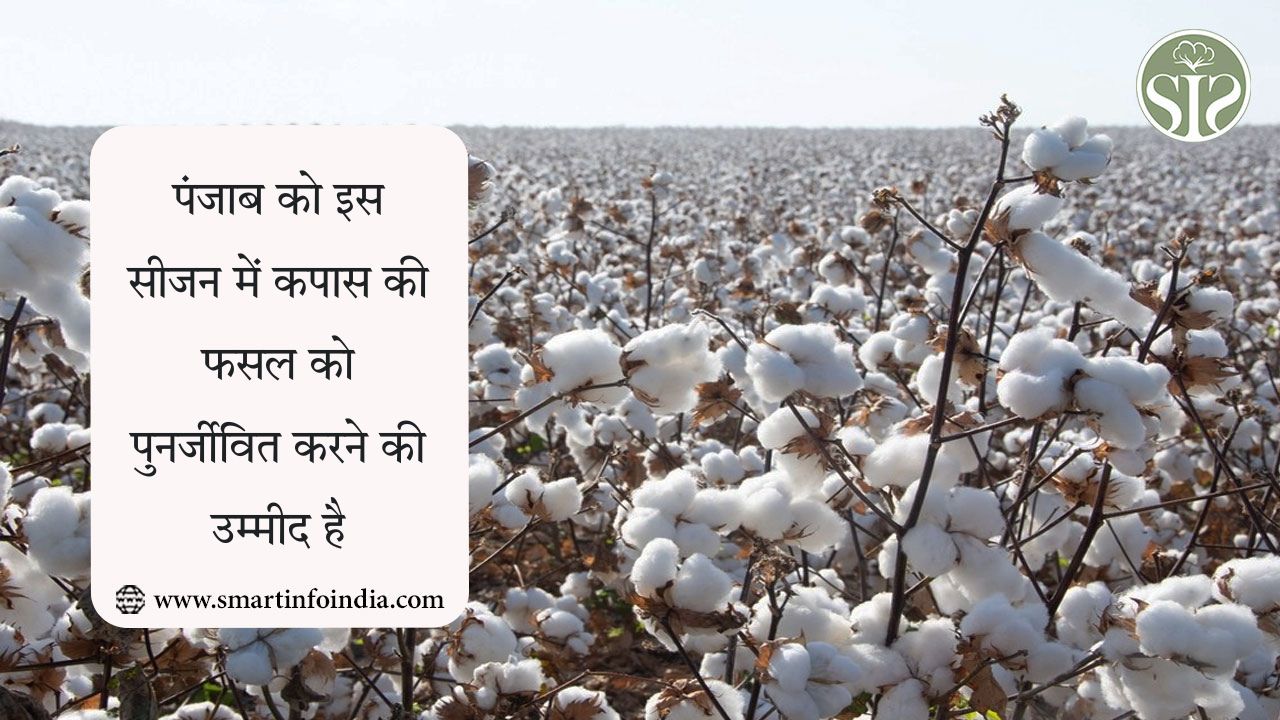
इस मौसम में कपास की खेती को पुनर्जीवित करने के लिए पंजाब की रणनीतिचंडीगढ़: पंजाब में कपास का रकबा 2024 में घटकर केवल 1 लाख हेक्टेयर रह जाने के बावजूद राज्य सरकार ने मंगलवार को कहा कि फसल को पुनर्जीवित करने के प्रयास किए जाएंगे। पंजाब के कृषि मंत्री गुरमीत सिंह खुदियान ने आगामी कपास सीजन की तैयारियों की समीक्षा के लिए पंजाब कृषि विश्वविद्यालय (पीएयू) के कुलपति सतबीर सिंह गोसल के साथ बैठक की।राज्य भर के किसानों को पीएयू-प्रमाणित कपास के बीज की उपलब्धता सुनिश्चित करने का निर्णय लिया गया। विश्वविद्यालय ने आगामी खरीफ सीजन के दौरान राज्य में खेती के लिए संकर कपास के बीजों की 87 किस्मों की सिफारिश की है। खुदियान ने किसानों से अपनी उपज को अधिकतम करने के लिए केवल इन अनुशंसित प्रमाणित बीजों का उपयोग करने का आग्रह किया।हाल के वर्षों में, राज्य में कपास की फसल पर सफेद मक्खियों और गुलाबी बॉलवर्म ने कहर बरपाया है। कपास के तहत आने वाला रकबा तीन दशक पहले के लगभग आठ लाख हेक्टेयर से कम हो गया है।गुलाबी सुंडी के संक्रमण की लगातार समस्या से निपटने के लिए, खुदियन ने कहा कि विभाग ने सात दक्षिण-पश्चिमी जिलों में 264 नोडल अधिकारी तैनात किए हैं: बठिंडा -70, फाजिल्का -41, श्री मुक्तसर साहिब -62, मानसा -42, संगरूर -20, बरनाला -16, और फरीदकोट -13। इन अधिकारियों को पिछले सीजन से कपास के डंठल और बचे हुए अवशेषों के प्रबंधन और सफाई का काम सौंपा गया है, जो गुलाबी सुंडी के प्रजनन स्थल के रूप में काम करते हैं। उन्होंने कहा कि अब तक कुल कपास के डंठल के ढेर का लगभग 32% प्रबंधित किया जा चुका है।सफेद मक्खी के प्रबंधन के लिए कपास बेल्ट में खरपतवार उन्मूलन अभियान चल रहा है। यह अभियान जिला प्रशासन, अन्य विभागों और मनरेगा के सहयोग से सड़कों, नहरों और परित्यक्त स्थलों के किनारे खड़े खरपतवारों को नष्ट करने के लिए शुरू किया गया है। पंजाब मंडी बोर्ड के अधिकारियों की मदद से जिनिंग फैक्टरियों में गुलाबी सुंडी की निगरानी गतिविधियां जारी हैं, तथा जिनिंग फैक्टरियों में गुलाबी सुंडी के लार्वा को नियंत्रित करने के लिए कपास के स्टॉक का धुंआकरण किया जाएगा।और पढ़ें :- भारतीय रुपया अमेरिकी डॉलर के मुकाबले 6 पैसे गिरकर 87.27 पर खुला

अमेरिकी डॉलर के मुकाबले रुपया 6 पैसे कमजोर होकर 87.27 पर खुला।भारतीय रुपया बुधवार को 87.27 प्रति डॉलर पर खुला, जबकि मंगलवार को यह 87.21 पर बंद हुआ था।और पढ़ें :-व्यापार निकाय ने कहा कि उत्पादन कम होने से भारत का कपास आयात दोगुना हो जाएगा
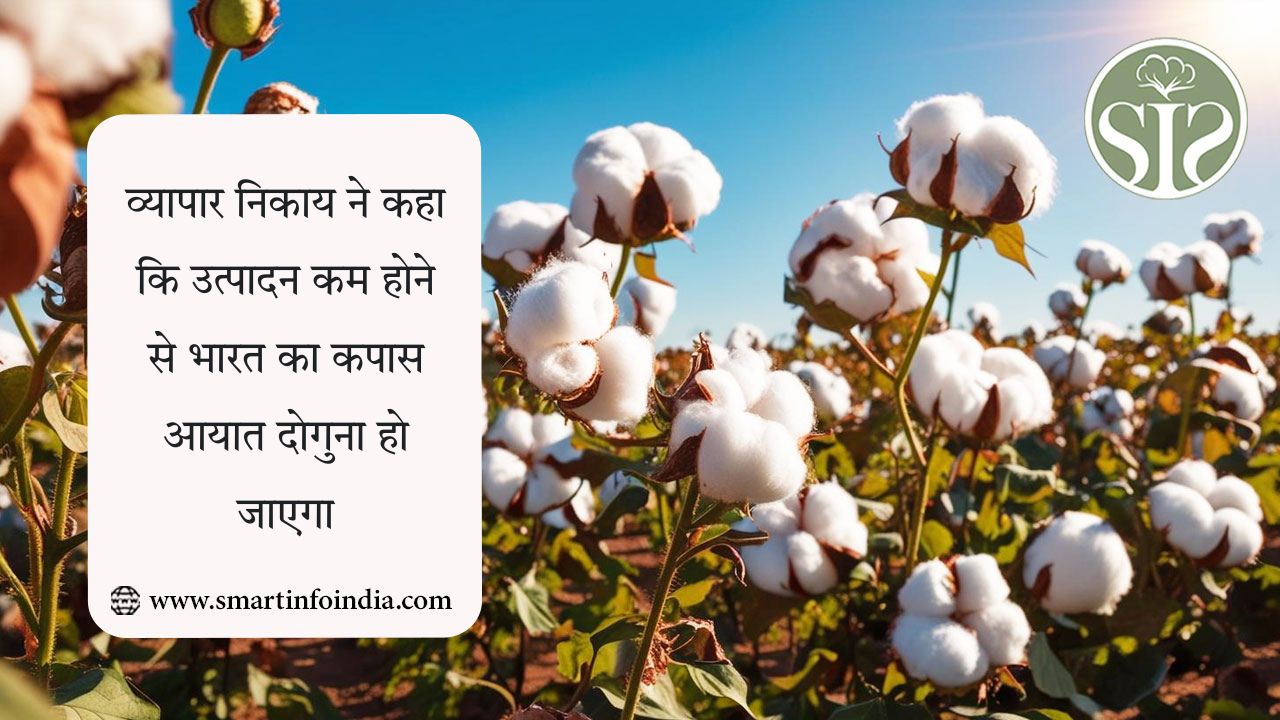
घरेलू उत्पादन में कमी के कारण भारत का कपास आयात दोगुना होने की संभावना: व्यापार निकायएक प्रमुख व्यापार निकाय ने मंगलवार को कहा कि 2024/25 में भारत का कपास आयात एक साल पहले की तुलना में दोगुना होने की संभावना है, क्योंकि बुआई के रकबे में कमी और प्रतिकूल मौसम के कारण उत्पादन खपत से कम होने वाला है।दुनिया के दूसरे सबसे बड़े फाइबर उत्पादक द्वारा अधिक आयात से वैश्विक कीमतों को समर्थन मिल सकता है, जो शीर्ष उपभोक्ता चीन द्वारा संयुक्त राज्य अमेरिका से आयात पर शुल्क लगाने के बाद चार साल से अधिक समय में अपने सबसे निचले स्तर पर आ गई हैं।कॉटन एसोसिएशन ऑफ इंडिया (CAI) ने एक बयान में कहा कि भारत 30 सितंबर को समाप्त होने वाले चालू विपणन वर्ष में 3 मिलियन गांठ आयात कर सकता है, जो एक साल पहले आयात किए गए 1.52 मिलियन गांठ से अधिक है।CAI के अनुमान के अनुसार, अक्टूबर से फरवरी की अवधि के दौरान, विदेशी कपास की 2.2 मिलियन गांठें भारतीय बंदरगाहों पर उतरीं।चालू वर्ष में भारत का कपास उत्पादन एक साल पहले की तुलना में 10 प्रतिशत घटकर 29.53 मिलियन गांठ रह जाने की संभावना है, जबकि मांग मामूली रूप से बढ़कर 31.5 मिलियन गांठ होने का अनुमान है। सीएआई ने कहा कि इसके कारण निर्यात एक साल पहले के 2.84 मिलियन गांठ से घटकर 1.7 मिलियन गांठ रह जाएगा।और पढ़ें :-विशेषज्ञों ने तकनीकी वस्त्र के अवसरों, कपास उत्पादकता में सुधार की आवश्यकता पर चर्चा की
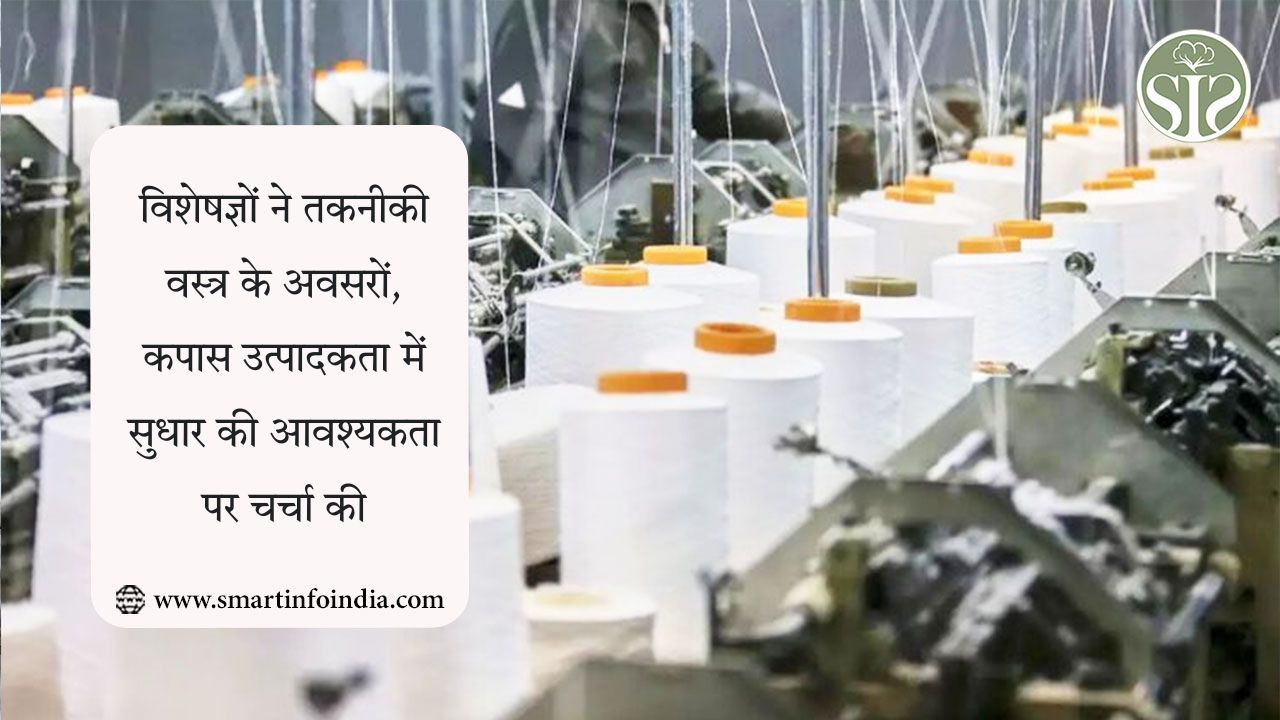
विशेषज्ञों ने कपास उत्पादकता और तकनीकी वस्त्र अवसरों पर प्रकाश डालागुजरात चैंबर ऑफ कॉमर्स एंड इंडस्ट्री (जीसीसीआई) ने टेक्सटाइल कॉन्क्लेव 2025 की मेजबानी की, जहां पेशेवरों ने कपास उत्पादकता और तकनीकी वस्त्र क्षमता को बढ़ाने की आवश्यकता के बारे में बात की।जीसीसीआई टेक्सटाइल टास्क फोर्स के प्रमुख सौरिन पारिख ने फैशन, निर्माण, स्वास्थ्य सेवा और कृषि जैसे उद्योगों में तकनीकी वस्त्रों के महत्व पर चर्चा की। उन्होंने जोर दिया कि इस उद्योग की क्षमता को पूरी तरह से साकार करने के लिए सहयोग, नवाचार और नीति सहायता की आवश्यकता है।जीसीसीआई के अध्यक्ष संदीप इंजीनियर के अनुसार, कपड़ा सम्मेलन कपड़ा क्षेत्र के सामने आने वाली मांगों और समस्याओं पर गहन बहस और चर्चा के लिए एक मंच प्रदान करता है। उच्च प्रदर्शन वाली सामग्री बनाने के लिए, विशेषज्ञों ने कहा कि तकनीकी वस्त्रों को नवाचार और अनुसंधान और विकास की आवश्यकता है। उन्होंने विकास को बढ़ावा देने में सरकारी नियमों और उद्योग सहयोग के महत्व पर भी जोर दिया।केंद्र सरकार के कपास उत्पादकता के मिशन पर भी विशेषज्ञों ने प्रकाश डाला। पांच वर्षों के दौरान, मिशन का उद्देश्य भारत की कपास की पैदावार को 461 किलोग्राम/हेक्टेयर से बढ़ाकर 850 किलोग्राम/हेक्टेयर के वैश्विक औसत तक पहुंचाना है, साथ ही अतिरिक्त लंबे स्टेपल वाले कपास के उत्पादन को प्रोत्साहित करना है। विशेषज्ञों के अनुसार, बीज सुधार आवश्यक है। प्रतिभागियों में कताई, बुनाई, प्रसंस्करण, वस्त्र और मशीनरी विनिर्माण क्षेत्रों के उद्योग अधिकारी शामिल थे।और पढ़ें :-भारतीय रुपया 15 पैसे बढ़कर 87.21 प्रति डॉलर पर बंद हुआ

डॉलर के मुकाबले रुपया 15 पैसे मजबूत होकर 87.21 पर बंद हुआभारतीय रुपया मंगलवार को 15 पैसे बढ़कर 87.21 प्रति डॉलर पर बंद हुआ, जबकि सुबह यह 87.36 पर खुला था।बंद होने पर, सेंसेक्स 12.85 अंक या 0.02 प्रतिशत की गिरावट के साथ 74,102.32 पर और निफ्टी 37.60 अंक या 0.17 प्रतिशत की बढ़त के साथ 22,497.90 पर बंद हुआ। करीब 1411 शेयरों में तेजी आई, 2406 शेयरों में गिरावट आई और 115 शेयरों में कोई बदलाव नहीं हुआ।और पढ़ें :-कपास खरीदें: सफेद सोना बर्बाद हो जाएगा; मूल्य वृद्धि की प्रत्याशा में कपास का भंडारण बढ़ाया गया
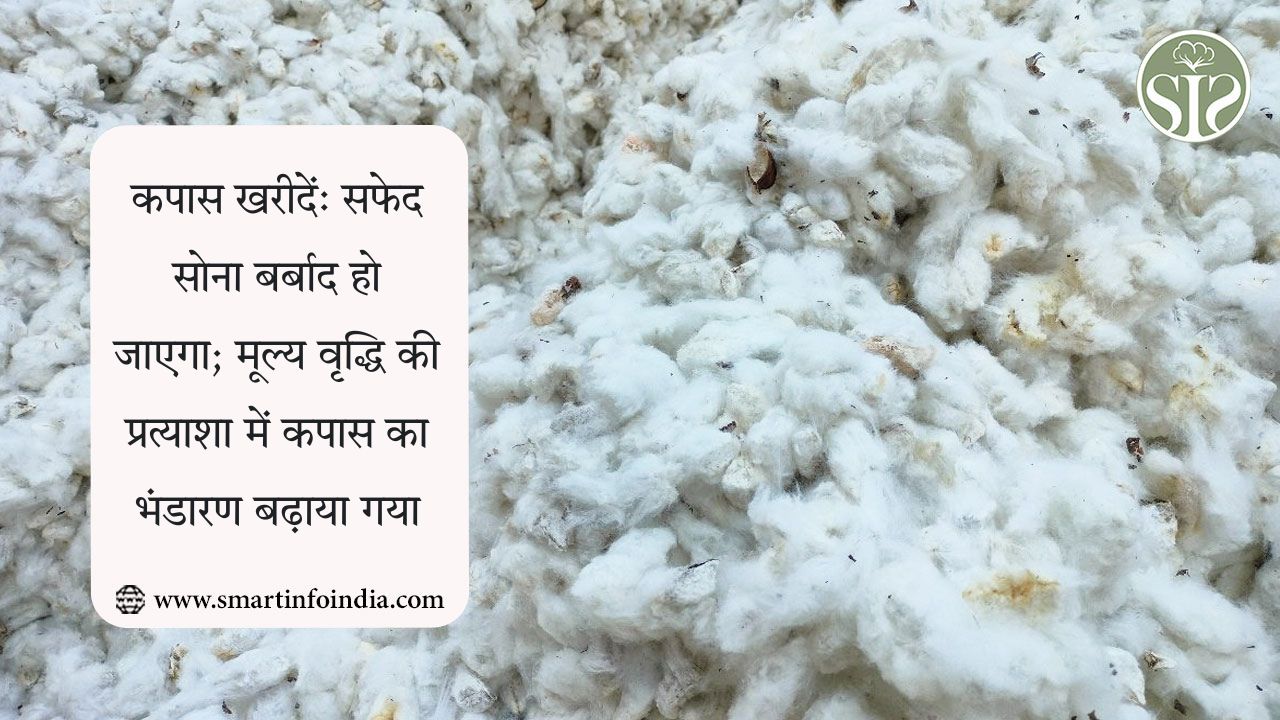
कपास की कीमतों में उछाल के कारण भंडारण में वृद्धिकपास खरीदी:कपास को भी नहीं मिल रही गारंटी कीमत, CCI ने रजिस्ट्रेशन के लिए दी है 15 तारीख साथ ही 14 और 15 को सार्वजनिक अवकाश होने के कारण अंतिम तिथि 13 मार्च होगी.कुछ किसानों ने कीमतों में बढ़ोतरी की उम्मीद में कपास का भंडारण कर लिया है। केंद्र सरकार ने इस साल कपास के लिए 7521 रुपये प्रति क्विंटल का न्यूनतम समर्थन मूल्य घोषित किया है। दरअसल, खुले बाजार में इसकी कीमत 7,000 रुपये से लेकर गांवों में इससे भी कम है. (कपास खरीदना)किसानों को समर्थन मूल्य सुरक्षा प्रदान करने के लिए सीसीआई ने जिले के 9 केंद्रों पर खरीद शुरू की। किसी कारण से, केंद्र अपेक्षा से अधिक समय तक बंद रहा और खरीदारी धीमी रही। (कपास खरीदना)इसके अलावा गांव में कपास की खरीद में भी लूट मची है. सीसीआई पिछले दो महीनों से खरीदे गए कपास के ग्रेड को कम कर रहा है। इसलिए कपास 7,421 रुपये में खरीदा जा रहा है, जो गारंटी मूल्य से 100 रुपये कम है। (कपास खरीदना)त्वचा संबंधी विकार किसान दाम बढ़ने की उम्मीद में कपास का भंडारण कर रहे हैं. हालांकि, कपास के ये कीट घर के सदस्यों की त्वचा पर रैशेज और खुजली जैसी समस्याएं पैदा कर रहे हैं। इसलिए बाजार में इसका कोई मूल्य नहीं है और अगर इसे संग्रहीत किया जाता है तो यह स्वास्थ्य संबंधी समस्याएं पैदा कर रहा है। ऐसे में किसान दोहरी मुसीबत में फंस गया है.कोई भंडारण स्थान नहीं.सीसीआई द्वारा जिले की कुछ जिनिंग कंपनियों के साथ एक समझौते पर हस्ताक्षर करने के बाद वहां केंद्र शुरू किया गया था। हालांकि, कुछ केंद्रों पर गांठें और बोरियां नहीं उठने से कपास के भंडारण की जगह नहीं है और कपास की कटाई की समस्या भी सामने आ रही है. बताया गया है कि इस बात पर सहमति बनी है कि जब तक सीसीआई वास्तव में खरीदारी नहीं कर लेती, तब तक ओटीएआई उपलब्ध कराया जाएगा।और पढ़ें :- भारतीय रुपया अमेरिकी डॉलर के मुकाबले 3 पैसे गिरकर 87.36 पर खुला

भारतीय रुपया आज अमेरिकी डॉलर के मुकाबले 3 पैसे की गिरावट के साथ 87.36 पर खुला।भारतीय रुपया 11 मार्च को अमेरिकी डॉलर के मुकाबले 3 पैसे गिरकर 87.36 पर खुला, जबकि पिछले बंद भाव पर डॉलर के मुकाबले रुपया 87.33 पर था।और पढ़ें :-भारतीय रुपया 7 पैसे गिरकर 87.33 प्रति डॉलर पर बंद हुआ

अमेरिकी डॉलर के मुकाबले भारतीय रुपया 7 पैसे गिरकर 87.33 परसोमवार को भारतीय रुपया 7 पैसे गिरकर 87.33 प्रति डॉलर पर बंद हुआ, जबकि सुबह यह 87.26 पर खुला था।बंद होने पर, सेंसेक्स 217.41 अंक या 0.29 प्रतिशत गिरकर 74,115.17 पर और निफ्टी 92.20 अंक या 0.41 प्रतिशत गिरकर 22,460.30 पर बंद हुआ। करीब 1147 शेयरों में तेजी आई, 2776 शेयरों में गिरावट आई और 140 शेयरों में कोई बदलाव नहीं हुआ।और पढ़ें :-पंजाब के कपास क्षेत्र को झटका: कपास उत्पादन में 71 प्रतिशत की गिरावट, गुणवत्तापूर्ण बीजों की कमी समेत कई कारण

बीज की कमी के कारण पंजाब में कपास उत्पादन में 71% की गिरावटकॉटन एसोसिएशन ऑफ इंडिया की रिपोर्ट के अनुसार, पंजाब में कपास उत्पादन और खेती का रकबा लगातार घट रहा है। कपास उत्पादन के लिए मशहूर मालवा क्षेत्र खास तौर पर प्रभावित हुआ है। किसान अब धान और गेहूं जैसी दूसरी फसलों की ओर रुख कर रहे हैं, जिससे फसल विविधीकरण के प्रयासों को झटका लग रहा है।पंजाब के कपास उत्पादक क्षेत्र में पिछले पांच सालों में कपास उत्पादन में 71 प्रतिशत की भारी गिरावट आई है। इसके साथ ही कपास की खेती का रकबा भी घटकर आधा रह गया है।पिंक बॉलवर्म के संक्रमण, गुणवत्तापूर्ण बीजों और कीटनाशकों की कमी के कारण किसान कपास की खेती से दूर हो रहे हैं। राज्य सरकार ने अब केंद्र से बीजी3 बीज उपलब्ध कराने की मांग की है, ताकि कपास की खेती को पुनर्जीवित किया जा सके।ताजा स्थितिउत्पादन में गिरावट: 2020-21 में 7.73 लाख गांठ से घटकर 2024-25 में 2.20 लाख गांठ।खेती के रकबे में कमी: 2.52 लाख हेक्टेयर से घटकर 1 लाख हेक्टेयर रह गया।सरकार की मांग: केंद्र से बीजी3 बीज उपलब्ध कराए।चिंता: किसान धान और गेहूं की ओर रुख कर रहे हैं, जिससे भूजल स्तर पर दबाव बढ़ेगा।अन्य राज्यों की स्थिति: हरियाणा और राजस्थान में कपास का उत्पादन पंजाब से बेहतर है।विविधीकरण प्रयासों को झटकाकॉटन एसोसिएशन ऑफ इंडिया की रिपोर्ट के अनुसार, पंजाब में कपास का उत्पादन और खेती का रकबा लगातार घट रहा है। कपास उत्पादन के लिए मशहूर मालवा क्षेत्र खास तौर पर प्रभावित हुआ है। किसान अब धान और गेहूं जैसी दूसरी फसलों की ओर रुख कर रहे हैं, जिससे फसल विविधीकरण प्रयासों को झटका लग रहा है।राज्य सरकार ने केंद्र सरकार से बीजी3 किस्म के बीज उपलब्ध कराने का आग्रह किया है, जिससे गुलाबी सुंडी के प्रकोप को कम करने में मदद मिल सकती है। कृषि विभाग के अनुसार, अगर गुलाबी सुंडी कपास की खेती को प्रभावित करती रही, तो किसान पूरी तरह से धान की खेती की ओर रुख कर लेंगे, जिससे भूजल स्तर पर और दबाव पड़ेगा।हरियाणा और राजस्थान आगेकपास उत्पादन में हरियाणा और राजस्थान पंजाब से आगे हैं। 2024-25 में हरियाणा ने 4.76 लाख हेक्टेयर में कपास की खेती की और 9.75 लाख गांठें पैदा कीं, जबकि राजस्थान ने 6.62 लाख हेक्टेयर में इसकी खेती की और 19.76 लाख गांठें पैदा कीं।और पढ़ें :-भारतीय कपास की कीमतों पर दबाव के बावजूद कपास का आयात बढ़ा
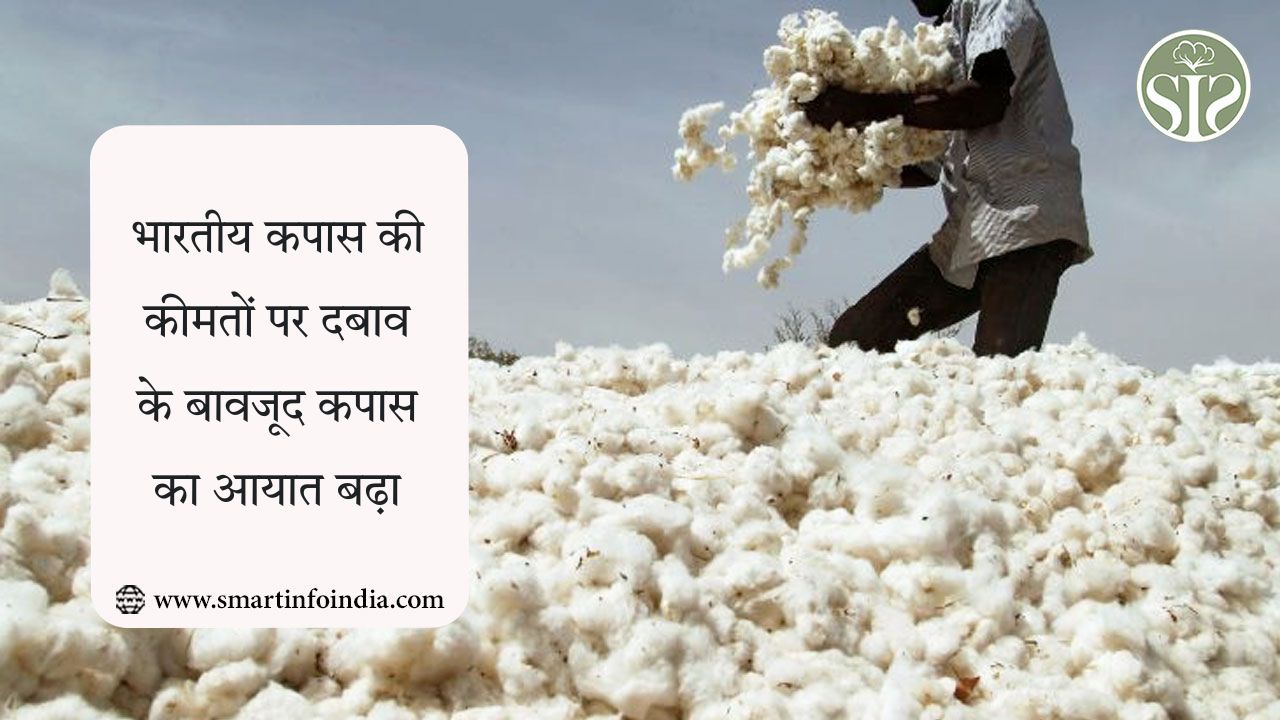
कीमतों में तनाव के बावजूद भारतीय कपास आयात में वृद्धिपिछले सात महीनों में कच्चे कपास और कॉटन वेस्ट के बढ़ते आयात ने भारत में कपास की उत्पादकता में सुधार के उपायों की तत्काल आवश्यकता को सामने ला दिया है।अगस्त 2024 में कपास का आयात 104 मिलियन डॉलर, सितंबर 2024 में 134.2 मिलियन डॉलर, अक्टूबर में 127.71 मिलियन डॉलर, नवंबर में 170.73 मिलियन डॉलर और दिसंबर 2024 में 142.89 मिलियन डॉलर था। इस साल जनवरी में यह 184.64 मिलियन डॉलर था।तुलनात्मक रूप से, अगस्त 2023 में आयात 74.4 मिलियन डॉलर, सितंबर 2023 में 39.91 मिलियन डॉलर, अक्टूबर 2023 में 36.68 मिलियन डॉलर, नवंबर 2023 में 30.61 मिलियन डॉलर और दिसंबर 2023 में 29.47 मिलियन डॉलर था। जनवरी 2024 में आयात 19.62 मिलियन डॉलर था।इस बीच, भारतीय कपास निगम (CCI) ने 1 अक्टूबर, 2024 को नए सीजन की शुरुआत से बाजार में आए भारतीय कपास की करीब 100 लाख गांठें खरीदी हैं। दिसंबर 2024 में कपास की अधिकतम आवक के मौसम में, CCI ने न्यूनतम समर्थन मूल्य (MSP) पर दैनिक आवक का लगभग 60% खरीदा। शनिवार को शंकर 6 किस्म के कपास का भाव 52,500 रुपये प्रति क्विंटल था।तेलंगाना के कपास किसान जयपाल ने सीजन की शुरुआत में कहा कि किसान खुश नहीं हैं क्योंकि पैदावार कम है। उन्होंने कहा, "अंतरराष्ट्रीय स्तर पर कपास की कीमतें कम हैं और मिलें वहां से खरीद कर पा रही हैं।" कर्नाटक राज्य किसान संघों के महासंघ के अध्यक्ष कुर्बुर शांताकुमार ने कहा कि प्रति क्विंटल उत्पादन की लागत ₹9,000 है और एमएसपी ₹7,235 है। लेकिन, दलाल खुले बाजार में केवल ₹5,000 से ₹5,500 प्रति क्विंटल पर खरीद रहे थे। फरवरी में घोषित केंद्रीय बजट में उत्पादकता में सुधार के उद्देश्य से कपास मिशन की घोषणा की गई है। भारतीय कपड़ा उद्योग के लिए, अंतरराष्ट्रीय स्तर पर कपास की कीमतें कमजोर हैं और परिधानों और घरेलू वस्त्रों की निर्यात मांग बढ़ने के साथ, कपड़ा उद्योग को अंतरराष्ट्रीय स्तर पर प्रतिस्पर्धी होने की आवश्यकता है। निर्यात किए जाने वाले 60% से अधिक वस्त्र कपास आधारित हैं। एक्स्ट्रा लॉन्ग स्टेपल कपास को शुल्क मुक्त आयात किया जा सकता है और निर्यातक अग्रिम प्राधिकरण के तहत बिना शुल्क के कपास आयात कर सकते हैं। उद्योग सूत्रों ने कहा कि ऐसा लगता है कि मिलों ने कपास का आयात किया है क्योंकि अंतरराष्ट्रीय कपास की कीमतें भारतीय कीमतों से कम थीं और आयात ने स्थानीय बाजार को प्रभावित नहीं किया है।“ब्राजील [अंतर्राष्ट्रीय बाजार में] एक आक्रामक विक्रेता है। ऑस्ट्रेलिया, यू.एस., अफ्रीका और ब्राजील सभी कुछ दिनों पहले तक कीमतों में आरामदायक स्थिति में थे। इन देशों की तुलना में भारतीय कपास की कीमतें अधिक थीं। भारतीय कपड़ा मिलों ने एक सुनियोजित जोखिम उठाया और 11% शुल्क के बावजूद आयात किया क्योंकि भारतीय कपास और धागे की कीमतें अपेक्षाकृत अधिक हैं। भारतीय सरकार और कपड़ा उद्योग को मांग बढ़ाने पर ध्यान देना चाहिए ताकि कपड़ा निर्यात बढ़े और उत्पादकों और प्रसंस्करणकर्ताओं के लिए कपास की कीमतें बराबर बनी रहें। कपास की उत्पादकता और क्षेत्र को बढ़ाकर मिलों के लिए 'फाइबर सुरक्षा' बनाए रखना भी बहुत महत्वपूर्ण है,” अखिल भारतीय कपास किसान उत्पादक संगठन संघ के अध्यक्ष मनीष डागा ने कहा।और पढ़ें :-रुपया 38 पैसे गिरकर 87.26 डॉलर प्रति डॉलर पर खुला

अमेरिकी डॉलर के मुकाबले रुपया 38 पैसे गिरकर 87.26 पर खुला।भारतीय रुपया सोमवार को अमेरिकी डॉलर के मुकाबले 38 पैसे गिरकर 87.26 पर खुला, जबकि शुक्रवार को यह 86.88 पर बंद हुआ था।डॉलर सूचकांक में नरमी के बावजूद वैश्विक व्यापार को लेकर चिंताओं के कारण 10 मार्च को भारतीय रुपया 38 पैसे गिरकर खुला।और पढ़ें :-भारतीय रुपया 23 पैसे बढ़कर 86.88 प्रति डॉलर पर बंद हुआ

भारतीय रुपया अमेरिकी डॉलर के मुकाबले 23 पैसे बढ़कर 86.88 पर बंद हुआशुक्रवार को भारतीय रुपया 23 पैसे बढ़कर 86.88 प्रति डॉलर पर बंद हुआ, जबकि सुबह यह 87.11 पर खुला था।बंद होने पर, सेंसेक्स 7.51 अंक या 0.01 प्रतिशत की गिरावट के साथ 74,332.58 पर और निफ्टी 7.80 अंक या 0.03 प्रतिशत की बढ़त के साथ 22,552.50 पर बंद हुआ। करीब 2431 शेयरों में तेजी आई, 1400 शेयरों में गिरावट आई और 120 शेयरों में कोई बदलाव नहीं हुआ।और पढ़ें :-हरियाणा के कपास किसानों का बीमा दावा 281 करोड़ रुपये था, लेकिन सरकार और कंपनी ने इसे घटाकर 80 करोड़ रुपये कर दिया
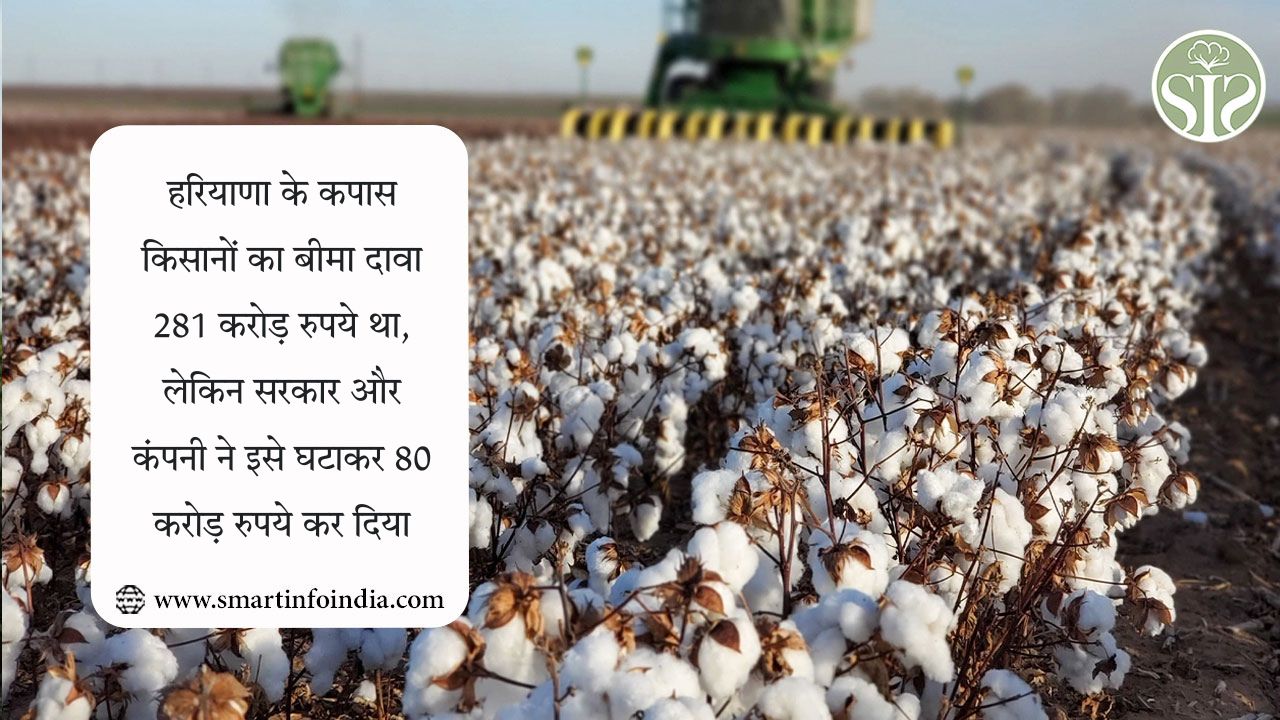
हरियाणा कपास किसानों का बीमा दावा सरकार और कंपनी ने 281 करोड़ रुपये से घटाकर 80 करोड़ रुपये कर दियाखरीफ 2023 सीज़न के दौरान भिवानी और चारखी दादरी जिलों में कपास के किसानों के बीमा दावों को नकारने के तरीके से एक कथित "धोखाधड़ी" को कुछ किसान कार्यकर्ताओं द्वारा सरकार के ध्यान में लाया गया था।राज्य सरकार को शिकायत प्रस्तुत करने वाले कार्यकर्ताओं ने आरोप लगाया कि किसानों को फसल काटने के प्रयोग (CCE) के आधार पर भिवानी जिले में 281.5 करोड़ रुपये के कुल बीमा दावे का आकलन किया गया था।हालांकि, बीमा फर्म ने बाद में बीमा राशि को चुनौती देने के लिए उच्च अधिकारियों से संपर्क किया, जिसने इस मामले को राज्य तकनीकी सलाहकार समिति (STAC) को संदर्भित किया।STAC ने कपास फसल बीमा दावों के लिए तकनीकी उपज मूल्यांकन को मंजूरी देने का निर्णय लिया।इस तकनीकी मूल्यांकन के आधार पर, बीमा दावा केवल 80 करोड़ रुपये तक कम हो गया था।अधिक चौंकाने वाली बात, कार्यकर्ताओं ने आरोप लगाया कि यह STAC एक दोषपूर्ण निकाय था जब उसने एक बैठक बुलाया और निर्णय लिया। एक किसान कार्यकर्ता डॉ। राम कांवर ने आरोप लगाया कि बीमा दावों के मामले को स्टैक को भेजा गया था, एक सलाहकार निकाय जिसका कार्यकाल 1 अगस्त, 2024 को समाप्त हो गया था।हालांकि, कृषि निदेशक, राजनारायण कौशिक, और संयुक्त निदेशक (सांख्यिकी), राजीव मिश्रा ने कथित तौर पर 20 अगस्त, 2024 को इस दोषपूर्ण समिति की एक बैठक बुलाई, और कपास फसल बीमा दावों के लिए तकनीकी उपज मूल्यांकन को मंजूरी देने का निर्णय लिया।इस प्रकार, उन्होंने आरोप लगाया, 1 अगस्त, 2024 को समाप्त होने के बाद शव को कोई निर्णय लेने के लिए अधिकृत नहीं किया गया था।कान्वार ने कहा कि दो जिलों के लिए खरीफ 2023 के लिए प्रधानमंत्री फासल बिमा योजना (पीएमएफबी) के तहत कपास की फसल बीमा दावों के निपटान के बारे में मामला - भिवानी और चारखी दादरी जिलों ने एक रिडंडेंट बॉडी द्वारा किए गए फैसले में लगभग 200 करोड़ रुपये के दावों के इनकार के साथ गंभीर अर्थ लिया है।उन्होंने किसानों के साथ कथित धोखाधड़ी के लिए जिम्मेदार अधिकारियों के खिलाफ और किसानों के बीमा दावों को सुनिश्चित करने के लिए जिम्मेदार अधिकारियों के खिलाफ कार्रवाई के लिए मुख्यमंत्री को शिकायत प्रस्तुत की है।भिवानी जिले के सिवानी तहसील में एक किसान कार्यकर्ता दयानंद पुणिया ने बताया कि सीसीई के अनुसार, सिवनी ब्लॉक में 34 गांवों को कपास के नुकसान के लिए बीमा दावे प्राप्त करने के लिए निर्धारित किया गया था, लेकिन तकनीकी मूल्यांकन से पता चला कि लगभग 20 गांवों का कोई बीमा दावा नहीं था।पुणिया ने कहा कि वे वर्ष 2023 के लिए अपने कपास के खेतों के फसल बीमा के बारे में इस अन्याय को बर्दाश्त नहीं करेंगे।उन्होंने कहा, "अपनी फसलों का बीमा करने के बावजूद, कृषि विभाग ने ग्राम-वार फसल काटने का सर्वेक्षण किया और प्रत्येक गाँव के लिए प्रति एकड़ मुआवजा निर्धारित किया। हालांकि, बीमा कंपनी, सरकार के साथ मिलीभगत में, विभाग की रिपोर्ट को अस्वीकार कर दी," उन्होंने कहा।पुणिया ने आगे आरोप लगाया कि बीमा फर्म ने दावा किया कि उपग्रह रिपोर्टों ने कोई महत्वपूर्ण फसल क्षति नहीं दिखाई और इसे एक घोटाला कहा।"हम 10 मार्च को एसडीएम कार्यालय में सिवानी कार्यालय में एक प्रदर्शन का मंचन करेंगे," उन्होंने कहा।कान्वार ने कहा कि सरकारी दिशानिर्देशों के अनुसार, राज्य के अधिकारियों द्वारा आयोजित फसल काटने के प्रयोगों (CCEs) के आधार पर दावों का निपटारा किया जाना चाहिए। हालांकि, कंपनी ने कथित तौर पर इन दावों का सम्मान करने से इनकार कर दिया और इसके बजाय एक वैकल्पिक विधि के लिए धक्का दिया- सामरिक उपज मूल्यांकन - जो केवल गेहूं और धान के लिए अनुमति दी जाती है, कपास के लिए नहीं।शिकायत में आगे कहा गया है कि डिप्टी कमिश्नर की अध्यक्षता वाली भिवानी की जिला स्तर की निगरानी समिति (डीएलएमसी) ने भी बीमा कंपनी द्वारा उठाए गए आपत्तियों को खारिज कर दिया था और इसे सात दिनों के भीतर भुगतान जारी करने का निर्देश दिया था। उन्होंने कहा, "डीएमएलसी का पालन करने के बजाय, बीमा फर्म ने कृषि और किसानों के कल्याण के निदेशक के समक्ष निर्णय को चुनौती दी," उन्होंने कहा। निदेशक, कृषि राजनारायण कौशिक ने हालांकि, उनके संस्करण के लिए कॉल और संदेशों का जवाब नहीं दिया।और पढ़ें :-विदर्भ के किसानों ने उपज बढ़ाने के लिए एचटीबीटी कपास के बीज की मांग की

उत्पादन बढ़ाने के लिए विदर्भ के किसान एचटीबीटी कपास बीज चाहते हैं।नागपुर: विदर्भ के किसानों, खास तौर पर यवतमाल के किसानों ने सरकार से आने वाले सीजन में फसल की पैदावार बढ़ाने के लिए नवीनतम हर्बिसाइड-टॉलरेंट बीटी कॉटन (एचटीबीटी) बीज उपलब्ध कराने का आग्रह किया है। किसानों ने दावा किया कि पिछले कुछ सालों में कीटों का विकास हुआ है और अब वे बीटी कॉटन किस्म के प्रति प्रतिरोधी हो गए हैं और फसलों के लिए बड़ा खतरा बन गए हैं।किसान गुरुवार को राष्ट्रीय किसान सशक्तिकरण पहल द्वारा आयोजित एक सभा में बोल रहे थे। मीडिया को संबोधित करते हुए विदर्भ के कपास किसानों के एक समूह ने मांग रखी और कहा कि कपास की फसल के लिए एक बड़ा खतरा पिंक बॉलवर्म, बीटी कॉटन द्वारा उत्पादित क्राई1एसी विष के प्रति प्रतिरोधी हो गया है।अकोला के एक कपास किसान गणेश नानोटे ने कहा, "बीटी कॉटन पिछले कई सालों से हमारे लिए बहुत मददगार रहा है, लेकिन हमें कपास के बीजों के मामले में नवीनतम शोध और नवाचारों की आवश्यकता है।" नैनोटे ने कहा कि अमेरिका, ब्राजील और ऑस्ट्रेलिया जैसे अन्य कपास उत्पादक देशों ने पहले ही एचटीबीटी कपास को अपना लिया है और भारतीय किसानों को भी यही अवसर मिलना चाहिए।किसान नेता मिलिंद दांबले ने कहा कि यवतमाल की मिट्टी में चूना पत्थर की मात्रा बहुत अधिक है, जिससे खेती करना मुश्किल हो जाता है। उन्होंने कहा, "अधिकांश किसान आत्महत्या इसलिए करते हैं क्योंकि किसान पर्याप्त उपज नहीं दे पाते हैं।"दांबले ने जिले में पानी की कमी पर प्रकाश डालते हुए कहा कि सर्दियों के महीनों में उन्हें महीने में केवल दो से तीन दिन ही पानी मिलता है। उन्होंने कहा, "जून से मानसून के दौरान स्थिति थोड़ी आसान हो जाती है, जब हमें 15-17 दिन पानी मिलता है।" उन्होंने कहा, "विकसित बॉलवर्म के कारण हमें अपनी फसलों पर कीटनाशकों का छिड़काव करना पड़ता है और एक हेक्टेयर भूमि की देखभाल के लिए 10 लोगों की आवश्यकता होती है।" दांबले ने कहा कि यदि एचटीबीटी कपास को अपनाया जाता है, तो प्रति हेक्टेयर श्रमिकों की आवश्यकता घटकर केवल दो रह जाएगी।किसान विद्या वारहाड़े ने कहा कि कपास उनकी मुख्य फसल है, लेकिन वे खेती से होने वाली आय को बढ़ाने के लिए सब्जियां और अन्य फसलें भी उगाते हैं। उन्होंने कहा, "कपास की मौजूदा पैदावार हमारे लिए पर्याप्त नहीं है। हमें ऐसे उपाय लागू करने की जरूरत है जो कपास की पैदावार बढ़ाने में हमारी मदद करें।" यवतमाल के एक अन्य किसान प्रकाश पुप्पलवार ने कहा कि कपास एक वैश्विक वस्तु है और इसमें निर्यात की काफी संभावनाएं हैं। उन्होंने कहा, "हमें आगे रहने या कम से कम दुनिया भर में अन्य प्रतिस्पर्धियों के बराबर होने के लिए सरकार को कुछ प्रगतिशील कदम उठाने चाहिए।" किसानों ने मांग की है कि नीति निर्माता जमीनी स्तर के मुद्दों को बेहतर ढंग से समझने के लिए तीसरे पक्ष पर निर्भर रहने के बजाय सीधे उनसे बातचीत करें।और पढ़ें :-डॉलर के मुकाबले रुपया 87.11 पर स्थिर रहा

अमेरिकी डॉलर के मुकाबले रुपया 87.11 पर स्थिर रहाशुक्रवार को भारतीय रुपया 87.11 प्रति डॉलर पर खुला, जबकि पिछली बार यह 87.11 पर बंद हुआ था।और पढ़ें :-चीन के प्रतिशोधी शुल्कों के कारण अमेरिकी कपास की कीमतों में गिरावट के कारण भारतीय परिधान, वस्त्र, यार्न की मांग में वृद्धि हो सकती है।
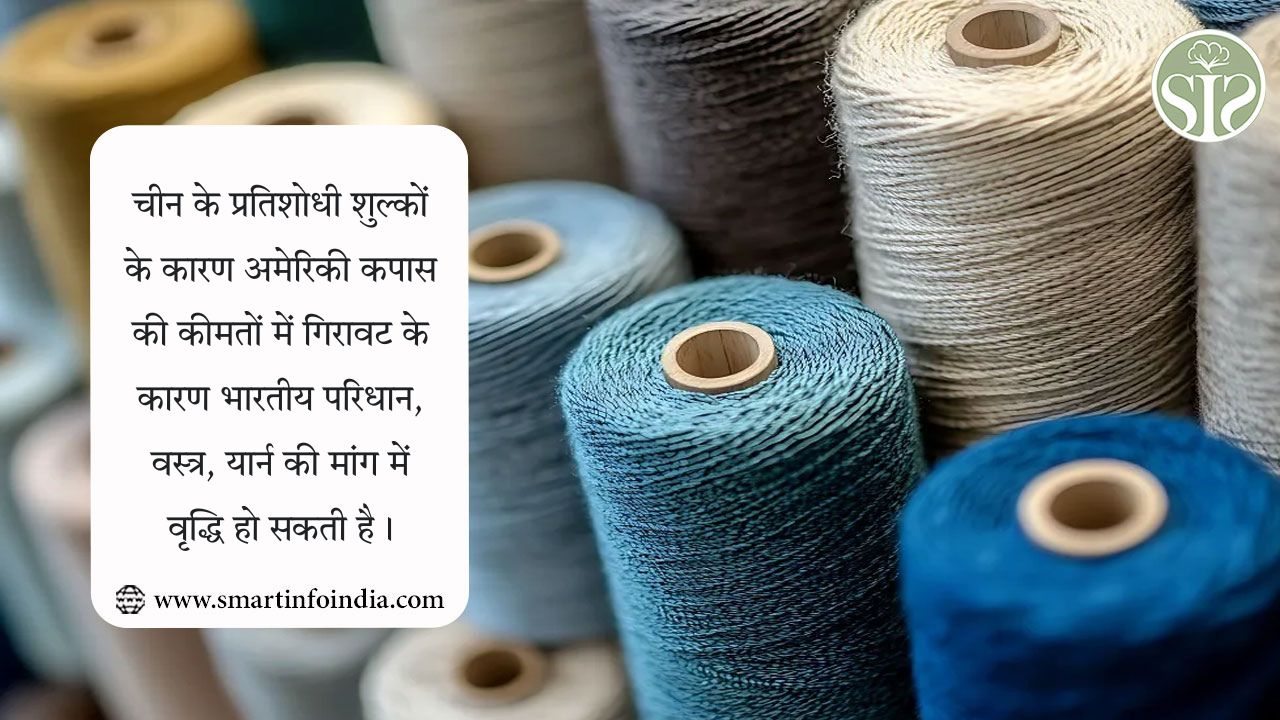
चीन के जवाबी टैरिफ के परिणामस्वरूप अमेरिकी कपास बाजार में गिरावट से भारतीय परिधान, धागे और वस्त्र निर्यात की मांग बढ़ सकती है।चीन के प्रतिशोधी शुल्कों के परिणामस्वरूप अमेरिकी कपास बाजार में गिरावट से भारतीय वस्त्र, यार्न और वस्त्र निर्यात की मांग बढ़ सकती है।उद्योग का अनुमान है कि प्रतिशोधी शुल्क के परिणामस्वरूप भारत को अमेरिका और यूरोप में बाजार हिस्सेदारी मिलेगी, जिससे चीनी वस्त्र निर्यात की प्रतिस्पर्धात्मकता कम होगी और कम कीमतों पर बेहतर गुणवत्ता वाले अमेरिकी कपास की उपलब्धता बढ़ेगी।चीन द्वारा 10-15 प्रतिशत के प्रतिशोधी शुल्क लागू करने के बाद, अमेरिकी कपास की कीमतें चार वर्षों में अपने सबसे निचले स्तर पर आ गईं। अपने कम महंगे कपास के लिए 31 प्रतिशत वैश्विक बाजार हिस्सेदारी के साथ, भारत कपास यार्न के निर्यात में दुनिया में सबसे आगे है।व्यापार अनुमानों से संकेत मिलता है कि घरेलू उत्पादन में गिरावट के कारण भारत के कपास के आयात में पिछले वर्ष की तुलना में 2024-25 में 62 प्रतिशत से अधिक की वृद्धि हुई है।भारत द्वारा अमेरिका से आयातित अधिकांश कपास एक्स्ट्रा-लॉन्ग स्टेपल (ईएलएस) श्रेणी में आता है। कॉटन टेक्सटाइल एक्सपोर्ट प्रमोशन काउंसिल (टेक्सप्रोसिल) के कार्यकारी निदेशक सिद्धार्थ राजगोपाल के अनुसार, यदि चीन से मांग में कमी के परिणामस्वरूप अमेरिकी कपास की कीमतें गिरती हैं, तो भारतीय कपड़ा निर्माताओं के लिए अमेरिकी कपास के अपने आयात को बढ़ाना आर्थिक रूप से संभव हो सकता है।कपास उत्पादन में काफी हद तक आत्मनिर्भर होने के बावजूद, भारत खरीदार या गुणवत्ता मानकों को पूरा करने के लिए कुछ ईएलएस कपास और स्वच्छ और संदूषण मुक्त कपास का आयात करता है। उद्योग के आंकड़ों के अनुसार, भारत ने अप्रैल 2023 और मार्च 2024 के बीच दुनिया भर से 570 मिलियन अमेरिकी डॉलर का कच्चा कपास खरीदा, जिसमें से 221 मिलियन अमेरिकी डॉलर अमेरिका से आया, जो कुल आयात का 38.7 प्रतिशत है।राजगोपाल ने कहा कि अमेरिका अपने बेहतर एक्स्ट्रा लॉन्ग स्टेपल कॉटन (ईएलएस) के साथ अपने कपास निर्यात में विविधता लाने की कोशिश करेगा और चीनी बाजार में सीमित पहुंच के कारण भारत को एक प्रमुख व्यापारिक भागीदार के रूप में अपनाएगा।टैरिफ से चीनी कपड़ा उत्पादों की वैश्विक बाजारों में प्रतिस्पर्धा करने की क्षमता प्रभावित होने की उम्मीद है, जिससे भारतीय निर्यातकों को अपना बाजार हिस्सा बढ़ाने का मौका मिलेगा, खासकर अमेरिका और यूरोपीय संघ जैसे देशों में।इस बदलाव के परिणामस्वरूप भारतीय सूती धागे, वस्त्र और परिधानों की मांग बढ़ सकती है, जिससे निर्यात स्तर में वृद्धि होगी। राजगोपाल के अनुसार, भारतीय कपास उत्पादों के लिए बाजार के विस्तार के साथ निर्यातकों के पास मूल्य निर्धारण के लिए अधिक विकल्प होंगे, जिससे उनके लाभ मार्जिन में वृद्धि होगी।और पढ़ें :-रुपया अमेरिकी डॉलर के मुकाबले 22 पैसे गिरकर 87.11 पर बंद हुआ

भारतीय रुपया अमेरिकी डॉलर के मुकाबले 22 पैसे गिरकर 87.11 पर बंद हुआगुरुवार को भारतीय रुपया 22 पैसे गिरकर 87.11 प्रति डॉलर पर बंद हुआ, जबकि सुबह यह 86.89 पर खुला था।बंद होने पर, सेंसेक्स 609.86 अंक या 0.83 प्रतिशत बढ़कर 74,340.09 पर और निफ्टी 207.40 अंक या 0.93 प्रतिशत बढ़कर 22,544.70 पर था। करीब 2857 शेयरों में तेजी आई, 979 शेयरों में गिरावट आई और 104 शेयरों में कोई बदलाव नहीं हुआ।और पढ़ें :-कपास रोग पैथोटाइप की खोज के लिए एचएयू के वैज्ञानिकों को अंतर्राष्ट्रीय मान्यता

HAU के वैज्ञानिकों ने कपास रोग पैथोटाइप की खोज के लिए अंतर्राष्ट्रीय मान्यता अर्जित कीहिसार: चौधरी चरण सिंह हरियाणा कृषि विश्वविद्यालय (एचएयू), हिसार के वैज्ञानिकों ने कपास की फसल को प्रभावित करने वाली एक गंभीर बीमारी के नए पैथोटाइप की पहचान की है।एचएयू के कुलपति प्रोफेसर बी आर कंबोज ने बुधवार को कहा कि यह पहली बार है कि भारत में फ्यूजेरियम विल्ट के पैथोटाइप (वीसीजी 0111, रेस-1) का पता चला है।उन्होंने कहा कि वैज्ञानिकों ने पहले ही इस बीमारी के प्रबंधन के लिए प्रयास शुरू कर दिए हैं और इसके लिए एक प्रभावी समाधान खोजने के बारे में आशावादी हैं।इस खोज को वैज्ञानिक, तकनीकी और चिकित्सा अनुसंधान में विशेषज्ञता रखने वाले डच प्रकाशन गृह एल्सेवियर से मान्यता मिली है। पैथोटाइप पर एचएयू का एक अध्ययन फिजियोलॉजिकल एंड मॉलिक्यूलर प्लांट पैथोलॉजी जर्नल में प्रकाशित हुआ है, जो इस नए कपास पैथोटाइप पर पहली रिपोर्ट है।प्रोफेसर कंबोज ने इस उपलब्धि के लिए अनुसंधान दल की सराहना की और उभरते कृषि खतरों की जल्द पहचान के महत्व पर जोर दिया। उन्होंने वैज्ञानिकों से आग्रह किया कि वे रोग के प्रसार पर कड़ी निगरानी रखें और कपास उत्पादन पर इसके प्रभाव को कम करने के लिए त्वरित, प्रभावी प्रबंधन पद्धतियों को लागू करें।एचएयू के अनुसंधान निदेशक राजबीर गर्ग ने फ्यूजेरियम विल्ट द्वारा उत्पन्न बढ़ते खतरे पर प्रकाश डाला, जो अब 'देसी' और अमेरिकी कपास दोनों किस्मों को अधिक आक्रामकता के साथ प्रभावित करता है।प्रमुख शोधकर्ता अनिल कुमार सैनी ने रोग के प्रकोप को समझने और भारत के कपास उद्योग की सुरक्षा के लिए लक्षित शमन उपायों को विकसित करने के लिए टीम के चल रहे प्रयासों पर जोर दिया।और पढ़ें :-रुपया अमेरिकी डॉलर के मुकाबले 7 पैसे बढ़कर 86.89 पर खुला

भारतीय रुपया 7 पैसे मजबूत होकर 86.89 डॉलर प्रति डॉलर पर खुलाभारतीय रुपया गुरुवार को अमेरिकी डॉलर के मुकाबले 7 पैसे बढ़कर 86.89 पर खुला, जबकि बुधवार को यह 86.96 पर बंद हुआ था।डॉलर इंडेक्स और ब्रेंट क्रूड ऑयल की कीमतों में भारी गिरावट के कारण 6 मार्च को भारतीय रुपया 7 पैसे बढ़कर खुला।और पढ़ें :-भारतीय रुपया 27 पैसे बढ़कर 86.96 प्रति डॉलर पर बंद हुआ

भारतीय रुपया 27 पैसे मजबूत होकर 86.96 प्रति डॉलर पर बंद हुआबुधवार को भारतीय रुपया 27 पैसे बढ़कर 86.96 प्रति डॉलर पर बंद हुआ, जबकि सुबह यह 87.23 पर खुला था।बंद होने पर, सेंसेक्स 740.30 अंक या 1.01 प्रतिशत बढ़कर 73,730.23 पर और निफ्टी 254.65 अंक या 1.15 प्रतिशत बढ़कर 22,337.30 पर बंद हुआ। करीब 3116 शेयरों में तेजी आई, 734 शेयरों में गिरावट आई और 85 शेयरों में कोई बदलाव नहीं हुआ।और पढ़ें :-2 अप्रैल से भारत, चीन और अन्य देशों के विरुद्ध पारस्परिक अमेरिकी टैरिफ

Rupee Opens 19 Paise Higher at 87.13 Against Dollar in Early TradeThe Indian rupee on thursday opened 19 paise higher at 87.13 against the US dollar, as against the close at 87.32 on wednesday.read more :- Global cotton production & consumption estimates up for 2024-25: WASDE
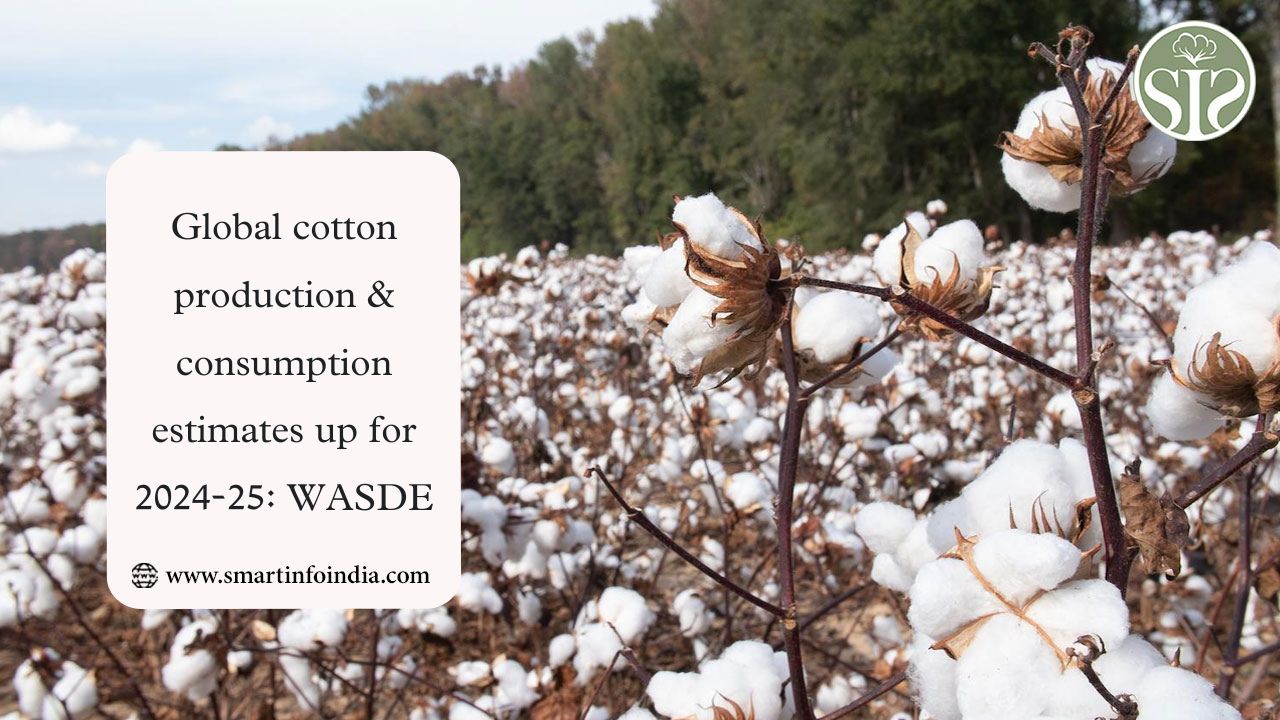
WASDE Forecasts Rise in Global Cotton Production & Consumption for 2024-25For 2024-25, the United States Department of Agriculture (USDA) has projected an increase in global cotton production by 500,000 bales, bringing the total to 120.96 million bales (each weighing 480 pounds), according to its March 2025 World Supply and Demand Estimates (WASDE) report. However, global cotton ending stocks were lowered by 80,000 bales, while exports increased by 200,000 bales. Cotton exports were projected higher despite ongoing global uncertainties.The USDA raised its global cotton production estimate from the 120.46 million bales projected in the February 2025 report. However, it reduced ending stocks to 78.33 million bales, down from 78.41 million bales in the previous report. Global domestic cotton consumption was revised upward to 116.54 million bales, compared with 115.95 million bales in the last estimate.For the 2024-25 global cotton balance sheet, this month's report reflects increased production, consumption, and trade, while ending stocks have been revised downward. Beginning stocks remain unchanged. Higher production in China more than offsets declines in Pakistan and Argentina. Consumption estimates were raised for Pakistan, Bangladesh, and Egypt, outweighing minor adjustments elsewhere. Exports from Brazil and Turkiye increased, surpassing reductions from Australia and Egypt. While China’s cotton imports were lowered, increased imports by Pakistan, Bangladesh, and Egypt more than compensated. Consequently, global ending stocks for 2024-25 were reduced by 80,000 bales.There are no changes to this month’s 2024-25 US cotton balance sheet. However, the average upland farm price projection for the current year was lowered to 63 cents per pound.InsightsUSDA's March 2025 WASDE report projects a 500,000-bale increase in global cotton production, reaching 120.96 million bales in 2024-25.However, global ending stocks were reduced by 80,000 bales, while exports rose by 200,000 bales.Consumption estimates increased, particularly for Pakistan, Bangladesh, and Egypt.Despite higher production in China, declines in Pakistan and Argentina offset gains.read more :-Indian Rupee lower 5 Paisa, Ends at 87.32 per Dollar

Rupee Weakens by 5 Paisa, Ends at 87.32 per DollarThe Indian rupee on wednesday lower 5 paise to close at 87.32 per dollar, while it opened at 87.27 in the morning.At close, the Sensex was down 72.56 points or 0.10 percent at 74,029.76, and the Nifty was down 27.40 points or 0.12 percent at 22,470.50. About 1440 shares advanced, 2383 shares declined, and 129 shares unchanged.read more :-Punjab hopes to revive cotton crop this season

Punjab's Strategy to Revive Cotton Farming This SeasonChandigarh: Even as the area under cotton in Punjab shrank to only 1 lakh hectares in 2024, the state govt on Tuesday said efforts would be made to revive the crop. Punjab agriculture minister Gurmeet Singh Khudian held a meeting to review preparations for the upcoming cotton season with Punjab Agriculture University (PAU) vice-chancellor Satbir Singh Gosal.It was decided to ensure the availability of PAU-certified cotton seeds to farmers across the state. The varsity has recommended 87 varieties of hybrid cotton seeds for cultivation in the state during the upcoming kharif season. Khudian urged farmers to use only these recommended certified seeds to maximise their yield.In recent years, whiteflies and pink bollworms have wreaked havoc on the cotton crop in the state. The area under cotton has come down from nearly eight lakh hectares three decades back.To address the persistent issue of pink bollworm infestation, Khudian said that the department has deployed 264 nodal officers across seven southwestern districts: Bathinda -70, Fazilka - 41, Sri Muktsar Sahib - 62, Mansa - 42, Sangrur - 20, Barnala - 16, and Faridkot - 13. These officers are tasked with managing and cleaning cotton stalks and leftover residues from the previous season, which serve as breeding grounds for the pink bollworm. He added that so far, around 32% of the total cotton stalk heaps have been managed.A weed eradication campaign is ongoing in the cotton belt for the management of whitefly. The campaign is launched with the support of district administration, other departments, and MGNREGA to destroy weeds standing alongside roads, canals, and in abandoned sites. Monitoring activities of pink bollworm in ginning factories are ongoing with the help of officials of Punjab Mandi Board, and fumigation of cotton stock will be carried out to control pink bollworm larvae in the ginneries.read more :-Indian rupee opens 6 paise lower at 87.27 against US dollar

In relation to the US dollar, the rupee opens 6 paise lower at 87.27.Indian rupee opened lower at 87.27 per dollar on Wednesday versus Tuesday's close of 87.21.read more :-India's cotton imports to double as output falls short, says trade body
India's Cotton Imports Set to Double as Domestic Output Falls Short, Says Trade Body India's cotton imports in 2024/25 are likely to double from a year ago as production is set to fall below consumption because of a decline in acreage planted and adverse weather, a leading trade body said on Tuesday.Higher imports by the world's second-largest producer of the fibre could support global prices, which fell to their lowest in more than four years after top consumer China levied duties on imports from the United States.India could import 3 million bales in the current marketing year ending on September 30, up from 1.52 million bales imported a year ago, the Cotton Association of India (CAI) said in a statement. During the period from October to February, 2.2 million bales of overseas cotton landed at Indian ports, according to CAI estimates.India's cotton production in the current year is likely to fall by 10 percent from a year ago, to 29.53 million bales, even as demand is estimated to rise marginally to 31.5 million bales, it said.This would cause exports to fall to 1.7 million bales from 2.84 million bales a year ago, the CAI said.read more :- Experts discuss technical textile opportunities, need for cotton productivity improvement

Experts Highlight Cotton Productivity and Technical Textile OpportunitiesThe Gujarat Chamber of Commerce and Industry (GCCI) hosted the Textile Conclave 2025, where professionals talked about the need to increase cotton productivity and technical textile potential.The head of the GCCI Textile Task Force, Saurin Parikh, discussed the value of technical textiles in industries like fashion, construction, healthcare, and agriculture. He emphasised that in order to fully realise this industry’s potential, cooperation, innovation, and policy assistance are required.The textile conference, according to GCCI President Sandeep Engineer, offers a forum for in-depth debate and discussion of the demands and problems facing the textile sector. In order to create high-performance materials, experts stated that technological textiles require innovation and research and development. They also emphasised the significance of Government regulations and industry cooperation in promoting development.The mission for cotton productivity of the Central Government was also highlighted by experts. Over the course of five years, the mission seeks to increase India’s cotton yield from 461 kg/ha to the global average of 850 kg/ha while encouraging the production of extra-long staple cotton types. According to experts, seed improvement is necessary. Participants included industry executives from the spinning, weaving, processing, clothing, and machinery manufacturing sectors.read more :-Indian Rupee higher 15 Paisa, Ends at 87.21 per Dollar

Rupee Strengthens 15 Paisa Against Dollar, Closes at 87.21The Indian rupee on tuesday higher 15 paise to close at 87.21 per dollar, while it opened at 87.36 in the morning.At close, the Sensex was down 12.85 points or 0.02 percent at 74,102.32, and the Nifty was up 37.60 points or 0.17 percent at 22,497.90. About 1411 shares advanced, 2406 shares declined, and 115 shares unchanged.read more :-Buy cotton: White gold will be ruined; Cotton storage increased in anticipation of price rise*
Cotton Storage Grows as Price Surge LoomsCotton purchase: Cotton is also not getting guaranteed price, CCI has given 15th date for registration and due to public holiday on 14th and 15th, the last date will be 13th March.Some farmers have stored cotton in anticipation of price rise. The central government has declared a minimum support price of Rs 7521 per quintal for cotton this year. In fact, its price in the open market ranges from Rs 7,000 to even less in villages. (Buying cotton)CCI started procurement at 9 centers in the district to provide support price security to the farmers. For some reason, the center remained closed for longer than expected and procurement was slow. (Buying cotton)Apart from this, there is also looting in the purchase of cotton in the village. CCI has been reducing the grade of cotton purchased for the last two months. So cotton is being bought at Rs 7,421, which is Rs 100 less than the guaranteed price. (Buying cotton)Skin disordersFarmers are storing cotton in the hope of price rise. However, these cotton pests are causing problems like rashes and itching on the skin of the family members. So it has no value in the market and if it is stored it is causing health problems. In such a situation, the farmer is caught in double trouble.No storage space .The center was started there after CCI signed an agreement with some ginning companies of the district. However, there is no storage space for cotton due to non-lifting of bales and sacks at some centers and cotton harvesting problems are also coming up. It is reported that it has been agreed that till the CCI actually makes the purchase, OTAI will be made available.read more :-Indian rupee opens 3 paise lower at 87.36 against US dollar

The Indian rupee starts the day 3 paise down versus the US dollar at 87.36.The Indian rupee opened 3 paise down on March 11 at 87.36 against the US dollar, as compared to 87.33 against the greenback at the previous close.read more :-Indian Rupee lower 7 Paisa, Ends at 87.33 per Dollar

Indian Rupee lower 7 Paise to87.33 Against US DollarThe Indian rupee on Monday fell 7 paise to close at 87.33 per dollar, while it opened at 87.26 in the morning.At close, the Sensex was down 217.41 points or 0.29 percent at 74,115.17, and the Nifty was down 92.20 points or 0.41 percent at 22,460.30. About 1147 shares advanced, 2776 shares declined, and 140 shares unchanged.read more :- Shock to Punjab's cotton belt: 71 percent decline in cotton production, many reasons including lack of quality seeds
Punjab Cotton Production Plummets 71% Due to Seed ShortageAccording to the report of the Cotton Association of India, cotton production and cultivation area in Punjab is continuously decreasing. The Malwa region, which is known for cotton production, has been particularly affected. Farmers are now turning to other crops like paddy and wheat, causing a setback to crop diversification efforts.The cotton producing belt of Punjab has suffered a massive decline of 71 percent in cotton production in the last five years. Along with this, the area under cotton cultivation has also come down to half.Farmers are moving away from cotton cultivation due to pink bollworm infestation, lack of quality seeds and pesticides. The state government has now demanded the Center to provide BG3 seeds so that cotton cultivation can be revived.Latest statusDecline in production: From 7.73 lakh bales in 2020-21 to 2.20 lakh bales in 2024-25.Reduction in cultivation area: From 2.52 lakh hectares to 1 lakh hectare.Government demand: Provide BG3 seeds from the Centre.Concern: Farmers turning to paddy and wheat, which will increase pressure on groundwater level.Status of other states: Cotton production in Haryana and Rajasthan is better than Punjab.Setback to diversification effortsAccording to the report of the Cotton Association of India, cotton production and cultivation area in Punjab is continuously decreasing. The Malwa region, which is known for cotton production, has been particularly affected. Farmers are now turning to other crops like paddy and wheat, causing a setback to crop diversification efforts.The state government has urged the central government to provide BG3 variety of seeds, which can help reduce the infestation of pink bollworm. According to the agriculture department, if the pink bollworm continues to affect cotton cultivation, farmers will completely switch to paddy cultivation, putting further pressure on groundwater levels.Haryana and Rajasthan aheadHaryana and Rajasthan are ahead of Punjab in cotton production. In 2024-25, Haryana cultivated cotton in 4.76 lakh hectares and produced 9.75 lakh bales, while Rajasthan cultivated it in 6.62 lakh hectares and produced 19.76 lakh bales.read more :-Cotton imports increase despite pressure on Indian cotton prices
Indian Cotton Imports Grow Despite Price StrainIncreasing import of raw and waste cotton in the last seven months has brought to fore the urgent need for measures to improve cotton productivity in India.Cotton imports were to the tune of $104 million in August 2024, $134.2 million in September 2024, $127.71 million in October, $170.73 million in November, and $142.89 million in December, 2024. In January this year, it stood at $184.64 million.Comparably, the imports were $74.4 million in August 2023, $39.91 million in September 2023, $36.68 million in October 2023, $30.61 million in November 2023, and $29.47 million in December 2023. In January 2024, the imports were $19.62 million.Meanwhile, the Cotton Corporation of India (CCI) has procured close to 100 lakh bales of Indian cotton that has come into the market since the beginning of the new season on October 1, 2024. In the peak cotton arrival season in December 2024, the CCI bought almost 60% of the daily arrivals at the minimum support price (MSP). The price of the Shankar 6 variety of cotton on Saturday was ₹52,500 a quintal.Jaipal, a cotton farmer in Telangana, said at the beginning of the season that farmers are not happy because yield is less. “International cotton prices are weak and mills are able to buy from there,” he said.Kurbur Shanthakumar, president of Karnataka State Federation of Farmer Associations, said the cost of production per quintal is ₹9,000 and the MSP is ₹7,235. But, brokers were buying in the open market at only ₹5,000 to ₹5,500 per quintal.The Union Budget announced in February has a Cotton Mission aimed at improving productivity.For the Indian textile industry, international cotton prices are weak and with export demand looking up for garments and home textiles, there is a need for the textile industry to be internationally competitive. More than 60% of garments exported are cotton-based. Extra Long Staple cotton can be imported duty free and exporters can import cotton without duty under Advance Authorisation. The mills seem to have imported cotton as international cotton prices were lower than Indian prices and the imports have not disturbed the local market, industry sources said.“Brazil is an aggressive seller [in the international market]. Australia, the U.S., Africa, and Brazil were all comfortably placed in prices till a few days ago. Indian cotton prices were higher compared with these countries. The Indian textile mills took a calculated risk and imported in spite of 11% duty as Indian cotton and yarn are relatively over priced. The Indian government and textile industry should look at boosting demand so that textile exports increase and cotton prices remain in parity for the producers and processors. It is also very critical to maintain ‘fibre security’ for the mills by increasing cotton productivity and area,” Manish Daga, president of the All India Cotton Farmers Producers Organisations Association, said.read more :-Rupee Declines by 38 Paise, Opening at 87.26 vs US Dollar

In relation to the US dollar, the rupee opens 38 paise lower at 87.26.The Indian rupee on Monday opened 38 paise lower at 87.26 against the US dollar, as against the close at 86.88 on Friday.The Indian rupee opened 38 paise lower on March 10 due to concerns over global trade despite the easing dollar index.read more :-Indian Rupee higher 23 Paisa, Ends at 86.88 per Dollar

Indian Rupee Climbs 23 Paisa, Ends at 86.88 Against US DollarThe Indian rupee on friday higher 23 paise to close at 86.88 per dollar, while it had opened at 87.11 in the morning.At close, the Sensex was down 7.51 points or 0.01 percent at 74,332.58, and the Nifty was up 7.80 points or 0.03 percent at 22,552.50. About 2431 shares advanced, 1400 shares declined, and 120 shares unchanged.read more :-Insurance claim to Haryana cotton farmers was Rs 281 crore, but govt, firm reduced it to Rs 80 crore
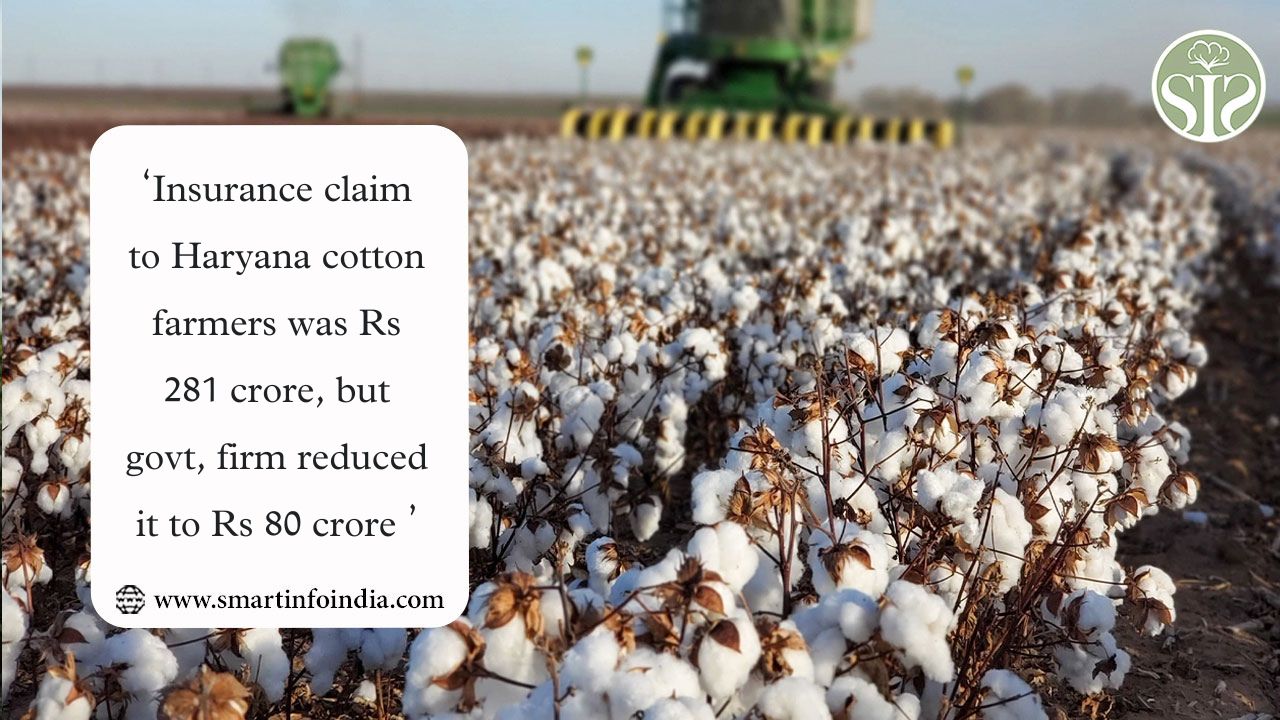
Haryana Cotton Farmers' Insurance Claim Slashed from Rs 281 Crore to Rs 80 Crore by Govt and CompanyAn alleged "fraud" by way of denying the insurance claims of cotton farmers in Bhiwani and Charkhi Dadri districts during the Kharif 2023 season had been brought to the attention of the government by some farmer activists.The activists, who submitted a complaint to the state government, alleged that the farmers had been assessed a total insurance claim of Rs 281.5 crore in Bhiwani district on the basis of the Crop Cutting Experiment (CCE).However, the insurance firm later approached higher authorities to challenge the insurance amount, which referred the matter to the State Technical Advisory Committee (STAC).The STAC took a decision to approve technical yield assessment for cotton crop insurance claims.Based on this technical assessment, the insurance claim was reduced to just Rs 80 crore.More shockingly, the activists alleged that this STAC was a defunct body when it called a meeting and took the decision. Dr Ram Kanwar, a farmer activist, alleged that the matter of insurance claims was referred to the STAC, an advisory body whose term had expired on August 1, 2024.However, the Director of Agriculture, Rajnarayan Kaushik, and the Joint Director (Statistics), Rajiv Misra, allegedly convened a meeting of this defunct committee on August 20, 2024, and took a decision to approve technical yield assessment for cotton crop insurance claims.Thus, he alleged, the body was not authorised to take any decision after its term had expired on August 1, 2024.Kanwar said that the matter regarding the settlement of cotton crop insurance claims under the Pradhan Mantri Fasal Bima Yojana (PMFBY) for Kharif 2023 for two districts - Bhiwani and Charkhi Dadri districts has taken serious connotations with the denial of about Rs 200 crore of claims of the farmers in the wake of a decision taken by a redundant body.They have submitted the complaint to the chief minister for action against the officials responsible for the alleged fraud with the farmers and to ensure the insurance claims of the farmers.Dayanand Punia, a farmer activist in Siwani tehsil of Bhiwani district, informed that as per the CCE, 34 villages in Siwani block were set to get insurance claims for cotton loss, but the technical assessment showed that about 20 villages had no insurance claim.Punia said that they would not tolerate this injustice regarding the crop insurance of their cotton fields for the year 2023."Despite having insured their crops, the Agriculture Department conducted village-wise crop cutting surveys and determined the per-acre compensation for each village. However, the insurance company, in collusion with the government, rejected the department's report," he alleged.Punia further alleged that the insurance firm claimed that satellite reports did not show any significant crop damage and termed it a scam."We will stage a demonstration at the Siwani office in SDM Office on March 10," he said.Kanwar said that as per government guidelines, the claims should be settled based on Crop Cutting Experiments (CCEs) conducted by state officials. However, the company allegedly refused to honor these claims and instead pushed for an alternative method—technical yield assessment—which is only permitted for wheat and paddy, not for cotton.The complaint further states that the District Level Monitoring Committee (DLMC) of Bhiwani, headed by the Deputy Commissioner, had also rejected the objections raised by the insurance company and directed it to release payments within seven days. "Instead of complying with the DMLC, the insurance firm challenged the decision before the Director of Agriculture and Farmers' Welfare," he stated. The Director, Agriculture Rajnarayan Kaushik, however, did not respond to the calls and messages for his version.read more :- Vidarbha farmers demand HTBt cotton seeds to improve yield
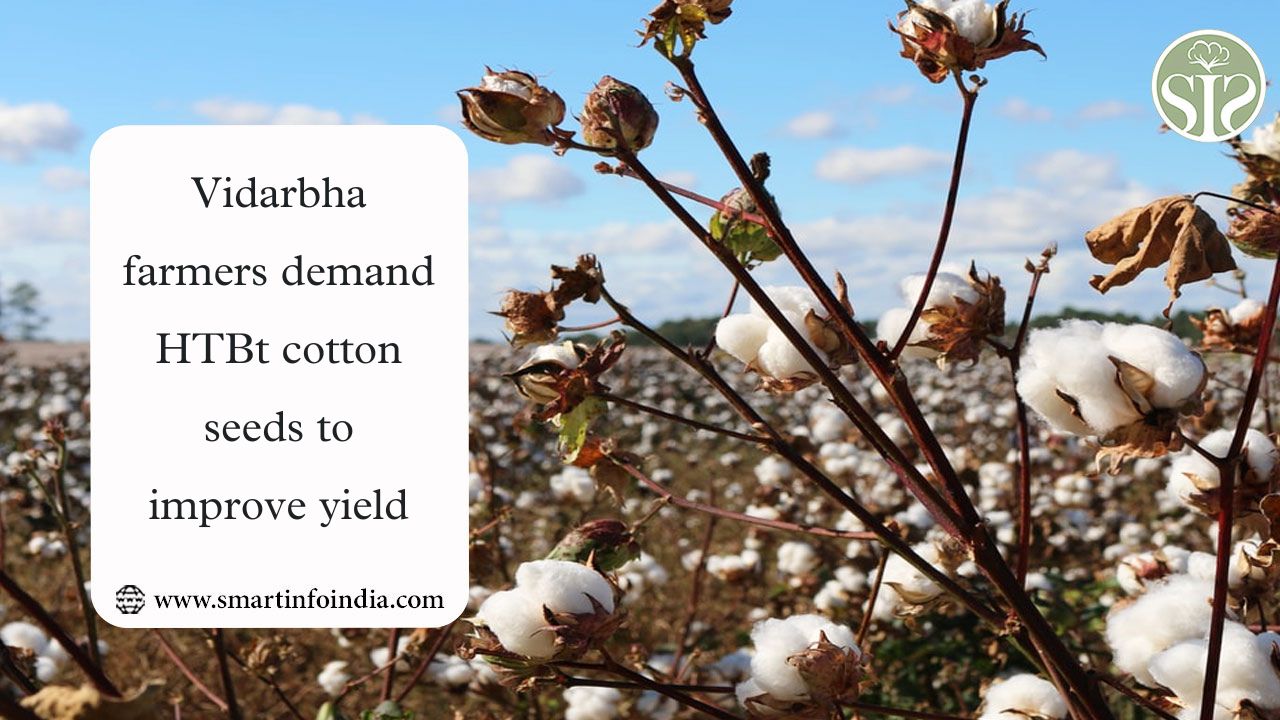
To increase production, farmers in Vidarbha want HTBt cotton seeds.Nagpur : Farmers from across Vidarbha, especially Yavatmal, have urged the govt to make available the latest Herbicide-Tolerant BT cotton (HTBt) seeds to improve the crop yield in the coming season. The farmers claimed that over the years, pests have evolved and are now immune to the Bt cotton variety and pose a major threat to the crops.The farmers were speaking at a gathering organised by the National Farmers Empowerment Initiative on Thursday. Addressing the media, a group of cotton farmers of Vidarbha put forth the demand, saying that the pink bollworm, a major threat to cotton crop, has become resistant to the Cry1Ac toxin produced by the Bt cotton."Bt cotton has been a huge help to us for many years now, but we need the latest research and innovations in terms of cotton seeds," Ganesh Nanote, a cotton farmer from Akola, said. Nanote said that other cotton-producing countries, like the USA, Brazil and Australia have already adopted the HTBt cotton, and Indian farmers too deserve the same opportunity.Farmer leader Milind Damble said that Yavatmal's soil has a high limestone content, which makes agriculture a difficult task. "A majority of farmer suicides are caused because the ryots are not able to produce enough yield," he said.Damble further highlighted the water scarcity in the district saying that in the winter months, they receive water only two to three days a month. "The situation eases up a little during the monsoon, from June when we get water 15 - 17 days," he said. "Due to the evolved bollworm, we have to spray pesticides on our crops, and it takes 10 men to tend to just one hectare of land," he said. Damble added that if HTBt cotton is introduced, then the requirement of labour per hectare will fall to just two.Vidya Warhade, a farmer, said that while cotton is their main crop, they also grow vegetables and other crops to supplement farm income. "The current yield of cotton is not enough for us to sustain. We need to implement measures that will help us increase cotton yield," she said.Another farmer from Yavatmal, Prakash Puppalwar, said that cotton is a global commodity and has high export potential. "For us to stand ahead or at least be at par with the other competitors across the globe, the govt must take some progressive steps," he said.The farmers have demanded that the policymakers interact with them directly to better understand the grassroots level issues rather than relying on third parties for the same.read more :-Rupee Holds Steady at 87.11 vs Dollar

Rupee Remains Stable at 87.11 Against US DollarIndian rupee opened at 87.11 per dollar on Friday against previous close of 87.11.read more :-Indian garments, textiles, yarn may see demand boost as US cotton prices dip amid China’s retaliatory tariffs
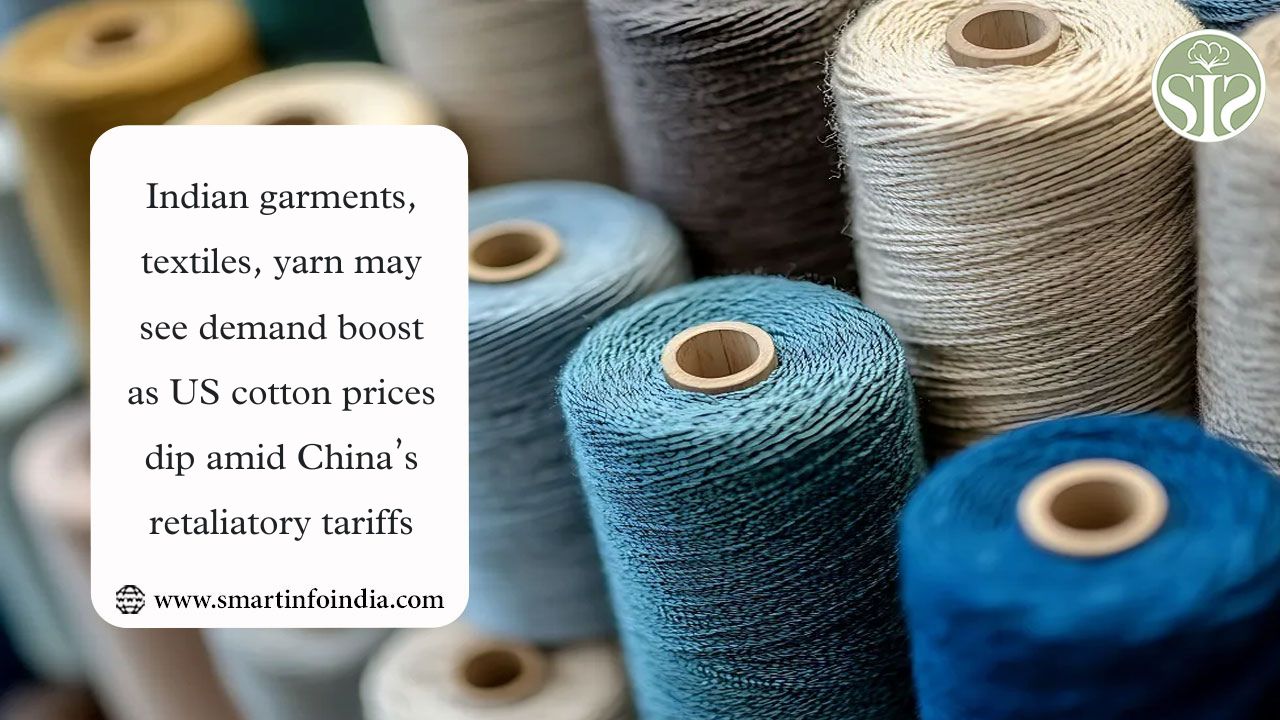
As US cotton prices decline due to China's retaliatory tariffs, demand for Indian clothing, textiles, and yarn may increase.The US cotton market’s decline as a result of China’s retaliatory tariffs may increase demand for Indian clothing, yarn, and textile exports.The industry anticipates that India will gain market share in the US and Europe as a result of the retaliatory tariff, which will decrease the competitiveness of Chinese textile exports and boost the availability of superior quality US cotton at lower prices.After China applied retaliatory tariffs of 10–15 per cent, US cotton prices dropped to their lowest levels in four years. With a 31 per cent global market share for its less expensive cotton, India leads the world in the export of cotton yarn.Trade estimates indicate that a decline in domestic production caused India’s imports of cotton to rise by more than 62 per cent in 2024–25 compared to the previous year.The majority of the cotton that India imports from the US falls into the extra-long staple (ELS) category. According to Siddhartha Rajagopal, executive director of the Cotton Textile Export Promotion Council (Texprocil), Indian textile manufacturers may find it financially feasible to increase their imports of US cotton if US cotton prices fall as a result of decreased demand from China.Despite being largely self-sufficient in cotton production, India imports certain ELS cotton and clean and contamination-free cotton to satisfy buyer or quality standards. India purchased US $ 570 million worth of raw cotton from throughout the world between April 2023 and March 2024, with US $ 221 million coming from the US, accounting for 38.7 per cent of the total imports, according to industry data.The US, with its better Extra Long Staple Cotton (ELS), would also try to diversify its cotton exports and turn towards India as a major trading partner because of the limited access in the Chinese market, Rajagopal stated.The tariffs are expected to affect Chinese textile products’ ability to compete in global markets, giving Indian exporters a chance to increase their market share, particularly in countries like the US and the EU.The demand for Indian cotton yarn, textiles, and clothing may increase as a result of this change, boosting export levels. According to Rajagopal, exporters would have more alternatives for pricing as the market for Indian cotton products expands, which will boost their profit margins.read more :-Rupee closed 22 Paise lower at 87.11 Against US Dollar

Indian Rupee lower 22 Paise to87.11 Against US DollarThe Indian rupee on thursday lower 22 paise to close at 87.11 per dollar, while it opened at 86.89 in the morning.At close, the Sensex was up 609.86 points or 0.83 percent at 74,340.09, and the Nifty was up 207.40 points or 0.93 percent at 22,544.70. About 2857 shares advanced, 979 shares declined, and 104 shares unchanged.read more :- Int’l recognition to HAU scientists for finding cotton disease pathotype
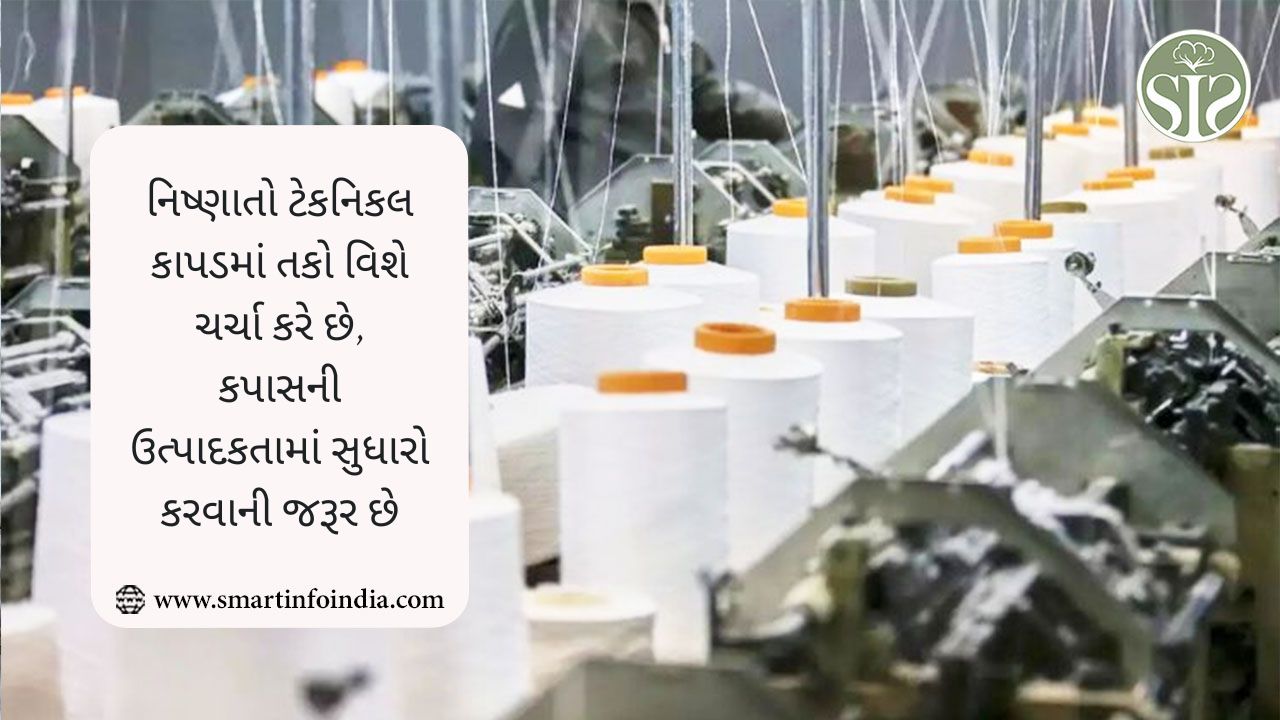
નિષ્ણાતો કપાસની ઉત્પાદકતા અને ટેકનિકલ ટેક્સટાઇલ તકોને હાઇલાઇટ કરે છેગુજરાત ચેમ્બર ઓફ કોમર્સ એન્ડ ઈન્ડસ્ટ્રી (GCCI) એ ટેક્સટાઈલ કોન્ક્લેવ 2025નું આયોજન કર્યું હતું, જ્યાં વ્યાવસાયિકોએ કપાસની ઉત્પાદકતા અને ટેક્નિકલ ટેક્સટાઈલ ક્ષમતા વધારવાની જરૂરિયાત વિશે વાત કરી હતી.GCCI ટેક્સટાઇલ ટાસ્ક ફોર્સના વડા સૌરિન પરીખે ફેશન, કન્સ્ટ્રક્શન, હેલ્થકેર અને એગ્રીકલ્ચર જેવા ઉદ્યોગોમાં ટેક્નિકલ ટેક્સટાઇલના મહત્વ વિશે ચર્ચા કરી હતી. તેમણે ભારપૂર્વક જણાવ્યું હતું કે આ ઉદ્યોગની સંભવિતતાને સંપૂર્ણ રીતે સાકાર કરવા માટે સહયોગ, નવીનતા અને નીતિ સમર્થનની જરૂર છે.જીસીસીઆઈના પ્રમુખ સંદીપ એન્જીનીયરના જણાવ્યા મુજબ, ટેક્સટાઈલ કોન્ફરન્સ ટેક્સટાઈલ સેક્ટરની માંગણીઓ અને સમસ્યાઓ પર ગહન ચર્ચા અને ચર્ચા માટેનું પ્લેટફોર્મ પૂરું પાડે છે. ઉચ્ચ-પ્રદર્શન સામગ્રી બનાવવા માટે, નિષ્ણાતોએ જણાવ્યું હતું કે તકનીકી કાપડને નવીનતા અને સંશોધન અને વિકાસની જરૂર છે. તેમણે વૃદ્ધિને પ્રોત્સાહન આપવા માટે સરકારી નિયમો અને ઉદ્યોગ સહયોગના મહત્વ પર પણ ભાર મૂક્યો હતો.નિષ્ણાતોએ કેન્દ્ર સરકારના કપાસ ઉત્પાદકતા મિશન પર પણ પ્રકાશ ફેંક્યો હતો. પાંચ વર્ષમાં, મિશનનો હેતુ ભારતની કપાસની ઉપજને 461 કિગ્રા/હેક્ટરથી વધારીને વૈશ્વિક સરેરાશ 850 કિગ્રા/હેક્ટર સુધી લાવવાનો છે, જ્યારે વધારાના લાંબા મુખ્ય કપાસના ઉત્પાદનને પણ પ્રોત્સાહિત કરવામાં આવે છે. નિષ્ણાતોના મતે બીજમાં સુધારો જરૂરી છે. સહભાગીઓમાં સ્પિનિંગ, વીવિંગ, પ્રોસેસિંગ, ટેક્સટાઇલ અને મશીનરી મેન્યુફેક્ચરિંગ સેક્ટરના ઉદ્યોગ અધિકારીઓનો સમાવેશ થાય છે.વધુ વાંચો :-ભારતીય રૂપિયો 15 પૈસા વધારે છે, જે પ્રતિ ડૉલર 87.21 પર સમાપ્ત થાય છે

ડોલર સામે રૂપિયો 15 પૈસા મજબૂત, 87.21 પર બંધભારતીય રૂપિયો મંગળવારે 15 પૈસા વધીને 87.21 પ્રતિ ડૉલર પર બંધ થયો હતો, જ્યારે તે સવારે 87.36 પર ખુલ્યો હતો.બંધ સમયે, સેન્સેક્સ 12.85 પોઈન્ટ અથવા 0.02 ટકા ઘટીને 74,102.32 પર અને નિફ્ટી 37.60 પોઈન્ટ અથવા 0.17 ટકા વધીને 22,497.90 પર હતો. લગભગ 1411 શેર વધ્યા, 2406 શેર ઘટ્યા અને 115 શેર યથાવત.વધુ વાંચો :-કપાસ ખરીદો: સફેદ સોનું બરબાદ થઈ જશે; ભાવ વધારાની અપેક્ષાએ કપાસના સંગ્રહમાં વધારો
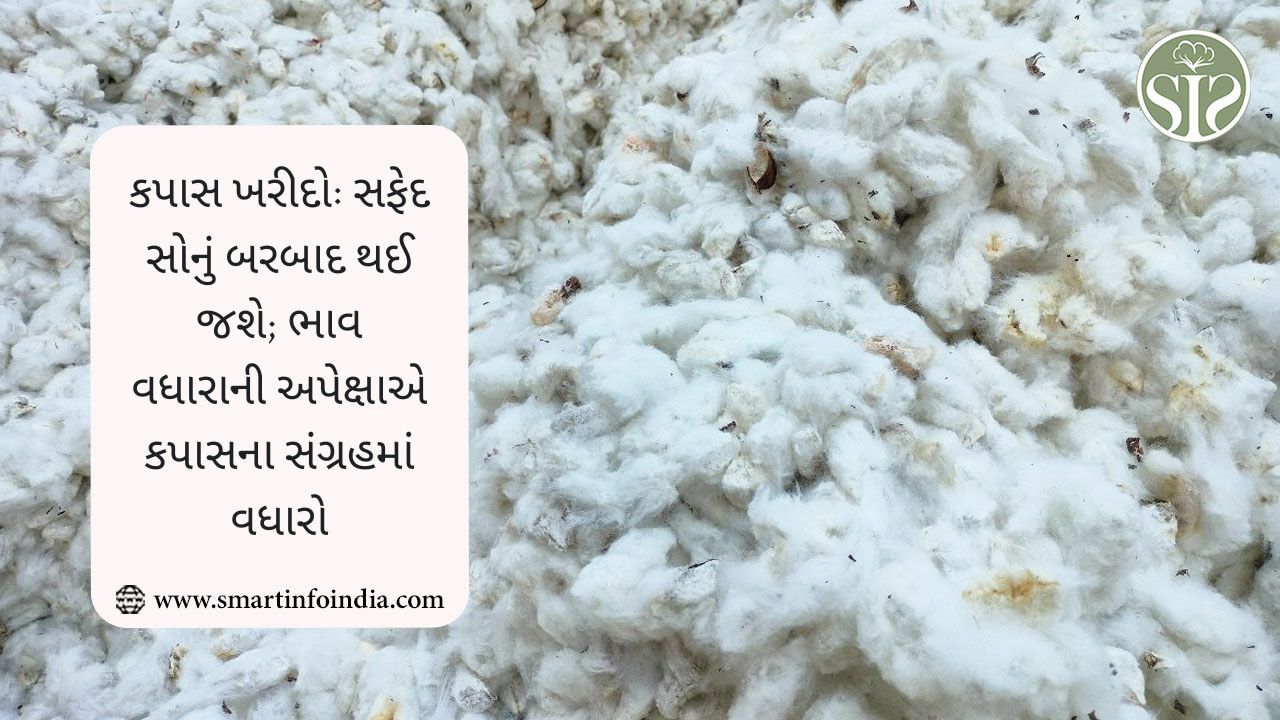
ભાવમાં ઉછાળો આવતા કપાસનો સંગ્રહ વધે છેકપાસની ખરીદીઃ કપાસને પણ ખાતરીપૂર્વકના ભાવ મળતા નથી, CCIએ નોંધણી માટે 15મી તારીખ આપી છે અને 14મી અને 15મીએ જાહેર રજાઓ હોવાથી છેલ્લી તારીખ 13મી માર્ચ રહેશે.કેટલાક ખેડૂતોએ ભાવ વધવાની અપેક્ષાએ કપાસનો સંગ્રહ કર્યો છે. કેન્દ્ર સરકારે આ વર્ષે કપાસ માટે 7521 રૂપિયા પ્રતિ ક્વિન્ટલ લઘુત્તમ ટેકાના ભાવ જાહેર કર્યા છે. હકીકતમાં, ખુલ્લા બજારમાં તેની કિંમત રૂ. 7,000 થી લઈને ગામડાઓમાં તેનાથી પણ ઓછી છે. (કપાસ ખરીદવું)ખેડૂતોને ટેકાના ભાવનું રક્ષણ આપવા માટે, સીસીઆઈએ જિલ્લામાં 9 કેન્દ્રો પર ખરીદી શરૂ કરી. કેટલાક કારણોસર, કેન્દ્ર અપેક્ષા કરતાં વધુ સમય બંધ રહ્યું હતું અને ખરીદી ધીમી હતી. (કપાસ ખરીદવું)આ ઉપરાંત ગામમાં કપાસની ખરીદીમાં પણ લૂંટ ચલાવવામાં આવી છે. CCI છેલ્લા બે મહિનાથી ખરીદેલા કપાસના ગ્રેડમાં ઘટાડો કરી રહી છે. તેથી રૂ.7,421ના ભાવે કપાસની ખરીદી કરવામાં આવી રહી છે, જે ગેરેન્ટી કિંમત કરતા રૂ.100 ઓછા છે. (કપાસ ખરીદવું)ત્વચા વિકૃતિઓ ભાવ વધવાની આશાએ ખેડૂતો કપાસનો સંગ્રહ કરી રહ્યા છે. જો કે, કપાસની આ જીવાતો ઘરના સભ્યોની ત્વચા પર ફોલ્લીઓ અને ખંજવાળ જેવી સમસ્યાઓનું કારણ બની રહી છે. આથી બજારમાં તેની કોઈ કિંમત નથી અને જો તેનો સંગ્રહ કરવામાં આવે તો તે સ્વાસ્થ્યને લગતી સમસ્યાઓનું કારણ બને છે. આવી સ્થિતિમાં ખેડૂત બેવડી મુશ્કેલીમાં ફસાઈ ગયો છે.સ્ટોરેજ સ્પેસ નથી .સીસીઆઈએ જિલ્લાની કેટલીક જીનીંગ કંપનીઓ સાથે કરાર કર્યા બાદ ત્યાં સેન્ટર શરૂ કરવામાં આવ્યું હતું. જોકે, કેટલાક કેન્દ્રો પર ગાંસડીઓ અને બોરીઓ ઉપાડવામાં ન આવતાં કપાસનો સંગ્રહ કરવાની જગ્યા નથી અને કપાસની લણણીની સમસ્યા પણ સામે આવી રહી છે. અહેવાલ છે કે જ્યાં સુધી CCI વાસ્તવમાં ખરીદી ન કરે ત્યાં સુધી OTAI ઉપલબ્ધ કરાવવામાં આવશે તે અંગે સંમતિ આપવામાં આવી છે.વધુ વાંચો :-ભારતીય રૂપિયો અમેરિકી ડોલર સામે 3 પૈસા ઘટીને 87.36 ના સ્તર પર ખુલ્યો છે

ભારતીય રૂપિયો દિવસની શરૂઆત યુએસ ડૉલરની સરખામણીમાં 3 પૈસા ઘટીને 87.36 પર થાય છે.ભારતીય રૂપિયો 11 માર્ચે યુએસ ડોલર સામે 3 પૈસા ઘટીને 87.36 પર ખૂલ્યો હતો, જે અગાઉના બંધ સમયે ગ્રીનબેક સામે 87.33 હતો.વધુ વાંચો :-ભારતીય રૂપિયો 7 પૈસા નીચો, પ્રતિ ડૉલર 87.33 પર સમાપ્ત થાય છે

ભારતીય રૂપિયો યુએસ ડૉલર સામે 7 પૈસા નીચામાં 87.33 થયોસોમવારે ભારતીય રૂપિયો 7 પૈસા ઘટીને 87.33 પ્રતિ ડોલર પર બંધ થયો હતો, જ્યારે તે સવારે 87.26 પર ખુલ્યો હતો.બંધ સમયે, સેન્સેક્સ 217.41 પોઈન્ટ અથવા 0.29 ટકા ઘટીને 74,115.17 પર અને નિફ્ટી 92.20 પોઈન્ટ અથવા 0.41 ટકા ઘટીને 22,460.30 પર હતો. લગભગ 1147 શેર વધ્યા, 2776 શેર ઘટ્યા અને 140 શેર યથાવત.વધુ વાંચો :- પંજાબના કપાસના પટ્ટાને આંચકો: કપાસના ઉત્પાદનમાં 71 ટકાનો ઘટાડો, ગુણવત્તાયુક્ત બિયારણનો અભાવ સહિતના અનેક કારણો

બીજની અછતને કારણે પંજાબ કપાસનું ઉત્પાદન 71% ઘટ્યું છેકોટન એસોસિએશન ઓફ ઈન્ડિયાના અહેવાલ મુજબ પંજાબમાં કપાસનું ઉત્પાદન અને વાવેતર વિસ્તાર સતત ઘટી રહ્યો છે. કપાસના ઉત્પાદન માટે જાણીતો માલવા વિસ્તાર ખાસ કરીને પ્રભાવિત થયો છે. ખેડૂતો હવે ડાંગર અને ઘઉં જેવા અન્ય પાકો તરફ વળ્યા છે, જેના કારણે પાક વૈવિધ્યકરણના પ્રયાસોને આંચકો લાગ્યો છે.પંજાબના કપાસ ઉત્પાદક પટ્ટામાં છેલ્લા પાંચ વર્ષમાં કપાસના ઉત્પાદનમાં 71 ટકાનો જંગી ઘટાડો થયો છે. આ સાથે કપાસનો વાવેતર વિસ્તાર પણ અડધો થઈ ગયો છે.ગુલાબી બોલવોર્મના ઉપદ્રવ, ગુણવત્તાયુક્ત બિયારણ અને જંતુનાશકોના અભાવને કારણે ખેડૂતો કપાસની ખેતીથી દૂર જઈ રહ્યા છે. રાજ્ય સરકારે હવે કેન્દ્ર પાસે BG3 બિયારણની માંગણી કરી છે જેથી કપાસના વાવેતરને પુનઃજીવિત કરી શકાય.નવીનતમ સ્થિતિઉત્પાદનમાં ઘટાડોઃ 2020-21માં 7.73 લાખ ગાંસડીથી 2024-25માં 2.20 લાખ ગાંસડી.વાવેતર વિસ્તારમાં ઘટાડોઃ 2.52 લાખ હેક્ટરથી 1 લાખ હેક્ટર.સરકારની માંગ: કેન્દ્ર તરફથી BG3 બીજ પ્રદાન કરો.ચિંતા: ખેડૂતો ડાંગર અને ઘઉં તરફ વળે છે, જે ભૂગર્ભજળના સ્તર પર દબાણ વધારશે.અન્ય રાજ્યોની સ્થિતિઃ પંજાબ કરતાં હરિયાણા અને રાજસ્થાનમાં કપાસનું ઉત્પાદન સારું છે.વૈવિધ્યકરણના પ્રયાસોને આંચકોકોટન એસોસિએશન ઓફ ઈન્ડિયાના અહેવાલ મુજબ પંજાબમાં કપાસનું ઉત્પાદન અને વાવેતર વિસ્તાર સતત ઘટી રહ્યો છે. કપાસના ઉત્પાદન માટે જાણીતો માલવા વિસ્તાર ખાસ કરીને પ્રભાવિત થયો છે. ખેડૂતો હવે ડાંગર અને ઘઉં જેવા અન્ય પાકો તરફ વળ્યા છે, જેના કારણે પાક વૈવિધ્યકરણના પ્રયાસોને આંચકો લાગ્યો છે.રાજ્ય સરકારે કેન્દ્ર સરકારને BG3 જાતના બિયારણ આપવા વિનંતી કરી છે, જે પિંક બોલવોર્મના ઉપદ્રવને ઘટાડવામાં મદદ કરી શકે છે. કૃષિ વિભાગના જણાવ્યા અનુસાર, જો ગુલાબી બોલવોર્મ કપાસની ખેતીને અસર કરવાનું ચાલુ રાખશે, તો ખેડૂતો સંપૂર્ણપણે ડાંગરની ખેતી તરફ વળશે, જેનાથી ભૂગર્ભજળના સ્તર પર વધુ દબાણ આવશે.હરિયાણા અને રાજસ્થાન આગળહરિયાણા અને રાજસ્થાન કપાસના ઉત્પાદનમાં પંજાબ કરતા આગળ છે. 2024-25માં, હરિયાણાએ 4.76 લાખ હેક્ટરમાં કપાસની ખેતી કરી અને 9.75 લાખ ગાંસડીનું ઉત્પાદન કર્યું, જ્યારે રાજસ્થાને 6.62 લાખ હેક્ટરમાં તેની ખેતી કરી અને 19.76 લાખ ગાંસડીનું ઉત્પાદન કર્યું.વધુ વાંચો :-ભારતીય કપાસના ભાવ પર દબાણ હોવા છતાં કપાસની આયાત વધે છે

ભાવ તણાવ છતાં ભારતીય કપાસની આયાત વધે છેછેલ્લા સાત મહિનામાં કાચા કપાસ અને કપાસના વેસ્ટ વધતી જતી આયાતને કારણે ભારતમાં કપાસની ઉત્પાદકતા વધારવાના પગલાંની તાત્કાલિક જરૂરિયાત સામે આવી છે.કપાસની આયાત ઓગસ્ટ 2024માં $104 મિલિયન, સપ્ટેમ્બર 2024માં $134.2 મિલિયન, ઓક્ટોબરમાં $127.71 મિલિયન, નવેમ્બરમાં $170.73 મિલિયન અને ડિસેમ્બર 2024માં $142.89 મિલિયન હતી. આ વર્ષે જાન્યુઆરીમાં તે 184.64 મિલિયન ડોલર હતું.તેની સરખામણીમાં ઓગસ્ટ 2023માં આયાત 74.4 મિલિયન ડોલર, સપ્ટેમ્બર 2023માં $39.91 મિલિયન, ઓક્ટોબર 2023માં $36.68 મિલિયન, નવેમ્બર 2023માં $30.61 મિલિયન અને ડિસેમ્બર 2023માં $29.47 મિલિયન હતી. જાન્યુઆરી 2024માં આયાત $19.62 મિલિયન હતી.દરમિયાન, કોટન કોર્પોરેશન ઓફ ઈન્ડિયા (CCI) એ ભારતીય કપાસની લગભગ 100 લાખ ગાંસડીની ખરીદી કરી છે જે 1 ઓક્ટોબર, 2024 ના રોજ નવી સિઝનની શરૂઆતથી બજારમાં આવી છે. ડિસેમ્બર 2024 માં કપાસની ટોચની આગમનની સિઝનમાં, CCI એ ન્યૂનતમ ટેકાના ભાવ (MSP) પર દૈનિક આવકના લગભગ 60% ખરીદ્યા હતા. શનિવારે શંકર 6 જાતના કપાસનો ભાવ 52,500 રૂપિયા પ્રતિ ક્વિન્ટલ હતો.તેલંગાણાના કપાસના ખેડૂત જયપાલે સીઝનની શરૂઆતમાં કહ્યું હતું કે ઉપજ ઓછી હોવાથી ખેડૂતો ખુશ નથી. "આંતરરાષ્ટ્રીય કપાસના ભાવ નીચા છે અને મિલો ત્યાંથી ખરીદી કરી શકે છે," તેમણે કહ્યું. ફેડરેશન ઓફ કર્ણાટક સ્ટેટ ફાર્મર્સ યુનિયન્સના પ્રમુખ કુર્બુર શાંતાકુમારે જણાવ્યું હતું કે પ્રતિ ક્વિન્ટલ ઉત્પાદનની કિંમત ₹9,000 છે અને MSP ₹7,235 છે. પરંતુ, દલાલો ખુલ્લા બજારમાં માત્ર ₹5,000 થી ₹5,500 પ્રતિ ક્વિન્ટલના ભાવે ખરીદી કરી રહ્યા હતા. ઉત્પાદકતામાં સુધારો કરવાના ઉદ્દેશ્ય સાથે ફેબ્રુઆરીમાં જાહેર કરાયેલા કેન્દ્રીય બજેટમાં કોટન મિશનની જાહેરાત કરવામાં આવી છે. ભારતીય કાપડ ઉદ્યોગ માટે, કપાસના ભાવ આંતરરાષ્ટ્રીય સ્તરે નબળા છે અને એપેરલ અને હોમ ટેક્સટાઇલની નિકાસ માંગમાં વધારો થતાં, કાપડ ઉદ્યોગને આંતરરાષ્ટ્રીય સ્તરે સ્પર્ધાત્મક બનવાની જરૂર છે. નિકાસ કરાયેલા 60% થી વધુ કાપડ કપાસ આધારિત છે. વધારાના લાંબા સ્ટેપલ કપાસની ડ્યુટી ફ્રી આયાત કરી શકાય છે અને નિકાસકારો એડવાન્સ અધિકૃતતા હેઠળ ડ્યુટી વિના કપાસની આયાત કરી શકે છે. ઉદ્યોગના સૂત્રોએ જણાવ્યું હતું કે એવું લાગે છે કે મિલોએ કપાસની આયાત કરી છે કારણ કે આંતરરાષ્ટ્રીય કપાસના ભાવ ભારતીય ભાવ કરતાં નીચા હતા અને આયાતની સ્થાનિક બજારને અસર થઈ નથી.“બ્રાઝિલ [આંતરરાષ્ટ્રીય બજારમાં] આક્રમક વેચનાર છે. ઑસ્ટ્રેલિયા, યુ.એસ., આફ્રિકા અને બ્રાઝિલ થોડા દિવસો પહેલા સુધી કિંમતો સાથે આરામદાયક સ્થિતિમાં હતા. આ દેશોની સરખામણીમાં ભારતીય કપાસના ભાવ વધુ હતા. ભારતીય કાપડ મિલોએ ગણતરીપૂર્વકનું જોખમ લીધું અને 11% ડ્યુટી હોવા છતાં આયાત કરી કારણ કે ભારતીય કપાસ અને યાર્નના ભાવ પ્રમાણમાં ઊંચા છે. ભારત સરકાર અને કાપડ ઉદ્યોગે માંગ વધારવા પર ધ્યાન કેન્દ્રિત કરવું જોઈએ જેથી કાપડની નિકાસ વધે અને કપાસના ભાવ ઉત્પાદકો અને પ્રોસેસરો માટે સમાન રહે. ઓલ ઈન્ડિયા કોટન ફાર્મર્સ પ્રોડ્યુસર્સ ઓર્ગેનાઈઝેશનના પ્રમુખ મનીષ ડાગાએ જણાવ્યું હતું કે, કપાસની ઉત્પાદકતા અને વિસ્તાર વધારીને મિલો માટે ‘ફાઈબર સિક્યુરિટી’ જાળવવી પણ ખૂબ જ મહત્વપૂર્ણ છે.વધુ વાંચો :-રૂપિયો 38 પૈસા ઘટ્યો, યુએસ ડૉલર વિરુદ્ધ 87.26 પર ખુલ્યો

યુએસ ડૉલરની સરખામણીમાં રૂપિયો 38 પૈસા ઘટીને 87.26 પર ખુલે છે.સોમવારે ભારતીય રૂપિયો યુએસ ડૉલરની સરખામણીએ 38 પૈસા ઘટીને 87.26 પર ખૂલ્યો હતો, જે શુક્રવારે 86.88 પર બંધ થયો હતો.ડોલર ઇન્ડેક્સ હળવો થવા છતાં વૈશ્વિક વેપાર અંગેની ચિંતાને કારણે 10 માર્ચે ભારતીય રૂપિયો 38 પૈસા નીચો ખૂલ્યો હતો.વધુ વાંચો :-ભારતીય રૂપિયો 23 પૈસા વધારે છે, જે પ્રતિ ડૉલર 86.88 પર સમાપ્ત થાય છે

ભારતીય રૂપિયો યુએસ ડોલર સામે 23 પૈસા ચઢ્યો, 86.88 પર સમાપ્ત થયોશુક્રવારે ભારતીય રૂપિયો 23 પૈસા વધીને 86.88 પ્રતિ ડૉલર પર બંધ થયો હતો, જ્યારે તે સવારે 87.11 પર ખુલ્યો હતો.બંધ સમયે, સેન્સેક્સ 7.51 પોઈન્ટ અથવા 0.01 ટકા ઘટીને 74,332.58 પર અને નિફ્ટી 7.80 પોઈન્ટ અથવા 0.03 ટકા વધીને 22,552.50 પર હતો. લગભગ 2431 શેર વધ્યા, 1400 શેર ઘટ્યા અને 120 શેર યથાવત.વધુ વાંચો :-હરિયાણા કપાસના ખેડૂતો માટે વીમાનો દાવો રૂ. 281 કરોડ હતો, પરંતુ સરકાર, પેઢીએ તેને ઘટાડીને રૂ. 80 કરોડ કર્યો
હરિયાણા કપાસના ખેડૂતોના વીમાનો દાવો સરકાર અને કંપની દ્વારા રૂ. 281 કરોડથી ઘટાડીને રૂ. 80 કરોડ કરવામાં આવ્યોખરીફ 2023 સીઝન દરમિયાન ભિવાની અને ચરખી દાદરી જિલ્લામાં કપાસના ખેડૂતોના વીમાના દાવાને નકારવાની રીતમાં કથિત "છેતરપિંડી" કેટલાક ખેડૂત કાર્યકરો દ્વારા સરકારના ધ્યાન પર લાવવામાં આવી હતી.રાજ્ય સરકારને ફરિયાદ સબમિટ કરનારા કાર્યકરોએ આક્ષેપ કર્યો હતો કે પાક લણણી પ્રયોગ (CCE)ના આધારે ભિવાની જિલ્લામાં ખેડૂતોના કુલ વીમા દાવાની 281.5 કરોડ રૂપિયાની આકારણી કરવામાં આવી હતી.જો કે, વીમા પેઢીએ પાછળથી વીમાની રકમને પડકારવા માટે ઉચ્ચ અધિકારીઓનો સંપર્ક કર્યો, જેણે આ મામલો સ્ટેટ ટેકનિકલ એડવાઇઝરી કમિટી (STAC)ને મોકલ્યો.STAC એ કપાસના પાક વીમાના દાવાઓ માટે તકનીકી ઉપજ આકારણીને મંજૂરી આપવાનું નક્કી કર્યું.આ તકનીકી મૂલ્યાંકનના આધારે, વીમાનો દાવો ઘટાડીને માત્ર 80 કરોડ રૂપિયા કરવામાં આવ્યો હતો.વધુ આઘાતજનક રીતે, કામદારોએ આક્ષેપ કર્યો હતો કે STAC એ એક ખામીયુક્ત સંસ્થા હતી જ્યારે તેણે મીટિંગ બોલાવી અને નિર્ણયો લીધા. એક ખેડૂત કાર્યકર્તા ડૉ. રામ કંવરે આરોપ મૂક્યો હતો કે વીમા દાવાની બાબત સ્ટેકને મોકલવામાં આવી હતી, એક સલાહકાર સંસ્થા જેનો કાર્યકાળ 1 ઓગસ્ટ, 2024 ના રોજ સમાપ્ત થયો હતો.જો કે, કૃષિ નિયામક, રાજનારાયણ કૌશિક અને સંયુક્ત નિયામક (આંકડા), રાજીવ મિશ્રાએ 20 ઓગસ્ટ, 2024ના રોજ આ નિષ્ક્રિય સમિતિની બેઠક બોલાવી હતી અને કપાસના પાક વીમા દાવાઓ માટે તકનીકી ઉપજ આકારણીને મંજૂરી આપવાનો નિર્ણય કર્યો હતો.આમ, તેમણે આક્ષેપ કર્યો હતો કે, 1 ઓગસ્ટ, 2024 ના રોજ તેની મુદત પૂરી થયા પછી બોડીને કોઈ નિર્ણય લેવા માટે અધિકૃત નથી.કંવરે જણાવ્યું હતું કે, બે જિલ્લાઓ - ભિવાની અને ચરખી દાદરી જિલ્લાઓ માટે ખરીફ 2023 માટે પ્રધાનમંત્રી ફસલ વીમા યોજના (PMFB) હેઠળ કપાસના પાક વીમાના દાવાની પતાવટ સંબંધિત બાબત એક રેડંડ બોડી દ્વારા લેવામાં આવેલા નિર્ણયમાં આશરે રૂ. 200 કરોડના દાવાને નકારવા સાથે ગંભીર મહત્વ ધરાવે છે.ખેડૂતો સાથેની કથિત છેતરપિંડી માટે જવાબદાર અધિકારીઓ સામે અને ખેડૂતોના વીમાના દાવાની ખાતરી કરવા માટે જવાબદાર અધિકારીઓ સામે કાર્યવાહી કરવા તેઓએ મુખ્યમંત્રીને ફરિયાદ કરી છે.ભિવાની જિલ્લાના સિવાની તાલુકામાં ખેડૂત કાર્યકર દયાનંદ પુનિયાએ જણાવ્યું હતું કે CCE મુજબ, સિવની બ્લોકમાં 34 ગામો કપાસના નુકસાન માટે વીમા દાવા મેળવવાના હતા, પરંતુ તકનીકી મૂલ્યાંકનથી જાણવા મળ્યું કે લગભગ 20 ગામોમાં વીમાના દાવાઓ નથી.પુનિયાએ કહ્યું કે તેઓ વર્ષ 2023 માટે તેમના કપાસના ખેતરોના પાક વીમા અંગે આ અન્યાય સહન કરશે નહીં."તેના પાકનો વીમો હોવા છતાં, કૃષિ વિભાગે ગામ મુજબ પાક લણણી સર્વેક્ષણ હાથ ધર્યું હતું અને દરેક ગામ માટે એકર દીઠ વળતર નક્કી કર્યું હતું. જો કે, વીમા કંપનીએ સરકાર સાથે મળીને, વિભાગના અહેવાલને નકારી કાઢ્યો હતો," તેમણે જણાવ્યું હતું.પુનિયાએ વધુમાં આક્ષેપ કર્યો હતો કે વીમા કંપનીએ દાવો કર્યો હતો કે સેટેલાઇટ રિપોર્ટમાં પાકને કોઈ નોંધપાત્ર નુકસાન થયું નથી અને તેને કૌભાંડ ગણાવ્યું હતું."અમે 10 માર્ચે સિવાનીમાં SDM ઓફિસમાં પ્રદર્શન કરીશું," તેમણે કહ્યું.કંવરે જણાવ્યું હતું કે સરકારી માર્ગદર્શિકા મુજબ, રાજ્ય સત્તાવાળાઓ દ્વારા હાથ ધરવામાં આવેલા ક્રોપ કટિંગ પ્રયોગો (CCEs)ના આધારે દાવાઓનું સમાધાન થવું જોઈએ. જો કે, કંપનીએ કથિત રીતે આ દાવાઓને માન આપવાનો ઇનકાર કર્યો હતો અને તેના બદલે વૈકલ્પિક પદ્ધતિ માટે દબાણ કર્યું હતું-વ્યૂહાત્મક ઉપજ આકારણી-જે માત્ર ઘઉં અને ડાંગર માટે માન્ય છે, કપાસ માટે નહીં.ફરિયાદમાં વધુમાં જણાવવામાં આવ્યું છે કે ડેપ્યુટી કમિશનરની આગેવાની હેઠળની ભિવાનીની ડિસ્ટ્રિક્ટ લેવલ મોનિટરિંગ કમિટી (DLMC) એ પણ વીમા કંપની દ્વારા ઉઠાવવામાં આવેલા વાંધાઓને નકારી કાઢ્યા હતા અને સાત દિવસમાં ચુકવણી રિલીઝ કરવાનો નિર્દેશ આપ્યો હતો. "ડીએમએલસીનું પાલન કરવાને બદલે, વીમા પેઢીએ આ નિર્ણયને કૃષિ અને ખેડૂત કલ્યાણ નિયામક સમક્ષ પડકાર્યો," તેમણે કહ્યું. ડાયરેક્ટર, એગ્રીકલ્ચર રાજનારાયણ કૌશિક, જોકે, તેમના સંસ્કરણ માટેના કૉલ્સ અને સંદેશાઓનો જવાબ આપ્યો ન હતો.વધુ વાંચો :-વિદર્ભના ખેડૂતો ઉપજ વધારવા માટે HTBT કપાસના બીજની માંગ કરે છે
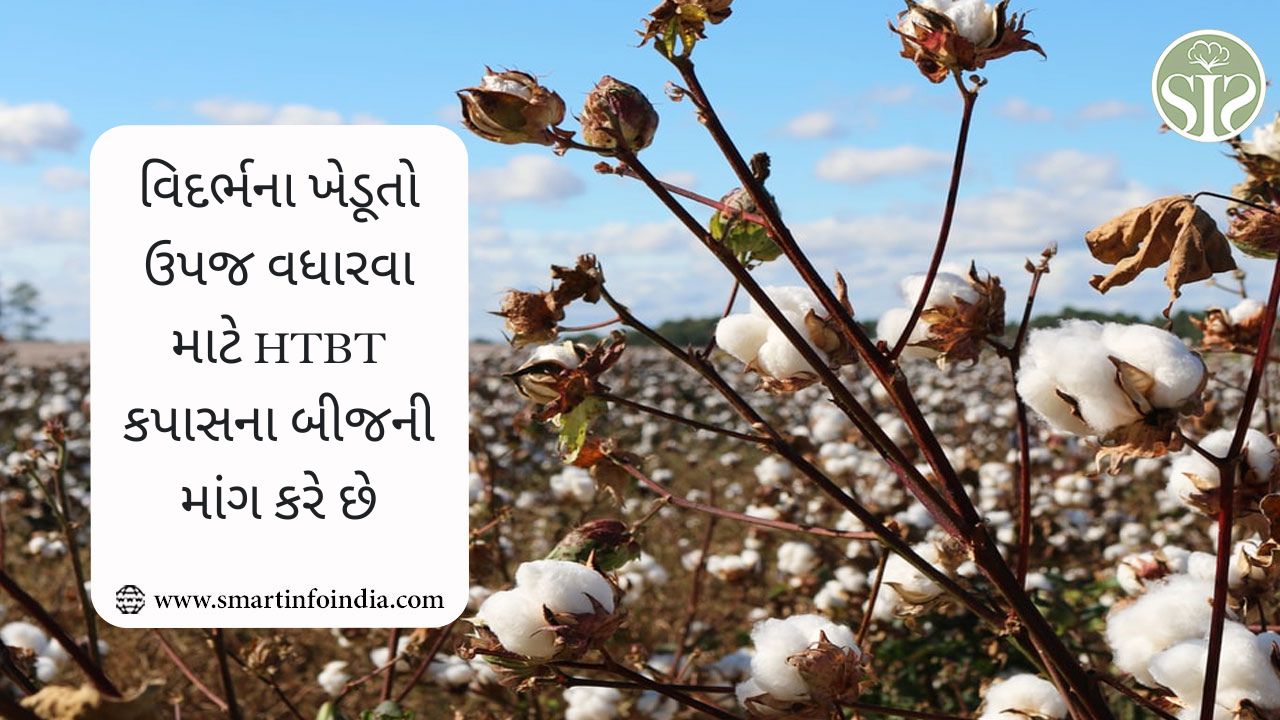
ઉત્પાદન વધારવા માટે વિદર્ભના ખેડૂતોને HTBt કપાસના બિયારણ જોઈએ છે.નાગપુર : વિદર્ભ, ખાસ કરીને યવતમાળના ખેડૂતોએ સરકારને વિનંતી કરી છે કે આગામી સિઝનમાં પાકનું ઉત્પાદન વધારવા માટે નવીનતમ હર્બિસાઇડ-ટોલરન્ટ બીટી કપાસ (HTBT) બીજ પૂરા પાડવામાં આવે. ખેડૂતોએ દાવો કર્યો હતો કે છેલ્લા કેટલાક વર્ષોમાં જીવાતોનો વિકાસ થયો છે અને હવે તેઓ બીટી કપાસની જાત સામે પ્રતિરોધક બની ગયા છે અને પાક માટે મોટો ખતરો બની ગયા છે.ગુરુવારે રાષ્ટ્રીય ખેડૂત સશક્તિકરણ પહેલ દ્વારા આયોજિત એક બેઠકમાં ખેડૂત બોલી રહ્યા હતા. મીડિયાને સંબોધતા, વિદર્ભના કપાસ ખેડૂતોના એક જૂથે માંગણી કરી અને કહ્યું કે કપાસના પાક માટે મોટો ખતરો, ગુલાબી ઈયળ, બીટી કપાસ દ્વારા ઉત્પાદિત Cry1Ac ઝેર સામે પ્રતિરોધક બની ગયો છે."છેલ્લા ઘણા વર્ષોથી બીટી કપાસ અમારા માટે ખૂબ મદદરૂપ થઈ રહ્યો છે, પરંતુ અમને કપાસના બીજમાં નવીનતમ સંશોધન અને નવીનતાઓની જરૂર છે," અકોલાના કપાસ ખેડૂત ગણેશ નાનોટેએ જણાવ્યું. નેનોટે જણાવ્યું હતું કે અમેરિકા, બ્રાઝિલ અને ઓસ્ટ્રેલિયા જેવા અન્ય કપાસ ઉત્પાદક દેશોએ પહેલાથી જ HTBT કપાસ અપનાવી લીધો છે અને ભારતીય ખેડૂતોને પણ આ જ તક મળવી જોઈએ.ખેડૂત નેતા મિલિંદ દાંબલેએ જણાવ્યું હતું કે યવતમાળની જમીનમાં ચૂનાના પત્થરનું પ્રમાણ વધુ છે, જેના કારણે ખેતી કરવી મુશ્કેલ બને છે. "મોટાભાગના ખેડૂતો આત્મહત્યા કરે છે કારણ કે તેઓ પૂરતું ઉત્પાદન કરી શકતા નથી," તેમણે કહ્યું.જિલ્લામાં પાણીની અછત પર પ્રકાશ પાડતા, દાંબલેએ કહ્યું કે શિયાળાના મહિનાઓમાં તેમને મહિનામાં માત્ર બે થી ત્રણ દિવસ પાણી મળે છે. "જૂનથી ચોમાસા દરમિયાન પરિસ્થિતિ થોડી સરળ બની જાય છે, જ્યારે આપણને 15-17 દિવસ પાણી મળે છે," તેમણે કહ્યું. "જીંડવાની કીડાના ઉપદ્રવને કારણે, આપણે આપણા પાક પર જંતુનાશકોનો છંટકાવ કરવો પડે છે અને એક હેક્ટર જમીનની સંભાળ રાખવા માટે 10 લોકોની જરૂર પડે છે," તેમણે કહ્યું. દાંબલેએ જણાવ્યું હતું કે જો HTBT કપાસ અપનાવવામાં આવે તો પ્રતિ હેક્ટર કામદારોની જરૂર પડશે, જે ઘટીને ફક્ત બે થઈ જશે.ખેડૂત વિદ્યા વારહાડેએ જણાવ્યું કે કપાસ તેમનો મુખ્ય પાક છે, પરંતુ તેઓ ખેતીમાંથી આવક વધારવા માટે શાકભાજી અને અન્ય પાક પણ ઉગાડે છે. "કપાસનું હાલનું ઉત્પાદન આપણા માટે પૂરતું નથી. આપણે એવા પગલાં અમલમાં મૂકવાની જરૂર છે જે આપણને કપાસનું ઉત્પાદન વધારવામાં મદદ કરે," તેમણે કહ્યું. યવતમાળના અન્ય એક ખેડૂત પ્રકાશ પુપ્પલવારે જણાવ્યું હતું કે કપાસ એક વૈશ્વિક કોમોડિટી છે અને તેની નિકાસની વિશાળ સંભાવના છે. "સરકારે આપણે આગળ રહેવા માટે અથવા ઓછામાં ઓછા વિશ્વભરના અન્ય સ્પર્ધકોની સમકક્ષ રહેવા માટે કેટલાક પ્રગતિશીલ પગલાં લેવા જોઈએ," તેમણે કહ્યું. ખેડૂતોએ માંગ કરી છે કે નીતિ નિર્માતાઓ જમીની સ્તરના મુદ્દાઓને વધુ સારી રીતે સમજવા માટે ત્રીજા પક્ષ પર આધાર રાખવાને બદલે તેમની સાથે સીધી વાતચીત કરે.વધુ વાંચો :-રૂપિયો ડોલર વિરુદ્ધ 87.11 પર સ્થિર છે

યુએસ ડૉલર સામે રૂપિયો 87.11 પર સ્થિર છેભારતીય રૂપિયો શુક્રવારે 87.11 ના પાછલા બંધની સામે ડોલર દીઠ 87.11 પર ખુલ્યો હતો.વધુ વાંચો :-ચીનના જવાબી ટેરિફને કારણે યુએસ કોટનના ભાવમાં ઘટાડો થવાથી ભારતીય વસ્ત્રો, કાપડ, યાર્નની માંગમાં વધારો થઈ શકે છે.
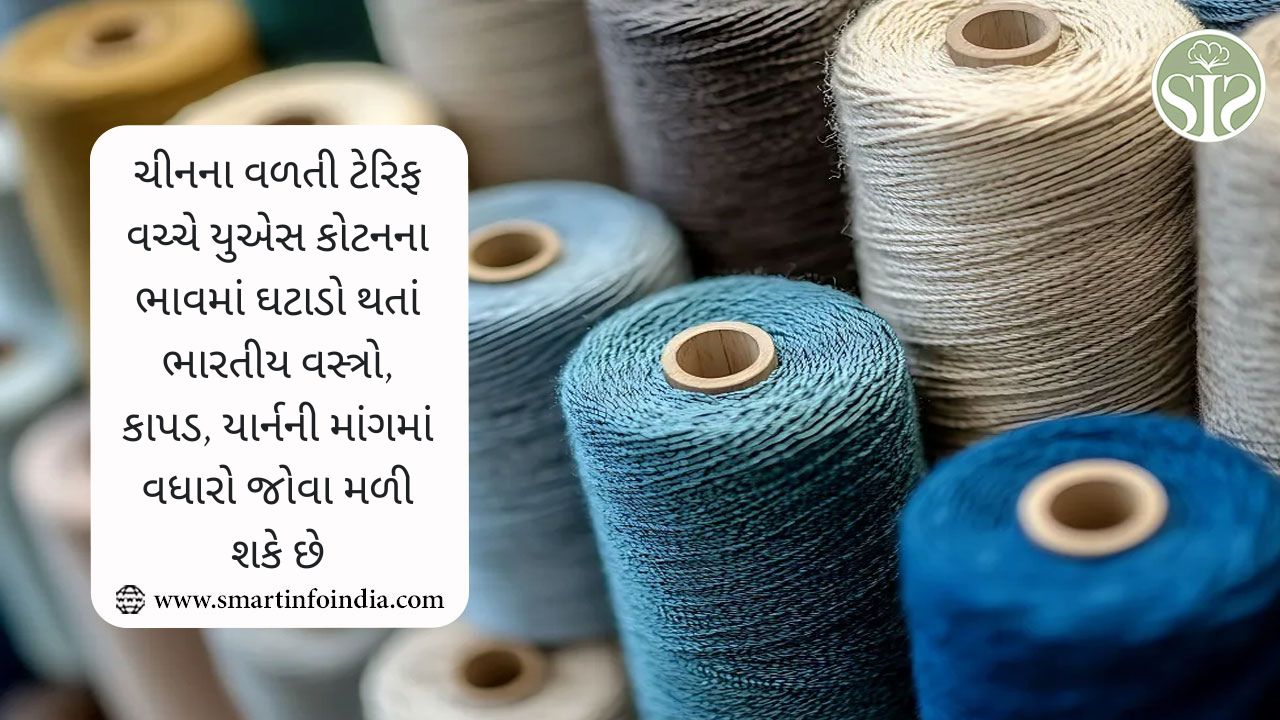
ચીનના વળતી ટેરિફ વચ્ચે યુએસ કોટનના ભાવમાં ઘટાડો થતાં ભારતીય વસ્ત્રો, કાપડ, યાર્નની માંગમાં વધારો જોવા મળી શકે છેચીનના જવાબી ટેરિફના પરિણામે યુએસ કોટન માર્કેટમાં ઘટાડો ભારતીય કપડાં, યાર્ન અને કાપડની નિકાસની માંગમાં વધારો કરી શકે છે.ઉદ્યોગની ધારણા છે કે બદલો લેવાના ટેરિફના પરિણામે ભારત યુએસ અને યુરોપમાં બજારહિસ્સો મેળવશે, જે ચીનની કાપડની નિકાસની સ્પર્ધાત્મકતામાં ઘટાડો કરશે અને નીચા ભાવે ઉચ્ચ ગુણવત્તાની યુએસ કપાસની ઉપલબ્ધતાને વેગ આપશે.ચીને 10-15 ટકાના પ્રતિકૂળ ટેરિફ લાગુ કર્યા પછી, યુએસ કોટનના ભાવ ચાર વર્ષમાં સૌથી નીચા સ્તરે આવી ગયા. તેના ઓછા ખર્ચાળ કપાસ માટે 31 ટકા વૈશ્વિક બજાર હિસ્સા સાથે, ભારત કોટન યાર્નની નિકાસમાં વિશ્વમાં અગ્રેસર છે.વેપારના અંદાજો દર્શાવે છે કે સ્થાનિક ઉત્પાદનમાં ઘટાડાથી ભારતની કપાસની આયાત અગાઉના વર્ષની સરખામણીમાં 2024-25માં 62 ટકાથી વધુ વધી હતી.ભારત યુએસમાંથી જે કપાસની આયાત કરે છે તેમાંથી મોટા ભાગનો કોટન એક્સ્ટ્રા-લોંગ સ્ટેપલ (ELS) કેટેગરીમાં આવે છે. કોટન ટેક્સટાઇલ એક્સપોર્ટ પ્રમોશન કાઉન્સિલ (ટેક્સપ્રોસિલ)ના એક્ઝિક્યુટિવ ડિરેક્ટર સિદ્ધાર્થ રાજગોપાલના જણાવ્યા અનુસાર, જો ચીનની ઘટતી માંગને પરિણામે યુએસ કોટનના ભાવ ઘટશે તો ભારતીય કાપડ ઉત્પાદકો યુએસ કોટનની આયાત વધારવી નાણાકીય રીતે શક્ય જણાશે.કપાસના ઉત્પાદનમાં મોટાભાગે આત્મનિર્ભર હોવા છતાં, ભારત ખરીદદાર અથવા ગુણવત્તાના ધોરણોને સંતોષવા માટે ચોક્કસ ELS કપાસ અને સ્વચ્છ અને દૂષણ મુક્ત કપાસની આયાત કરે છે. ભારતે એપ્રિલ 2023 થી માર્ચ 2024 વચ્ચે સમગ્ર વિશ્વમાંથી US $ 570 મિલિયનના કાચા કપાસની ખરીદી કરી હતી, જેમાં US $ 221 મિલિયન યુએસમાંથી આવ્યા હતા, જે કુલ આયાતના 38.7 ટકા હિસ્સો ધરાવે છે, ઉદ્યોગના ડેટા અનુસાર.યુ.એસ., તેના વધુ સારા એક્સ્ટ્રા લોંગ સ્ટેપલ કોટન (ELS) સાથે, તેની કપાસની નિકાસમાં વિવિધતા લાવવાનો પણ પ્રયાસ કરશે અને ચીનના બજારમાં મર્યાદિત પ્રવેશને કારણે મુખ્ય વેપાર ભાગીદાર તરીકે ભારત તરફ વળશે, એમ રાજગોપાલે જણાવ્યું હતું.ટેરિફથી ચાઈનીઝ ટેક્સટાઈલ પ્રોડક્ટ્સની વૈશ્વિક બજારોમાં સ્પર્ધા કરવાની ક્ષમતાને અસર થવાની ધારણા છે, જેનાથી ભારતીય નિકાસકારોને તેમનો બજારહિસ્સો વધારવાની તક મળશે, ખાસ કરીને US અને EU જેવા દેશોમાં.આ ફેરફારના પરિણામે ભારતીય સુતરાઉ યાર્ન, કાપડ અને કપડાંની માંગ વધી શકે છે, નિકાસના સ્તરને વેગ મળશે. રાજગોપાલના મતે, નિકાસકારો પાસે કિંમતો માટે વધુ વિકલ્પો હશે કારણ કે ભારતીય કપાસ ઉત્પાદનોનું બજાર વિસ્તરશે, જે તેમના નફાના માર્જિનમાં વધારો કરશે.વધુ વાંચો :-યુએસ ડૉલર સામે રૂપિયો 22 પૈસા ઘટીને 87.11 પર બંધ થયો હતો

અમેરિકી ડોલર સામે ભારતીય રૂપિયો 22 પૈસા ઘટીને 87.11 ના સ્તર પર બંધ થયોભારતીય રૂપિયો ગુરુવારે 22 પૈસા ઘટીને 87.11 પ્રતિ ડૉલર પર બંધ થયો હતો, જ્યારે તે સવારે 86.89 પર ખુલ્યો હતો.બંધ સમયે, સેન્સેક્સ 609.86 પોઈન્ટ અથવા 0.83 ટકા વધીને 74,340.09 પર અને નિફ્ટી 207.40 પોઈન્ટ અથવા 0.93 ટકા વધીને 22,544.70 પર હતો. લગભગ 2857 શેર વધ્યા, 979 શેર ઘટ્યા અને 104 શેર યથાવત.વધુ વાંચો :-કપાસના રોગના રોગકારક પ્રકાર શોધ માટે HAU વૈજ્ઞાનિકોને આંતરરાષ્ટ્રીય માન્યતા મળી

HAU વૈજ્ઞાનિકો કપાસના રોગના પેથોટાઇપને શોધવા માટે આંતરરાષ્ટ્રીય માન્યતા પ્રાપ્ત કરે છેહિસાર: હિસાર સ્થિત ચૌધરી ચરણ સિંહ હરિયાણા કૃષિ યુનિવર્સિટી (HAU) ના વૈજ્ઞાનિકોએ કપાસના પાકને અસર કરતા ગંભીર રોગના નવા પ્રકારને ઓળખી કાઢ્યો છે.HAU ના વાઇસ ચાન્સેલર પ્રોફેસર બી.આર. કંબોજે બુધવારે જણાવ્યું હતું કે ભારતમાં ફ્યુઝેરિયમ વિલ્ટનો પેથોટાઇપ (VCG 0111, રેસ-1) પહેલી વાર જોવા મળ્યો છે.તેમણે કહ્યું કે વૈજ્ઞાનિકોએ આ રોગને નિયંત્રિત કરવા માટે પ્રયાસો શરૂ કરી દીધા છે અને તેના માટે અસરકારક ઉકેલ શોધવા અંગે આશાવાદી છે.આ શોધને વૈજ્ઞાનિક, તકનીકી અને તબીબી સંશોધનમાં વિશેષતા ધરાવતા ડચ પ્રકાશન ગૃહ એલ્સેવિયર દ્વારા માન્યતા આપવામાં આવી છે. આ પેથોટાઇપ પર HAU દ્વારા એક અભ્યાસ ફિઝિયોલોજિકલ એન્ડ મોલેક્યુલર પ્લાન્ટ પેથોલોજી જર્નલમાં પ્રકાશિત થયો છે, જે આ નવા કપાસના પેથોટાઇપ પરનો પ્રથમ અહેવાલ છે.પ્રોફેસર કંબોજે આ સિદ્ધિ માટે સંશોધન ટીમની પ્રશંસા કરી અને ઉભરતા કૃષિ જોખમોની વહેલી ઓળખના મહત્વ પર ભાર મૂક્યો. તેમણે વૈજ્ઞાનિકોને આ રોગના ફેલાવા પર નજીકથી નજર રાખવા અને કપાસના ઉત્પાદન પર તેની અસર ઘટાડવા માટે તાત્કાલિક અને અસરકારક વ્યવસ્થાપન પદ્ધતિઓ લાગુ કરવા વિનંતી કરી.HAU ના સંશોધન નિર્દેશક રાજબીર ગર્ગે ફ્યુઝેરિયમ વિલ્ટ દ્વારા ઉભા થતા વધતા ખતરા પર પ્રકાશ પાડ્યો, જે હવે 'દેશી' અને અમેરિકન કપાસની જાતોને વધુ આક્રમક રીતે અસર કરે છે.મુખ્ય સંશોધક અનિલ કુમાર સૈનીએ રોગના પ્રકોપને સમજવા અને ભારતના કપાસ ઉદ્યોગને સુરક્ષિત રાખવા માટે લક્ષિત શમન પગલાં વિકસાવવા માટે ટીમના ચાલુ પ્રયાસો પર પ્રકાશ પાડ્યો.વધુ વાંચો :-યુએસ ડોલર સામે રૂપિયો 7 પૈસા વધીને 86.89 ના સ્તર પર ખુલ્યો છે

ભારતીય રૂપિયો 7 પૈસા વધ્યો, USD સામે 86.89 પર ખુલ્યોગુરુવારે ભારતીય રૂપિયો યુએસ ડૉલરની સરખામણીએ 7 પૈસા વધીને 86.89 પર ખૂલ્યો હતો, જે બુધવારે બંધ 86.96 પર હતો.ડોલર ઈન્ડેક્સ અને બ્રેન્ટ ક્રૂડ ઓઈલના ભાવમાં તીવ્ર ઘટાડાથી 6 માર્ચે ભારતીય રૂપિયો 7 પૈસા ઉપર ખુલ્યો હતો.વધુ વાંચો :-ભારતીય રૂપિયો 27 પૈસા વધારે છે, જે પ્રતિ ડૉલર 86.96 પર સમાપ્ત થાય છે

ભારતીય રૂપિયો 27 પૈસા મજબૂત, ડોલર દીઠ 86.96 પર બંધ થયોભારતીય રૂપિયો બુધવારે 27 પૈસા વધીને 86.96 પ્રતિ ડૉલર પર બંધ થયો હતો, જ્યારે તે સવારે 87.23 પર ખુલ્યો હતો.બંધ સમયે, સેન્સેક્સ 740.30 પોઈન્ટ અથવા 1.01 ટકા વધીને 73,730.23 પર અને નિફ્ટી 254.65 પોઈન્ટ અથવા 1.15 ટકા વધીને 22,337.30 પર હતો. લગભગ 3116 શેર વધ્યા, 734 શેર ઘટ્યા અને 85 શેર યથાવત.વધુ વાંચો :-2 એપ્રિલથી ભારત, ચીન અને અન્ય દેશો સામે પારસ્પરિક યુએસ ટેરિફ
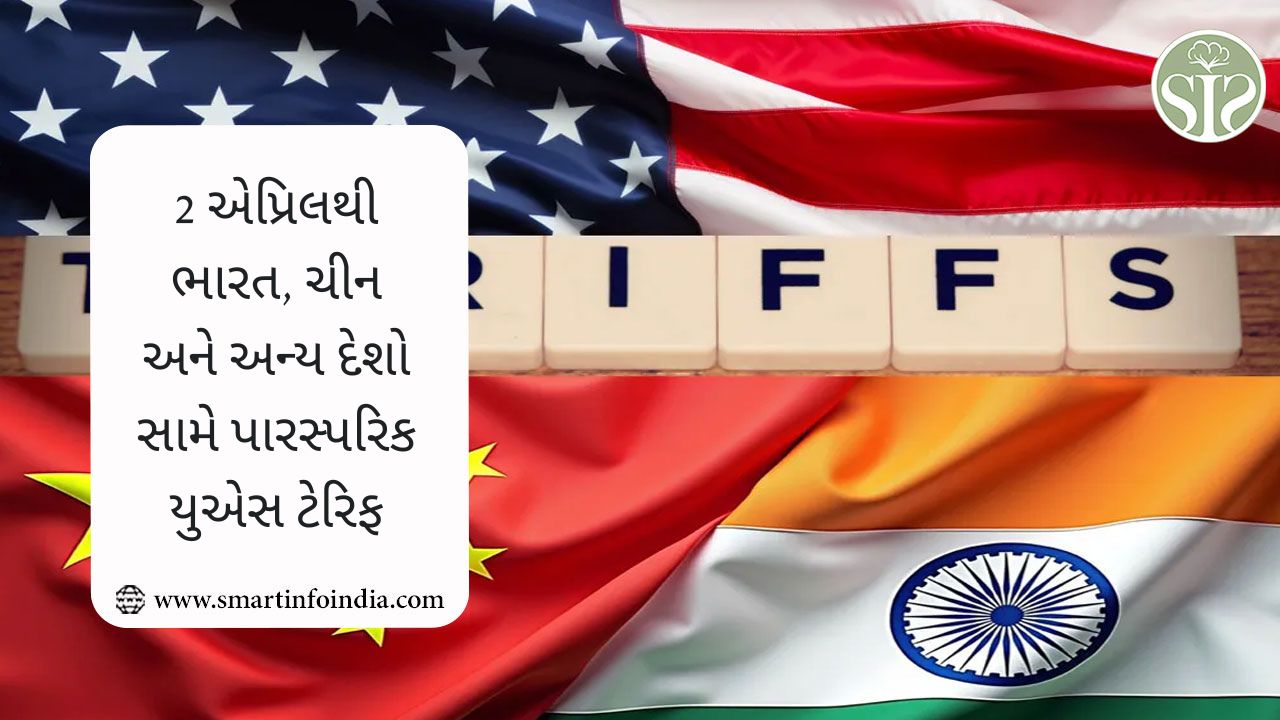
યુએસ 2 એપ્રિલથી ભારત, ચીન અને અન્ય રાષ્ટ્રો પર પારસ્પરિક ટેરિફ લાદશેરાષ્ટ્રપતિ ડોનાલ્ડ ટ્રમ્પે ગઈકાલે જાહેરાત કરી હતી કે અમેરિકન નિકાસ પર ઊંચી જકાત લાદનારા દેશો સામે યુએસ પ્રતિક્રિયાત્મક જકાત 2 એપ્રિલથી અમલમાં આવશે. આ દેશોમાં ચીન અને ભારતનો સમાવેશ થાય છે.કોંગ્રેસના સંયુક્ત સત્રને સંબોધતા, ટ્રમ્પે ભારત અને ચીન સહિત અન્ય દેશો દ્વારા લાદવામાં આવેલા ટેરિફને 'ખૂબ જ અન્યાયી' ગણાવ્યા.ટ્રમ્પે કહ્યું કે તેઓ વિદેશી દેશોથી થતી આયાત પર એ જ ટેરિફ લાદવા માંગે છે જે તે દેશો અમેરિકન નિકાસ પર લાદે છે."અન્ય દેશો દાયકાઓથી આપણી સામે ટેરિફનો ઉપયોગ કરી રહ્યા છે અને હવે આપણો વારો છે કે આપણે તે અન્ય દેશો સામે તેનો ઉપયોગ શરૂ કરીએ. સરેરાશ, યુરોપિયન યુનિયન, ચીન, બ્રાઝિલ, ભારત, મેક્સિકો અને કેનેડા - શું તમે તેમના વિશે સાંભળ્યું છે - અને અસંખ્ય અન્ય દેશો આપણી પાસેથી આપણે વસૂલીએ છીએ તેના કરતા ઘણા વધારે ટેરિફ વસૂલ કરે છે. તે ખૂબ જ અન્યાયી છે," ટ્રમ્પે મંગળવારે રાત્રે કોંગ્રેસના સંયુક્ત સત્રને તેમના સૌથી લાંબા સંબોધનમાં કહ્યું."ભારત અમારી પાસેથી ૧૦૦ ટકાથી વધુ ઓટો ટેરિફ વસૂલ કરે છે... ચીનનો અમારા ઉત્પાદનો પરનો સરેરાશ ટેરિફ બમણો છે... અને દક્ષિણ કોરિયાનો સરેરાશ ટેરિફ ચાર ગણો વધારે છે. વિચારો, ચાર ગણો વધારે. અને અમે દક્ષિણ કોરિયાને લશ્કરી અને અન્ય ઘણી રીતે ખૂબ મદદ કરીએ છીએ. પરંતુ આવું જ થાય છે. આ મિત્ર અને દુશ્મન બંને દ્વારા થઈ રહ્યું છે. આ સિસ્ટમ યુનાઇટેડ સ્ટેટ્સ માટે ન્યાયી નથી. એવું ક્યારેય નહોતું," વૈશ્વિક મીડિયા અહેવાલોમાં તેમનું કહેવું ટાંકવામાં આવ્યું હતું. ટ્રમ્પે કહ્યું કે તેમનું વહીવટીતંત્ર બિન-નાણાકીય ટેરિફનો જવાબ "બિન-નાણાકીય અવરોધો" સાથે આપશે. "તેઓ અમને તેમના બજારમાં પ્રવેશવા પણ દેશે નહીં. અમે ટ્રિલિયન ડોલર લઈશું જેનાથી એવી નોકરીઓ સર્જાશે જે આપણે પહેલાં ક્યારેય જોઈ નથી. મેં ચીન સાથે પણ આવું જ કર્યું, અને મેં બીજા લોકો સાથે પણ એવું જ કર્યું, અને બિડેન વહીવટીતંત્ર તેના વિશે કંઈ કરી શક્યું નહીં કારણ કે ત્યાં ઘણા પૈસા હતા, તેઓ તેના વિશે કંઈ કરી શક્યા નહીં," તેમણે કહ્યું. "આપણે પૃથ્વી પરના લગભગ દરેક દેશ દ્વારા દાયકાઓથી છેતરાયા છીએ, અને અમે હવે એવું થવા દઈશું નહીં," તેમણે કહ્યું.કાપડ જેવી ભારતીય નિકાસ પર ઊંચા ટેરિફ યુનાઇટેડ સ્ટેટ્સમાં આ ઉત્પાદનોને વધુ મોંઘા બનાવશે, માંગમાં ઘટાડો કરશે, જે ભારતીય ઉત્પાદકો અને નિકાસકારોને નુકસાન પહોંચાડી શકે છે અને અમેરિકન ગ્રાહકો માટે કિંમતોમાં વધારો કરી શકે છે.યુનાઇટેડ સ્ટેટ્સે તેના પડોશીઓ અને તેના બે સૌથી મોટા વેપારી ભાગીદારો, મેક્સિકો અને કેનેડા પર 25 ટકા ટેરિફ લાદવાનો નિર્ણય લીધા બાદ આ જાહેરાતો કરવામાં આવી છે.ફેન્ટાનાઇલ ઉત્પાદન અને નિકાસમાં ચીનની કથિત ભૂમિકા અંગે નિષ્ક્રિયતાનો ઉલ્લેખ કરીને, યુનાઇટેડ સ્ટેટ્સે ચીની માલ પર ટેરિફ 10 ટકાથી વધારીને 20 ટકા કર્યો.વધુ વાંચો :-કપાસ સમાચાર: માર્ચમાં કપાસના ભાવમાં મોટો ઉથલપાથલ! નિષ્ણાતો શું આગાહી કરે છે?
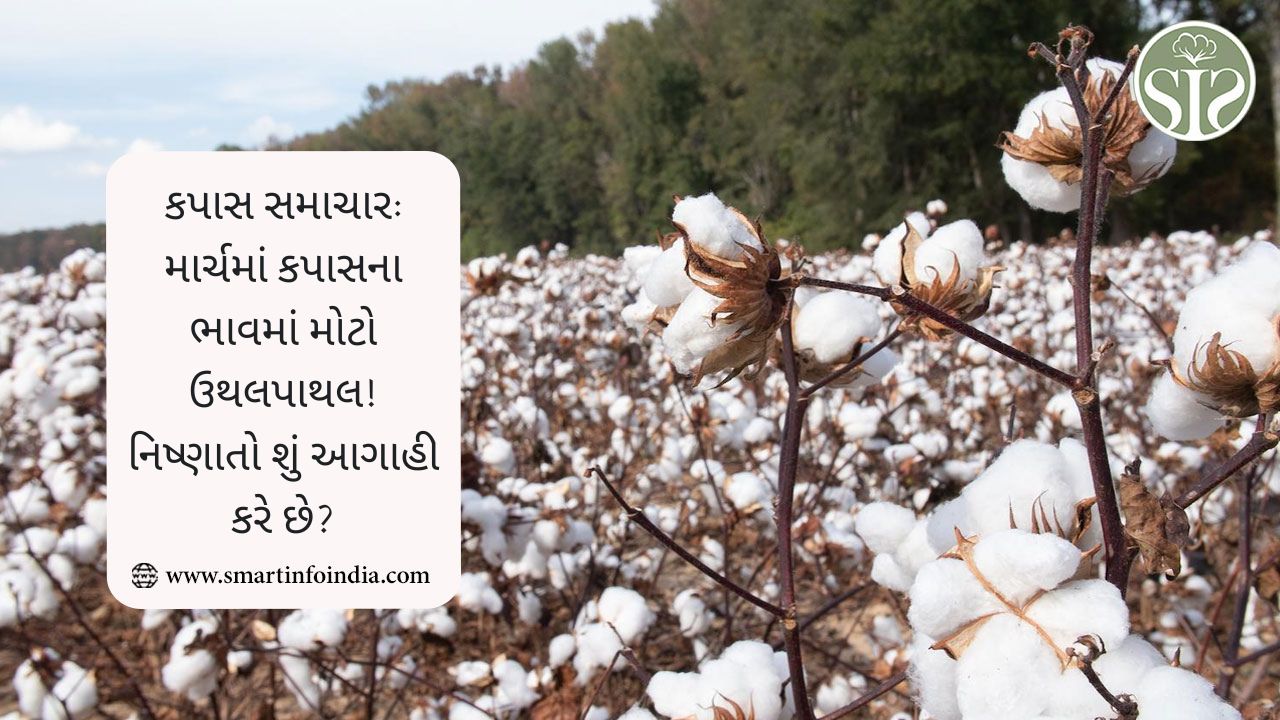
માર્ચ કોટન માર્કેટ શોક: નિષ્ણાતોએ ભાવમાં ભારે અસ્થિરતાની આપી ચેતવણીકાપસ ન્યૂઝ: માર્ચની શરૂઆત સાથે જ કપાસ બજારમાં નોંધપાત્ર હલચલ જોવા મળી રહી છે. હાલમાં બજારમાં કપાસની આવક ધીમી છે, જ્યારે કોટન કોર્પોરેશન ઓફ ઈન્ડિયા (CCI) અત્યાર સુધીમાં કુલ 94 લાખ ગાંસડી કપાસની ખરીદી કરી ચૂકી છે. તેમ છતાં કપાસના ભાવ પર કોઈ મજબૂત સકારાત્મક અસર જોવા મળી નથી અને હાલના ભાવ હજુ પણ લઘુત્તમ ટેકાના ભાવ (MSP)થી નીચે જ છે.આંતરરાષ્ટ્રીય બજારમાં સતત મંદી અને સ્થાનિક બજારમાં સ્થિર માંગના કારણે કપાસના ભાવ પર સતત દબાણ બની રહ્યું છે. નિષ્ણાતોના મત મુજબ, માર્ચ મહિનામાં પણ ભાવમાં મોટા સુધારાની શક્યતા ઓછી છે. ઉત્પાદન ઘટ્યું હોવા છતાં વૈશ્વિક બજારમાં નરમાઈને કારણે ભારતીય કપાસ બજાર પર તેનો સીધો પ્રભાવ પડી રહ્યો છે.આંતરરાષ્ટ્રીય સ્તરે કપાસના ભાવ સતત ઘટી રહ્યા છે. બપોર સુધીમાં ભાવ લગભગ 3 ટકા ઘટીને 63 સેન્ટ પ્રતિ પાઉન્ડ સુધી પહોંચ્યો હતો. આ સ્થિતિએ અમેરિકન ખેડૂતોને પણ આર્થિક દબાણમાં મૂકી દીધા છે, જેના કારણે ભારતીય બજાર પર પણ પરોક્ષ અસર જોવા મળી રહી છે.નીચા ભાવને કારણે દેશમાં કપાસની આયાતમાં વધારો થઈ રહ્યો છે, જેના કારણે સ્થાનિક બજારમાં તેજીનો કોઈ મોટો ટ્રેન્ડ જોવા મળતો નથી. નિષ્ણાતો અનુસાર માર્ચમાં કપાસના ભાવમાં રૂ. 100 થી રૂ. 200 સુધીના ઉતાર-ચઢાવની શક્યતા છે, પરંતુ સ્થિર અને મોટી તેજીની આશા ઓછી છે.આ સિઝનમાં અત્યાર સુધીમાં દેશમાં લગભગ 2.16 કરોડ ગાંસડી કપાસની આવક થઈ છે, જ્યારે કુલ અંદાજિત ઉત્પાદન 3.01 કરોડ ગાંસડી છે. તેમાંના લગભગ 72 ટકા કપાસ પહેલેથી જ વેચાઈ ચૂક્યો છે અને હવે માત્ર 28 ટકા જ આવક બાકી છે.ઉત્પાદનમાં ઘટાડા છતાં વૈશ્વિક મંદી અને નબળી માંગના કારણે ખેડૂતોને અપેક્ષિત ભાવ મળી રહ્યા નથી. જો કે આવક ધીમે ધીમે ઘટી રહી છે, પરંતુ બજાર પર ભાવ દબાણ હજુ પણ યથાવત છે.માર્ચમાં કપાસ બજારની સ્થિતિસામાન્ય રીતે માર્ચ મહિનામાં આવક ઘટવાથી ભાવમાં સુધારો જોવા મળે છે, પરંતુ આ વર્ષે સ્થિતિ અલગ છે. હાલ દેશભરના બજારોમાં કપાસનો સરેરાશ ભાવ રૂ. 7,000 થી રૂ. 7,300 પ્રતિ ક્વિન્ટલ છે. રોજિંદી આવક લગભગ 90,000 થી 1 લાખ ગાંસડી છે. માર્ચમાં આવક વધુ ઘટવાની શક્યતા છે, પરંતુ તેનો ભાવ પર કેટલો સકારાત્મક અસર થશે તે હજી અનિશ્ચિત છે.CCI ખરીદી સ્થિતિકોટન કોર્પોરેશન ઓફ ઈન્ડિયા (CCI) એ અત્યાર સુધીમાં 94 લાખ ગાંસડી કપાસની ખરીદી કરી છે, જેમાંથી 28 લાખ ગાંસડી માત્ર મહારાષ્ટ્રમાંથી છે. ઉદ્યોગ ક્ષેત્રમાંથી નબળી માંગને કારણે CCIને કુલ ઉત્પાદનના લગભગ 43 ટકા સુધીની ખરીદી કરવી પડી છે. છેલ્લા કેટલાક અઠવાડિયામાં ભાવમાં થોડો સુધારો જોવા મળ્યો હતો, પરંતુ ખરીદી પ્રક્રિયામાં કેટલીક અડચણો પણ આવી રહી છે.આ કારણે છેલ્લા કેટલાક દિવસોમાં CCIની ખરીદી ગતિ ધીમી પડી છે, જેના કારણે ઓપન માર્કેટને થોડો ટેકો મળ્યો છે. પરિણામે ખેડૂતો હવે ખુલ્લા બજારમાં વેચાણને વધુ પ્રાથમિકતા આપી રહ્યા છે. જોકે માર્ચમાં મોટા ઉછાળાના સંકેતો ન હોવાથી ખેડૂતોને વેચાણના નિર્ણયમાં સાવચેતી રાખવાની સલાહ આપવામાં આવી રહી છે.વધુ વાંચો :-યુએસ ડોલર સામે રૂપિયો 4 પૈસા વધીને 87.23 ના સ્તર પર ખુલ્યો છે

ભારતીય રૂપિયો 4 પૈસા વધ્યો, USD સામે 87.23 પર ખુલ્યોબુધવારે ભારતીય રૂપિયો યુએસ ડોલર સામે 4 પૈસા વધીને 87.23 પર ખુલ્યો હતો, જે મંગળવારે બંધ 87.27 પર હતો.વધુ વાંચો :-એશિયા-પેસિફિક ક્ષેત્રમાં 2035 સુધી કોટન યાર્ન માર્કેટ વપરાશમાં વૃદ્ધિના વલણો