Filter

Recent News

Climate, pests and alternatives are ruining cotton farming

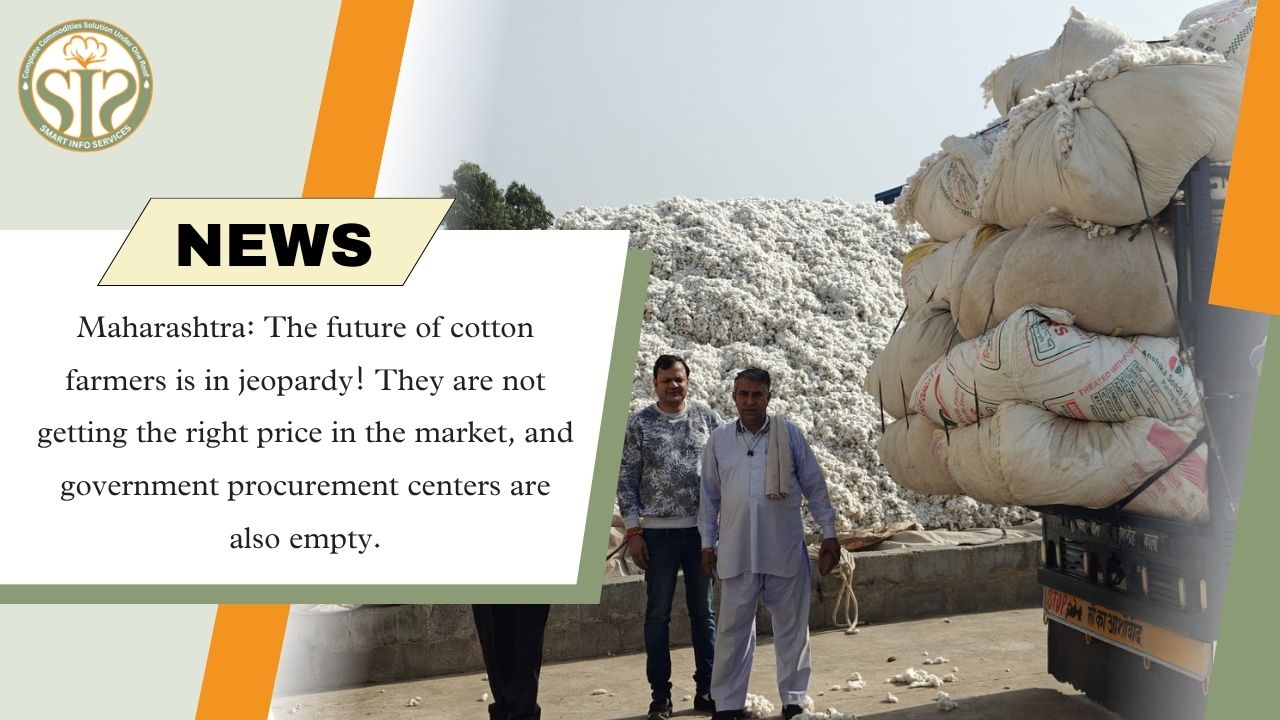
Cotton farming is being destroyed by the climate, pests, and substitutes.BATHINDA : The area under cotton cultivation in Punjab has declined sharply over the past decade, owing to erratic rainfall, extreme temperatures during the growing season, pest infestations and a shift towards more profitable crops. Union Minister of State for Textiles Pabitra Margherita highlighted these challenges in a written reply to Punjab MP Raghav Chadha in the Rajya Sabha on Friday.To address these issues, the Department of Agriculture and Farmers Welfare has been implementing the Cotton Development Programme under the National Food Security and Nutrition Mission (NFSNM) since financial year 2014-15. It aims to increase the production and productivity of cotton in its 15 major producing states, including Punjab.Increasing the minimum support price (MSP) is the first measure, followed by timely water supply from canals, financial assistance during pink bollworm outbreaks and subsidy on seeds. The Indian Council of Agricultural Research (ICAR) organised training, field visits and demonstrations to disseminate best practices for managing pests and diseases. Under the crop diversification programme for the year 2024-25, it conducted 6,000 demonstrations to promote sustainable farming practices.The Cotton Corporation of India (CCI) plays a key role in stabilising cotton prices by procuring the crop at MSP when market prices fall below the threshold. However, the procurement volume has declined significantly in recent years, from a procurement of 3.56 lakh bales in 2019-20 to only 38,000 bales in 2023-24.Chadha blamed climate challenges, pest infestation and soil degradation for the decade-long decline in Punjab's cotton crop. He asked the central government about its plans to address these challenges and provide targeted technical and financial support to promote sustainable cotton cultivation in the region. Minister Margherita acknowledged the decline and outlined initiatives, including higher MSP and financial relief, to aid farmers.Read More :> Telangana's first cotton research centre to come up in Adilabad

Adilabad to emerge as cotton research hub with new ICAR centre

Adilabad to host Telangana’s first cotton research centreAdilabad: The Indian Council of Agricultural Research (ICAR) has approved the establishment of an All India Coordinated Research Project (AICRP) centre on cotton in Adilabad district. This will be the first dedicated cotton research facility in Telangana and is expected to become operational in 2025 with a separate budget allocation.Adilabad, which is the second-largest cotton-producing region in the state, is set to gain significantly from the new centre. The facility will focus on developing improved cotton seed varieties, strengthening research infrastructure, and contributing to national-level agricultural research. It will also work in coordination with ICAR’s headquarters in New Delhi.The centre is expected to directly support farmers by offering training, field demonstrations, and guidance on modern farming techniques. It will also promote awareness of advanced agricultural practices aimed at improving both productivity and profitability.During the united Andhra Pradesh period, cotton research facilities were largely concentrated in regions such as Guntur and Nandyal, despite Telangana having substantial cotton cultivation areas.At present, Telangana cultivates cotton on nearly 54 lakh acres, with around 8 lakh acres in the erstwhile Adilabad district alone. The region’s cotton is also exported to international markets. In comparison, Andhra Pradesh has about 10 lakh acres under cotton cultivation but previously hosted a larger share of research centres.After the formation of Telangana, members of the Osmania University Joint Action Committee (OUJAC), led by Dr E. Dattatri, launched sustained efforts demanding a research centre in Adilabad. They submitted representations to both state and central authorities, which eventually led to the ICAR approval following the state government’s recommendation.Dr Dattatri welcomed the decision, calling it a major milestone for cotton farmers in the region. He noted that the centre would improve access to high-quality seed varieties, strengthen research support, and benefit the farming community. He also highlighted that the team had been pursuing the demand for over two years through meetings and petitions across political levels.The establishment of the centre is expected to transform Adilabad into a key hub for cotton research and innovation in Telangana.

ICAR : nod for 2 cotton reaserch centres in T, ops bings next FY .

ICAR: approves two cotton research centers in T, operations bings for the upcoming fiscal year.Hyderabad : The Indian Council of Agricultural Research (ICAR) has sanctioned creation of two All India Coordinated Research Project Centres on cotton (AICRP) in Telangana.The decision comes following a recent meeting of Professor Jayashankar Telangana Agricultural University (PJTAU) vice chancellor professor Aldas Janaiah with ICAR director general Himanshu Pathak and deputy DG TP Sharma in New Delhi where he highlighted the critical role of cotton research in Telangana.He advocated PJTAU's inclusion in the national cotton research coordination initiative and proposed the establishment of two centres in the state: a primary centre in Warangal and a secondary centre in Adilabad.After the formation of a separate Telagnana in 2014, the state had witnessed a reduced representation within the national cotton research coordination centres. Consequently, PJTAU was unable to engage in national cotton research framework for the past 10 years, said officials.ICAR consented to the establishment of these two centres and will allocate staff and funding to bolster cotton research at PJTAU. Research at the centres will begin in the next financial year, officials said.ICAR gave nod to 2 centres: Primary centre in Warangal & a secondary centre in Adilabad. ICAR will also allocate staff & funding to bolster cotton research at PJTAURead more :>Farmers of Asifabad are facing various difficulties while preparing and picking the ripened cotton crop

Decline in cultivated acreage: Cotton arrivals in Punjab drop fivefold compared to last year

Reduced cultivated acreage: Punjab's cotton imports are five times lower than they were the previous year.Punjab : This decline comes after a significant decline in cotton cultivation acreage during the kharif season, which has fallen to an all-time low of around 95,000 hectares due to persistent pest attacks since 2021.Cotton arrivals in Punjab have fallen sharply this season, with arrivals in the market till November 30 falling to less than a fifth of the 2023 figure, when over 5 lakh quintals of cotton had arrived in the market.This decline comes after a significant decline in cotton cultivation acreage during the kharif season, which has fallen to an all-time low of around 95,000 hectares due to persistent pest attacks since 2021.Data from the Punjab Mandi Board shows that the key kharif crop has recorded the lowest arrivals in seven years (since 2018), with only 1.23 lakh quintals of cotton reaching the markets till November 30, even as experts were expecting a revival in production.Cotton, popularly known as 'white gold', remains the economic backbone of the semi-arid regions of Punjab. Officials claim that private buyers are buying cotton at prices higher than the minimum support price (MSP), with long-staple cotton reaching ₹7,020 per quintal and medium-staple cotton reaching ₹7,271 per quintal.The Cotton Corporation of India (CCI), a central agency that buys cotton at rates below the MSP, has not entered the market, indicating that the buying trend is in favour of farmers.Industry experts say farmers may hold back their cotton crop in anticipation of higher rates due to lower production.Last year, 15.73 lakh quintal of cotton was procured in the mandis of Malwa region.However, the current arrival trend has raised concerns among experts as the kharif crop yield has declined for the fourth consecutive season this year.Muktsar chief agriculture officer and nodal officer for cotton producing districts Gurnam Singh on Tuesday said there was no pest infestation this year and initial assessment suggests that the overall production may be encouraging despite a significant reduction in acreage. "It has been a disappointing season due to inadequate rainfall and inadequate care of fields by cotton growers.The state authorities have not yet taken any steps to promote cultivation of this traditional crop in the arid areas of Punjab," Singh said. Vinay Pathania, assistant professor (plant protection) at Bathinda Krishi Vigyan Kendra (KVK), said whitefly was initially found in cotton fields. Later, pink bollworm was also detected. "But the pest attack did not pose any serious threat to the crop. Timely detection and use of pesticides saved the crop," he said. Jagseer Singh, chief agriculture officer, Bathinda, said against the average yield of 8 quintals an acre, it dropped to 4-5 quintals this year. "Farmers are disappointed with the poor yield trend from 2021, which has led to a significant reduction in the area devoted to cotton cultivation. Fearing another pest infestation, many farmers are hesitant to provide their crops with the required nutrients. Though pest management measures proved effective this time, the delayed attention to crop care came too late. Plant growth was low due to nutrient deficiencies and scanty rainfall, affecting the yield," he said.Read More :> Farmers of Asifabad are facing various difficulties while preparing and picking the ripened cotton crop
Copyright© 2023 | Smart Info Service
Application Download