Recent News

Cotton Price: Cotton arrivals have reduced, yet why is the price not increasing in the market?

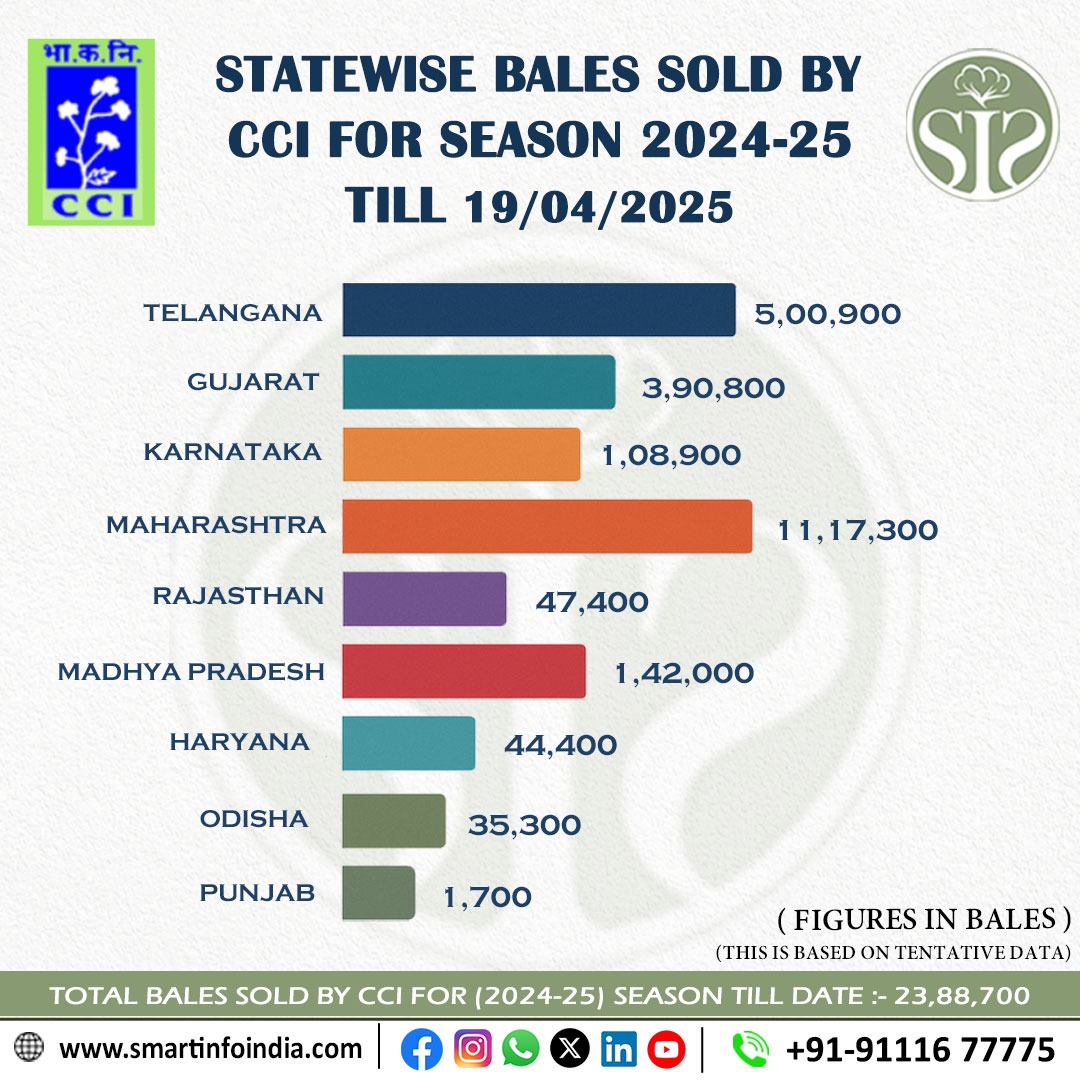
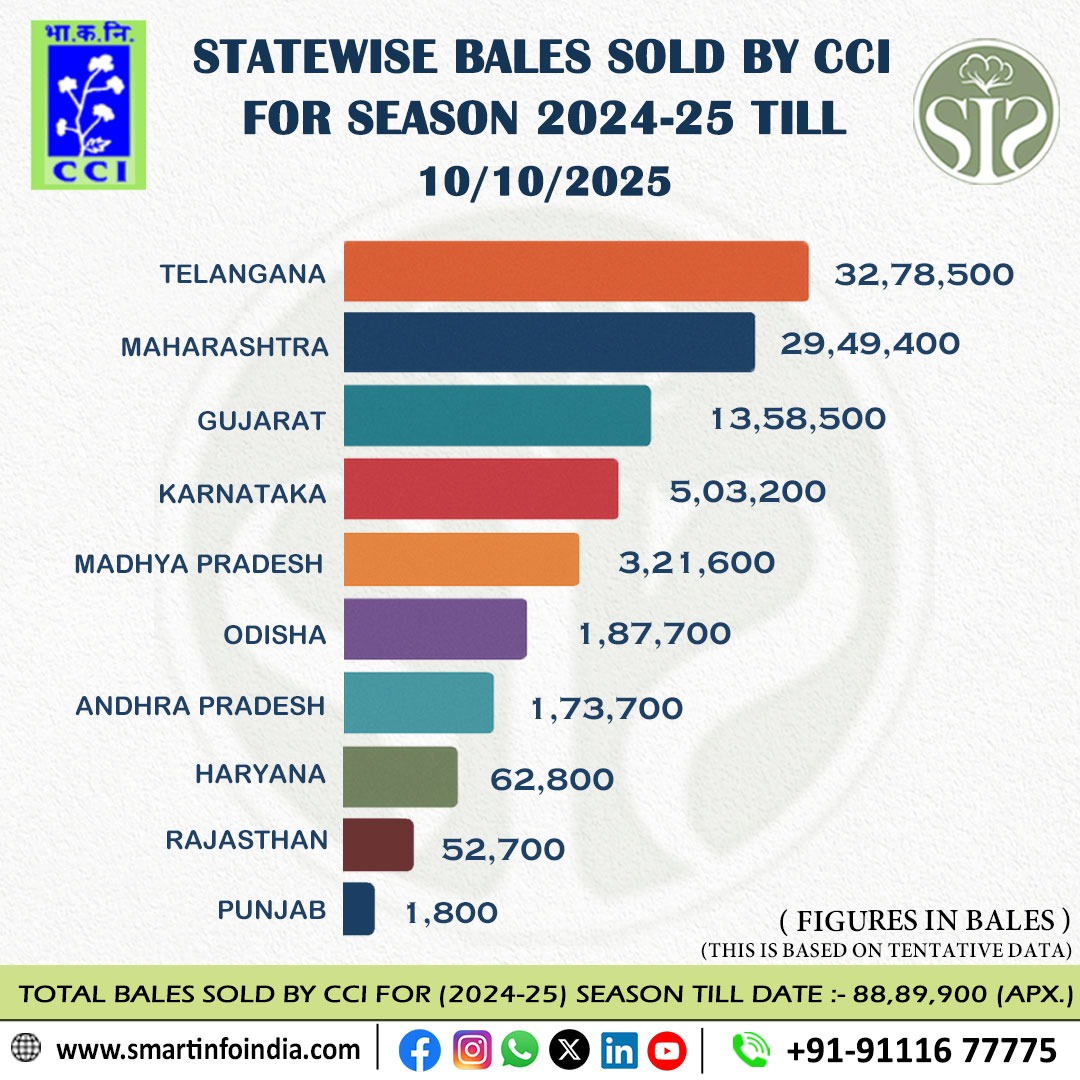
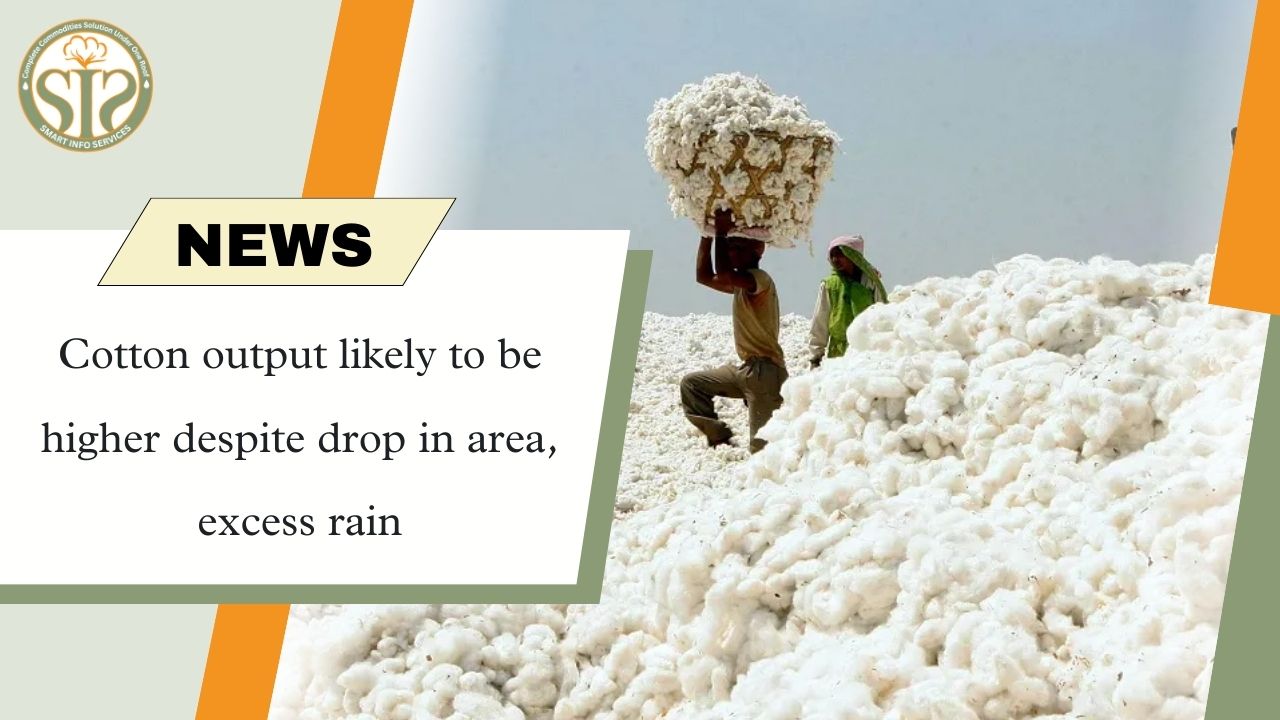
Cotton Prices Steady Despite Drop in ArrivalsIn the last two-three weeks, the arrival of cotton in the domestic market has reduced significantly. Therefore, it was expected that there would be a good improvement in the price. However, the start of cotton sales by CCI has affected the price.The average price of cotton is between Rs 7,300 and Rs 7,800. Experts estimate that CCI's cotton sales and selling prices will continue to have an impact on the market in the future.Cotton production in the country has decreased this year. Production is estimated to be stable at 29.1 million bales. Of these, CCI bought about 1 crore million bales. That is, about 35 percent of the country's total production was purchased by CCI alone. This means that CCI is the largest cotton stockist in the country. Therefore, the market pays attention to how CCI sells cotton and determines the selling price. This will also affect the market.Production decreased in the country. But the industrial use of cotton is good. Therefore, there is a demand for cotton. On the other hand, cotton prices are low in the international market. Even when prices in the country were lower than the guaranteed price, prices in the international market were also low.Therefore, industries bought cotton as required. Industries have not shown interest in storage. Therefore, even though the price of cotton in the domestic market was lower than the guaranteed price, CCI continued to receive more cotton. Industrial purchases did not increase as expected.After the end of March, the arrival of cotton in the market decreased. In the last two weeks, the arrival was less than 50,000 bales and now it has come down to less than 40,000 bales. At present, about 35,000 bales are being received. Farmers were expecting that prices would rise after the arrival of their produce decreased significantly. But this does not seem to be happening. Prices are seen between Rs 7,300 and Rs 7,800.CCI's sales increasedAlthough farmers' cotton is coming to the market for sale in less quantity, CCI's sales have increased. CCI has sold 2.5 million bales of cotton out of the total goods purchased so far. It is also known that about one and a half lakh bales of cotton were sold on April 21.So far, the highest sales have been in Maharashtra. CCI has sold about 11.5 lakh bales of cotton in Maharashtra so far. More than 5 lakh bales were also sold in Telangana. About 4 lakh bales were sold in Gujarat.read more :-Rupee lower 6 Paisa Against Dollar, Closes at 85.18

Punjab Announces 33% Subsidy on Bt Cotton Seeds to Boost Crop Diversification and Farmer Income

Punjab to Offer 33% Subsidy on Bt Cotton Seeds to Support FarmersThe Punjab government has announced a 33% subsidy on Bt cotton hybrid seeds to provide relief to farmers and encourage the adoption of high-quality seeds. The subsidy will be applicable only on hybrids recommended by Punjab Agricultural University (PAU), Ludhiana.Agriculture Minister Gurmeet Singh Khudian stated that ₹20 crore has been allocated for the scheme. The initiative aims to reduce the financial burden on farmers, promote high-yielding and pest-resistant Bt cotton seeds, and discourage the use of non-recommended hybrids.The state has set a target to expand cotton cultivation to at least 1.25 lakh hectares this year. Cotton, a key kharif crop in southwestern Punjab, is being promoted as a sustainable alternative to water-intensive paddy, supporting crop diversification and long-term agricultural growth.According to Basant Garg, Administrative Secretary of the Agriculture Department, the subsidy will be limited to a maximum of five acres or ten seed packets per farmer, with each packet weighing 475 grams.Farmers have been advised to obtain proper purchase bills for all seed transactions. Meanwhile, officials have been directed to conduct regular monitoring and inspections to prevent the circulation of spurious seeds from neighboring states.read more :-CCI Cotton Sales Update for Season 2024-25

### High Prices and Low Output Push India’s Cotton Imports Higher

India’s Costly Cotton Drives Sharp Rise in ImportsIndia is witnessing a notable increase in cotton imports as domestic prices remain relatively high compared to global markets, while production is showing signs of decline. This combination has led to greater reliance on overseas supply to meet internal demand.Industry data indicates a significant jump in imports in recent months. Cotton imports rose to $184.64 million in January 2025, compared to just $19.62 million in January 2024. Earlier, imports stood at $104 million in August 2024,reflecting a steady upward trend.The rise in imports is being attributed to two key factors: higher domestic cotton prices in India compared to international markets, and a decline in local production. With cotton consumption remaining strong in the country, imports are being used to bridge the supply gap.Estimates also suggest that India’s cotton imports may reach 2.5 million bales in the 2024–25 marketing year, up from 1.75 million bales in the previous year.Meanwhile, the global cotton market, valued at $41.78 billion in 2024, is projected to grow to $42.92 billion in 2025, indicating steady international demand.Overall, India’s rising imports highlight the pressure created by lower domestic output and relatively higher local prices, forcing increased dependence on global cotton markets.read more :-Cotton University receives prestigious PAIR grant

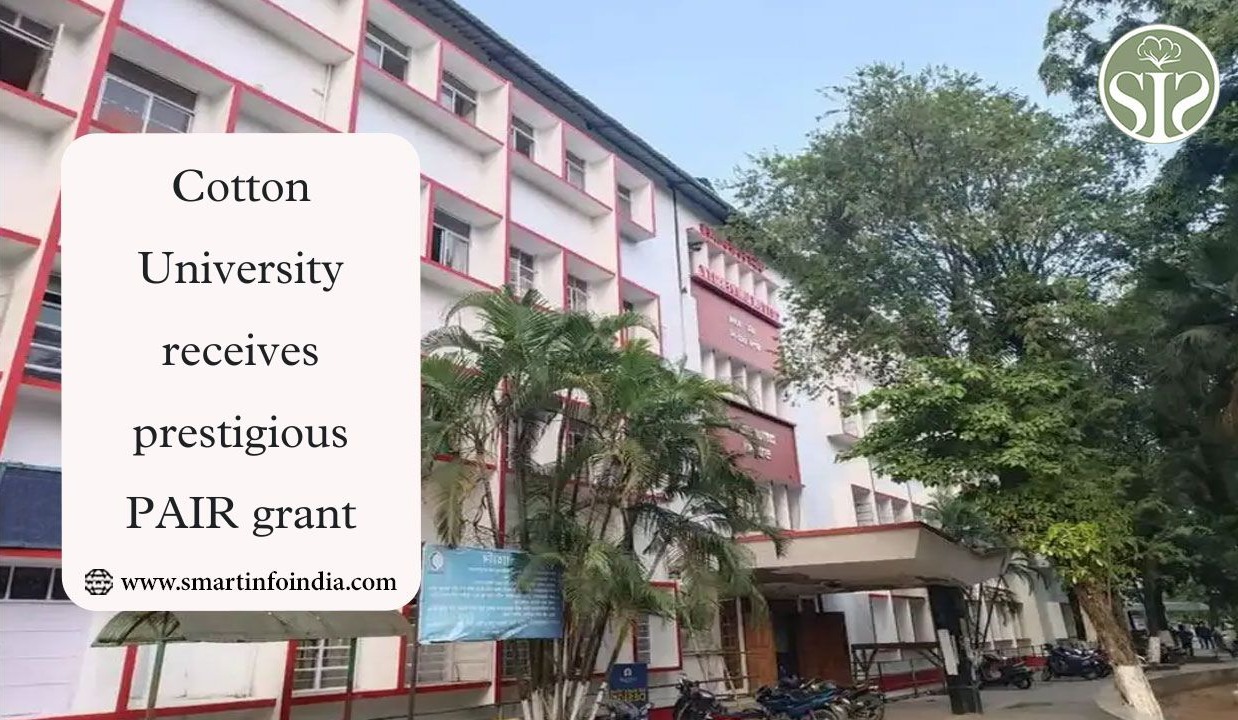
Cotton University receives prestigious PAIR grant

Cotton University Awarded Prestigious PAIR GrantGuwahati: Cotton University has received the prestigious PAIR grant from the National Research Foundation for Research. The grant, shared among six institutions, has made JNU the hub institution, while Cotton University, Tezpur University, Central University of Punjab, Delhi Pharmaceutical Sciences and Research University and Berhampur University have been given the status of spoke institutions.Cotton University has been allocated around Rs 14 crore under the five-year PAIR programme. The funding includes three sophisticated research instruments - a 400 MHz Nuclear Magnetic Resonance (NMR) spectrometer, photoluminescence spectrophotometer and inductively coupled plasma mass spectrometer (ICP-MS).According to Cotton University, these advanced instruments will enhance their research capabilities, especially in material science and chemical/biological analysis. Through this collaboration, the university will also benefit from access to advanced research infrastructure and specialist expertise at JNU and other partner institutions.A release from Cotton University on Thursday said, "The PAIR grants, aimed at promoting collaborative and high-impact research in India's leading institutions, were awarded following a rigorous multi-stage selection process held at the Indian Academy of Sciences, Bengaluru, and overseen by ANRF on March 7-8, 2025. Out of the 30 hub institutions shortlisted for presentations based on their excellent NIRF rankings, only seven were finally selected, judged on the merit of their presentations and demonstrated research excellence." This grant represents a significant achievement for Cotton University, its first major national research grant since receiving 'A' grade NAAC accreditation in September 2024. The university submitted a successful proposal involving 11 major research projects in three interdisciplinary areas - advanced materials, molecular and synthetic biology, and environmental sustainability. These projects involve 22 faculty members from seven science departments. Dr. Abdul Wahab led the proposal and collaborative structure as the Principal Investigator from Cotton University, and Professor Ramesh Choudhary Deka, Vice Chancellor of Cotton University provided strategic direction and support.read more :- Punjab farmers may cut cotton acreage despite artificial intelligence-driven project to control pest attacks

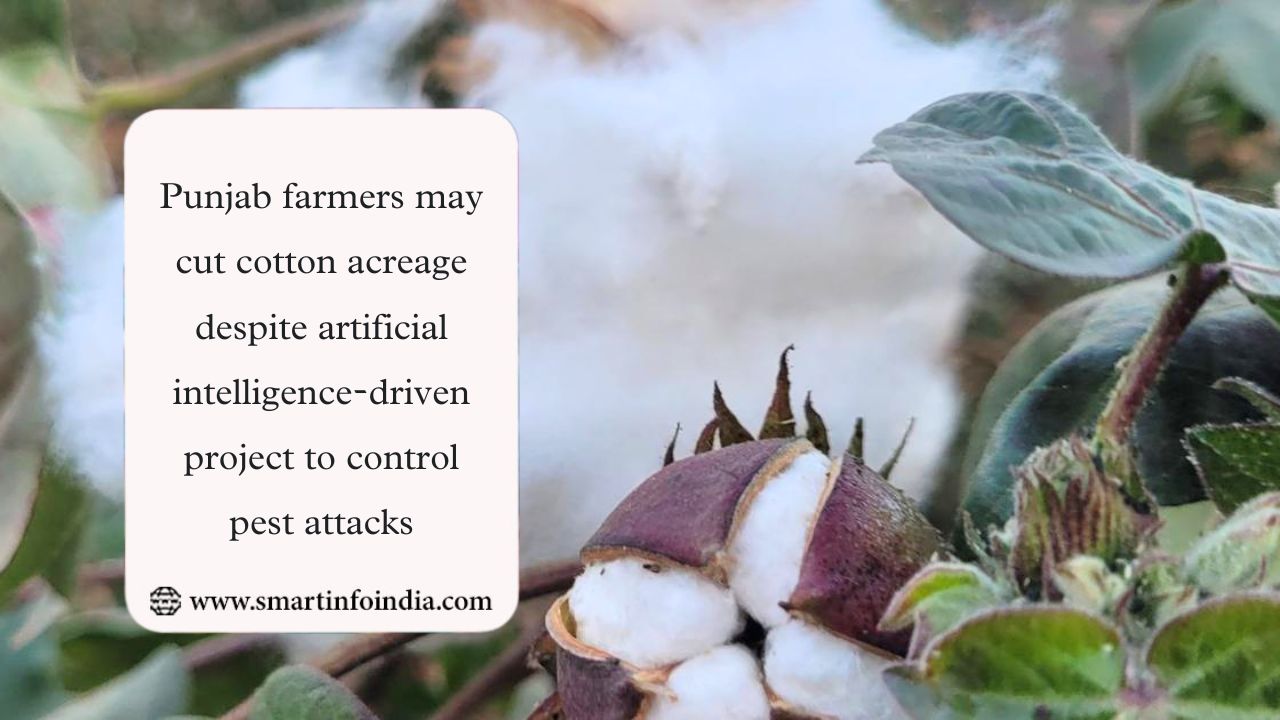
Punjab farmers may cut cotton acreage despite artificial intelligence-driven project to control pest attacks

Punjab Farmers May Slash Cotton Acreage Despite AI Pest Control ProjectCotton acreage in Punjab has declined significantly over the years – from 2.68 lakh hectares (lh) in 2018-19 to 0.97 lh in 2024-25There has been some reduction in cases of pest attacks after a pilot project was launched last season to monitor and control pink bollworm (PBW) infestation in cotton crop in Punjab.But, the response from farmers is mixed, as some of them have complained that it did not help control PBW. As a result, they suffered losses. However, there is unanimity among them to reduce cotton acreage, partly due to PBW and mainly due to unavailability of water.“Though the machine helped us get timely alerts, PBW could not be controlled even after spray,” said Beant Singh, a farmer from Sri Muktsar Sahib district. He said they will reduce the area under cotton to 5-6 acres this year from the earlier 15-16 acres, mainly because of PBW and also water problem. He said the yield has dropped significantly, reducing their profit as they are cultivating land on lease.Significant drop in acreageOn the other hand, Roop Singh from Faridkot district said they are planning to reduce cotton acreage to 6-7 acres from last year’s 15 acres due to water availability, but he praised the government’s pilot project which helped manage PBW and also reduced their expenditure on pesticides.The area under cotton in Punjab has declined substantially in the last few years – from 2.68 lakh hectares (LH) in 2018-19 to 0.97 LH in 2024-25, resulting in a reduction in production also from 12.22 lakh bales (each of 170 kg) to 2.72 lakh bales. The main reason for the increase in PBW, a highly destructive pest of cotton, is the piling up of cotton crop residues near the fields.This increases the level of infestation, especially when cotton stalks, closed bolls and lint residues are piled up near agricultural fields, allowing the larvae to survive through diapause and emerge in large numbers during the next crop season.Pilot evaluationAs per the evaluation of the project results, the implementation helped in significantly improving pest identification, management efficiency and cost-effectiveness compared to conventional methods – reduction in pesticide use by 38.6 per cent while PBW damage was kept under control and yield increased by 18.54 per cent compared to conventional methods, highlighting the potential of Al traps to enhance cotton productivity while reducing chemical dependency.CICR deployed its own Al-based smart pheromone trap technology to overcome the limitations of conventional traps. The smart trap system comprises a single-board computer, a camera module, a weather sensor and a GSM transmitter, all powered by a solar panel with a rechargeable battery. According to Prasanta Kumar Dash, Assistant Director General of ICAR, a control unit triggers the camera module fixed on the ground at hourly intervals to capture photographs of trapped pests.Early Warning SystemThe system optimizes and transmits the combined data (trapping pictures and related weather parameters) to a remote server via a 4G GSM/Wi-Fi module. An Al-powered machine learning algorithm (YOLO) then processes the images, counts the trapped pests, and delivers the analyzed data along with relevant weather information to end users via a mobile or PC application.By correlating the real-time trappings with weather data, pest dynamics over a wide area can be better understood. This helps in the development of reliable pest early warning systems and improved pest management practices in cotton cultivation, according to the evaluation report of the pilot project. The scientists emphasized that real-time monitoring is essential for devising timely and cost-effective management strategies to control PBW. They said timely pest alerts and advisories to farmers helped in keeping the losses below the economic threshold level (ETL)read more :-Weekly Summary Report : Cotton Bales Sold by Cotton Corporation of India (CCI)

Related News

Youtube Videos

कपास बाज़ार साप्ताहिक रिपोर्ट 🔥 | तेजी या मंदी? | CCI Update | Cotton Market  Update
कपास बाज़ार साप्ताहिक रिपोर्ट 🔥 | तेजी या मंदी? | CCI Updat...
रुई बाजार में आज का पूरा माहौल 🔥Cotton Market Today | 11 सितंबर 2026 #smartinfo
रुई बाजार में आज का पूरा माहौल 🔥Cotton Market Today | 11 सि...
कपास बाजार में आज तेज़ी का रुख 😱Cotton market rate today #youtube
कपास बाजार में आज तेज़ी का रुख 😱Cotton market rate today #yo...
Application Download
Whatsapp Contact