Recent News

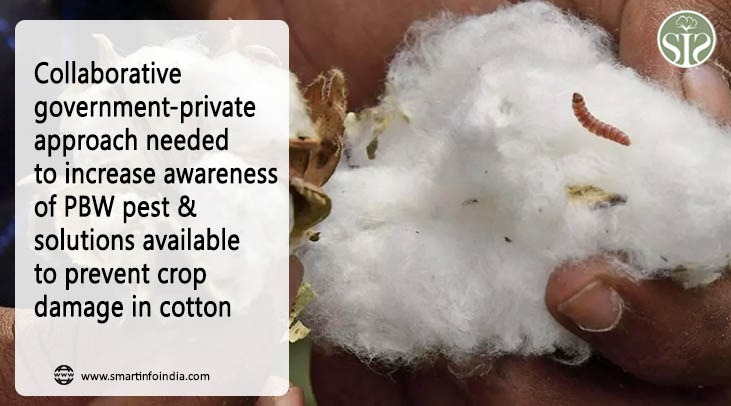
Collaborative government-private approach needed to increase awareness of PBW pest & solutions available to prevent crop damage in cotton

Collaborative government-private approach needed to increase awareness of PBW pest & solutions available to prevent crop damage in cottonStressing that timely intervention is key to prevent crop damage in case of pink bollworm (PBW) pest as seen in cotton crop in northern India, an industry expert has suggested a collaborative government-private approach to increase the awareness as solution is available if the pest is detected in time.“Solutions are available. What is lacking is the awareness about the PBW among the farmers,” NK Rajavelu, CEO of Godrej Agrovet’s crop protection division, told businessline.Explaining further, he said farmers normally come to know about PBW impact only when they start seeing the boll bursting around the harvesting time. But the point is in PBW, the adult moth lays the egg during the flowering time itself inside the flower. So, the eggs once they hatch in the flower, the flower closes and becomes a boll. So, they start getting into larvae everything inside and when the boll burst then the PBW impact is seen. So, the awareness of this has to be communicated to the farmers at the time of flowering stage itself, Rajavelu said.Asked who should take the responsibility of educating the farmers, he said both private companies and the government agencies. “The extension arm of the government, for instance KVKs should have programmes especially for the cotton areas, how to really monitor the PBW attack from the beginning. Because it’s very difficult to identify the eggs inside the flower,” he said.Further, he mentioned that there are some monitoring mechanisms like the moth activities available which farmers can observe. “If the moth activity is there then you start spraying the chemicals or put pheromones around the cotton areas even before the pest attacks becomes serious,” he said.Output hitThough it is not that PBW appears every year, still it is imperative to help the farmers to understand that there are solutions available right from chemicals to pheromones, Rajavelu said. “If these are not used at the proper time, at the flowering time, then nobody can help. So that awareness programme has to be enhanced in terms of how to educate the farmers,” he said.Cotton crop in many parts of the northern region got damaged in 2023 due to deficient rain and pink bollworm pest to the extent of 65 per cent in Haryana and Punjab and 80-90 per cent in Rajasthan. The Agriculture Ministry has estimated cotton production this year to be lower by 6 per cent at 31.66 million bales (of 170 kg each) from 33.66 million bales in 2022.He is also hopeful that technologies like internet of things (IOT) and drone definitely will help in the longer run, but “today I do not think we have that type of technology. Probably there is an opportunity for companies like us and even government to work on that to help the farmers.”

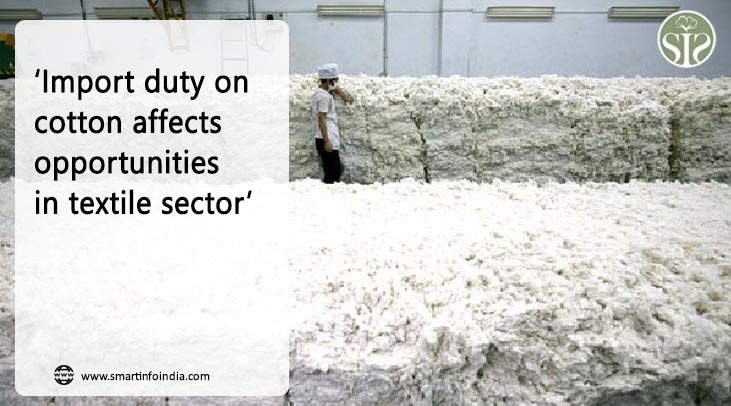
The condition of cotton spinning mills deteriorated due to many problems.

The condition of cotton spinning mills deteriorated due to many problems.Cotton textile exports have been sluggish for almost 18 months, cotton yarn exports have declined by 56 per cent year-on-year during April-September, Indian yarn is losing its competitive edge in global markets due to rising costs, power shortage Costs have increased, with import duty for fine yarn continuing at 11 per cent. Yarn Varieties Strong and flexible balance sheet promises hope in the year aheadThe troubles of the cotton textile industry, especially the spinning mills, are not likely to ease any time soon. On the contrary, the profitability of mills will continue to decline amid low demand and realizations on one hand and stable cotton prices on the other.According to the South India Mills Association, southern mills, which account for about 55 per cent of the spinning capacity in the country, have been facing a prolonged slowdown for almost 18 months.However, on an all-India basis, textile shipments declined marginally year-on-year (y-o-y) between April-October 2023. Within this, apparel exports declined by about 14-15 per cent during the period, raising concerns, especially as there was a strong surge in the year-ago period (October 2022 compared to 2021).What's more, India's cotton yarn exports were down 56 per cent during April-September compared to the same period in FY 2021-22. The reasons are both external and internal.Half of India's yarn exports (in terms of volume) are to China and Bangladesh. Gautam explains, “Due to the shutdown of the Chinese economy in FY2023 and lower cost competitiveness of Indian yarn in early FY2023 (as domestic cotton prices crossed international prices, making Indian yarn less competitive in the global market) Done), export volumes declined." Shahi, Director, CRISIL Ratings Ltd.Additionally, global demand for textiles has remained weak, especially from high-consumption economies such as the US, UK and EU. Another war in the Middle East following the Russia-Ukraine war has also complicated supply chains and affected capital spending, jobs and consumption across countries.India has been no exception. Job uncertainty along with inflation and high interest rates are partly why discretionary spending, including apparel, has declined over the past six months. Lower-than-expected growth in domestic demand for readymades during the recent festive season has raised concerns for mills.Note that the industry is pushing for removal of the 11 per cent import duty imposed on cotton and expensive man-made fibers and filament yarns, which is further worsening end-user textiles like dresses, apparel and made-ups. Expensive and less competitive in global markets.Other costs are also added to make cotton yarn expensive. Recently, SIMA reported that a steep increase in electricity tariffs has increased production costs. This is no surprise, given that electricity accounts for more than 40 percent of total manufacturing costs.In such difficult times, the decline in cotton production estimates for cotton season FY2024 is not good news. Initial estimates point to cotton production at around 310 lakh bales, down from last year's around 337 lakh bales. (A bale of cotton weighs 170 kg). This may prevent cotton prices from falling further, which, along with electricity and other costs, could keep yarn prices high.According to CRISIL, which analyzed around 88 yarn spinners, the operating profitability of cotton yarn spinners will fall by 250-350 basis points to a decade low of 7-8 per cent this financial year from 10-10.5 per cent last financial year. . (One basis point is one hundredth of one percentage point). Shrinking spread among cotton and yarn, inventory loss, weak downstream demand are the major reasons. “Revenue will also decline by 13-15 per cent due to lower receipts, even though volumes are expected to grow by 10-12 per cent this financial year on the low base of last financial year,” the report said.However, what is helping the spinners is their relatively strong interest cover ratio after shrinking their balance sheet over the last three years. Most companies have also cut capital expenditure. Yet, it is only a pick-up in demand in global markets, which is so important for India's textile exports, that will help lighten the grim scenario.

Rain a dampener for farmers as rate of cotton and soybean dip further

Rain a dampener for farmers as rate of cotton and soybean dip furtherMost of the supplies in the markets are of raindamaged cotton and soyabean. Falling below the fair average quality (FAQ), the damaged produce does not qualify for MSP procurement by government agencies, say traders.Till last week, rates of cotton, which had a high moisture content due to bouts of unseasonal rains, had gone down below the minimum support price (MSP) of ₹7,020 a quintal, even for long staple grade. Now, even the best grade cotton — with an acceptable level of moisture of up to 8% — is fetching a rate either below MSP or barely ₹20 to ₹30 above the level, say market sources.The rates for good long staple cotton are in the range of ₹7,000 to ₹7,050 a quintal. However, the majority of the cotton arriving in the market has been damaged by rains. This produce is not fetching more than ₹6,000 to ₹6,500 a quintal, say market sources.Vijay Nichal, a ginner and a cotton farmer at Mahalgaon in Yavatmal, says the market is flooded with discoloured cotton which has been damaged due to rains. The low temperature may prevent further boll formation, he says.The MSP for soyabean is ₹4,600 a quintal. However, the majority of the supplies in the markets are of a lower grade due to rains. The best quality soyabean is fetching ₹4,800 a quintal, but the market mainly has damaged soyabean, said a trader at the agriculture produce market committee (APMC) yard at Kalamana. However, at Wani soyabean is fetching around ₹5,500 a quintal but farmers are hardly left with any produce with them, a trader said.Tukaram Jadhav, a farmer from Ghatanji in Yavatmal, said he could harvest around 3 quintals of soyabean while the rest of the crop could not be salvaged. He is expecting to get around ₹4,700 a quintal for the produce. The cotton that he has will not get more than ₹6,500 a quintal, he says.Manish Shah, a cotton trader, said the rates of lint have come down to ₹25,000 a bale from ₹28,000. The international market is bearish too. The traders are demanding that the government should do away with the reverse charge mechanism (RCM) on cotton which may enable them to increase the prices for farmers.RCM is a tax payable on purchase of material under the GST regime. This is applicable on select items including cotton. Generally, GST is payable only on sale of commodities, but certain commodities are under RCM.
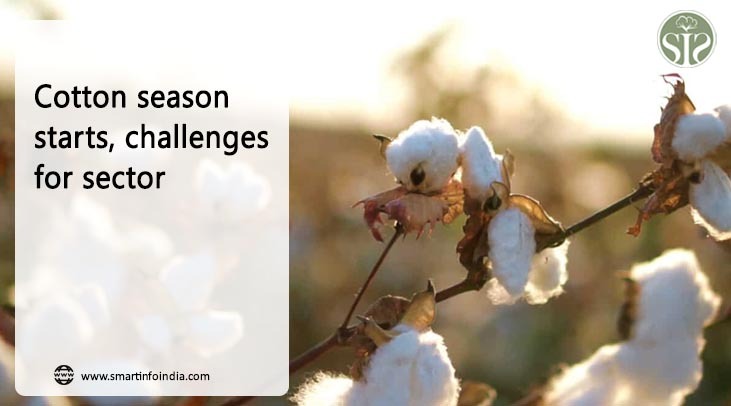
Cotton season begins, challenges for the sector

Cotton season begins, challenges for the sectorGujarat textile industry has been experiencing low demand for more than a year. The new cotton season has brought little hope as textile units are struggling to operate at full capacity. While spinning mills are running at 70% capacity, ginning units are running at only 40% capacity. The high price of Indian cotton in the international market is hindering the export business of the industry.“Demand in the international market is low, and Indian cotton is not competitive in terms of prices,” said Jayesh Patel, senior vice-president, Spinners Association Gujarat.Currently, yarn prices are around Rs 230 per kg, and spinning units face a price disparity of Rs 5-10 per kg. This problem has increased due to less arrival of raw cotton due to unseasonal rains in some states.Gujarat Chamber of Commerce and Industry (GCCI) secretary Apoorva Shah also expressed similar sentiments. “The cotton season, which usually peaks between October and February, has seen reduced activity due to lower cotton arrivals, falling prices and unseasonal rains. The state’s 900 ginning units are operating at a fraction of their normal capacity, running only one shift instead of the usual three during the peak season,” he said.“Unseasonal rains have further affected the quality of cotton. Cotton has more moisture. Ginning units are incurring losses of around Rs 1,000-1,500 per bale and are running at only 33% of their capacity,” said Shah.Cotton prices are around Rs 55,000 per candy. Experts believe that due to high minimum support price (MSP) and low arrivals, prices will remain in the same range. Last year, farmers were not ready to sell cotton at low rates and this year also the arrival is less. Gujarat gets around 10-15 lakh bales from Maharashtra for pressing as the state has seen a significant increase in spinning activities in the last decade. However, if demand does not improve soon, the textile sector, especially ginning and spinning units, may face huge challenges for the second consecutive year.

Related News

Youtube Videos

रुई के भाव में लगातार गिरावट 😱 क्या आगे भी रहेगी मंदी? | Cotton Market
रुई के भाव में लगातार गिरावट 😱 क्या आगे भी रहेगी मंदी? | Co...
रुई बाज़ार में गिरावट का सिलसिला जारी 😱🔥Cotton market rate today #youtube
रुई बाज़ार में गिरावट का सिलसिला जारी 😱🔥Cotton market rate...
रुई बाज़ार में गिरावट का रुख 😱 Cotton market rate today #youtube
रुई बाज़ार में गिरावट का रुख 😱 Cotton market rate today #you...
Application Download
Whatsapp Contact