Recent News

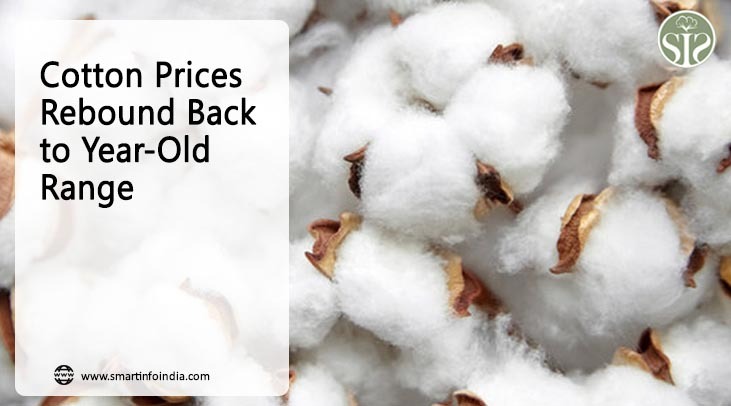
Cotton prices returned to one year old levels

Cotton prices returned to one year old levelsMost believe the week's rally was based on new speculative longs entering the market, coupled with two rounds of short covering – first above 81.40 and then once above 82.40. Nevertheless, a review of open interest data cannot confirm the new position.It was noted that the Southeast base has decreased sharply over the past week, indicating good demand for that growth. Other developments have not seen the same strength. Furthermore, there has been no notable indication of sales in any quantity to China or any other major importer. Certainly, the weekly export sales report was a big disappointment. However, that report reflected week-old data.The market outperformed expectations and reestablished its year-old 74-88 cent trading range. Still, most think the absolute high will be 85 cents with the possibility of another test in the mid-70s. The five-cent range of 77-82 cents is projected to be the key trading range.The market retreated more than 100 points in Friday (Dec. 8) trading on the back of the USDA's December supply demand report as it estimated world ending stocks of about 900,000 bales to rise to 82.4 million. The major bearish tone in the report came in the form of a decline of 1.6 million bales in world consumption, which has now declined to 113.73 million bales. Large decreases in demand were recorded in China (1.0 million bales less), Turkey (400,000 bales less), and Mexico and the US (100,000 bales less each). Demand remains the major hurdle in increasing cotton prices.Furthermore, it is noted that the Chinese, U.S., Australian, Japanese, Indian and European economies are experiencing low levels of economic activity. It is believed that world consumption could fall further to 300,000 to 400,000 bales.World production also declined by 500,000 bales from 113.5 to 113 million bales. U.S. production declined by 300,000 bales to 12.8 million. Turkish production also declined by 300,000 bales to 3.2 million. Production in Pakistan increased from 200,000 bales to 6.7 million bales.Carryovers in major importing countries increased by 600,000 bales, while carryovers in major exporting countries saw an increase of 400,000 bales. These levels suggest that very intense price competition will continue to affect world cotton trade. The WASDE report, while reducing US carryovers to very significant levels, was seen as slightly bearish due to the availability of cotton supply chasing a declining demand market.Preliminary U.S. projected acreage estimates for 2024 range from 9.8 to 10.8 million acres. Certainly, growers with good yields in 2023 will plant a little more in 2024 or so, with total plantings expected to be between 10.1 and 10.3 million acres.Source: Cotton Growers

New LC clause by US apparel buyer raises concern

New LC clause by US apparel buyer raises concernGarment factory owners are concerned as a US clothing retailer recently said it will not "process transactions involving any country, region, party" sanctioned by the UN, US, EU, or the UK.It mentioned it in a Letter of Credit (LC) issued last month for an apparel exporter in Bangladesh.Garment factory owners association BGMEA yesterday urged its members to "take the matter with utmost importance".Those receiving LCs with such a clause should ask the retailer if they are mentioning this for Bangladeshi suppliers only, reads a statement issued by BGMEA President Faruque Hassan."If the clause appears only in the LCs issued in favour of Bangladeshi suppliers, then this violates ethics."BGMEA members should reconsider doing business with such buyers, adds the statement.However, the clause mentioned in the LC from one particular retailer should not be interpreted as a sanction of any form against Bangladesh, because this is not a statutory order or notice by a country, it says."Moreover, the BGMEA did not receive any information from our diplomatic missions or from any official source to support any sanction or trade measure."The factory owner who received the LC from the US buyer notified the matter to the BGMEA earlier this week. Sources said the owner fears that such clauses may badly affect his business.This is the first time the particular US buyer has mentioned the clause in the LC, BGMEA President Hassan told The Daily Star yesterday. He had not disclosed the names of the local supplier or the buyer.Last week, the Bangladeshi mission in Washington sent a letter to the commerce ministry, highlighting the possibility of Bangladesh being slapped with a trade sanction over labour rights.Two major RMG exporters who deal with US retailers regularly said they had not seen such a clause before.

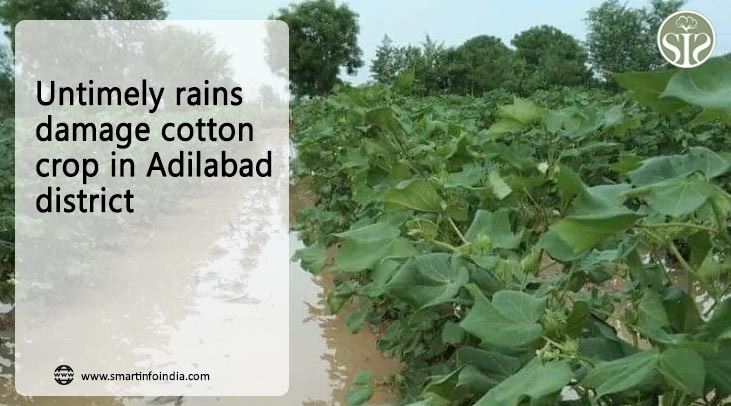
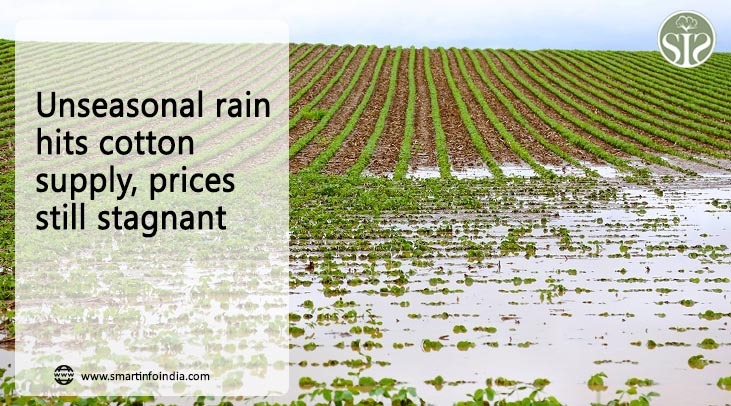
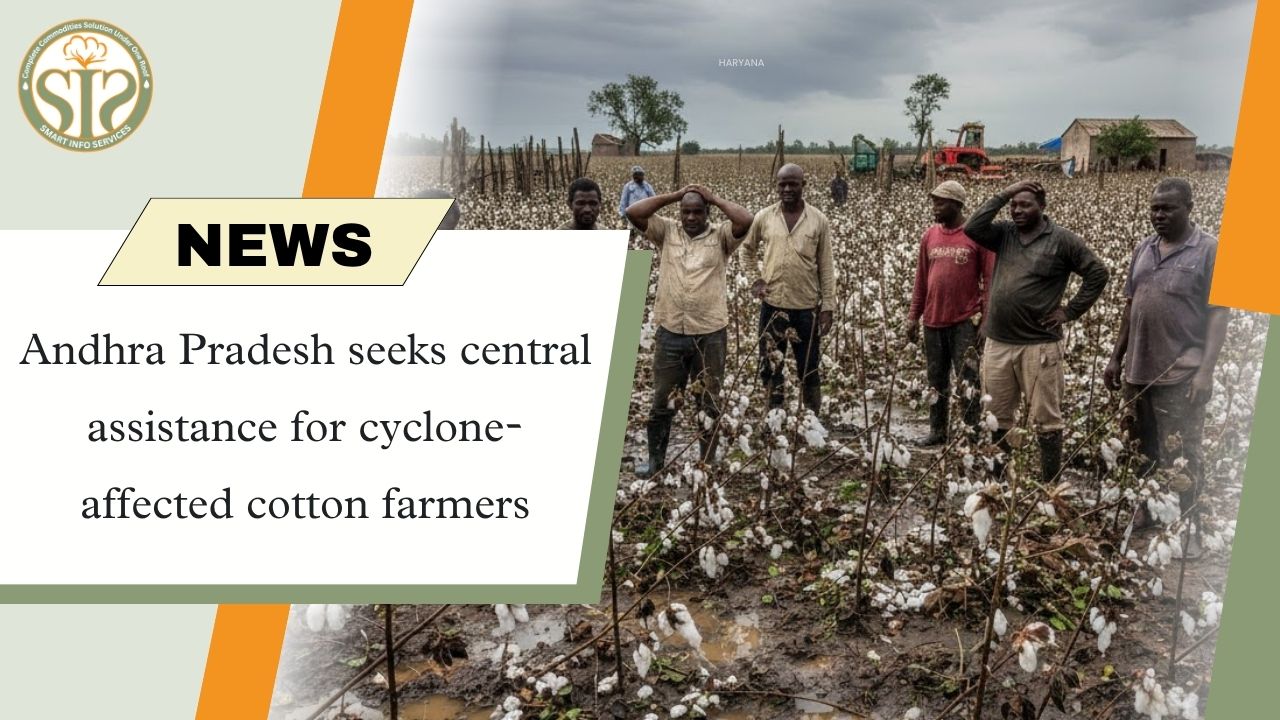
Cotton crop has been damaged due to unseasonal rain in Adilabad district.

Cotton crop has been damaged due to unseasonal rain in Adilabad district.Many cotton farmers have suffered losses due to untimely rains and foggy weather in the erstwhile Adilabad district during the last two days. The cotton crop standing in the fields has become drenched. There is a possibility of the bolls turning black. There will not be much demand for such high moisture cotton in the market.The Cotton Corporation of India (CCI) gives an MSP of Rs 7,020 per quintal for cotton with moisture content less than eight percent. As the moisture content increases, the price of cotton starts decreasing.Incidentally, cotton harvesting has been delayed due to labor shortage. Most of the workers preferred to go to public meetings, party rallies and election campaigns and get paid rather than work and get paid.Sudeep of Gon village of Bhimpur mandal said that his standing cotton crop has got drenched in the rain. This will cause huge loss to himApart from this, many cotton farmers are worried that if the same weather conditions continue for a few more days, then the wet cotton as well as the red gram crop sown by them will be attacked by possible pests.Some farmers have picked up their cotton seeds and are drying them in their homes. Many people are waiting for the sun to rise when the weather conditions improve.Suresh Kumar of Jannaram in Mancherial district said that he has suffered loss as he could not get his stacked cotton removed in the last 15 days due to shortage of agricultural labourers.Due to rain in the last two days in the erstwhile Adilabad district, the standing crop of cotton as well as red gram has been damaged.

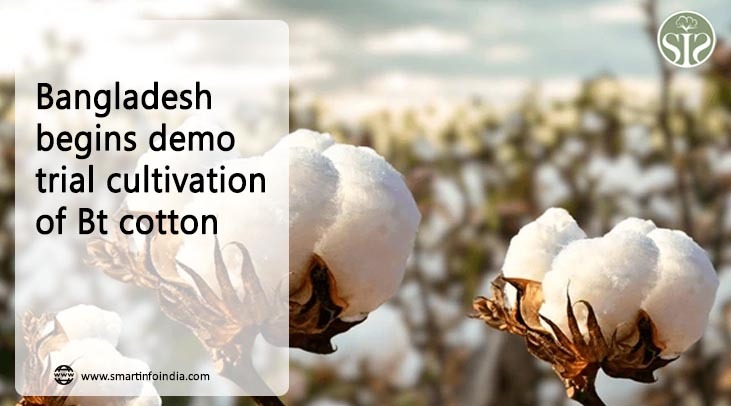
Bangladesh starts demo trial cultivation of BT cotton

Bangladesh starts demo trial cultivation of BT cottonTransgenic varieties are being grown in 13 production areas, 5 research centersThe US Department of Agriculture (USDA) has said that Bangladesh has started limited cultivation for "demonstration trials" of two varieties of Bt (Bacillus thuringiensis) cotton in 13 production areas and five cotton research centers.The USDA's Foreign Agricultural Service's Dhaka Post said cultivation began on August 20, 2023, after an application by the Cotton Development Board (CDB) of Bangladesh was approved by the National Biosecurity Committee.CDB sought to release JKCH 1947 and JKCH 1050 BT varieties for "performance trials". The trials are being conducted on 138 farmers' plots (0.25 acres/plot) and 30 farmers' agricultural research plots (0.11 acres/plot), totaling 37.8 acres, the Dhaka Post said.planting delayedBt cotton farmers told Dhaka Post that they sowed Bt seeds a little late because they received the seeds late. Furthermore, they faced heavy rainfall after seed germination, which caused some damage and reduced vegetative growth.However, farmers reported clear differences in Bt plants compared to traditional varieties. "Farmers hope that cultivating Bt cotton will reduce their costs on pesticides," the post said.These Bt cotton varieties can resist bollworm and fall armyworm in the plant.This development comes as India has been unable to introduce any new Bt variety, especially the herbicide tolerant Bt One, since 2006.indian angleHyderabad-based JK Agri Genetics Limited, a branch of JK Organisation, collaborated with the Government of Bangladesh for field testing of these Bt cotton varieties.However, Gyanendra Shukla, chairman and director of JK Agri Genetics, popularly known as JK Seeds, told BusinessLine two years ago that “We are not doing anything on our end. Nor are we engaged in any business activity in Bangladesh.The CDB of Bangladesh is dedicated to the development of hybrid and short duration, high yielding cotton varieties that exhibit desirable fiber characteristics.The Dhaka Post said CDB, in collaboration with a Bangladesh-based private seed company, is actively importing hybrid cotton seeds from China. Research is also being conducted to assess the suitability of these imported varieties for local conditions.cotton production targetAccording to CDB, cotton is cultivated in 39 out of 64 districts of Bangladesh. But cotton cultivation is only 0.55 percent of the total 8.1 million hectares of cultivable land in the neighboring country.Locally, Bangladesh produces less than 2 percent of its total cotton consumption and the area under natural fiber has increased only marginally since 2016.The Bangladesh government aims to meet 10 percent of its fiber demand through domestic production. Cotton is most cultivated in Bangladesh during the Rabi season. But expansion in cotton cultivation has been hampered by the fact that growers are having to abandon the cultivation of aman rice and winter vegetables grown during June-July.

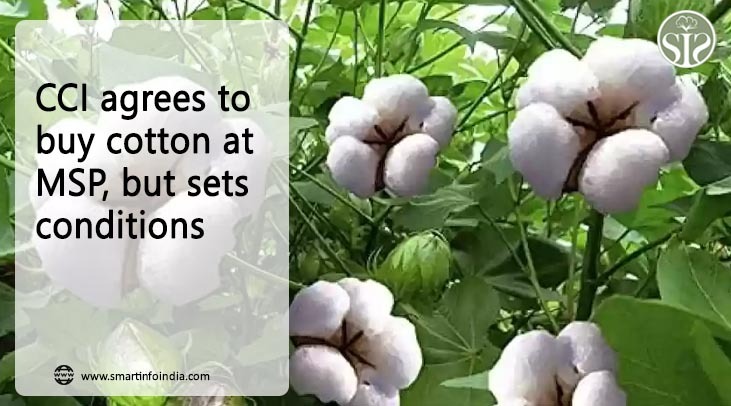
CCI agrees to buy cotton at MSP, but sets conditions

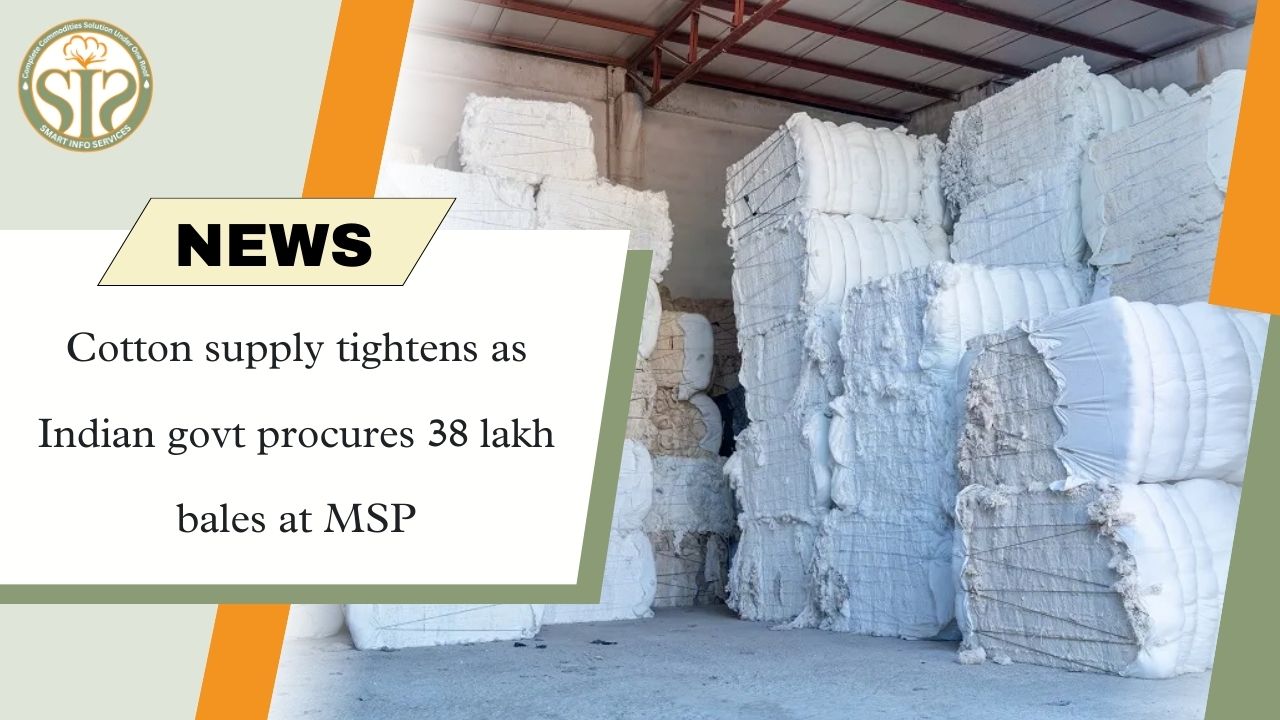
CCI agrees to buy cotton at MSP, but sets conditionsBATHINDA: The Cotton Corporation of India (CCI) on Tuesday assured farmers in Abohar that it will resume cotton procurement in the local grain market from December 7, but imposed two conditions - the cotton cannot be of inferior quality. .And the weight of the crop in one heap cannot exceed 30 quintals.CCI's assurance came during a meeting with farmers, which was called after farmers blocked the Abohar-Fazilka road.After this, Fazilka district administration organized talks between the two places.CCI had a few days ago stopped purchasing cotton at procurement centres, mainly Abohar, one of the largest cotton procurement centers in Punjab.With CCI away, cotton prices had declined and were even trading around Rs 4,500 per quintal at many places, while the minimum support price for 27.5-28.5 mm long staple stood at Rs 6,920 per quintal and for 24.5 Was Rs 6,620 per quintal. -25.5mm long staple.Farm unionists Gunwant Singh and Subhash Godara, who led the protest on Tuesday, said it was found that some traders were bringing poor quality cotton crop from villages in Rajasthan near Abohar.“Farmers have resolved that they will ensure that traders do not bring low quality crops from the neighboring state. Farmers in Rajasthan can bring their crops in smaller quantities after ensuring that the quality is not bad. If the quality is not up to standard, they will not get commensurate prices.MSP. After our protest, CCI has assured to start the procurement,” Gunwant said.A Cotton Corporation of India official said the procurement was being done as per the quality norms. Overall, so far 5.95 lakh quintals of raw cotton has been purchased from the procurement centers of Punjab. In such a situation, 1.12 lakh quintals of cotton has been purchased below the MSP.

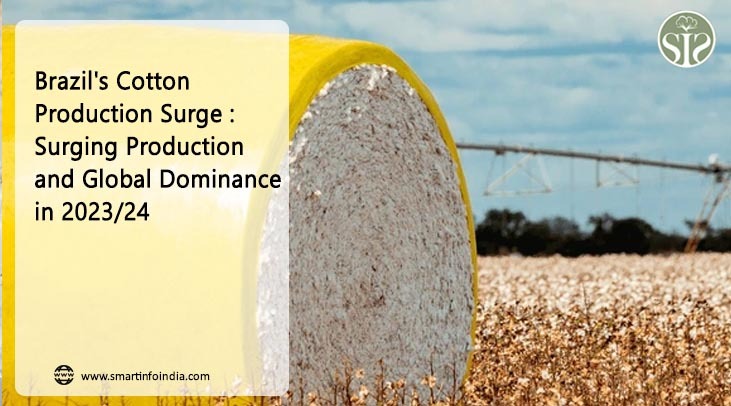
Brazil's cotton production growth: increasing production and global dominance in 2023/24

Brazil's cotton production growth: increasing production and global dominance in 2023/24Marking a historic milestone, Brazil's cotton sector is expected to produce a record-breaking 14.7 million bales in the marketing year 2023/24, which would surpass the United States. Driven by optimal weather conditions and a strategic shift in marketing timelines, the strength of Brazilian cotton is set to reshape global trade dynamics, with exports increasing to 11 million bales and ending stocks that will be lost in the international cotton market. Shows the influential role of the country.highlightBrazil's Cotton Production Increase: Brazil's cotton production projections for marketing year (MY) 2023/24 have been revised upward, indicating a record crop and yield. Production is estimated at 14.7 million bales (3.2 million metric tons), with optimal weather conditions contributing to this achievement.Global production dynamics: Brazil is projected to overtake the United States in cotton production in 2023/24, marking a historic shift in the global cotton landscape.Area estimates and optimal weather conditions: The estimated area of cotton cultivation in Brazil for MY 2023/24 is 1.7 million hectares. The increase in production is attributed to favorable weather conditions, which have positively impacted yields in key states.Change in marketing year: Following USDA's revision, emphasizing the current nature of the projections, MY 2023/24 is now equivalent to cotton production entering the market in 2023 rather than 2024.Domestic consumption and exports: The Post estimates Brazil's domestic cotton consumption for my 2023/24 to be 3.3 million bales (750 thousand metric tons). Exports are estimated at 11 million bales (2.4 million metric tons) due to lower production in major cotton producing countries such as China, India and the United States as well as increasing global demand and consumption.Final Stock Projection: The post mine is predicted to end up with six million bales (1.3 million metric tons) of stock for 2023/24. This is largely influenced by high volumes of exports and domestic consumption.conclusionAs Brazil emerges as a major force in global cotton production, forecasts for MY 2023/24 underline not only the country's agricultural potential, but also its impact on shaping the trajectory of the cotton industry . With a strong production growth, Brazil is set to become an export leader, demonstrating the resilience and potential of its cotton sector. The historic shift in marketing dynamics has further strengthened Brazil's position as a major player, paving the way for an exciting era in the world of cotton trading.

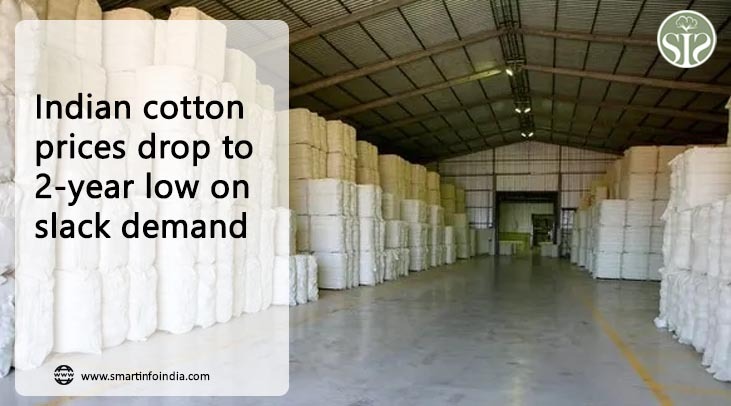
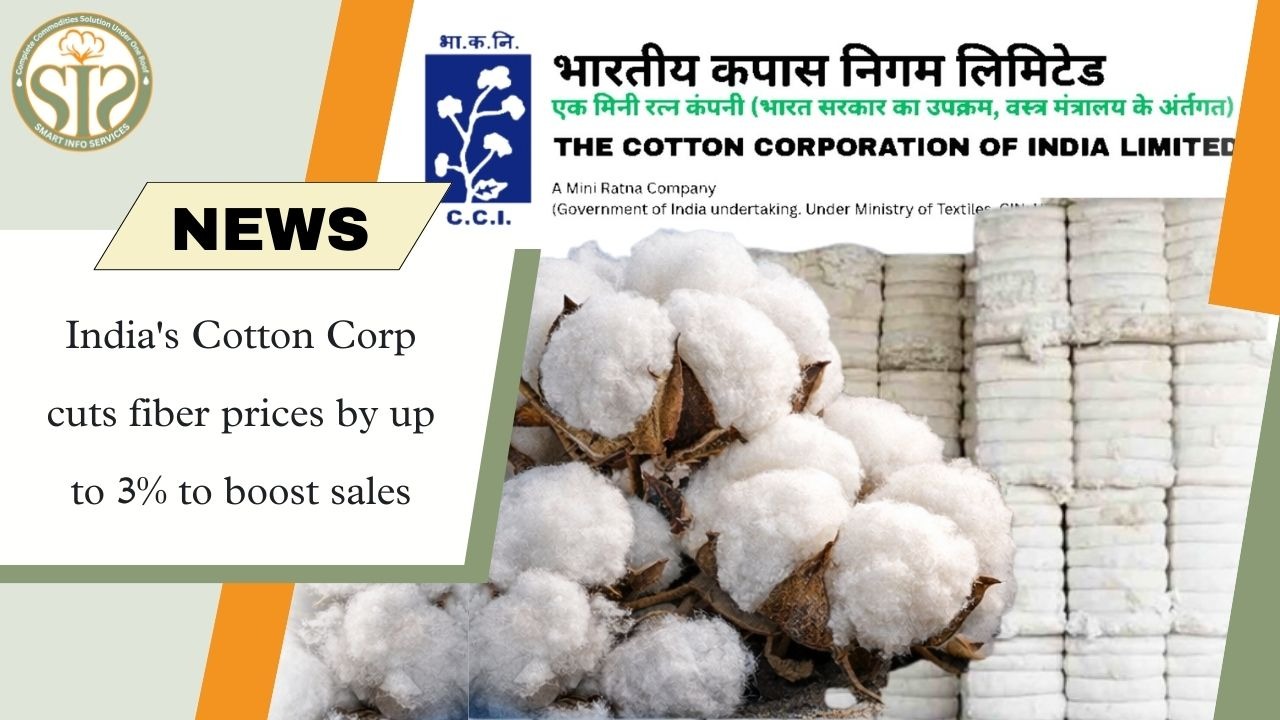
Indian cotton prices fall to 2-year low on weak demand

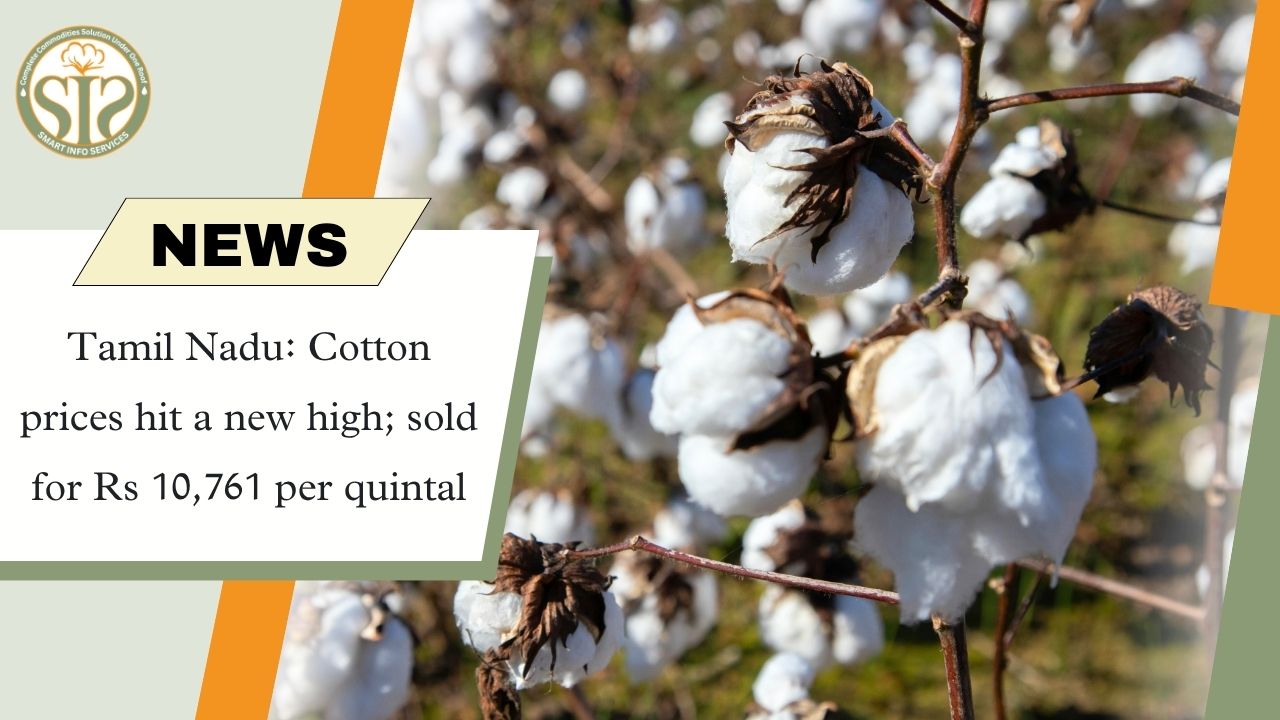
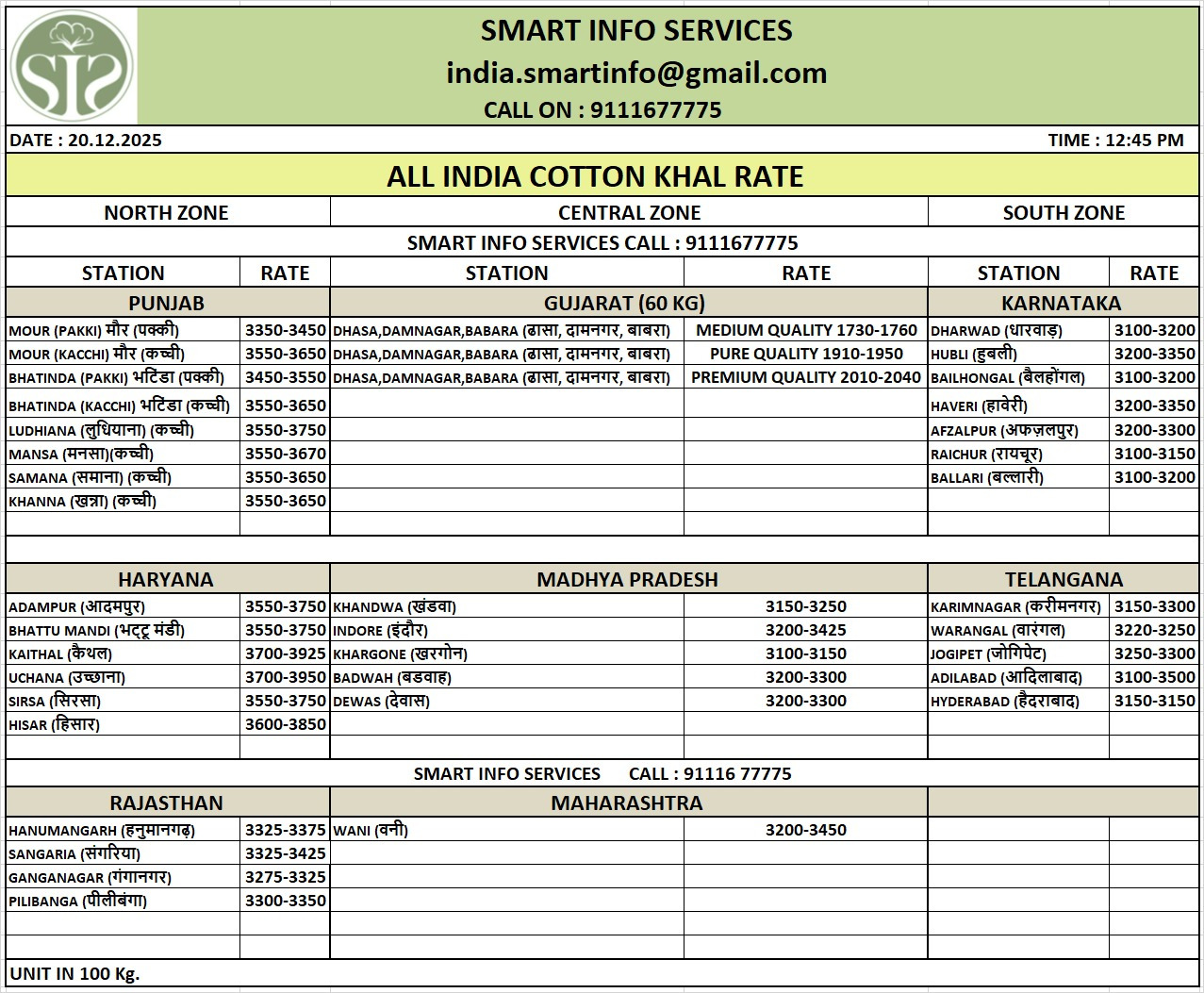
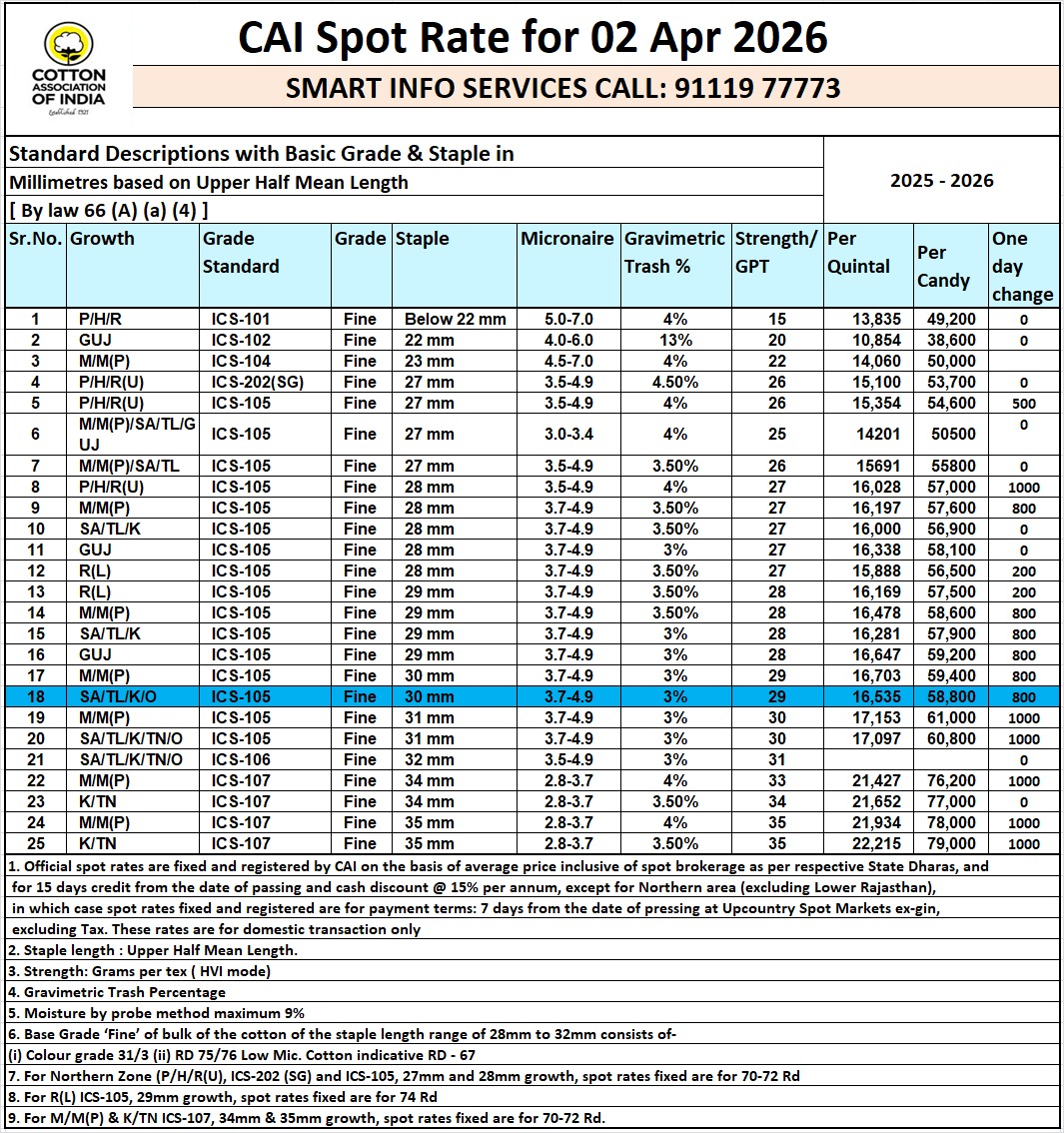
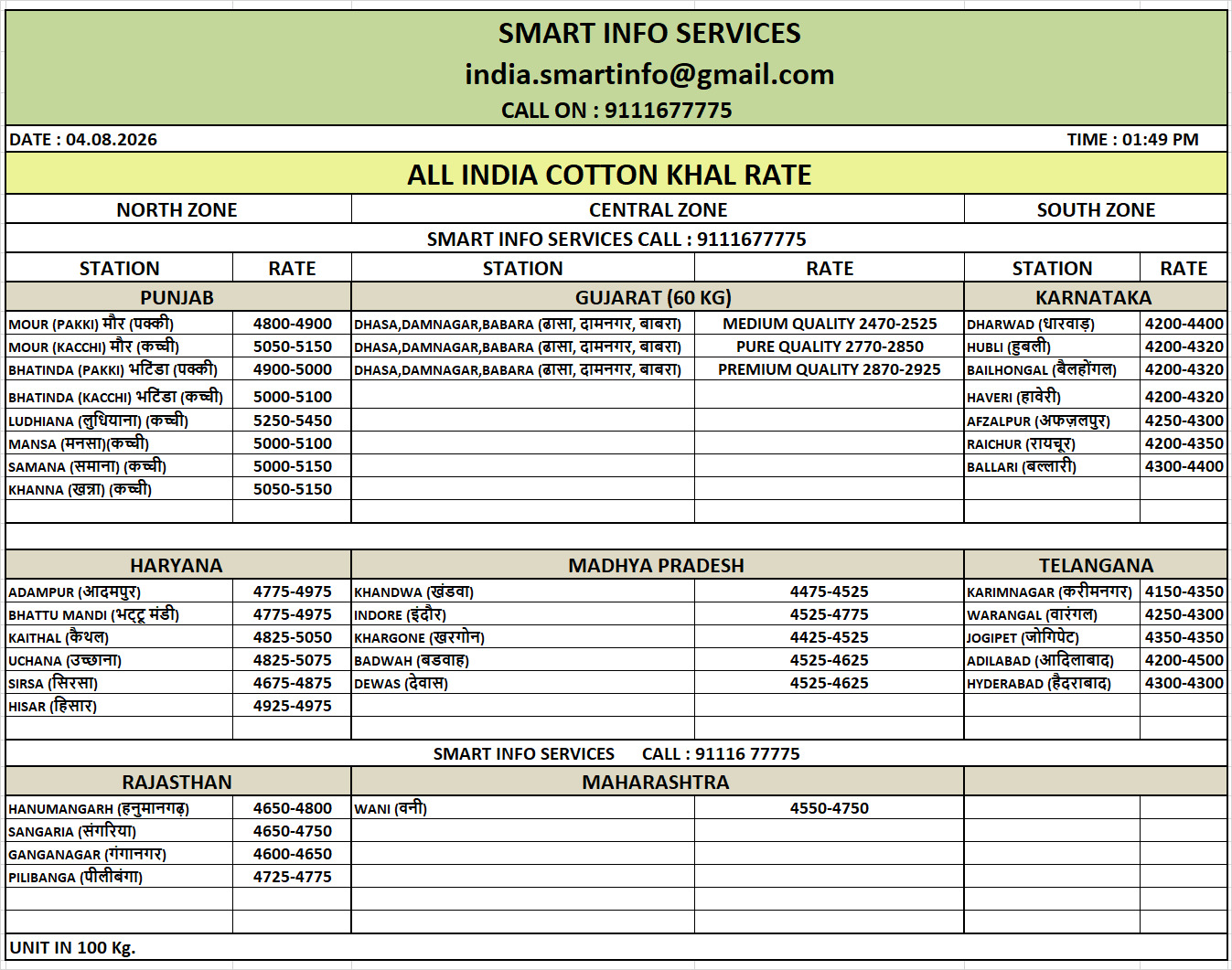
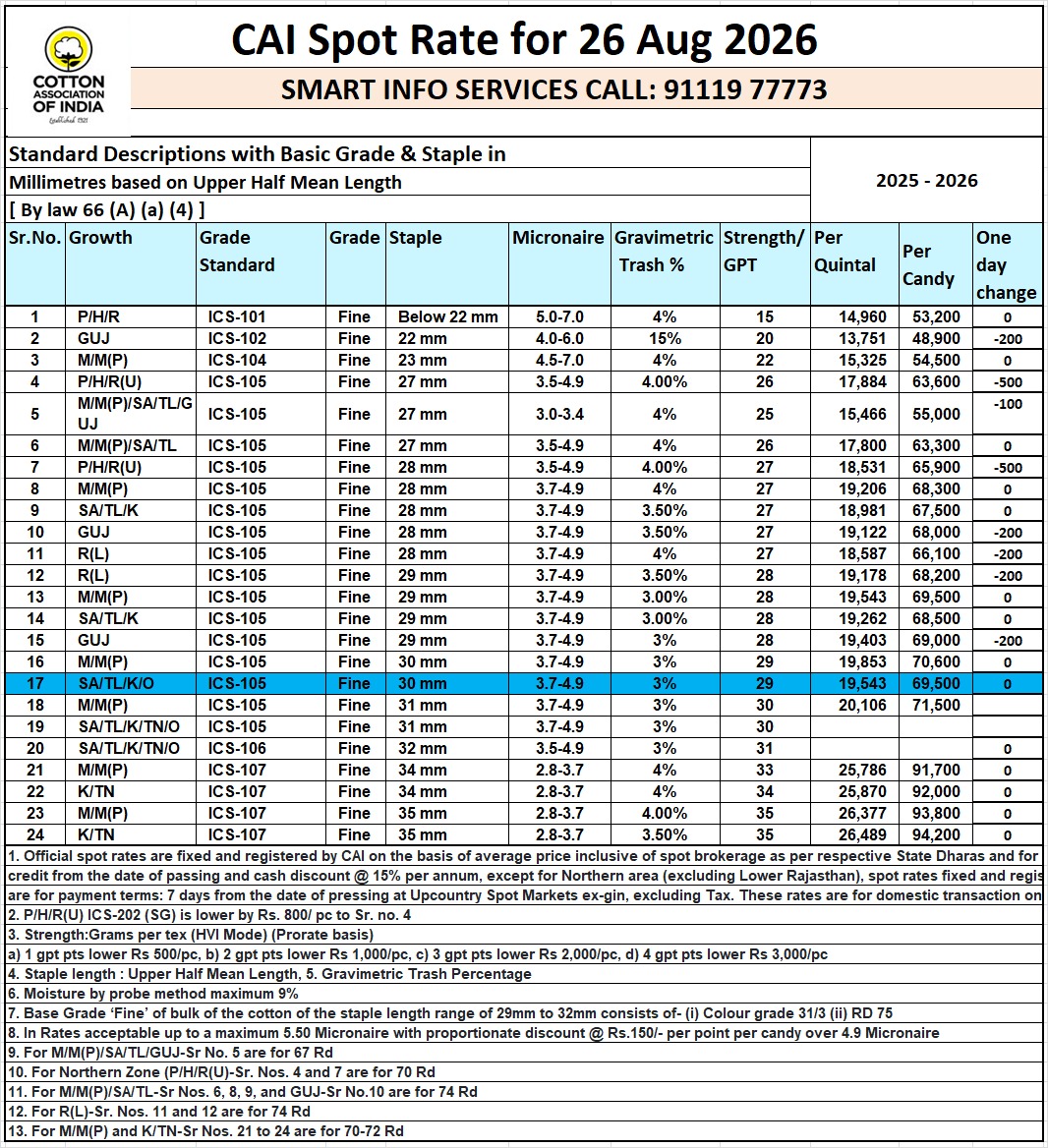
Indian cotton prices fall to 2-year low on weak demandSpinning mills are buying cautiously in view of the global economic crisisCotton prices in India have fallen to a two-year low due to weak demand due to the economic crisis in western countries, especially the US and Britain, traders said.“There is practically no demand for cotton despite the low crop, which is in the range of 300 lakh bales (170 kg) including carryover stocks from last year. But demand for clothes in western countries is sluggish due to economic problems,'' said a source working for a multinational trading firm. Therefore, mills are not ready to buy even though farmers are ready to sell cotton (unprocessed cotton) at ₹7,000 per quintal“Due to lack of demand, cotton seed prices have fallen below Rs 3,000 per quintal, while ginned cotton prices have gone up to Rs 56,000-55,000 per candy (356),” said Ramanuj Das Boob, sourcing agent for Raichur-based multinational companies. It has reduced." Karnataka.CCI buys MSPRaw cotton prices have now fallen to ₹7,200-7,300 per quintal and in some cases to the minimum support level of ₹7,020 per quintal for long staple cotton. “This is at a level that farmers have not seen in the last two seasons,” Das Bub said.Currently, Shankar-6 cotton, the benchmark for exports, is quoted at ₹54,850 per candy (356 kg) in Rajkot, Gujarat. On the other hand, at the Rajkot Agricultural Produce Marketing Committee (APMC) yard, the price of raw cotton is ₹7,100 per quintal.In the global market, cotton futures on the Intercontinental Exchange, New York are currently quoted at 78.25 US cents per pound (₹51,600 per candy).The fall in cotton prices has resulted in the Cotton Corporation of India (CCI) procuring 2.5 lakh bales (170 kg each) from growers at MSP. It has spent more than ₹900 crore on these purchases so far.delayed arrival of poll“CCI procurement is not much compared to the arrival of 58 lakh bales so far. Last week, around 9 lakh bales reached various APMCs in the country. Daily arrivals were 1.1 lakh bales to 1.3 lakh bales, Popat said.“The arrivals have been low so far due to elections in Madhya Pradesh and Telangana. Now that they are over, inflows will increase and peak. This could put further pressure on prices,” said Das Boob.Popat said that spinning mills are facing problems due to fall in yarn prices. “CCH-30 (combed cotton hosiery) yarn prices have declined to Rs 230 per kg from Rs 245 a month ago. There is no movement of yarn,” he said.Indian Texpreneurs Federation (ITF) convenor Prabhu Dhamodharan said cotton prices are gradually coming down in line with the actual demand trend.challenging situationHe said, an estimate based on the usage survey and survey of 5 million spindles in Tamil Nadu shows that overall yarn production in South India has declined by about 17 per cent in November.“The current situation is challenging for many spinning mills. Yarn production in the sector during November was lower by about 35 to 40 million kg compared to the maximum utilization level. Besides, 200 mills in the southern region are using 10-20 per cent viscose to produce blended yarn,” Dhamodaran said.Lower prices may encourage purchasing by exporters. “Once the prices fall to ₹54,500-55,000 per candy level, exporters will start showing interest. Right now, only Bangladesh is buying,” said Das Bub.“Around 3.5 lakh bales have been lifted for export. But the shipment of cotton and yarn is less,” Popat said.growth of non-cotton fibersDhamodharan said two factors will keep cotton prices in check in the next few months. “A 15-20 per cent decline in production by the spinning sector in major consuming states like Tamil Nadu in the current quarter and increasing trend of spinners producing synthetic and cellulosic fiber blended yarns will keep prices under control for the next few months,” it said.Non-cotton fiber sales from manufacturers are seeing good year-on-year growth. The ITF convenor said the trade expects less volatility from the current season through September 2024. There will be a more stable trend within the fluctuations of ₹1,000-1,500 per candy, which is a very basic requirement for the export competitiveness and performance of the entire value chain.The source working with the multinational company, who did not want to be identified, said the current trend will continue for the next few months. “Something has to happen to increase demand. But we don't see anything happening now,' the source said.Although the US crop is down, Brazil is making up for it. “But weak demand is holding back the market,” the source said.Dhamodharan said that although retailers have started showing interest in placing fresh orders after their excessive inventories are exhausted, they are all playing it safe and keeping a tight control on their inventories."We need to wait until the first quarter of the upcoming calendar year to get accurate visibility of consumption trends across all developed markets," he said.

Related News

Youtube Videos

रुई के भाव में लगातार गिरावट 😱 क्या आगे भी रहेगी मंदी? | Cotton Market
रुई के भाव में लगातार गिरावट 😱 क्या आगे भी रहेगी मंदी? | Co...
रुई बाज़ार में गिरावट का सिलसिला जारी 😱🔥Cotton market rate today #youtube
रुई बाज़ार में गिरावट का सिलसिला जारी 😱🔥Cotton market rate...
रुई बाज़ार में गिरावट का रुख 😱 Cotton market rate today #youtube
रुई बाज़ार में गिरावट का रुख 😱 Cotton market rate today #you...
Application Download
Whatsapp Contact