Recent News

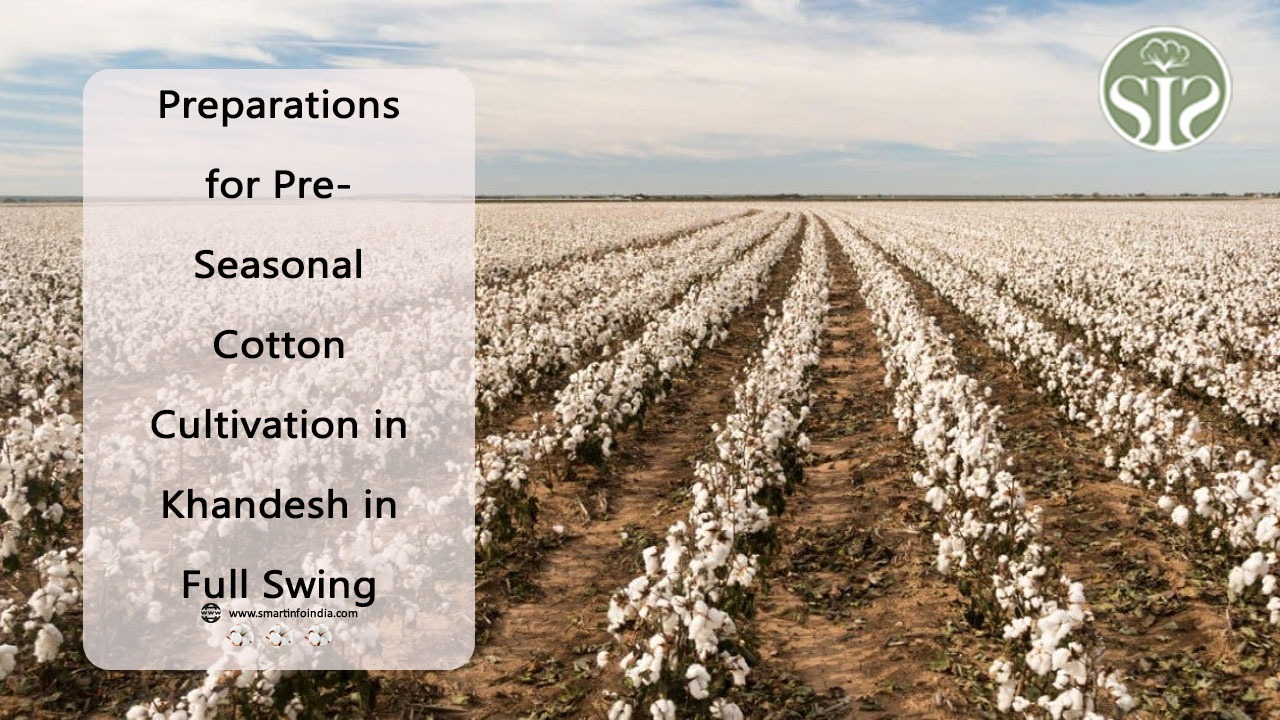
Preparations for Pre-Seasonal Cotton Cultivation in Khandesh in Full Swing

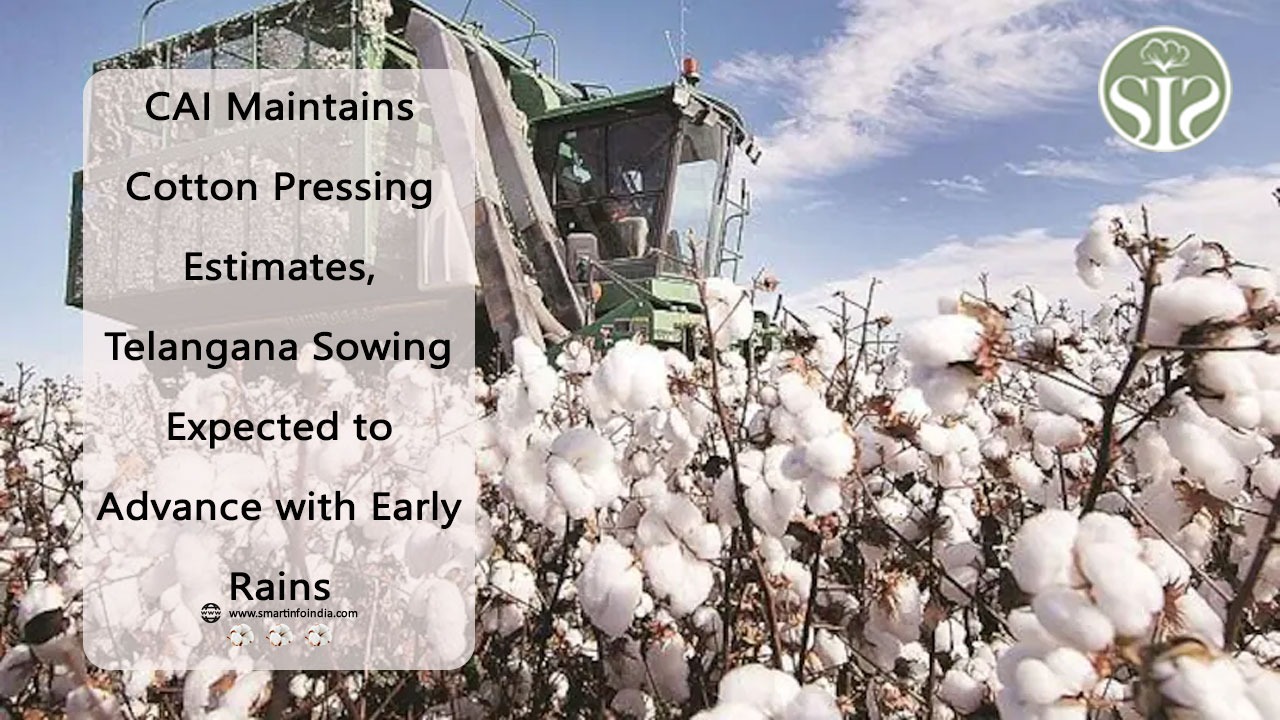
In full swing: Khandesh's pre-season cotton cultivation Preparations Preparations for pre-seasonal cotton cultivation in Khandesh are well underway. Cotton seeds have reached dealers and are now available for purchase. However, there is an anticipated slight decrease in cotton cultivation this year, with horticultural farmers planning to reduce the area dedicated to cotton and diversify into other crops.Despite this, the reduction is expected to be minimal, with a decrease of about 2,000 to 2,500 hectares from the total 2 lakh hectares allocated for horticultural cotton. Overall, cotton cultivation in Khandesh is projected to cover approximately 5.54 to 5.65 lakh hectares.Farmers have been preparing their fields diligently, employing deep plowing and rotavator use to ready the soil. Nearly all farmers use drip irrigation for pre-seasonal cultivation, ensuring efficient water use. With temperatures having decreased slightly to 42 degrees Celsius, many farmers plan to commence planting by late May, with some starting on June 1, coinciding with further drops in temperature and the onset of cloudy weather.Spacing plans vary, with many opting for configurations such as four by one and a half feet, three by two feet, or four by two feet. Preparations for cultivating in black hard soil are also in place to manage heavy rainfall and ensure proper drainage.Read More :>  CAI Maintains Cotton Pressing Estimates, Telangana Sowing Expected to Advance with Early Rains

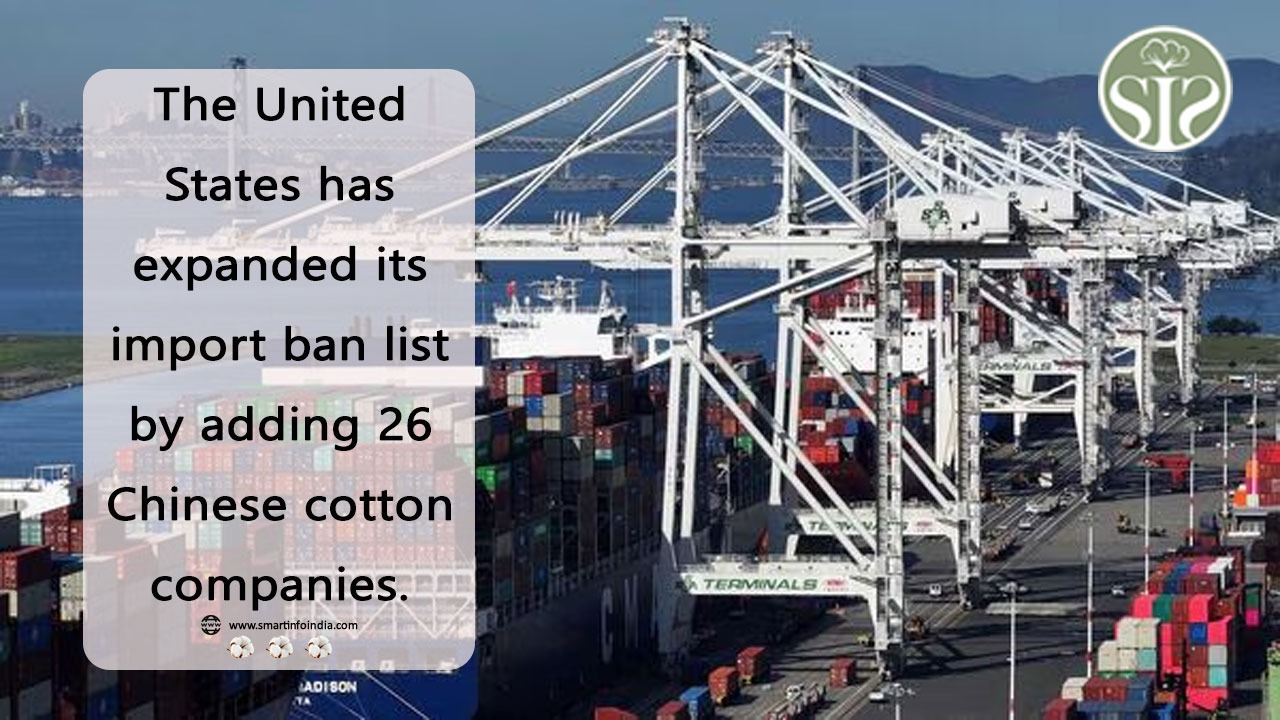
The United States has expanded its import ban list by adding 26 Chinese cotton companies.

The US has added 26 Chinese cotton enterprises to its list of prohibited imports.On Thursday, the United States took action to prohibit goods from 26 Chinese cotton traders and warehouse facilities believed to be involved in forced Uyghur labor, a move expected to increase pressure on supply chains.According to the Department of Homeland Security, companies from various provinces across China, including Henan, Jiangsu, Hubei, and Fujian, have been added to the forced-labor Entity List, bringing the total to 76 entities.Washington has been actively addressing what it alleges as the utilization of forced labor in China's Xinjiang region, home to the predominantly Muslim Turkic Uyghurs and other minority groups facing severe human rights violations. China refutes these accusations, asserting that its labor programs aim to alleviate poverty.The Uyghur Forced Labor Prevention Act generally prohibits imports sourced "wholly or in part" from Xinjiang, a significant cotton-supplying region. Enforcement measures have led to approximately $3 billion in flagged shipments at the border since the act's implementation in June 2022.Goods originating from Xinjiang are automatically assumed to involve forced labor under the UFLPA unless "clear and convincing evidence".The Entity List identifies specific companies whose products or components thereof are to be blocked from entering the United States. Particular sectors, such as cotton, tomatoes, and polysilicon (an essential raw material for solar panels), are under extra scrutiny.A significant challenge faced by the U.S. government is the lack of transparency in domestic supply chains within China, notes researcher Adrian Zenz. He underscores the importance of monitoring intra-Chinese supply chains to counter labor transfers to other provinces."Xinjiang itself doesn't export much of what it produces," he explains. "The greatest risk arises through intermediaries, and the Entity List is well-suited to address this issue."Zenz's research reveals an escalated use of cross-provincial labor transfers by Chinese authorities last year, complicating U.S. Customs' enforcement of the UFLPA.He estimates a 38% increase in the number of laborers transferred under the "pairing assistance" program from 2022 to 2023. However, he cautions that the understanding of labor transfer programs may diminish due to the Chinese government's cessation of statistical publication.While the UFLPA aims to combat forced labor, it presents challenges for companies outside China. U.S. Customs and Border Protection data indicates that over 5,500 of the roughly 8,500 flagged shipments originated from Malaysia, Vietnam, Thailand, and India.Read more :-  Monsoon to hit Kerala coast on May 31, says IMD

Ginners' Concerns Prompt Government Response to Rebranding Vidarbha Cotton as Kasturi

Government Reaction to Rebranding Vidarbha Cotton as Kasturi Is Prompted by Ginners' ConcernsOnce again, Vidarbha's ginners are expressing apprehension over the central government's move to designate Vidarbha cotton as Kasturi, citing the imposition of stringent quality compliance standards introduced since February this year.A joint effort between The Central Institute for Research on Cotton Technology (CIRCOT), The Cotton Textiles Export Promotion Council (TEXPROCIL), and the Vidarbha Cotton Association, a national workshop titled 'Branding Vidarbha Cotton as Kasturi,' convened at the regional Ginning Training Centre on Amravati Road on Thursday.While the government's goal is to enhance quality and support farmers, ginners remain uneasy about factors they feel are beyond their control.Their concerns echo those raised during the previous implementation of quality control measures for cotton bales by the Bureau of Indian Standards (BIS) last year. Following opposition, the government postponed the initiative until August this year.Given the potential legal consequences of adhering to BIS standards, ginners are particularly troubled by issues such as variations in seed varieties available to farmers, climatic conditions, pest infestations, suboptimal picking practices, improper handling and storage, and multiple picking cycles throughout the year.Government officials have assured to address these doubts. They clarified, "Indian cotton has not been marketed under a specific brand name thus far. Hence, the government has introduced the designation of Kasturi Cotton Bharat to confer a distinct identity. While certain quality benchmarks must be met, ginners remain hesitant."A representative of the ginning community emphasized, "Ginners are processors, not producers. Many among us are still unfamiliar with the concept of Kasturi, which bears similarities to BIS norms."Dilip Thakre, a farmer from Akola and a prominent cotton expert representing Vidarbha on various committees, provided insights into the Kasturi initiative. "Kasturi entails the premium purchase of cotton by the Cotton Corporation of India (CCI) from ginners. Approximately 300 ginners from the cotton belt will be selected to supply high-quality cotton to the CCI. These bales will be marketed under the Kasturi brand. Presently, Indian cotton is primarily sold as bales."Thakre explained that Indian bales often fail to command favorable prices due to the absence of a recognized brand name and concerns regarding the potential mixing of inferior cotton. "Under the Kasturi scheme, ginners will be required to supply cotton from the first picking, as trash content tends to increase in subsequent pickings. Furthermore, yarn and designer fabric will also be manufactured under the Kasturi brand."Each bale will undergo geo-tagging, encompassing parameters such as moisture content, staple length, and trash content, ensuring traceability and quality assurance throughout the supply chain.Read More :>  Monsoon to hit Kerala coast on May 31, says IMD

Monsoon to hit Kerala coast on May 31, says IMD

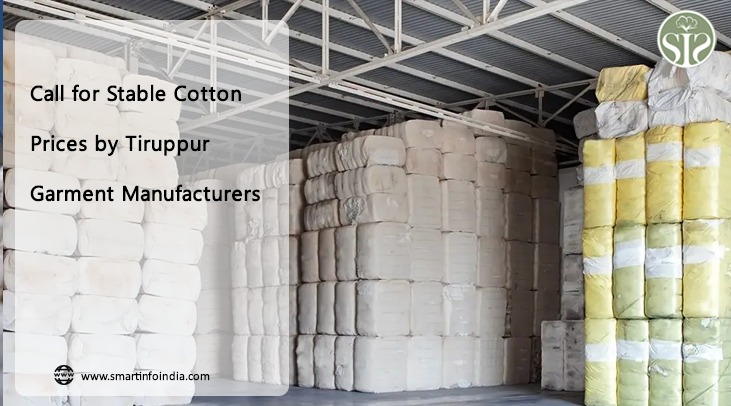
According to IMD, monsoon will arrive in Kerala on May 31.Southwest monsoon is very likely to advance into South Andaman Sea, some parts of Southeast Bay of Bengal and Nicobar Islands around May 19The India Meteorological Department (IMD) on Wednesday said that monsoon will hit Kerala coast on May 31, which is a day earlier than its normal schedule day of June 1 in the mainland. IMD also said the southwest monsoon is very likely to advance into South Andaman Sea, some parts of Southeast Bay of Bengal and Nicobar Islands around May 19.“This year, the southwest monsoon is likely to set over Kerala on May 31, with a model error of ± 4 days,” IMD said in a statement late evening.The weather bureau also said its “operational forecasts” (inclusive of error margin) of the date of monsoon onset over Kerala during the past 19 years (2005-2023) were proved to be correct, except in 2015.“This is not early. It’s near normal date as the normal date for onset of monsoon over Kerala is June 1,” IMD’s Director General Mrutyunjay Mohapatra said. The weather bureau has predicted this year’s rainfall to be above-normal, quantitatively 106 per cent of its long period average of 87 cm with a model error of (+/-) 5 per cent during the June-September monsoon season. According to IMD, rainfall between 105 and 110 per cent of LPA is considered “above normal” and between 96-104 is categorised as “normal”. Monsoon was above normal in 2019, 2020 and 2022.Six predictors used“Advance of the monsoon over Indian mainland is marked by monsoon onset over Kerala and is an important indicator characterising the transition from hot and dry season to a rainy season,” IMD said. As the monsoon progresses northward, relief from scorching summer temperatures is experienced over the areas. IMD has been issuing operational forecasts for the date of monsoon onset over Kerala from 2005 onwards, based on a statistical model.The six predictors used in the models are -- 1) Minimum Temperatures over north-west India, 2) Pre-monsoon rainfall peak over south Peninsula, 3) Outgoing long wave radiation (OLR) over south China Sea, 4) Lower tropospheric zonal wind over equatorial south-east Indian Ocean, 5) Outgoing OLR over south-west Pacific Ocean and 6) Upper tropospheric zonal wind over equatorial north-east Indian Ocean, IMD said.Read More :>  Call for Stable Cotton Prices by Tiruppur Garment Manufacturers



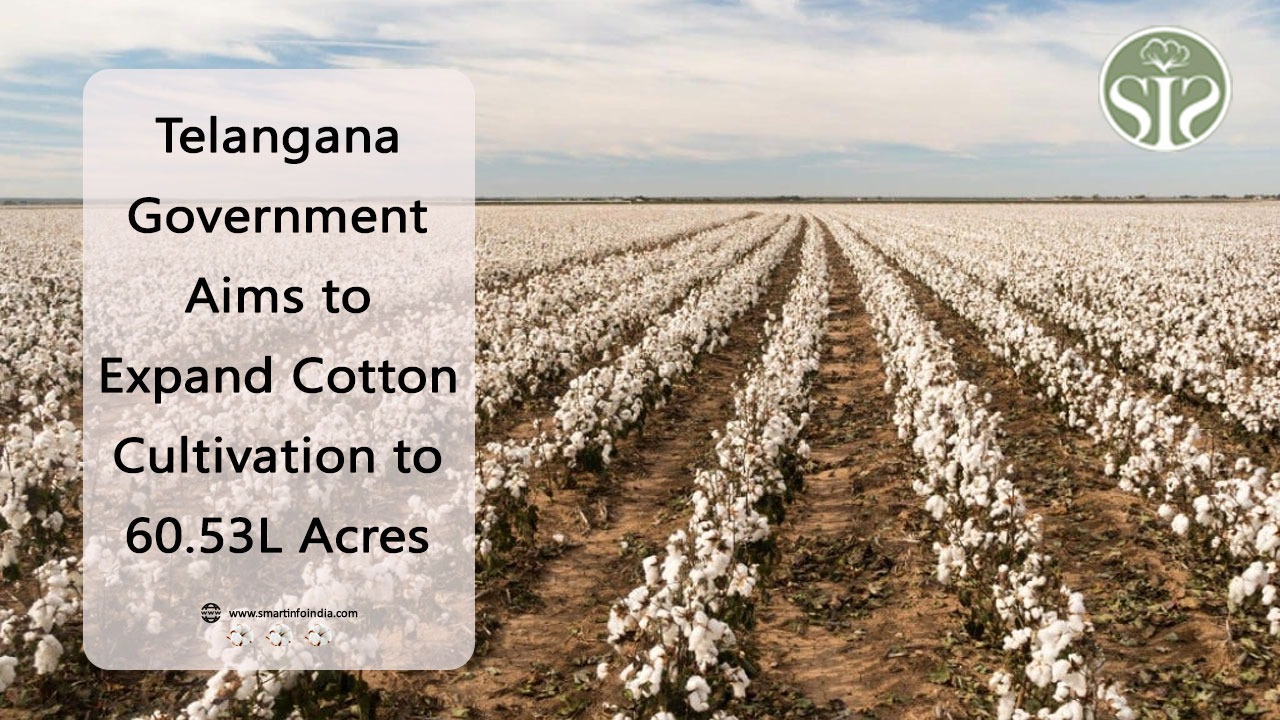
Telangana Government Aims to Expand Cotton Cultivation to 60.53L Acres

The Telangana government wants to cultivate 60.53L acres of cotton.Anticipating a potential expansion of cotton cultivation across approximately 60.53 lakh acres in the upcoming Kharif 2024 season, the state's agriculture department is strategizing to make 120 lakh packets of the BGII (Bollguard II) cotton seed variety accessible in the market.During a comprehensive review meeting held at the Secretariat with agriculture officials on Wednesday, May 15, Agriculture Minister Tummala Nageswara Rao directed officials to ensure the timely availability of seeds in the market by the end of this month.Expressing concern over the decline in cotton cultivation from 60.53 lakh acres in 2021 to 45.17 lakh acres by 2023, the minister highlighted the burgeoning demand for cotton in the international market. He emphasized the need for expanding the cultivation area, hence the initiative to supply BGII variety seeds.State government officials have convened meetings twice with seed companies, issuing clear directives in this regard.Emphasizing that the Centre has set Rs 864 as the minimum support price (MSP) per packet for cotton, the minister cautioned against any attempts by dealers or companies to sell cotton seeds above this price. Stringent action will be taken against such entities or any disruptions in the seeds’ supply chain.Read more :- Government Initiatives to Assist Exporters in Countervailing Duty Cases

Related News

Youtube Videos

रुई के भाव में लगातार गिरावट 😱 क्या आगे भी रहेगी मंदी? | Cotton Market
रुई के भाव में लगातार गिरावट 😱 क्या आगे भी रहेगी मंदी? | Co...
रुई बाज़ार में गिरावट का सिलसिला जारी 😱🔥Cotton market rate today #youtube
रुई बाज़ार में गिरावट का सिलसिला जारी 😱🔥Cotton market rate...
रुई बाज़ार में गिरावट का रुख 😱 Cotton market rate today #youtube
रुई बाज़ार में गिरावट का रुख 😱 Cotton market rate today #you...
Application Download
Whatsapp Contact