Recent News

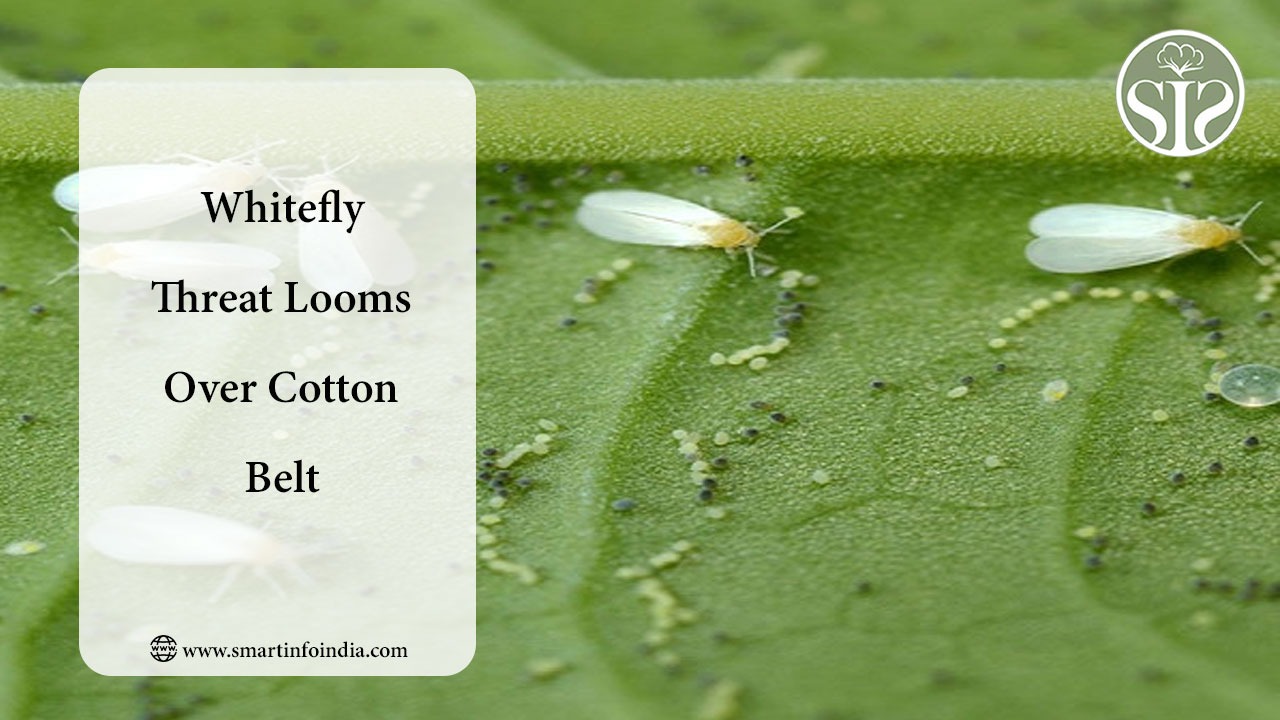
Whitefly Threat Looms Over Cotton Belt

Danger of Whiteflies Hangs Over Cotton BeltAfter nearly a decade, the fear of whitefly infestations has returned to the cotton belt in the Malwa region, with reports of these pests appearing in parts of Mansa, Bathinda, and Fazilka districts. The State Agriculture Department has mobilized teams to visit affected villages, urging field officers to stay vigilant. Officials are advising farmers to inspect their crops closely and apply recommended sprays to mitigate the infestation.Announcements through village gurdwara loudspeakers have been made to inform farmers about the rising threat and the importance of following expert recommendations for pest control. Experts have noted that the current hot and humid weather is conducive to pest outbreaks. They also pointed out that many farmers planted moong crops during the summer, which may have exacerbated the whitefly problem.Whiteflies reproduce quickly and typically hide under leaves, making them difficult to eliminate without direct spraying. The agriculture department has recommended specific sprays effective only at the early stages of infestation.Farmers have reported a significant reduction in cotton cultivation, now at an all-time low of around 97,000 hectares, as many have shifted to growing paddy, pulses, and maize. This shift is partly due to successive governments' failure to adequately address pest issues.In a distressing incident, Kulwinder Singh from Bhagi Bander village reportedly destroyed his cotton crop on two acres after a whitefly attack. The situation is reminiscent of the August–September 2015 crisis, when about 60% of the cotton crop on 4.21 lakh hectares was damaged, leading to tragic farmer suicides due to the financial losses incurred.Jagseer Singh, Chief Agriculture Officer of Bathinda, acknowledged the widespread whitefly presence in the district, attributing it to the extended dry spell. He emphasized that early intervention with recommended sprays can be effective in controlling the pest.Read More :> Pink Bollworm Crisis Halves Cotton Cultivation in North India

India Budget 2024-25: Key Highlights for the Textile Sector

https://www.smartinfoindia.com/news-details-english/less-than-average-rainfall-in-bhiwani-crisis-on-kharif-cultivationIndia's Budget 2024–2025: The Textile Sector's High PointsFinance Minister Nirmala Sitharaman's Budget 2024-25 includes significant measures for the textile and leather sectors. The basic customs duty (BCD) on real down filling material from duck or goose has been reduced to boost export competitiveness. The list of exempted goods for manufacturing leather and textile garments, footwear, and other leather articles for export has been expanded. The BCD on methylene diphenyl diisocyanate (MDI) for spandex yarn production has been reduced from 7.5% to 5%, subject to conditions, and the export duty structure on raw hides, skins, and leather has been simplified.A new centrally sponsored scheme will skill 20 lakh youth over five years, upgrading 1,000 Industrial Training Institutes (ITIs) with industry-aligned courses. Special attention is given to MSMEs and labour-intensive manufacturing. A Credit Guarantee Scheme will facilitate term loans for MSMEs without collateral, providing guarantee cover up to ₹100 crore. Public sector banks will develop in-house credit assessment capabilities based on MSMEs' digital footprints. A new mechanism will support MSMEs in maintaining bank credit during stress periods with government fund guarantees.E-Commerce Export Hubs will be set up in public-private partnership (PPP) mode to help MSMEs and traditional artisans sell products internationally. Investment-ready “plug and play” Industrial Parks will be developed in or near 100 cities, with twelve industrial parks under the National Industrial Corridor Development Programme being sanctioned. Rental housing with dormitory-type accommodation for industrial workers will be facilitated in PPP mode with viability gap funding (VGF) support. Rules for Foreign Direct Investment (FDI) and Overseas Investments will be simplified to facilitate FDIs, prioritize investments, and promote the use of the Indian Rupee in overseas investments.Read more :- Less than average rainfall in Bhiwani, crisis on Kharif cultivation

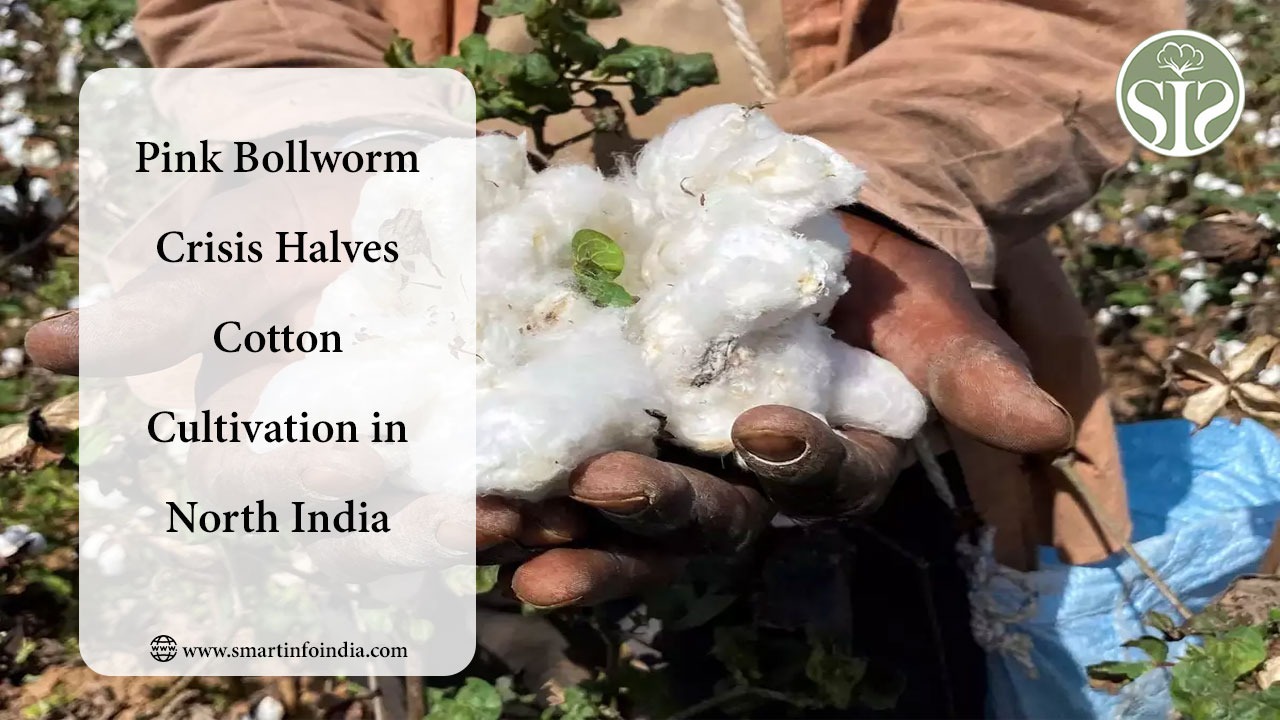
Pink Bollworm Crisis Halves Cotton Cultivation in North India

North Indian Cotton Cultivation Is Halted by the Pink Bollworm CrisisFor nearly four years, the pink bollworm has devastated cotton crops in the northern Indian states of Punjab, Haryana, and Rajasthan. This infestation has led to a significant decrease in cotton cultivation, falling from around 160,000 hectares last year to only 100,000 hectares this year, as of the first week of July.Pink Bollworm Infestation First Detected in 2017The pink bollworm (PBW), also known as gulabi sundhi among farmers, damages cotton crops by burrowing its larvae into the cotton bolls, resulting in the lint being cut and stained, making it unfit for use. Effective techniques to prevent PBW attacks exist but have not been widely adopted by farmers.The pest first appeared in North India during the 2017-18 season in select locations of Haryana and Punjab, primarily affecting Bt cotton. By 2021, it began causing significant damage in several districts in Punjab, including Bathinda, Mansa, and Muktsar, where approximately 54% of the area under cotton production experienced varying degrees of PBW infestation. Adjoining areas in Rajasthan also reported PBW infestation during that period.Spread and Impact of PBW in North IndiaSince 2021, PBW attacks have increased annually in Punjab, Haryana, and Rajasthan. In Punjab, the affected districts include Bathinda, Mansa, and Muktsar. In Rajasthan, Sri Ganganagar and Hanumangarh are impacted, while in Haryana, Sirsa, Hisar, Jind, and Fatehabad are affected. Two months after sowing this year, reports of PBW infestation are emerging across these states.Methods to Control PBW Spread: PBW spreads through the air and infected crop residues left in fields, with infected cotton seeds being another source. Experts advise spraying insecticides once PBW is detected; frequent applications can save uninfested bolls. Fields with PBW should not be planted with cotton for at least one season, and crop residues should be promptly burned, avoiding the mixing of healthy and unhealthy seeds.Preventive Measures: Applying synthetic pheromone paste to cotton plant stems can prevent male insects from finding females. This paste should be applied to 350-400 plants per acre at 45-50 days, 80 days, and 110 days after sowing. Another technique, PBKnot Technology, uses thread knots with pheromone dispensers to confuse male moths, and these should be tied to cotton plants when they are 45-50 days old. Challenges with Adoption: Farmers are hesitant to adopt new techniques and technologies due to the extra cost and lack of immediate benefits. There is a lack of awareness and training among farmers about these preventive techniques. Intensive training programs, awareness campaigns, field demonstrations, and financial aid from the government and private sector can help make these technologies more accessible.Coordinated Efforts Required: Effective PBW management requires coordinated efforts among states. Poor management in one state can potentially destroy crops in neighboring states as the pest can travel through the air.Read More :>Heavy rain damages cotton crop in Jalgaon

Less than average rainfall in Bhiwani, crisis on Kharif cultivation

Bhiwani's below-average rainfall and the dilemma affecting Kharif farmingThere is a flood situation in many states of the country, but this time Haryana and especially Bhiwani have received less than average rainfall. An average of 40 mm of rain has not been recorded in Bhiwani district so far. Due to this, farmers are worried about sowing and people are troubled by humidity and heat.Agricultural scientists believe that pollution is the reason for less rainfall. According to the data of the Meteorological Department, clouds are not raining here. There has been fluctuations in the weather for the last one week. Along with the increase in temperature, humidity has also increased. Dr. Devi Lal, scientist of Krishi Vigyan Kendra, said that the activity of monsoon had increased in the last week of June, but till now there has been no rain in all parts. Due to this, farmers may face problems in sowing and production of Kharif crop.Pulses crop is sown in about 25 thousand acres in Bhiwani district, which is completely dependent on rain. The area under Guar is also large, but due to lack of rain, farmers are reluctant to sow Guar. Meteorologists say that Bhiwani is a desert area, where farmers are dependent on rain. Farmers are producing some crops by irrigating them with the help of tube wells and bore wells.So far, Bhiwani district has not received rain as expected. Farmers are busy sowing Kharif season crops. The Agriculture Department has prepared a possible target for Kharif sowing and every effort is being made to achieve it.Read More :>Heavy rain damages cotton crop in Jalgaon

DGFT, Customs Process Overhaul, Textile PLI Scheme Revamp, QCO Suspension to Aid Exports: GTRI

DGFT, Redesign of the Textile PLI Scheme, QCO Suspension to Promote Exports: GTRIThe Global Trade Research Initiative (GTRI) has recommended several measures to boost India’s garment exports. These include suspending quality control orders (QCO) on polyester and viscose staple fibre to allow domestic manufacturers to become more competitive, expanding product coverage and relaxing criteria in the textile production linked incentive (PLI) scheme, overhauling Directorate of Foreign Trade (DGFT) and Customs procedures, and addressing monopolistic practices of domestic suppliers.GTRI highlighted that complex procedures, import restrictions, and domestic vested interests are hindering the growth of India’s garment export sector. The think tank identified sourcing quality raw fabric, particularly synthetic fabric, as a major challenge for exporters.This report gains importance as India continues to lag behind other countries in garment exports despite a steady rise in textile imports. In 2023, China led with $114 billion in garment exports, followed by the EU with $94.4 billion, Vietnam with $81.6 billion, Bangladesh with $43.8 billion, and India with only $14.5 billion. “This shows India significantly trails behind,” said Ajay Srivastava, co-founder of GTRI.Between 2013 and 2023, Bangladesh’s garment exports grew by 69.6%, Vietnam’s by 81.6%, while India’s exports rose by only 4.6%. Consequently, India's global market share in garment trade has declined. The share of knitted apparel dropped from 3.85% in 2015 to 3.10% in 2022, and non-knitted apparel decreased from 4.6% to 3.7%.Srivastava pointed out that QCOs have undermined the MMF supply chain’s competitiveness by limiting access to affordable and specialized raw materials. The Bureau of Indian Standards is slow in registering foreign suppliers, forcing exporters to buy from domestic monopolies at higher prices. Unlike exporters in Bangladesh and Vietnam, who can easily access quality imported fabrics, Indian exporters face daily struggles due to high import duties and complex DGFT and Customs procedures. These challenges force exporters to meticulously account for every inch and type of fabric imported.Between 2018 and 2023, garment imports rose by 47.9%, while India’s textile imports increased by 20.86%.GTRI also noted that firms obtain advance authorisations from DGFT for importing duty-free inputs for export production. The DGFT currently requires that unutilised authorisations be surrendered with a non-utilisation letter/certificate from Customs, which increases transaction costs.Read More :> Gujarat Textile Traders Set 100-Day Payment Limit Amid New Tax Regulations
Related News

Youtube Videos

रुई बाज़ार में गिरावट का रुख 😱 Cotton market rate today #youtube
रुई बाज़ार में गिरावट का रुख 😱 Cotton market rate today #you...
जानिए आज का कपास बाज़ार 😱 Cotton market rate today #youtube
Ganesh Chaturthi Celebration at Our Office 🙏✨ | Ganpati Bappa Morya! #shorts
Ganesh Chaturthi Celebration at Our Office 🙏✨ | Ganpati Ba...
Application Download
Whatsapp Contact