Recent News

Flooding Causes Rs 100 Crore Daily Loss to Surat Textile Trade

Flooding Costs the Surat Textile Trade Rs. 100 Crore Every DaySurat's textile industry is facing severe financial setbacks due to ongoing flooding in areas around Kadodara Road since Monday, leading to a daily loss of over Rs 100 crore. The floods have disrupted operations in at least 20 textile markets and halted the activities of 200 transport firms. Businesses anticipate that it will take several days for the floodwaters to recede, allowing market operations to resume normally.Thousands of daily wage workers have been affected, losing their income due to the shutdowns. In Saroli, water has inundated textile markets, and while some markets have avoided direct water damage, submerged connecting roads have impeded access. The full extent of the damage to goods and property stored in shops and warehouses will only be known once the water recedes. Kapil Arora, president of DMD Market, expressed concern over the recurring flooding issue, noting, "Every year we face flooding, but there is no solution to the problem."The situation has left many traders stranded, with Vishal Bansal from RKLP Market noting that operations cannot return to normal until the roads are passable again. Kailash Hakim, president of the Federation of Surat Trade and Textile Associations (FOSTTA), highlighted the need for a permanent solution to the recurrent flooding, emphasizing the significant loss of business. Sunil Jain, chairman of the South Gujarat Textile Traders Association, pointed out the compounded issues due to power outages, leaving the markets largely inactive.The flooding has also severely impacted the 250 textile goods transporters, with around 200 based in the affected Saroli and Kadodara Road areas. These transporters are facing a daily business loss of over Rs 15 lakh due to the inability to access markets and warehouses. Yuvraj Desle, president of the Surat Textile Goods Transport Association, confirmed that the majority of transport operations have been halted, severely impacting the supply chain.Read More :> Textile Associations Forge Strategic Partnership with Madhya Pradesh Government

Textile Associations Forge Strategic Partnership with Madhya Pradesh Government

Textile Associations and the Government of Madhya Pradesh Form a Strategic PartnershipIn a significant move aimed at bolstering the textile industry, the Tiruppur Exporters’ Association (TEA), Southern India Mills’ Association (SIMA), and Indian Cotton Federation (ICF) formalized an agreement with the Madhya Pradesh government on Thursday. This strategic partnership is focused on promoting the cultivation of Extra Long Staple (ELS) cotton in the state, recognized for its superior quality.J. Thulasidharan, Chairman of the ICF, highlighted that Madhya Pradesh is already known for producing the finest ELS cotton in India, a variety highly sought after by textile mills in Tamil Nadu. The initiative will not only aim to expand the cultivation area but also enhance the yield of ELS cotton. Additionally, a new Cotton Development Board will be established as part of the effort to support and sustain the growth of this premium cotton variety.This collaboration is expected to address the increasing demand for ELS cotton, essential for high-quality textile manufacturing, and position Madhya Pradesh as a key player in the national cotton market. By leveraging this partnership, the stakeholders aim to strengthen the supply chain and ensure consistent availability of top-grade cotton to meet both domestic and international market needs.Read More :>35 thousand hectare reduction in cotton sowing area




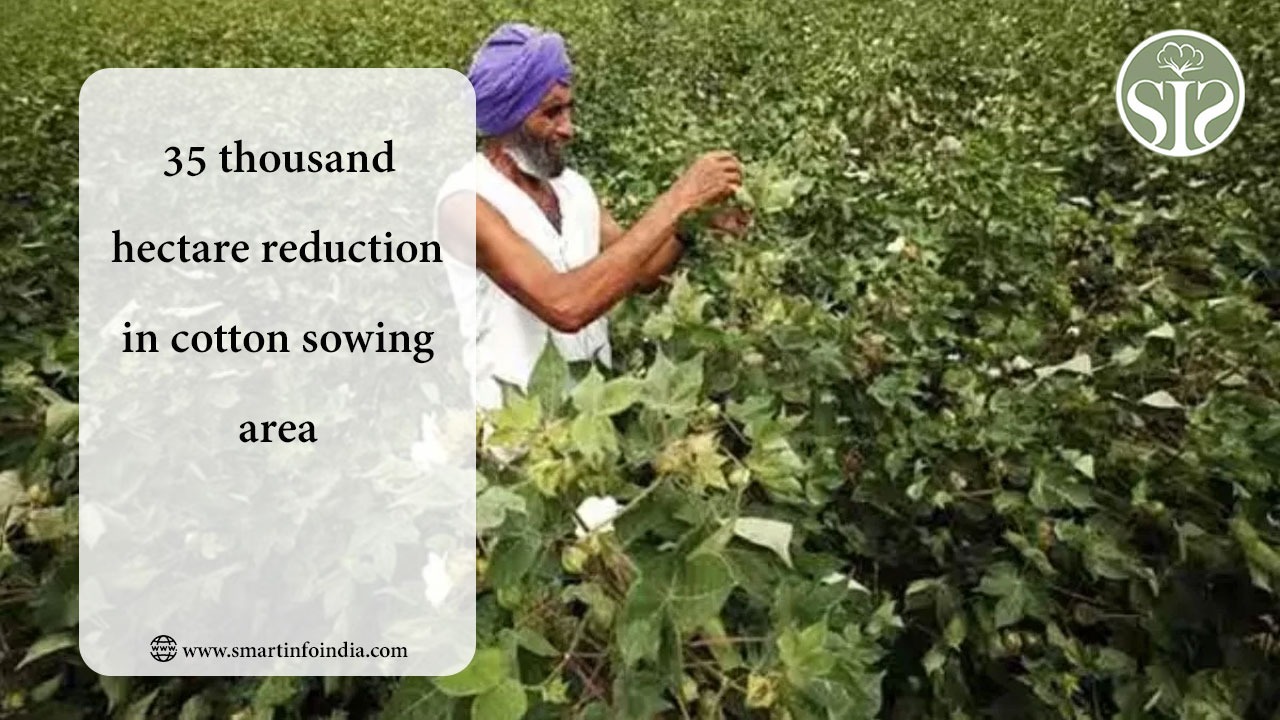
35 thousand hectare reduction in cotton sowing area

Reduction of 35,000 hectares in cotton sowing areaThe area of cotton, the main crop in the dry land belt, has decreased by 35 thousand hectares this year, compared to last year. Farmers have given priority to sowing soybean due to not getting the expected price and profit in the open market.This year, soybean has been sown in the highest 38 percent area in the Kharif season in the district. The district's share in cotton production is only 33 percent. Sowing of this year's Kharif season has ended. According to the Agriculture Department, out of the average 6 lakh 81 thousand 779 hectares, sowing has been done in 6 lakh 31 thousand 276 hectares.Although soybean has been sown the most, it is one and a half thousand hectares less than last year. Cotton area has decreased by 35 thousand 800 hectares. There was a possibility that the high price received for tur in the last season would have an impact on the sowing area, but it has not been found in reality, and the area of tur has increased by only four thousand hectares. There are also signs of reduction in the area of sowing of moong and urad.This year the total sowing area in Kharif season is 20 thousand 600 hectares less than last year. Out of the average sowing area of 6 lakh 81 thousand 779 hectares this year, sowing has been completed in 6 lakh 31 thousand 276 hectares, which is 92 percent of the total. Soybean has been sown in 2 lakh 50 thousand 907 hectares, which is 38 percent of the average area. While cotton has been sown in 2 lakh 25 thousand 651 (33 percent) and tur in 1 lakh 11 thousand 7 hectares. This year the area of cotton has decreased by 45 thousand hectares.Read More :> Whitefly Threat Looms Over Cotton Belt

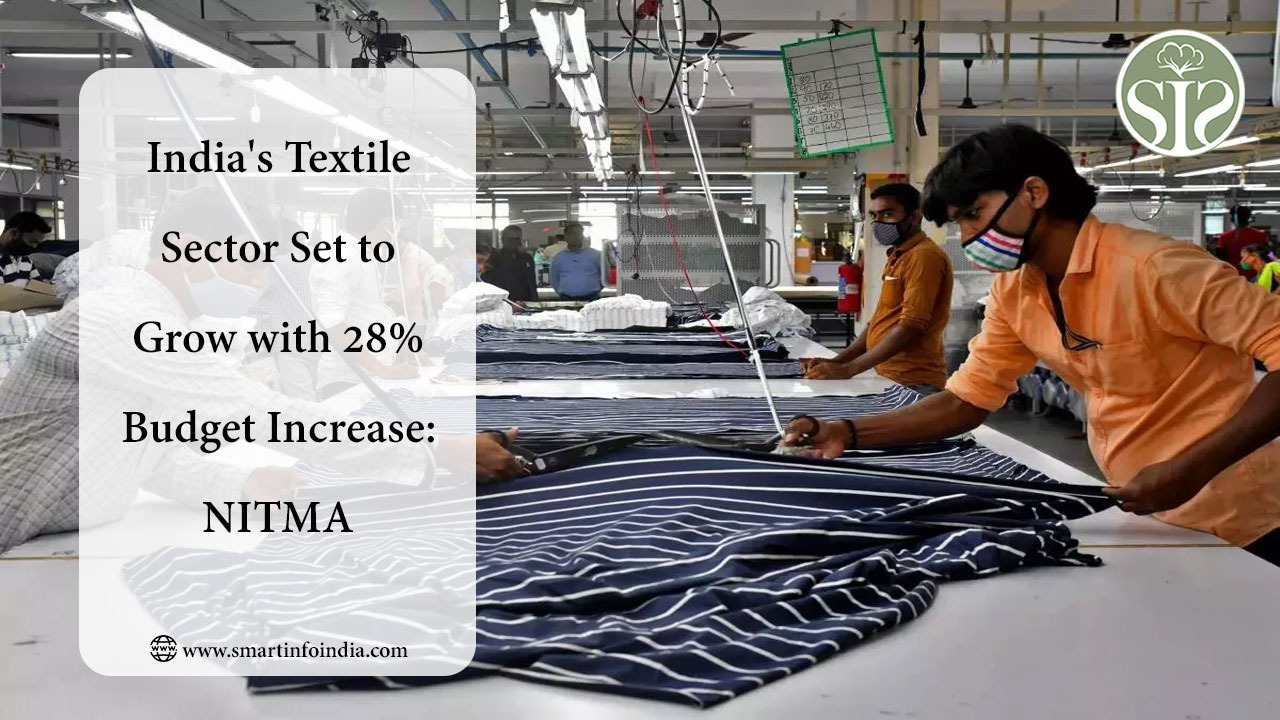
India's Textile Sector Set to Grow with 28% Budget Increase: NITMA

NITMA: India's Textile Industry to Expand with 28% Budget IncreaseLudhiana - India’s textile sector is poised for significant growth, with a 28 per cent increase in the budget allocated for the sector for 2024-25, announced Northern India Textile Mills Association (NITMA) President Sanjay Garg on Wednesday.This substantial boost in funding is expected to drive innovation, enhance productivity, and create new opportunities within the industry. The increased investment reflects the government’s commitment to fostering the growth and development of the textile sector, which is vital to the country's economy.With the enhanced budget allocation, the textile sector is well-positioned to capitalize on emerging trends and seize new opportunities in the global market. Garg highlighted that employment, skilling, and support for MSMEs are key focus areas of the Union Budget. He praised the new Credit Guarantee Scheme for MSMEs, which offers provisions for term loans to purchase machinery and equipment without requiring collateral or a third-party guarantee, with coverage up to Rs 100 crore, potentially for even larger loan amountsThe increase in the credit guarantee scheme limit is anticipated to stimulate investment in the textile sector. Garg also noted that budget allocations for cotton procurement, the Amended Technology Upgradation Fund Scheme for the National Technical Textiles Mission, and increased funding for PM MITRA will provide crucial support to the industry.Read More :>Whitefly Threat Looms Over Cotton Belt

Related News

Youtube Videos

रुई बाज़ार में गिरावट का रुख 😱 Cotton market rate today #youtube
रुई बाज़ार में गिरावट का रुख 😱 Cotton market rate today #you...
जानिए आज का कपास बाज़ार 😱 Cotton market rate today #youtube
Ganesh Chaturthi Celebration at Our Office 🙏✨ | Ganpati Bappa Morya! #shorts
Ganesh Chaturthi Celebration at Our Office 🙏✨ | Ganpati Ba...
Application Download
Whatsapp Contact