Recent News

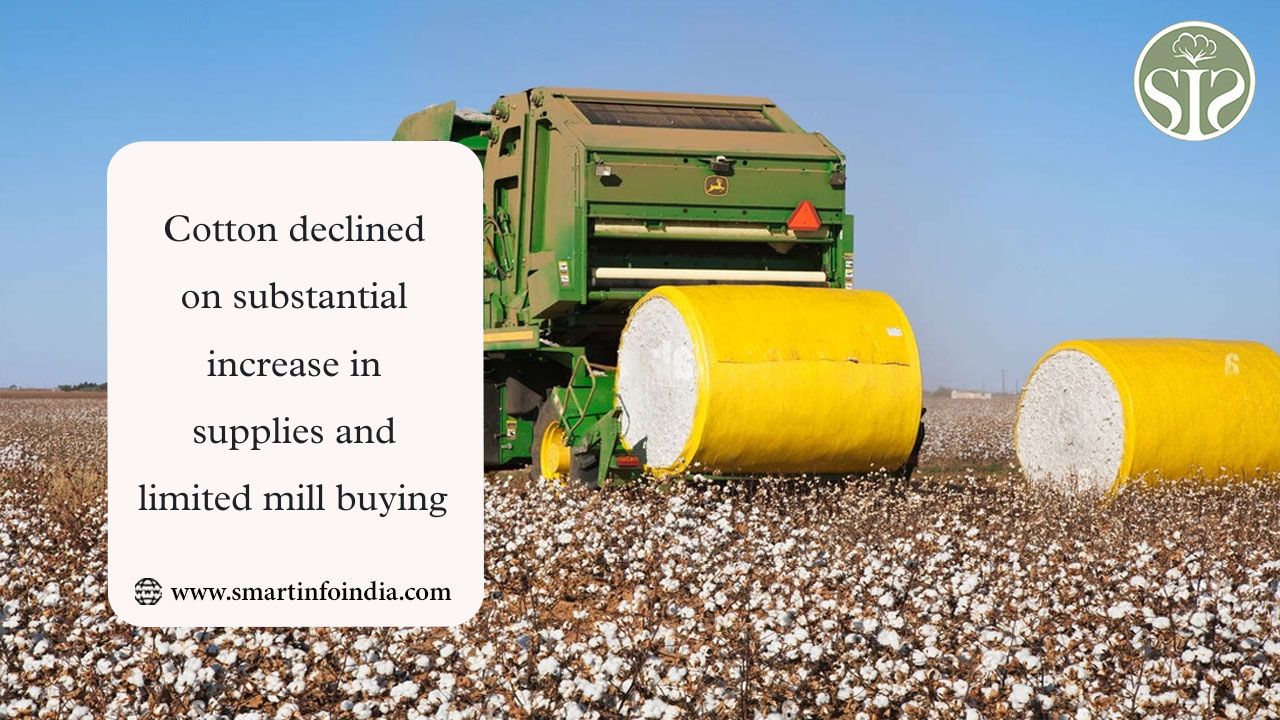
Cotton declined on substantial increase in supplies and limited mill buying .

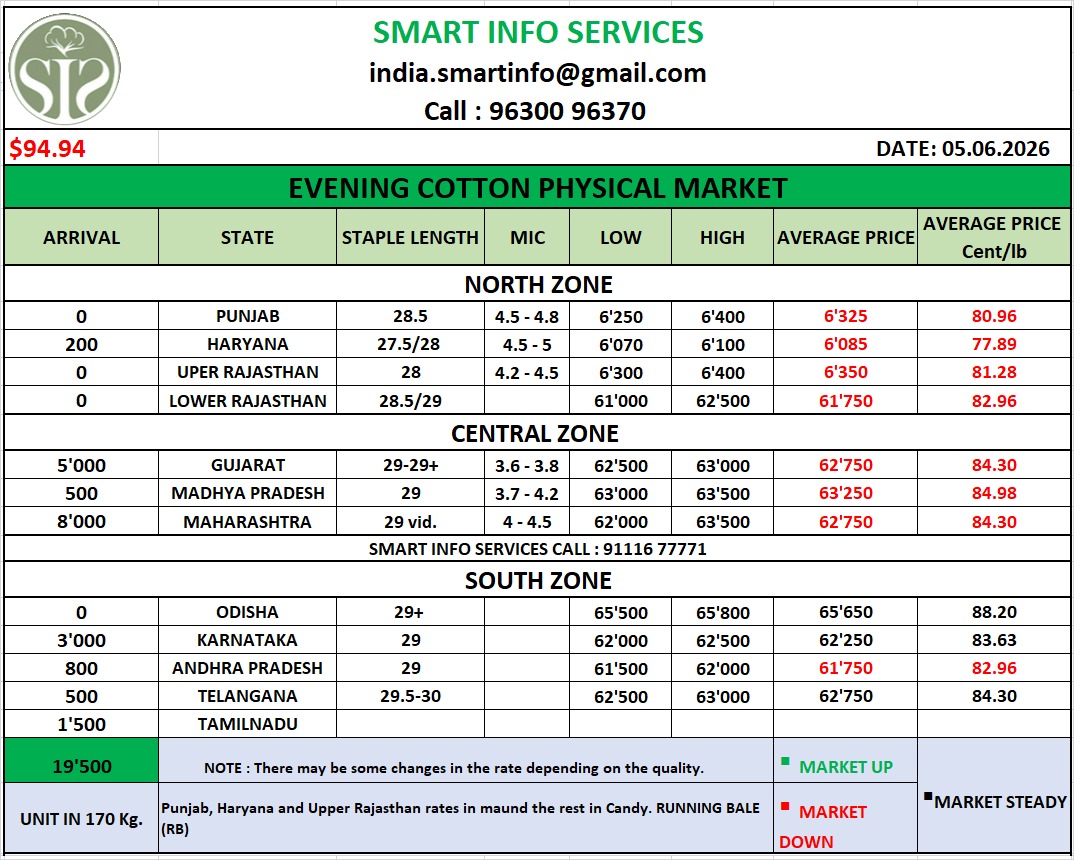
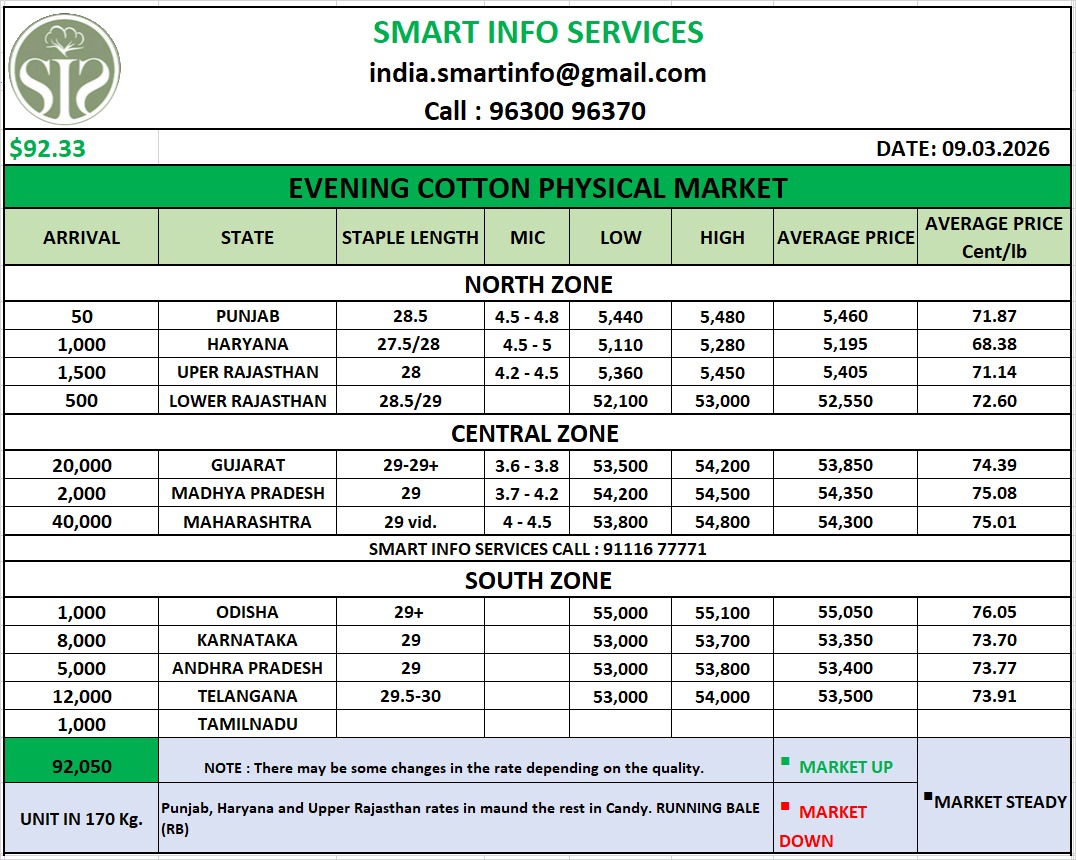
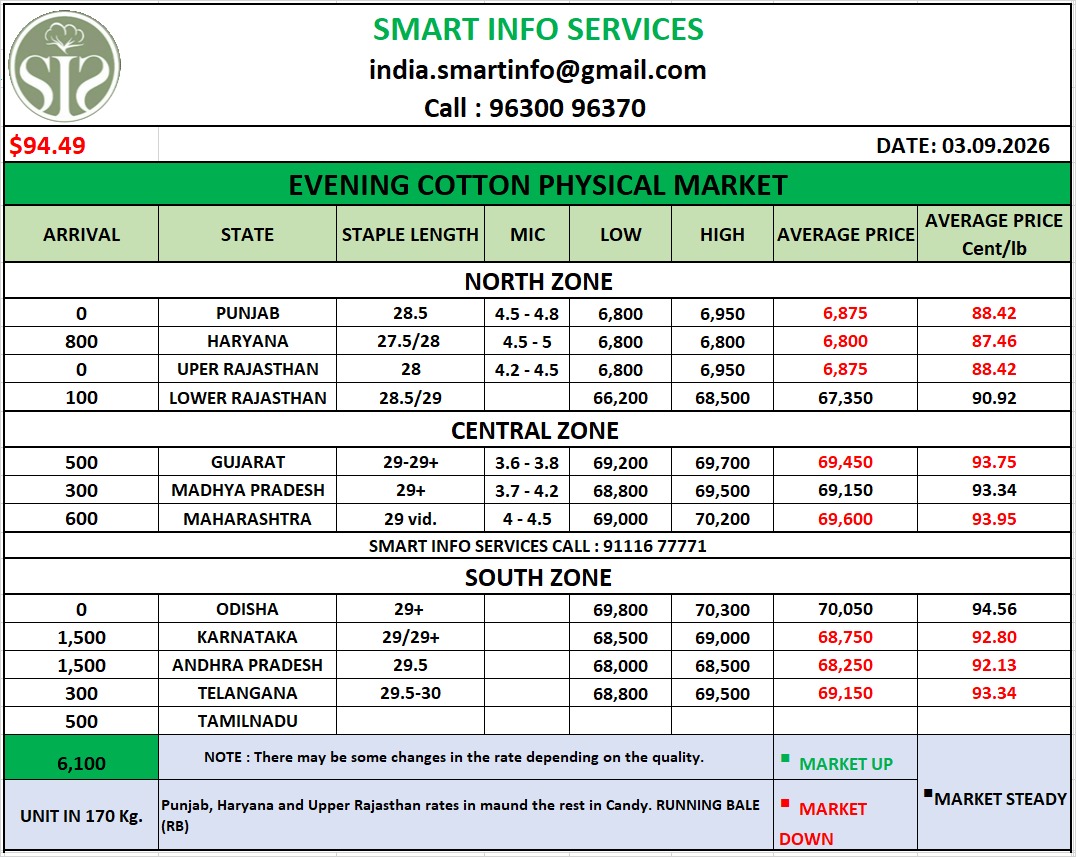
Cotton fell as a result of limited mill purchases and a significant increase in supplies.Cotton candy prices fell 0.41% to 53,510 on increased supplies and weak mill buying. Mills have adequate stocks, reducing their immediate buying needs. Brazil's cotton production for 2024-25 is expected to increase by 1.6% to 3.7616 million tonnes, with a 4.8% expansion in planted area, indicating adequate global supply. Additionally, the Cotton Corporation of India (CCI) is expected to procure over 100 lakh bales at minimum support price (MSP) this season. The Cotton Association of India (CAI) estimates India's cotton production for 2024-25 to be 301.75 lakh bales, lower than 327.45 lakh bales in the previous season, mainly due to lower yields in Gujarat, Punjab and Haryana.Total cotton supply till January 2025 was 234.26 lakh bales, which includes 188.07 lakh bales of fresh pressing, 16 lakh bales of imports and opening stock of 30.19 lakh bales. Estimated cotton consumption till January 2025 is 114 lakh bales, including exports of 8 lakh bales, while ending stock is 112.26 lakh bales. CAI maintained its domestic consumption forecast at 315 lakh bales, while export forecast for 2024-25 is 17 lakh bales, lower than last season's 28.36 lakh bales.Technically, the market is witnessing long term liquidation, and open interest remains unchanged at 253. The prices have support at 53,200 and can likely test 52800 levels, while resistance is also at 53,860 and a move above this can take the prices towards 54200 levels.read more :-NBRI’s innovative chip to boost cotton cultivation

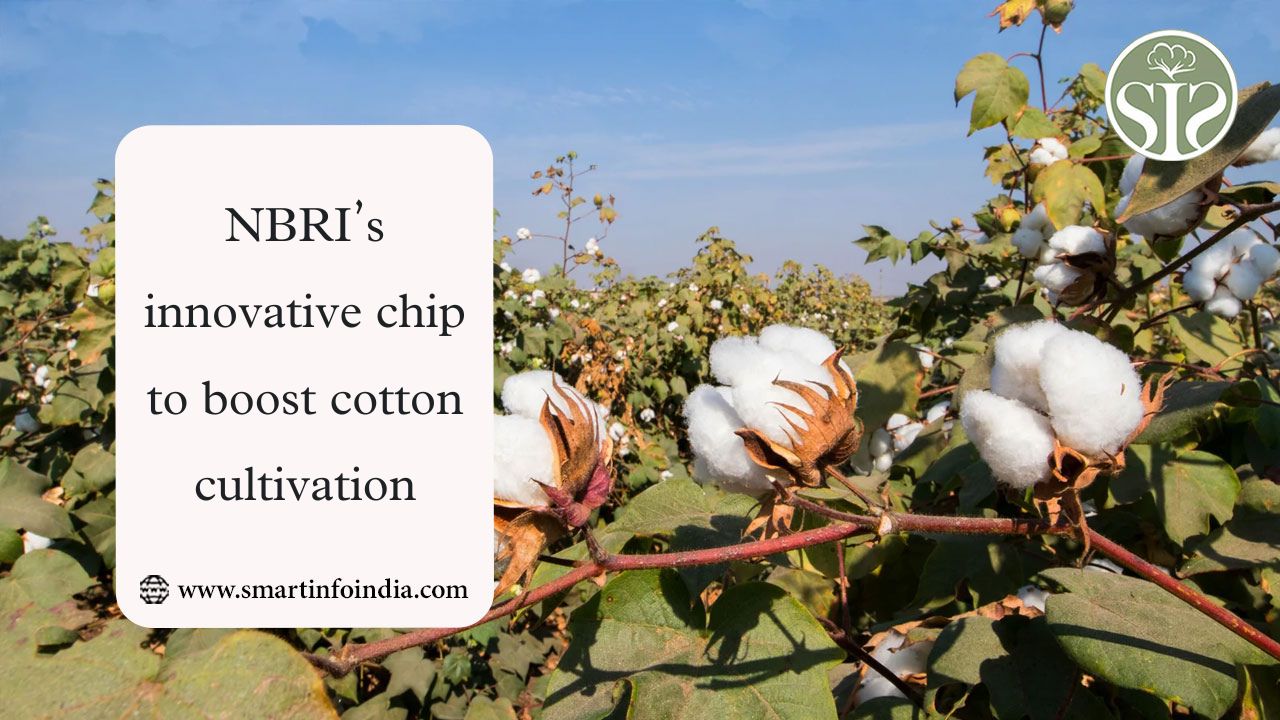
NBRI’s innovative chip to boost cotton cultivation

NBRI's cutting-edge chip to improve cotton farmingLucknow : CSIR-National Botanical Research Institute (NBRI), Lucknow, has developed a special chip that will assist scientists and farmers in cultivating superior cotton plants.Upon insertion of this ‘90K SNP Cotton Chip' in special equipment, it will provide data about various cotton varieties and their characteristics. The chip facilitates the development of high-quality cotton plants through marker-assisted breeding (MAB), a DNA-based approach. This utilises molecular markers to identify and choose plants with specific traits, creating new varieties."The chip contains data of around 90,000 cotton SNP markers, which can be used to crossbreed and create a new variety according to climatic, production or pest control needs. This is the first such chip in India, and its license was given to a Delhi-based company in the presence of CSIR director general N Kalaiselvi," said NBRI director Ajit Kumar Shasany.Explaining MAB or chip technology, Shasany said: "In agricultural production, we often aim to combine good traits from different plants to breed a new variety. Suppose we have a cotton plant with many seeds but fewer branches and is not drought or pest-resistant while another variety has fewer seeds but is drought and pest-resistant and has more branches. We can combine these two to breed a desirable variety."This may sound easy, but it's a herculean task as suitable varieties must be identified from thousands before crossbreeding. It may take months and even years. It's tough to determine which one is the best. The agricultural performance of plants is usually linked to traits that are encoded by DNA," he said.Shasany added that this chip was prepared by sequencing 320 cotton genotypes found in India, which resulted in 40 lakh single nucleotide polymorphisms (SNP), a variation in the DNA sequence at a single base position. Out of these, 90K SNPs were shortlisted as the best markers.This may sound easy, but it's a herculean task as suitable varieties must be identified from thousands before crossbreeding. It may take months and even years. It's tough to determine which one is the best. The agricultural performance of plants is usually linked to traits that are encoded by DNA," he said.Lucknow: CSIR-National Botanical Research Institute (NBRI), Lucknow, has developed a special chip that will assist scientists and farmers in cultivating superior cotton plants.Upon insertion of this ‘90K SNP Cotton Chip' in special equipment, it will provide data about various cotton varieties and their characteristics. The chip facilitates the development of high-quality cotton plants through marker-assisted breeding (MAB), a DNA-based approach. This utilises molecular markers to identify and choose plants with specific traits, creating new varieties."The chip contains data of around 90,000 cotton SNP markers, which can be used to crossbreed and create a new variety according to climatic, production or pest control needs. This is the first such chip in India, and its license was given to a Delhi-based company in the presence of CSIR director general N Kalaiselvi," said NBRI director Ajit Kumar Shasany.Explaining MAB or chip technology, Shasany said: "In agricultural production, we often aim to combine good traits from different plants to breed a new variety. Suppose we have a cotton plant with many seeds but fewer branches and is not drought or pest-resistant while another variety has fewer seeds but is drought and pest-resistant and has more branches. We can combine these two to breed a desirable variety.""This may sound easy, but it's a herculean task as suitable varieties must be identified from thousands before crossbreeding. It may take months and even years. It's tough to determine which one is the best. The agricultural performance of plants is usually linked to traits that are encoded by DNA," he said.Shasany added that this chip was prepared by sequencing 320 cotton genotypes found in India, which resulted in 40 lakh single nucleotide polymorphisms (SNP), a variation in the DNA sequence at a single base position. Out of these, 90K SNPs were shortlisted as the best markers.read more :-Rupee falls 16 paise at open to 87.31 against US dollar

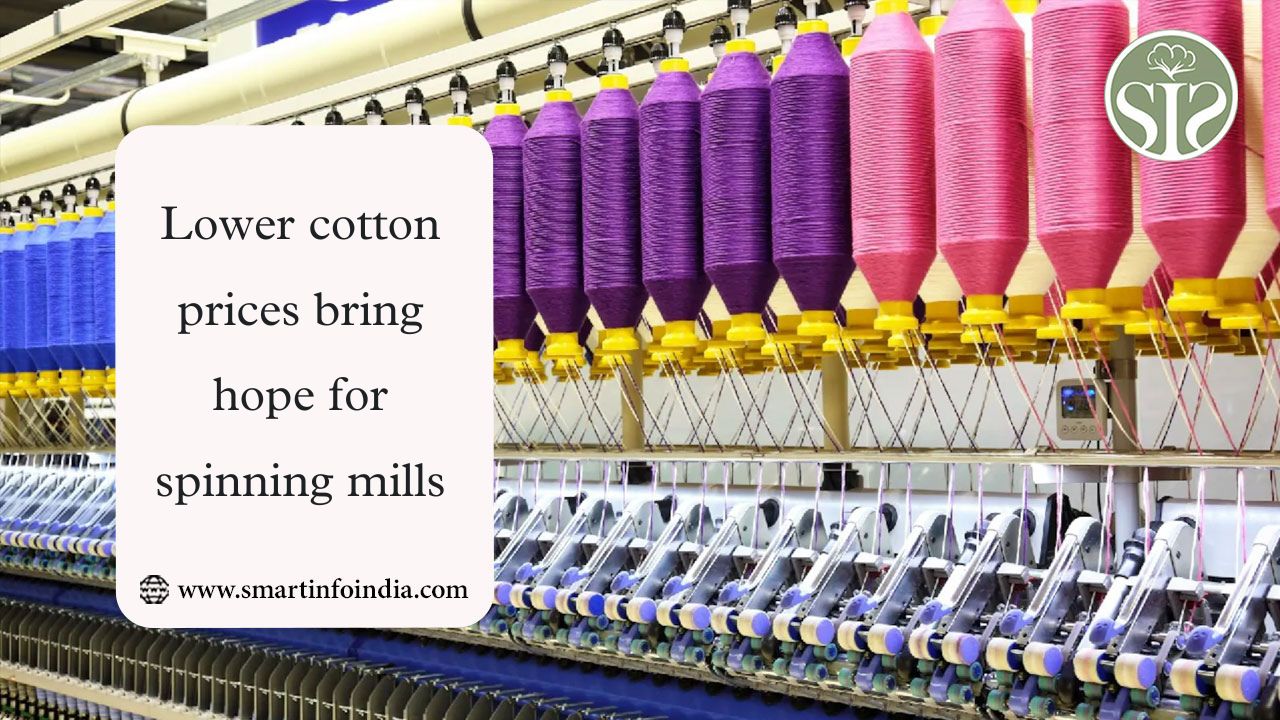
Lower cotton prices bring hope for spinning mills

A decrease in cotton prices gives spinning mills hope.Cotton prices in India have been on a downward trend in recent months. In fact, this is a matter of concern for cotton growers, but spinners are feeling good after struggling for several quarters.There are several reasons that support the forecast that cotton prices are likely to remain low for some time. The most important reason is that cotton production is expected to increase by 9% to 37.7 million bales during the current cotton year. A bale weighs 170 kg. Some northern states are expected to have bumper crops, while production in southern states has been affected due to pest attacks and unseasonal winter rains.At the same time, global cotton production is picking up. After a partial recovery in calendar year 2017 from a 13-year low in 2016, global production is forecast to pick up, showing a good growth of 11-13% in 2018. Therefore, both domestic and global conditions are supporting a decline in cotton prices.Meanwhile, a reduction in Chinese cotton imports following a policy change designed to support the domestic industry has upset the price cycle in international markets. China is one of the major consumers of cotton and cotton yarn.Any improved momentum in imports by China could support a recovery in global cotton prices. For the time being, this seems unlikely. Domestically too, hybrid-6 grade cotton is selling at Rs 107 per kg, much lower than the highs of Rs 130-140 per kg in August.With news of higher production after harvest in October, cotton prices are trending downwards. The question is whether any policy intervention will push prices higher, given the importance of farmers' vote in the upcoming general elections.Certainly, lower cotton prices bring relief to the spinning industry, which has recorded weak sales growth and profit margins in the last four quarters. Credit rating agency ICRA Ltd has explored the reasons for the pressure in spinning mills in a report: “In the quarter ended September 2016, volumes were impacted due to a sharp fall in exports to China, but the impact of demonetisation in the following quarter impacted volumes.ICRA’s sample of 13 spinning mills showed a weak trend in volumes in recent times and pressure on contribution margins, partly driven by volatile cotton prices. Overall operating profit of ICRA’s sample remained 6-12% lower than the healthy levels seen in FY13 and FY14, although 3% higher than FY16. No wonder yarn mills would be happy with the fall in cotton prices. However, ultimately currency movements and demand will remain the key determinants of profitability of yarn mills, especially exporters.read more :-Rupee falls 19 paise against the dollar to 87.39

Textile, Tourism, Technology: PM Modi's 'mantra' for India's development

PM Modi's'mantra' for the development of India is textiles, tourism, and technology.Addressing the Madhya Pradesh Global Investor Summit in Bhopal, the Prime Minister said these sectors will create "crores" of new jobs."Three sectors will play a crucial role in India's development--textiles, tourism, and technology. These sectors will create crores of new jobs. If we look at textiles, India is the second-largest producer of cotton. India has a whole tradition related to textile, it has skill as well as entrepreneurship," PM Modi said.Terming the state as the "cotton capital" of India, the Prime Minister stated that about "25 per cent of India's organic cotton supply comes from Madhya Pradesh."India is the sixth largest textile and apparel exporter in the world.Notably, the Central government aims to target the export of USD 10 billion worth of technical textiles under its National Technical Textiles Mission. To position India as a global leader in technical textiles, the Mission was launched in 2020-21 and has been extended till 2025-26, with a financial outlay of Rs 1,480 crore.Technical textiles are defined as textile materials and products used primarily for their technical performance in various high-end industries. At present, technical textile exports are reportedly between USD 2 billion to USD 3 billion.In his inaugural address at the Global Investor Summit, PM Modi also emphasised on the need to ensure water security for industrial development. He said that the government is constantly pushing for water conservation and promoting river interlinking mission."For industrial development, water security is important. To achieve this, on one side, we are pushing water conservation, and on the other, we are promoting the river interlinking mission. Agriculture is one of the biggest beneficiaries in this process," PM Modi said."Recently, the Rs 45,000 crore Ken-Betwa River Linking Project has been started. This will increase the productivity of 10 lakh hectares of agricultural land," he added.read more :-Indian Rupee lower 35 Paisa, Ends at 87.20 per Dollar

China, India, Bangladesh or Vietnam - who may benefit the most from tariffs imposed by Trump on textiles

Who might gain the most from Trump's textile tariffs—China, India, Bangladesh, or Vietnam?Indian textile exporters see the current tariff war as an opportunity to gain more market share from China, the world's largest textile and apparel exporter. If the reciprocal tariffs imposed by Trump are implemented, it may help India bridge some gap with China."There is a demand for Indian apparels. We will be able to gain share in China's trade, as it is facing severe tariff pressure from the US," Sudhir Sekhri, chairman of the Apparel Export Promotion Council (AEPC) under India's textiles ministry, said on February 18. You can watch the full conversation here:Not just India, Vietnam and Bangladesh are also trying to make more and more space in the US market at the expense of China. "The textile and apparel sector has a complex supply chain. No country can meet the demand of another country," said Prerna Jhunjhunwala of Elara Capital, indicating that imposing reciprocal tariffs would be easier said than done.Vietnam is the world's third-largest textile exporter after China and Bangladesh .Vietnam is set to overtake China to become the largest textile exporter to the US in the first five months of 2024. On the other hand, the US is the third-largest customer of Bangladesh, the world's second-largest apparel exporter. Based on tariff differences alone, Vietnam may be the least impacted compared to India and Bangladesh.This means that when the US imposes its proposed tariffs on reciprocal tariffs, the price of Indian and Bangladeshi textile products exported to the United States will increase due to the tariff hike.As per Indian government data, at least 28% of India's textile and apparel exports go to the US. However, there are considerable variations in tariff rates. According to AEPC, cotton fabric, which accounts for 65% of total exports to the US, attracts a lower duty, while man-made fabrics such as polyester, nylon, acrylic and rayon attract a 33% tariff.The tariff differential in fabric is around 15.6%. But when you cover only apparel, the tariff differential is around 7%. "Import duties on Indian textiles range from 2.6% to 33%," Sekhri pointed out.According to a new report by Prabhudas Lilladher, India's textile exports operate within a low tariff differential even if tariffs rise to 15% to 20%. "India's exports are supported by a highly diversified export base," the report said. Meanwhile, 70% of textile and apparel exports to Vietnam and Bangladesh comprise readymade garments, which are likely to face higher tariffs in the coming months. However, there is still no clarity from the Trump administration on whether the reciprocal tariffs will be on particular categories of products or on the entire sector. However, tariffs have always been one of the many determinants of trade. These three countries continue to have other strengths such as low cost of production, price competitiveness and cheap labour cost. Based on their long-established strengths, these countries are trying to get a share of the larger share of trade in the US market. Divya Srinivasan, research associate at the Centre for Social and Economic Progress, said India needs to reduce its tariffs to encourage textile manufacturers, project itself as an alternative supply chain hub and mitigate the impact of reciprocal tariffs and grab China's export share to the US.Trump's tariffs will have an impact on India, but it may be less than on Vietnam and Bangladesh. This is because textiles and apparel form a large part of the latter two economies, and the US is a major buyer.The textile industry accounts for about 11% of Bangladesh's economy and about 15% of Vietnam's economy. In contrast, India's textile sector contributes 2.3% to GDP, reflecting diversity within the fifth-largest economy.read more :-Rupee opens 15 paise lower at 86.85 against US dollar

Related News

Youtube Videos

कपास बाज़ार साप्ताहिक रिपोर्ट 🔥 | तेजी या मंदी? | CCI Update | Cotton Market  Update
कपास बाज़ार साप्ताहिक रिपोर्ट 🔥 | तेजी या मंदी? | CCI Updat...
रुई बाजार में आज का पूरा माहौल 🔥Cotton Market Today | 11 सितंबर 2026 #smartinfo
रुई बाजार में आज का पूरा माहौल 🔥Cotton Market Today | 11 सि...
कपास बाजार में आज तेज़ी का रुख 😱Cotton market rate today #youtube
कपास बाजार में आज तेज़ी का रुख 😱Cotton market rate today #yo...
Application Download
Whatsapp Contact