Recent News

Leader in fibre production, but growth, exports lagging: What’s ails India’s textile industry

India is a leader in the manufacturing of fiber, but its textile sector is struggling with growth and exports.India’s textile industry is among the largest in the world, spanning a vast value chain from cotton cultivation to high-end apparel manufacturing. However, despite its scale, India lags behind countries like China, Vietnam, and Bangladesh in textile exports, which benefit from vertically integrated supply chains, lower production costs, and simpler regulations.Despite being a global leader in cotton and synthetic fibre production, India’s textile and apparel industry has recorded sluggish growth in recent years. Now, with rising sustainability and compliance requirements, costs are expected to rise further, especially for smaller firms.Fibre to fabric in India — an overviewAfter China, India is the second largest producer of cotton, accounting for 24% of global production. Cotton cultivation engages around 60 lakh farmers, mostly across Gujarat, Maharashtra, and Telangana. The entire cotton textile value chain—from processing raw fibre and spinning yarn to weaving fabric, dyeing, and stitching—employs over 4.5 crore people.While fibre consumption in India tilts heavily towards cotton, the textile industry also consumes other natural fibres like wool and jute. India is also the world’s second largest producer of man-made fibres (MMF), with Reliance Industries Ltd leading in polyester fibre and Aditya Birla Group’s Grasim Industries Ltd as the only domestic producer of viscose fibre.Despite being a global leader in production, MMF consumption in India is just 3.1 kg per capita, compared to 12 kg in China and 22.5 kg in North America, according to a Ministry of Textiles note. Overall fibre consumption, including natural fibres and MMF, is also low at 5.5 kg per capita, compared to the global average of 11.2 kg.Roughly 80% of India’s textile value chain is concentrated in MSME clusters, each with its own specialisation. For instance, Bhiwandi in Maharashtra is a key hub for fabric production, Tiruppur in Tamil Nadu leads in t-shirts and undergarments, Surat in Gujarat specialises in polyester and nylon fabric, and Ludhiana in Punjab is known for woolen garments.Growth, exports in the redThe size of India’s textile and apparel industry cannot be understated—it contributes 13% to industrial production, 12% to exports, and roughly 2% to GDP. However, manufacturing in the textile and apparel industry has slightly contracted over the past 10 years, according to the Index of Industrial Production (IIP).The labour-intensive garment and apparel sector exported goods worth $14.5 billion in FY24, down from $15.5 billion in FY20. Companies like Shahi Exports Pvt Ltd, Gokaldas Exports Ltd, and PDS Ltd are leading players in this sector.Low export competitivenessIndia lags behind China, Vietnam, and Bangladesh in textile exports, largely due to higher production costs. For instance, Vietnam exported apparel worth $40 billion in 2023. These countries benefit from vertically integrated supply chains, allowing them to manufacture garments at far more competitive prices.One key challenge for India is its fragmented cotton supply chain, spread across multiple states, driving up logistical costs and hindering large-scale production.The sustainability angle“Today, the world is increasingly recognising the importance of a sustainable lifestyle, and the fashion industry is no exception… I firmly believe that the textile industry must embrace the principles of maximising resource efficiency and minimising waste,” Prime Minister Narendra Modi said at the textile trade fair Bharat Tex last week.“In general, the costs for the textile industry are likely to rise over the coming years. A global structural shift towards sustainable sourcing would drive this. Often, such a shift is necessitated by regulatory changes. The EU, for instance, has as many as 16 pieces of legislation spanning the entire fashion value chain, which came into force between 2021 and 2024. As the EU accounts for nearly 20 per cent of our exports, such a shift poses a challenge for small enterprises who need to shift to environmentally sustainable production methods,” the Survey said.In his speech, Modi highlighted that India’s textile recycling market is projected to reach $400 million, while the global recycled textile market is expected to touch $7.5 billion.“Today, crores of garments become obsolete every month worldwide, with a significant portion falling into the category of ‘fast fashion waste’. This refers to clothing discarded simply due to changing fashion trends. These garments are dumped in various parts of the world, posing a severe threat to the environment and ecosystems.read more :-Great relief for cotton farmers! CCI will resume cotton procurement again... Nai Dar Kya Hai?

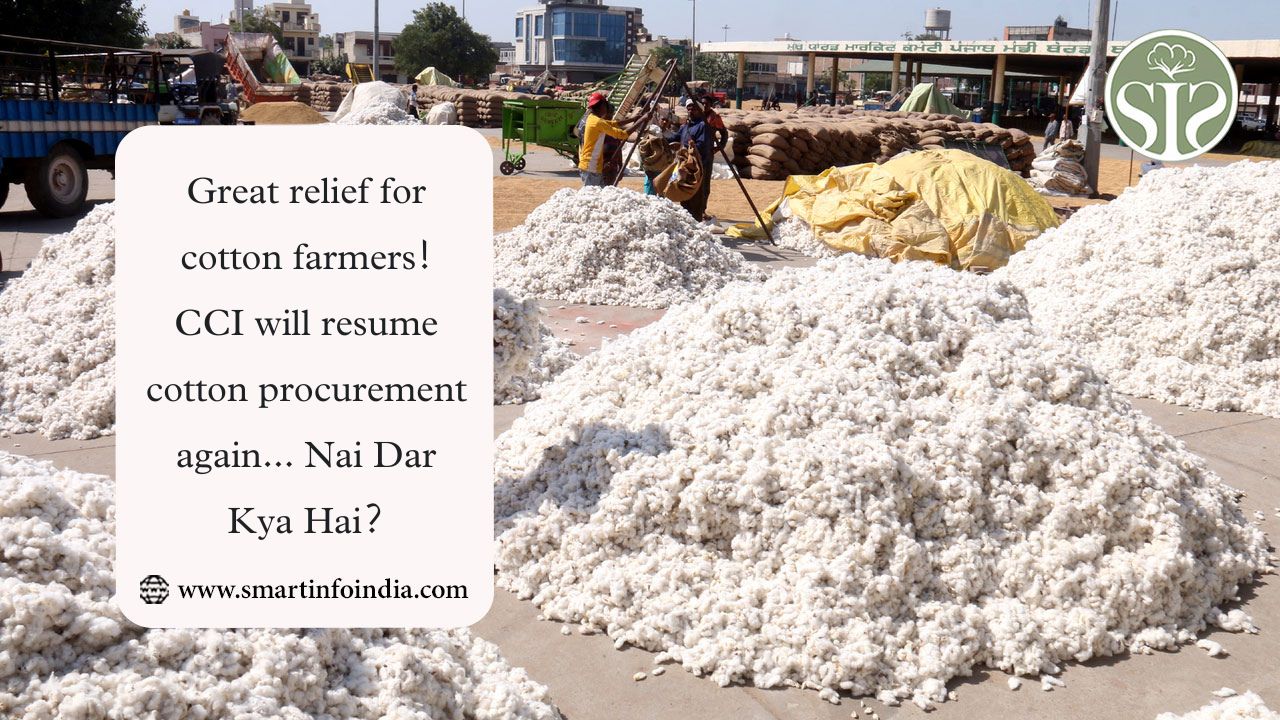
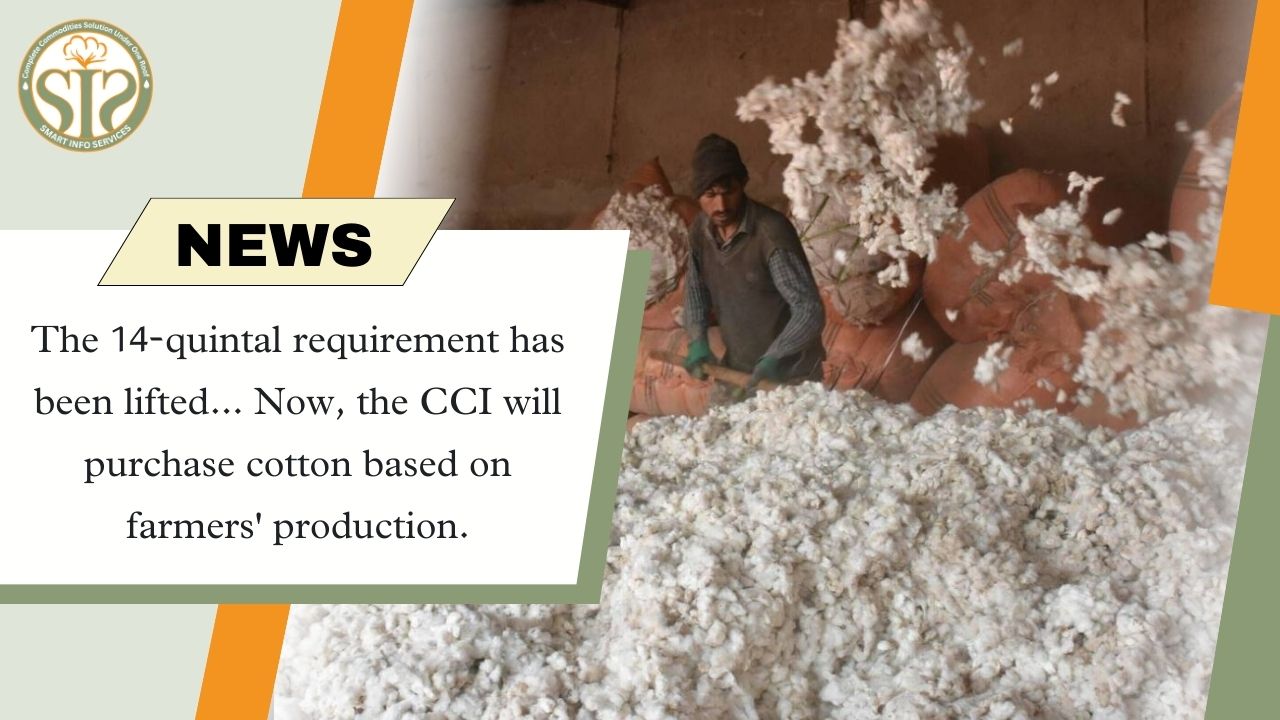
Great relief for cotton farmers! CCI will resume cotton procurement again... Nai Dar Kya Hai?

Cotton farmers are relieved! CCI is going to start buying cotton again. Nai Dar Kya Hai?Cotton procurement:- Cotton procurement by CCI (Cotton Corporation of India - CCI) is about to resume, which is likely to provide financial relief to many cotton farmers. Cotton procurement by CCI started from November 9 in Limbala (Makta) area near Hingoli town. However, the procurement process was halted from February 11 due to space issues at the procurement centre.Farmers have been facing major difficulties in selling cotton for the past few weeks. Cotton prices in the open market did not meet expectations as many farmers depended on CCI's procurement centre. However, they were facing a major problem as the procurement process was stalled due to lack of space. Now the market committee administration has resolved the issue and said that the shopping will start smoothly from February 24.Cotton prices have seen a lot of fluctuation this year. Till December, the CCI had quoted a price of Rs 7,521 per quintal, while the price of cotton in the open market could not even cross Rs 7,000. As a result the farmers suffered huge losses. By the end of January, cotton inflows slowed down, resulting in only 50 to 70 quintals of cotton being procured per day.Had to stop shopping due to location issues.Cotton procured at the center was stored in large quantities. Due to lack of space, no space was left for storing new cotton. Due to this, the purchase was temporarily suspended from February 11. Meanwhile, the location issue has now been resolved as bales of cotton, sorghum and other stocks have been shifted elsewhere, and hence procurement will resume from February 24.Only good quality cotton is worth buying.At present, prices are being determined according to the quality of cotton in the open market. Common cotton is being sold at Rs 5,500 to Rs 6,000 per quintal, while the CCI procurement center is fetching Rs 7,421 per quintal. However, farmers have been urged to bring good quality cotton to the procurement centre.Big life for farmersMany farmers will benefit from CCI's procurement process. Currently, market prices are relatively low, so the government's procurement process will ensure that farmers are fairly compensated for their produce. Every year farmers depend more and more on cotton prices. If the market prices are not satisfactory, the government procurement centers can be of great help to the farmers.Shopping will resume from February 24The procurement will start smoothly from February 24 onwards after the location issues are resolved. This will give cotton farmers a good opportunity to sell their produce. Government intervention will give some relief to the farmers and they are likely to get fair value for their produce.Cotton growers should take advantage of this opportunity to sell good quality cotton and take advantage of CCI's procurement centre.read more :-Punjab faces cotton diversification challenge ahead of sowing season

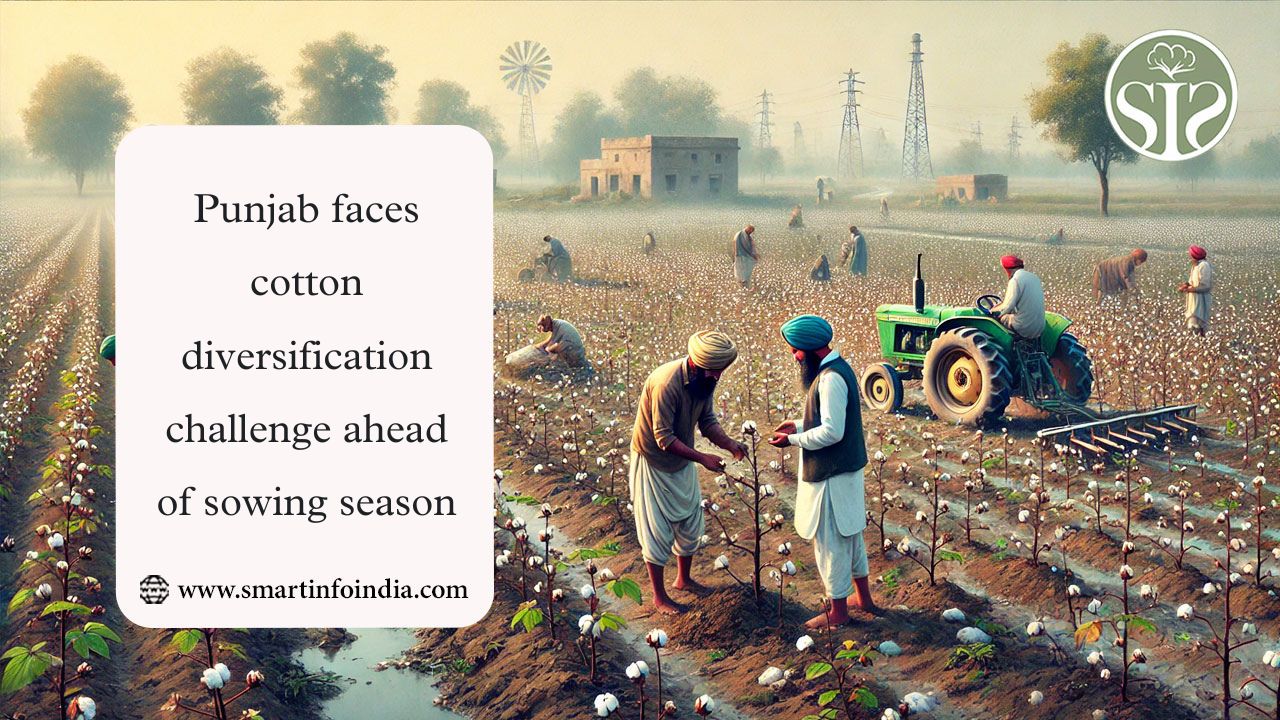
Punjab faces cotton diversification challenge ahead of sowing season

Punjab must diversify its cotton supply before the planting season.As the cotton sowing season approaches in April, Punjab faces a challenge in diversifying its kharif crop, with no dedicated plan yet in place.Cotton acreage in Punjab has been on a steady decline since 2021-22, hitting the lowest of 95,000 hectares in 2024. Punjab agriculture director Jaswant Singh said efforts are being made to encourage farmers to return to cotton cultivation, with the government standing in support.“The last four kharif seasons have been extremely challenging for cotton farmers, with acreage shrinking significantly. Pest attacks have escalated input costs, making farmers hesitant due to economic concerns. However, we aim to increase cotton acreage to 1.5 lakh hectares in the 2025-26 season,” said Singh.Despite the declining trend, the state has not yet introduced a concrete plan to incentivise farmers in the semi-arid districts of the south Malwa region, many of whom have shifted to water-intensive rice farming over the past four years.“We will ensure timely canal water supply for irrigation during summer. The subsidy on cotton seeds is also expected to continue. Additionally, we have started the annual exercise of mass weed removal and safe disposal of cotton straws in the cotton-growing districts,” Singh added.Cotton sowing will begin soon after the rabi crop harvest of wheat and mustard in April, and experts at Punjab Agricultural University recommend completing sowing by May 15.Data shows a steady decline in Punjab’s cotton acreage. in 2021, it was 2.52 lakh hectares, 2.48 lakh hectares in 2022, 1.73 lakh hectares in 2023 and it plunged to 95,000 hectares in 2004, the lowest ever.In 2020, Punjab recorded a bumper cotton production of about 50 lakh quintals, but multiple challenges over the following years drove farmers away from the crop, particularly in the southwest belt of the state.Progressive cotton grower Baldev Singh from Bajak village in Bathinda expressed optimism about a shift back to cotton, especially after difficulties in paddy procurement in 2024.“If the chief minister ensures timely seed availability and canal water supply, we still have two months to prepare, and cotton acreage can be regained,” he said.Bathinda chief agriculture officer Jagsir Singh attributed the sharp decline in cotton cultivation to pest infestations, unfavourable climatic conditions, and irrigation challenges.“Irrigation issues over the last four seasons led to economic losses for cotton farmers, prompting them to switch to paddy cultivation where tubewell irrigation was available. Now, we are working to bring them back to cotton farming,” he added.read more :-Rupee opens 13 paise up at 86.58 against US dollar

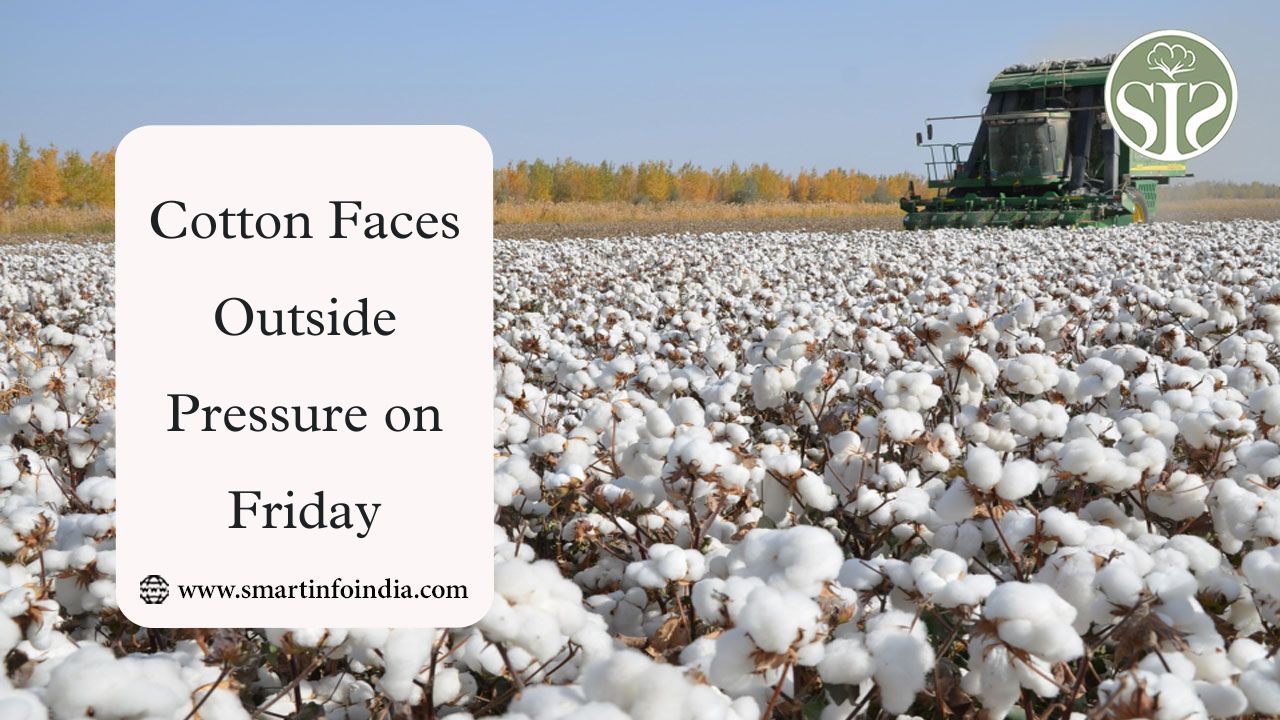
Cotton Faces Outside Pressure on Friday

On Friday, Cotton Will Face External Pressure Cotton futures posted losses on Friday, with front months down 11 to 16 points at the close. March was down 103 points this week. The outside markets were pressure factors to close out the week. Crude oil futures were down $2.18/barrel, with the US dollar index $0.276 higher. CFTC data via the weekly Commitment of Traders report showed a total of 3,095 contracts trimmed by the spec traders from their net short in cotton futures and options as of 2/18 to 57,386 contracts.  The Friday morning Export Sales report showed upland cotton bookings totaling 312,452 RB in the week of 2/13, a 4-week high. Vietnam was the buyer of 109,400 RB, with Pakistan at 64,800 RB. Export Shipments totaled 298,278 RB, a MY high. Vietnam was also the largest destination of 85,100 RB, with 49,700 RB to Pakistan. Combined shipped and unshipped sales have totaled 9.443 million RB, which is down 10% from last year. That is also 92% of USDA’s forecast, matching the average sales pace for this time of year. USDA will release their initial arm chair estimates for the 2025 cotton crop in their Outlook Forum next week. A survey of analysts by Bloomberg shows an average of 10 million planted acres for cotton this year, with a range of 8.8 to 10.8 million acres and down from 11.2 million last year. ICE cotton stocks were unchanged on 2/20 at 1,732 bales of certified stocks. The Seam tallied 4,747 bales in February 20 online sales, with an average price of 59.07 cents/lb. The Cotlook A Index was back down 110 points on Thursday at 78.30 cents/lb. The USDA raised their Adjusted World Price (AWP) again on Thursday by 68 points to 54.67 cents/lb.read more :-Indian Rupee lower 16 Paisa, Ends at 86.71 per Dollar

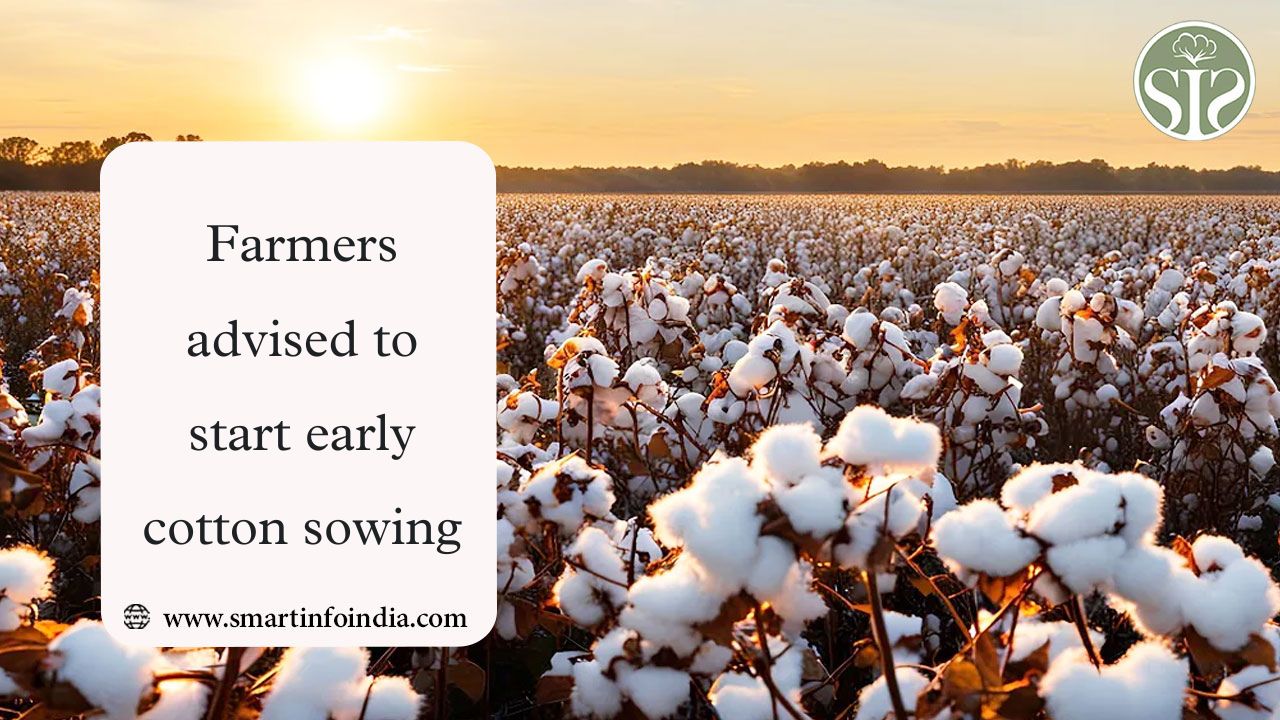
Farmers advised to start early cotton sowing

Farmers are encouraged to begin planting cotton early.FAISALABAD  -  The agriculture experts have advised the farmers to commence early sowing of cotton crops by availing special incentives package announced by the government for cultivation of cotton on five acres or more land.A spokesman for Agriculture (Extension) Department said that Chief Minister (CM) Punjab Maryam Nawaz introduced a special package to encourage early cotton cultivation. Under this program, the farmers would receive Rs.25,000 if they cultivated cotton on five acres of their land. This amount would be transferred directly into their accounts via CM Punjab Kisan Card, he added. He said that the agriculture department also issued comprehensive recommendations for early cotton sowing and balanced application of fertilizers and other agrochemicals so that the growers could get maximum yield with minimum input cost.He said that the span from February 15 to March 31 is considered most suitable for early cotton cultivation due to temperature conditions. Hence, the farmers are advised to start early sowing of cotton crops immediately and complete it timely for getting bumper production. He said that growers should use seed of only approved and certified triple-gene cotton varieties otherwise they may have to face financial loss due to application of glyphosate which can kill non-triple-gene plants. He said that 2.5 feet space between the rows and 1.5 to 2 feet space between the plants are imperative for proper plant growth. The growers should also use 4 to 6 kilograms seed per acre if they want to get 50 to 60 maunds production, he added.About use of agrochemicals, he said that fertilizers play a pivotal role in increasing soil fertility if it were used proportionately because excessive use can cause destruction to the crop, he added. He advised that the farmers should apply 2 bags of DAP, 4.25 bags of Urea and 1.5 bag of SOP or 1.25 bag of MOP per acre for weak soil. In medium soil, the suggested fertilizer ratio is 1.75 bag of DAP, 3.75 bags of Urea and 1.5 bag of SOP or 1.25 bag of MOP per acre whereas for fertile soil, the advised quantity included 1.5 bag of DAP, 3.25 bags of Urea and 1.5 bag of SOP or 1.25 bag of MOP per acre, he added. He said that all phosphorus and potassium-based fertilizers along with one-fourth of the nitrogen fertilizer should be applied during land preparation while the remaining nitrogen fertilizer should be added in 4 to 5 installments throughout the growth period.He also advised the growers to use organic manure and green manure along with chemical fertilizers to improve soil fertility and maximize crop production. He also urged farmers to take advantage of the early sowing period and prioritize cotton cultivation on maximum space of their land after harvesting canola, mustard and sugarcane crops. The growers could obtain better yield and maximum profits by enhancing production of their crops if they truly acted upon recommendations and suggestions of the agriculture experts, he added.read more :-Rupee opens 10 paise higher at 86.55 against US dollar

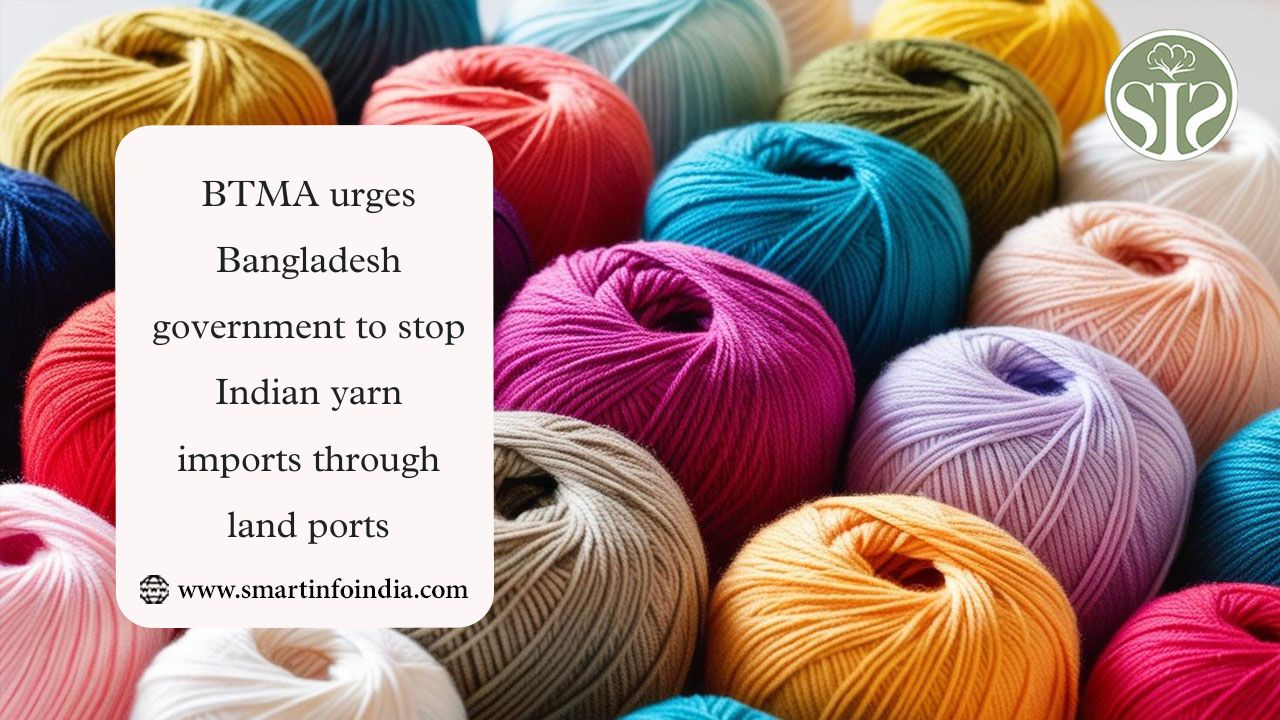
BTMA urges Bangladesh government to stop Indian yarn imports through land ports

The government of Bangladesh is urged by BTMA to prohibit the importation of Indian yarn via land ports.The Bangladesh Textile Mills Association (BTMA) recently requested the government to stop yarn imports from India through land ports as the domestic yarn sector is struggling to survive due to smuggling through these routes.Imports from India may continue through seaports, as they are equipped with adequate testing facilities and there is little scope of yarn being smuggled, BTMA president Showkat Aziz Russell told a press conference. But the land ports are ill-equipped to curb smuggling, he noted.Yarn imports from India are allowed through sea ports and four land ports: Benapole, Sonamsjid, Bhomra and Banglabandha.Though yarn imports through these ports were allowed in January 2023 to meet the sudden surge in demand following the pandemic, domestic media outlets reported that the huge volume of imports has become a threat to the domestic spinning sector.India accounted for over 95 per cent of those imports due to the price factor.For instance, traders open letters of credit (LCs) to import two tonnes of yarn but eventually import 10 tonnes through five trucks taking advantage of weak monitoring at land ports, the BTMA president said.In addition to this, challenges such as a loss of working capital due to the depreciation of the local currency against the US dollar, inadequate gas supplies, and lower investment inflow due to political uncertainty have plunged the domestic yarn sector into crisis.When millers had made a similar request in the past, former finance minister M Saifur Rahman had stopped the import of yarn through land ports. But this government has not responded to such a request, he observed.Many yarn mills are running at half their capacity, while some have fully closed due to the gas and US dollar crisis, he said, adding that as imports of yarn from India continue to grow over the next three to four months, Bangladesh stands to lose more jobs and value addition.Russell also demanded that the government include representatives from BTMA, the Bangladesh Garment Manufacturers and Exporters Association and the Bangladesh Knitwear Manufacturers and Exporters Association on the board of directors of the state-owned gas transmission and distribution company Titas and Bangladesh Petroleum Corporation.This would ensure that unwanted decisions by the government do not affect the country's economic lifeline, i.e., the textile and garment sectors, he added.read more :-Indian rupee open 9 paise up at 86.85 against the US dollar

Related News

Youtube Videos

कपास बाज़ार साप्ताहिक रिपोर्ट 🔥 | तेजी या मंदी? | CCI Update | Cotton Market  Update

कपास बाज़ार साप्ताहिक रिपोर्ट 🔥 | तेजी या मंदी? | CCI Updat...
रुई बाजार में आज का पूरा माहौल 🔥Cotton Market Today | 11 सितंबर 2026 #smartinfo
रुई बाजार में आज का पूरा माहौल 🔥Cotton Market Today | 11 सि...
कपास बाजार में आज तेज़ी का रुख 😱Cotton market rate today #youtube
कपास बाजार में आज तेज़ी का रुख 😱Cotton market rate today #yo...
Application Download
Whatsapp Contact