Recent News

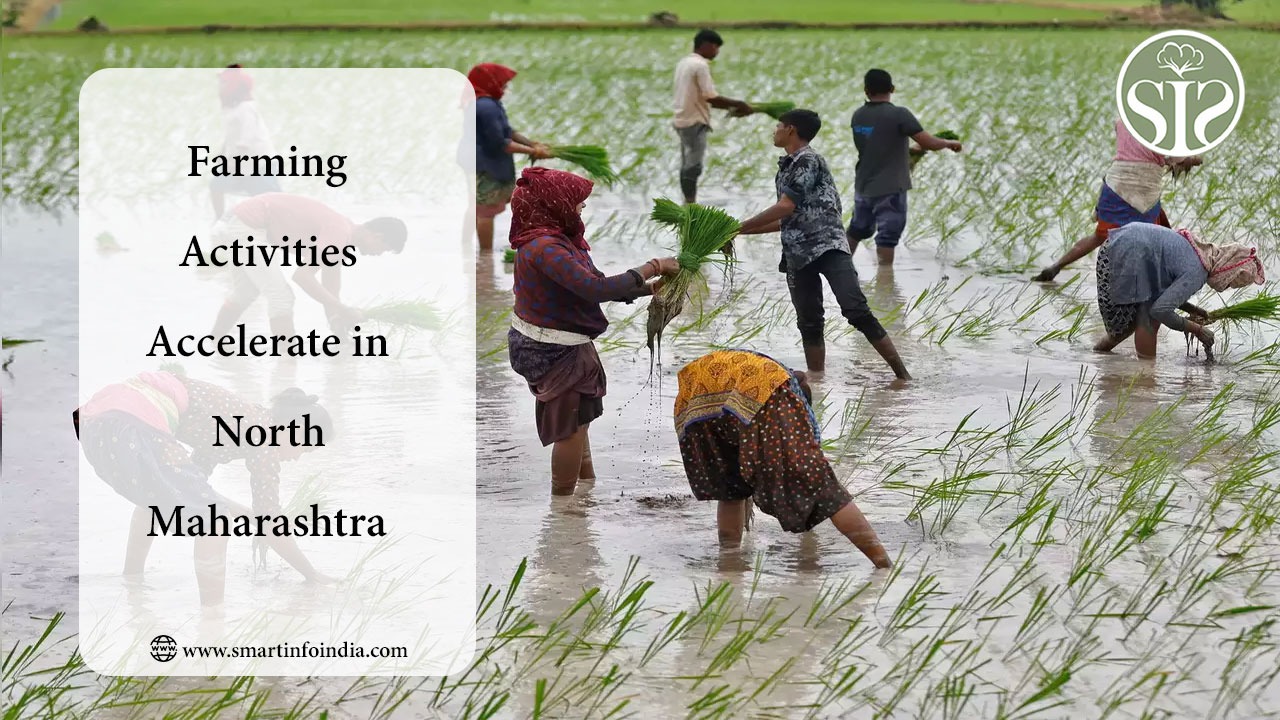
Farming Activities Accelerate in North Maharashtra

Farming In North Maharashtra Is IncreasingKharif crop sowing has gained significant momentum in parts of North Maharashtra's districts following recent rains.According to the agriculture department, as of June 24, sowing has been completed on 6.21 lakh hectares, representing 30% of the total target of 20.64 lakh hectares. This marks a substantial increase from 11% on June 18.Maize, soybean, moong, tur, cotton, bajra, urid, and paddy are the major Kharif crops in the region.Sowing activities have notably accelerated in Dhule and Jalgaon districts, with operations also starting in Nashik and Nandurbar districts.In Jalgaon district, the estimated Kharif acreage is 7.69 lakh hectares, with sowing completed on 2.92 lakh hectares, accounting for 38% of the target. In Dhule district, sowing has been completed on 1.35 lakh hectares out of a total of 3.79 lakh hectares, or 36% of the target.In Nashik district, sowing has been completed on 1.31 lakh hectares out of the projected 6.41 lakh hectares, representing 20% of the target.In Nandurbar, Kharif sowing has been completed on 61,000 hectares out of a total of 2.73 lakh hectares, accounting for 22% of the target. Of the 6.21 lakh hectares sown so far in North Maharashtra’s districts, cotton accounts for the majority, with 4.24 lakh hectares planted.The average area under cotton cultivation in North Maharashtra is approximately 8.72 lakh hectares. Currently, cotton sowing has been completed on 4.24 lakh hectares, which is 49% of the total cotton acreage.Cotton is sown across all four districts of North Maharashtra — Jalgaon, Dhule, Nandurbar, and Nashik. In Nashik, cotton is specifically sown in Malegaon and Yeola talukas.Read More :> Kharif sowing as of 28 June rises 33% year-on-year to 24 million hectares

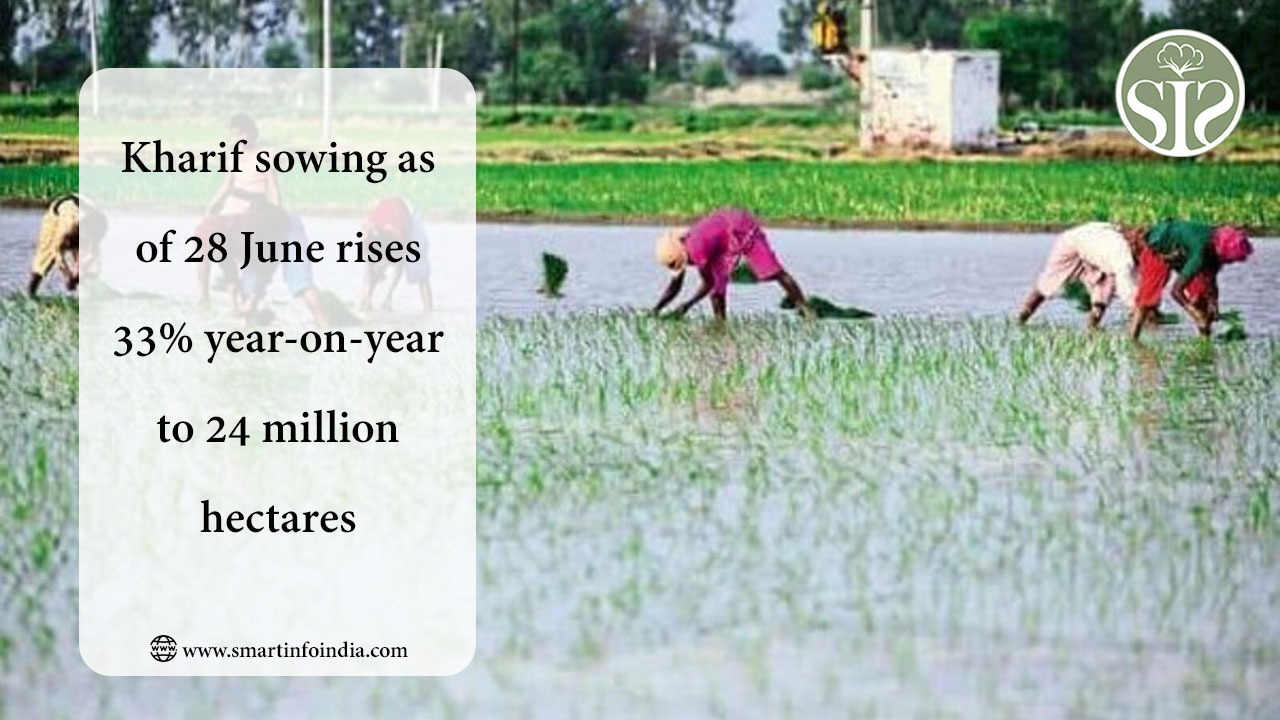
Kharif sowing as of 28 June rises 33% year-on-year to 24 million hectares

As of June 28, the amount sown in Kharif increased by 33% annually to 24 million hectares.Area under kharif crops in the 2024-25 crop year (July-June) as of 28 June rose 33% year-on-year to 24.1 million hectares (mh), according to data released by the agriculture ministry on Friday.The increase in acreage is largely due to a rise in cultivation of pulses, oilseeds and cotton.Depending upon region, farmers kick off plantation of kharif crops with the first showers of the four-month southwest monsoon season that begins in June. Unlike Rabi or winter crops, Kharif crops such as paddy and maize require plentiful rainfall.The southwest monsoon, crucial for the world's fifth-largest economy, makes the onset over the Kerala coast on 1 June and covers the entire country by 15 July.Importance of monsoonThe timely arrival of the monsoon is crucial, especially for the agricultural sector, as around 56% of the net cultivated area and 44% of food production depend on monsoon rains.Normal precipitation is essential for robust crop production, maintaining stable food prices, especially for vegetables, and bolstering economic growth. Agriculture contributes about 18% to India's gross domestic product, underscoring the importance of a good monsoon.This year's monsoon lost momentum after reaching Mumbai on 9 June—two days ahead of schedule and remained stuck in the eastern region for about three weeks, preventing the agriculture ministry from releasing the acreage data until Friday. With the monsoon's progress over the eastern areas and the India Meteorological Department declaring the arrival of the rain-bearing winds in Delhi, the ministry on Friday released the kharif crop acreage data for the first time this season.Precipitation in the country as of 28 June was 14% deficient since the beginning of the June-September monsoon season, according to IMD.Pulses take the leadWhile the area under paddy or rice, the main kharif crop, was a tad lower year-on-year at 2.2 mh, pulses acreage was 181% higher at 2.2 mh, including 1.3 mh area under tur or arhar and 318,000 hectares area under urad.The government has been trying to encourage farmers to cultivate more area under pulses, especially tur, in view of crop failure in the past two consecutive years and achieve self-sufficiency in pulses and oilseeds by 2027.Consumer affairs secretary Nidhi Khare earlier this month told Mint that food prices, especially those of pulses, which have been skyrocketing for over a year will ease after July as farm output is expected to be good amid normal monsoon.According to the agriculture ministry data, the area under oilseeds rose 18.4% to 4.3 mh, primarily due to a higher coverage under soybean. As of Friday, farmers planted soybean across 3.36 mh, sunflower across 37,000 hectares and sesamum across 43,000 hectares, against 163,000 hectares, 26,000 hectares and 26,000 hectares, respectively in the year-ago period.The area covered under groundnut, however, was lower at 819,000 hectares compared to the previous year’s 1.45 mh.In the case of millets, the area was nearly 15% down year-on-year at 3 mh. Bajra was sown over 409,000 hectares compared to 2.5 mh last year. The maize area was 2.3 mh against 810,000 hectares a year ago.Acreage under cash crops like sugarcane and cotton was 5.68 mh and 5.9 mh, respectively, compared with 5.5 mh and 601,000 hectares a year ago. Farmers planted jute and mesta across 562,000 hectares against 601,000 hectares a year ago.Read More :> Agriculture Department warns cotton farmers: Pink bollworm threat to production

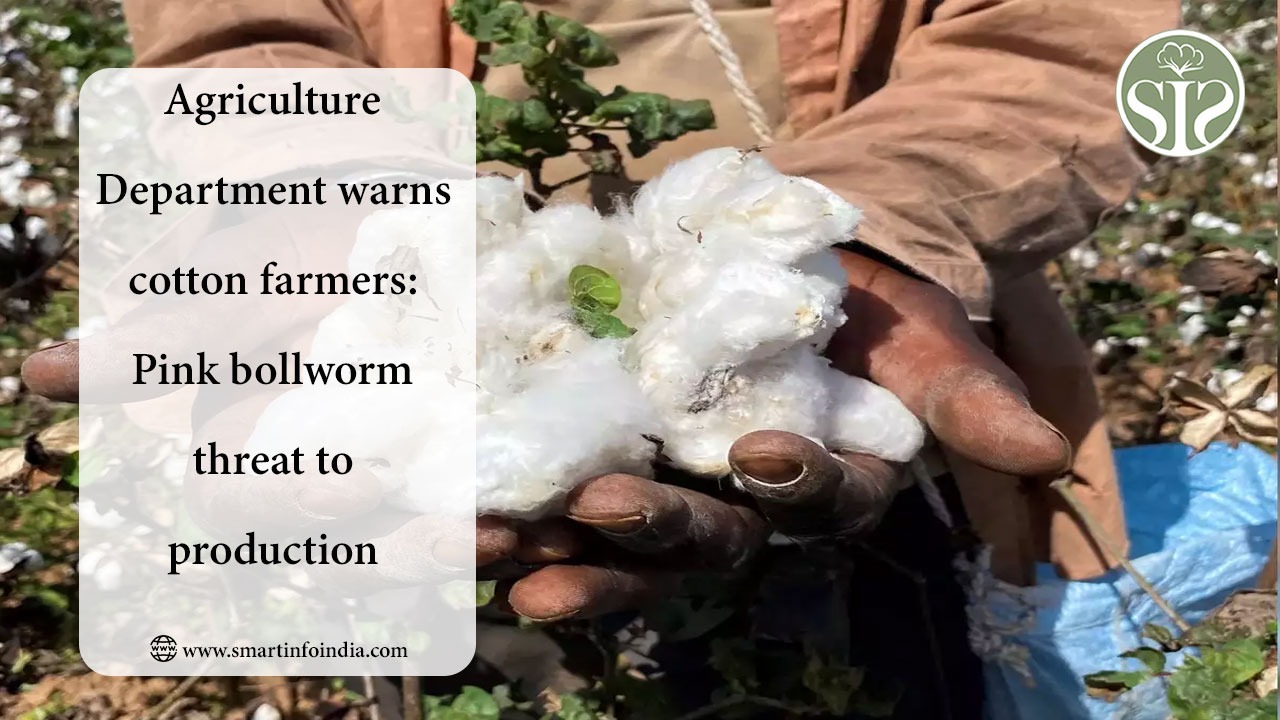
Agriculture Department warns cotton farmers: Pink bollworm threat to production

The Agriculture Department alerts cotton growers to the production threat posed by pink bollworms.Hanumangarh: The Agriculture Department has warned the farmers of the district that the pink bollworm infestation in BT cotton can again affect production this year. Last year too, the district faced a serious problem of this pest, which badly affected the cotton production.The area of sowing of BT cotton has remained around 40 percent this time too, despite the department continuously making farmers aware. In view of the possible outbreak of pink bollworm, the department has given information about management measures since February itself. Measures of management have been suggested to disrupt the life cycle of pink bollworm by destroying its pupa stage. However, some farmers did not pay attention to these measures and did early sowing.In some fields, where early sowing of cotton was done, despite adequate irrigation water and timely irrigation, due to extreme heat, flowers came out in the plants and pink bollworm infestation has been observed.The department has advised farmers to follow pink bollworm management measures in early sown crops. Spray insecticides on fixed days every week and pluck and destroy the flowers and pods affected by pink bollworm. Use neem based pesticides till 60 days of age and do not use synthetic and ready mix insecticides in BT cotton.District Collector made aware of farmers' problemsBhartiya Kisan Union Tikait District Hanumangarh submitted a memorandum to the District Collector on Wednesday under the leadership of District President Resham Singh Manuka. Various demands of farmers were raised in the memorandum, in which compensation of Rs 1125 crore was demanded for the loss caused by pink bollworm last year, but no farmer has received compensation yet.The farmers demanded the state government to start procurement centers in all mandis for the purchase of groundnut and to start government procurement of moong from September 1. Apart from this, there was a demand to start government procurement of paddy by September 15 at any cost and to provide full electricity to the agriculture sector.Read More :> India's monsoon overcomes delay, set to cover country on time


India's monsoon overcomes delay, set to cover country on time

India's monsoon beats the delay and is expected to arrive on schedule.India's annual monsoon has covered more than three-fourths of the country and it is set to cover the entire country on time for the planting season despite stalling earlier this month, two senior weather officials said on Thursday.Summer rains, critical for economic growth in Asia's third-largest economy, usually begin in the south around June 1 before spreading nationwide by July 8, allowing farmers to plant crops such as rice, cotton, soybeans, and sugarcane."Monsoon is advancing quickly in northern India and will cover the entire country on time," said an official of the India Meteorological Department (IMD), who spoke on condition of anonymity as he was not authorised to speak to the media.The southwest monsoon advanced on Thursday, covering more parts of Rajasthan, most of Madhya Pradesh, additional areas of Uttar Pradesh, Bihar, and nearly all of Uttarakhand and Himachal Pradesh, the IMD said in a statement.India has received 19% less rainfall since June 1, IMD data showed, as the monsoon's progress had stalled, with almost the entire country except for a few southern states experiencing shortfalls and parts of the northwest gripped by heatwaves.The lifeblood of the nearly $3.5-trillion economy, the monsoon brings nearly 70% of the rain India needs to water farms and refill reservoirs and aquifers.Without irrigation, nearly half of the farmland in the world's second-biggest producer of rice, wheat, and sugar depends on the annual rains that usually run from June to September.Rainfall is picking up, and most parts of the country will receive good rainfall in the next fortnight, accelerating the planting of summer-sown crops, another weather official said.Read more :- Brazil to Surpass US as Top Cotton Exporter

Brazil to Surpass US as Top Cotton Exporter

Brazil Will Overtake the US as the Leading Cotton ExporterBrazil is poised to become the world’s leading cotton exporter in the 2023-24 season, overtaking the United States, which has held the top spot for decades. This shift follows an over 80% surge in Brazilian cotton shipments this season, according to the local exporters’ association, Anea.With just a month remaining in the 2023-24 cycle, Brazil's ascension to the number one exporter position is now certain, driven by record production, strong demand from Asian countries, and a significant drop in US output due to adverse weather conditions.It happened a little earlier than we imagined,” said Anea head Miguel Faus. “The main reason is the failure of the US crop, while Brazilian production increased.Faus predicts that Brazil's exports could rise further in the next season, as farmers are set to harvest another record crop, with expectations of continued growth into 2025-26. In the medium term, Brazil will consolidate itself in this leadership position,” he said.The US Department of Agriculture (USDA) recently increased its forecast for Brazil’s cotton exports by 300,000 bales to 12.4 million bales, while cutting the US forecast by 500,000 bales to 11.8 million bales.A USDA report noted that the US had led global cotton exports since the early 1990s. However, Brazil surpassed the US in production in 2023-24, ranking third globally behind China and India, a position expected to continue in 2024-25.Brazil has also been increasing its exports of other commodities, including corn and coffee. While it remains the world's largest coffee producer and exporter, Faus noted that Brazil's influence in the cotton market, though significant, is more balanced. In the case of cotton, the forces are more balanced… But of course, if Brazil’s production rises or falls, the market will be paying attention, he said.Key buyers of Brazilian cotton include China, Vietnam, Bangladesh, Turkey, and Pakistan.Read More :>  Indore Division Farmers to Sown Kharif Crops on Nearly 21 Lakh Hectares



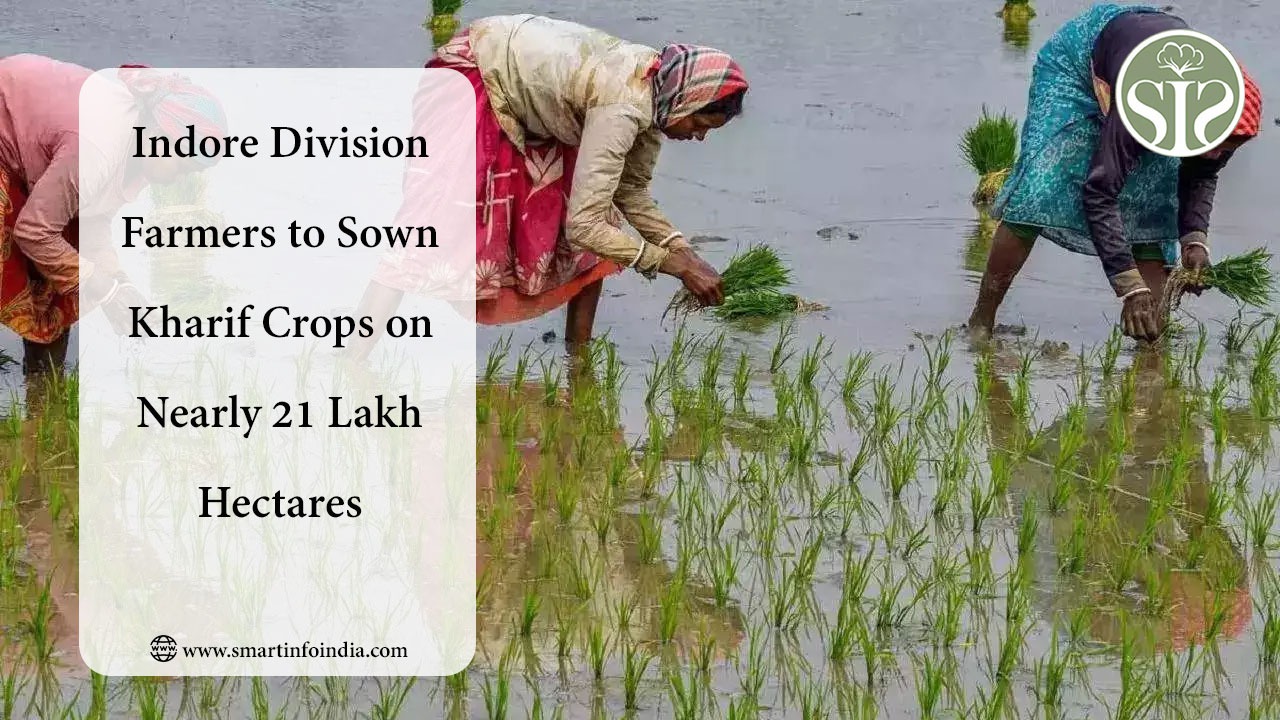
Indore Division Farmers to Sown Kharif Crops on Nearly 21 Lakh Hectares

Farmers in the Indore Division Will Plant Kharif Crops on Almost 21 Lakh HectaresIndore: Farmers in the Indore division are expected to sow kharif crops across nearly 21 lakh hectares, with soybeans, cotton, and maize likely to dominate the planted area, according to the farm department.The area under maize cultivation is anticipated to increase compared to last year, driven by higher maize prices in the previous season, which have attracted farmers in various regions. Maize is expected to be cultivated on 3.4 lakh hectares in the Indore division this season, as per the department's projections.The farm department has set a target of 5.6 lakh hectares for cotton in the division, marking an increase of close to 3% from the previous year.With recent showers and adequate soil moisture, farmers in many parts of Indore, Dhar, Khandwa, Alirajpur, and Jhabua, among other places, have completed more than 50% of kharif crop sowing.Sowing of kharif crops is progressing well, and current weather conditions are favorable for crop growth. The area under maize is higher than last season, and cotton acreage has also increased,said an official from the farm department who wished to remain anonymous.According to a field survey compilation report from the farm department issued on June 21, farmers are likely to sow soybeans on 9.3 lakh hectares and cotton on 5.7 lakh hectares. Soybeans, cotton, maize, and pulses are the main kharif crops in the Indore division.Ramswarup Patel, a farmer from Sanwer, said, We have sown soybeans on 20 bighas, the same as last year, because we do not have many options to switch. This region is well suited for soybeans and gives a good yield. Climatic conditions look good and suitable for crop growth.Read More :> Cotton Loses Its ‘Most Profitable Crop’ Status in Andhra Pradesh’s Undivided Kurnool District

Cotton No Longer the Top-Earning Crop in Kurnool Region

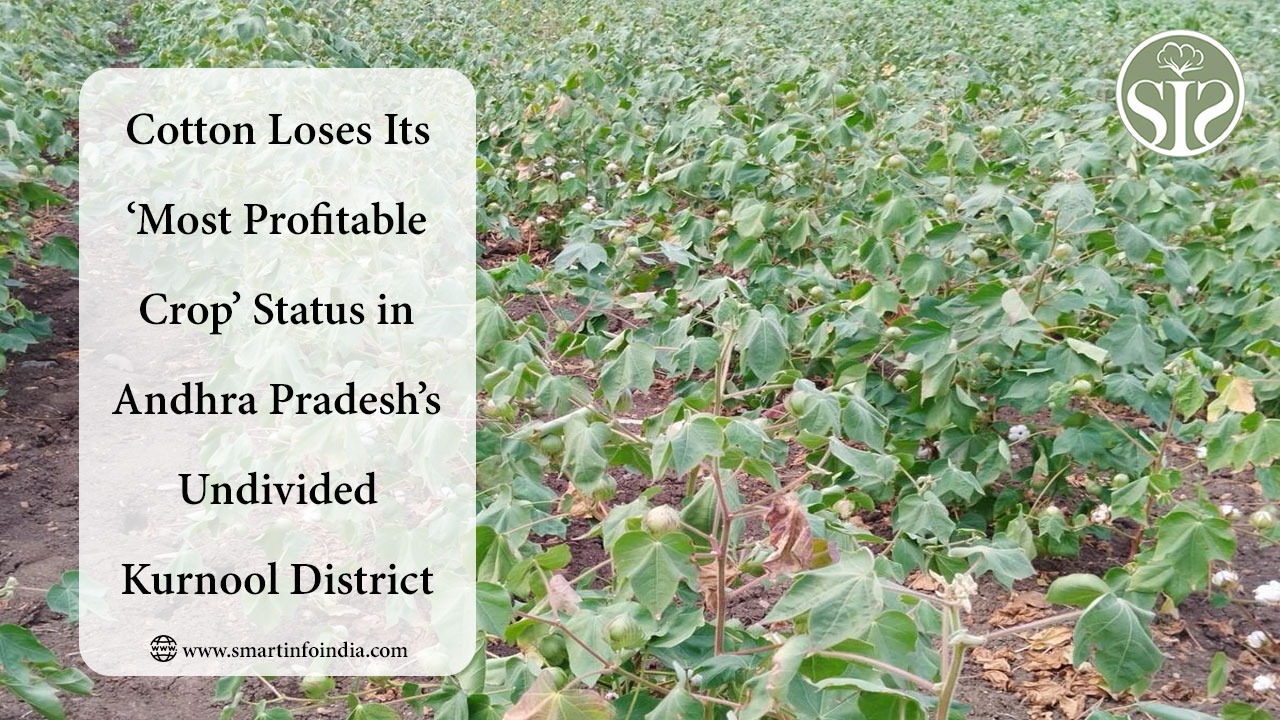
Cotton Loses ‘Most Profitable Crop’ Tag in Undivided Kurnool DistrictCotton cultivation in the undivided Kurnool district of Andhra Pradesh has declined sharply in recent years, raising concerns among farmers as well as agricultural experts.Once contributing nearly 70% of the state’s total cotton output, the region was known for its naturally colored cotton with strong export potential. The traditional Mungari variety, cultivated since the early 1900s, earned the reputation of ‘white gold’. During the 1990s, farmers achieved average yields of 10–25 quintals per acre, supported by popular hybrids like Mallika, Bunny, Brahma, and NHH-44. The introduction of Bt cotton between 2002 and 2006 initially boosted expectations.However, cotton has gradually lost its position as the most profitable crop due to multiple challenges. Following the reorganization of Kurnool district, a large portion of cotton-growing areas shifted to rainfed zones, leading to a significant drop in acreage. In Kurnool, the cultivated area declined by 26%, from 2.50 lakh hectares to 1.83 lakh hectares in 2023-24. Nandyal saw an even sharper fall of around 70%, from 25,586 hectares to just 7,932 hectares.Despite being a cash crop with attractive prices, cotton has become less viable over the past decade. Erratic weather patterns—such as delayed monsoon onset, early withdrawal, and unseasonal cyclones during October-November—have negatively impacted production, largely due to climate change.Pest attacks have further worsened the situation. The incidence of pink bollworm has increased significantly, as pests have developed resistance to Bt cotton. In addition, tobacco streak virus has affected crops in both Kurnool and Nandyal districts, according to agricultural scientists.As a result, many farmers are shifting to short-duration and more reliable crops like maize and soybean. This trend is particularly visible in Nandyal, where assured irrigation from projects like the Kurnool-Cuddapah Canal and Telugu Ganga Canal supports alternative cropping. Meanwhile, farmers in rainfed Kurnool continue to struggle with pest-related losses and limited options.Experts suggest several measures to revive cotton cultivation, including adopting early-maturing Bt hybrids (around 150 days), maintaining a strict six-month crop-free period, and using pest control techniques such as mating disruption technology to manage pink bollworm during the off-season.Read More :> SISPA Urges CCI to Prioritize Cotton Sales to MSME Mills



Related News

Youtube Videos

रुई बाज़ार में गिरावट का रुख 😱 Cotton market rate today #youtube
रुई बाज़ार में गिरावट का रुख 😱 Cotton market rate today #you...
जानिए आज का कपास बाज़ार 😱 Cotton market rate today #youtube
Ganesh Chaturthi Celebration at Our Office 🙏✨ | Ganpati Bappa Morya! #shorts
Ganesh Chaturthi Celebration at Our Office 🙏✨ | Ganpati Ba...
Application Download
Whatsapp Contact