Recent News

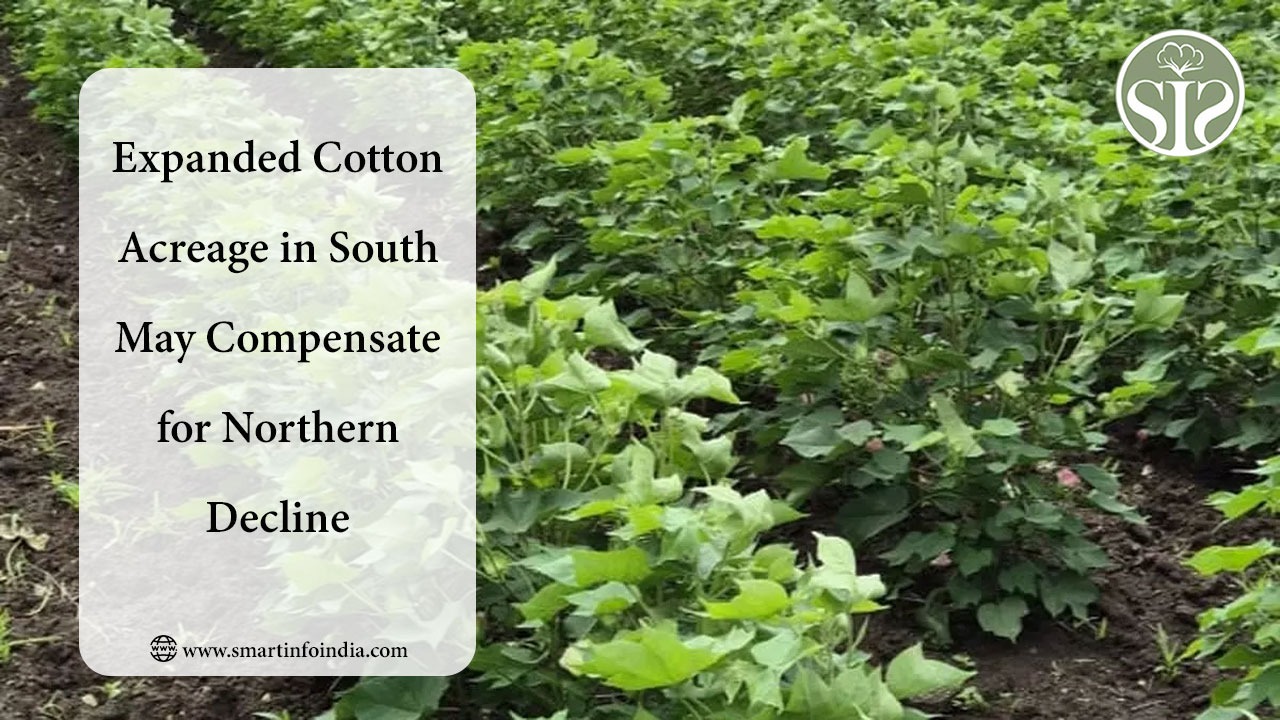
Expanded Cotton Acreage in South May Compensate for Northern Decline

Increased Cotton Acreage in South May Make Up for Decline in the NorthThe natural fibre’s acreage is up in Karnataka, Telangana, Andhra pradesh, and Maharashtra due to favorable rains.Cotton acreage has increased in southern India as farmers in Karnataka, Telangana, and Andhra Pradesh have planted more of the crop. Industry stakeholders believe this growth in the South will help offset the decline in northern states like Punjab, Haryana, and Rajasthan, where farmers have significantly reduced cotton planting due to pest issues, especially the pink bollworm. A similar reduction in cotton area is expected in Gujarat.As of July 22, cotton had been planted on 102.05 lakh hectares across the country, down from 105.66 lh during the same period last year. The normal area under cotton is 129 lh. The acreage decrease is mainly due to lower plantings in Gujarat, Rajasthan, Haryana, and Punjab.In Gujarat, the largest cotton-producing state, the acreage is down to 20.98 lh from 25.39 lh last year. Rajasthan's cotton area has decreased to 4.94 lh from 7.73 lh, while in Punjab, pest issues have halved the area to 1 lh from 2.14 lh. Haryana's cotton acreage is down to 4.76 lh from 6.65 lh.In the South, Karnataka's cotton area has risen to 6.09 lh as of July 22, up from 2.44 lh last year, thanks to a timely and widespread monsoon. Telangana's acreage has increased to 15.22 lh from 14.13 lh, and Andhra Pradesh's area has grown to 1.60 lh from 1.32 lh. Maharashtra, which has the largest cotton area, saw an increase to 39.69 lh from 38.33 lh last year."The decline in North Indian cotton area is being compensated in the South," said Ashish Dobhal, CEO of UPL Sustainable Agri Solutions Ltd. UPL, which previously focused on North India for its spraying services, is now shifting its strategies to the South in response to the reduced acreages in Punjab and Haryana."The sowing season has been good, with increased area in the South and positive crop prospects in Karnataka, Telangana, and Maharashtra," said Ramanuj Das Boob, a sourcing agent in Raichur. However, he noted that while rainfall has supported the crop, market prices remain bearish due to global trends and subdued demand.Bhagirath Chowdhary, Founder Director of the Jodhpur-based South Asia Biotechnology Centre, warned that the significant reduction in cotton area in the North is a wake-up call for the textile industry, particularly in Punjab and Rajasthan. "Except in Vidarbha, Telangana, and Karnataka, cotton crops in other regions like Andhra Pradesh, Marathwada, and Gujarat are under severe moisture stress and vulnerable to pests and diseases. Overall, cotton production next season is expected to decline, widening the demand-supply gap and negatively impacting the textile industry and raw cotton exports," Chowdhary said.Read More:>India gets 9% more monsoon rain in July after weak June

India gets 9% more monsoon rain in July after weak June

After a lackluster June monsoon, India receives 9% more rain in JulyIndia received 9% more rainfall than average in July as the monsoon covered the entire country ahead of schedule, delivering heavy rain in central and southern states, weather department data showed on Wednesday.The lifeblood of the nearly $3.5 trillion economy, the monsoon brings nearly 70% of the rain India needs to water farms and refill reservoirs and aquifers.Without irrigation, nearly half of the farmland in the world's second-biggest producer of rice, wheat and sugar depends on the annual rains that usually run from June to September.In July, southern and central regions of the country received nearly a third more rainfall than the average, while east and north-eastern regions received 23.3% less rainfall, according to the India Meteorological Department (IMD).The north-western part of the country got 14.3% less rainfall than average.The surplus rainfall in July helped erase June's rainfall deficit of 10.9%, and the country has received 1.8% more rainfall since the start of the monsoon season on June 1.Summer rains, critical for economic growth in Asia's third-largest economy, usually begin in the south around June 1 before spreading nationwide by July 8, allowing farmers to plant crops such as rice, cotton, soybeans and sugarcane.This year monsoon covered the entire country six days ahead of the usual time of arrival, helping farmers to accelerate planting of summer-sown crops.Read more :- Cottonseed Oil Market Outlook: Stability Amidst Shifting Sowing Patterns

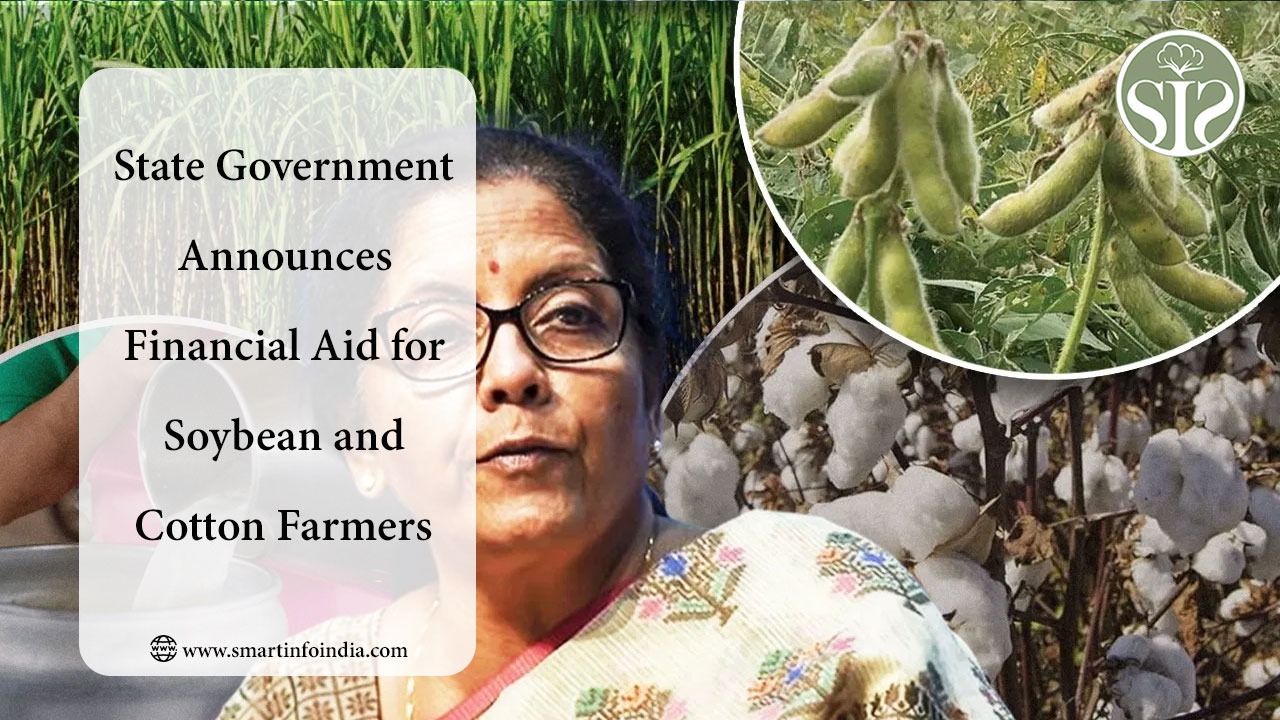
State Government Announces Financial Aid for Soybean and Cotton Farmers

The State Government Offers Financial Assistance to Cotton and Soybean GrowersNagpur: In a significant move to support the agriculture sector, the state government has sanctioned substantial financial aid for cotton and soybean farmers affected by last year's price declines.To mitigate the impact of these losses, the government unveiled a relief package aimed at helping cotton and soybean cultivators during the kharif marketing season 2023-24. This package includes a grant of ₹5,000 per hectare, capped at two hectares per farmer.The government has structured the financial assistance into two categories: ₹1,000 per hectare for areas under 0.2 hectares and ₹5,000 per hectare for areas exceeding 0.2 hectares, up to a maximum of two hectares.As the Government Resolution (GR) was issued on July 29, the exact amount to be allocated to farmers in Vidarbha remains to be determined, according to officials. "However, the process has already started at district levels across both divisions in Vidarbha. We will need to begin by compiling a list of eligible farmers and completing other preliminary tasks," an official explained.The government has allocated a total expenditure of ₹4,194.68 crore for this financial assistance scheme. Of this, ₹1,548.34 crore is designated for cotton farmers, while ₹2,646.34 crore is earmarked for soybean growers. The funding will be released as part of the additional budget presented on July 5, supporting a special action plan designed to enhance the productivity and value chain of cotton, soybean, and other oilseed crops.Eligibility for this financial support is clearly defined: Cotton and soybean farmers who cultivated their crops during the 2023 kharif season are eligible to receive ₹1,000 per hectare for areas under 0.2 hectares and ₹5,000 per hectare for areas up to two hectares. This scheme is expected to bolster the agricultural sector, reflecting the government's commitment to addressing the needs of the farming community.Read More :> Cotton Prices Dip Below ₹60,000/Candy Amid Weak Yarn and Garment Demand

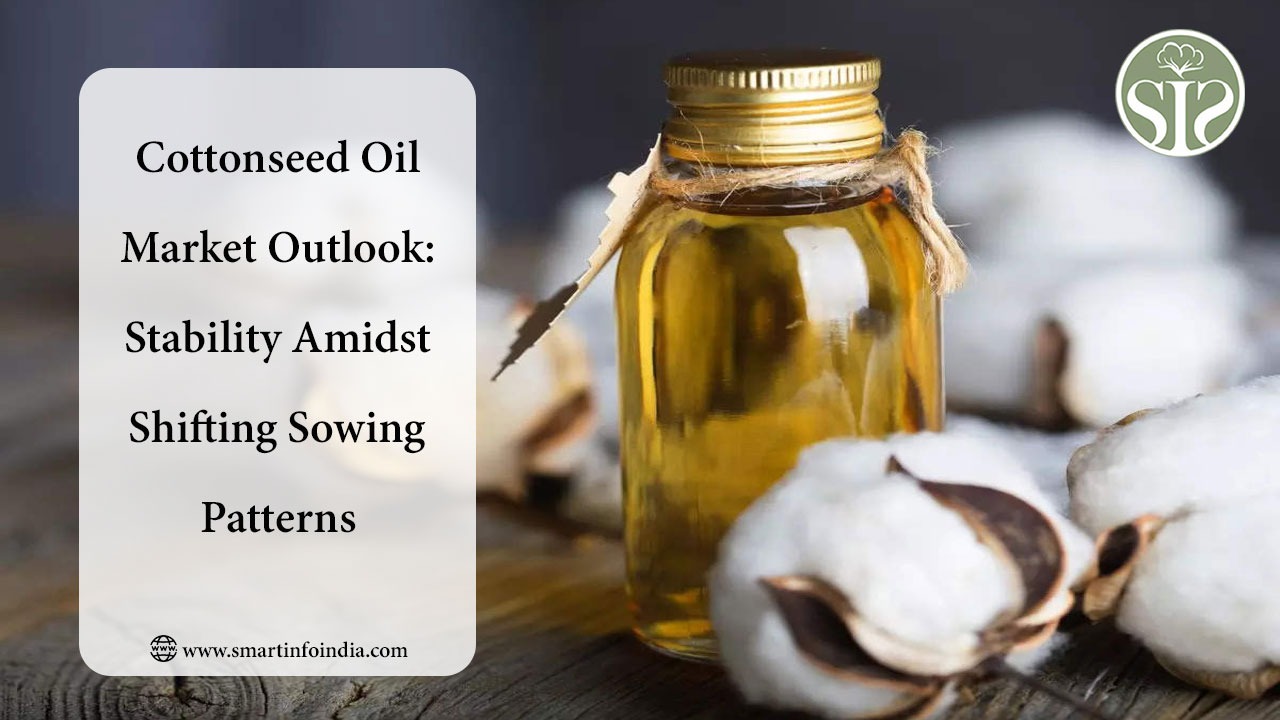
Cottonseed Oil Market Outlook: Stability Amidst Shifting Sowing Patterns

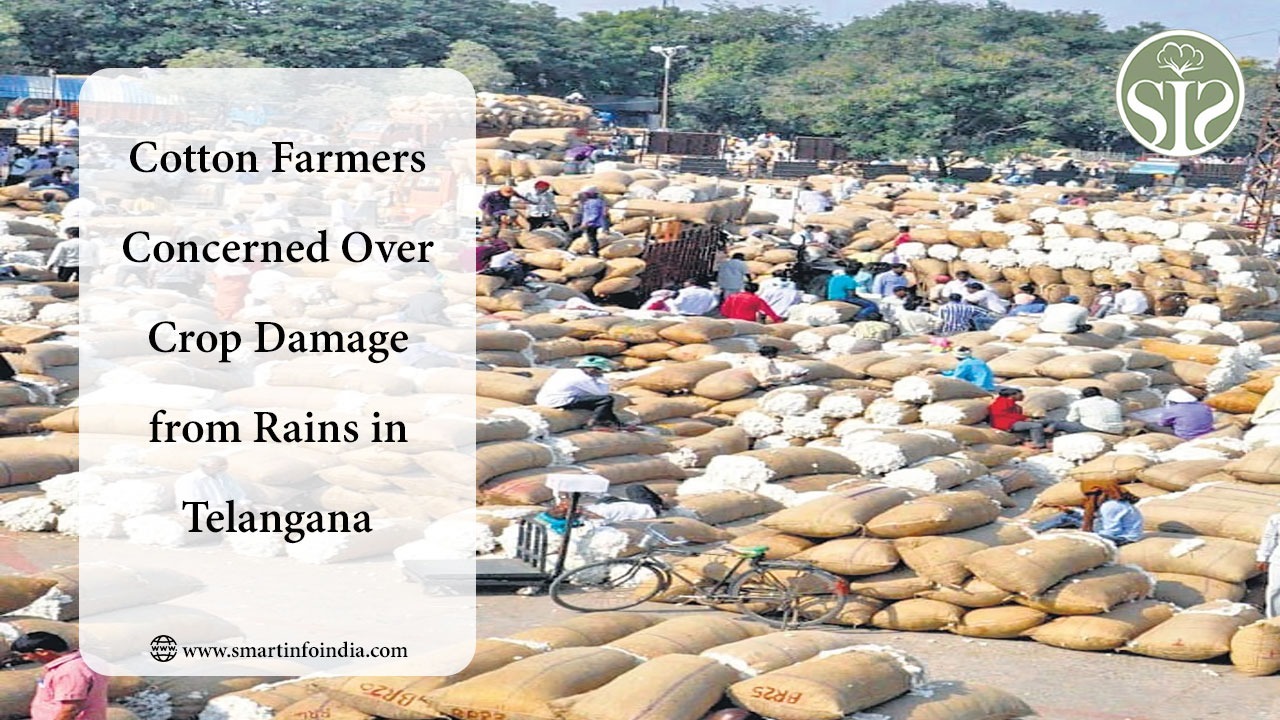
Outlook for the Cottonseed Oil Market: Stability in the Face of Changing Sowing PatternsThe cottonseed oil market has seen a stable phase recently, with a successful cotton yield surpassing expectations. Historically known for its volatility, the market has maintained stability over the past few months, a trend that is likely to continue for the next 3-4 months. This steady supply has helped keep prices stable, benefiting consumers. However, a price increase of Rs 5-6 per litre in cottonseed oil is anticipated during the festive season due to increased demand.Industry experts caution that this year's changes in sowing patterns may affect next year's cotton yield. According to the latest data from the Solvent Extractors’ Association of India, cotton sowing in 2024 has been reported in 102.05 lakh hectares as of July 19, a decrease of approximately 3.61 per cent from 105.66 lakh hectares in 2023.Mr. Priyam Patel, Managing Director of NK Proteins Private Limited, commented at an Indian Vegetable Oil Producers’ Association event, “There's been a noticeable shift towards sowing groundnut, other grains, and millets. In Punjab, for example, farmers are hesitant to plant cotton due to the expected damage from pink bollworms. This shift could lead to market volatility in the supply and demand for cottonseed oil next year.”Both government and private entities are actively promoting alternative oils like rice bran oil, which has fewer supply issues compared to other crops. Supported by Minimum Support Prices (MSPs) and strategic marketing, rice bran oil's demand is increasing. Its health benefits and competitive pricing are significant factors driving consumer preference.The sector faced considerable volatility earlier this year due to global factors. However, recent stability has brought relief to many households. The government's initiatives to promote a variety of oilseeds and the growing popularity of health-oriented options like rice bran oil are influencing consumer choices and sowing decisions.Mr. Patel further explained, “The health benefits of rice bran oil and its consistent availability are making it a preferred choice among consumers. This shift in consumer preference is encouraging farmers to diversify their crops.”As the edible oil sector stabilizes, stakeholders remain attentive to market trends and consumer behavior. The ongoing efforts to diversify and promote alternative oils are expected to mitigate some of the past volatility, offering a more balanced outlook for the industry.Read more :- Cotton Farmers Concerned Over Crop Damage from Rains in Telangana

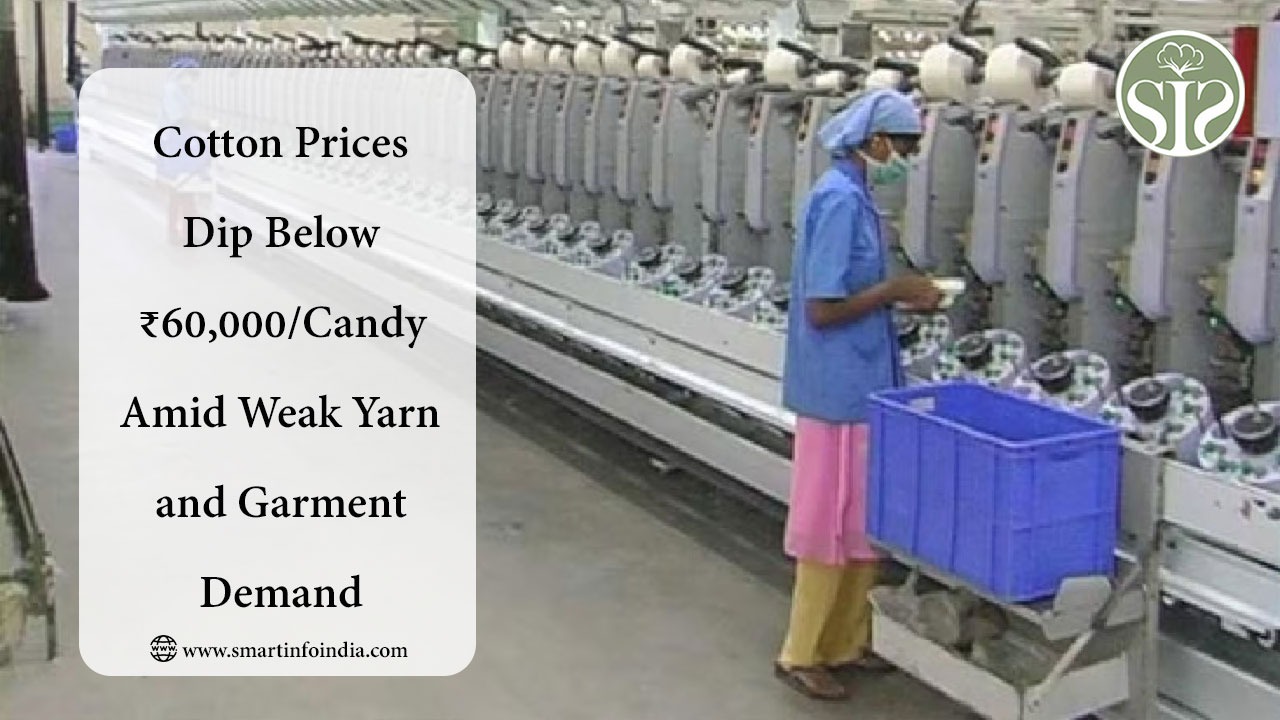
Cotton Prices Dip Below ₹60,000/Candy Amid Weak Yarn and Garment Demand

Prices for Cotton Fall Below ₹60,000/Candy Due to Weak Demand for Yarn and GarmentsUnrest in Bangladesh adds to sector's woes.Cotton prices in India have fallen below ₹60,000 per candy (356 kg) due to sluggish demand for yarn and garments, according to industry sources. However, there is hope for a slight improvement around mid-August.The situation has been further complicated by recent student unrest in Bangladesh, which has resulted in about 150 fatalities. This unrest has disrupted the small volume of Indian cotton exports to Bangladesh, as noted by a Raichur-based sourcing agent who also serves as the vice president of the All India Cotton Brokers Association.Cotton Corporation of India's Price ReductionThe Cotton Corporation of India (CCI), holding approximately 20 lakh bales (170 kg each) procured under the Minimum Support Price (MSP) scheme, has reduced its sale price by ₹1,800 per candy in response to the weakened demand, according to industry analyst Das Boob.As of Monday, Shankar-6 cotton, a benchmark for exports, was priced at ₹56,800 per candy. The spot price for kapas (unprocessed cotton) on the Multi Commodity Exchange (MCX) was ₹1,506.50 per 20 kg, while in the Rajkot Agricultural Produce Marketing Committee Yard (APMC), kapas was quoted at ₹7,505 per quintal.Globally, cotton prices have also declined, with the December delivery price on the InterContinental Exchange in New York standing at 69.01 cents per pound (approximately ₹45,800 per candy).Impact of Import Duties and Market ConditionsK. Selvaraju, Secretary-General of the Southern India Mills Association, noted that Indian spinning mills face challenges in the domestic market due to a lack of price parity. Cotton imports are subject to an 11% customs duty, making them ₹5,000-6,000 more expensive per candy, further affecting competitiveness."Cotton prices are at their lowest in a long time, with buyers and sellers both hesitant to engage," said Popat. He added that prices are currently below the MSP set for the upcoming 2024-25 crop year, which has been increased to ₹7,121 per quintal for the medium staple variety predominantly grown in India.Market Outlook and Sector ChallengesSelvaraju expressed that while 2023 was particularly challenging for the textile sector, 2024 has shown some improvement. However, the industry is still recovering from the robust period of 2018-19. With the season ending in two months, stakeholders are cautious, awaiting clearer demand signals.Popat suggested that demand might pick up between August 15 and the end of September, potentially reviving cotton movement. He noted that globally, demand for cotton has been impacted due to slow yarn and garment offtake, exacerbated by high interest rates discouraging inventory holding.The sector needs to regain confidence for prices to trend upwards again, although they may have hit the bottom, Popat said.Sowing Trends and Future ProspectsDas Boob noted that although cotton sowing has decreased by 5-7%, favorable rainfall and a good harvest could offset the reduced acreage. Popat added that while cotton acreage is down in Gujarat and North India, it is better in Maharashtra, Madhya Pradesh, Andhra Pradesh, and Telangana, with an overall potential change in area ranging from a 2-3% increase or decrease.*Given the current trends, the government may need to direct the CCI to procure cotton in the next season under the MSP program, Boob suggested.Read More :>Cotton Farmers Concerned Over Crop Damage from Rains in Telangana

Related News

Youtube Videos

रुई बाज़ार में गिरावट का रुख 😱 Cotton market rate today #youtube
रुई बाज़ार में गिरावट का रुख 😱 Cotton market rate today #you...
जानिए आज का कपास बाज़ार 😱 Cotton market rate today #youtube
Ganesh Chaturthi Celebration at Our Office 🙏✨ | Ganpati Bappa Morya! #shorts

Ganesh Chaturthi Celebration at Our Office 🙏✨ | Ganpati Ba...
Application Download
Whatsapp Contact