STAY UPDATED WITH COTTON UPDATES ON WHATSAPP AT AS LOW AS 6/- PER DAY
Start Your 7 Days Free Trial TodayIndia-US cotton trade booms during Trump eraIndia’s cotton trade with the US strengthened during US President Donald Trump’s first term, with New Delhi emerging as a larger buyer of American cotton compared with earlier years, according to a Moneycontrol analysis of trade data.India’s share of US cotton exports expanded from 1.5 percent in 2014 to 4.7 percent in 2016, around the time Trump assumed office. The trend continued upward, with India’s share reaching 6 percent in 2017 and peaking at 7.7 percent by 2019.However, pandemic disruptions later pushed India’s share back to about 3 percent, where it has broadly stabilised in recent years.A similar pattern is visible in India’s import reliance on American cotton. The US's share of India’s cotton imports climbed sharply to 47.9 percent in 2017 and 53.2 percent in 2018, before easing gradually as sourcing diversified. By 2024, the US accounted for about 19.3 percent of India’s cotton imports, suggesting reduced dependence but continued trade engagement.Despite the moderation, India remains a significant destination for American cotton. In 2024, India was the seventh-largest importer of US raw cotton, buying roughly $209 million worth, only slightly below Bangladesh’s imports. China, Pakistan and Vietnam were the largest buyers that year.Trade flows could shift again if the proposed interim India–US trade agreement materialises. Commerce and Industry Minister Piyush Goyal has indicated that Indian textile exporters may receive a zero-reciprocal-duty window for garments made using US cotton, a move that could incentivise greater sourcing of American fibre.The development comes amid intensifying competition from Bangladesh, which has already secured favourable access to US markets and ranks among the top importers of US cotton. Earlier Moneycontrol analysis suggested that about one-fourth of India’s cotton trade — roughly $1.5 billion — could face competitive pressure if Bangladesh enjoys more favourable trade terms.The next phase of negotiations between New Delhi and Washington could therefore play a decisive role in shaping future cotton trade patterns.read more :- Crisis on ginning industry, Pradeep Jain's alert
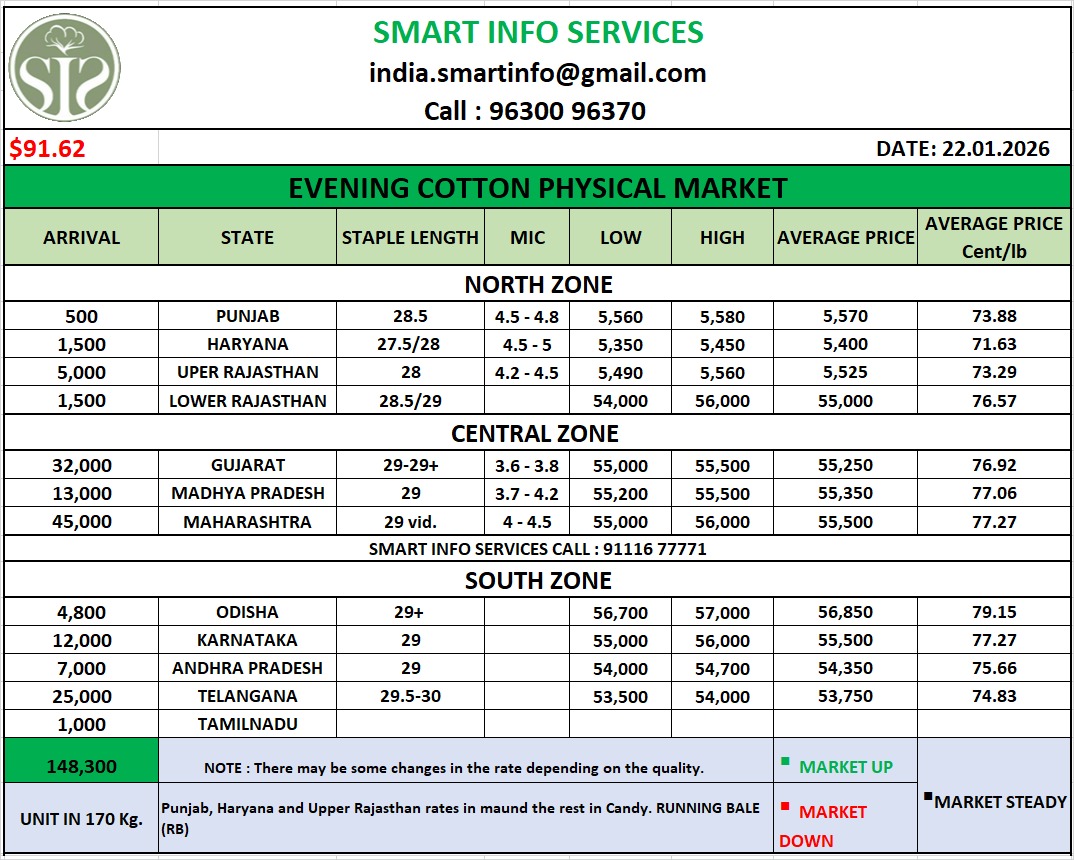
Over 150 Ginning Factories in Khandesh Face Closure Next Year, Warns Pradeep Jain The cotton industry in Khandesh is staring at a major crisis, with over 150 ginning factories at risk of shutting down next year due to plummeting cotton prices and halted exports, warned Pradeep Jain, founder-president of the Khandesh Ginning Prasingh Karkhandar Sangh, in a statement to FPJ today.Farmers are struggling as cotton prices have crashed, exports remain suspended, and income from the crop has dwindled. “Ginners cannot afford to pay more than ₹7,400–₹7,500 per quintal,” Jain said. “If this situation continues, the ginning industry in Khandesh will come to a standstill.”Khandesh—comprising Jalgaon, Dhule, and Nandurbar districts—is Maharashtra’s leading cotton-producing region, yielding about 15 lakh bales annually. The local economy depends heavily on this sector, with thousands of jobs tied directly and indirectly to ginning operations.However, this year’s heavy rains have severely impacted production. So far, only 5.5 to 6 lakh bales have been ginned, while another 2.5 lakh bales remain unsold with farmers waiting for better prices.Adding to the woes, cotton exports are currently halted while nearly 40 lakh bales of imported cotton are lying in domestic stockpiles, worsening the internal market scenario. Although farmers seek higher returns, traders maintain they cannot pay beyond ₹7,500 per quintal, bringing procurement to a halt.Cotton arrivals in markets have dropped sharply as farmers hold back their produce. Meanwhile, wholesale cotton prices have fallen from ₹56,000 to ₹53,000 per candy, with global demand also weakening.“The current market stagnation is unsustainable. If farmers continue to face poor prices, they will cut down on cotton cultivation next year—forcing ginning factories across Khandesh to shut down,” Jain cautioned.read more :-
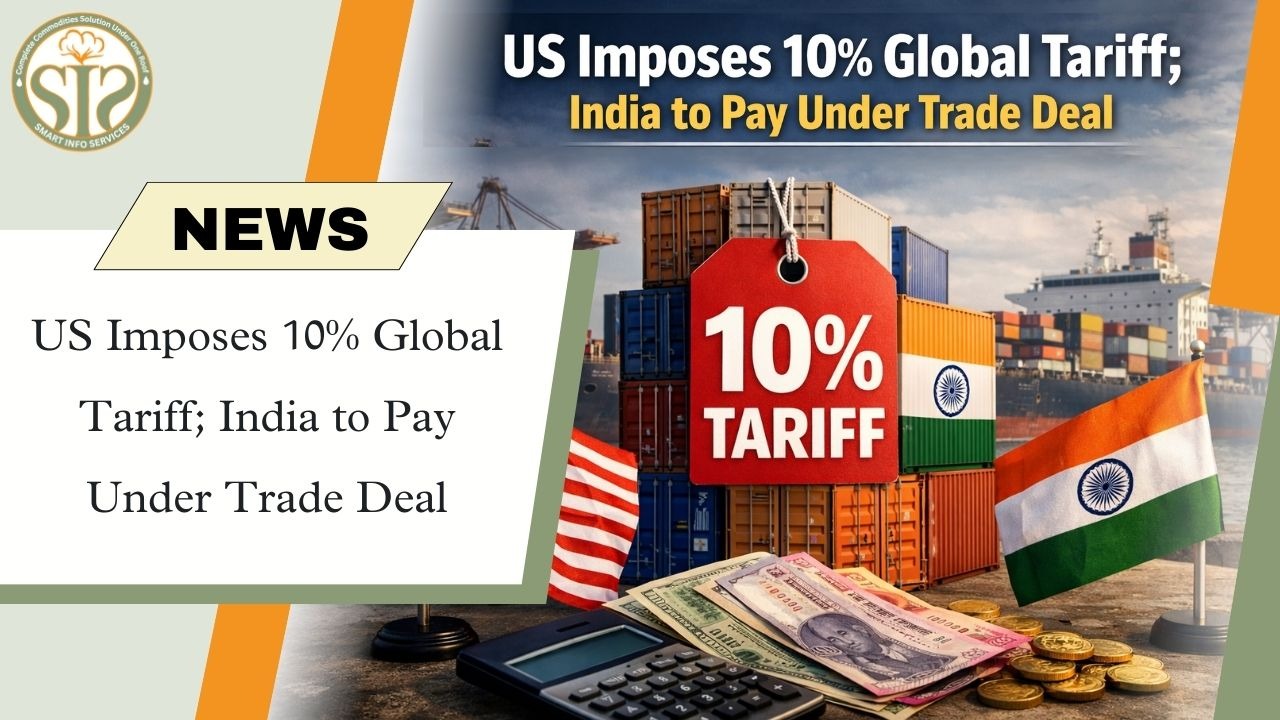
*India to Gain US Duty-Free Access for Garments Made with American Cotton: Piyush Goyal*India will receive concessional duty access to the United States for garments manufactured using American yarn and cotton under the proposed interim trade agreement with Washington, Commerce and Industry Minister Piyush Goyal has said.Speaking on the sidelines of a start-up event on Thursday, Goyal indicated that India would secure treatment comparable to that currently extended to Bangladesh under its trade arrangements with the US. He stated that whatever benefits Bangladesh had obtained would also be incorporated into India’s final agreement.India and the US have finalised a framework for the first phase of a bilateral trade agreement, which is expected to be implemented in March. According to the minister, the framework would translate into detailed provisions once the interim agreement is formally concluded.Under the proposed arrangement, Indian companies sourcing yarn from the US to manufacture garments for re-export to the American market would receive duty-free access, mirroring the concessions available to Bangladeshi exporters. Goyal said this provision formed part of the US-Bangladesh agreement and would similarly feature in India’s pact. He added that the move would have no adverse impact on Indian cotton farmers.He further clarified that there would be no quota restrictions on the import of raw materials such as cotton. The US-Bangladesh reciprocal trade pact currently allows tariff-free exports of apparel and textiles to the US if manufacturers use American-produced cotton or man-made fibre inputs.At present, Bangladesh-made garments face a 31% levy in the US market, comprising a 12% most-favoured-nation-plus duty and a 19% reciprocal tariff. When US fibres are used, the duty falls to 12%. Under the bilateral pact, Washington is set to lower reciprocal tariffs on Bangladesh to 19% from 20%, narrowing the tariff differential between New Delhi and Dhaka to one percentage point.Bangladesh is the world’s second-largest garment manufacturer and remains a key competitor to India in the US textile and apparel market, alongside China and Vietnam.Goyal noted that India was targeting a trade figure of US $ 50 billion under the agreement. He also observed that American businesses were increasingly viewing India as a trusted partner in global supply chains.read more:- The rupee closed 02 paise higher at 90.64 against the dollar.
On Friday, the Indian rupee closed 02 paise higher at 90.64 against the dollar, after opening at 90.66.At close, the Sensex was down 1,048.16 points or 1.25 percent at 82,626.76, and the Nifty was down 336.10 points or 1.30 percent at 25,471.10. About 1236 shares advanced, 2784 shares declined, and 148 shares unchanged.read more :- India can get benefits like Bangladesh on US cotton
India likely to receive Bangladesh-style zero-duty benefits on US cotton.India will receive yarn and cotton-related trade benefits similar to those extended to Bangladesh, the Commerce Ministry said, signaling a potential boost for the country’s textile and apparel exporters.According to the ministry, Indian textile and apparel exporters are expected to get zero-tariff benefits on garments made using US-origin cotton once the deal is signed. The move is seen as part of ongoing efforts to strengthen bilateral trade ties between India and the United States while ensuring competitive parity with regional players.The clarification comes amid political sparring over the trade deal. Responding to Lok Sabha Leader of Opposition Rahul Gandhi, Union Commerce Minister Piyush Goyal said allegations that Bangladesh had secured better terms were incorrect.“He spread another lie in the Parliament that Bangladesh has got more benefits from the trade than India. Just as Bangladesh has a facility that if raw material is purchased from America, then if you process it and make cloth and export it, then it will.Goyal also reiterated that domestic agricultural interests have been protected under the broader arrangement. “Around 90% to 95% of farm products produced in India have been left out of the South Asian nation's trade deal with the US, in which the interests of farmers have been protected,” he said.read more :- Rupee opens 06 paise down at 90.66
Rupee opens 06 paise lower at 90.66/USD Indian rupee opened marginally lower at 90.66 per dollar on Friday versus previous close of 90.60.
Raichur MP G. Kumar Naik flags concerns over surge in cotton import, seeks stronger policy support for domestic growersExpressing concern over the declining domestic cotton production and rising imports, G. Kumar Naik, Lok Sabha Member from Raichur, has urged the Union Government to adopt a stable and farmer-centric cotton policy to protect growers in Karnataka and across India.On February 11, Mr. Naik said the data furnished by the Ministry of Textiles, in response to his starred question in the Lok Sabha revealed a worrying trend. Cotton imports into India increased by 39% in volume between 2020-21 and 2024-25 while domestic production declined sharply from 370 lakh bales in 2017-18 to 297.24 lakh bales in 2024-25.He said the simultaneous fall in production and productivity indicated ‘structural stress’ in the sector, and warned that policy inconsistency was undermining domestic farmers.Mr. Naik pointed out that cotton prices crashed in 2025 after the government removed import duty on cotton at a time when the country was facing global tariff pressure. He noted that cotton exports from the United States to India surged by over 200% between 2023-24 and 2024-25 while imports from Brazil rose by more than 1,000% during the same period.“India remains the world’s second-largest cotton producer after China, with Brazil close behind. Yet, we are increasingly depending on imports while our own farmers struggle with falling prices and rising input costs,” he said.He cautioned that if the current trajectory continues, India risks becoming heavily dependent on cotton imports, which could weaken domestic producers and compromise long-term agricultural security.Highlighting Karnataka’s performance, Mr. Naik said the State recorded the highest cotton yield in the southern zone, above the national average. Raichur, Kalaburagi and Yadgir districts in the Kalyana Karnataka region had significant potential for expansion, provided sustained institutional support and investment were ensured.Referring to the Cotton Mission for Farmers, for which ₹500 crore was allocated in the 2025-26 Union Budget, Mr. Naik said the initiative did not find mention in the current year’s allocations. This, he said, raised concerns that the programme remained largely on paper without meaningful field-level implementation.“India cannot claim global leadership in cotton production while allowing its own farmers to bear the burden of inconsistent trade and agricultural policy,” he said, calling for a comprehensive and stable cotton strategy that safeguards domestic growers and strengthens long-term self-reliance.Cotton is a major crop in Raichur and several adjoining districts of north Karnataka. Thousands of farmers depend on the crop for their livelihood.read more :- India's GDP growth expected to be 6.9% in 2026: Goldman Sachs
Goldman Sachs estimates India's GDP growth at 6.9% in 2026Goldman Sachs estimates India's real GDP will grow at 6.9% in 2026 and 6.8% in 2027, above market consensus. The economy is projected to grow by 7.7% in 2025, despite challenges such as US tariffs.Inflation to remain at record-low level in 2025. Headline inflation averaged 2.2%, while it is expected to rise to 3.9% in 2026, close to the Reserve Bank of India's (RBI) target of 4%.RBI cuts rates by 125 basis points in 2025 and increases liquidity in the banking system. The scope for further cuts is limited, but an additional 25 basis points cut could be considered if US tariff uncertainty persists.In February, under the India-US trade agreement, tariffs on Indian goods were reduced from 25% to 18%. Goldman Sachs estimates that this could contribute an additional 0.2 percentage points annually to GDP growth and improve private investment.Regulatory relief given to banks, weak exchange rate, and tax concessions should support urban consumption in 2025. ₹6.3 trillion has been injected into the banking system as part of the recent liquidity measures, which will further boost credit growth. Rural demand is also expected to remain strong in 2026.The current account deficit stood at about 2.8% of GDP in the fourth quarter of 2025, but the full-year deficit is likely to be limited to 0.7%. This could rise to $37 billion in 2026, mainly due to growth in non-oil and non-gold imports.read more :- Global cotton prices softened last month
Global cotton benchmarks softened last monthMost global cotton benchmarks moved lower than last month, with weakness intensifying in February. As selling pressure increased, the nearest March NY/ICE futures contract fell to a lifetime low of about 61 cents a pound, down from about 65 cents a pound in late January. The December contract followed a similar trend but saw lighter losses, falling from 69 cents to 67 cents a pound, according to Cotton Incorporated.The Cotlook A index slipped marginally to 73 cents a pound from 74, reflecting soft international sentiment.In China, CC index 3128B remained steady around 104 cents per pound, equivalent to about 16,000 RMB per ton. The renminbi remained broadly stable at around 6.95 RMB per USD, according to Cotton Incorporated's monthly economic paper – Cotton Market Fundamentals and Price Outlook – February 2026.Indian cotton prices declined from 78 cents to 76 cents a pound or ₹55,200 to ₹54,000 per candy. The rupee was trading near ₹91 per USD during this period.In Pakistan, prices rose to 67 to 70 cents per pound, or 15,500 to 16,000 PKR per maund (about 37.32 kg), before easing recently. Last month the Pakistani Rupee remained around 280 PKR per USD.Overall, global price movements reflected cautious demand conditions, with currency stability limiting sharp fluctuations in key producing sectors.read more :- Rupee fell 11 paise to close at 90.60 per dollar
The Indian rupee lower 11 paise to close at 90.60 per dollar on Thursday, compared to its opening price of 90.49 in the morning.At close, the Sensex was down 558.72 points or 0.66 percent at 83,674.92, and the Nifty was down 146.65 points or 0.57 percent at 25,807.20. About 1610 shares advanced, 2431 shares declined, and 141 shares unchanged.read more :- Farmers in trouble due to increase in cotton imports
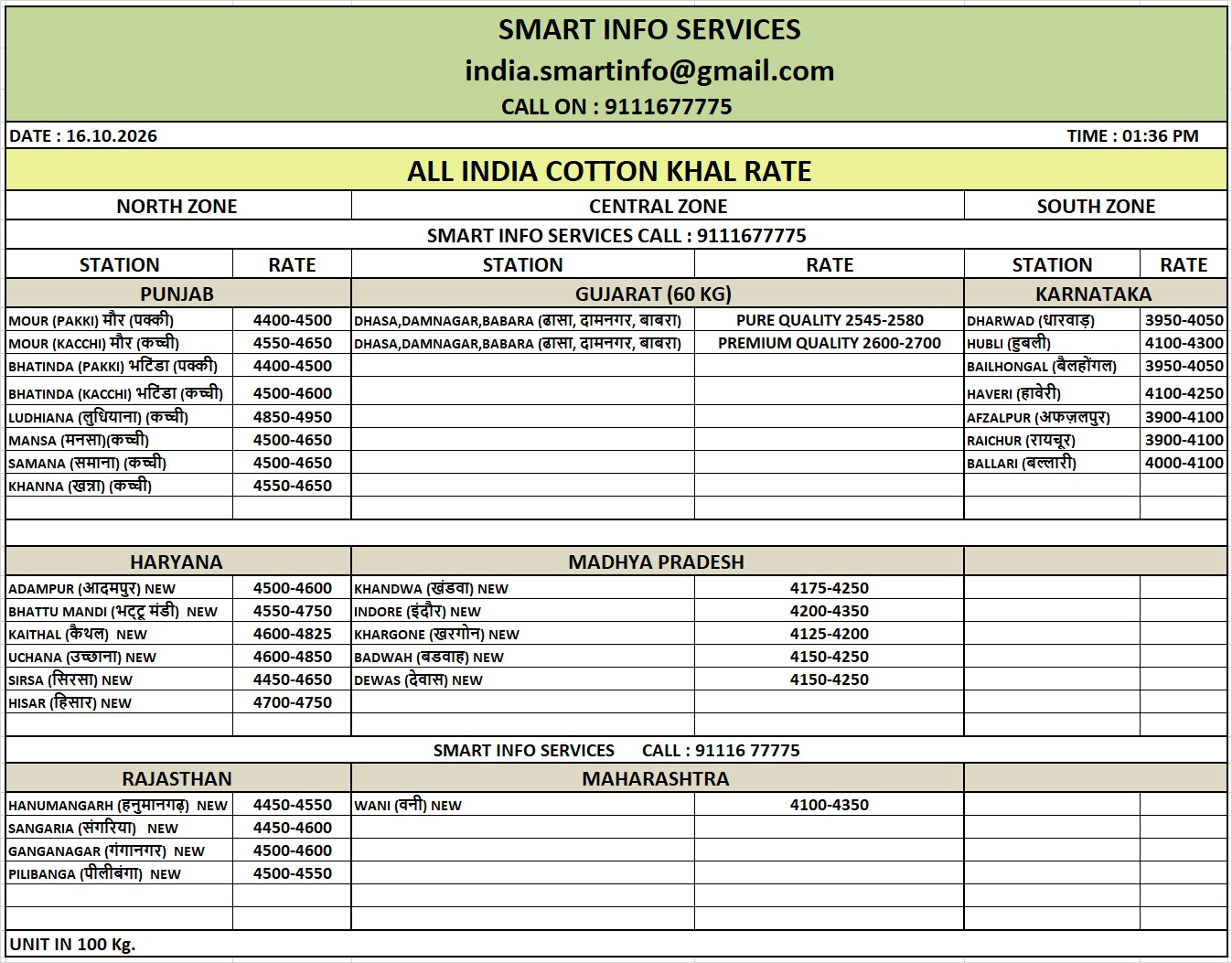
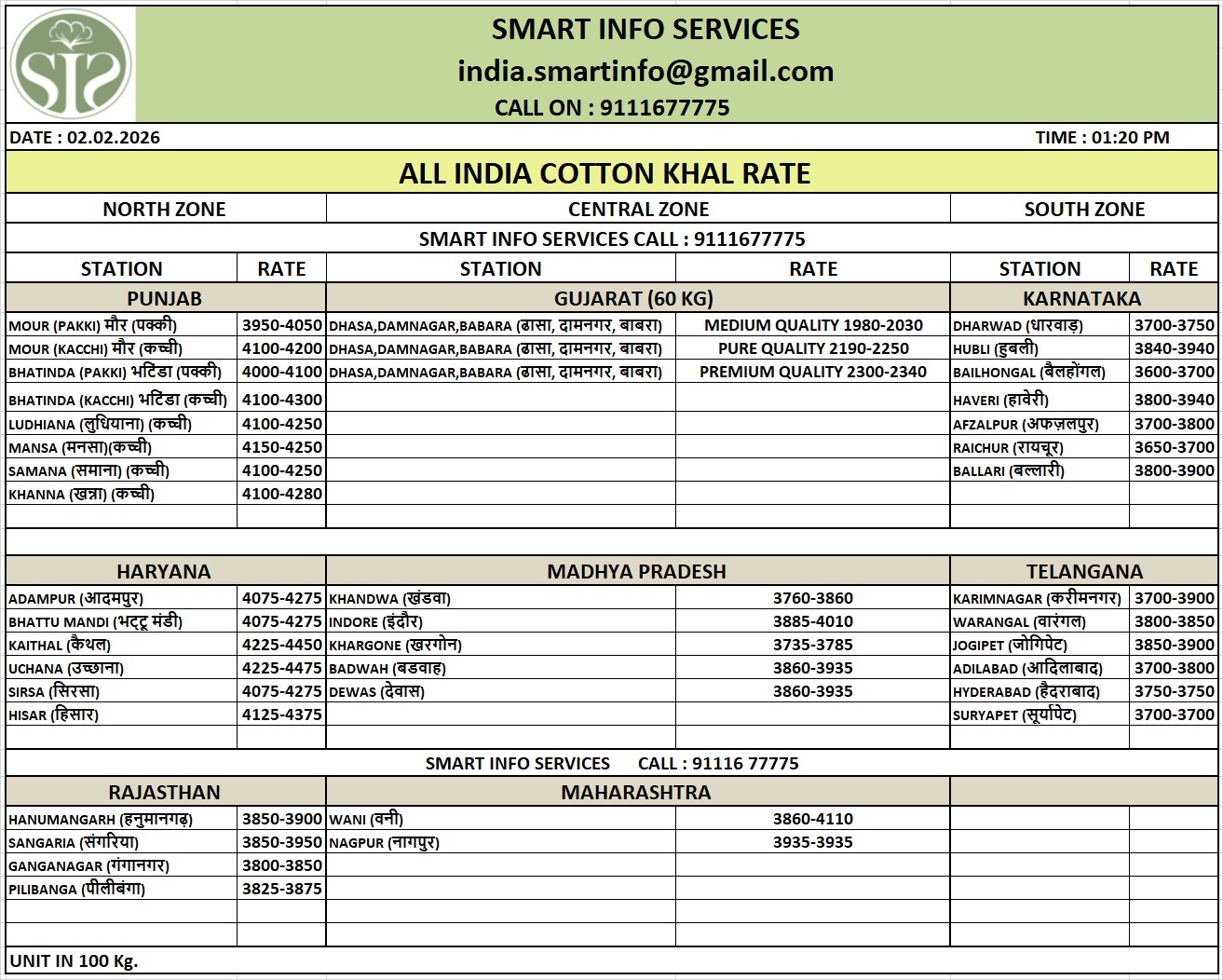
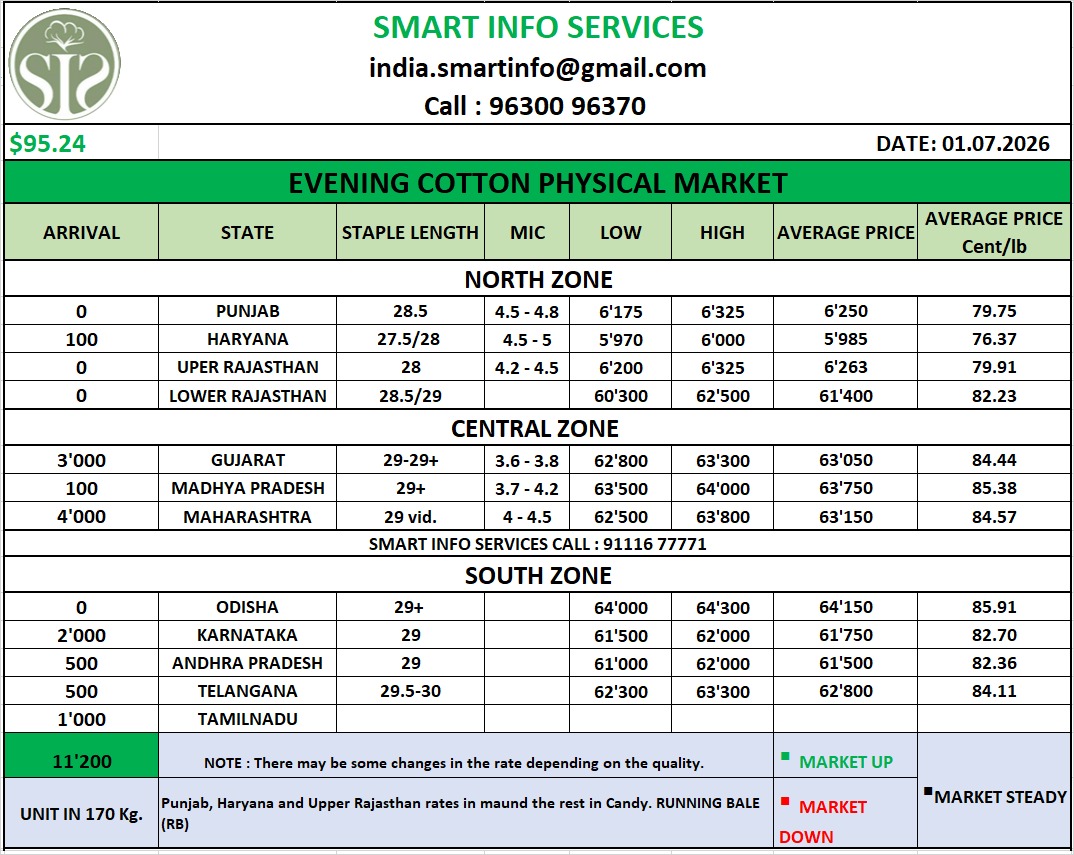
Farmers face great problems due to increase in cotton importsBENGALURU: Concerns over rising cotton imports and growing distress among domestic growers reverberated in the Lok Sabha Wednesday, with Raichur MP Kumar Naik flagging mounting challenges faced by cotton farmers, especially in Karnataka.During Question Hour, Naik said that despite India being the world’s second-largest cotton producer, farmers were grappling with uncertainty although procurement under minimum support price (MSP) scheme was expanded over the years. He said a sharp rise in imports is undermining domestic growers.“India is the world’s secondlargest cotton producer after China, with Brazil close behind,” Naik said. “Yet, in a deeply alarming development, govt data shows that cottonimports from Brazil surged by over 1,000% year-on-year over the last two years. Similarly, imports from the US also increased 200% during the same period.” Highlighting the impact on farmers, he said: “They are struggling with falling prices, rising input costs, and continued policy uncertainty. If this continues, we risk being heavily dependent on imports, thereby weakening our farmers and compromising longterm agricultural security.”In reply, textiles minister Giriraj Singh told the House the Centre remained committed to protecting farmers’ interests. “Via MSP and based on recommendations of the Commission for Agricultural Cost and Prices (CACP), state and Central inputs, and productioncosts, we ensure farmers receive a minimum of 1.5 times the cost of production for their produce,” he said.Singh said that for 2025-26 season, MSP was fixed between Rs 7,710 and Rs 8,110 per quintal depending on quality — an increase of Rs 589 per quintal over the previous year. He also said authorities had opened 571 procurement centres across 149 districts in 11 cotton-growing states, and that over 90.5 lakh bales had been procured so far.Clarifying on the import policy, Singh said 11% duty on cotton was exempted between Aug and Dec 2025. “Subsequently, it was reintroduced in Jan 2026,” he said.But Naik argued that the temporary duty exemption had adverse consequences, emphasising domestic cotton prices had crashed amid global tariff pressures. Pointing to Karnataka’s performance, he said the state recorded the highest yield in the south, surpassing the national average. He said districts like Kalaburagi, Raichur and Yadgir had great potential if backed by strong institutional support.read more :- Textile industry affected by rising waste cotton prices
Recycled textile industry under pressure as waste cotton prices surgeCOIMBATORE: The recycled textile sector is coming under increasing strain due to a sharp rise in waste cotton prices, according to M. Jayapal of the Recycle Textile Federation.He said Indian cotton for the 2025–26 season, which opened in November at around ₹51,000 per candy, is now trading near ₹56,000. When cotton prices had earlier peaked at ₹56,000 per candy in September, spinning mills were selling comber waste—the primary raw material for open-end (OE) spinning mills—at about ₹102 per kg. Since then, comber waste prices have climbed steadily to ₹123–₹125 per kg, even as cotton prices have seen only moderate movement.Despite this sharp increase in input costs, yarn prices have not risen in tandem. During the Diwali season, OE yarn was sold at around ₹165 per kg for 20s warp and ₹148–₹150 per kg for weft. At present, even after a ₹23 per kg rise in waste cotton costs, mills are still being forced to sell warp yarn below ₹165 and weft below ₹155 per kg, resulting in sustained losses over the past three months.Jayapal added that labour shortages, higher production expenses, and weak demand for 30s count yarn have further worsened the situation. As a result, several mills have either reduced capacity or shifted focus to hosiery yarn production. Over 100 mills have reportedly exited grey yarn production in the last two years.The federation has urged the Centre and state government to introduce a transparent tender-based system for selling cotton waste, aimed at protecting MSMEs and ensuring stability across the textile value chain.M Jayapalread more :- CCI buys cotton worth ₹11,800 crore from Telangana
CCI Procures 29.50 Lakh Bales Cotton Worth Rs.11,800 Cr in Telangana.Hyderabad: The Cotton Corporation of India (CCI) has procured about 451 lakh quintals kapas, which is equivalent to 90 lakh bales under Minimum Support Price (MSP) operations. Out of which, 148 lakh quintals kapas equivalent to 29.50 lakh bales was procured in Telangana, valuing Rs.11,800 crore, through 8.60 lakh direct farmer transactions during cotton season 2025-26, according to the Ministry of Textiles.Out of 148 lakh quintals kapas procured in Telangana, 5.80 lakh quintals, valuing Rs.463 crore, have been procured in Mancherial district, and 1.21 lakh quintals, valuing Rs.97 crore, seed cotton has been procured in Peddapalli district. During cotton season 2025-26, additional procurement centres were opened by the CCI based on the prescribed eligibility criteria. Three procurement centers each were opened in the districts of Mancherial and Peddapalli after assessment of parameters such as minimum of 3,000 hectares under cotton cultivation, availability of a functional APMC, and the presence of at least one ginning and pressing factory.Opening of procurement centres by CCI is undertaken on the basis of these objective criteria and operational requirements to ensure effective MSP operations. The CCI in association with the Ministry of Textiles, prescribed norms for opening procurement centers to expand MSP outreach. These norms aimed to ensure that cotton farmers in every Taluka or Mandal having at least 3,000 hectares under cotton cultivation, a functional APMC, and at least one ginning or pressing factory are able to avail MSP benefits, while also reducing transportation distances and waiting time for farmers.Accordingly, during the cotton season 2025–26, under the jurisdiction of CCI’s three branches— Adilabad, Warangal, and Mahabubnagar—122 procurement centers were opened across 30 districts of Telangana, as compared to 110 centers during 2024–25. This included three procurement centers in Luxettipet, Chennur, and Bellampally in Mancherial district and three procurement centers in Peddapalli, Sulthanabad, and Kamanpur in Peddapalli district. This was stated by the Minister of State for Textiles Pabitra Margherita while responding to a question raised by MP Vamsi Krishna Gaddam on cotton farmers in Telangana in Lok Sabha two days ago.read more :- Rupee opened 21 paise stronger at 90.49 per dollar

Rupee opens 21 paise up at 90.49/USD Indian rupee opened higher by paise 21 at 90.49 per dollar on Thursday against previous close of 90.70.read more :- Rupee weakens against dollar, falls 10 paise to close at 90.70.
On Wednesday, the Indian rupee closed at 90.70 against the dollar, while it had opened at 90.60 in the morning.At the close, the BSE Sensex stood at 84,233.64, down 40.28 points or 0.05 per cent, while the NSE Nifty50 edged higher to 25,953.85, up 18.7 points or 0.07 per cent.read more :- CAI: Impact on India due to US-Bangladesh deal
CAI President Vinay Kotak, while talking to CNBC Awaaz, told how the US-Bangladesh deal can affect India's textile market.The duty exemption given by America is given only in proportion to the value of cotton, that is, if the total price of an apparel is ₹ 100 and the value of cotton in it is ₹ 20, then the benefit of 18% duty exemption is given only on that ₹ 20. This means that the profit is only around 3–4% of the total value.Bangladesh's total exports are about 25% to America, while about 50% of its apparel is being exported to Europe. Whereas India's exports to America are about 15%. India can benefit from the new policies that America is making—especially towards reducing dependence on China. Therefore, there is a possibility that India's share (market share) will increase slightly, not decrease.On the other hand, till now Bangladesh had the benefit of zero duty in Europe, due to which India was at a loss. But from January 1, 2027, there will be no duty on India's exports to Europe. This will give us an opportunity to expand significantly in the European market and we can leave Bangladesh behind to a great extent in that area.India's cotton is going to Bangladesh because we have a locational advantage — goods from India take only 8 days to reach Bangladesh, while the same goods from the US take at least 45 days. For this reason, the mills there are buying cotton from India even at slightly higher prices. If road route exports from India resume, we will not face any significant difference.Just as there is a duty-free quota for Australian cotton, there should be a duty-free quota for American cotton as well. Then there will be no problem in competition. At present, there is about 11% duty on American cotton, which is burdensome (difficult) for us. Even if we import it under advance license, we have to suffer an average loss of 4.5% duty in the form of incentives.Therefore, either the entire duty on cotton import should be abolished, or at least a duty-free quota of 5 to 10 lakh bales should be fixed for imports from America.read more :- Cotton Corp cuts fiber prices by 3%
| title | Created At | Action |
|---|---|---|
| India-US cotton trade booms during Trump tenure | 14-02-2026 18:24:50 | view |

| Crisis on ginning industry, Pradeep Jain's alert | 14-02-2026 18:14:22 | view |
| Textile exports to be boosted, no duty imposed in US | 14-02-2026 00:58:47 | view |
| The rupee closed 02 paise higher at 90.64 against the dollar. | 13-02-2026 22:43:49 | view |
| India can get benefits like Bangladesh on US cotton | 13-02-2026 18:24:25 | view |
| Rupee opens 06 paise down at 90.66 | 13-02-2026 17:35:17 | view |
| MP on increasing cotton imports. Kumar Naik expressed concern | 13-02-2026 00:02:09 | view |
| India's GDP growth expected to be 6.9% in 2026: Goldman Sachs | 12-02-2026 23:52:16 | view |
| Global cotton prices softened last month | 12-02-2026 23:14:00 | view |
| Rupee fell 11 paise to close at 90.60 per dollar | 12-02-2026 22:44:25 | view |
| Farmers in trouble due to increase in cotton imports | 12-02-2026 19:51:31 | view |
| Rising Waste Cotton Prices Hit Textile Industry | 12-02-2026 18:42:25 | view |
| CCI buys cotton worth ₹11,800 crore from Telangana | 12-02-2026 18:14:32 | view |
| Rupee opened 21 paise stronger at 90.49 per dollar | 12-02-2026 17:29:09 | view |
| Rupee weakens against dollar, falls 10 paise to close at 90.70. | 11-02-2026 22:46:47 | view |
| CAI: Impact on India due to US-Bangladesh deal | 11-02-2026 20:07:57 | view |