Filter

Recent News

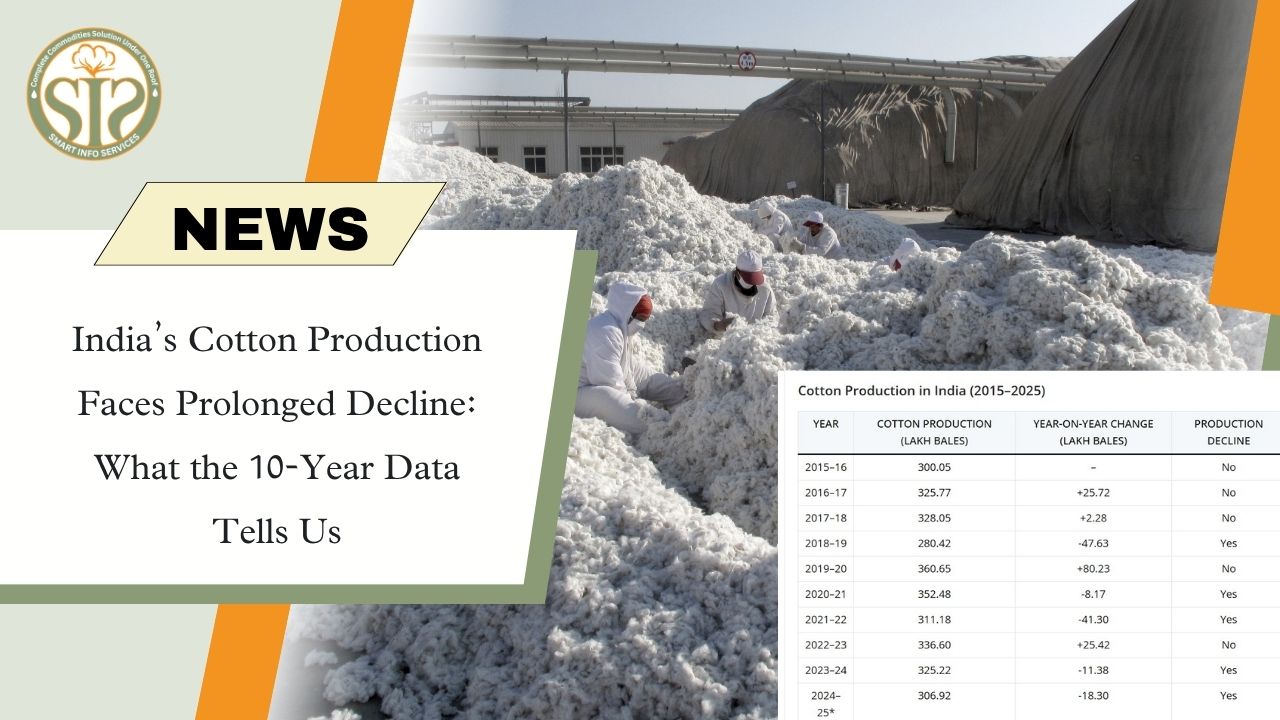
India’s Cotton Production Faces Prolonged Decline: What the 10-Year Data Tells Us

India’s Cotton Production Dips Over 10 YearsNew Delhi : India, the world’s largest producer of cotton, is facing a sustained slowdown in its cotton output. A review of ten years of production data, from 2015–16 to the estimated figures for 2024–25, paints a picture of fluctuation, stagnation, and more recently, decline. Despite the introduction of high-yielding seeds, significant government support, and growing demand from the textile sector, production has not sustained momentum.The numbers don’t lie. Cotton production touched 360.65 lakh bales in 2019–20, only to slump in subsequent years. The latest forecast for 2024–25 puts output at just 306.92 lakh bales. This represents not only a year-on-year decline but also a broader structural problem that is eroding farmer interest and threatening India’s leadership in global cotton markets.Understanding the Decadal PatternOver the ten-year span, production peaked in 2019–20 before losing pace. There were a few rebounds, but the overall trajectory lacks the consistency needed to fuel a robust value chain. From 300.05 lakh bales in 2015–16, cotton output has inched up to 306.92 lakh bales in 2024–25, reflecting an extremely modest growth. The Compound Annual Growth Rate (CAGR) for this period stands at just 0.25%, a warning signal given India’s ambitious agricultural and textile export goals.Key Years of ConcernIn 2018–19, cotton output fell from 328.05 to 280.42 lakh bales, a steep drop of nearly 14.5%. That year witnessed devastating pink bollworm attacks, especially in states like Maharashtra and Telangana. A brief recovery came in 2019–20, with a record production of 360.65 lakh bales, but that proved short-lived.The years that followed brought further strain. Production dipped again to 311.18 lakh bales in 2021–22, down from 352.48 the previous year. A combination of weather-related stress and poor price realization hurt farmer morale. The fall has continued since then, with production sliding from 336.60 in 2022–23 to a projected 306.92 in 2024–25. The cumulative effect of these down years reveals how fragile the system has become.Structural Challenges Behind the DeclineOne major issue is pest pressure. The pink bollworm, once thought to be under control due to the adoption of Bt cotton, has resurged in several cotton-growing regions. Farmers report that Bt seeds are losing efficacy, leading to increased pesticide use and higher cultivation costs. This makes cotton less attractive compared to lower-risk crops.Water availability and climatic instability are also key concerns.Irregular rainfall, early monsoon withdrawal, and rising temperatures have increased the unpredictability of yields. In Gujarat, the leading cotton-producing state, erratic weather has disrupted sowing cycles. In Maharashtra and Telangana, recurring droughts have further worsened the scenario.Price volatility compounds the problem. While Minimum Support Prices (MSP) are declared annually, they often do not match market realities. Farmers frequently sell at prices below MSP due to lack of procurement infrastructure or distress sales. This erodes income and disincentivizes continued cotton cultivation.*Are Government Interventions Enough?*The government has tried to respond through schemes such as the Cotton Corporation of India’s (CCI) procurement program, PMFBY crop insurance, and targeted MSP hikes. However, results have been mixed. Procurement helps in distress years, but it is often limited in scope and reach. Insurance coverage remains patchy, with delays in payouts and low farmer satisfaction.Technology Adoption Remains ShallowDespite the hype around agri-tech, technology adoption in cotton cultivation remains limited. Precision farming tools like drones, AI-based pest detection, and drip irrigation systems are mostly confined to pilot projects or progressive farmers. The majority still rely on traditional practices and are underserved by extension systems. This technology gap reduces resilience and adaptability to changing climatic and pest conditions.Farmer Preferences Are ShiftingThere is a clear trend of crop diversification among farmers in central and southern India. Cotton fields are being replaced with soybeans, pulses, maize, and horticulture — all seen as less input-intensive and more remunerative. In states like Madhya Pradesh, this shift is becoming structural rather than temporary. The acreage under cotton in Haryana and Punjab has also dropped, partly due to water stress and the push toward paddy or sugarcane.What Needs to Change?The first step is innovation in seed technology. India must fast-track the approval and deployment of next-generation biotech seeds that can handle new pest profiles and ensure higher yields with fewer chemical inputs. Equally important is the need to develop an institutional framework for price assurance beyond MSP — perhaps through contract farming arrangements or value chain integration with private players.Time for Bold ReformsIndia’s cotton production story over the last ten years is not just about numbers — it is a reflection of policy gaps, environmental stress, technological lag, and declining farmer confidence. With a negligible CAGR of 0.25% and multiple years of production dips, the sector is signaling distress that cannot be ignored.Unless bold reforms are initiated to boost productivity, reduce risk, and restore farmer interest, India may find its global cotton leadership slipping. Rebuilding it will take more than seasonal fixes — it will require structural transformation.read more :- Weekly Cotton Bale Sales Report – CCI

Trump tariffs blocked: What the US court ruling means for Indian market and global trade

US Court Blocks Trump Tariffs: Impact on Indian Market & Global TradeIn a landmark verdict, the U.S. Court of International Trade ruled that President Donald Trump exceeded his authority by invoking emergency powers to impose sweeping tariffs and halted most of Trump's tariffs from taking effect.The decision not only blocks the so-called “Liberation Day” tariffs in their tracks, but also sets the stage for broader legal challenges to executive-led trade actions. Motilal Oswal Financial Services outlines why this judgment could reshape global trade dynamics, and what it could mean for India.Legal brake on tariffs could ease U.S.-India trade talks“A pullback in U.S. tariff aggression creates space for India to strengthen trade positioning,” said Motilal Oswal. With Trump’s 26% reciprocal tariff threat now under legal cloud, India may gain leverage in its ongoing trade negotiations with Washington, especially as it offers deep tariff cuts on non-sensitive goods.Indian exporters may benefit as supply chains de-risk from ChinaMotilal Oswal noted that exporters in sectors like pharma and textiles could benefit if the ruling weakens the U.S.'s reliance on China-centric trade strategies. “Exporters in pharma, textiles, may benefit if global supply chains de-risk from China,” the brokerage said, pointing to India as a natural beneficiary of any diversification shift.Markets cheer legal clarity, Indian equities open higherThe decision triggered a positive sentiment wave in equities. “Markets may not react sharply as the original tariffs’ economic impact was limited,” Motilal Oswal said, “but this sets a big precedent for future administrations.” On Thursday, the Nifty 50 rose 0.29% while the Sensex climbed 0.34%, reflecting early optimism.Court ruling triggers repricing in safe-haven assetsThe risk-on mood hit safe-haven assets. Gold fell 0.7% to its lowest in over a week, while the U.S. dollar strengthened. According to Motilal Oswal, “Emergency powers are now under tighter judicial scrutiny,” leading investors to recalibrate expectations on trade-linked uncertainty and favour risk assets.Tariff agility curbed for future administrationsMotilal Oswal highlighted that the U.S. court's verdict “sets a precedent that may reduce future tariff agility — even in genuine crises.” With the court rejecting the use of a decades-old law to justify economic penalties, executive freedom over trade has now come under structural limits, adding new layers to trade policymaking.Legal uncertainty could shift the U.S.-China trade equationThe judgment introduces a new legal dimension to U.S.-China trade tensions. “U.S.-China trade tensions could enter a new phase of legal uncertainty,” Motilal Oswal observed, implying that geopolitical trade decisions may face more institutional checks, opening indirect windows of opportunity for competitors like India.read more :-Indian Rupee higher 03 Paisa, Ends at 85.50 per Dollar

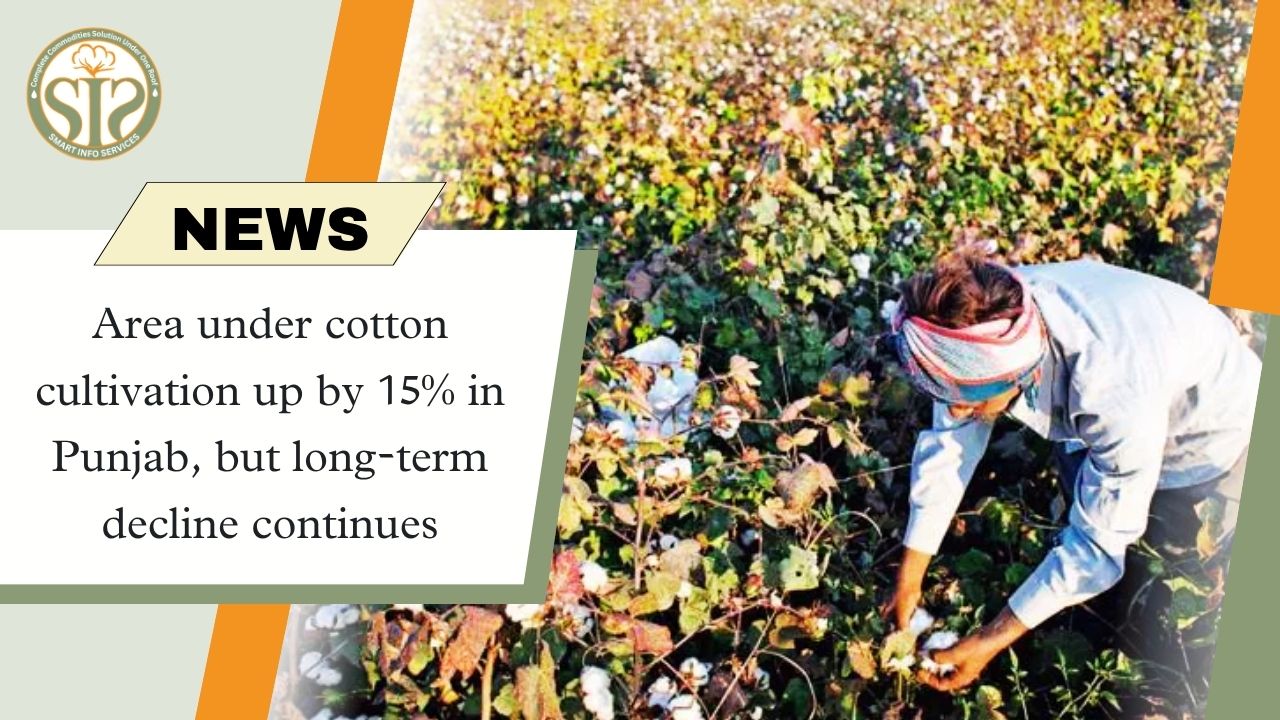
Area under cotton cultivation up by 15% in Punjab, but long-term decline continues

Cotton Cultivation Grows in Punjab, Decline PersistsCotton cultivation in Punjab has registered a 15 per cent increase this year compared to 2024, offering a ray of hope for the state’s struggling cotton belt.However, the overall trend remains downward when viewed against the last five years, with the area under cotton cultivation continuing to shrink from its historical highs.The figure is likely to improve further as the data of the area under cotton sowing is to be collected till May 31.According to official data, the cotton-growing districts of Fazilka, Bathinda, Mansa, and Muktsar have so far covered 1.13 lakh hectares out of the targeted 1.29 lakh hectares, falling short of the target by 14.6 per cent.“The improvement is visible, though minor. Cotton sowing is almost complete, and final data will be available in early June,” said Jagdish Singh, Chief Agriculture Officer, Bathinda. “Based on the sale of seeds, we are expecting a further increase in the area under cotton by the end of May.”Rajinder Kumar, Chief Agriculture Officer, Fazilka, attributed the partial increase to better awareness and slight recovery of farmer confidence, though a double breach in the Punjawa Minor Canal affected irrigation and sowing timelines in parts of the district.Still far from past gloryDespite this year’s gain, the long-term decline in cotton acreage is stark.In 2019, cotton was sown on 3.35 lakh hectares.The numbers dropped to 2.5–2.52 lakh ha during 2020–2021, to 2.48 lakh ha in 2022, to 1.79 lakh ha in 2023, and further to 98,490 ha in 2024.The latest target of 1.29 lakh ha represents a deliberate scaling down in response to farmer disinterest, pest threats, and market uncertainties.Punjab boasted 8 lakh hectares under cotton cultivation during the 1980s.Experts trace the steady decline to the Green Revolution, which encouraged paddy cultivation in areas with canal water access, leaving only the saline-water-prone Malwa belt suitable for cotton.“Cotton was once white gold, but issues like whitefly and pink bollworm attacks, spurious seeds, and low MSP procurement by the Cotton Corporation of India have disillusioned farmers,” said Sukhjinder Singh Rajan, a Fazilka farmer.In 2015, a whitefly outbreak devastated 3.25 lakh hectares of cotton. A compensation of Rs 8,000 per acre was announced by the then SAD-BJP government.. A pink bollworm infestation in 2021 led to another round of farmer losses and a Rs 17,000 per acre relief package was announced by the then Congress government.read more:- Cabinet approves Minimum Support Prices (MSP) for Kharif Crops for Marketing Season 2025-26

Cabinet Clears MSP Hike for Kharif Crops for 2025-26 Season

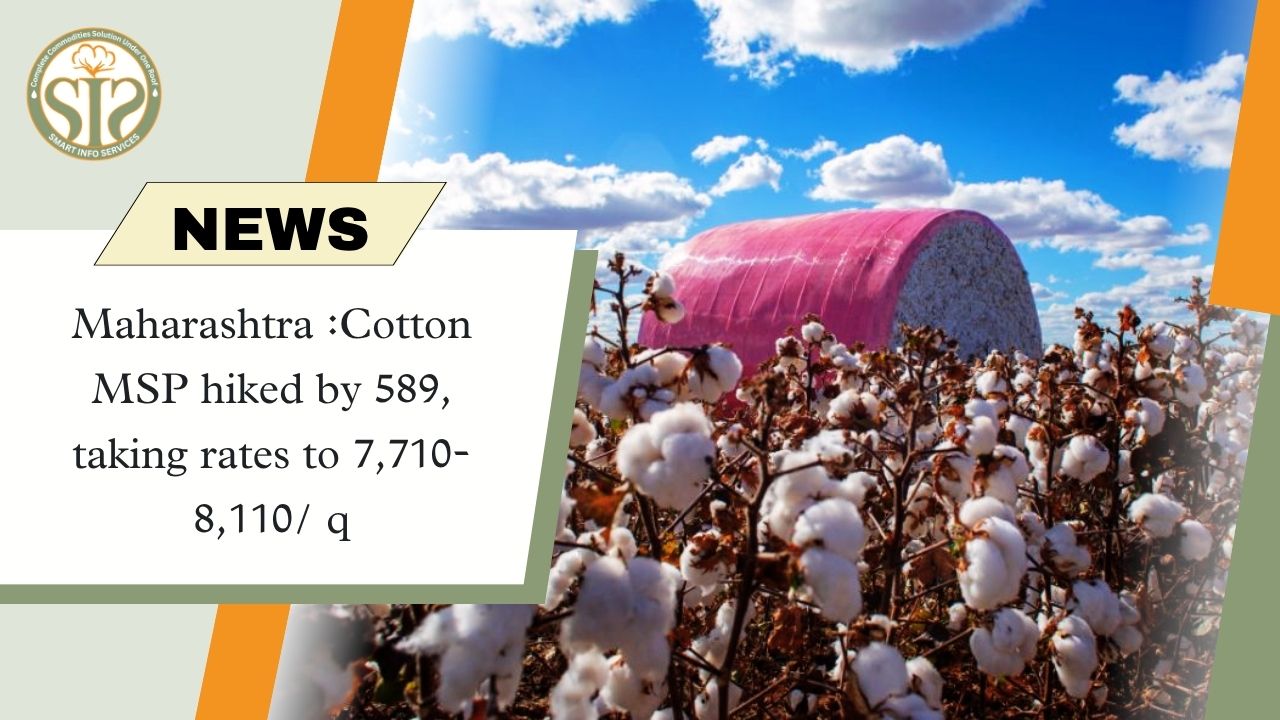
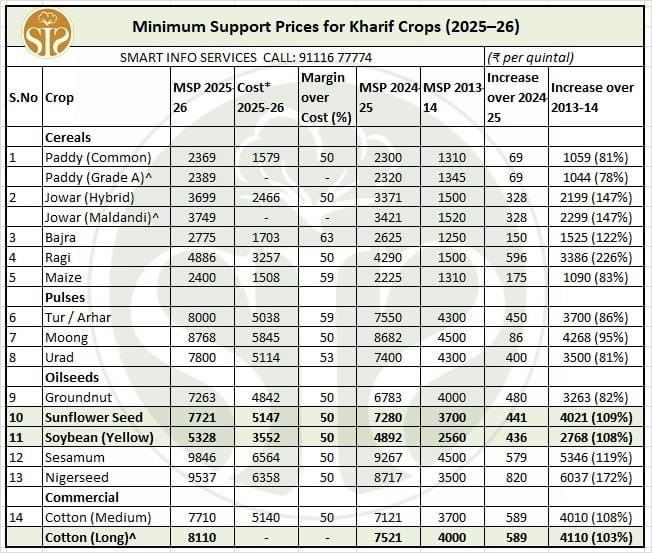
Cabinet Approves Higher MSP for 14 Kharif Crops for 2025-26The Cabinet Committee on Economic Affairs (CCEA), chaired by Prime Minister Narendra Modi, has approved an increase in the Minimum Support Prices (MSP) for 14 Kharif crops for the 2025-26 marketing season.The MSP hike aims to ensure remunerative prices for farmers. The highest increase has been announced for nigerseed (₹820 per quintal), followed by ragi (₹596), cotton (₹589), and sesamum (₹579 per quintal).The MSP is calculated based on comprehensive production costs, including expenses on labour (human and animal/machine), leased land rent, seeds, fertilizers, irrigation, fuel, depreciation on equipment, interest on working capital, and the imputed value of family labour.The revised MSP aligns with the Union Budget 2018-19 policy of fixing MSP at least 1.5 times the all-India weighted average cost of production. Farmers are expected to receive the highest margins in bajra (63%), followed by maize (59%), tur (59%), and urad (53%). For other crops, the margin is estimated at around 50%.In recent years, the government has focused on promoting pulses, oilseeds, and nutri-cereals (Shree Anna) by offering higher MSPs to encourage diversification beyond traditional cereals.Procurement data highlights a significant rise over the past decade. Between 2014-15 and 2024-25, paddy procurement stood at 7,608 lakh metric tonnes (LMT), compared to 4,590 LMT during 2004-05 to 2013-14. Similarly, procurement of 14 Kharif crops reached 7,871 LMT during 2014-15 to 2024-25, up from 4,679 LMT in the previous decade.The total MSP payments to paddy farmers during 2014-15 to 2024-25 amounted to ₹14.16 lakh crore, significantly higher than ₹4.44 lakh crore paid between 2004-05 and 2013-14. Overall, MSP payments for 14 Kharif crops rose to ₹16.35 lakh crore during the same period, compared to ₹4.75 lakh crore in the earlier decade.Read More :- Indian Rupee higher 25 Paisa, Ends at 85.36 per Dollar

Copyright© 2023 | Smart Info Service
Application Download