Filter

Recent News

Declining cotton sowing: Policies reduce farmers' interest

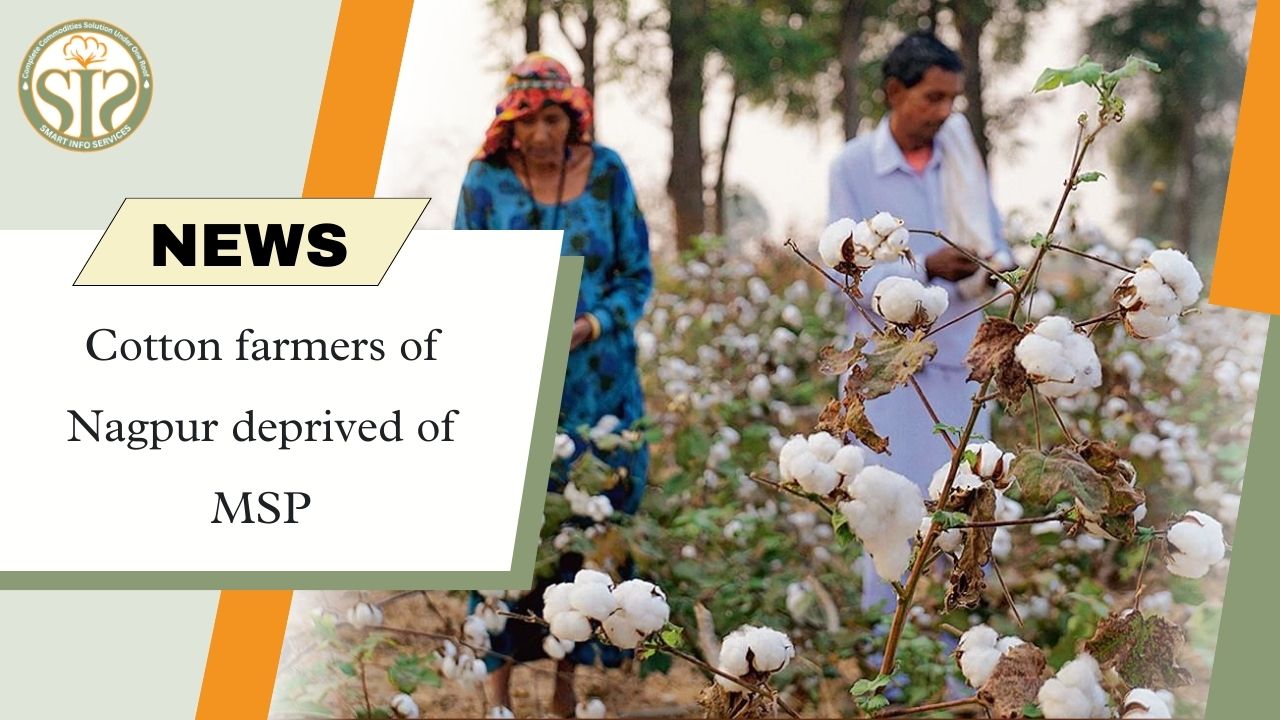
Cotton sowing continues to decline, government policies have reduced farmers' interest.While cotton farmers across the country are in an uproar over falling prices, this is directly impacting the area under cotton cultivation. According to data from the Union Ministry of Agriculture and Farmers Welfare, cotton, India's primary Kharif crop, has been experiencing a steady decline for the past two years. According to government data, cotton was sown on 12.95 million hectares annually during the Kharif season from 2019-20 to 2023-24, which declined to 11.295 million hectares in 2024-25.According to the latest data on estimated sowing for this year's Kharif season, the acreage has declined by 2.97 million hectares (approximately 300,000 hectares) to 10.998 million hectares. If government policies remain unchanged, a significant decline in sowing and production is expected in the coming years.Farmers hit by the removal of import dutyThe central government has removed the 11 percent import duty currently imposed on cotton imports, making imports of foreign cotton cheaper, and importers/traders are showing interest in purchasing foreign cotton. Meanwhile, farmers are forced to sell their produce at significantly lower prices than the MSP for the traders and mills that are purchasing domestic cotton.Farmers are reluctant to grow cotton due to the central government's attitudeThis central government's attitude is taking a toll on cotton farmers, and they are gradually withdrawing from cotton cultivation. Farmers are choosing crops that offer reasonable profits instead of cotton. Cotton prices are not the only factor that is dissuading farmers from growing cotton. In recent years, pink bollworms, whiteflies, and weather conditions have also caused concern for farmers. These factors are driving farmers to shift to other crops.Punjab Farmers Not Getting Fair PricesRecent media reports revealed that nearly 80 percent of cotton sold in Punjab's mandis in the past few weeks was sold at prices ₹1,000 or more below the MSP, resulting in significant losses for farmers. Furthermore, the lack of government procurement by the Cotton Corporation of India (CCI) has contributed to this decline in prices in Punjab, as the entire market is controlled by private traders.Cotton Production in These StatesGujarat, Maharashtra (especially the Vidarbha and Marathwada regions), and Telangana are the major cotton producers in India. Cotton is also produced in Andhra Pradesh, Madhya Pradesh, Haryana, Punjab, and Rajasthan. Meanwhile, Madhya Pradesh holds a special place in organic cotton production, producing 40 percent of the country's total organic cotton.read more :- 60 lakh hectares of crops destroyed, decision on aid will be taken: Shinde
60 lakh hectares of crops destroyed, decision on aid will be taken: Shinde

Floods in Maharashtra have affected crops on nearly 6 million hectares, Shinde said on Tuesday.Maharashtra Deputy Chief Minister Eknath Shinde said on Tuesday that crops on more than 6 million hectares in the state are estimated to have been damaged due to heavy rains and subsequent floods, and a decision on providing financial assistance to farmers will be taken in the next few days.Last week's torrential rains and floods in Maharashtra damaged crops on millions of acres, including eight districts in the Marathwada region and Solapur, Satara, and Sangli in western Maharashtra.Addressing a press conference here, Shinde said, "We will not hesitate to help farmers. We believe that rules and norms should be set aside when helping farmers and we should stand behind them. Whenever such losses occur, it is the government's responsibility to help people in such a disaster."He said, "Not only have the rains damaged crops, but the floods have also washed away fertile soil from the fields." Farms and homes have also been affected."The Deputy Chief Minister said that panchnama reports have started coming in, and it is estimated that crops on more than 6 million hectares in the state have been damaged.He said that Chief Minister Devendra Fadnavis, Deputy Chief Minister Ajit Pawar, and he himself will discuss the matter and decide on providing assistance to farmers within two to three days.Shinde said, "The central and state governments stand with the farmers. Now is the time to wipe away their tears."The Shiv Sena leader said he has instructed Public Health Minister Prakash Abitkar to ensure that infectious diseases do not spread in the flood-affected districts.read more:-  CCI to procure cotton at MSP at 14 centres from October 1

CCI to procure cotton at MSP at 14 centres from October 1

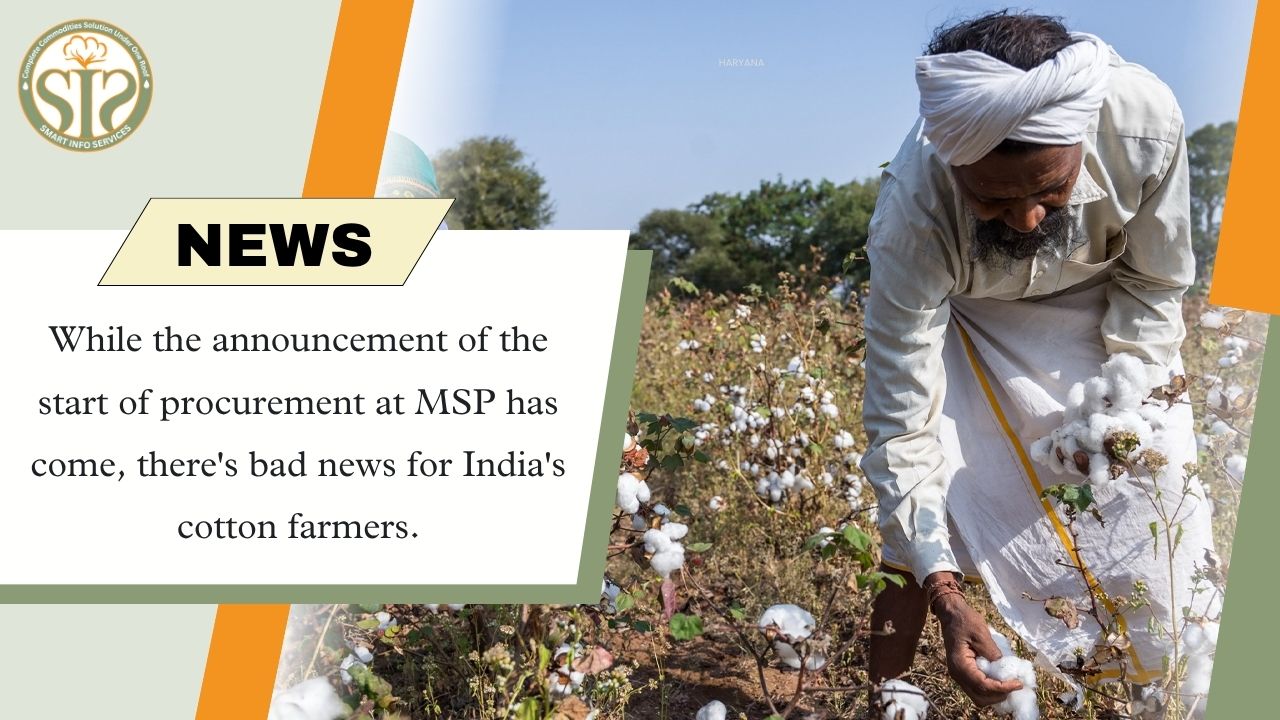
CCI to start cotton procurement at MSP from Oct 1 at 14 centres₹7,710 per quintal for medium-staple cotton and ₹8,110 per quintal for high-quality cotton.The Cotton Corporation of India (CCI), a central agency, will begin cotton procurement at the Minimum Support Price (MSP) at 14 locations in five districts of the semi-arid region from Wednesday. Bathinda and Muktsar will have a maximum of four centers each, followed by three in Mansa and one in Fazilka. The CCI will open a market in Barnala.(SIS)The CCI enters the market only when private buyers offer prices below the Minimum Support Price (MSP). According to Punjab Mandi Board data, about 30,000 quintals of cotton had arrived in the South Malwa districts as of Tuesday.Stakeholders said the CCI's arrival could stabilize cotton prices, as farmers are being paid ₹6,800-7,000 per quintal, which is ₹1,000-1,200 less than this season's MSP.For the current Rabi marketing season, the central government has fixed the price at ₹7,710 per quintal for medium-staple cotton and ₹8,110 per quintal for better-quality cotton.(SIS)State and CCI officials attributed this to the low prices and high moisture content of unginned cotton (raw crop that still contains seeds) brought to the market by farmers.Experts say the decline in demand from the textile sector in the Indian and global markets has destabilized the market, and the CCI's arrival is expected to improve prices.New App for Seamless ProcurementOfficial sources said that a new mobile application, the "Cotton Farmer" app, developed by the Central Council of Trade Unions (CCI), has been launched to ensure transparent and seamless procurement of the cash crop. The CCI has extended the registration period until October 31.The new mobile app allows farmers to self-register, book slots, and track payments. Officials stated, "This app facilitates payment tracking by farmers, bringing greater transparency, convenience, and speed to the cotton procurement process."Mandi Board data shows that 46%, or 13,000 quintals, of the total cotton crop was procured below the MSP.(SIS)CCI officials stated that cotton was sown on 1.19 lakh hectares this year, and the state agriculture department estimates production at 2.80 lakh bales, or 12.45 lakh quintals.However, Mukul Tayal, President of the Indian Cotton Association Limited (ICAL), said that unseasonal rains have severely affected the cotton crop."According to our estimates, Punjab will produce 1.50 lakh bales or 6.67 quintals of cotton as rains have hampered the prospects of a good harvest. Cotton is being sold at a lower price in the initial stages as the crop brought to the market has high moisture content due to unseasonal rains. We hope that the CCI will play a key role in stabilizing the downward trend in prices by private traders," Tayal said.Cotton arrivals (till September 29): 30,000 quintals(SIS)Purchased by private players: 28,000 quintalsBelow MSP: 13,000 quintalsDistrict-wise arrivalsFazilka 16,000 quintalsBathinda 6,000 quintalsMansa 5,000 quintalsMuktsar 3,000 quintalsCCI centersBathinda 4  Muktsar 4   Mansa 3Fazilka 2    Barnala 1read more :- INR Opens Stronger by 04 Paise at 88.77

CCI–Mills Dispute Puts Cotton Procurement on Hold

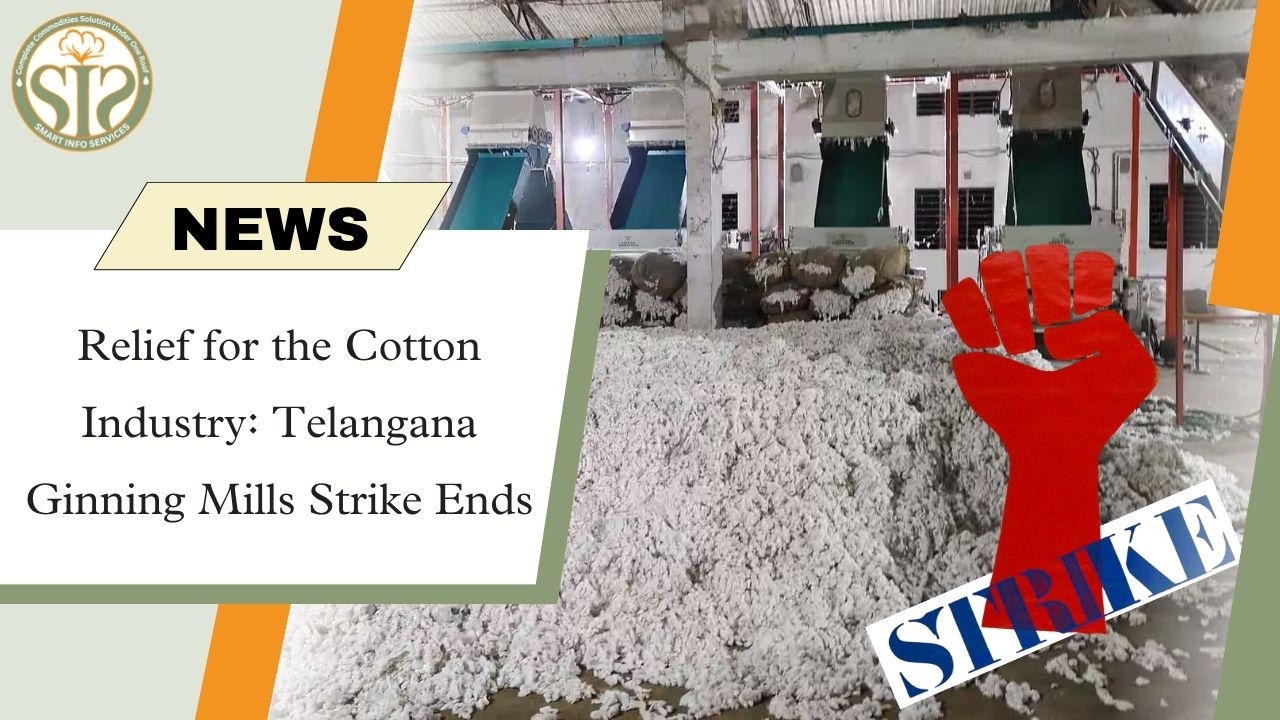
CCI–Ginning Mills Deadlock Leaves Cotton Farmers in Limbo in GunturGuntur: Cotton farmers in Guntur are facing uncertainty as the Cotton Corporation of India (CCI) has failed to reach an agreement with ginning mills to operationalize procurement centres for the upcoming season.Despite extending the tender deadline twice, CCI has not been able to finalize bids, as ginning mill operators have boycotted the process, demanding changes in tender conditions. This ongoing deadlock has created confusion and anxiety among farmers.Falling Prices Add to Farmer ConcernsWith fears of further price decline during the peak arrival season, many farmers are rushing to sell their existing stocks. Cotton prices have already dropped to around ₹6,500–₹7,000 per quintal, even in the off-season, intensifying concerns.The situation has been further impacted by the government’s temporary removal of import duty, which has weakened domestic market sentiment.MSP Announced, But Procurement StalledAlthough the government has increased the Minimum Support Price (MSP) to ₹8,110 per quintal and directed CCI to begin procurement, the process remains stalled due to the ongoing disagreement with ginning mills.CCI had initially planned to finalize tenders by September 1, later extending the deadline to September 25 following protests. However, no mills have participated so far.Key Demands by Ginning MillsGinning mill operators have placed several demands, including:Region-wise tender allocationRemoval of minimum bid requirementsEqual participation opportunity for all millsNo fixed deadline for farmers to bring cotton stocksWhile mills prefer flexible procurement timing for farmers, CCI insists on a structured schedule to ensure proper monitoring and transparency in procurement.Awaiting Government InterventionAccording to sources, CCI has forwarded these demands to the Union Ministry of Commerce and is awaiting further direction. A CCI official stated that allowing unrestricted stock arrivals without a schedule could make monitoring difficult and affect accurate farmer identification.read more :- Telangana: Minister urges CCI to procure cotton

Rain ruins cotton in Khargone, causing losses worth Rs 2 crore

Madhya Pradesh: Continuous rains have devastated the cotton crop in Khargone district: Losses amounting to ₹2 crore; picking and auctioning halted due to increased humidity.Continuous rains in Khargone district have caused significant damage to the cotton crop. Losses from farms to ginning units are estimated at over ₹2 crore in this district, the state's largest cotton producer. Excessive humidity has affected the quality of cotton, which hasThe district has been experiencing intermittent heavy rains for the past week, damaging the standing cotton crop. Farmers are trying to dry cotton at home, while ginning operators are also drying cotton on their premises. The moisture content of more than 25 percent has severely affected the quality of the cotton.The loss of luster in the cotton has increased the risk of its quality deteriorating.Losses estimated at crores. Pritesh Agarwal, operator of KK Fibers, reported that 700 quintals of cotton stored for drying at his ginning facility were soaked and washed away by the rain and flooding. The city's ginning business has suffered a total loss of over 2 crore rupees. The loss of cotton's luster has increased the risk of its quality being compromised.Due to the rain, farmers are unable to have their cotton picked from the fields. Due to a labor shortage and the closure of procurement in the market, wet cotton is falling off the plants and turning black due to the rain. Farmers have also suffered losses of over 1 crore rupees due to the rain and falling cotton prices.read more :- Cotton production in India is estimated to be 320-325 lakh bales by 2025-26.

Related News

Youtube Videos

जानिए कैसा रहा इस सप्ताह कपास बाजार का रुख🤔weekly cotton market update🤔 #kapas #cotton #smartinfo
जानिए कैसा रहा इस सप्ताह कपास बाजार का रुख🤔weekly cotton ma...
ऐसा रहा आज का कपास बाज़ार 🤔 || Cotton Market Rate Today #youtube  #cotton
ऐसा रहा आज का कपास बाज़ार 🤔 || Cotton Market Rate Today #you...
सम्पूर्ण भारत के कपास बाजार पर एक नजर😀 aaj ka kapas ka bajar bhav cotton marker rate today #kapas
सम्पूर्ण भारत के कपास बाजार पर एक नजर😀 aaj ka kapas ka baja...
Copyright© 2023 | Smart Info Service
Application Download