Filter

Recent News

Cotton price crisis: Rs 800 below MSP, farmers in loss

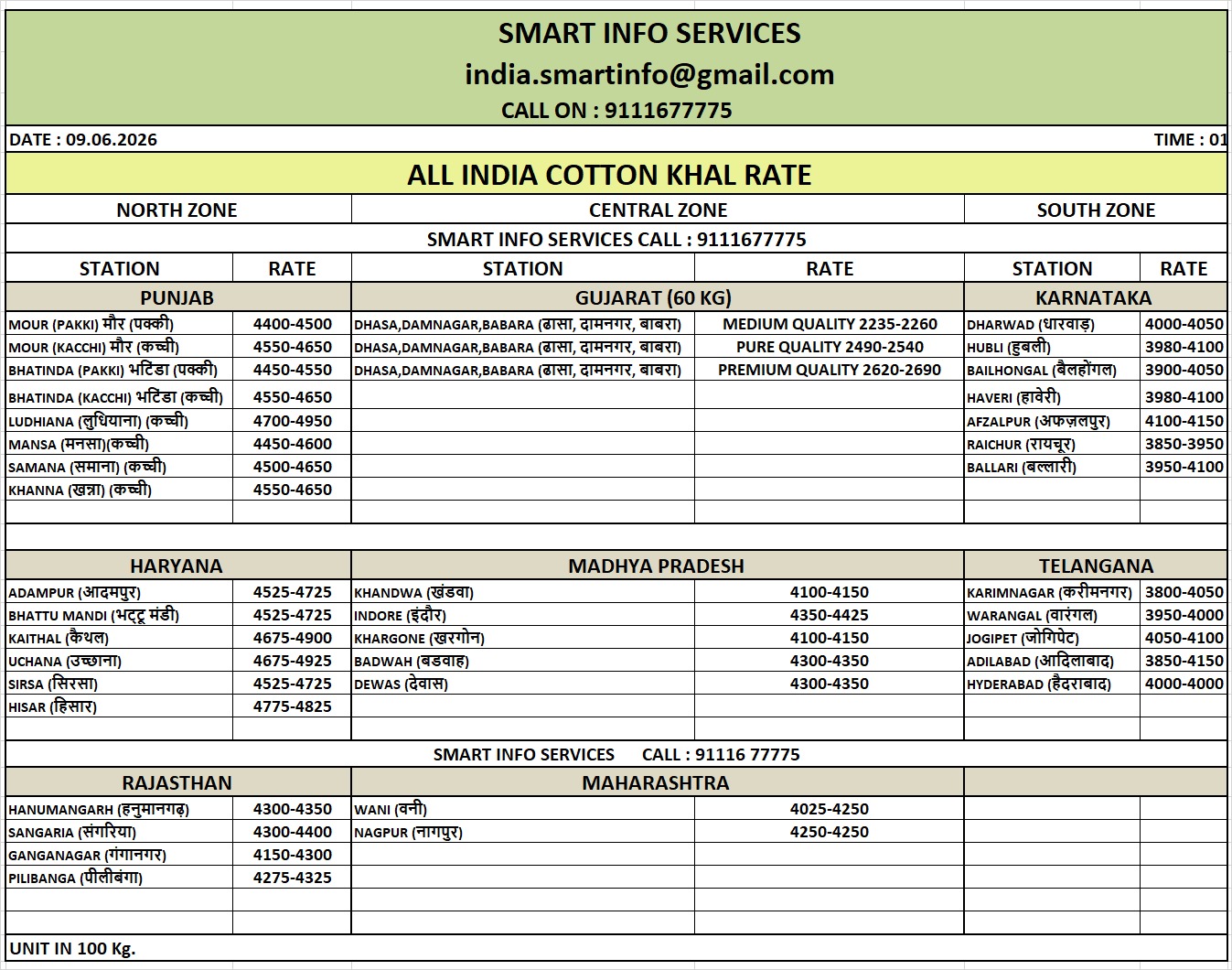
Cotton Price Crisis: Cotton prices have fallen ₹800 below the MSP, benefiting the industry but causing losses for farmers.Cotton prices in the country are continuously falling, and farmers are receiving prices ₹700–₹800 below the MSP. While zero import duty is significantly benefiting the textile industry, rising imports and weak demand are preventing farmers from receiving fair prices for their produce, forcing them to shift away from cotton and toward other crops. After soybeans and maize, cotton is now next in line. Cotton prices in the country are continuously falling. Government data shows that farmers are receiving rates ₹700–₹800 below the MSP. Regarding the Minimum Support Price (MSP), the central government has fixed the rate at ₹7,710 per quintal for medium-staple cotton and ₹8,110 for long-staple cotton. Currently, the market is seeing the majority of arrivals of medium-fiber cotton, which is trading at ₹6,988, compared to the MSP of ₹7,710. This rate information is provided by the government agency AgMarknet.This decline in prices comes at a time when the central government has reduced the import duty on cotton to zero. The decline clearly indicates that traders and mill owners are benefiting from this government decision, while farmers are struggling to secure MSP. This clearly indicates that farmers have suffered a significant financial blow following the zero import duty. If this situation continues, farmers will further reduce cotton cultivation.Low Inflows, Low PricesGovernment data shows that the model price received by farmers has declined in contrast to the rapid increase in the MSP. Surprisingly, cotton arrivals in the markets have fallen over time. A common trade rule is that when imports and supplies fall, the price of the product rises. However, this did not happen with cotton. Instead of rising, its prices fell, and the main reason for this is the zero import duty.Benefits for mill owners, losses for farmersIndia has zero import duty on cotton. This means that any trader or miller in the country can import cotton at zero import duty. The government has extended this until December 31st. The government argues that zero import duty will stabilize the cost of the textile industry, which will help textile companies and increase the purchase of cotton from farmers.The government's argument is in accordance with the rules, but on the ground, it seems to be showing no benefit. The situation on the ground is that farmers are suffering losses. If there were any benefit, they would receive good prices for cotton. The situation is such that farmers are not even able to get the MSP for cotton. On the other hand, textile companies and mill owners are benefiting.Agriculture will be devastatedCotton expert Vijay Jawanghia says about this trend, "Zero import duty will reduce the price of cloth by 2 to 2.5 rupees, directly benefiting mills and traders." According to one estimate, this import duty decision will benefit the textile industry by 15,000 crore rupees, while farmers' entire agriculture will be devastated. Its impact is already visible, as farmers are now shifting their focus from cotton to pulses and oilseeds. This is directly due to falling cotton prices and zero import duty.Loss from ImportsA simple principle of agriculture and trade is that when goods start coming from abroad, local production begins to decline. The government is also aware of this principle, yet zeroing the import duty on cotton until December is unimaginable, as the cotton season begins in October and the Cotton Corporation of India (CCI) begins procurement. Considering the cotton imports, they continue to rise.How much did imports increase?Government data shows that while imports in 2023-24 were 1,550,312 bales (one bale contains 170 kg), they increased to 4,139,941 bales in 2024-25. While cotton imports increased, cotton cultivation in the country declined. Despite this, farmers did not receive good prices. The reason is the purchase of cotton from abroad. When mills and traders can easily obtain foreign goods at low prices, why would they buy cotton from domestic farmers? This has caused frustration among farmers, and they are turning to other crops instead of cotton.How much is the price?Global trends are also being blamed for this price situation. This means that cotton purchases worldwide are sluggish, leading to a decline in demand for Indian cotton. Experts say that due to weak demand and global price trends, prices are remaining below the MSP. Therefore, it is expected that the Cotton Corporation of India (CCI) will provide relief to farmers by purchasing at the MSP. However, this relief will only be effective if farmers receive the MSP price.The CCI's purchases reveal that raw cotton prices in private trade are hovering between Rs 6,500 and Rs 7,500 per quintal, which is lower than the MSP of Rs 8,100.Clearly, when even government agencies are not providing MSP rates to farmers, what can farmers expect from traders? Overall, MSP has become a distant dream for farmers; they hear about it, but they cannot get it. Now, farmers' entire hope rests on the government to intervene in the market and ensure that cotton receives the MSP.read more :- Maharashtra: Farmers increasingly turn to CCI for cotton procurement

Maharashtra: Farmers increasingly turn to CCI for cotton procurement

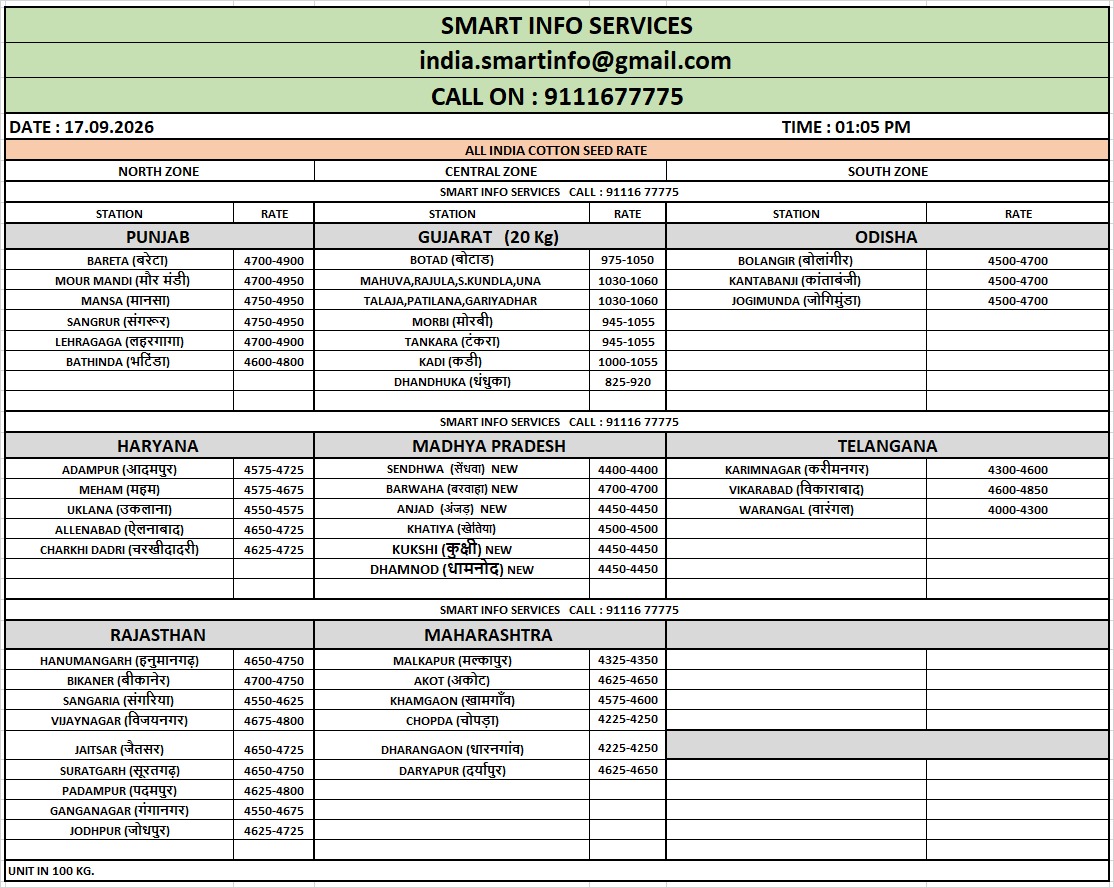
Maharashtra: Farmers are increasingly turning to CCI for cotton procurement.Beed: Government cotton procurement centers are offering better rates than private procurement centers, leading to a significant increase in cotton growers' inclination towards CCI. However, registration, approval, and other complex requirements have forced farmers to repeatedly visit market committee offices and ginning centers, exacerbating their problems.Thirty thousand quintals of cotton were planted in this year's Kharif season. After a delay in sowing, continuous rains again caused significant damage to the cotton. Despite this, farmers resorted to expensive fertilizers and pesticide sprays. However, the heavy rains damaged the cotton. The cotton on the trees was destroyed in just two harvests.Currently, Rabi sowing is underway, so farmers are prioritizing selling cotton. The government initially established government cotton procurement centers, but the stringent conditions imposed on them have exacerbated farmers' problems. Last year, CCI purchased thirty quintals of cotton per hectare; However, this year, the procurement limit has been set at only thirteen quintals per hectare, and farmers are demanding its repeal. Meanwhile, registration with the CCI on the "Cotton Kisan" app is required to sell cotton. After registration, approval from the Market Committee office, followed by slot booking, has left farmers confused.The figures speak for themselves...Private procurement centers: SixCotton purchased: Twenty-six thousand quintalsProcurement start date: October 27Rates received: Six thousand five hundred to seven thousand one hundred rupees per quintalCCI procurement centers: SixCotton purchased: Twenty-five thousand quintalsProcurement start date: November 10Rates received: Seven thousand seven hundred to eight thousand rupees per quintalTotal cotton purchased: 51 thousand quintalsIf you have any problems selling cotton or registering, please contact the Market Committee office.read more :- INR Drops 16 Paise, Closes at 89.22 per Dollar

China's soy oil exports to India rise on domestic demand

China’s soyoil exports to India surge on growing domestic glutChina’s exports of soybean oil to India are surging as weak domestic demand for the cooking ingredient coincides with robust imports of soybeans from South America and, more recently, the US. Asia’s largest economy shipped a record 70,877 tonnes of the cooking oil in October, according to customs data, most of which went to India. Exports in the first 10 months of the year have reached 329,000 tonnes, almost triple what they were for the whole of 2024. Beijing has long viewed its dependence on foreign soybeans, which are processed into animal feed and cooking oil, as a vulnerability in a world where geopolitics and viruses can quickly disrupt commodity flows. However, robust imports from South America are hitting a fairly tepid local economy, forcing Chinese soyoil processors to seek new markets.It’s another example of flagging consumption in China resulting in a surplus, with the excess flooding into global markets. In this case it’s a development that’s welcome in India, the world’s biggest importer of soybean oil. This newly forged trade route is likely to become busier, as China returns to buying US soybeans after last month’s trade truce, and relations between Beijing and New Delhi improve. The trade makes logistical sense for India, said Aashish Acharya, a vice president at Patanjali Foods Ltd, one of the country’s top vegetable-oil buyers. “Quality is comparable with South American supplies, prices are competitive and Chinese exporters are seeking reliable buyers.” Chinese soybean oil is trading at a discount of US$10 (RM41.36) to US$15 a tonne to that from South America, and can reach India’s east coast in about 10 to 12 days, compared with the 50- to 60-day journey from Brazil and Argentina, Acharya said. Imports from China are at about 70,000 tonnes so far in November and could increase by another 12,000 tonnes by month end, he said.China is the world’s biggest producer of soybean oil, churning out around 20 million tonnes a year. It used to consume nearly all of that output at home, often having to resort to imports to meet local demand. But as the economy has cooled, people have cut back on eating out, damping soyoil consumption from restaurants.The trade is being abetted by a glut of soybean oil that’s built up in China. Commercial stockpiles were at more than one million tonnes in mid-November, a seven-year high for that time of year, commodities consultancy Mysteel said in a note. Chinese crushers are expected to maintain a high level of activity and it will take time for local demand to recover, it said.On the wireChina continued its buying of American soybeans, though traders remain cautious over whether the Asian nation will come through with the much larger level of expected purchases this year.Seaborne shipments of liquefied natural gas to China in November are set to drop for a 13th straight month on an annual basis, extending a slump in purchases as domestic output and piped imports remain strong.In the roughly three weeks since Japanese Prime Minister Sanae Takaichi commented on a possible Taiwan contingency in parliament, China has unleashed economic reprisals, nationalist barbs and a diplomatic offensive to show its displeasure.read more :- CCI to ramp up cotton procurement at MSP, prices may rise above last year's

CCI to ramp up cotton procurement at MSP, prices may rise above last year's

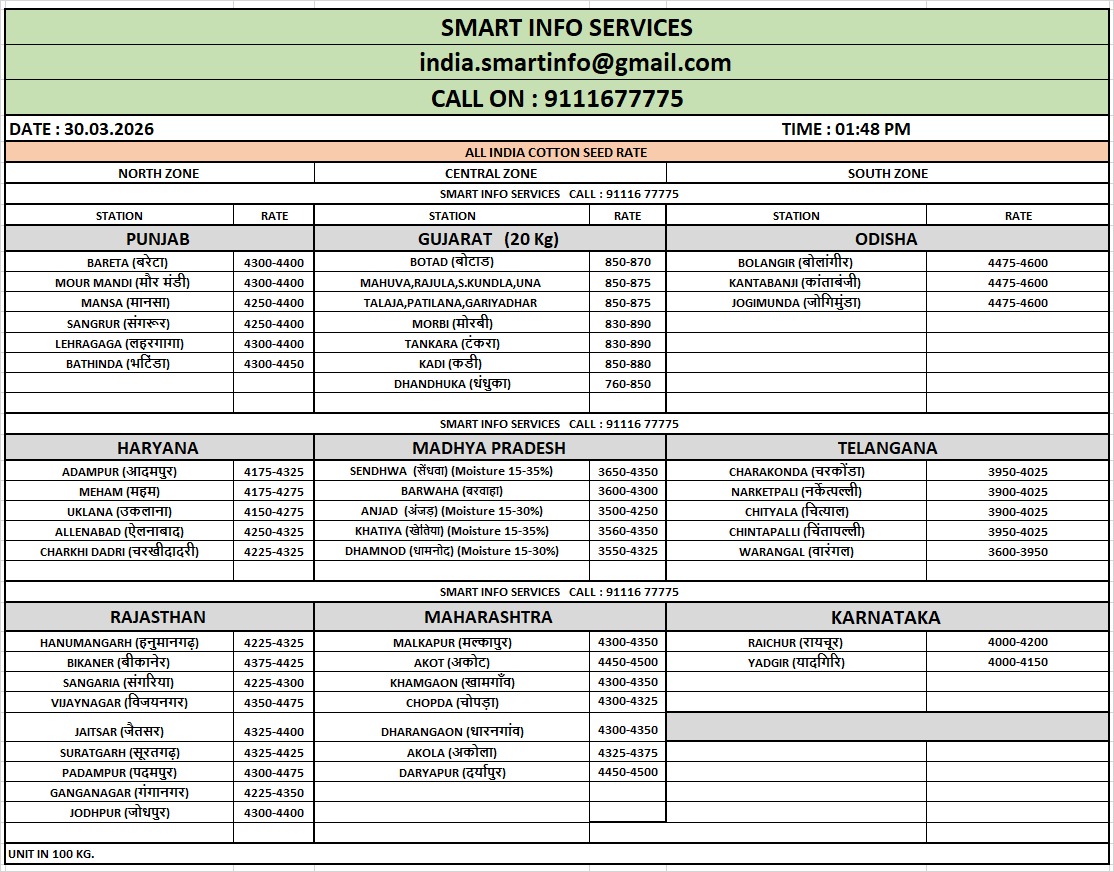
CCI's cotton procurement at MSP accelerates; prices may exceed last year's levels due to lower prices.CAI recently estimated the 2025-26 crop at 30.5 million bales (each bale weighing 170 kg), down 2% from last year's 31.24 million bales. As cotton arrivals increase, the state-owned Cotton Corporation of India (CCI) has accelerated its procurement of the natural fiber crop at the Minimum Support Price (MSP), with daily purchases surpassing one lakh bales (170 kg). According to trade, arrivals surpassed two lakh bales on Monday."Procurement has begun in all cotton-growing states except Odisha. Last Friday, we crossed 1 lakh bales in a day and this season we have crossed nearly 8 lakh in total," said CCI Chairman and Managing Director Lalit Kumar Gupta.As prices continue to remain bearish - below MSP levels - influenced by the global price trend amidst weak demand, the expectation is that CCI will have to do the heavy lifting through its market intervention buying at MSP. The raw cotton (kapas) prices in the private trade are ruling between ₹6.500 and ₹7,500 per quintal, lower than the the MSP of ₹8,100. “The expectation is that our procurement will likely cross last year’s levels because the price gap is wide open,” Gupta said, while adding that the quality issue is more this year. Last year, CCI had procured over 1 crore bales of 170 kg each.CCI has opened around 570 centres, of which 400 are operational. Every day 15 centres are coming up, he said.Unseasonal and excess rains had impacted the quality of the cotton crop this year, while the acreages were lower as a section of farmers had switched over to other crops like maize and oilseeds.“The arrivals are increasing day-by-day and CCI has also started buying in bulk quantity. The prices will stabilise as CCI has started aggressive buying,” said Vinay N Kotak, President, Cotton Association of India (CAI), the apex trade body.Kotak said the good quality cotton is getting scarce compared to last year because of the unseasonal rains, there is a huge damage to quality. “The quantity damage is smaller, but the quality damage is bigger and because of that the difference between the lower quality and quality will keep widening,” he said.CAI had recently estimated the 2025-26 crop at 305 lakh bales of 170 kg each, down 2 per cent from previous year’s 312.40 lakh bales.“Quality is a big issue this year as there’s a lot variation in all the States,” said Ramanuj Das Boob, a sourcing agent from Raichur. “Weak yarn demand has reduced mill buying. Buyers are willing to buy quality cotton at reasonable price, while the big mills have covered their positions opting for imported cotton,” he said. Quality cotton is hovering in the range of ₹50,500-52,000 per candy of 356 kg, while the lower quality produce is around ₹47,500-49,000 levels, he said. read more :- Cotton farmers' problems were placed before the Governor.
Cotton farmers' problems were placed before the Governor.

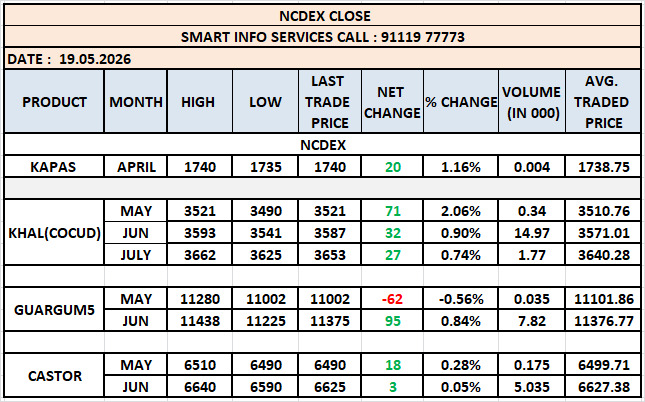
Telangana : Farmers’ body apprises guv on cotton ryots’ woes.Hyderabad: A Telangana Agriculture and Farmers Welfare Commission team on Monday met governor Jishnu Dev Varma at Raj Bhavan and brought to his attention the challenges being faced by cotton farmers in Telangana.During the meeting, commission chairman M Kodanda Reddy along with members, including Bhumi Sunil, highlighted that the Cotton Corporation of India (CCI) opened its procurement centres later than expected, causing difficulties for farmers who now need to register on the newly launched Kapas Kisan app to sell their produce.Furthermore, the restriction allowing only seven quintals of cotton per acre has added to the farmers' woes. This year, cotton was grown on 4.8 million acres across the state, but due to heavy rain and cyclone Montha, farmers endured significant losses.Kodanda Reddy informed the governor about the issues stemming from CCI's regulations, which were exacerbating the struggles of farmers already hit hard by the cyclone. Complaints from farmers statewide were flooding the commission's office, prompting the team to raise these concerns with the governor.  They also expressed their objections to the draft Seed Act 2025 issued by the central govt, noting that there were differing opinions among the state's farmers and farmer associations regarding this legislation.The governor responded favourably to the petition presented by the commission regarding the cotton farmers and promised to raise the CCI issue with the central authorities. He also asked for a follow-up meeting to further discuss the details surrounding the draft Seed Act.read more :- INR Opens Stronger by 17 Paise at 89.06

Textile industry welcomes new labour code

Indian Textile Industry Praises New Unified Labor CodeThe Indian textile industry has welcomed the country's labor law reforms. The Southern India Mills Association (SIMA) stated that the recently announced labor codes will simplify labor regulations, protect the interests of both employers and employees, and help the country progress towards a developed India.SIMA Chairman Durai Palanisamy praised Prime Minister Narendra Modi for this major and innovative initiative. He said that the implementation of these labor codes is another historic achievement for the government, marking a milestone in the many major changes that have taken place, following the changes in the tax system.The Government of India has notified the Industrial Relations Code, 2020; the Social Security Code, 2020; the Occupational Safety, Health, and Working Conditions (OSHWC) Code, 2020; and the Wage Code, 2019. These rules, which will come into effect on November 21, 2025, will improve 29 existing labor laws.Palanisamy said the new labor codes will help Indian industry comply with social accountability standards set by major regions like the European Union and the US. He said the new policy initiatives will benefit the industry from the upcoming free trade agreements with the EU and US.The new labor codes include provisions such as flexible working hours, flexible fixed-term employment, leveling the playing field in compliance costs, simplification of laws, ease of doing business, certification across India through a single license and registration, mandatory health check-ups for workers, mandatory issuance of appointment letters, increased safety during night shifts, incentives to hire more women, and annuity-based gratuity benefits.SIMA stated that although the new labor code may increase costs for companies due to additional welfare rules for workers, workers' interests are well protected.The association stated that it has been at the forefront of labor-related work and has consistently urged the government to simplify outdated labor laws and introduce a unified code, which will help India remain a global leader in social accountability.read more :- The rupee fell 09 paise to close at 89.23 per dollar.

Related News

Youtube Videos

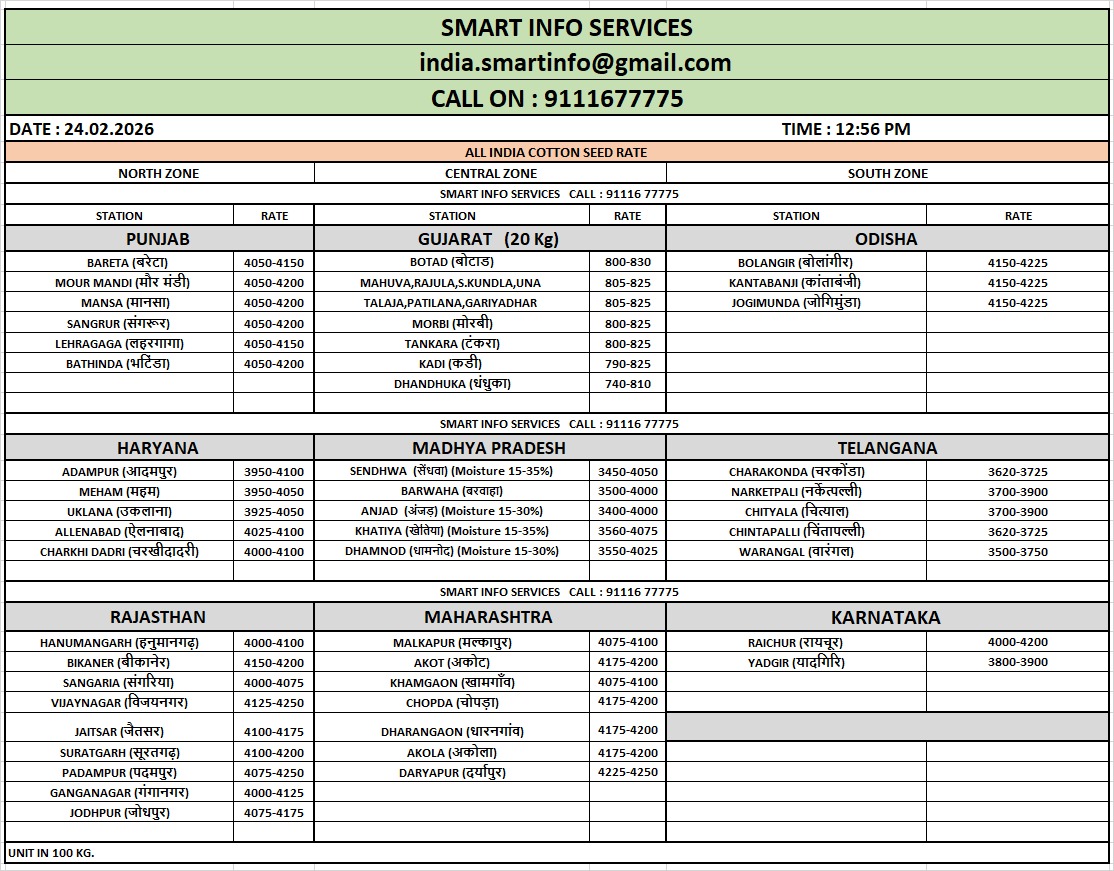
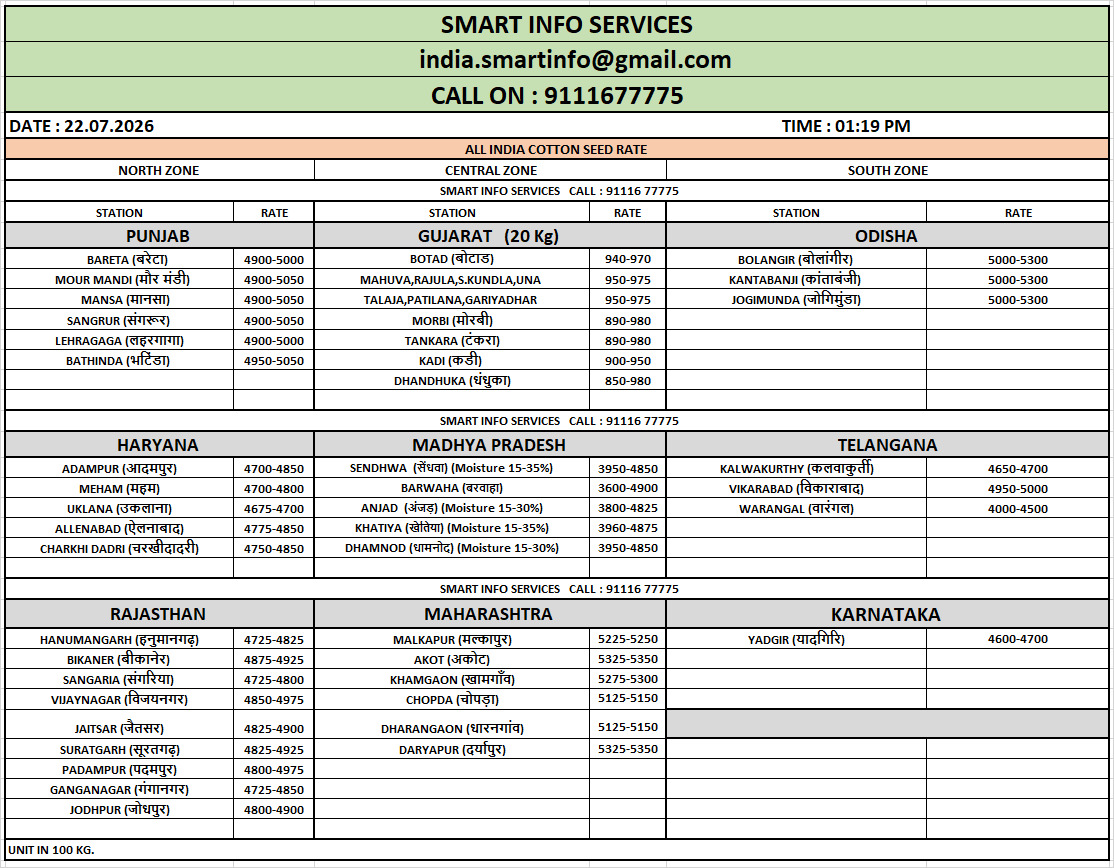
ऐसा रहा आज सम्पूर्ण भारत का रुई बाज़ार😱 aaj ka kapas ka bhav😱 cotton market rate today #youtube
ऐसा रहा आज सम्पूर्ण भारत का रुई बाज़ार😱 aaj ka kapas ka bhav...
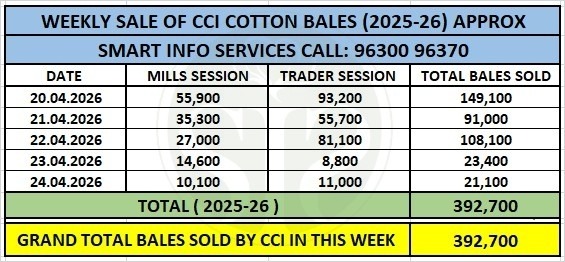
भारत के कपास बाजार की ताज़ा रिपोर्ट🤓cotton bales sold by CCI today  #cottoncorporationofindia
भारत के कपास बाजार की ताज़ा रिपोर्ट🤓cotton bales sold by CCI...
आज रुई बाज़ार की स्थिति कैसी रही🤓cotton bales sold by CCI today #cotton #cottoncorporationofindia
आज रुई बाज़ार की स्थिति कैसी रही🤓cotton bales sold by CCI to...
title Created At Action
Rupee opens 03 paise down at 89.25 26-11-2025 17:24:23 view
Cotton price crisis: Rs 800 below MSP, farmers in loss 26-11-2025 00:12:36 view
Maharashtra: Farmers increasingly turn to CCI for cotton procurement 25-11-2025 23:56:20 view
INR Drops 16 Paise, Closes at 89.22 per Dollar 25-11-2025 22:41:48 view
China's soy oil exports to India rise on domestic demand 25-11-2025 19:30:29 view
CCI to ramp up cotton procurement at MSP, prices may rise above last year's 25-11-2025 18:44:19 view
Cotton farmers' problems were placed before the Governor. 25-11-2025 17:58:43 view
INR Opens Stronger by 17 Paise at 89.06 25-11-2025 17:19:27 view
Cotton procurement begins in Srikaranpur, 90 quintals lifted 25-11-2025 00:39:05 view
Textile industry welcomes new labour code 24-11-2025 23:56:38 view
The rupee fell 09 paise to close at 89.23 per dollar. 24-11-2025 22:49:44 view
Copyright© 2023 | Smart Info Service
Application Download