Filter

Recent News

Cotton Association demands removal of 11% import duty

The Cotton Association of India has appealed to the government to remove the 11% import duty on raw cotton imports.Mumbai: The Cotton Association of India (CAI), the largest industry body, has appealed to the central government to remove the current 11% import duty on cotton to support and protect the entire cotton and textile value chain.“Current market challenges due to low domestic productivity and high MSPs have made Indian cotton more expensive than other competitive international cotton varieties,” CAI President Vinay Kotak said on Tuesday. “The 11% import duty imposed on cotton imports into India not only distorts prices but also exacerbates the hardships of our textile industry.”He said, "The only way to improve the textile industry is to provide a sustainable and competitive supply of raw materials. Farmers are already protected through the MSP system. Now is the time to protect the textile industry by removing the 11% import duty. This will provide textile/spinning mills with competitive raw materials." According to him, the industry is suffering losses due to the uncertainty of United States tariffs and the recession in Europe.He said, "If the textile industry is not supported now, it could immediately lead to unemployment, loan defaults, and bad debts across the entire textile value chain."The Textile Ministry's target of exporting $100 billion in textile products by 2030 will only be achieved if manufacturers have access to competitive raw materials.Kotak said, "The 11% import duty was imposed during the COVID-19 pandemic under special circumstances. Prior to that, there was generally no import duty on cotton in India, and it did not adversely affect farmers." He added: "This season, unseasonal rains have severely damaged the quality of Indian cotton. Therefore, our textile mills will be forced to import cotton to meet buyers' quality requirements. If the 11% import duty is not lifted, Indian textile goods will become uncompetitive, and buyers will shift to Vietnam, Bangladesh, Pakistan, and other markets. This could lead to long-term losses and a decline in India's share of the global cotton textile market."Kotak said the government is working hard to finalize FTAs with several countries.Praising the efforts of Prime Minister Narendra Modi and Commerce and Industry Minister Piyush Goyal, he said, “We can also reach a USA tariff solution. These events will provide our textile industry with a significant opportunity to export yarn and other textile products and increase India's share in world textile trade. These benefits can only be achieved if the 11% duty on raw cotton imports into India is removed, thus providing access to raw materials at competitive rates.”He further said, “In fact, the mega trend of the 'China Plus One' policy and the potential shift of sourcing from Bangladesh due to the unstable political situation and the shortage of US dollars present a golden opportunity for the Indian textile industry to grow and increase exports, provided the 11% import duty is removed and our textile industry can access competitive cotton.”read more :- Rupee higher 06 paise to close at 89.97 per dollar

Soybean prices cross guaranteed price, rise in Sangli

Soybean prices will surpass the guaranteed price level; soybean prices have risen significantly in the Sangli market.Soybean Market Prices: Soybean production in the district has declined this year. This is causing soybean prices to rise somewhat. For the past few days, soybean arrivals to the state's market committees have been declining, but demand is increasing.Soybean Market Prices: Soybean production in the district has declined this year. This is causing soybean prices to rise somewhat. For the past few days, soybean arrivals to the state's market committees have been declining, but demand is increasing.Sangli: There has been a significant increase in soybean demand at the national level. This is having a positive impact on prices, with the price of good quality soybeans increasing by 1,000 in just two days.Therefore, market experts are predicting that soybean prices will surpass the guaranteed price level. On Monday, a transaction at the Sangli market yard fetched a price of ₹4,500 per quintal.The minimum price for soybeans in the financial year 2025-26 is ₹5,328 per quintal. Farmers were unhappy with not receiving the minimum price for soybeans.Soybean production in the district has also declined this year. As a result, soybean prices are currently rising somewhat. For the past few days, soybean arrivals at state market committees have been declining, but demand is increasing. The price of high-quality soybeans, i.e., those used for seed, has increased by ₹1,500 in just two days, and mill-quality soybeans have reached ₹4,500.Two days ago, soybeans fetched up to ₹4,250 per quintal at the Sangli Market Committee, while on Monday, they fetched up to ₹4,500 per quintal at the same market committee.However, farmers are being advised to sell soybeans only after assessing the price.Reasons for Rising Soybean Prices◼️ Demand for soybean oil has increased recently. This has led to increased purchases by processing industries.◼️ On the other hand, soybean sowing has decreased this year's Kharif season.◼️ Furthermore, soybean procurement by NAFED has now begun. This is supporting prices.read more :- America's eyes on India's cotton market

America's eyes on India's cotton market

Cotton farmers face growing challenges, as the US sees a market in India.Previously, imports of raw cotton into India were subject to a five percent basic customs duty, a five percent agricultural infrastructure and development cess, and a ten percent social welfare surcharge, totaling eleven percent.This duty was imposed after the farmers' protest in February 2021, keeping in mind the interests of the country's cotton farmers. However, now, responding to the demand of the textile industry, the government has waived all customs duties on raw cotton imports effective August 19, 2025.Not only did the country's textile industry applaud this decision, the US Department of Agriculture also issued a statement, calling it a significant step and stating that it would increase US cotton exports to India. While this decision may benefit the US, it is hurting the country's farmers.According to the Global Trade Research Initiative (GTRI), the biggest beneficiary of this import duty exemption will undoubtedly be the US. The United States is the largest cotton exporter to India, and the new cotton crop begins arriving in the market from July to August.Importantly, the import duty was lifted just as the new cotton crop from Indian farmers was about to arrive in the market. The country's cotton harvest occurs from October to September, during which time farmers expect to receive good prices. Now, with the large-scale import of cotton from abroad, domestic cotton prices will fall.On the day the notification for the customs duty exemption was issued, the Cotton Corporation of India (CCI) reduced the price of cotton by Rs. 600 per candy (one candy = 356 kg), and the next day, it reduced it by another Rs. 500 per candy. Thus, within just ten days, the government itself reduced the minimum price of cotton by a total of Rs. 1700 per candy.The US ranks third in cotton production.Although India is the world's second-largest cotton producer, with domestic consumption accounting for 95 percent of total production. However, India's production of high-quality, or extra-long-staple cotton (ELS), is low, and its demand is met through imports.The Cotton Council International (CCI), a US agricultural trade body, has long demanded the removal of this tariff. The government has eliminated the 11 percent tariff on imports of high-quality, or extra-long-staple cotton, effective February 20, 2024. However, the tariff on short-staple cotton imports remained in place, which was lifted in August of this year.This move will protect Indian textile exporters' profits to some extent from the impact of US tariffs, but the country's farmers will bear the brunt of the impact, especially given the government's strong claims of doubling farmers' income.The government forgot to mention cotton farmers.The statement regarding the removal of customs duty on cotton addressed the interests of textile manufacturers and consumers, but the government neglected to mention cotton farmers. The second statement stated that farmers' interests are protected through the Minimum Support Price (MSP) system operated by the Cotton Corporation of India Limited, which ensures that farmers receive a price at least 50 percent higher than their production costs.The government determines the minimum support price based on the A-2 FL formula. According to this, the minimum support price for medium-staple cotton has been set at ₹7,121 per quintal for the year 2024-25. However, farmers' organizations are demanding that it be determined based on the C-2 formula, which requires it to be ₹10,075 per quintal. It should be noted that the C-2 formula for determining the minimum support price was suggested by Dr. MS Swaminathan.99% of cotton is cultivated as a Kharif crop.In India, cotton cultivation is primarily a Kharif crop, while in some parts of Tamil Nadu and other surrounding states, it is a Rabi crop. Approximately 6 million farming families in India earn their livelihoods from cotton cultivation. Additionally, 40-50 million other people are also involved in the cotton trade.Last year, cotton was cultivated on a total of 114.47 lakh hectares of cultivable land, representing 36.36 percent of the global cotton acreage of 314.79 lakh hectares. India ranks first in the world in terms of acreage and second only to China in production. However, the per hectare yield (437 kg per hectare) is significantly lower than the world average (833 kg per hectare).Thus, the average annual cotton production was 337 bales, while the procurement at the minimum support price was only 38 bales. This means that only 11.27 percent of the total cotton production was purchased by the government. Furthermore, out of the approximately six million cotton farmers who cultivate cotton annually, only 7.88 lakh farmers were purchased from cotton at the minimum support price. How will farmers' interests be protected under these circumstances?read more :- Rupee open Falls 15 Paise to 90.03/USD
Cotton crisis deepens: Opposition protests government inaction; farmers demand loan waivers and fair prices

Cotton Crisis Deepens as Opposition Slams Government, Farmers Demand Loan WaiversNagpur: The second day of the winter session began on a confrontational note on Tuesday, with the opposition cornering the state government over falling cotton prices and growing distress among farmers. Congress Legislature Party leader Vijay Wadettiwar protested on the steps of the Vidhan Bhavan, alleging that the state government was neglecting the welfare of farmers by reducing the import tariff from 12% to zero, leading to increased imports and lower incomes for local farmers.The protest began just seconds after Chief Minister Devendra Fadnavis, Deputy CM Eknath Shinde, Cultural Minister Ashish Shelar, Speaker Rahul Narvekar, and Council Chairperson Ram Shinde gathered on the steps of the Vidhan Bhavan for an official photo session with students from the Commonwealth Parliamentary Association (CPA).Holding a placard and raising slogans, Waddetiwar accused the government of neglecting cotton growers in Vidarbha and Marathwada. “Cotton must get a fair price. Farmers need fair compensation for their produce,” he shouted while leading the demonstration. The protests gained momentum, and leaders from the Maha Vikas Aghadi (MVA) camp also joined in.Speaking to the media, former MPCC president Nana Patole said the government had taken shortcuts in waiving farmers' loans, providing relief only to those who had approached the court. He alleged, “Only 500 crore rupees out of 1,500 crore rupees have been waived,” and said the government's approach prioritized vote bank funding over the welfare of farmers.Shiv Sena (UBT) leader Aditya Thackeray was seen holding a cotton plant as a symbol of farmers' suffering. He waved it while raising slogans and demanding immediate government intervention. Several opposition MLAs stood with him, holding banners demanding complete loan waivers and bonus procurement prices to stabilize the cotton sector.According to the opposition, market fluctuations and procurement delays have forced farmers to sell their produce at prices far below the Minimum Support Price (MSP). They alleged that government assurances have not been implemented, leaving cotton growers in debt and frustrated.The opposition has warned that they will intensify protests inside and outside the House until the government announces relief measures for cotton growers. With farmers' issues being discussed for the second consecutive day, the Winter Session is expected to be more chaotic.Earlier in the morning, Deputy Chief Minister Eknath Shinde, while briefing CPA students, targeted the opposition, saying that raising slogans on the steps of the Vidhan Bhavan is not "parliamentary procedure," as the real discussions and decisions take place inside the House.Read More :- The rupee rose 26 paise to close at 89.88 per dollar.

Brazil has overtaken India to become Bangladesh's top cotton supplier.

Brazil Becomes Bangladesh’s Top Cotton SupplierAccording to a US Department of Agriculture (USDA) report, Brazil has overtaken neighboring India to become Bangladesh's leading supplier of raw cotton. Bangladesh is one of the world's top cotton importers and the second-largest garment exporter.In the 2024-25 marketing year (MY25), which began in August, Bangladesh imported 8.28 million bales of raw cotton. Brazil supplied approximately 1.9 million bales, accounting for 23 percent of total imports.India was the second-largest supplier with 1.4 million bales, followed by Benin (1.06 million bales), Cameroon (616,538 bales), and the United States (595,902 bales).The USDA report states that Brazilian cotton has become popular among Bangladeshi spinners due to its competitive price, wide availability during harvest, and stable supply.In FY2024, India was the top supplier, exporting 1.79 million bales (23 percent share). Bangladeshi importers purchased Indian cotton in a short period of time, primarily through the Kolkata and Benapole ports, despite higher prices and some quality issues.For the current marketing year, 2026, USDA estimates cotton imports from Bangladesh at 8.4 million bales, a 1.4 percent increase over 2025, primarily due to higher cotton consumption by local spinners. This is a 5.2 percent increase from 2024 imports of 7.8 million bales.The report highlights that cotton imports remained stable during MY25, despite initial disruptions to RMG production following the formation of a new interim government in August 2024 after former Prime Minister Sheikh Hasina fled amid a student-led uprising in July.However, domestic cotton production is expected to remain unchanged at 153,000 bales, limited by land scarcity and a long production period, with cotton cultivated on 45,000–46,000 hectares.The annual consumption capacity of Bangladesh's textile industry is approximately 15 million bales, depending on the availability of raw materials, power supply, and yarn demand.Currently, only half of this capacity is being utilized, and raw cotton consumption is projected to reach 8.3 million bales in fiscal year 2025. The USDA estimates that consumption will increase to 8.5 million bales in fiscal year 2026, a 2.4 percent increase in expected imports.The spinning industry uses raw cotton to produce cotton and blended yarn, and yarn production is expected to increase from 1.7 million tons to 1.9 million tons in 2026.Despite increasing imports and use of raw cotton, Bangladesh's readymade garment industry is still expected to import more yarn and fabric.India remains the largest supplier of cotton yarn to Bangladesh due to its large spinning industry, shorter shipment times, and lower logistics costs, while China is the top textile exporter, followed by Pakistan and IndiaRead More :-   Farmers worried due to falling cotton prices

“Farmers worried due to falling cotton prices”

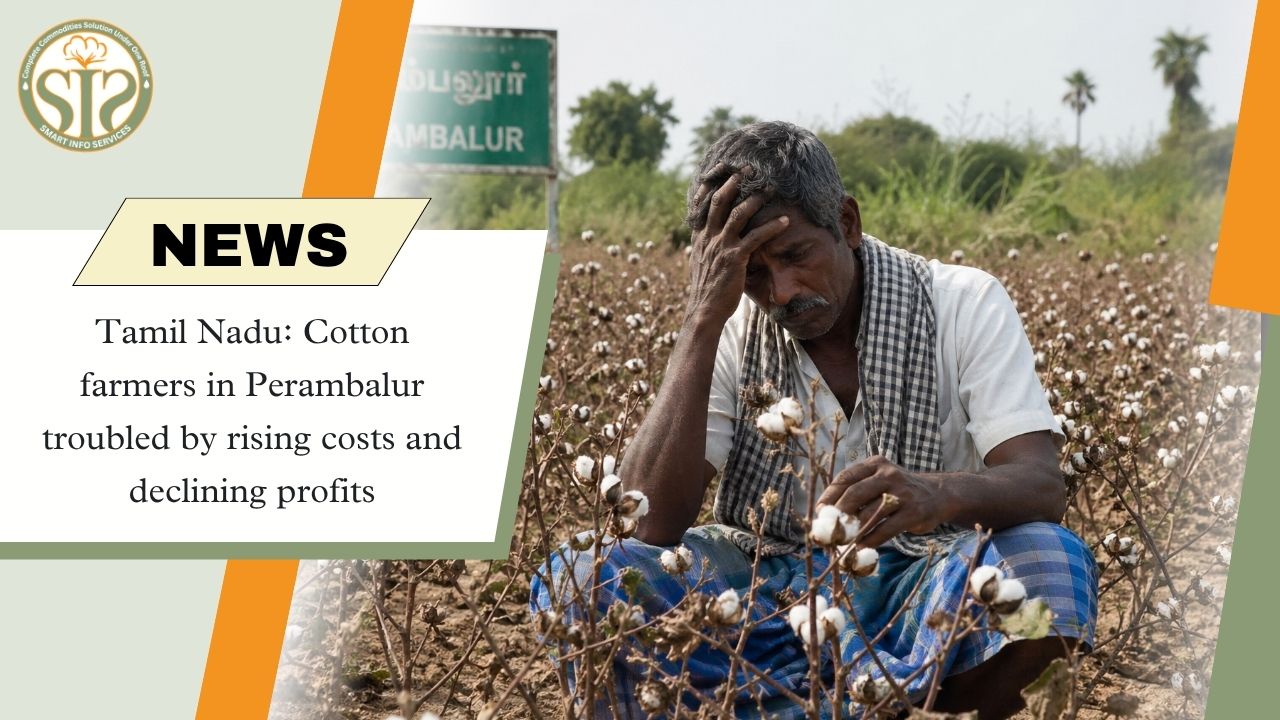
Gujarat farmer distress: Where cotton clouds hang heavy*Overview of Cotton Farming Crisis in Gujarat*The recent economic and environmental challenges faced by cotton farmers in Gujarat, India, have resulted in severe distress, leading to instances of farmer suicides. This summary explores the contributing factors to this crisis, the impact of government policies, and the responses from various stakeholders.*Economic and Environmental Challenges*Price Declines: Farmers faced low cotton prices, around ₹1,200-1,300 per mann (20 kg), which was a significant decline from previous years. Weather Issues: Non-seasonal and excessive rains in October damaged crops, further exacerbating the farmers' financial struggles.*Government Response*Relief Package: Chief Minister announced a relief and assistance package worth approximately ₹10,000 crore, with plans to procure various crops at support prices.Import Duty Waivers: The Union government waived customs duties on raw cotton imports, aiming to stabilize textile costs but adversely affecting domestic cotton prices.*Impact of Import Policies*Increased Imports: India nearly doubled its cotton imports compared to the previous year, leading to a further decline in domestic prices. Industry vs. Farmers: While the textile industry benefits from cheaper imported cotton, Indian farmers receive lower prices for their produce.*Agricultural and Market Dynamics*Production and Acreage: The provisional cotton acreage for 2024-25 is 114.47 lakh ha, a decrease from 2023-24, with yields expected to remain constant. Market Access Issues: Farmers face logistical barriers, such as the absence of local market yards, forcing them to sell produce in distant districts.*Farmer Protests*Suicides and Protests: Six farmers, primarily cotton growers, have died by suicide in recent months, prompting protests against the government's policies and lack of adequate price support.Challenges in Cotton ProductionInput Costs: Rising costs of seeds and pesticides, coupled with stagnant cotton prices, have discouraged farmers from cultivating cotton.Shift to Alternative Crops: Many farmers are shifting to peanuts, pulses, or traditional cotton varieties like kala kapas to reduce input costs.*Industry Perspectives*Quality and Yield Issues: Low-quality seeds and reduced yields are major challenges. Farmers are advocating for new seed approvals to enhance productivity.Impact on Ginning Mills: The duty-free import policy benefits spinning mills but poses a threat to ginning mills, causing many to shut down.*Conclusion*The cotton farming crisis in Gujarat is multifaceted, involving economic, environmental, and systemic challenges. While government measures aim to stabilize the industry, they often fall short of addressing the root causes of farmer distress. For sustainable solutions, there is a need for comprehensive policy interventions that balance industry growth with farmer welfare.read more :-   The rupee fall 05 paise to open at 90.14/USD. 


Showing 694 to 704 of 4468 results

Related News

Youtube Videos

साप्ताहिक कपास बाज़ार भाव || cotton market rate today #kapas #dhanteras
साप्ताहिक कपास बाज़ार भाव || cotton market rate today #kapas...
आज के भारतीय कपास बाजार की ताज़ा जानकारी 🧐 aaj ka kapas ka bajar bhav🧐 #kapas #smartinfo
आज के भारतीय कपास बाजार की ताज़ा जानकारी 🧐 aaj ka kapas ka...
ऐसा रहा आज सम्पूर्ण भारत का रुई बाज़ार 🤔cotton market rate today #youtube #cottoncorporationofindia
ऐसा रहा आज सम्पूर्ण भारत का रुई बाज़ार 🤔cotton market rate t...
title Created At Action
Cotton Association demands removal of 11% import duty 10-12-2025 23:37:40 view
Rupee higher 06 paise to close at 89.97 per dollar 10-12-2025 22:46:47 view
Soybean prices cross guaranteed price, rise in Sangli 10-12-2025 19:22:05 view
America's eyes on India's cotton market 10-12-2025 18:35:12 view
Rupee open Falls 15 Paise to 90.03/USD 10-12-2025 17:26:05 view
Cotton crisis deepens: Opposition protests government inaction; farmers demand loan waivers and fair prices 09-12-2025 23:15:31 view
The rupee rose 26 paise to close at 89.88 per dollar. 09-12-2025 22:56:24 view
Brazil has overtaken India to become Bangladesh's top cotton supplier. 09-12-2025 22:11:22 view
“Farmers worried due to falling cotton prices” 09-12-2025 18:37:04 view
The rupee fall 05 paise to open at 90.14/USD. 09-12-2025 17:33:40 view
Rupee falls 03 paise to close at 90.09 per dollar 08-12-2025 22:48:18 view
Copyright© 2023 | Smart Info Service
Application Download