Filter

Recent News

Textile Stocks Jump After Cotton Import Duty Waiver

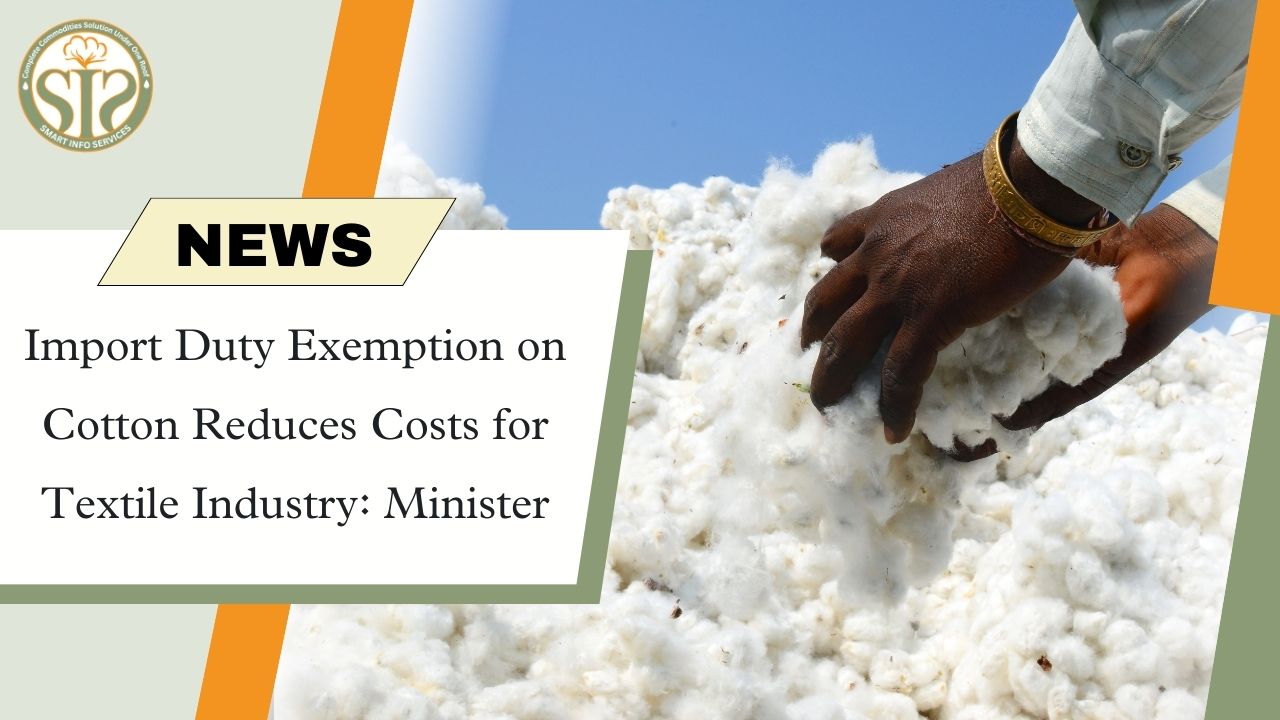
Textile Stocks Rally Sharply Following Temporary Exemption on Cotton Import DutyShares of textile and apparel companies witnessed a significant surge during early trading on Monday. This rally followed the Central Government's announcement of a temporary exemption on customs duty levied on cotton imports. The move aims to enhance the availability of raw materials and provide relief to the domestic textile industry.In a notification issued on Saturday, the Ministry of Finance stated that all customs duties applicable to cotton imports have been waived for the period spanning from June 1, 2026, to October 30, 2026. Previously, an effective duty of 11% was applicable to imported cotton. Under the new regime, cotton imports will remain completely duty-free for the next five months.According to the government, this decision was taken at a time when cotton prices in the domestic market remain at elevated levels. The removal of import duties is expected to boost cotton availability and provide relief to textile and apparel manufacturers who rely on imported cotton. This is likely to result in reduced production costs and improved operating margins for these entities.Investors welcomed the government's announcement positively, leading to strong buying activity in the shares of several textile companies. In early trading, shares of Vardhman Textiles climbed nearly 6%, while Arvind surged 6.44% to hit its 52-week high on the National Stock Exchange.Furthermore, Nitin Spinners recorded a gain of 5.53%, and Himatsingka Seide rose by nearly 5%. Shares of Welspun Living, Trident, and Gokaldas Exports strengthened by approximately 4%. Meanwhile, KPR Mill saw a rise of 2.2%, while Kitex Garments and Pearl Global Industries gained around 2%. Shares of Kewal Kiran Clothing remained relatively stable.The Ministry of Finance believes that this temporary duty exemption will help reduce input costs across the entire value chain of the textile and apparel sector. This is expected to provide relief to both manufacturers and consumers, while also seeking to strike a balance with the interests of domestic cotton producers.The Ministry stated that improved cotton availability will enhance the competitiveness of the domestic textile industry. Small and Medium Enterprises (SMEs), in particular, are likely to benefit from this, as they will receive relief on both the fronts of raw material supply and costs.read more :- India Waives Cotton Import Duty Until October 2026

Amravati Division Pushes High-Density Cotton Farming

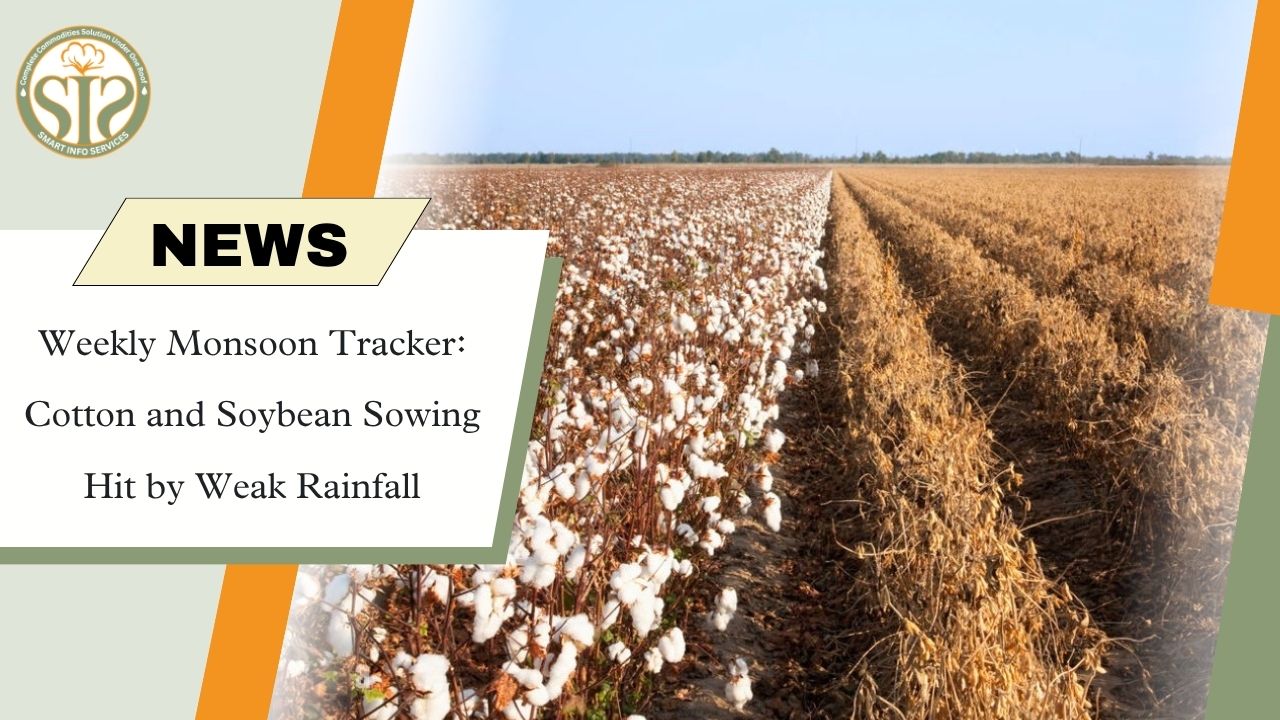
Promoting High-Density Cotton Cultivation in Amravati DivisionIndications suggest that farmers in the Amravati division are increasingly inclined towards cotton cultivation this year, driven by the favorable market prices received for cotton during the previous Kharif season. With this in mind, high-density cotton cultivation will be promoted across all five districts of the Amravati division—Amravati, Akola, Washim, Buldhana, and Yavatmal—to boost cotton production. Divisional Joint Director of Agriculture, Ganesh Ghorpade, stated that a special campaign would be launched for this purpose, in collaboration with the Central Institute for Cotton Research (CICR), agricultural universities, and Krishi Vigyan Kendras (Agricultural Science Centers).This information was shared during a Kharif review meeting chaired by Divisional Commissioner (Revenue) Nayana Gunde. District Collectors and agriculture officials from all the concerned districts participated in the meeting online. During the session, emphasis was placed on fostering better coordination between the Revenue and Agriculture departments to ensure the success of the Kharif season.On average, cotton is cultivated across an area of 10 lakh hectares annually in the Amravati division. The Agriculture Department estimates that, due to the surge in cotton prices witnessed at the end of the previous season, a significant number of farmers may prioritize cotton cultivation over soybeans this year.To enhance production, intensive farming methods—which yield higher output from a smaller land area—will be promoted. Under this initiative, special attention will be given to the use of improved seeds, balanced fertilizer management, effective pest control, and the adoption of modern agricultural techniques.The meeting also featured discussions regarding the innovations being implemented in the agricultural sector by the Washim district administration. District Superintending Agriculture Officer Arif Shah presented details of the '9M' model, which encompasses nine key components: Manpower, Motivation, Finance, Marketing, Monitoring, Management, Machinery, Methodology, and Materials. The objective of this model is to promote smart sowing techniques.The 'Vatsagulam Smart Sowing Competition,' organized last year, had received an encouraging response from the farming community. 32,335 farmers participated in the competition, and smart sowing technology was adopted across an area of over 1.36 lakh acres. The Department of Agriculture expects that this initiative will receive widespread support this year as well.read more:- CCI Cuts Cotton Prices by ₹2,300, Resumes Sales

CCI Cuts Cotton Prices by ₹2,300, Resumes Sales

CCI Resumes Cotton Sales; Cuts Prices by ₹2,300 Per CandyThe Cotton Corporation of India (CCI) on Friday resumed the sale of cotton procured during the 2025-26 season. In light of the softening prices in the global market, the organization also reduced its cotton selling price by ₹2,300 per candy (356 kg). Despite this move, market response remained below expectations, with buying activity observed only at limited levels.According to trade sources, even after the price reduction, the CCI managed to sell only about 1,200 bales of cotton on Friday. Of this quantity, approximately 800 bales were purchased by spinning mills, while the remainder was acquired by traders and resellers. This marks the second instance in recent days that the CCI has lowered its prices; just last week, the organization had implemented a reduction of ₹700 per candy. Citing technical reasons, the CCI had temporarily suspended its sales on May 22.Market experts believe that, despite the price cuts, buyers continue to maintain a cautious stance. According to Ramanuj Das Boob, a sourcing agent based in Raichur, a price imbalance persists even at current levels. Buyers are adopting a "wait-and-watch" strategy, while weak yarn prices are also impacting the purchasing capacity of the mills.The recent softening in the global cotton market compelled the CCI to revise its pricing. ICE cotton futures—which had surged from early February to reach 88 cents per pound on May 11—have now retreated to hover around 76 cents per pound. Improved weather outlooks in the US and Brazil, coupled with a decline in crude oil prices, are considered the primary factors driving this market softness. Consequently, private resellers have been observed selling cotton at rates approximately ₹2,000 per candy lower than the CCI's prices. The CCI procured approximately 10.5 million bales of cotton during the 2025-26 season, the majority of which has already been sold. It is estimated that the corporation currently holds a remaining stock of approximately 3.2 million bales. Meanwhile, the Central Government has increased the Minimum Support Price (MSP) for cotton by ₹557 per quintal for the 2026-27 marketing season. Consequently, the MSP has been fixed at ₹8,267 per quintal for medium-staple cotton and ₹8,667 per quintal for long-staple cotton. According to data from the Ministry of Agriculture and assessments by industry bodies, the area under cotton cultivation is expected to increase by approximately 7 percent during the upcoming Kharif season, driven by expectations of better prices.read more :- Jalna Sees Drop in Cotton, Soybean Productivity; Maize Performs Better

Jalna Sees Drop in Cotton, Soybean Productivity; Maize Performs Better

Kharif 2025: Cotton and Soybean Productivity Drops in Jalna; Maize Shows Stronger PerformanceAgricultural statistics for the Kharif 2025 season in Jalna district reveal a decline in the productivity of key crops—cotton and soybean. According to the Department of Agriculture, the area under cotton cultivation has shrunk to 278,924 hectares. Concurrently, its productivity was recorded at 278.212 kilograms per hectare—a figure considered a significant decrease compared to the previous year.The situation regarding soybeans was somewhat different. While the area under its cultivation expanded to reach 212,404 hectares, productivity stood at a mere 1,274.993 kilograms per hectare. This clearly indicates that, despite the increase in acreage, production capacity failed to reach expected levels.In contrast, maize delivered a stronger performance this season. The area under its cultivation rose to 57,345 hectares, and productivity was recorded at 2,993.573 kilograms per hectare—a figure exceeding the district's average level.Arhar (Pigeon Pea) was cultivated across an area of 50,849 hectares, yielding a productivity of 1,130.625 kilograms per hectare. This marks an improvement compared to the previous year. In 2024, the average acreage for Arhar was 53,346.18 hectares; however, actual sowing took place across 49,990 hectares, with productivity recorded at 1,021.333 kilograms per hectare.Crops such as Moong, Urad, and Bajra yielded mixed results. The area under Bajra cultivation continues to shrink steadily; while 6,743 hectares were sown in 2024, this figure dropped to just 3,263 hectares in the subsequent season. The acreage for Urad is also on a downward trend, although its productivity has been recorded at levels above the average. Agricultural experts believe that erratic rainfall, changing weather patterns, rising production costs, and the potential impact of El Niño have affected the performance of Kharif crops. According to the Meteorological Department, the monsoon is currently stalled over Sri Lanka, which has heightened the concerns of farmers.read more :- Telangana Farmers Gear Up for Cotton Sowing Season

Telangana Farmers Gear Up for Cotton Sowing Season

Telangana: Preparations for Cotton Sowing Intensify Ahead of JuneHyderabad: Farmers in Telangana have accelerated their preparations for the cultivation of cotton—often referred to as "white gold." According to agricultural experts, the month of June is considered the most suitable time for sowing cotton, while the crop typically becomes ready for harvest by October or November. By ensuring adequate rainfall, utilizing improved seed varieties, and adopting appropriate farming techniques, farmers can achieve higher yields and greater profitability.Cotton ranks among the major cash crops in Telangana, and thousands of farmers rely on its cultivation for their livelihood. This Kharif season crop is sown in June, coinciding with the arrival of the first monsoon showers. Experts note that while the primary sowing window spans from June through the first week of July, preparatory activities commence as early as April and May. During this preparatory phase, farmers engage in deep plowing of their fields to enhance soil moisture retention and water-holding capacity, as well as to minimize the impact of pests.Agricultural scientists are advising farmers to prepare their fields in a timely manner, apply balanced fertilizers, and select high-quality seeds. Furthermore, emphasis is being placed on the need for special attention to irrigation and pest control measures to safeguard the crop from potential damage during its critical early stages of growth.A cotton crop typically matures within a period of 150 to 180 days. Following sowing in June—and with proper care, fertilization, and irrigation—the fields become blanketed in white cotton by October or November. It is at this juncture that the first round of harvesting begins, serving as a primary source of income for the farmers.Cotton is widely regarded as the backbone of Telangana's economy. It not only serves as a major source of income for farmers but also provides a robust foundation for the state's agro-based industries. In years of bountiful yields, this crop further stimulates economic prosperity and generates employment opportunities across rural regions.read more :- Cotton Acreage Seen Rising as Prices Jump 25%




Cotton Acreage Seen Rising as Prices Jump 25%

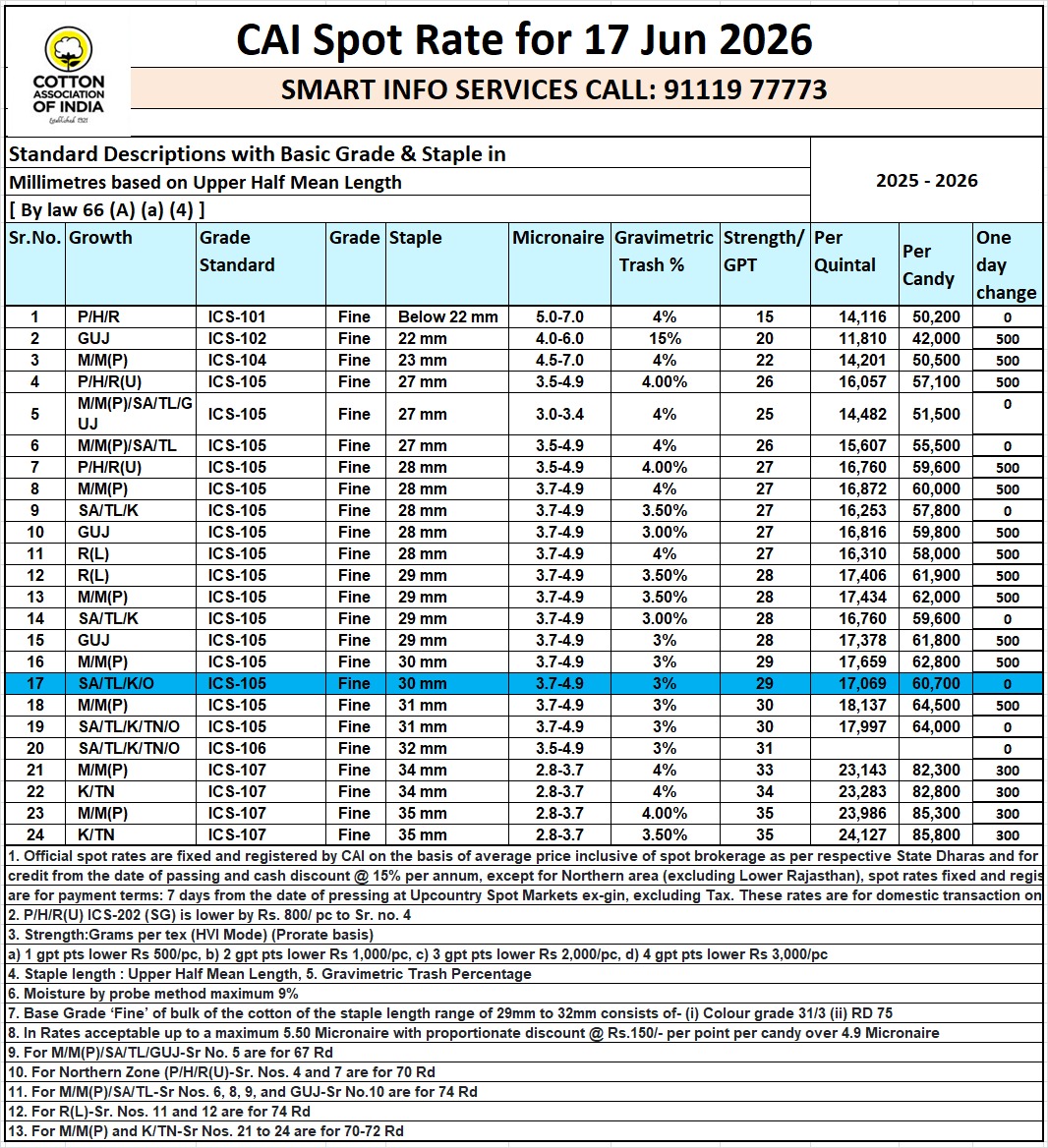
Signs of Increase in Cotton Acreage; Prices Surge by 25%Amidst a sharp surge in cotton prices and growing apprehensions regarding production levels, the country's textile industry has expressed heightened concern. However, there is good news for farmers: the acreage under cotton cultivation is expected to expand in the upcoming season. According to the Cotton Association of India (CAI), the area dedicated to cotton cultivation could increase by approximately 7 percent in 2026. Improved market rates and an upward revision in the Minimum Support Price (MSP) are considered the primary drivers behind this trend.Over the past two months, cotton prices have witnessed an increase of approximately 25 percent. Currently, the price for Shankar-6 (31 mm) cotton has reached ₹67,100 per candy—equivalent to roughly ₹18,869 per quintal—whereas prior to the onset of tensions between Iran and the U.S., its price stood at around ₹15,000 per quintal. International geopolitical conditions and global inflationary pressures have impacted the cotton market, the repercussions of which are now becoming evident within the textile industry as well.The government has fixed the MSP for medium-staple cotton at ₹8,267 per quintal and for long-staple cotton at ₹8,667 per quintal. An increase of ₹557 per quintal has been implemented across both categories. The realization of remunerative prices has boosted farmers' incomes, encouraging them to cultivate cotton across a larger area in the upcoming season.According to government estimates, cotton production in the current season is projected to stand at 292 lakh bales, while domestic demand could reach 328 lakh bales. Meanwhile, the CAI has projected a total production of 334 lakh bales for the 2025-26 season. Cotton imports are expected to reach 47 lakh bales, while exports are projected at 18 lakh bales.According to the CAI, the cotton surplus for the current season could rise to 103.59 lakh bales, with the closing stock at the end of the season estimated at 85.59 lakh bales. To ascertain the actual situation, the CAI has decided to constitute a seven-member committee to conduct a survey through an independent agency and to reconcile stock figures.read more :- Khandesh Cotton Output Seen Falling; Ginning Units Under Pressure

Khandesh Cotton Output Seen Falling; Ginning Units Under Pressure

Maharashtra: Signs of Declining Cotton Production in Khandesh; Ginning Industry ConcernedMaharashtra: Indications point to a significant decline in cotton production in the Khandesh region this year—a trend expected to have a direct impact on the cotton processing industry. Given the prevailing circumstances, it is estimated that the region will produce approximately 1.8 million cotton bales (each weighing 170 kg) by the end of September 2026.Continuous rainfall—both before and after October during this season—has inflicted severe damage upon the cotton crop. Consequently, production has dropped, and ginning and pressing units are unable to procure the expected volume of raw material. According to industry experts, achieving the targeted production goal for processed cotton (lint) may prove challenging under these conditions.Typically, Khandesh produces between 2.2 to 2.4 million cotton bales annually; however, a consistent decline in production has been observed over the past few years. Productivity has been particularly affected in the Jalgaon district. Key factors cited for this decline include a reduction in the area under cotton cultivation, disease outbreaks, and adverse weather conditions.Generally, cotton processing units in Khandesh operate at full capacity following the Diwali festival; however, this year, a shortage of raw materials has compelled most ginning and pressing units to operate at a reduced pace.Currently, the daily arrival of cotton in the region stands at approximately 1,500 quintals. During the previous season, the average daily arrival in November and December was around 18,000 quintals. This year, however, a distinct decline in arrivals was evident right from the first fortnight of the month.Factory operations were also disrupted for a period due to the Diwali festivities and the elections. Direct procurement from farmers—known as 'farm-gate' purchasing—is also proceeding at a limited scale, as most farmers no longer have any remaining cotton stock.Following the cotton harvest, farmers have shifted their focus to alternative crops—such as gram (chana), wheat, and maize—depending on the availability of water. In many villages, the cotton picking process was completed by the beginning of January. Picking proceeded rapidly in rain-fed regions during December, but it is now becoming clearly evident that the final yield will fall short of expectations.read more :- Weak Demand Pushes Cotton Below CCI Rates

Weak Demand Pushes Cotton Below CCI Rates

Cotton Selling Below CCI Rates Amid Global Price Softness; Yarn Market Also SluggishAs cotton futures prices on ICE soften, domestic re-sellers and multinational companies have begun selling cotton at rates lower than the prices fixed by the Cotton Corporation of India (CCI). This situation has emerged at a time when both domestic and global demand remain weak.From the beginning of February through mid-May, ICE cotton futures prices witnessed a sharp surge. Rising from a level of approximately 60.52 cents per pound on February 9, prices reached 88 cents per pound by May 11. However, subsequently—driven by prospects of improved weather in the US and Brazil, a decline in crude oil prices, a strengthening US dollar, and uncertainties regarding global demand—prices retreated to the 76–77 cents per pound range.According to Anand Popat of CotYarn Trade Link, the softness in the global futures market was reflected in the Indian spot market as well, though the decline in domestic prices remained limited. The primary reasons for this were low arrivals, limited availability in the spot market, and strong domestic basis levels. He noted that Indian cotton is currently still trading at a premium of approximately 8.55 cents per pound relative to ICE July futures.The CCI had commenced the sale of cotton procured during the 2025–26 season. Initially, it had lowered its selling prices to around ₹54,600 per candy; however, in light of global trends, these rates were subsequently raised to ₹68,600 per candy. Nevertheless, sales have been suspended since May 22 due to technical reasons. The CCI procured approximately 10.5 million bales of cotton this season; of these, about 7.2 million bales have already been sold, while a stock of 3.3 million bales remains.According to market sources, re-sellers and multinational companies are currently selling their stock at a rate approximately ₹2,000 per candy lower than the CCI's listed price. Meanwhile, the yarn market also remains sluggish. Due to weak demand, yarn prices have witnessed a decline of ₹30–35 per kilogram.In the meantime, the Cotton Association of India (CAI) has projected that the area under cotton cultivation could increase by approximately 7 percent during the upcoming Kharif season. The government has also hiked the Minimum Support Price (MSP) for cotton by ₹557 per quintal for the 2026–27 season.read more :- Cotton Prices Extend Losses Amid Weak Demand

Related News

Youtube Videos

जानिए आज का कपास बाज़ार? 😱 Cotton Market Rate Today #kapas
साप्ताहिक कपास बाजार में गिरावट 😱 Weekly Cotton Market Rate #kapas
साप्ताहिक कपास बाजार में गिरावट 😱 Weekly Cotton Market Rate...
जन्माष्टमी पर कपास बाजार में गिरावट 😱 आज का कपास भाव  #cotton
जन्माष्टमी पर कपास बाजार में गिरावट 😱 आज का कपास भाव #cott...
Application Download
Whatsapp Contact