Recent News

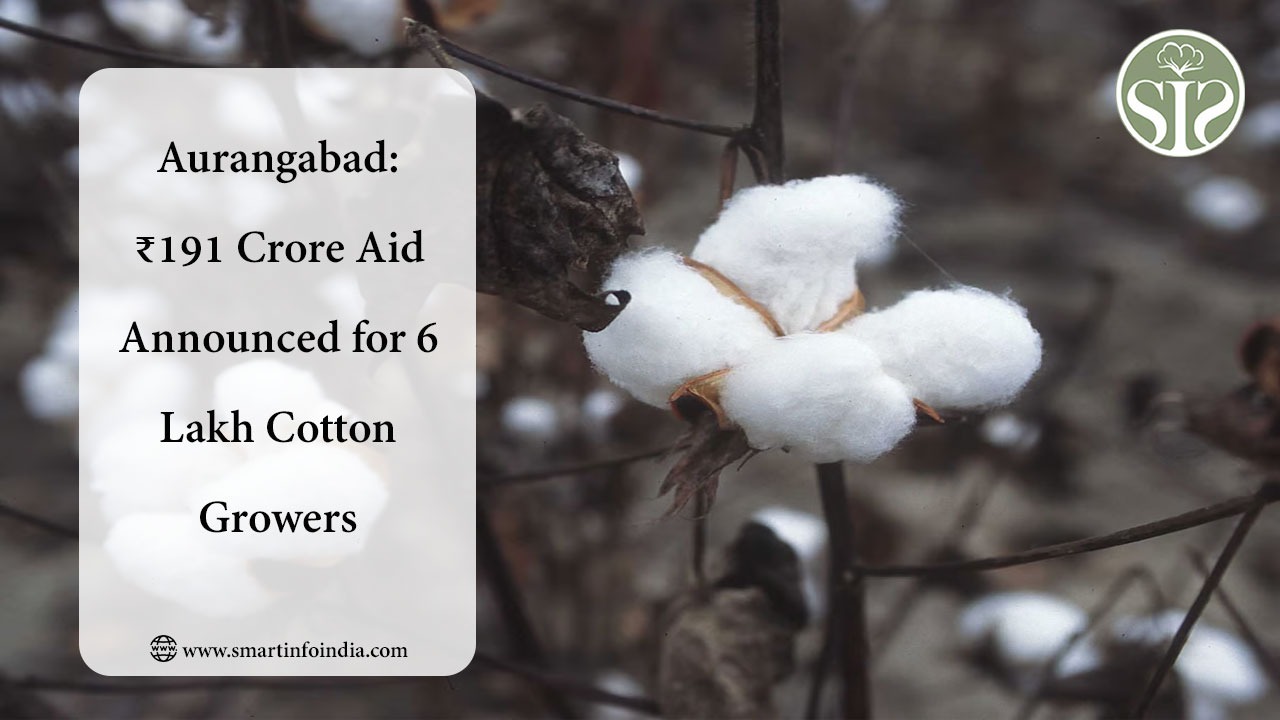
Aurangabad: ₹191 Crore Aid Announced for 6 Lakh Cotton Growers

₹191 Crore in Aid Announced for 6 Lakh Cotton Growers in AurangabadChhatrapati Sambhajinagar District Farmers to Receive Government Compensation for Crop LossesIn Chhatrapati Sambhajinagar district, around 6 lakh farmers have faced significant losses in their cotton crops, which covered an area of 3.84 lakh hectares. The state government has announced a financial aid package of ₹191.50 crore to assist these farmers.For the past two years, cotton growers have suffered substantial losses due to plummeting cotton prices. In response, the state government committed to providing compensation of ₹5,000 per hectare to affected cotton farmers. This aid will soon be disbursed to the 6 lakh farmers in Chhatrapati Sambhajinagar who experienced these losses.In contrast to Chhatrapati Sambhajinagar, other districts in Marathwada have seen a significant decline in cotton production over the past decade. Farmers in these areas have increasingly shifted to soybean cultivation. However, farmers in Chhatrapati Sambhajinagar continue to cultivate cotton, often referred to as "white gold."During the last Kharif season, cotton was planted on approximately 80% of the cultivated land in the district, equating to about 3.84 lakh hectares. Over the past two years, cotton prices have dropped to ₹6,500 per quintal, and production has halved due to inadequate rainfall last year.Given these challenges, the state government has announced compensation of ₹5,000 per hectare for up to two hectares of land per farmer. As preparations for the upcoming Kharif season are underway, this announcement has brought much-needed relief and optimism to the farmers in the district.Read More :>  Government Set to Revive Cotton Technology Mission with ₹500 Crore Allocation for Five-Year Plan

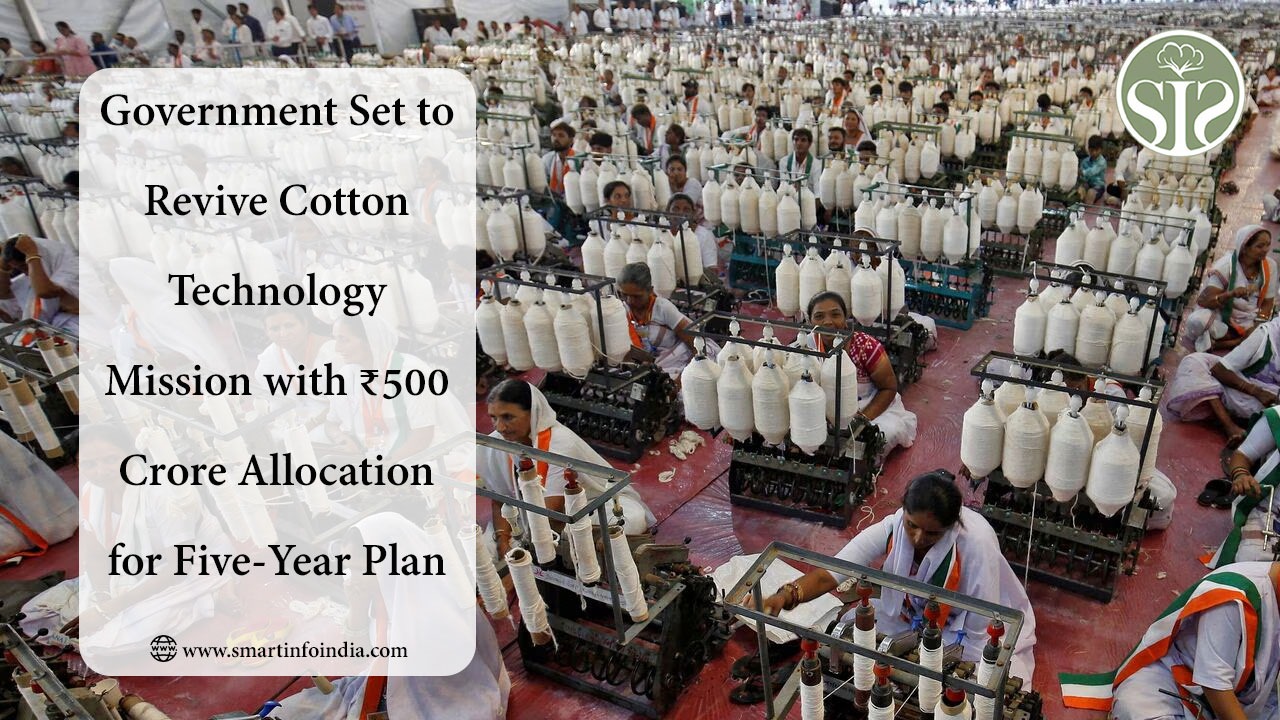
Government Set to Revive Cotton Technology Mission with ₹500 Crore Allocation for Five-Year Plan

The government is planning to revive the Cotton Technology Mission and allocate ₹500 crore for a five-year plan.Finance Minister Expected to Announce Funding for Overhauled SchemeIn the upcoming budget, the central government is anticipated to unveil a revitalized Cotton Technology Mission aimed at integrating cutting-edge technologies to boost farmers' yields. This initiative is being collaboratively developed by the Ministry of Textiles and the Indian Council of Agricultural Research (ICAR), according to sources.Initially launched in 1999-2000, the Technology Mission on Cotton (TMC) was a three-year program extended several times until it concluded in 2013-14. Between 2000 and 2010, the government invested ₹421 crore in TMC. Since 2014-15, cotton has been included under the National Food Security Mission (NFSM), a move some experts argue has diluted the focus on this crucial crop.The revamped TMC will concentrate on two main components: Mini Mission I (MM I) and Mini Mission II (MM II). MM I will focus solely on research, while MM II will emphasize extension work, fostering a connection between farmers and the industry.ICAR's Request and Funding AllocationSources indicate that the Finance Minister may announce funding for the revamped TMC over a five-year period, responding to ICAR's recommendation that funding for cotton research projects should span at least four years to achieve meaningful results. Union Textile Minister Giriraj Singh is reportedly eager to expedite the rollout of the revamped TMC, having engaged directly with leading agricultural scientists and ICAR Director General Himanshu Pathak.Although specific details are still being finalized, official sources suggest that an allocation of at least ₹500 crore over the five-year period is necessary to yield significant results. While there is some resistance to providing direct subsidies, the government is exploring options to facilitate easy credit from banks for farmers. This would involve private industry covering the repayment burden, which would then be adjusted against cotton sales.Potential Introduction of New Bt CottonCotton farmers may also be provided with short-term crop loans at higher limits than the current ₹3 lakh at subsidized interest rates. This would enable them to invest in infrastructure improvements and adopt best management practices, including the latest technologies, according to a cotton seed expert.Last week, Minister Singh indicated that a new variety of technologically advanced Bt cotton might soon be approved for commercial cultivation, potentially benefiting the Indian textile industry significantly. He emphasized efforts to address labor issues in the textile sector by leveraging the Self-Help Groups (SHG)."Trials of Herbicide Tolerance (HT) Bt cotton (also known as BG III) are underway. Once ICAR completes its assessments and necessary approvals are obtained, commercial cultivation could be permitted," Singh told BusinessLine. This variety could reduce production costs for farmers, increase the area under cotton cultivation, and significantly benefit the textile industry.Read More :> Surge in Chinese Fabric Imports Raises Concerns Among Indian Textile Manufacturers

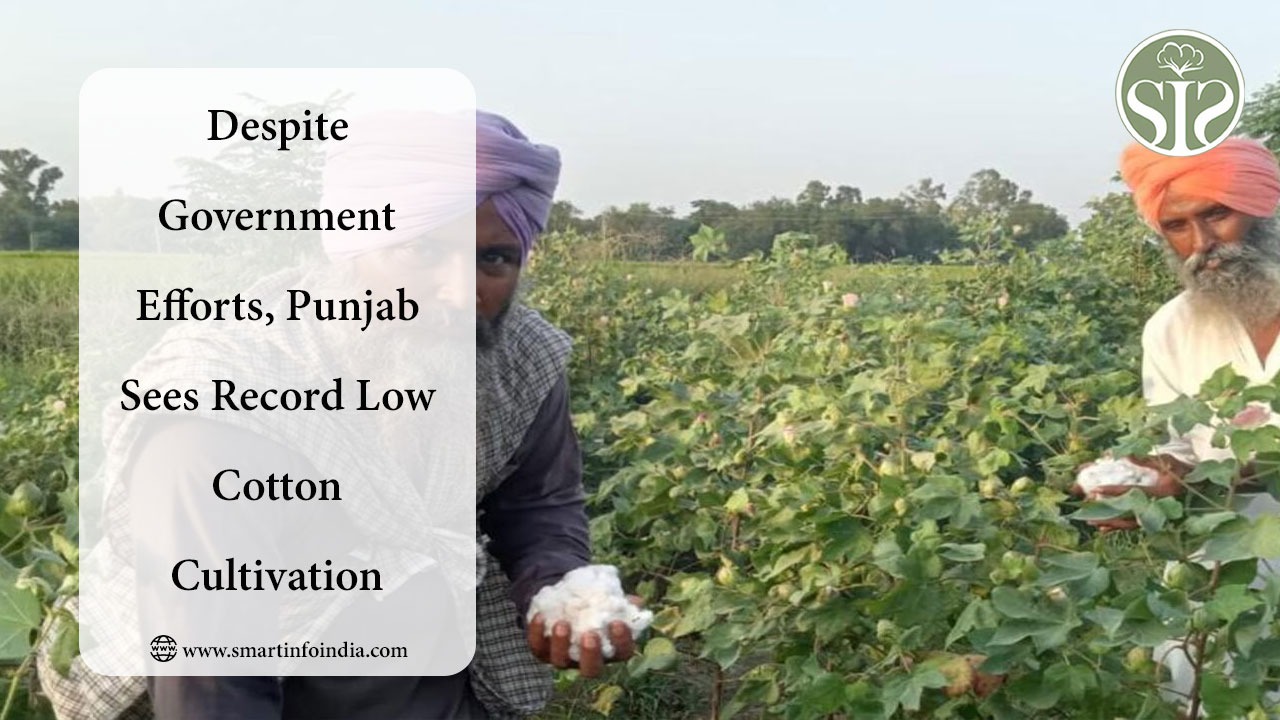
Despite Government Efforts, Punjab Sees Record Low Cotton Cultivation

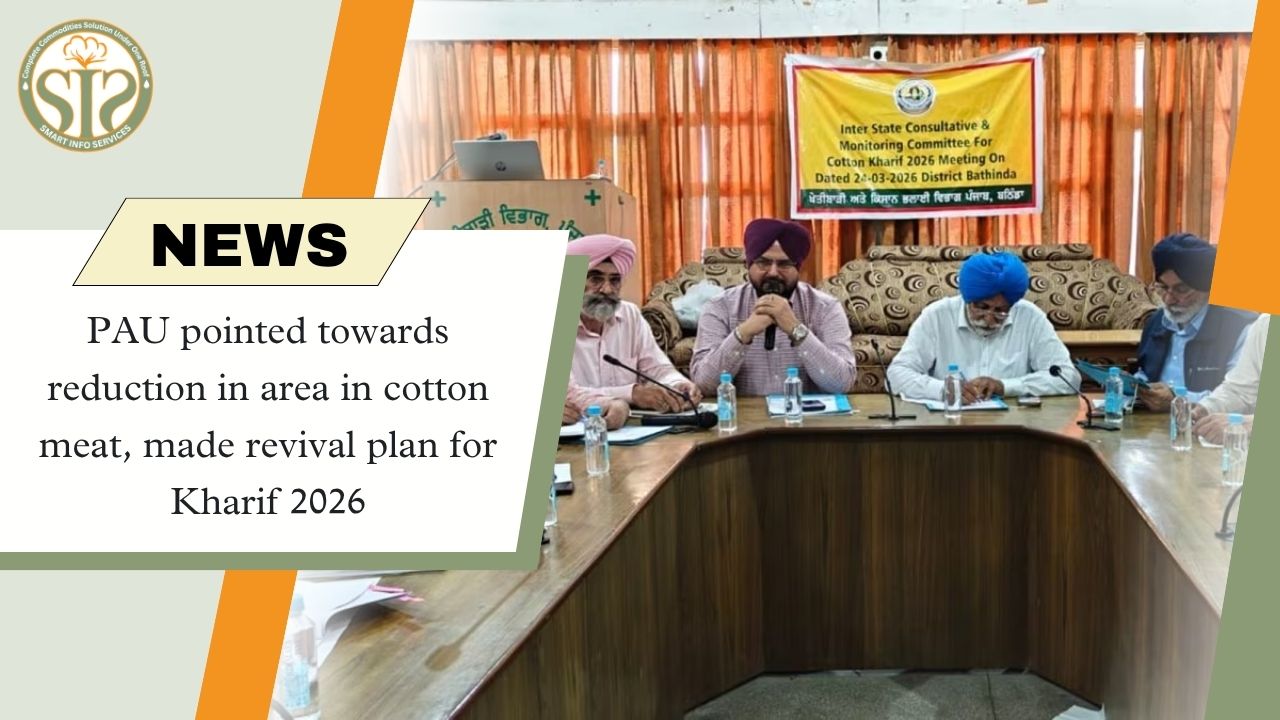
Even with government efforts, Punjab's cotton cultivation is at an all-time low.Despite efforts by the government, Punjab has recorded its lowest ever area under cotton cultivation this season. The state aimed to bring 2 lakh hectares under cotton cultivation, but the area has shrunk to about 97,000 hectares, marking an all-time low according to agriculture experts.Last season, Punjab had 1.73 lakh hectares of cotton. This sharp decline in cotton acreage is attributed to several factors, including severe pink bollworm (PBW) infestation, weak prices for the cotton crop, and rising labor costs.Bathinda has seen a drastic reduction in cotton cultivation area. In 2022-23, about 70,000 hectares were under cotton cultivation in Bathinda district, which declined to 28,000 hectares in 2023-24 and further to 14,500 hectares in 2024-25.Dr. Karanjeet Singh Gill, Chief Agriculture Officer (CAO) of Bathinda, pointed out that intense heat conditions during the sowing period contributed to the decline in cotton cultivation this season. He emphasized the need to adopt new methods to control diseases affecting cotton plants.In Faridkot district, where the area under cotton cultivation has fallen to just 1,000 acres this season, the agriculture department is striving to attract farmers to cotton cultivation by offering various incentives. These include subsidies on seeds, quality pesticides and fertilizers, and free Pheromone Traps to catch and monitor pink bollworms.Read more :> Surge in Chinese Fabric Imports Raises Concerns Among Indian Textile Manufacturers

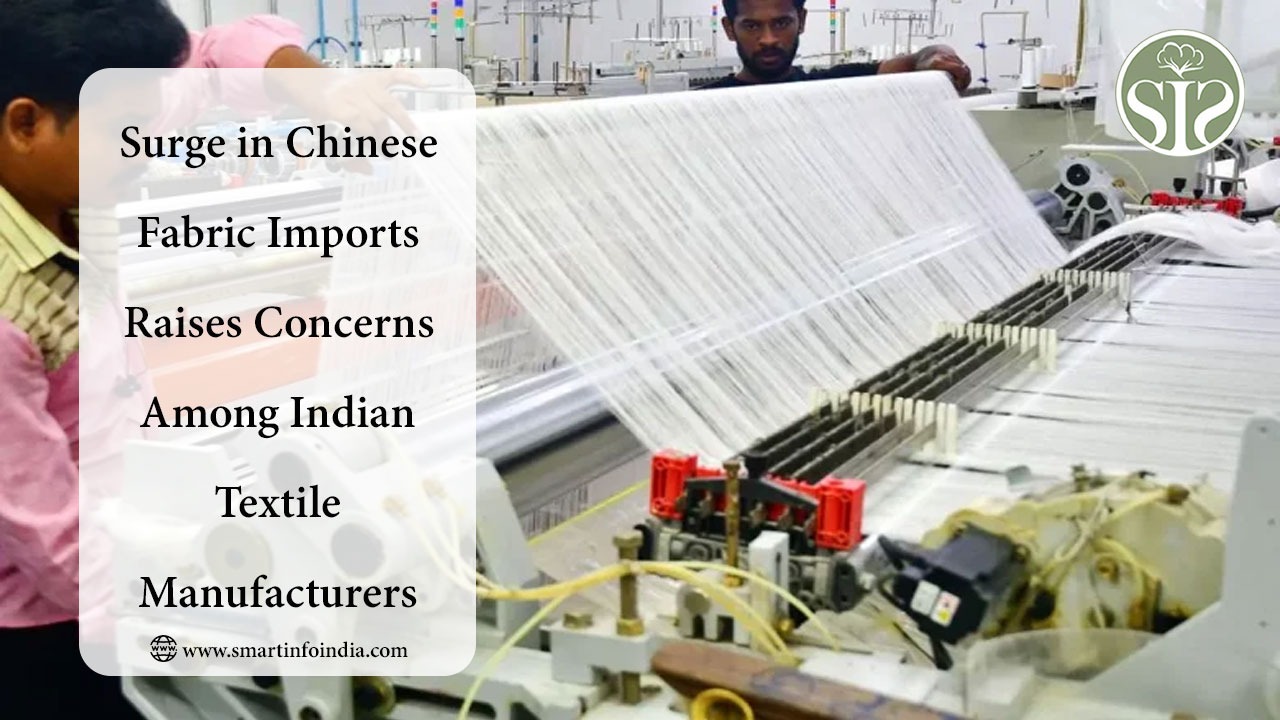
Surge in Chinese Fabric Imports Raises Concerns Among Indian Textile Manufacturers

Indian Textile Manufacturers Are Concerned About the Increase in Chinese Fabric ImportsThe Gujarat textile industry is grappling with an influx of low-cost fabric imports from China, prompting industry representatives to raise the issue with Union Textile Minister Giriraj Singh. Reports indicate that China is supplying cotton-like fabric at nearly half the price of Indian cotton fabrics, adversely affecting domestic manufacturers. Ahmedabad is renowned as India’s cotton textiles hub, while Surat is known for its polyester textiles industry.Gaurang Bhagat, President of the Maskati Cloth Market Association, stated, “China has been dumping fabrics for a long time, and the past few months have seen a surge in imports from the country. Prior to last Diwali, there was a significant increase in Chinese fabric imports. There have even been instances of Chinese suppliers sending goods with lower invoices to pay less duty, which is detrimental to the domestic textiles sector. We demand restrictions on fabric imports from China.”Last week, industry representatives met with Union Textile Minister Giriraj Singh to discuss this issue. Bharat Chhajer, former Chairman of the Powerloom Development and Export Promotion Council (PDEXCIL), said, “At the meeting, we highlighted the problem of Chinese fabric dumping. We demand that the central government set a base price for imports. The Centre has already implemented such a system for the knitting industry following substantial imports from China. Similar measures are needed to protect the domestic textiles industry.”Sandeep Shah, Co-Chairman of the Textile Task Force of the Gujarat Chamber of Commerce and Industry (GCCI), added, “China is dumping polyester and synthetic fabrics in the Indian market at almost half the price of cotton-like fabrics, severely impacting the market. The demand for cotton textiles is shrinking due to higher prices, forcing domestic manufacturers to blend polyester to remain competitive. Restrictions on Chinese imports are essential.”Read More :>  Indian Textile Sector Shows Robust Signs of Post-Pandemic Recovery

Related News

Youtube Videos

रुई बाज़ार में गिरावट का रुख 😱 Cotton market rate today #youtube
रुई बाज़ार में गिरावट का रुख 😱 Cotton market rate today #you...
जानिए आज का कपास बाज़ार 😱 Cotton market rate today #youtube
Ganesh Chaturthi Celebration at Our Office 🙏✨ | Ganpati Bappa Morya! #shorts
Ganesh Chaturthi Celebration at Our Office 🙏✨ | Ganpati Ba...
Application Download
Whatsapp Contact