Recent News

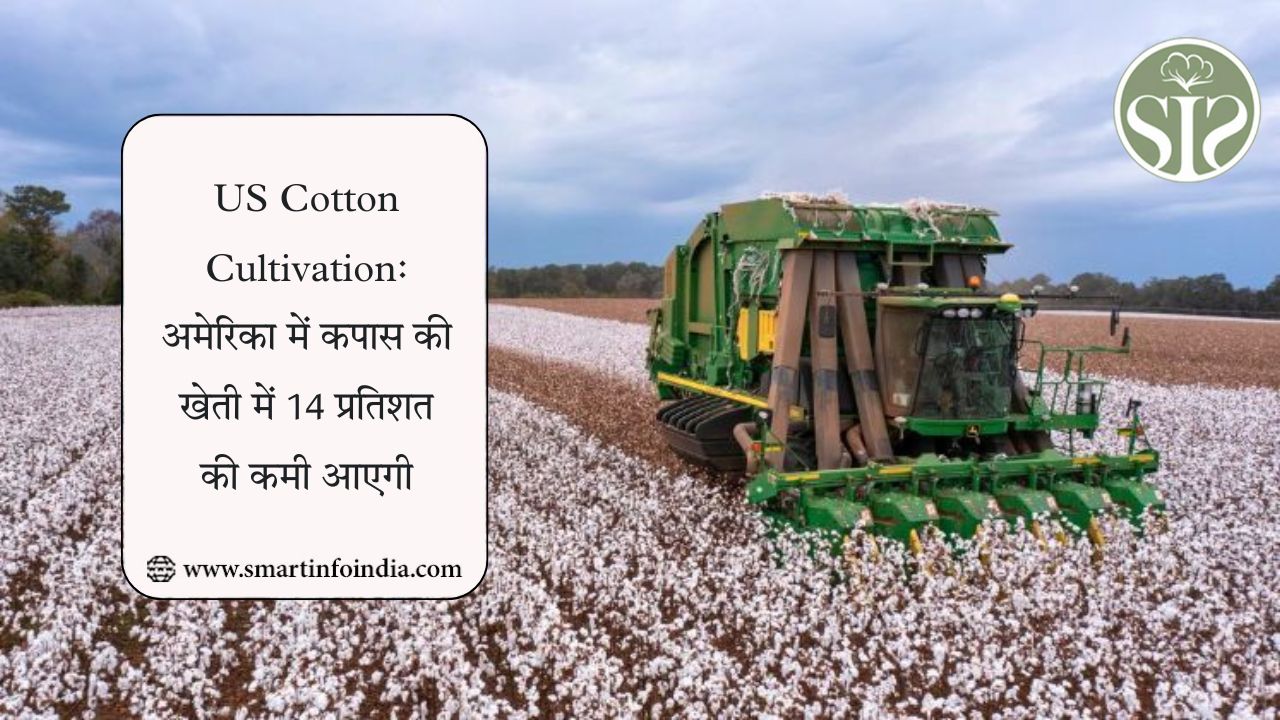
US Cotton Cultivation: Cotton cultivation in the US will decline by 14 percent

US Cotton Cultivation to Drop 14%Cotton cultivation in the US is expected to decline by 14 percent this year. Cultivation of extra long staple cotton is also likely to decline by 24 percent. The United States Department of Agriculture (USDA) has also forecast that global cotton production will remain low due to the possibility of reduced production in countries like China, India, Australia and Turkey.The US cotton season starts before the Indian season. Therefore, developments in the US cotton market have an impact on cotton prices in India. Sowing of cotton as well as soybean, maize and wheat has accelerated in the US.Rains were delayed in important cotton producing areas of the US. The southern and southeastern states of the United States did not receive enough rain. Therefore, cotton sowing was delayed. But now sowing has picked up pace. About 30 percent of cotton sowing has been completed. About 33 percent of planting was done during this period last year.Cotton cultivation will decreaseThis year, cotton sowing in the United States is likely to decrease. Last year, American farmers got low prices for cotton. Soybean prices were also low. But they got good profits from corn. Therefore, this year cotton and soybean cultivation is expected to decrease and corn cultivation is expected to increase.This year, cotton sowing by American farmers is likely to decrease by 14 percent. This year, cotton is estimated to be cultivated on about 9.7 million acres of land. There is a possibility of a decrease of about 24 percent in the cultivation of extra long fiber cotton.Impact on global cotton productionThe US Department of Agriculture has estimated a decline in global cotton production in the new season. Cotton production is expected to decline in countries like India, China, Australia and Turkey. Global cotton production is estimated to reach 1,508 million bales. 1,549 lakh bales have been produced in the current season.Soybean will decrease, corn will increaseSoybean cultivation in the United States also reached 54 percent. Soybean planting in the United States is expected to fall by 4 percent this year. Corn planting is 65 percent complete. Corn cultivation is expected to increase by 5 percent this year. The US Department of Agriculture estimates that sorghum cultivation will increase by 4 percent and peanut cultivation by 8 percent.read more :-Maharashtra: Farmers turn to illegal herbicide-tolerant cotton seeds again

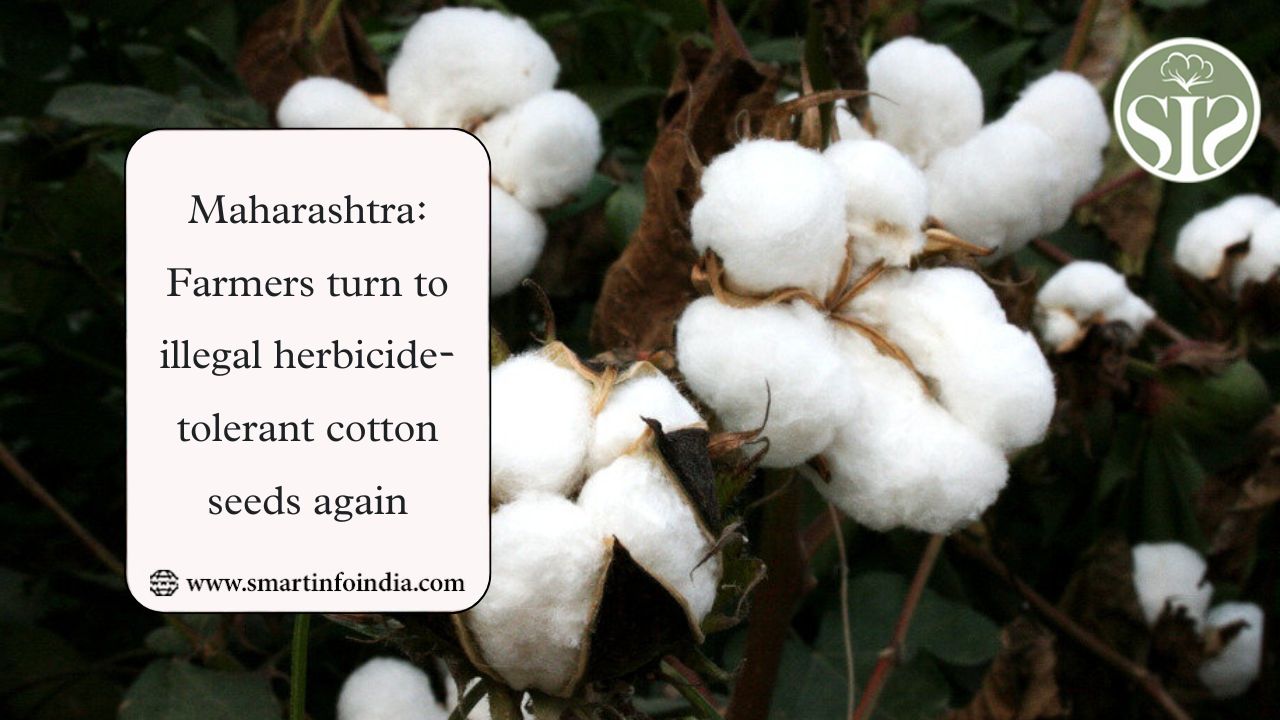
Maharashtra: Farmers turn to illegal herbicide-tolerant cotton seeds again

Maharashtra Farmers Reuse Illegal HT Cotton SeedsNagpur : As the sowing season nears, illegal herbicide-tolerant (HT) cotton seeds are once again available in the market. HT seeds, which are genetically designed to be resistant to glyphosate-based herbicides, have not been permitted for commercial use by the Centre. This is because Mahyco-Monsanto, the company that introduced the technology, abandoned trials more than a decade ago. Since trials were not complete, permission was not granted by the environment ministry.However, illegal multiplication of seeds continued and supplies began to pour into Vidarbha and other cotton-producing regions of the country. Farmers who spoke on the condition of anonymity said they are keen to buy seeds that are easily available in the market. This is because it significantly reduces the cost incurred due to manual weeding. They can simply get rid of the weeds by spraying glyphosate-based herbicides.Farmers said that earlier many farmers had bought fake seeds in the name of HT cotton. However, grey market operators have also started improving its quality. The seeds are smuggled mainly from Gujarat and Telangana. A farmers' organization called Shetkari Sangathan has been raising the demand to legalize the cultivation of HT cotton. The activists of the organization have protested from time to time by openly sowing HT seeds and have challenged the government to take action against them.read more :-Donald Trump said US will set tariff rates for other countries in a few weeks

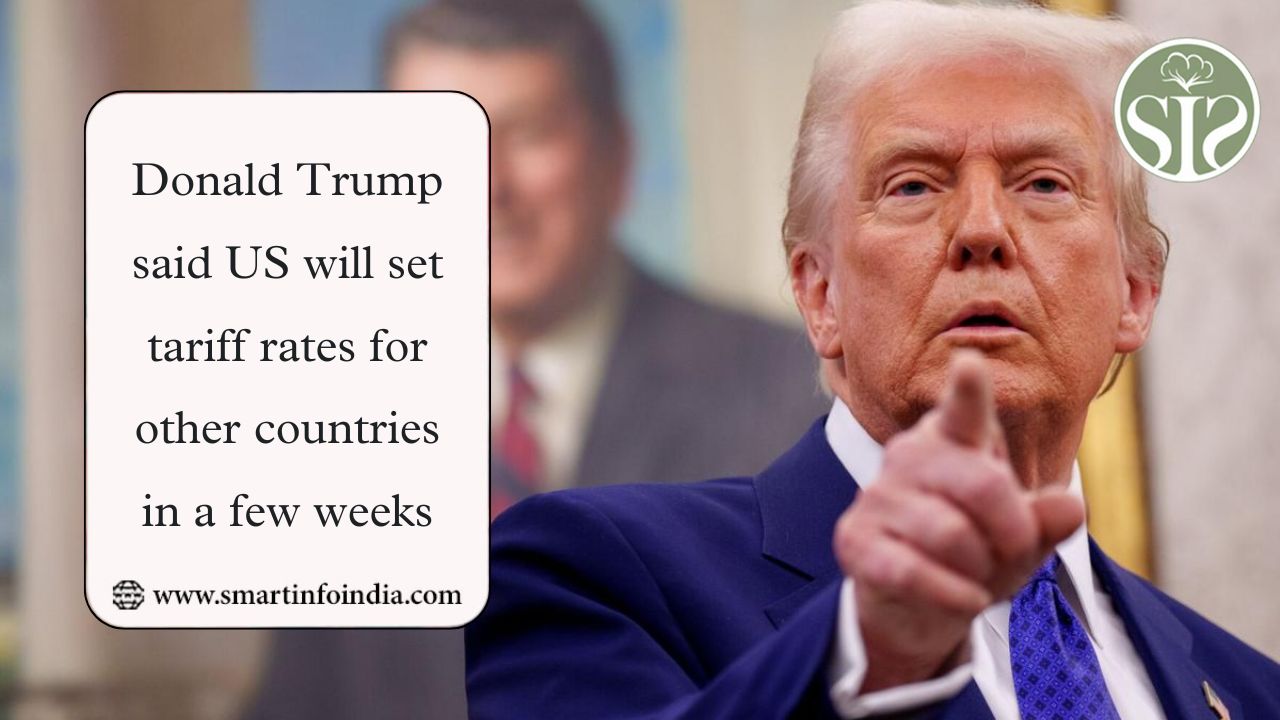
Donald Trump said US will set tariff rates for other countries in a few weeks

Trump: U.S. to Set New Tariff Rates SoonPresident Donald Trump said he would set tariff rates for US trading partners in the next two to three weeks, saying his administration did not have the ability to make deals with all of its trading partners.Trump said on Friday that Treasury Secretary Scott Bessant and Commerce Secretary Howard Lutnick would "send out letters to people telling them" what they would pay to do business in the United States."I think we're going to be very fair. But the number of people who want to meet with us is not going to be possible," the president said during a meeting with trade executives in the United Arab Emirates.The US president insisted there were "150 countries that want to make a deal." He did not say how many or which countries would receive the letters.The White House and Commerce Department did not immediately respond to requests for comment overnight in the US.Trump announced higher tariffs on dozens of trading partners on April 2, but later put them on hold for 90 days to give foreign governments time to negotiate as investors panicked. Yet in recent weeks the president has moved away from the idea that he would negotiate back and forth with every partner.While the Trump administration is prioritizing trade talks with more than a dozen countries, a lack of manpower and capacity makes it impossible to negotiate concurrently with all the countries caught up in the president's so-called reciprocal tariff plan.Tariffs are imposed at the border by U.S. Customs and Border Protection, but the extra costs are often partially or entirely passed on to American consumers.Earlier this month, Trump said he would set the level of tariffs for several countries wanting to avoid higher duties.Negotiations are still ongoing with several economies, including Japan, South Korea, India and the European Union. Trump recently agreed to a trade framework with the UK and reciprocal temporary tariff cuts with China to buy more time for negotiations.The US president said on Thursday that New Delhi had proposed to reduce tariffs on American goods, an offer that the Indian government did not confirm."We have four or five other deals coming immediately," Trump said on May 9, promoting his UK blueprint. "We have many more deals coming. Eventually, we're just signing the rest of the deals."read more :-India’s Apparel Exports See Strong Growth In April, Led By US Demand

India’s Apparel Exports See Strong Growth In April, Led By US Demand

India's Apparel Exports Surge in April on Strong US DemandDuring April 2025, Indian textile exports were about 2.61 per cent higher as compared to the same month last year, while apparel exports registered a growth of 14.43 per cent during the monthIndia's Textile & Apparel (T&A) exports have continued their upward trajectory, recording a growth of 7.45 per cent in April 2025 compared to the same month of the previous year. This positive trend was primarily driven by the strong performance of the apparel segment, which registered a robust 14.43 per cent growth year-on-year, an analysis of the data released by the Ministry of Commerce showed.Confederation of Indian Textile Industry (CITI) Chairman Rakesh Mehra said: "The current growth of 14.43 per cent in apparel exports seems to be mainly driven by increased shipments to the United States, following the announcement of reciprocal tariff measures by the U.S. administration."Mehra also welcomed the signing of the India–UK Free Trade Agreement (FTA), which is expected to provide further impetus to India’s T&A exports by improving market access of Indian products in the UK market and expressed his optimism for increased T&A exports in the months to come.During April 2025, Indian textile exports were about 2.61 per cent higher as compared to the same month last year, while apparel exports registered a growth of 14.43 per cent during the month to touch the $ 1.37 billion mark compared with $ 1.2 billion in April last year.The April figures reflect an acceleration in the growth rate as the Indian T&A sector posted a growth of 6.3 per cent during 2024-25 compared to 2023-24.India total exports of goods and services clocked a robust 12.7 per cent growth in April to touch the $73.80 billion mark compared with the corresponding figure of $65.48 billion during the same month last year, despite the global economic uncertainties triggered by the US tariff hikes, according to figures released by the Commerce Ministry on Thursday.read more :-India-UK FTA to strengthen textile exports, improve margins of Indian exporters: Report

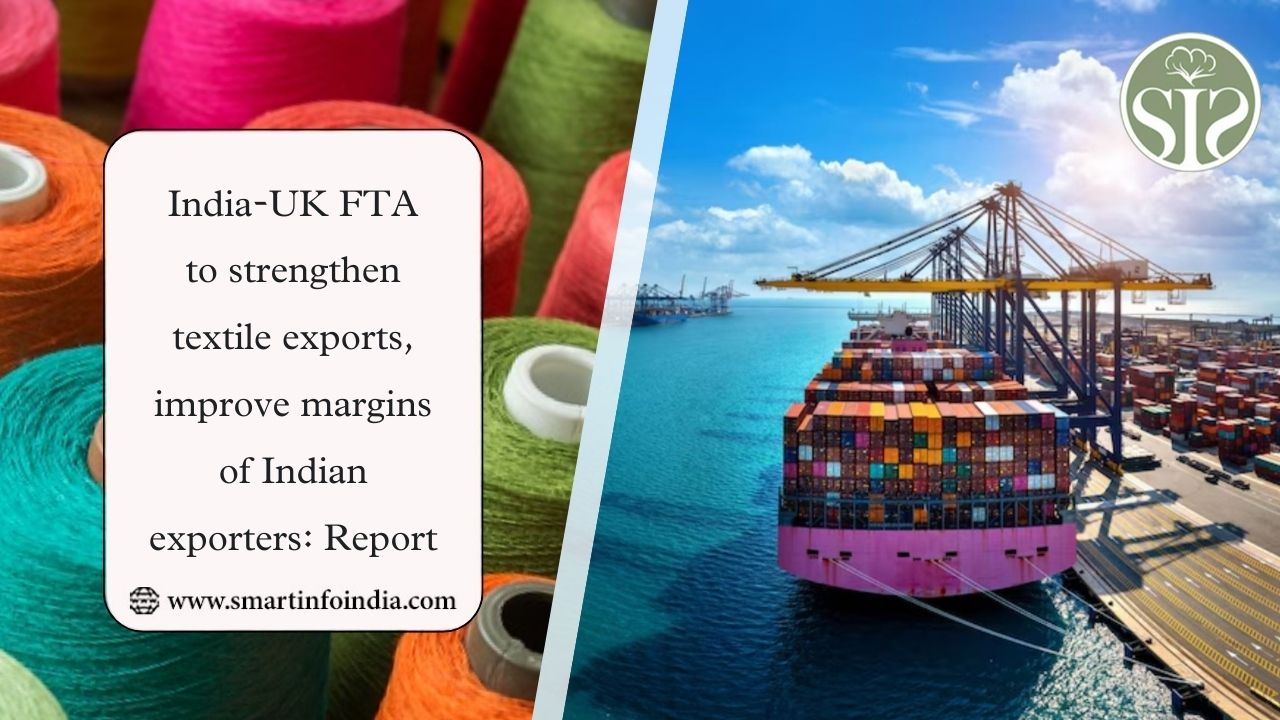
India-UK FTA to strengthen textile exports, improve margins of Indian exporters: Report

India-UK FTA to Boost Textile Exports, Raise Exporter MarginsThe India-UK Free Trade Agreement (FTA) is expected to strengthen India's textile exports, improve margins for existing and emerging textile exporters, according to a report by Systematix Research.The report stated that the Free Trade Agreement (FTA) is set to strengthen the export pipeline, improve margins, and drive scale for India's existing and emerging textile exporters catering to the UK markets.It said "The FTA is set to strengthen the export pipeline, improve margins, and drive scale for India's existing and emerging textile exporters catering to the UK markets; the full impact would be felt by FY27".The full impact of this agreement is expected to be felt by FY27, as Indian textile companies gradually gain stronger access and price competitiveness in the UK market.The report also mentioned that the FTA, which marks a major milestone in the trade relations between India and the UK, was finalized after more than three years of negotiations.One of the most significant aspects of the agreement is the elimination of the 8-12 per cent import duty that the UK levied on India's textile and apparel (T&A) exports.This move removes a major trade barrier and puts Indian exporters on an equal footing with countries like Bangladesh, Turkey, Pakistan, Cambodia, and Vietnam, which already enjoy duty-free access to the UK under different trade arrangements.According to the Systematix Research report, the FTA will not only boost near-term gains but also enhance India's long-term credibility as a trusted trade partner. This could serve as a model for future FTAs with other developed nations.The report also highlighted that the positive outlook for India's textile sector is based on multiple factors. These include strong demand visibility supported by normalizing inventories at the global retailer level, comparatively lower tariffs by the US on Indian goods compared to other competing nations, and the India-UK FTA.In addition, rising labour costs in Vietnam and political instability in Bangladesh are shifting global sourcing trends in India's favour.India's well-established production base and continued government support are also expected to contribute significantly to the long-term growth of the textile industry.Overall, the India-UK FTA is poised to unlock new opportunities for Indian textile exporters, making them more competitive in one of their key markets and laying the foundation for sustained growth in the sector. (ANI)read more :-Rupee lower 24 Paisa Against Dollar, Closes at 85.51

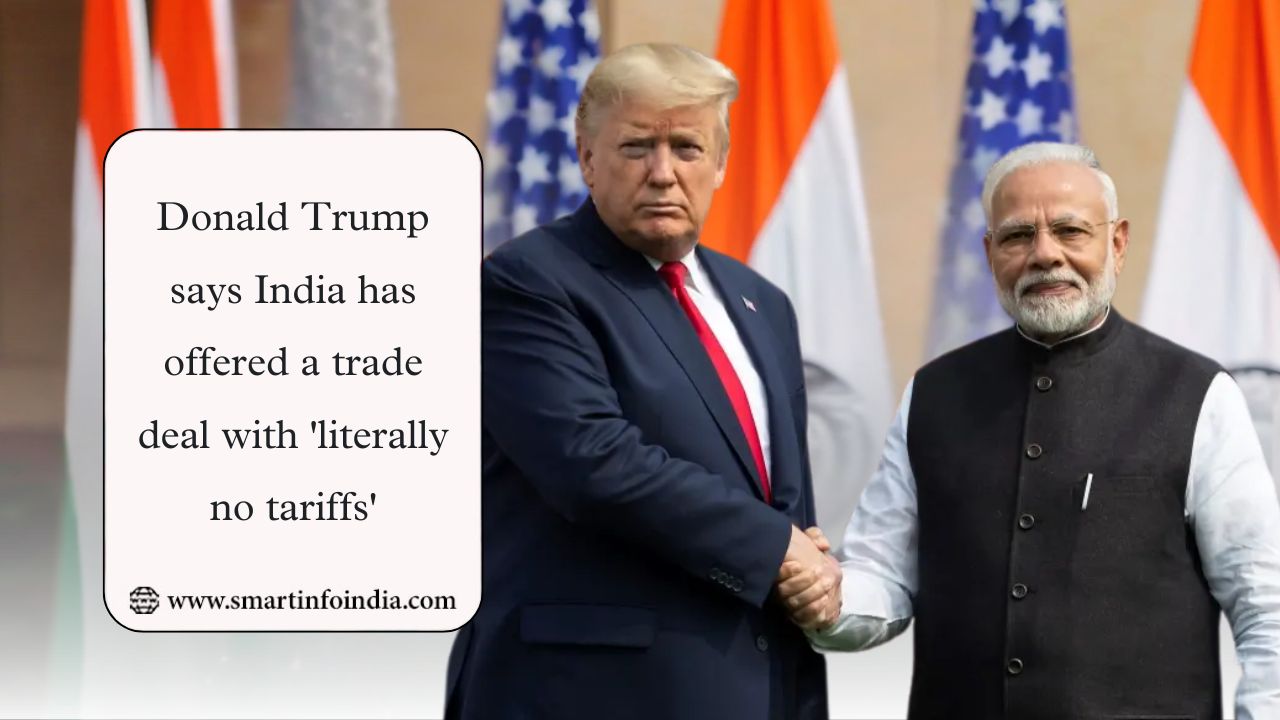
Donald Trump says India has offered a trade deal with 'literally no tariffs'

Trump Claims India Offered Tariff-Free Trade DealIndia-US trade deal: US President Donald Trumpon Thursday claimed that India had put forward a proposal for a trade agreement with "no tariffs" or 'zero tariffs". Trump said that India has proposed eliminating import duties on American products. Trump said that Indian authorities have put forward a proposition that would essentially remove all import taxes on US merchandise.The Indian government aims to secure a trade agreement with America during the 90-day suspension declared by Trump on April 9 regarding tariff increases for significant trading partners, which had incorporated a 26% duty on India."It is very hard to sell in India, and they are offering us a deal where basically they are willing to literally charge us no tariffs," Trump said in a meeting with executives in Doha, according to a Reuters report.The United States maintains its position as India's primary trading partner, with the total bilateral trade reaching approximately $129 billion in 2024. Currently, India holds a favourable trade position, maintaining a surplus of $45.7 billion in its trade dealings with the United States.Last week, Reuters reported that India has offered to lower its tariff gap with the US to less than 4% from the present 13%, aiming to gain exemption from Trump's current and upcoming tariff hikes, according to two sources close to the bilateral negotiations.Both nations are striving for a quick resolution.Following the Trump administration's recent 'breakthrough deal' with Britain, which saw reduced British duties on US goods while maintaining America's 10% baseline tariff on British imports, a potential template has emerged for talks with other trade partners.According to two Indian government officials directly involved in the talks, New Delhi has suggested removing duties on 60% of tariff lines in the first stage of negotiations, as disclosed to Reuters.read more :- Indian Rupee Opens Firm, Rises 27 Paise to 85.27 vs Dollar

Australia's cotton harvest for 2024-25 season more than 70% complete, production crosses 5 million bales

Australia Cotton Harvest 70% Done, Exceeds 5M BalesSYDNEY – More than 70 percent of cotton harvesting in Australia for the 2024-25 season has been completed. According to industry body Cotton Australia, total production this year is likely to exceed 5 million bales.Most cotton producing areas in New South Wales and Queensland have recorded above-average yields and better quality of cotton this year. The estimated 5.1 million bale crop could prove to be another successful year for the Australian cotton industry, extremely close to record crop levels and equal to last season's production.Some industry groups, such as the Australian Cotton Shippers Association, believe the figure could reach 5.5 million bales. The improved forecasts are underpinned by an increased cotton planted area this year, with farmers planting 390,000 hectares of irrigated cotton and 131,000 hectares of dryland cotton — down from 370,000 and 111,000 hectares respectively last year.Cotton Australia general manager Michael Murray said the higher production was expected from the larger planted area, but rain-affected yields in some areas took a toll. "Yields have been good but could have been better without some periods of rain. However, the results are very positive across most regions," he said.He also said the "Goldilocks"-like ideal weather (dry and sunny) in some parts during March and April had led to excellent crop quality and yields.While harvesting is still ongoing in some areas, both irrigated and dryland crops performed better than average. Mr Murray also cited reports of irrigated cotton yields of up to 16 bales per hectare in the Darling Downs region.read more :-Bangladesh set to remain world’s top cotton importer in MY26

Bangladesh set to remain world’s top cotton importer in MY26

Bangladesh to Stay Top Cotton Importer in MY26Bangladesh is on track to retain its status as the world's biggest cotton importer in the marketing year (MY) 2025-26, with imports projected to reach 8.5 million bales, according to a record-setting forecast by the United States Department of Agriculture (USDA).Vietnam is set to follow closely with 8 million bales, marking an all-time high for both countries, as per the USDA's latest Cotton: World Markets and Trade report.The report highlights a modest rebound in global cotton consumption, which is expected to hit a five-year high of 118.1 million bales. This resurgence is attributed to stable economic activity, particularly in major textile-exporting countries such as Bangladesh and Vietnam.For Bangladesh, the surge in cotton imports reflects the continued expansion of its ready-made garment (RMG) industry — the backbone of its export economy.In the first 10 months of FY25, Bangladesh's RMG exports grew 10.86 percent year-on-year to $30.25 billion, according to Export Promotion Bureau (EPB) data.Mohammad Hatem, president of the Bangladesh Knitwear Manufacturers and Exporters Association (BKMEA), said Bangladesh's decision to import more cotton from the US is part of a broader strategy to reduce the trade gap between the two countries.He noted that the record volume of cotton imports would also strengthen Bangladesh's case for securing duty-free access for its RMG products in the US market."The government has already taken necessary initiatives in this regard," Hatem said.He further stated that US cotton is considered the best in the world in terms of quality and consistency, making it the preferred choice for local spinners and manufacturers."With global buyers increasingly prioritising sustainable sourcing and natural fibres, cotton remains a vital raw material for Bangladesh's spinners and knitwear producers," Hatem added.He viewed the USDA's import forecast as a strong endorsement of Bangladesh's capability to maintain and expand its leadership in the global apparel value chain.The global cotton trade is also forecast to rise by 2.3 million bales to 44.8 million bales in MY26, indicating a broader uptick in demand across textile-producing economies.China, which imported 15 million bales in MY24, is projected to import only 7 million bales in MY26. The country's shift away has left space for Bangladesh to rise to the top, which analysts say marks a notable structural shift in global cotton trade flows.The USDA also anticipates stable cotton prices globally, aided by adequate supply, a weakening US dollar, and declining energy costs. These trends may ease cost pressures for Bangladeshi millers, who have grappled with high input costs over the past two years.On March 17 this year, Foreign Affairs Adviser Md Touhid Hossain said Bangladesh intends to import more cotton from the US, creating mutual benefits for US suppliers and local businesses.He added that such trade ties could offer Bangladesh protection amid former US President Donald Trump's tariff-centric policies.Although the Trump administration has levied high tariffs on many countries, Bangladeshi goods have so far remained outside the purview of such punitive measures.Hossain argued that sourcing more US cotton could further dissuade the administration from targeting Bangladesh, whose products face an average tariff of 15.62 percent in the US market.He also stressed the need to boost domestic cotton production to meet at least 20 percent of the country's annual demand, amounting to about 9 million bales.read more :-Global cotton production projected at 117.8 mn bales in 2024-25: WASDE

Related News

Youtube Videos

कपास बाजार में साप्ताहिक नरमी 😱 Import Duty पर सरकार का अपडेट | Weekly Cotton Market 31 Oct 2026
कपास बाजार में साप्ताहिक नरमी 😱 Import Duty पर सरकार का अपड...
जानिए आज का कपास बाज़ार? 😱 कपास, बीज, यार्न बाज़ार | Cotton Market Rate Today
जानिए आज का कपास बाज़ार? 😱 कपास, बीज, यार्न बाज़ार | Cotton...
कैसा रहा आज का कपास बाजार? 😱 Cotton Market Rate Today 29 Oct 2026
कैसा रहा आज का कपास बाजार? 😱 Cotton Market Rate Today 29 Oc...
Application Download
Whatsapp Contact