Recent News

Weather Warnings Issued Across India: Heavy Rain, Storms, and Strong Winds Ahead

Monsoon Alert: Heavy Downpours & Gusty Winds Across IndiaTelangana:The India Meteorological Department (IMD) has issued a short-term weather alert for several districts in Telangana. Light to moderate rain, accompanied by thundershowers, squalls, and lightning strikes, is likely to occur over the next 2–3 hours in Hyderabad, Jangaon, Kamareddy, Karimnagar, Khammam, Mahabubabad, Mahbubnagar, Malkajgiri, Medak, Nagarkurnool, Nalgonda, Ranga Reddy, Sangareddy, Siddipet, Suryapet, Vikarabad, Warangal (Urban and Rural), and Yadadri-Bhongir.Odisha:Moderate weather activity is expected across several districts of Odisha within the next 3–4 hours. The IMD forecasts spells of light to moderate rain and thundershowers, accompanied by gusty winds ranging from 30–40 km/h and isolated lightning. Affected districts include Anugul, Baleshwar, Baudh, Bhadrak, Cuttack, Debagarh, Dhenkanal, Gajapati, Ganjam, Jagatsinghapur, Jajapur, Kandhamal, Kendrapara, Kendujhar, Khordha, Mayurbhanj, Nayagarh, and Puri.Rajasthan & Gujarat:Monsoon conditions are set to become active over Rajasthan and Gujarat in the coming days. The IMD warns of heavy to very heavy rainfall likely between June 25 and the subsequent few days, urging residents and authorities to stay alert.Other Regions:Scattered rain activity continues in other parts of the country. Light to moderate rainfall, with isolated heavy spells, is likely over Madhya Pradesh, Chhattisgarh, Jharkhand, Odisha, eastern Gujarat, Kerala, and the northeastern states of India over the next few days.READ MORE :-Cotton Farming: Paddy spoiled the game of cotton in Sirsa, 'white gold' found in the soil

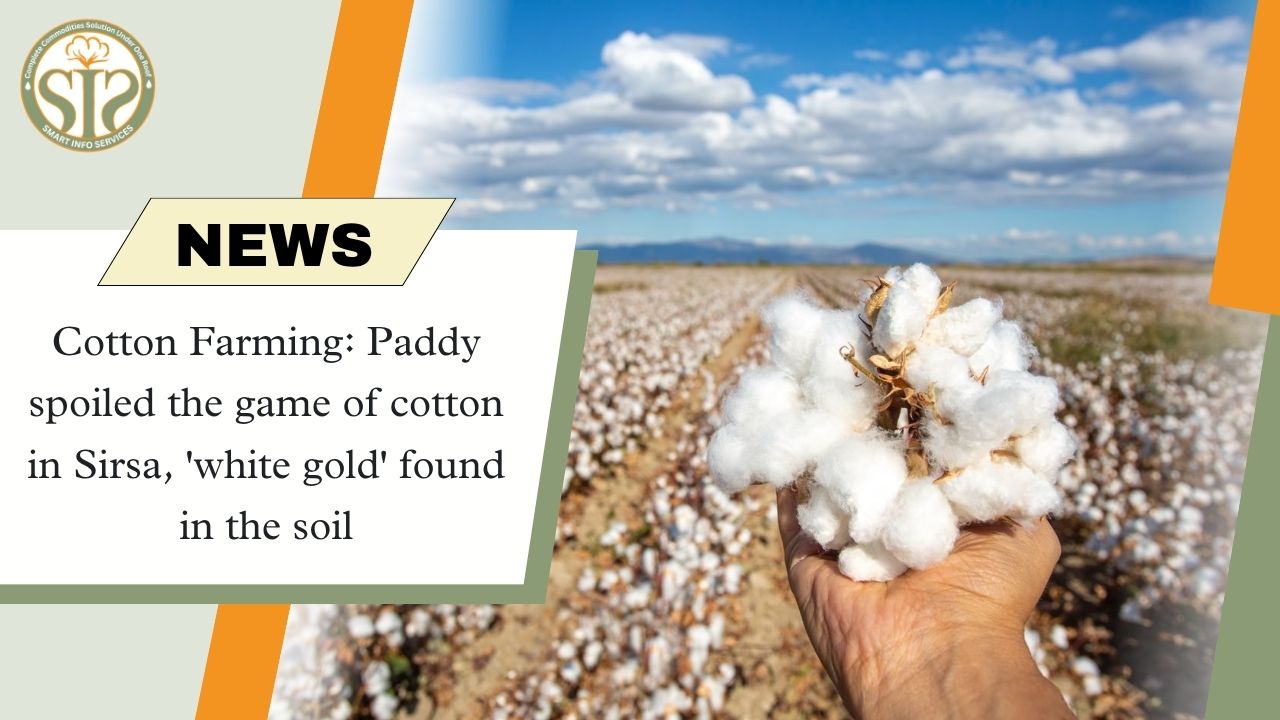
Cotton Farming: Paddy spoiled the game of cotton in Sirsa, 'white gold' found in the soil

Paddy Cultivation Hits Cotton Hard in SirsaCotton Farming: From 2003 to 2014, cotton was produced in large quantities in Sirsa and that period is called the 'golden period' of cotton. At that time, BT cotton seeds (BG-1 in 2003 and BG-2 in 2005) brought a revolution in production. Cotton cultivation was at its peak in the year 2011. At that time, cotton was cultivated in 2.11 lakh hectares and a bumper production of 9.56 lakh metric tonnes was achieved.Sirsa district of Haryana was once known for cotton cultivation. It was once called 'white gold' here. But now the cotton fields are lying vacant here and farmers have started turning away from cotton cultivation. Cotton fields have turned into dusty fields because farmers are now interested in paddy cultivation. According to a report, paddy cultivation has overtaken cotton last year. While the area under paddy has increased, the area under cotton is shrinking.In 2024, paddy will be ahead, cotton will be behindAccording to the news of the newspaper The Tribune, in the year 2024, paddy will overtake cotton by a huge margin. While paddy was cultivated in 1.56 lakh hectares and more than 6 lakh metric tonnes were produced, cotton was cultivated in 1.37 lakh hectares and 4.3 lakh metric tonnes were produced. From 2003 to 2014, cotton was produced in large quantities in Sirsa and that period is even called the 'golden period' of cotton. At that time, BT cotton seeds (BG-1 in 2003 and BG-2 in 2005) brought about a revolution in production. Cotton cultivation was at its peak in the year 2011. At that time, cotton was cultivated in 2.11 lakh hectares and a bumper production of 9.56 lakh metric tonnes was achieved.Pink bollworm and white fly enemiesThe situation has started changing in the last five-six years. Cotton crops have been devastated by whitefly and pink bollworm infestations. Farming has worsened due to constantly changing weather and stagnation in seed technology. Farmers are now preferring paddy cultivation even in water-scarce areas. However, paddy cultivation is very demanding for water. According to the data of the Agriculture Department, cotton cultivation has declined from 2.09 lakh hectares in 2020 to just 1.37 lakh hectares in 2024. During the same period, paddy cultivation increased from 97,000 hectares in 2018 to 1.56 lakh hectares in 2024, and is estimated to cross 1.7 lakh hectares this year.Temperature also became an enemyFarmers say that when BT cotton was initially successful, it covered up a problem that was really a big challenge. BT seeds dealt with the bollworm, but pests started attacking it. Whitefly and pink bollworm are back, and there is no new generation seed. The pesticide lobby blocked BG-3. Now farmers have to face pest attacks every season. Because of this, many farmers have stopped cultivating cotton. Farmers have also blamed rising temperatures and high humidity levels for the increasing pest attacks.Up to 90 percent of the crop was destroyedFarmers do not forget how up to 90 percent of the cotton crop was destroyed due to pink bollworm in the years 2022 and 2023. Due to this, farmers suffered huge losses. Many farmers suffered losses of up to Rs 50,000 per acre. Some got insurance while some are still waiting for compensation. Dr. Anil Mehta, scientist in charge of the Central Cotton Research Institute in Sirsa, attributed the decline in cotton crop mainly to low yield due to pest attacks.He said that after harvesting, farmers leave cotton stalks in the fields or at home, due to which the larvae survive and attack the next crop. Also, lack of water during sowing has a very bad effect on germination. At the same time, according to some experts, cotton seeds are still available but seeds of pest-resistant varieties are needed.read more :- INR Drops 09 Paise, Closes at 86.09 per Dollar
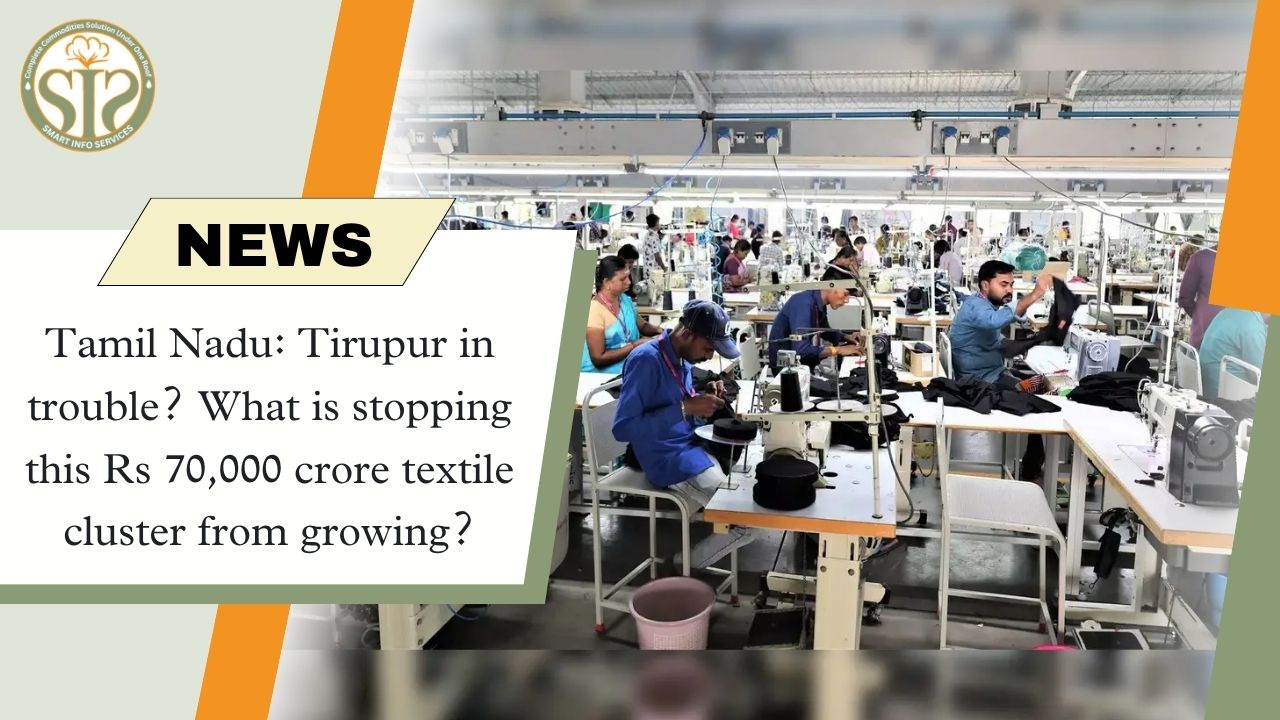
Tirupur Textile Hub Sees Record Growth but Faces Rising Structural Challenges

Tirupur’s Textile Boom Faces New Growth Challenges Despite Record TradeTirupur, located on the banks of the Noyyal River in western Tamil Nadu, may appear to be a quiet town at first glance, but it is widely recognised as a major hub in India’s textile industry. Often referred to as the “Knitwear Capital of India,” the city plays a dominant role in global apparel exports.The Tirupur textile cluster recorded a total trade of around ₹70,000 crore in FY25. It contributes nearly 90% of India’s cotton knitwear exports and about 54% of the country’s woven garment exports. In FY25 alone, knitwear exports from the region touched a record ₹39,618 crore, up from ₹33,045 crore in FY24 and ₹27,280 crore in FY20.Despite this strong performance, the sector is currently facing multiple challenges. Industry stakeholders point to issues such as shortage of skilled labour, infrastructure constraints, and the need for technology upgrades as key concerns for future growth. Additionally, global competitiveness has been affected due to duty advantages enjoyed by competing countries like Bangladesh.The growth of Tirupur’s export ecosystem has been gradual but steady. Starting with small-scale exports in the 1980s, the industry expanded rapidly after international buyers began sourcing from the region. Over time, improvements in dyeing technology and manufacturing processes helped transform Tirupur into a large-scale export hub.While exports have reached nearly ₹40,000 crore in FY25 and domestic consumption stands at around ₹30,000 crore, the industry now faces the challenge of sustaining this momentum amid global competition and structural bottlenecks.read more :- Rupee falls 07 paise at open to 86.00 against US dollar

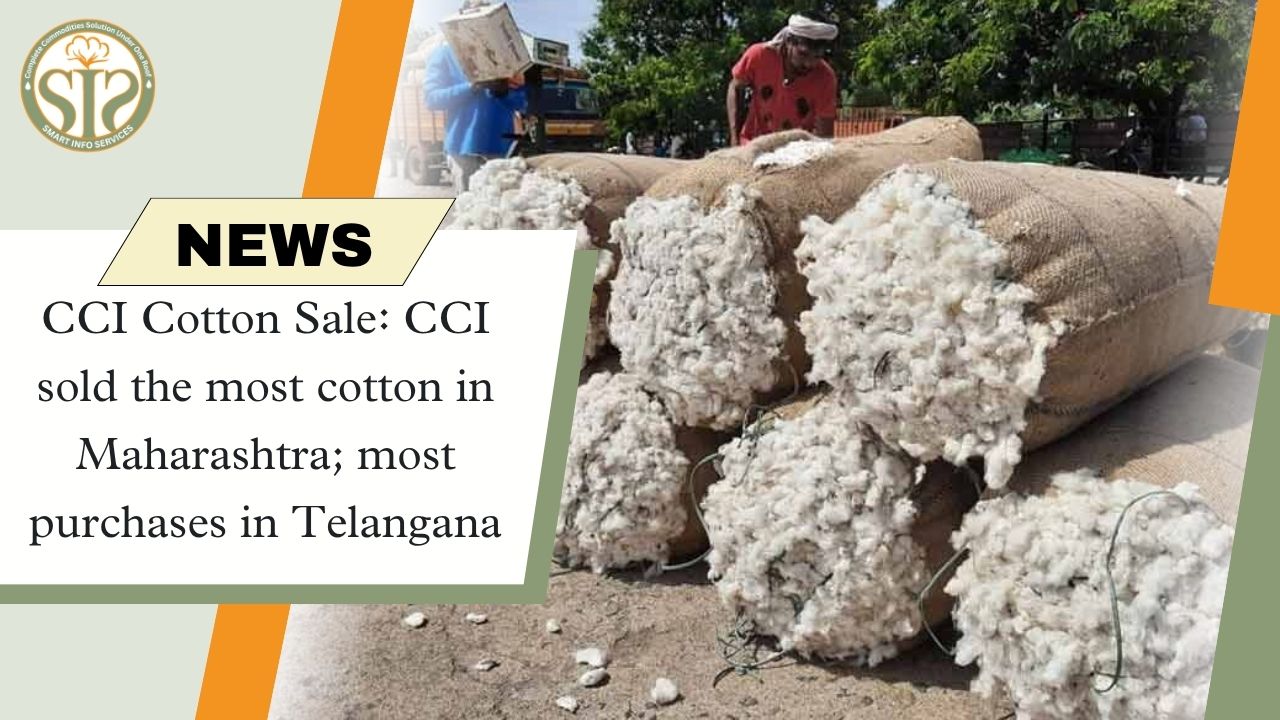
CCI Cotton Sale: CCI sold the most cotton in Maharashtra most purchases in Telangana

Maharashtra Records Highest Cotton Sales; Telangana Buys the MostCotton Corporation of India had purchased 100 lakh bales of cotton at a guaranteed price this season. Out of which 35 lakh bales of cotton have been sold so far and 65 lakh bales of cotton are remaining. Cotton Corporation of India (CCI) Chairman and Managing Director Lalit Kumar Gupta said that the cotton auction is going on smoothly.This year, the price of cotton in the open market was less than the guaranteed price. Due to this, CCI's cotton purchase received a tremendous response from the farmers. The Cotton Association of India has estimated cotton production of 301 lakh bales in the country this year. Out of which CCI has purchased about 100 lakh bales of cotton from 12 states this season.CCI alone has purchased about 33 percent of the cotton production in the country. If we look at the state-wise cotton purchase, the maximum of 40 lakh bales of cotton was purchased in Telangana. Cotton prices in Telangana remained comparatively low. After that, 29 lakh bales of cotton were purchased in Maharashtra. Whereas 14 lakh bales of cotton were purchased in Gujarat.CCI currently has the highest stock of cotton in the country. Therefore, CCI's cotton sale is directly affecting the market. CCI's cotton sale is also going smoothly. CCI Chairman and Managing Director Lalit Kumar Gupta said that CCI has sold 35 lakh bales of cotton so far. So far, the maximum cotton has been sold in Maharashtra in cotton sale.State-wise cotton saleCCI has so far sold about 16 lakh bales of cotton in Maharashtra. While Telangana sold about 8 lakh bales of cotton. Gujarat also sold 5 lakh bales of cotton. 2 lakh bales of cotton were sold in Madhya Pradesh and 1.5 lakh bales in Karnataka. About 2.5 lakh bales of cotton were also sold in other states.Cotton sale prices reduced The prices of cotton in the country may be less than the guaranteed price, but they are higher than the international market prices. Therefore, the industries had demanded that CCI reduce the sale prices of cotton. Due to the increase in the price of crude oil, there is some volatility in the international market. There has been some improvement in the prices in the country as well. Industries said that CCI has reduced the selling prices of cotton by about Rs 500 per bale. In the recent auction, the bale prices were between Rs 53,500 and Rs 54,500. While the prices of Kasturi bales were between Rs 55,300.read more :- INR Opens Stronger by 65 Paise at 86.10

Cotton Trade Summary for May 2025: Import and Export Analysis

Cotton Import-Export Trends – MayA comprehensive overview of cotton trade activity for the month of May 2025 reveals significant movement in both imports and exports, highlighting key international trading partners and volumes.Cotton Imports – May 2025During May 2025, a total of 273,150 bales of cotton were imported into the country from various international sources. The top five countries contributing to cotton imports are as follows:* United States – 101,700 bales* Switzerland – 49,880 bales* Singapore – 48,750 bales* Netherlands – 16,550 bales* Egypt – 14,870 balesThe United States emerged as the leading supplier of cotton for the month, accounting for nearly 37% of the total import volume.Cotton Exports – May 2025On the export front, a total of 134,800 bales of cotton were shipped to various international destinations. The top five export markets were:* Bangladesh – 118,800 bales* Vietnam – 9,790 bales* China – 2,500 bales* Indonesia – 2,280 bales* Mali – 580 balesBangladesh was the dominant export destination, receiving approximately 88% of the total cotton exported in May.Trade InsightsThe trade data indicates that the United States remains the largest source of cotton imports, while Bangladesh continues to be the primary export destination. This reflects the ongoing strong trade ties with these nations in the textile and cotton sector.This data is crucial for stakeholders in the textile industry, traders, and policymakers to assess market trends, adjust procurement strategies, and evaluate trade performance.SiS Committed to update you on all textile related news real time.read more :- Rupee open Declines 15 Paise to 86.74 per Dollar

Related News

Youtube Videos

कपास बाज़ार साप्ताहिक रिपोर्ट 🔥 | तेजी या मंदी? | CCI Update | Cotton Market  Update
कपास बाज़ार साप्ताहिक रिपोर्ट 🔥 | तेजी या मंदी? | CCI Updat...
रुई बाजार में आज का पूरा माहौल 🔥Cotton Market Today | 11 सितंबर 2026 #smartinfo
रुई बाजार में आज का पूरा माहौल 🔥Cotton Market Today | 11 सि...
कपास बाजार में आज तेज़ी का रुख 😱Cotton market rate today #youtube
कपास बाजार में आज तेज़ी का रुख 😱Cotton market rate today #yo...
Application Download
Whatsapp Contact