Recent News

Indian cotton acreage likely to increase despite setbacks in some pockets

"Cotton Cultivation Expands in India Despite Setbacks"The country’s area under cotton has witnessed an uptick despite setbacks in Telangana and Andhra Pradesh where a dry spell threatens to hit the first sowing. The cotton acreage is expected to increase by 7 per cent over 113.60. lakh hectares (lh) last year. As of June 20, the area under cotton was 31.25 lh.Though the area is trailing in States such as Telangana, the trade expects the acreage to improve in Telangana and Andhra Pradesh following an increase in minimum support price (MSP) for the fibre crop. In Karnataka, the area was up by about 40 per cent till June 20 at 3.35 lh compared with 2.40 lh a year ago. The area in Gujarat, however, could decline by 5 per cent as farmers in Saurashtra are shifting from cotton to groundnut.A long dry spell after early rains in the last week of May has dampened the hopes of cotton farmers in Telangana. Two-thirds of 33 districts in the State reported deficit rainfall. According to the India Meteorological Department, the State has received 23 per cent deficient rain during the current monsoon. With the prospects of losing the first sowing looming large, the State government is taking measures to make seeds available.Lukewarm enthusiasm“There is likely to be an increase of 8-10 per cent in the coverage of cotton in the country this season,” said Ramanuj Das Boob, Vice-President of the All-India Cotton Brokers Association and a sourcing agent in Raichur. In Karnataka, the acreage will be more by around 10 per cent, while Telangana and Andhra may also see an improvement, he said.Also, in northern States such as Rajasthan and Punjab, the acreage is seen improving, he said.Bhagirath Chaudhary, Director of Jodhpur-based South Asia Biotechnology Centre, said across North India, the 2025 cotton season has been marked by lukewarm enthusiasm driven by persistent concerns over profitability, recurring pink bollworm infestations and increasing disease concerns.Despite the Punjab government’s subsidy on Bt cotton hybrid seeds, farmer response this season has remained largely indifferent. The support, though well-intentioned, has failed to translate into any significant expansion of the cotton-growing area on the ground, Chaudhary said.Major setback“A major setback has been the unavailability of canal water during the crucial May sowing window, which has further discouraged farmers from planting cotton. This critical lapse has turned the tide in favour of paddy, a crop perceived by farmers as more stable, remunerative, and less risky,” Chaudhary said“To arrest the continuing decline, North Indian states must collaborate with the Central government on a comprehensive revival strategy to implement TMC 2.0 by incentivising drip irrigation system ensuring timely sowing of cotton and fast tracking approval and adoption of pink bollworm-resistant Bt cotton varieties with herbicide-tolerant traits,” he said.According to Anand Popat, Rajkot-based cotton, yarn and cotton waste trader, it will take another fortnight for the actual picture on cotton sowing to emerge across the country. However, the area in Gujarat could decline by 5 per cent as farmers in Saurashtra are shifting from cotton to groundnut. On the other hand, soyabean farmers are switching over to cotton. “In Maharashtra, the acreage could be plus or minus 2 per cent compared with last year. In the North, there could be a 10 per cent increase, and in the South, the area could rise by 15-25 per cent,” said Popat.Telangana farmers in distress.The early monsoon brought cheers to farmers in Telangana last month and they went for early sowings of cotton and paddy. Their hopes, however, are short-lived as the south-west monsoon played spoilsport. A long dry spell after the initial showers in the last week of May is causing concern among cotton farmers.“We are on the verge of losing the investments that we made in sowings. After initial rains in the last week, there have been no rains. If it doesn’t rain in the next few days, we may have to go for second sowing,” Ram Reddy (name changed), a cotton farmer in Narayanpet, told.read more :- INR rises 01 Paise, Closes at 85.49 per Dollar

Tirupur Textile Cluster Shifts Toward Synthetics as MMF Demand Surges

Tirupur’s Shift from Cotton to Synthetics Gains Momentum Amid Global MMF BoomTirupur: As global fashion trends increasingly move toward fast fashion, demand for man-made fibres (MMFs) is rising rapidly. Industry estimates suggest that over 70% of clothing worldwide is now made using MMF-based fabrics, signalling a major structural shift in the textile sector.According to Siva Subramaniam, a second-generation manufacturer and CEO of Raft Garments, the industry is still in the early stages of this transition but the direction is clear. “This is the future of the industry,” he said, highlighting the growing importance of synthetic textiles in global markets.Raft Garments, which earlier produced 100% cotton-based apparel, began using polyester-spandex blends two years ago for innerwear and other garments. The company now maintains a portfolio of 85% cotton and 15% MMF, with plans to increase MMF share to 50% in the coming years. Subramaniam noted that polyester-based fabrics offer better sweat resistance and durability, making them increasingly popular, especially in sportswear.He added that domestic and global markets are gradually shifting toward synthetics. “Cotton is almost disappearing in the sports segment, and polyester is becoming the preferred choice,” he said, adding that government support will be crucial for scaling up MMF adoption in India.Rising global opportunity for MMFMan-made fibres such as polyester, nylon, and rayon are produced through chemical processes or modification of natural fibres. These materials are widely used due to their durability, low maintenance, and resistance to wear and tear. China currently dominates global MMF production with an estimated 72% market share.A Ministry of Textiles report highlights that India’s per capita fibre consumption stands at 5.5 kg, of which MMF accounts for only 3.1 kg—one of the lowest levels globally—indicating significant growth potential.Industry projections suggest that India’s MMF textile exports could grow by 75% to reach $11.4 billion by 2030, up from about $6.5 billion in 2021–22. However, challenges such as raw material costs, technology gaps, and capacity constraints continue to limit competitiveness against global players.Tirupur’s transition journeyTirupur, India’s knitwear hub, exports cotton and cotton-blend garments such as T-shirts, dresses, and sweatshirts to key markets including Europe and the US. Its proximity to Coimbatore has helped it develop into a globally recognised textile cluster.However, industry stakeholders say India still lags behind China in MMF manufacturing capabilities. While some exporters have begun adopting MMF due to rising global demand, cotton continues to dominate production in most units.Investment and future outlookExporters in Tirupur are now investing heavily to adapt to the shift. Smaller units are reportedly spending ₹2–4 crore to upgrade machinery and expand MMF production capabilities.“We have invested around ₹3–4 crore in MMF production as global demand clearly favours synthetics,” said Subramaniam, adding that the goal is to capture a larger share of the evolving market.Industry experts believe that coordinated efforts from both the government and private sector will be essential to accelerate this transition and position Tirupur as a strong global player in MMF apparel manufacturing.Read More :- Rupee Rises 20 Paise to 85.50 Against Dollar

India's monsoon set to cover entire country over a week early

Monsoon Makes Fast Advance Over IndiaIndia's annual monsoon rains are set to cover the entire country within the next three to four days, over a week ahead of their typical schedule, two senior weather officials said on Thursday, accelerating planting of summer-sown crops.The monsoon, the lifeblood of India's nearly $4 trillion economy, delivers almost 70% of the rainfall needed to water farms and replenish aquifers and reservoirs.Nearly half of India's farmland, which is not irrigated, depends on the annual June-September rains for crop growth.In a typical year, rains lash the southwestern coastal state of Kerala around June 1 and move northwards to cover the entire country by July 8.After stalling for two weeks, the monsoon regained momentum last week and rapidly covered central India and most northern states, the India Meteorological Department said.Rains had reached all parts of India except some areas in the northwestern state of Rajasthan, neighbouring Haryana, Delhi and Uttar Pradesh, an IMD chart released on Thursday showed.The monsoon has continued its expansion over some parts of northwestern states, said R. K. Jenamani, head of the national weather forecasting centre, and conditions are favourable for it to reach the remaining untouched areas over the next three to four days.Despite receiving rainfall 31% below average in the first half of June, the monsoon's revival has turned the deficit into a 9% surplus so far this month.Central and northern states are likely to receive above-average rainfall this week and next week, which will help farmers accelerate sowing of summer-sown crops, another weather official said.Farmers usually start planting summer-sown crops such as rice, corn, cotton, soybeans, and sugarcane after the arrival of monsoon rains.India is likely to see above-average monsoon rains for the second straight year in 2025, according to an IMD forecast released last month.read more :- Cotton Sowing Up 7% Ahead of 2025-26 Season

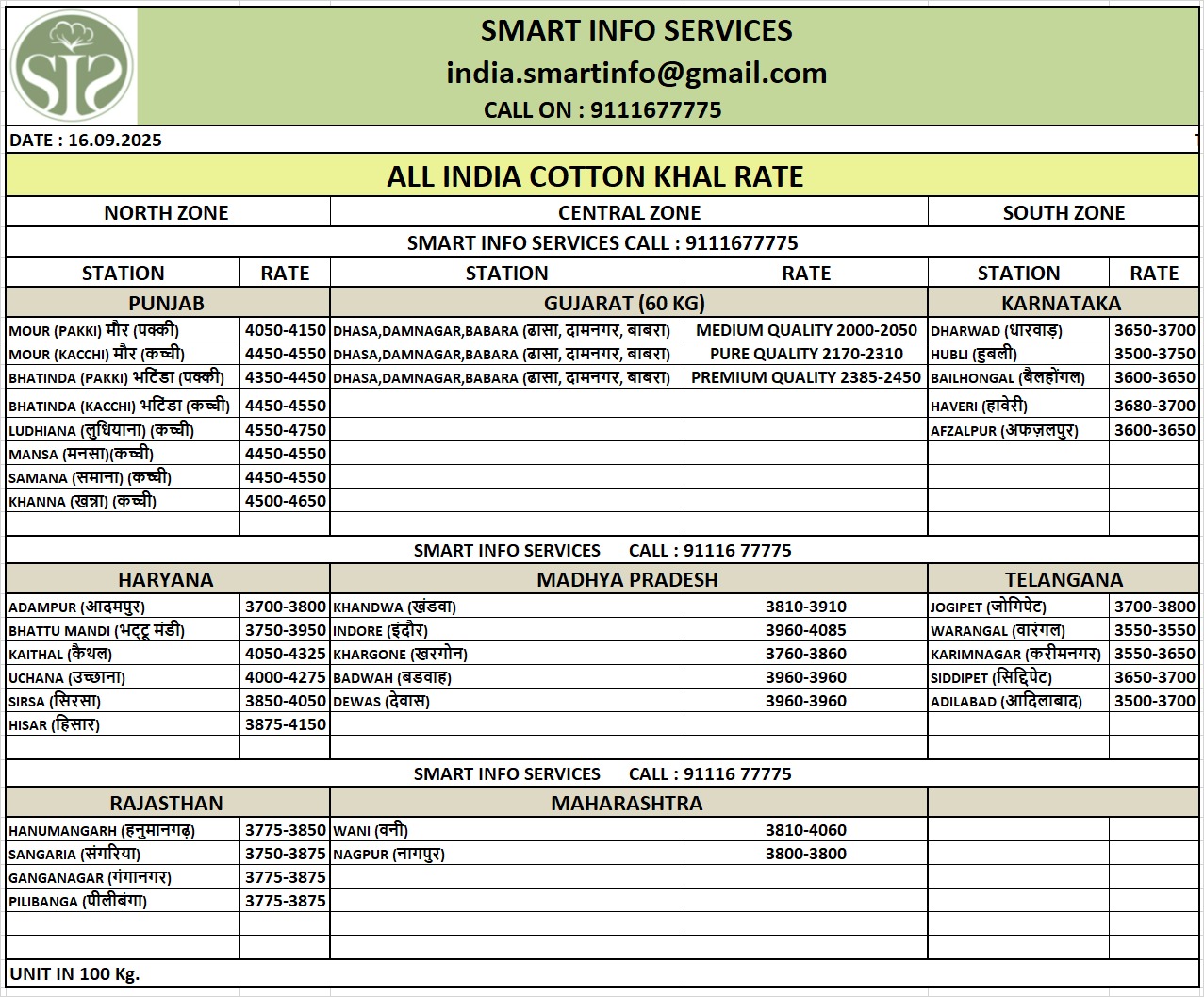
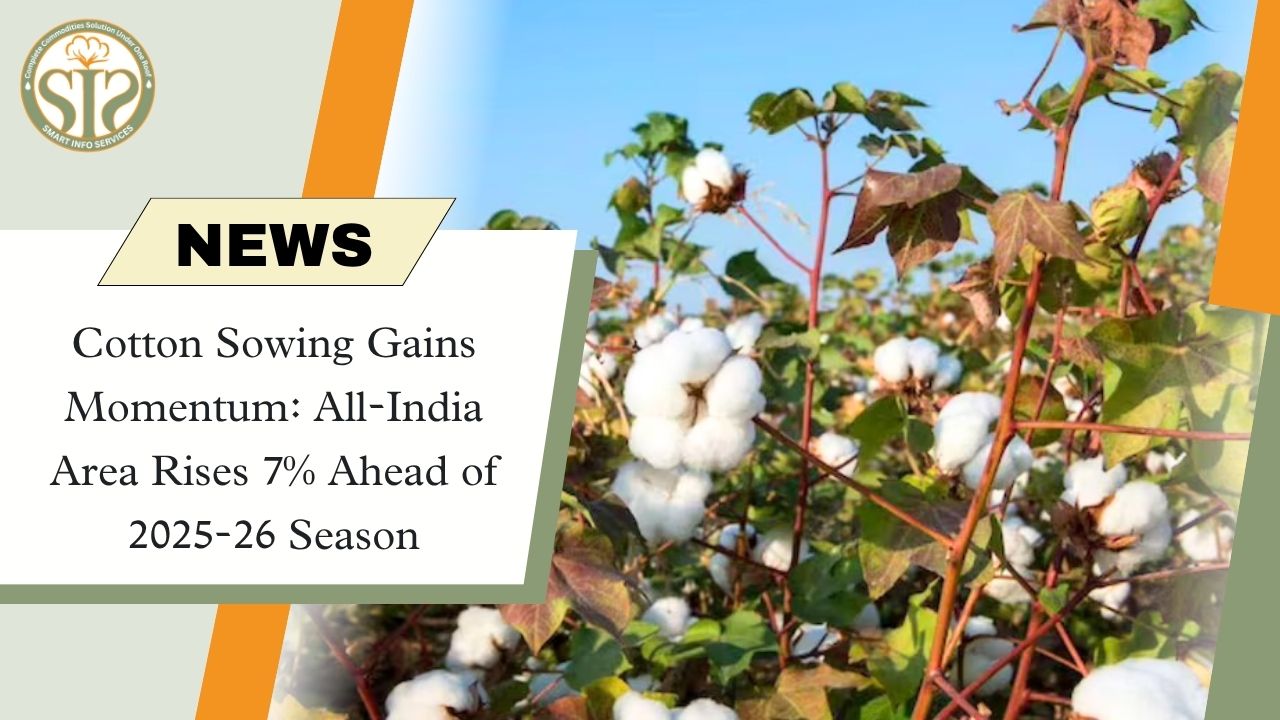
Cotton Sowing Up 7% Ahead of 2025-26 Season

Cotton Sowing Gains Momentum: All-India Area Rises 7% Ahead of 2025-26 SeasonCotton sowing for the upcoming 2025-26 season has shown a positive trend across several states, with total sowing across India reaching 31.25 lakh hectares, a 7.3% increase compared to 29.12 lakh hectares recorded during the same period last year.State-wise Performance:Rajasthan has witnessed a robust increase, with cotton sowing covering 550.29 thousand hectares, up from 444.79 thousand hectares last year — a significant 23.7% jump.Gujarat, another key cotton-growing state, reported a rise in coverage, with 7.58 lakh hectares (757,842 ha) sown so far compared to 5.80 lakh hectares (580,128 ha) last year — marking a 30.6% surge.Maharashtra has also registered a moderate increase. Sowing has reached 11.53 lakh hectares (1,153,486 ha), up from 11.30 lakh hectares (1,129,892 ha), a 2.1% rise.However, not all states have seen a positive trend:Karnataka reported a decline, with sowing dropping to 3.36 lakh hectares compared to 5.19 lakh hectares in the previous year — a sharp 35.3% fall.Telangana has also seen reduced sowing activity, with the area under cotton falling to 22.84 lakh hectares (2,284,474 ha) from 26.42 lakh hectares (2,641,595 ha) — a 13.5% decrease.Outlook: Experts attribute the increase in sowing in Rajasthan and Gujarat to favorable early monsoon conditions and improved market sentiment. On the other hand, delayed rains and shifting crop preferences may have impacted sowing in Karnataka and Telangana.The Ministry of Agriculture is monitoring sowing trends closely as monsoon patterns evolve. The overall positive start indicates a potentially strong kharif season for cotton if favorable weather persists in the coming weeks.read more :- Rupee higher 18 Paise Against USD, Closes at 85.70

Lower US tariffs on textile goods could make India competitive: Crisil

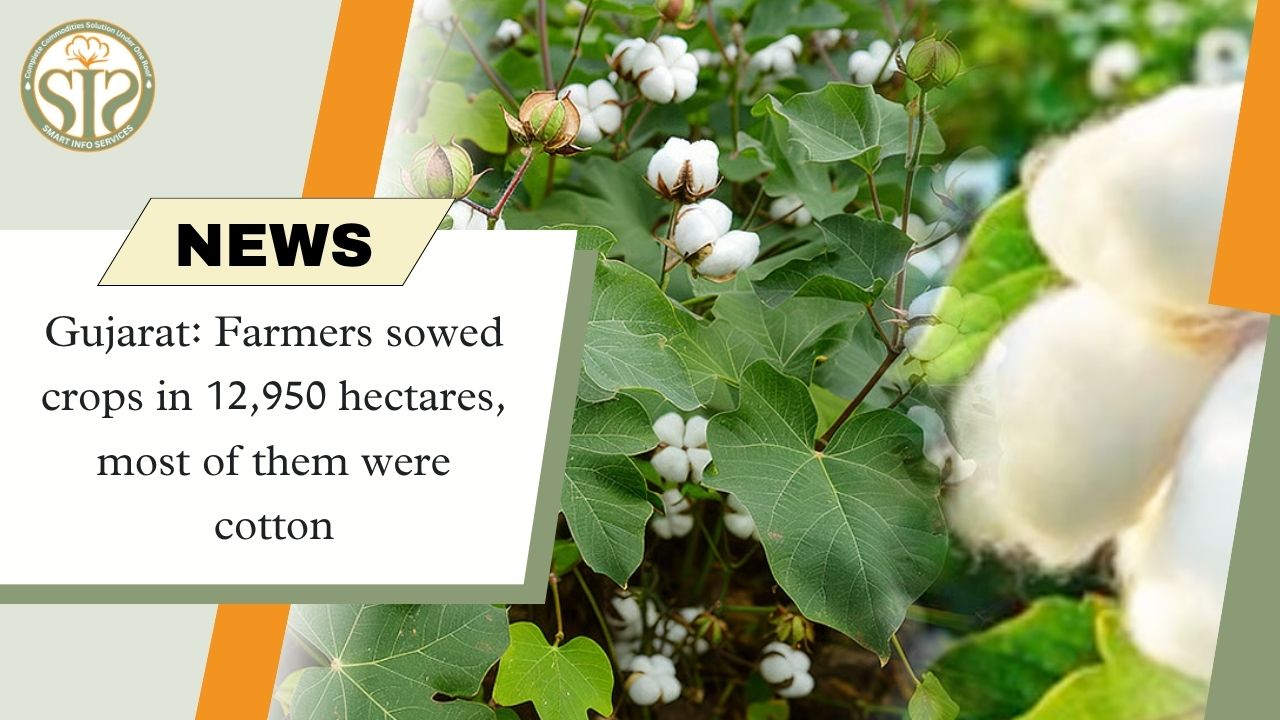
US Tariff Cut May Boost Indian TextilesAccording to Crisil, the US-India bilateral trade agreement (BTA) under negotiation is likely to reduce India's goods trade surplus with the United States, and India will be able to import more energy products, certain agricultural products and defence equipment, among others, from the US.Although the United States is India's largest export partner, there is scope to further increase exports in sectors such as smartphones, certain pharma products and labour-intensive exports such as textiles and gems and jewellery, S&P Global said in a note.As the first tranche of the proposed BTA is targeted to be completed by autumn 2025, India should be prepared to see more imports from the United States as India's tariffs are much higher than those of the United States and reducing them would be beneficial for US exporters.Crisil feels there is some scope for India to increase its exports to the United States.Textile products are among the major products exported to the US that attract duty. Lower duty under the BTA could help India compete with other major textile exporters such as Bangladesh, China and Vietnam.While some textile products such as toilet linen, kitchen linen and bed linen already have significant market share (which should get a boost from the duty reduction), Crisil said the market penetration for products in the readymade garment (RMG) sector is low and would benefit from the duty reduction."India's imposition of zero or lower duty on cotton imports from the US could enhance synergies in textile trade, especially when India's cotton production is declining. This could help meet the growing demand for RMG from the US, provided duty on such imports is reduced," it said.read more :- Gujarat: Farmers sowed crops in 12,950 hectares, most of them were cotton

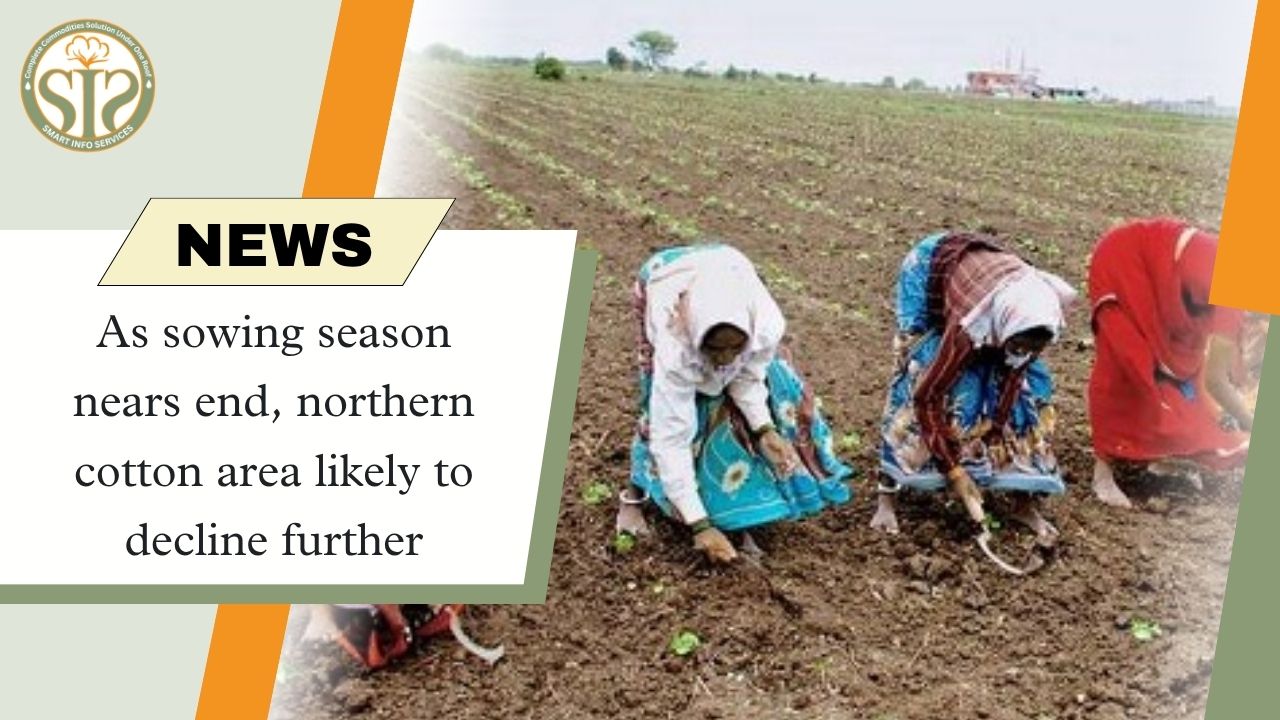
Cotton sowing slows down, decline continues in northern region

As sowing season nears end, northern cotton area likely to decline furtherDespite a marginal uptick in Punjab, cotton sowing remains sluggish in Haryana and Rajasthan as the 2024-25 season draws to a close. The northern cotton belt is once again witnessing a likely decline in the total area under the crop, adding to apprehensions already built up over erratic weather and pest attacks. Cotton has been sown in 1.13 lakh hectares so far in Punjab, Haryana (3.80 lakh hectares), Rajasthan (5.17 lakh hectares), covering both upland and lowland areas.With sowing almost complete and monsoon deadlines getting tighter, agriculture officials in both states are expressing cautious optimism but admit that matching last year’s acreage is unlikely. In contrast, Punjab has slightly reversed the trend by recording a 15% rise in cotton sowing this year – at least a partial recovery from historical lows. Punjab's cotton area will drop to a little less than 1 lakh hectare in 2024-25, much lower than last year's (2023-24) 2.14 lakh hectares - a massive reduction of over 50%.In Haryana, this year's figures are much lower than 4.76 lakh hectares in 2024-25 and 5.78 lakh hectares in 2023-24. Now, officials are hoping to reach 4 lakh hectares by the end of the season.In Rajasthan, the crop has seen a significant decline in the last two years as it was 6.62 lakh hectares last year (2024-25) from 10.04 lakh hectares in 2023-24. The delayed sowing will continue till the end of June.Collectively, cotton has been sown in 10.10 lakh hectares so far in the northern region, which is about 2.35 lakh hectares less than last year, when the area under the crop across the three states was 12.35 lakh hectares and about 7.86 lakh hectares less than 2023-24, when the total area under cotton across the three states was 17.96 lakh hectares.The once thriving northern cotton belt is now losing ground fast.Haryana blamed the slow sowing on the delay in the release of water from Punjab's Bhakra canal system in May and June, which slowed the irrigation cycle. "Cotton acreage has been less this year due to water shortage, but we still hope to achieve around 4 lakh hectares," said a senior official of the Haryana agriculture department. In Rajasthan, the sowing season started late due to hot weather, forcing many farmers to sow the crop twice or thrice, pushing back the optimum planting time, a senior Rajasthan agriculture department official said."We expect sowing to continue till June-end, but a full recovery of last year's acreage is unlikely," a state agriculture official said. Apart from weather and water, cotton growers in all three of these states are grappling with persistent pink bollworm infestation, which has hit yields and dented farmers' confidence. Punjab has been the worst hit, with some experts urging the state to engage entomologists and pest management scientists to mitigate the pest threat.It is worth noting that the state used to cultivate cotton in an area of over 8 lakh hectares in the early 2000s - much less than now. Cotton production in Punjab in 2024-25 (till April 30 this year) was only 1.50 lakh bales (each of 170 kg), as against 3.65 lakh bales in 2023-24 during the same period. Production in Haryana declined to 6.98 lakh bales from 13.30 lakh bales last year. Upper Rajasthan produced 9.77 lakh bales and Lower Rajasthan 8.60 lakh bales of cotton, as against 15.47 lakh bales and 13.20 lakh bales respectively last year.The contribution of the northern region to the total national cotton production declined to only 10% this year as against 14% last year (till April end). The main reason for this decline is the reduction in cotton growing area, especially in Punjab, which is a growing concern.For the 2025-26 season, the minimum support price (MSP) announced by the central government is Rs 7,710 per quintal for medium staple cotton and Rs 8,110 per quintal for long staple cotton. Farmers can usually harvest eight to 12 quintals of cotton per acre, provided there is no pest attack and weather conditions are favourable. In the north, farmers mainly grow medium staple cotton. He said high transportation costs would further burden the struggling industry: "Unless the local availability of cotton improves, the survival of the industry is at serious risk. This situation can improve only if cotton acreage increases - cotton is the best alternative to water-intensive paddy crop."read more :- INR Up 21 Paise, Opens at 85.88

Related News

Youtube Videos

कपास बाज़ार साप्ताहिक रिपोर्ट 🔥 | तेजी या मंदी? | CCI Update | Cotton Market  Update
कपास बाज़ार साप्ताहिक रिपोर्ट 🔥 | तेजी या मंदी? | CCI Updat...
रुई बाजार में आज का पूरा माहौल 🔥Cotton Market Today | 11 सितंबर 2026 #smartinfo
रुई बाजार में आज का पूरा माहौल 🔥Cotton Market Today | 11 सि...
कपास बाजार में आज तेज़ी का रुख 😱Cotton market rate today #youtube
कपास बाजार में आज तेज़ी का रुख 😱Cotton market rate today #yo...
Application Download
Whatsapp Contact