Filter

Recent News

Cotton Exporting Countries in 2025: India's Ranking

Top cotton exporting countries in 2025: See where India standsCotton is one of the most essential natural fibers used worldwide for clothing, home furnishings, and industrial products. As demand for cotton continues to rise, a few countries dominate the global cotton export market. These top exporters not only meet domestic needs but also supply massive quantities to international buyers.With global cotton production projected to hit 117.8 million bales (each weighing roughly 480 pounds) in 2025, here’s a look at the top 5 cotton exporting countries as per the International Cotton Advisory Committee (ICAC), USDA, 2023–2024 data, and what makes each of them key players in the industry.1. United States – The Global Cotton Powerhouse | Annual Cotton Exports: ~3.1 million tonnes | The United States leads the world in cotton exports thanks to its advanced agricultural practices, large-scale farms, and efficient supply chains. Most US cotton comes from Texas, Mississippi, and other southern states. Known for its high quality, American cotton is a top choice for global textile manufacturers.2. Brazil – Rapid Growth and Strong Export Network | Annual Cotton Exports: ~2.3 million tonnes | Brazil has emerged as a major cotton exporter over the past decade, benefiting from favourable weather and vast agricultural land. Brazilian cotton is primarily exported to Asia and Europe. Investment in modern farming techniques has boosted both output and quality.3. Australia – Premium Quality with Sustainable Practices | Annual Cotton Exports: ~1.7 million tonnes | Australia may produce less cotton than the US or Brazil, but it excels in quality. Known for its long, clean fibers, Australian cotton is favoured in premium textile markets. The country also leads in sustainable farming practices and water-efficient cultivation methods.4. India – A Giant Producer with Limited Exports | Annual Cotton Exports: ~0.8 million tonnes | India is one of the largest producers of cotton globally, but much of it is used domestically. Exports depend on surplus availability. Indian cotton is popular in nearby markets like Bangladesh and Vietnam. The local textile industry consumes a significant portion of the harvest.5. Uzbekistan – Reforming and Rising in Cotton Trade | Annual Cotton Exports: ~0.5 million tonnes | Cotton remains vital to Uzbekistan’s economy. In recent years, the country has focused on modernising its cotton industry and improving labour practices. Efforts to eliminate forced labor and promote ethical farming have improved its global image as a cotton exporter.read more :-  Rupee open Falls 05 Paise to 86.41/USD

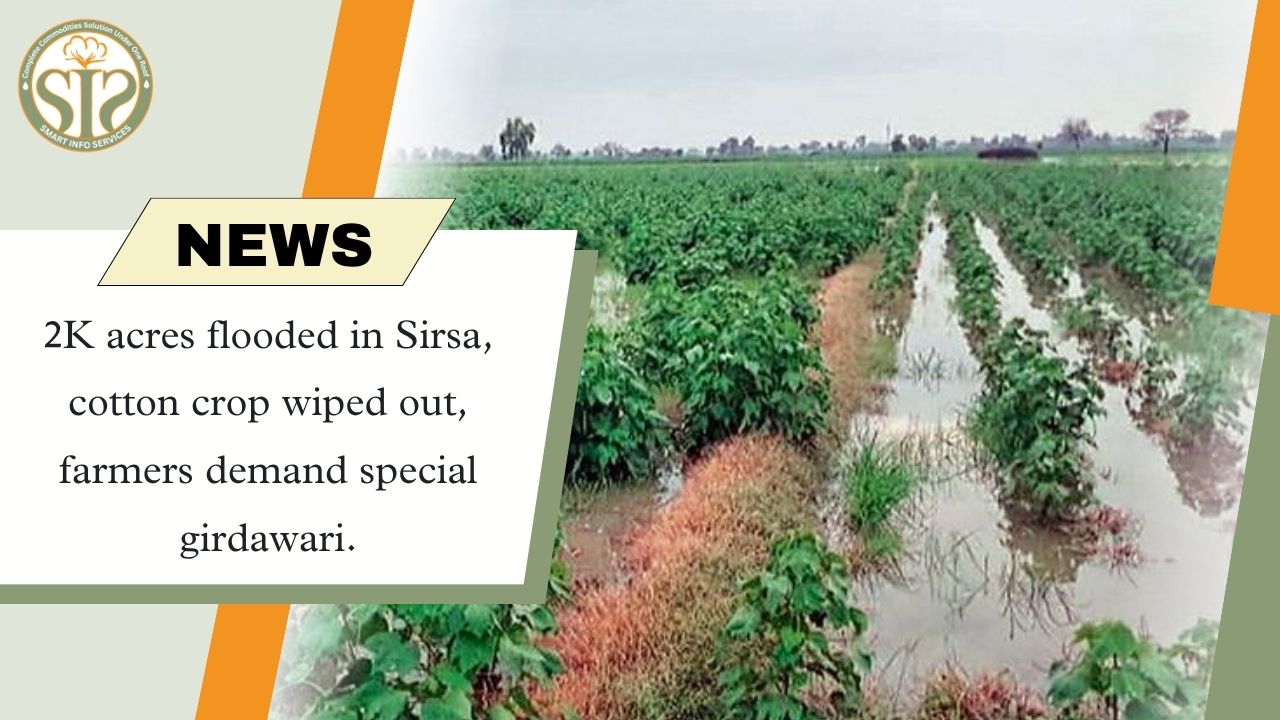
Land submerged in Sirsa, cotton crop destroyed

2K acres flooded in Sirsa, cotton crop wiped out, farmers demand special girdawari.Recent heavy rains in Nathusari Chopta block of Sirsa district have left a trail of devastation across over 2,000 acres of farmland in seven villages. Cotton, guar and groundnut crops have suffered extensive damage due to severe waterlogging, with cotton being the worst hit.In many affected areas, farmers are now being forced to plough under their damaged cotton fields and switch to paddy cultivation, a crop more tolerant to wet conditions — but one that adds to their financial burden.Agricultural land has been inundated in Rupana Ganja (400 acres), Rupana Bishnoi (300 acres), Shakkar Mandoori (500 acres), Shahpuria (150 acres), Naharna (150 acres), Tarkawali (100 acres) and Chaharwala (50 acres). The worst-hit villages — Shakkar Mandoori, Rupana Ganja, and Rupana Bishnoi — account for nearly 1,200 acres of lost cotton crop.I had to plough my entire 7-acre cotton crop,” said Mukesh Kumar, a farmer from Shakkar Mandoori. “Even after pumping out water with motors, the stagnant water rotted the plants.”Other farmers including Anil Kasnia, Baljeet and Virender echoed similar losses.Many of them had taken land on lease and had already invested around Rs 10,000 per acre on cotton. Now, they must spend an additional Rs 6,000Rs 8,000 per acre to prepare and sow paddy.“It’s a double loss,” said Raj Kasnia, another affected farmer. “After rains, saline groundwater rises and damages the soil too. What can a farmer do in such a situation?”Adding to the concern is the overflowing sem nala (drainage canal), which is carrying excess water from the flooded fields. Farmers fear that if the embankment breaches, surrounding villages may be submerged, further damaging standing crops. They have blamed local officials for not cleaning the canal before the monsoon, despite repeated reminders.Farmers have urged the government to conduct a special girdawari (crop loss survey) and announce compensation for the losses.District Agriculture Deputy Director Dr Sukhdev Kamboj confirmed that most of the affected fields fall in salinity-prone zones.“We are advising farmers to switch to short-duration and low-water paddy varieties like Pusa 1509, 1692, 1847 (basmati) and Punjab 126 (parmal),” Dr Kamboj said. “These varieties require 33% less water and mature in about 100 days.”Dr Kamboj also noted that with unpredictable weather patterns, cotton is becoming an increasingly risky crop.This year, cotton was sown on 1.47 lakh acres in Sirsa district, while paddy covered over 1.5 lakh acres.read more :- Haryana : Central team inspects pink bollworm-hit cotton fields

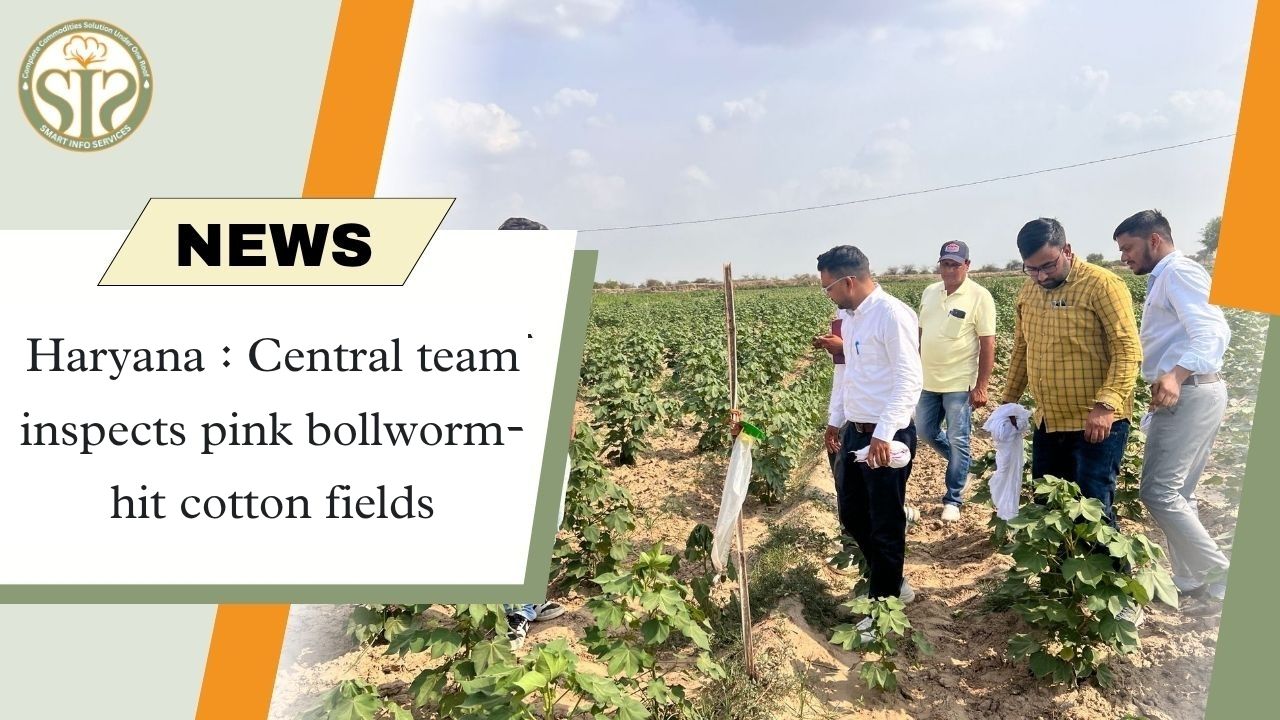
Centre Reviews Cotton Crop in Hisar as Pink Bollworm Threat Emerges

Central Team Inspects Cotton Fields in Hisar Amid Pest and Rain ConcernsHisar: A team from the Union Agriculture Ministry visited Hisar district to inspect cotton crops following complaints from farmers about pest infestations, particularly the pink bollworm.The team carried out field inspections in Mangali Jhara village, where traces of pink bollworm were found in the standing crop, according to officials from the Agriculture and Farmers Welfare Department. However, authorities clarified that the infestation is currently below the economic threshold level and advised farmers to remain vigilant without panicking.The inspection team included Assistant Plant Protection Officers Laxmikant, KP Sharma, and Suraj Beniwal from the Regional Integrated Pest Management Centre (RIPMC), Faridabad, along with Dr. Arun Kumar Yadav, Plant Protection Officer, and Agricultural Development Officer Ravinder Antil.Dr. Arun Kumar Yadav stated that information about the pest incidence was received from local farmers and was promptly reported to higher authorities in Chandigarh and at the Centre. A farmer, Narsi Ram Khichar, said he had noticed the pest earlier and informed the agriculture department.Cotton acreage in Hisar has been declining over the past three years, mainly due to recurring pest attacks such as pink bollworm. This season, cotton has been sown on around 2.1 lakh acres, down from 2.5 lakh acres last year, indicating reduced farmer interest following repeated losses.Officials advised that pesticide spraying should only be carried out if four or more affected bolls are observed per plant. Otherwise, farmers should focus on regular monitoring. The team also noted that leftover cotton plant residues in fields may have contributed to the spread of the pest.Meanwhile, some areas in the district, especially in the Adampur cotton belt, are facing crop damage due to excessive rainfall. Villages such as Sishwal, Adampur, Ladwi, Mahalsara, and Kohli have reported significant losses, with standing water increasing the risk of para wilt disease.Adampur MLA Chander Prakash visited the affected villages to assess the situation and directed irrigation officials to take immediate steps to drain excess water from fields. He also urged the government to conduct a proper survey of the damage and provide prompt financial assistance to the affected farmers.Read More:- INR Opens Stronger by 04 Paise at 85.25

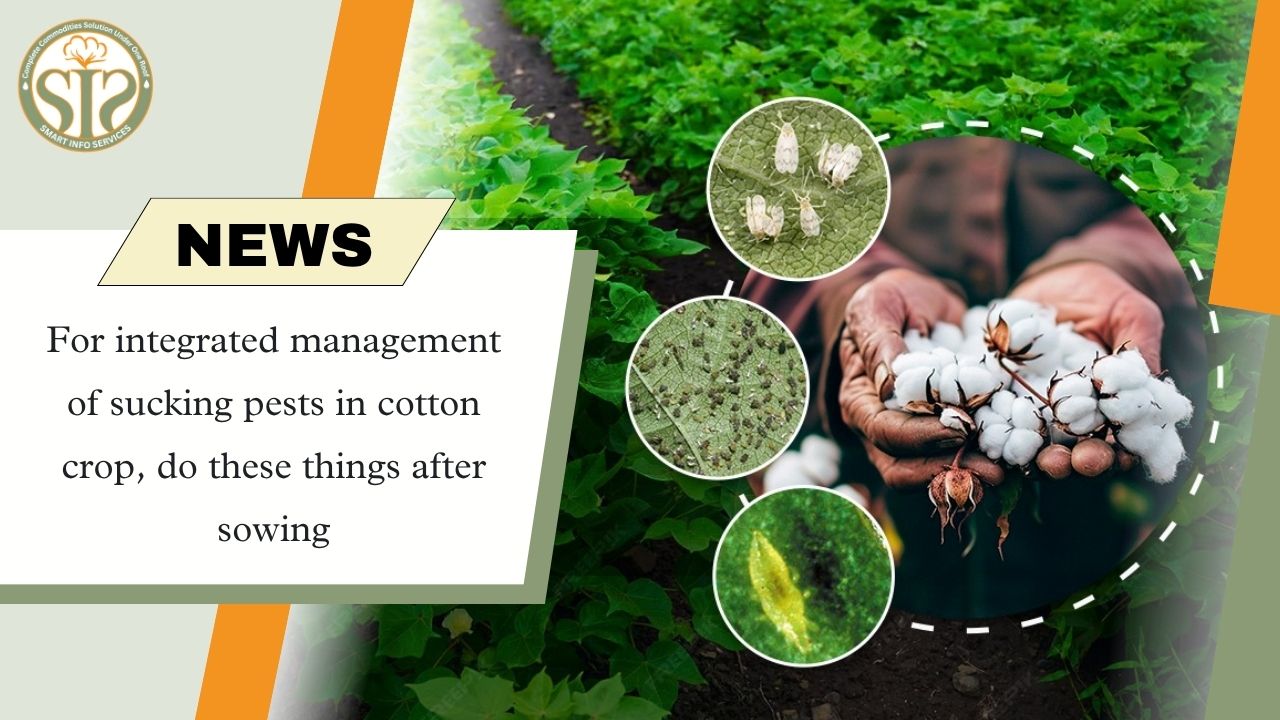
Sucker Pest Management in Cotton: Post Sowing Steps

For integrated management of sucking pests in cotton crop, do these things after sowingAfter extensive rainfall in Gujarat, most of the farmers have enthusiastically sowed Kharif crops. To keep the crops grown after sowing safe from diseases and pests, various efforts of crop maintenance are being made by the farmers. The state government has also always been with the farmers to prevent crop damage due to diseases and pests. Continuing the same, the Agriculture Director Office-Gandhinagar has issued guidelines suggesting important steps for integrated management of sucking pests after sowing of cotton.For management of sucking pests after sowing of cotton, do these things:* Weed and hoe the weeds in the paddy field, especially plants and grasses like Gadar, Kanksi, Wild Bhindi, Congress Grass and Wild Jasood.* For biological control of mealybugs and leafhoppers, release 2 to 3 days old caterpillars of predatory green moth (Chrysopa) twice at an interval of 15 days at the rate of 10,000 per hectare.* Use 5% solution of neem seeds or non-chemical agent like Azadirachtin 1500, 3000 or 10,000 ppm at the rate of 5 litres, 2.5 litres and 750 ml per hectare respectively.* Use yellow sticky traps to survey and control mealybugs and white flies.* For control of red sucking pests and red mites, collect and destroy half-opened or fully opened larvae by dipping them in kerosene water or shake the plant and walk briskly in a circular motion holding a rope at both ends to make the larvae fall.* For control of sucking pests in natural farming, spray 200 liters of Nimastra (without dilution) per acre. Non-chemical insecticides like Brahmastra, Dashparni extract should be sprayed in 200 liters of water in the amount of 6 to 8 liters per acre.* For biological control of sucking pests, at the beginning of the crop, when the atmosphere is moist, spray microbial controllers like Verticillium laciniae or Beauveria bassiae 50 grams in 10 liters of water.* For control of white fly infestation, as soon as the infestation is visible, spray 50 ml of Azadiractin 1500 ppm in 10 liters of water.* Destroy the damage caused by the T mosquito by breaking it and take care that there is no shade inside the field. On detection of pest, spray 50 ml Azadirachtin 1500 ppm or 40 gm Beauveria bassiana powder in 10 litres of water.* If the infestation of local pests is high in the cotton crop, use chemical pesticides recommended by the agricultural university related to your area as per requirement and recommendation.* While using pesticides, follow the recommended dosage and disease/pest/crop as per the label given on the pesticide under integrated pest management.read more :- Disillusionment with cotton: Production drops in Punjab, a setback to diversification

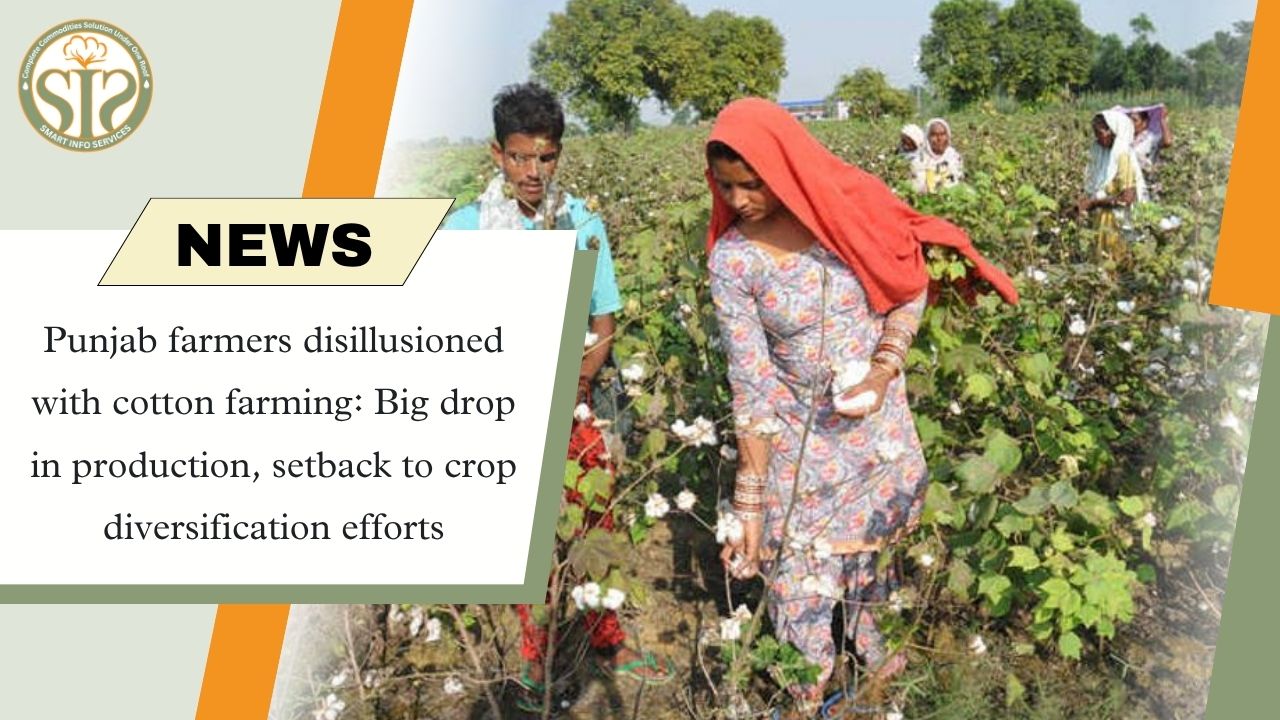
Disillusionment with cotton: Production drops in Punjab, a setback to diversification

Punjab farmers disillusioned with cotton farming: Big drop in production, setback to crop diversification effortsMalwa region is known for cotton production, but now the farmers here are turning to paddy and wheat crops. Uncertainty over Minimum Support Price (MSP) and the outbreak of pink bollworm and white fly are considered to be the main reasons for farmers leaving cotton farming.Punjab farmers are getting disillusioned with cotton farming. As a result of this, a decline of 63.48 percent has been recorded in cotton production in the state this year. The government's crop diversification efforts have suffered a setback due to a major decrease in cotton production within a year.Punjab farmers disillusioned with cotton farming: Big drop in production, setback to crop diversification effortsPunjab farmers are getting disillusioned with cotton farming. As a result of this, a decline of 63.48 percent has been recorded in cotton production in the state this year. The government's crop diversification efforts have suffered a setback due to a major decline in cotton production within a year.Uncertainty over Minimum Support Price (MSP) and the outbreak of pink bollworm and white fly are believed to be the main reasons for farmers abandoning cotton cultivation. The latest report of the Cotton Association of India has revealed a decrease in cotton production.Malwa region is known for cotton production, but now the farmers here are turning to paddy and wheat crops. The groundwater level of the state is already falling. 118 blocks have gone into the red zone and this report has now increased the concern of the government even more. According to the report, cotton production has come down from 6.09 lakh bales in 2023-24 to 2.52 lakh bales in 2024-25. Similarly, the area has also come down from 2.14 lakh to 1 lakh hectare.Situation slightly better in Haryana and RajasthanCotton production in Haryana and Rajasthan has also fallen as compared to last year, but still the situation is slightly better there. In 2024-25, Haryana cultivated cotton in 5.78 lakh hectares and produced 11.96 lakh bales, while Rajasthan cultivated it in 6.27 lakh hectares and produced 17.79 lakh bales.Decline in purchase of cotton at MSP alsoA decline has been recorded in the purchase of cotton at MSP in Punjab. According to a report of Cotton Corporation of India in March, only 2 thousand bales were purchased at MSP in Punjab in the year 2024-25, whereas in the year 2019-20 this figure was 3.56 lakh bales. Similarly, in 2020-21, MSP purchase of 5.36 lakh bales was done. The market price of cotton was above MSP during 2021-22 and 2022-23, so there was no purchase at MSP during these two years. In the year 2023-24, only 38 thousand bales were purchased at MSP.read more :- INR drop 03 Paise, Closes at 86.29 per Dollar

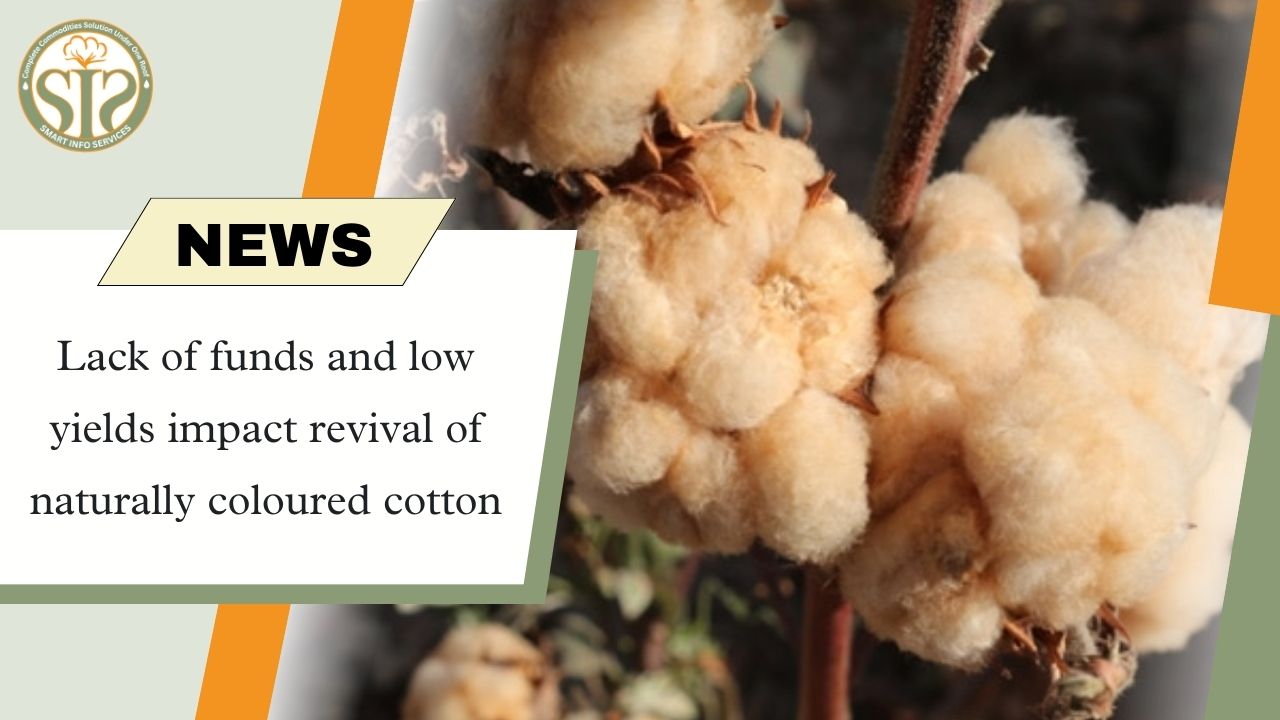
Natural coloured cotton: Challenges of shortage of funds and low yield

Lack of funds and low yields impact revival of naturally coloured cottonIndia's naturally coloured cotton, which was once commercially successful, is struggling to regain its popularity despite growing demand for sustainable textiles. Despite high pricing and environmental benefits, low yields are deterring farmers from adopting it. Government support, improved seed systems and market linkages are critical to realising its export potential and transforming India's textile sustainability paradigm.India's naturally coloured cotton, which was commercially flourishing in the 1940s, is struggling to make a comeback despite growing global demand for sustainable textiles and decades of government research efforts.This special crop is currently grown on only 200 acres in Karnataka, Maharashtra, Tamil Nadu and Andhra Pradesh, fetching a price of Rs 240 per kg, 50 per cent higher than regular cotton at Rs 160 per kg. However, farmers are hesitant to expand cultivation due to significantly low yields."The productivity of light brown cotton is very low, at 1.5-2 quintals per acre, while the productivity of normal cotton is 6-7 quintals per acre. This discourages farmers from expanding the acreage of this crop," Ashok Kumar, principal scientist at ICAR-Central Institute for Research on Cotton Technology (CIRCOT), told PTI.The annual production from these limited acres is a mere 330 quintals, underlining the challenge faced by this special crop, which can potentially transform India's textile sustainability paradigm.ICAR-CIRCOT is currently focusing on light brown cotton.Coloured cotton has ancient roots in Indian agriculture, with cultivation dating back to 2500 BC. Before Independence, red, khaki and brown varieties of Cocanada 1 and 2 were grown commercially in Rayalaseema in Andhra Pradesh, exported to Japan. Traditional varieties were also cultivated in Assam and the Kumta region of Karnataka.However, the emphasis on high-yielding white cotton varieties during the Green Revolution marginalised coloured cotton. The inherent limitations of this crop – low boll, low weight, low fibre, short fibre length and colour variations – made it economically unviable for large-scale cultivation.Indian agricultural institutions have developed improved varieties, including DDCC-1, DDB-12, DMB-225 and DGC-78 developed by the University of Agricultural Sciences, Dharwad. The Central Institute for Cotton Research, Nagpur developed Vaidehi-95, which is considered the most prominent among the 4-5 varieties available.Between 2015-19, ICAR-CIRCOT processed 17 quintals of cotton in demonstration batches, producing 9,000 metres of cloth, over 2,000 jackets and 3,000 handkerchiefs, proving it commercially viable.Its environmental benefits are significant. Traditional cotton dyeing requires about 150 litres of water per metre of fabric, while naturally coloured cotton eliminates this requirement, which can reduce toxic waste disposal costs by up to 50 per cent."Naturally coloured cotton has immense export potential. More government support is needed to increase production and value addition," said Kumar.Despite high pricing and environmental benefits, expansion faces hurdles such as lack of seed systems, susceptibility to pests and the need for high pesticides commonly used in cotton cultivation."Nobody is able to develop varieties due to low production and lack of market. Even textile mills are not willing to buy cotton in small quantities," said Kumar.The global market is seeing potential with growing demand for eco-conscious brands, especially in Europe, the US and Japan. Australia and China are investing heavily in research using conventional breeding and genetic engineering.read more :- Gujarat: Textile industry fears threat from cotton MSP hike

MSP Hike on Cotton Raises Cost Concerns for Gujarat Textile Sector
Gujarat Textile Industry Raises Concerns Over Cotton MSP HikeAhmedabad: The recent increase in the minimum support price (MSP) for kapas (raw cotton) by the central government has raised concerns within Gujarat’s textile industry. While the move aims to support farmers, industry stakeholders fear that rising raw material costs could impact India’s competitiveness in global markets.The revised MSP has been increased across all categories—medium staple cotton to ₹7,560 per quintal, medium-long staple to ₹7,860, long staple to ₹8,110, and extra-long staple to ₹9,310 per quintal.Industry leaders believe that improving cotton productivity would be a more sustainable solution for enhancing farmers’ incomes without burdening manufacturers. They point out that although India accounts for about 37% of global cotton acreage, its share in production is only around 23%, indicating significant scope for yield improvement.Textile manufacturers have also reiterated their demand for the removal of import duties on cotton. They argue that Indian cotton is currently among the most expensive globally, which is affecting export competitiveness, especially at a time when global buyers are looking at India as an alternative sourcing destination.Market experts note that the revised MSP structure could encourage farmers to bring better-quality cotton to the market, particularly with pricing linked to quality parameters like moisture content. Increased sowing activity and higher arrivals may help farmers realise improved returns.However, concerns remain that persistently high cotton prices could put additional pressure on spinning mills and yarn manufacturers, who are already facing weak demand and shrinking profit margins.Industry stakeholders have urged the government to strike a balance between farmer support and industry sustainability by focusing on productivity improvements, reducing import duties, and easing logistics costs.read more :- Rupee open Declines 11 Paise to 86.26 per Dollar

Copyright© 2023 | Smart Info Service
Application Download