Filter

Recent News

Agriculture News: Good news for farmers! 'CCI' offers cotton at Rs 8,100

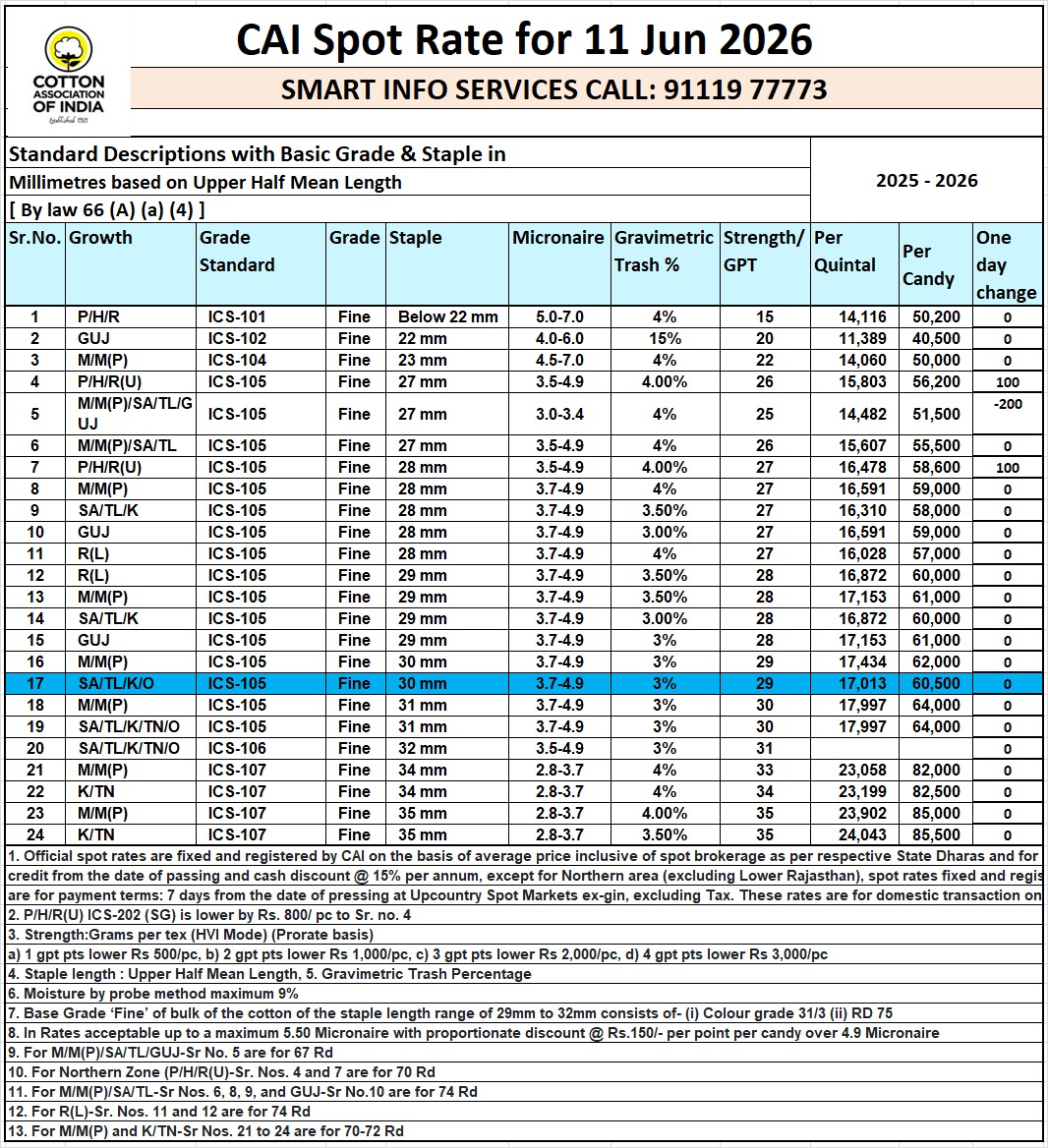
CCI offers Rs 8,100 for cotton, relief to farmersJalgaon: This year, Kharif crops have been sown in seven lakh hectares in the district. However, there has been a decrease of one and a half lakh hectares in the cultivation of cotton, called 'white gold'. At the same time, farmers have opted for the cultivation of maize and soybean, which provide economic stability. Till last year, 'CCI', in collaboration with traders, had given low prices for cotton. However, this year 'CCI' will offer cotton to farmers at the rate of eight thousand one hundred rupees per quintal. Satisfaction is being seen among the farmers due to this.Last year, CCI offered cotton at the rate of seven and a half thousand rupees. However, for this, registration has to be done in 'CCI' in advance and Aadhar card has to be linked to the bank account. In this, the deduction made while counting cotton affects the income of the farmers. In that too, payment is made after a few months. Because of this, farmers sell cotton to 'CCI'. However, needy farmers take money from traders immediately after counting the cotton. This is the experience so far.Last year, traders had quoted prices ranging from Rs 7,000 to Rs 7,200 just by looking at the variety of cotton. Farmers kept the cotton in their homes hoping that the price would increase. Ultimately, the cotton had to be sold at the price traders got. Because 'CCI' had closed the cotton procurement centers even before the season ended.How much price will the traders pay?The price declared for this season is Rs 8,100 per quintal. Traders have not quoted a price of Rs 7 to Rs 7,300 for cotton. In such a situation, will the traders pay Rs 8,100 for cotton as per 'CCI'? This question has arisen among the farmers. Traders themselves will also be worried about the price of cotton.Procurement centers should be opened early.New cotton comes to the market in October. Earlier, some traders buy cotton at a higher price. This increases the expectations of farmers regarding the price of cotton. However, later traders buy cotton at a lower price. This upsets the farmers.Farmers hope that this will not happen in the future. However, farmers will hand over cotton to CCI only when CCI starts the procurement center as soon as the season begins. In this regard, CCI is expected to take steps towards starting the procurement center from now onwards.Soybean cultivation increasedThis year, soybean cultivation has increased instead of peanuts. In this, the area under cultivation of oilseeds like peanut 1045 hectares, safflower, sunflower 29 and sesame 104 hectares has decreased. However, soybean cultivation has actually increased by 35 thousand hectares instead of 19 thousand 498 hectares, i.e. double. On average, 36 thousand 208 hectares instead of 21 thousand 292 hectares, i.e. the cultivation of oilseed varieties has increased by 15 thousand hectares.read more :- Cotton-Groundnut: Saurashtra accounts for 86% of sowing

Cotton-Groundnut: Saurashtra accounts for 86% of sowing

Saurashtra News Analysis: Cotton and groundnut account for 86% of district sowingAfter receiving more than 82% rainfall in the district this year, cotton, groundnut and millet sowing is being done.Due to continuous rains this year, cotton sowing has not been completed as expected till the end of July. However, this year too, total Kharif sowing in Gohilwad has been done on 3,65,700 hectares of land. Cotton and groundnut have the largest share in Kharif sowing every year in Bhavnagar district.This tradition continues this year as well. Cotton contributes 55.76% of total sowing and groundnut 30.46%, making the share of these two crops in total sowing of Gohilwad 86.22%. While the remaining 13.78 percent includes all other crops like millet, tur, moong, urad, vegetables, jowar.Cotton sowing in Bhavnagar district accounts for 55.76 percent. Cotton has been sown on 2,03,900 hectares of land, while peanut sowing is 30.46 percent of the total sown area and the total sown area of peanut has been 1,11,400 hectares.Due to waterlogging in the fields after the release of water from the dam and continuous rains, cotton sowing has not been as much as it should have been till the end of July as compared to last year.Cotton is first in the total sown area in Bhavnagar district, in which cotton is first, similarly Sagar is also first in cotton sowing area in Saurashtra.Cotton has been sown in 20,16,800 hectares in the entire state, in which Saurashtra alone contributes 14,75,300 hectares, i.e. Saurashtra contributes 73.15 percent of the cotton sown in the entire state, and the rest of the state contributes 26.85 percent.Cotton has been sown in 20,16,800 hectares in the state, out of which Saurashtra alone has 14,75,300 hectares, and the total sown area at present in Bhavnagar district is 3,65,700 hectares, and cotton is also in the first place in sowing area, and similarly, cotton is in the first place in sowing area in entire Saurashtra.Cotton has been sown in 20,16,800 hectares in the entire state, out of which Saurashtra alone has contributed 14,75,300 hectares, i.e. Saurashtra's contribution in the cotton sown in the entire state is 73.15 percent, and the rest of the state's contribution is 26.85 percent.read more :- Rupee fell 40 paise to close at 87.65

Egyptian Cotton Becomes World’s Costliest ELS Fibre

Egyptian “White Gold” Becomes World’s Most Expensive ELS Cotton, Overtakes US PimaEgyptian cotton, popularly known as “white gold,” has regained its dominance in the global premium fibre market and has become the world’s most expensive extra-long staple (ELS) cotton. For the first time in the 21st century, it has overtaken US Pima cotton in comparable global trading conditions.According to sources from the Egyptian Cotton Exporters Association, Egyptian cotton prices have risen to 172–175 cents per pound, while US Pima cotton remains steady at around 167 cents per pound. The premium Giza 94 variety is witnessing strong demand, especially in Asian markets, where US cotton once held a dominant position.Industry experts say this marks a historic shift. US Pima cotton has long been considered the global benchmark for quality and consistency, but rising demand for Egyptian cotton and tighter global supply have strengthened Egypt’s position in the premium segment.For August–September delivery, Egyptian ELS cotton is trading at around $2.25 per pound, further reinforcing its top-tier pricing status.During the 2024–25 season, Egypt cultivated cotton over approximately 311,000 feddans (around 130,000 hectares). The country exported 36,400 metric tons of ginned cotton worth about $120 million to 17 countries across Asia and Europe.However, industry observers expect price volatility in the coming months due to strong global demand for high-grade ELS fibres and limited supply conditions, even as Egyptian cotton continues to maintain its premium global position.read more:- INR Opens Stronger by 27 Paise at 87.25

Surendranagar: Cotton cultivation completed in 3.66 lakh hectares out of 5.7 lakh

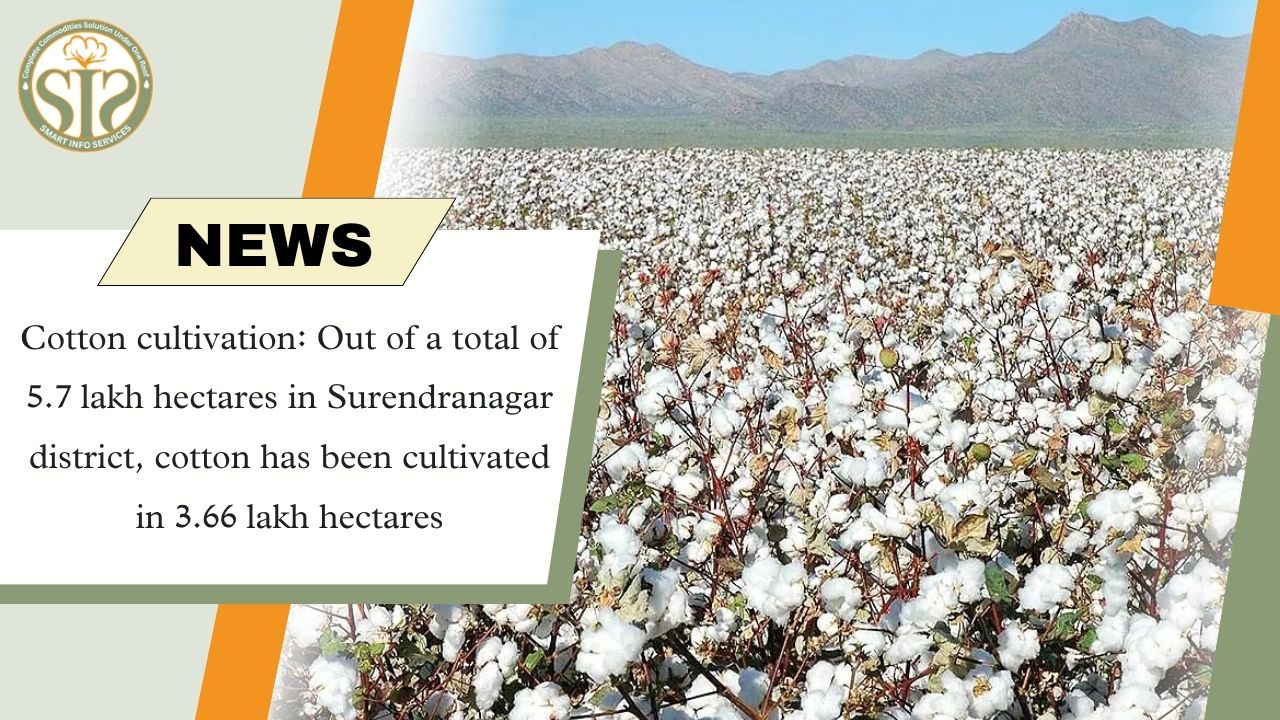
Cotton cultivation: Out of a total of 5.7 lakh hectares in Surendranagar district, cotton has been cultivated in 3.66 lakh hectaresSucking insects in cotton, blight in groundnutThis year, the monsoon season started with a bang in Surendranagar district. Later, the rain gradually decreased. So far, 3825 mm i.e. 64.07 percent of the season's rain has occurred. In the hope of good rains this year, farmers have sowed in a total of 5,07,250 hectares in the district so far.Out of which, cotton has been cultivated in the highest 3,66,919 hectares and groundnut in 39,706 hectares. But due to continuous cloudy and rainy conditions, the crop is getting affected. Meanwhile, the infestation of sucking insects in cotton and scab, blight, leaf spot disease, root rot disease and aphids in groundnut is increasing.Due to this, farmers are afraid of getting sick from the diseases they have already contracted. Therefore, District Agriculture Officer MR Parmar has asked them to take crop disease control measures including use of chemical fertilizers and spraying of medicines for disease control.If epidemic is detected, the effect can be reduced by giving nitrogen-rich fertilizers.If epidemic is detected in the current crop, inter-cropping should be done and weeds should be removed. Along with this, the effect of epidemic can be reduced by giving urea and nitrogen-rich fertilizers to prevent the crop from getting affected. Janakbhai Kalotra, Retired Agriculture OfficerApply neem seed solution on cotton. Uproot and destroy weeds in paddy field. For biological control of leafhoppers and thrips, apply 2 to 3 days old caterpillars of predatory green moth (Chrysopa) at the rate of 10,000 per hectare twice at an interval of 15 days.Use a non-chemical agent like 5% neem seed solution or Azadirachtin.Use yellow sticky traps to survey and control leafhoppers and whiteflies. Spray Verticillium wilt or Beauveria bassiae.read more :- CCI sold 71% of cotton in 2024-25 through e-bidding, prices rIse

CCI sold 71% of cotton in 2024-25 through e-bidding, prices rIse

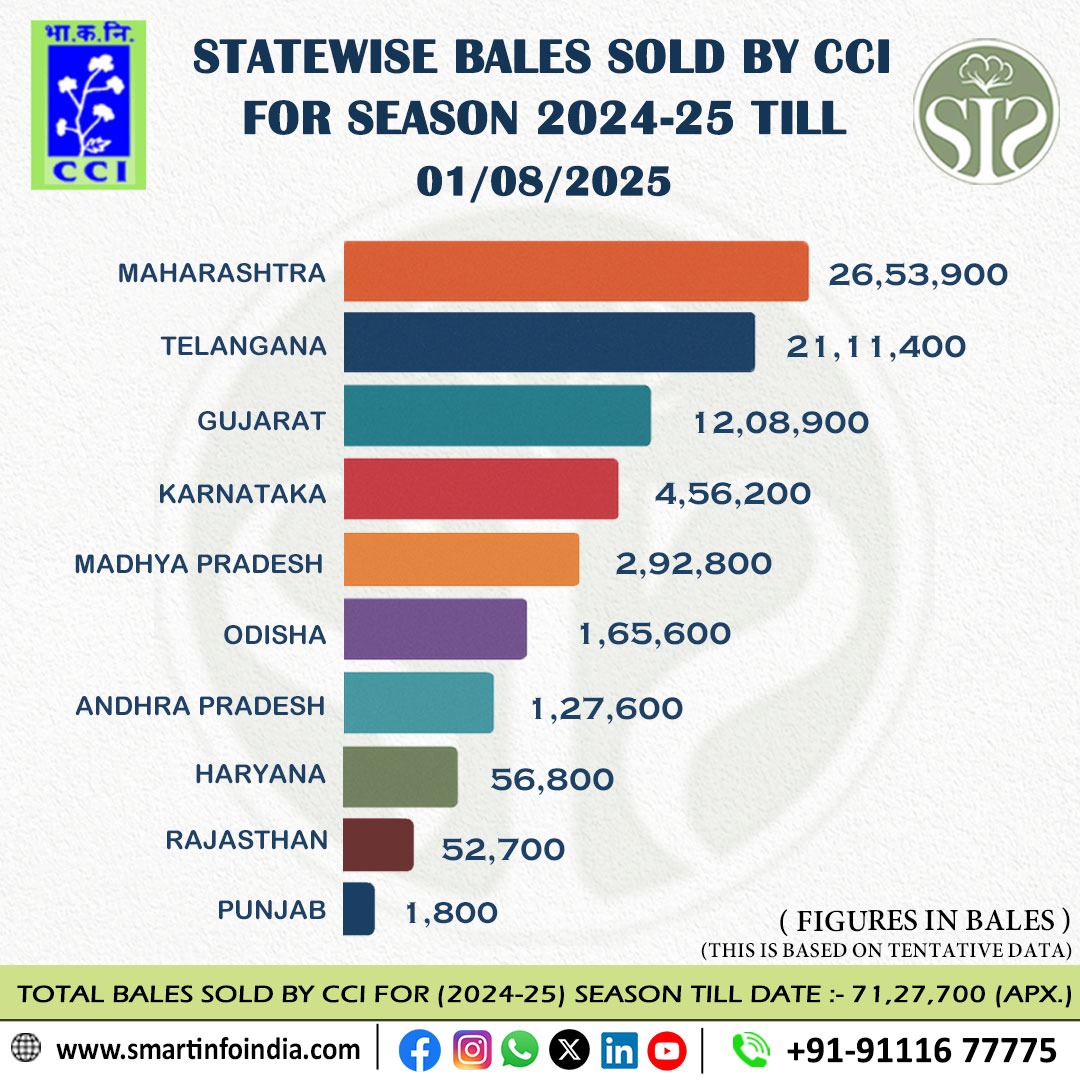
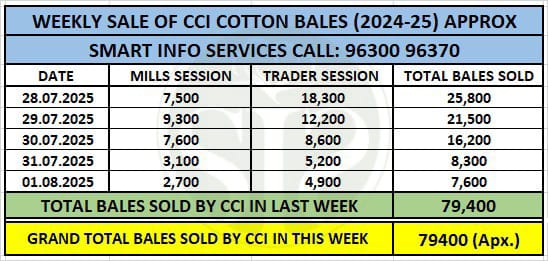
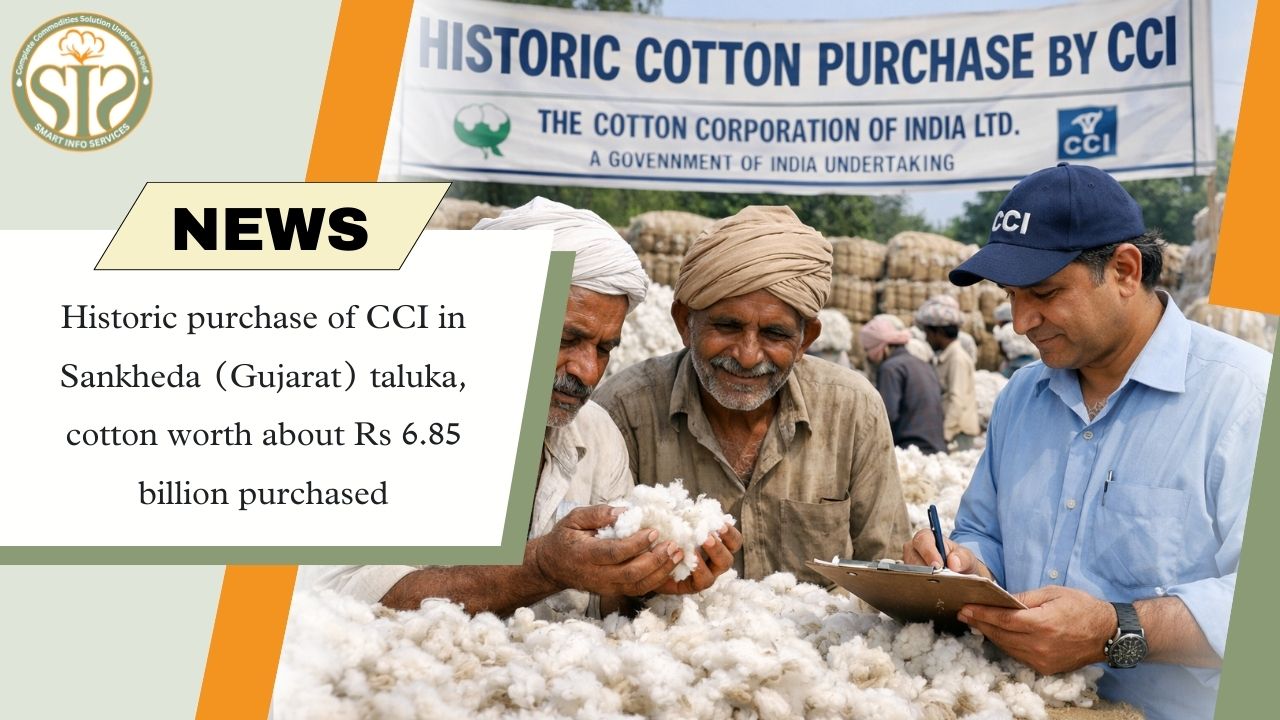
CCI Boosts Cotton Prices, sold 71% of 2024–25 Procurement via E-BiddingThe Cotton Corporation of India (CCI) conducted online bidding for cotton bales throughout the week, with significant trading activity observed across both the Mills and Traders sessions. Over the course of five days, CCI prices are unchanged.As of now, CCI has sold approximately 71,27,700 cotton bales for the 2024–25 season, representing 71.27% of its total procurement for the season.Date wise weekly Sales Summary :28 July 2025:The highest daily sales of the week were recorded on this day, with 25,800 bales sold from the 2024–25 season.Mills session : 7,500 balesTraders session : 18,300 bales29 July 2025:A total of 21,500 bales were sold from the 2024–25 season.Mills session : 9,300 balesTraders session : 12,200 bales30 July 2025:Sales amounted to 16,200 bales, all from the 2024–25 season.Mills session: 7,600 balesTraders session: 8,600 bales31 July 2025:A total of 8,300 bales were sold from the 2024–25 season.Mills session : 3,100 balesTraders session : 5,200 bales01 Aug 2025:The week concluded with sales of 7,600 bales.Mills session: 2,700 balesTraders session: 4,900 balesWeekly Total:CCI achieved total sales of approximately 79,400 bales for the week, underscoring its strong market engagement and the growing efficiency of its digital transaction platform.read more :- Indian Rupee higher 06 Paisa, Ends at 87.52 per Dollar

Leafhopper infestation in Punjab threatens cotton

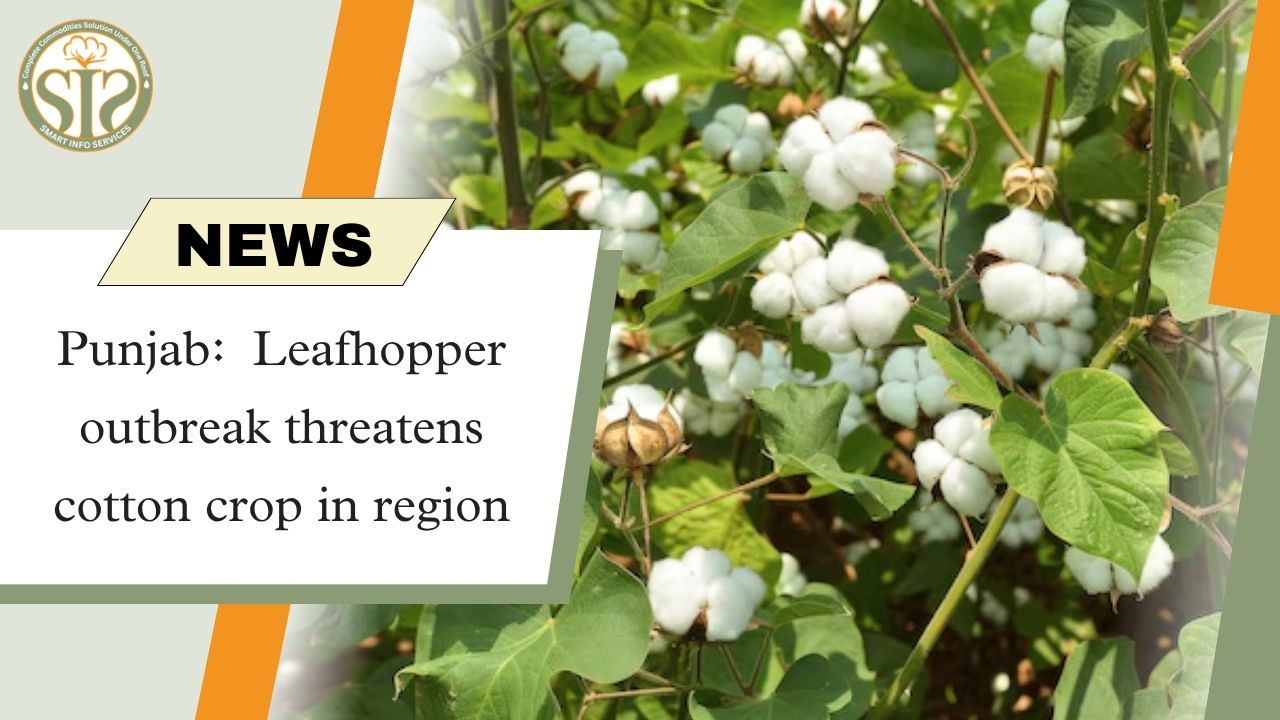
Punjab:  Leafhopper outbreak threatens cotton crop in regionBathinda: The South Asia Biotechnology Centre, a scientific organisation, has revealed an infestation of green leafhoppers (jassid), commonly known as ‘hara tela', on cotton across major cotton-growing districts of Punjab, Haryana, and Rajasthan. The impact is notable in Mansa, Bathinda, and Fazilka in Punjab, Hisar, Fatehabad, and Sirsa in Haryana, and Hanumangarh and Sri Ganganagar in Rajasthan. SABC observed the outbreak during a field survey conducted under Project Bandhan by the Jodhpur-based centre, which has its research and development centre at Sirsa.The field team, led by Dilip Monga, Bhagirath Choudhary, Naresh, Deepak Jakhar, and KS Bhardwaj, reported infestation levels of 12-15 leafhoppers per leaf, significantly above the Economic Threshold Level (ETL). The field survey also reported cotton leaf injuries exceeding ETL based on the damage grading system.For the past three consecutive weeks, green leafhopper (jassid) populations exceeded ETL, triggering yellowing of leaf margins and downward curling, classic symptoms of jassid attack. The outbreak is attributed to a confluence of weather conditions, including above-average rainfall, an increased number of rainy days, persistent humidity, and cloud cover, all of which created ideal conditions for jassid proliferation.Amrasca biguttula biguttula (Ishida), commonly referred to as the Indian cotton jassid or ‘hara tela', is a season-long sucking pest of cotton. Leafhopper adults are very active, pale green in colour, measuring about 3.5mm in length with two distinct black spots on forewings and vertex, readily identified by their characteristic diagonal movement on the leaves, hence referred to as ‘leafhoppers'. The population of leafhoppers occurs throughout the season but attains pest status during July-August. Up to 11 generations per season have been estimated to occur on cotton.Both nymphs and adults of leafhoppers suck the cell sap from the cotton tissue and inject toxins, causing the ‘hopper burn' symptom, characterised by yellowing, browning, and drying of leaves. The affected leaves show crinkling and curling symptoms, and in extreme situations, result in reduced photosynthetic activity, browning, and drying of leaves, which can considerably hamper the productivity of the cotton, leading to yield losses of up to 30% if unmanaged.Leafhopper ≥5 plants showing damage grade II/III/IV, grade II shows minor crinkling, curling, and yellowing in lower leaves, grade III is observed with leaf crinkling, curling, and crinkling across the plant; stunted growth, grade IV with severe bronzing, crinkling, curling, and drying of leaves. If ≥5 plants per 20 sampled show grade II or above damage, immediate action is necessary, said Research Scientist Deepak Jakhar.However, PAU Scientist Paramjit Singh said there is no alarming situation as the leafhopper is only slightly above ETL.The survey team noted that failure to control this green leafhopper infestation promptly could lead to damage to the cotton crop in the coming days. Farmers must remain alert and take immediate action to manage the pest effectively to avoid potential yield losses.SABC has urged cotton farmers to adopt science-backed measures to effectively manage and control the growing menace of green leafhoppers (jassids), such as regular field monitoring, accurate pest identification, and assessing infestation severity.It has been recommended to use neem-based bio-insecticides or other eco-friendly, organic pesticides to manage mild infestations. Spray during early morning or late evening when the wind is calm. Ensure thorough coverage, especially on the underside of leaves, where pests usually hide. Eliminate weeds within the field and along borders, as they serve as alternative hosts for leafhoppers and other pests. read more :- INR Opens Stronger by 02 Paise at 87.58

Copyright© 2023 | Smart Info Service
Application Download