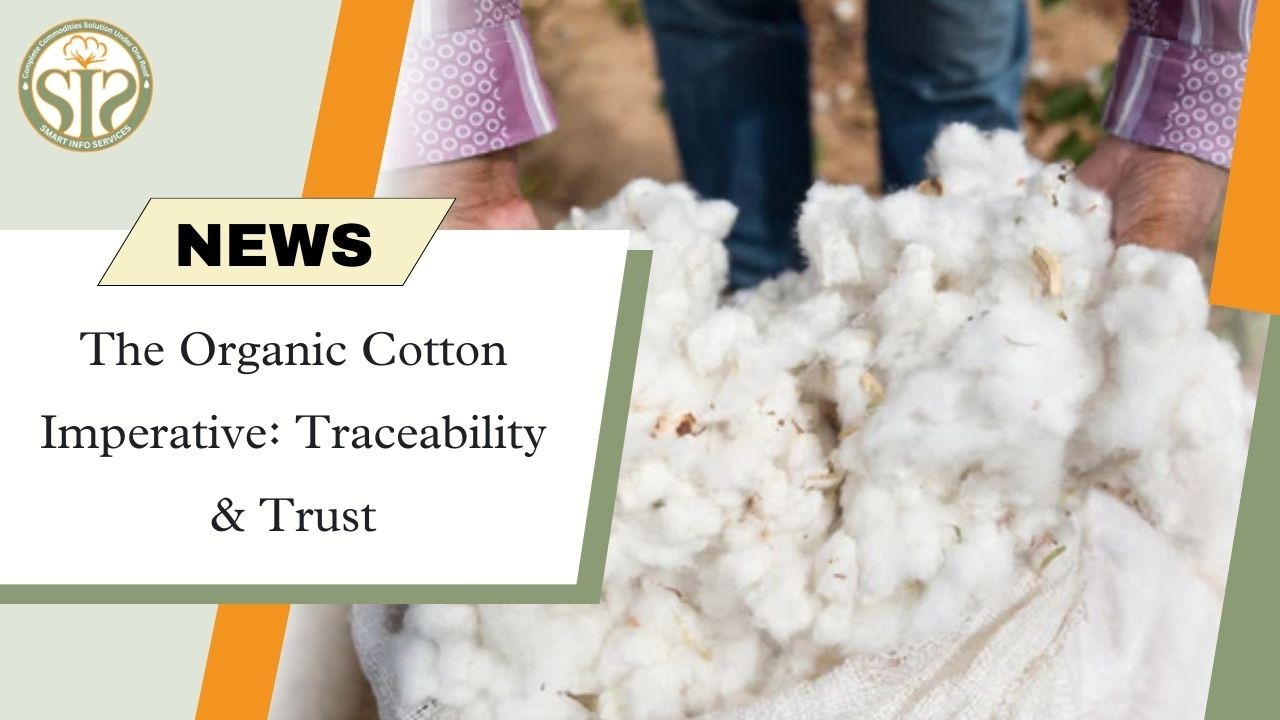
The Organic Cotton Imperative: Traceability & Trust
By jayesh chouhan 2026-01-01 18:34:47
Organic Cotton: Traceability & Trust
The global organic cotton market is expanding rapidly. Valued at $1.1 billion in 2023, it is projected to reach $25 billion by 2032 (Fortune Business Insights).1 As demand for transparency accelerates and more farmers shift to organic practices, one thing is clear: credible, traceable evidence is now essential for success in the modern textile supply chain.
Ensuring Organic Integrity Organic cotton delivers major environmental benefits—reduced water and energy use, and minimal toxic chemicals. But the transition is demanding and requires new skills, resources, and long-term brand support. CottonConnect helps in this shift, safeguarding integrity from seed to shelf through:
Farmer Empowerment: Training in organic farm management, soil fertility, and natural pest control.
Robust Assurance: A verification framework that strives to uphold the highest organic standards. In 2023–24, our programmes achieved 99% organic cotton integrity (Impact Report 2024).2 Digital Traceability with TraceBale
Once farm-level integrity is assured, traceability becomes crucial to maintain it and provides support in substantiating brand claims. TraceBale, our digital tool, creates resilient supply chains with verifiable, bottom-up sourcing data through:
Unique farmer QR codes MEL App capturing farm-level production data GIS farm mapping for precise location tracking TraceBale delivers visibility from farm group to finished product, giving brands reliable, actionable insights to support sustainability claims.
The DNA Marker Advantage To strengthen assurance further, we partner with Haelixa to integrate physical DNA markers into fiber, providing scientific evidence of origin.
By integrating digital traceability, physical markers, and transparent data management, CottonConnect connects farmers with global brands—helping make organic cotton a viable, profitable business model, not just an environmental commitment.
“Traceability is important to achieving regulatory compliance, but it also forms the bedrock of responsible business. It helps ensure every stage of the supply chain is understood, allowing issues to be addressed head-on.”