Shrimp and Textile Exports Hit by Sluggish US Demand and Policy Uncertainty
By yash chouhan 2026-03-30 11:40:09
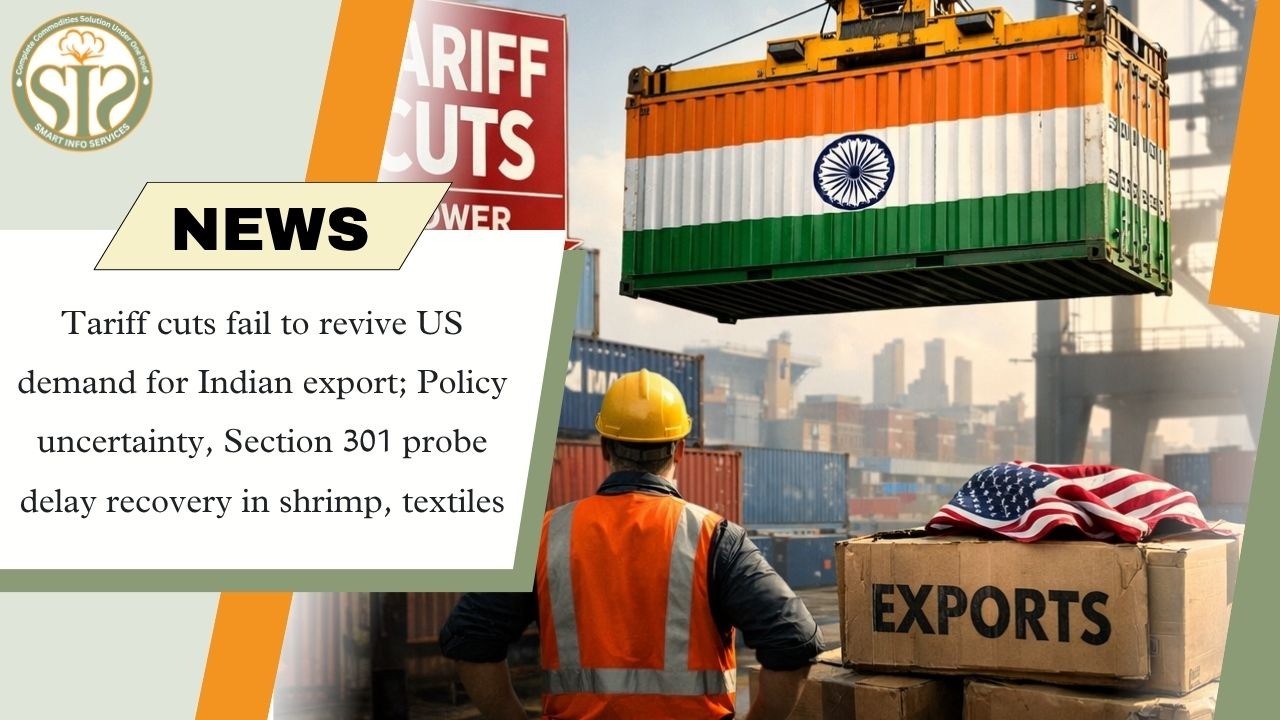
Tariff cuts fail to revive US demand for Indian export; Policy uncertainty, Section 301 probe delay recovery in shrimp, textiles
Pune | Kolkata: Demand from the United States for Indian exports remains subdued despite recent tariff reductions, as policy uncertainty and geopolitical tensions continue to dampen consumer sentiment, according to industry executives.
Exports of key sectors such as shrimp and textiles have yet to recover, weighed down by excess inventories accumulated during the earlier 50% tariff regime and the ongoing Section 301 investigations. Shrimp exports to the US declined 15% year-on-year during April–December, while textile shipments dropped 16% over the same period.
Following the US Supreme Court’s rejection of former President Donald Trump’s import tariffs, the United States Trade Representative (USTR) initiated Section 301 probes to assess whether countries are maintaining “structural excess capacity” through subsidies, suppressed wages, or other trade-distorting measures.
Industry leaders caution that these investigations could slow the recovery of sectors heavily dependent on US markets.
The textile industry, while encouraged by the revised tariff structure, remains wary of the probe’s potential impact. Chandrima Chatterjee, Secretary General of the Confederation of Indian Textile Industries (CITI), said the sector is closely monitoring developments, given their implications for market access in the US.
She added that recent geopolitical tensions, particularly in West Asia, along with evolving US trade policies, have contributed to cautious—if not bearish—market sentiment. This may limit the pace of recovery and reduce the full benefits of tariff rationalisation.
Shrimp exporters are already feeling the strain, with farm-gate prices falling 10–15% over the past three weeks. Exporters note that US buyers, especially those in regions like Boston who typically prefer long-term contracts, are hesitant to commit.
According to Pawan Kumar G of the All India Seafood Exporters’ Association, many US buyers are still holding high-cost inventories purchased when tariffs were at 50%.
In response to concerns about excess capacity, India’s commerce ministry has gathered detailed data from affected industries—including installed capacity, global value chain integration, policy support, and employment—to demonstrate that the domestic textile sector does not contribute to global market distortions.