Indian textile exporters suffer losses due to US tariffs
By yash chouhan 2026-01-29 18:58:06
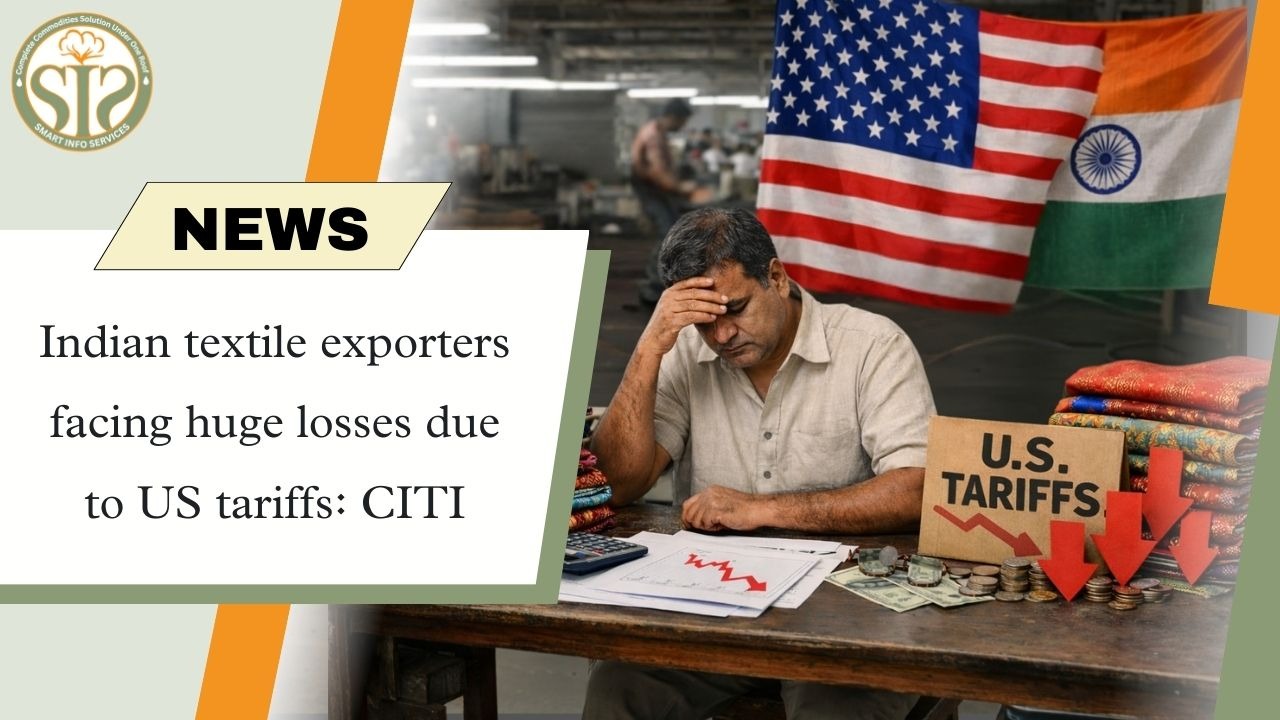
Indian textile exporters facing huge losses due to US tariffs: CITI
India's textile and apparel exporters have reported a sharp deterioration in the business environment following the imposition of an additional 25 per cent ad valorem tariff and 25 per cent penalty on exports to the US, according to the second round of an industry survey conducted by the Confederation of Indian Textile Industries (CITI) in December 2025.
With the US being India's largest textile and apparel export market, the cumulative 50 per cent additional tariff has severely reduced price competitiveness in the yarn, fabric, apparel and made-up segments.
According to the survey, almost one-fourth of the respondents reported that their business has declined by more than 50 per cent during October-December 2025 compared to July-September 2025.
The decline was primarily due to a sharp decline in order volumes, cited by 82.6 percent of respondents, a sharp increase in demand for discounts from US buyers by 73.9 percent, and a 48 percent increase in order cancellations or postponements.
Export orders from India have also taken away as a result of the tariff impact. Nearly 60 percent of respondents said US buyers have shifted sourcing to competing countries such as Bangladesh and Vietnam, which continue to enjoy the benefits of tariffs or trade agreements. Industry sentiment remains pessimistic, with most respondents expecting business to decline by up to 50 per cent during January-March 2026 compared to the previous quarter if the current situation continues.
While exporters are attempting to diversify markets, progress so far has been limited. Only 17 percent of respondents have successfully entered new markets, while 44 percent are in the process of exploring diversification.
However, exports to alternative destinations account for less than 10 percent of the volume affected by US tariffs. The EU-27, UK, Australia and UAE were identified as key focus markets, although companies cited competitiveness challenges, lack of buyer access, payment risks and high logistics costs as key barriers.
The industry has called for immediate and more effective policy support based on the findings. Key recommendations include expediting FTAs with EU-27 and expeditious implementation of India-UK CETA, extending existing credit and moratorium relief measures across the entire textile value chain till March 31, 2026, increasing interest subvention on exports from 2.75 per cent to 5 per cent and extending collateral-free loans under the Emergency Credit Line Guarantee Scheme (ECLGS).